
Total Lore Absorption
 ◈ CHARACTER
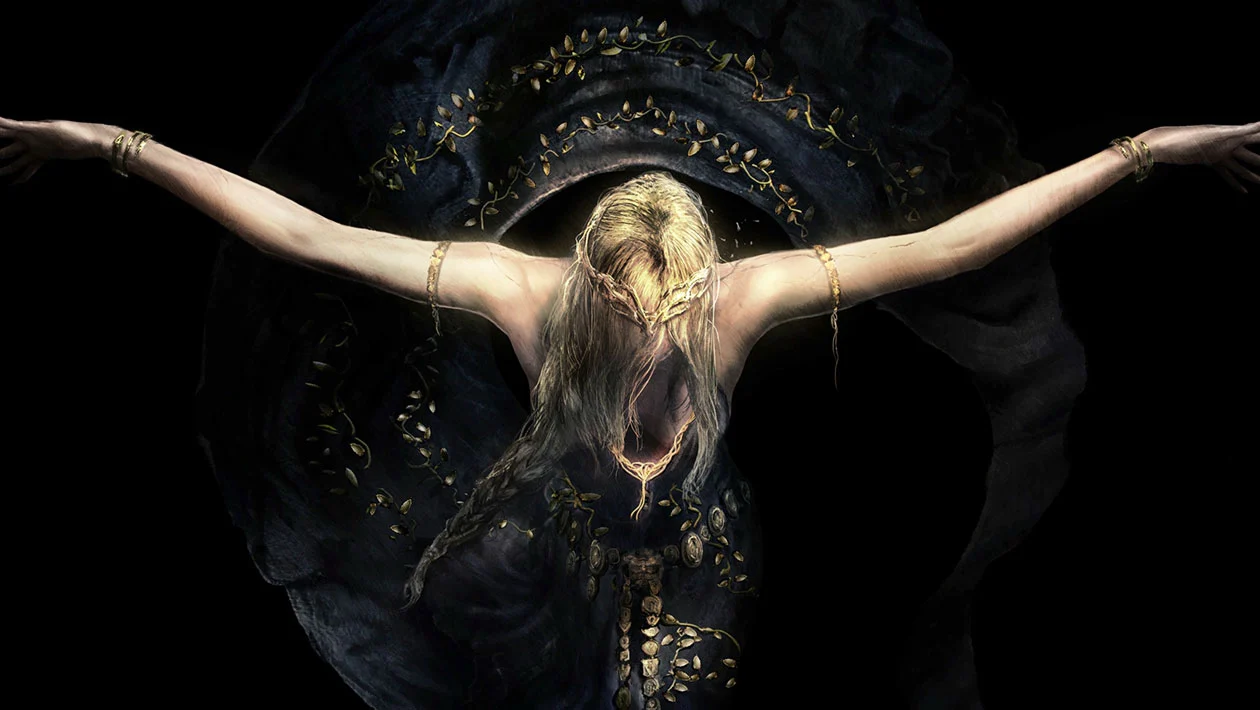
Queen Marika the Eternal
Vessel of the Elden Ring · Divine Ruler▾
Queen Marika the Eternal
"Hear me, Demigods. My children beloved. Make of thyselves that which ye desire. Be it a Lord. Be it a God. But should ye fail to become aught at all, ye will be forsaken."
Echoes, to the demigods
"Let a new epoch begin. An epoch glistening with life. Brandish the Elden Ring, for the Age of the Erdtree!"
The Shattering, to her other self
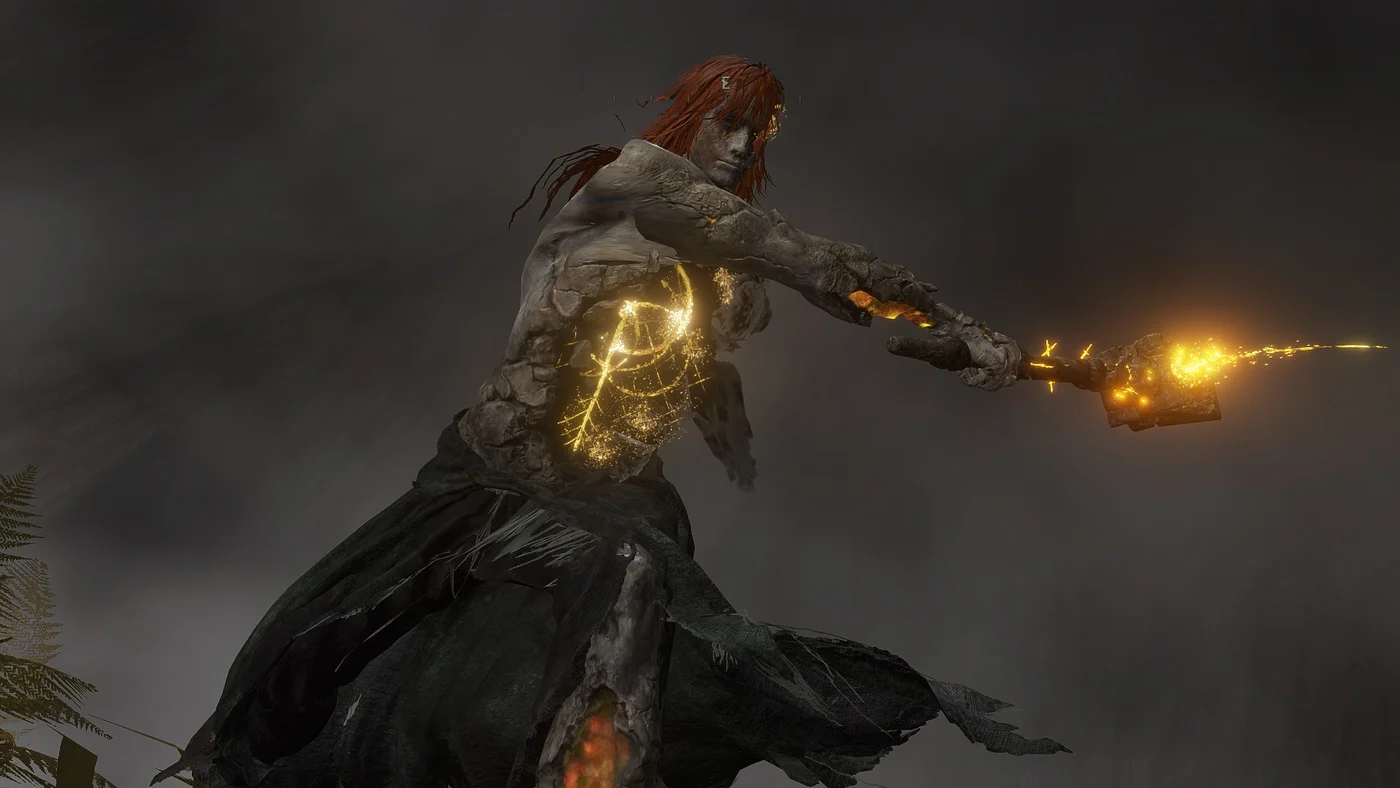
Queen Marika the Eternal is a Numen, a people of outer origin, long-lived but rarely born, who became the reigning goddess of the Lands Between, vessel of the Elden Ring, and architect of the Golden Order. Her deepest nature is the game's central revelation: Marika and Radagon are a single being. Radagon was her male alter ego, a king-consort who was literally herself in a different form, confirmed by the inscription "Radagon is Marika" hidden in Raya Lucaria. This duality mirrors alchemy: the White Queen and Red King, reunited as a hermaphroditic whole. Her internal name in game files reinforces this.
Her successive unions produced nearly all demigods: with Godfrey (sons: Morgott and Mohg, both Omen chained at birth, rejected by the very Order she imposed; and Godwyn, the Golden); with Radagon/herself (twins: Malenia and Miquella, both Empyreans). She also bore Messmer the Impaler (secret son, imprisoned in the Realm of Shadow, DLC) and Melina (secret daughter, the Kindling Maiden). Ranni and Radahn are children of Radagon and Rennala, her step-children via her own alter ego.
Her words linger at Sites of Grace in churches (shared by Melina): they trace a spiritual arc from loyal servant of the Greater Will ("Brandish the Elden Ring for the Age of the Erdtree") to questioning the Order's foundations ("I shall declare my intention to search the depths of the Golden Order") to acknowledging Radagon as herself ("O Radagon, leal hound of the Golden Order. Thou'rt yet to become me. Let us be shattered, both. Mine other self."). Her final transgression, shattering the Elden Ring herself, is the game's central mystery. The Two Fingers accuse her; her exact motivation remains deliberately ambiguous (despair? liberation? planned defiance?). This act had her imprisoned in the Erdtree, crucified and suspended in time. Marika's Rune (shaped like the lower arc of the Elden Ring) foreshadows her crucifixion and recurs throughout the game: Marika's Scarseal, Marika's Soreseal, Messmer's implanted eye. Her Omen sons (Morgott and Mohg) were rejected at birth, the private pain of a mother who must cast aside her own children in the name of the Order she upholds.
◆ Sources
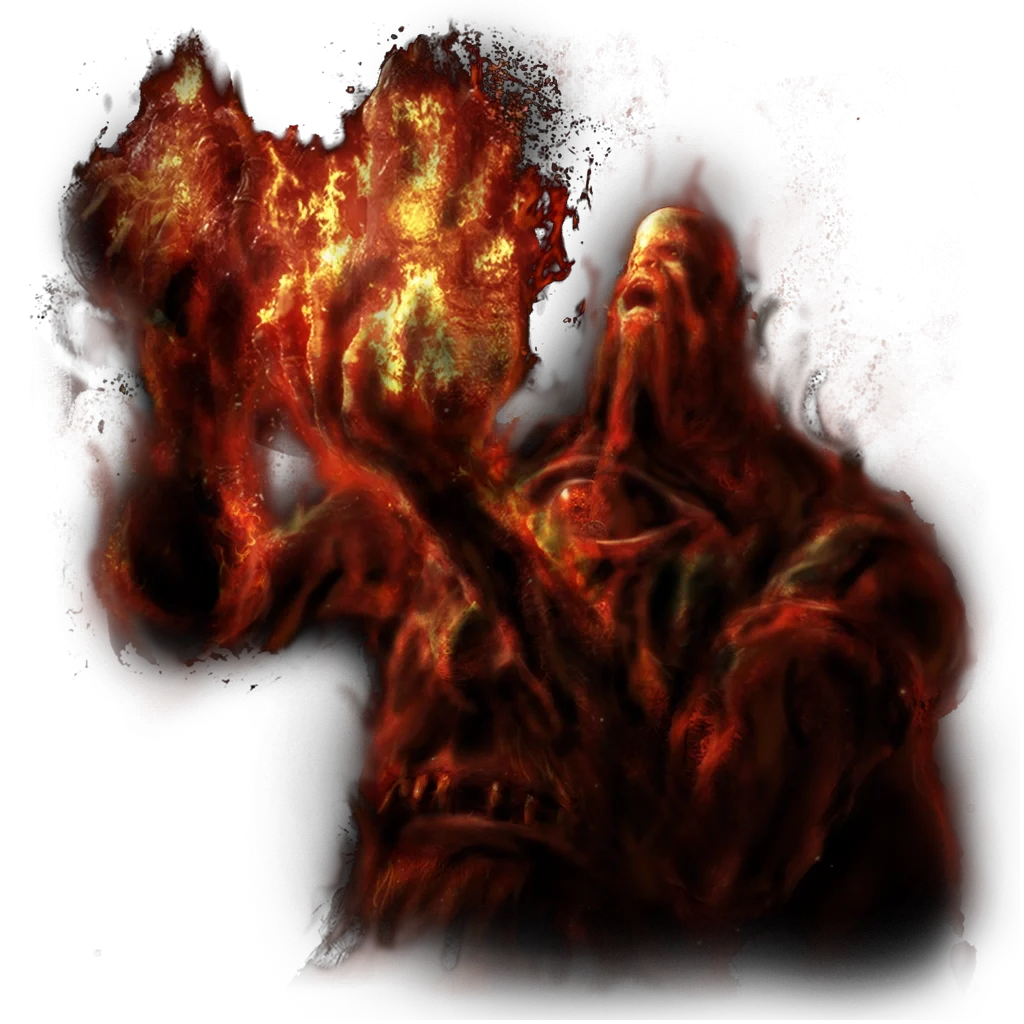 Remembrance of the Fire Giant
The Fire Giant is a survivor of the War against the Giants. Upon realizing the flames of their forge would never die, Queen Marika marked him with a curse. "O trifling giant, mayest thou tend thy flame for eternity."
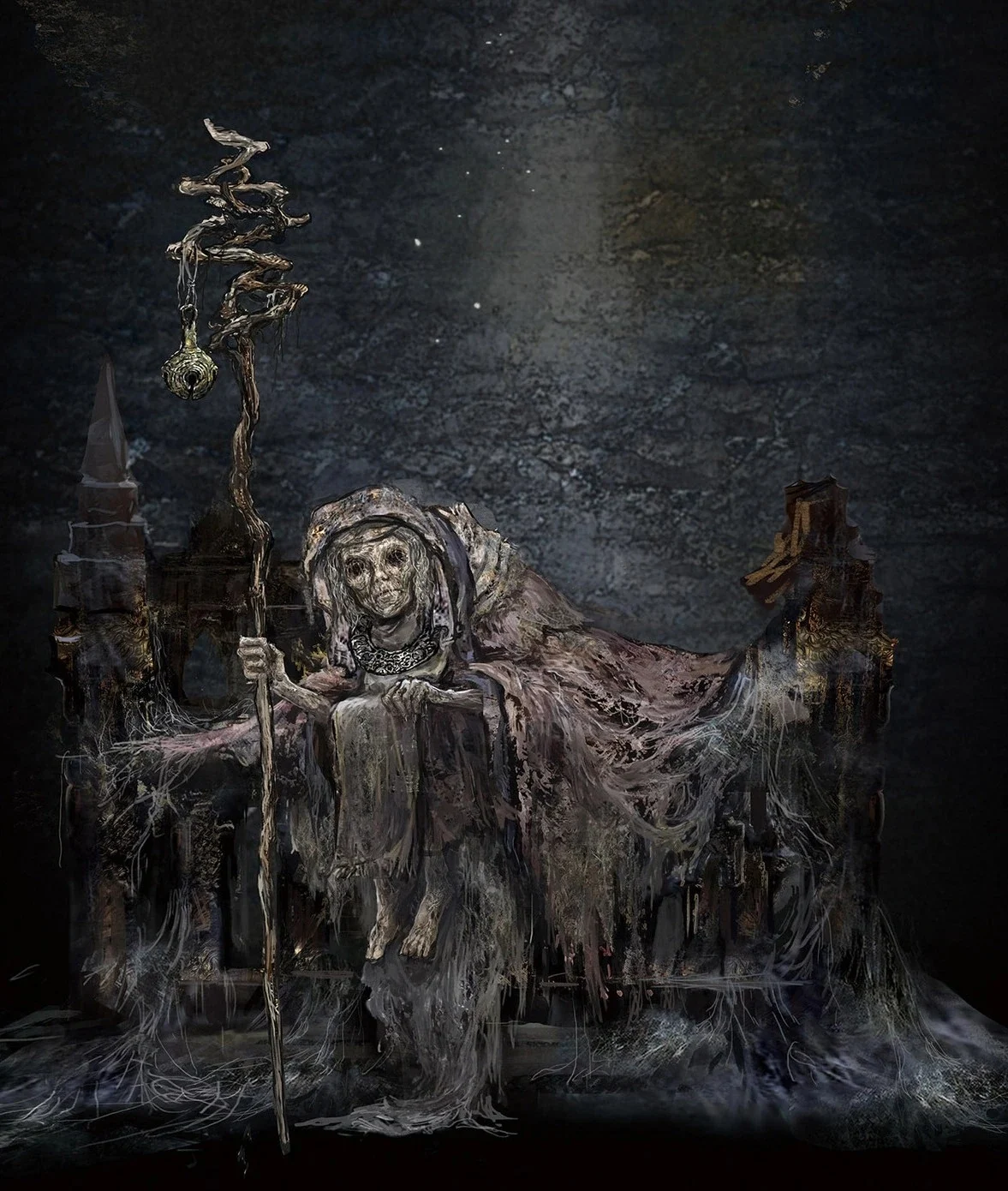 Finger Reader Enia (Dialogue)
Of the demigods, only I, Miquella, and Malenia could claim that title. Each of us was chosen by our own Two Fingers, as a candidate to succeed Queen Marika, to become the new god of the coming age. But I would not acquiesce to the Two Fingers. I stole the Rune of Death, slew mine own Empyrean flesh, casting it away. Which is when I received Blaidd. In the form of a vassal tailored for an Empyrean.
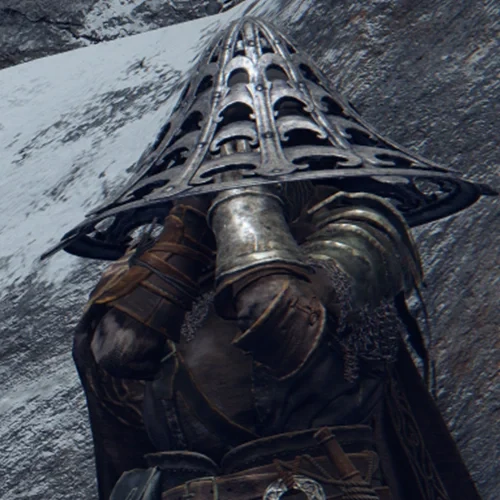 Shabriri (Dialogue)
Though I can't help but think of it as a curse. A fearsome curse, put on him by Queen Marika. And if that's the case, I'm not sure there's anything we can do... Ah. So slay her, with the weapons he smithed. Slay the god, Marika, who cursed us all. You're...giving it to me? I've never had alcohol before...
 Dung Eater (Dialogue)
But Rennala herself is no demigod. She is merely the recipient of an amber egg, given to her by Radagon, Her beloved, Radagon, left her to become Queen Marika's second husband, taking the title of King Consort. The Great Rune dwells within the amber egg that was Radagon's gift to her. There are four more demigods yet to be located. I commend your spirit, but alas, none shall take the throne. Queen Marika has high hopes for us. That we continue to struggle. Unto eternity.
However. When Godfrey, first Elden Lord, was hounded from the Lands Between, Radagon left Rennala to return to the Erdtree Capital, becoming Queen Marika's second husband and King Consort. Taking the title...of second Elden Lord. The mystery endures, to this day... Then how about you piss off? fore I crack you in 'alf. Marika's tits, you must be 'ungry. Alright mate. Want some more prawn, do ya? I got crab, cooked up fresh. Want some more crab, do ya?
 Millicent (Dialogue)
Then you might like to learn something of the history... of Malenia, goddess of scarlet rot. Queen Marika and her King Consort Radagon were blessed with twin demigods, and Malenia was one of them. She was born an Empyrean, carrying the scarlet rot. An Empyrean...is no mere demigod. In the age of the Elden Ring, and Queen Marika, the precious Empyrean was born. A new god to forge a new Order. Since Malenia fought Radahn, and the great scarlet flower blossomed in Aeonia, I have dedicated myself to her.
 Sage Gowry (Dialogue)
Now the master is facing quite the puzzle. The Golden Order is founded on the principle that Marika is the one true god. However... The name of Marika's second husband, King Consort Radagon, also appeared... Who exactly was Radagon? The master is stumped. A glimpse into the heart of the Golden Order, documented by yours truly. To think, that Radagon was Marika herself. Or at least, such is all I can interpret from the rhythm and calculus of his finger. How would such a thing even have been possible, I wonder.
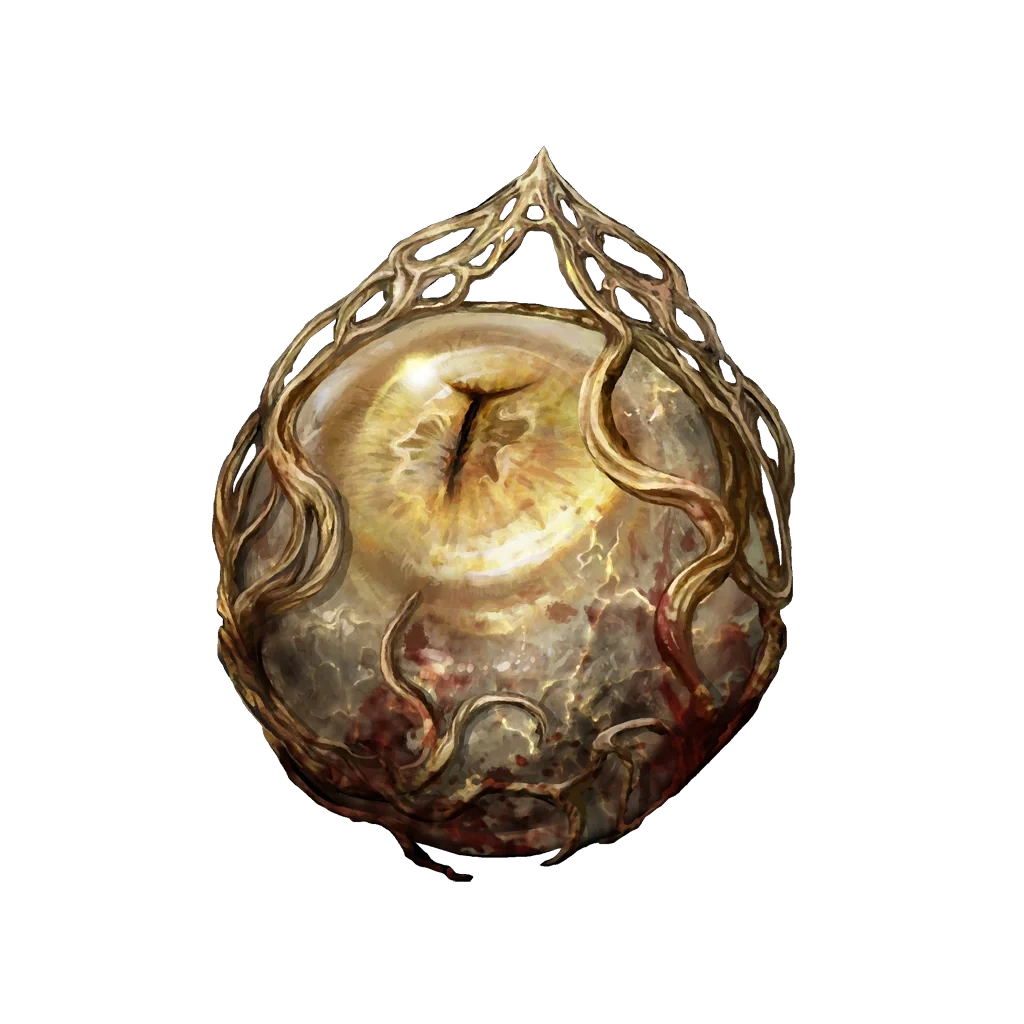 Marika's Scarseal
An eye engraved with an Elden Rune. Said to be the seal of Queen Marika. Raises mind, intelligence, faith, and arcane, but also increases damage taken. These seals represent the lifelong duty of those chosen by the gods.
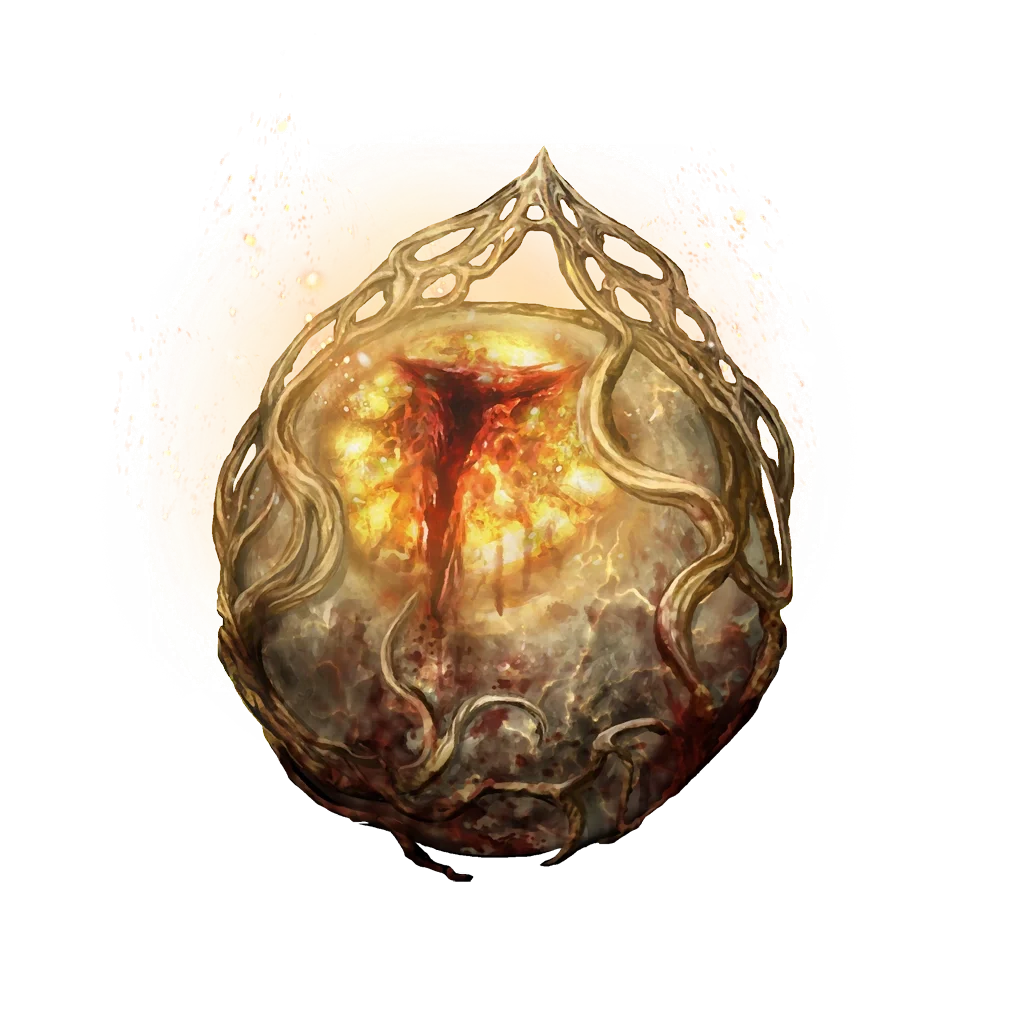 Marika's Soreseal
This legendary talisman is an eye engraved with an Elden Rune, said to be the seal of Queen Marika. Greatly raises mind, intelligence, faith, and arcane, but also increases damage taken by a similar measure. Solemn duty weighs upon the one beholden; not unlike a gnawing curse from which there is no deliverance.
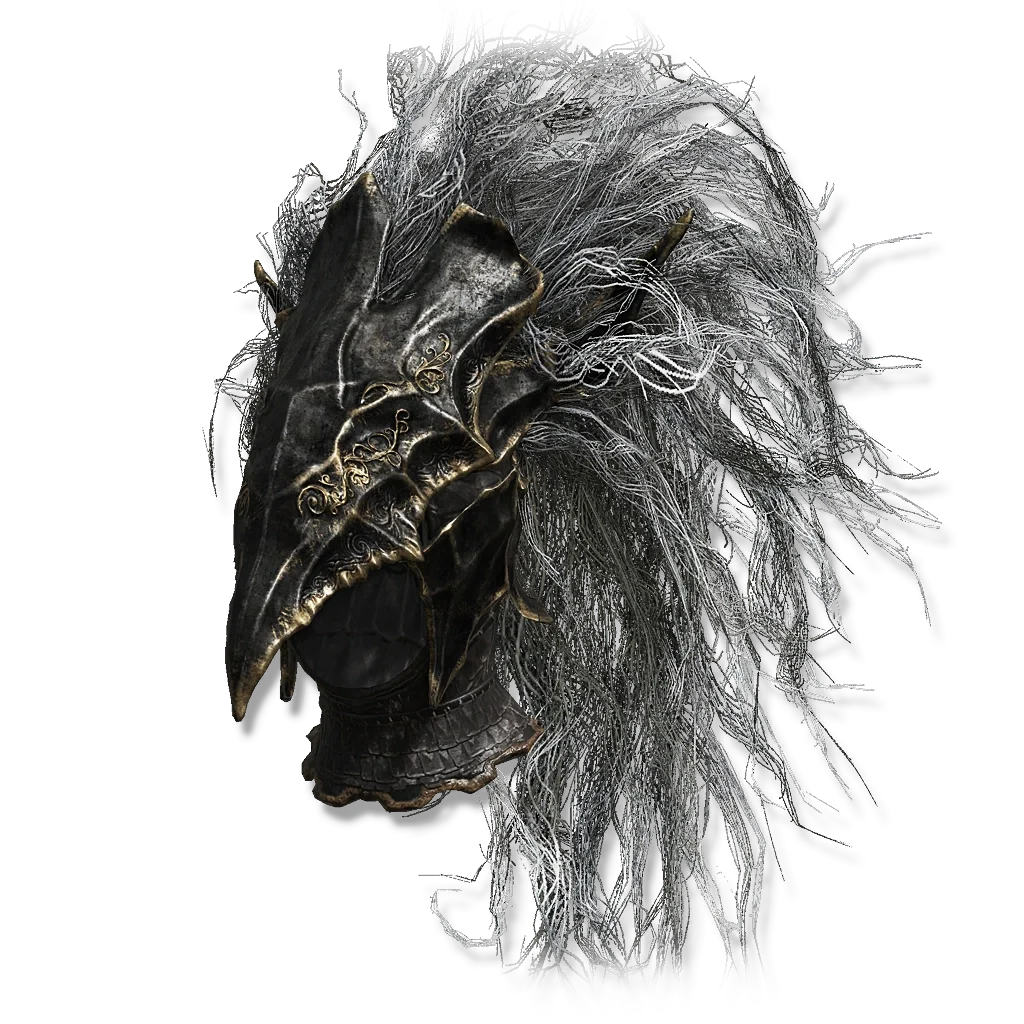 Maliketh's Helm
Worn by Maliketh the Black Blade. Maliketh, Queen Marika's loyal half-brother, bore a blade imbued with Destined Death, and there was not one demigod who did not fear him. Champions knew what was at stake. Indeed, that is what made them champions.
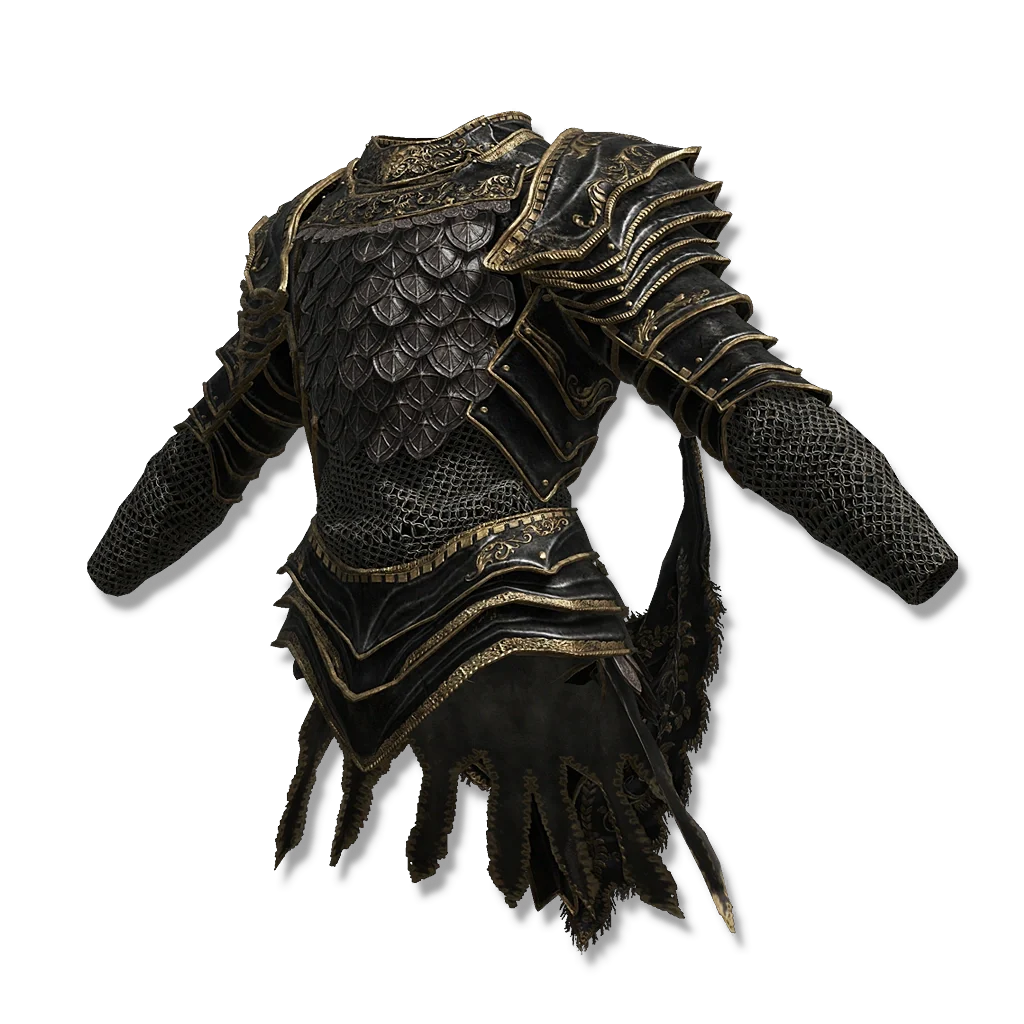 Maliketh's Armor
Worn by Maliketh the Black Blade. Maliketh, Queen Marika's loyal half-brother, bore a blade imbued with Destined Death, and there was not one demigod who did not fear him. Champions knew what was at stake. Indeed, that is what made them champions.
 ◈ CHARACTER
Radagon, King Consort
Second Elden Lord · Alter Ego of Marika▾
Radagon, King Consort
"O Radagon, leal hound of the Golden Order. Thou'rt yet to become me. Thou'rt yet to become a god. Let us be shattered, both. Mine other self."
Cinematic, Marika to Radagon, before Elden Beast
Radagon is the male alter ego of Marika, an ontological truth revealed late by the inscription "Radagon is Marika" at Raya Lucaria. He was first presented as a red-haired warrior leading a golden army against the Carians in the Liurnian Wars. Having defeated Rennala, he made penance by bathing in celestial dew, pledged his love to Rennala, and married her, an accord that ended the war and united the House of the Erdtree and the House of the Moon. This union produced three children: Radahn, Rykard, and Ranni.
When Godfrey was exiled (Marika's act, by extension his own), Radagon abandoned Rennala to return to Leyndell and become Marika's second consort, marrying, in essence, his own other half. The betrayal of Rennala haunts numerous item descriptions: the Church of Vows (site of their wedding), the Amber Starlight, the Carian Filigreed Crest all carry traces of that rupture. After the Shattering, archival evidence reported by Rogier shows Radagon striking the shattered Elden Ring with a golden hammer in a desperate attempt to reforge it, trying to repair what Marika/himself had broken. The mystery of the Raya Lucaria statue: the sculptor summoned to render his likeness "saw something in his wardrobe" he should not have seen, the statue has hidden his secret ever since. Radagon's Scarseal and Soreseal embody his duality of strength and vulnerability: amplifying attributes at the cost of increased damage taken, like his divided divine nature creates both power and fragility.
◆ Sources
Dung Eater (Dialogue)But Rennala herself is no demigod. She is merely the recipient of an amber egg, given to her by Radagon, Her beloved, Radagon, left her to become Queen Marika's second husband, taking the title of King Consort. The Great Rune dwells within the amber egg that was Radagon's gift to her. There are four more demigods yet to be located. Miquella of the Haligtree, the Unalloyed. Lunar Princess Ranni. One of the children born to King Consort Radagon and his first wife, Renalla. Demigod and sister to General Radahn and Praetor Rykard. Her's was the name I discovered in the imprint.
Millicent (Dialogue)Then you might like to learn something of the history... of Malenia, goddess of scarlet rot. Queen Marika and her King Consort Radagon were blessed with twin demigods, and Malenia was one of them. She was born an Empyrean, carrying the scarlet rot. An Empyrean...is no mere demigod.
Sage Gowry (Dialogue)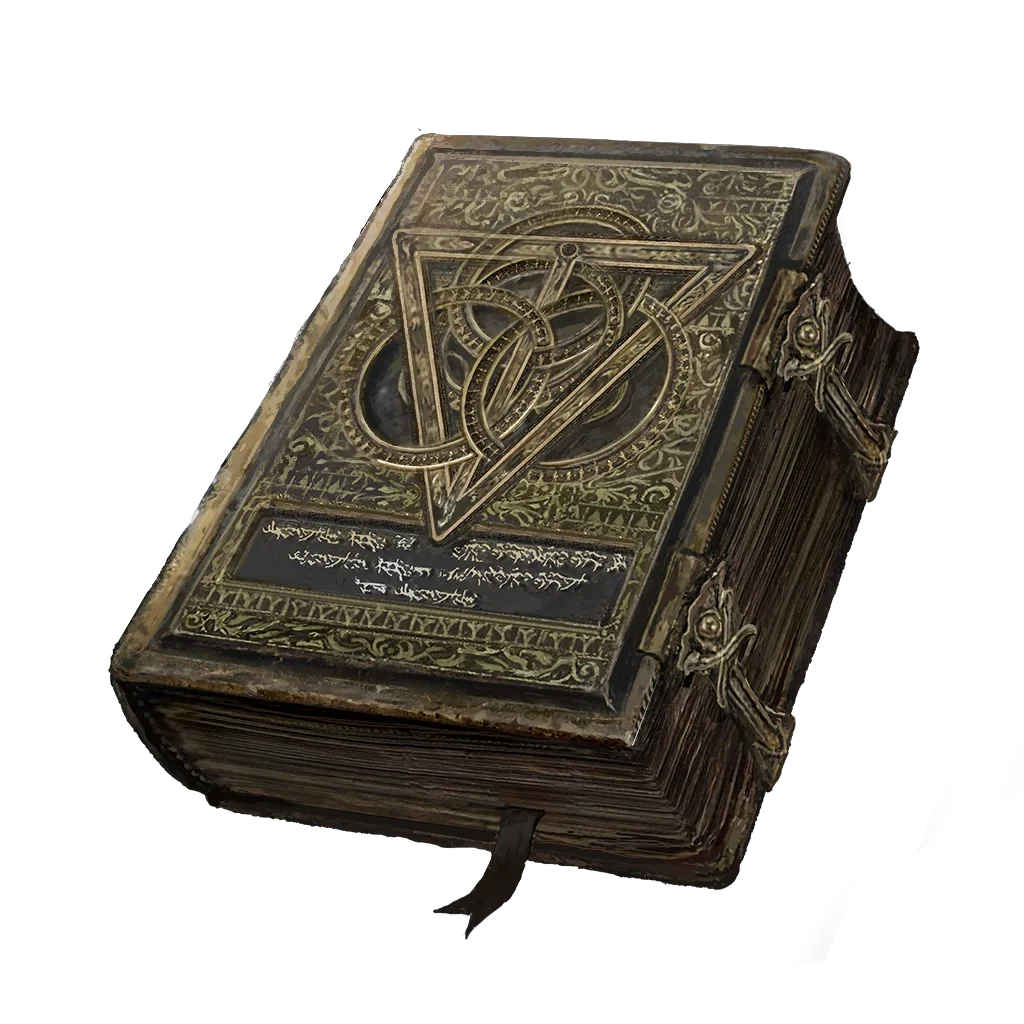 Golden Order Principia
A dense and complex academic treatise that contains the Order's fundamental principles. Can be given to a learned cleric to gain access to the following incantations: - Radagon's Rings of Light - Law of Regression
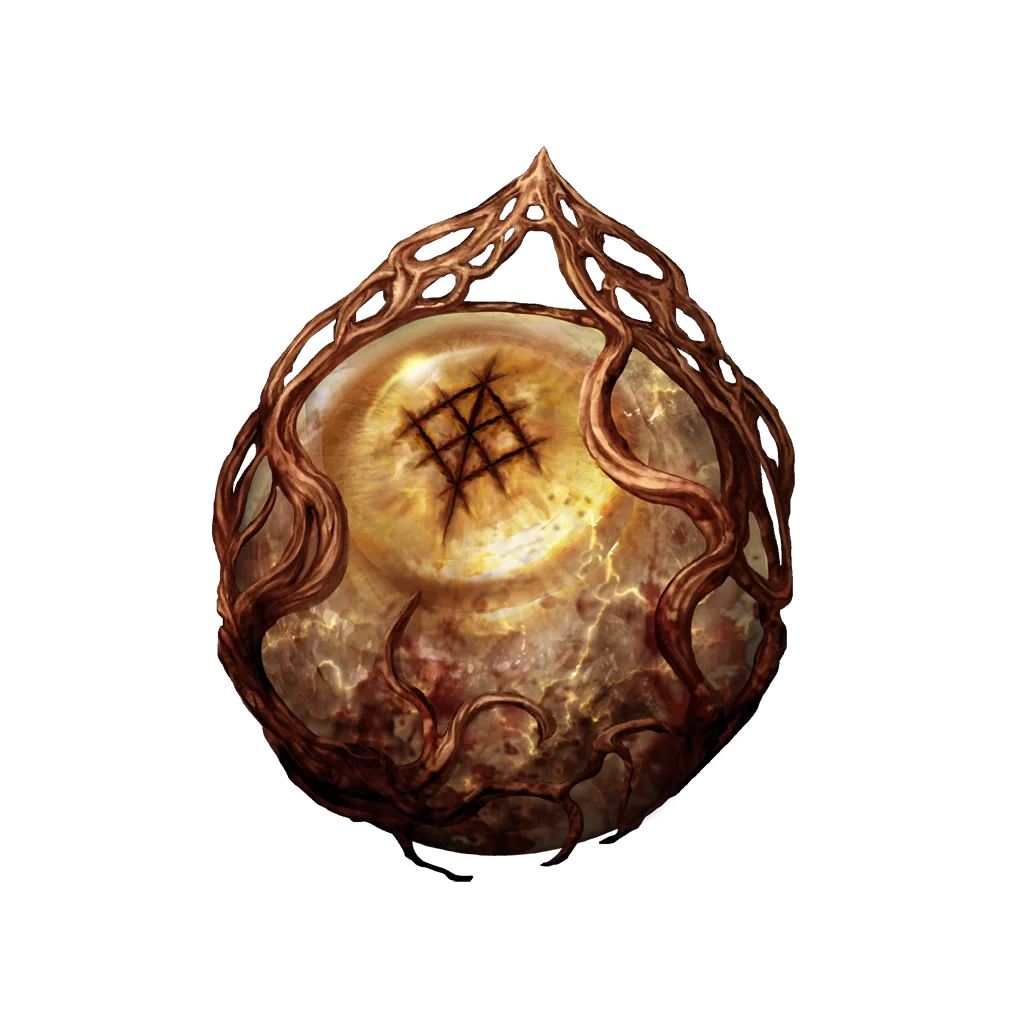 Radagon's Scarseal
An eye engraved with an Elden Rune. Said to be the seal of King Consort Radagon. Raises vigor, endurance, strength, and dexterity, but also increases damage taken. These seals represent the lifelong duty of those chosen by the gods.
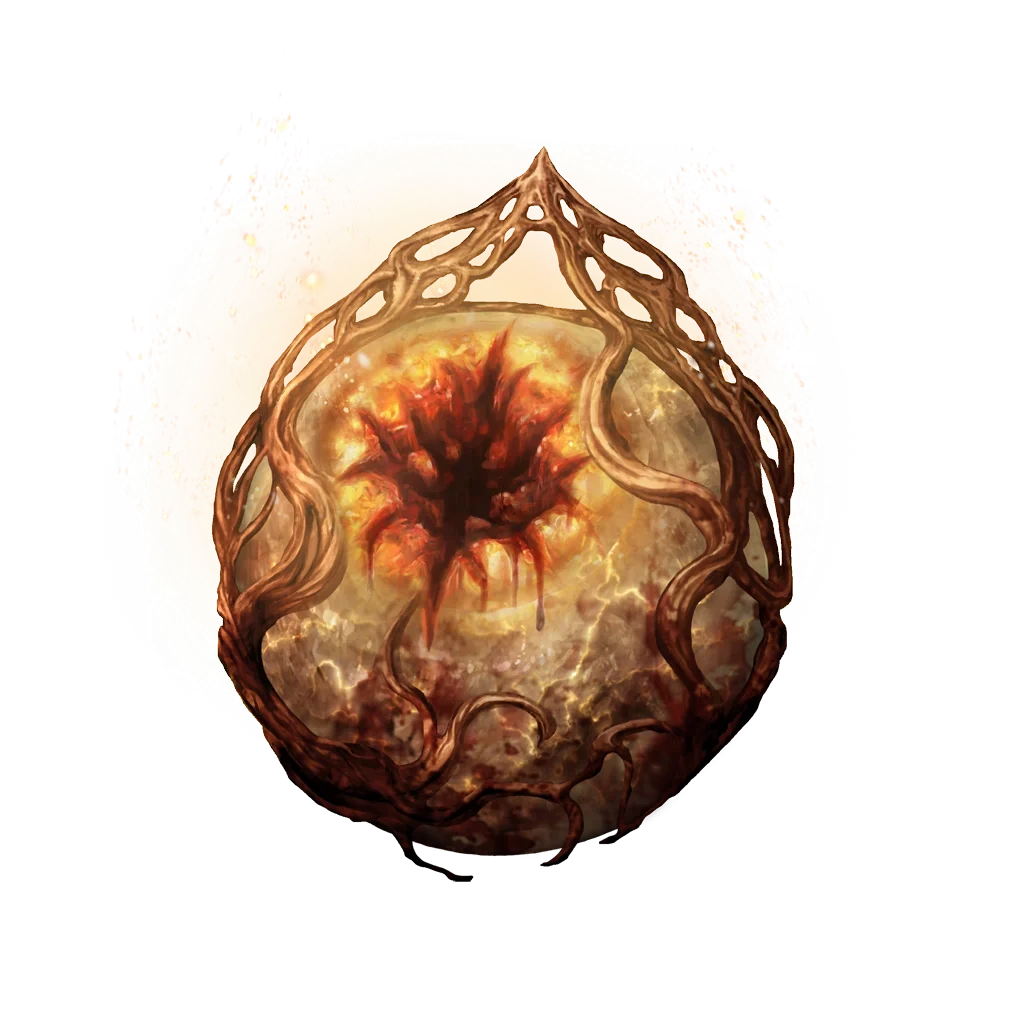 Radagon's Soreseal
This legendary talisman is an eye engraved with an Elden Rune, said to be the seal of King Consort Radagon. Greatly raises vigor, endurance, strength, and dexterity, but also increases damage taken by a similar measure. Solemn duty weighs upon the one beholden; not unlike a gnawing curse from which there is no deliverance.
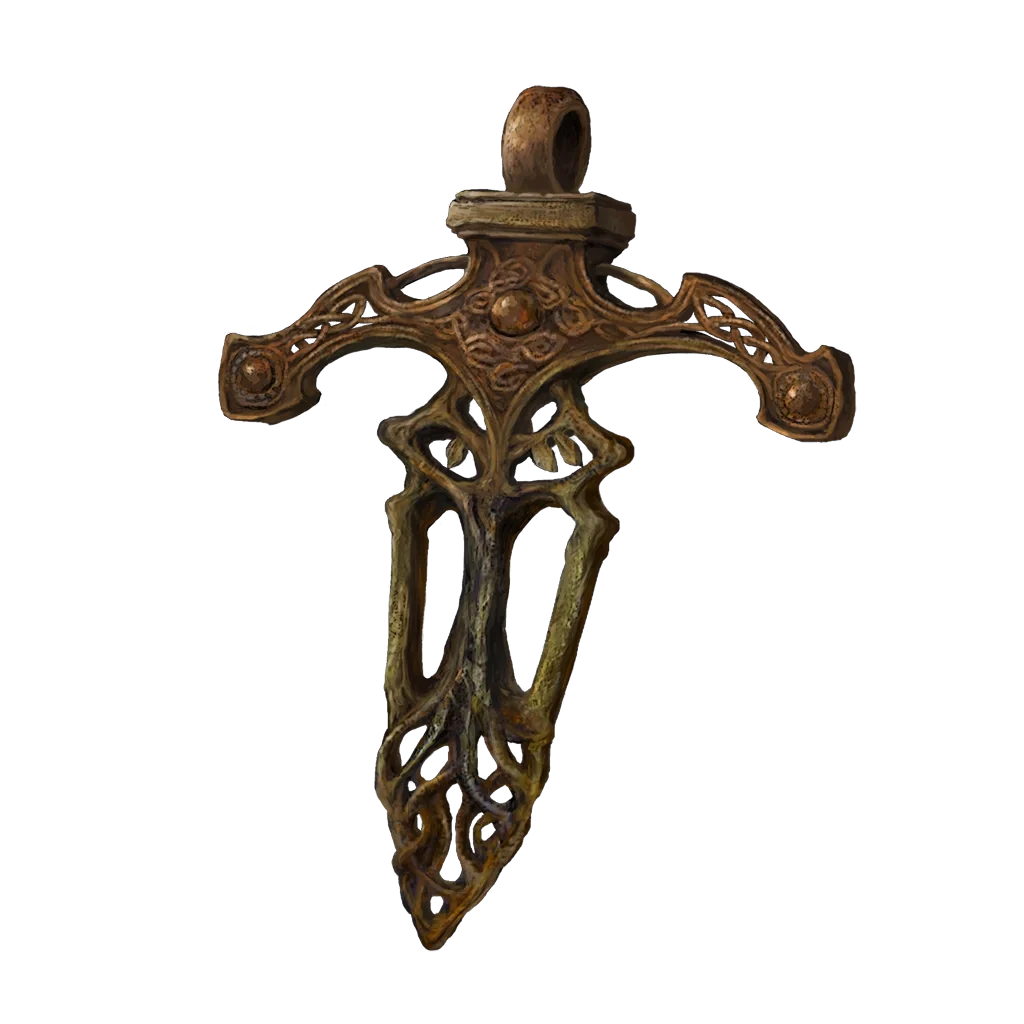 Ritual Sword Talisman
Raises attack power when HP is at maximum. The practice had died out by the age of King Consort Radagon, but remains of the arenas where ritual combat took place can still be found in every land.
 ◈ CHARACTER
Godwyn the Golden
Prince of Death · The First Dead▾
Godwyn the Golden
"The Routing of the Ancient Dragons Godwyn the Golden fought to the last, Earning the friendship of dread Fortissax"
Sword Monument, Altus Plateau
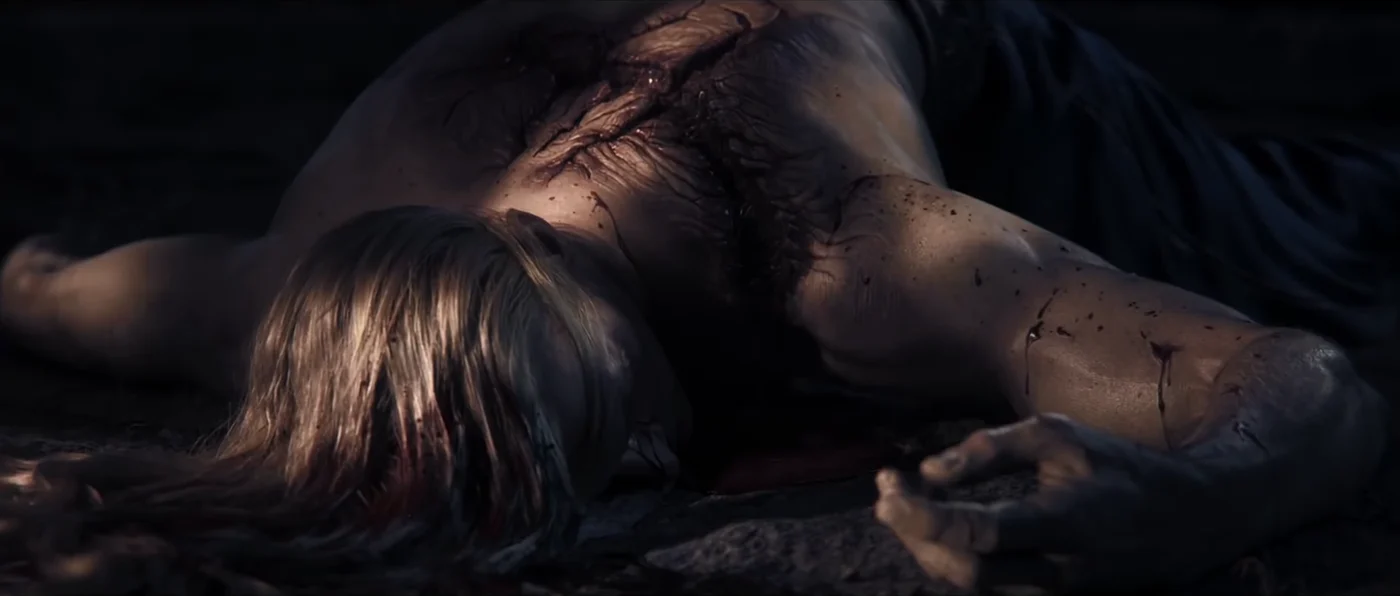
Godwyn was the firstborn son of Marika and Godfrey, the Golden Prince, beloved by all, the champion who won the friendship of the dragon Fortissax during the war against the Ancient Dragons (he "fought until the very last, winning the friendship of the fearsome Fortissax"). His death during the Night of the Black Knives was the first demigod death in the history of the Golden Order, and the strangest: the Assassins used daggers imbued with the Rune of Death to kill his soul only, leaving his body alive. This inverted pattern, body alive, soul dead, created something entirely new: Godwyn became the Prince of Death, the first of the Deathless Undead.
His soulless living body proliferated beneath the roots of the Erdtree, replicating into fish-corpses, vegetative flesh-masses, and monstrous forms that infest the Deeproot Depths. The Deathroots propagated by his rotting body fed Gurranq/Maliketh, who consumed them to contain Destined Death. His Hallowbrand (the mark of the half-wheel millipede imprinted on his flesh) was found at Roundtable Hold, Fia came specifically for this mark. Fia lies with Godwyn in the Deeproot Depths to conceive the Rune of the Death-Prince, formed of the two hallowbrand half-wheels combined. Rogier discovered the body beneath Stormveil Castle and touched a death-root: the death-gangrene that paralyzed and slowly killed him came directly from that encounter. Fortissax, his dragon friend, voluntarily entered the Deeproot Depths to fight the Death consuming Godwyn, and was himself corrupted in the process, becoming the Lichdragon.
◆ Sources
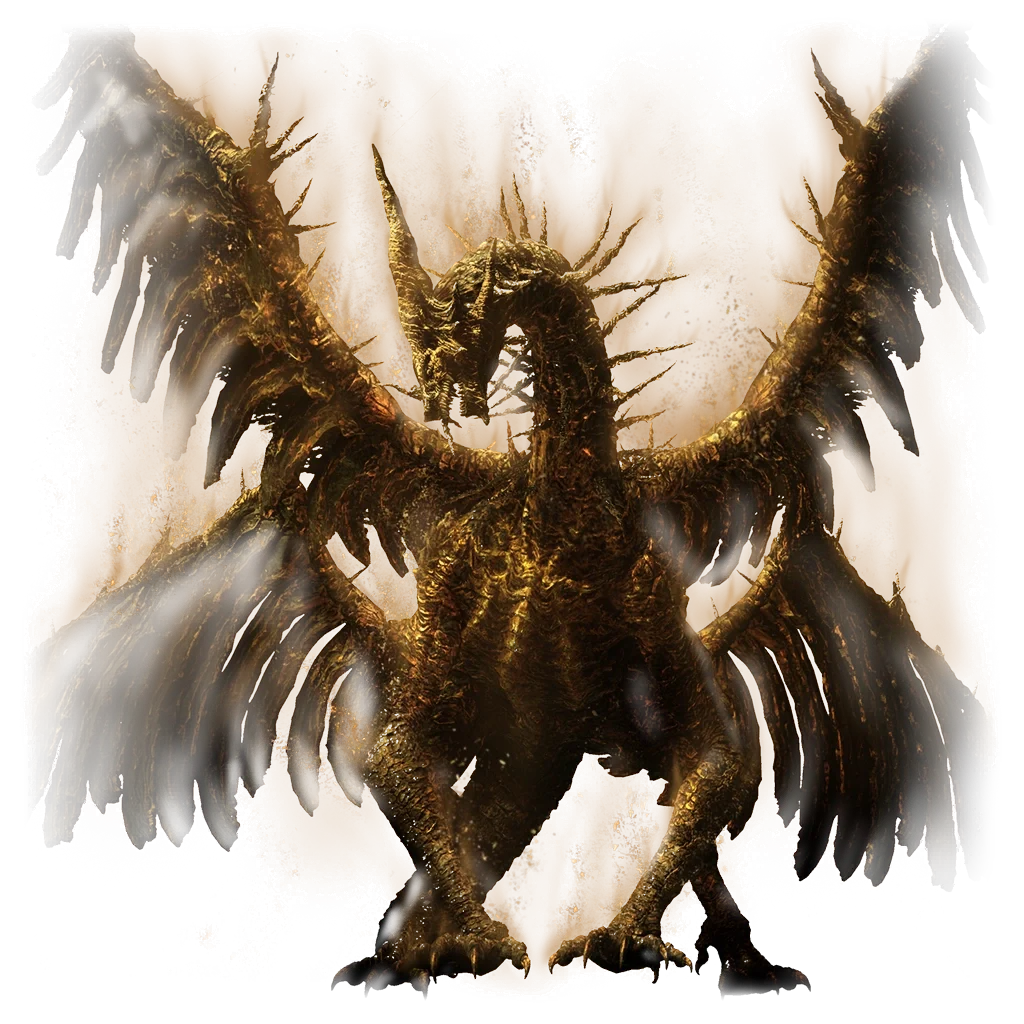 Remembrance of the Lichdragon
Alternatively, it can be used to gain a great bounty of runes. After Godwyn the Golden became the Prince of Death, the ancient dragon fought long and hard against the Death within its companion. Alas, victory was never achieved and its only reward was corruption.
Shabriri (Dialogue)Dung Eater (Dialogue)Someone stole a fragment of the Rune of Death from Maliketh, the Black Blade. And on a bitter night, murdered Godwyn the Golden. That was the first recorded Death of a demigod in all history. And it became the catalyst.
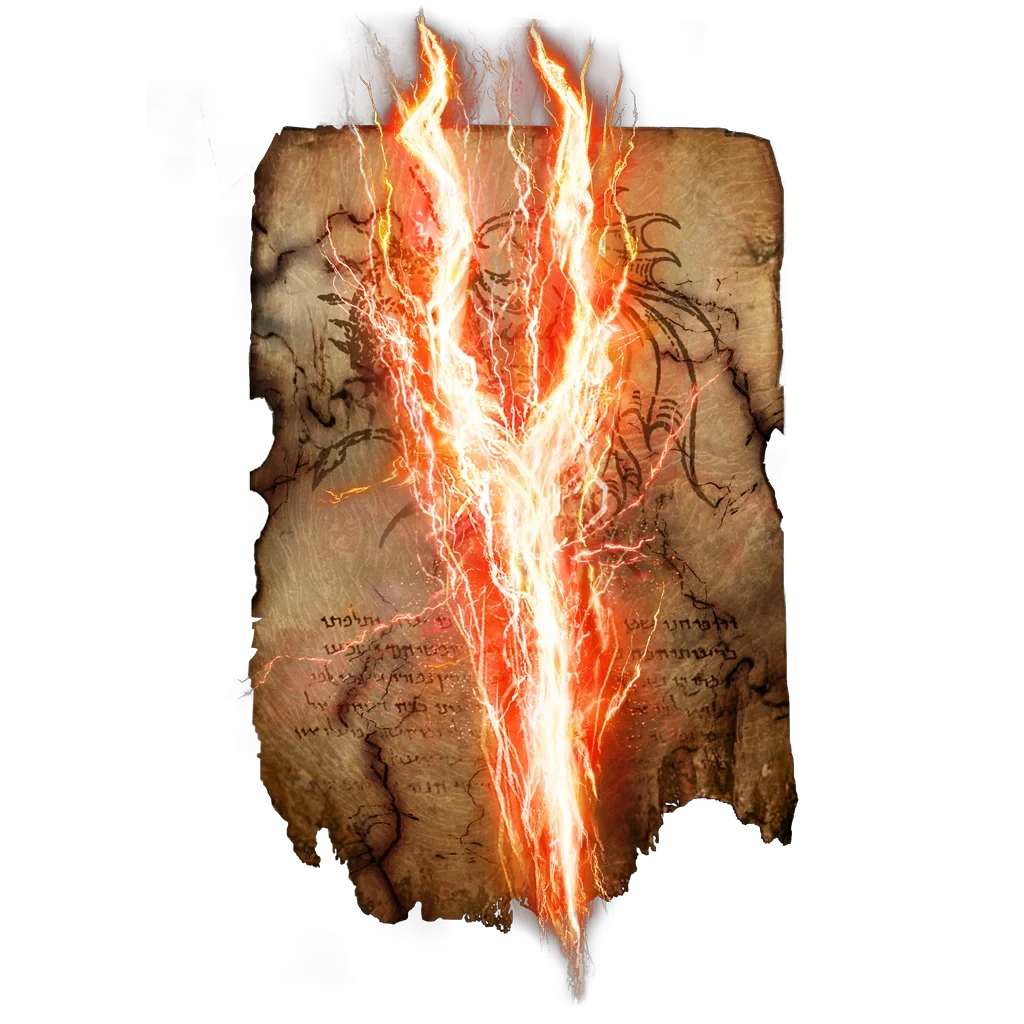 Lightning Spear
Charging causes a lightning bolt to strike the point of impact. Long ago, Godwyn the Golden defeated the ancient dragon Fortissax, and befriended his fallen foe—an event that gave rise to the ancient dragon cult in the capital.
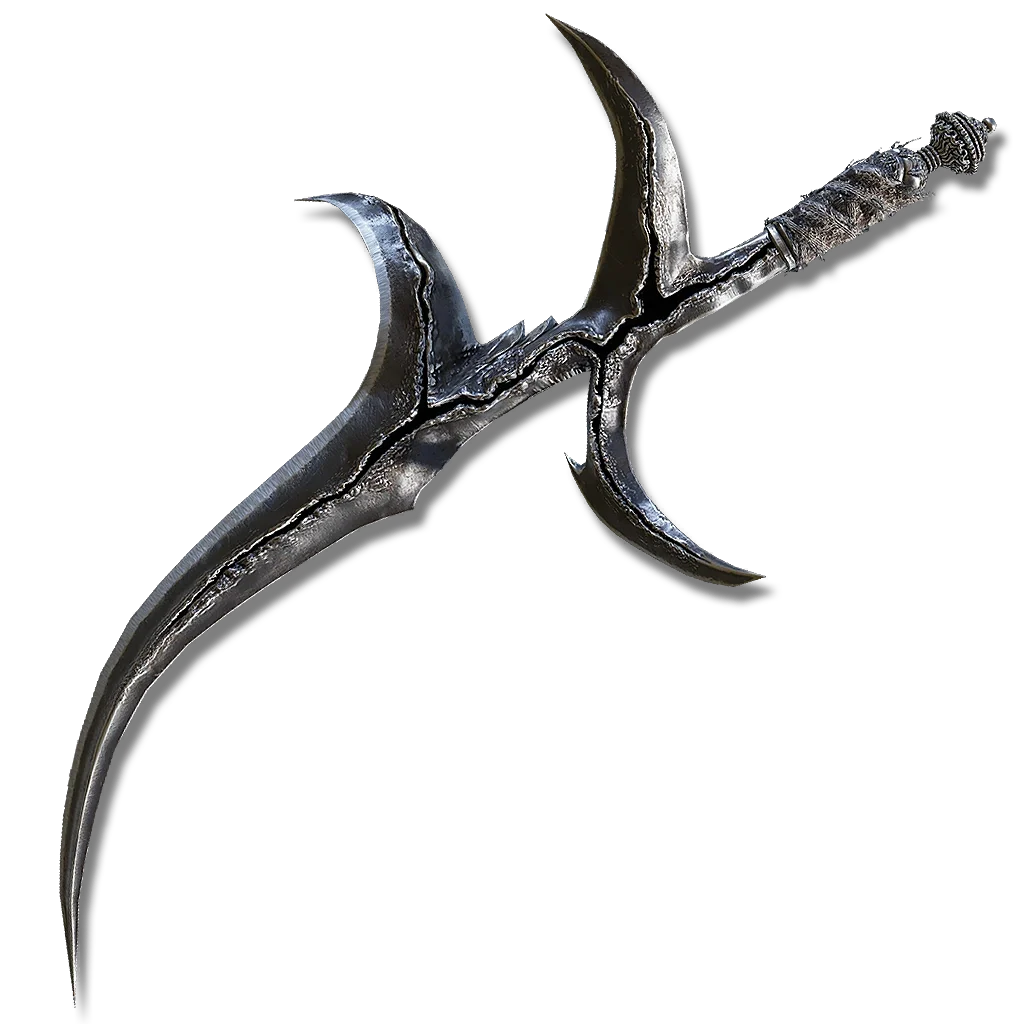 Black Knife
Dagger once belonging to one of the assassins who murdered Godwyn the Golden on the Night of the Black Knives. A ritual performed on the oddly misshapen blade imbued it with the power of the stolen Rune of Death.
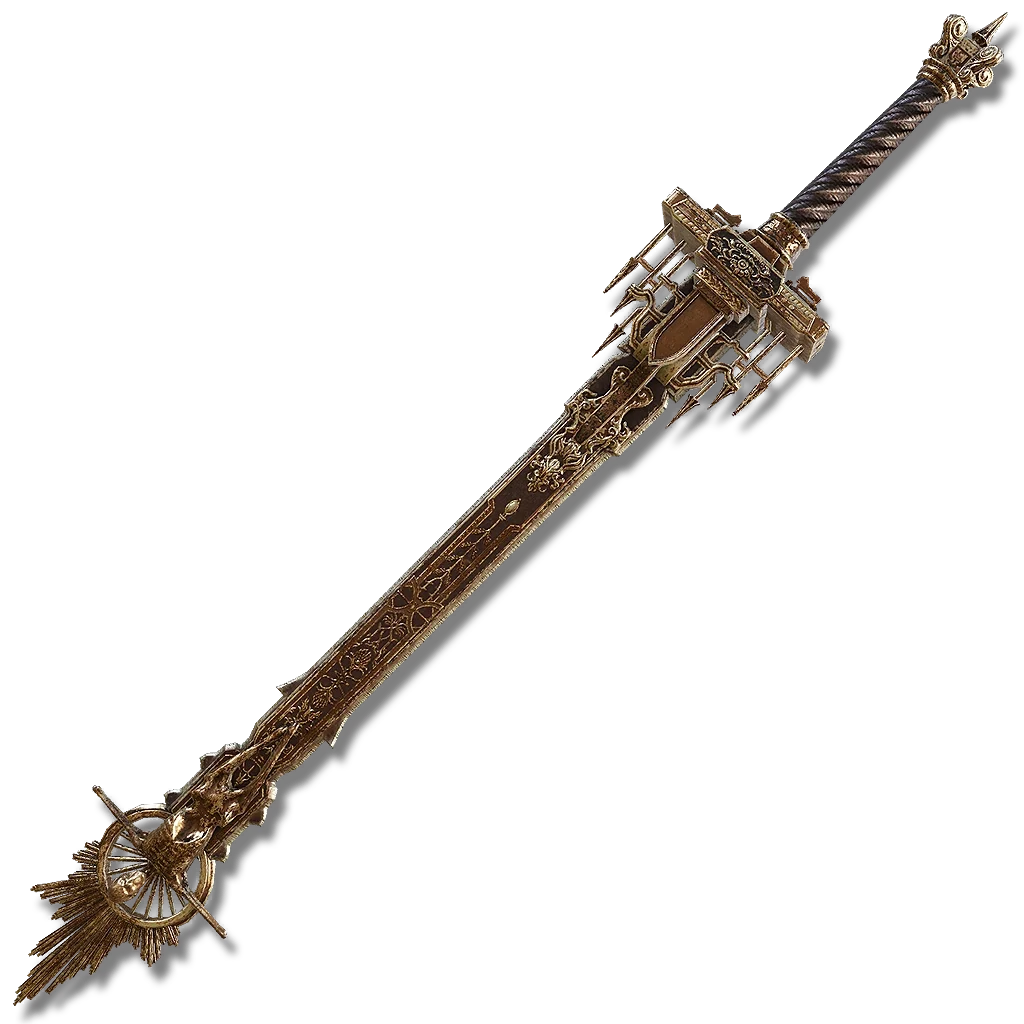 Golden Epitaph
A sword made to commemorate the death of Godwyn the Golden, first of the demigods to die. Infused with the humble prayer of a young boy; "O brother, lord brother, please die a true death."
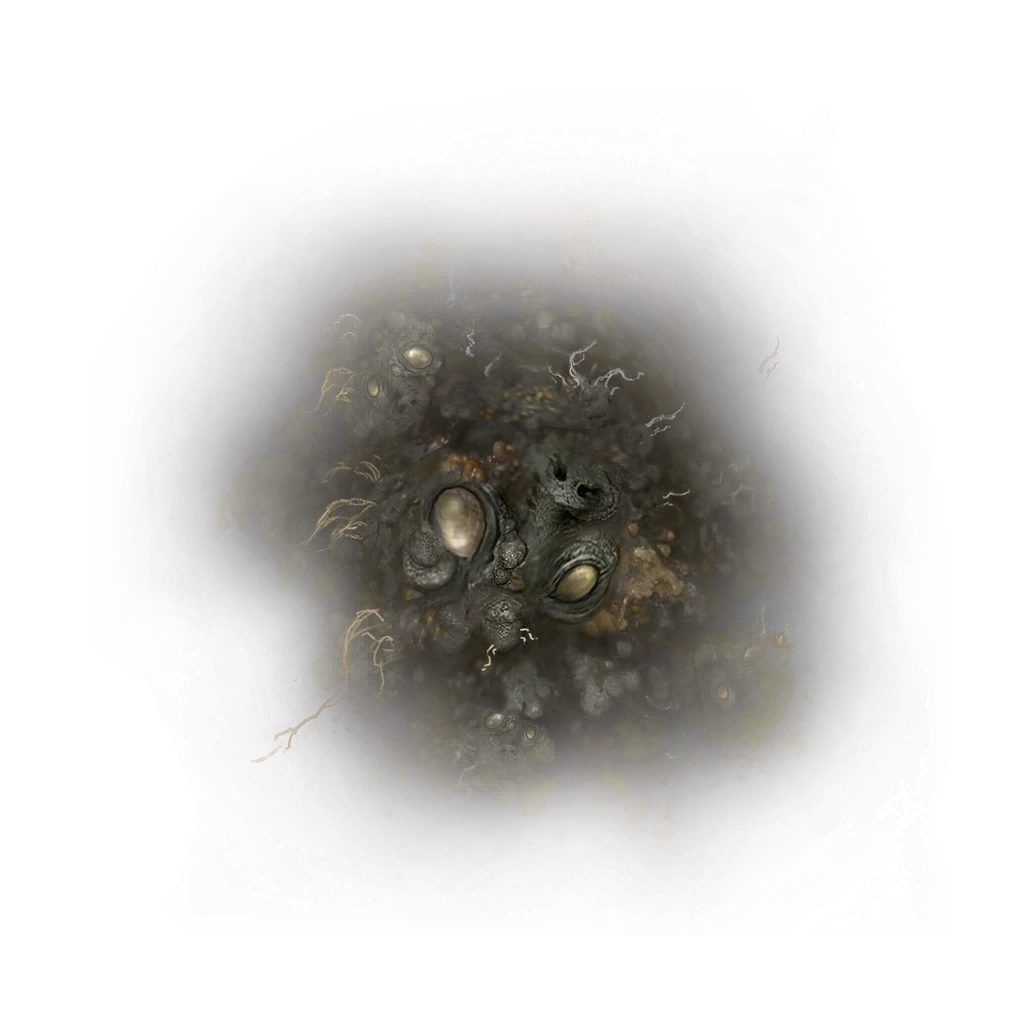 Prince of Death's Pustule
Raises vitality. (Vitality governs resistance to the effects of Death.) It is said that this pustule came from the visage of the Prince of Death, he who used to be called Godwyn. As First Dead of the demigods, it's said he's buried deep under the capital, at the Erdtree's roots.
 ◈ CHARACTER
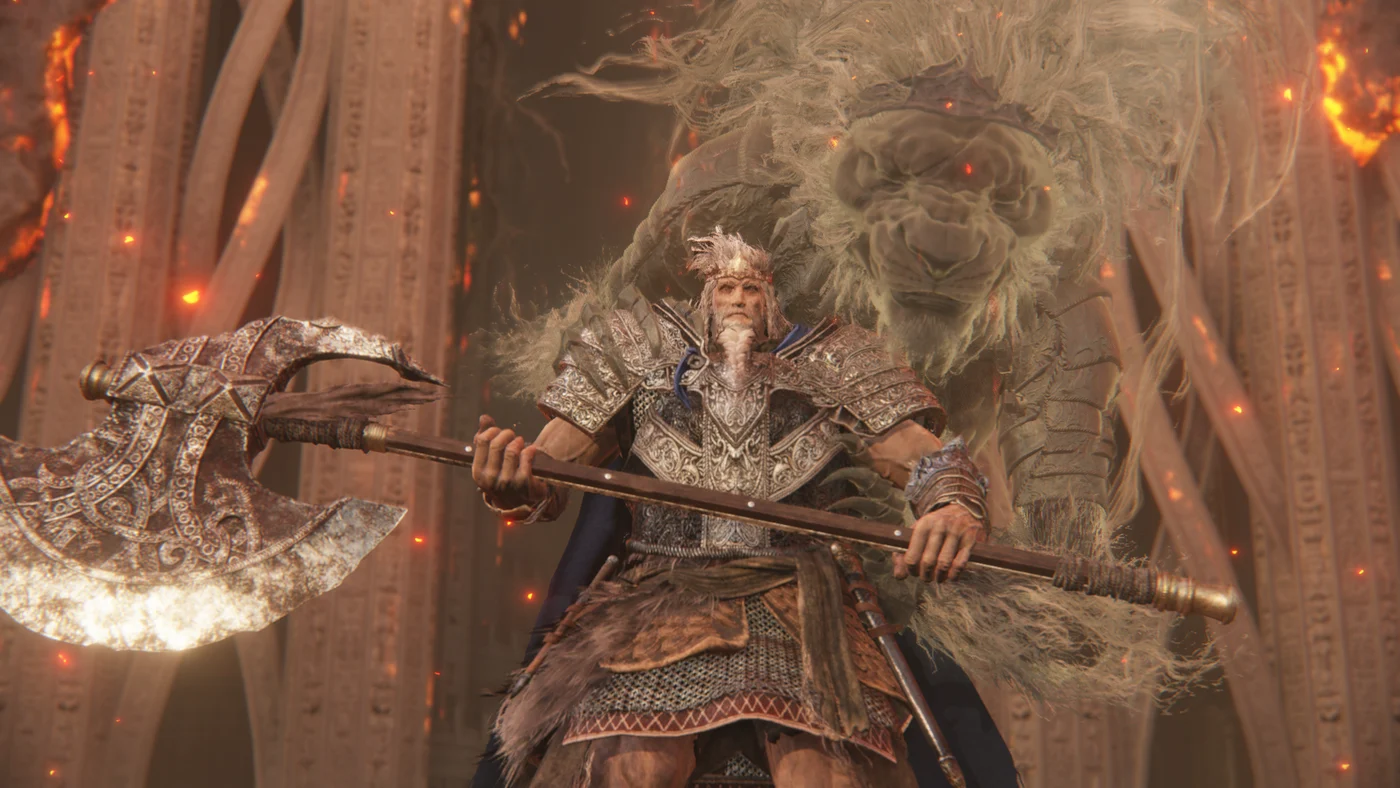
Godfrey / Hoarah Loux
First Elden Lord · Warrior of the Badlands▾
Godfrey / Hoarah Loux
"Tarnished Warrior. Spurned by the grace of gold. Be assured, the Elden Ring resteth close at hand. Alas, I am returned. To be granted audience once more. Upon my name as Godfrey, the first Elden Lord!"
Approach
"That will be all. Thou didst me good service, Serosh. I have given thee courtesy enough. Now I fight as Hoarah Loux! Warrior!"
Phase 2, Hoarah Loux
Godfrey was the first mortal warrior chosen by Marika as Elden Lord, a warchief of the Badlands, leader of his clan, who took the war name Hoarah Loux. His fighting spirit was so ferocious that Marika had him accept Serosh, a spirit of leisure and civility grafted onto his back, to tame his warrior's savagery and render him fit to reign with dignity. Together, they founded the Age of the Erdtree. His campaigns were legendary: the War against the Giants (alongside Marika, confining the Flame of Ruin), the Siege of Castle Morne ("Lord Godfrey, at the end of his campaigns, his armies of gold undefeated and untamed"), and the territorial establishment of the Golden Order.
When the last great war was won, Marika deliberately stripped him of his grace and exiled him with his Tarnished warriors, forcing the Long March of the Tarnished out of the Lands Between. The theoretical explanation: Marika did not want static peace; she wanted the Tarnished to grow through adversity to become worthy champions. Stripped of grace, Godfrey shed his royalty and returned to being simply Hoarah Loux, the warrior. He fathered descendants during this exile. At his final return to Leyndell in the boss fight, he acknowledges Morgott: "Morgott, thou'st fought long and hard." He then removes Serosh ("Thou'st given me enough leisure, Serosh") and reveals Hoarah Loux, the original bestial fighter. His death carries total warrior satisfaction: he finally finds a worthy opponent. The Godfrey Icon Talisman speeds up charged skills, reflecting his mastery of warfare beyond brute force.
◆ Sources
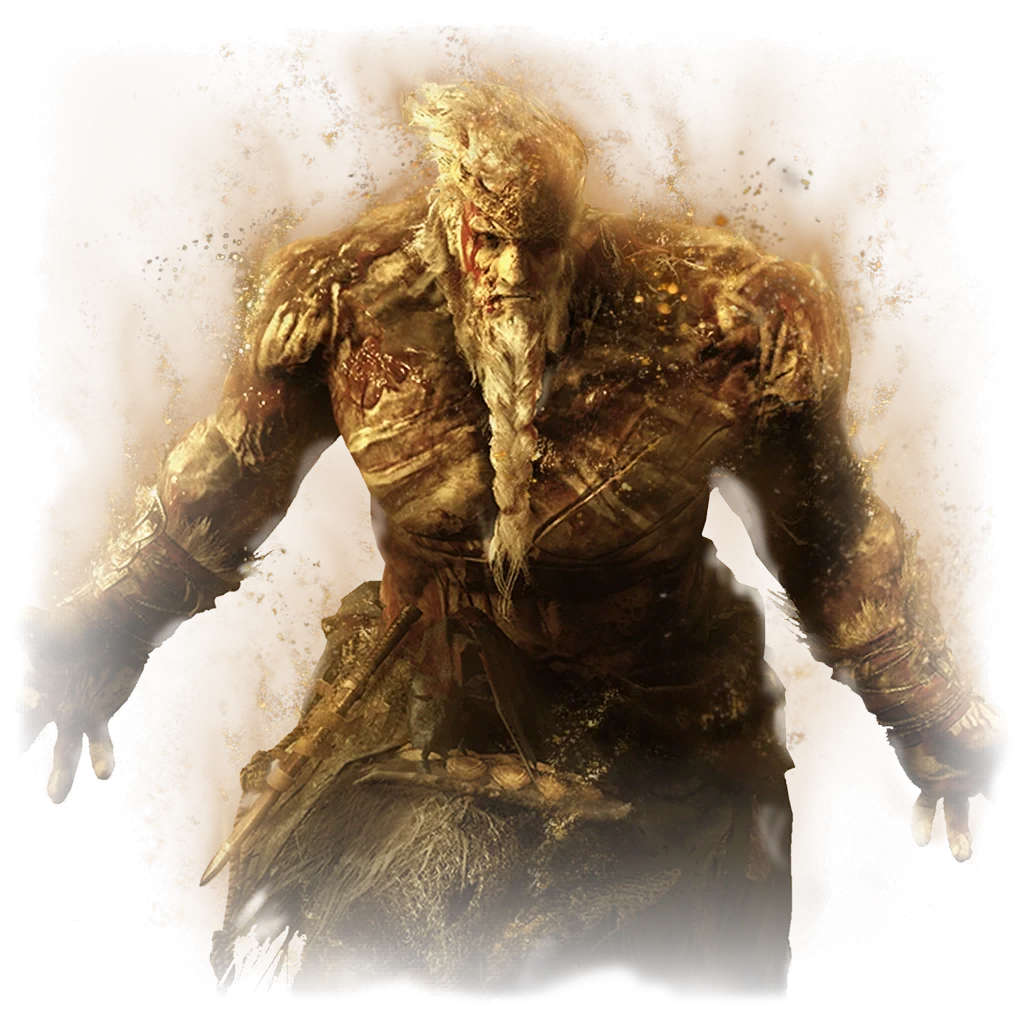 Remembrance of Hoarah Loux
Remembrance of the warrior Hoarah Loux, hewn into the Erdtree. The power of its namesake can be unlocked by the Finger Reader. Alternatively, it can be used to gain a great bounty of runes. When Godfrey, first Elden Lord was robbed of his grace, becoming Tarnished, he took with him his kinfolk and left the Lands Between. After the Long March of the Tarnished came to an end, Godfrey divested himself of kingship, becoming a simple warrior once more.
Thou'rt unfit even to graft... Great Godfrey, didst thou witness? ...I am the Lord of all that is Golden... ...And one day, we'll return together... ...To our home, bathed in rays of gold... sex quīnque quattuor trēs duo ūnus nihil nihil nihil Miquella is mine and mine alone. Now, surrender yourself. To my blood, to our coming dynasty.
Shabriri (Dialogue)Has he no shame, the big girl's blouse? And to think, he's the blood of Godfrey! Last of the golden lineage, though you almost wouldn't know it to look at him. I almost feel sorry for the chap the more I think of it.
Dung Eater (Dialogue)Godrick the Grafted, Lord of Stormveil. Despite being the blood of Godfrey, first Elden Lord, he's a grotesque old fool, grasping for power. His castle lies upon the cliff to Limgrave's northwest. ...but I suspect you know that well enough already. General Radahn, the famed Red Lion and scourge of the stars, is a ferocious warrior.
However. When Godfrey, first Elden Lord, was hounded from the Lands Between, Radagon left Rennala to return to the Erdtree Capital, becoming Queen Marika's second husband and King Consort. Taking the title...of second Elden Lord. The mystery endures, to this day...
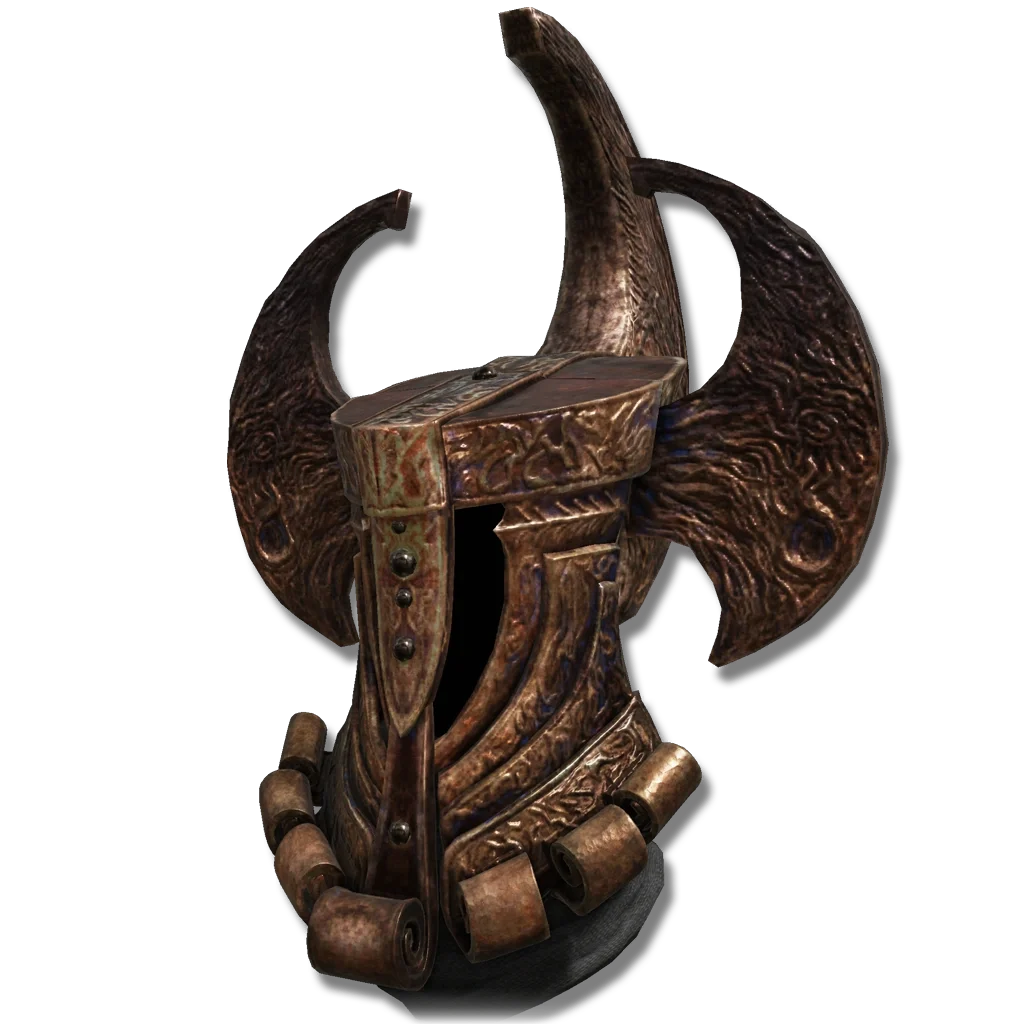 Crucible Axe Helm
Helm of the Crucible Knights who served Godfrey, the first Elden Lord. The axe ornamentation is the knight Ordovis's mark, displayed also by his men. Holds the power of the crucible of life, the primordial form of the Erdtree.
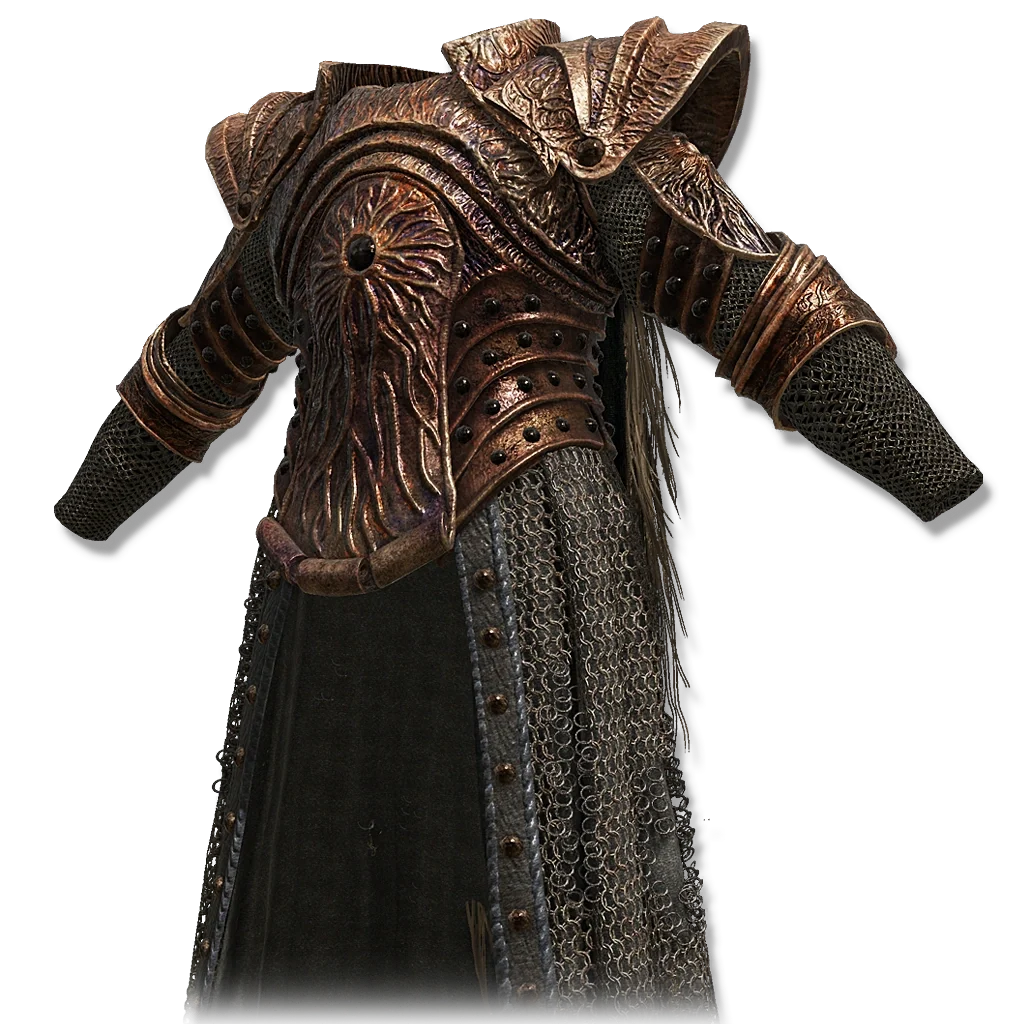 Crucible Axe Armor
Armor of the Crucible Knights who served Godfrey, the first Elden Lord. Worn by the knight Ordovis and his men. Holds the power of the crucible of life, the primordial form of the Erdtree.
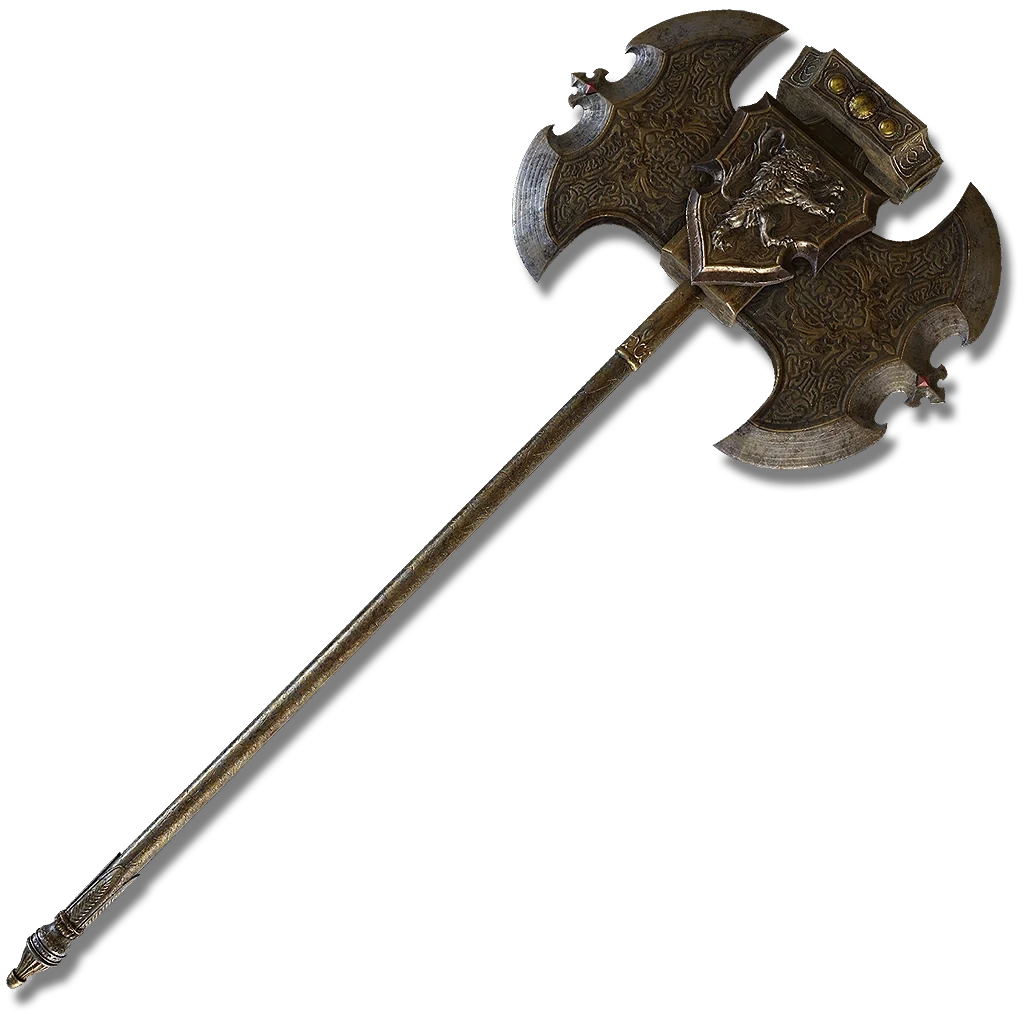 Axe of Godrick
Greataxe wielded by Godrick the Grafted. This golden battleaxe is emblazoned with the figure of a beast, representing the strength of Godfrey, First Elden Lord and patriarch of the golden lineage. "I command thee kneel! For I am the lord of all that is golden!"
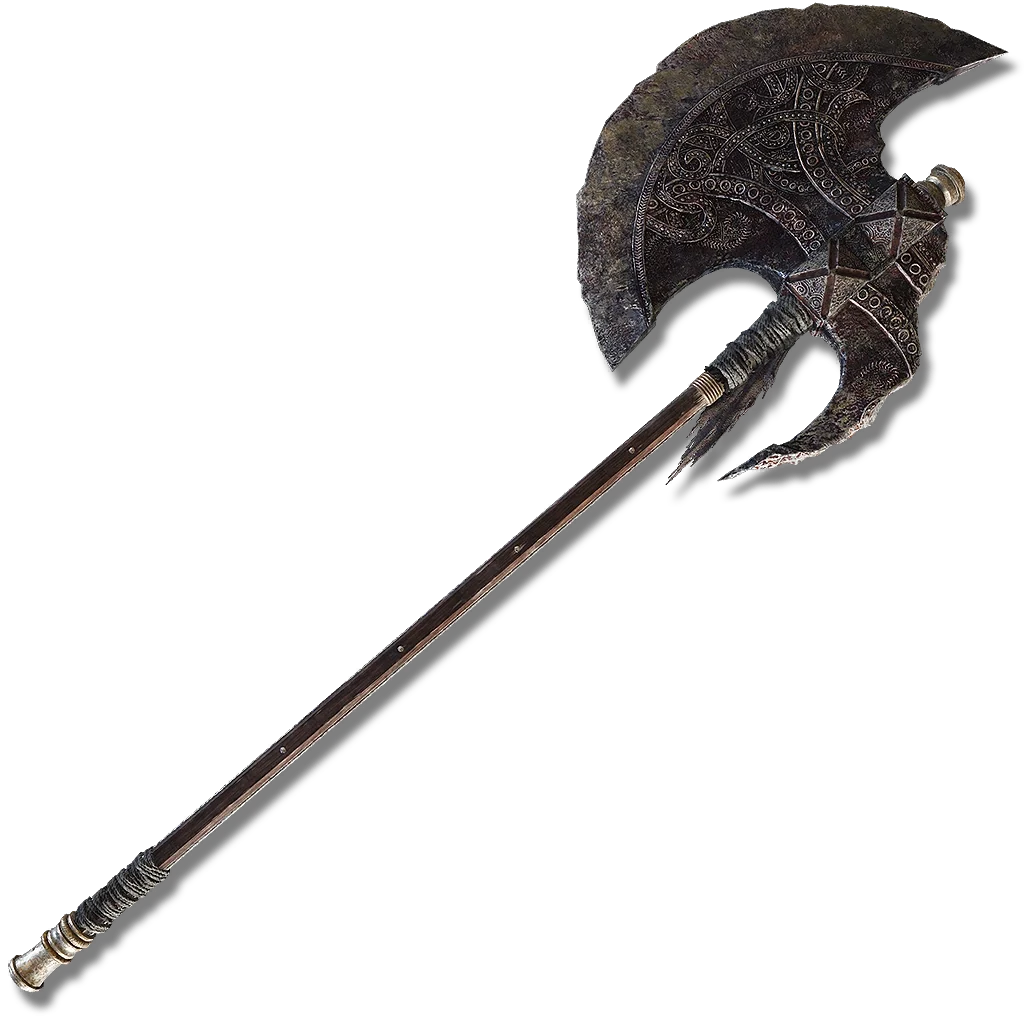 Axe of Godfrey
Weapon of Godfrey, Elden Lord. It was broken in a battle fought as leader of the Tarnished during the Long March. This weapon is symbolic of Godfrey's vow to conduct himself as a lord, later becoming an emblem of the golden lineage. In the days of the past, a crown was warranted with strength.
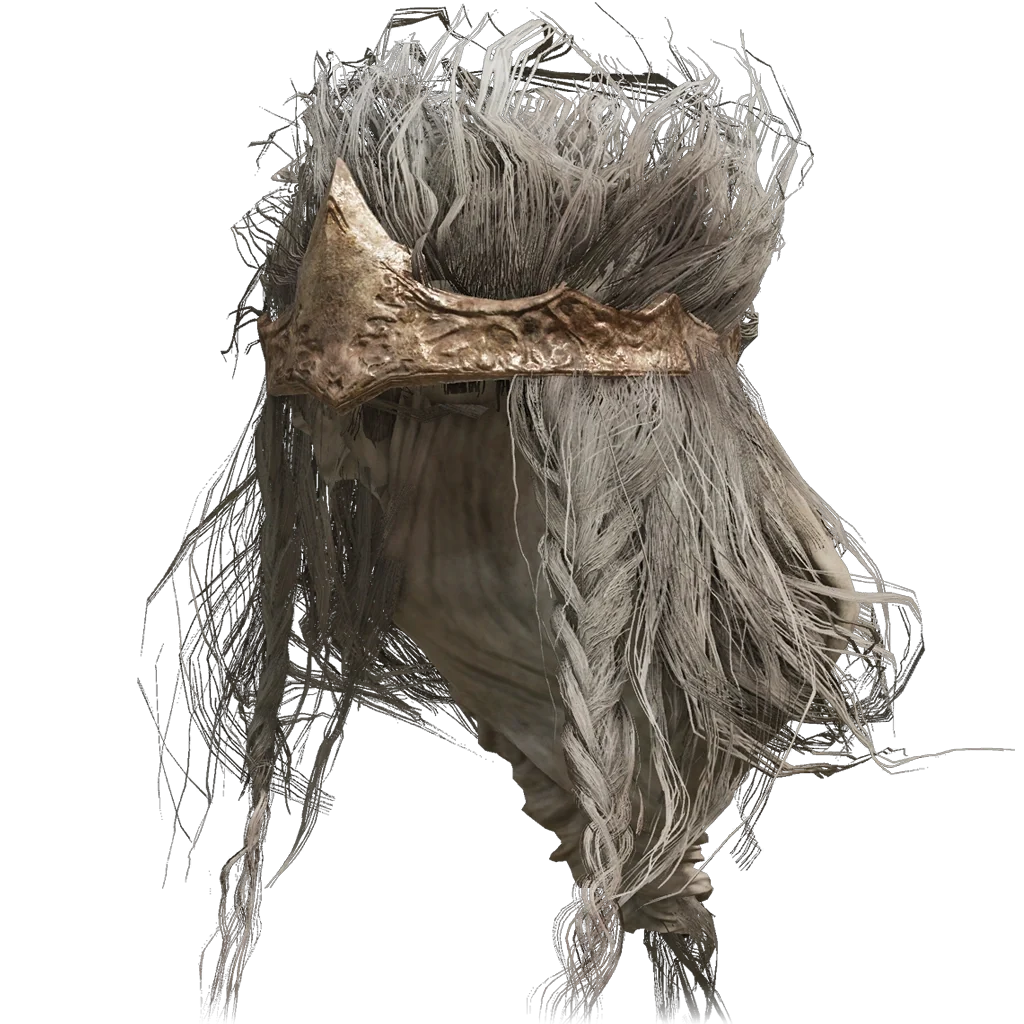 Elden Lord Crown
Crown of Godfrey, the first Elden Lord. The age of the Erdtree began amongst conflict, when Godfrey was lord of the battlefield. He led the War against the Giants. Faced the Storm Lord, alone. When his last worthy enemy fell. And it was then, as the story is told, that the hue of Lord Godfrey's eyes faded.
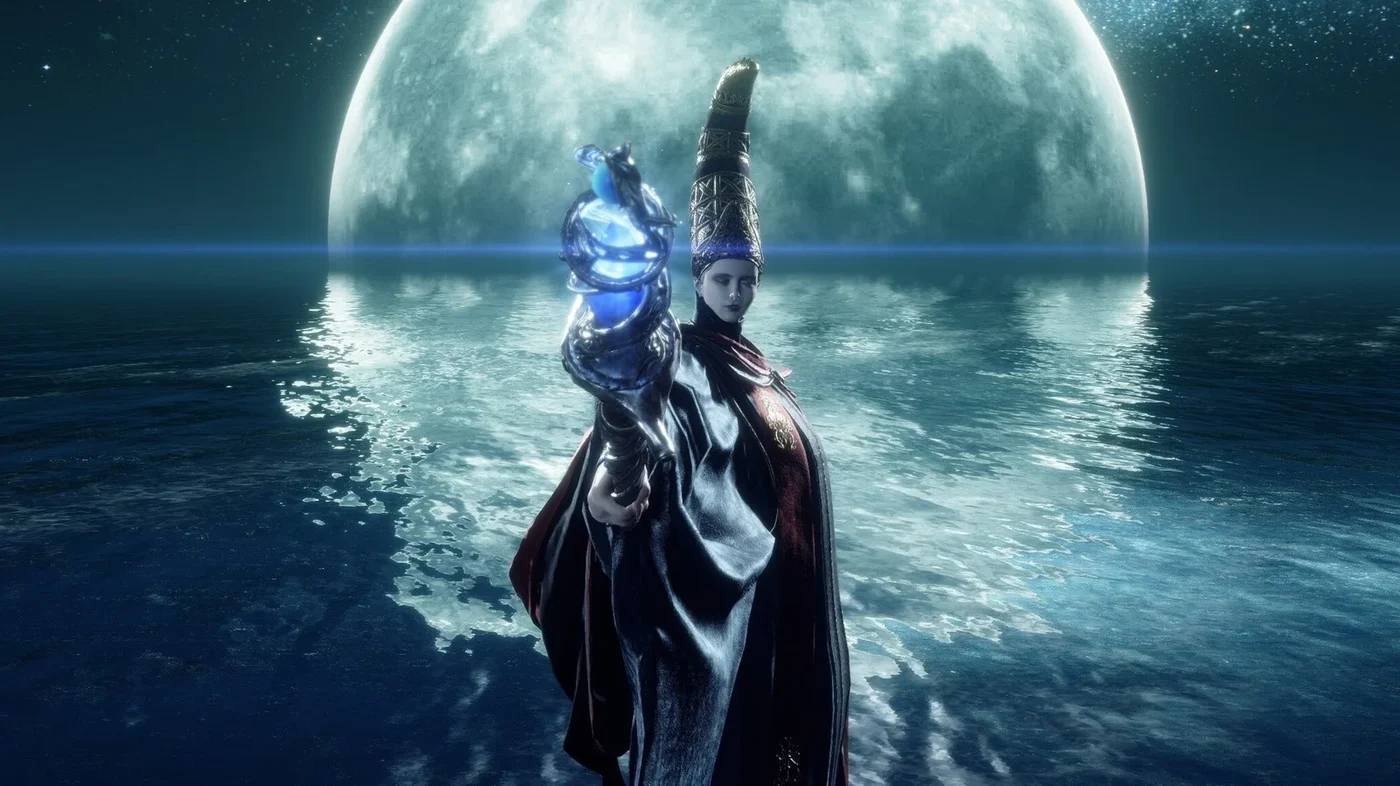 ◈ CHARACTER
Rennala, Queen of the Full Moon
Carian Queen · Mistress of Raya Lucaria▾
Rennala, Queen of the Full Moon
"Come, sweetings, become what ye desire. Come, sweetings, time to be born, anew. Be not afeard, little culver. Hush, little culver. Hush, fair maid. I will soon birth thee anew, a sweeting fresh and pure..."
Cradling the egg
"After death, quite the tale will be thine to tell. Of the last Queen of Caria, Rennala of the Full Moon. And the majesty of the night she conjureth."
Defeat
Rennala was the champion of the Carian house and the undisputed mistress of the Academy of Raya Lucaria, the greatest glintstone sorcery institution in the Lands Between. In her youth she was "a prominent champion who charmed the academy with her lunar magic, becoming its mistress." She led the Glintstone Knights of Caria, founded the Carian royal house, and was Radagon's military adversary in the Liurnian Wars. When Radagon defeated her forces, he made penance by bathing in celestial dew, pledged his love, and married her, an accord that united the House of the Erdtree and the House of the Moon. Their union produced three children: Radahn, Rykard, and Ranni.
Radagon abandoned her to return to Leyndell and become Marika's second consort, an abandonment that irreparably broke Rennala. The Academy then rebelled against the Carian royals, dispossessing her of her title and confining her to the Grand Library. She retreated there with the Amber Egg Radagon had gifted her, the only remnant of that love, and devoted herself to a forbidden rite: reincarnation. Her students (the "sweetings") defended the library under the influence of a charm tied to the Egg. In her grief-induced madness, she cradled the egg while singing lullabies, reliving her memories. She offers players reincarnation through the Amber Egg (Larval Tear required), "Come, sweetings, become what ye desire." Her Great Rune rests within the Amber Egg, Radagon's gift, and cannot be restored via a Divine Tower as she is not a true Shardbearer in the full sense. Enia notes "her Great Rune remains in the amber egg that she so lovingly cherishes." Her daughter Ranni says "my sweet Ranni" in a cutscene, revealing their mutual tenderness.
◆ Sources
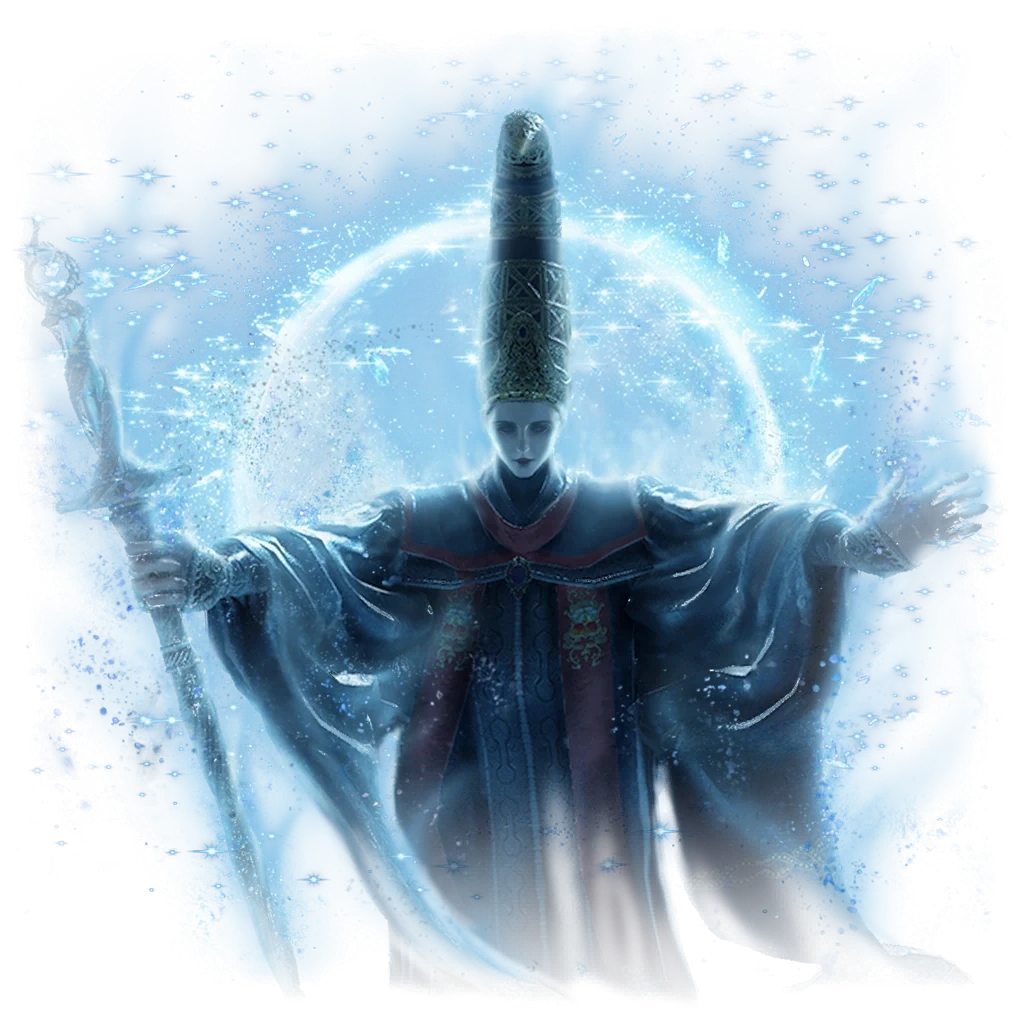 Remembrance of the Full Moon Queen
Remembrance of Rennala, Queen of the Full Moon, hewn into the Erdtree. The power of its namesake can be unlocked by the Finger Reader. Alternatively, it can be used to gain a great bounty of runes. In her youth, Rennala was a prominent champion who charmed the academy with her lunar magic, becoming its master. She also led the Glintstone Knights and established the house of Caria as royalty.
Come, sweetings, time to be born, anew. Be not afeard, little culver. Here's your prize. Oh yes, I should say, If you venture north to Raya Lucaria, and come across a venerable blacksmith who's a little on the large side... Tell him I sent you. And he'll be sure to treat you right.
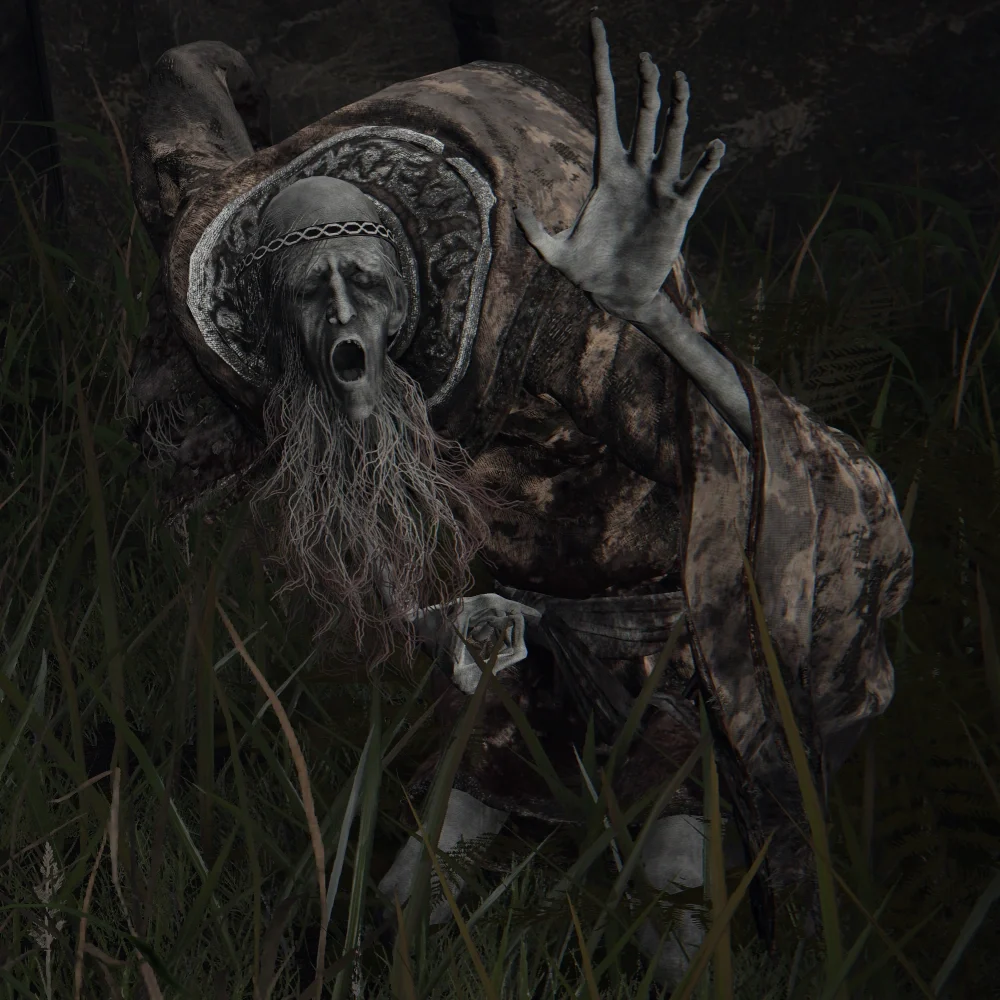 Old Albus (Dialogue)
Have you ever wished you might be born again? Well, they say that Rennala of Raya Lucaria has the power to help people be reborn. Oh? Me? M'lord, it shouldn't take me long. I'm off to see Rennala of Raya Lucaria. I'll be reborn, fresh and new. M'lord.
 Boc the Seamster (Dialogue)
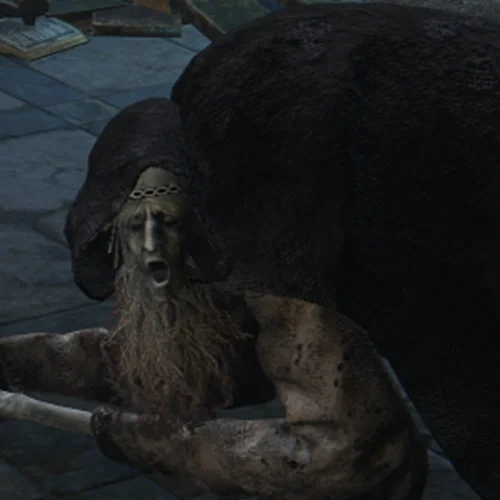 Preceptor Seluvis (Dialogue)
But one must choose one's masters wisely. I was exiled from the Academy of Raya Lucaria, as a reviled, apostate witch. Do you still wish to learn from me? Well, you are a piece of work. We can speak more later, my apprentice. If you recall, I was exiled from the Academy of Raya Lucaria. It was for attempting to restore the primeval current of glintstone sorcery. The toothless pedantry peddled by the Carian royal family can rot for all I care.
Dung Eater (Dialogue) ◈ CHARACTER
Starscourge Radahn
Commander General · Bane of the Stars▾
Starscourge Radahn
"General Radahn is cursed ever to wander. Eaten from the inside, by Malenia's scarlet rot, his wits are long gone. Now he gathers the corpses of former friends and foes alike, gorging on them, like a dog. Howling at the sky."
Festival of Combat
Radahn is the son of Rennala and Radagon, universally acknowledged as the strongest of all demigods in raw martial prowess. A general with bright red hair inherited from Radagon, he studied gravitational magic at Sellia, Town of Sorcery, during his youth for a singular and revealing reason: his beloved horse Leonard was a starved and frail steed, incapable of bearing him. Rather than ever abandon Leonard, Radahn mastered graviturgy to nullify his own weight and ride Leonard without crushing him. This devotion to his horse is documented across multiple item descriptions.
Nicknamed "Starscourge," he fought and defeated the constellations themselves, stopping the motion of the stars through his gravitational sorceries, a feat with decisive lore consequences, as it held Ranni's fate in stasis (Carian destiny is guided by stars). His Great Rune is described by Enia as "magnificent" and boosts all stats of the wearer. During the Shattering, he fought Malenia at Caelid in the most devastating duel of the war. The Scarlet Rot released by Malenia (forced by the battle's impasse) progressively devoured his brain, plunging him into madness. Driven insane, he roamed the Wailing Dunes of Caelid devouring the corpses of his former allies and enemies "like a dog," howling at the sky, described as such by Jerren at the Festival. The Radahn Festival at Redmane Castle was a war commemoration: champions came to fight the mad General and offer him the honorable death he could not give himself. The survivors of his army stayed in Caelid, protecting themselves from the rot with fire. Radahn's gravitational spells (Collapsing Stars, Starscourge Greatbow moves, Radahn's Rain) are his technical legacy from Sellia. The sheer scale of his armor speaks volumes: his mass required an oversized suit worn by a miniature horse made possible only by graviturgy.
◆ Sources
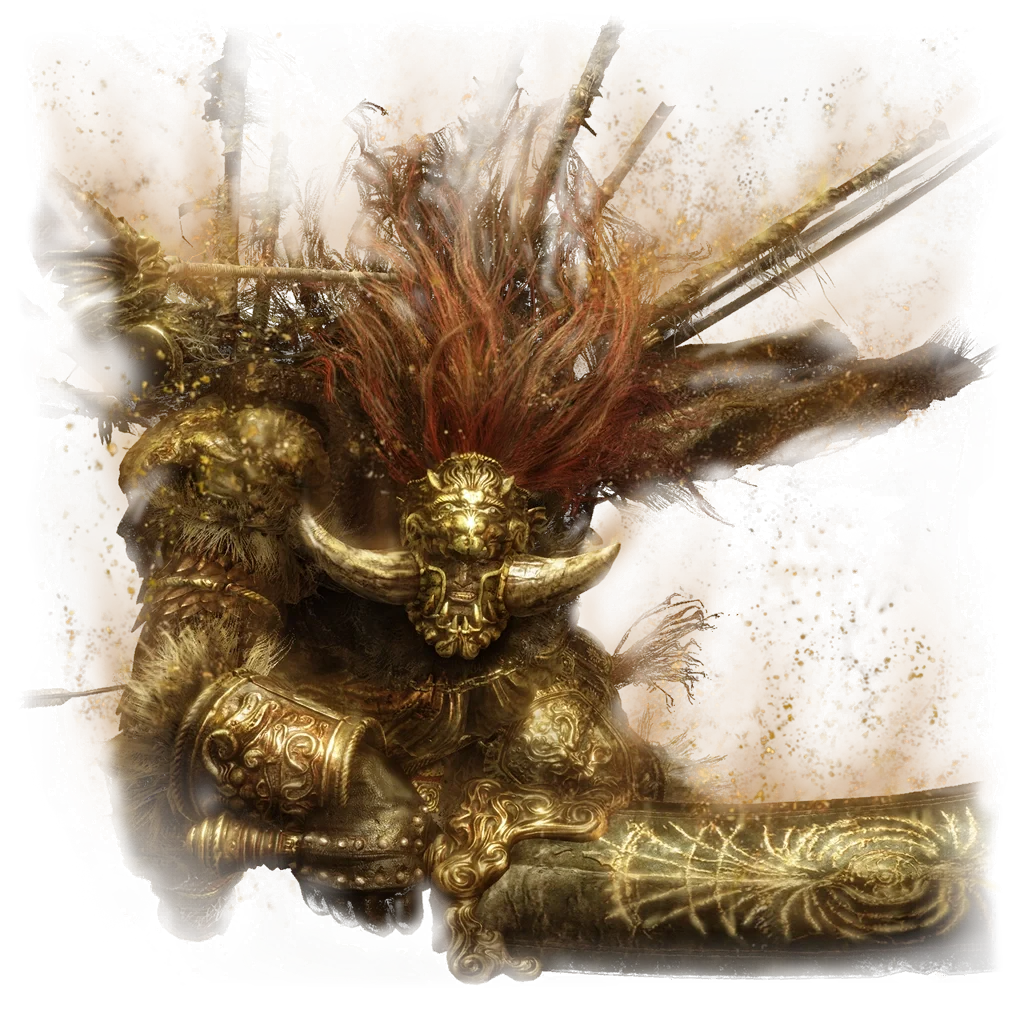 Remembrance of the Starscourge
Remembrance of Starscourge Radahn, hewn into the Erdtree. The power of its namesake can be unlocked by the Finger Reader. Alternatively, it can be used to gain a great bounty of runes.
Old Albus (Dialogue)By the by, do you know for whom this festival is being held? Well, it is none other than General Radahn himself! To think, I could face a great champion of the Shattering, a demigod in the flesh... In truth I quiver at the thought, such is his frightful repute. Do you know for whom this festival is being held?
Boc the Seamster (Dialogue)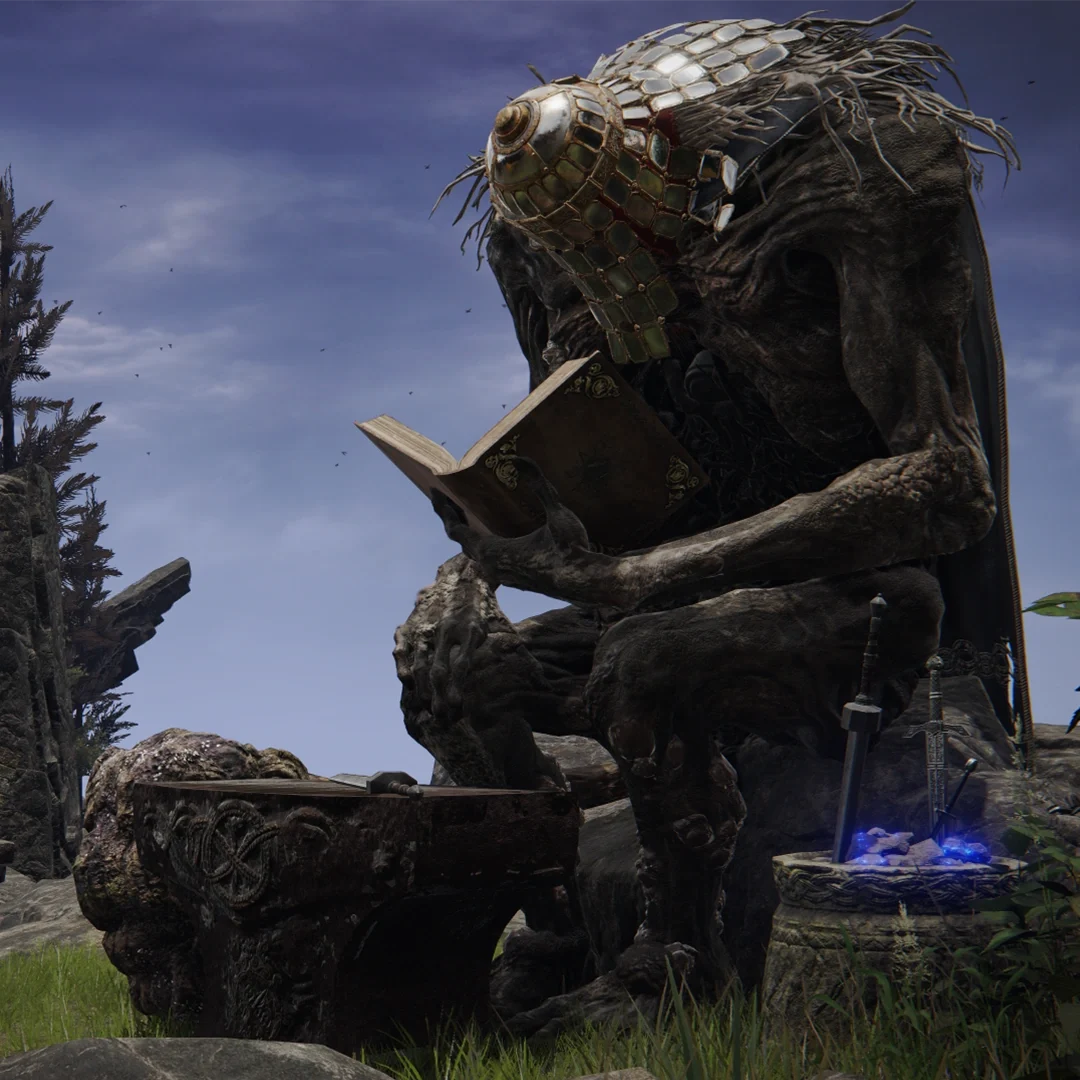 War Counselor Iji (Dialogue)
Lady Ranni has explained everything. You've defeated General Radahn, unlocking the stars. A grand reward, justly procured by any measure. Again, I am Iji❞. The pleasure is mine.
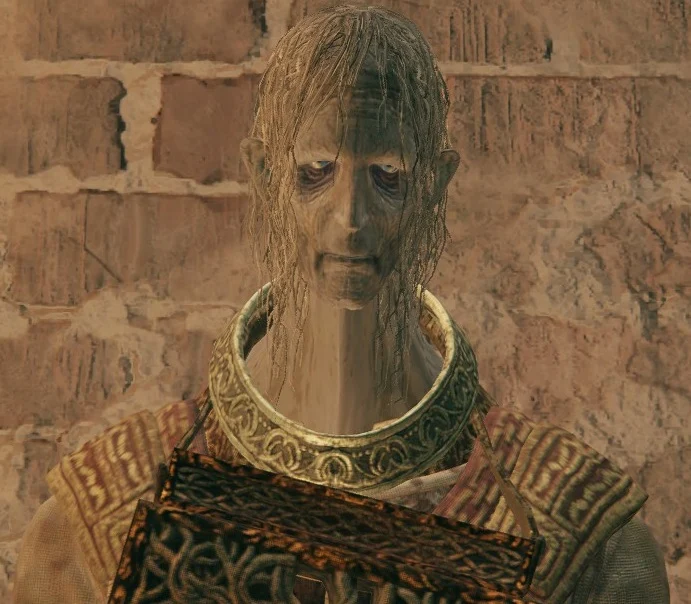 Gatekeeper Gostoc (Dialogue)
Godrick must have an idea. About the vengeance sought by General Radahn, to whom I swore my oath. ...Yes, Godrick's corpse will know what to do... Godrick must know. That of all the grudges born of the Shattering, Malenia the Rotted is the object of the most profound. Ahh, my head is throbbing, everything is bright red... Master Radahn, is this how it feels to ferment with vengeance? I can hardly keep from trembling... Well, well, you've made yourself a target of vengeance.
And the fate of your mistress, Ranni. But long ago, General Radahn challenged the swirling constellations, and in a crushing victory, arrested their cycles. Now, he is the force that repulses the stars. If General Radahn were to die, the stars would resume their movement. And so, too, would Ranni's destiny. My apprentice, what happened to your nail?
Shabriri (Dialogue)Don't make me laugh. First he hid himself amongst the womenfolk to flee the capital, then hid from Radahn in that castle... Then he insulted Malenia, lost to her in battle, only to lick her boots rather than die like a man. Has he no shame, the big girl's blouse?
Dung Eater (Dialogue)Though rather vexingly, I realise that if I still had my sword arm, I could have aided you in battle. Now, I'm tracing the path Malenia took, after unleashing the power of the scarlet rot, during her battle with General Radahn, in the Caelid Wilds. I should like to meet her, this vanished woman. I think she's in the north.
Millicent (Dialogue)The dignity, the sense of self, that allowed her to resist the call of the scarlet rot. The pride she abandoned, to meet Radahn's measure. There is something I must return to Malenia. The will that was once her own. A new god to forge a new Order. Since Malenia fought Radahn, and the great scarlet flower blossomed in Aeonia, I have dedicated myself to her. And to the resplendence of the Order of Rot. The cycle of decay and rebirth.
Convene the festival of war. Honor General Radahn, with a warrior's glory. It's in your hands, Sir Jerren... ... Let me see it, if only one last time.
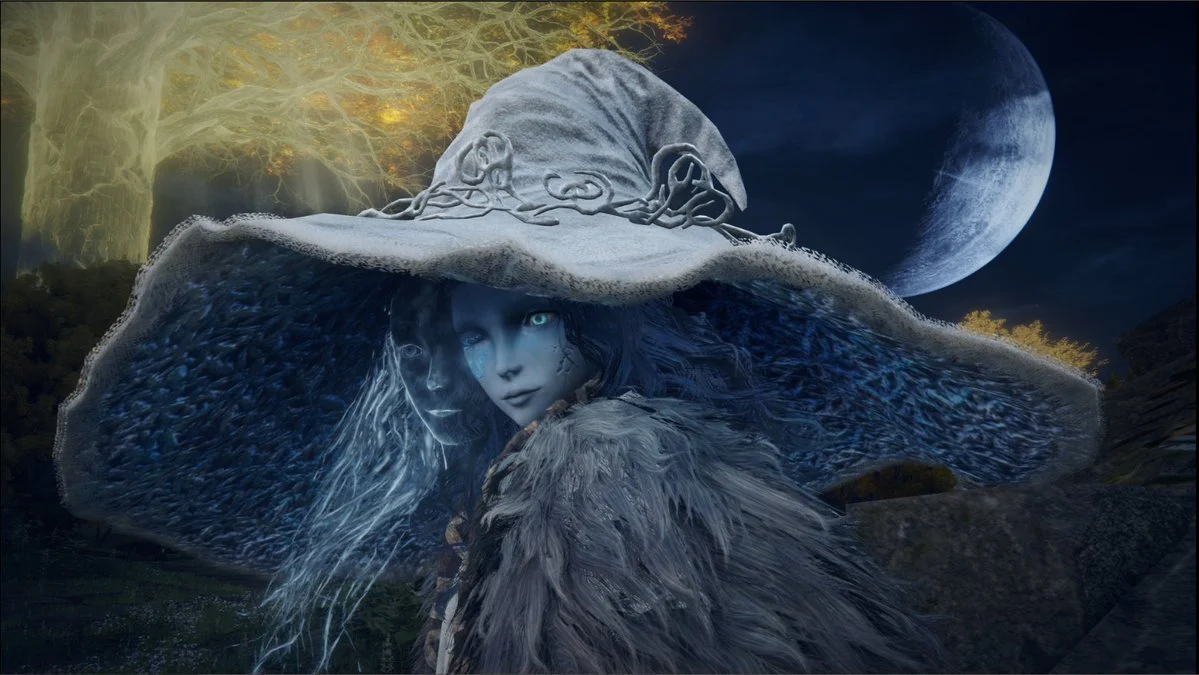 ◈ CHARACTER
Ranni the Witch
Lunar Princess · Empyrean · Architect of the Night▾
Ranni the Witch
"Now cometh the age of the stars. A thousand year voyage under the wisdom of the Moon."
Age of the Stars
Ranni is the daughter of Rennala and Radagon, Lunar Princess and sorceress, one of the three Empyreans of this age alongside Malenia and Miquella. The most politically active figure among all demigods, she is the architect of the Night of the Black Knives: during the Golden Age of the Erdtree, she stole a fragment of the Rune of Death from Maliketh via a "terrible and forbidden rite," forged the cursed Black Knives, and orchestrated the assassination of Godwyn the Golden, the first demigod to die. This death was deliberately partial: Godwyn's soul was killed without killing his body. Simultaneously, Ranni killed her own Empyrean flesh in the inverse direction (body dead, soul preserved in a porcelain doll). These two inverse deaths severed the Cursemark of Death from the control of the Two Fingers and the Greater Will.
She transferred her spirit into a porcelain doll crafted by Carian sorcerers. Her declared goal: overthrow the Golden Order, carry souls and Order out of the Lands Between, and inaugurate an Age of the Stars, a world governed by the cold moon and distant stars, where life, souls, and order are separated from the earth, making the certainties of sight, emotion, faith, and touch all become impossibilities. "Mine will be an order not of gold, but the stars and moon of the chill night." She ruled from Ranni's Rise through three vassals: Blaidd (half-wolf shadow-vassal), Iji❞ (giant Carian smith-counselor), and Seluvis (sorcerer-preceptor, secretly a traitor plotting to turn her into a puppet). She calls the player "my Lord", a unique instance in the game. The spectral face on Ranni's doll is visually identical to Melina's face, including the mark over the left eye, a mysterious connection between the two. She says "I love you" to Blaidd upon her departure, knowing she was condemning him to madness.
◆ Sources
Finger Reader Enia (Dialogue)Boc the Seamster (Dialogue)War Counselor Iji (Dialogue)Gatekeeper Gostoc (Dialogue)I see... You must be Ranni's new hireling. You must be Ranni's new girl. Yes, yes, I've heard all about you. I am Seluvis, preceptor in the sorcerous arts. Come and pay me a visit... Should you wish to be of actual service to Mistress Ranni. If it were up to me, I wouldn't waste my time on the likes of you. But who am I to stand against the wishes of my Lady? Which I aspire to cherish with these very hands. A ploy to fool even Lady Ranni... How does that sound?
Preceptor Seluvis (Dialogue)Well, I haven't heard that name in an age. Then you must serve Princess Ranni? The next time you speak to Iji, tell him this: The festival of Radahn will surely set Ranni's fate back into motion. By the by… Is that old fool still hammering out weapons? His enormous frame, cramped in that little place... My thanks, for the aid given. I heard from Iji that Lady Ranni might have found herself a champion. But I didn't know he was talking about you. You've helped me fulfil an old promise.
The stars alter the fate of the Carian royal family. And the fate of your mistress, Ranni. But long ago, General Radahn challenged the swirling constellations, and in a crushing victory, arrested their cycles. Now, he is the force that repulses the stars. If General Radahn were to die, the stars would resume their movement. And so, too, would Ranni's destiny. My apprentice, what happened to your nail? Perhaps you have a different view, but...
Dung Eater (Dialogue)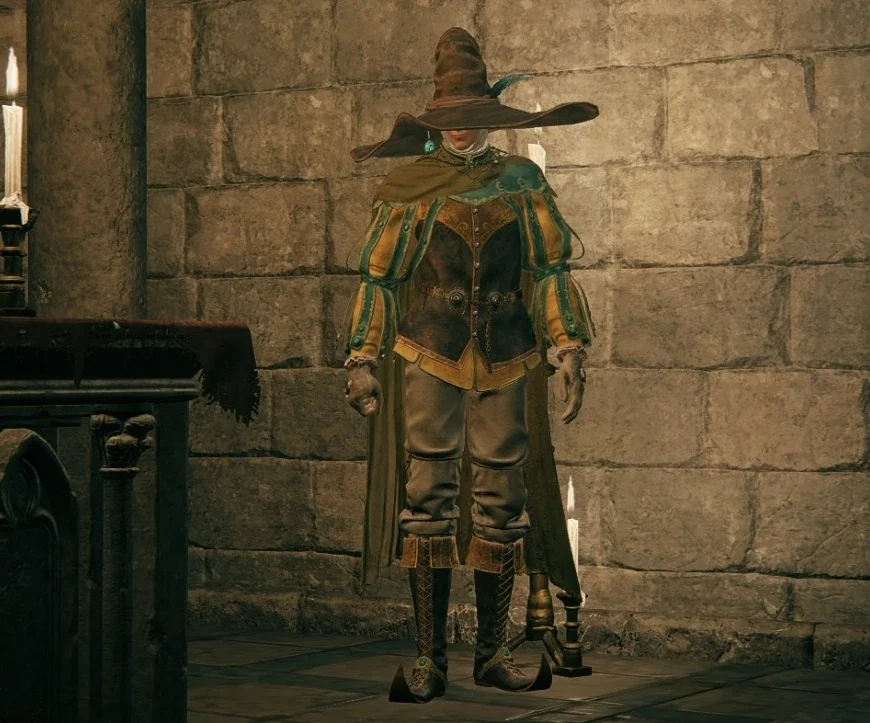 Sorcerer Rogier (Dialogue)
And obscure, forever, the transgressions of the princess. ... Lady Ranni, we have long awaited you. I pray for your house's swift revival. May the full moon shine upon Caria.
 ◈ CHARACTER
Godrick the Grafted
Lord of Stormveil · Diluted Lineage▾
Godrick the Grafted
"He he he he he... My sincerest gratitude. I thought I'd never wrench that thing open. You're the finest customer a man ever had!"
Boss Fight
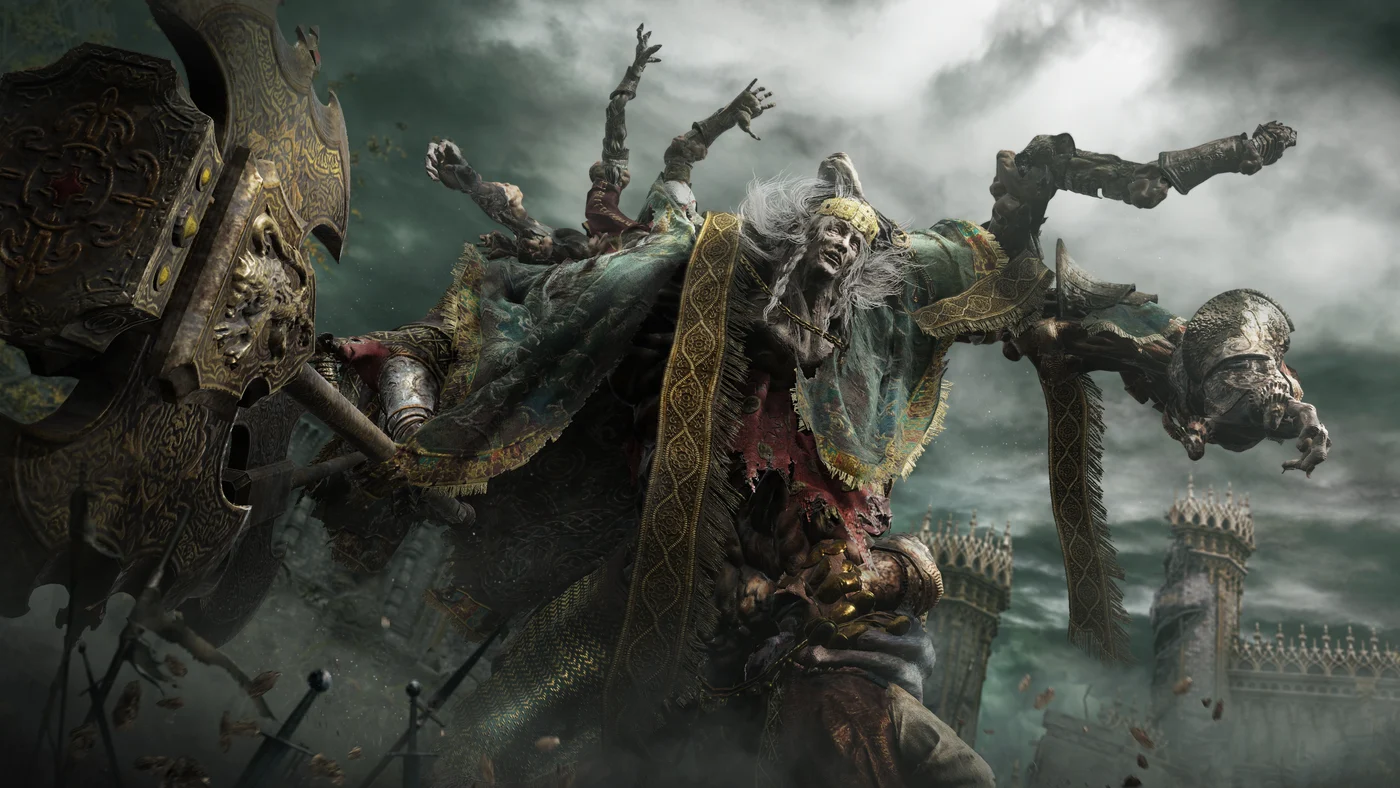
Godrick the Grafted is a demigod of diluted blood, a distant cousin of Marika, last scion of Godfrey's lineage, his divine blood so diluted that Enia describes him as "the most lowly of all demigods, the runt of the litter, his divine blood sorely diluted." To compensate for this genetic inferiority, Godrick developed a monstrous obsession with grafting: he harvested limbs from creatures and fallen warriors to graft them onto his own body, attempting to claim their strength. Stormveil Castle, his domain on the Limgrave cliffs, was populated with his Chrysalids, grafting victims living as hybrid creatures, the fate that all of Roderika's companions suffered.
His cowardice is documented by Kenneth Haight: "First he hid among the women to flee the capital, then hid from Radahn in that castle... He insulted Malenia, lost to her in combat, and chose to lick her boots rather than die honorably." His motto, repeated in boss dialogue and sung by his soldiers, reveals pathetic nostalgia: "One day, we'll return together, to our home, bathed in rays of gold." In Phase 2 of his boss fight, he tore off and grafted a dragon's arm onto himself in a desperate bid for more power. Gostoc (Stormveil's gatekeeper) routinely betrayed arriving Tarnished by guiding them into traps, and after Godrick's death, stomps and spits on his corpse. The Remembrance of the Grafted: "A feeble man who sought power through the grotesque act of grafting." The Grafted Blade Greatsword is forged from multiple weapons and limbs, art of war in the image of its creator.
◆ Sources
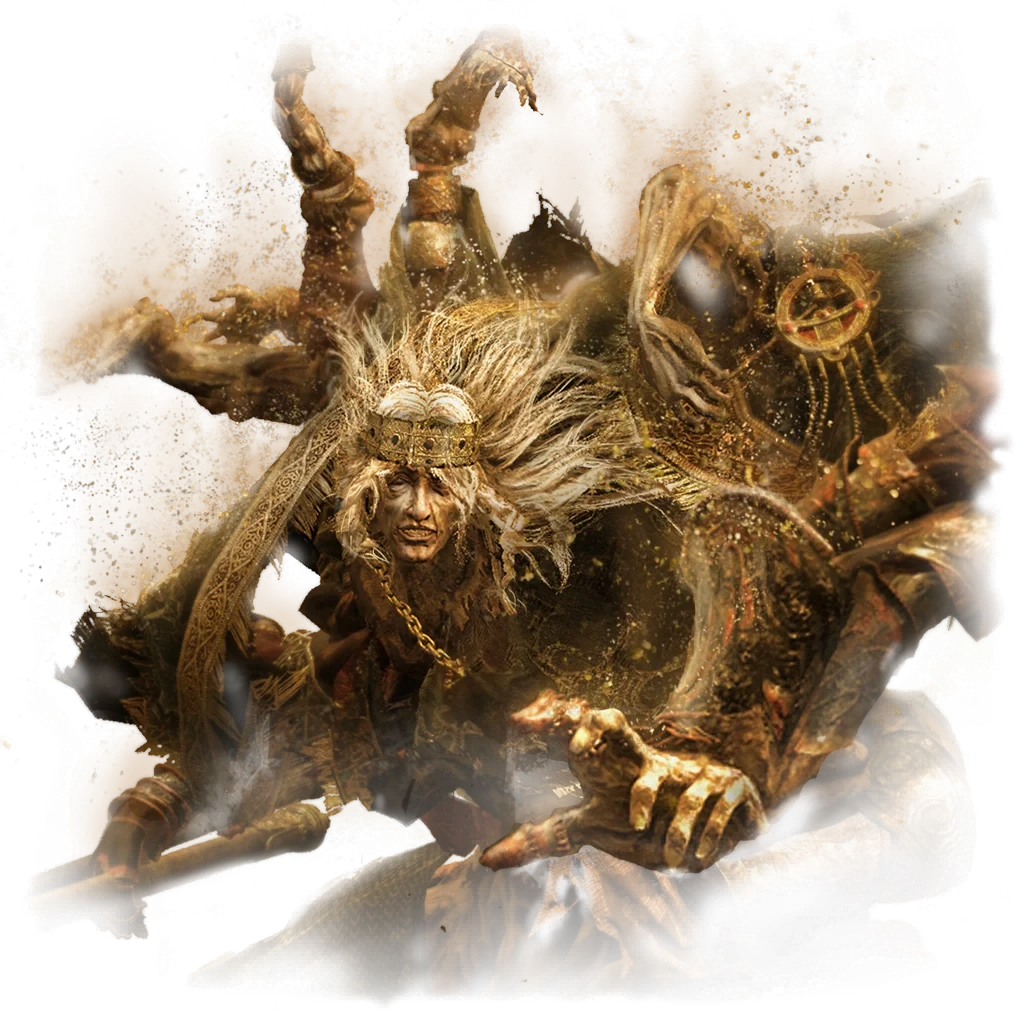 Remembrance of the Grafted
Remembrance of Godrick, the Grafted, hewn into the Erdtree. The power of its namesake can be unlocked by the Finger Reader. Alternatively, it can be used to gain a great bounty of runes.
 Latenna the Albinauric (Dialogue)
 White Mask Varré (Dialogue)
Look down, on me, would you? Godrick? You filthy slug. Feel it! This weasel was... Godrick was always looking down on me. He got what he bloody deserved, thanks to you. I tell you though, what goes around comes around.
Gatekeeper Gostoc (Dialogue)I'm off to Stormveil Castle. Lord Godrick has kept busy with his grafting... Slicing off arms like harvesting ears of wheat. He's run up a mighty debt in blood. I was thinking... Godrick must have an idea. About the vengeance sought by General Radahn, to whom I swore my oath. ...Yes, Godrick's corpse will know what to do... Godrick must know. That of all the grudges born of the Shattering, Malenia the Rotted is the object of the most profound. Ahh, my head is throbbing, everything is bright red...
Ah, there's a face I've not seen before. I'm Edgar❞, warden of this castle as ordained by Lord Godrick himself. But you can see how things have turned out. The menials have all rebelled. What was the purpose of such folly? Please forgive me, Lord Godrick. No, not here, not yet… Forgive me, Iri…na… Ugh! What's the matter?
Shabriri (Dialogue)Hmph, yes, now allow me to furnish you with a little advice. I would take great care to avoid Godrick's Tarnished hunts, were I in your shoes. That depraved lot are obsessed with sacrificing Tarnished like you for the sake of "grafting". Honestly, Godrick's nothing more than a jumped up country bumpkin. Lord? Don't make me laugh. One must be found, with haste. And not that awful Godrick. But a true and stalwart Lord of the proper lineage to take the reigns of Limgrave. I am sorry to have lifted your hopes...
Dung Eater (Dialogue) Sorcerer Thops (Dialogue)
Tarnished, are you? Clearly not one of Godrick's lot. I am Nepheli Loux. Tarnished and warrior, like you. How utterly repellant this is. This "grafting" of Godrick's ill befits a Lord. He's tainted the very winds. If you intend to challenge Godrick, I ask you call upon me. The winds run foul with his deeds. I'm certain father would permit me aid the fight. I have something for you. I found it in Godrick's grafting grounds. You defeated him. You should have it. You were the one to defeat him, I would hazard? Make good use of it.
 Godrick's Great Rune
The Great Rune of the shardbearer Godrick, devoid of any benediction. Seek the Divine Tower of Limgrave, which stands beyond the great bridge from Stormveil Castle.
 ◈ CHARACTER
Morgott, the Omen King
King of Grace · Protector of Leyndell▾
Morgott, the Omen King
"Foul Tarnished. Graceless Tarnished. What is thy business with these thrones? Ahh... Godrick the Golden. The twin prodigies, Miquella and Malenia. General Radahn. Praetor Rykard. Lunar Princess Ranni. Wilful traitors, all. Thy kind are all of a piece. Pillagers, come seeking vengeance upon the Erdtree."
Throne defence
"Have it writ upon thy meagre grave: Felled by King Morgott! Last of all kings."
Defeat
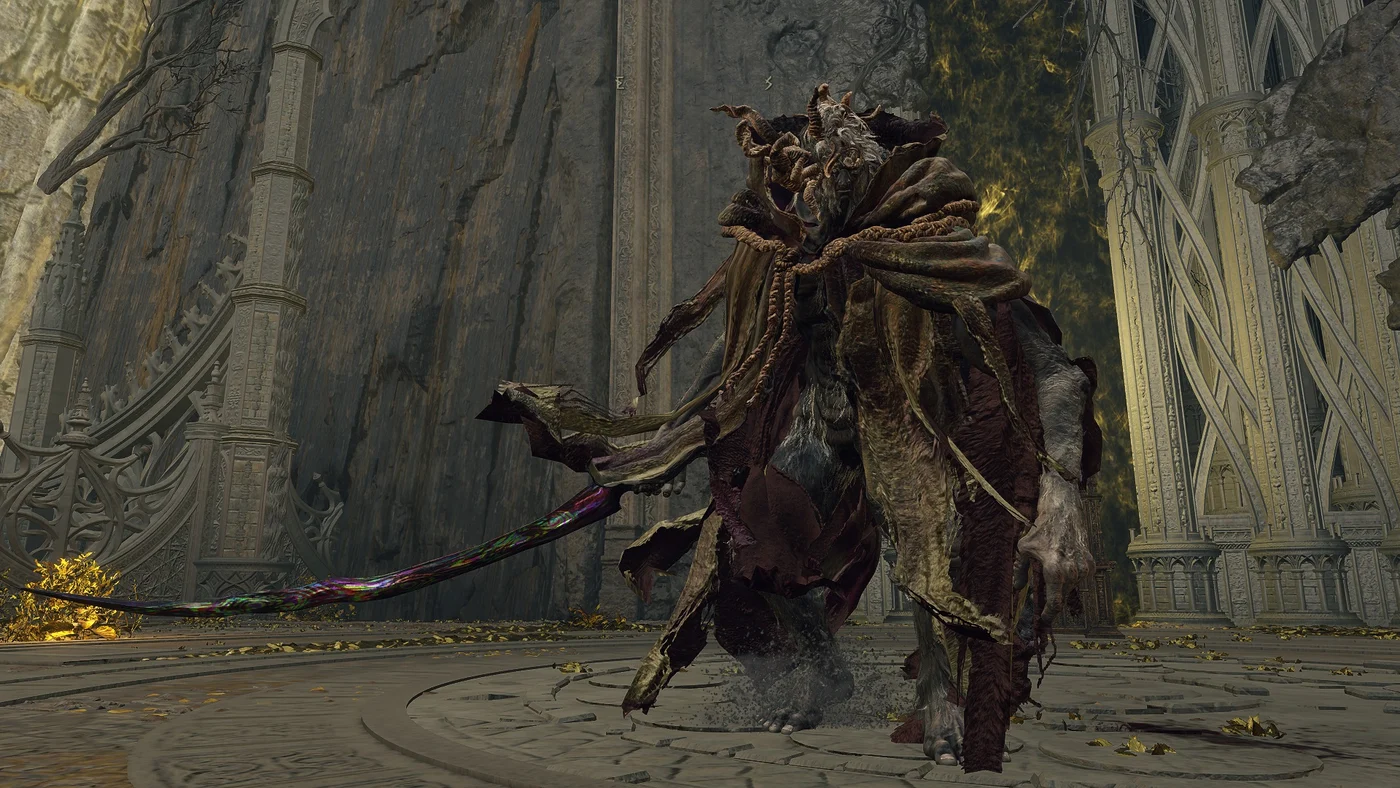
Morgott is the twin son of Godfrey and Marika, twin brother of Mohg, born an Omen, a condition the Golden Order regards as "graceless" and representing a monstrous deviation. From birth he was chained in the sewers beneath Leyndell like all Omens: cursed, disowned by the very Order he venerated. His fundamental tragedy is loving the Erdtree deeply despite the fact that it rejects him. The Remembrance of the Omen King summarizes it mercilessly: "He loved without being loved in return, for he was never loved."
Despite this absolute injustice, Morgott took it upon himself to become the Protector of the Erdtree, sole guardian of Leyndell against Tarnished invaders, rebels, and ambitious demigods. He disguised himself as Margit the Fell Omen to ambush Tarnished far before Leyndell itself. "Someone must extinguish thy flame. Let it be Margit!" He cleansed the sewers of Leyndell of his fellow Omens, stacking their bodies, an act of monstrous devotion to an Order that did not want him. He proclaimed himself "King of Grace" after Marika's disappearance and held Leyndell's order alone throughout the Shattering. In his boss fight: "Thou'rt but a fool, Tarnished. The Erdtree will never accept thee." "The thrones... made foul by my curse... Such shame I cannot bear." His Cursed Sword is forged from his own cursed horns. His massive armored form, bat-like wings, ligatures, and horns are the physical marks of the Omen. The "Second Defense of Leyndell" Historical Monument: "The Fell Omen piles the bodies of heroes high, and yet the Erdtree stands unshaken", his military victory inseparable from his personal denial.
◆ Sources
 Remembrance of the Omen King
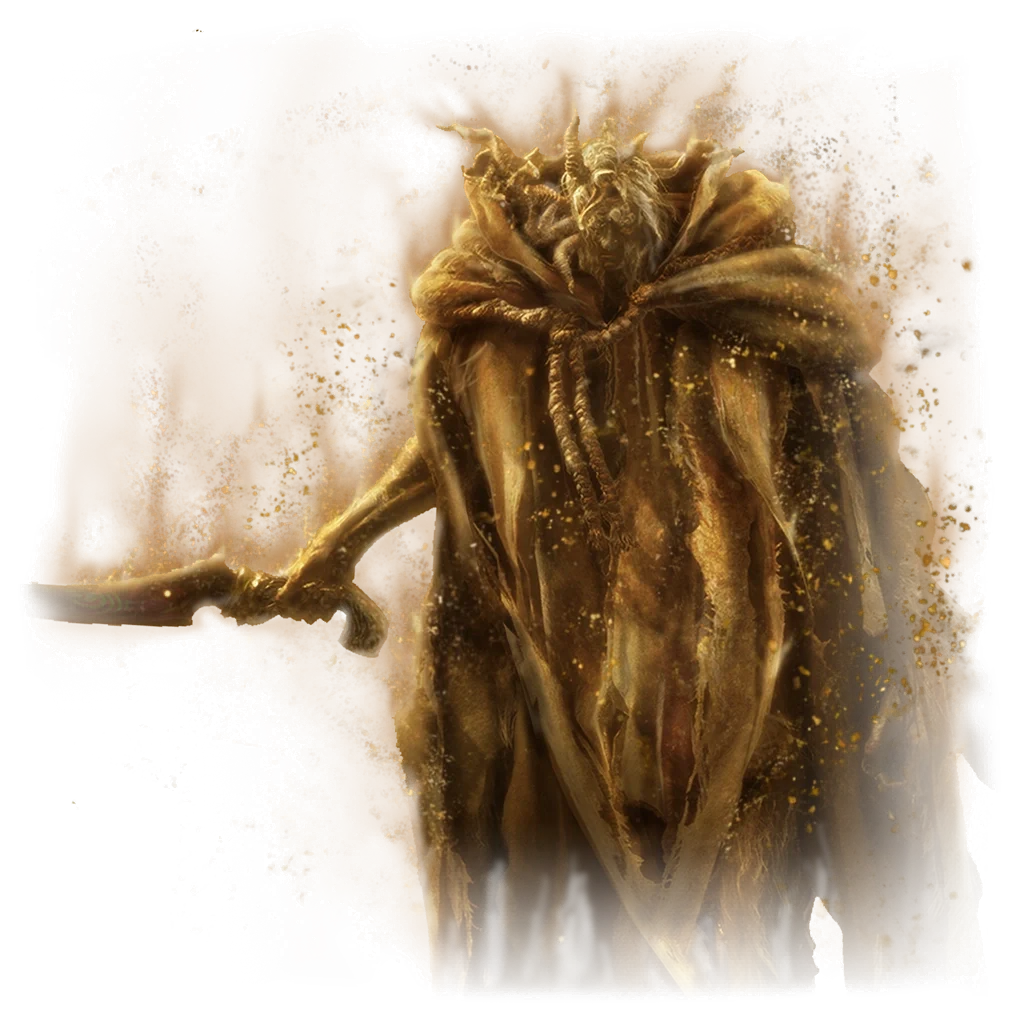
Remembrance of Morgott, the Omen King, hewn into the Erdtree. The power of its namesake can be unlocked by the Finger Reader. Alternatively, it can be used to gain a great bounty of runes. Though born one of the graceless Omen, Morgott took it upon himself to become the Erdtree's protector. He loved not in return, for he was never loved, but nevertheless, love it he did.
Thy part in this shall not be forgiven. Have it writ upon thy meagre grave: Felled by King Morgott! Last of all kings. May the curse seep to thy very soul. Elden Lord!
Dung Eater (Dialogue)Gelmir. Morgott the Grace-Given, Veiled Monarch and Lord of Leyndell. And Rennala, Queen of the Full Moon, ruler of Raya Lucaria's Academy. ...You'll still be after more Great Runes, won't you? So. Marking himself as an enemy, never to be forgiven. Morgott the Grace-Given is Lord of Leyndell, the capital city. It lies at the foot of the Erdtree, in the east of the Altus Plateau. But the Two Fingers forbid us from venturing there. Though I doubt he much resembles his former self anymore...
 Morgott's Great Rune
The Great Rune of the shardbearer Morgott, devoid of any benediction. Seek the Divine Tower of East Altus, which stands beyond the great bridge from Leyndell's eastern ward.
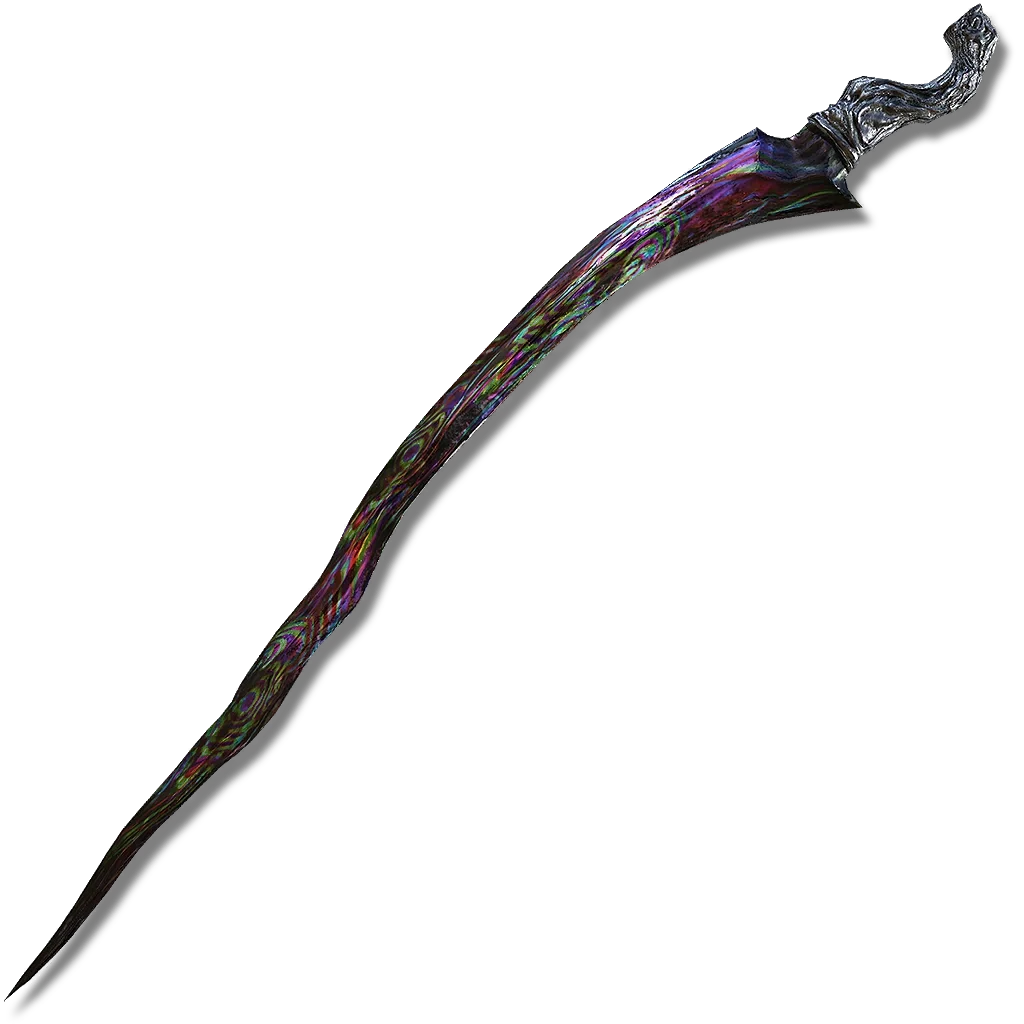 Morgott's Cursed Sword
Warped blade of shifting hue used by Morgott, the Omen King. The accursed blood that Morgott recanted and sealed away reformed into this blade.
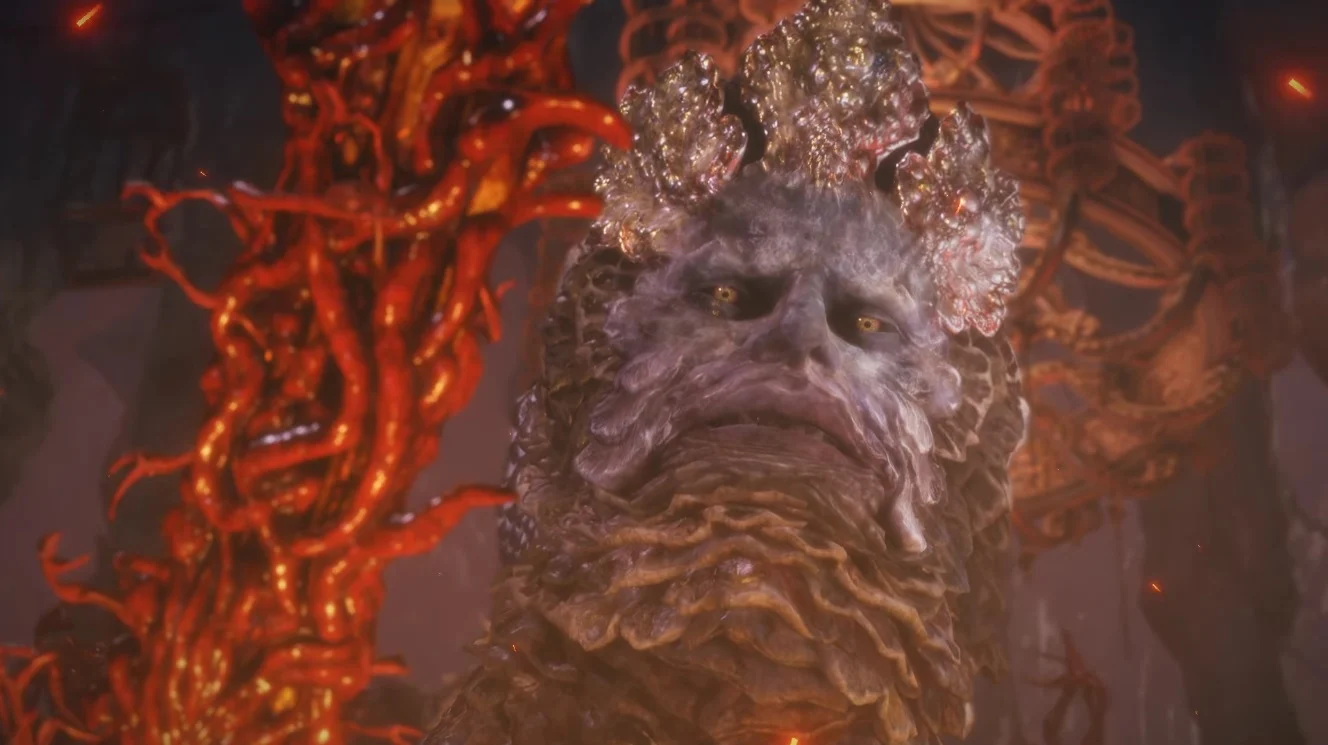 ◈ CHARACTER
Rykard, Lord of Blasphemy
Praetor · Serpent King · Heretic▾
Rykard, Lord of Blasphemy
"Lord host, I could not be more content. I found knowledge, and then found someone. That someone was you. And now, inside you, here I am..."
Volcano Manor, already devoured
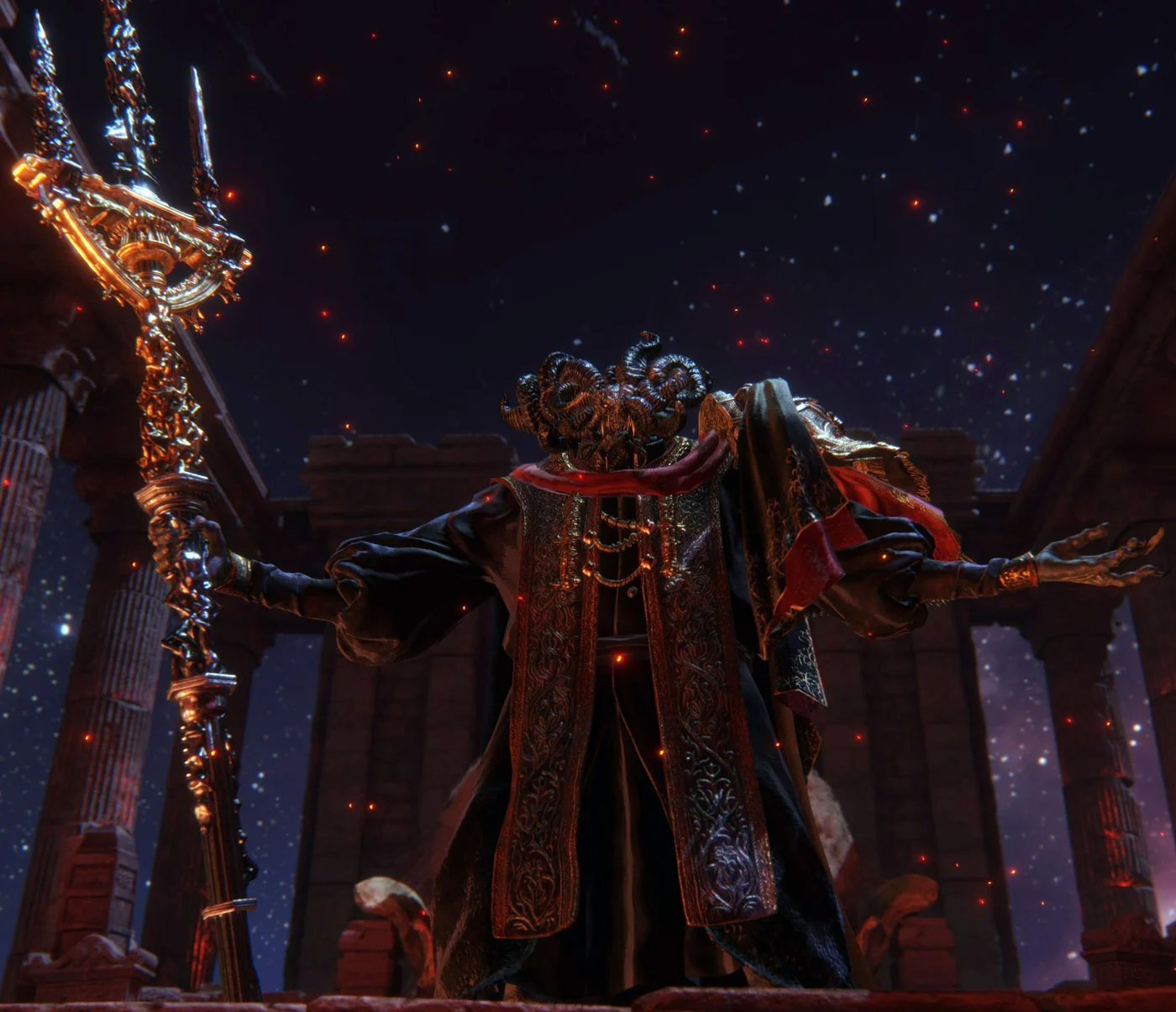
Rykard is the son of Rennala and Radagon, Praetor and Inquisitor of the Golden Order before becoming its most heretical enemy. Commander of a pitiless company of inquisitors described as "feared for his serpentine behavior," he deliberately committed the supreme blasphemy: allowing himself to be devoured by the ancient Serpent of Mount Gelmir, fusing with it to obtain eternal life through perpetual digestion. "Rykard took the form of a great serpent that he might devour, grow, and live eternally." He declares his intentions in the boss fight: "Join the serpent king's family... together we shall devour the gods!"
Volcano Manor, his residence run by Tanith, was a refuge for recusants, Tarnished and warriors who renounced the guidance of grace and hunted their own kind in organized resistance against the Erdtree. His philosophy was revolt against the injustice of the Order: "If the Erdtree and its gods would place us in such a station, we are prepared to raise the flag of resistance, even if it means heresy." The Blasphemous Blade, his iconic weapon, drains the life of enemies, an extension of his philosophy of perpetual devouring. Tanith, his devoted servant and likely lover, began devouring his serpentine corpse after his death: "Dear Rykard, please find purchase within me, I wish to be your serpent; your family. One day, let us devour the gods together." Bernahl (recusant at his service) reveals after his death: "Even he was prepared to meet a wretched end when he first took blasphemy unto his very flesh.
◆ Sources
Remembrance of Rykard, Lord of Blasphemy, hewn into the Erdtree. The power of its namesake can be unlocked by the Finger Reader. Alternatively, it can be used to gain a great bounty of runes. Rykard took the form of a giant serpent that he might devour, grow, and live eternally. "I understand. The road of blasphemy is long and perilous. One cannot walk it unprepared to sin."
Latenna the Albinauric (Dialogue)Preceptor Seluvis (Dialogue)Dung Eater (Dialogue) Blackguard (Dialogue)
To put this weary world to rights... ... Lord Rykard... If this putrid field of death is what your blasphemy would bring, then I can no longer abide. No one can. ... I'll survive, I swear it. I'll soon be back at the Volcano Manor. ... Sublime, I tell you. The very first flower of Aeonia bloomed on this very spot.
 Rykard's Great Rune
The Great Rune of the shardbearer Rykard, devoid of any benediction. Seek the Divine Tower of West Altus, which stands upon the precipice at the coast southwest of Leyndell.
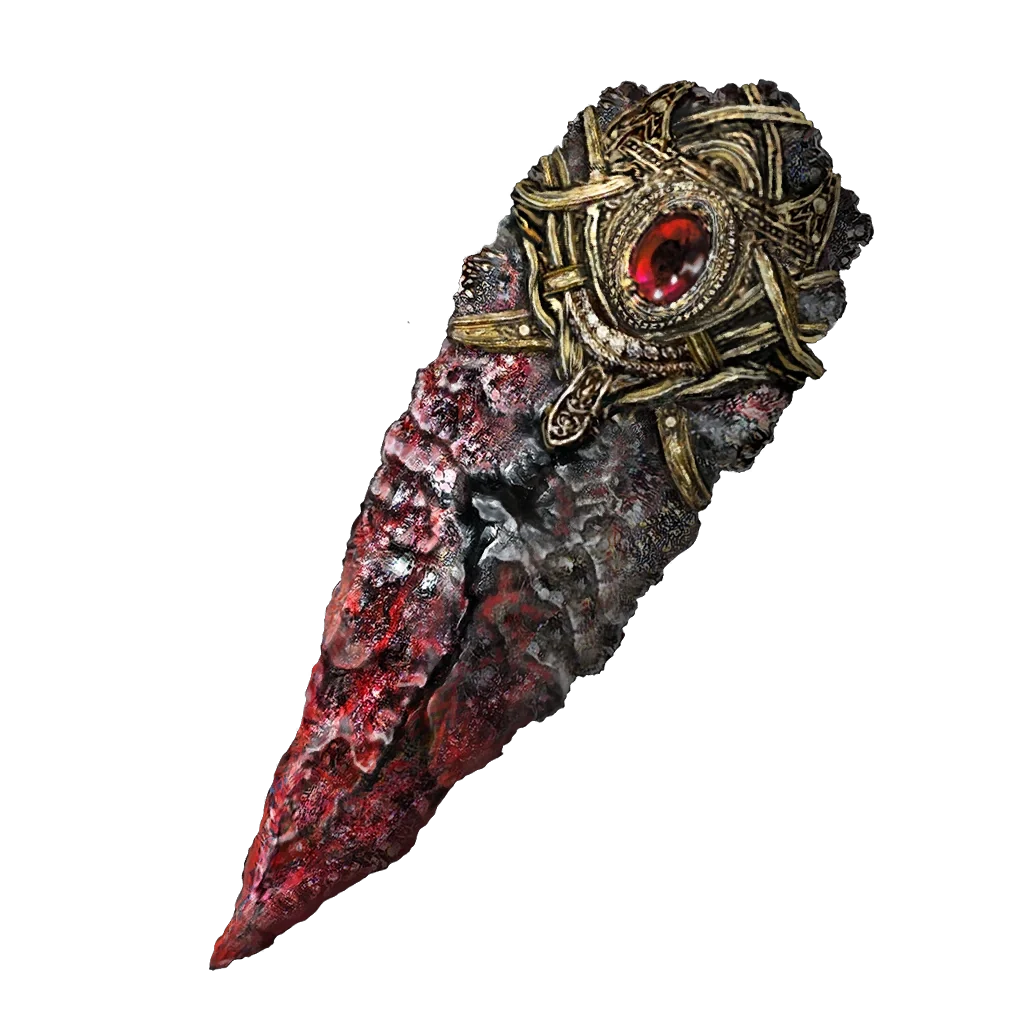 Blasphemous Claw
Can deflect the power of the Black Blade. On the night of the dire plot, Ranni rewarded Praetor Rykard with these traces. Should the coming trespass one day transpire, they would serve as a last-resort foil, allowing Rykard to challenge Maliketh the Black Blade, the black beast of Destined Death.
 ◈ CHARACTER
Mohg, Lord of Blood
Omen Twin of Morgott · Dynasty Founder▾
Mohg, Lord of Blood
"Welcome, honoured guest. To the birthplace of our dynasty! Dearest Miquella. You must abide alone a while. No one else will take you. Never again, I swear!"
Founding a dynasty
Mohg is the twin brother of Morgott, both Omen sons of Godfrey and Marika, chained in the sewers beneath Leyndell from birth. Where Morgott chose masochistic adoration of the Erdtree that rejected him, Mohg chose rebellion and the cult of a distinct Outer God: the Formless Mother, a being of blood and affliction distinct from the Greater Will, who granted him powers of blood and sanguine curse, transforming his Omen horns into instruments of new rites.
Mohg seized Miquella, the Empyrean still in his larval cocoon within the Haligtree, and transported him to the Mohgwyn Palace, a necropolis hidden outside the normal Lands Between, accessible only via Sanguine Rings of Teleportation drawn by his disciples. His obsession with Miquella was dynastic and "romantic": the Remembrance of the Blood Lord specifies that he "wished to raise Miquella to full godhood, wished to become his consort, take the role of monarch, but no matter how he tried to share his bloody bed, he never received a response from the young Empyrean." Miquella in the cocoon remained inert, indifferent, showing no reaction whatsoever. Mohg wished to found the Mohgwyn Dynasty with him. He recruited Bloody Fingers, Tarnished cursed by blood, as knights for his future royalty. Varré❞, his chief recruiter, operated from the very entrance to the Lands Between, seducing maidenless Tarnished toward the cause via blood initiation rites (injecting noble blood into the finger with a long pin, "thou dost have the sweetest cry").
◆ Sources
 Remembrance of the Blood Lord
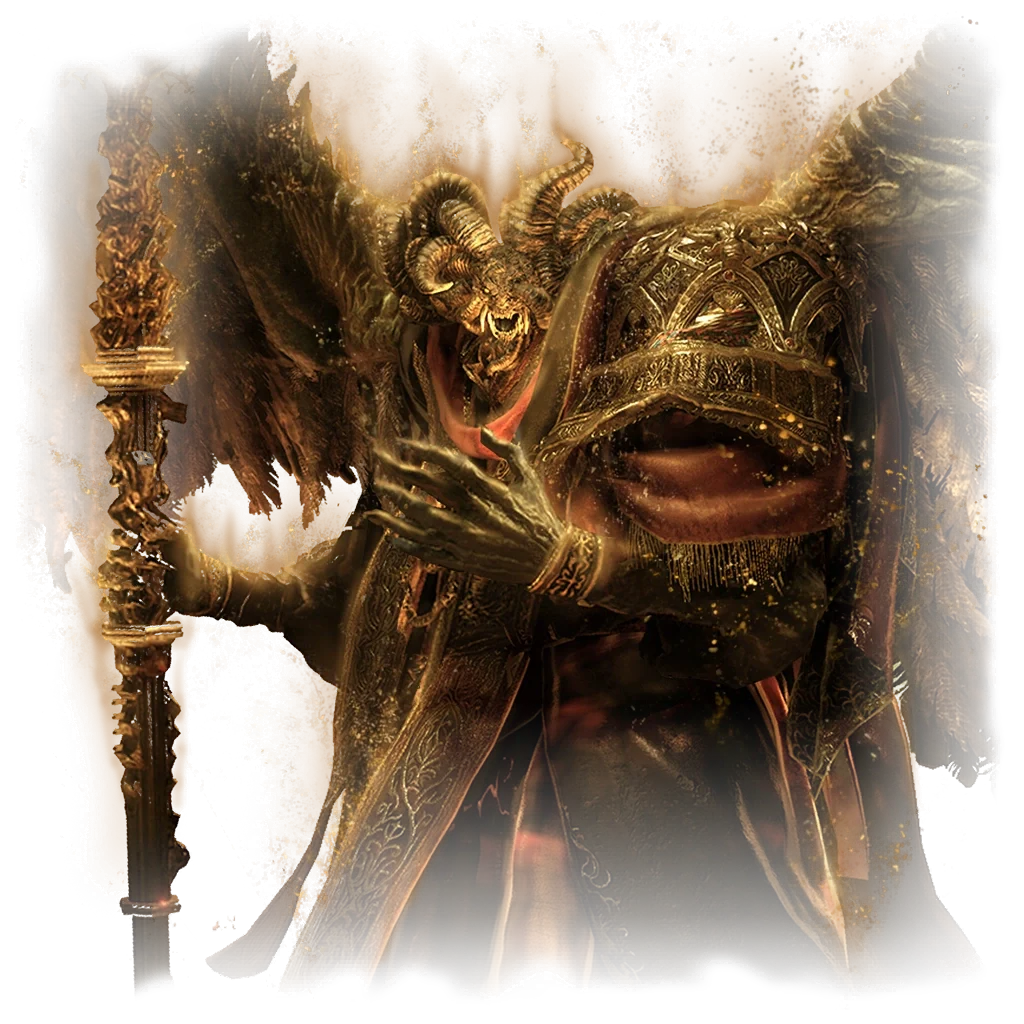
Remembrance of Mohg, Lord of Blood, hewn into the Erdtree. The power of its namesake can be unlocked by the Finger Reader. Alternatively, it can be used to gain a great bounty of runes. Wishing to raise Miquella to full godhood, Mohg wished to become his consort, taking the role of monarch. But no matter how much of his bloody bedchamber he tried to share, he received no response from the young Empyrean.
 Dolores the Sleeping Arrow Puppet
(Lake of Rot) A new map has been found. (Mohgwyn Palace) A new map has been found. (Siofra River) A new map has been found. (Deeproot Depths) Cannot store currently equipped items Selected item cannot be placed in storage Cannot store item.
The coming of our dynasty! Mohgwyn! Ahh, Miquella... Why do you abandon me?
Latenna the Albinauric (Dialogue)I wish to anoint you a proper inductee. A knight to serve Luminary Mohg, the Lord of Blood, and establish a new dynasty. Luminary Mohg has strength, vision, and of course, love. So, what do you say, my lambkin? Mm, yes, who would have it any other way?
White Mask Varré (Dialogue)Show me the path, O gentle lights...the path to Elphael. ... Mohg, you rotten Omen. Your blood is cursed. Give him back. I beg you, grant me a seat at the table of the dynasty. Long live the Mohgwyn Dynasty. Long live! The Mohgwyn Dynasty! ... Behold. The Erdtree yet stands.
 Mohg's Great Rune
The Great Rune of the shardbearer Mohg, devoid of any benediction. Seek the Divine Tower of East Altus, which stands beyond the great bridge from Leyndell's eastern ward.
 ◈ CHARACTER
Maliketh, the Black Blade
Shadowbound Beast · Keeper of Destined Death▾
Maliketh, the Black Blade
"O, Death. O Destined Death... become my blade, once more. Ahh, art thou come to be born anew? Be not afraid, there is no pain..."
Bearer of Death
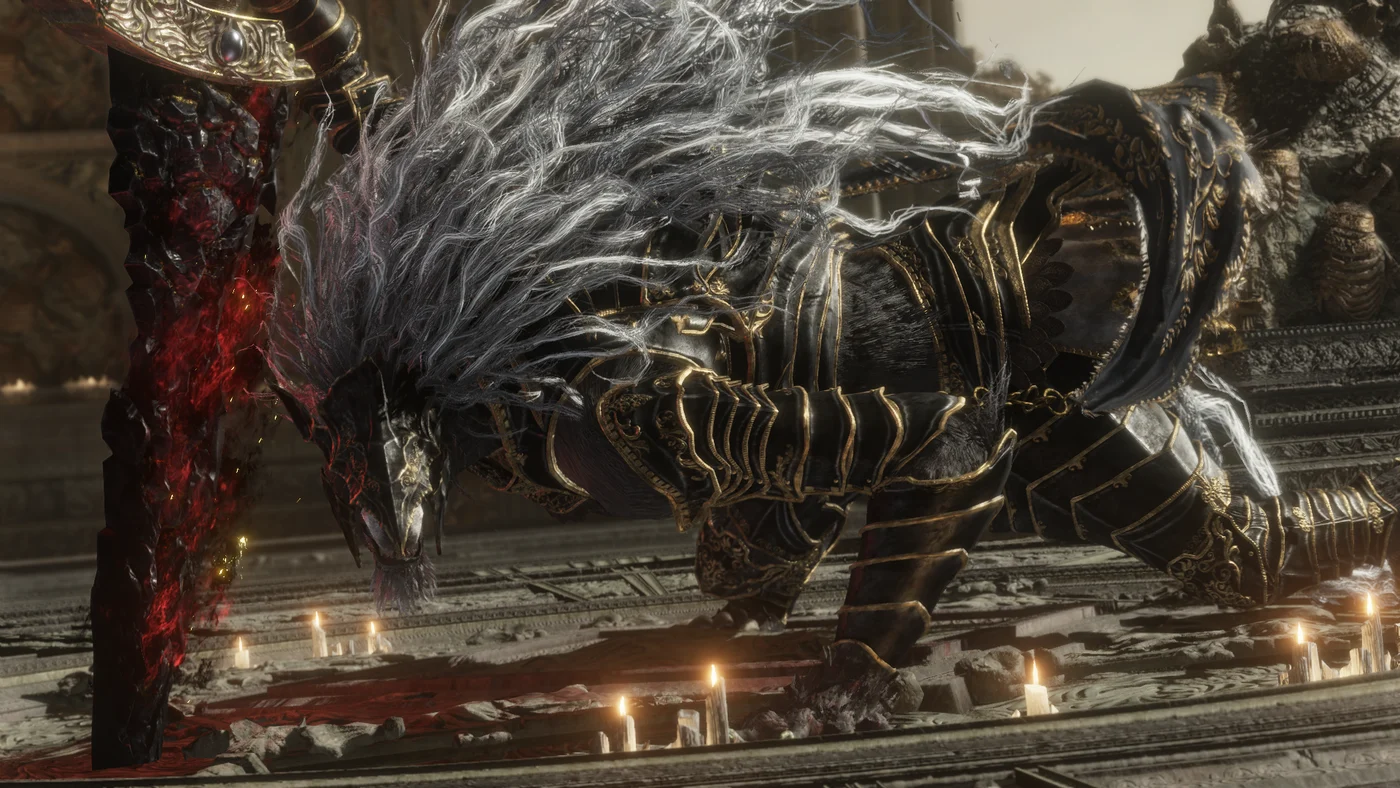
Maliketh is Marika's Shadowbound Beast, her appointed bestial vassal, half-human half-beast, created specifically for her as Empyrean according to Greater Will tradition (each Empyrean receives a shadow-vassal). The Remembrance of the Black Blade defines him unambiguously: "A shadowbound beast given to his Empyrean. Marika's sole need of her shadow was a vessel to lock away Destined Death. Even then, she would betray him."
His singular function and sacrifice: to be the living vessel for the Rune of Death (Destined Death), sealed within his own flesh. This sacrifice allows the Golden Order to function without permanent death, Tarnished and grace-blessed subjects can be reborn at Sites of Grace because true death is locked inside him. The Black Blade sorcery inflicts Destined Death: reduces maximum HP AND drains current HP progressively, simulating the effects of the Rune of Death he contained. His dual identity with Gurranq (the Beast Clergyman in Caelid who consumes Deathroots to satisfy a perpetual hunger) is revealed during the fight at Crumbling Farum Azula: Gurranq transforms into Maliketh mid-combat. "Forgive me, Marika... The Golden Order cannot be restored." This line reveals he knows the mission is over and accepts his defeat as a form of release. The betrayal by Marika against him remains unexplained in the game, a detail deliberately left in shadow. His Deathroot hunger is simultaneously his duty and his personal sin.
◆ Sources
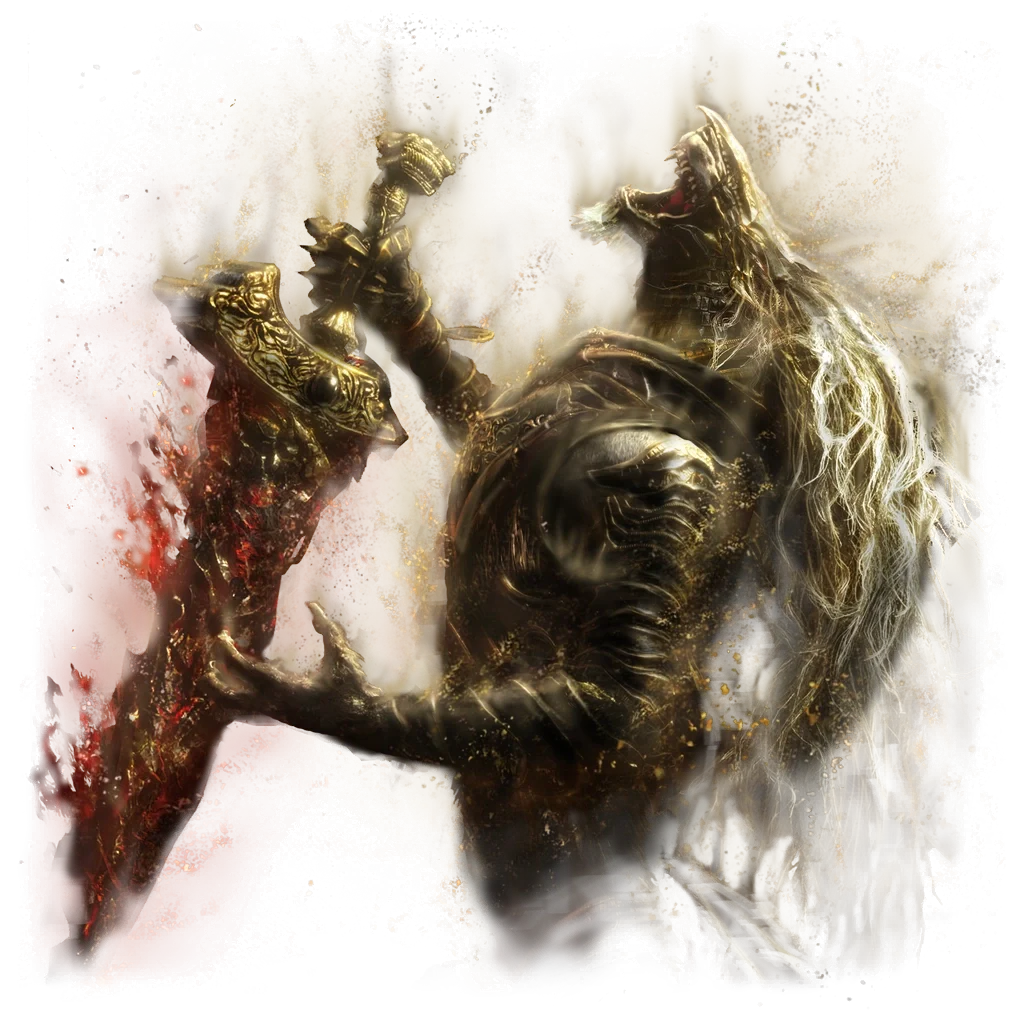 Remembrance of the Black Blade
Remembrance of Maliketh, the Black Blade, hewn into the Erdtree. The power of its namesake can be unlocked by the Finger Reader. Alternatively, it can be used to gain a great bounty of runes. Maliketh was a shadowbound beast given to his Empyrean. Marika's sole need of her shadow was a vessel to lock away Destined Death. Even then, she betrayed him.
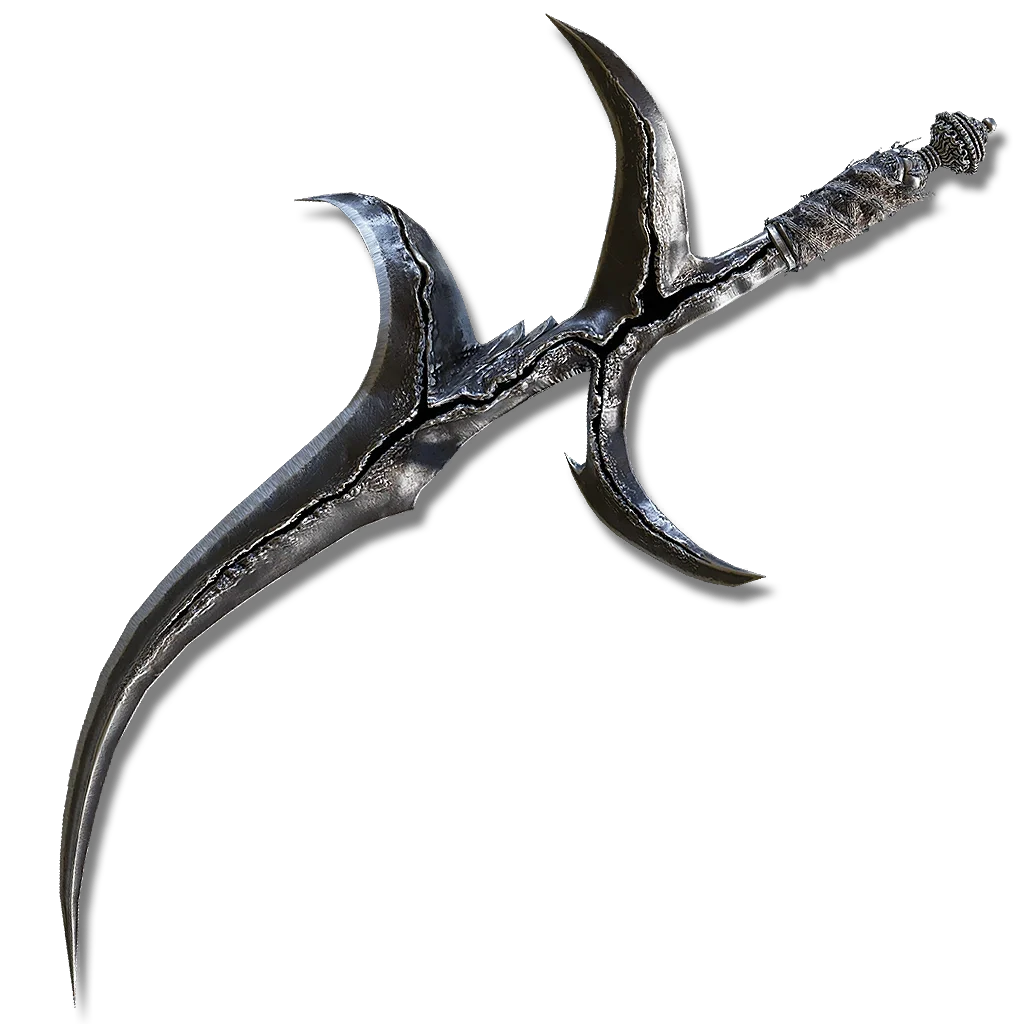 Black Blade
Power gleaned from the remembrance of Maliketh. Caster creates an illusory black blade, then leaps forward to deliver a spinning slash that emits a wave of light. This can be followed up with one additional attack. This blade was once imbued with Destined Death. In addition to dealing damage, it reduces foes' maximum HP and continues to sap their current HP for a very short time.
Sleep tight, bound tight by Mother's amber. Sleep tight, find life, in Mother's umbra. Gurranq, Beast Clergyman ... ... I smell it... Death... Cower. Before Maliketh, the Black Blade. Before Maliketh, Marika's Black Blade. Witless Tarnished... Why covet Destined Death?
Dung Eater (Dialogue)It happened during the Golden Age of the Erdtree, long before the shattering of the Elden Ring. Someone stole a fragment of the Rune of Death from Maliketh, the Black Blade. And on a bitter night, murdered Godwyn the Golden. That was the first recorded Death of a demigod in all history.
Blasphemous ClawA slab of rock engraved with traces of the Rune of Death. Can deflect the power of the Black Blade. On the night of the dire plot, Ranni rewarded Praetor Rykard with these traces. Should the coming trespass one day transpire, they would serve as a last-resort foil, allowing Rykard to challenge Maliketh the Black Blade, the black beast of Destined Death.
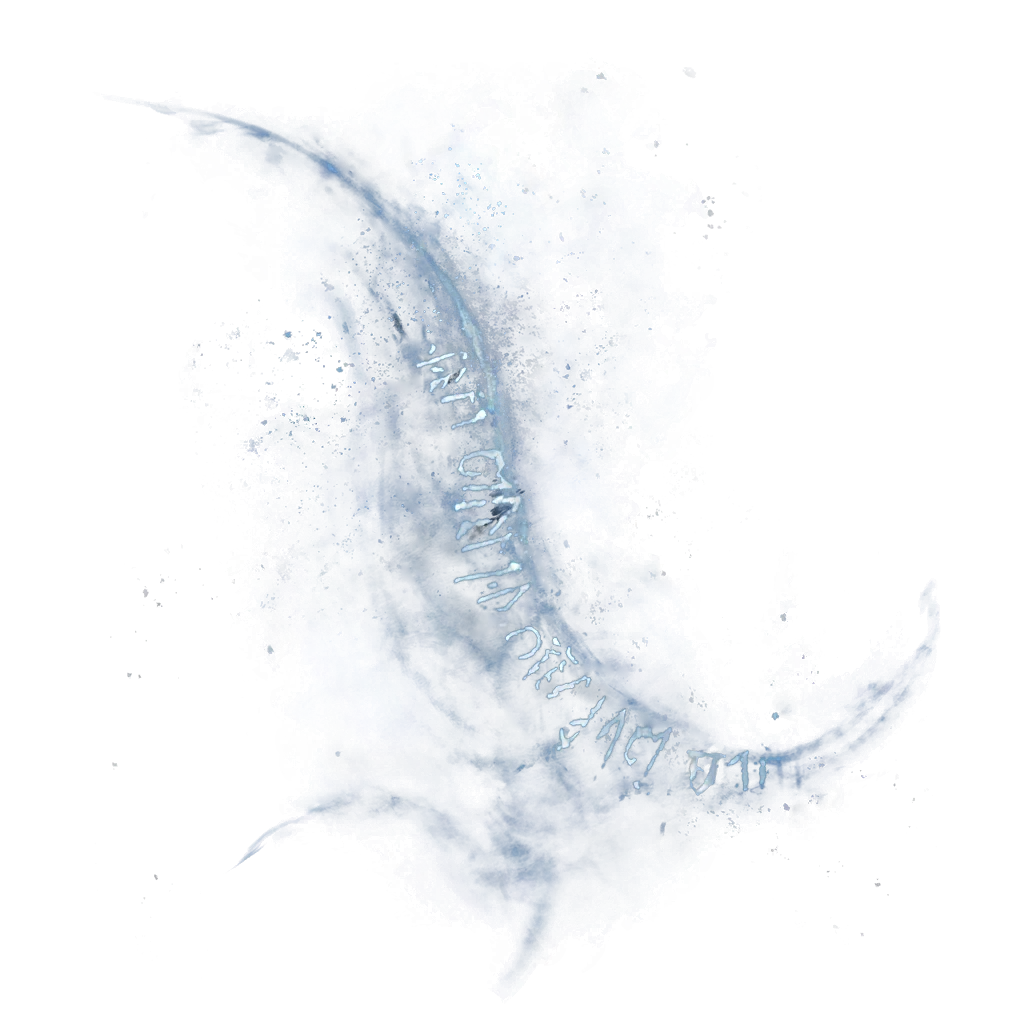 Black Knifeprint
On the Night of the Black Knives, someone stole a fragment of Death from Maliketh, the Black Blade, and imbued its power into the assassins' daggers. This mark is evidence of the ritual, and hides the truth of the conspiracy.
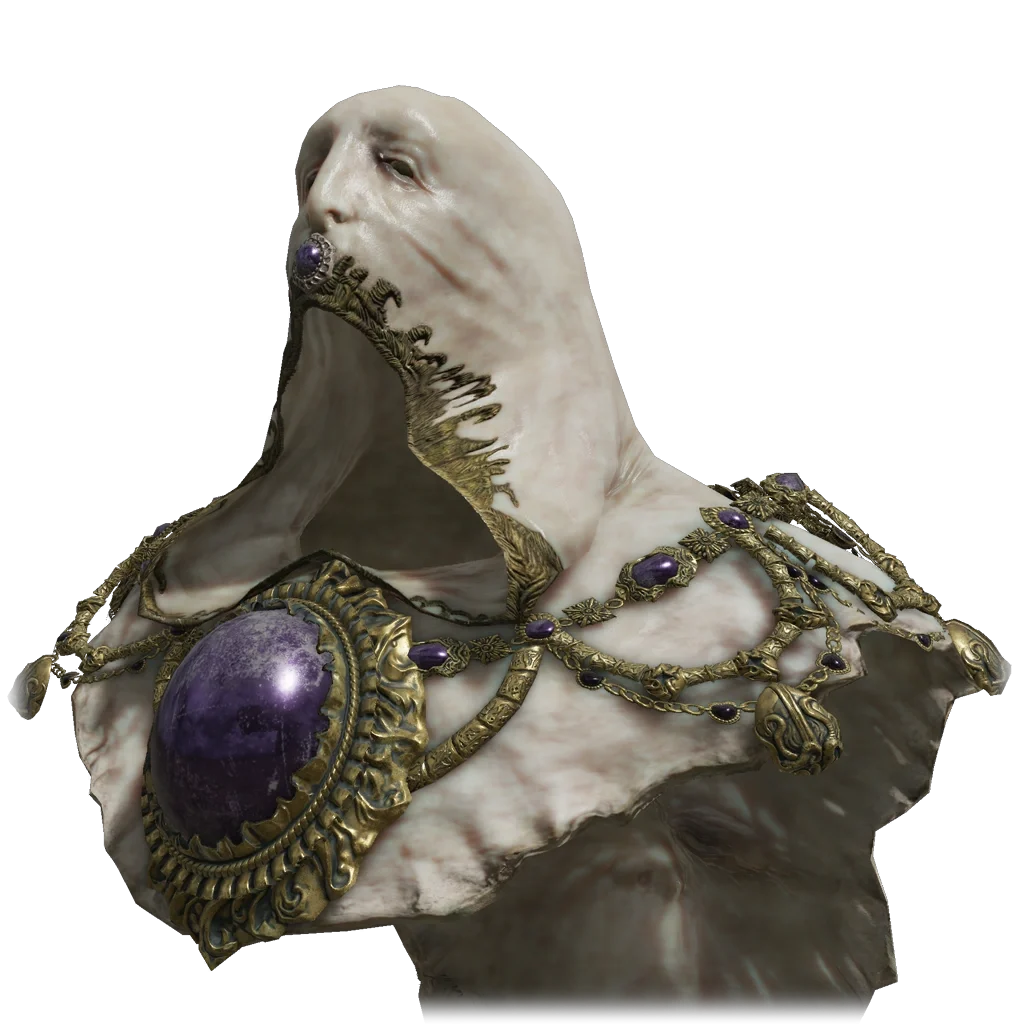 Godskin Apostle Hood
The apostles, once said to serve Destined Death, are wielders of the god-slaying black flame. But after their defeat by Maliketh, the Black Blade, the source of their power was sealed away.
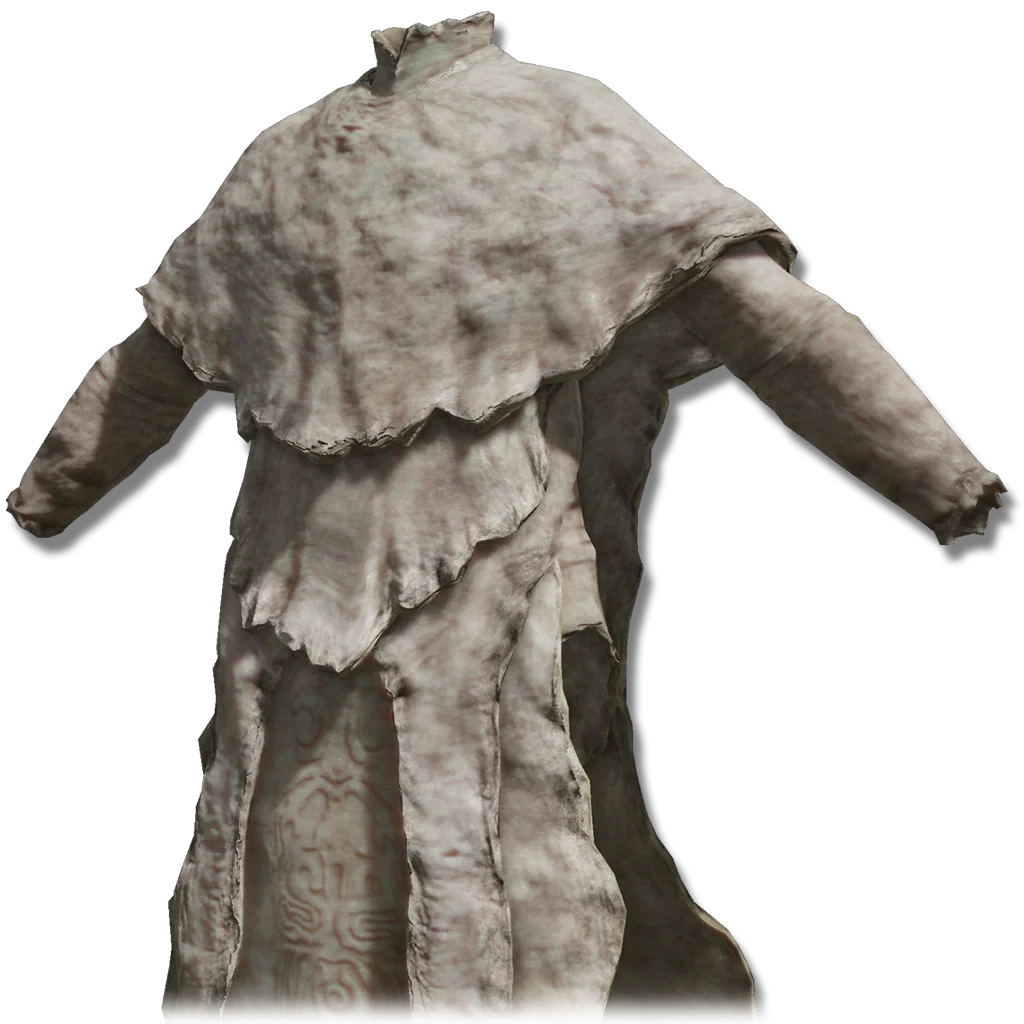 Godskin Apostle Robe
The apostles, once said to serve Destined Death, are wielders of the god-slaying black flame. But after their defeat by Maliketh, the Black Blade, the source of their power was sealed away.
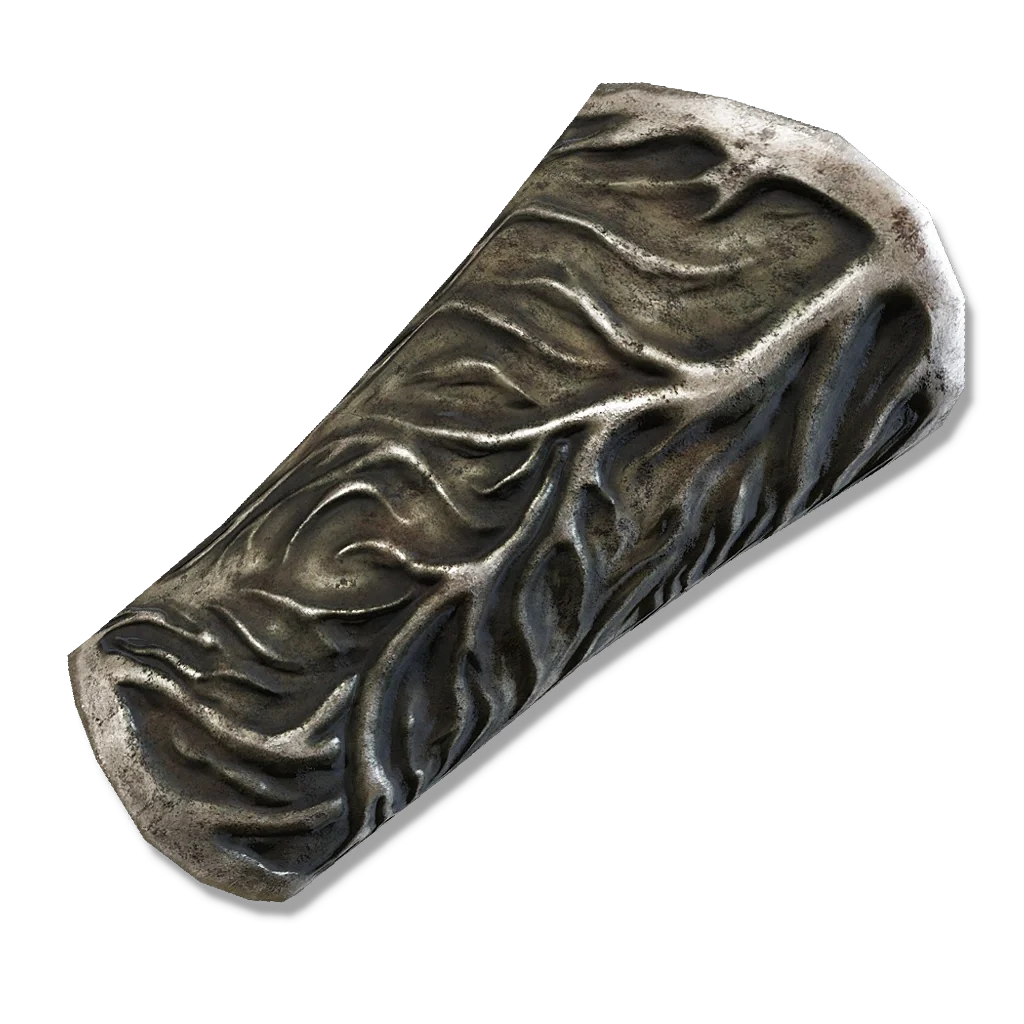 Godskin Apostle Bracelets
The apostles, once said to serve Destined Death, are wielders of the god-slaying black flame. But after their defeat by Maliketh, the Black Blade, the source of their power was sealed away.
 ◈ CHARACTER
Malenia, Blade of Miquella
Goddess of Rot · The Undefeated▾
Malenia, Blade of Miquella
"I dreamt for so long. My flesh was dull gold... and my blood, rotted. Corpse after corpse, left in my wake... As I awaited... his return. Heed my words. I am Malenia. Blade of Miquella. And I have never known defeat."
Battle introduction
"Wait. The scarlet bloom flowers once more. You will witness true horror. Now, rot!"
Phase 2, Goddess of Rot
"Sweet Tarnished... Dearest companion... Did you not heed my warning? Your greed knows no end. You would steal the last drop of warmth from his empty frame? After all you have taken, you still want more? Then you will have to kill me. I am Malenia, Sword of Miquella. And I have never known defeat."
Defending Miquella
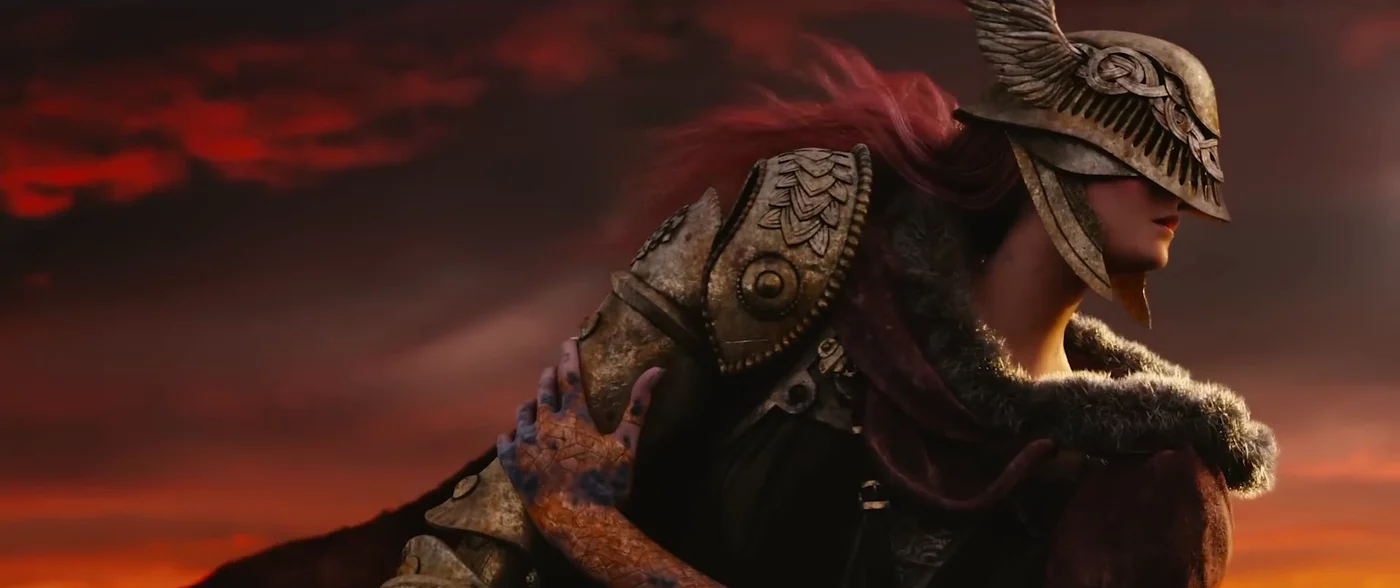
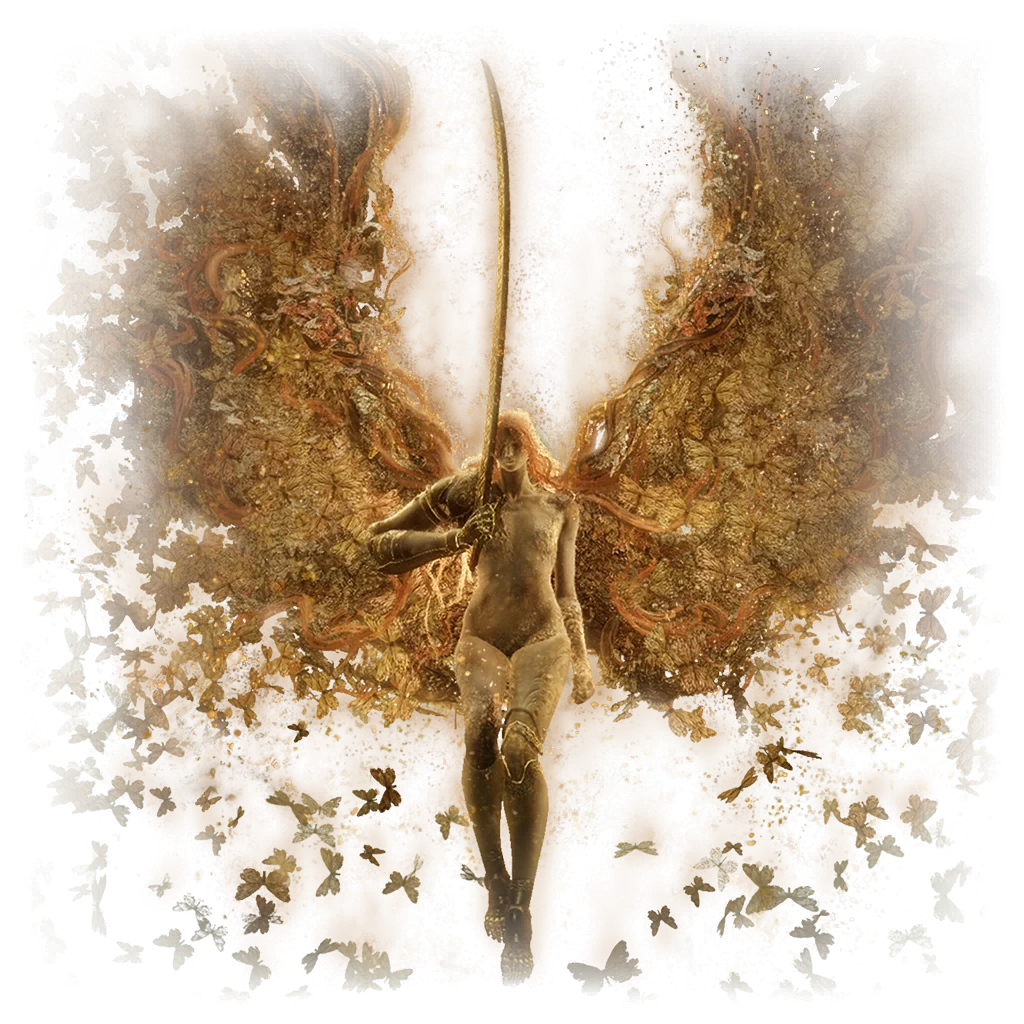
Malenia is one of two Empyrean twins born from the union of Marika and Radagon, an absolute singularity, as her parents form a single being. Designated by the Two Fingers as a candidate to succeed Marika as goddess, she was struck from birth by an irreversible affliction: Scarlet Rot flows through her veins. Her left arm was severed at some point and replaced by a golden prosthetic, both armament and symbol. The Remembrance of the Rot Goddess states the cursed symmetry: she and Miquella, twin Empyreans, both suffer from birth-curses, one of eternal childhood, the other of inner rot.
Her army, the Cleanrot Knights, wore pure gold robes in her honor. During the Shattering, she faced Starscourge Radahn at Caelid in the most devastating duel of the war. Cornered into a stalemate, she unleashed the full power of her rot, triggering the Scarlet Aeonia explosion that permanently transformed Caelid into a wasteland of rot. Her aide-de-camp Finlay then carried her unconscious body from the battlefield all the way to the roots of the Haligtree in an epic retreat. She fell into a long sleep there. Her unique combat gift: every strike she lands restores her life via soul-siphoning, even on a shield, even without inflicting damage, even through death animations. In her semi-conscious sleep, she dreamed at length, "her golden flesh and rotted blood." "I am Malenia, Blade of Miquella, and I have never known defeat", her words upon entering combat. Dying: "O, Miquella, my brother most beloved... I have finally found my equal." The Malenia's Great Rune Talisman amplifies rune attacks at the cost of reduced resistance, her philosophy of total war without defense, translated into game mechanic.
◆ Sources
 Remembrance of the Rot Goddess
Remembrance of Malenia, Goddess of Rot, hewn into the Erdtree. The power of its namesake can be unlocked by the Finger Reader. Alternatively, it can be used to gain a great bounty of runes. Miquella and Malenia are both the children of a single god. As such they are both Empyreans, but suffered afflictions from birth. One was cursed with eternal childhood, and the other harbored rot within.
Finger Reader Enia (Dialogue)I was once an Empyrean. Of the demigods, only I, Miquella, and Malenia could claim that title. Each of us was chosen by our own Two Fingers, as a candidate to succeed Queen Marika, to become the new god of the coming age. But I would not acquiesce to the Two Fingers. Which is when I received Blaidd.
Why...shatter... I am Malenia. Blade of Miquella. Let your flesh be consumed.
Gatekeeper Gostoc (Dialogue)Godrick must know. That of all the grudges born of the Shattering, Malenia the Rotted is the object of the most profound. Ahh, my head is throbbing, everything is bright red... Master Radahn, is this how it feels to ferment with vengeance?
Shabriri (Dialogue)First he hid himself amongst the womenfolk to flee the capital, then hid from Radahn in that castle... Then he insulted Malenia, lost to her in battle, only to lick her boots rather than die like a man. Has he no shame, the big girl's blouse? And to think, he's the blood of Godfrey!
Dung Eater (Dialogue)Though rather vexingly, I realise that if I still had my sword arm, I could have aided you in battle. Now, I'm tracing the path Malenia took, after unleashing the power of the scarlet rot, during her battle with General Radahn, in the Caelid Wilds. I should like to meet her, this vanished woman. I think she's in the north. Perhaps, then, I can aid you in battle. Now, I'm tracing the path Malenia took. She's passed into to the lands that lie beyond the Erdtree. Ah, we meet yet again.
Millicent (Dialogue)Sage Gowry (Dialogue)Millicent❞... Malenia... Do you detest us, so utterly? Have you taken the lesson, now?
The very first flower of Aeonia bloomed on this very spot. Malenia, may you blossom into a goddess. ... Convene the festival of war. Honor General Radahn, with a warrior's glory.
 Malenia's Great Rune
The Great Rune of the shardbearer Malenia, devoid of any benediction. Seek the Isolated Divine Tower, which stands beyond the lost great bridge.
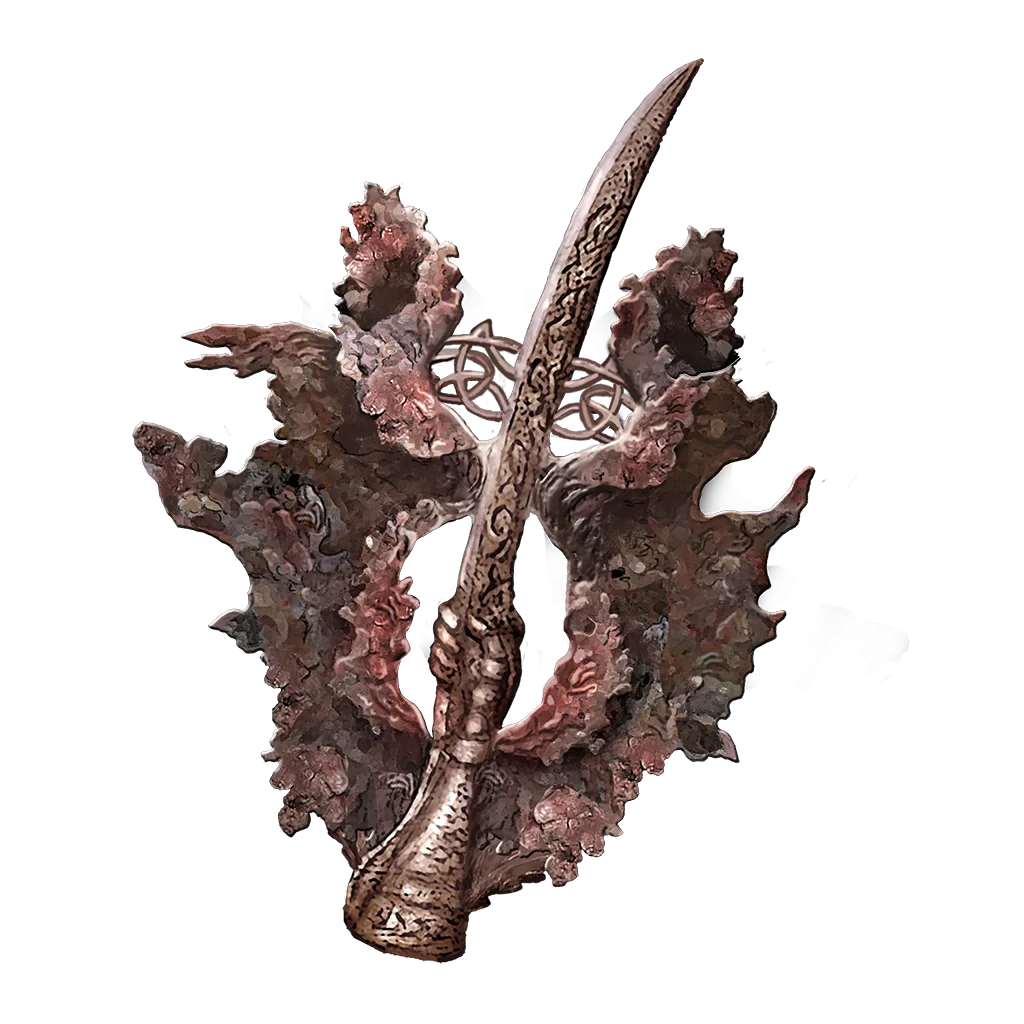 Winged Sword Insignia
A talisman depicting a raised prosthetic blade. An honor bestowed upon the knights who fought alongside Malenia the Severed. Raises attack power with successive attacks. The wings symbolize Malenia and her undefeated prowess. Though she never knew relief from the accursed rot she was born into, her blade was forever beautiful—and relentless.
 ◈ CHARACTER
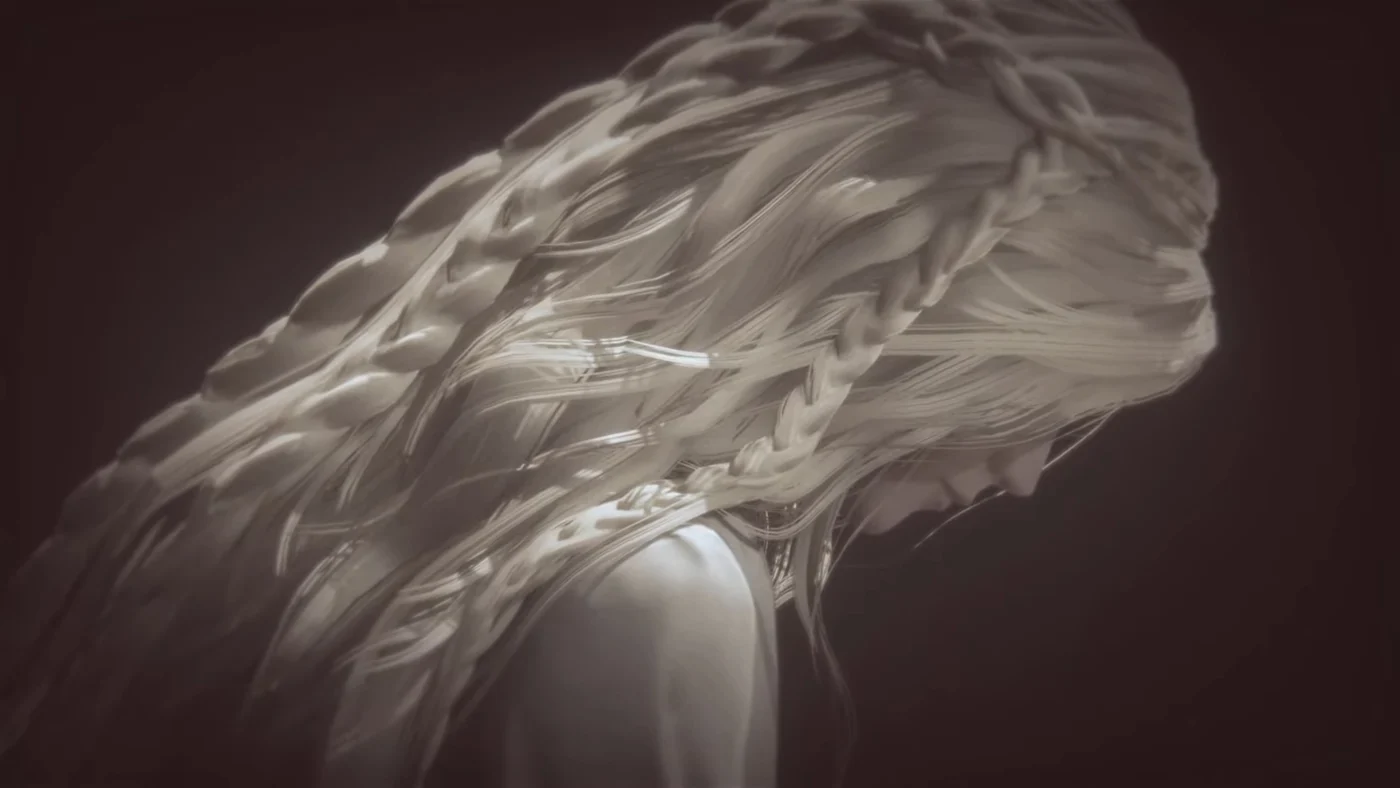
Miquella the Unalloyed
Empyrean · Founder of the Haligtree▾
Miquella the Unalloyed
"Young seedling, young seedling. Return to the bosom of earth. But remember well, thou'rt mine. So shall I give of myself. This is for thee. Mine abundance, my drop of dew. Quench thy thirst, throughout thy frame. Blossom and burgeon, time and again. Grow larger, stronger. Until the day cometh when thou canst share in my dream."
Cinematic, gift to Malenia
Miquella is the son of Marika and Radagon, twin brother of Malenia, and one of the three Empyreans designated by the Two Fingers to succeed Marika. Cursed from birth with eternal childhood, he remains forever in a child's body, he devoted his existence to two quests: purging Malenia's rot, and forging an Elden Ring free from the Greater Will. His instrument was the Haligtree: a sacred tree he cultivated secretly, watered with his own blood and spiritual essence, intended to become an alternative to the Erdtree founded not on golden grace but on unconditional love. The Haligtree welcomes the marginalized: Albinaurics, graceless priests, misshapen beings, all those the Golden Order rejects.
He forged the Unalloyed Gold Needle to stem Malenia's rot, a tool that delayed progression without curing. Before completing his transcendence within the Haligtree cocoon, he was seized by Mohg, Lord of Blood, who kidnapped him in his larval state to Mohgwyn Palace. Mohg wished to elevate him to full godhood and found a new dynasty with him, but Miquella, imprisoned in the cocoon, never responded. His Great Rune (Miquella's Great Rune) is described as "the gentlest of the Great Runes" and restores the attributes of nearby allies. Reeling Rico, an alcoholic pilgrim at the Haligtree, claims to have "drunk of secrets untold" from Miquella's essence and begs to join his dream of transcendence to godhood.
◆ Sources
 Spinning Weapon
Skill: Death Monarch Launch summoned death monarchs at enemies, siphoning HP from those hit and returning it to the caster. Skill: Miquella's Hidden Blade Conjures a blade blessed with Miquella's protection, and performs an attack that is highly damaging against those who live in death.
Remembrance of the Rot GoddessAlternatively, it can be used to gain a great bounty of runes. Miquella and Malenia are both the children of a single god. As such they are both Empyreans, but suffered afflictions from birth. One was cursed with eternal childhood, and the other harbored rot within.
Remembrance of the Blood LordAlternatively, it can be used to gain a great bounty of runes. Wishing to raise Miquella to full godhood, Mohg wished to become his consort, taking the role of monarch. But no matter how much of his bloody bedchamber he tried to share, he received no response from the young Empyrean.
Finger Reader Enia (Dialogue)I was once an Empyrean. Of the demigods, only I, Miquella, and Malenia could claim that title. Each of us was chosen by our own Two Fingers, as a candidate to succeed Queen Marika, to become the new god of the coming age. But I would not acquiesce to the Two Fingers. Which is when I received Blaidd.
Old Albus (Dialogue)A chosen land awaits us Albinaurics. Miquella's city, far to the north, a place called Eburion, where we are conferred eternal grace. The medallion is the key that leads to the city. It's only a quaint treasure, for we who cannot make the journey.
War Counselor Iji (Dialogue)Will you show me the way? To the land of Miquella's Haligtree. If you accept, I would gladly apprise you. Of the whereabouts of the medallion's other half. My thanks... You'll lead me then, to the land of Miquella's Haligtree. Farewell, Lobo. My faithful wolf, my better half. Castle Sol lies just off to the north, where the other medallion is housed. It will grant passage to the land of the Haligtree. Oh young yet towering sister of ours. Let the birthing droplet in.
Latenna the Albinauric (Dialogue)It is I, Latenna. We have reached the land of Miquella's Haligtree, where Lobo and I began our travels. It's entirely thanks to you that I'm so close to home. These great snow-laden lands stretch far to the north. And beyond the ancient bowers, and the liturgical town of Ordina, lies the place to which I must return. We have reached the land of Miquella's Haligtree.
Dung Eater (Dialogue)Ah, good to see you. I heard the path to the Haligtree had been reopened. So I forced these old bones to weather the journey. Don't tell me it was you who opened the passage? St. Trina's, no, Lord Miquella's cadaver. I have partaken of untold secrets. Such that I might aid you, O Lord.
Millicent (Dialogue)I'm searching for a fort to the north of the ruins. I heard the master of the fort was given a medallion that allowed him to visit the Haligtree. Indeed, I believe that is where Malenia will be found. The Haligtree is hidden somewhere in these Northern lands. I'm searching for a fort to the west of the ruins. Again we meet. I can only surmise our purposes are aligned.
Grant life to the soulless bones! ... Lord Miquella, forgive me. The sun has not been swallowed. Our prayers were lacking. I will never set my eyes upon it now... Your divine Haligtree... ... Show me the path, O gentle lights. The promised path to the Haligtree! ... Only...a little further now... Show me the path, O gentle lights...the path to Elphael. ... Give him back. Give Lord Miquella back! How dare you lay hands on such precious flesh! ... Lord of Blood, your eminence.
 ◈ CHARACTER
Melina, the Kindling Maiden
Secret Daughter of Marika · Sister of Messmer▾
Melina, the Kindling Maiden
"Greetings. Traveller from beyond the Fog. I am Melina. I offer you an accord. And one other, whom grace would again bless. A Tarnished of no renown. Cross the fog, to the Lands Between, to stand before the Elden Ring. And become the Elden Lord."
The Kindling accord
"Howling at the sky. O Erdtree, you shall burn. Burn, for the sake of the new Lord. The Rune of Death is unbound. Black flames have devoured the Erdtree, and the Lands Between are shrouded by Death's dark fate."
Burning the Erdtree
Melina is Queen Marika's secret daughter, confirmed by the item description for Messmer's Kindling in the Shadow of the Erdtree DLC: "Messmer, much like his younger sister, bore a vision of fire." Her internal game-file name is explicitly "MaricaOfDaughter" / "DaughterMarika." Unlike Messmer or Morgott, she does not recall Marika with fondness. She is burned and bodiless, a spectral spirit born at the foot of the Erdtree, where her mother gave her a purpose inside the Erdtree, a purpose long since lost. "I am searching for my purpose, given to me by my mother inside the Erdtree, long ago."
She strikes an Accord with the Tarnished: she plays the role of Finger Maiden (turns runes into strength, enables summoning Torrent) in exchange for being taken to the base of the Erdtree. She shares the Echoes of Marika at Sites of Grace in churches dedicated to the queen (Third Church of Marika, First Church of Marika, Church of Pilgrimage, Minor Erdtree Church, Grand Lift of Dectus, Outer Wall Battleground, Queen's Bedchamber). As she approaches the Forge of the Giants, she clarifies she is now acting "of my own volition, regardless of the purpose my mother gave me." She takes the Tarnished's hand at the Forge, narcotizes them, and sacrifices herself as kindling to set the Erdtree aflame.
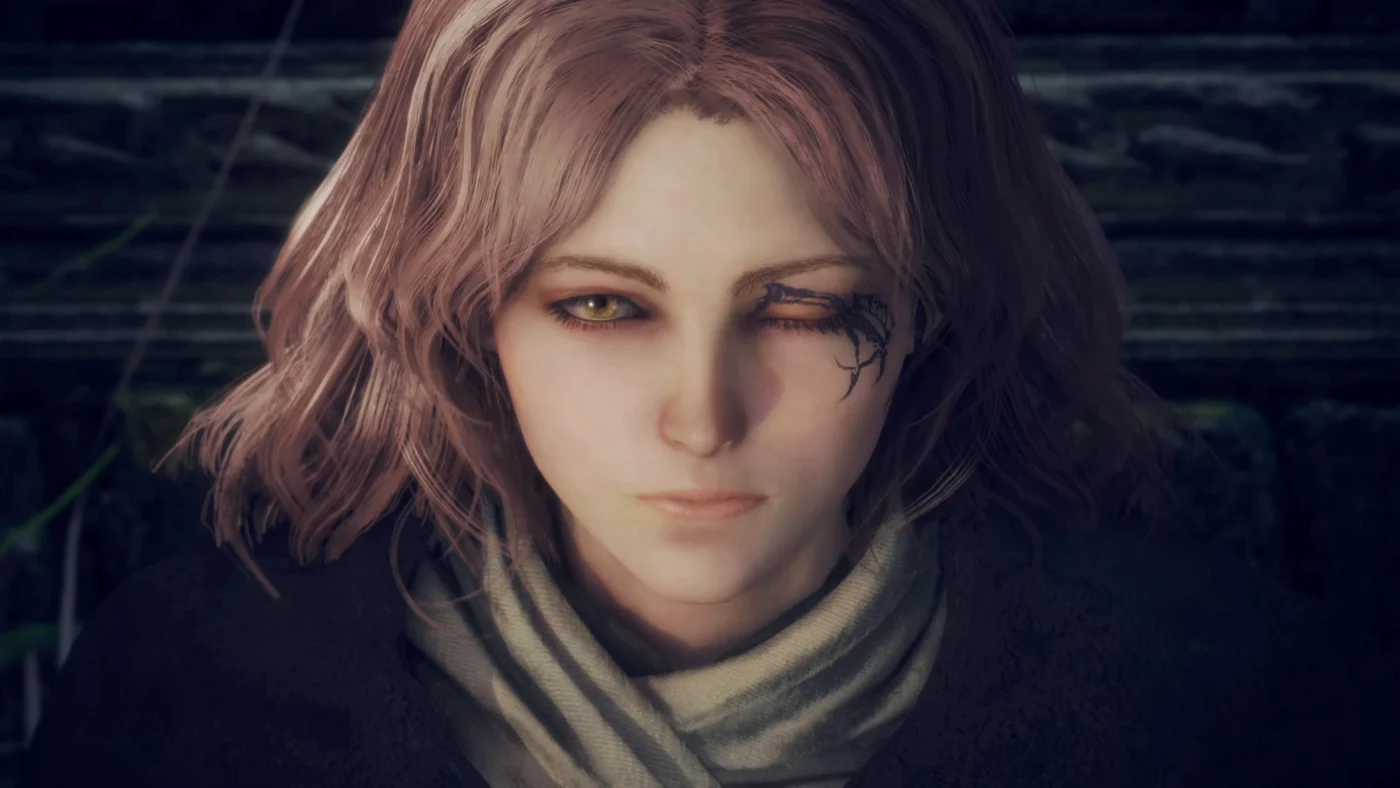
Her left eye is closed, covered by a black marking (possibly a seal). Her right eye is golden, grace. Her armor is the Traveler's Set (also worn by Millicent and her sisters, described as "worn by women to confront their fate"). Her weapon is the Blade of Calling, described as belonging to "a Kindling Maiden" and engraved with the words she speaks when burning the Erdtree. Her combat moveset (as a cooperative summon in Morgott's fight) is identical to that of the Black Knife Assassins. She possesses a healing incantation exclusive to Marika (summons a small healing tree), visible only if she dies as a cooperator.
Torrent was entrusted to her, but the Spectral Steed Whistle is given by Ranni (disguised as Renna at Church of Elleh), who says she was "charged with this by Torrent's former master." Neither Melina nor Ranni is this "former master", the identity remains mysterious (leading theory: Miquella, based on pre-DLC teaser art showing a young rider).
Connection with Ranni: their spectral faces are visually identical, including the eye mark but mirrored to opposite sides. Both knew Torrent. Both oppose the Greater Will. Both are daughters of Marika. They never meet in-game.
If the player embraces the Frenzied Flame: Melina departs permanently, then reappears in the Lord of Frenzied Flame ending, burned hair, her left eye now open (deep blue, no black marking), graceless right eye, and vows: "Should you rise as the Lord of Chaos, I will kill you, as sure as night follows day. Such is my duty." The open left eye post-Maliketh is narratively significant: defeating Maliketh releases Destined Death from its seal, which may have also unsealed Melina's eye.
◆ Sources
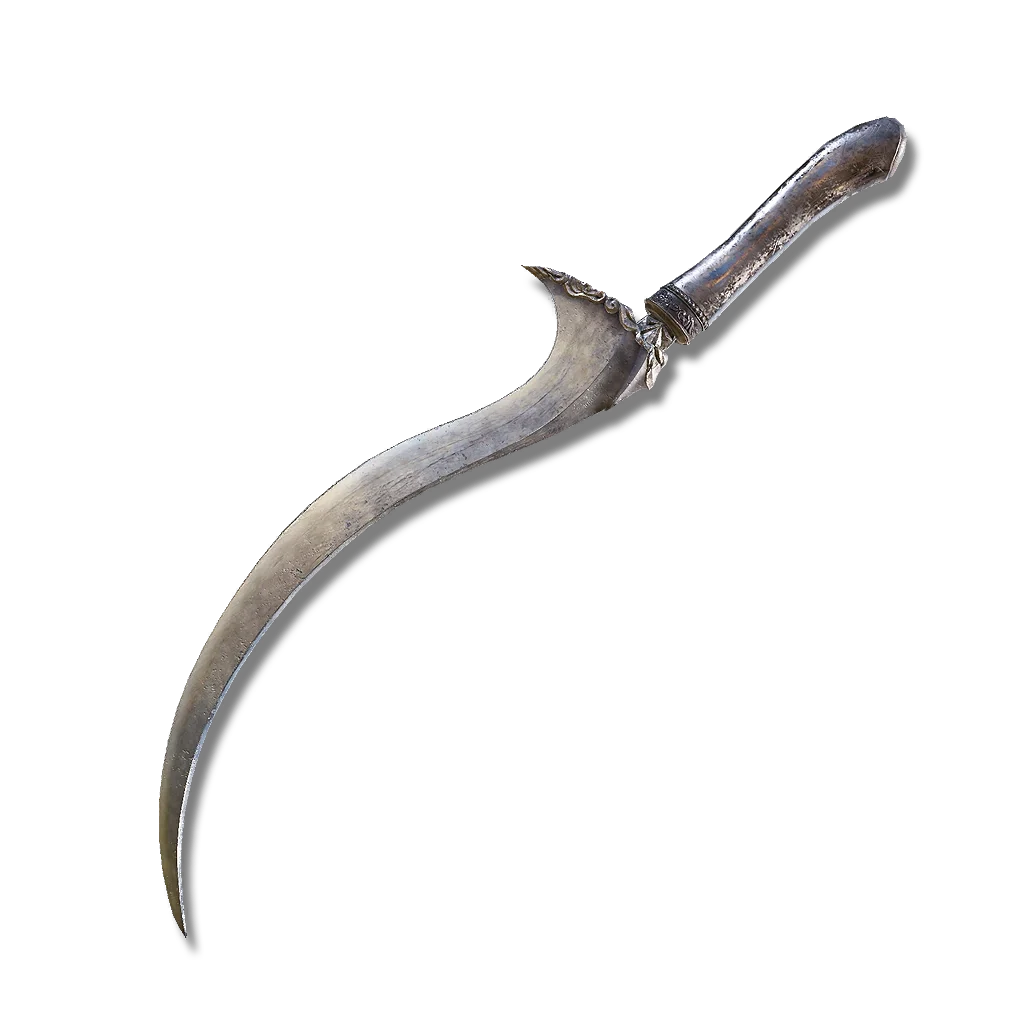 Blade of Calling
Dagger given to one who set out on a journey to fulfill her duty long ago. The power of its former owner, the kindling maiden, is still apparent. The one who walks alongside flame, Shall one day meet the road of Destined Death.
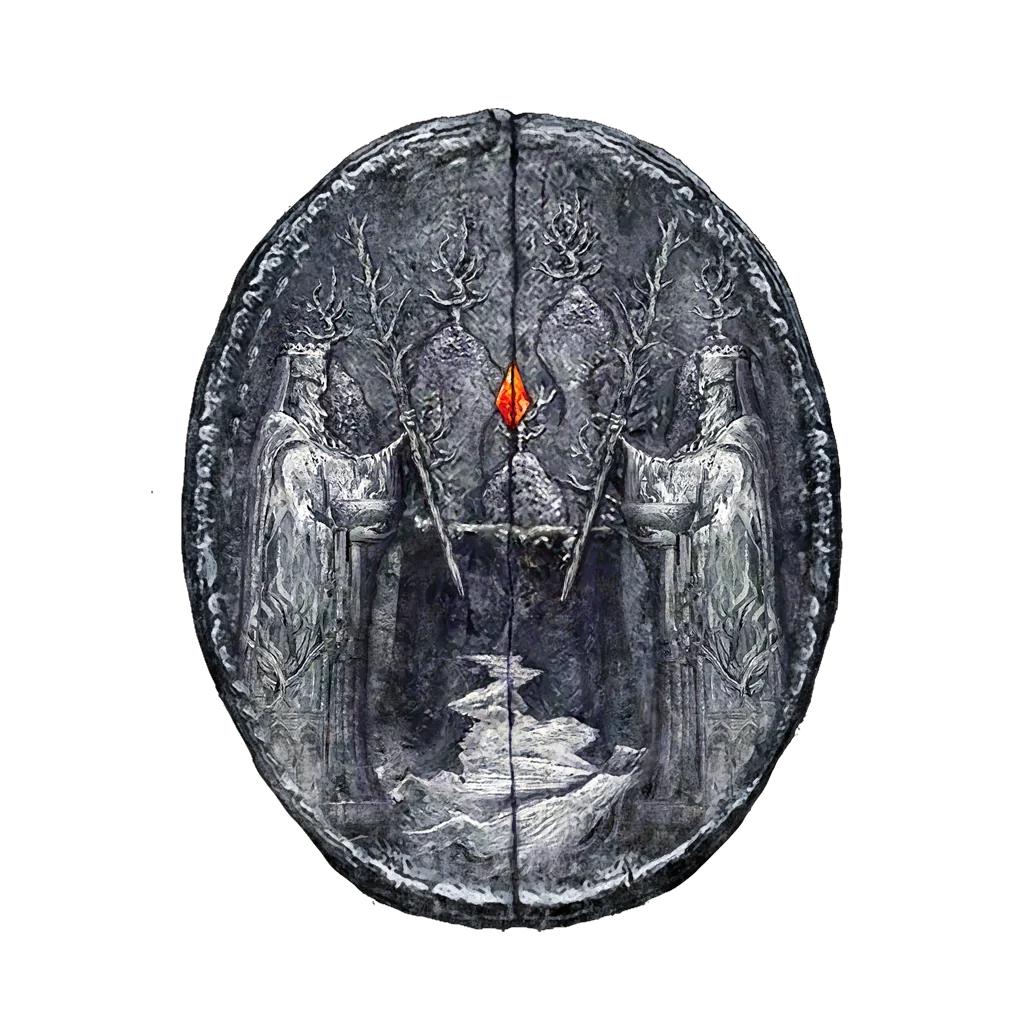 Rold Medallion
Conjoined split medallion depicting the Flame Peak. Brandishing the medallion activates the Grand Lift of Rold, connecting Leyndell to the Mountaintops of the Giants. The forge of the flame of ruin is said to be found upon their peaks, and it is here Melina wishes to travel in resuming your journey together.
 ◈ CHARACTER
The Elden Beast
Vassal of the Greater Will · The Concept of Order Made Flesh▾
The Elden Beast
"Now wilt ye serve, each and all. The Elden Lord is crowned. The new Elden Lord, steward of a fracturing world. And so beginneth the age of fracture..."
Final encounter
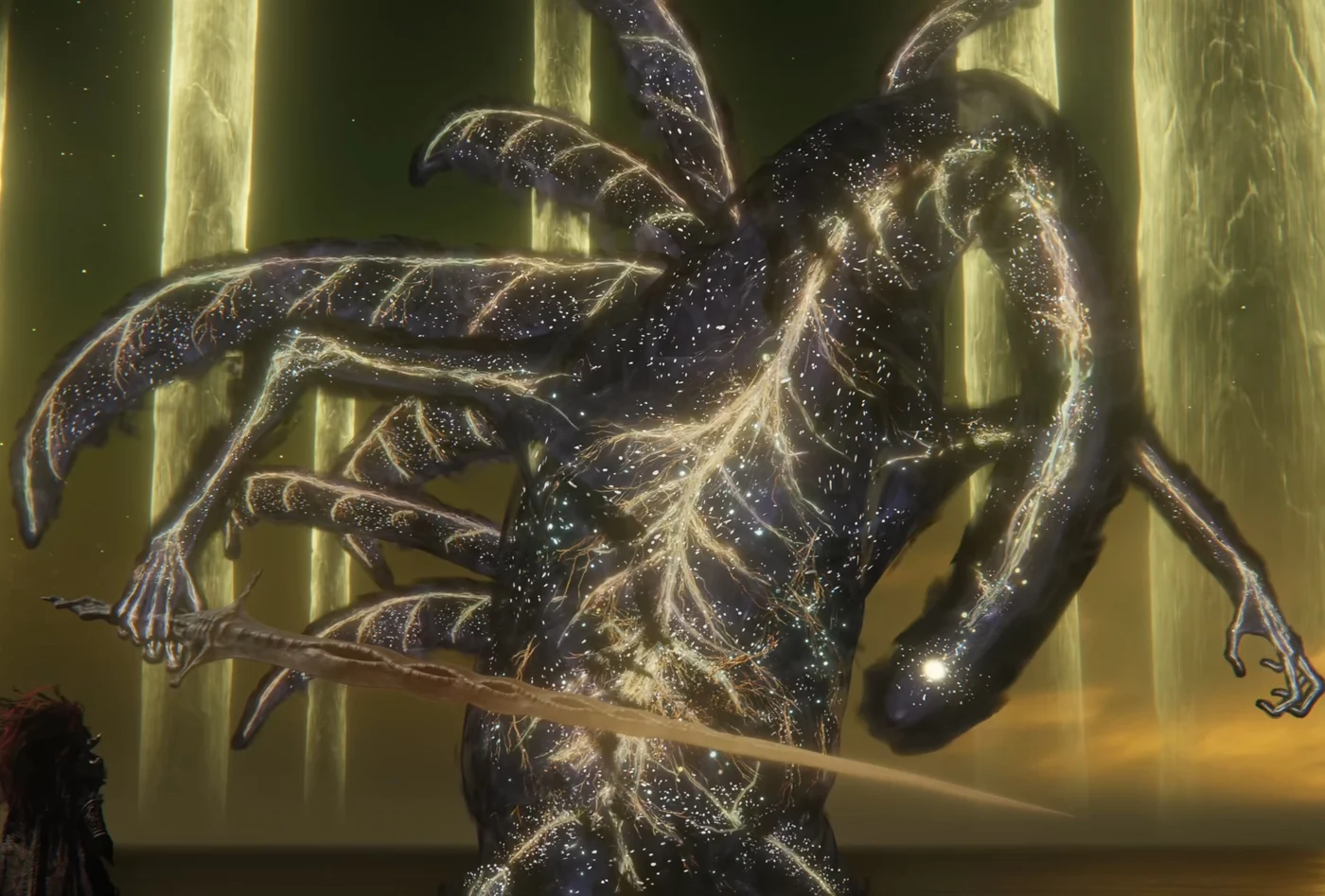
The Elden Beast is the physical manifestation and vassal of the Greater Will, the Elden Ring itself incarnated as a living entity descended from the stars. The Elden Remembrance defines it unambiguously: "It was the vassal beast of the Greater Will and living incarnation of the concept of Order." It is cosmic Order made flesh, an extraterrestrial entity sent to found and maintain the Golden Order in the Lands Between through Marika. In the final boss fight, it emerges from the body of Radagon/Marika after Radagon's defeat, revealing that the ultimate battle is not against a human or demigod, but against the very Concept of Order, the original source of all the suffering in the Lands Between. It does not speak, it is beyond language, being pure Concept. Its attacks: constellation formations, shooting stars, blasts of sacred energy, every mechanic reflects its stellar origin and cosmic nature. Its defeat does not destroy the Elden Ring but frees Marika to allow a choice of reconstruction. No armor set exists in-game (not droppable), but its inherited incantations (Elden Stars, Fundamentalist spells) reflect its essence as cosmic Order.
◆ Sources
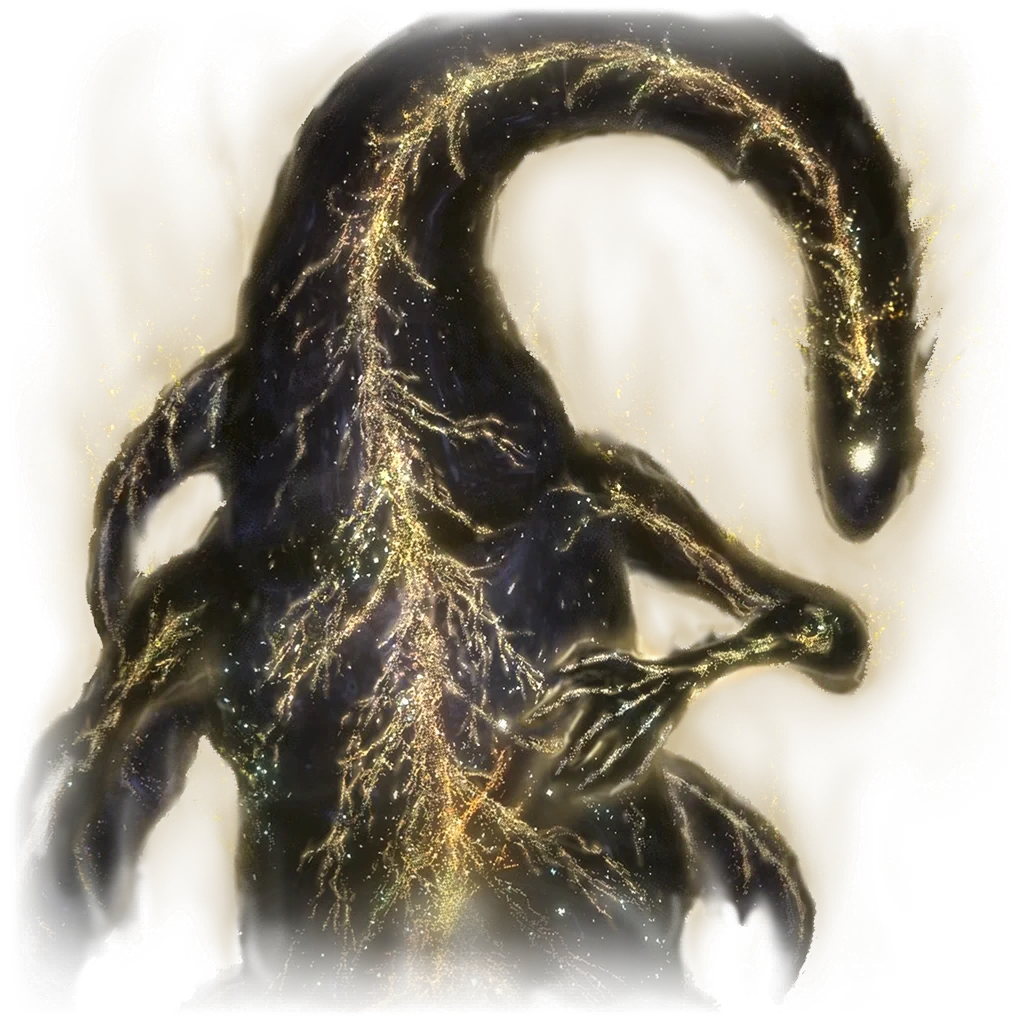 Elden Remembrance
Remembrance of the Elden Beast, hewn into the Erdtree. The power of its namesake can be unlocked by the Finger Reader. Alternatively, it can be used to gain a great bounty of runes. It was the vassal beast of the Greater Will and living incarnation of the concept of Order.
 ◈ CHARACTER
Dragonlord Placidusax
Pre-Erdtree Elden Lord · Waiting in the Storm▾
Dragonlord Placidusax
"The Dragonlord whose seat lies at the heart of the storm beyond time is said to have been Elden Lord in the age before the Erdtree."
From the Remembrance of the Dragonlord
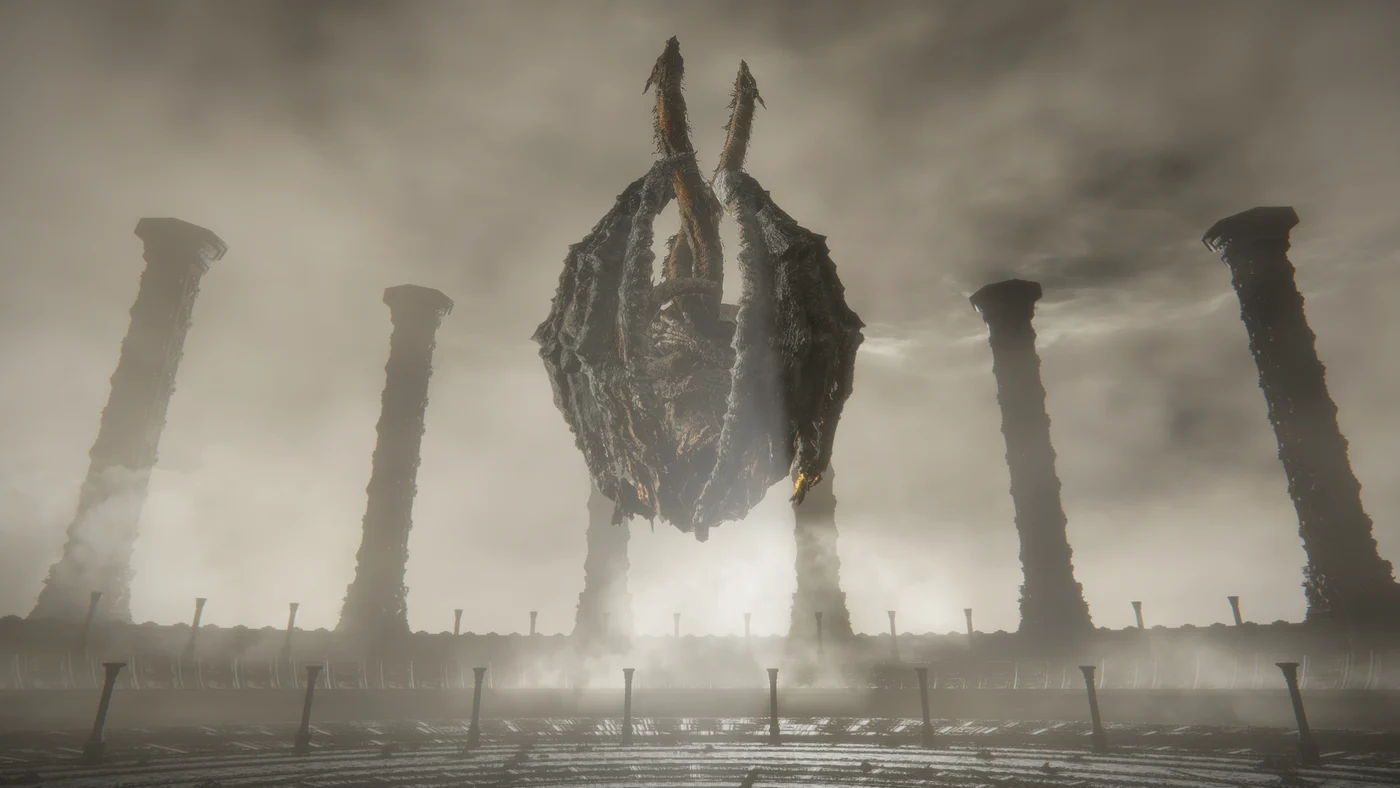
Placidusax is the pre-Erdtree Dragonlord, Elden Lord of an era predating the existence of both the Erdtree and the Greater Will. The Remembrance of the Dragonlord: "The Dragonlord whose seat lies at the heart of the storm beyond time is said to have been Elden Lord in the age before the Erdtree. Once his god fled, the lord continued to await its return." He ruled with his own god, an entity distinct from the Greater Will, which mysteriously fled or perished. Abandoned by his divinity, Placidusax refused to leave his post and continues to wait, suspended in the sandstorm of Crumbling Farum Azula, a city outside normal time, outside the Erdtree, outside all standard cosmological context. His combat form reveals multiple heads (some ghostly), reflecting his nature as a multi-aspect Dragonlord. His attacks: golden and lightning tornadoes, teleportation through wind vortices. "These are the dying wails of the Dragonlord who once dwelled eternally beyond time" (Placidusax's Ruin description). He is accessible only by lying down in a specific nest at Farum Azula, a gesture symbolizing homage to a being still waiting for someone worthy of his audience.
◆ Sources
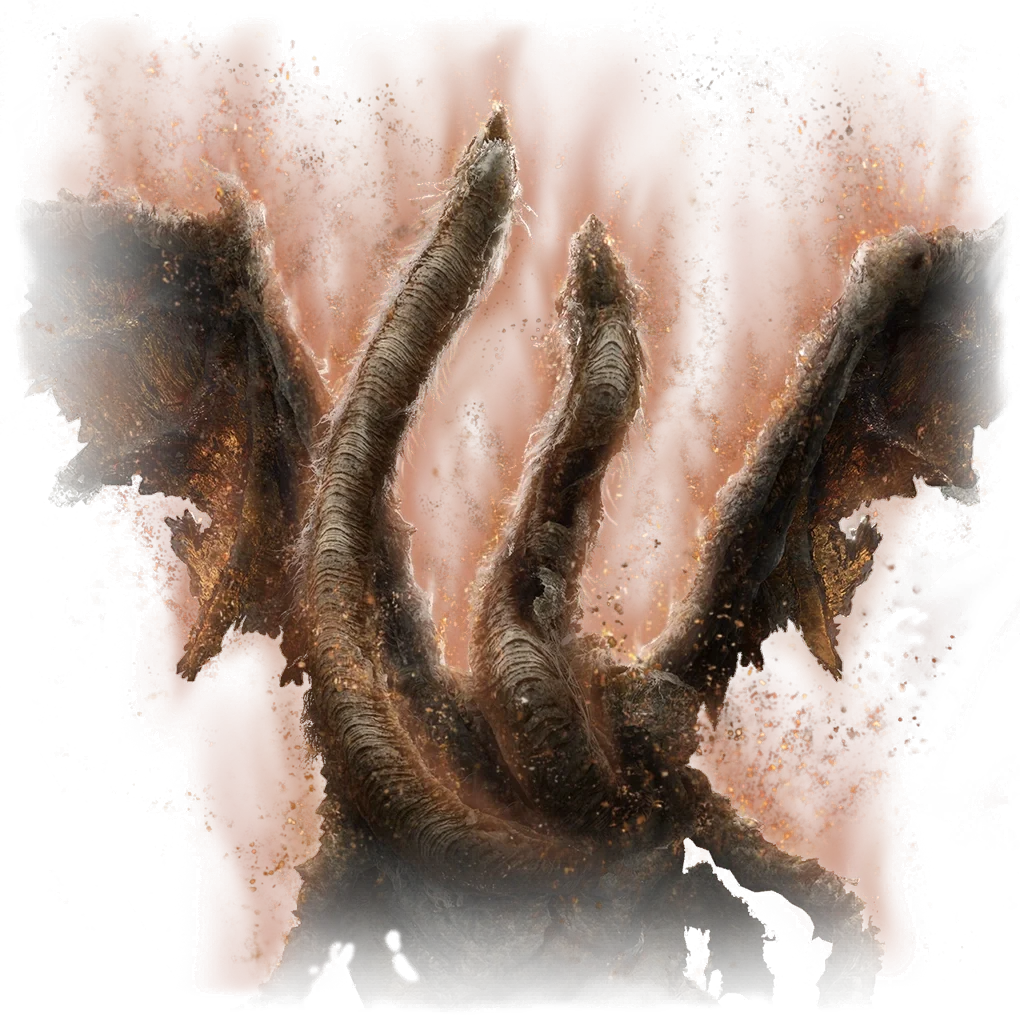 Remembrance of the Dragonlord
Remembrance of Dragonlord Placidusax, hewn into the Erdtree. The power of its namesake can be unlocked by the Finger Reader. Alternatively, it can be used to gain a great bounty of runes.
Power gleaned from the remembrance of Dragonlord Placidusax. Transforms caster into the Dragonlord to spew golden breath from above. This incantation can be cast while jumping. These are the dying wails of the Dragonlord who once dwelled eternally beyond time.
 ◈ CHARACTER
Fortissax, the Lichdragon
Friend of Godwyn · Corrupted by Loyalty▾
Fortissax, the Lichdragon
"After Godwyn the Golden became the Prince of Death, the ancient dragon fought long and hard against the Death within its companion. Alas, victory was never achieved and its only reward was corruption."
From the Remembrance of the Lichdragon
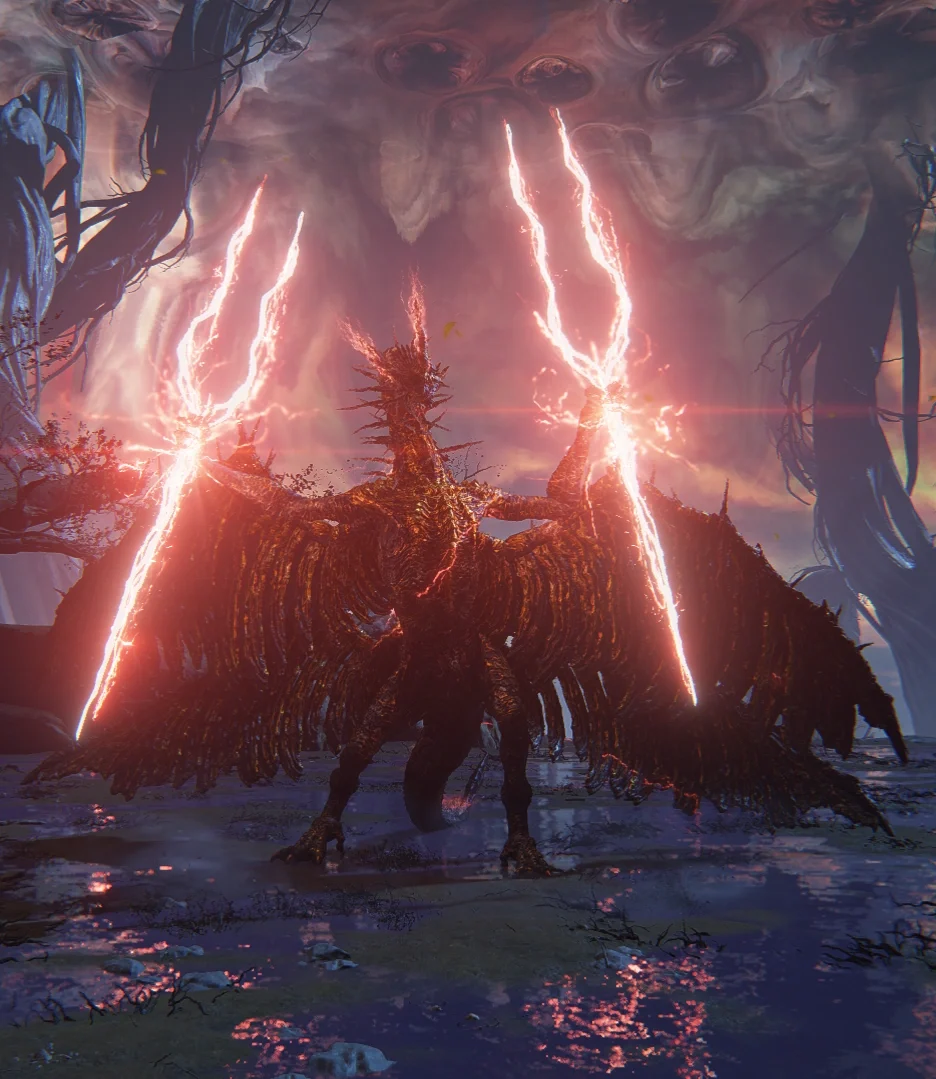
Fortissax was one of the Ancient Dragons, a contemporary of Godwyn the Golden, with whom he forged a unique friendship between dragons and men. The Historical Monument "Routing of the Ancient Dragons" specifies: "Godwyn the Golden fought until the very last, winning the friendship of the fearsome Fortissax." When Godwyn became the Prince of Death after the Night of the Black Knives, Fortissax voluntarily entered the Deeproot Depths to fight the Death consuming his companion, struggling "long and hard against the Death within him." The Remembrance of the Lichdragon: "Alas, the victory was never achieved and the only reward he received was corruption." Fortissax was corrupted by Death in the process, becoming the Lichdragon, an entity of Death and Lightning intertwined. The Fortissax boss fight takes place in a Deathbed Dream oniric space (accessible via Fia), suggesting this battle still unfolds within Godwyn's yet-active consciousness, Fortissax's fight against Death still ongoing. Inherited incantations (Fortissax's Lightning Spear, Death Lightning) blend draconic thunder with mortal rot, a synthesis of what he was and what he succumbed to.
◆ Sources
Remembrance of the LichdragonRemembrance of Lichdragon Fortissax, hewn into the Erdtree. The power of its namesake can be unlocked by the Finger Reader. Alternatively, it can be used to gain a great bounty of runes. After Godwyn the Golden became the Prince of Death, the ancient dragon fought long and hard against the Death within its companion. Alas, victory was never achieved and its only reward was corruption.
Lightning SpearCharging causes a lightning bolt to strike the point of impact. Long ago, Godwyn the Golden defeated the ancient dragon Fortissax, and befriended his fallen foe—an event that gave rise to the ancient dragon cult in the capital.
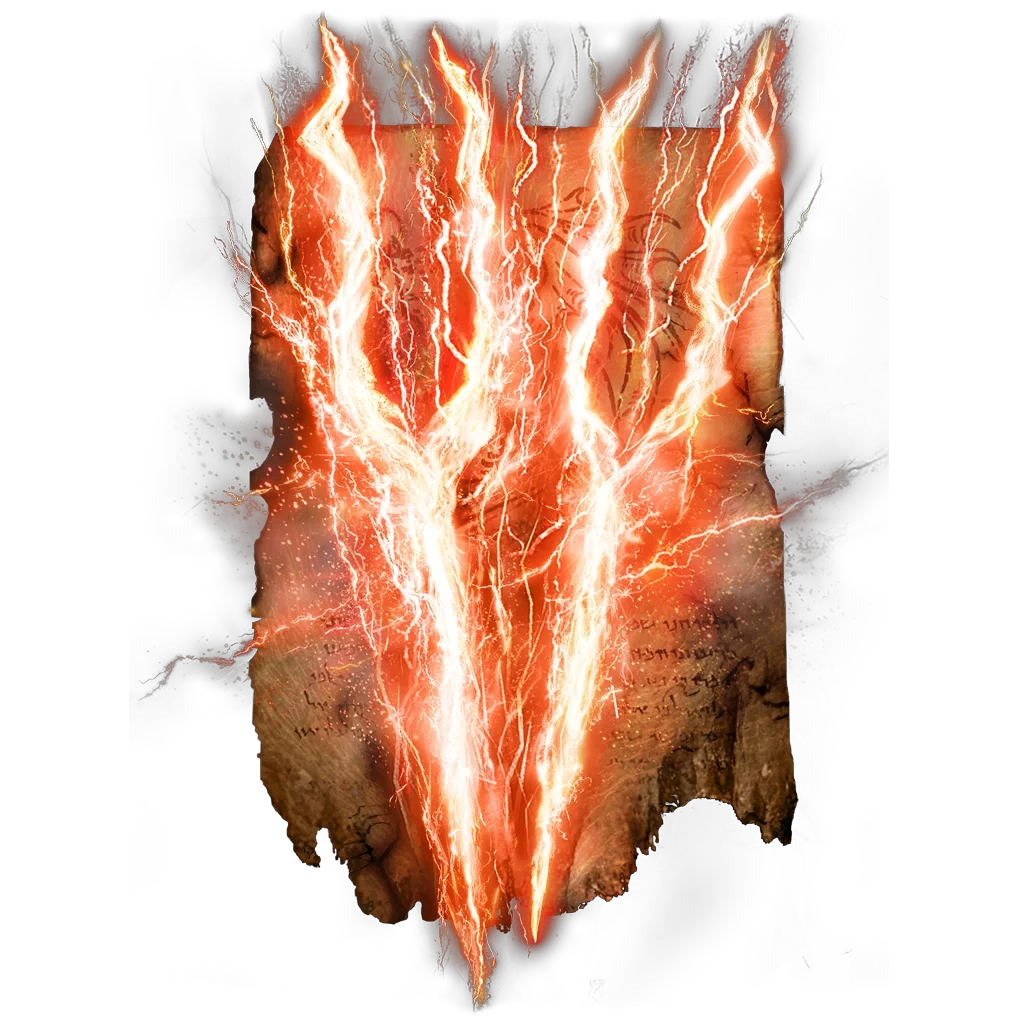 Fortissax's Lightning Spear
Incantation that channels the power of the ancient dragon Fortissax. Creates two spears of red lightning and stabs them into the ground from above, one after another. On impact, each spear will burst into trails of lightning covering the area. During the War of the Ancient Dragons, these twin red lightning stakes were the hallmark of one ancient dragon who was called the mightiest boulderstone.
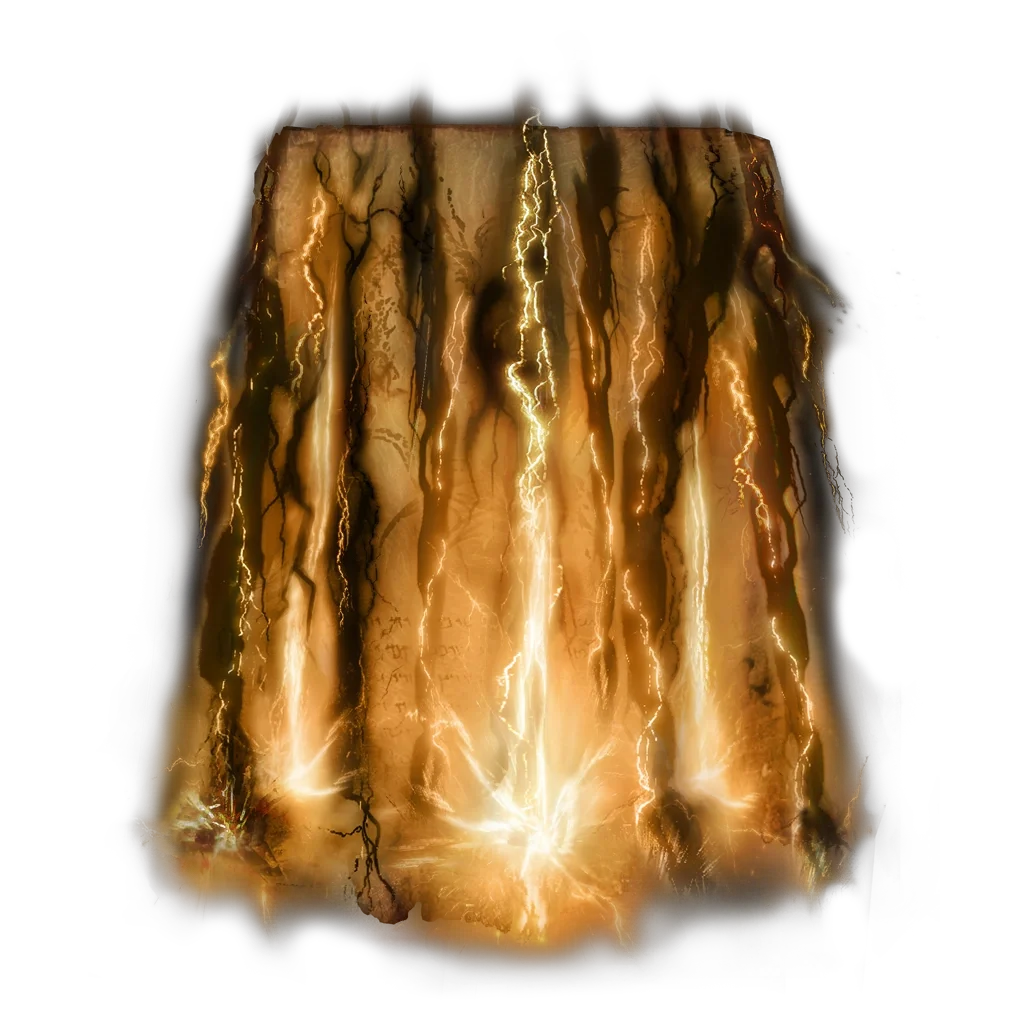 Death Lightning
Incantation that channels the power of the ancient dragon Fortissax, now corrupted by Death. Strikes surroundings with a storm of Death lightning. Inflicts Death blight upon foes. Charging extends duration of the storm. It said that this golden lightning was wielded by Godwyn, who befriended Fortissax.
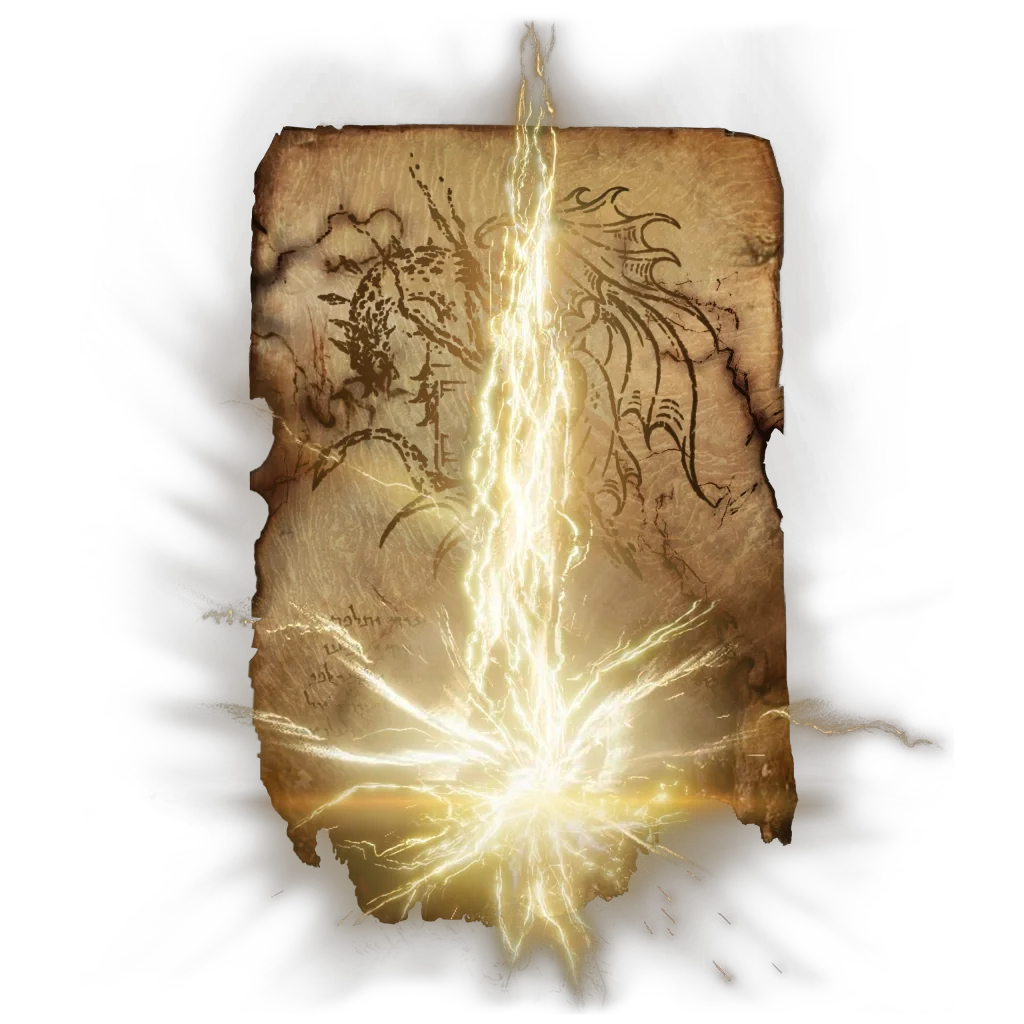 Honed Bolt
This incantation can be cast repeatedly. Long ago, Godwyn the Golden defeated the ancient dragon Fortissax, and befriended his fallen foe—an event that gave rise to the ancient dragon cult in the capital.
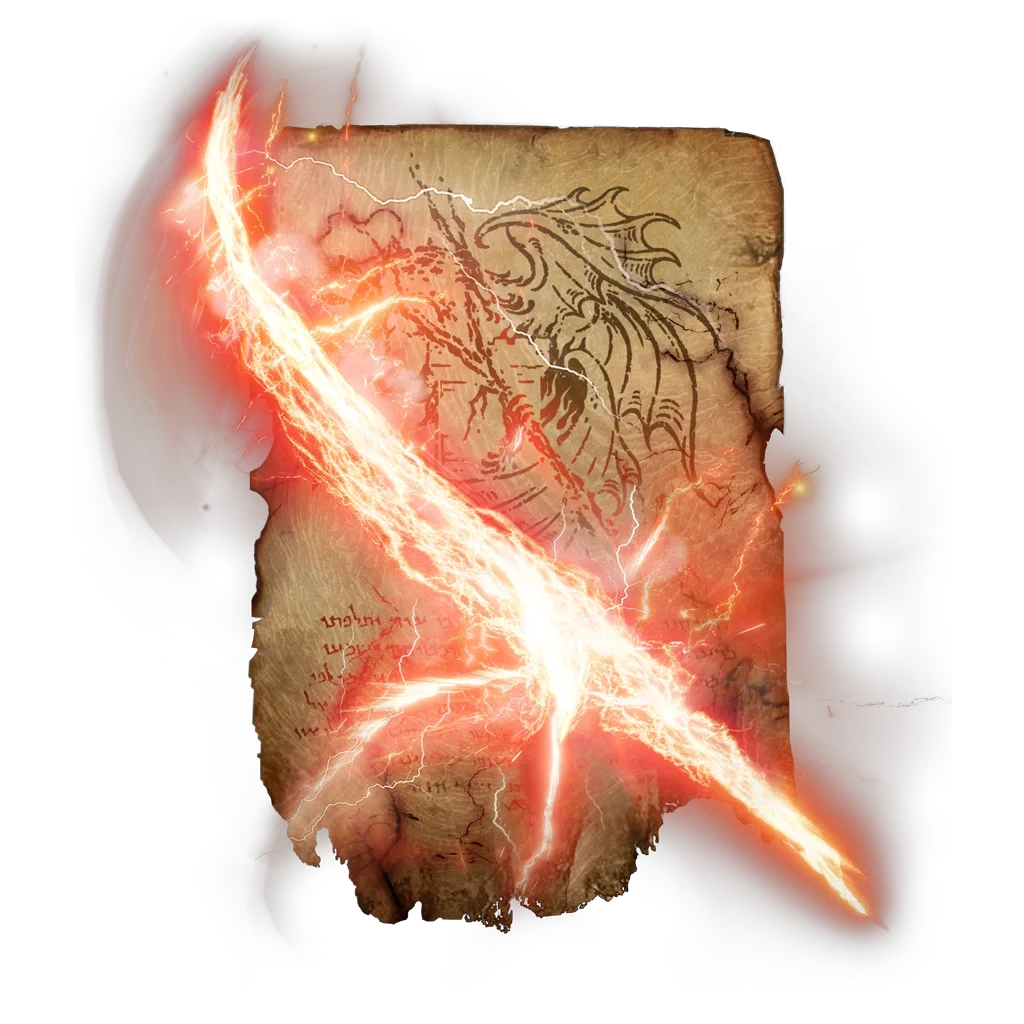 Lansseax's Glaive
This attack unleashes trails of lightning. Lansseax was the sister of Fortissax. It is said that she took the form of a human to commune with the knights as a priestess of the ancient dragon cult.
 Electrify Armament
Enchants armament held in the right hand with lightning-affinity attacks. Long ago, Godwyn the Golden defeated the ancient dragon Fortissax, and befriended his fallen foe—an event that gave rise to the ancient dragon cult in the capital.
 ◈ CHARACTER
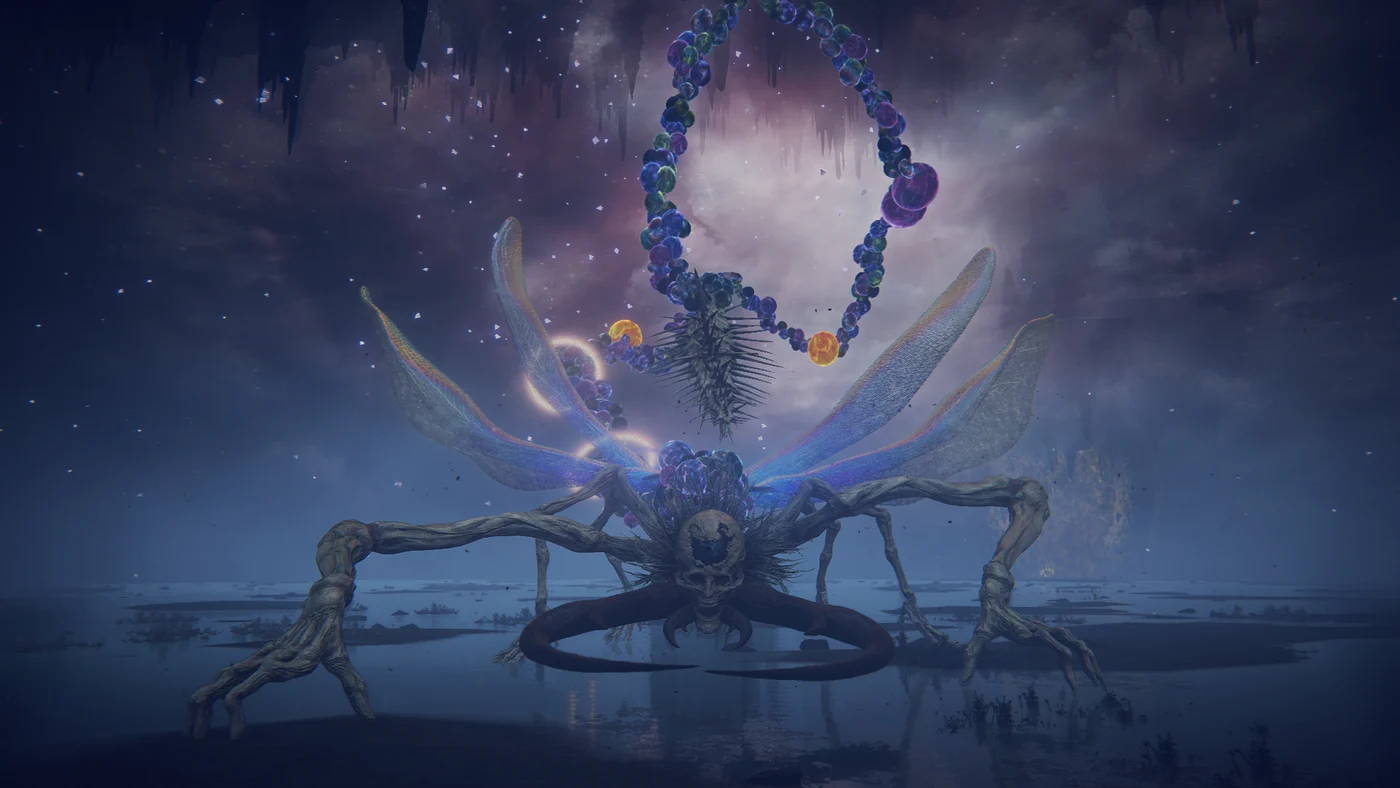
Astel, Naturalborn of the Void
Malformed Star · Destroyer of Cities▾
Astel, Naturalborn of the Void
"A malformed star born in the lightless void far away. Once destroyed an Eternal City and took away their sky. An falling star of ill omen."
From the Remembrance of the Naturalborn
Astel is "a malformed star, born in the lightless void far away", a cosmic entity foreign to the Lands Between. The Remembrance of the Naturalborn: "An ill-omened falling star." It crashed upon an Eternal City like a falling star, destroying that city and literally taking its sky, replacing an entire civilization's celestial vault with the permanent underground darkness of its impact. Its two appearances in the game (Astel, Naturalborn of the Void in the Lake of Rot; and Astel, Stars of Darkness in Yelough Anix Ruins via Ranni's questline) suggest either multiple copies exist or similar entities exist scattered through the cosmos. Bastard's Stars (its boss drop, a flail) is literally formed from the multicolored asteroid debris that comprised its body. Inherited Gravitational Sorceries (Gravitas, Meteorite, Meteorite of Astel, Stars of Ruin) reflect its mastery of void and cosmic gravitational forces. Its presence in the Lake of Rot (directly linked to Malenia and Scarlet Rot) connects cosmic foreign entities to Scarlet Rot, two forces external to the Golden Order occupying the same space of underground death.
◆ Sources
 Remembrance of the Naturalborn
Remembrance of Astel, Naturalborn of the Void, hewn into the Erdtree. The power of its namesake can be unlocked by the Finger Reader. Alternatively, it can be used to gain a great bounty of runes. A malformed star born in the lightless void far away. Once destroyed an Eternal City and took away their sky. An falling star of ill omen.
 Bastard's Stars
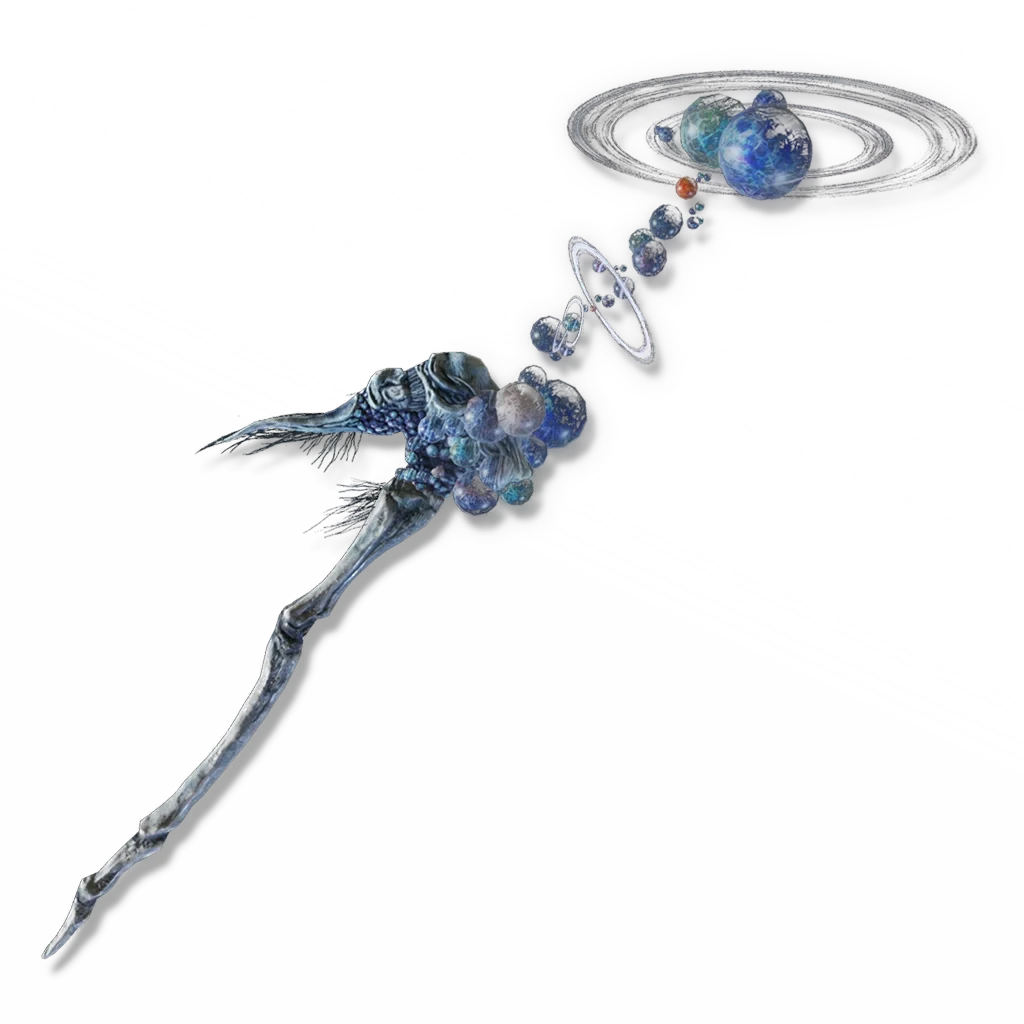
Flail which deals magic damage, having been imbued with power by the remembrance of Astel. Formed of the same many-colored star debris that comprised the form of the Naturalborn of the Void.
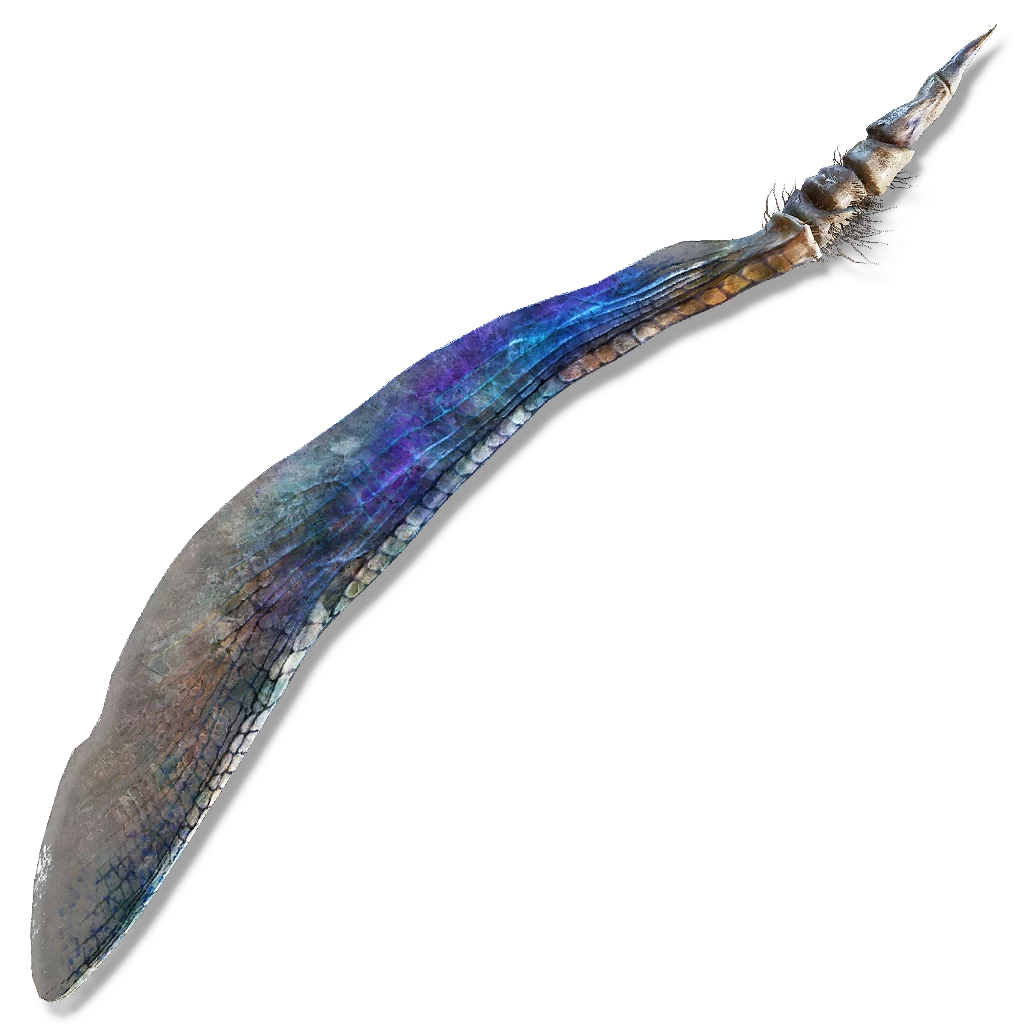 Wing of Astel
Sword fashioned from a delicate wing, suffused with the magic of the stars. Strong attack unleashes a wave of enchanted light. Crafted from a relic of the Naturalborn of the Void who is said to have assailed the Eternal City.
 Meteorite of Astel
One of the glintstone sorceries that manipulates gravitational forces. Summons a void that emits a hail of meteorites. Hold to continue the effect. A manifestation of the power with which Astel leveled the Eternal City.
 ◈ CHARACTER
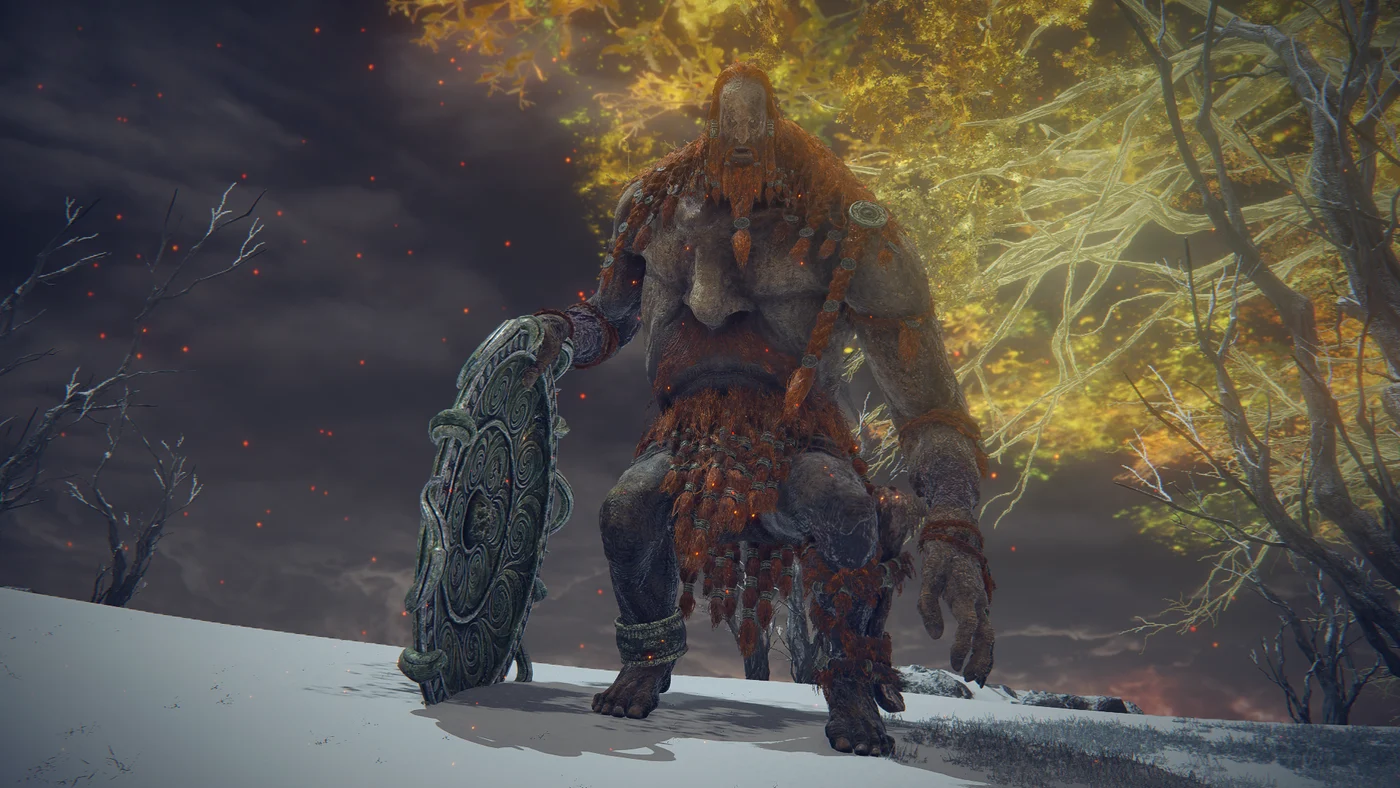
The Fire Giant
Last Survivor · Eternally Cursed Guardian▾
The Fire Giant
"O trifling giant, mayest thou tend thy flame for eternity."
Marika's curse upon the last giant
The Fire Giant is the last survivor of the Giant race, annihilated during the War against the Giants by Godfrey and his armies. This war was waged because the Giants controlled the Forge of the Giants' Flame of Ruin atop the Mountaintops, a cosmic flame capable of burning the Erdtree. Marika, to protect her Order, had the Giants crushed and the flame contained. The last surviving Giant was cursed by Marika herself: "O trifling giant, mayest thou tend thy flame for eternity." This curse, documented in the Remembrance of the Fire Giant, condemned him to guard the Forge of Ruin forever, living and suffering, witness to his people's annihilation. His massive body with only one functional leg and an eye embedded in his torso bears the scars of centuries of imprisonment and solitude. The Giants' Flame incantations (Giant's Flame, Flame, Fall Upon Them, Fire's Deadly Sin) are ritual legacies of his annihilated lineage. His defeat at the Flame Peak is the necessary step to rekindle the flame and burn the Erdtree, Melina or the Tarnished then using the flame Marika had contained to burn the Impenetrable Thorns, ironically accomplishing what the Giants once threatened.
◆ Sources
Remembrance of the Fire GiantRemembrance of Fire Giant, hewn into the Erdtree. The power of its namesake can be unlocked by the Finger Reader. Alternatively, it can be used to gain a great bounty of runes. The Fire Giant is a survivor of the War against the Giants. Upon realizing the flames of their forge would never die, Queen Marika marked him with a curse. "O trifling giant, mayest thou tend thy flame for eternity."
Finger Reader Enia (Dialogue)You must find kindling. Only the smoldering flame in the Great Forge of the Giants, on the highest peak in the Lands Between, can burn the Erdtree. But special kindling is required to reignite the flame. For the flame to burn the Erdtree, a sacrifice is needed.
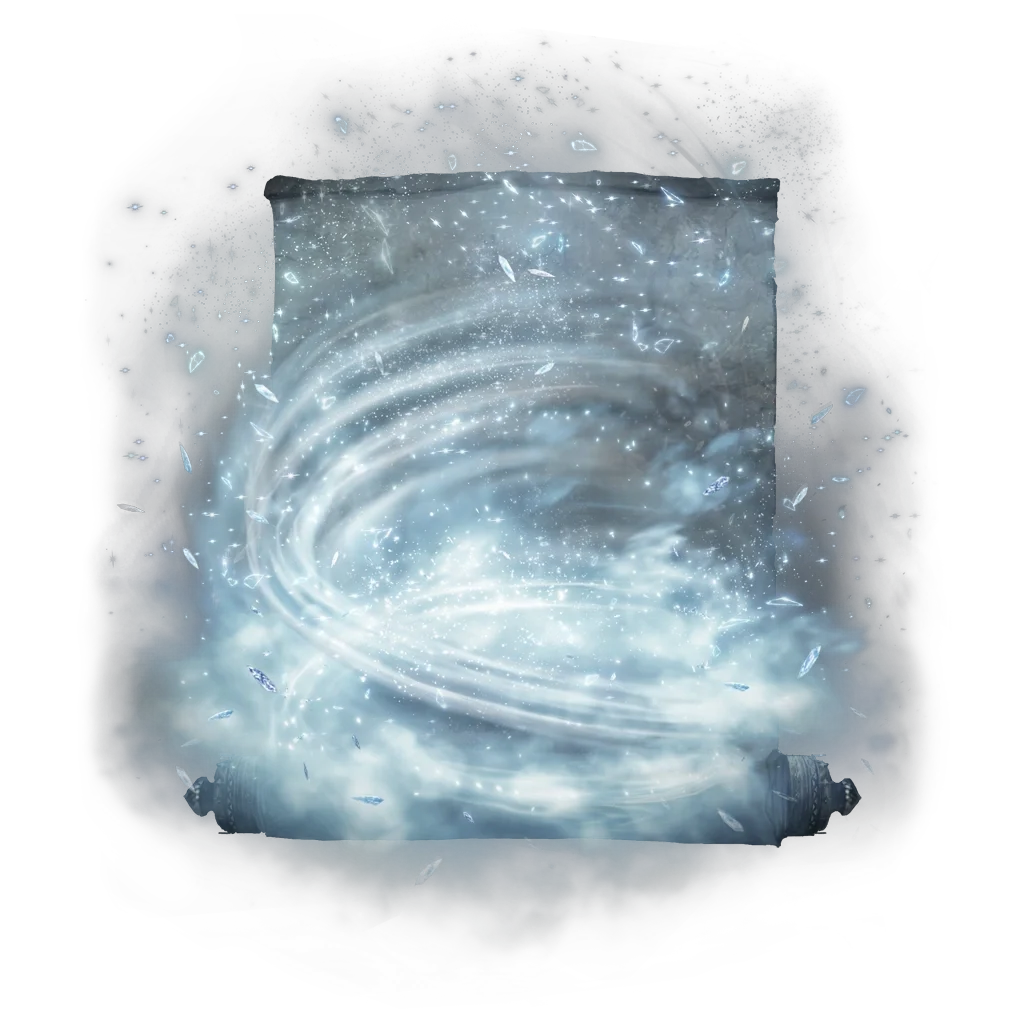 Zamor Ice Storm
Charging enhances potency. Cloaked in icy tempests, the knights of Zamor have challenged the Fire Giants since ancient times.
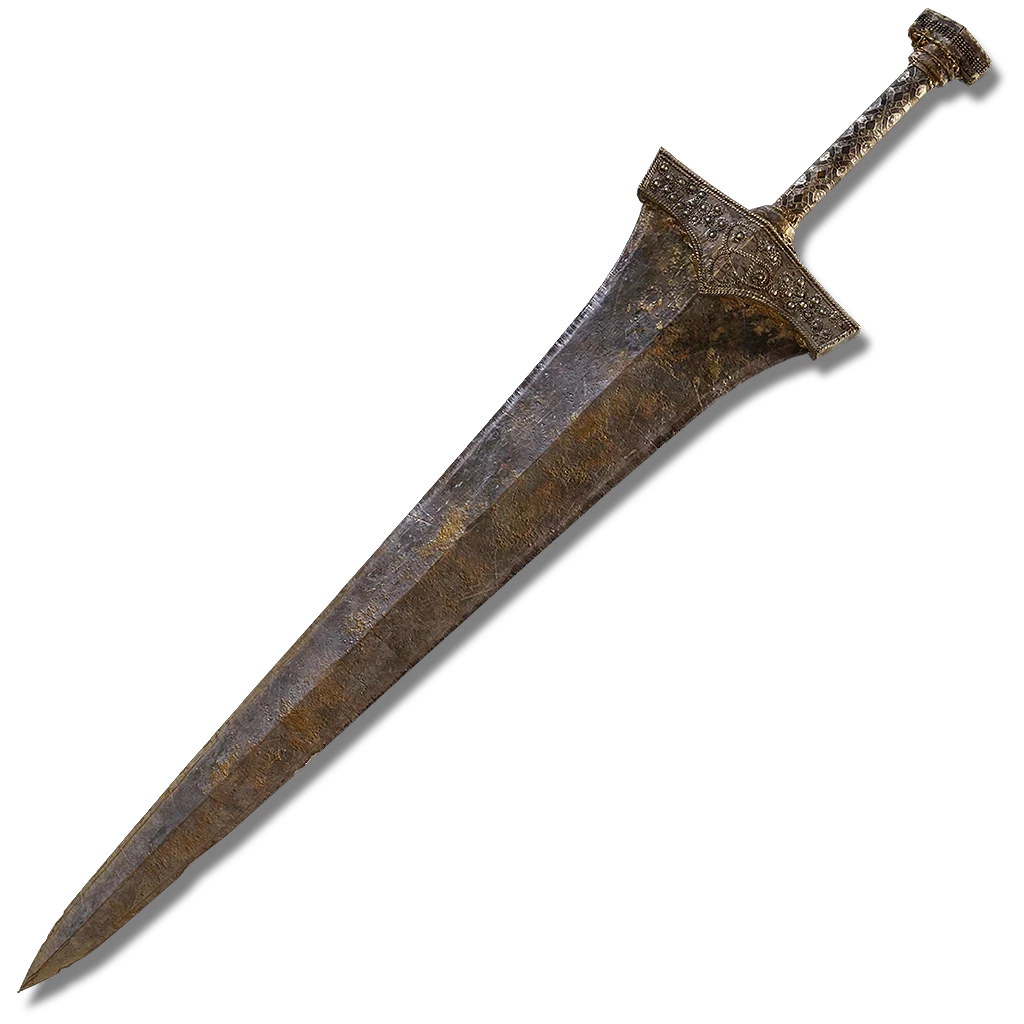 Troll's Golden Sword
Sword given to the giants who fought for the Erdtree during the War against the Giants long ago. Though the giants have lost their minds, they stay inseparable from their swords that are in sad shape—such that the gold plating had flaked away.
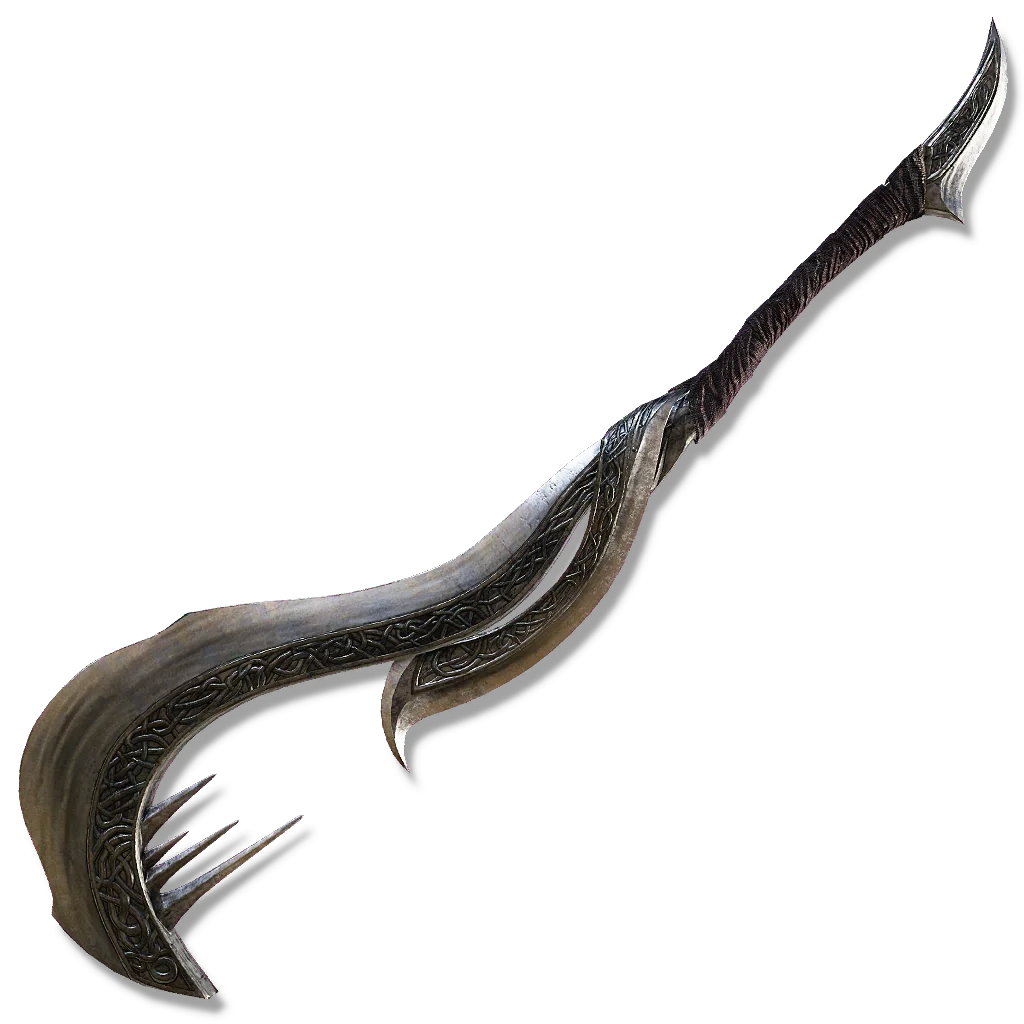 Zamor Curved Sword
Weapon wielded by the knights of Zamor who earned great renown during the War against the Giants. In apparent devotion to winter, the curved blade is styled after an icy wind and imbued with a powerful frost effect.
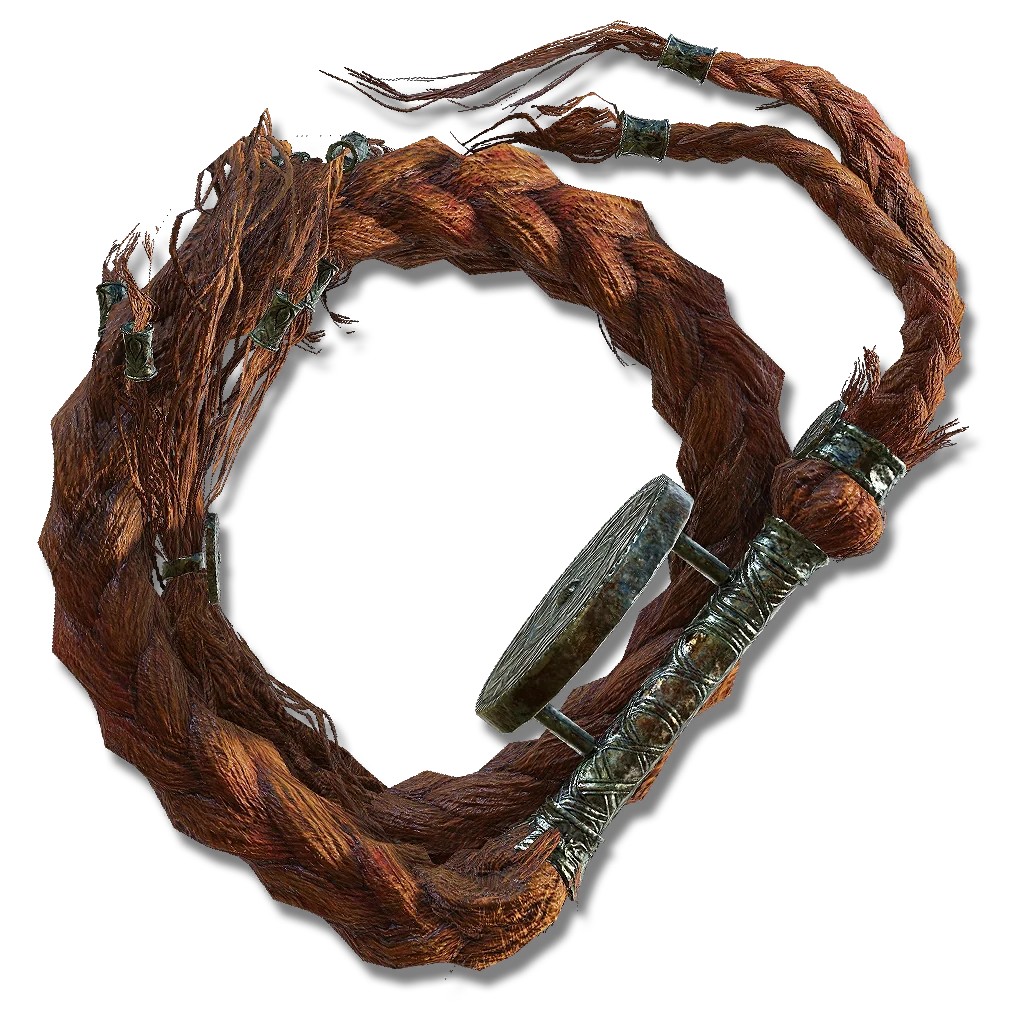 Giant's Red Braid
Hefty whip woven from the flame-red hair of a Fire Giant. Every giant is red of hair, and Radagon was said to have despised his own red locks. Perhaps that was a curse of their kind.
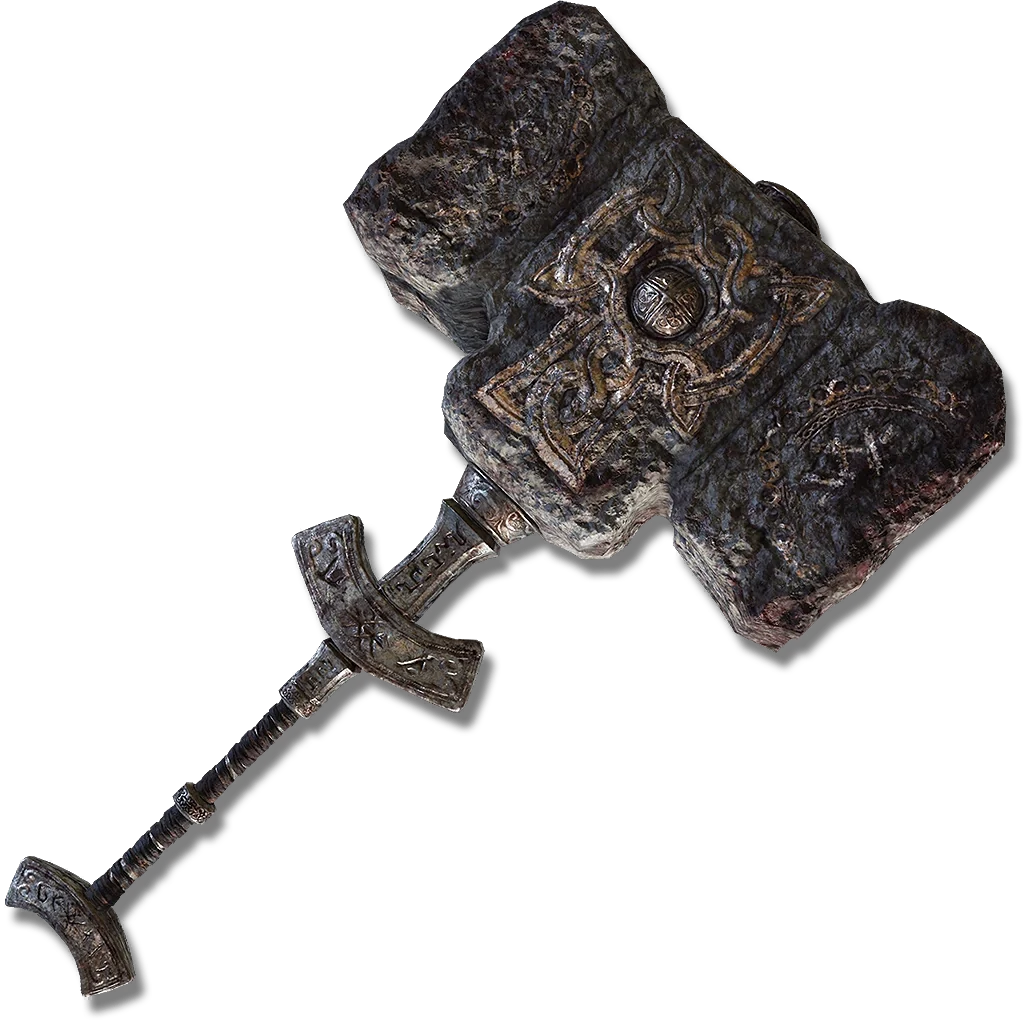 Giant-Crusher
A hammer made from a boulder, used in the War against the Giants. One of the heftiest weapons in the entire Lands Between. After the giants were quelled, and man turned against man in violence, this weapon was all but forgotten. Man has grown feeble in comparison to his forebears.
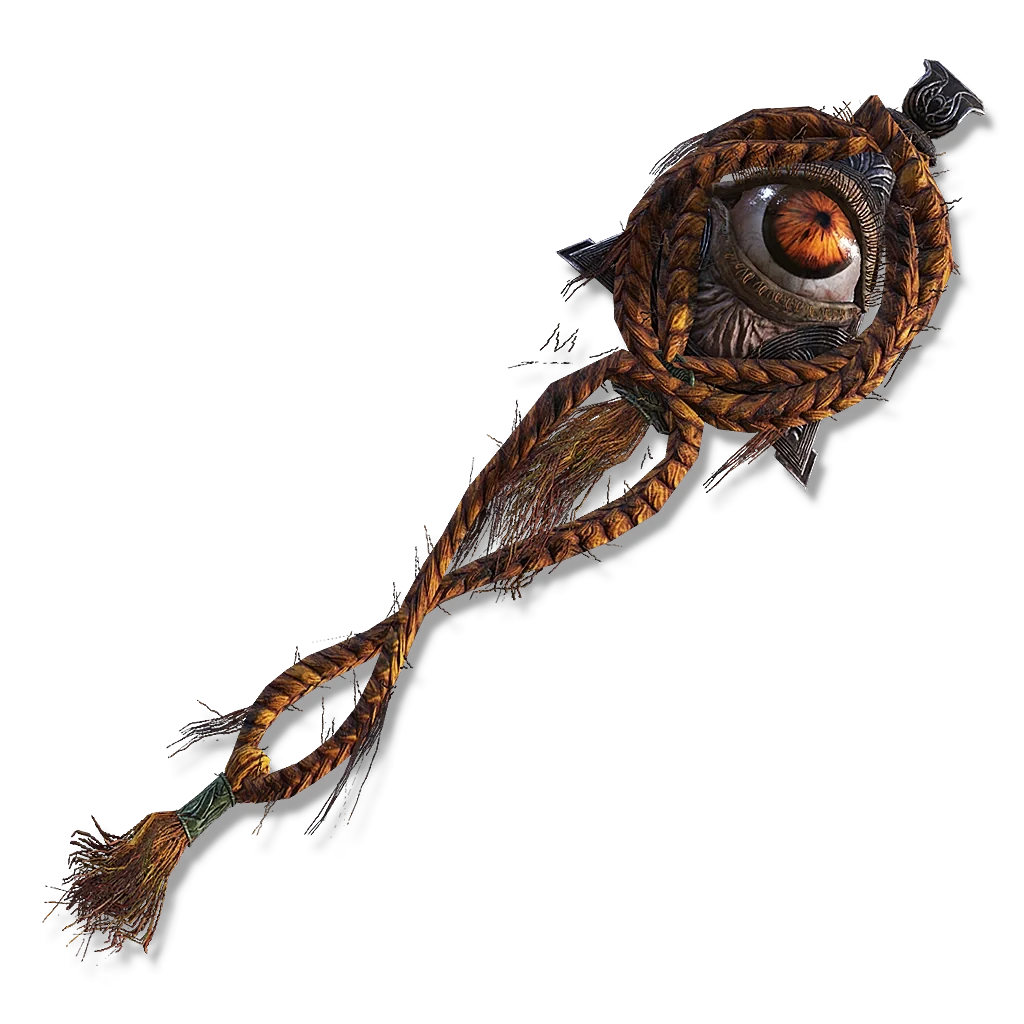 Giant's Seal
Sacred seal depicting the one-eyed god of the Fire Giants, adorned with braids of red hair. Sacred seal wielded by Fire Monks and Prelates, this catalyst enhances Giants' Flame incantations.
Elden Lord CrownThe age of the Erdtree began amongst conflict, when Godfrey was lord of the battlefield. He led the War against the Giants. Faced the Storm Lord, alone. And then, there came a moment.
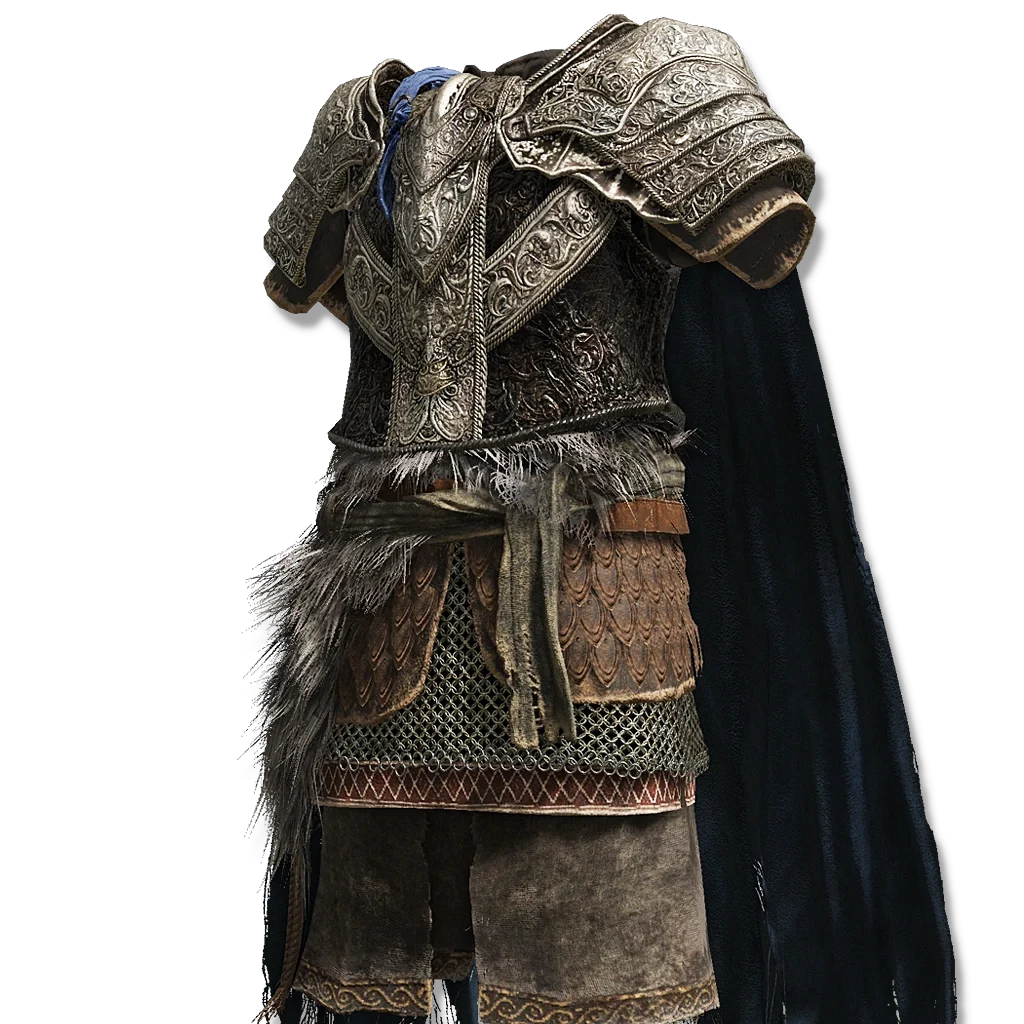 Elden Lord Armor
The age of the Erdtree began amongst conflict, when Godfrey was lord of the battlefield. He led the War against the Giants. Faced the Storm Lord, alone. And then, there came a moment.
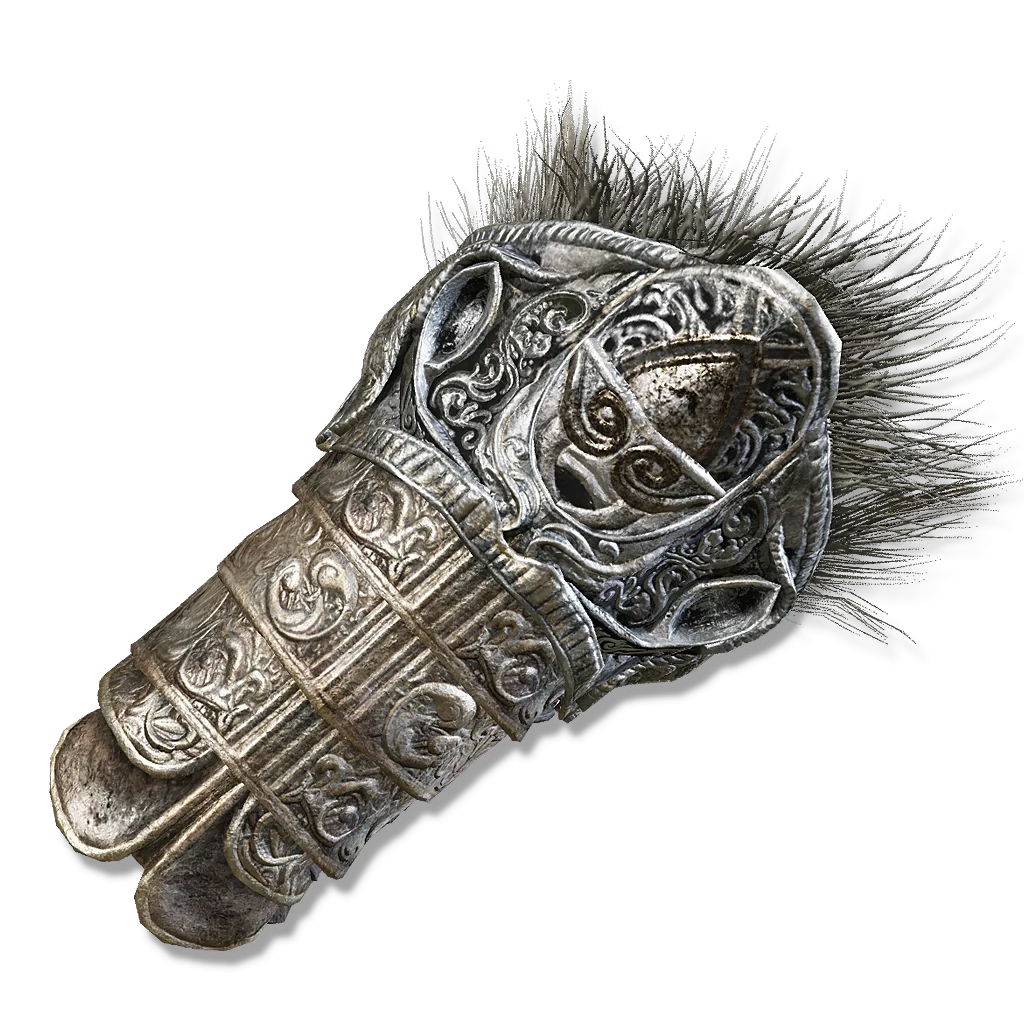 Elden Lord Bracers
The age of the Erdtree began amongst conflict, when Godfrey was lord of the battlefield. He led the War against the Giants. Faced the Storm Lord, alone. And then, there came a moment.
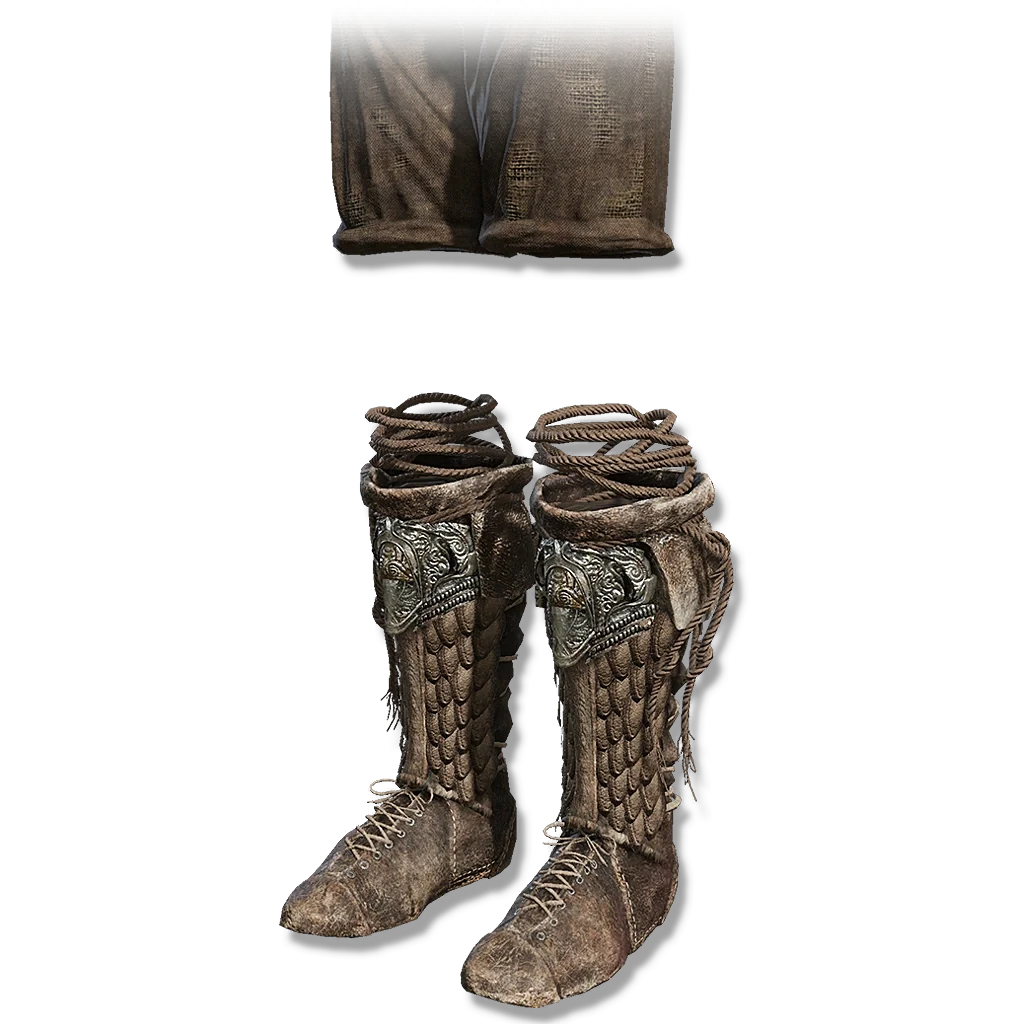 Elden Lord Greaves
The age of the Erdtree began amongst conflict, when Godfrey was lord of the battlefield. He led the War against the Giants. Faced the Storm Lord, alone. And then, there came a moment.
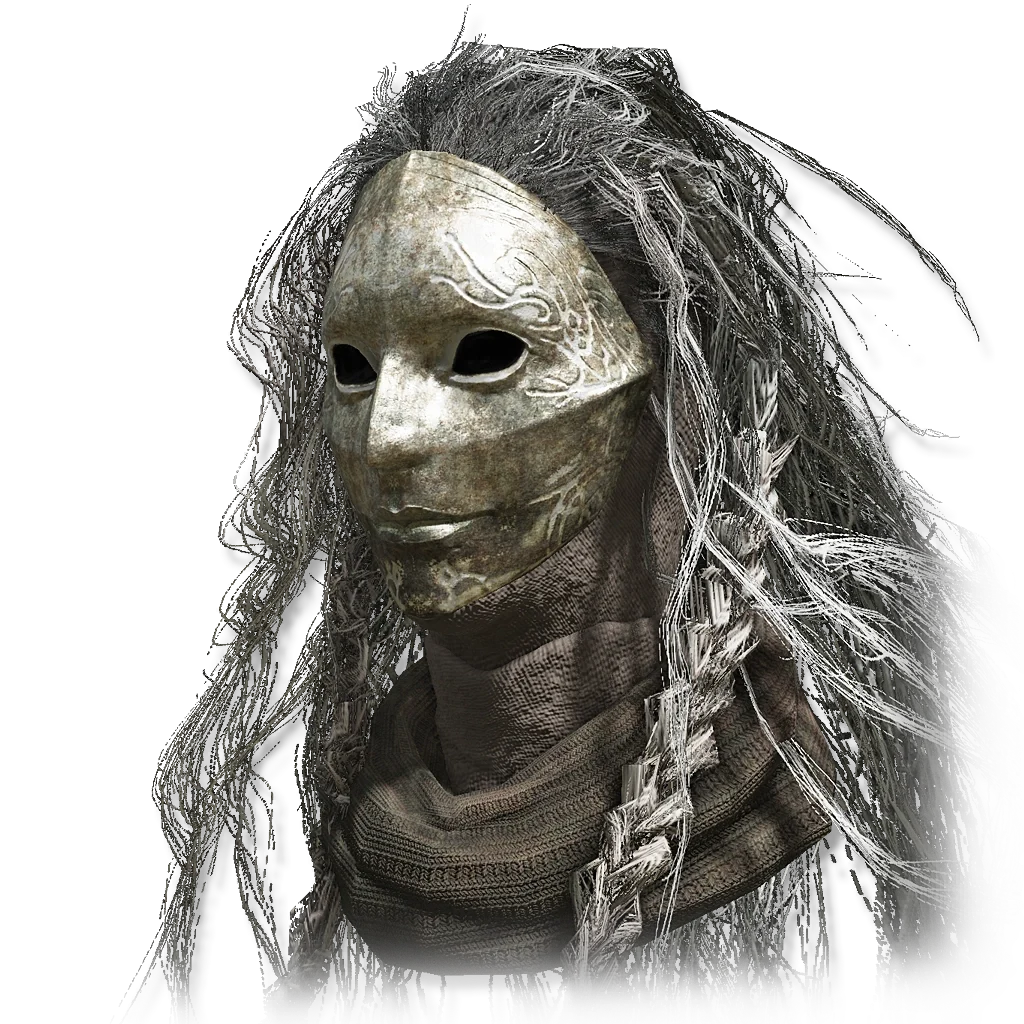 Zamor Mask
Mask worn by knights of Zamor, hailed as heroes in the War against the Giants. These long-lived warriors, clad in biting, freezing winds, are said to have been the mortal enemies of the Fire Giants since time immemorial.
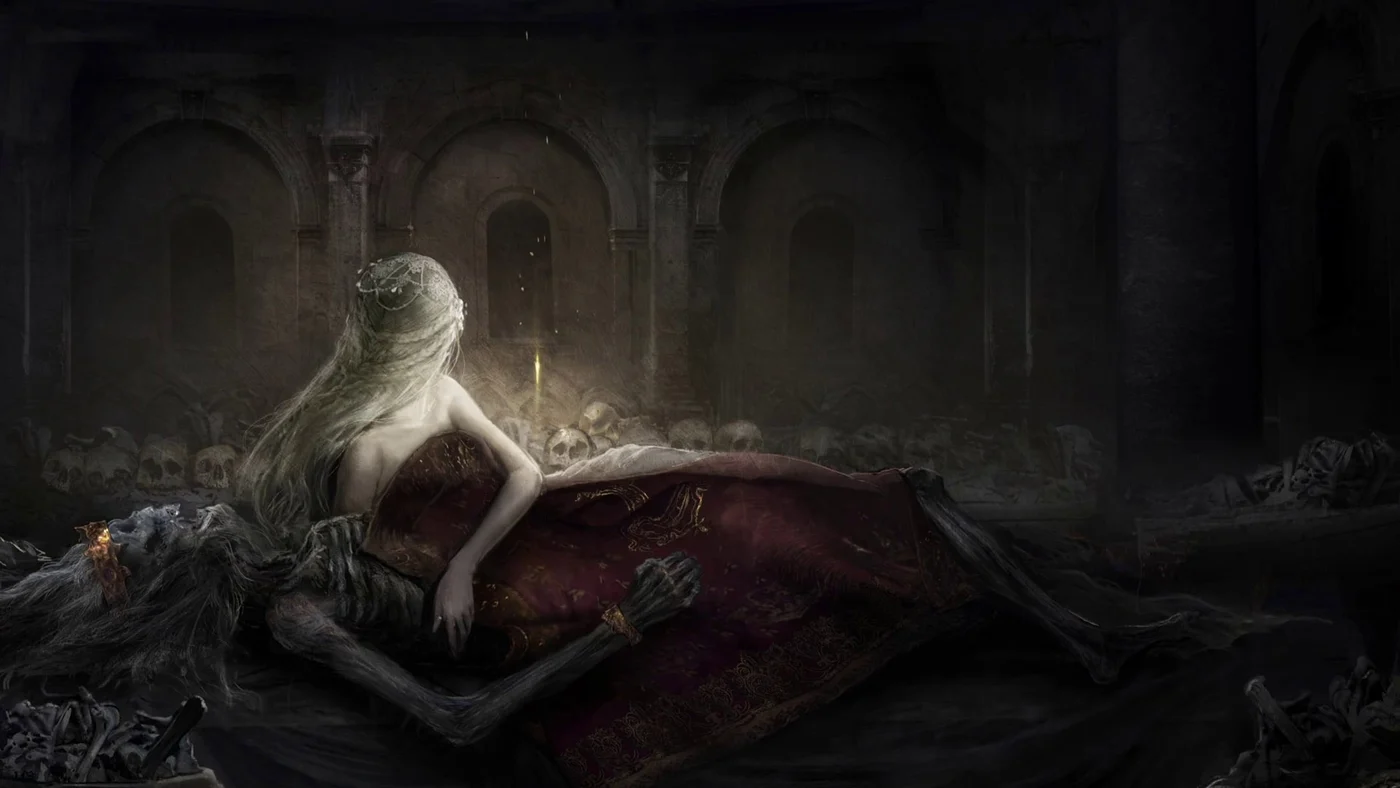 ◈ CHARACTER
Fia, Deathbed Companion
Guardian of Those Who Live in Death▾
Fia, Deathbed Companion
"Disturb not the Death of Godwyn, the exalted. For I am the companion of Godwyn, Prince of Death. I will soon lay with Godwyn. I choose to lie with Godwyn of my own will."
The deathbed companion
Fia is a Deathbed Companion, a sacred role in her homeland where a woman receives the life-warmth and vital energy of living champions, then lies with the remains of a noble departed to offer them a second chance at life. She was awakened by the guidance of grace and driven from her homeland before she could complete this rite. At Roundtable Hold, she embraces players to receive their warmth (explaining the 5% max HP debuff) while granting them a Baldachin's Blessing. Her true mission: recover both halves of the Hallowbrand (the half-wheel millipede mark imprinted on Godwyn's flesh), one found at Roundtable Hold, the other delivered by the player. Once reunited, she descended into the Deeproot Depths to lie with Godwyn's body and conceive the Rune of the Death-Prince, formed of the two hallowbrand half-wheels combined.
Her conflict with D (Hunter of the Dead) is direct: D's twin brother was killed by Fia as part of her quest, and D executes vengeance by killing Fia in the room adjacent to the Elden Throne. Rogier learns of Fia's death and cannot face it. Dying, she sends a message: "I am Fia, Deathbed Companion. Hark, Roundtable. Disturb not the death of Godwyn the Exalted. We, who live humbly in death, live awaiting our Lord." Her Deathbed Charm, given to the player, is described as "the warmth I received from the champions." Those Who Live in Death whom she protects are souls condemned by a flaw in the Order, beings without fault, living in death by cosmic accident rather than sin.
◆ Sources
Finger Reader Enia (Dialogue)Thou'rt a wild one, indeed. Torrent hath quite the ruffian chosen... ... Let us speak of the past, a while. I was once an Empyrean.
My mistress sent me off on an errand... But I was accosted by a ruffian, and now I'm in a bind. Could I ask you lend a hand, perhaps? That thug made off with a precious necklace.
Shabriri (Dialogue)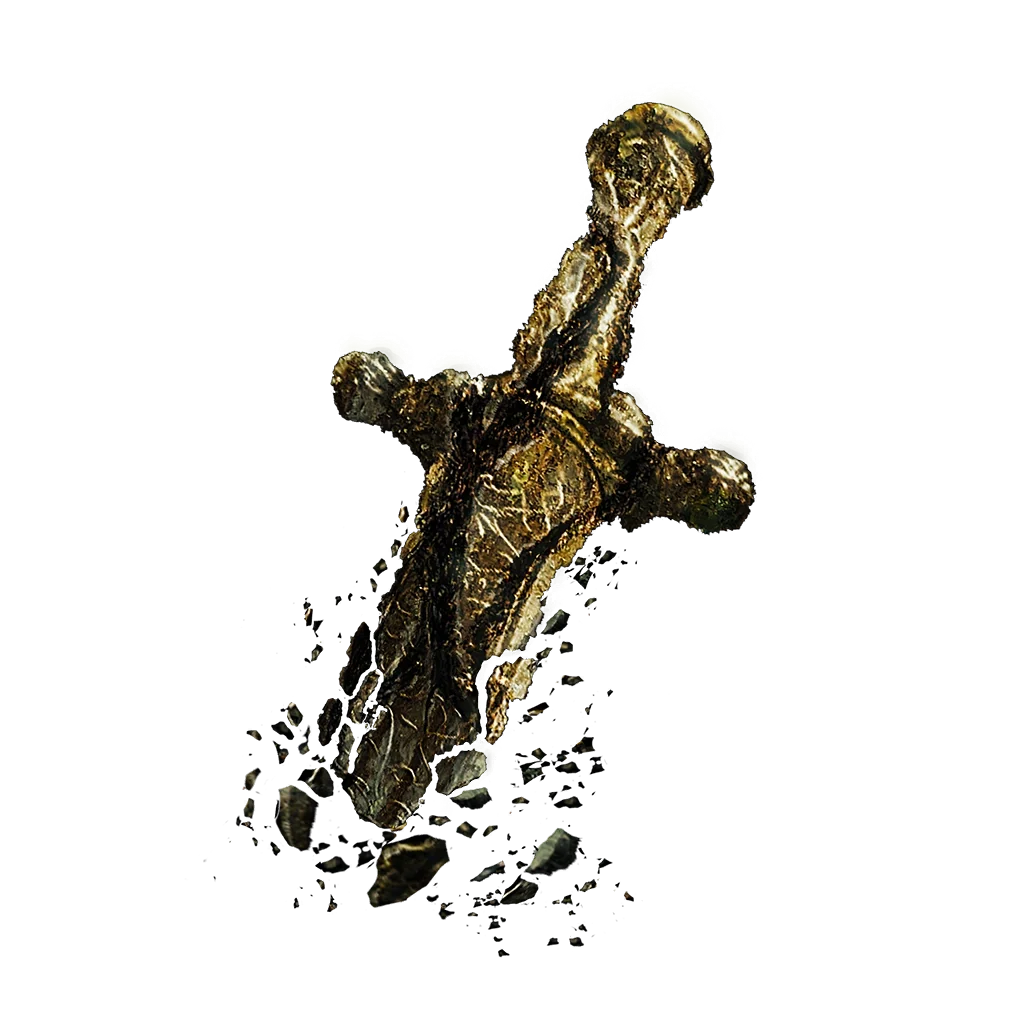 Weathered Dagger
Dagger received from Fia, the Deathbed Companion. She wishes for it to be returned to its rightful owner. It was once a special weapon of gold and silver intertwined, but is now worn down and marred by a black gash.
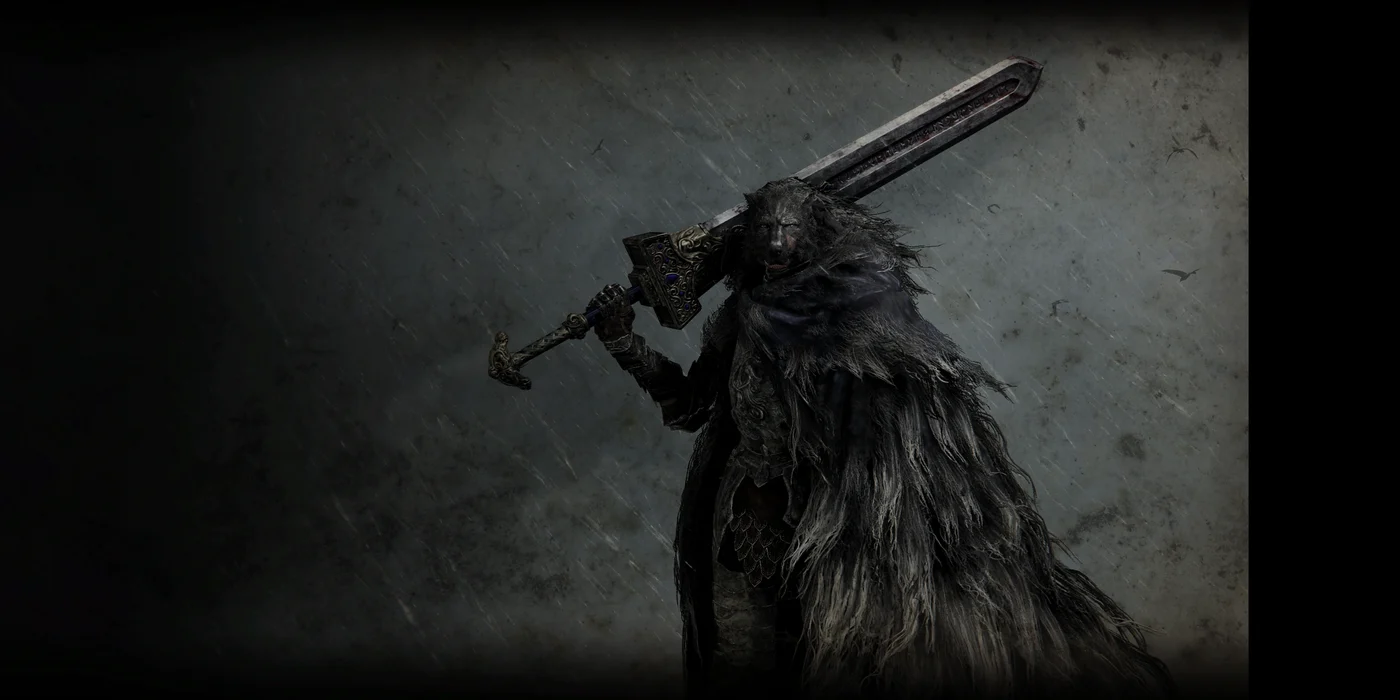 ◈ CHARACTER
Blaidd the Half-Wolf
Ranni's Shadow-Vassal · Adopted Brother▾
Blaidd the Half-Wolf
"Let's give them a show to remember, eh. Just don't you go dying on me. For Ranni's sake too."
Festival of Radahn
Blaidd is the shadow-vassal designated by the Two Fingers to accompany Ranni as Empyrean, per Greater Will tradition, each Empyrean receives such a vassal. A half-man, half-black-wolf, he grew up alongside Ranni from childhood as her "brother," playing and fighting in the Carian domains under Iji's watchful presence. His loyalty to Ranni is total and authentic, far exceeding his programmatic role as vassal. His tragedy: the Two Fingers created him as a faithful vassal with a secret clause, if the Empyrean resists the Greater Will, the vassal is "programmed" to go mad and become a curse upon her.
Iji understood this clause before Blaidd himself knew it and imprisoned him in an Evergaol to protect Ranni, betraying a close friend out of love for their shared mistress. Blaidd in the Evergaol doesn't understand: "I am of her very being. Her shadow. There's no chance I could bring her harm." Freed by the player, he rejoins Ranni and participates in her quest (Radahn Festival, search for Nokron). After Ranni's final departure on her dark path, Blaidd goes truly mad (the clause activates as designed). He is found howling and wandering near Ranni's Rise, attacking the player, his madness manifested exactly as predicted. His armor set describes "his dark fur and fierce gaze." Ranni says "I love you" to him upon her departure, knowing she was condemning him. Iji then leaves to find the mad Blaidd and apologize, knowing he will likely die facing him. "Blaidd, I hope you'll accept my apologies."
◆ Sources
Finger Reader Enia (Dialogue)Oh, it's you... It's me, Blaidd. Old Iji trapped me here. Told me I'd bring nought but bale to Lady Ranni.
Boc the Seamster (Dialogue)War Counselor Iji (Dialogue)Preceptor Seluvis (Dialogue)The nightly wolf howling that's been disturbing the peace here. If that bothersome mutt, Blaidd, is back in town, then tell him to pack up and ship out. I never liked the din of a dog's howl. From a mongrel like him, it's simply agony.
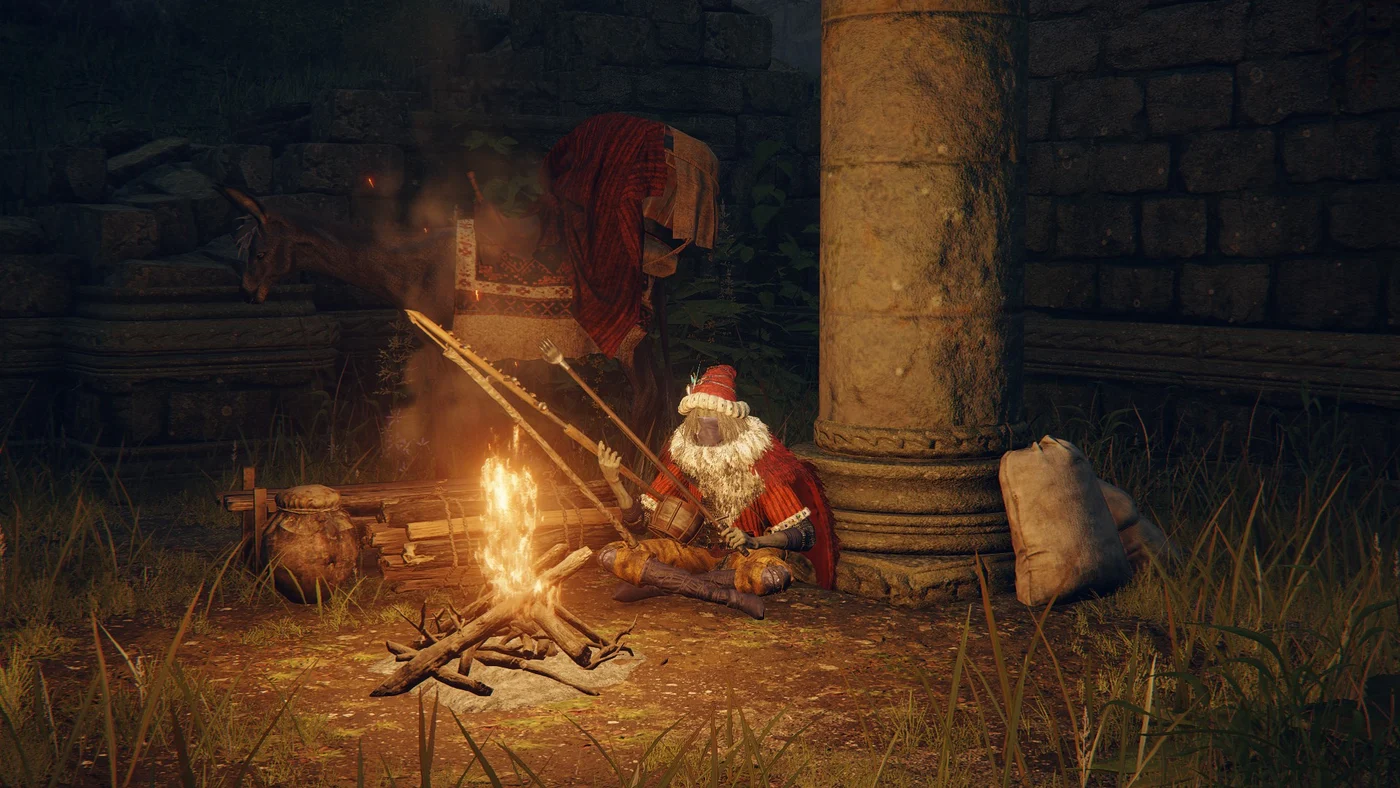 Merchant Kalé (Dialogue)
If you happen to hear a wolf's howl, make this signal under the source. Oh, then you met Blaidd, did you? Wonderful. I'm glad I pointed you in his direction.
◈ CHARACTERWar Counselor Iji
Carian Giant Smith · Ranni's Vassal▾
War Counselor Iji
"I am Iji. The Carian royal family's dedicated blacksmith, and Lady Ranni's war counsellor."
Introduction
Iji❞ is the enormous Carian smith, literally a giant of metal, who has served the Carian royal family for generations. His role as Ranni's "war counselor" implies absolute loyalty combined with cold pragmatism. He knew Rennala, Ranni, and Blaidd since Ranni's childhood. He encountered Jerren (Carian Witch-Hunter) in the past, when the latter was a guest of the Carian family, a connection revealing the deep loyalty networks of the Carians. His forge can upgrade weapons far beyond ordinary smithing tables (using Somber Smithing Stones). His visible chains are decorative, he is "imprisoned" only in the sense that he refuses to leave until his mission to Ranni is complete.
His most difficult decision: recognizing that Blaidd, as a vassal of the Two Fingers, was programmed to go mad if Ranni resisted the Greater Will, he imprisoned Blaidd in an Evergaol to protect Ranni, betraying a close friend out of love for their shared mistress. "I made a grievous misjudgement. And here I thought myself a capable war counselor..." After Ranni's quest: "It has been a long time since I have served Lady Ranni... It was a long and wonderful journey." He then departs to find the mad Blaidd and apologize, knowing he will likely die facing him. "Blaidd, I hope you'll accept my apologies." The Iji's Mirrorhelm is his signature helmet. His forgework crafted the weapons of the Carian questline.
◆ Sources
Finger Reader Enia (Dialogue)It's all coming together. Seems like Iji was on to something. I'll be on my way to this festival of Radahn then... Ah, there you are.
Boc the Seamster (Dialogue)It's hardly my place to ask, is it. I am Iji. A blacksmith who once served the Carian royals… An old codger who refuses to retire his rusty hammer. So, here I am, still quietly plying my trade, on this spot. Lady Ranni has explained everything. Again, I am Iji. The Carian royal family's dedicated blacksmith, and Lady Ranni's war counsellor. I am told that you are searching for Nokron with Blaidd. The pleasure is mine. I take it you've heard of the Eternal City of Nokstella? Well, it has a twin, known as Nokron.
War Counselor Iji (Dialogue)Am I barred from donning the crown of stone? ... Ahh, Iji, forgive me. These royal grounds were placed in our trust, but we stood no chance. ... O Celestial Globe, transmit to posterity.
Iji the Smithing Master's bell bearing, found upon his perished flesh. Offer to the Twin Maiden Husks at the Roundtable Hold to gain access to new items.
◈ CHARACTERSorcerer Rogier
Scholar of Death · Archivist of the Black Knife▾
Sorcerer Rogier
"Stay away from Destined Death. Cower. Before Maliketh, the Black Blade. Witless Tarnished... Why covet Destined Death? To kill what? To destroy what?"
Roundtable Hold, Destined Death's warning
"Forgive me, Marika... The Golden Order... cannot be restored."
Last words
Rogier is a Tarnished swordsman-sorcerer who developed an academic fascination with the Night of the Black Knives and Godwyn's death. He explored Stormveil Castle until discovering a Deathroot beneath the castle, remnant of Godwyn's body proliferating in the Deeproot Depths. By touching this root, he contracted a death-gangrene that progressively solidifies his flesh into stone. Immobile at Roundtable Hold (first one leg, then both), he became an archivist from his balcony. His analysis of a Black Knifeprint (obtained from a Black Knife found in Altus Plateau) allowed him to identify Ranni as the orchestrator of the Night of the Black Knives, the first explicit in-game revelation of this fact. He wished to help Those Who Live in Death by finding the Cursemark of Death: "These souls committed no offense. They have every right to life, only they have touched a flaw in the Order by mistake." D, his old friend, pursued the opposite path (eliminate them). In his final moments, Rogier murmurs the words of Fia he had heard ("Cursemark to Godwyn, a full circle forms a rune"), revealing he understood the complete significance of the Death-Prince child that Fia and Godwyn's union would produce. He reveals to Fia the Cursemark's location, two characters relaying the quest that neither can complete alone.
◆ Sources
Shabriri (Dialogue)Dung Eater (Dialogue)The pleasure's mine. Rogier's the name. A sorcerer, as you might have guessed. I'm looking for a little something, here in the castle. Pleased to meet you. The name's Rogier. A sorcerer, by trade. But now I'm in this sorry state.
Sorcerer Rogier (Dialogue)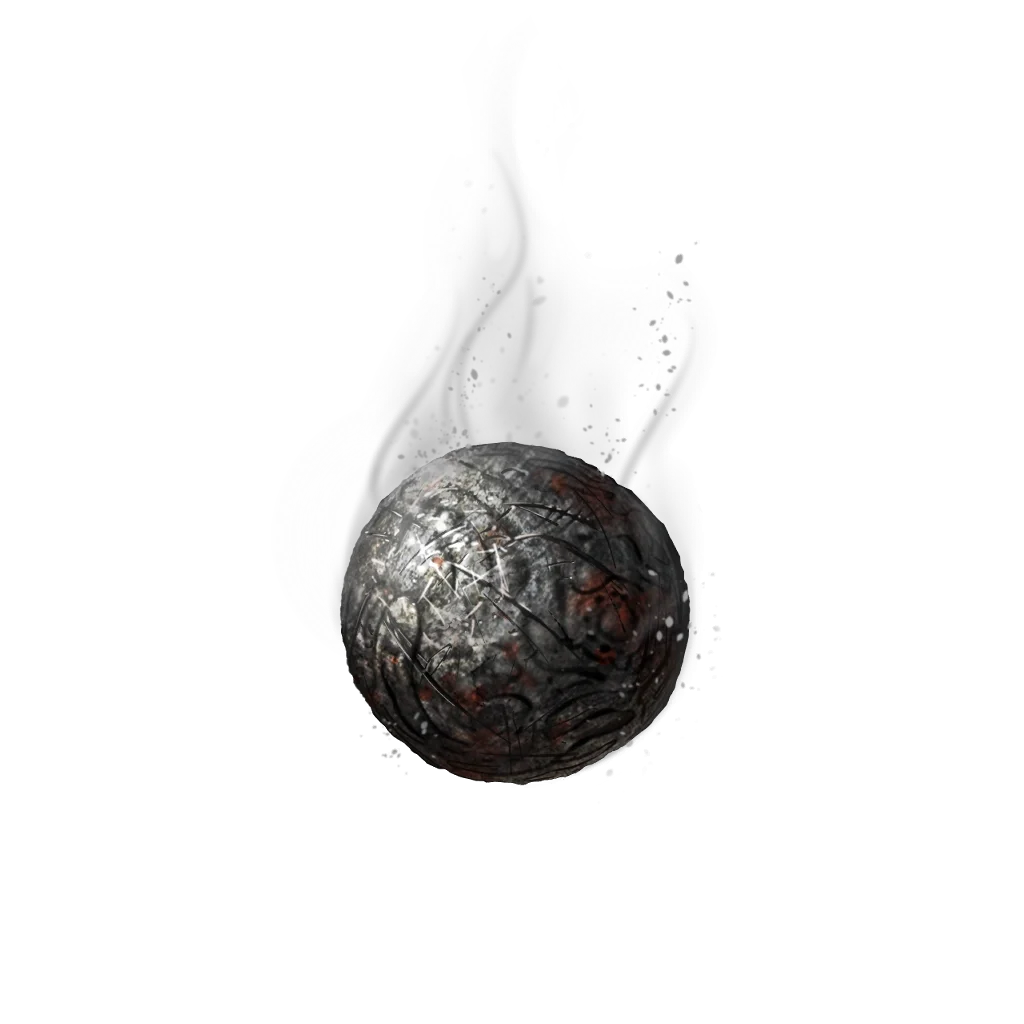 Rogier's Bell Bearing
Rogier the Sorcerer's bell bearing, found upon his perished flesh. Offer to the Twin Maiden Husks at the Roundtable Hold to gain access to new items.
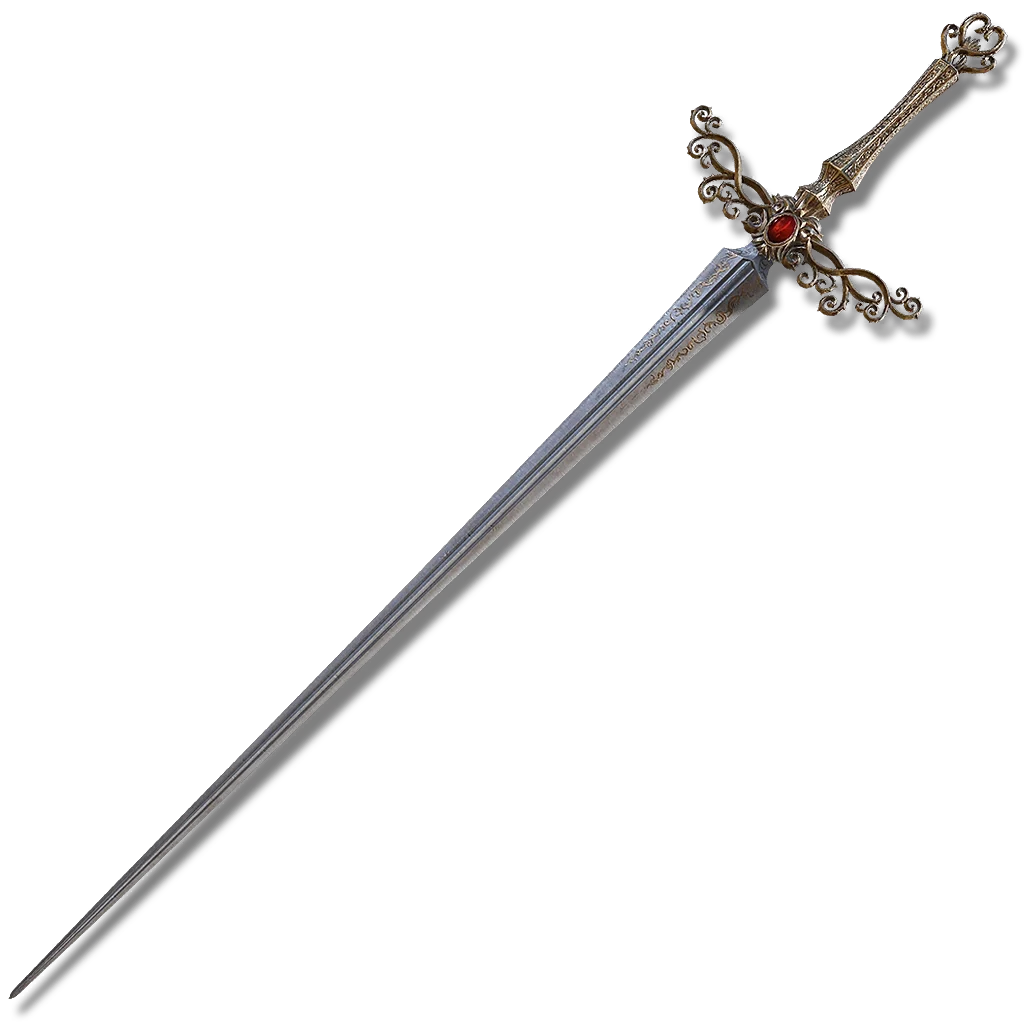 Rogier's Rapier
Piercing sword of superior quality, featuring intricate ornamentation. Signature weapon of the sorcerer Rogier. High dexterity is required to wield the blade to its full potential, but mastery is a sight to behold, characterized by a flowing style which excels in successive attacks.
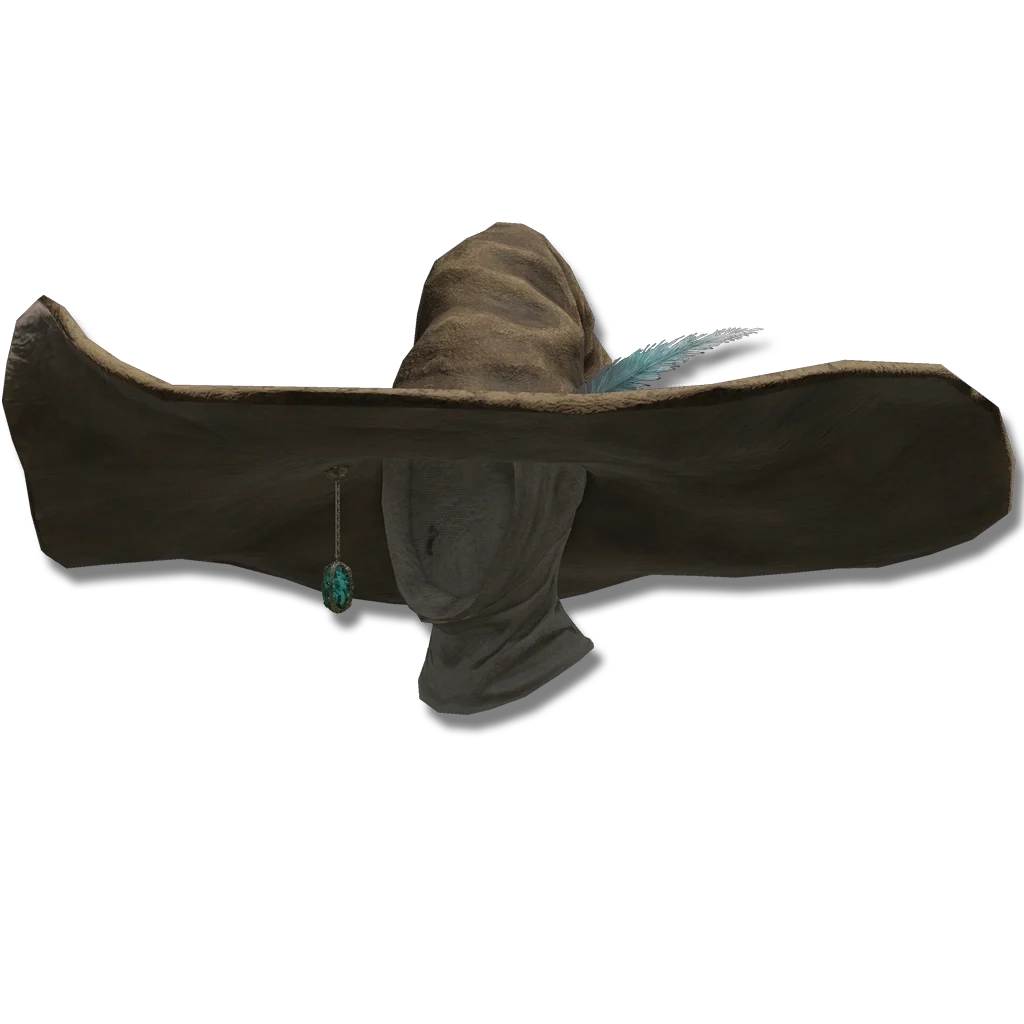 Spellblade's Pointed Hat
Glintstone sorcerer Rogier's pointed hat, a sign of a heretical practitioner. Strengthens glintstone sorcery skills. Rogier spent his entire life behaving with utter detachment. No one noticed the anger, grief, regret, or fear that existed along with it.
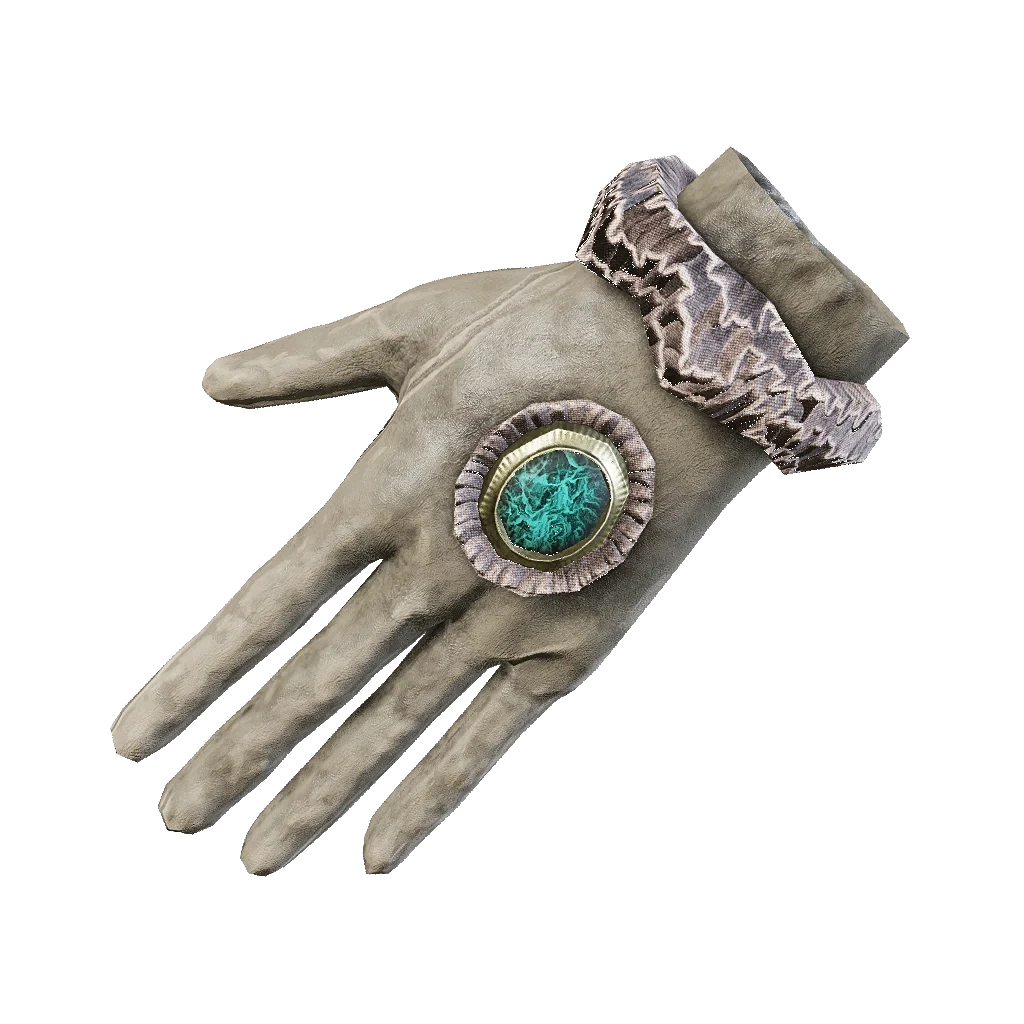 Spellblade's Gloves
Glintstone sorcerer Rogier's gloves, graced with an intricate, aristocratic decoration. Strengthen glintstone sorcery skills. Rogier spent his entire life behaving with utter detachment. No one noticed the anger, grief, regret, or fear that existed along with it.
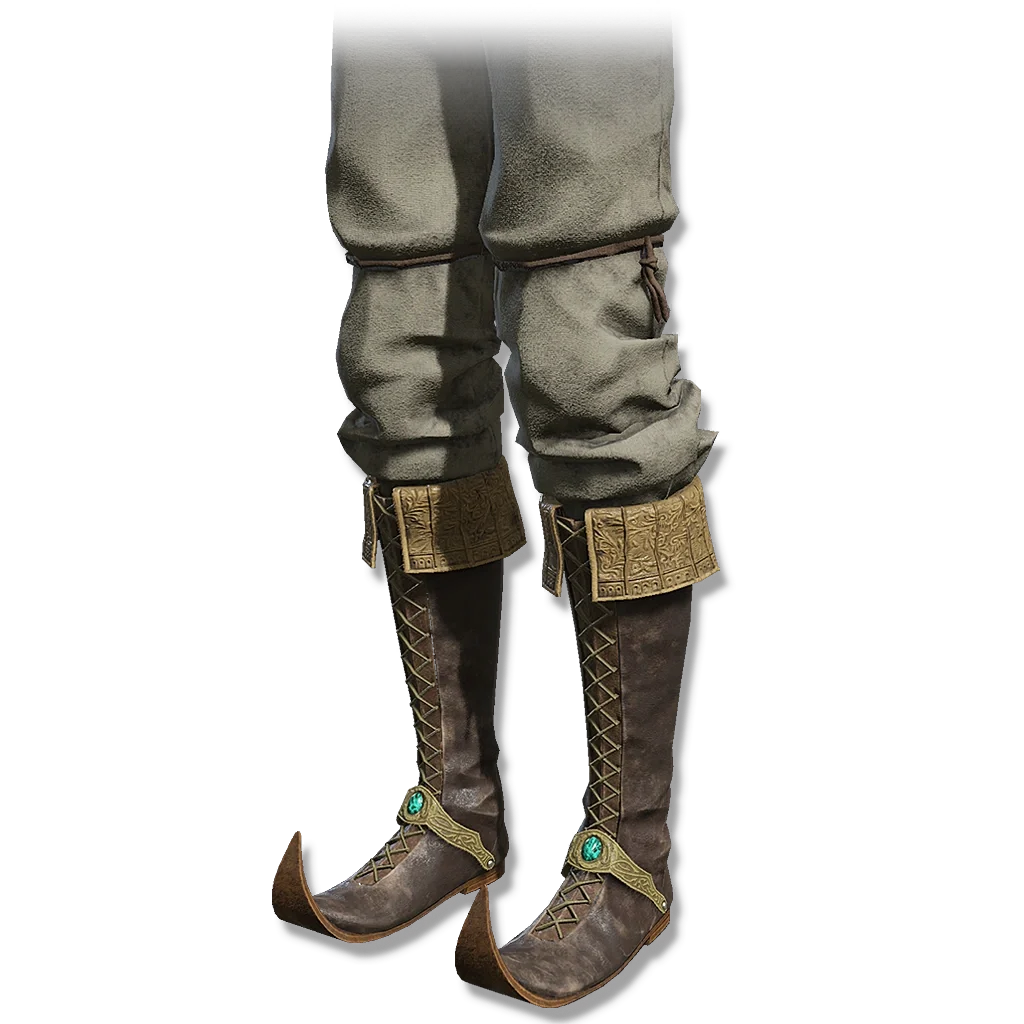 Spellblade's Trousers
Glintstone sorcerer Rogier's trousers, graced with an intricate, aristocratic decoration. Strengthen glintstone sorcery skills. Rogier spent his entire life behaving with utter detachment. No one noticed the anger, grief, regret, or fear that existed along with it.
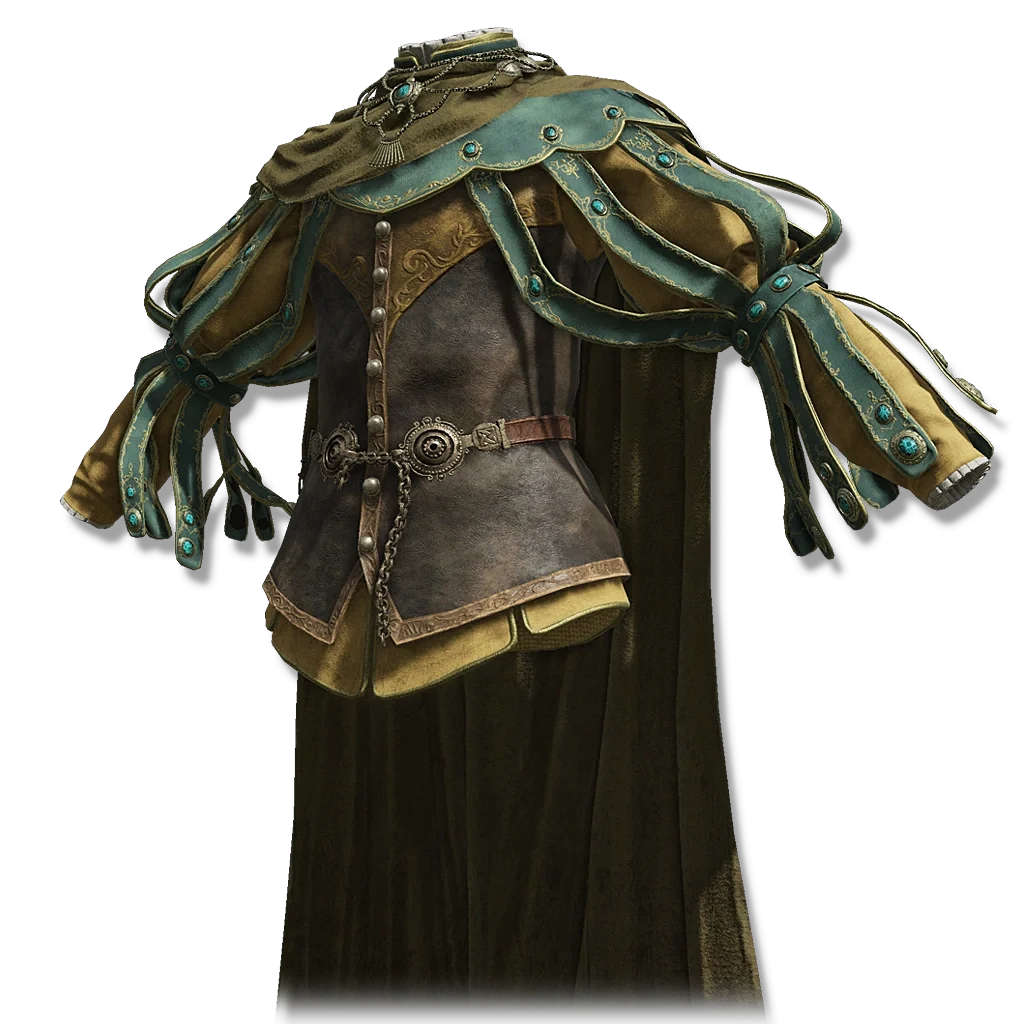 Spellblade's Traveling Attire
Glintstone sorcerer Rogier's traveling attire, graced with an intricate, aristocratic decoration. Strengthens glintstone sorcery skills. Rogier spent his entire life behaving with utter detachment. No one noticed the anger, grief, regret, or fear that existed along with it.
Letter written in a trembling hand. "I forgot to tell you, but it seems D has a younger brother. I heard he lies in a deep sleep in the aqueduct beside the Eternal City of Nokron. And it's said he stood before the Prince of Death not far beyond that spot."
◈ CHARACTERThe Dung Eater
Propagator of the Seedbed Curse · Apostle of Defilement▾
The Dung Eater
"This is how you die, you disgusting Tarnished. Don't worry, I've got big plans for you. After you snuff it..."
Encounter
The Dung Eater❞ is a Tarnished driven by a singular and horrifying obsession: spreading the Seedbed Curse upon all life. His philosophy is a self-consistent nihilistic horror: he kills his victims and defiles their corpses through precise rites to guarantee their souls are reborn cursed, and their descendants forever after, generation upon generation. "Hundreds will be reborn cursed, and they will bear thousands of cursed children, who will bear tens of thousands more. A few will be born like me, and they will kill, defile, and bless in my stead!" He perceives himself as a missionary of the Curse, which he calls "Blessing of Despair."
Imprisoned in the sewers beneath Leyndell, he was kept beside Blackguard Big Boggart who testifies to direct trauma: "Rooted to the bloody spot while he did all that to my friend", he witnessed the Dung Eater defile the body of his friend. Roderika at Roundtable Hold can sense spirits screaming in fear from his curse, corrupting the Hold's spiritual space even at a distance. The Seedbed Curse, collected from defiled corpses across the Lands Between, is administered to him by the player to advance his questline. His Great Rune, when five Seedbed Curses are administered, produces the Mending Rune of the Fell Curse, enabling an ending where all life in the Lands Between is cursed forever. Within Elden Ring's cosmology, this curse is described as "worse than death" as it taints the soul beyond normal rebirth.
◆ Sources
Shabriri (Dialogue)I can't hear them any more; the voices of the spirits cowering from the curse... I suppose the Dung Eater must have left the Roundtable. I just pray nothing ill comes of this. Be on your guard, I beg you. He's back. The Dung Eater. Again. I can hear them; the spirits as they howl and lament in fear of the curse.
Dung Eater (Dialogue)Mate, there's somethin' I should probably tell ya. You 'eard of the Dung Eater? E's a madman, 'as it out for everyone. Curses 'em.
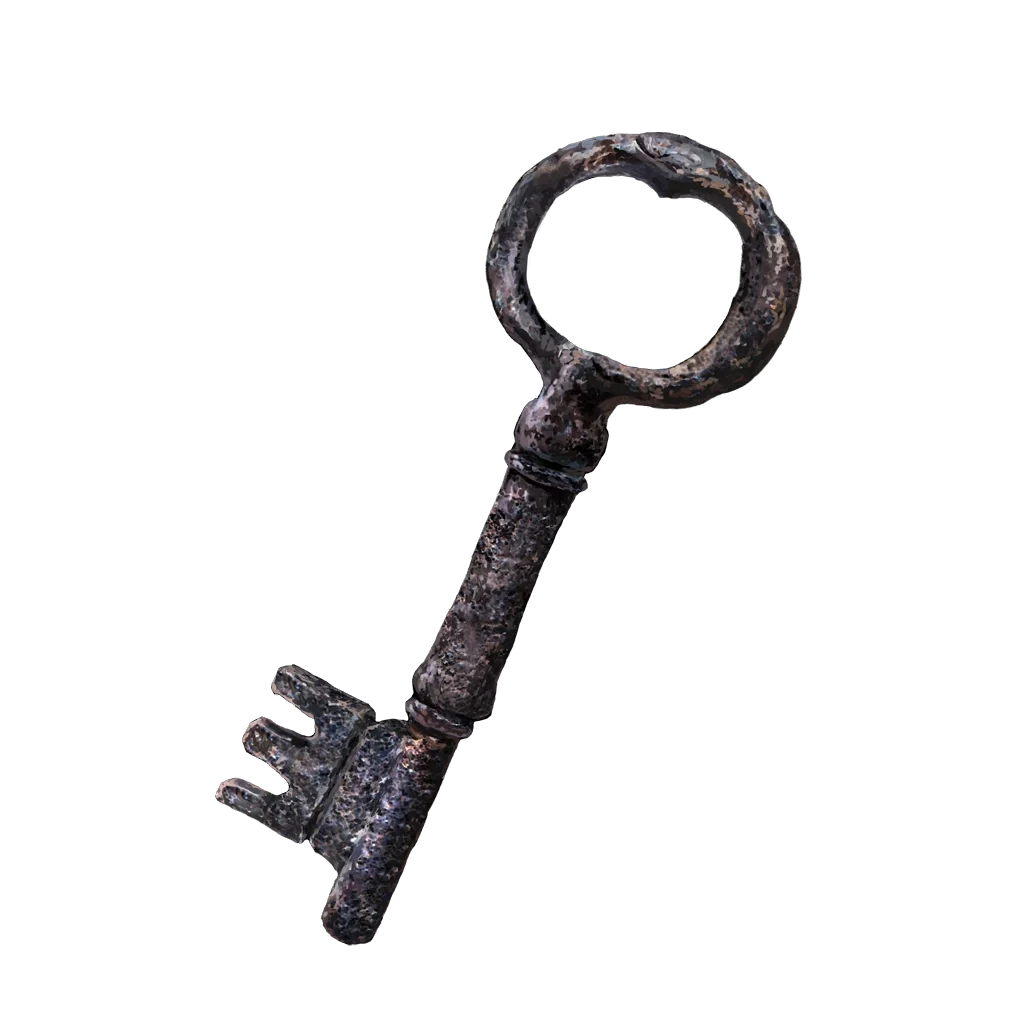 Sewer-Gaol Key
Filthy key received from the Dung Eater. Unlocks sewer-gaol door said to lie beneath Leyndell, the Royal Capital.
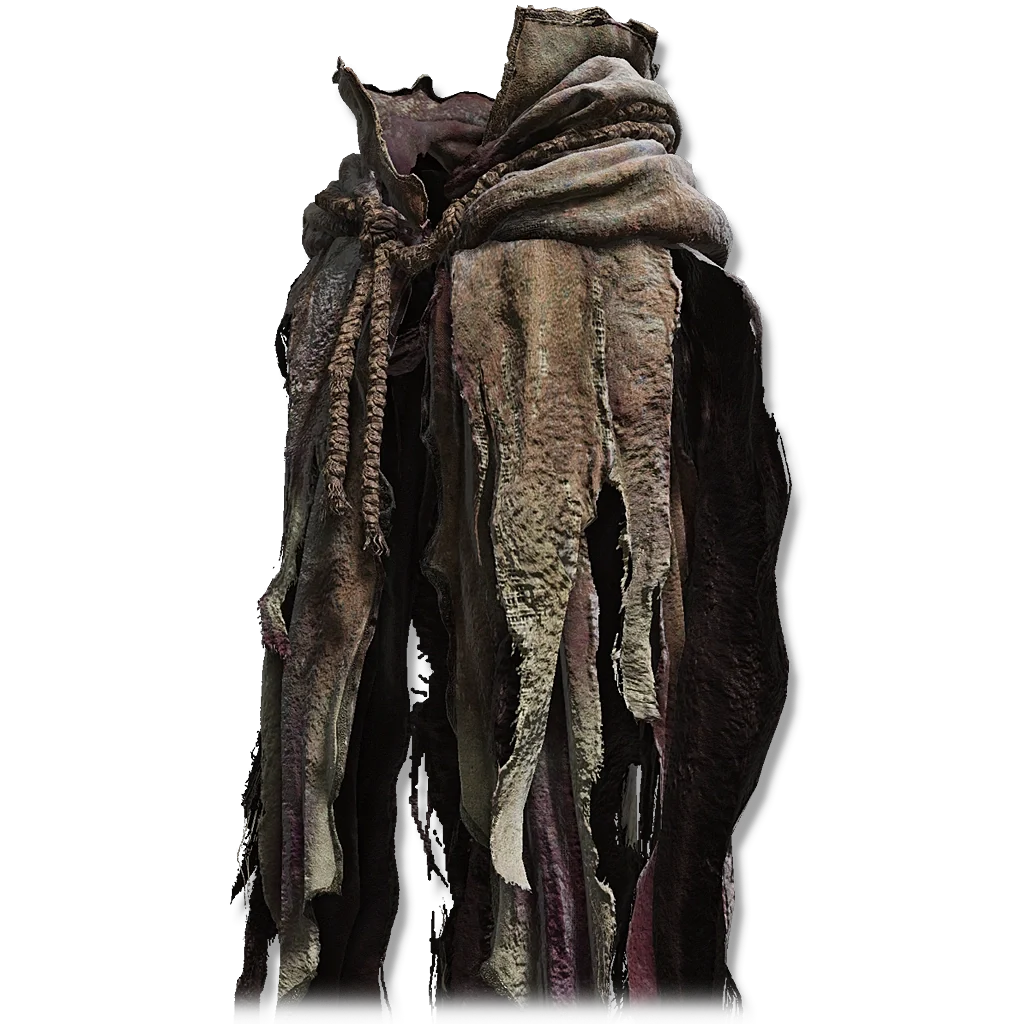 Omen Armor
Malformed armor resembling an Omen with its horns cut off. Worn by the Dung Eater. The heavy, sun-shaped medallion represents both the guidance he once saw, and the ring to which it will one day lead.
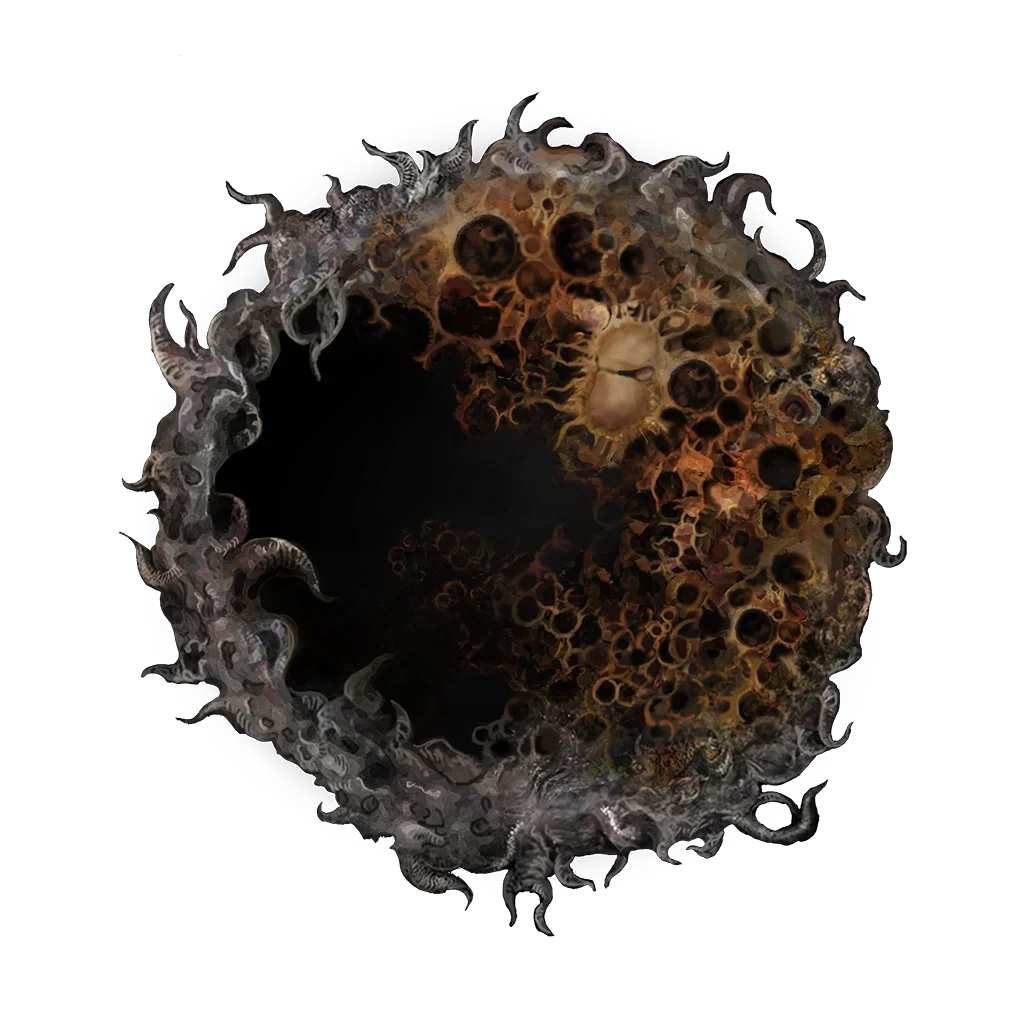 Mending Rune of the Fell Curse
Loathsome rune gestated by the Dung Eater. Used to restore the fractured Elden Ring when brandished by the Elden Lord. The reviled curse will last eternally, and the world's children, grandchildren, and every generation hence, will be its pustules.
 Seedbed Curse
Curse grown on a corpse killed and defiled by the Dung Eater. A tender pox afflicted with omen horns. The Dung Eater cultivates the seedbed curse on corpses. By doing so he prevents dead souls returning to the Erdtree, leaving them forever cursed. One of the most loathsome things found in all the Lands Between.
Dung Eater◈ CHARACTERMillicent and Her Sisters
Blossom of Malenia · Valkyrie in Becoming▾
Millicent and Her Sisters
"I would rather rot into nothingness as I am."
Refusing Gowry's design
Millicent is one of Malenia's "daughters" in the lore sense, not a biological daughter, but a "blossom" of her rot, created through the rites of the Order of Rot that Gowry (sage servant of Malenia, her adoptive father) cultivated in the Aeonian Swamp. She was found as an infant in the swamp by Gowry. The Scarlet Rot progressively erasing her memory, she does not know who she is at the game's start. The Unalloyed Gold Needle, once repaired by Gowry (it had been broken, recovered from the Aeonian Swamp), is inserted by the player to slow the rot and restore her lucidity. She departs to trace Malenia's path northward, seeking to return to her "the will that was once hers, the dignity, sense of self, and pride she abandoned to match Radahn."
Her quest leads to the Haligtree, where she faces her sisters, other blossoms of Malenia, further advanced in their transformation into Scarlet Valkyries. Gowry wanted Millicent to be betrayed (killed during combat against her sisters, by the player) so that the betrayal would cause her to "blossom most brilliantly", nourished by the betrayal of the one she trusted, her essence would become the most perfect flower. If the player helps Millicent defeat her sisters instead, Millicent pulls the Needle out herself, choosing to "rot away to nothing rather than become something other than herself." Millicent's Prosthesis Talisman is Malenia's golden arm that Millicent bore, a physical bridge between goddess-mother and blossom-daughter.
◆ Sources
It's all thanks to you. My name is Millicent. I pray fate permits us meet again. I'm considering leaving.
Millicent (Dialogue)Sage Gowry (Dialogue)When the time is ripe... Do what you must to ensure Millicent dies. Millicent, my daughter. Why would you take out the needle? You were so close. We children of the scarlet rot? Millicent... Malenia... Do you detest us, so utterly? Let's just pretend it never happened, shall we? O Millicent, my daughter... Who would prune your sapling flesh? Such...such cruel and vulgar violence... Oh, Millicent... My most promising little bud... Well, well.
Part of the golden prosthesis used by Millicent. The hand is locked into a fist that once raised a sword aloft. Boosts dexterity and raises attack power with successive attacks. The despair of sweet betrayal transformed Millicent from a mere bud into a magnificent flower. And one day, she will be reborn—as a beautiful scarlet valkyrie.
Millicent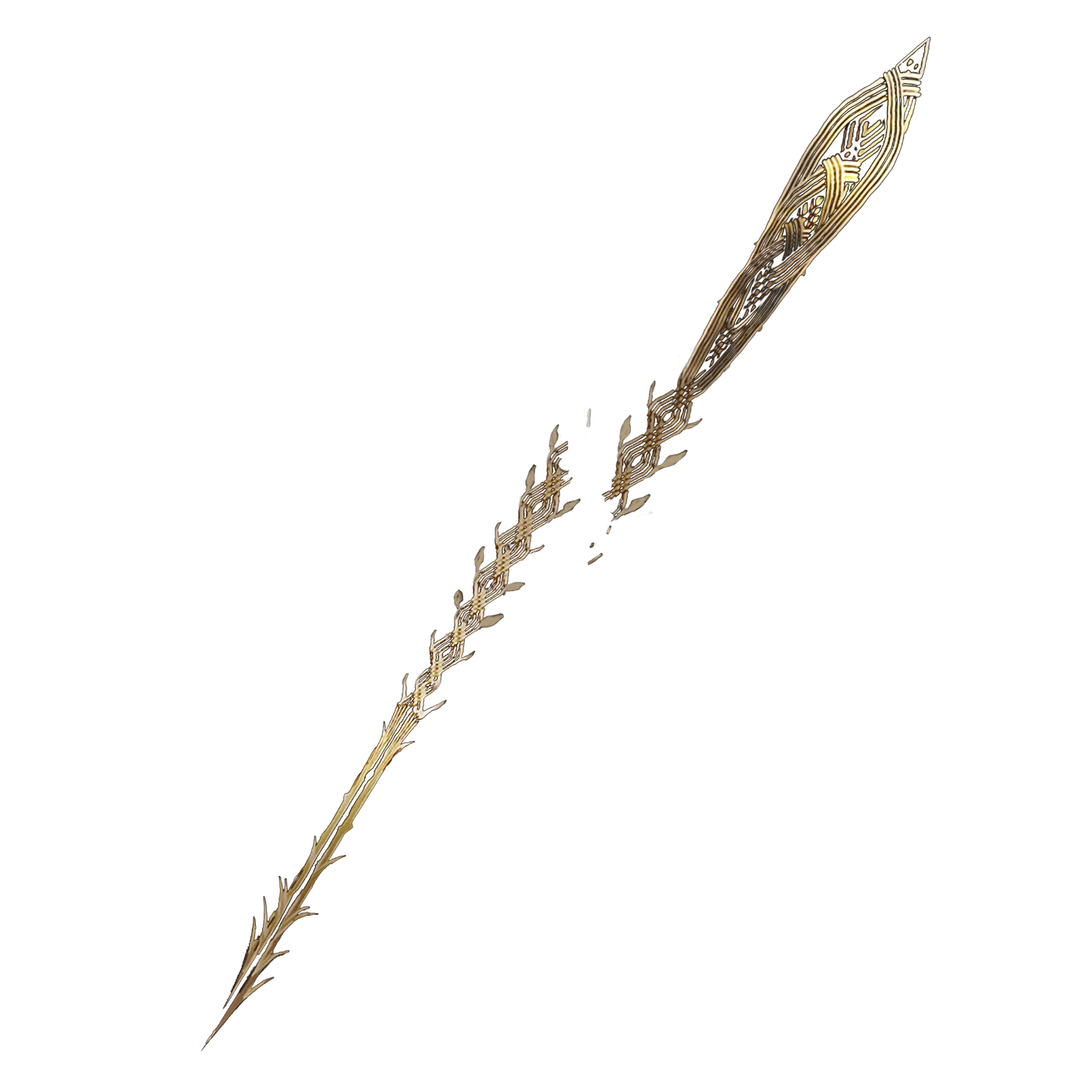 Unalloyed Gold Needle
An intricately crafted needle of unalloyed gold. Removed by Millicent from her flesh. Bears no trace of befouled blood, but is faintly moist with dew. "There is something I must return to Malenia. The dignity, the sense of self, that allowed her to resist the call of the scarlet rot."
Sage GowryWhen the time is ripe... Do what you must to ensure Millicent dies. Millicent, my daughter. Why would you take out the needle? You were so close. We children of the scarlet rot? Millicent... Malenia... Do you detest us, so utterly? Let's just pretend it never happened, shall we? O Millicent, my daughter... Who would prune your sapling flesh? Such...such cruel and vulgar violence...
◈ CHARACTERSage Gowry
Servant of Malenia · Adoptive Father▾
Sage Gowry
"Sever that trust. Nurtured by betrayal, her bud will flower most vividly."
The cunning sage to the Tarnished
Gowry is an old sage at Sellia, Town of Sorcery in Caelid, devoted servant of Malenia and faithful of the Order of Rot. He found Millicent as an infant in the Aeonian Swamp and raised her as an adoptive father, concealing her origins. His ultimate goal: to see Millicent "blossom" into a perfect Scarlet Valkyrie when Malenia achieves divinity, for him, the most sublime fulfillment. He manipulates the player: first asks them to heal Millicent (via the Needle), then later to betray and kill her during her fight against her sisters so the "flower might blossom most brilliantly nourished by betrayal." His philosophy of the Order of Rot: "The Order of Rot venerates the cycle of decomposition and rebirth as superior to the static Golden Order." He is quasi-immortal (can be killed but reappears), inhabited by parasitic creatures that make his body difficult to permanently destroy. After the game's events, he mourns Millicent: "Millicent, my daughter... Why did you remove the Needle?", revealing genuine paternal affection beyond his manipulation.
◆ Sources
Millicent (Dialogue)Oh, a pleasure to see you, a pleasure indeed. I am Gowry. A great sage, in my day, anyway. I'd hoped to ask a favour, when one of your ilk came along.
Sage Gowry (Dialogue)Sage Gowry's bell bearing, found upon his perished flesh. Offer to the Twin Maiden Husks at the Roundtable Hold to gain access to new items.
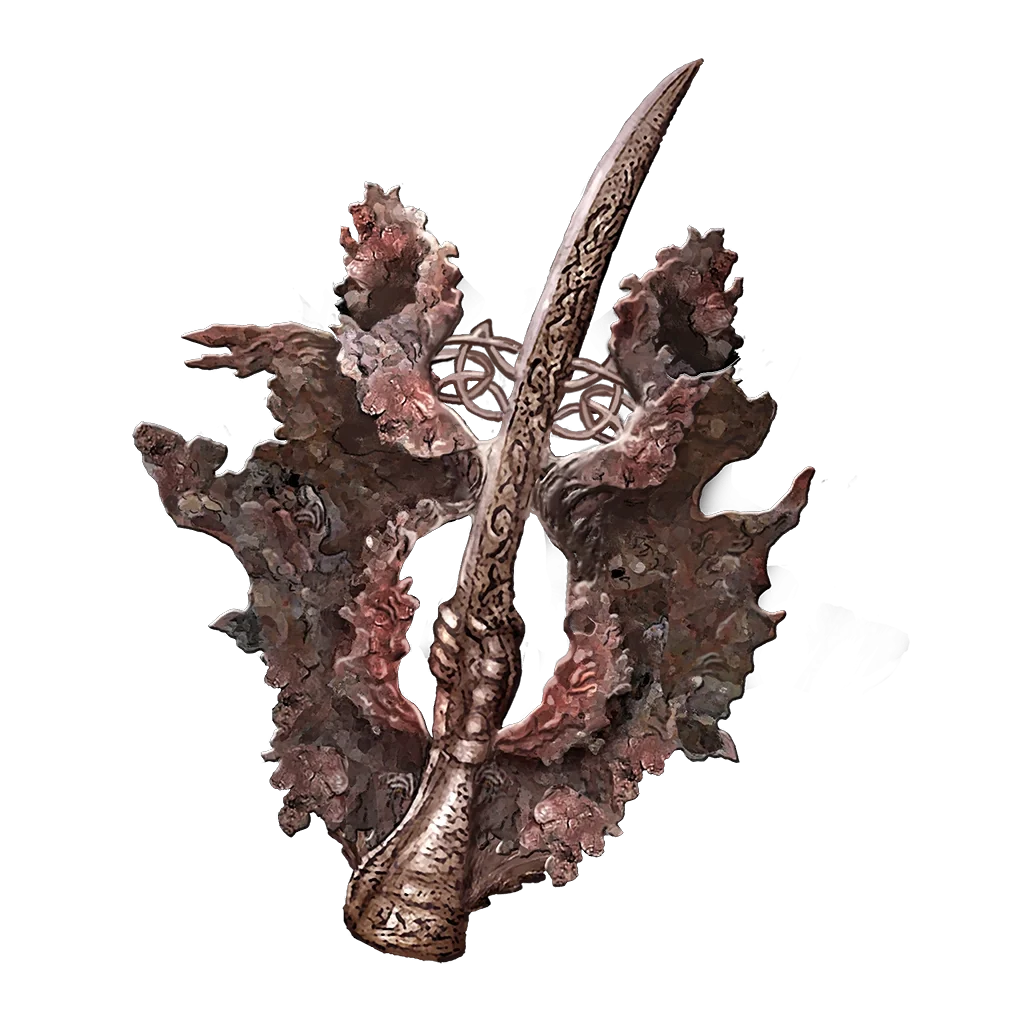 Rotten Winged Sword Insignia
Greatly raises attack power with successive attacks. The four sisters were born in the Swamp of Aeonia, and came to the Haligtree under the aegis of Gowry. And yet, those buds were doomed to never blossom.
Unalloyed Gold NeedleAn intricately crafted needle of unalloyed gold. Once snapped in half, it has been repaired by Sage Gowry. A ritual implement crafted to ward away the meddling of outer gods, it is thought capable of forestalling the incurable rotting sickness. "Now, all you need do is deliver the needle to Millicent, convalescing in the church atop the cliff just beyond Sellia."
Sage Gowry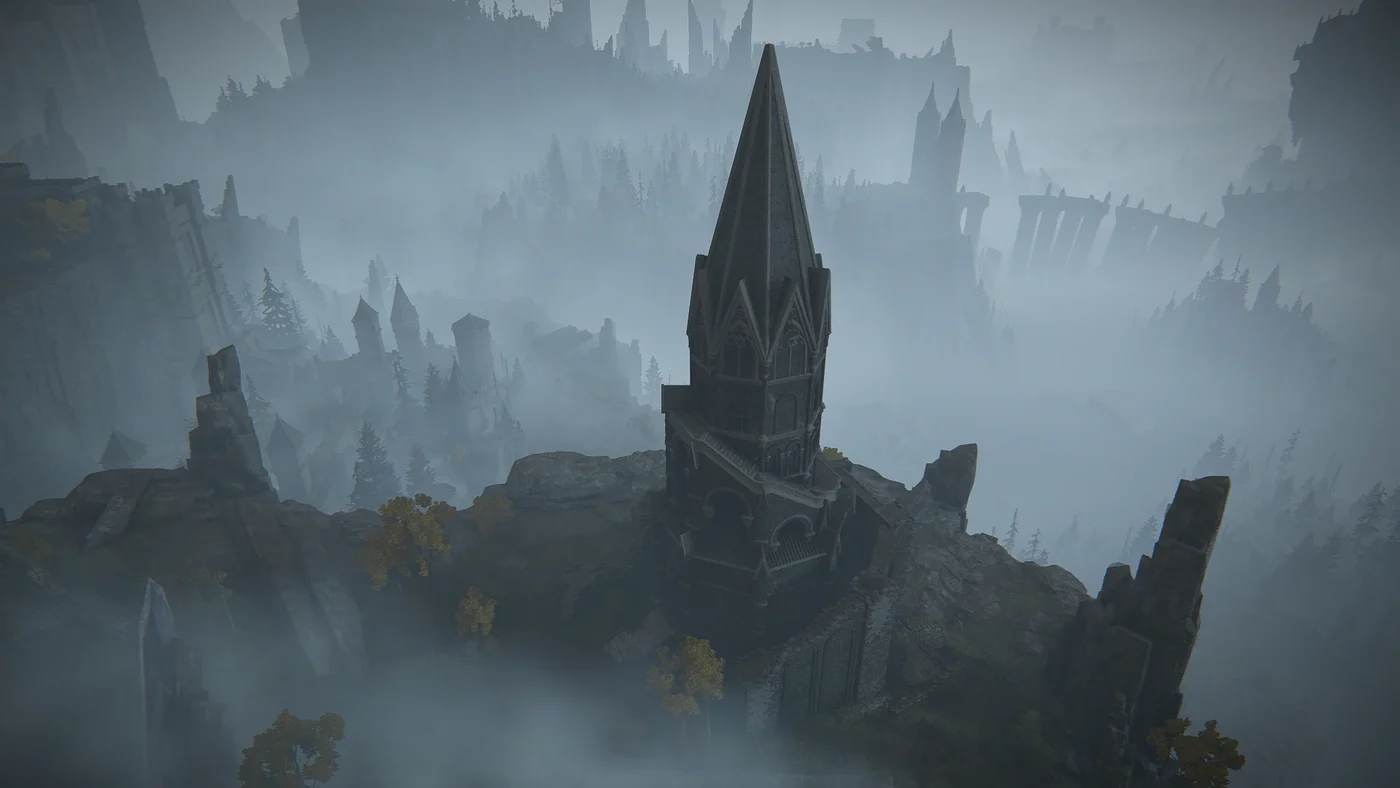 ◈ CHARACTER
Preceptor Seluvis
Puppetmaster · Ranni's Vassal in Appearance Only▾
Preceptor Seluvis
"Why don't you... fetch me some starlight shards? If you can manage it, I'll gladly prepare a new puppet for you."
The puppet-master's bargain
Seluvis is a sorcerer obsessed with crafting puppet-dolls, sorcerers or nobles captured and reduced to empty shells controlled by his glintstone primers. His official service to Ranni is a cover; his real activities: creating puppets through his paralyzing potion (Seluvis's Potion). He first tried to have the potion administered to Nepheli Loux, then developed a more ambitious scheme to transform Ranni herself into a doll, "the most perfect puppet ever crafted." His misogyny is evident in all his dialogues, treating women as objects to be transformed. Dolores the Sleeping Arrow was one of his "favorite puppets", a former Roundtable Hold member and critic of Gideon Ofnir. Pidia, his trembling Carian servant, managed his puppet stock from the tower. The Seluvis/Ranni conflict: Gideon, alerted by the player, can neutralize the plan. If Ranni discovers his betrayal, she destroys his tower. The Amber Draught he asks the player to procure is described as "a shard of amber starlight glinting with a special hue", essence of a demigod that would make his elixir irresistible even to an Empyrean.
◆ Sources
Dolores the Sleeping Arrow PuppetOne of Seluvis's favorite puppets. Use to summon the spirit of Dolores the Sleeping Arrow Spirit of a handsome archer who dressed in the style of a man. Called the Silent Hunter by some, she fires St. Dolores once belonged to the Roundtable Hold, where she was both a critic and a friend of Gideon the All-Knowing. It was because of her that he and Seluvis went their separate ways. One of Seluvis's puppets. Use to summon the spirit of a jarwight Spirit of a man who wished to become the innards of a living jar. A jar-hurling specialist who throws all manner of pots and jars.
Finger Reader Enia (Dialogue)Take from him the particulars. Ah, and there wilt thou find Iji, my war counselor, and Seluvis, preceptor in the sorcerous arts, also. Heed not their peculiarities; feel secure in gaining from them what advantage thou canst. I am sure the others will be doing just the same. Ah, yes. Iji, my war counselor, and Seluvis, preceptor in the sorcerous arts, can be found below. Like thee, they are in my service. That thou wouldst succumb to such depravity. Led astray by Seluvis, with devious tonic in hand, Didst thou think to have thy way with me? Be gone. Hapless scum.
I can see bloody Nokron, right above me, but I'm absolutely stumped. I've tried all the gateways, to no avail... ...Perhaps it's time to ask Seluvis? I recall that spiteful little rat acting like he knew something... Let's give him a squeeze. And if we reach a dead end, I suppose we go back to the source. Seluvis rarely gives a straight answer, the first time. Hmm... So Ranni's fate is kept in stasis by Starscourge Radahn...
Gatekeeper Gostoc (Dialogue)Yes, yes, I've heard all about you. I am Seluvis, preceptor in the sorcerous arts. I don't know what it is the mistress sees in a provincial Tarnished like you, but since we have the misfortune of serving the same Lady, I ask that you kindly try not to drag us all down with you. I reside...in another tower, close by. Then you shall have your gift. Knowledge of the sorcerous arts, under the tutelage of the great Preceptor Seluvis. I doubt much of it will lay within the grasp of a mere Tarnished, but... If you put your mind to it, perhaps you won't embarrass our Lady.
Preceptor Seluvis (Dialogue)Well, well... Seluvis is not a name I ever wanted to hear again... But, fine. If it will help you, my apprentice, I offer my knowledge.
Dung Eater (Dialogue)Is that potion what I think it is? Bloody Seluvis. I suppose he's up to something again. Oh, I won't interfere. I'll dispose of the potion myself. You go and see Seluvis, but don't give anything away. Just tell him that you tricked your mark into drinking the potion as planned. Despite knowing next to bloody nothing, he's so far up his own arse he won't suspect a thing.
 Seluvis's Bell Bearing
Preceptor Seluvis's bell bearing, found upon his perished flesh. Offer to the Twin Maiden Husks at the Roundtable Hold to gain access to new items.
One of Seluvis's favorite puppets. Use to summon the spirit of Nepheli Loux. Puppet of a warrior who was betrayed by her pure heart.
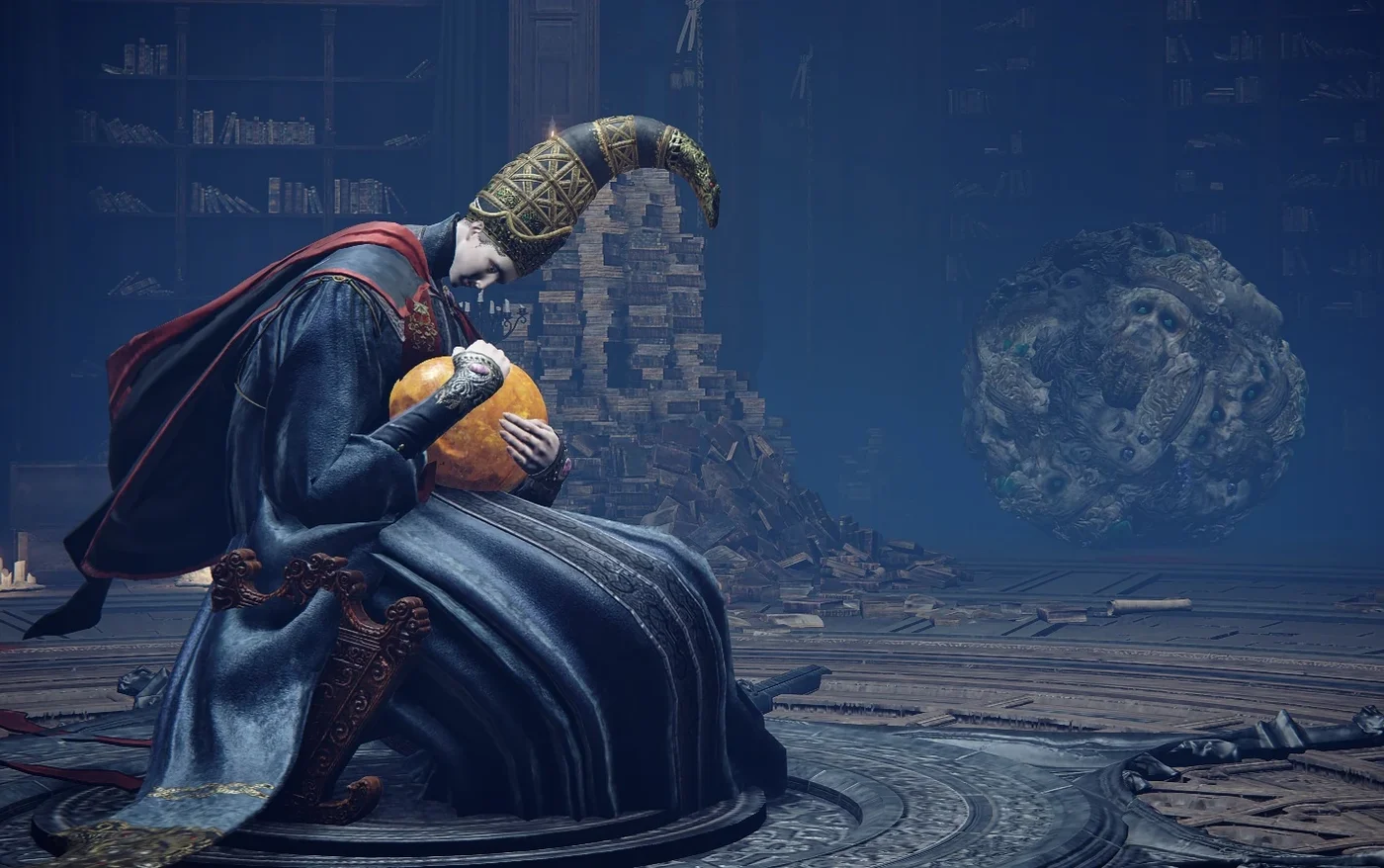 ◈ CHARACTER
Sorceress Sellen
Graven Witch · Restorer of the Primal Current▾
Sorceress Sellen
"Glintstone is the amber of the cosmos."
On glintstone
Sellen is the exiled sorceress of Raya Lucaria, the most promising in the Academy's history, expelled under the epithet "Graven Witch" for conducting "unthinkable experiments on certain sorcerers" (fusing them into Graven Masses, masses of merged faces visible throughout the Academy). Her obsession: restore the primal current of glintstone sorcery, a magical art freed from earthly taboos, open to the most extreme possibilities, rid of "the toothless pedantry of the Carian royal family." She was the first disciple of Master Azur and Master Lusat, two founding sorcerers also banished from the Academy. Shackled by Academy restraints despite her exile, her "body" at Witchbane Ruins is only a projection, her true body is hidden in ruins near the Church of Marika in the Weeping Peninsula. She can transfer her body by moving her Primal Glintstone (her compressed essence). Her completed questline: takes control of the Academy, physically expels Rennala from the Grand Library (reducing her to a lumpy mass), restores the primal current so "the fallen children of the stars might shine once more." Jerren, the Witch-Hunter dispatched by the Carians, pursued her to execute an old death-promise. Thops, the maidenless sorcerer locked outside the Academy, admired Sellen from afar: "I don't believe the accusations. The illustrious Sellen would never do such things..."
◆ Sources
Gatekeeper Gostoc (Dialogue)I'll let you in on it. There's a glintstone sorcerer by the name of Sellen in Limgrave. She owes me for the help I gave her when she was expelled from the academy. I asked her to look into the matter some time ago.
A wonder you should turn up here. I am Sellen, a sorcerer, quite plainly. Why are you here? Ahh, a yen for glintstone sorceries? Let it be known. This is the beloved apprentice of Sellen, Graven Witch. I set a curse upon you and your meddling hand. Your death will not be a pleasant one.
Blackguard (Dialogue)Sorceress Sellen's bell bearing, found upon her perished flesh. Offer to the Twin Maiden Husks at the Roundtable Hold to gain access to new items.
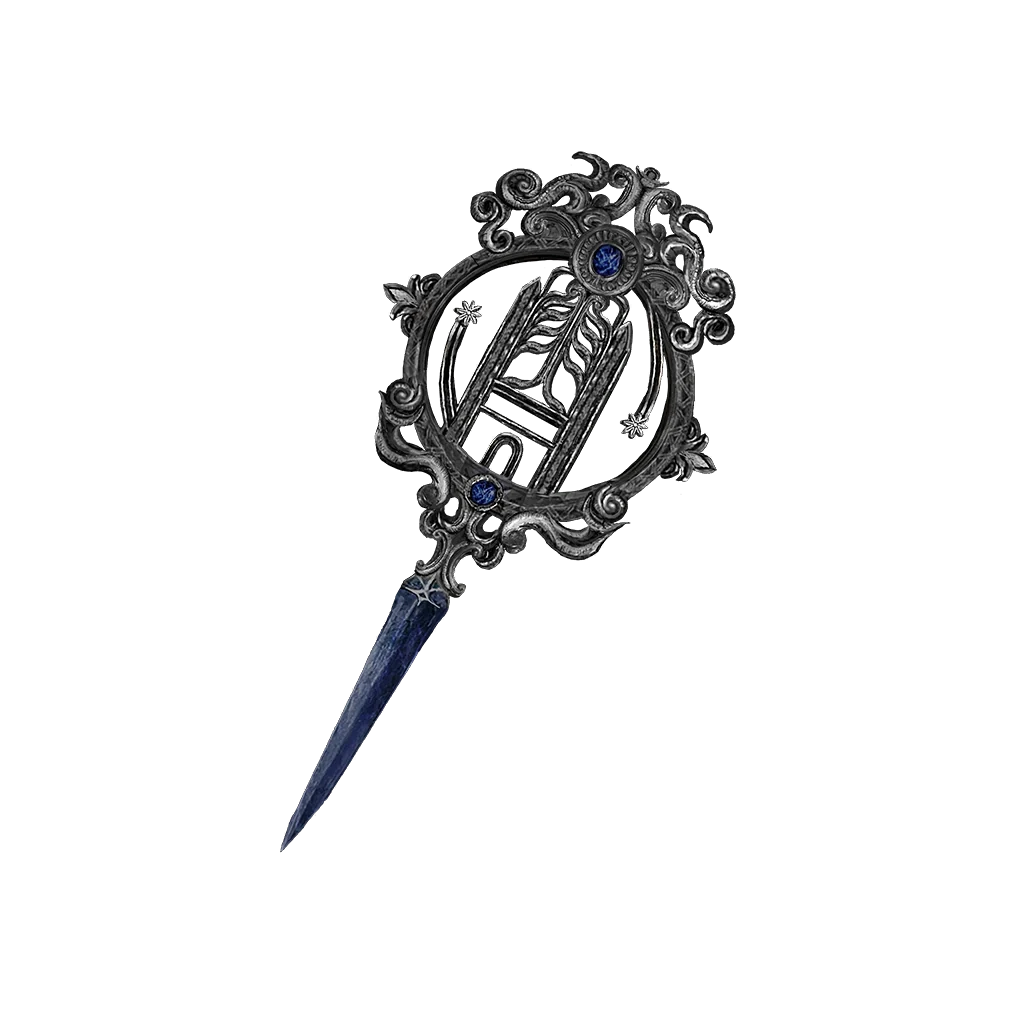 Sellian Sealbreaker
Glintstone key received from the sorceress Sellen. Capable of breaking the seal that keeps Master Lusat confined. Sellia, Town of Sorcery can be found in Caelid.
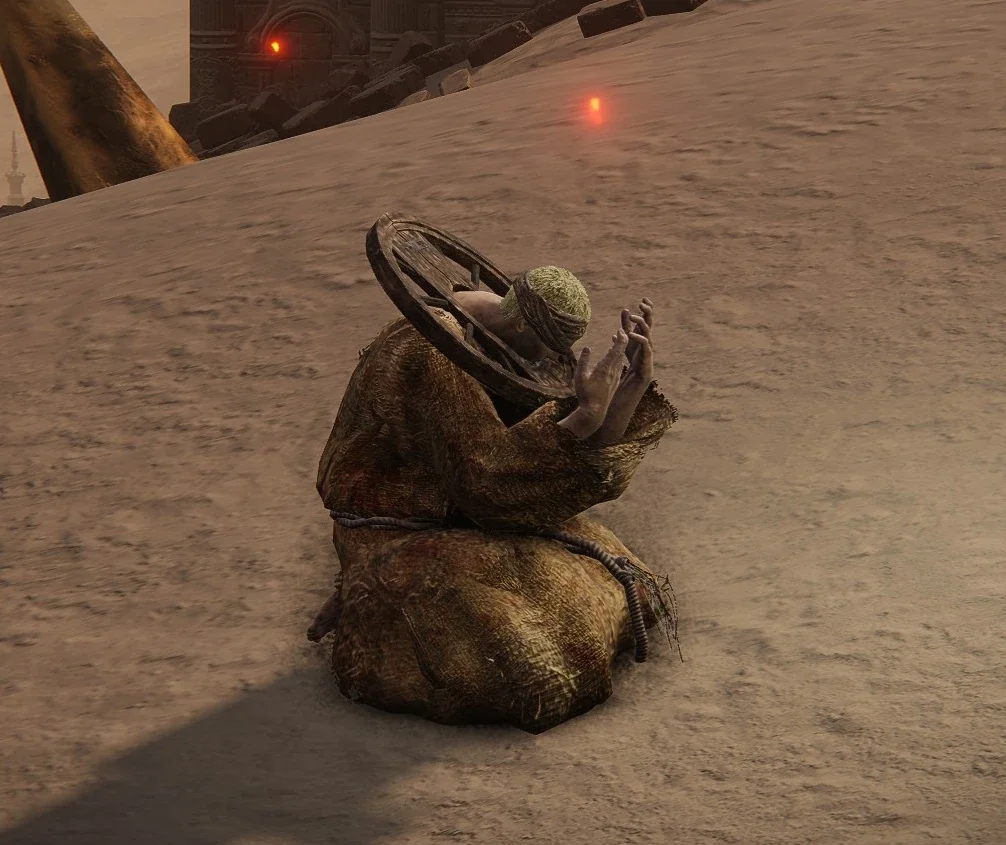 ◈ CHARACTER
Corhyn and the Noble Goldmask
Scribe and Mathematical Seer of the Order▾
Corhyn and the Noble Goldmask
"The master was nothing more than a madman. Enchanted by a vain and ruinous delusion, he rejected the perfection of the Golden Order, seeking to supplant our glorious faith with his own!"
Ashen Capital, the master abandoned
Corhyn is a cleric teaching incantations at Roundtable Hold, desperately seeking Goldmask, a legendary Tarnished noble said to have foreseen the guidance of grace before even entering the Lands Between. Goldmask is a total enigma: motionless, silent, communicating only through the movement of his index finger. Corhyn frantically transcribes his finger movements without understanding them, proclaiming himself "documentarian" of a divine wisdom he cannot grasp. Goldmask's "calculations" (his "rhythms and calculus of the finger") are mathematical revelations about the nature of the Golden Order, he solved that "Radagon is Marika" and the implications of that unity: the Golden Order was founded upon a non-existent duality, a deception. This revelation froze Goldmask: his finger went still. His resolution (once the player teaches him the nature of Radagon/Marika by showing him a gesture) produces the Mending Rune of Perfect Order, a rune to repair the Elden Ring by restoring a "pure" Golden Order, stripped of its original contradictions. Corhyn oscillates between blind admiration and growing doubts: "I've been seized by a terrible thought... The master's rhythms betray a suspicion at the holism of the Golden Order." The Clawmark Seal and Fundamentalist incantations are his tools.
◆ Sources
Sage Gowry (Dialogue)Brother Corhyn's bell bearing, found upon his perished flesh. Offer to the Twin Maiden Husks at the Roundtable Hold to gain access to new items.
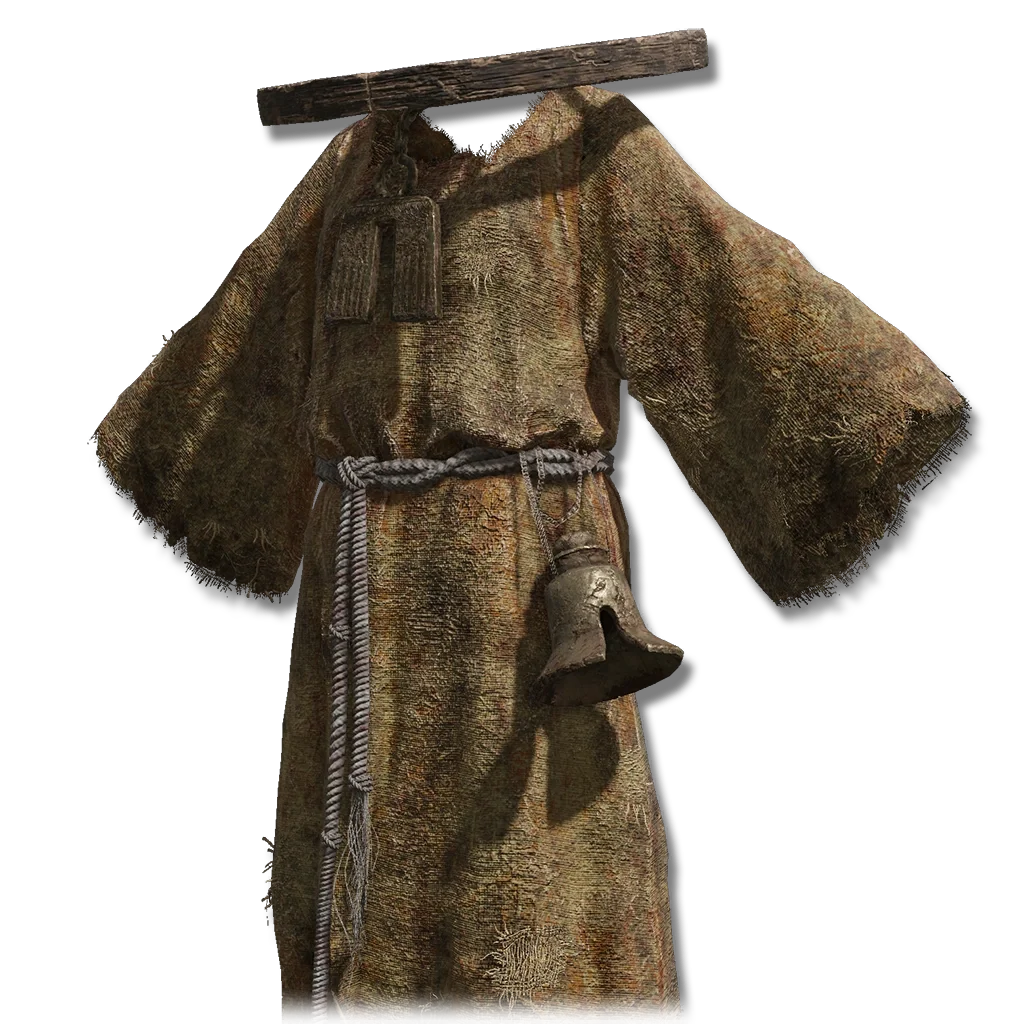 Corhyn's Robe
Robe of Corhyn the cleric. Even after exile, Corhyn refused to recant his prophecies. And for this, he was blessed with the guidance of grace. Since then, the cart wheel draped on his neck has served as a reminder. That true guidance awaits those with iron wills. Those with unwavering faith.
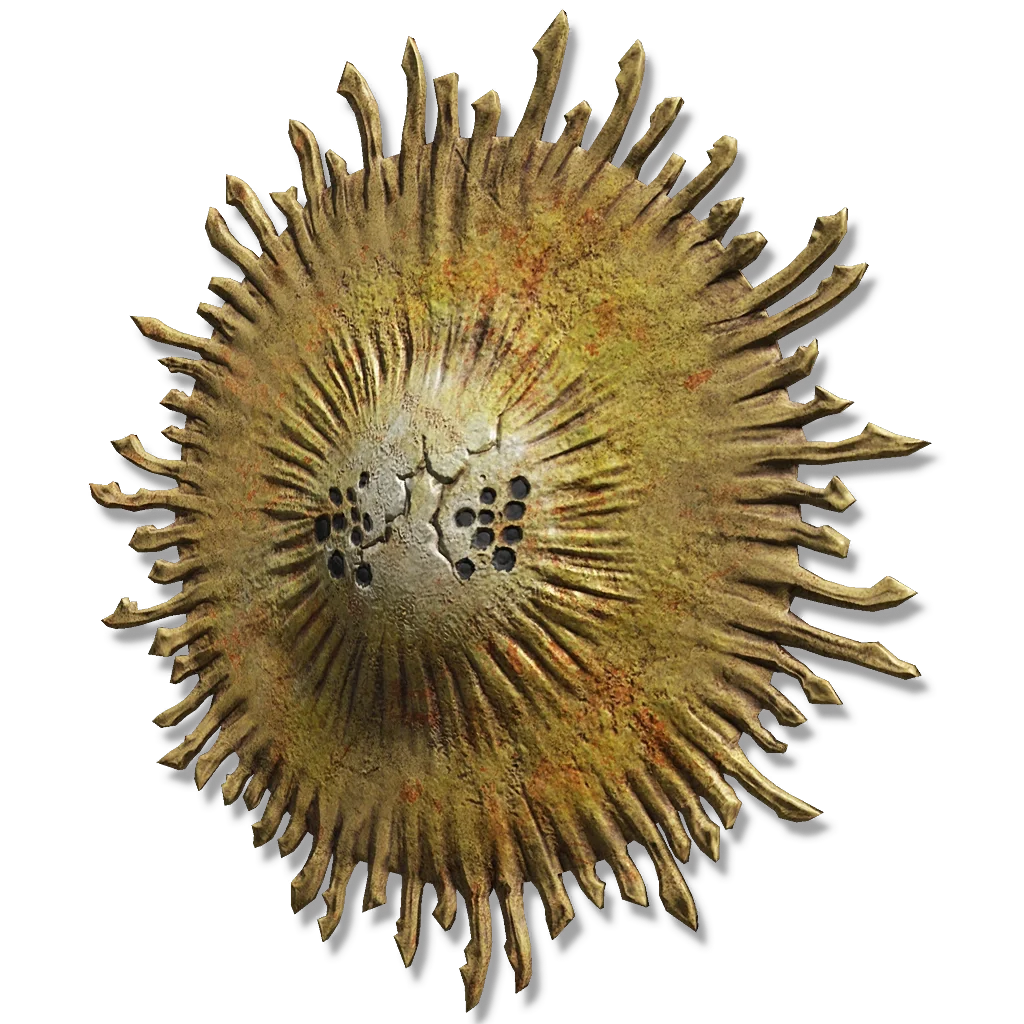 Radiant Gold Mask
A mask designed to resemble a blazing golden halo. Created and left behind by Lord Goldmask, a staunch pursuer of Golden Order fundamentalism. Strengthens Golden Order incantations. Its striking design represents both the brilliant inspiration that once shone upon him, and the vision of a ring that he will surely find at the end of his pursuit. "To you who seek to shine as I do, wear it well!"
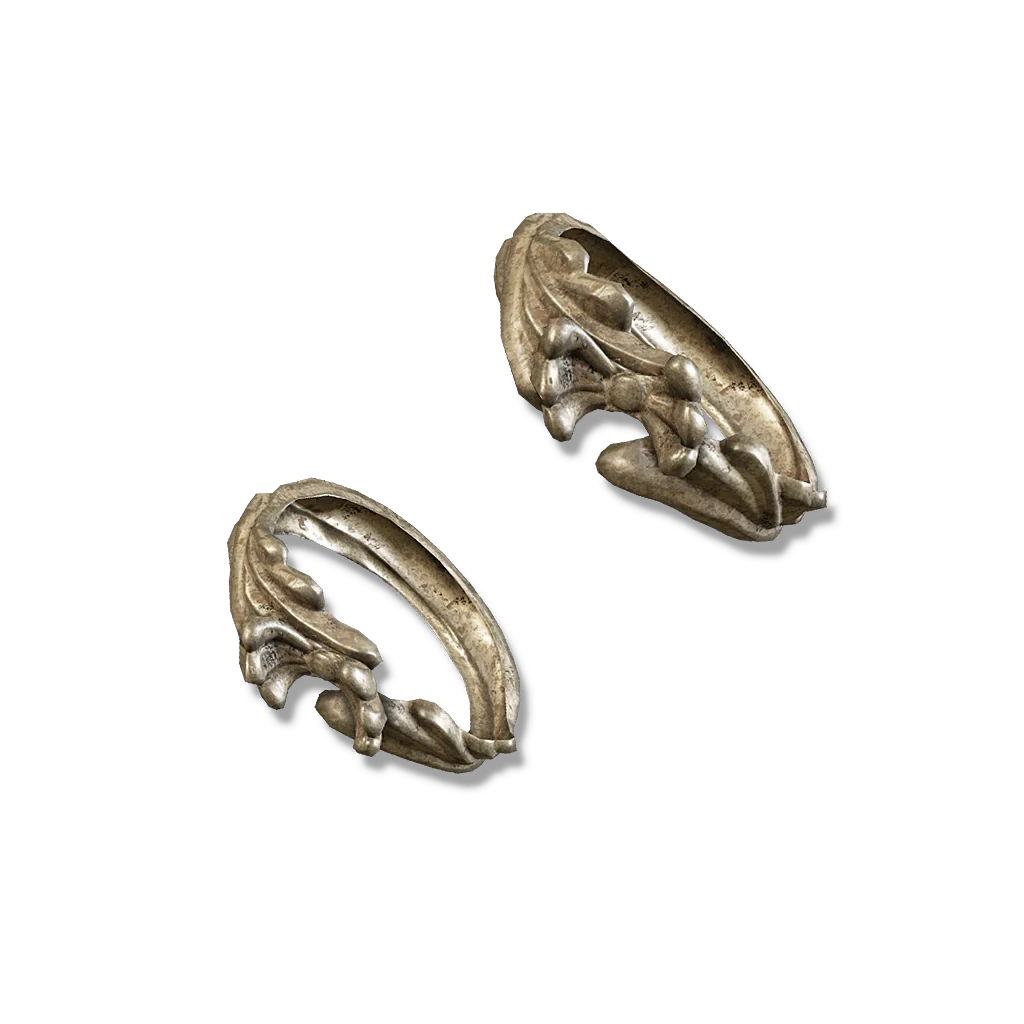 Gold Bracelets
Bracelets made in the image of Erdtree branches. Minimal adornments made by Lord Goldmask's disciples. Those disciples have long since left him.
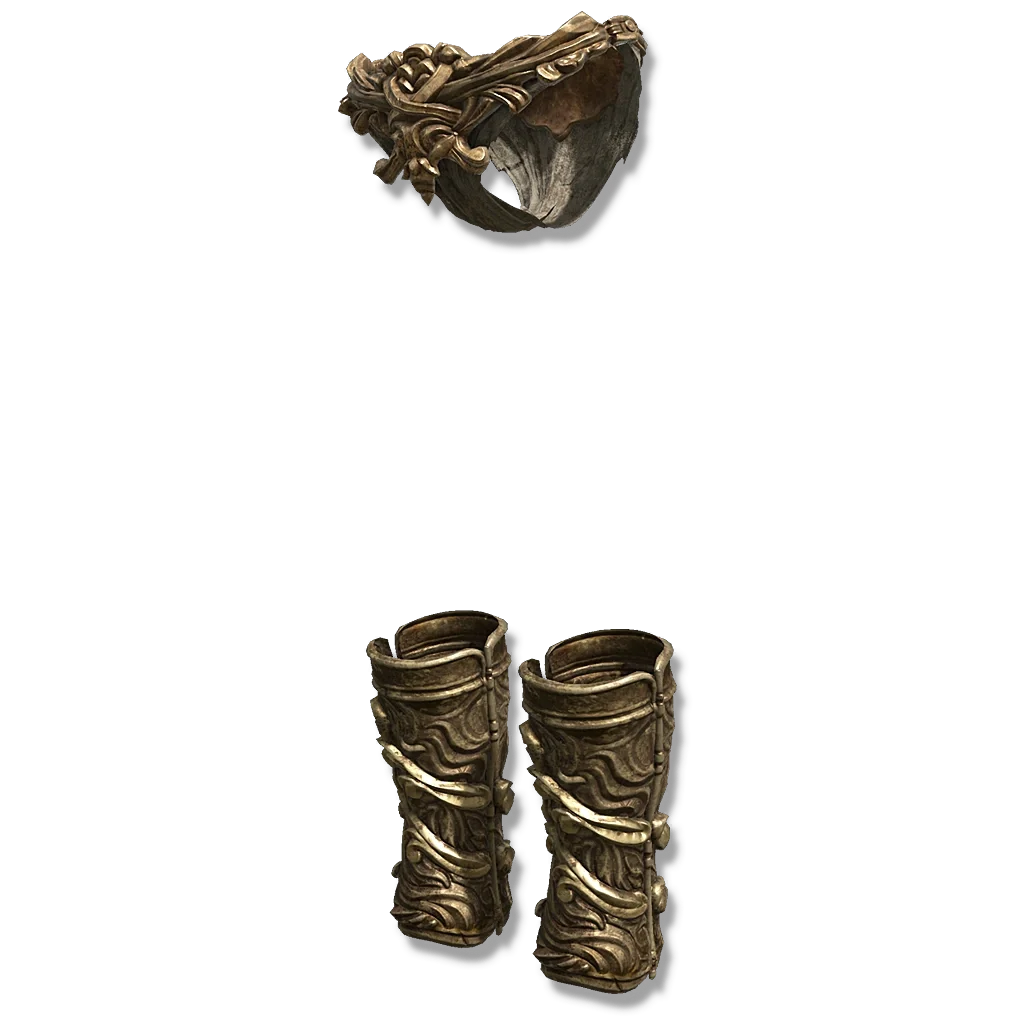 Gold Waistwrap
Waistwrap made in the image of Erdtree branches. A minimal adornment made by Lord Goldmask's disciples. Those disciples have long since left him.
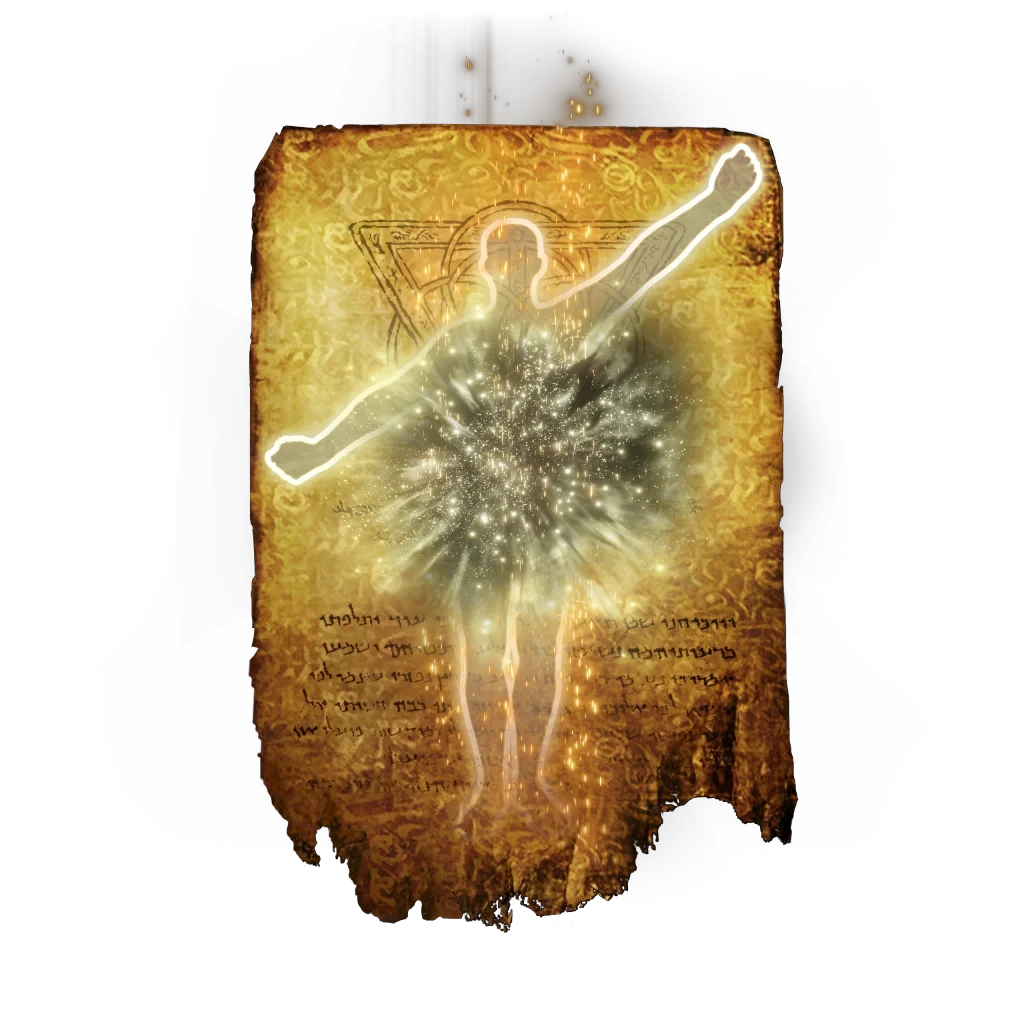 Order Healing
Alleviates death blight buildup. The noble Goldmask lamented what had become of the hunters. How easy it is for learning and learnedness to be reduced to the ravings of fanatics; all the good and the great wanted, in their foolishness, was an absolute evil to contend with. Does such a notion exist in the fundamentals of Order?
 Mending Rune of Perfect Order
Rune discovered by the noble Goldmask. Used to restore the fractured Elden Ring when brandished by the Elden Lord. A rune of transcendental ideology which will attempt to perfect the Golden Order.
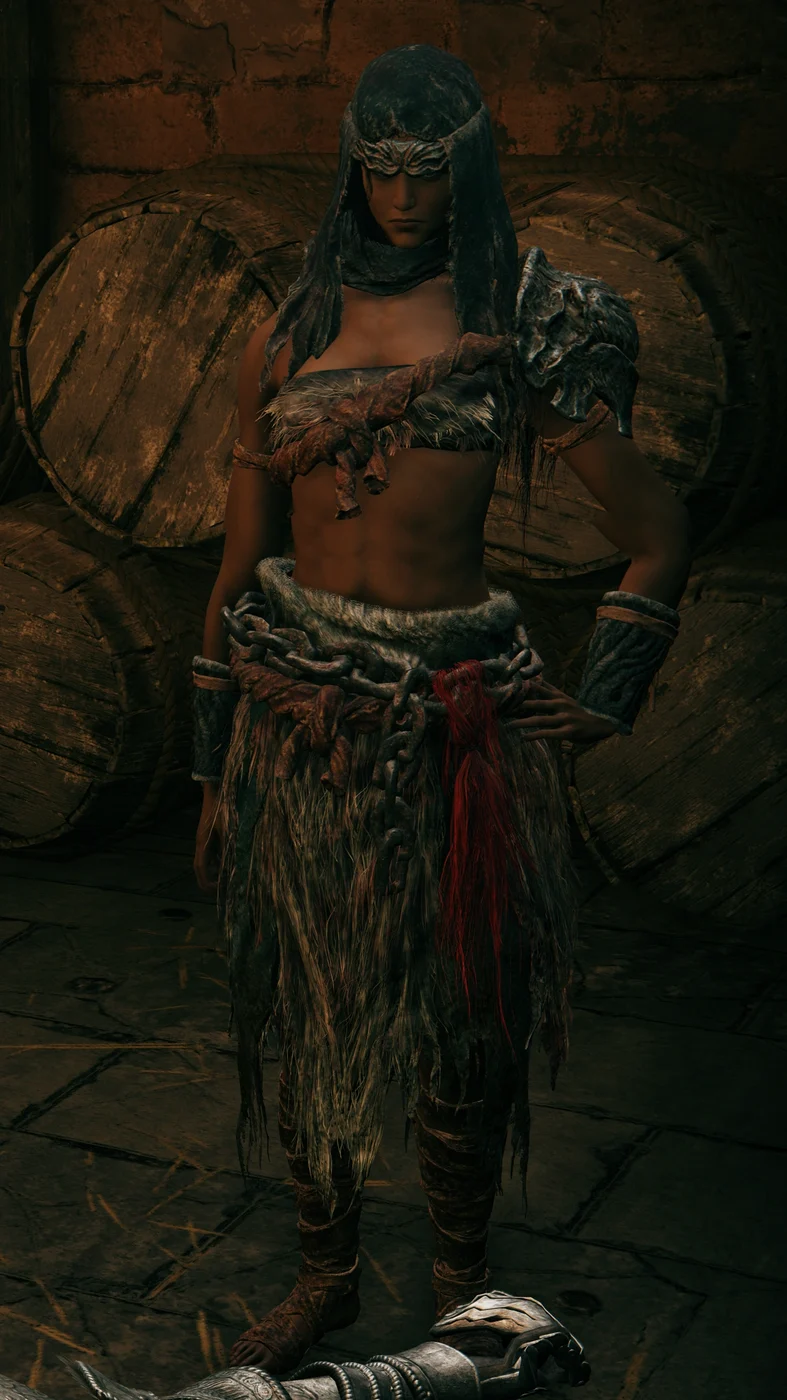 ◈ CHARACTER
Nepheli Loux
Warrior of the Badlands · Sovereign of Limgrave▾
Nepheli Loux
"This grafting of Godrick's ill befits a Lord. He's tainted the very winds."
Approaching Stormveil
Nepheli Loux is the adopted daughter of Gideon Ofnir, a barbarian warrior with twin axes who was taken in when she lost the guidance of grace. Gideon used her as a "pawn", putting her in service of the player for his own political objectives, using her strength without informing her of his plans. When she understood she was being instrumentalized (her growing suspicions, then proof that Gideon had ordered his men to commit a tragedy against those she protected), she left him in a definitive break. Her true heritage: the "storm of her forebears", ancestral magic evoking birds-of-prey and wild Badlands winds, manifested in her Stormhawk Ashes and combat style. Her original vow was to lead the storm to drive the filth from the winds. She settled at Stormveil Castle as the new ruler of Limgrave alongside Kenneth Haight (legitimate heir), summoning "the storm to drive the wretched from these winds." Her arc: from political tool to autonomous agent, recovering her original mission after her adoptive father's betrayal. Gideon describes her coldly: "Despite appearances, she is more than capable in battle."
◆ Sources
Sorcerer Thops (Dialogue)One of Seluvis's favorite puppets. Use to summon the spirit of Nepheli Loux. Puppet of a warrior who was betrayed by her pure heart. Wields a Stormhawk Axe in both hands and uses the Thunderstorm skill. A diamond in the rough, deserving of special care lest its potential be squandered. Nepheli Loux truly was a warrior.
Nepheli Loux, Warrior ◈ CHARACTER
Patches the Untethered
Opportunist Merchant · Recurring Traitor▾
Patches the Untethered
"Hmm... Very well. You... A fitting sacrifice you shall be, for the Serpent King. Join the Serpent King, as family... And devour the gods with me! Together, we will devour the very gods!"
Volcano Manor, at his master's bidding
Patches is the recurring opportunist Tarnished of FromSoftware transposed into Elden Ring, amiable on the surface, treacherous beneath, always coming out ahead. His recurring schemes in this game: he pushes players into traps (Murkwater Cave pit, lava pillar at Volcano Manor), then apologizes and opens a shop. His declared philosophy: "I am Patches, untethered to any cause. A nomad." He joins Volcano Manor "to see what Rykard has that's so fascinating" and out of curiosity toward Tanith ("I've never seen a woman like her... even announcing those blasphemous ambitions, she still stands with pride"). His admiration for Tanith is his only declared genuine feeling. He transfers his shop from location to location (Murkwater Cave → Scenic Isle → Raya Lucaria gates → Volcano Manor → Mountaintops) throughout the game. His probable end: a letter delivered via the player to Tanith reveals a "minor incident" ("I slipped and fell... doesn't make me a gentle man"). The Margit's Shackle purchasable from him before the Margit boss is the only direct (non-trapped) assistance he provides.
◆ Sources
Preceptor Seluvis (Dialogue)Patches' bell bearing, found upon his perished flesh. Offer to the Twin Maiden Husks at the Roundtable Hold to gain access to new items.
Godskin Apostle HoodHood made by sewing together patches of smooth skin. Worn by the Godskin Apostles. The apostles, once said to serve Destined Death, are wielders of the god-slaying black flame.
Godskin Apostle RobeRobe made by sewing together patches of smooth skin. Worn by the Godskin Apostles. The apostles, once said to serve Destined Death, are wielders of the god-slaying black flame.
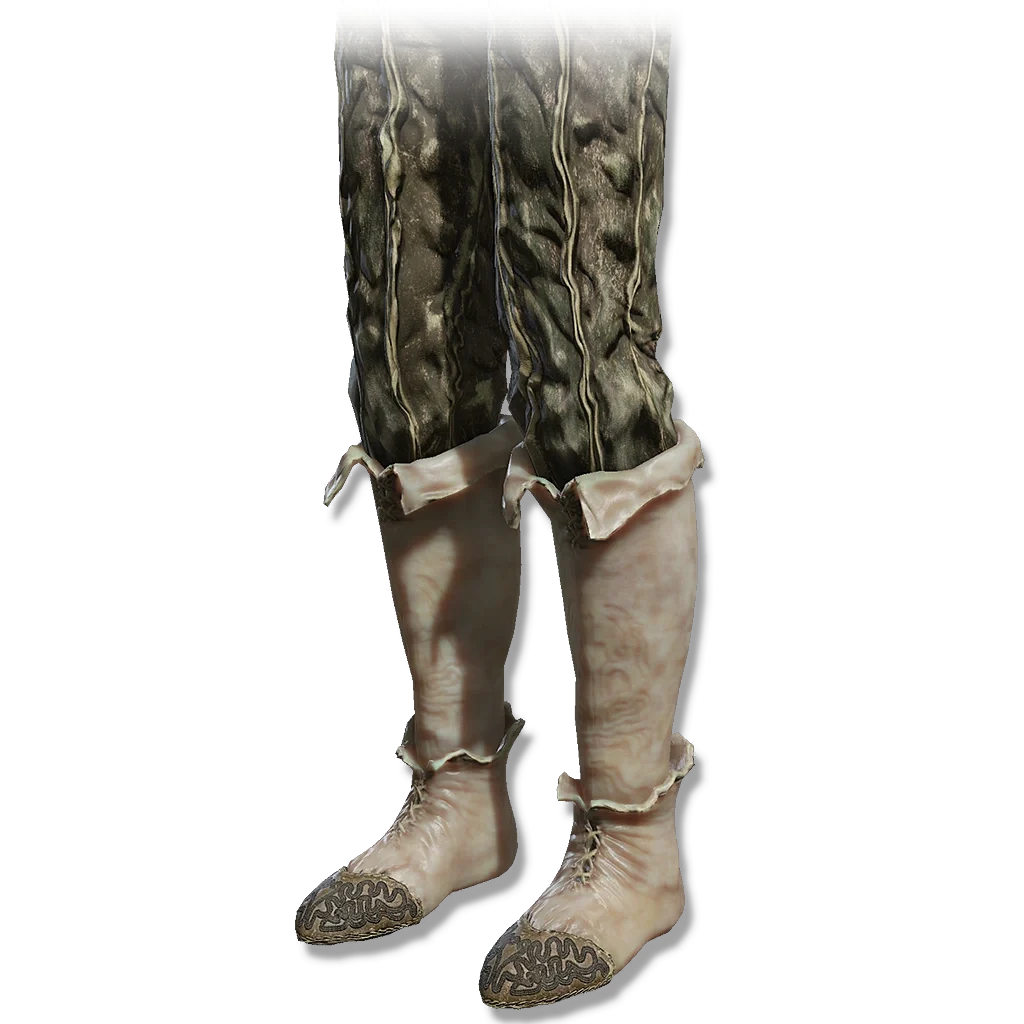 Godskin Apostle Trousers
Trousers made by sewing together patches of smooth skin. Worn by the Godskin Apostles. The apostles, once said to serve Destined Death, are wielders of the god-slaying black flame.
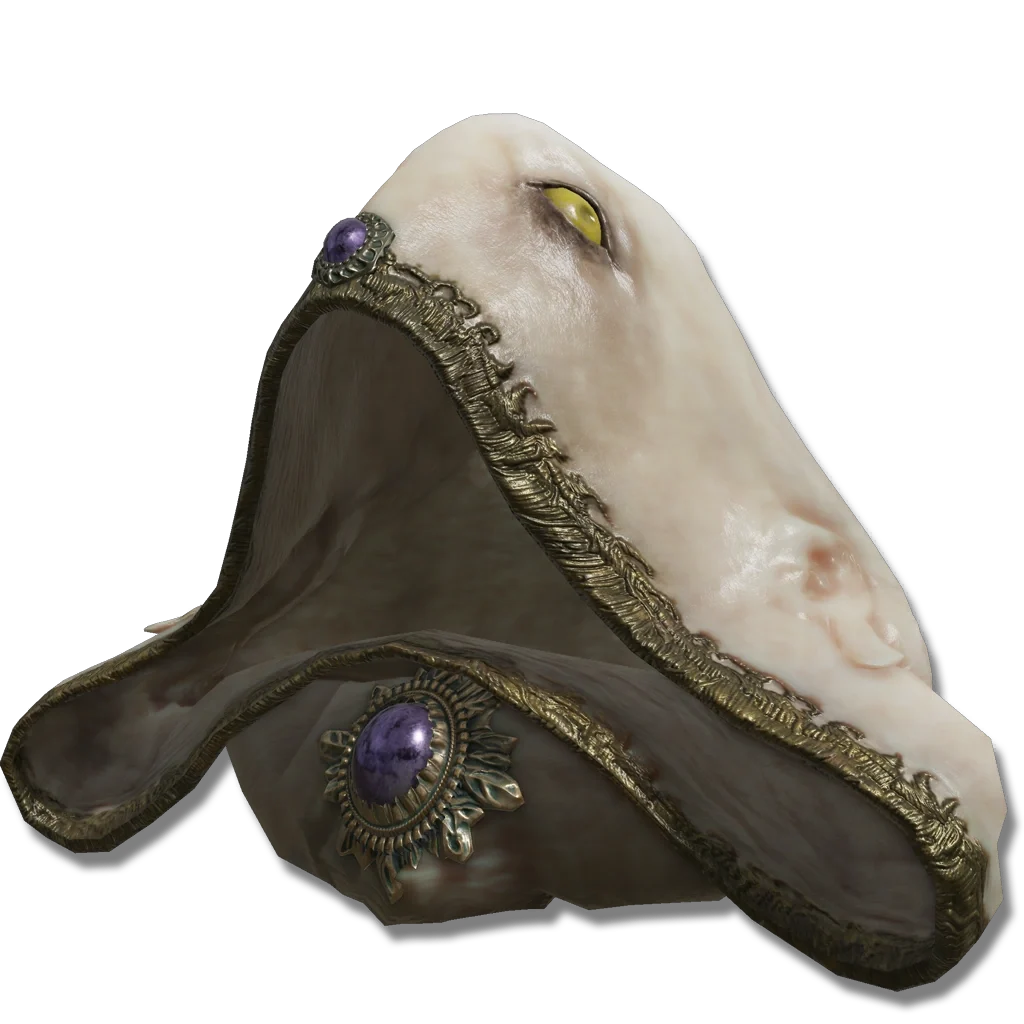 Godskin Noble Hood
Hood made by sewing together patches of smooth skin. Subcutaneous fat makes it plump and soft. Worn by Godskin Nobles.
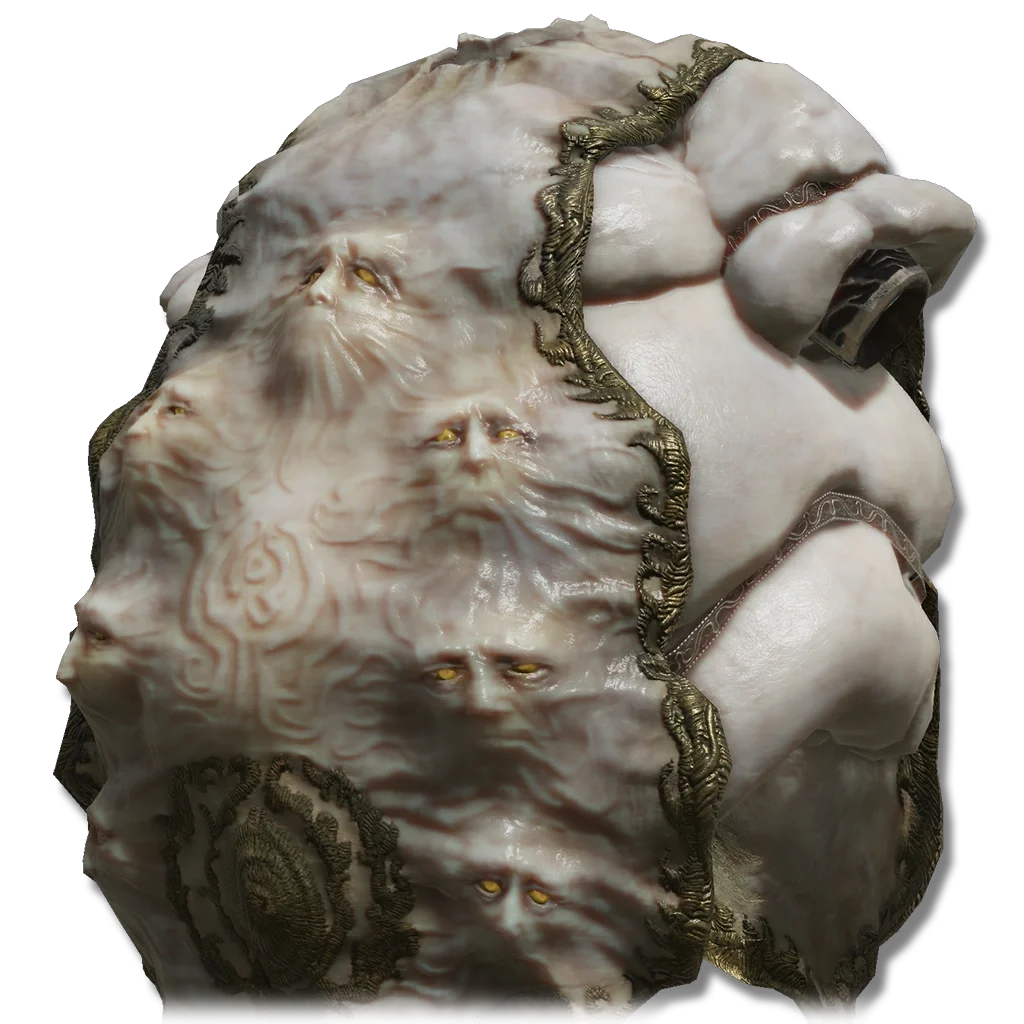 Godskin Noble Robe
Robe made by sewing together patches of smooth skin. Subcutaneous fat makes it plump and soft. Worn by Godskin Nobles, known for their seven-face aprons.
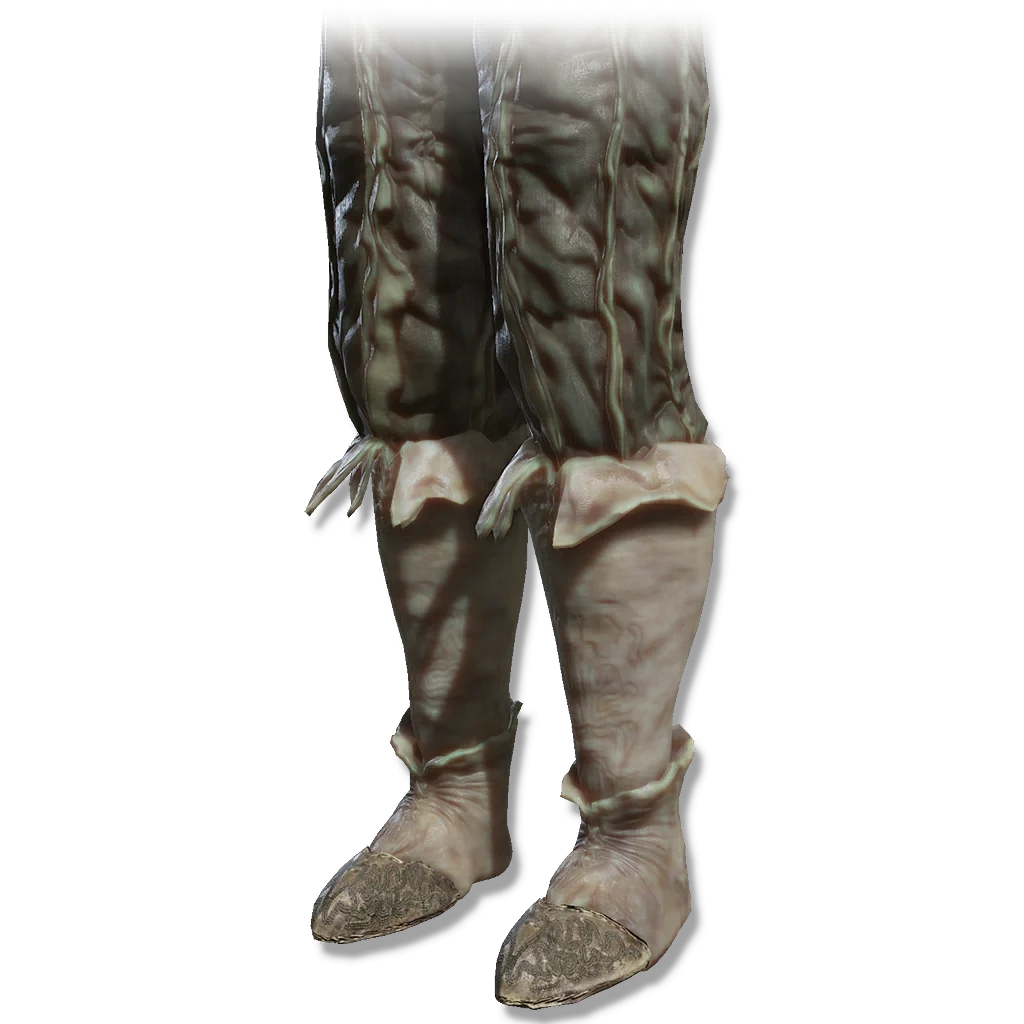 Godskin Noble Trousers
Trousers made by sewing together patches of smooth skin. Subcutaneous fat makes them plump and soft. Worn by Godskin Nobles.
A written request from Volcano Manor addressed to Patches disclosing the name of a Tarnished to be hunted. "Great Horned Tragoth" He can be found at the Ruin-Strewn Precipice. Find the red mark on your map for the exact location.
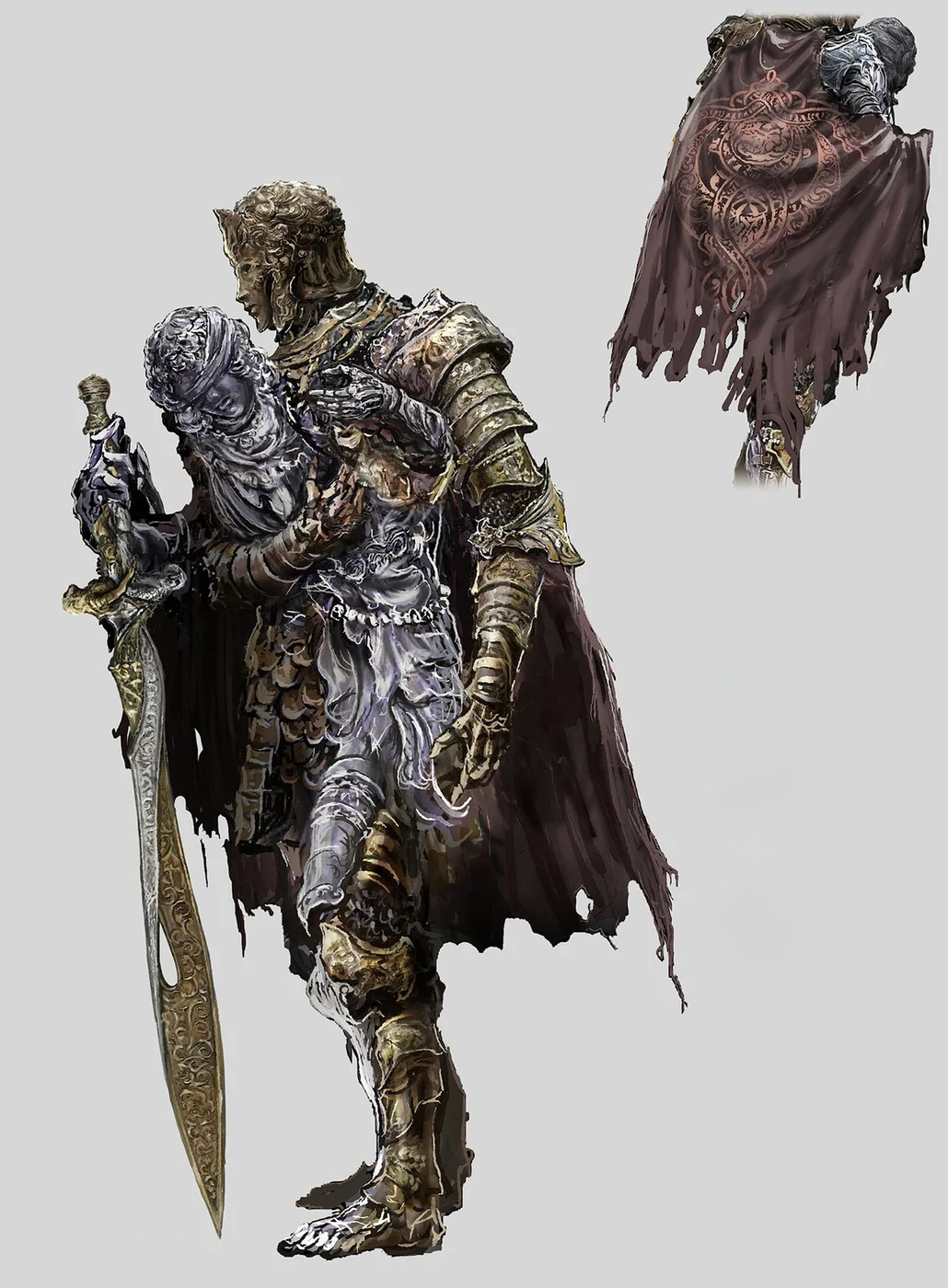 ◈ CHARACTER
D, Hunter of the Dead
Servant of the Order · Avenger▾
D, Hunter of the Dead
"I hunt down Those Who Live in Death, and weed their Deathroot."
Hunter's calling
D is a Tarnished hunter of Those Who Live in Death, a Tarnished dedicated to eliminating Deathroots and the Undead who violate the Golden Order. He carries the Order's faith with absolute and unsubtle devotion. His friend Rogier held an opposing view (protect the Undead as victims of an Order flaw), their friendship survives this divergence to a point. The Weathered Dagger connects D and Fia, it belongs to D and is linked to Fia, revealing their connection through an object. D's twin brother (referenced as "D" in Fia's quest) was killed by Fia as part of her quest (she needed to remove all obstacles). D executes revenge by killing Fia in the room adjacent to the Elden Throne. He subsequently receives the Twinned Armor set from the player (if delivered). Gurranq, the Beast Clergyman in Caelid, corresponds to D in a feeding relationship, D hunted Deathroots to bring to Gurranq, who offered him power in exchange. The quest reveals D also served as intermediary between mortal death-hunters and the Shadowbound Beast, his role in the macro-lore extending beyond his personal questline.
◆ Sources
Shabriri (Dialogue) Teardrop Scarabs
There are both Crimson and Cerulean Teardrop Scarabs. Defeat them to replenish the flasks that match their type. However, you cannot replenish more flasks than your maximum amount allows. The fallen leaves tell a story.
◈ CHARACTERWhite Mask Varré
First NPC · Mohg's Chief Recruiter▾
White Mask Varré
"Unfortunately for you, however, you are maidenless."
First encounter, on the Tarnished's solitude
"Bless the Mohgwyn Dynasty, with love!"
Disciple of the Mohgwyn Dynasty
Varré is the first NPC encountered in the game, the "white mask" welcoming maidenless Tarnished with benevolent condescension. His true nature: Mohg's chief recruiter, tasked with infiltrating and enlisting Tarnished for the Mohgwyn Dynasty. He persuades Tarnished to invade an enemy world, soak a cloth in a Maiden's blood, then returns to initiate them by injecting noble blood into their finger via a long pin, described in his dialogues in clinical detail: "thou dost have the sweetest cry." He grants the Pureblood Knight's Medal, the key to Mohgwyn Palace. His dialogues reveal his conviction that the guidance of grace has been corrupted since the Elden Ring's shattering: "The words of the Two Fingers can no longer be trusted. Corrupted, their guidance, tainted." His armor set (White Mask, Hoslow blood variants) reflects his Bloody Finger identity. His loyalty to Mohg is total: even dying in the boss fight, he invokes his lord. The Mohgwyn Dynasty Medallion he grants teleports directly to Mohgwyn Palace, bypassing all normal access routes.
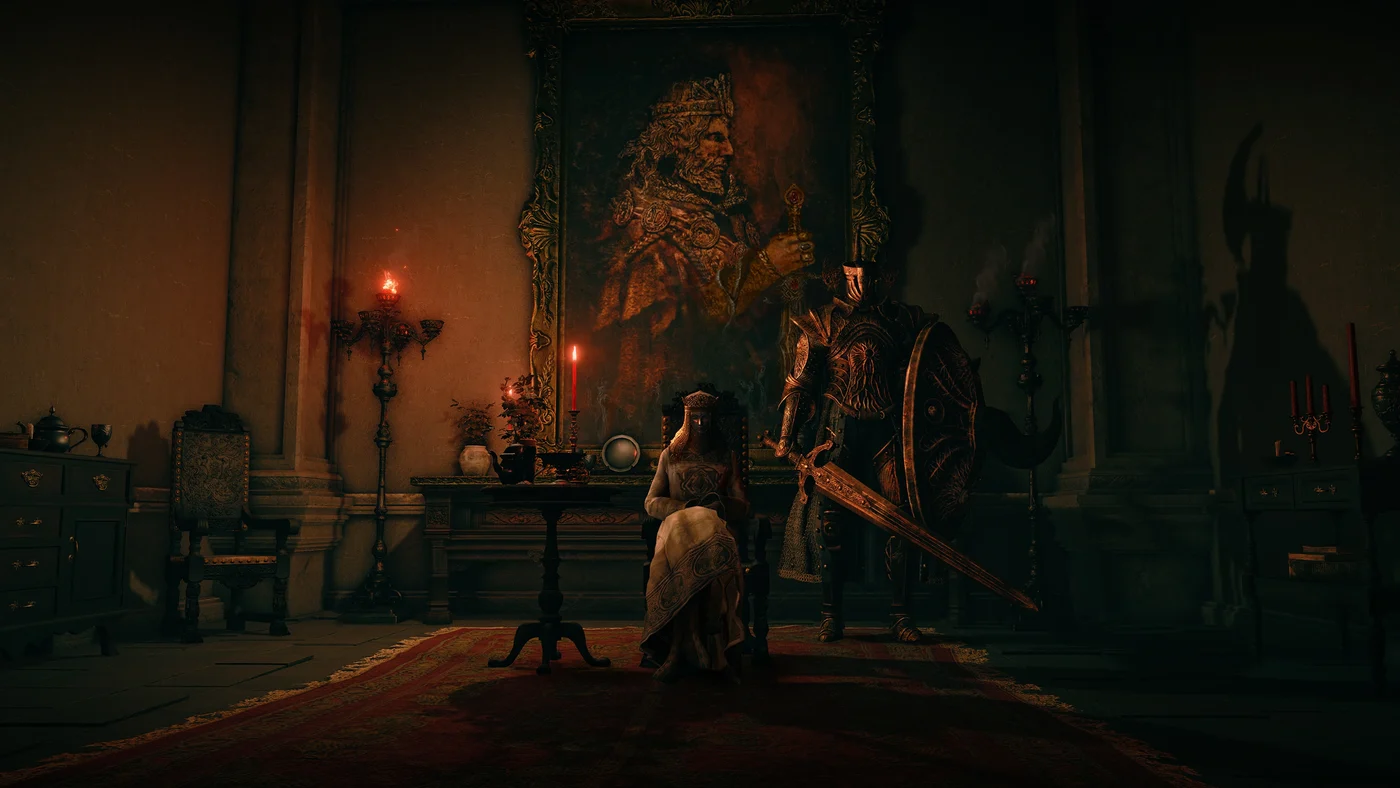 ◈ CHARACTER
Lady Tanith
Volcano Manor Proprietress · Devotee of Rykard▾
Lady Tanith
"Rise with us, against the Erdtree."
The recusants' rallying cry
Tanith is the proprietress of Volcano Manor and Rykard's devoted servant, likely his lover. She recruits recusant Tarnished, those who renounce the guidance of grace, to hunt their own kind in organized resistance against the Erdtree. Her argument: "The Erdtree and its gods have reduced us to an unworthy station. We are prepared to raise the flag of resistance, even if it means heresy. Rise with us against the Erdtree." She adopted Zorayas (alias Rya the Scout), a serpentine child born of Rykard's blasphemous rites, raising her while hiding her origins, telling her she was "born by the grace of a glorious king." She provides the Tonic of Forgetfulness to Rya if the player chooses that path, erasing the painful revelation of her origins. After Rykard's death, Tanith remains in the Lord's Chamber and begins devouring his serpentine corpse: "Dear Rykard, please find purchase within me, I wish to be your serpent; your family. One day, let us devour the gods together." Her devotion transcends death, she wishes to transform into a serpent to perpetuate his legacy and remain close to him. Patches notes: "I've never seen a woman like that... even announcing those blasphemous ambitions, she still stands upright with pride.
◆ Sources
Latenna the Albinauric (Dialogue)Brave Tarnished, welcome to the Volcano Manor. I am Tanith, the proprietress of this house. Rya spoke well of you. "A warrior of promise," I believe she said. Perhaps you are prepared to make a commitment. Make yourself comfortable. An honour to have you. Well. Have you reconsidered the prospect? Of rising with us, against the Erdtree? Tanith, Volcano Manor Proprietress Very well. Your decision is most welcome. Now you belong to the Volcano Manor family.
Preceptor Seluvis (Dialogue)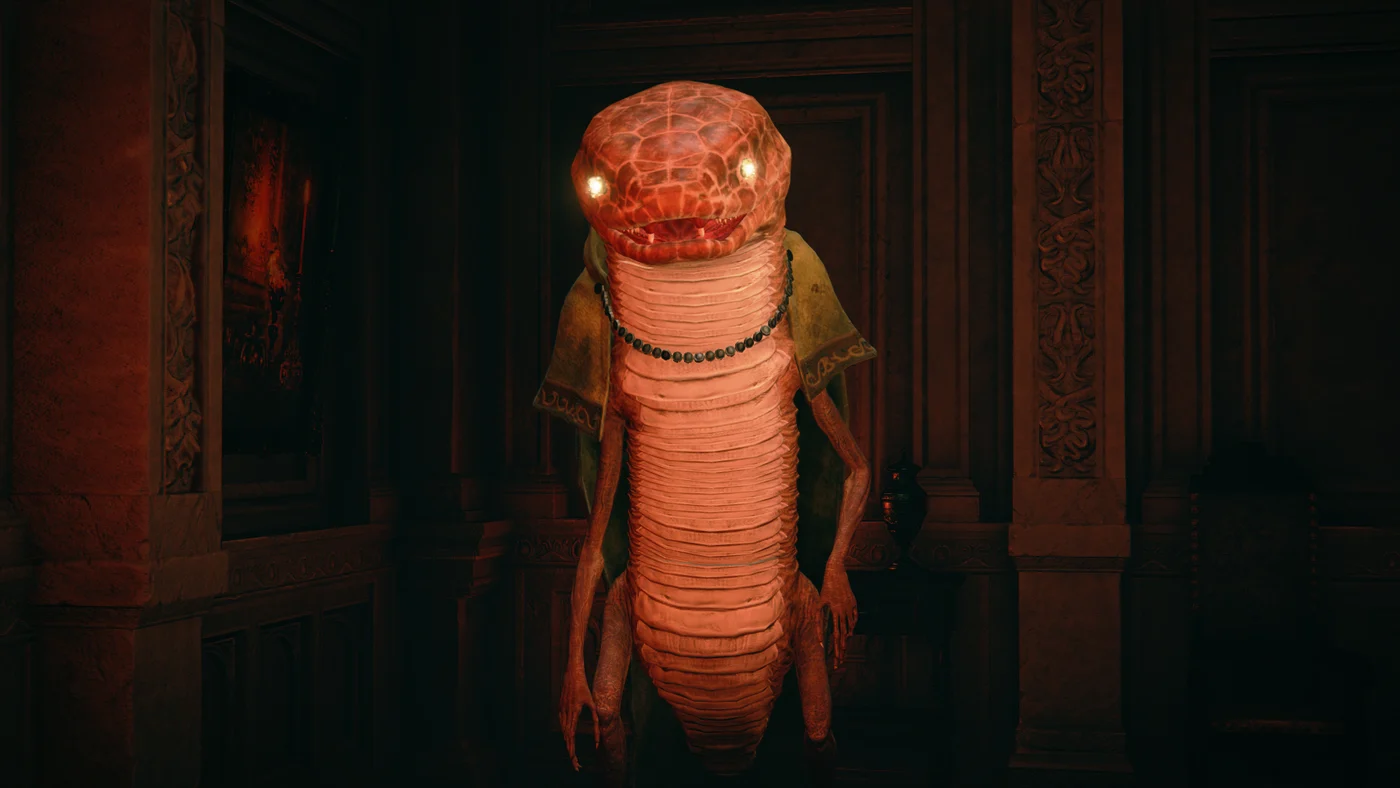 Rya the Scout (Dialogue)Sorcerer Rogier (Dialogue)
Ah, I had hoped you'd soon return. I have the reward from Lady Tanith. Take it. It's yours, by right.
Tanith, Volcano Manor ProprietressVery well. Your decision is most welcome. Now you belong to the Volcano Manor family. The drawing room lies down the hall. Make yourself comfortable. Now, time for you to leave, I should think. Let this intersection of our paths be the last. The drawing room is through the hall. Use the key I handed you, and make yourself comfortable. Now you are a recusant true, and a full-fledged member of the Volcano Manor. I am pleased to have you on our side.
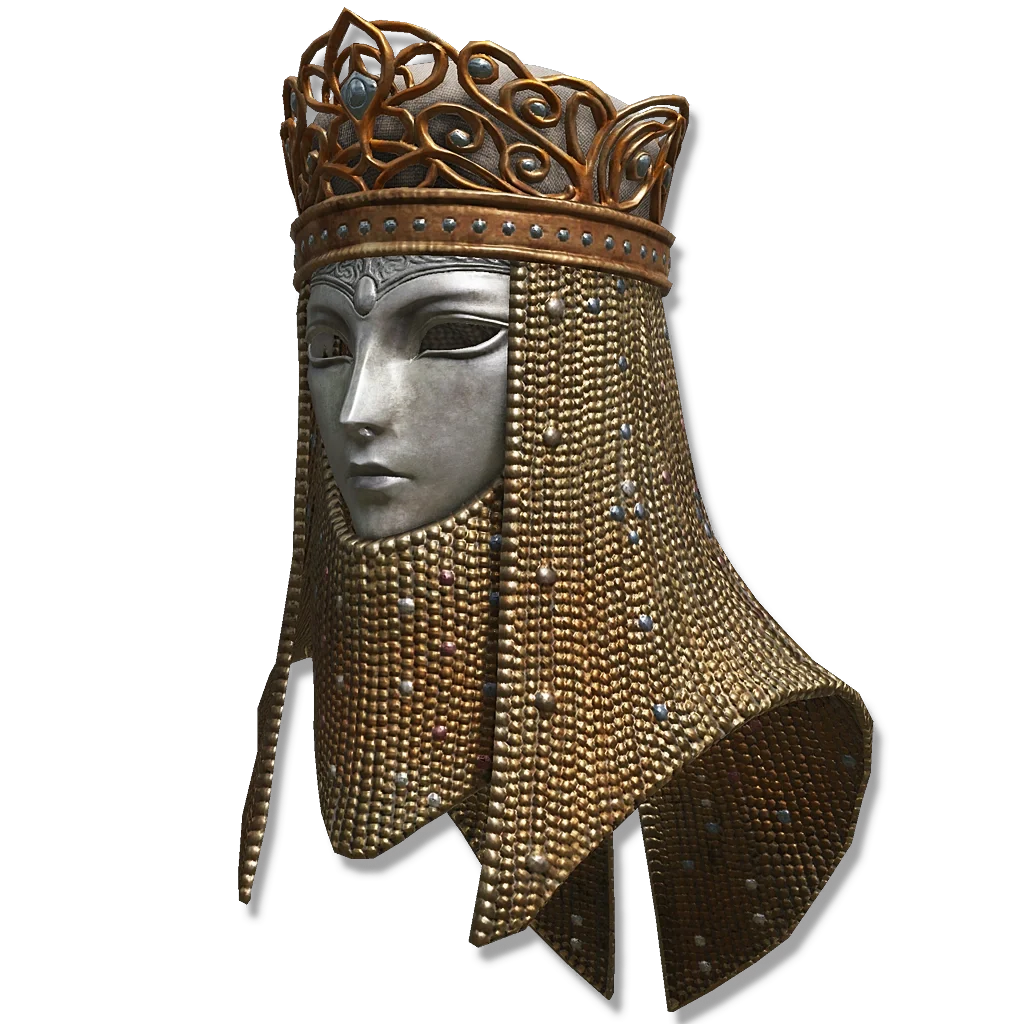 Consort's Mask
Mask worn by Tanith, Lady of the Volcano Manor, in the image of a foreign queen. Increases dexterity. Long ago, when Rykard first set eyes on Tanith, she was working as a dancer in a foreign land. Soon, he made her his consort. She was the only human to remain by his side when he became the serpent of blasphemy. In that moment, Tanith was truly charmed by him.
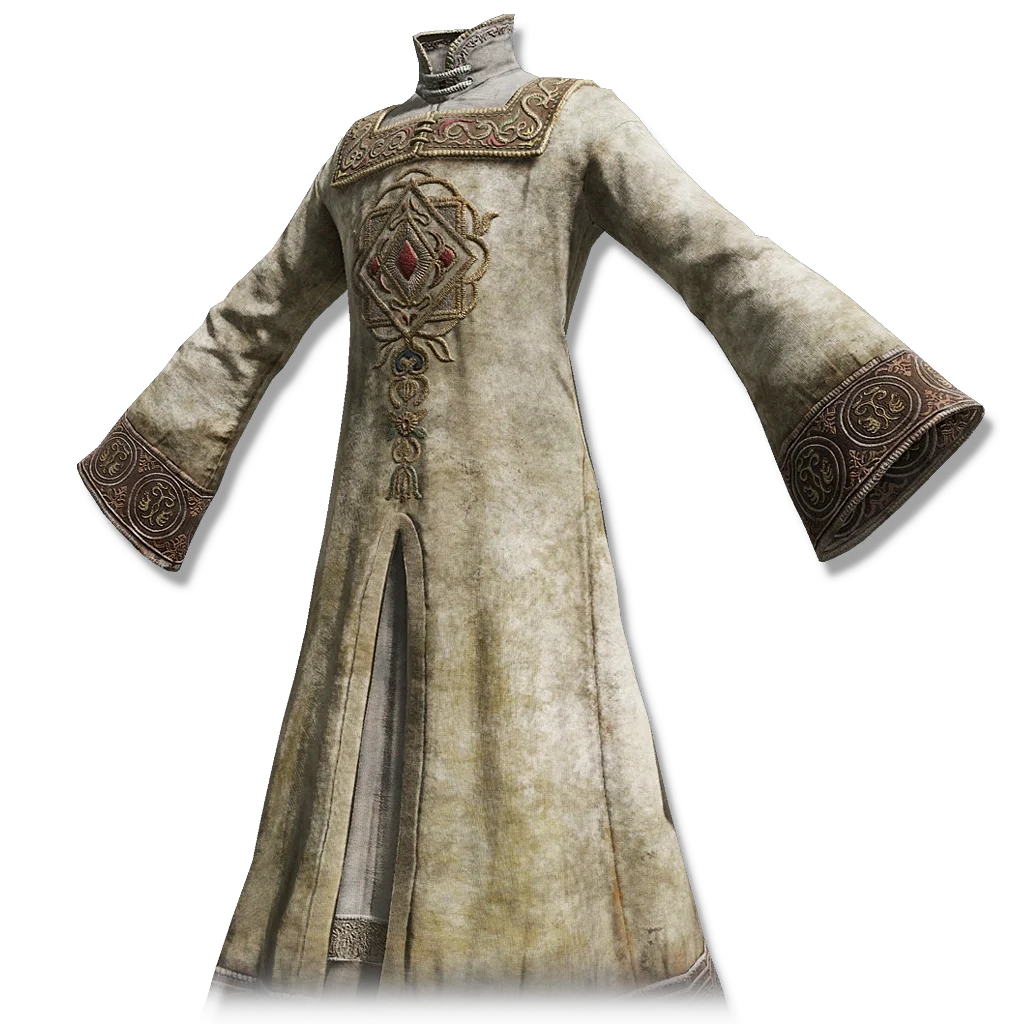 Consort's Robe
Fine robe of white silk worn by Tanith, Lady of the Volcano Manor. Long ago, when Rykard first set eyes on Tanith, she was working as a dancer in a foreign land. Soon, he made her his consort. She was the only human to remain by his side when he became the serpent of blasphemy. In that moment, Tanith was truly charmed by him.
 Tonic of Forgetfulness
Banishes distress and bitter memories. A gift bestowed by Rykard, sworn to blasphemy, to Lady Tanith, who unfortunately had no use for it. "My Lord, there could be no greater distress than to forget you."
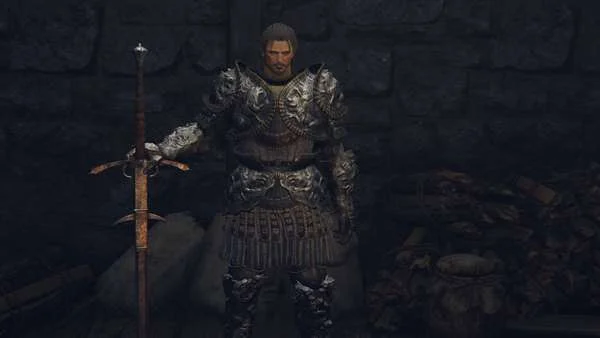 ◈ CHARACTER
Recusant Bernahl
Blade Warrior · Heir to a Vow▾
Recusant Bernahl
"O Greater Will, hear my voice. I am the recusant Bernahl, inheritor of my brother's will, and you will fall to my blade."
After slaying Rykard, vow against the Greater Will
Bernahl is a recusant of Volcano Manor, a warrior passionate about martial arts whom he taught to Tarnished at Roundtable Hold before joining the cause. His code: "The strong take. Such is our code." His arc: from teacher of battle arts at Roundtable Hold (guiding grace-following Tarnished) to recusant who renounced grace at Volcano Manor. His revelation after Rykard's death: he departs alone toward Crumbling Farum Azula to oppose what he views as the Greater Will's will embodied in the player-future-Elden-Lord. He invades the player at Farum Azula: "O Greater Will. Hear my voice. I am recusant Bernahl, heir to my brother's will. And thou shalt fall to my blade. We refuse to become your pawns." The mention of "my brother", never explained in the game, suggests a personal history of loss tied to the Order. His Volcano Manor Set and Battle Arts (Flame of the Fell God, Blasphemous Blade skills) reflect his recusant heritage.
◆ Sources
Sorcerer Rogier (Dialogue)G-god... wyn Not seen you before. Name's Bernahl. Tarnished, just like you. Let me ask you something. Then I shall introduce myself once more. Bernahl, a recusant, just like you. Recusants have particular battle arts, styled to our methods of slaughter. Why not add some to your repertoire?
Knight Bernahl's bell bearing, found upon his perished flesh. Offer to the Twin Maiden Husks at the Roundtable Hold to gain access to new items.
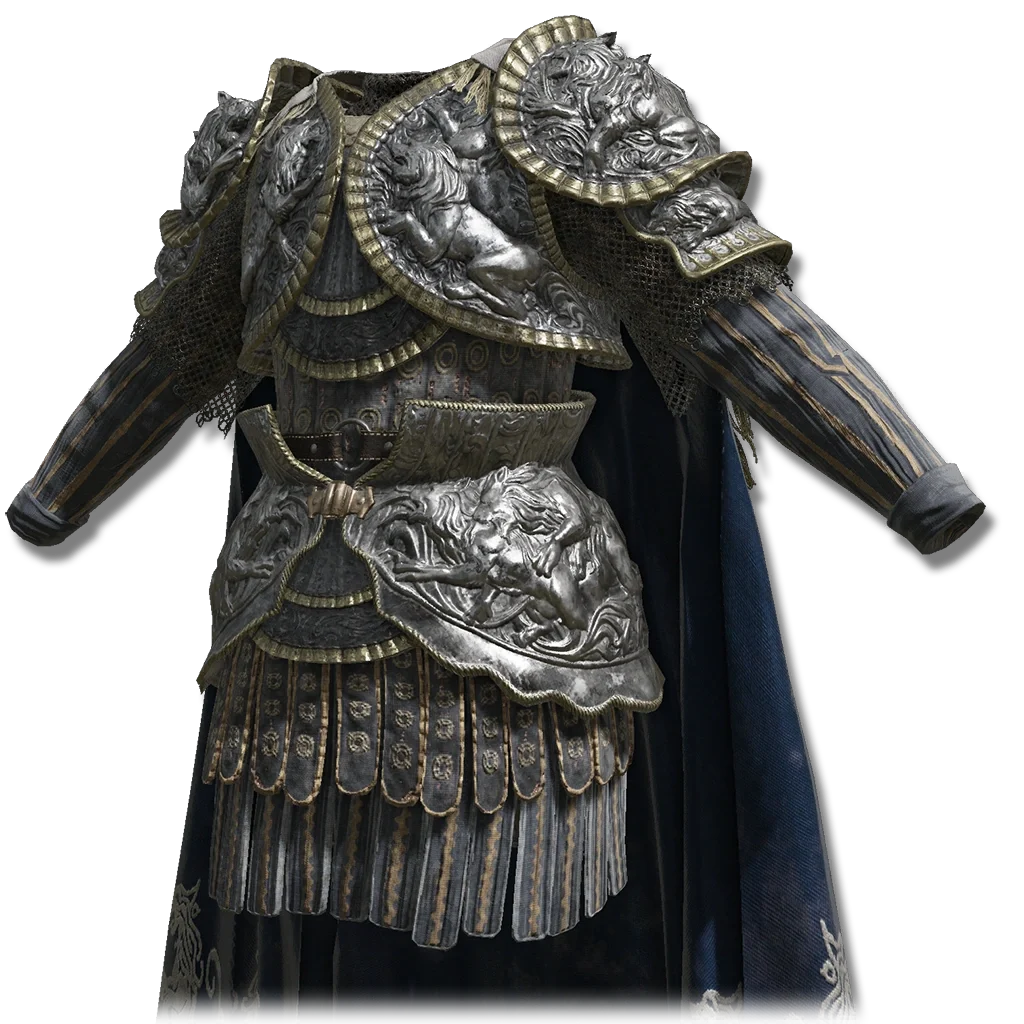 Beast Champion Armor
Silver armor engraved with tiny beasts. Worn by Bernahl the Recusant. Beasts are drawn to champions, and to lords. And this armor befits a champion worthy of becoming a lord. And that is what Bernahl was. Until his maiden threw herself into the fire.
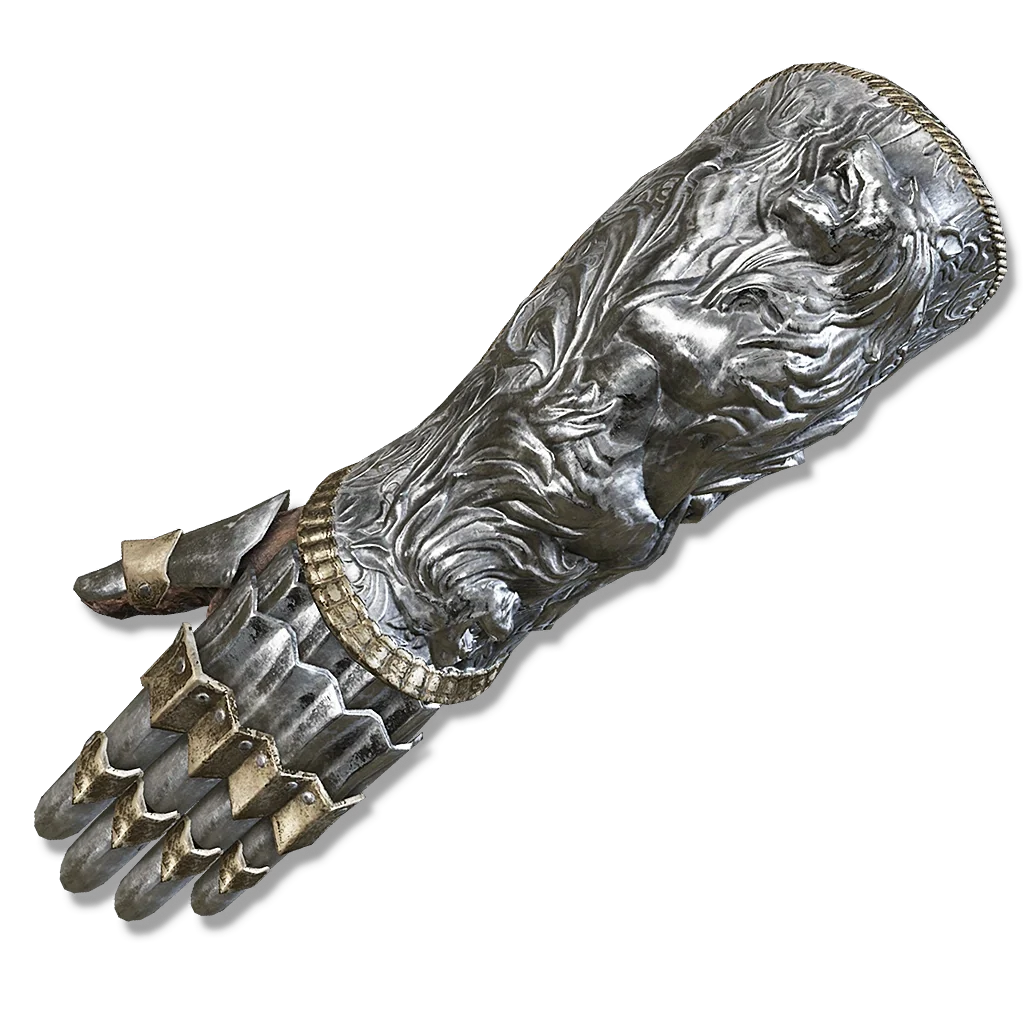 Beast Champion Gauntlets
Silver gauntlets engraved with tiny beasts. Worn by Bernahl the Recusant. Beasts are drawn to champions, and to lords. And this armor befits a champion worthy of becoming a lord. And that is what Bernahl was. Until his maiden threw herself into the fire.
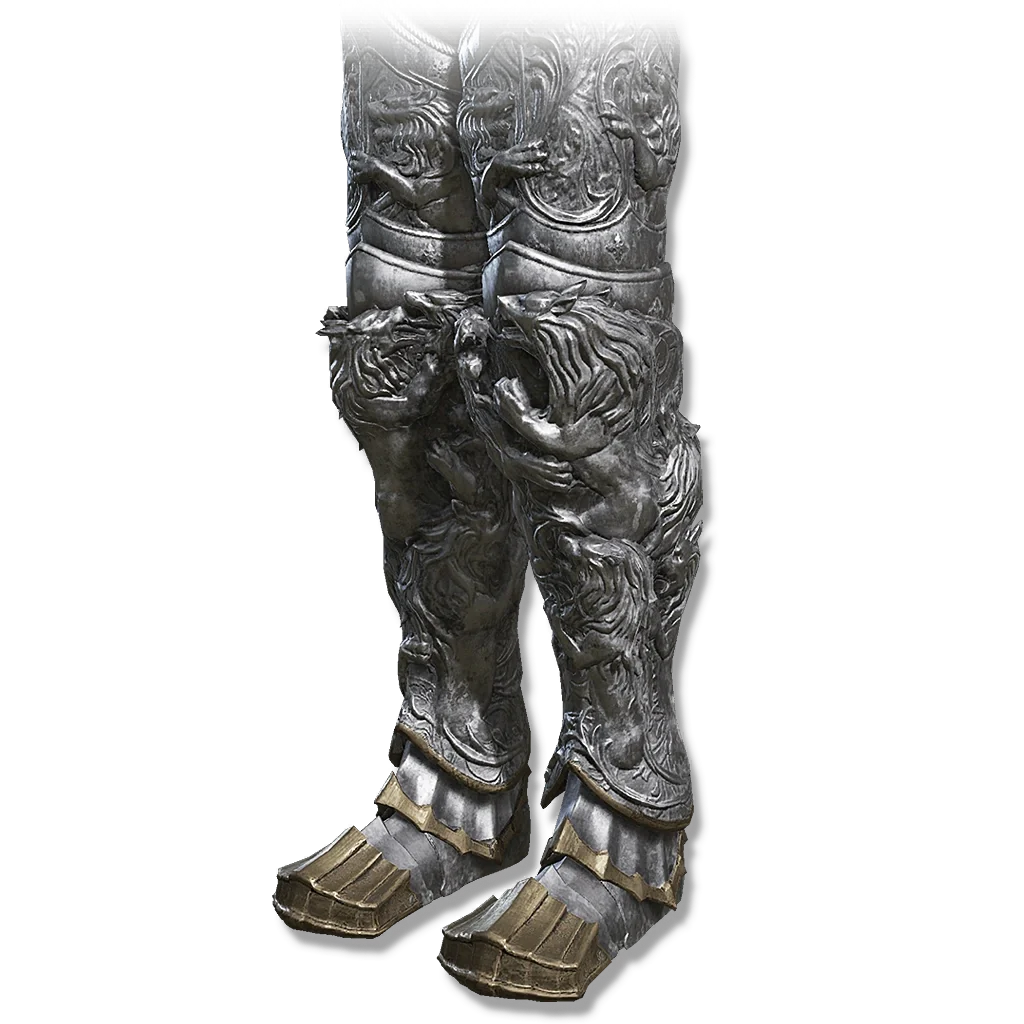 Beast Champion Greaves
Silver greaves engraved with tiny beasts. Worn by Bernahl the Recusant. Beasts are drawn to champions, and to lords. And this armor befits a champion worthy of becoming a lord. And that is what Bernahl was. Until his maiden threw herself into the fire.
A written request from Volcano Manor addressed to Bernahl disclosing the names of two Tarnished to be hunted. "Vargram the Raging Wolf" "Errant Sorcerer Wilhelm" Both men can be found in the Royal Capital of Leyndell. Find the red mark on your map for the exact location.
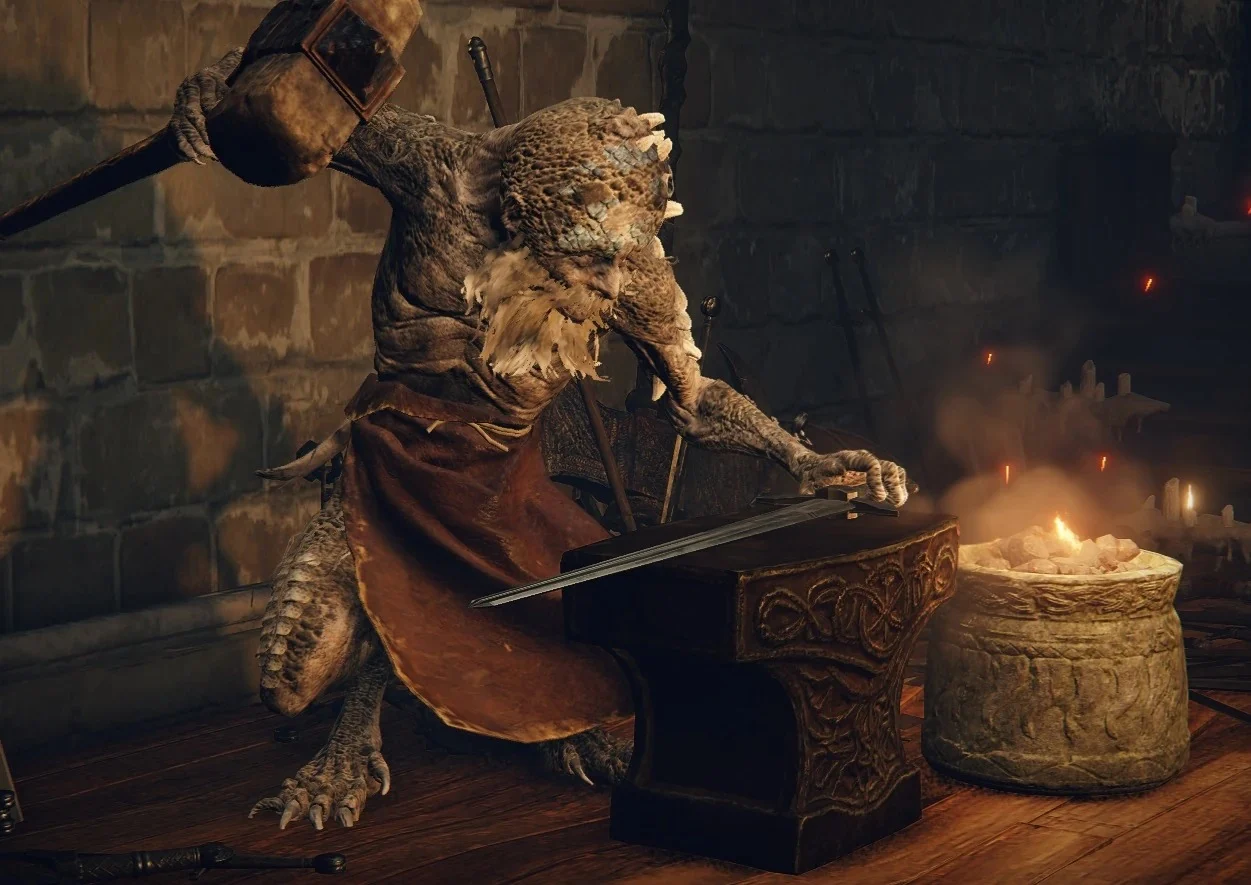 ◈ CHARACTER
Hewg the Imprisoned Smith
Cursed Forgemaster · Crafter of God-Killing Weapons▾
Hewg the Imprisoned Smith
"I'm trapped by the Hold, undying, smithing for you fools. That's all there is to it."
Roundtable Hold, bound by the Two Fingers
Hewg is a giant smith chained at Roundtable Hold by a curse from Marika herself, condemned to forge endlessly until a weapon capable of killing a god is created for a Tarnished. He doesn't fully understand why he is chained, but intuitively grasps his mission: "I forge weapons to slay demigods. One day, no fail, thou shalt have thy will. Then, a weapon to slay a god." He prays to Marika for forgiveness, the same goddess who condemned him to this existence. "Your divinity, have mercy and grant me forgiveness. The road is still long." He recognized in Roderika a talent for spirit accord similar to a spirit tuner he once knew (their eyes share the same hue). He taught her everything he knew, the two developing a deep master-disciple relationship. In his final moments, as Roundtable Hold burns and his memory fades, he continues instinctively to forge. Roderika tries to convince him to leave: "Now that your chains are broken, you are free." His response: "What use have I for freedom now? I forge weapons to slay a god. I have lived, and will die, doing so, on this very spot." His curse by Marika implies a context never revealed, why did Marika curse a simple smith to this existence?
◆ Sources
Shabriri (Dialogue)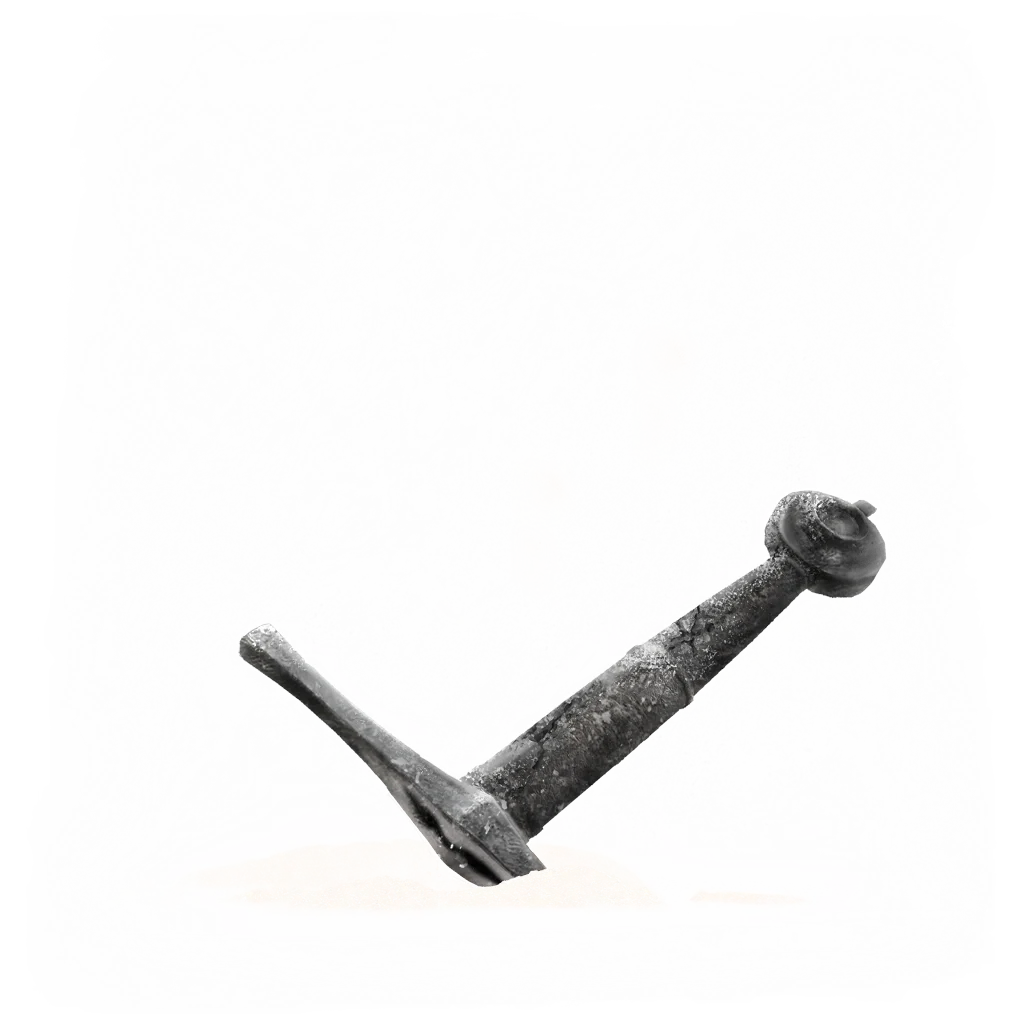 Lost Ashes of War
Empty ashes of war, devoid of any memories of battle. Unable to apply any kind of affinity in their current state, but can be used by Smithing Master Hewg of the Roundtable Hold to recreate other ashes. Thus does the copy pass into becoming the genuine article.
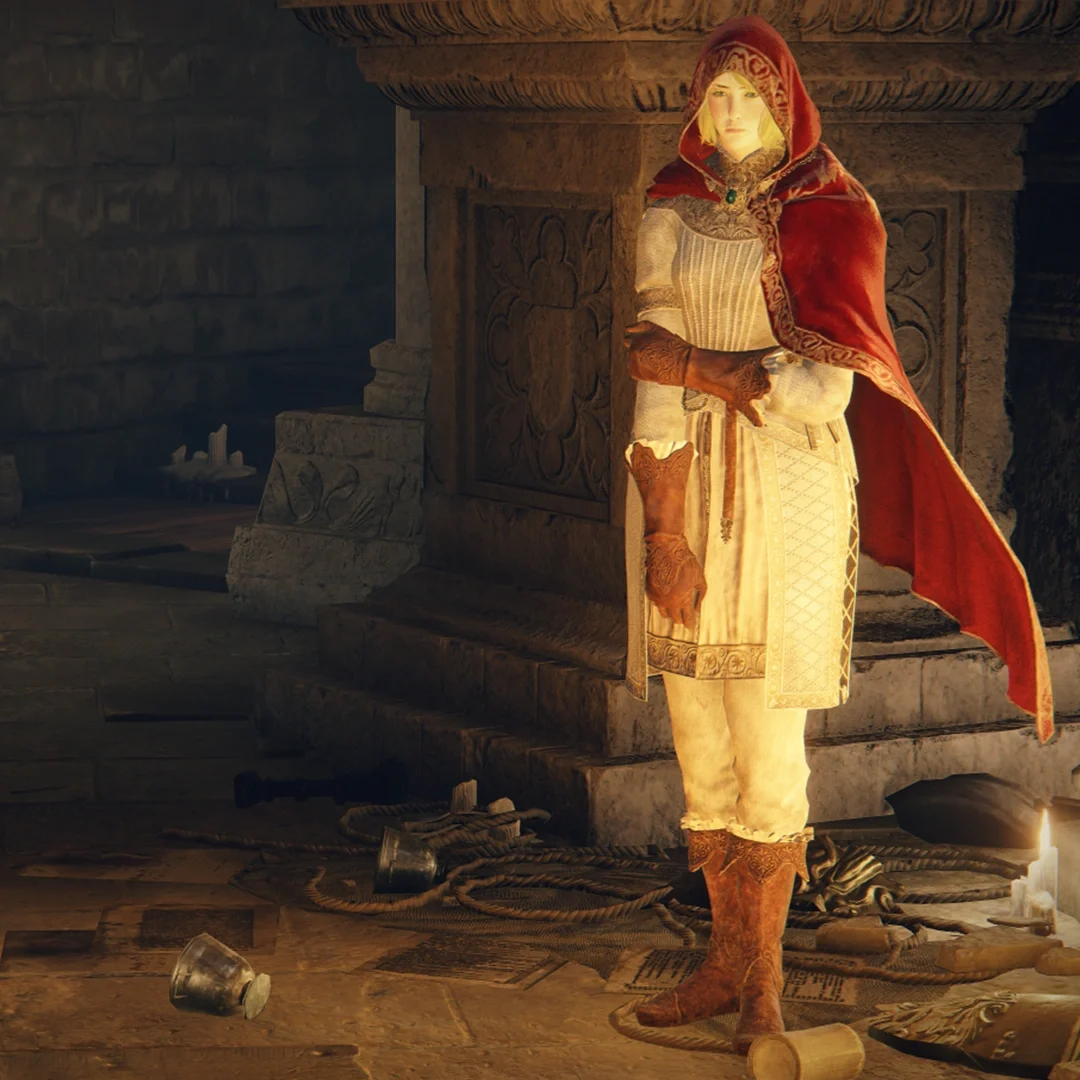 Roderika, Spirit Tuner
◈ CHARACTERLatenna the Albinauric
Legless Archer · Pilgrim to the Haligtree▾
Latenna the Albinauric
"Farewell, Lobo. My faithful wolf, my better half."
Farewell to her wolf, on the road to the Haligtree
Latenna is a first-generation Albinauric, a people created through forbidden rites of the Eternal Cities. Her legs have faded with age (the common fate of her race: first-generation Albinaurics see their legs gradually vanish). Immobile without her wolf Lobo (her only means of locomotion), she remains a formidable archer. Her goal: reach Eburion, Miquella's northern city (the Haligtree) where Albinaurics receive eternal grace. Old Albus (her home village elder) entrusted her with one half of the Haligtree Medallion before dying in an attack by cursemark hunters (Albinauric Bloodclot). She tells whoever retrieves this half that the second can be found at Castle Sol on the Mountaintops of the Giants. She sacrifices her wolf Lobo to accompany the player: "Farewell, Lobo. My faithful wolf, my better half... I'll go with the Tarnished. That our journey might not have been in vain. Forgive me, Lobo." Her final cutscene in the snow-covered lands of the Haligtree: "We have reached the land of Miquella's Haligtree, where Lobo and I began our travels. It's entirely thanks to you that I'm so close to home." She thus fulfills Albus's final wish.
◆ Sources
Old Albus (Dialogue)You must keep it out of the cursemongers' hands. And if you should meet the young Albinauric Latenna, then please, give it to her. A chosen land awaits us Albinaurics. Miquella's city, far to the north, a place called Eburion, where we are conferred eternal grace. It's only a quaint treasure, for we who cannot make the journey. But for dear Latenna, it is needed. To fulfil her purpose. My legs will soon fade, and with them, my life.
War Counselor Iji (Dialogue)Let's try again. I'm Latenna. An Albinauric, the same as Old Albus. My apologies for my coarse words earlier. Do you hear me? It is I, Latenna. We're almost there. Castle Sol lies just off to the north, where the other medallion is housed.
Latenna the Albinauric (Dialogue)You must keep it out of the cursemongers' hands. And if you should meet the young Albinauric Latenna, then please, give it to her. A chosen land awaits us Albinaurics. Miquella's city, far to the north, a place called Eburion, where we are conferred eternal grace. It's only a quaint treasure, for we who cannot make the journey. But for dear Latenna, it is needed. To fulfil her purpose. My legs will soon fade, and with them, my life.
Latenna the AlbinauricAshen remains in which spirits yet dwell. Use to summon the spirit of Latenna the Albinauric. A rare case of one who chose to become a spirit voluntarily. Latenna was renowned as a deft magic archer. But having lost her beloved wolf companion, Lobo, she cannot move from the place where she was summoned.
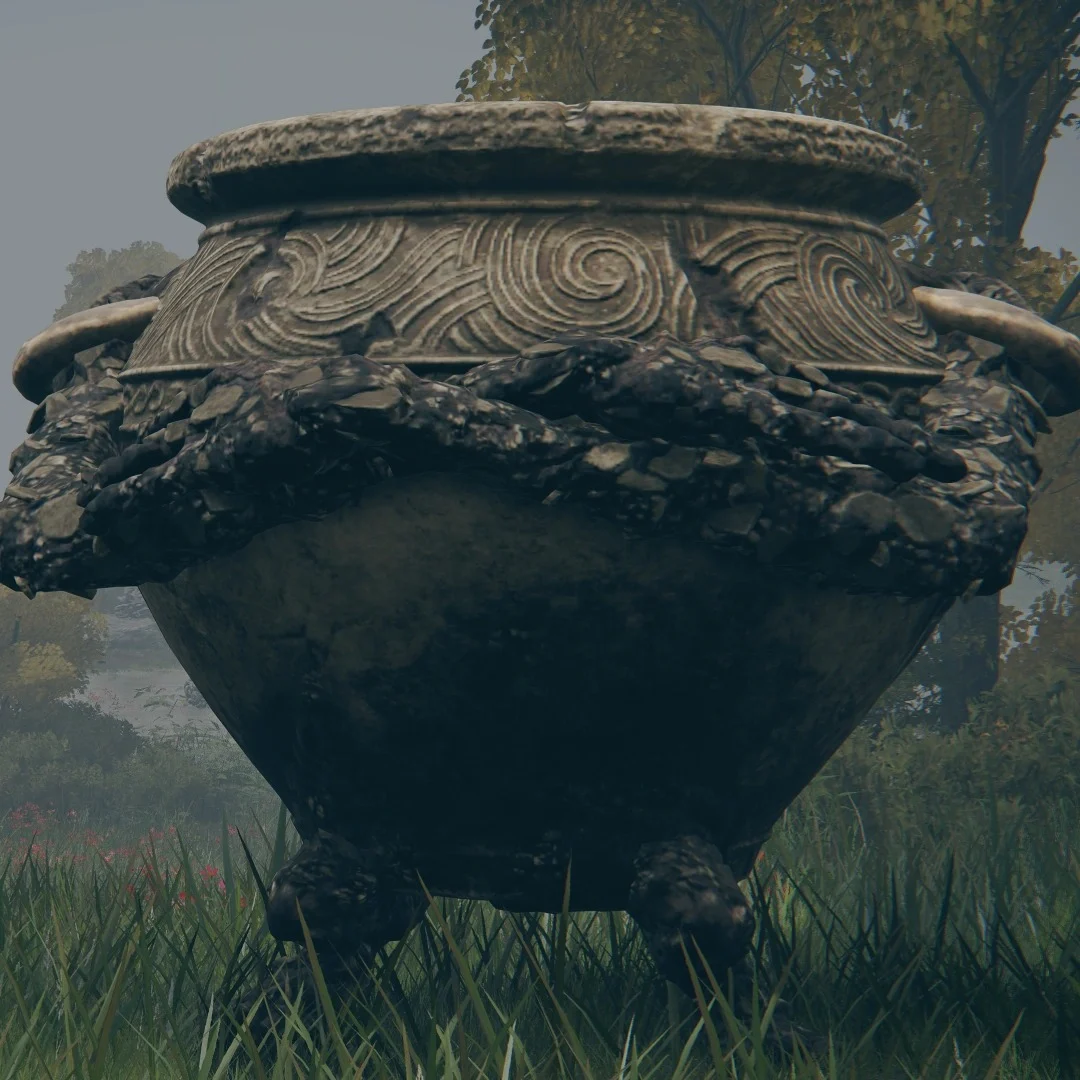 ◈ CHARACTER
Iron Fist Alexander
Warrior Jar · Champion of Jars▾
Iron Fist Alexander
"Well well well? I should have known, you scheming little thief. The gods demand vengeance. Vengeance!"
Warrior Jar, encountered atop the festival
Alexander "Iron Fist" Alexander is a Warrior Jar, a large sentient ceramic pot made to physically contain the remains of defeated warriors and form the ultimate champion from them. His interior literally holds warrior bones. His quest: become powerful enough to deserve the warriors within him. He gets himself stuck in holes repeatedly (Limgrave cave, Liurnia, Mt. Gelmir), requiring the player's help each time to dislodge him with a blunt strike to the rear ("Give me a good whack from behind with something big and beautiful!"). His journey from festival to festival (Radahn Festival at Redmane Castle, Volcano Manor, Crumbling Farum Azula) leads him through escalating challenges. After the Radahn Festival, he absorbed the bodies of warriors fallen on the battlefield: "The corpses found here are of exceptional quality. Nothing less could be expected of warriors who fought in the Shattering, the greatest of all wars!" His final battle at Crumbling Farum Azula is his voluntary "Great Ordeal": he asks the player to fight him to test their fitness to be Elden Lord. Dying: "All vessels are destined to shatter one day. But the great Alexander lived as a warrior to the last! Ha ha ha ha!" Jar-Bairn, the small jar of his home village, will inherit his remains and set off on his own champion's path.
◆ Sources
Dolores the Sleeping Arrow PuppetA jar-hurling specialist who throws all manner of pots and jars. The warrior jar once told the nameless man this: "You are not yet ready to join the warriors inside. No, you must apply yourself! Better yourself, and one day I will return for you." Grace that dwells within the inhabitants of The Lands Between; the lingering residue of gold.
Old Albus (Dialogue)War Counselor Iji (Dialogue) Warrior Jar Shard
Shard of a shattered warrior jar. Boosts the attack power of skills. Scraps of stewed flesh cling to the shard, and tatters of ornaments can be seen mingled within the slime. Relics of ancient royal warriors, perhaps.
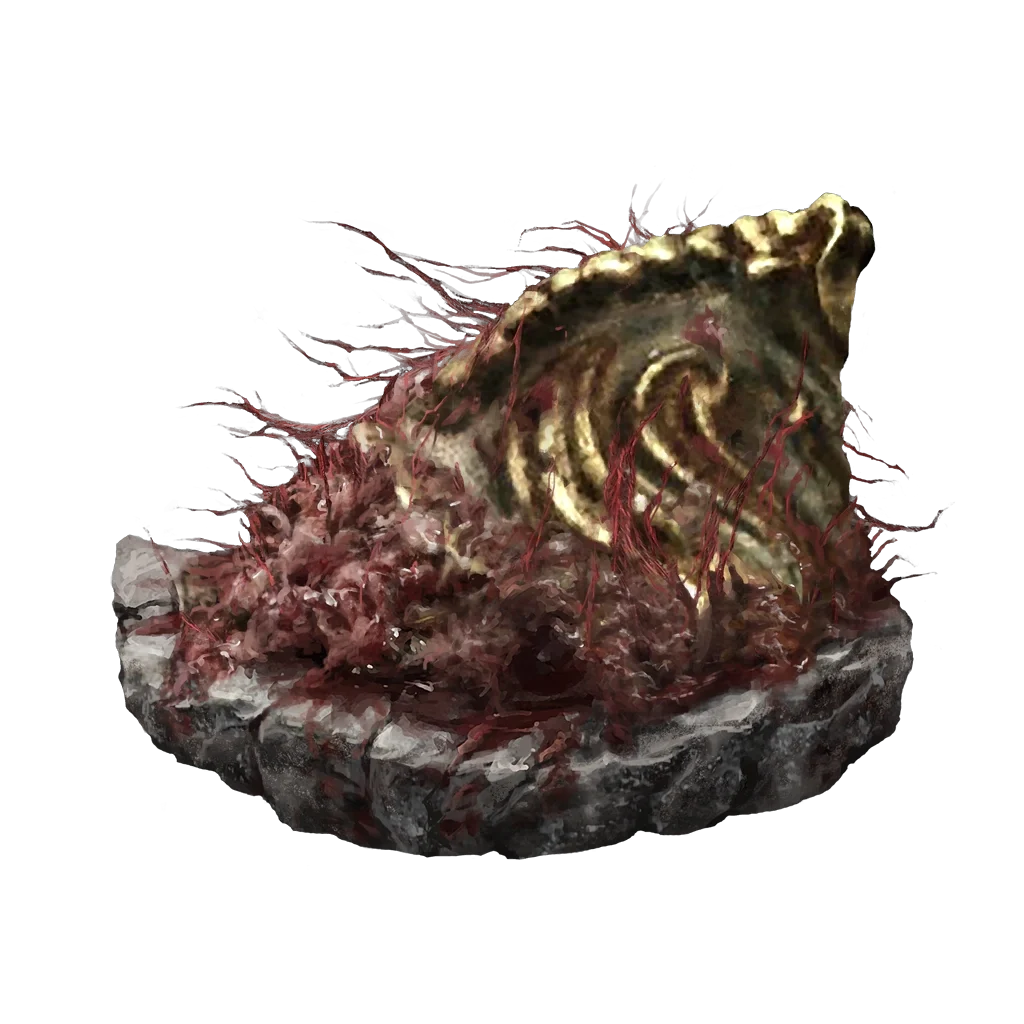 Shard of Alexander
Shard of the late Alexander, a shattered warrior jar. Greatly boosts the attack power of skills. Scraps of stewed flesh cling to the shard, and tatters of ornaments can be seen mingled within the slime. Relics of a red-haired champion, it would seem.
A keepsake of the warrior jar Alexander. Found at the core of the dead flesh that once filled the great jar. The jars contain dregs inherited from those who came before. Thus are warriors passed from jar to jar, carrying dreams of greatness.
 Jar-Bairn
◈ CHARACTERRoderika, Spirit Tuner
Accord of Spirits · Roundtable Hold's Tuner▾
Roderika, Spirit Tuner
"Everyone's... been grafted. Everyone who came with me. They crossed the sea for me. They fought, for me."
Stormhill, the survivor's grief
Roderika is a young noblewoman who came to the Lands Between with a group of warriors, all grafted by Godrick at Stormveil. She survived through cowardice, too terrified to follow her companions to their fate. At Roundtable Hold, she gradually discovers her gift: spirit accord (Spirit Tuning), the rare ability to communicate with the spirits of Ashes and strengthen them. Hewg recognized this talent in her: "Their eyes share the same hue" as a spirit tuner he once knew. He taught her everything he knew. Her arc: shame transformed into purpose, having failed her grafted companions, she seeks to "ease their suffering" by upgrading spirit ashes. In the verses she murmurs as she understands her gift: "I understand now. I can see how and why immortal essence exists as spirit under the Golden Order. I understand their desires, what they are drawn toward." She is one of the few NPCs loyal to the player with no hidden agenda. Her progression: from "chrysalid hopeful who can't even wield a blade" to certified spirit tuner, expressed with genuine joy.
◆ Sources
Shabriri (Dialogue)Sorcerer Thops (Dialogue)I'll gladly take it. I'm...not like Roderika. I don't feel the presence of spirits, let alone see them. Still, this ash..
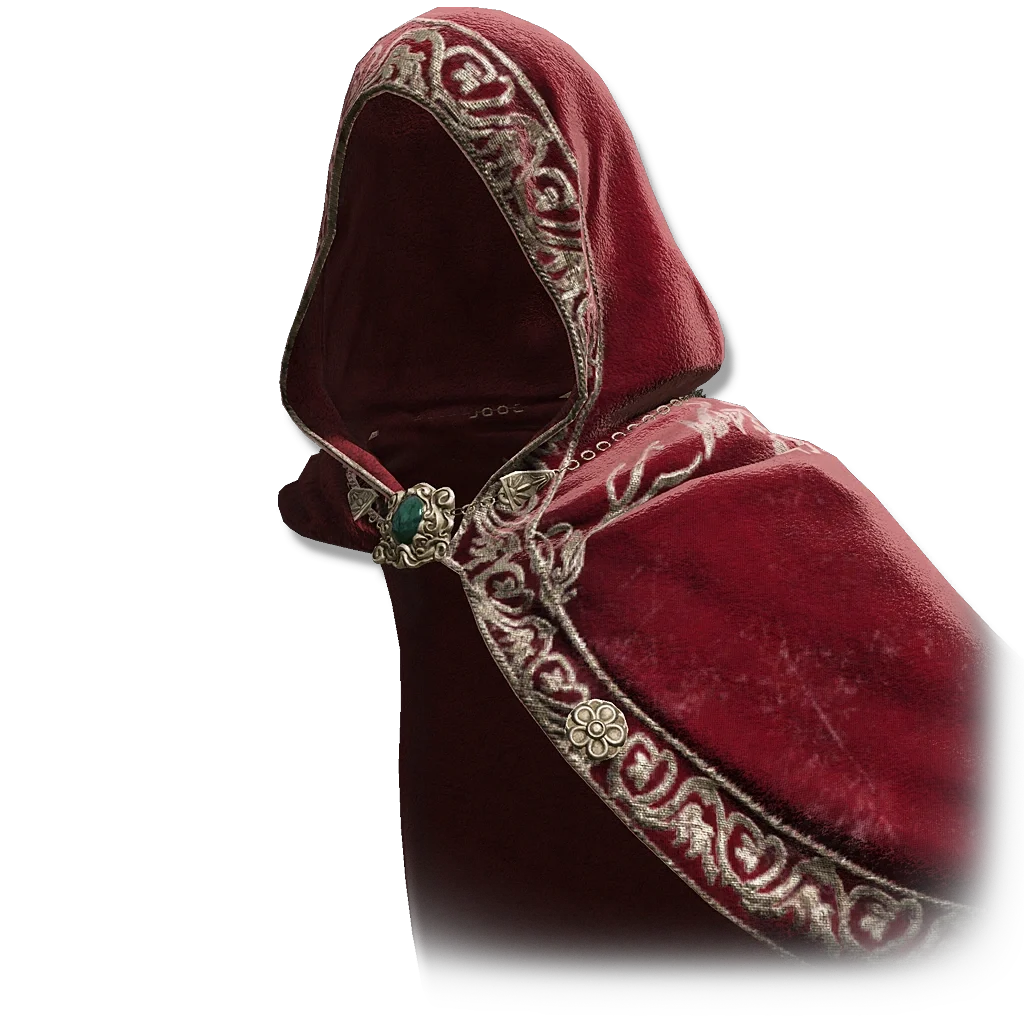 Crimson Hood
In other words, the gift of a cloak made it easier for undesirables to be on their way. Roderika never once saw the guidance of grace.
Roderika, Spirit TunerNepheli Loux, WarriorI'll gladly take it. I'm...not like Roderika. I don't feel the presence of spirits, let alone see them. Still, this ash..
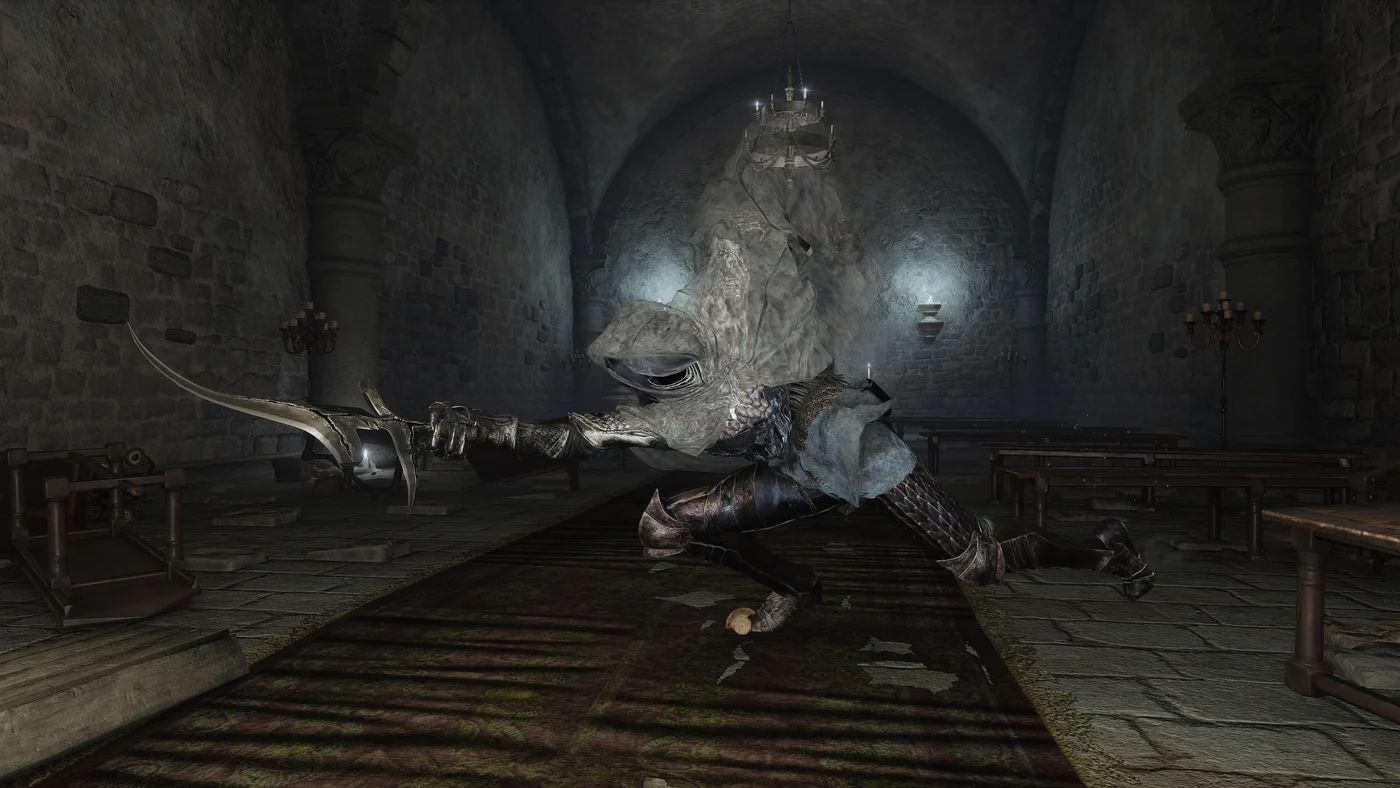 ✦️ GROUP / FACTION
Black Knife Assassins
Eternal Women · Instruments of Ranni's Conspiracy▾
Black Knife Assassins
"The assassins that carried out the deeds of the Night of the Black Knives were all women, and rumored to be Numen, kin of the queen herself. Scale armor forged to make no sound."
From the Black Knife Armor description
The Black Knife Assassins are an order of female warriors, described as "women of Eternal blood, hailing from the Eternal Cities", who carried out the Night of the Black Knives under Ranni's orchestration. Their defining characteristic is their attire: cloaks that deceive the eye and render them near-invisible in darkness, combined with silver plate armor. Their weapons, the Black Knives, were imbued with a stolen fragment of the Rune of Death and can siphon maximum HP from targets, inflicting a lingering death that was unique in the history of the Golden Order. Their origins in the Eternal Cities is significant: these pre-Erdtree civilizations already harbored resentment toward the Golden Order that supplanted them, and their warriors possessed techniques predating golden grace. After the Night of the Black Knives, the order apparently scattered. Individual assassins can be found at several locations including the Altus Plateau (where Rogier found the Black Knifeprint), the Sage's Cave, and the Consecrated Snowfield. Their moveset, acrobatic, dagger-based, with distinctive back-step and lunge patterns, is notably identical to Melina's combat style when she assists as a summon in Morgott's fight, which is one of the key pieces of evidence linking Melina to this order and potentially to the identity of the Gloam-Eyed Queen.
◆ Sources
Shabriri (Dialogue)My dear... Have you ever heard of black knifeprints? Dear Rogier likes to talk of them when abed. And the ancient plot, in which the first of the Demigods was slain. To dear Rogier, and myself, too. In truth I've heard tell from someone else, about the black knifeprints that fascinate dear Rogier so. But It wouldn't be right to give this to him, stuck as he is in the Roundtable Hold. Perhaps you could make use of it? Fia, Deathbed Companion Finally, it is returned to its rightful place.
Dung Eater (Dialogue)The world has grown crooked, and if you intend to put it to rights, You'd better understand what happened to make it this way, mm? This...is a black knifeprint! I can scarcely believe you managed to get your hands on this! You recall our conversation about the Night of the Black Knives, yes?
Black KnifeprintOn the Night of the Black Knives, someone stole a fragment of Death from Maliketh, the Black Blade, and imbued its power into the assassins' daggers. This mark is evidence of the ritual, and hides the truth of the conspiracy.
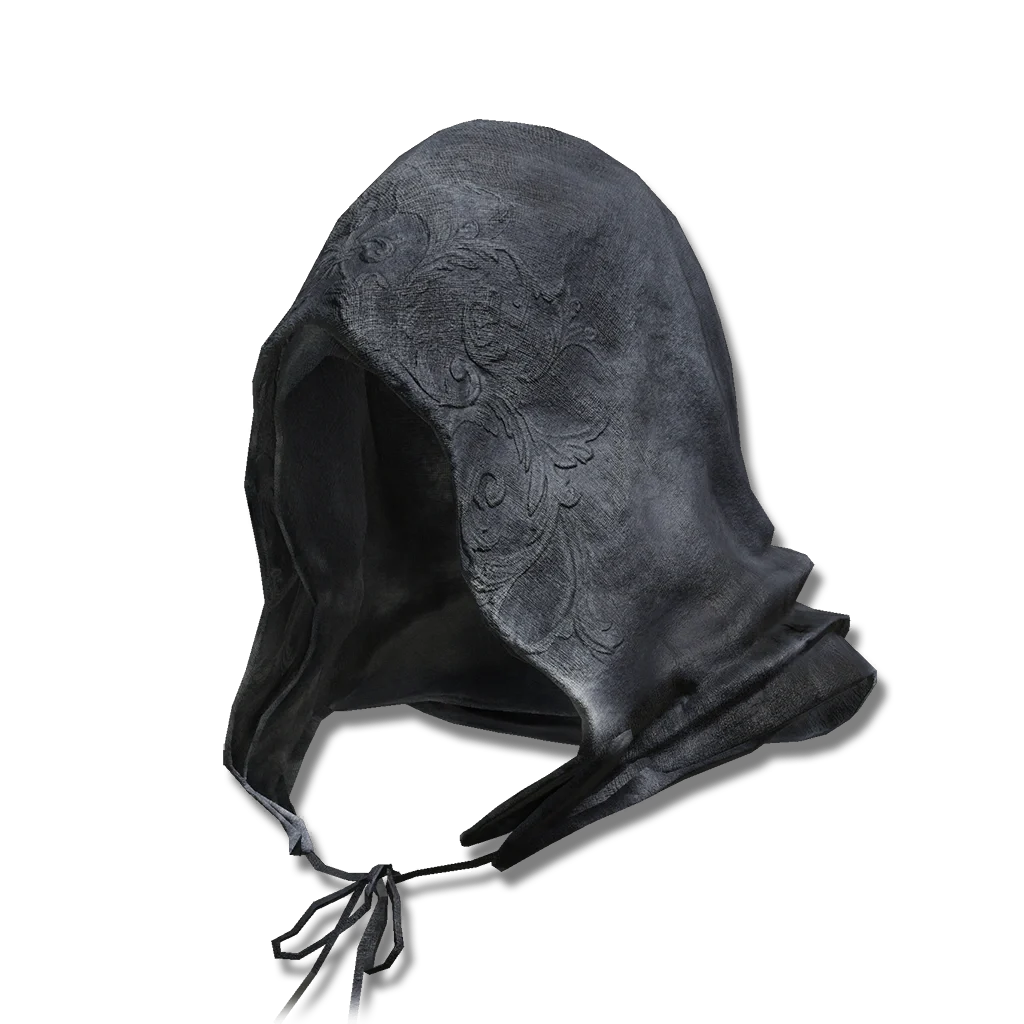 Black Knife Hood
Hood used by the Black Knife Assassins. The assassins that carried out the deeds of the Night of the Black Knives were all women, and rumored to be Numen who had close ties with Marika herself.
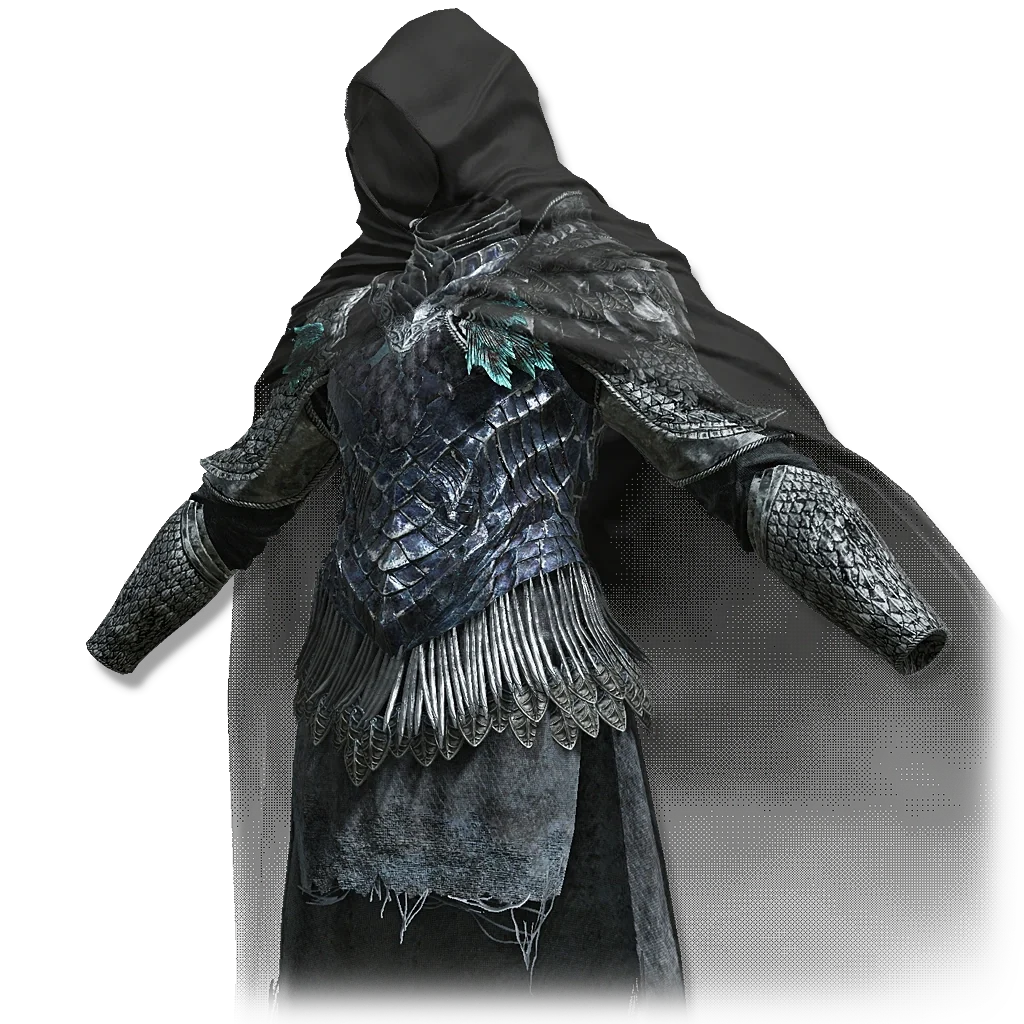 Black Knife Armor
Scale armor used by the Black Knife Assassins, forged to make no sound. Traces of power yet remain in its concealing veil, which muffles the sound of footsteps. The assassins that carried out the deeds of the Night of the Black Knives were all women, and rumored to be Numen who had close ties with Marika herself.
 Black Knife Gauntlets
Gauntlets used by the Black Knife Assassins. Crafted with scale armor that makes no sound. The assassins that carried out the deeds of the Night of the Black Knives were all women, and rumored to be Numen who had close ties with Marika herself.
 Black Knife Greaves
Greaves used by the Black Knife Assassins. Crafted with scale armor that makes no sound. The assassins that carried out the deeds of the Night of the Black Knives were all women, and rumored to be Numen who had close ties with Marika herself.
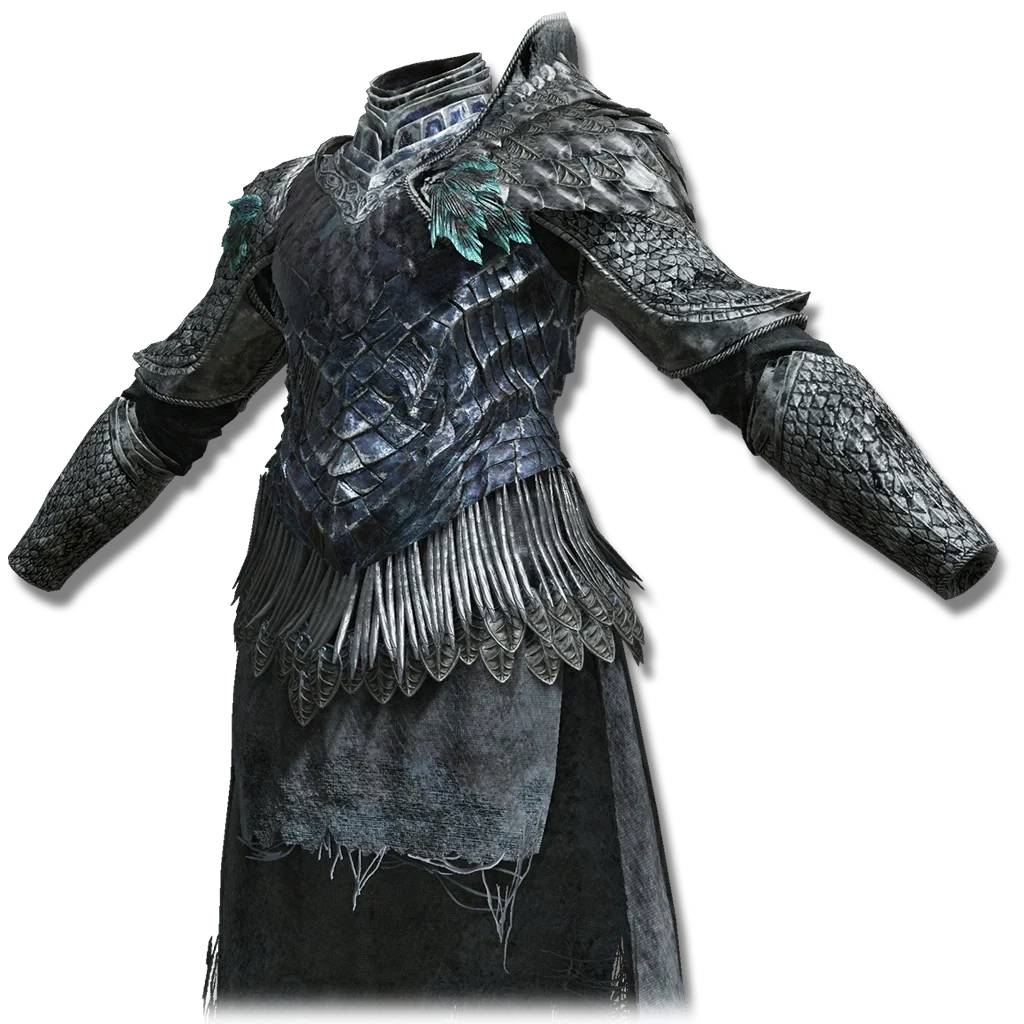 Black Knife Armor (Altered)
Armor used by the Black Knife Assassins. Crafted with scale armor that makes no sound. The assassins that carried out the deeds of the Night of the Black Knives were all women, and rumored to be Numen who had close ties with Marika herself.
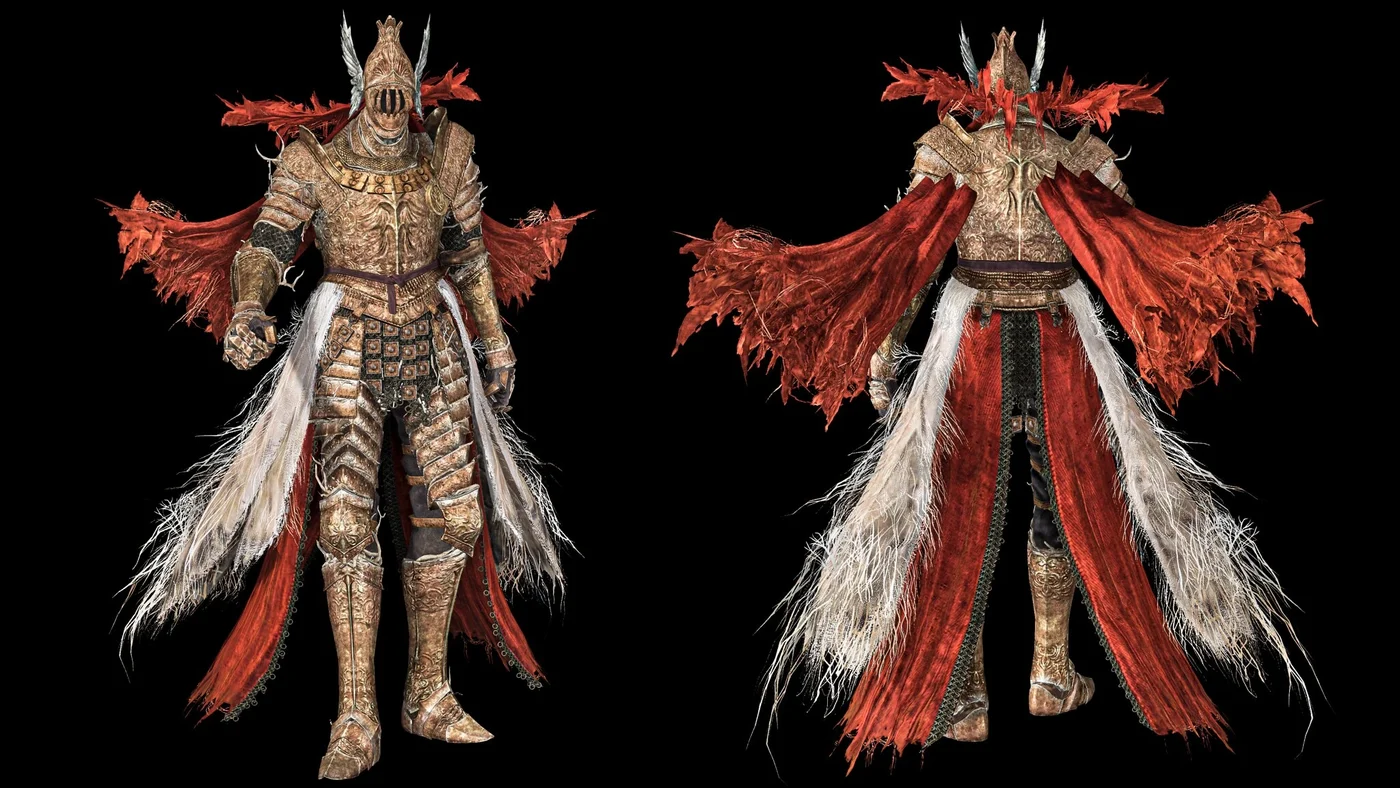 ✦️ GROUP / FACTION
Cleanrot Knights
Malenia's Elite Guard · Bearers of the Golden Scarlet▾
Cleanrot Knights
"Spear of the Cleanrot Knights who fought alongside Malenia, Blade of Miquella. The winged golden blade deals holy damage. The diminutive shield is blessed with an incantation that wards off rot."
From the Cleanrot Spear description
The Cleanrot Knights are the personal guard of Malenia, Blade of Miquella, an elite order of warriors clad in pure gold armor who accompanied her on the Southward March during the Shattering. Their name is paradoxical: they carry the Scarlet Rot as a banner while remaining "clean" of its full corruption, protected by their devotion to Malenia and by the unalloyed nature of their faith. Their armor (Cleanrot Helm, Cleanrot Armor, Cleanrot Gauntlets, Cleanrot Greaves) is described as plate of gold worn by Malenia's warrior maidens, forged to honor the goddess they served. They fought through Caelid alongside Malenia and witnessed the Scarlet Aeonia explosion. After Malenia fell into her long sleep, the Cleanrot Knights remained as guardians of the Haligtree and Elphael, defending the approaches to their sleeping goddess. Two weapon types were standard issue: the Cleanrot Spear (ranged thrust combat, honoring precision) and the Halo Scythe (sweeping attacks, carrying golden rot magic). Their sickle techniques channel Malenia's power. Despite their prolonged exposure to the Scarlet Rot environment of Caelid and later Elphael, many retained their martial discipline and humanity, a testament to the strength of their devotion.
◆ Sources
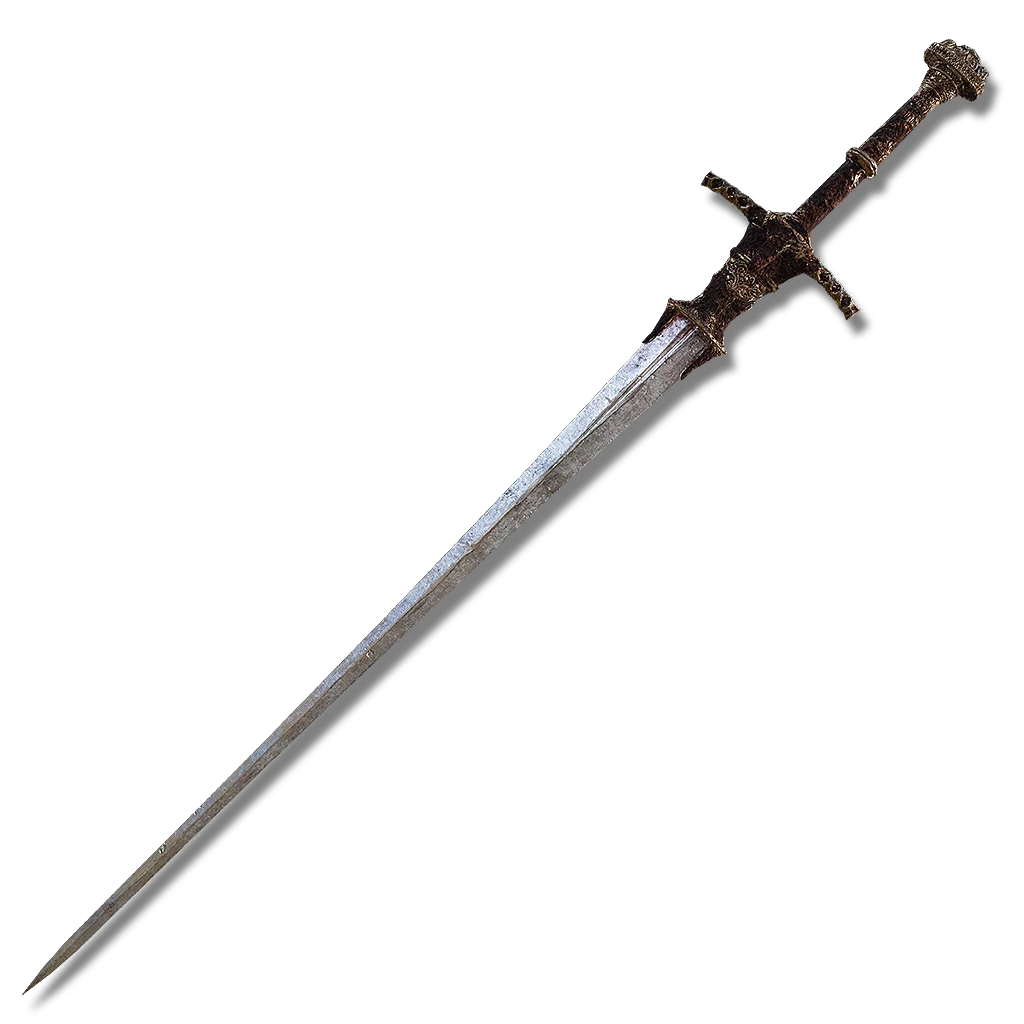 Cleanrot Knight's Sword
Piercing sword of the Cleanrot Knights who fought alongside Malenia, Blade of Miquella. Mainly used as a backup weapon, in combination with a long-handled armament.
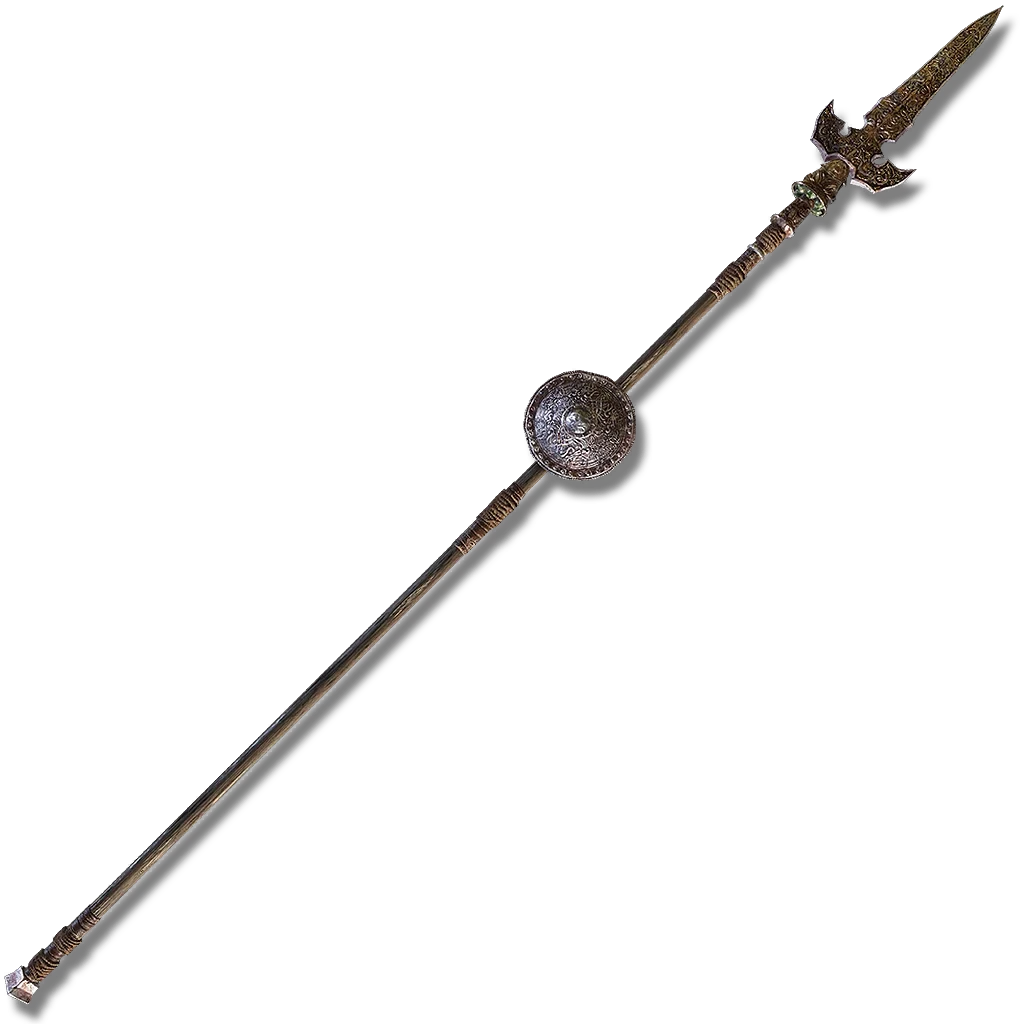 Cleanrot Spear
Spear of the Cleanrot Knights who fought alongside Malenia, Blade of Miquella. The winged golden blade deals holy damage. The diminutive shield is blessed with an incantation that wards off rot.
Spear used by knights in service of Malenia, the twin sister who possessed the Rune of Decay. With its sharp tip, the weapon specializes in running opponents through.
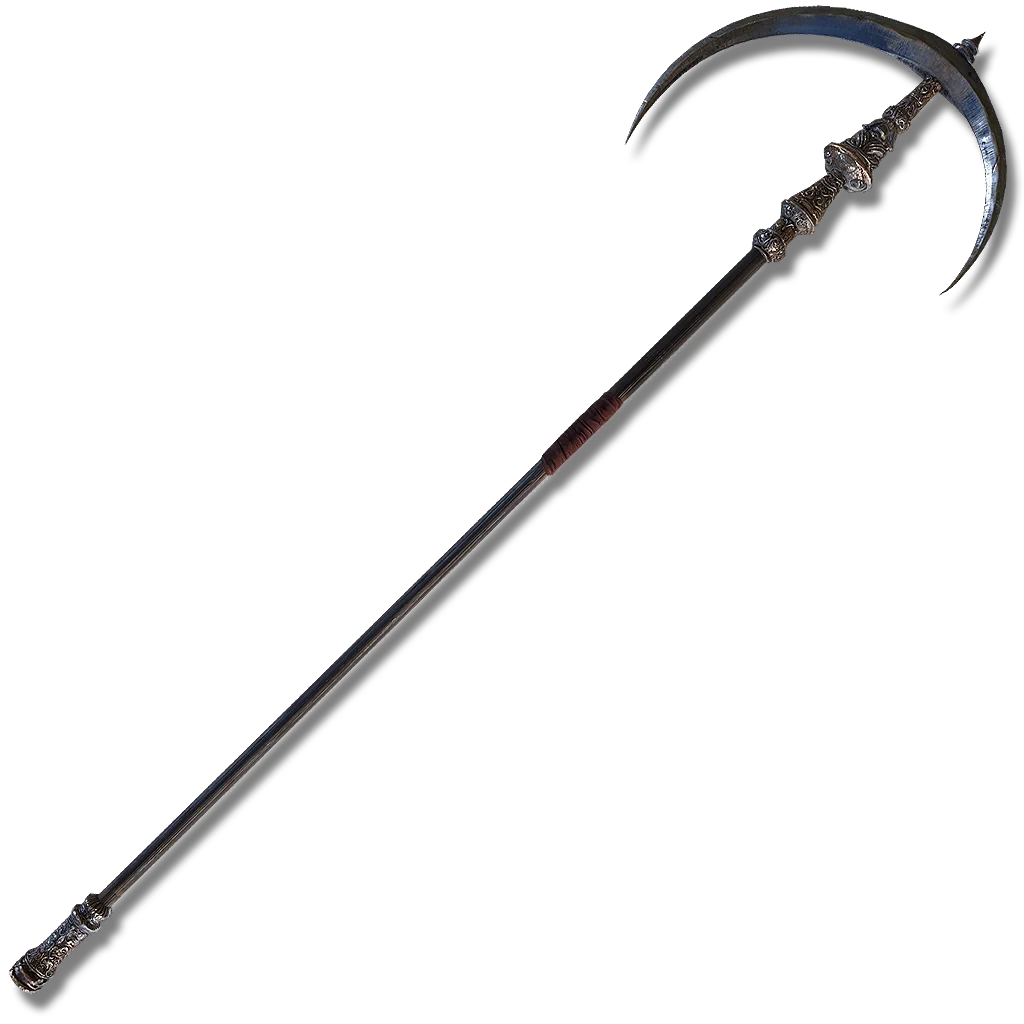 Halo Scythe
War scythe of the Cleanrot Knights who fought alongside Malenia, Blade of Miquella. This was the weapon of commanders in Malenia's army, and the half-halo blade deals holy damage.
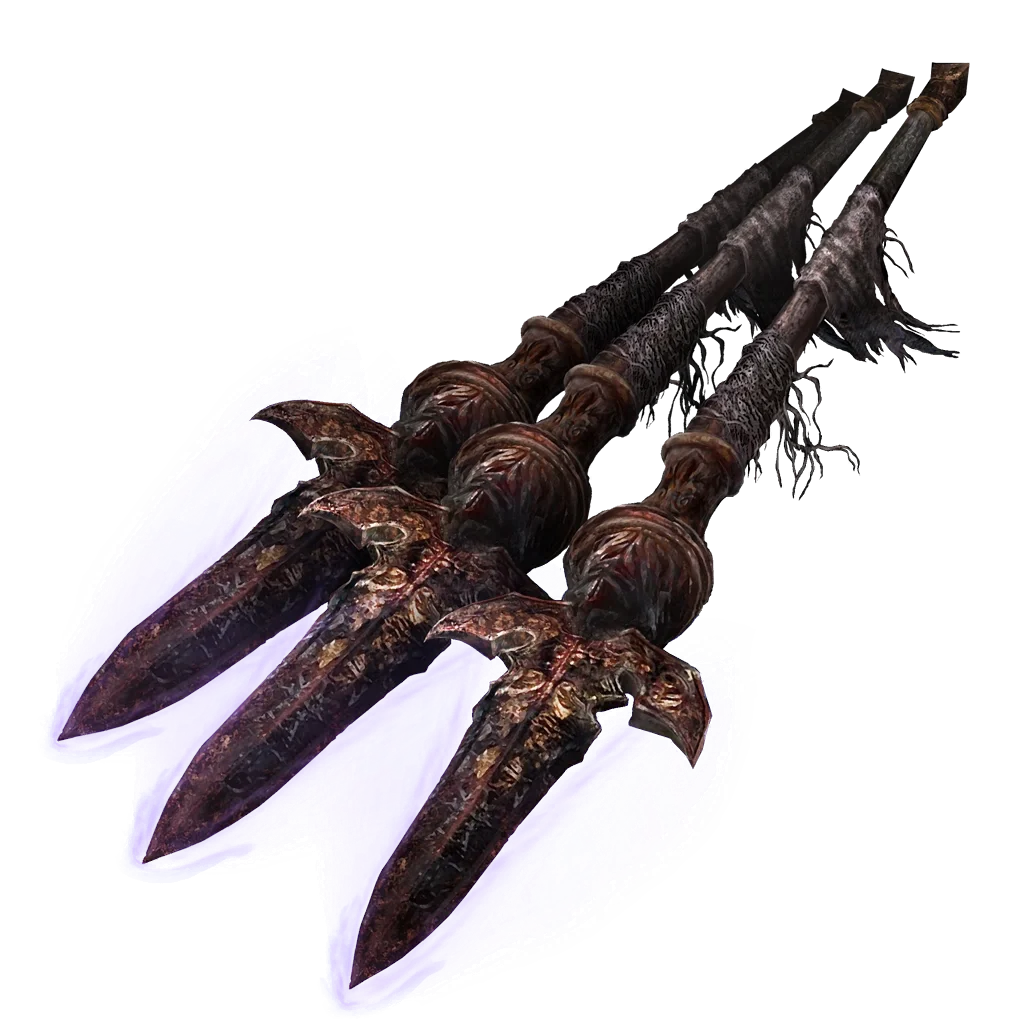 Radahn's Spear
Greatarrows used by General Radahn during the festival of combat. These are in fact the many spears with which he was stabbed by the Cleanrot Knights. Imbued with Radahn's gravitational power.
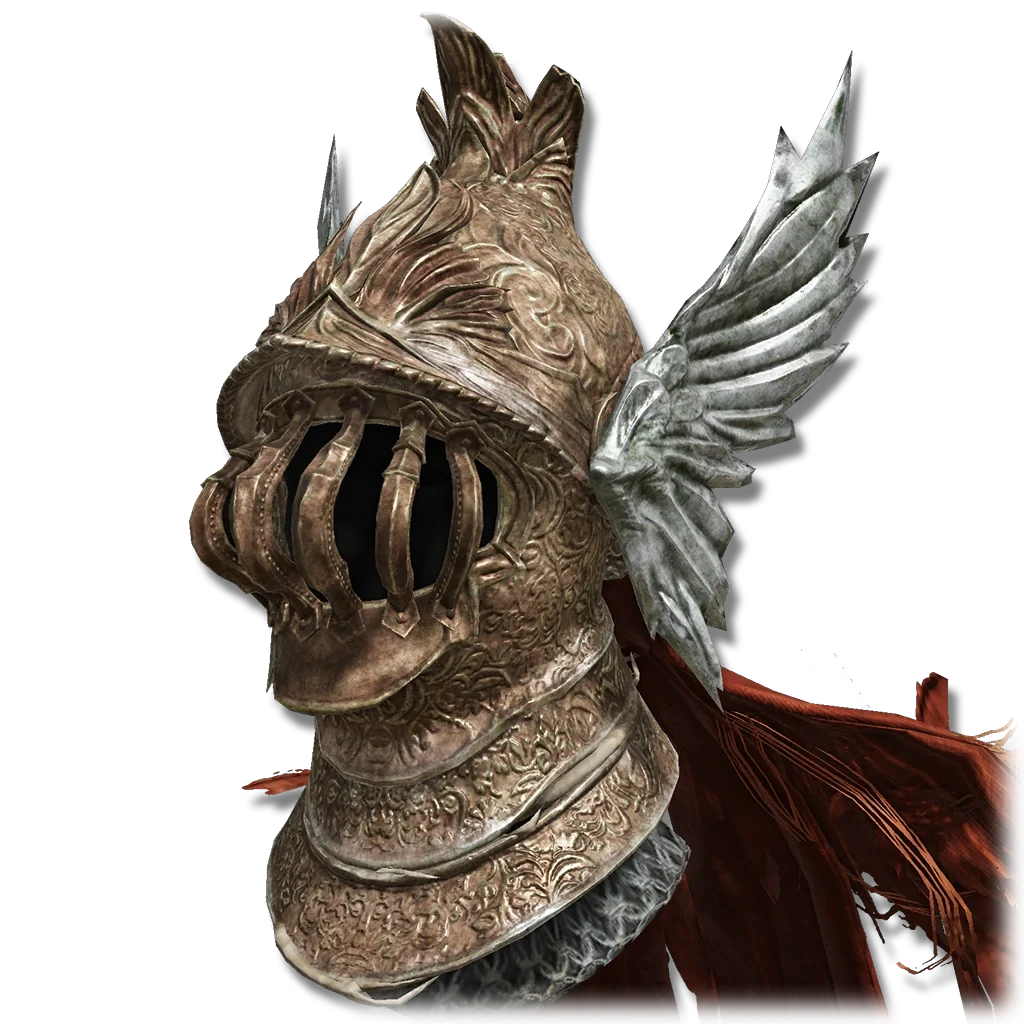 Cleanrot Helm
Winged helm of the Cleanrot Knights, celebrated for their undefeated campaign in the Shattering. The Cleanrot Knights vowed to fight alongside Malenia, despite the inevitable, if gradual, putrefaction of their flesh. Their acceptance of their fate made these battles the fiercest of all.
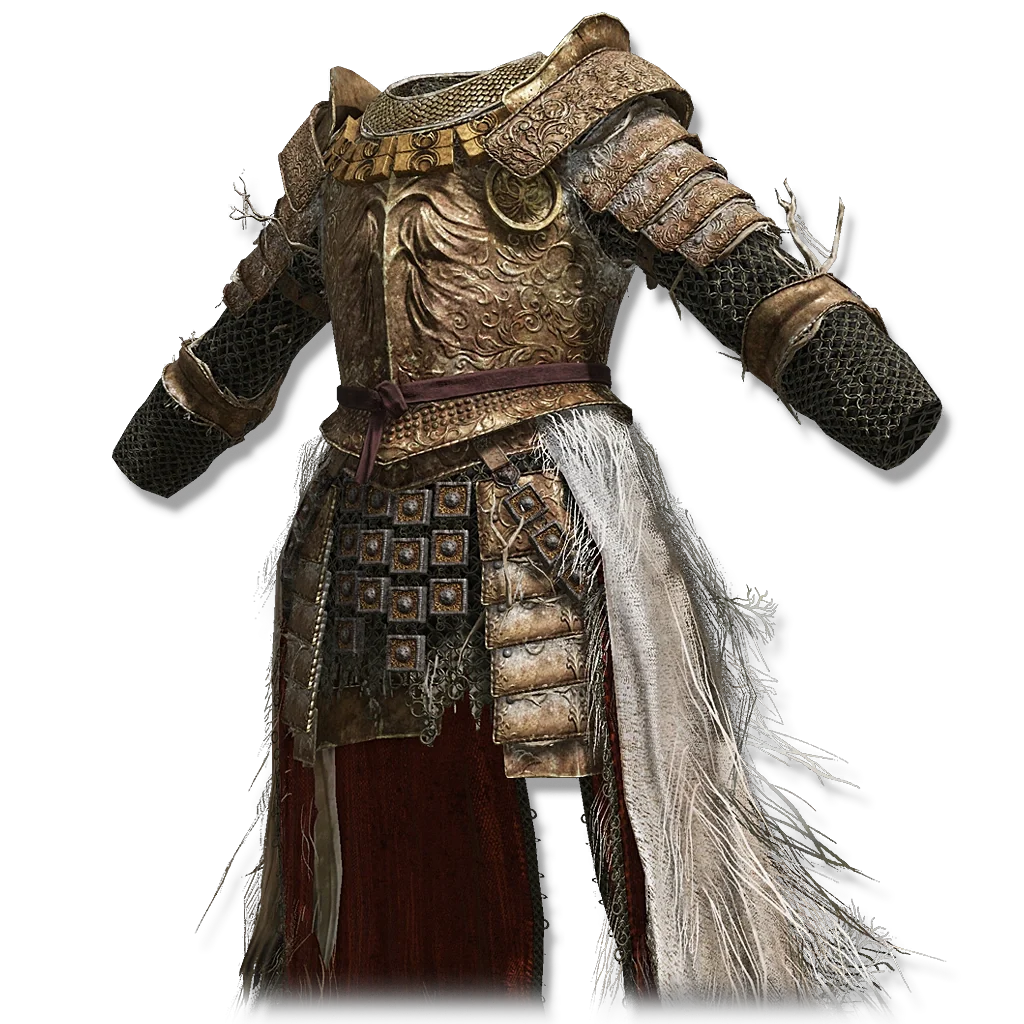 Cleanrot Armor
Armor of the Cleanrot Knights, celebrated for their undefeated campaign in the Shattering. The Cleanrot Knights vowed to fight alongside Malenia, despite the inevitable, if gradual, putrefaction of their flesh. Their acceptance of their fate made these battles the fiercest of all.
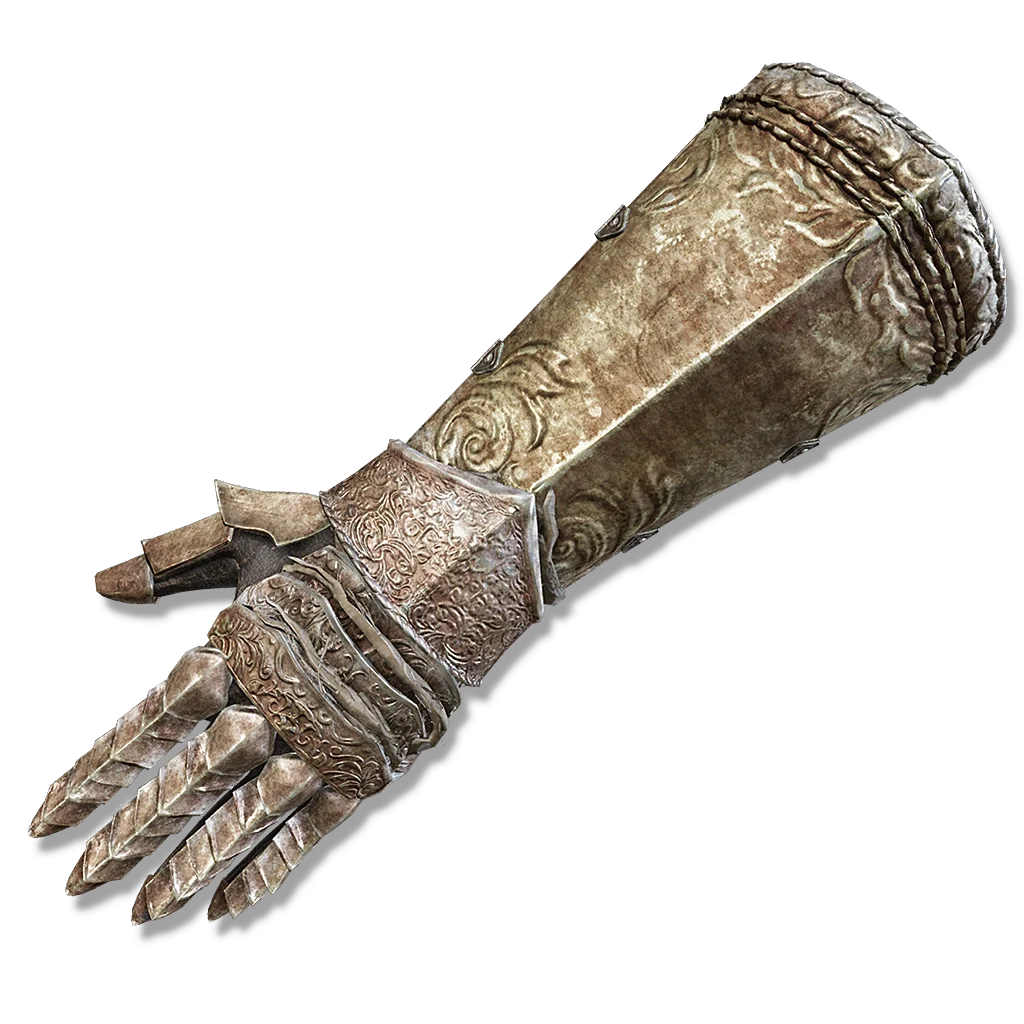 Cleanrot Gauntlets
Gauntlets of the Cleanrot Knights, celebrated for their undefeated campaign in the Shattering. The Cleanrot Knights vowed to fight alongside Malenia, despite the inevitable, if gradual, putrefaction of their flesh. Their acceptance of their fate made these battles the fiercest of all.
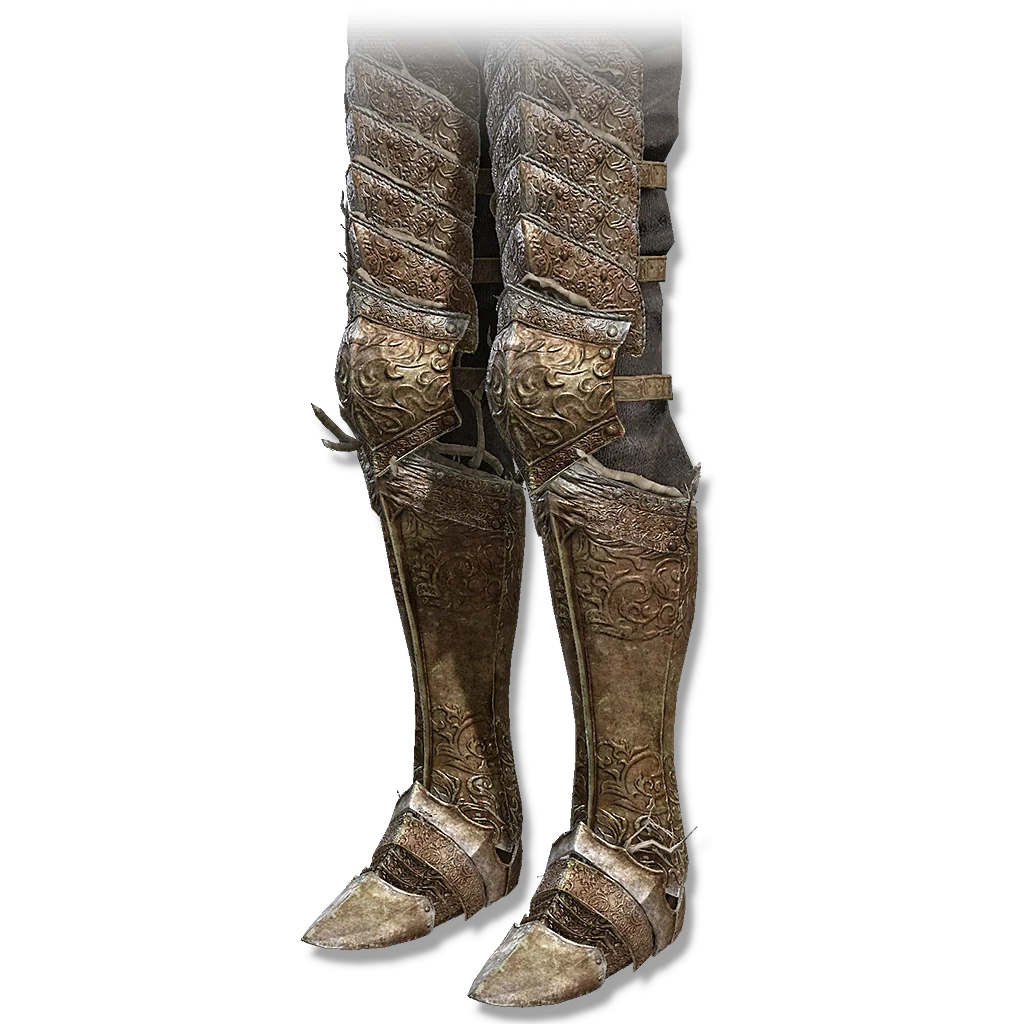 Cleanrot Greaves
Greaves of the Cleanrot Knights, celebrated for their undefeated campaign in the Shattering. The Cleanrot Knights vowed to fight alongside Malenia, despite the inevitable, if gradual, putrefaction of their flesh. Their acceptance of their fate made these battles the fiercest of all.
 Cleanrot Knight Finlay
Legendary ashen remains. Use to summon the spirit of the Cleanrot Knight Finlay. Finlay was one of the few survivors of the Battle of Aeonia, who in an unimaginable act of heroism carried the slumbering demigod Malenia all the way back to the Haligtree. She managed the feat alone, fending off all manner of foes along the way.
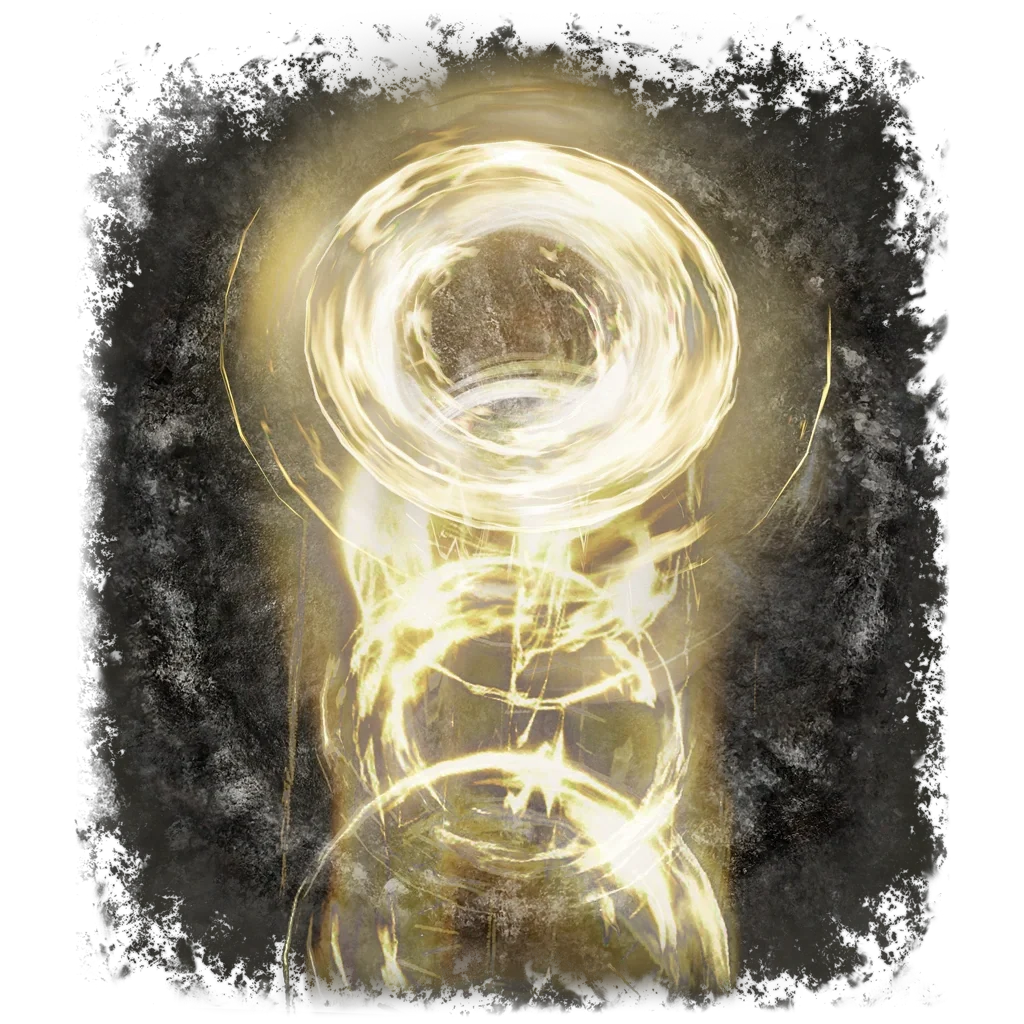 Sacred Ring of Light
Skill: Sacred Ring of Light Skill used by the commanders of the Cleanrot Knights. Gather a sacred ring of light in the armament, then fire it forwards. Can be fired in rapid succession.
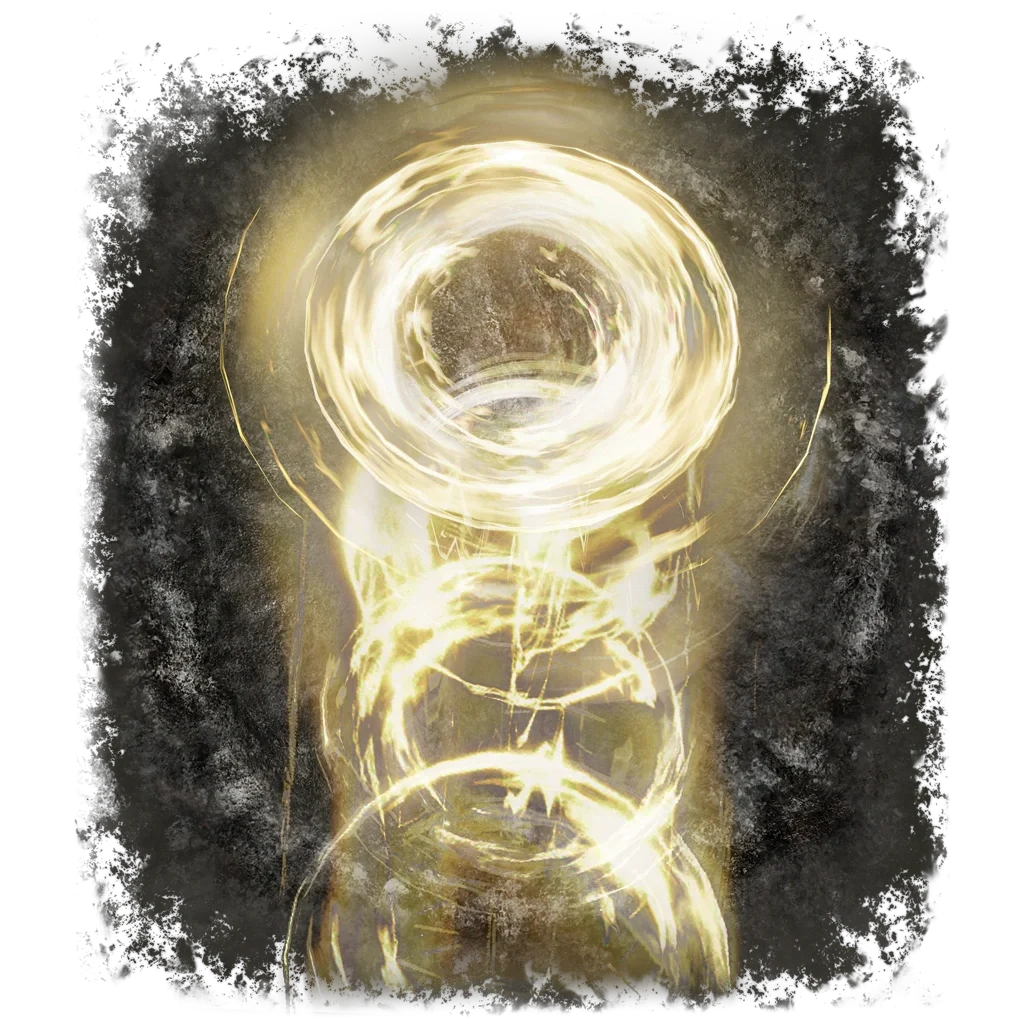 Ash of War: Sacred Ring of Light
This Ash of War grants an armament the Sacred affinity and the following skill: "Sacred Ring of Light: Skill used by the commanders of the Cleanrot Knights. Gather a sacred ring of light in the armament, then fire it forwards. Can be fired in rapid succession." Usable on polearms (great spears excepted).
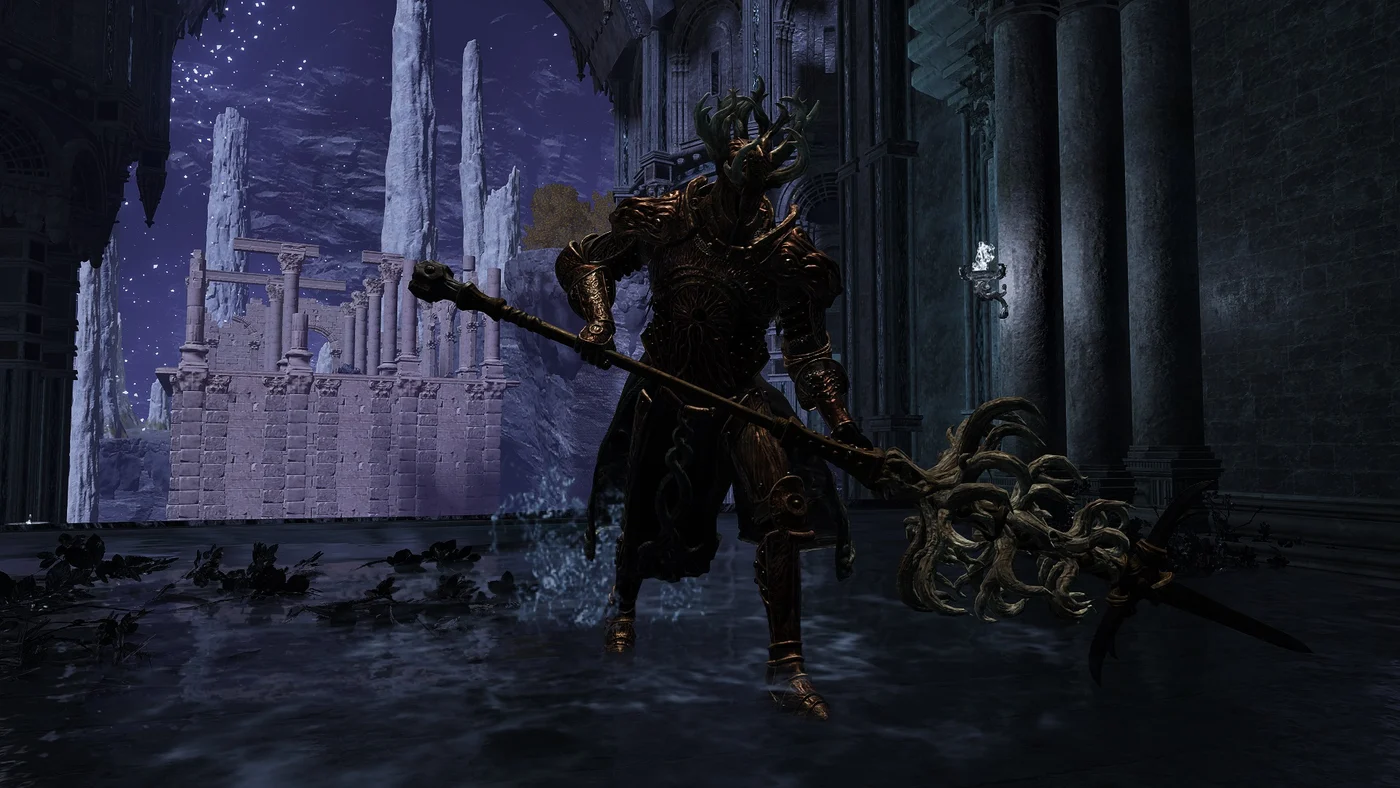 ✦️ GROUP / FACTION
Crucible Knights
Eldest Knights · Guardians of the Primordial Golden Order▾
Crucible Knights
"Armor of the Crucible Knights who served Godfrey, the first Elden Lord. Holds the power of the crucible of life, the primordial form of the Erdtree."
From the Crucible Axe Armor description
The Crucible Knights are described as the eldest of the knights of the Erdtree, warriors who predate the current Golden Order and embody the crucible state of life, when all living beings were intertwined. Their armor (Crucible Axe Helm, Crucible Tree Helm, Crucible Armor set) is said to be from "the earliest days of the Erdtree" and depicts aspects of the crucible: branching growths, scales, and primordial organic forms. Unlike modern Golden Order knights who are defined by grace and hierarchy, Crucible Knights represent a more ancient and messy understanding of life, one where the distinctions between creatures had not yet fully formed. Their weapons are the Ordovis's Greatsword and Siluria's Tree, and their special incantations (Aspects of the Crucible: Tail, Horns, Breath) literally grow crucible appendages, draconic tails, horns, fire-breathing, during combat, manifesting the primordial fusion of forms. They are found guarding sacred sites throughout the Lands Between: the Stormveil throne room, the Auriza Hero's Grave, the Ordina Liturgical Town. Gatekeeper Gostoc mentions that "them crucible knights ain't like the rest", implying even among Godrick's garrison they were recognized as a different, older order.
◆ Sources
Gatekeeper Gostoc (Dialogue)Crucible Axe HelmHelm of the Crucible Knights who served Godfrey, the first Elden Lord. The axe ornamentation is the knight Ordovis's mark, displayed also by his men. Holds the power of the crucible of life, the primordial form of the Erdtree. Strengthens Aspects of the Crucible incantations.
Crucible Axe ArmorArmor of the Crucible Knights who served Godfrey, the first Elden Lord. Worn by the knight Ordovis and his men. Holds the power of the crucible of life, the primordial form of the Erdtree. Strengthens Aspects of the Crucible incantations.
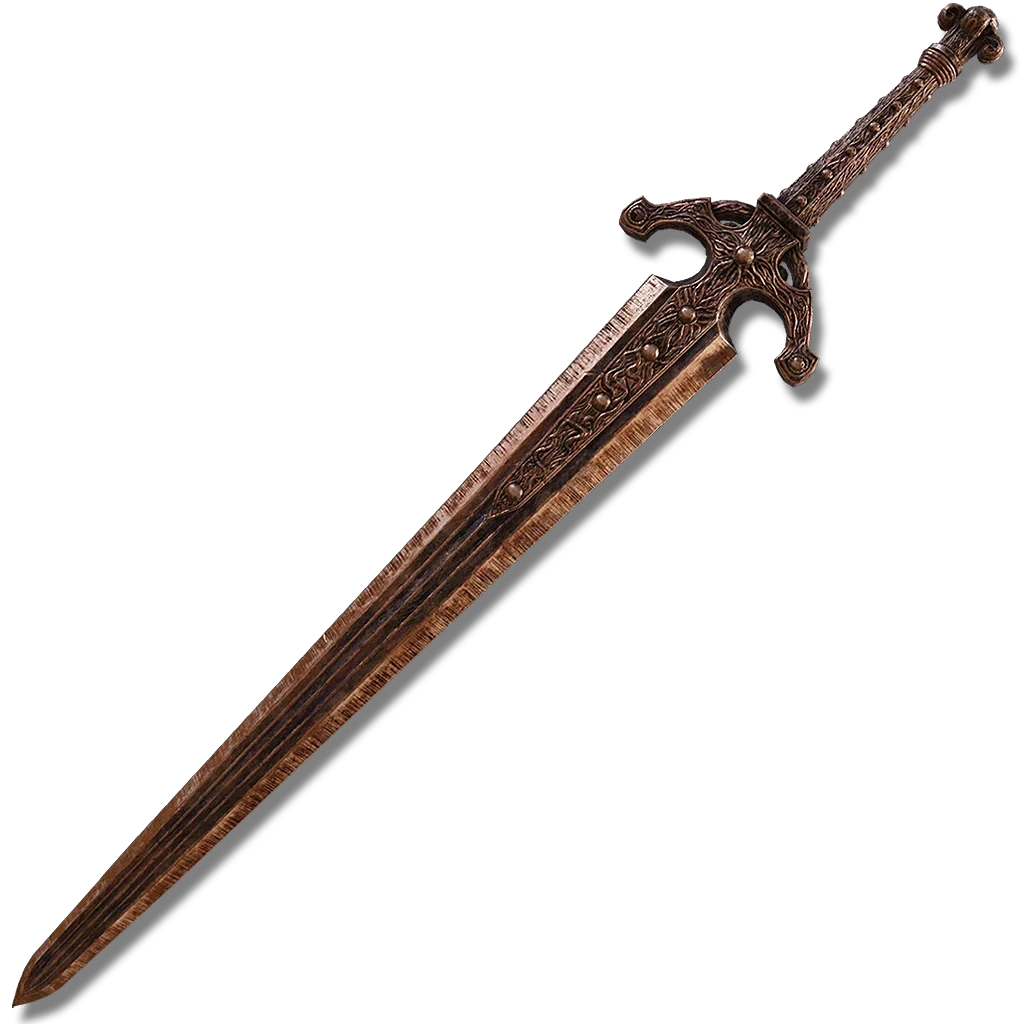 Ordovis's Greatsword
Greatsword of Ordovis, one of the two honored as foremost among the Crucible Knights. This sword is imbued with an ancient holy essence. Its red tint exemplifies the nature of primordial gold, said to be close in nature to life itself.
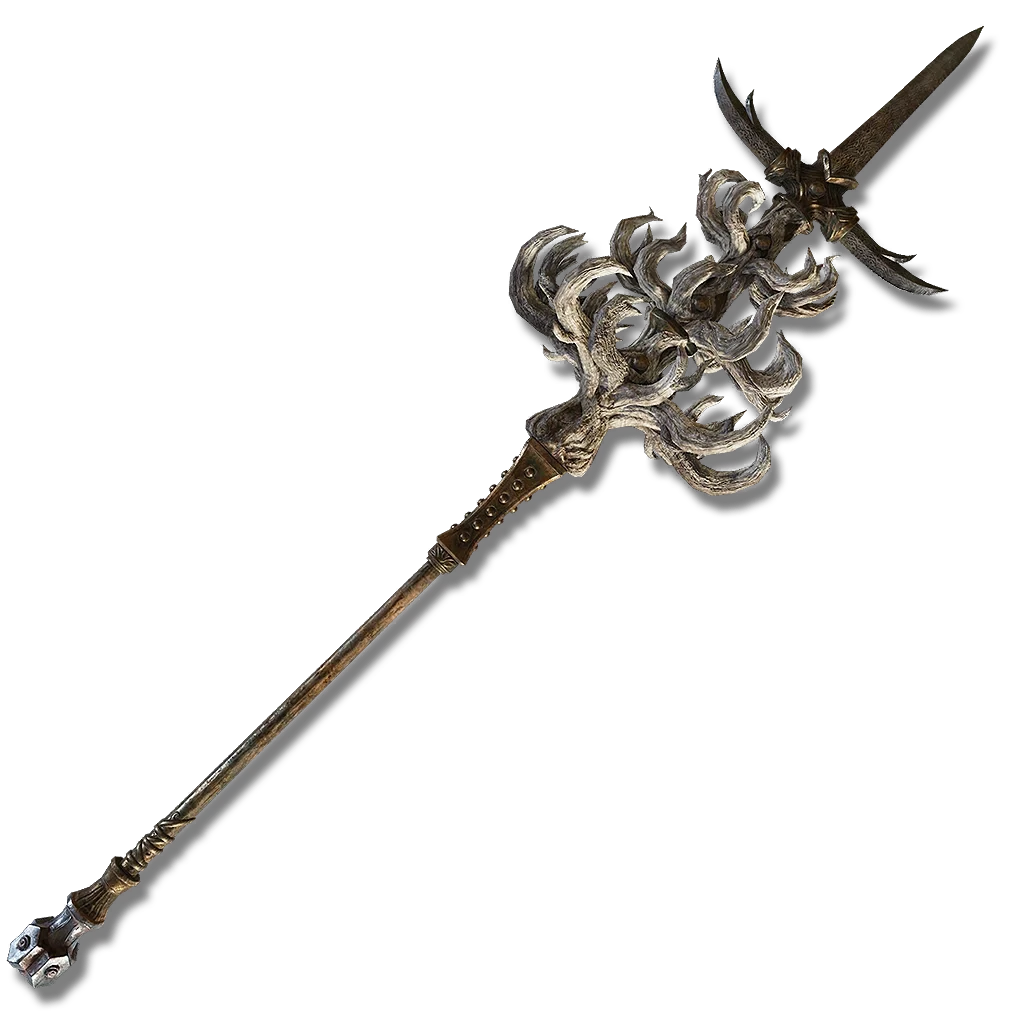 Siluria's Tree
Siluria's Tree, weapon of one of the two honored as foremost among the Crucible Knights. The primordial form of the Erdtree is close in nature to life itself, and this spear, modeled on its crucible, is imbued with ancient holy essence.
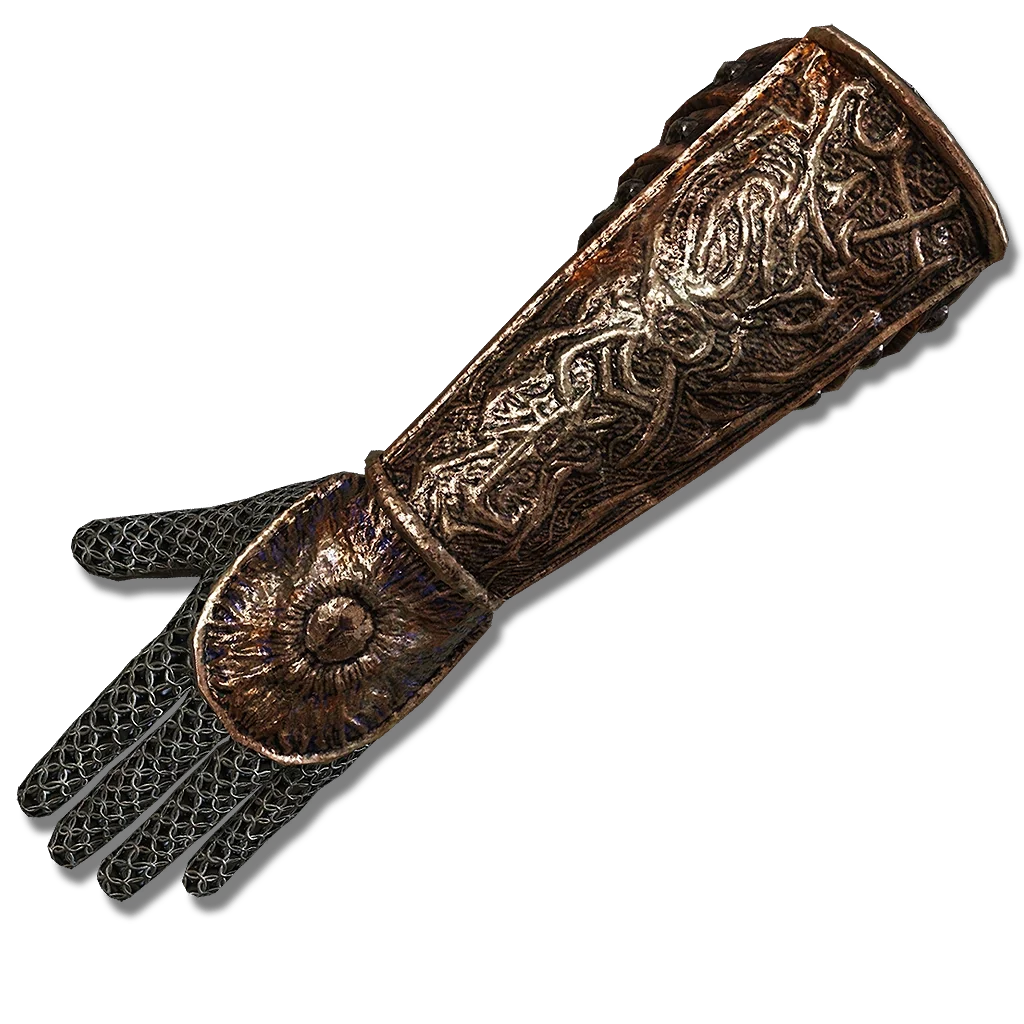 Crucible Gauntlets
Gauntlets of the Crucible Knights who served Godfrey, the first Elden Lord. Hold the power of the crucible of life, the primordial form of the Erdtree. Strengthen Aspects of the Crucible incantations. In time, the strength shown by these knights, and even their appearance, was seen as chaotic and deserving of scorn.
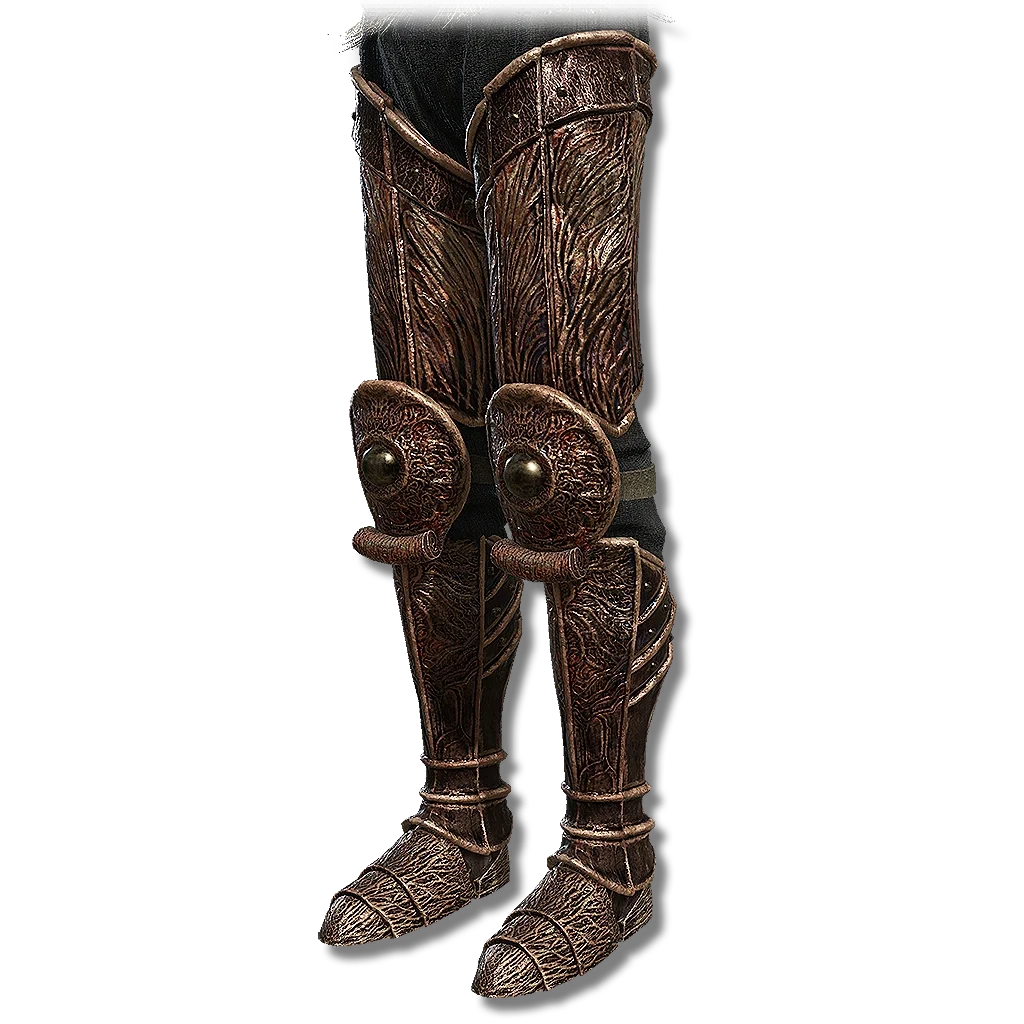 Crucible Greaves
Greaves of the Crucible Knights who served Godfrey, the first Elden Lord. Hold the power of the crucible of life, the primordial form of the Erdtree. Strengthen Aspects of the Crucible incantations. In time, the strength shown by these knights, and even their appearance, was seen as chaotic and deserving of scorn.
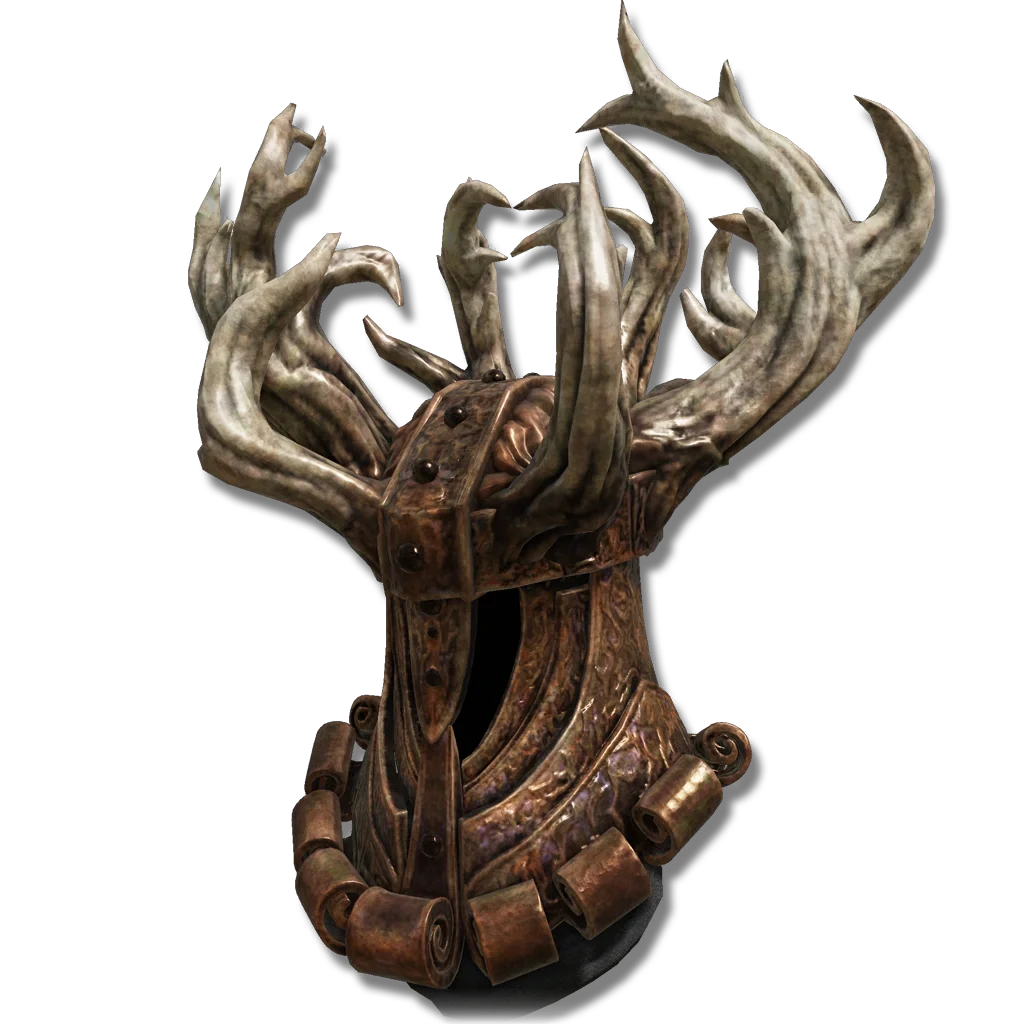 Crucible Tree Helm
Helm of the Crucible Knights who served Godfrey, the first Elden Lord. The great tree ornamentation is the knight Siluria's mark, displayed also by her men. Holds the power of the crucible of life, the primordial form of the Erdtree. Strengthens Aspects of the Crucible incantations.
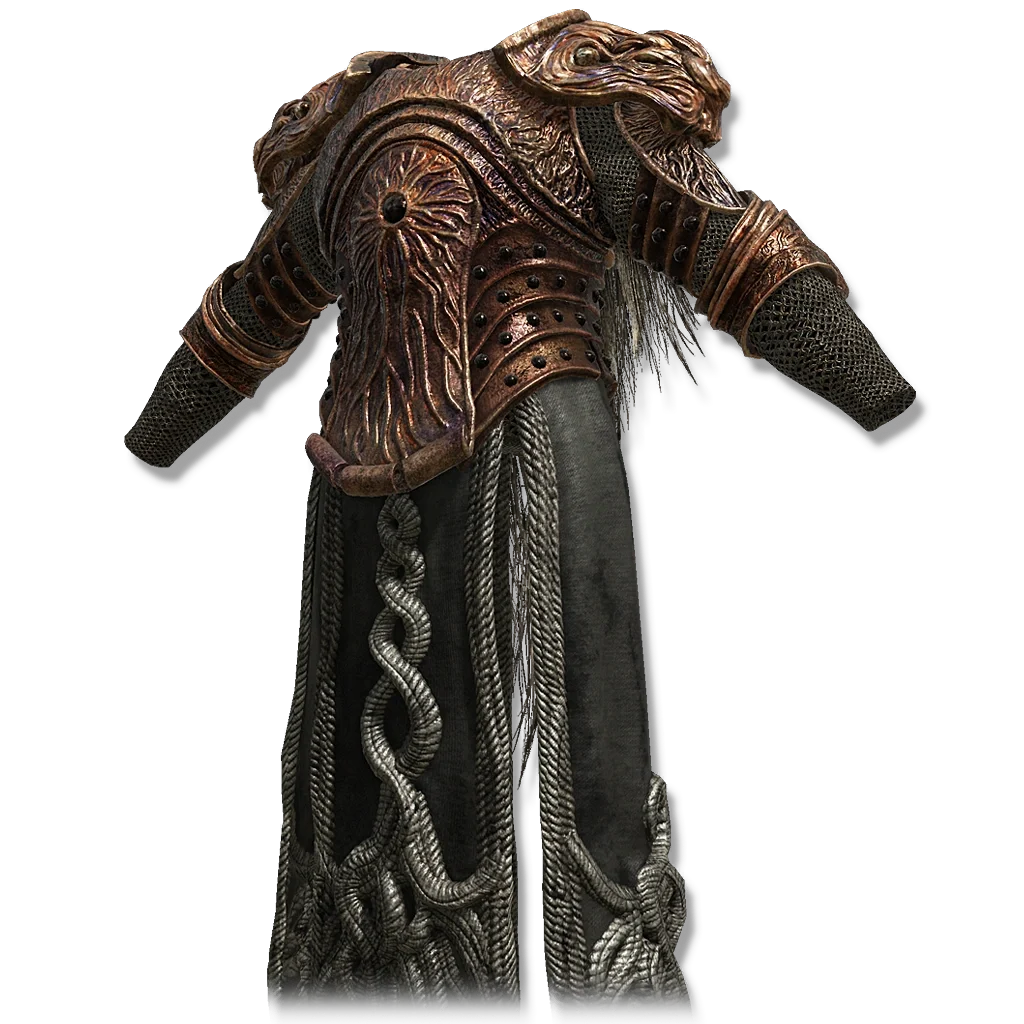 Crucible Tree Armor
Armor of the Crucible Knights who served Godfrey, the first Elden Lord. Worn by the knight Siluria and her men. Holds the power of the crucible of life, the primordial form of the Erdtree. Strengthens Aspects of the Crucible incantations.
 Aspects of the Crucible: Tail
One of the ancient Erdtree incantations. Creates a supple tail that sweeps through foes before the caster. Charging enhances potency. This is a manifestation of the Erdtree's primal vital energies—an aspect of the primordial crucible, where all life was once blended together.
 Aspects of the Crucible: Horns
One of the ancient Erdtree incantations. Creates a mighty horn on the caster's shoulder to gore foes from a low stance. Charging allows the caster to barrel into foes before delivering the final attack. This is a manifestation of the Erdtree's primal vital energies—an aspect of the primordial crucible, where all life was once blended together.
 Aspects of the Crucible: Breath
One of the ancient Erdtree incantations. Creates a throat pouch on the caster's neck, allowing them to spew fiery breath while walking. Charging increases duration of the breath. This is a manifestation of the Erdtree's primal vital energies—an aspect of the primordial crucible, where all life was once blended together.
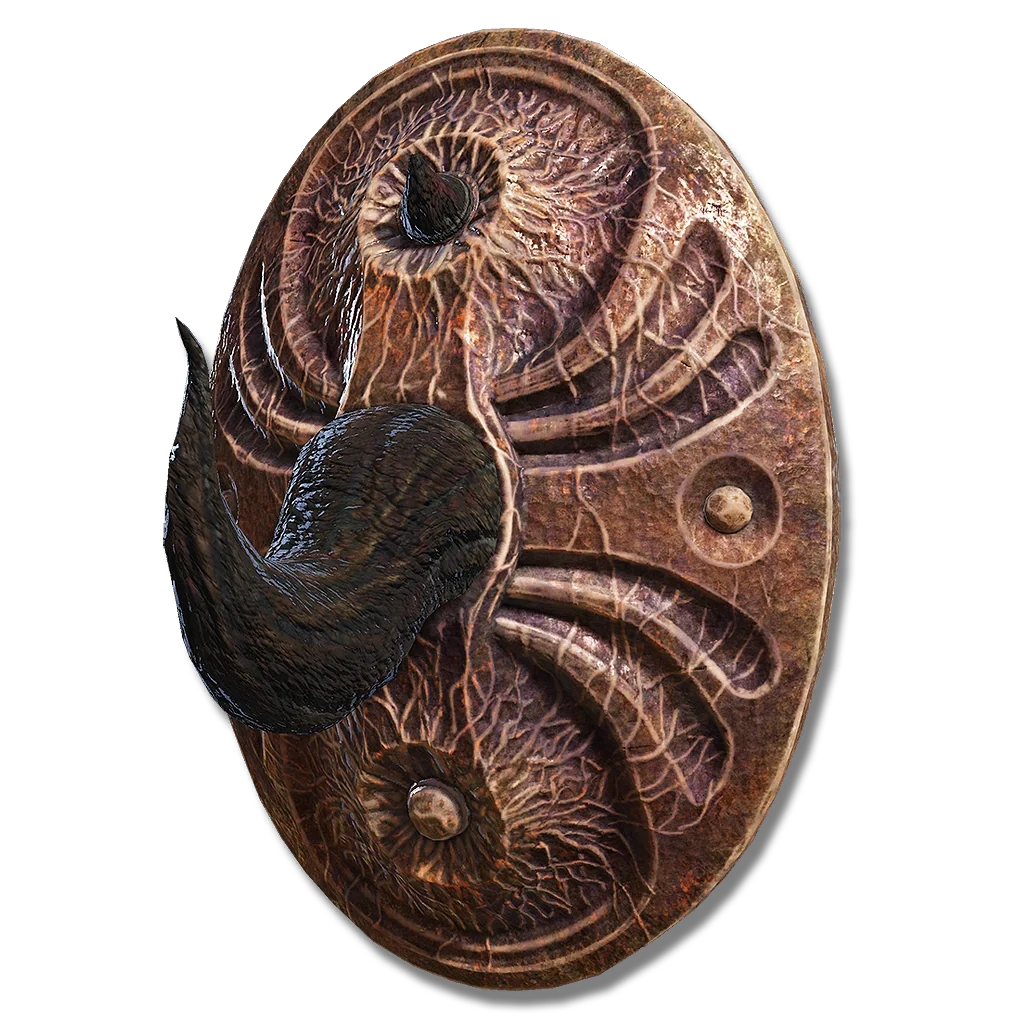 Crucible Hornshield
Greatshield of red-tinged gold carried by Crucible Knights. Features a great horn. An ancient holiness dwells within. The crucible horn skewers foes when performing shield bashes.
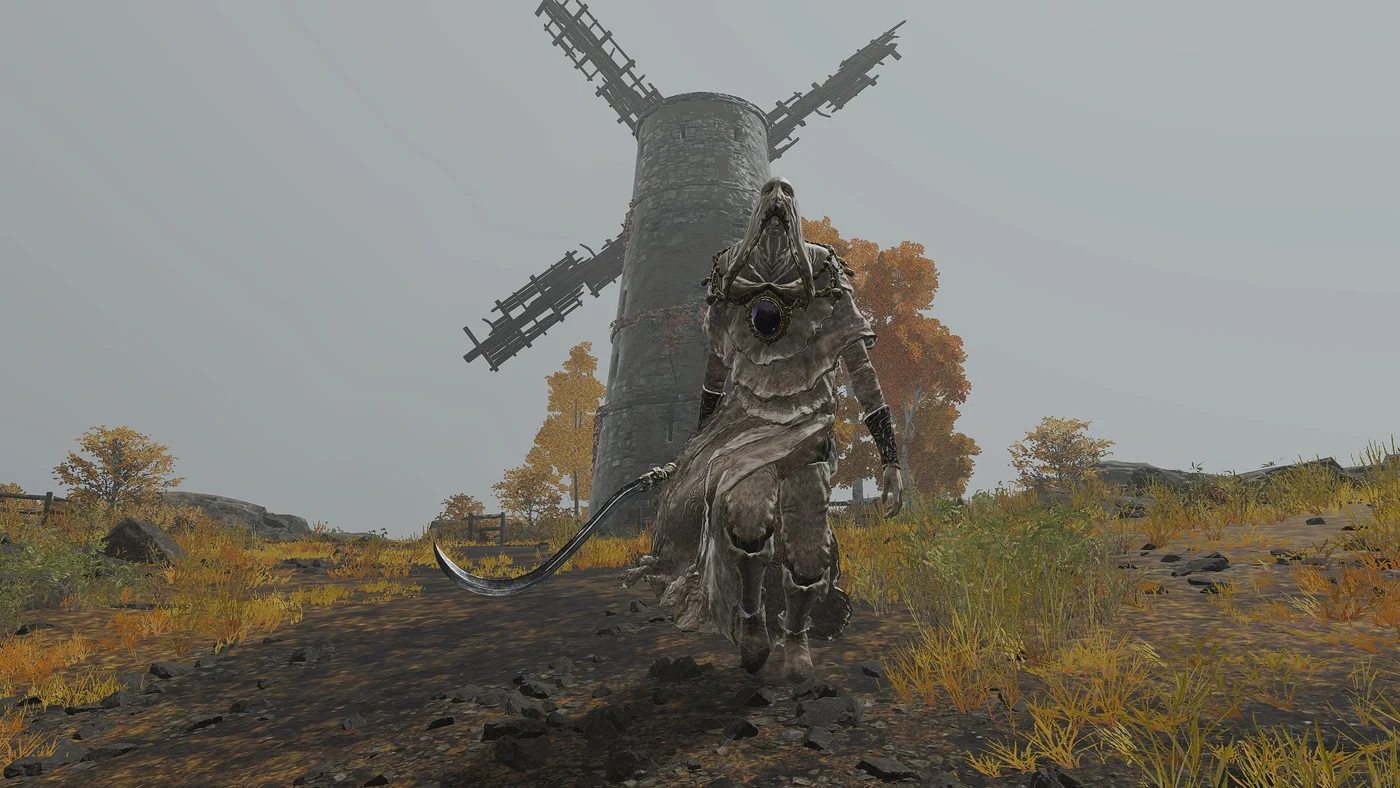 ✦️ GROUP / FACTION
Godskin Apostles & Nobles
Wielders of the Black Flame · Enemies of the Gods▾
Godskin Apostles & Nobles
"The apostles, once said to serve Destined Death, are wielders of the god-slaying black flame. But after their defeat by Maliketh, the Black Blade, the source of their flame was sealed away forever."
From the Godskin Apostle Bracelets description
The Godskin Apostles and Nobles are two ranks of an ancient order that once hunted gods using the Black Flame, Destined Death itself, channeled through their needles and daggers. The Godskin Prayerbook, found in Stormveil Castle, reveals that "in the age before the Erdtree, the Godskin Apostles slew the gods to strip them of their grace", establishing their existence predates the current Golden Order. The Black Flame they wield is derived from the Rune of Death (Destined Death), which explains why it continues burning after impact: it inflicts a form of true, irreversible death even on beings of grace. Apostles (taller, with flowing black robes and a dancer-like moveset incorporating their distinctive Godslayer Greatsword) are the higher rank. Nobles (rounder, rotund, with daggers) are the infantry. Both share the ability to call down black fireballs and to expand their bodies in unnatural ways. In the current era, they serve Rykard at the Volcano Manor and appear in the Farum Azula and the Divine Tower of East Altus area, though their original masters and the full history of their order remain obscure. Their needle weapons (Celebrant's Skull, Godskin Stitcher) suggest a ritualistic aspect to their god-killing practice.
◆ Sources
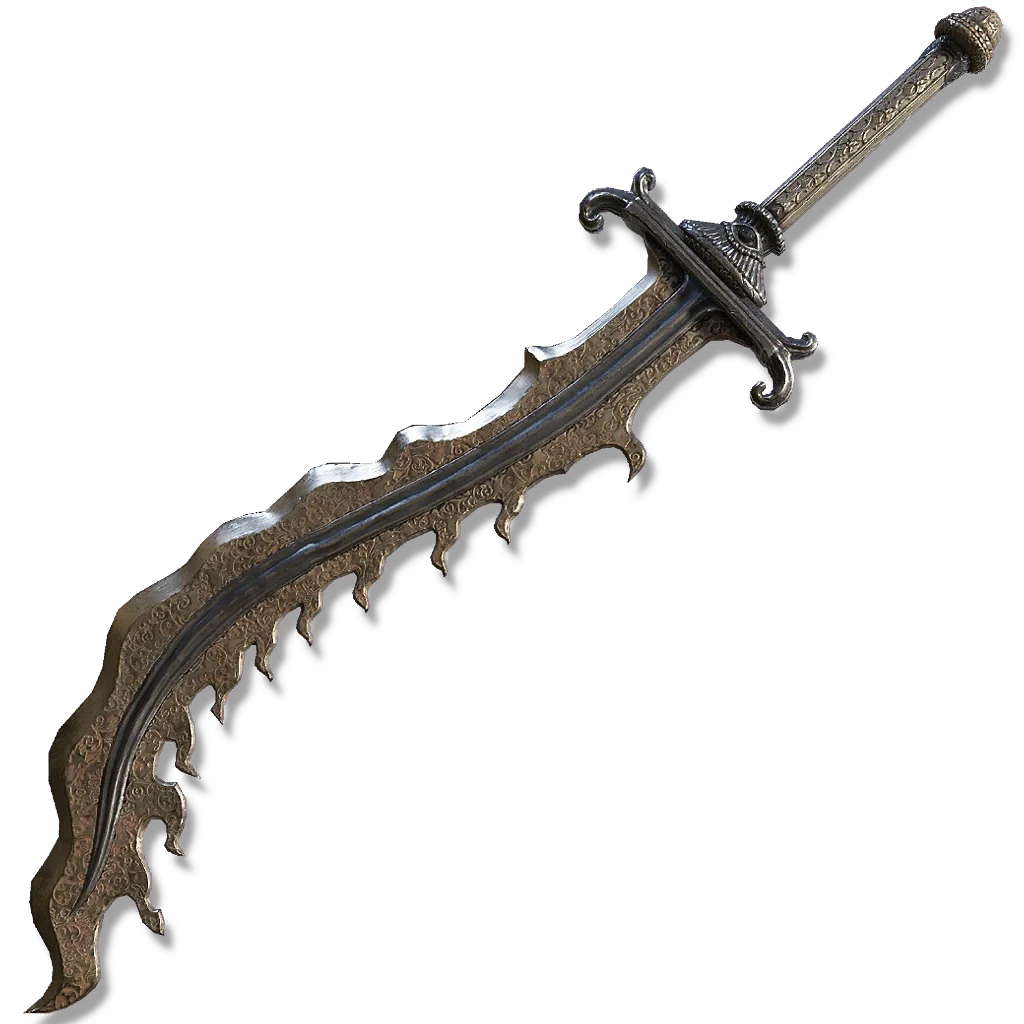 Black Flame Blade
A black flame incantation of the Godskin Apostles. Engulfs armament held in the right hand with black flame. This incantation can be cast without delay after performing another action.
 Godskin Prayerbook
Prayerbook bound in supple skin. Incantations of the god-slaying black flame are written within. Can be given to a learned cleric to gain access to the following incantations: - Black Flame - Black Flame Blade
Godskin Apostle HoodHood made by sewing together patches of smooth skin. Worn by the Godskin Apostles. The apostles, once said to serve Destined Death, are wielders of the god-slaying black flame. But after their defeat by Maliketh, the Black Blade, the source of their power was sealed away.
Godskin Apostle RobeRobe made by sewing together patches of smooth skin. Worn by the Godskin Apostles. The apostles, once said to serve Destined Death, are wielders of the god-slaying black flame. But after their defeat by Maliketh, the Black Blade, the source of their power was sealed away.
Godskin Apostle BraceletsBlack bracelets of the Godskin Apostles. The apostles, once said to serve Destined Death, are wielders of the god-slaying black flame. But after their defeat by Maliketh, the Black Blade, the source of their power was sealed away.
Godskin Apostle TrousersTrousers made by sewing together patches of smooth skin. Worn by the Godskin Apostles. The apostles, once said to serve Destined Death, are wielders of the god-slaying black flame. But after their defeat by Maliketh, the Black Blade, the source of their power was sealed away.
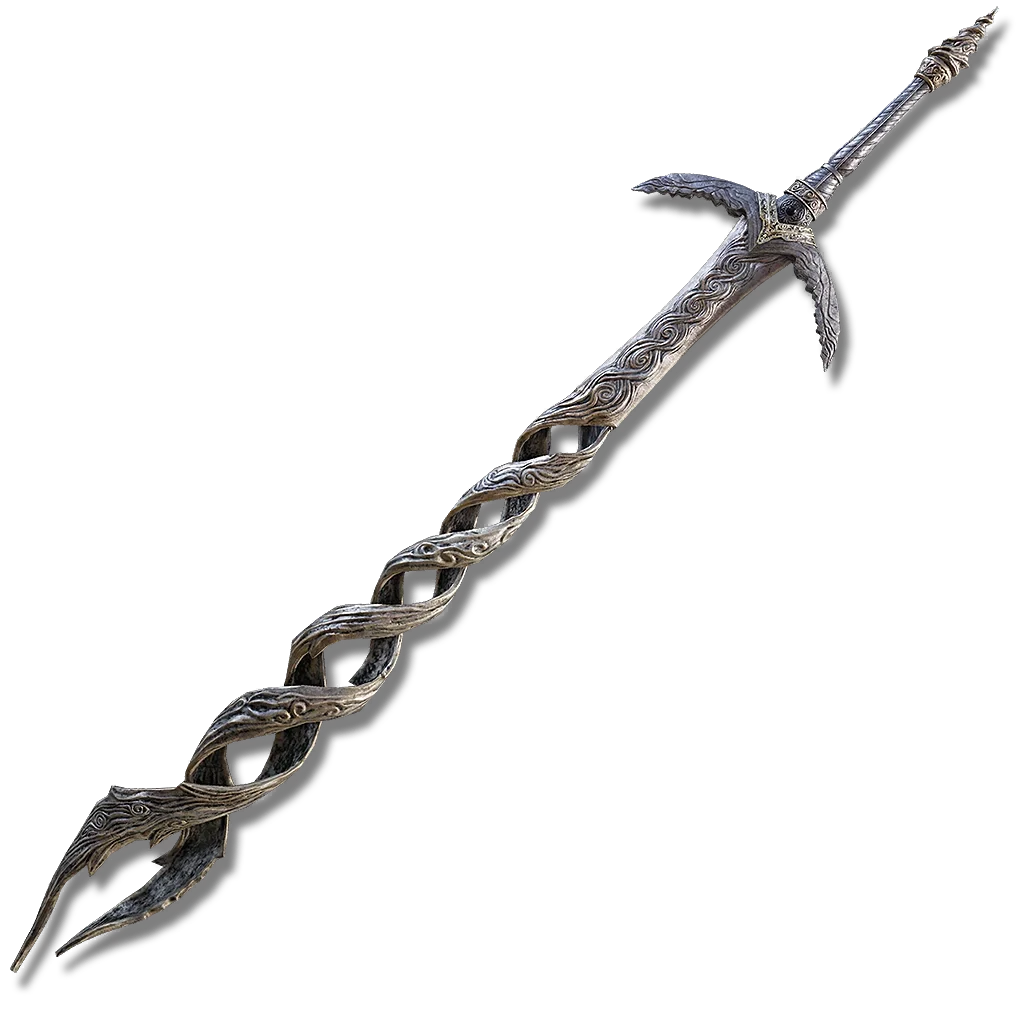 Godslayer's Greatsword
Sacred sword of the Dusk-Eyed Queen who controlled the Godskin Apostles before her defeat at the hands of Maliketh. The black flames wielded by the apostles are channeled from this sword.
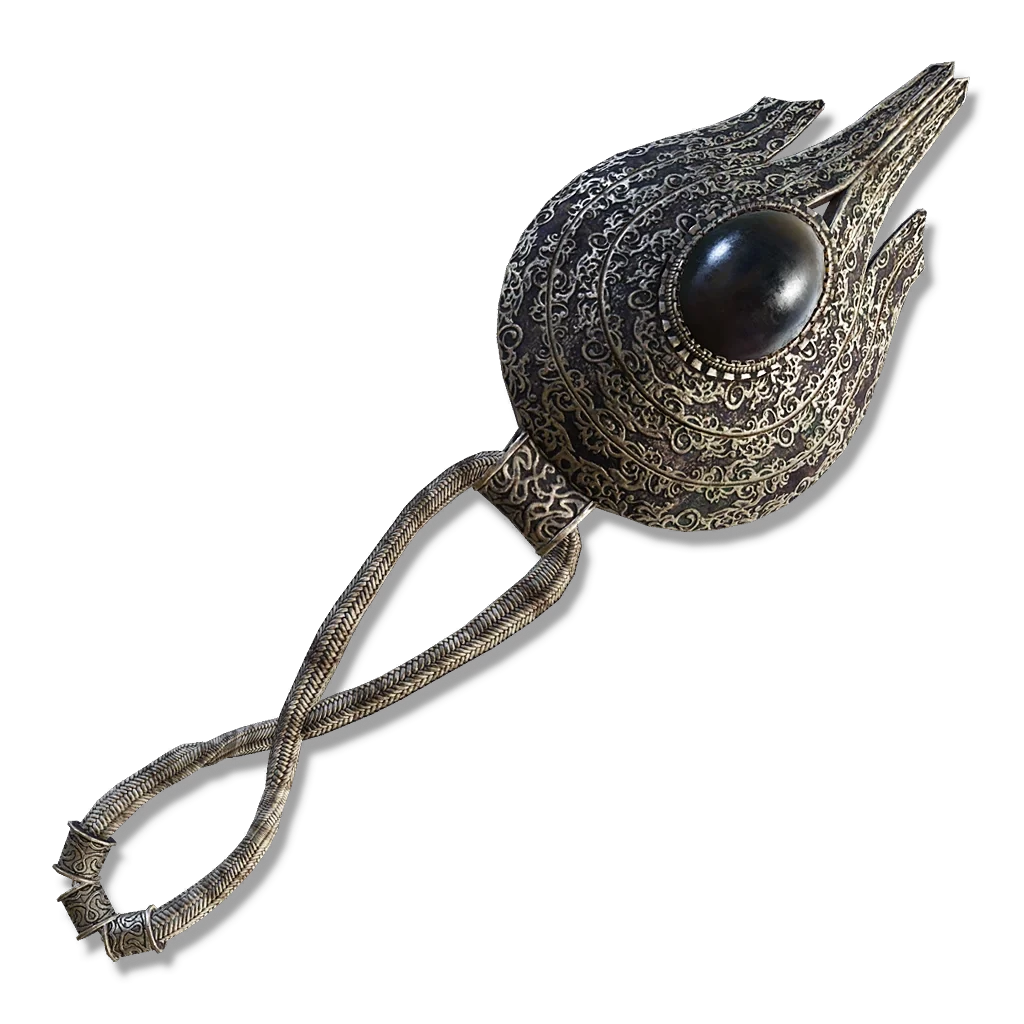 Godslayer's Seal
Sacred seal of the Godskin Apostles, inlaid with obsidian. Said to represent the manipulation of black flame, this catalyst enhances godslayer incantations.
 Black Flame's Protection
A black flame incantation of the Godskin Apostles. Summons black fire within, increasing physical damage negation. However, sacred flasks and other such forms of HP restoration are impaired.
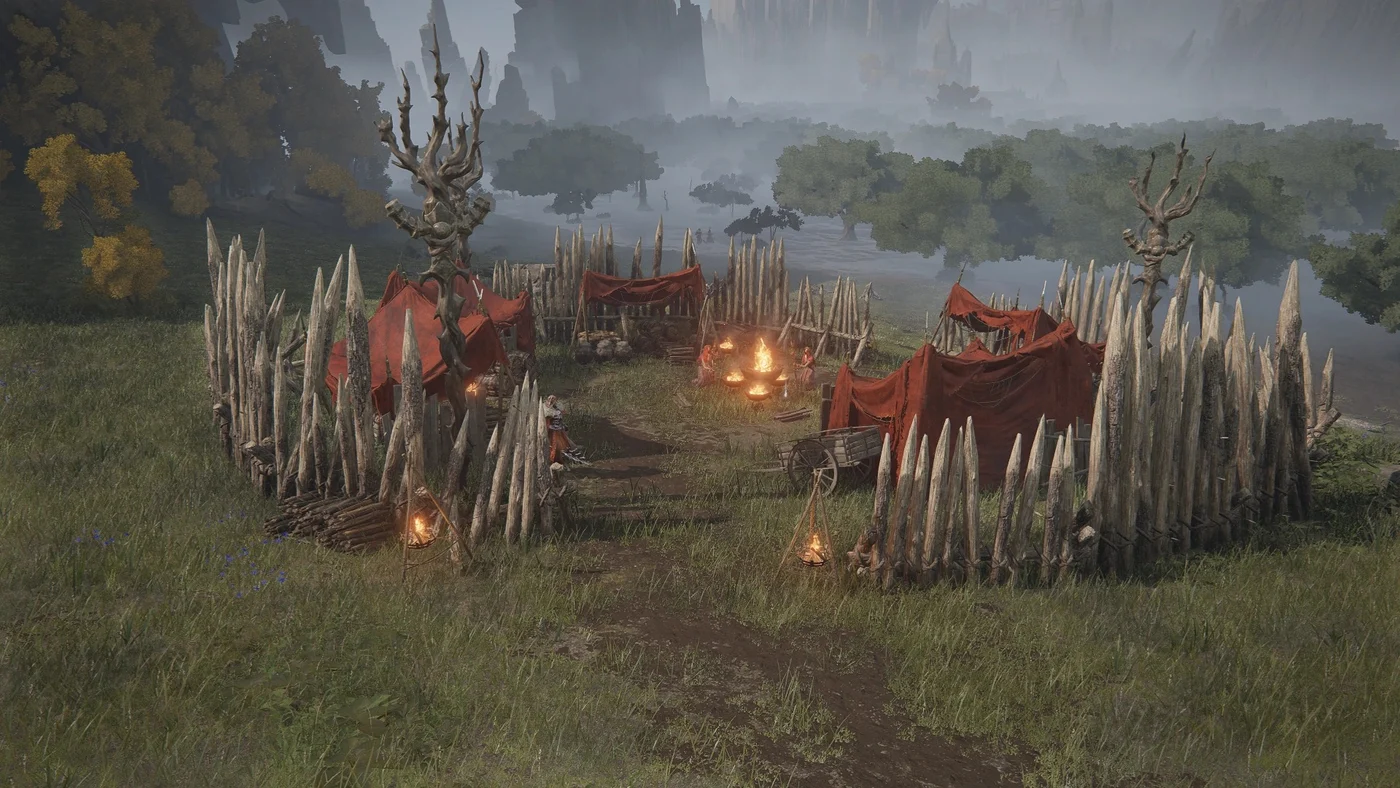 ✦️ GROUP / FACTION
Fire Monks & the Fire Giant Cult
Keepers of the Flame of Ruin · Giants' Faithful▾
Fire Monks & the Fire Giant Cult
The Fire Monks are a religious order devoted to the Fire Giant and to preserving the Flame of Ruin that the Golden Order sought to extinguish. Their armor (Fire Monk Armor set) is described as worn by monks who guard the flame, heavy, functional, marked with ash and char. They reside primarily in the Mountaintops of the Giants and Flame Peak, where the Forge of the Giants sits. The Fire Monk Hood specifies their role: they serve as both warrior-monks and ritual keepers. They wield incantations of fire that predate golden grace, giant-derived flame magic (Giant's Flame, Flame, Fall Upon Them, Flame of the Fell God) rooted in the Giants' cosmology of fire as primal purification. The fire they guard is described as capable of burning the Erdtree itself. The Giants' ritual of fire worship involved the Zamor Knights (who served General Radahn and carried their own cold fire magic, Zamor Ice Storm) as a counterpart order. Fire Prelates, the elite rank among Fire Monks, wearing massive helms and carrying colossal flails, are the ceremonial leaders of the order. Their continued existence and devotion to a dead race's flame represents one of the few surviving pre-Order religious traditions.
◆ Sources
Dung Eater (Dialogue)You're after it too, aren't you. To pass the impenetrable thorns, you seek the forge of the flame of ruin, in the snowy mountaintops of the giants. Then you need to reach the Grand Lift of Rold, beyond the forbidden region. Hah, no need to pay me for that gift. It doesn't have to be me, my fellow. If you're heading to the forge of the flame of ruin, in the snowy mountaintops of the giants. You'll need to find the Grand Lift of Rold, beyond the forbidden region. I marked your map with its location.
Zamor Ice StormCharging enhances potency. Cloaked in icy tempests, the knights of Zamor have challenged the Fire Giants since ancient times.
Zamor Curved SwordWeapon wielded by the knights of Zamor who earned great renown during the War against the Giants. In apparent devotion to winter, the curved blade is styled after an icy wind and imbued with a powerful frost effect.
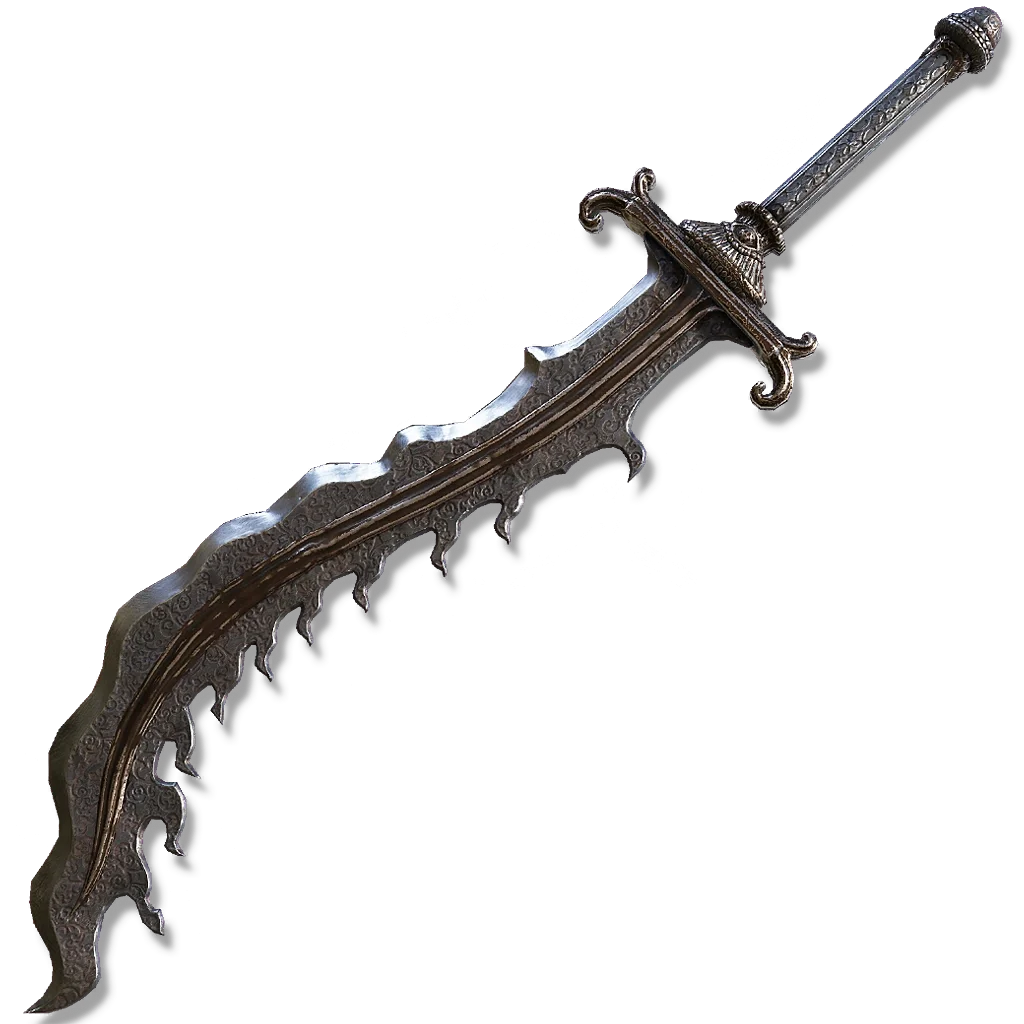 Monk's Flameblade
Curved sword with a flickering flame motif. Wielded by the Fire Monks who came from the Mountaintops of the Giants. The monks came to the land of Liurnia in pursuit of a fugitive who stole their fire.
Giant's SealSacred seal depicting the one-eyed god of the Fire Giants, adorned with braids of red hair. Sacred seal wielded by Fire Monks and Prelates, this catalyst enhances Giants' Flame incantations.
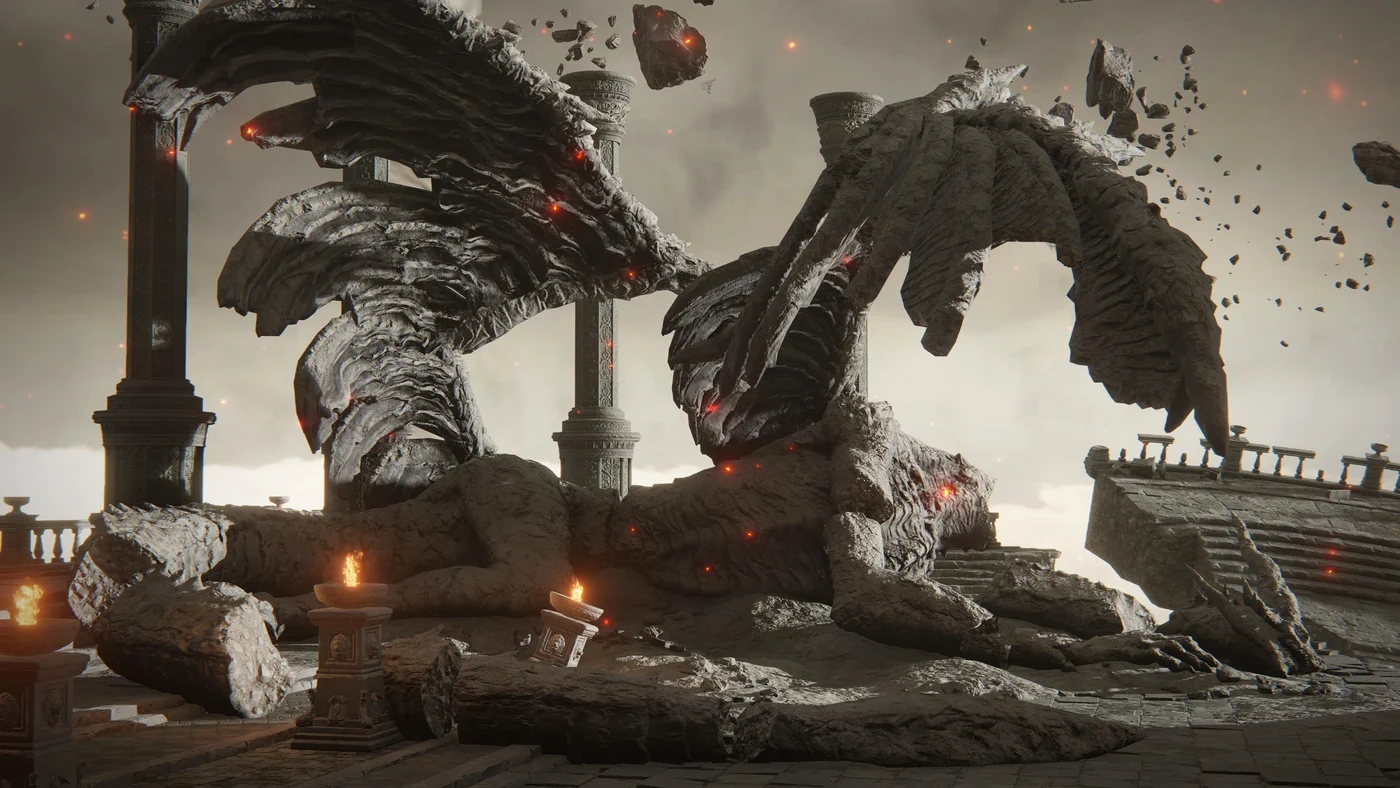 ✦️ GROUP / FACTION
Dragon Cult · Ancient Dragon Knights
Dragonlord's Faithful · Wielders of Ancient Lightning▾
Dragon Cult · Ancient Dragon Knights
The Dragon Cult was an order within the Golden Order that venerated the Ancient Dragons and wielded their lightning, distinct from the draconic incantations of the Church of Dragon Communion. The Dragon Cult Prayerbook specifies that "these knights who served the Dragonlord" used lightning as a divine weapon, and their incantations (Lightning Spear, Honed Bolt, Lansseax's Glaive, Ancient Dragons' Lightning Strike) are of Ancient Dragon lineage rather than golden grace. The Dragonlord they served was Placidusax, the pre-Erdtree Elden Lord who waited in Farum Azula. Lansseax, the Ancient Dragon whose glaive is an incantation, was one of the last surviving members of Placidusax's court and appears twice in Farum Azula as a massive cruciform lightning dragon. The Dragon Cult eventually became absorbed into the structure of the Golden Order, evidenced by the Dragon Cult Prayerbook being found near Leyndell's Divine Tower and Farum Azula, but retained its distinct lightning tradition. The Ancient Dragon Knight Kristoff is a named member who can be summoned against the Elden Beast, representing the order's ancient opposition to the current cosmic arrangement.
◆ Sources
Lightning SpearOne of the incantations of the capital's ancient dragon cult. Summons a lightning spear and hurls it before the caster. Charging causes a lightning bolt to strike the point of impact. Long ago, Godwyn the Golden defeated the ancient dragon Fortissax, and befriended his fallen foe—an event that gave rise to the ancient dragon cult in the capital.
 Ancient Dragons' Lightning Spear
A secret incantation of the capital's ancient dragon cult. Creates a spear of red lightning and stabs it into the ground from above. On impact, the spear will burst into trails of lightning covering the area. Spoken of in legend, red lightning is the weapon wielded by the ancient dragons.
 Dragon Cult Prayerbook
Prayerbook of the capital's ancient dragon cult. A text of the knights' faith that arose after the War of the Ancient Dragons. Can be given to a learned cleric to gain access to the following incantations: - Lightning Spear - Honed Bolt - Electrify Armament
 Ancient Dragon Prayerbook
Prayerbook of the capital's ancient dragon cult. A lost tome that never reached the Lands Between. Contains red lightning incantations. Can be given to a learned cleric to gain access to the following incantations: - Ancient Dragons' Lightning Spear - Ancient Dragons' Lightning Strike
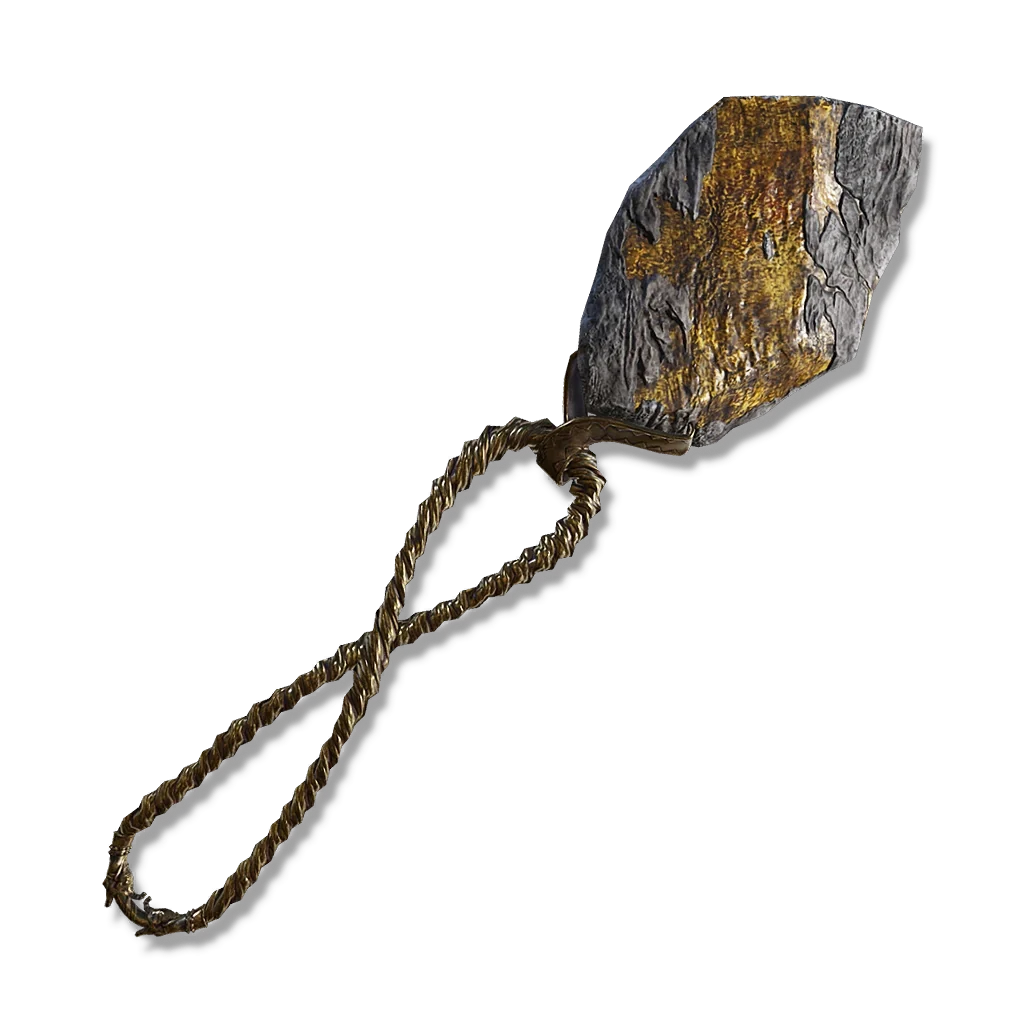 Gravel Stone Seal
Sacred seal made from Gravel Stone thought to be an ancient dragon scale. Enhances Dragon Cult incantations of the Royal Capital. The worship of the ancient dragons does not conflict with belief in the Erdtree. After all, this seal, and lighting itself, are both imbued with gold.
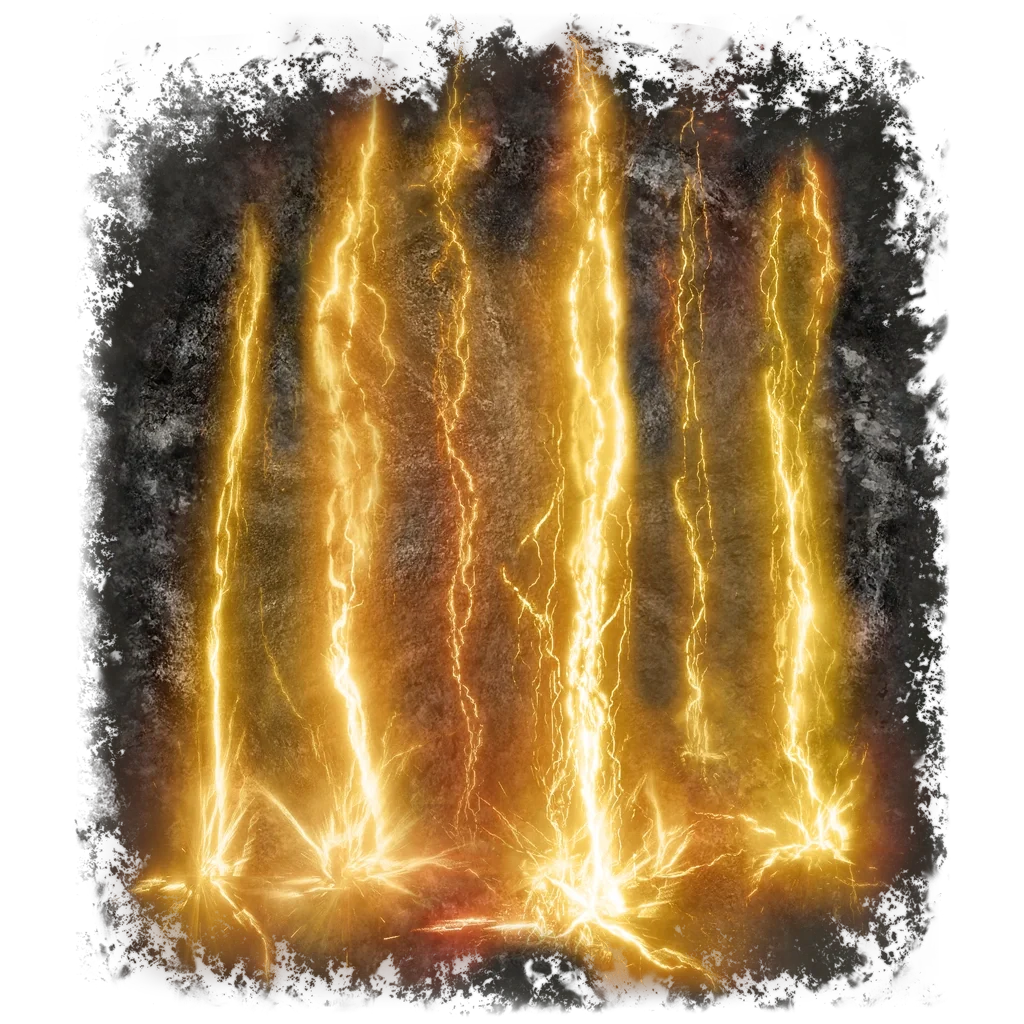 Thunderbolt
Skill: Thunderbolt Skill used by the capital's ancient dragon cult. Raise armament aloft to call down a bolt of lightning. Can be fired in rapid succession.
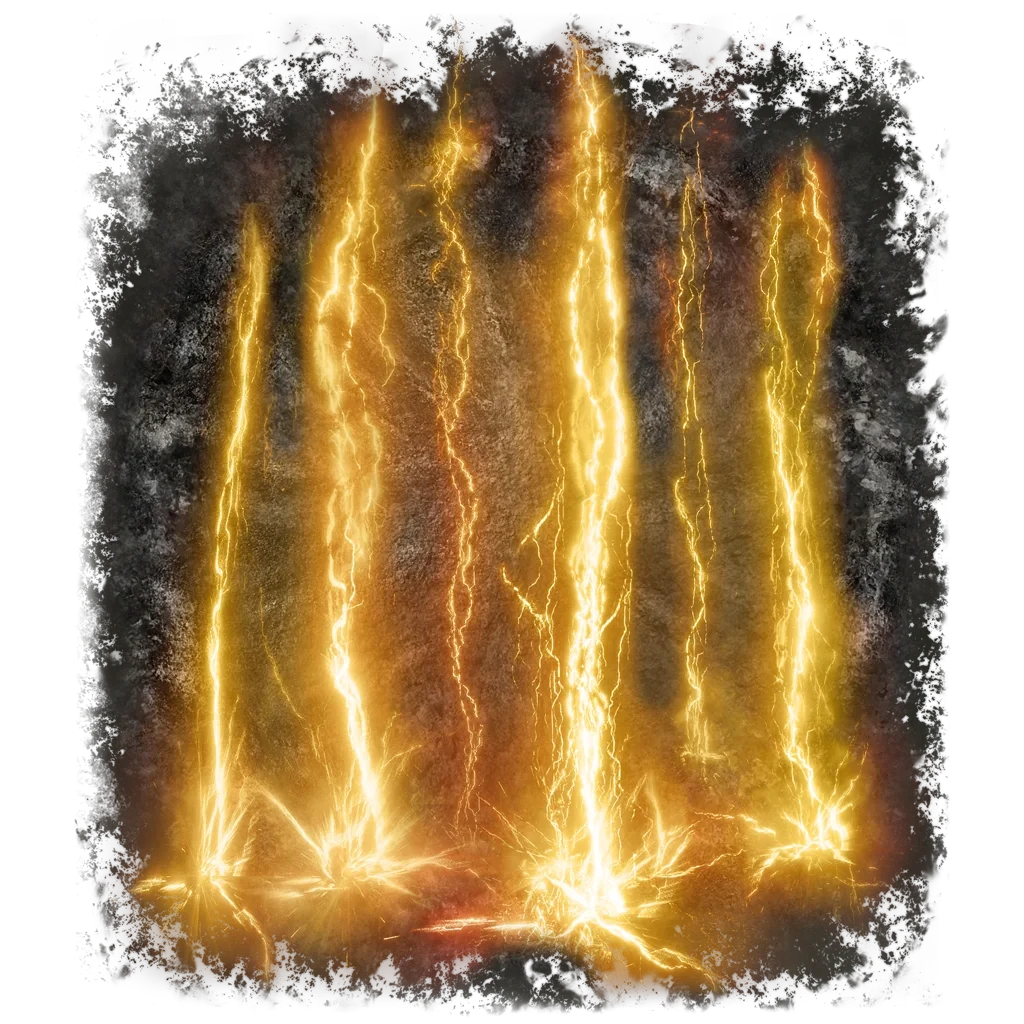 Ash of War: Thunderbolt
This Ash of War grants an armament the Lightning affinity and the following skill: "Thunderbolt: Skill used by the capital's ancient dragon cult. Raise armament aloft to call down a bolt of lightning. Can be fired in rapid succession." Usable on all melee armaments.
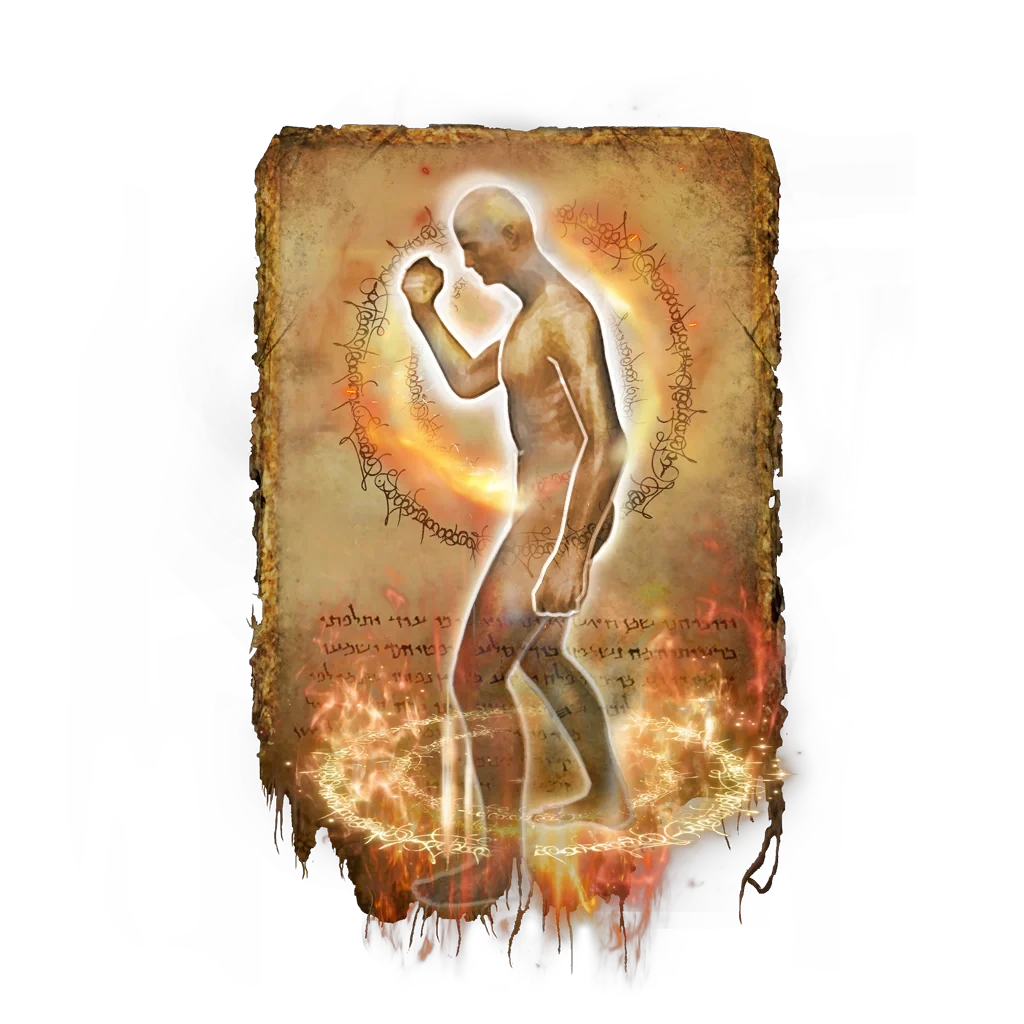 Flame Fortification
This incantation can be cast while in motion. Follow the path that has been set for you, and you will make enemies of all others: the monks, the sorcerers, the ancient dragon knights, and the scions of gold. Heed me—the Lands Between offers no welcome to the Tarnished.
 Magic Fortification
This incantation can be cast while in motion. Follow the path that has been set for you, and you will make enemies of all others: the monks, the sorcerers, the ancient dragon knights, and the scions of gold. Heed me—the Lands Between offers no welcome to the Tarnished.
 Lightning Fortification
This incantation can be cast while in motion. Follow the path that has been set for you, and you will make enemies of all others: the monks, the sorcerers, the ancient dragon knights, and the scions of gold. Heed me—the Lands Between offers no welcome to the Tarnished.
 Divine Fortification
This incantation can be cast while in motion. Follow the path that has been set for you, and you will make enemies of all others: the monks, the sorcerers, the ancient dragon knights, and the scions of gold. Heed me—the Lands Between offers no welcome to the Tarnished.
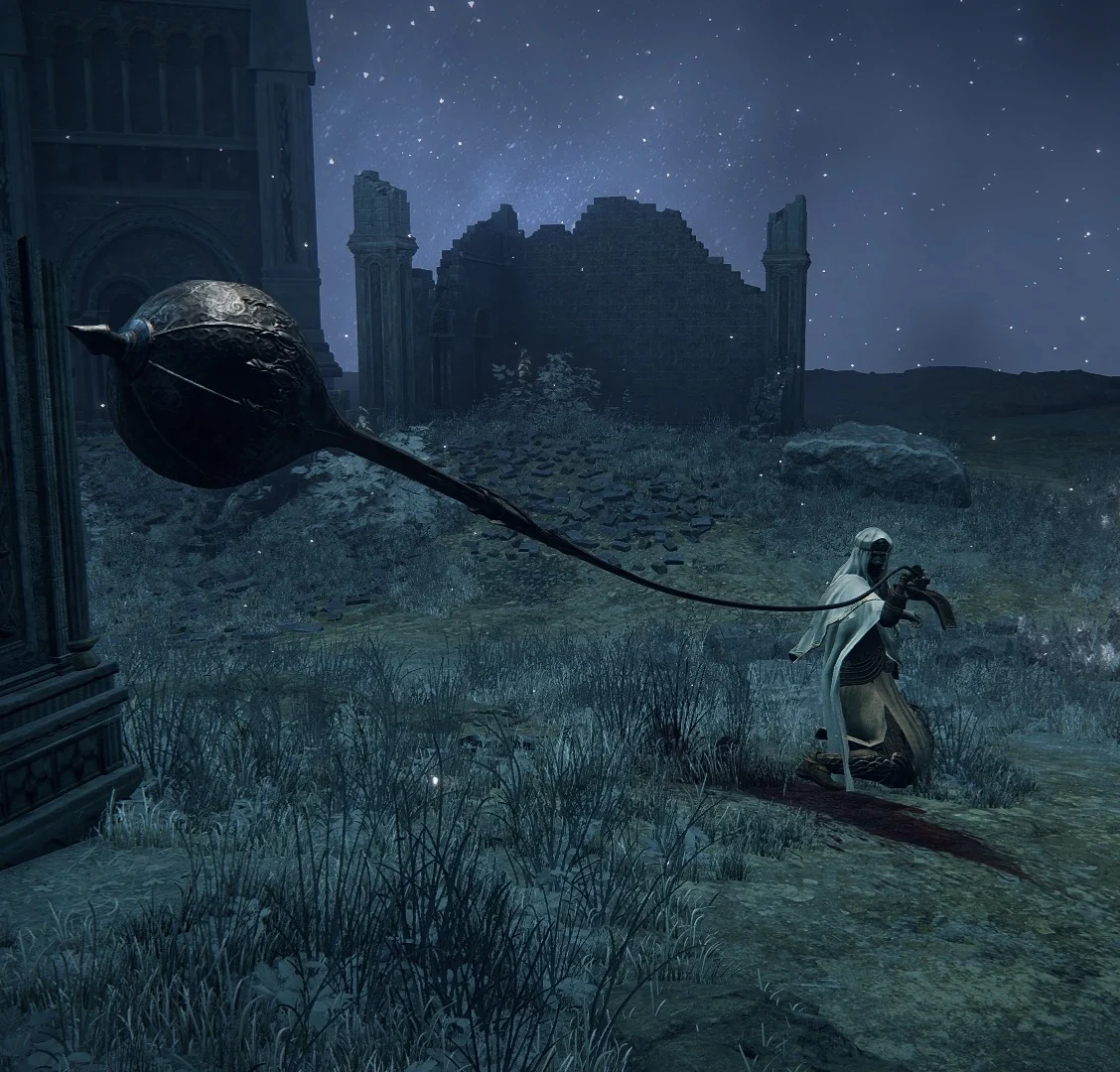 ✦️ GROUP / FACTION
The Nox · People of the Eternal Cities
Pre-Order Civilization · Creators of Mimic Tears▾
The Nox · People of the Eternal Cities
The Nox are the inhabitants of the Eternal Cities, Nokron, Nokstella, and Siofra, underground civilizations that predate and existed outside the Golden Order. Their defining tragedy: Marika cast them underground for an unspecified transgression, described in the Nox Flowing Sword description as "the Nox were banished by the Greater Will and were cursed to eternal darkness." The Nox Flowing Sword and Nox Flowing Hammer are their characteristic weapons, curved, fluid blades designed for an acrobatic fighting style. Nox Monk and Nox Swordstress are the two combat roles found in the Eternal Cities, both using distinctive stances and mercury-like weapon effects. Their most significant creation was the Silver Tear technology, liquid metal constructs capable of mimicking any form, used both as weapons and apparently as a form of artificial life. The Mimic Tear (perhaps the most famous of their creations) could copy a Tarnished's entire loadout. Crucially, the Nox had a different relationship with death and life than the Golden Order, their Ancestor Spirit rites and their underground ecosystem (Nokron's eternal rain, the glowing roots of Siofra) reflect a pre-Erdtree cosmology still functioning beneath the surface. Their sorceries (Night Sorceries, Night Comet, Night Maiden's Mist, Eternal Darkness) weaponize darkness rather than glintstone light.
◆ Sources
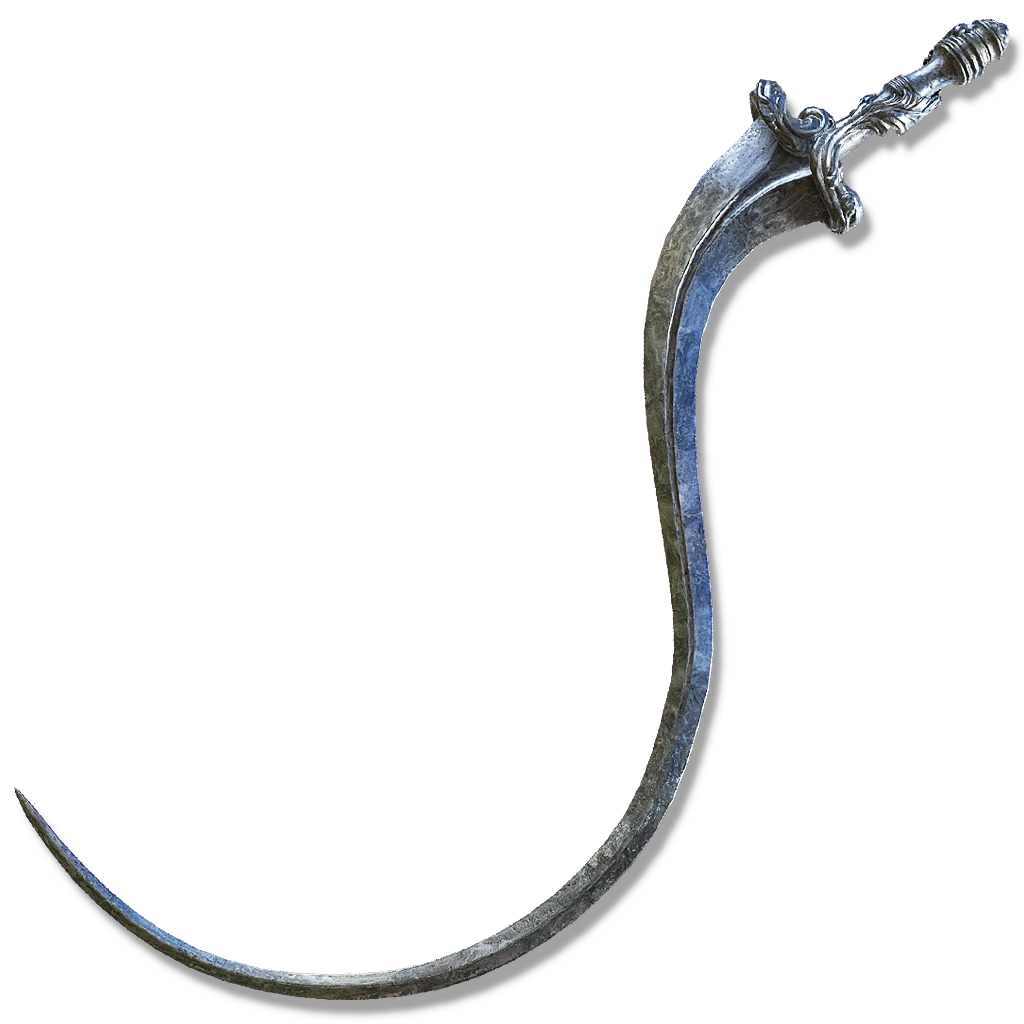 Nox Flowing Sword
A grim weapon wielded by swordsmen of the Eternal City, this shotel has a blade as fine as a needle. Forged from the liquid metal of a Silver Tear, it is thoroughly tempered until hardened.
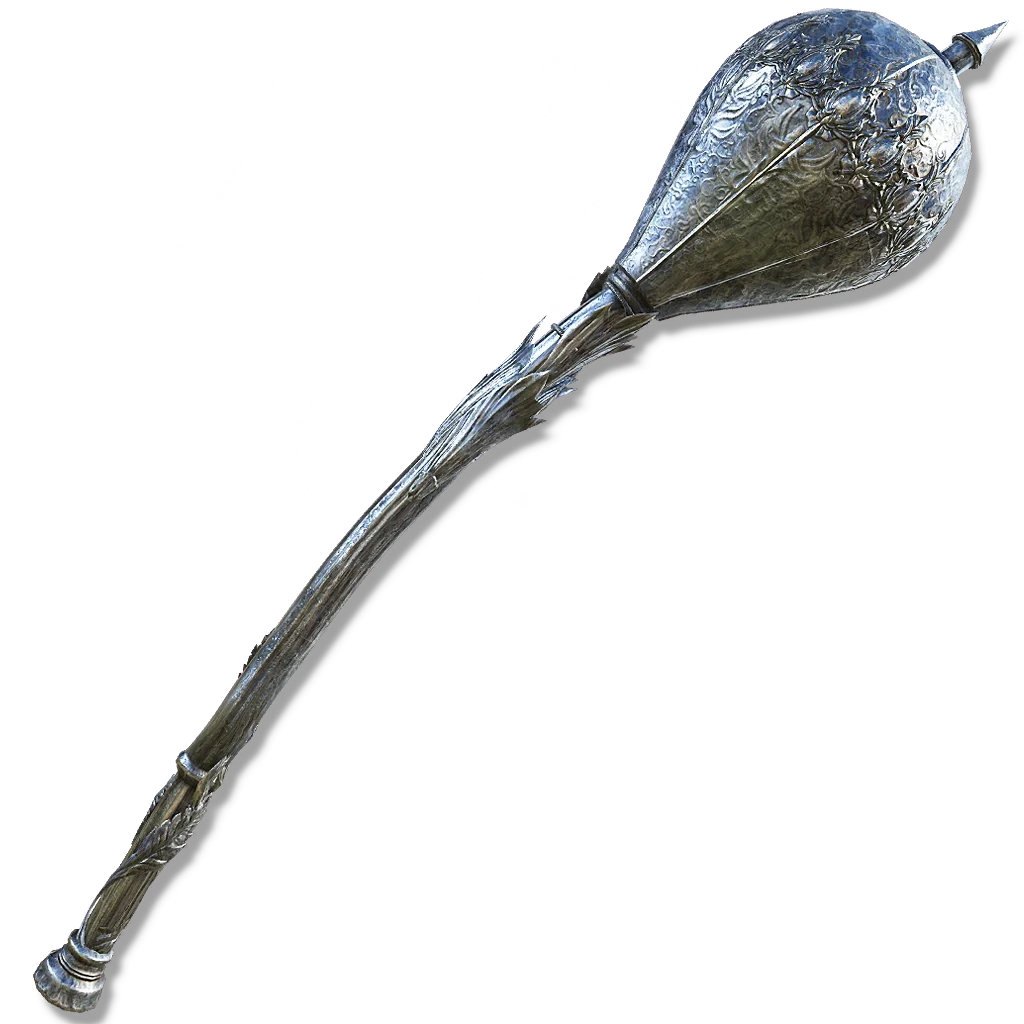 Nox Flowing Hammer
Mace shaped like a suspended metal droplet wielded by monks of the Eternal City. Forged from liquid metal from a Silver Tear, it is thoroughly tempered until hardened.
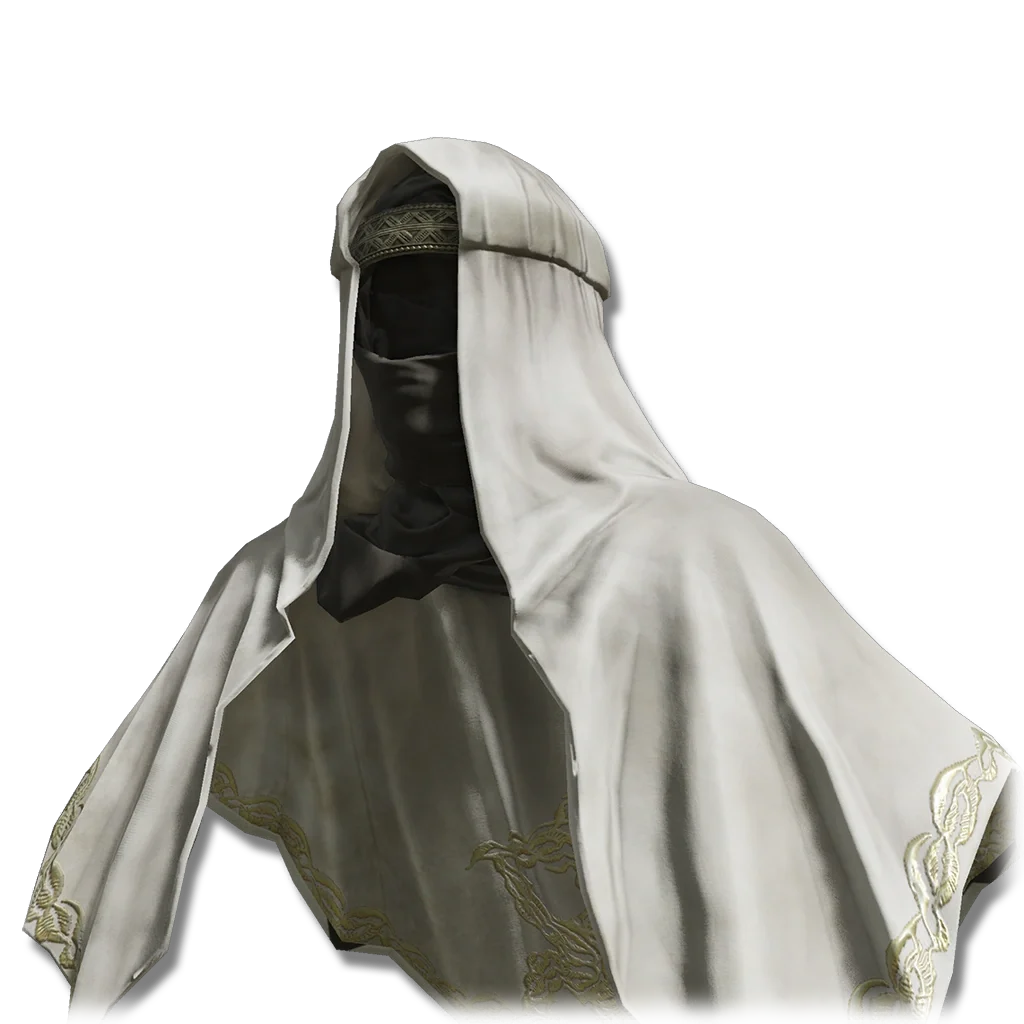 Nox Monk Hood
Silk hood worn by the monks of the Eternal City. Long ago, the Nox invoked the ire of the Greater Will, and were banished deep underground. Now they live under a false night sky, in eternal anticipation of their liege. Of the coming age of the stars. And their Lord of Night.
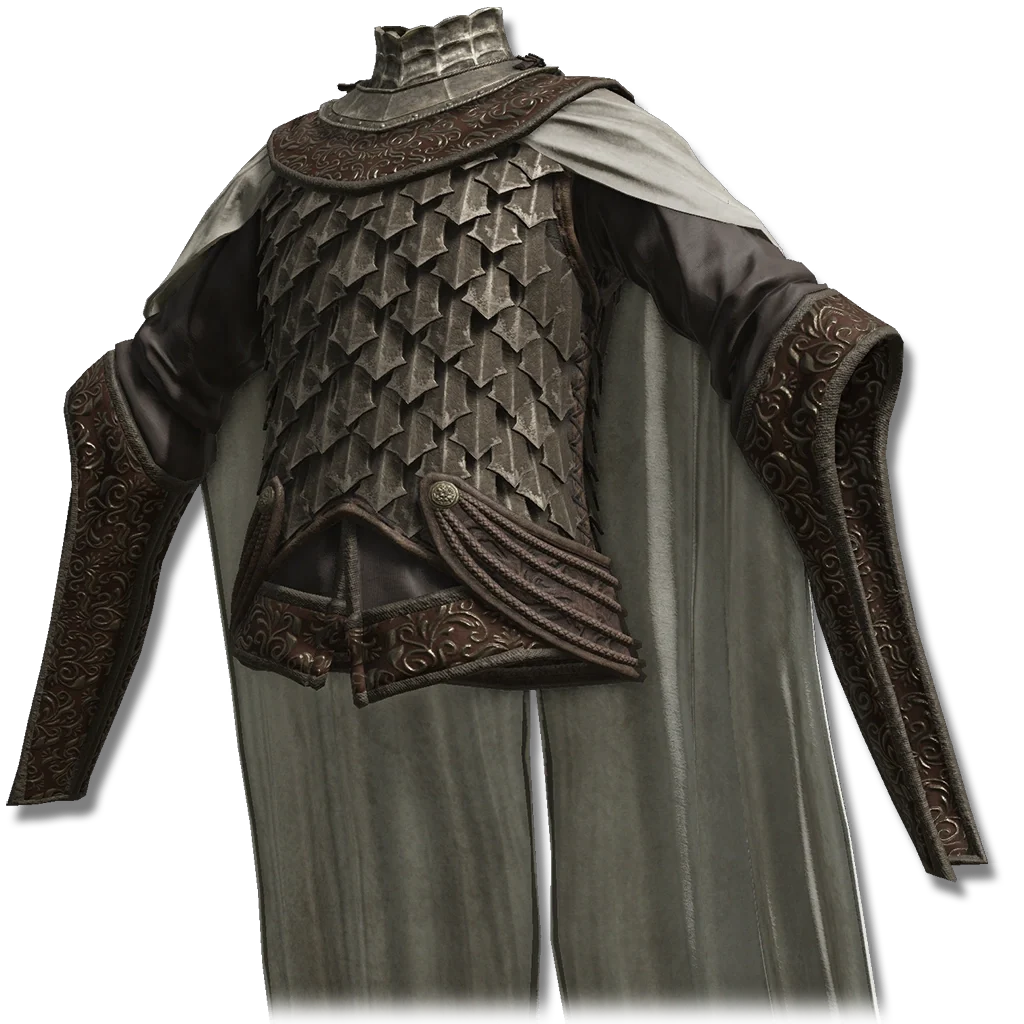 Nox Monk Armor
Armor worn by the monks of the Eternal City, with a silk cape attached. Long ago, the Nox invoked the ire of the Greater Will, and were banished deep underground. Now they live under a false night sky, in eternal anticipation of their liege. Of the coming age of the stars. And their Lord of Night.
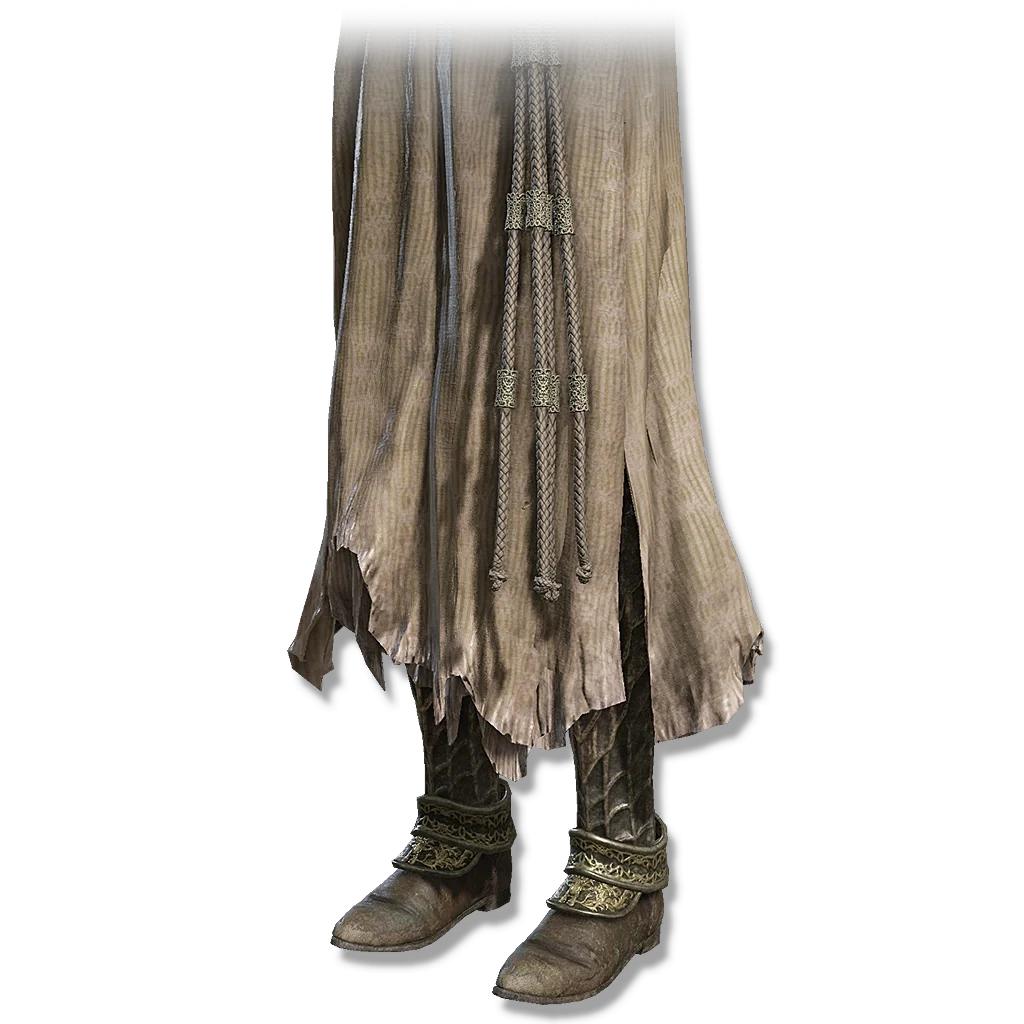 Nox Monk Greaves
Greaves worn by the monks of the Eternal City. Long ago, the Nox invoked the ire of the Greater Will, and were banished deep underground. Now they live under a false night sky, in eternal anticipation of their liege. Of the coming age of the stars. And their Lord of Night.
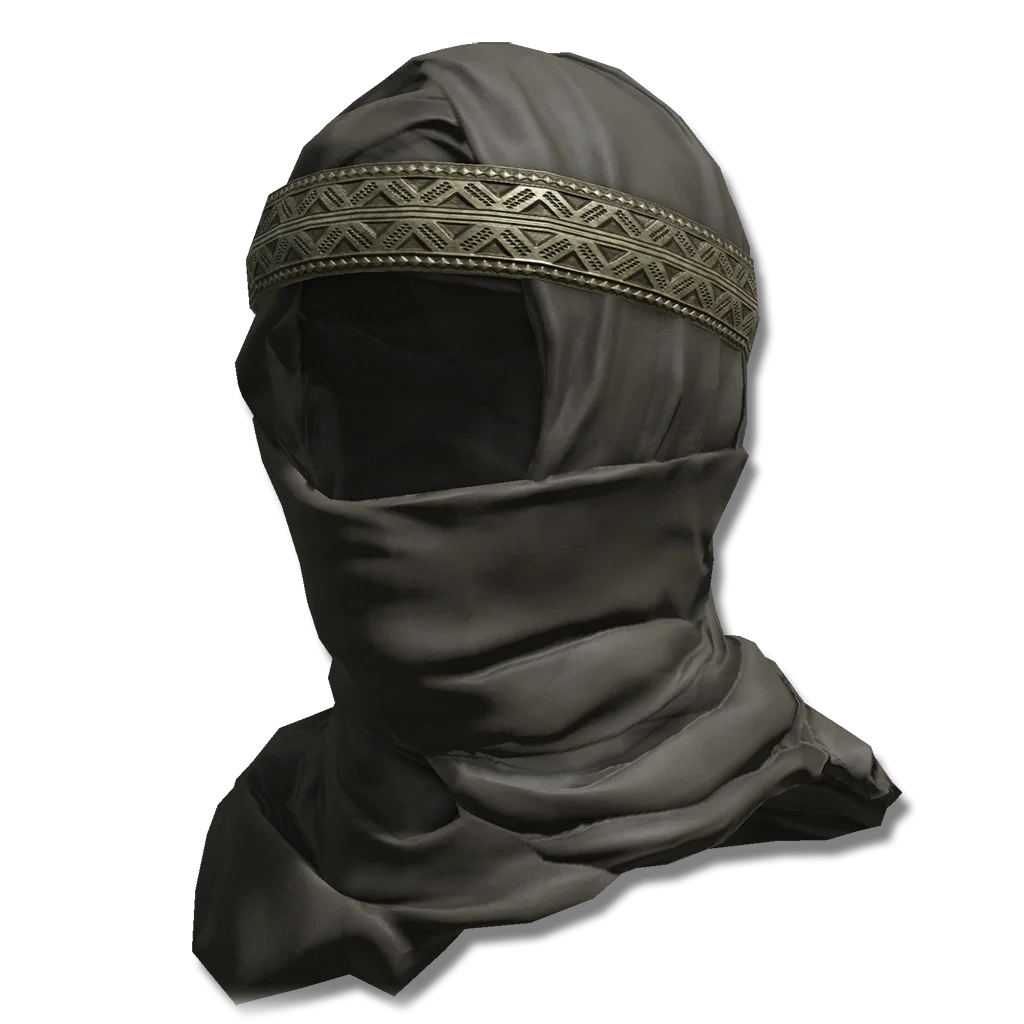 Nox Monk Hood (Altered)
Hood worn by the monks of the Eternal City. Long ago, the Nox invoked the ire of the Greater Will, and were banished deep underground. Now they live under a false night sky, in eternal anticipation of their liege. Of the coming age of the stars. And their Lord of Night.
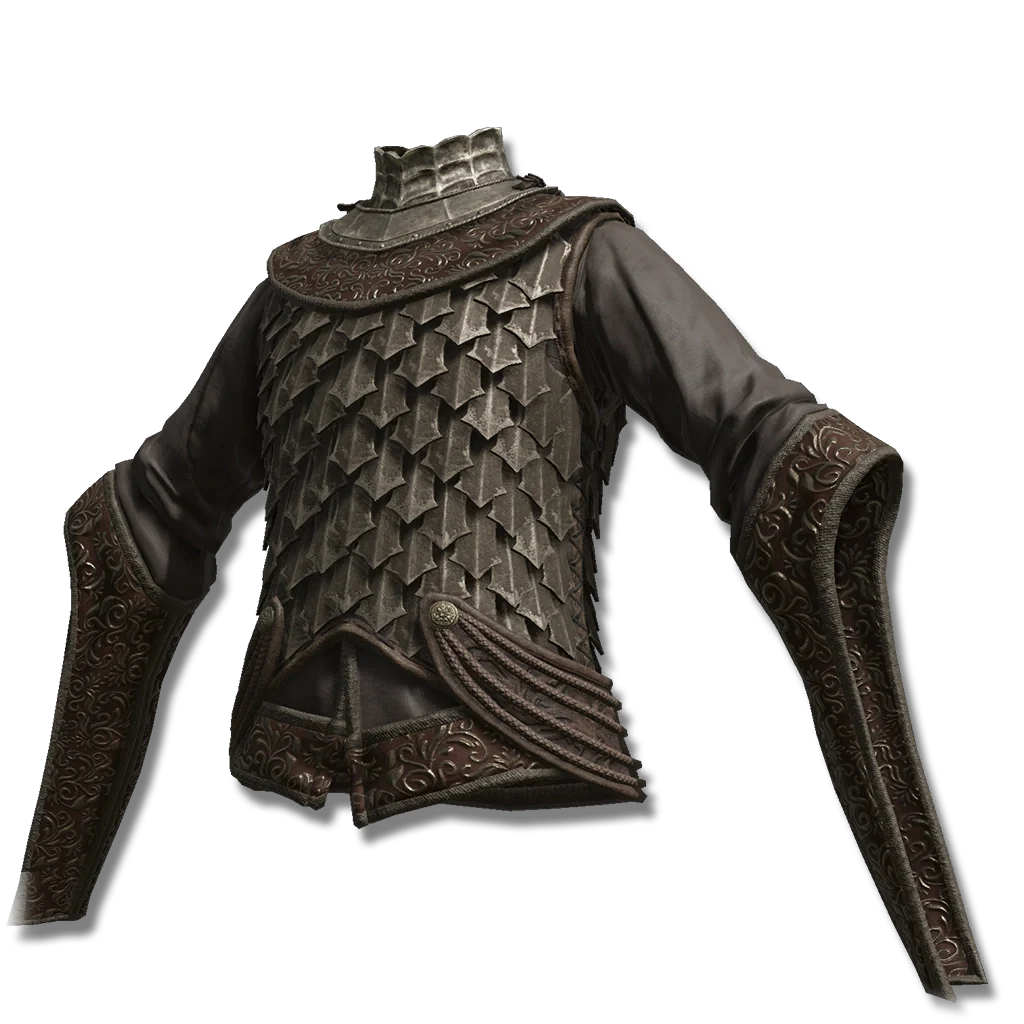 Nox Monk Armor (Altered)
Armor worn by the monks of the Eternal City. Long ago, the Nox invoked the ire of the Greater Will, and were banished deep underground. Now they live under a false night sky, in eternal anticipation of their liege. Of the coming age of the stars. And their Lord of Night.
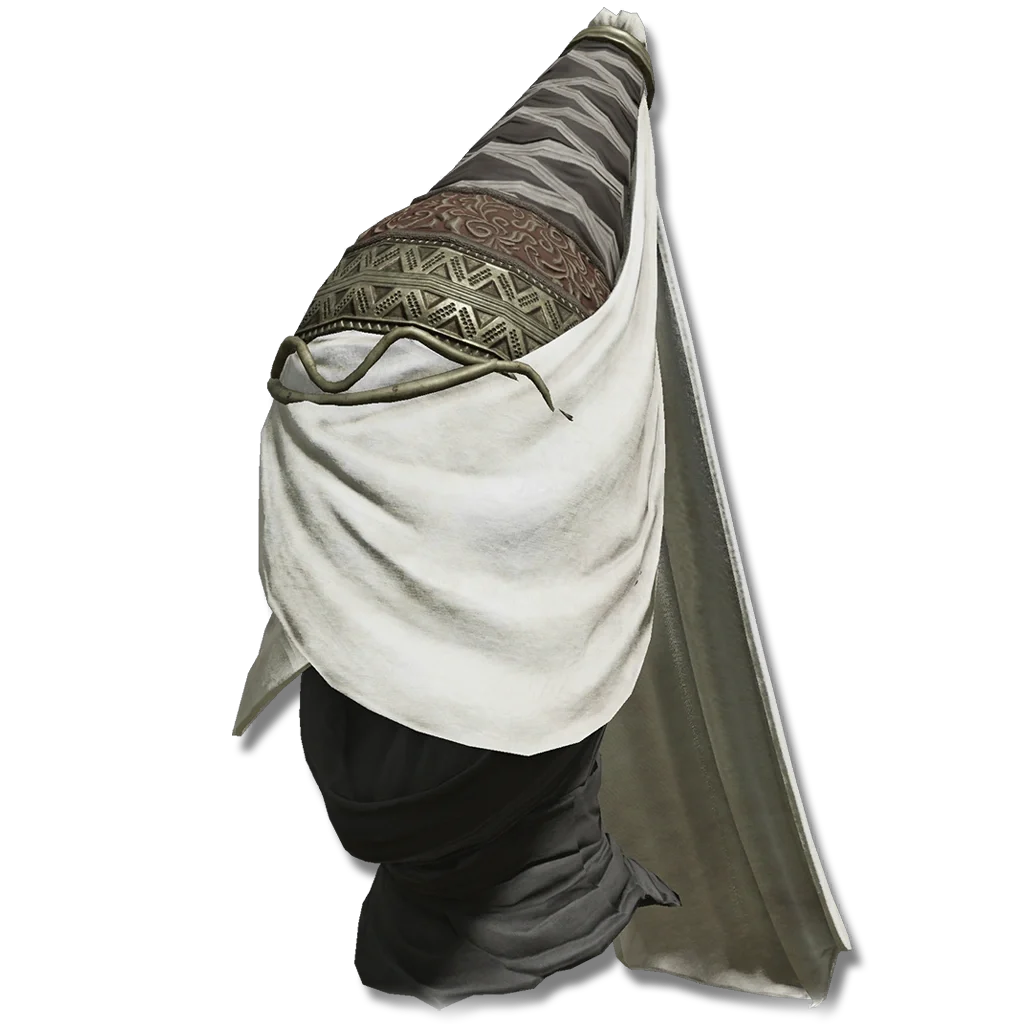 Nox Swordstress Crown
Crown worn by swordstresses of the Eternal City. These women are the personal guards of the nightmaidens, and the silk hides their eyes. Long ago, the Nox invoked the ire of the Greater Will, and were banished deep underground. Now they live under a false night sky, in eternal anticipation of their liege. Of the coming age of the stars. And their Lord of Night.
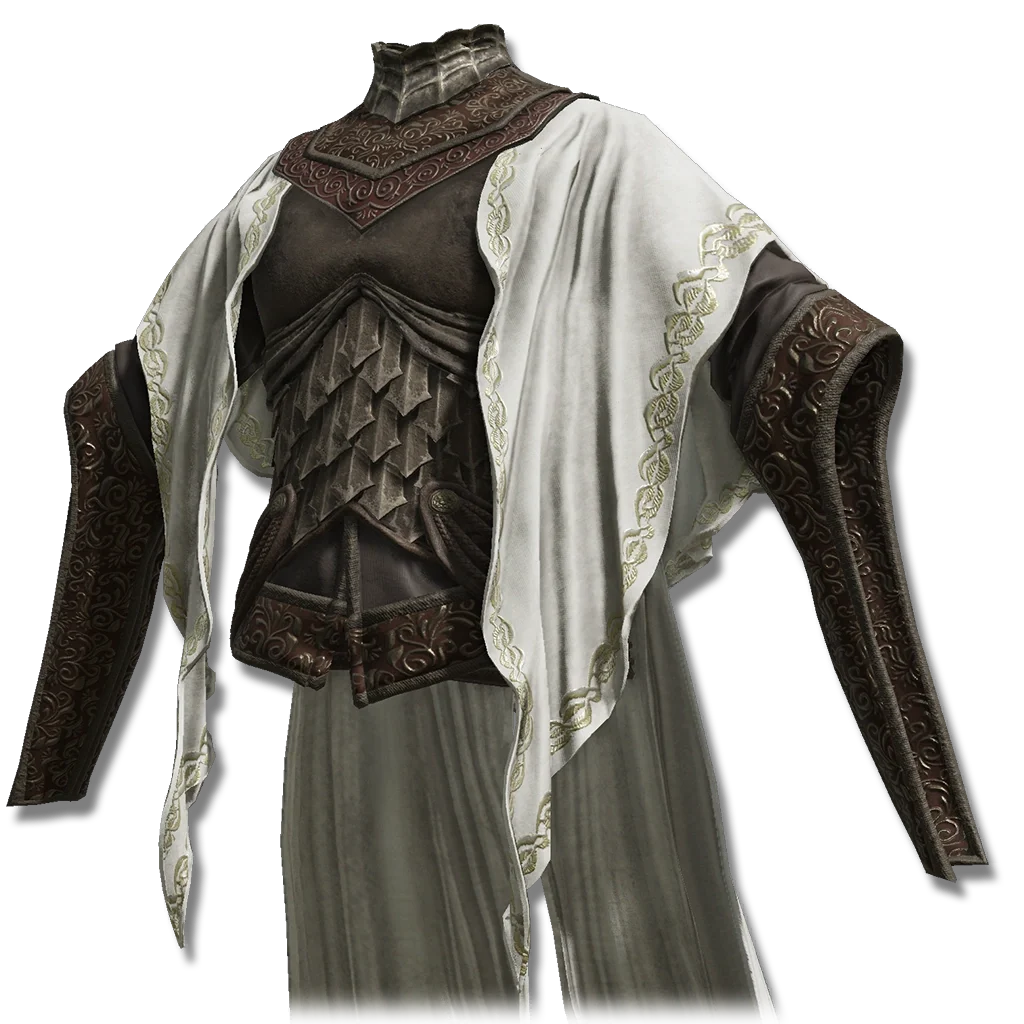 Nox Swordstress Armor
Armor worn by swordstresses of the Eternal City. These women are the personal guards of the nightmaidens, and wear silk capes. Long ago, the Nox invoked the ire of the Greater Will, and were banished deep underground. Now they live under a false night sky, in eternal anticipation of their liege. Of the coming age of the stars. And their Lord of Night.
 Night Maiden Twin Crown
Twin crowns worn by the nightmaidens of the Eternal City. Indicates the highest clerical rank, and hides the eyes with silk. Long ago, the Nox invoked the ire of the Greater Will, and were banished deep underground. Now they live under a false night sky, in eternal anticipation of their liege. Of the coming age of the stars. And their Lord of Night.
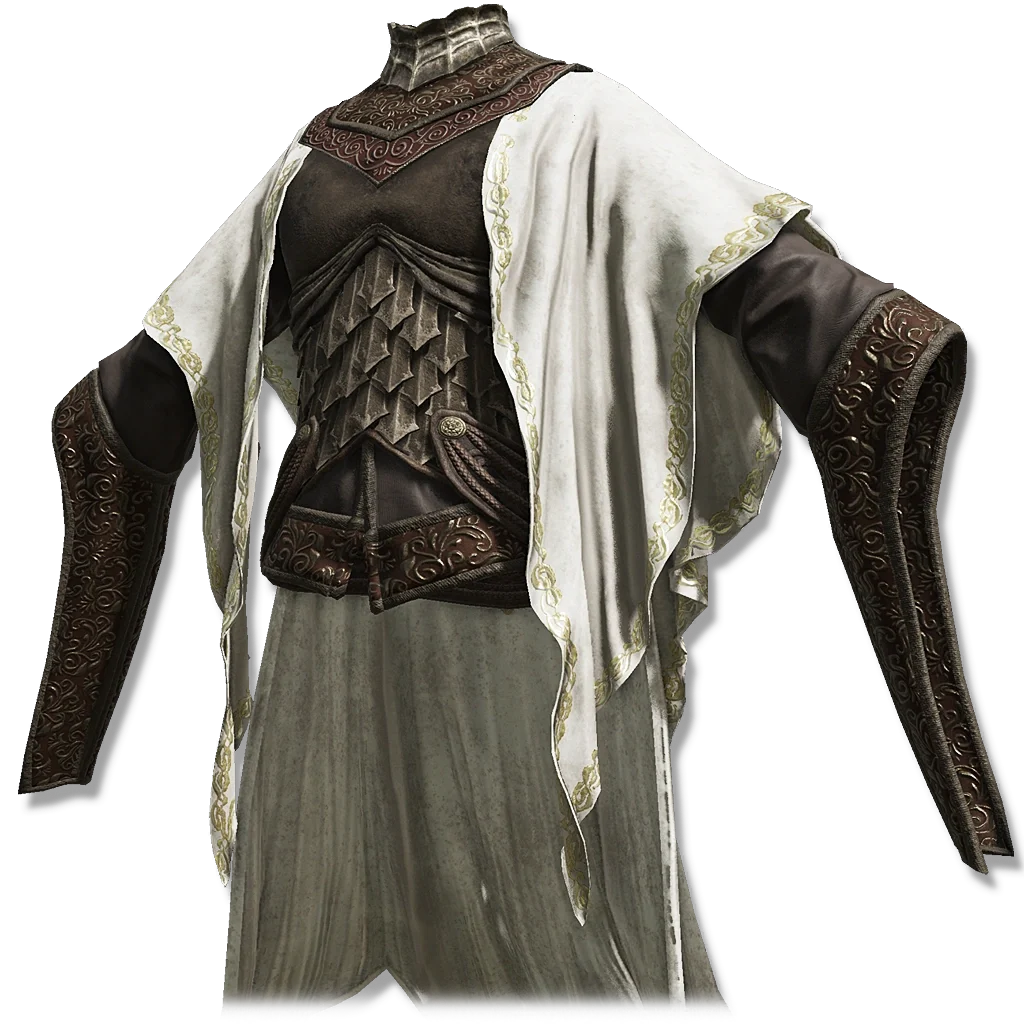 Night Maiden Armor
Armor worn by the nightmaidens of the Eternal City. Indicates the highest clerical rank, and includes a silk cape. Long ago, the Nox invoked the ire of the Greater Will, and were banished deep underground. Now they live under a false night sky, in eternal anticipation of their liege. Of the coming age of the stars. And their Lord of Night.
Crown worn by swordstresses of the Eternal City. The silk eye covering is removed, flaunting convention. Long ago, the Nox invoked the ire of the Greater Will, and were banished deep underground. Now they live under a false night sky, in eternal anticipation of their liege. Of the coming age of the stars. And their Lord of Night.
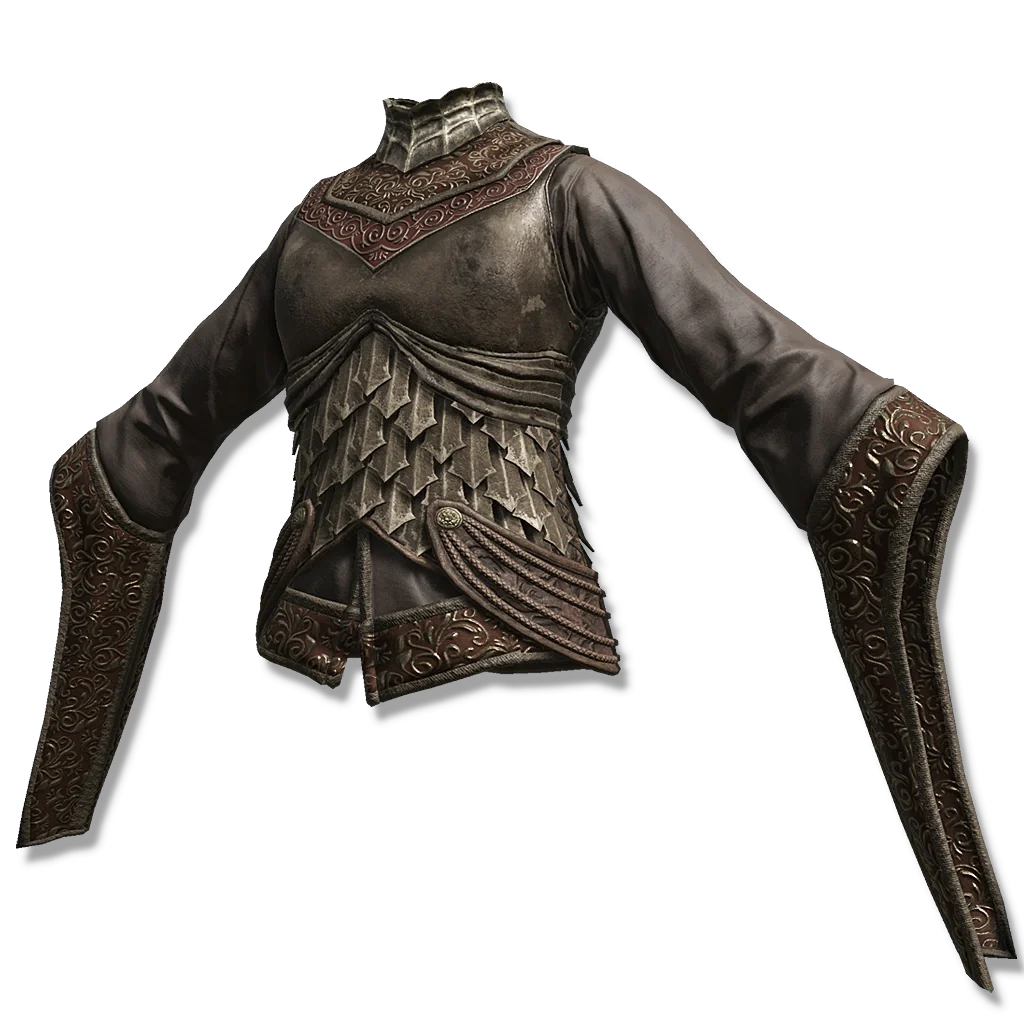 Nox Swordstress Armor (Altered)
Armor worn by swordstresses of the Eternal City. These women are the personal guards of the nightmaidens. Long ago, the Nox invoked the ire of the Greater Will, and were banished deep underground. Now they live under a false night sky, in eternal anticipation of their liege. Of the coming age of the stars. And their Lord of Night.
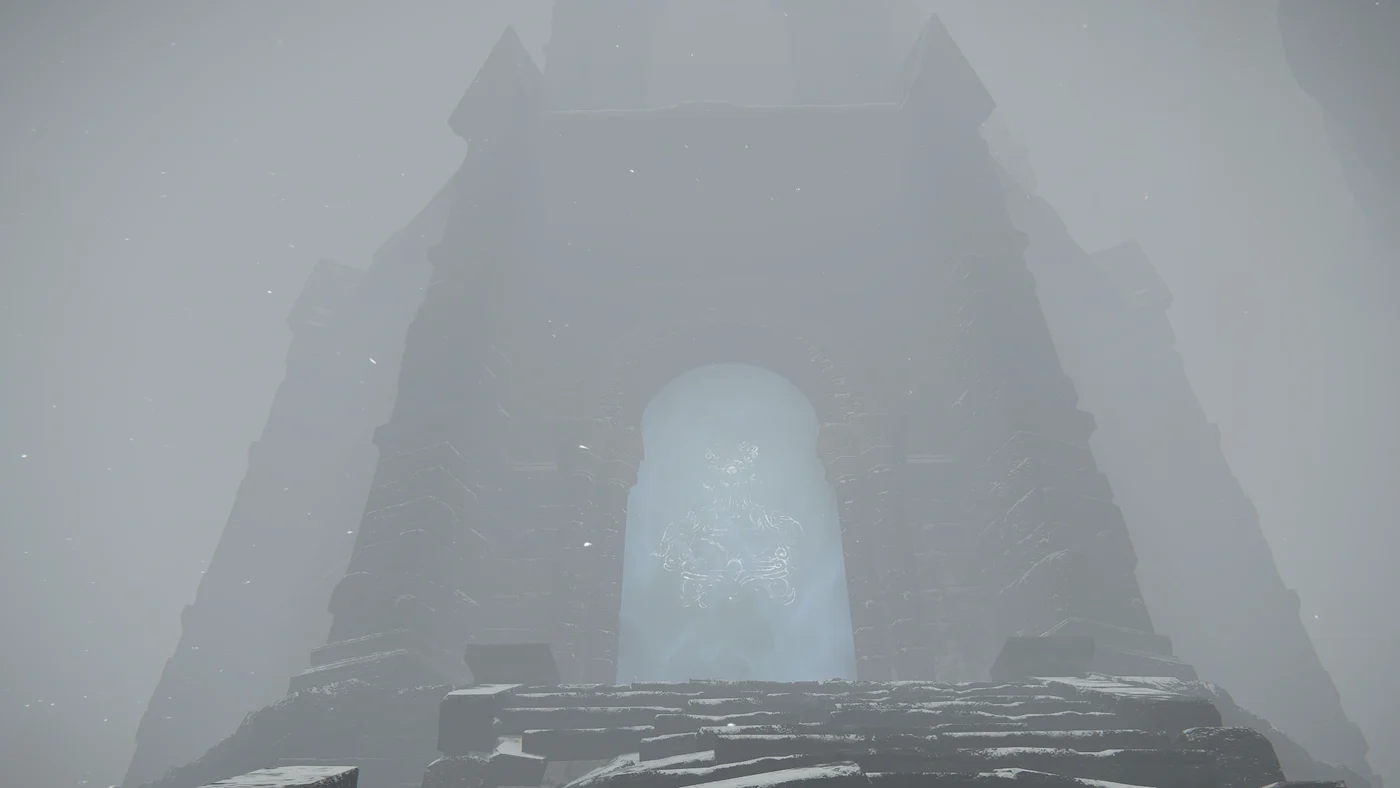 ✦️ GROUP / FACTION
The Albinaurics
Artificially Created People · Haligtree's Chosen▾
The Albinaurics
The Albinaurics are a people created through forbidden rites in the Eternal Cities, artificial beings whose existence outside the Golden Order's grace meant they were rejected and hunted by the Order's enforcers. They come in two forms that reflect different generations or conditions: first-generation Albinaurics appear human above the waist but have legs that progressively vanish with age (as seen in Latenna and in the frog-like creatures in the Eternal Cities); second-generation Albinaurics appear as shorter, pale humanoids. The Albinauric Bloodclot Talisman describes the hunters who pursued them for their blood. Varre's questline involves draining a Maiden's blood, the maidens serving the Two Fingers being Albinauric women. Their blood apparently has special properties. Old Albus, the aged Albinauric guarding the Haligtree Medallion in Liurnia, represents the last keeper of the secret path to Miquella's sanctuary. Miquella created the Haligtree specifically to offer Albinaurics and other outcasts a promised land, the city of Eburion within Elphael, where they could receive grace independent of the Greater Will. Latenna's entire quest is the fulfillment of this promise, reaching the Haligtree's snowy borders at the journey's end.
◆ Sources
Old Albus (Dialogue)War Counselor Iji (Dialogue)I'm Latenna. An Albinauric, the same as Old Albus. My apologies for my coarse words earlier. I presumed the worst, seeing that you were another Tarnished, like that all-hearing brute. For us. For all the Albinaurics. Thank you. I've finally fulfilled my purpose.
Latenna the Albinauric (Dialogue)Dung Eater (Dialogue)Blackguard (Dialogue)Oh, one more thing... Beware the Albinaurics... ...accursed souls born of a forbidden rite of the Eternal City. The curse withered the legs of the old, and silenced the tongues of the Frogs. And now they hold deep grudges for anyone left untouched.
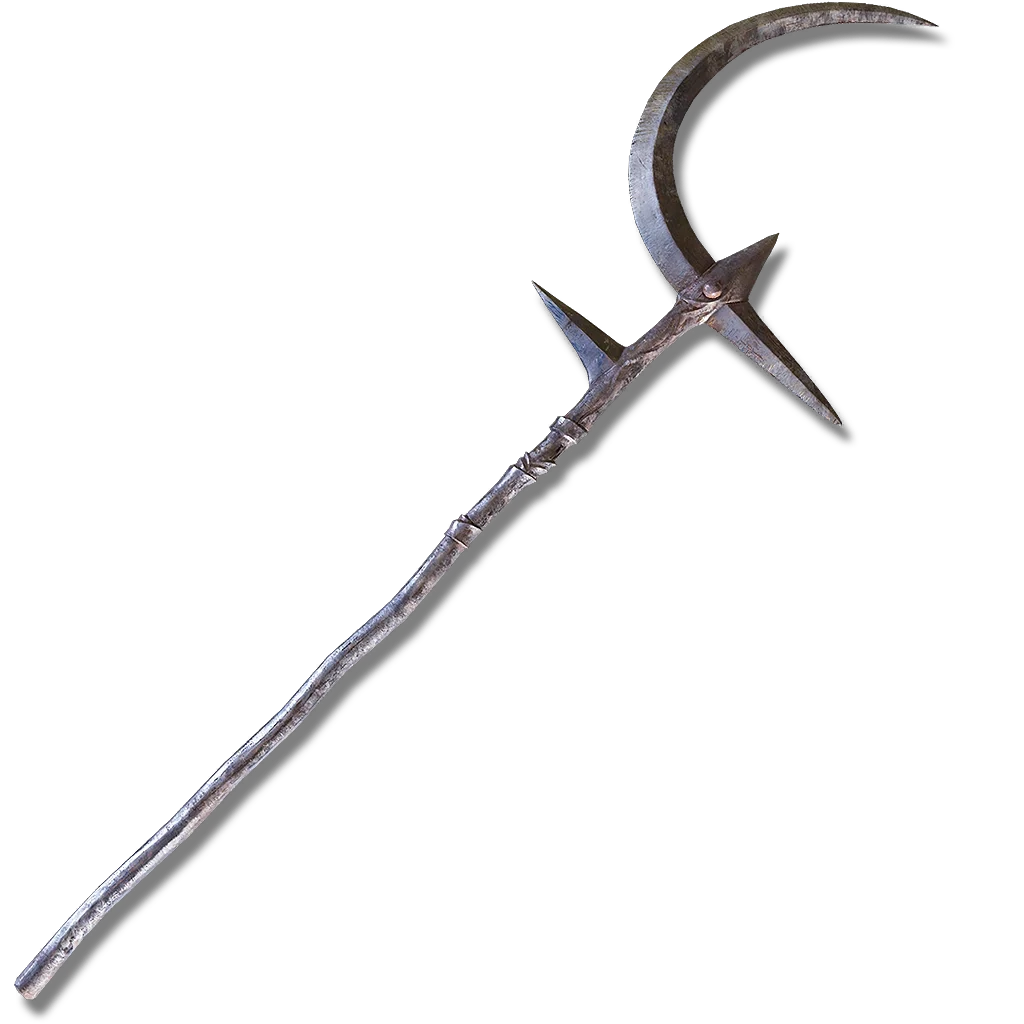 Ripple Crescent Halberd
Weapon wielded by young Albinaurics. The blade is said to resemble a partial image of a ripple, and its attack power scales with one's arcane attribute.
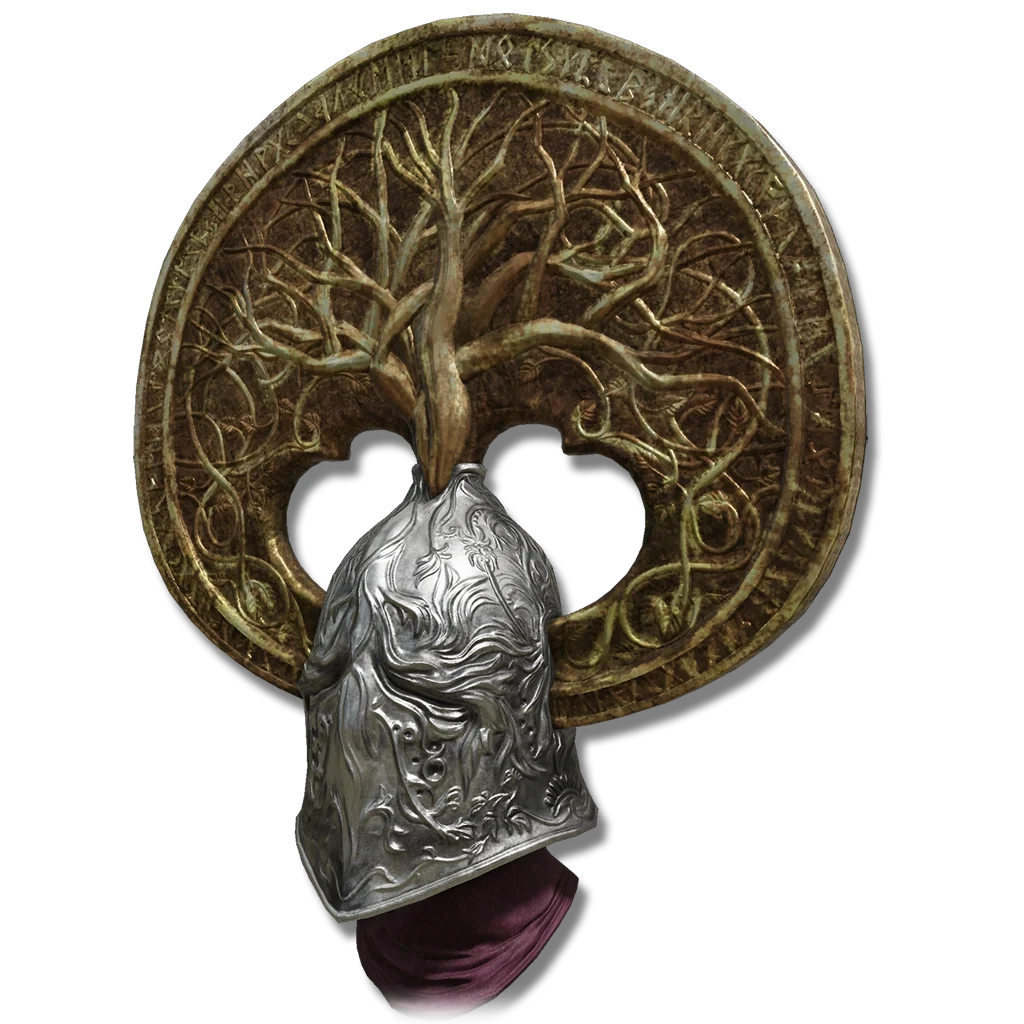 Royal Knight Helm
Silver helm of Loretta, a knight who served Miquella's Haligtree. Loretta, once a royal Carian knight, went on a journey in search of a haven for Albinaurics, and determined that the Haligtree was their best chance for eventual salvation.
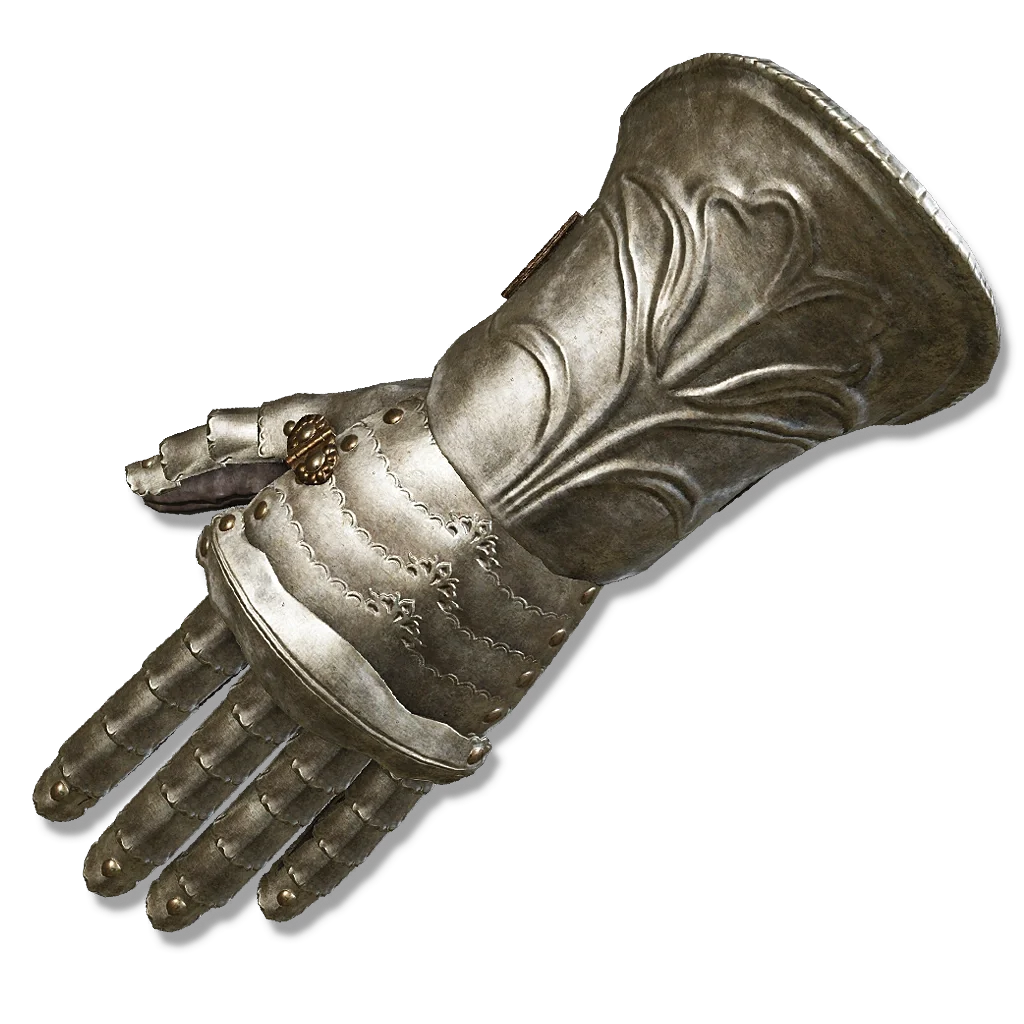 Royal Knight Gauntlets
Silver gauntlets of Loretta, a knight who served Miquella's Haligtree. Loretta, once a royal Carian knight, went on a journey in search of a haven for Albinaurics, and determined that the Haligtree was their best chance for eventual salvation.
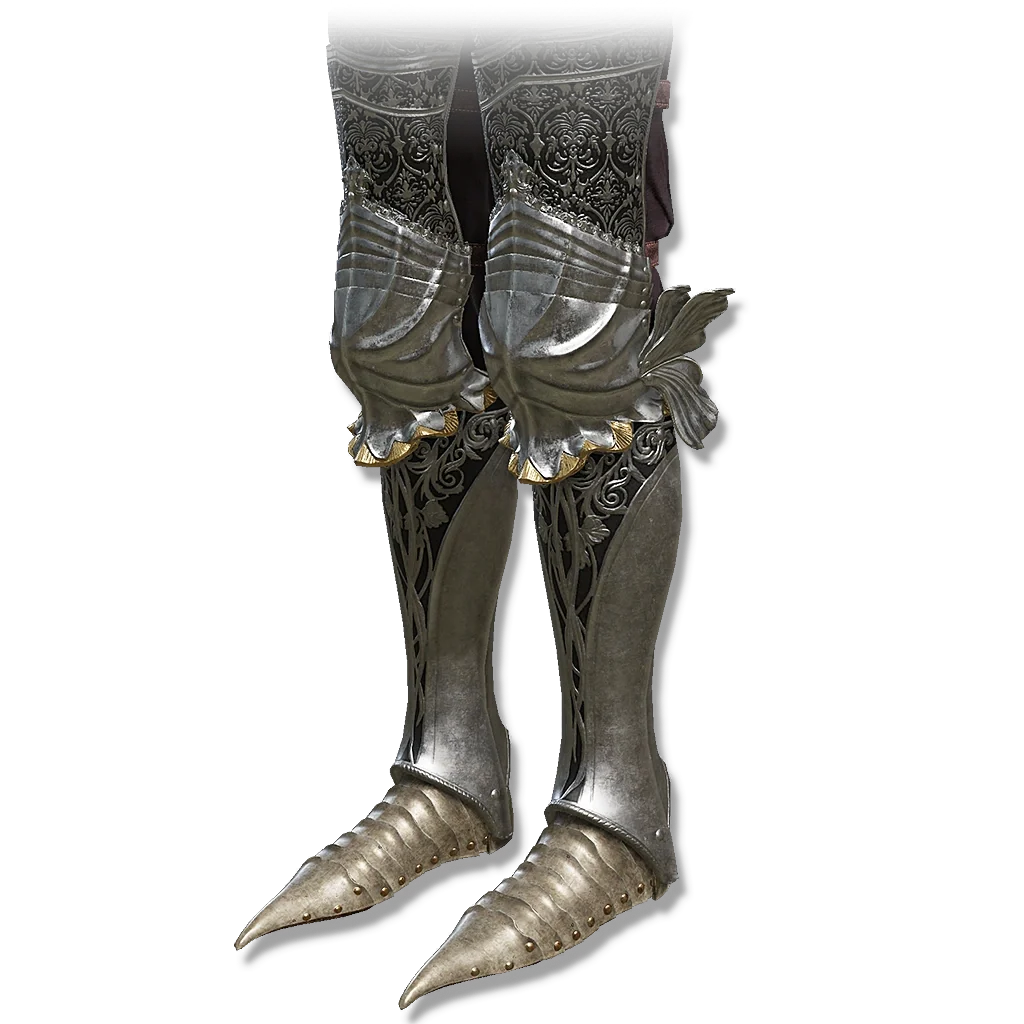 Royal Knight Greaves
Silver greaves of Loretta, a knight who served Miquella's Haligtree. Loretta, once a royal Carian knight, went on a journey in search of a haven for Albinaurics, and determined that the Haligtree was their best chance for eventual salvation.
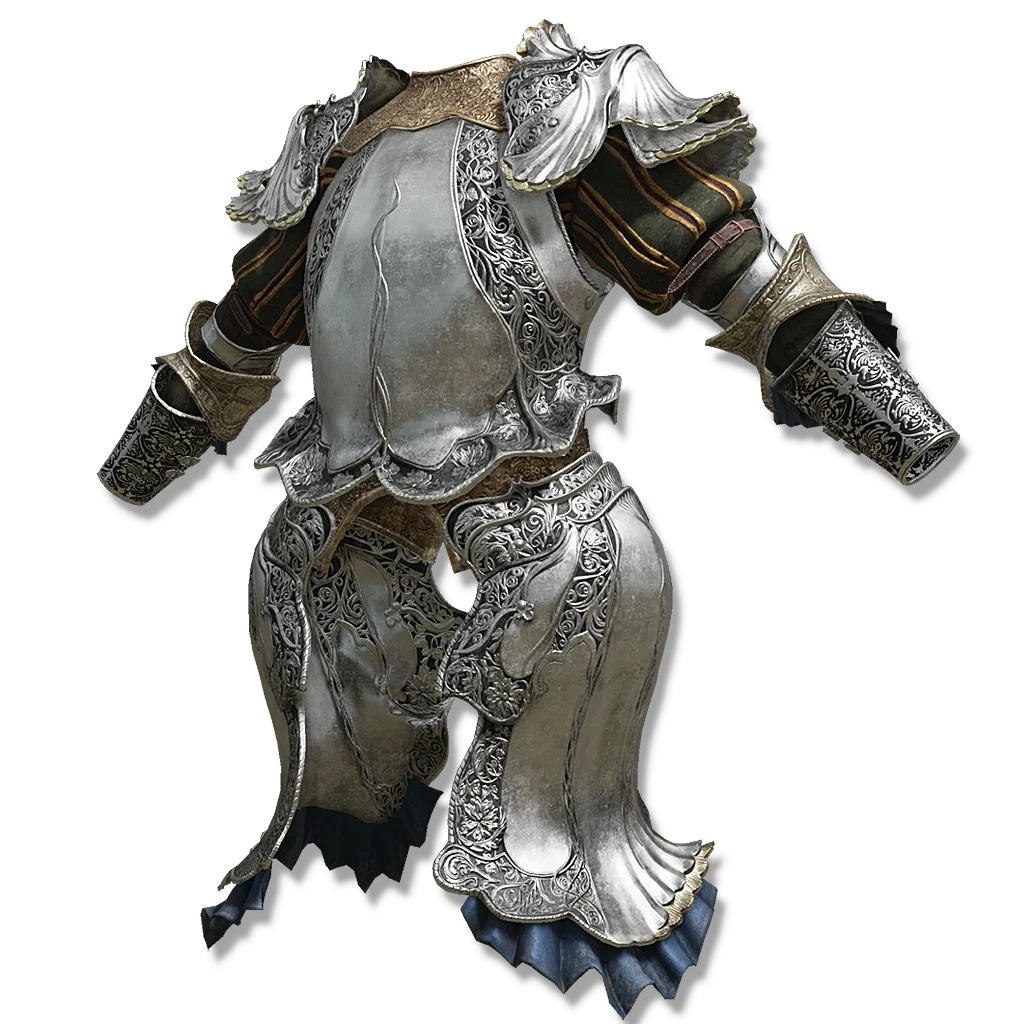 Royal Knight Armor (Altered)
Silver armor of Loretta, a knight who served Miquella's Haligtree. Loretta, once a royal Carian knight, went on a journey in search of a haven for Albinaurics, and determined that the Haligtree was their best chance for eventual salvation.
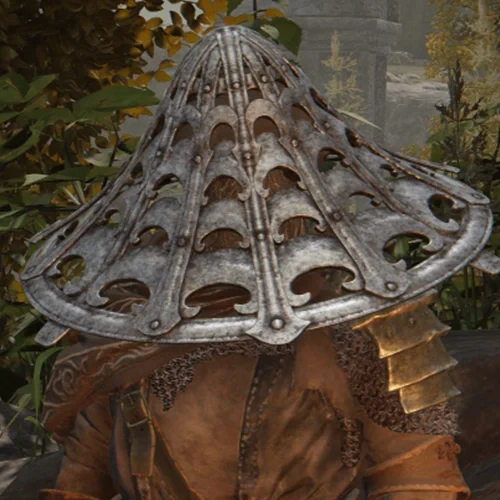 ✦️ GROUP / FACTION
Bloody Fingers & Recusants
Mohg's Disciples · Rykard's Hunters▾
Bloody Fingers & Recusants
"Her mastery of the sword was such that her onslaught was likened to a whirlwind, but now her legacy is staunched in flame."
Eleonora, the Violet Bloody Finger
The Bloody Fingers and Recusants are two distinct but related categories of Tarnished who renounce the guidance of grace and pursue their own agendas through violence. Bloody Fingers are Tarnished who have been marked by Mohg's blood curse, their grace corrupted into a red, blood-stained form. They invade other Tarnished's worlds as an act of devotion to Mohg, Lord of Blood, building toward the Mohgwyn Dynasty. Varré serves as their primary recruiter. Hunter Tarnished (those who answer the calls for rescue against Bloody Finger invaders) serve as the counter-force. The Recusants are a distinct order under Volcano Manor's ideology, they reject the Golden Order and its guidance on philosophical grounds, hunting their own kind as a form of organized resistance. Bernahl, Patches (briefly), Diallos, and Rya the Scout all interact with the Recusant network. The two groups overlap: some recusants become Bloody Fingers, and both reject the Two Fingers' authority. The Furlcalling Finger Remedy allows Tarnished to see invasion signs; the Bloody Finger item allows repeated invasion. The finger mythology is significant: Fingers (Two, Three, Bloody) are a consistent cosmic motif, the Two Fingers represent divine order, the Three Fingers represent chaos, and Bloody Fingers represent a perversion of the original grace.
◆ Sources
Dung Eater (Dialogue)Oh, so that's where the so-called Lord of Blood was hiding himself eh. A fitting little squat for that deluded maniac to bleat about the revival of his precious dynasty, while he turns our fellow Tarnished into Bloody Fingers. Let him stay there. That way, his delusions will remain as they are - distant and unattainable.
 Ash of War: Piercing Fang
This Ash of War grants an armament the Keen affinity and the following skill: "Piercing Fang: Skill used by Yura, the Bloody Finger Hunter. Starting with the blade held horizontally, make a powerful thrust that cannot be blocked." Usable on medium and large armaments capable of thrusting.
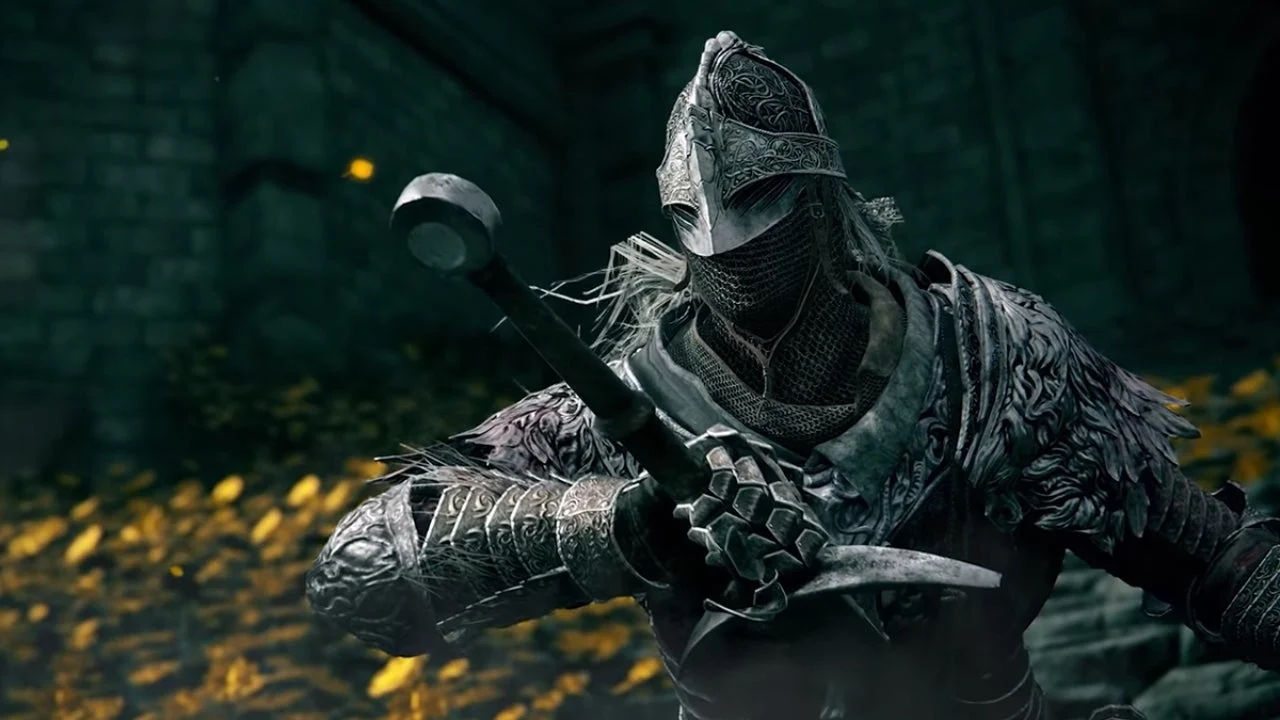 ✦️ GROUP / FACTION
The Tarnished
Exiled Grace-Bearers · Chosen Champions▾
The Tarnished
"And one other. Whom grace would again bless. A Tarnished of no renown."
Intro narration, the unexpected one
The Tarnished are former subjects of the Golden Order who were stripped of grace and exiled from the Lands Between by Marika, forced on the Long March alongside Godfrey. Their defining characteristic: their grace "turned cold," losing its golden glow, and they were cast out to wander beyond the Fog Sea. Without grace, they also lost the rebirth cycle, they could die permanently in the outer world. The opening narration establishes their return: when the Elden Ring was shattered and the Greater Will went silent, the guidance of grace was re-extended to the Tarnished, calling them back across the Sea of Fog. Unlike grace-bearing subjects of the Lands Between, Tarnished who return after the Shattering can be reborn at Sites of Grace, a property that made them uniquely suited to the dangerous task of challenging demigods. The reason Marika exiled the Tarnished is explicitly tied to Godfrey: she wanted them to grow through adversity, to become hardened champions capable of one day returning to restore the Elden Ring. The Tarnished who return are described as Maidenless (without a Finger Maiden to channel runes into strength) until they find Melina. The Two Fingers and Finger Readers guide the Tarnished toward becoming Elden Lord, the purpose they were recalled for.
◆ Sources
Remembrance of Hoarah LouxAlternatively, it can be used to gain a great bounty of runes. When Godfrey, first Elden Lord was robbed of his grace, becoming Tarnished, he took with him his kinfolk and left the Lands Between. After the Long March of the Tarnished came to an end, Godfrey divested himself of kingship, becoming a simple warrior once more.
Old Albus (Dialogue)Heh heh... Ah, if it isn't a Tarnished warrior. Are you travelling my way? I'm heading to the festival at Redmane Castle, on the southern edge of the scarlet rot-blighted Caelid Wilds. I, Iron Fist Alexander, do hereby vow to unflinchingly brave this ordeal. I am the warrior jar, Iron Fist Alexander. The pleasure is mine. Would you mind if I called you lord? I heard that you and the other Tarnished seek the throne of the Elden Lord. Well, I know that you will be the one, and you'd make just the manner of kind-hearted lord that I'd wish for. So, please, if you would.
Latenna the Albinauric (Dialogue)Merchant Kalé (Dialogue)Axe of GodfreyWeapon of Godfrey, Elden Lord. It was broken in a battle fought as leader of the Tarnished during the Long March. This weapon is symbolic of Godfrey's vow to conduct himself as a lord, later becoming an emblem of the golden lineage. In the days of the past, a crown was warranted with strength.
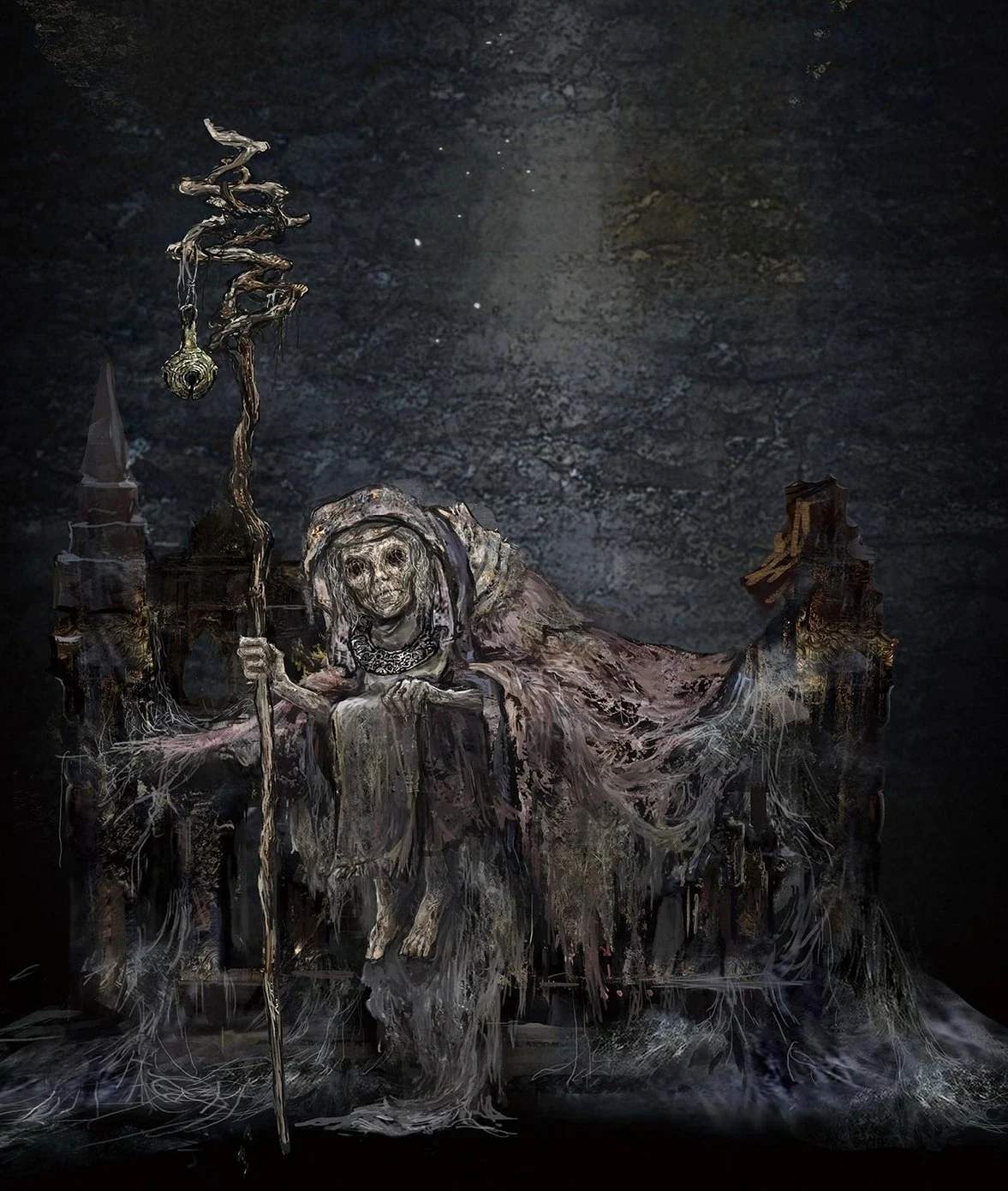 ✦️ GROUP / FACTION
Finger Maidens & Finger Readers
Intermediaries of the Two Fingers · Guides of the Tarnished▾
Finger Maidens & Finger Readers
"Great Elden Ring, root of the Golden Order."
Through the Finger Reader, on grace
Finger Maidens are women designated by the Two Fingers to serve individual Tarnished, channeling runes into strength (serving as a "level-up" mechanism) and maintaining the spiritual connection to the Golden Order's guidance. Varré's opening jibe, "you're maidenless, aren't you?", establishes that without a Finger Maiden, a Tarnished cannot channel their accumulated runes into growth, leaving them effectively stranded. Melina performs this function for the player despite explicitly not being an official Finger Maiden ("I'm no Finger Maiden. I have no such duty"). The blood of a Finger Maiden is used by Varré in his initiation rite (soaking a cloth in a maiden's blood at Church of Inhibition or Church of Vows). The Three Fingers' equivalent are their own Finger Maidens, Hyetta being the player's guide toward the Frenzied Flame, eating Shabriri Grapes (eyeballs) as her form of spiritual sustenance. Finger Readers (like Enia at Roundtable Hold) are a distinct role: older women who physically touch and interpret the Two Fingers' communication, translating divine gesture into spoken guidance. Enia reads the Remembrances of slain demigods and exchanges them for their weapons and spells.
◆ Sources
✦️ GROUP / FACTIONThe Omens
Grace-Cursed Offspring · Rejected Children of the Order▾
The Omens
Omens are beings born with bodily horns, wings, and other protrusions that the Golden Order classifies as cursed deviations from the grace-blessed human form, manifestations of the "crucible" state of primordial life breaking through into beings who should embody the Order's purified ideal. The Omen themselves are not inherently evil: Morgott and Mohg, both Omen sons of Godfrey and Marika, represent opposite responses to the same birth-curse. The Omenkiller armor set (and the Omenkiller NPCs found throughout the Lands Between) reveals that specialized hunters were dispatched specifically to murder Omens, particularly in urban areas like Leyndell where their presence was seen as a spiritual contamination. The chains used to bind Omens at birth are represented by Morgott's and Mohg's visual design (both show ligature marks). The Omen Helm description confirms that Omens were traditionally imprisoned at birth, their horns ritually bled. The Mohgwyn White Mask and the Sanguine Noble armor (worn by Mohg's blood followers) reference the Omen aesthetic. Despite the Order's rejection, Omens retain the capacity for grace, Morgott became "King of Grace" through sheer force of devotion. Their horns are actually weapons (Morgott's Cursed Sword is forged from his own horns) and can be used as tools of their own power.
◆ Sources
Spinning WeaponSlice at foes while performing a great rotation with the body. The momentum generated can empower a final, heavy strike. Skill: Invisible Arrow Nearly invisible magic arrow that leaves no trail and disappears on impact. Skill: Death Monarch Launch summoned death monarchs at enemies, siphoning HP from those hit and returning it to the caster.
Remembrance of the Omen KingRemembrance of Morgott, the Omen King, hewn into the Erdtree. The power of its namesake can be unlocked by the Finger Reader. Alternatively, it can be used to gain a great bounty of runes. Though born one of the graceless Omen, Morgott took it upon himself to become the Erdtree's protector. He loved not in return, for he was never loved, but nevertheless, love it he did.
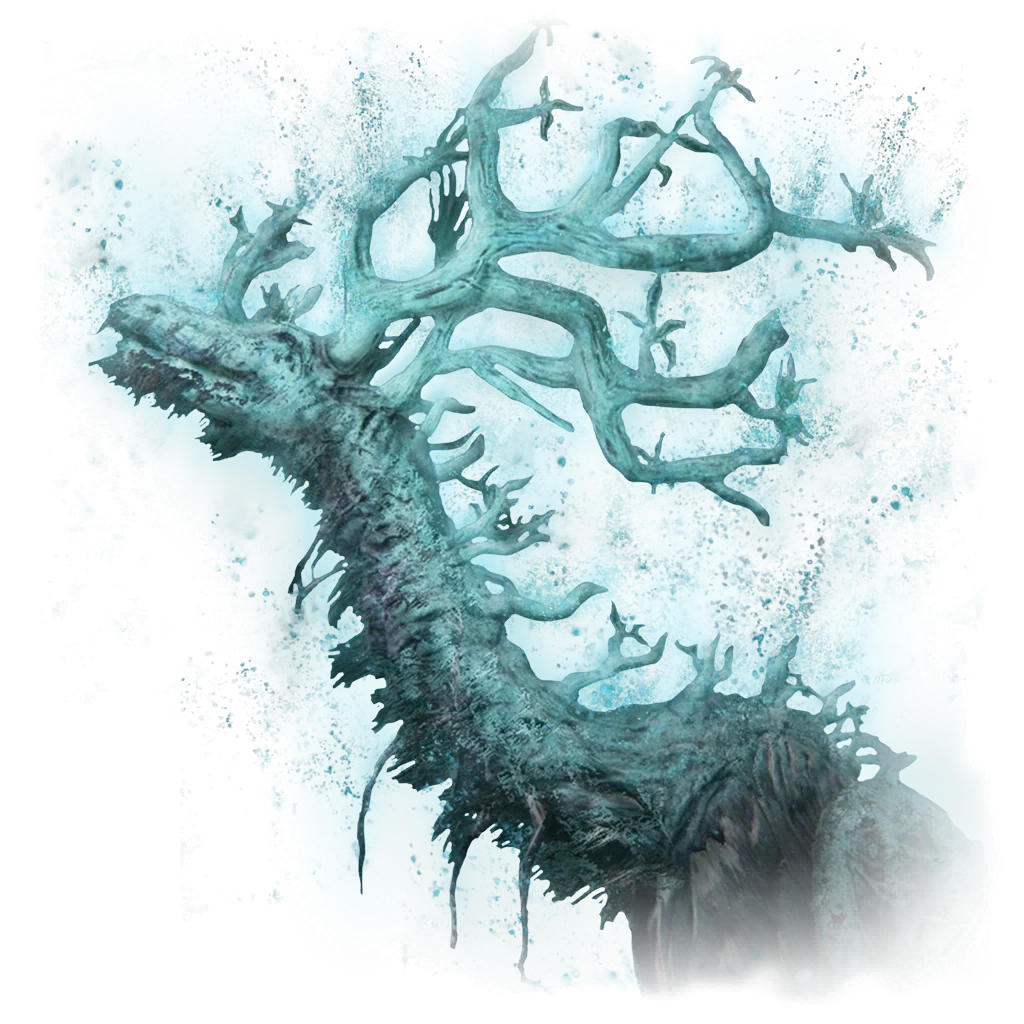 Remembrance of the Regal Ancestor
Alternatively, it can be used to gain a great bounty of runes. Ancestral spirits exist as a phenomenon beyond the purview of the Erdtree. Life sprouts from death, as it does from birth. Such is the way of the living.
Remembrance of the NaturalbornOnce destroyed an Eternal City and took away their sky. An falling star of ill omen.
Dolores the Sleeping Arrow Puppet(Lake of Rot) A new map has been found. (Mohgwyn Palace) A new map has been found. (Siofra River) A new map has been found. (Deeproot Depths) Cannot store currently equipped items Selected item cannot be placed in storage Cannot store item.
Old Albus (Dialogue)Please! Just stop a moment, I beg! My lower half is stuck on something down there! I'll break! Then I'd be of some real use to you, I reckon. Right, but I'll need a moment. I-I'm frightened of them... So I have to gather myself.
War Counselor Iji (Dialogue)Perhaps you knew that Old Iji❞ appreciates a good drink. I'll save it for a quiet moment, that I might truly savour it. Lady Ranni has departed on her journey. Along the dark path of the Empyrean, from Renna's Rise, as she calls it.
Latenna the Albinauric (Dialogue)Yes, as it should be. Now, close your eyes for a moment. I will transport you to the Lord's chamber. Farewell, then. I wish to anoint you a proper inductee. A knight to serve Luminary Mohg, the Lord of Blood, and establish a new dynasty. Luminary Mohg has strength, vision, and of course, love. So, what do you say, my lambkin? Mm, yes, who would have it any other way?
Gatekeeper Gostoc (Dialogue)If you put your mind to it, perhaps you won't embarrass our Lady. You wish to begin right this moment? Well, your impatience, though boorish, is understandable. Let's have at it.
Preceptor Seluvis (Dialogue)Rya the Scout (Dialogue)She's my servant, but fickle as the wind. Take your eyes off her for but a moment and she's good as gone. If you find her, please be sure to tell me. Be sure to tell me if you meet a young woman named Lanya.
My apprentice. Give me a moment later. I have a favour to ask. The form you see before you is merely a projection. Are you mad? Another moment of this, and no amount of grovelling will spare you. You sadden me, my apprentice. Ahh, how can this be... ...every fallen child... must shine again...
Shabriri (Dialogue)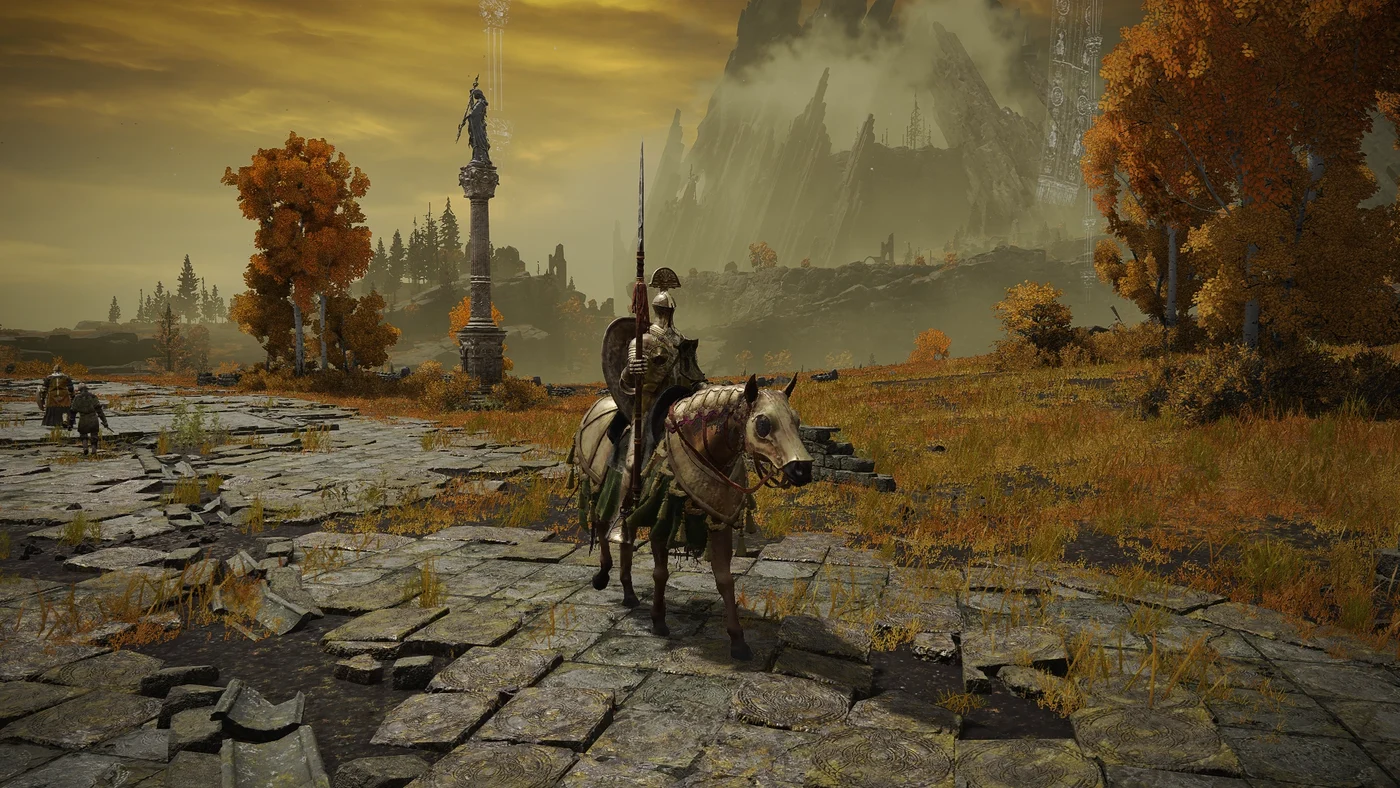 ✦️ GROUP / FACTION
Knights of Leyndell & the Erdtree
Capital's Guard · Elite Soldiers of the Golden Order▾
Knights of Leyndell & the Erdtree
The knights of Leyndell and the broader Erdtree represent the military backbone of the Golden Order, multiple distinct orders serving different functions. The Leyndell Knights (Leyndell Knight Helm, Armor, Gauntlets, Greaves) are the regular capital guard, clad in gold-trimmed plate, serving as the front-line defenders of the Royal Capital against Tarnished invaders during the Shattering. The Tree Sentinels are a distinct mounted order, heavily armored cavalry bearing the Erdtree's golden standard and wielding halberds or golden shields, operating as mobile enforcement of the Golden Order's borders (found at Leyndell's gates and the Altus Plateau). The Erdtree Sentinels and Erdtree Avatars are larger-scale spiritual manifestations of the Erdtree's defense mechanism, massive forms of golden foliage and root that patrol Minor Erdtrees across the Lands Between. The Crucible Knights (see their own entry) represent the oldest stratum. During the Shattering, many of these knights fell in the repeated defenses of Leyndell, their bodies remain throughout the capital. Morgott himself supplemented the defense by stacking heroes' corpses at the gates, described in the Historical Monuments.
◆ Sources
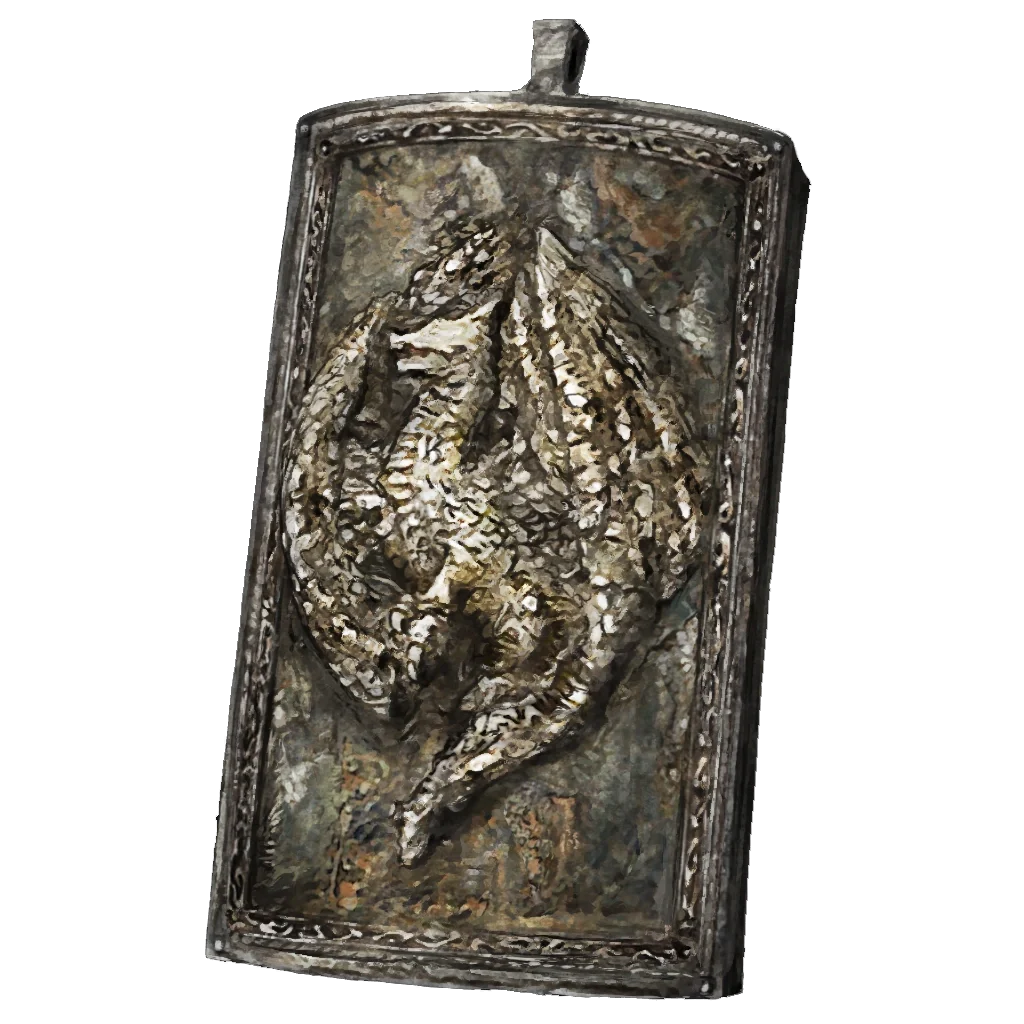 Greatshield Talisman
Talisman depicting a knight holding a greatshield. Boosts guarding ability. The knights of Leyndell once modelled themselves after the Tree Sentinels. Their purpose is to protect that which deserves protection, and thus the shield always comes before the sword.
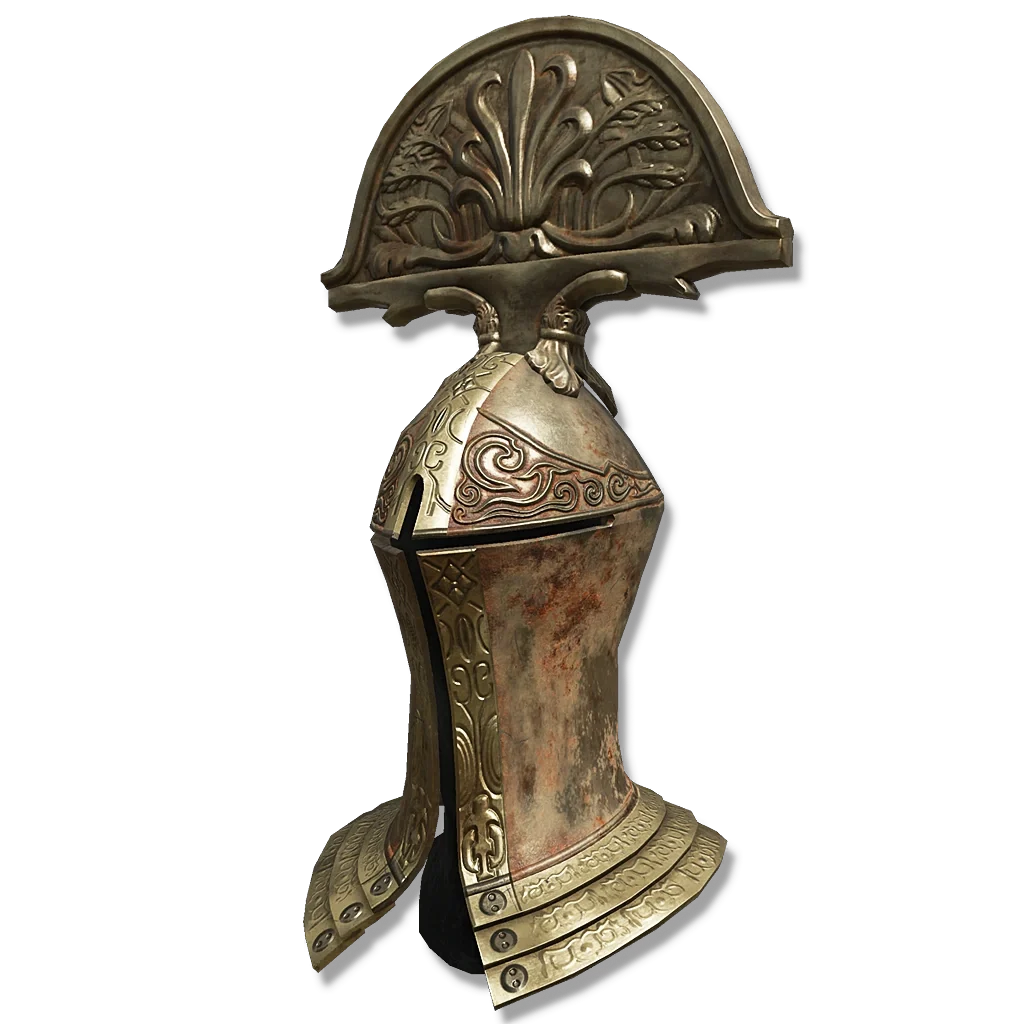 Leyndell Knight Helm
Helm worn by knights sworn to defend the royal capital of Leyndell. The golden canopy represents the honor of standing among the tree's defenders.
✦️ GROUP / FACTIONRadahn's Army, Starscourge Legion
Caelid's Survivors · Loyal to the Last▾
Radahn's Army, Starscourge Legion
Radahn's army was the most powerful military force in the Lands Between during the Shattering, led by General Radahn, whose personal strength dwarfed any individual warrior. The Radahn Soldier armor (Radahn Soldier Helm, Radahn's Soldier Gauntlets, Radahn Soldier Greaves) describes soldiers who swore absolute loyalty to the General. After the Battle of Aeonia and Radahn's descent into madness from the Scarlet Rot, his army faced an impossible choice: abandon their general or remain in the rotting wasteland of Caelid. They remained. The Radahn's Soldiers who survived organized the Radahn Festival, not as celebration, but as a mercy mission: recruiting champions to offer their general an honorable death. Castle Redmane became their headquarters, with Jerren (Castellan) as the administrator. The Lionhearted soldiers who appear at Redmane represent the survivors who maintained discipline despite the horror of Caelid. Even after death, Radahn's soldiers reappear as Revenants in some areas, their loyalty transcending death. The gravity magic that Radahn mastered was shared with some of his knights (evidenced by the Gravitational Arrow and falling-star themed weapons found in Caelid). His red war paint and flowing crimson hair became the visual identity of the entire army.
◆ Sources
Old Albus (Dialogue) "Redmane" Painting
Work of a wandering artist. Reminiscence of a painting titled "Redmane." This painter is said have captured the landscapes seen during the last moments of those welcomed into death's embrace. The soul of the painter, and vestiges of the dead's last moments can be discovered by visiting the location depicted even now.
A record of crafting techniques left by an armorer who served the great general Radahn. Contains knowledge of dealing with rot; the application of fire in particular. Acquire the knowledge to craft the following: - Redmane Fire Pot
 Lion's Claw
Skill: Lion's Claw Skill of the Redmanes, who fought alongside General Radahn. Somersault forwards, striking foes with armament.
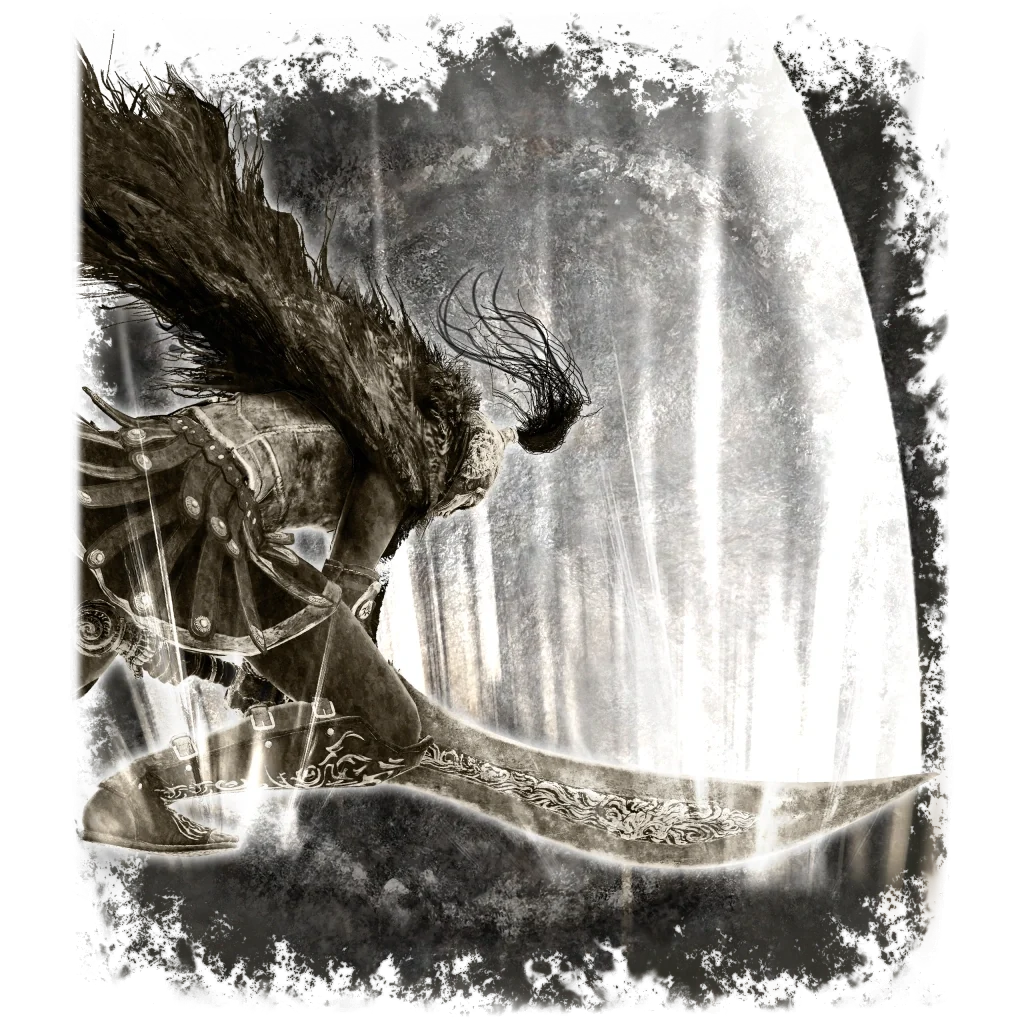 Ash of War: Lion's Claw
This Ash of War grants an armament the Heavy affinity and the following skill: "Lion's Claw: Skill of the Redmanes, who fought alongside General Radahn. Somersault forwards, striking foes with armament." Usable on swords, axes, and hammers (small armaments and thrusting swords excepted).
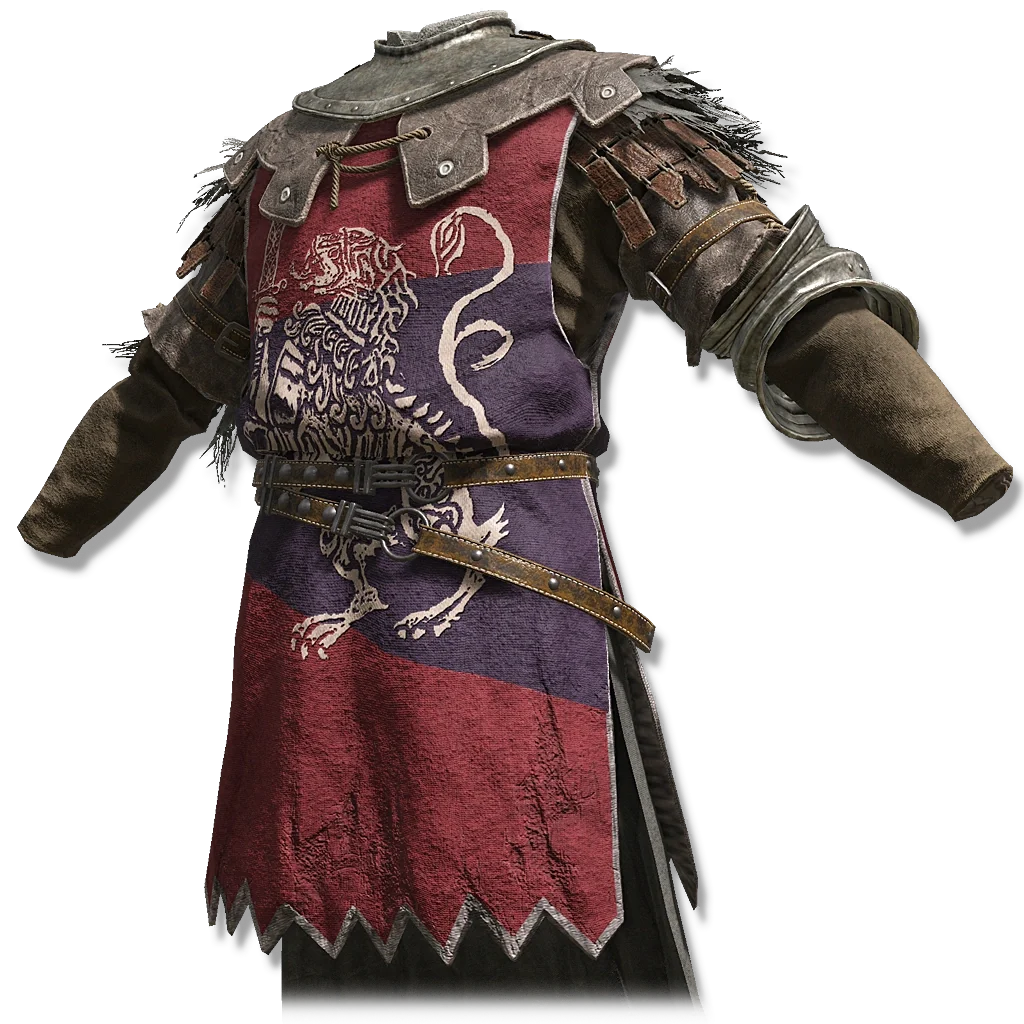 Redmane Surcoat
Armor worn by soldiers who fought by General Radahn's side. The surcoat depicts a red-maned lion raising a sword in the image of Radahn. Thus, they were Redmanes, and all proved they were worthy of the name.
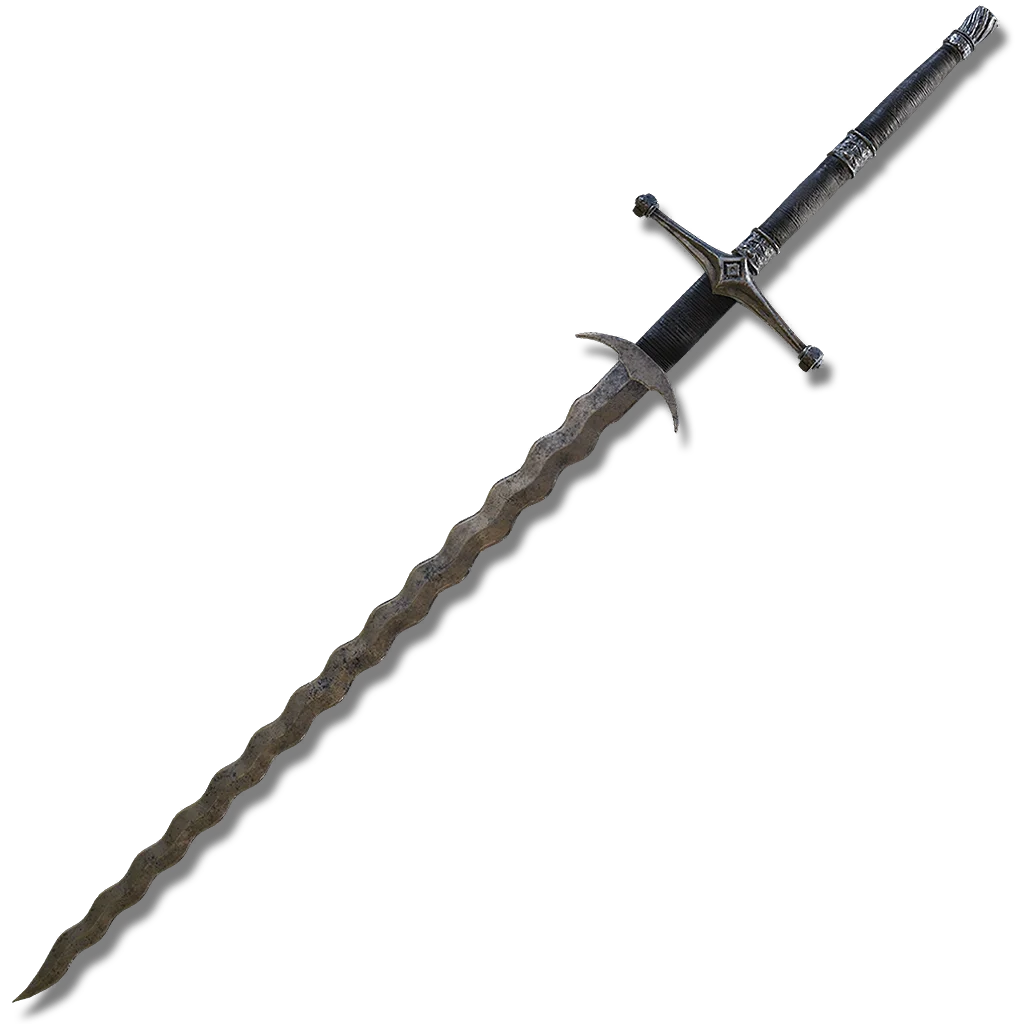 Flamberge
Shreds enemy flesh, inducing blood loss. Scarlet rot is kept at bay with flame at Redmane Castle, and as such, this beloved sword of Jerren's eventually became the symbol of the castle itself.
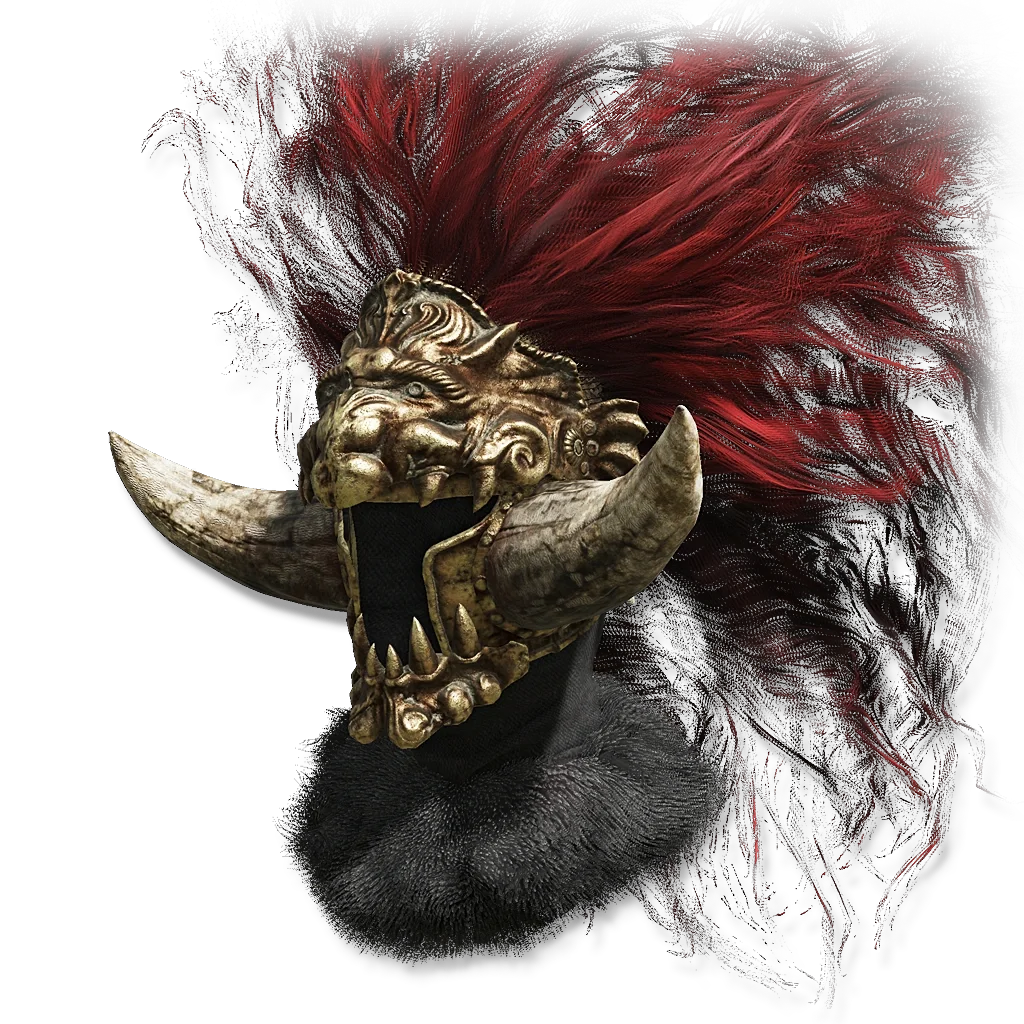 Radahn's Redmane Helm
Helm of the golden lion, with flowing red hair. Worn by General Radahn. Radahn inherited the furious, flaming red hair of his father Radagon, and is fond of its heroic implications. "I was born a champion's cub. Now I am the Lord of the Battlefield's lion."
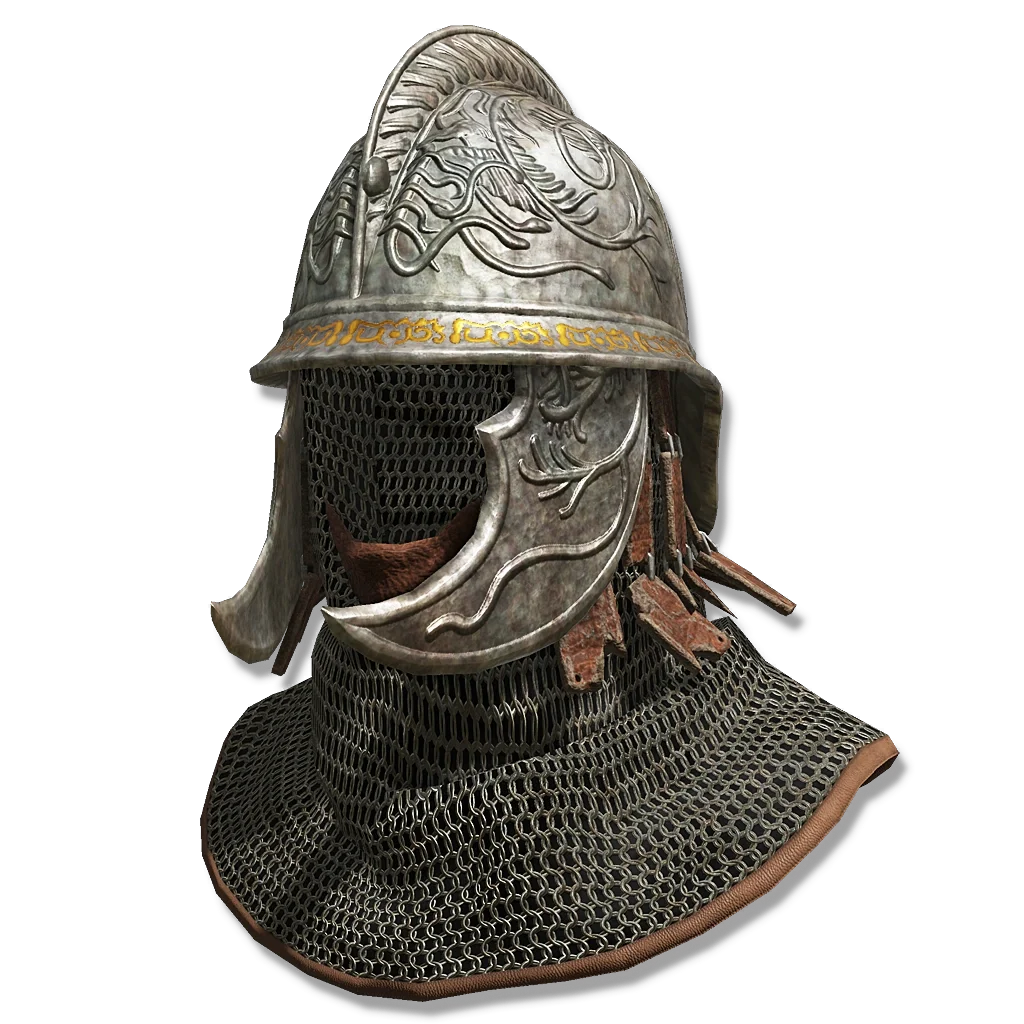 Radahn Soldier Helm
Helm worn by soldiers who fought by General Radahn's side. Its visor is fashioned after a lion's fangs.
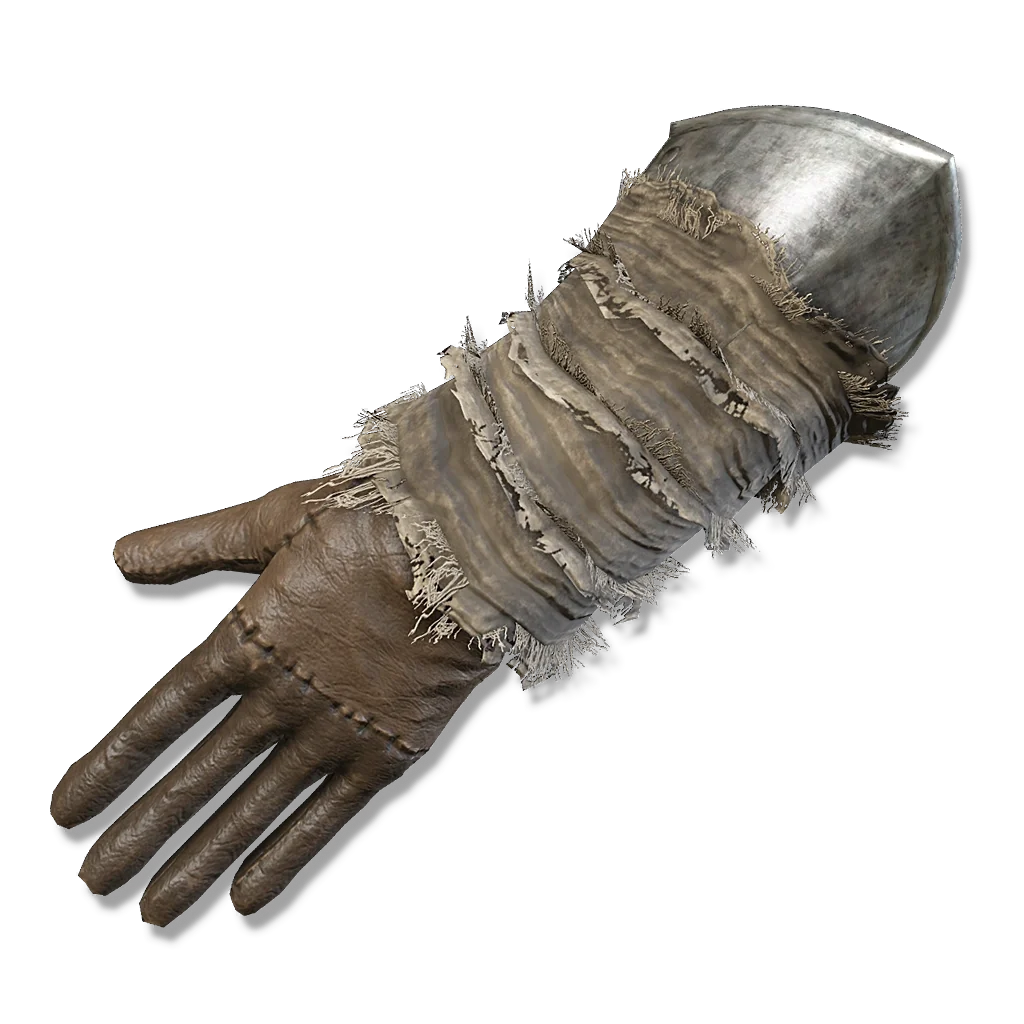 Radahn Soldier Gauntlets
Gauntlets worn by soldiers who fought by General Radahn's side. Rust-worn and stained through unending conflict.
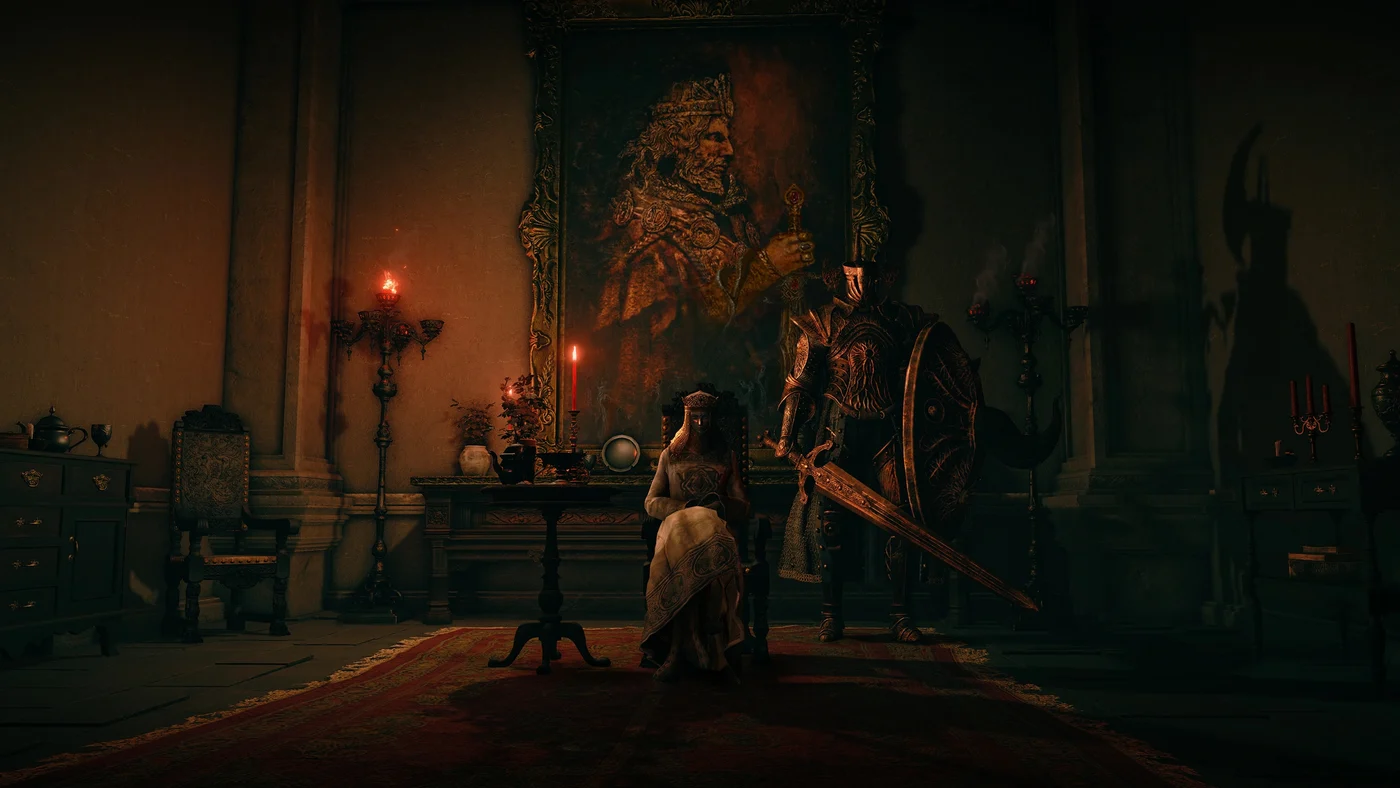 ✦️ GROUP / FACTION
Volcano Manor, The Recusant Network
Heretics · Hunters of the Tarnished▾
Volcano Manor, The Recusant Network
Volcano Manor is both a place and an organization, a refuge and a recruitment network for those who reject the Golden Order's guidance. Its roster during the game includes: Tanith (proprietress, absolute devotee of Rykard), Lady Bernahl (alongside Recusant Bernahl), Rya the Scout / Zorayas (Tanith's adopted serpentine daughter), Patches (briefly, out of curiosity), Diallos (seeking his missing servant Lanya), and the Recusant spirit of resistance. Each resident has a distinct reason for being there: Bernahl came for the martial philosophy, Diallos came for Lanya, Patches came for Tanith, Rya was born there. The Manor's assignment system, leaving letters for residents ordering them to hunt specific Tarnished, is the organizational mechanism. Targets include: Old Knight Istvan (Stormhill), Rileigh the Idle (Altus Plateau), Juno Hoslow, Knight of Blood (Mountaintops), Vargram the Raging Wolf and Great Horned Tragoth (Subterranean Shunning-Grounds). All targets are Tarnished following grace. The underlying ideology: the Erdtree and the Greater Will exploited Tarnished as pawns, so Rykard's resistance offers an alternative, even if that alternative involves hunting your own kind. After Rykard's death, the Manor's purpose dissolves. Tanith remains devouring Rykard. The others scatter.
◆ Sources
Spinning WeaponDolores the Sleeping Arrow PuppetWar Counselor Iji (Dialogue)Latenna the Albinauric (Dialogue)Preceptor Seluvis (Dialogue)Rya the Scout (Dialogue)Dung Eater (Dialogue)Sorcerer Rogier (Dialogue)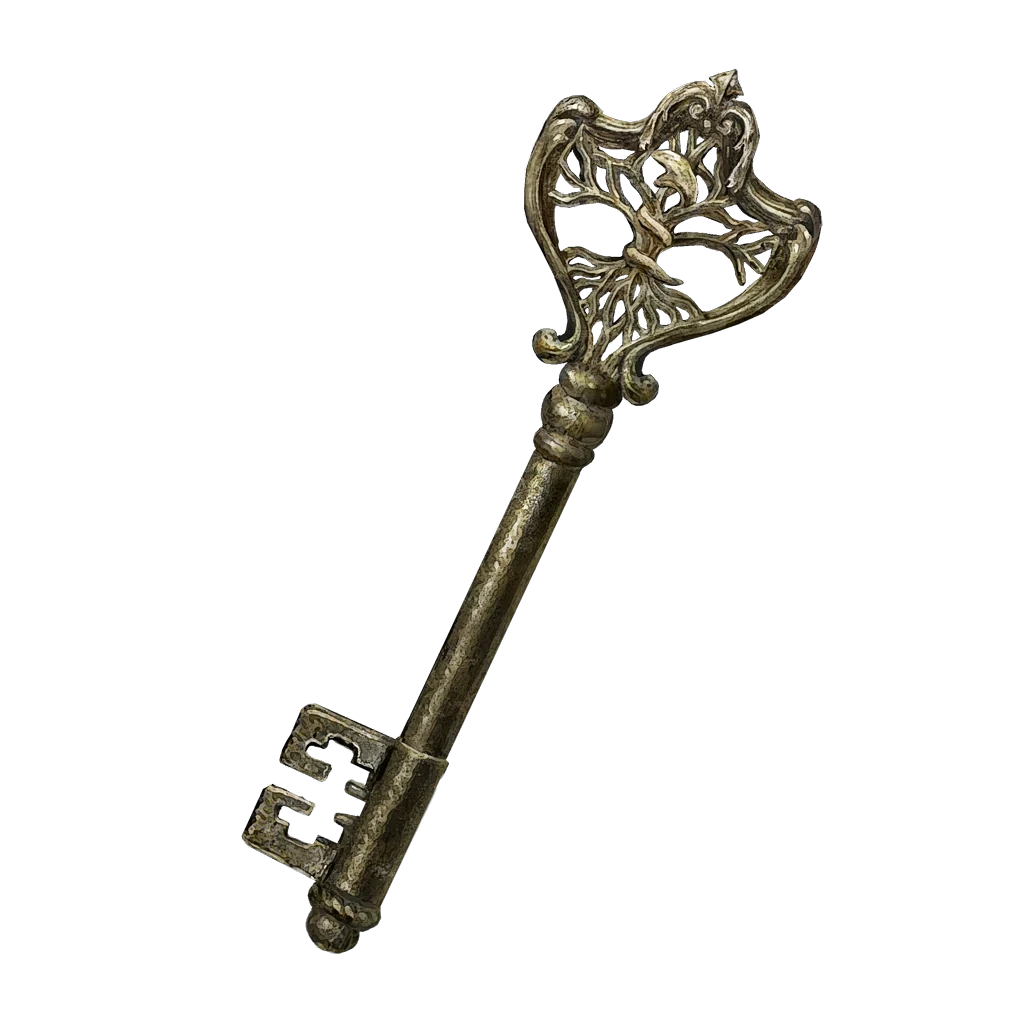 Drawing-Room Key
Key to Volcano Manor's drawing room. The door can be found in the westward corridor, upon the left hand side.
Knight Bernahl's bell bearing, found upon his perished flesh. Offer to the Twin Maiden Husks at the Roundtable Hold to gain access to new items.
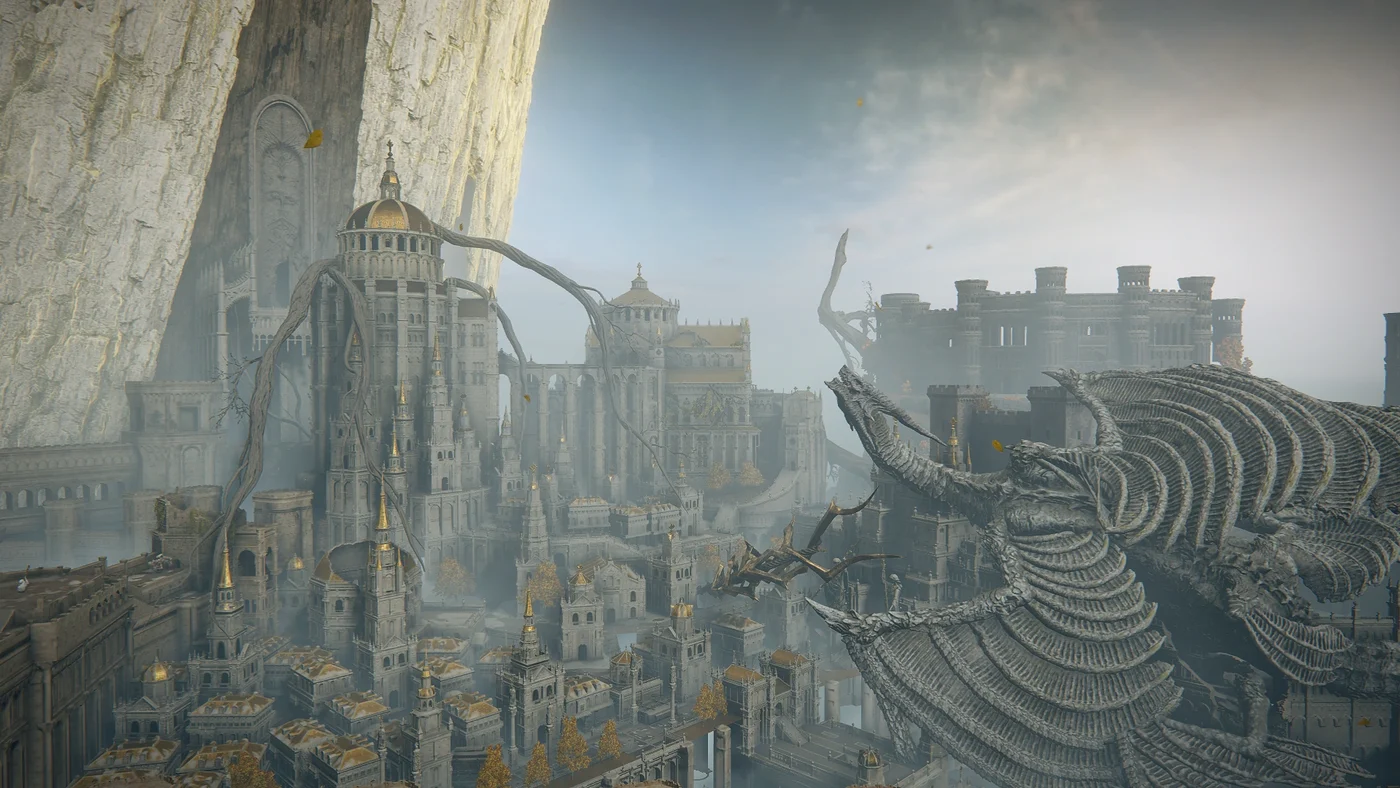 —️ LOCATION
Leyndell, Royal Capital
Seat of the Golden Order · Morgott's Domain▾
Leyndell, Royal Capital
Leyndell is the capital of the Golden Order, built at the base of the Erdtree, a golden city governed by Marika's Order. Surrounded by massive walls, statues of Godfrey, and architecture entirely of gold and white marble reflecting the Erdtree's light, it stands as the physical embodiment of the Order's power. At its heart lies the Elden Throne, the seat of the Elden Lord, now empty since Marika's disappearance. The city was attacked twice during the Shattering: the First and Second Defense of Leyndell, both documented by Historical Monuments. Morgott defended it alone, stacking the bodies of heroes high. The Ashen Capital (post-Erdtree-burning) is Leyndell covered in golden ash, the ash of the burned Erdtree, with all inhabitants gone. Its sewers (Subterranean Shunning-Grounds) hide the chained Omens, the imprisoned Dung Eater❞❞, and ultimately the Forsaken Depths where the Three Fingers reside. The Two Fingers' tower in Leyndell is where Ranni and other Empyreans were evaluated. The Queen's Bedchamber preserves traces of Marika's life. The underground passage from Stormveil Castle to Stormgate connects Leyndell to the wider Lands Between via routes that predate the Shattering.
◆ Sources
Dolores the Sleeping Arrow Puppet(Altus Plateau) A new map has been found. (Leyndell, Royal Capital) A new map has been found. (Mt. Gelmir) A new map has been found.
Dung Eater (Dialogue)Morgott's Great RuneThe Great Rune of the shardbearer Morgott, devoid of any benediction. Seek the Divine Tower of East Altus, which stands beyond the great bridge from Leyndell's eastern ward.
Rykard's Great RuneThe Great Rune of the shardbearer Rykard, devoid of any benediction. Seek the Divine Tower of West Altus, which stands upon the precipice at the coast southwest of Leyndell.
Mohg's Great RuneThe Great Rune of the shardbearer Mohg, devoid of any benediction. Seek the Divine Tower of East Altus, which stands beyond the great bridge from Leyndell's eastern ward.
Sewer-Gaol KeyFilthy key received from the Dung Eater. Unlocks sewer-gaol door said to lie beneath Leyndell, the Royal Capital.
Greatshield TalismanBoosts guarding ability. The knights of Leyndell once modelled themselves after the Tree Sentinels. Their purpose is to protect that which deserves protection, and thus the shield always comes before the sword.
A duo of spirits, consisting of a wielder of devastating charged hammer attacks in the vanguard and a crossbowman bringing up the rear. The soldiers who serve Godrick the Grafted are what remains of the army that fled the royal capital of the Erdtree.
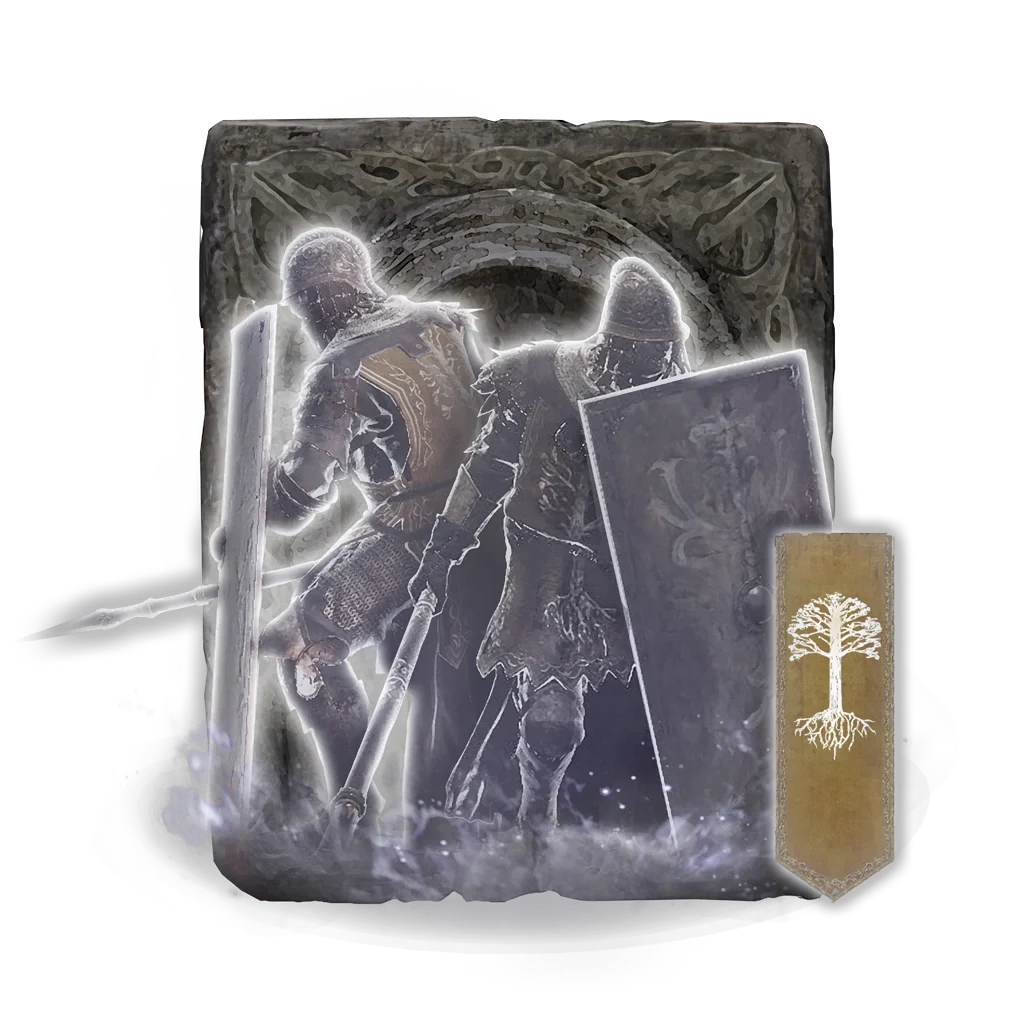 Leyndell Soldier Ashes
Ashen remains in which spirits yet dwell. Use to summon the spirits of two Leyndell soldiers. Spirits of soldiers each equipped with a spear and greatshield. The soldiers of Leyndell fight their battles defensively. During the Shattering, they were the ramparts that fortified the royal capital.
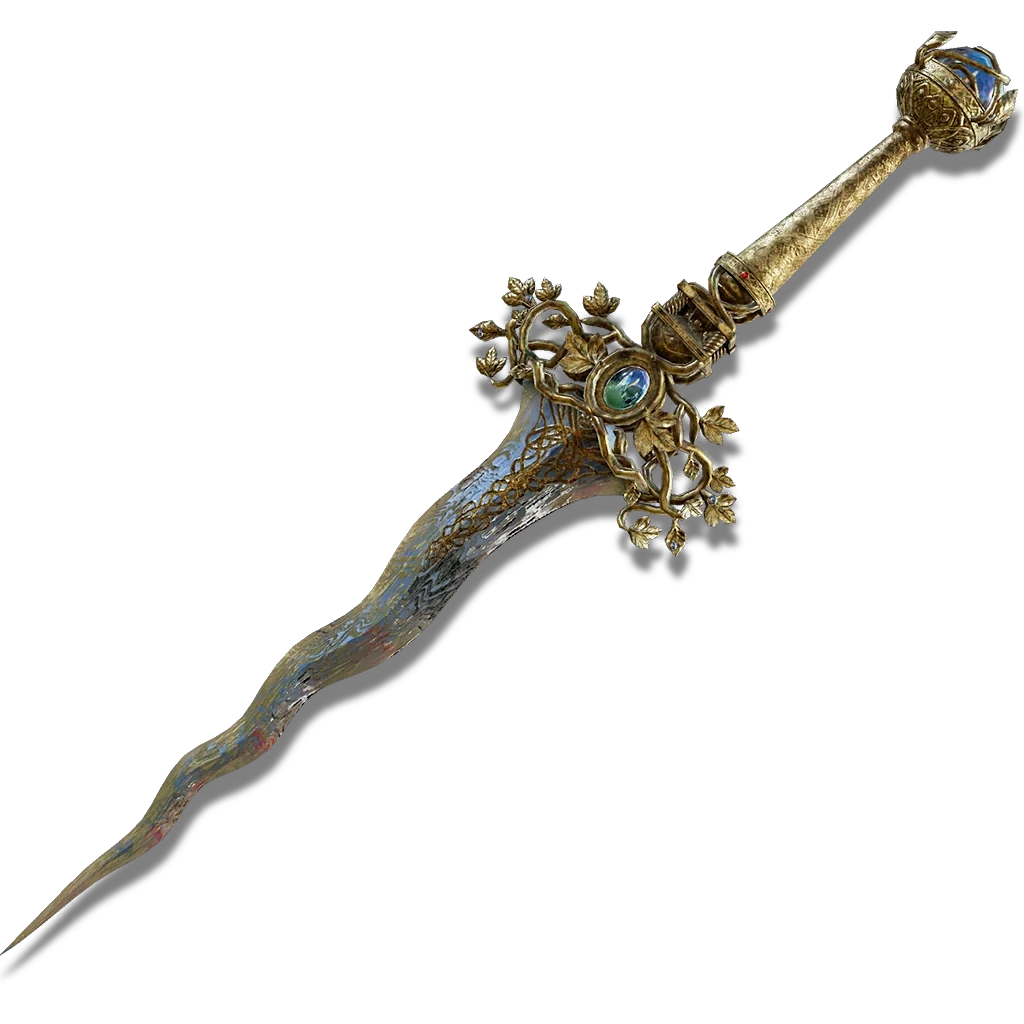 Glintstone Kris
Ritual blade once presented to Leyndell by the Academy of Raya Lucaria to celebrate their newfound peace. Though the weapon is embedded with precious glintstones and features Erdtree ornamentation, the undulating blade is symbolic of an ancient ritual.
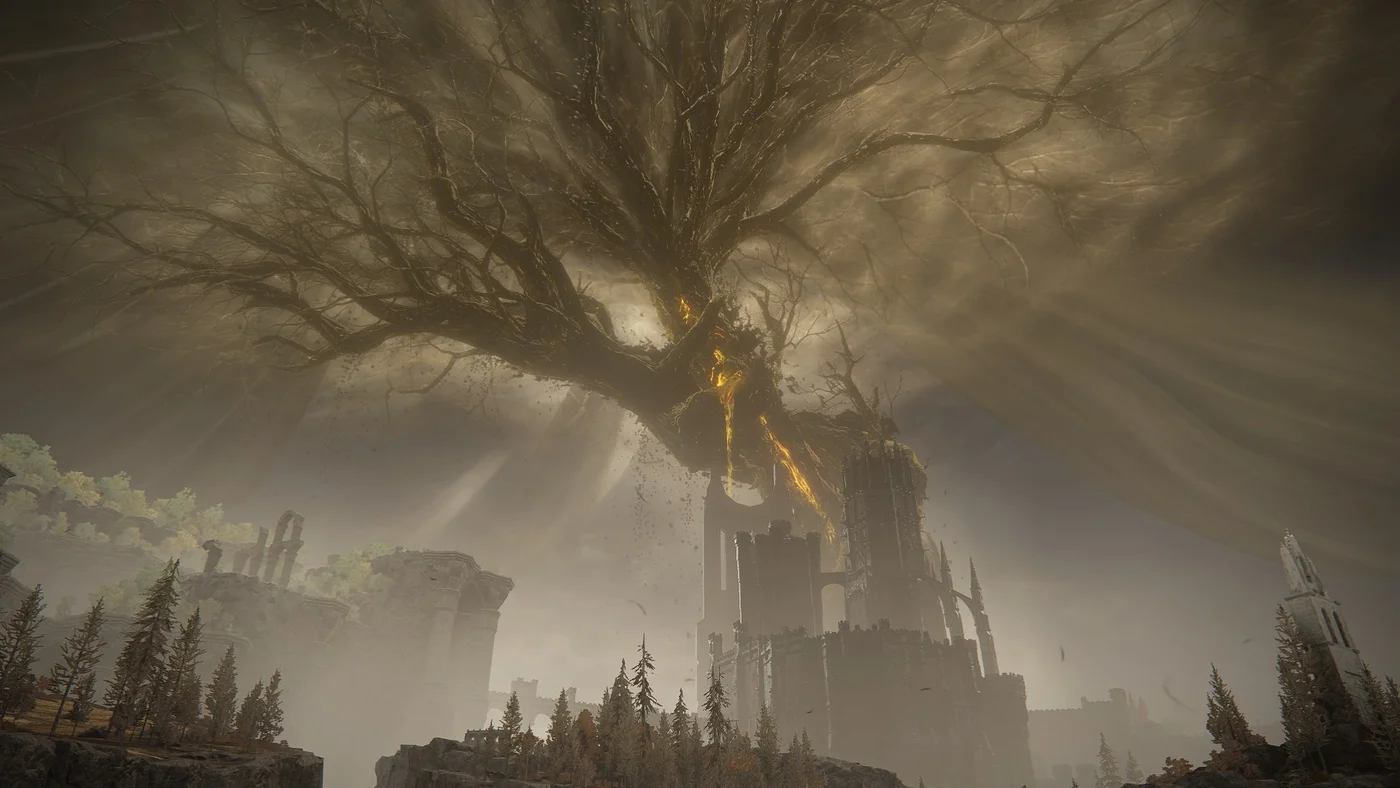 —️ LOCATION
Miquella's Haligtree and Elphael
Tree of Love · Last Refuge of the Marginalized▾
Miquella's Haligtree and Elphael
The Haligtree is the sacred tree secretly cultivated by Miquella, watered with his own blood and nourished by his spiritual essence, to become an alternative to the Erdtree. Unlike the Erdtree which operates on golden grace and imposed Order, the Haligtree is founded on unconditional love. It welcomes the marginalized: Albinaurics (Latenna sought the city of Eburion at its edges), graceless priests, misshapen beings, all those the Golden Order rejects. Elphael, Brace of the Haligtree, is the cradle-city built within its branches, destined to be the Promised Land of the Order's outcasts. Malenia was transported there after the Battle of Aeonia by Finlay and slept long in its roots in an attempt to purge her rot through the Tree's love. The connection with the Erdtree (and thus the Greater Will) is absent from the Haligtree, its branches grew without golden grace, creating a space outside the normal cosmic jurisdiction. The Cleanrot Knights of Malenia guard its approaches. Latenna the Albinauric, upon reaching the Haligtree's snowy lands, completes the ultimate purpose of her quest: "I am so close to home."
◆ Sources
Spinning WeaponSkill: Death Monarch Launch summoned death monarchs at enemies, siphoning HP from those hit and returning it to the caster. Skill: Miquella's Hidden Blade Conjures a blade blessed with Miquella's protection, and performs an attack that is highly damaging against those who live in death.
War Counselor Iji (Dialogue)Will you show me the way? To the land of Miquella's Haligtree. If you accept, I would gladly apprise you. Of the whereabouts of the medallion's other half. My thanks... You'll lead me then, to the land of Miquella's Haligtree. Farewell, Lobo. My faithful wolf, my better half. Castle Sol lies just off to the north, where the other medallion is housed. It will grant passage to the land of the Haligtree. Oh young yet towering sister of ours. Let the birthing droplet in.
Latenna the Albinauric (Dialogue)It is I, Latenna. We have reached the land of Miquella's Haligtree, where Lobo and I began our travels. It's entirely thanks to you that I'm so close to home. These great snow-laden lands stretch far to the north. And beyond the ancient bowers, and the liturgical town of Ordina, lies the place to which I must return. We have reached the land of Miquella's Haligtree.
Dung Eater (Dialogue)Ah, good to see you. I heard the path to the Haligtree had been reopened. So I forced these old bones to weather the journey. Don't tell me it was you who opened the passage? St. Trina's, no, Lord Miquella's cadaver. I have partaken of untold secrets. Such that I might aid you, O Lord.
Millicent (Dialogue)I'm searching for a fort to the north of the ruins. I heard the master of the fort was given a medallion that allowed him to visit the Haligtree. Indeed, I believe that is where Malenia will be found. The Haligtree is hidden somewhere in these Northern lands. I'm searching for a fort to the west of the ruins. Again we meet. I can only surmise our purposes are aligned.
Grant life to the soulless bones! ... Lord Miquella, forgive me. The sun has not been swallowed. Our prayers were lacking. I will never set my eyes upon it now... Your divine Haligtree... ... Show me the path, O gentle lights. The promised path to the Haligtree! ... Only...a little further now... Show me the path, O gentle lights...the path to Elphael. ... Mohg, you rotten Omen. Your blood is cursed. Give him back. Give Lord Miquella back! How dare you lay hands on such precious flesh! ... Lord of Blood, your eminence.
Rotten Winged Sword InsigniaGreatly raises attack power with successive attacks. The four sisters were born in the Swamp of Aeonia, and came to the Haligtree under the aegis of Gowry. And yet, those buds were doomed to never blossom.
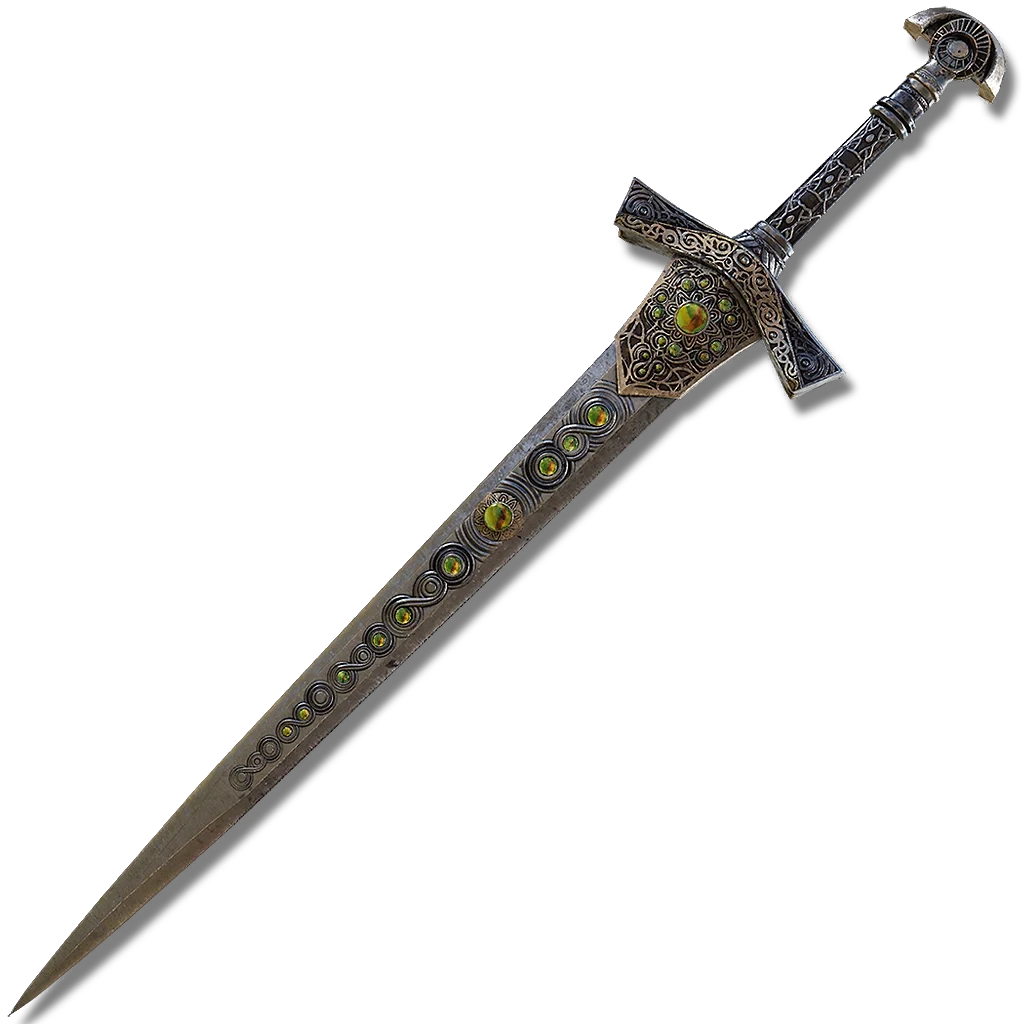 Miquellan Knight's Sword
Sword forged by servants of Miquella of the Haligtree, with a design modeled after those carried by Carian knights. Instead of glintstone however, amber from the Haligtree is embedded in the blade. A sumptuous piece, yet it has never been offered to any knight—an ill-starred sword with no master.
Royal Knight HelmSilver helm of Loretta, a knight who served Miquella's Haligtree. Loretta, once a royal Carian knight, went on a journey in search of a haven for Albinaurics, and determined that the Haligtree was their best chance for eventual salvation.
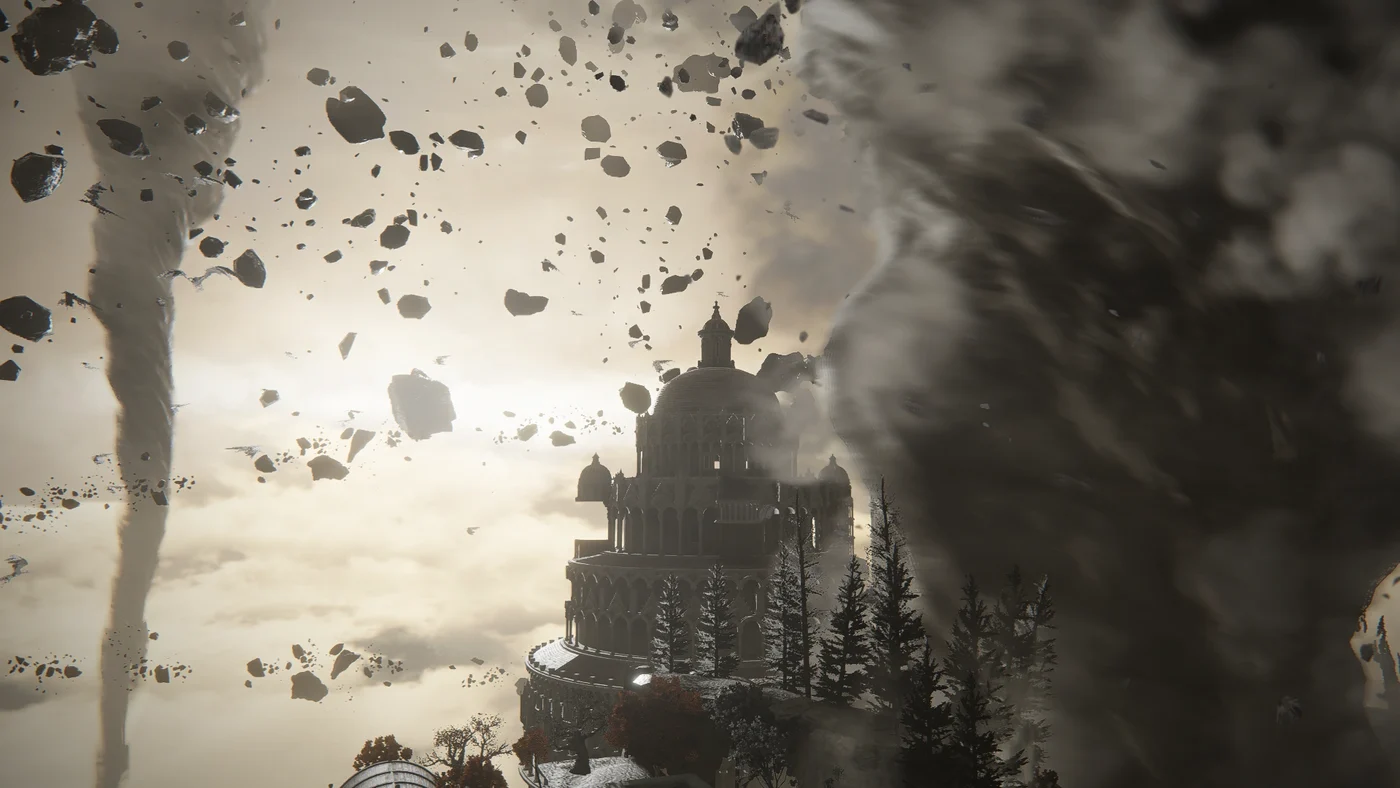 —️ LOCATION
Crumbling Farum Azula
City Outside Time · Throne of Placidusax▾
Crumbling Farum Azula
Crumbling Farum Azula is a massive city suspended in a perpetual sandstorm, outside the normal flow of time, city debris floats in the air, entire ruins rotate slowly around a central vortex. It is the remnant of the pre-Erdtree era, a city that refused integration into the Golden Order and has existed apart from time ever since. At the storm's heart, in a specific nest, Placidusax still sits waiting for his god's return. The Beastmen inhabiting Farum Azula are guardians of this ancient civilization, half-men, half-beasts defending the site. Bernahl (recusant) invades the player there, his presence suggests a connection between resistance to the Golden Order and this outside-Order space. Maliketh resides at Farum Azula, the Shadowbound Beast is the zone's final boss, his presence explained by his function as keeper of Destined Death in a space adjacent to but not fully within the Order. The partial destruction of Farum Azula (its chunks fall on Leyndell creating the Ashen Capital) is linked to the release of Destined Death after Maliketh's defeat.
◆ Sources
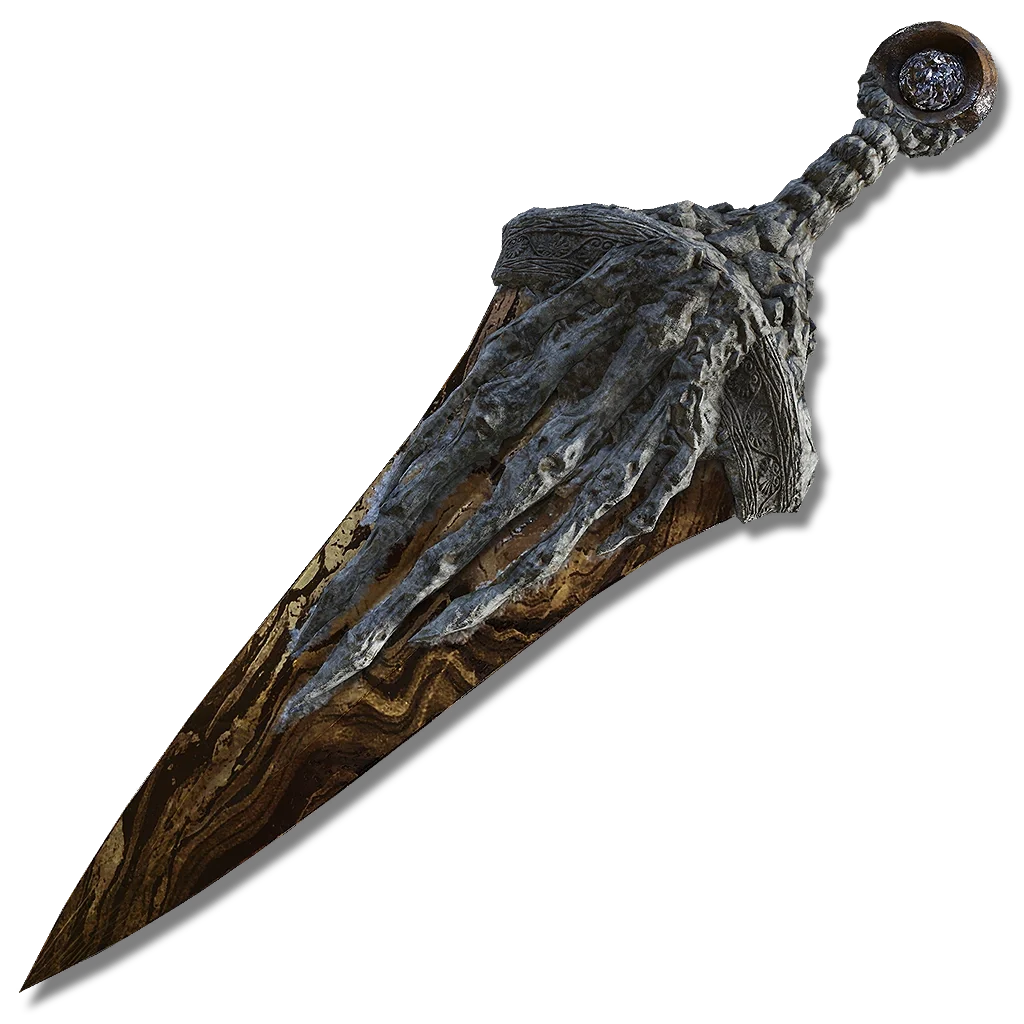 Cinquedea
Short sword given to high ranking clergymen of Farum Azula. Raises potency of bestial incantations. The design celebrates a beast's five fingers, symbolic of the intelligence once granted upon their kind.
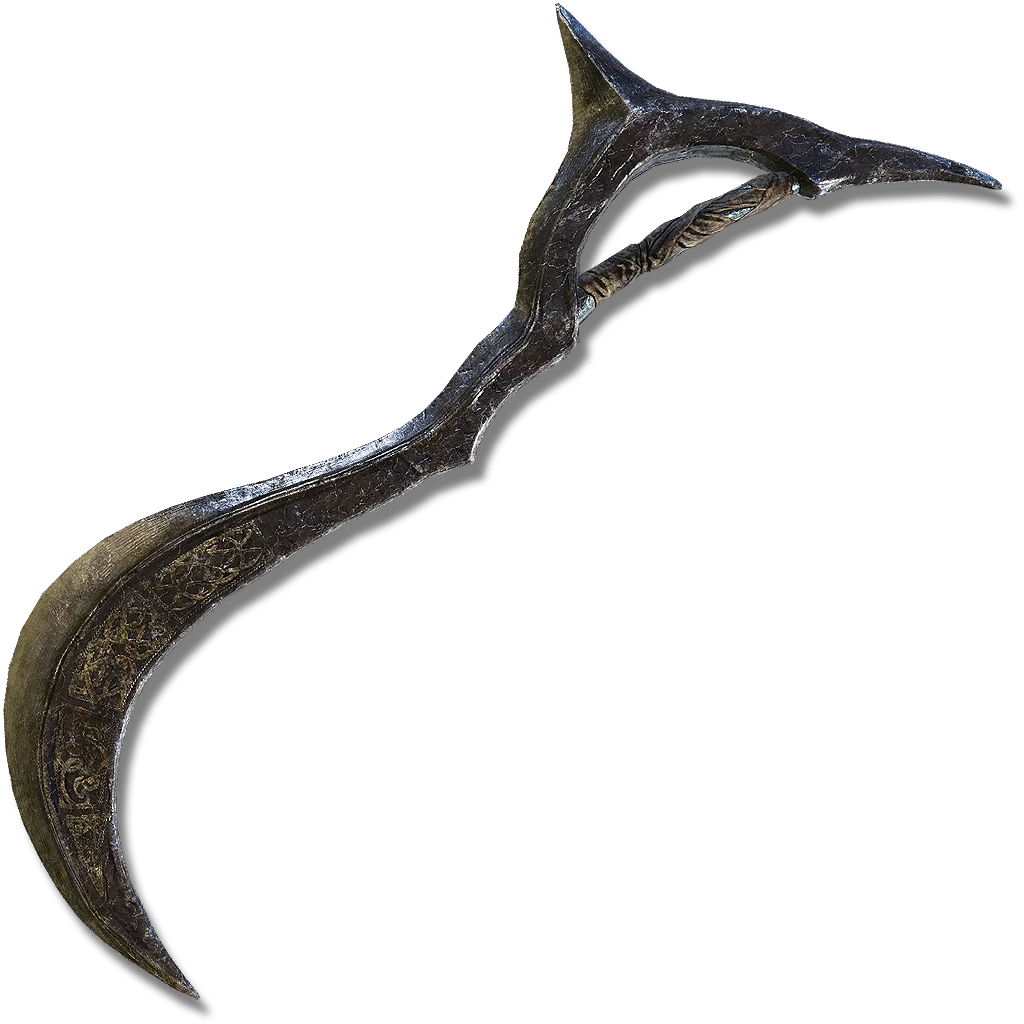 Beastman's Curved Sword
Curved sword forged of dull iron wielded by the beastmen of Farum Azula. The blade is heavy but well-balanced. Comparatively easy to wield for the damage it delivers.
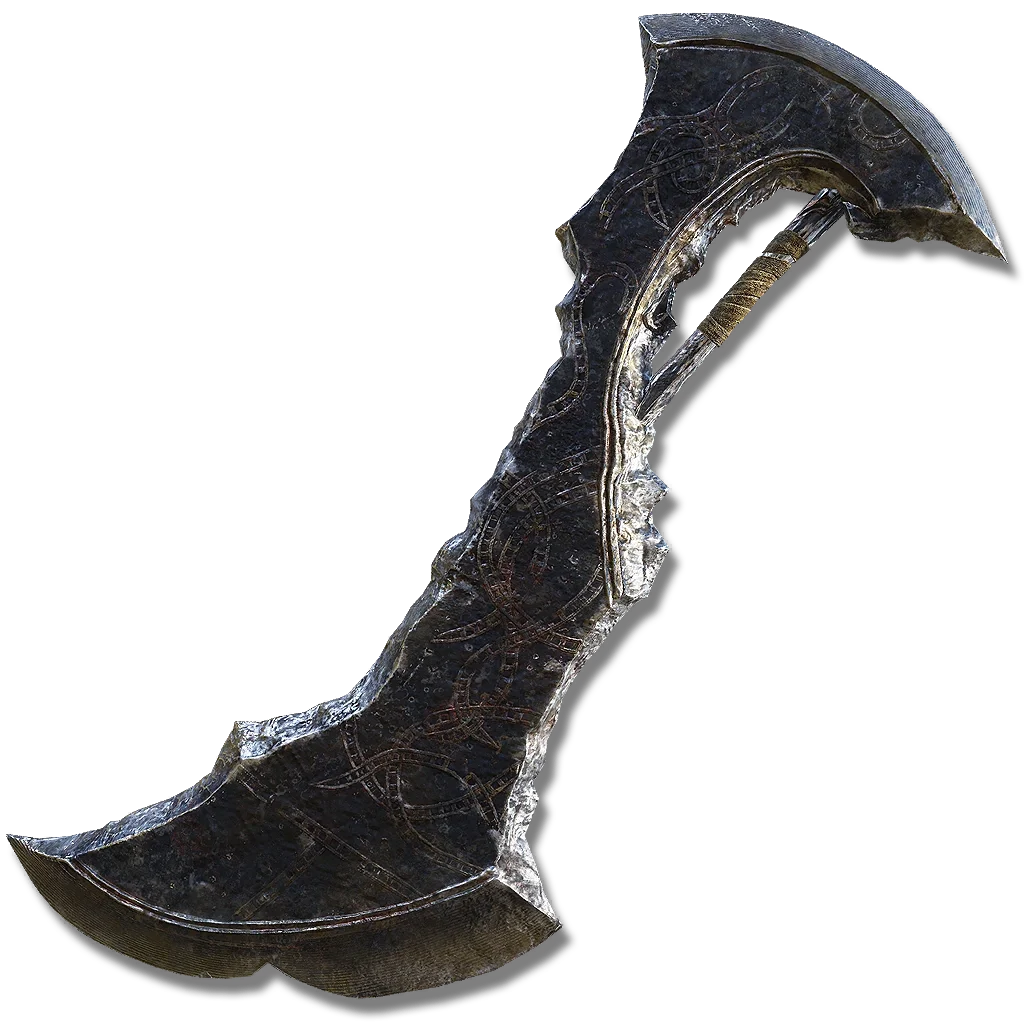 Beastman's Cleaver
Curved greatsword of colossal size forged of dull iron and wielded by the beastmen of Farum Azula. The blade is incredibly heavy, but well-balanced. Comparatively easy to wield for the damage it delivers. It's clear the beastmen possess knowledge beyond human ken.
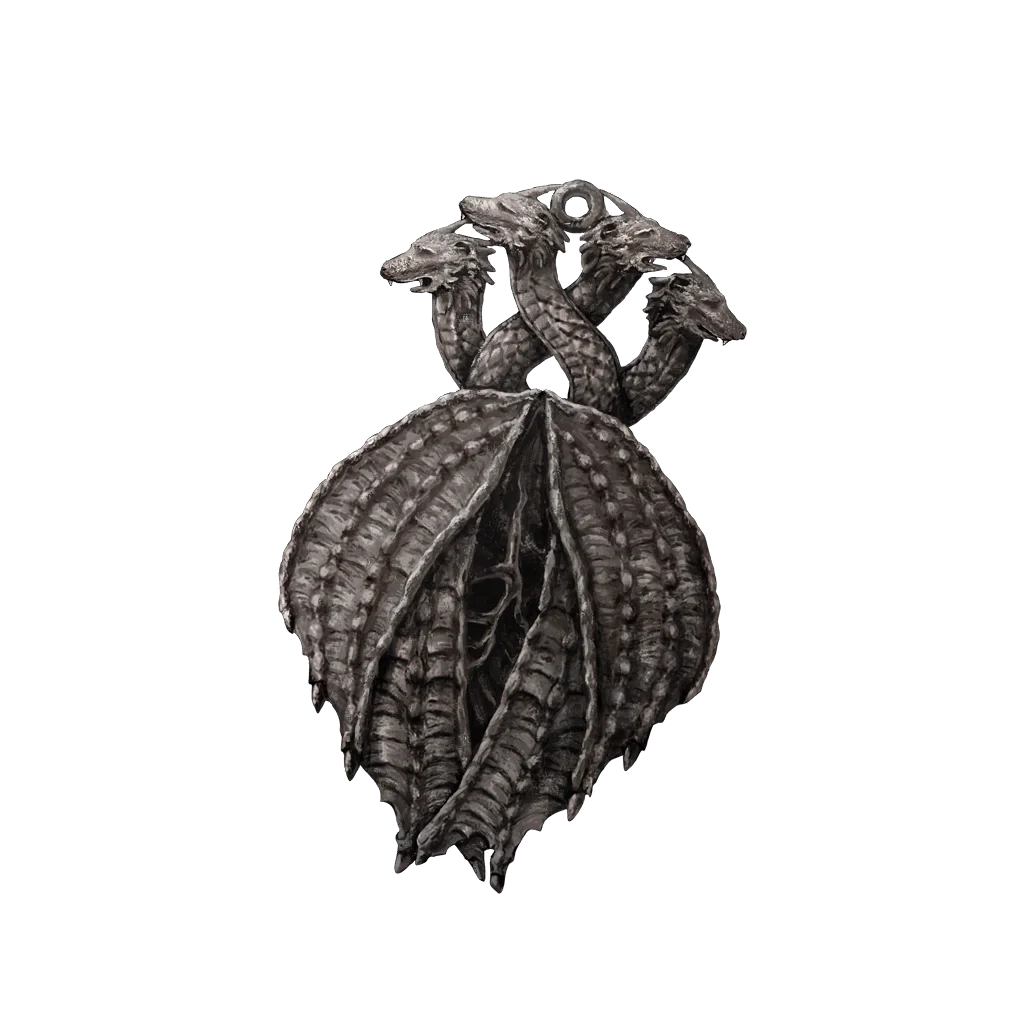 Old Lord's Talisman
Extends the duration of sorceries and incantations. It is said that the ancient royal city of Farum Azula has been slowly crumbling since time immemorial.
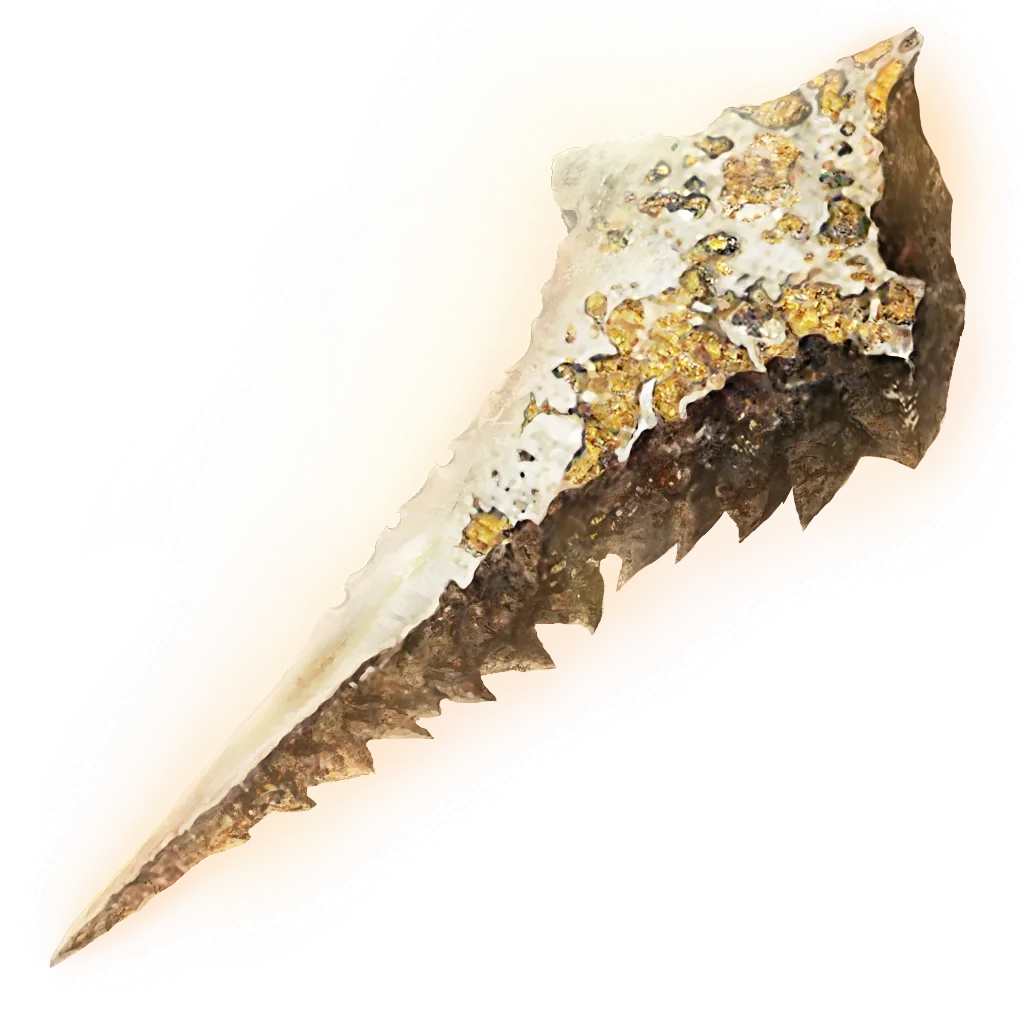 Ancient Dragon Smithing Stone
Smithing stone made by polishing a golden Gravel Stone. A scale of the Ancient Dragonlord, and hidden treasure of Farum Azula. Strengthens armaments to +25. The Ancient Dragonlord's seat is said to lie beyond time.
 Somber Ancient Dragon Smithing Stone
Ancient dragonrock smithing stone drained of color. A scale of the Ancient Dragonlord, and hidden treasure of Farum Azula. Strengthens special armaments to +10. The Ancient Dragonlord's seat is said to lie beyond time.
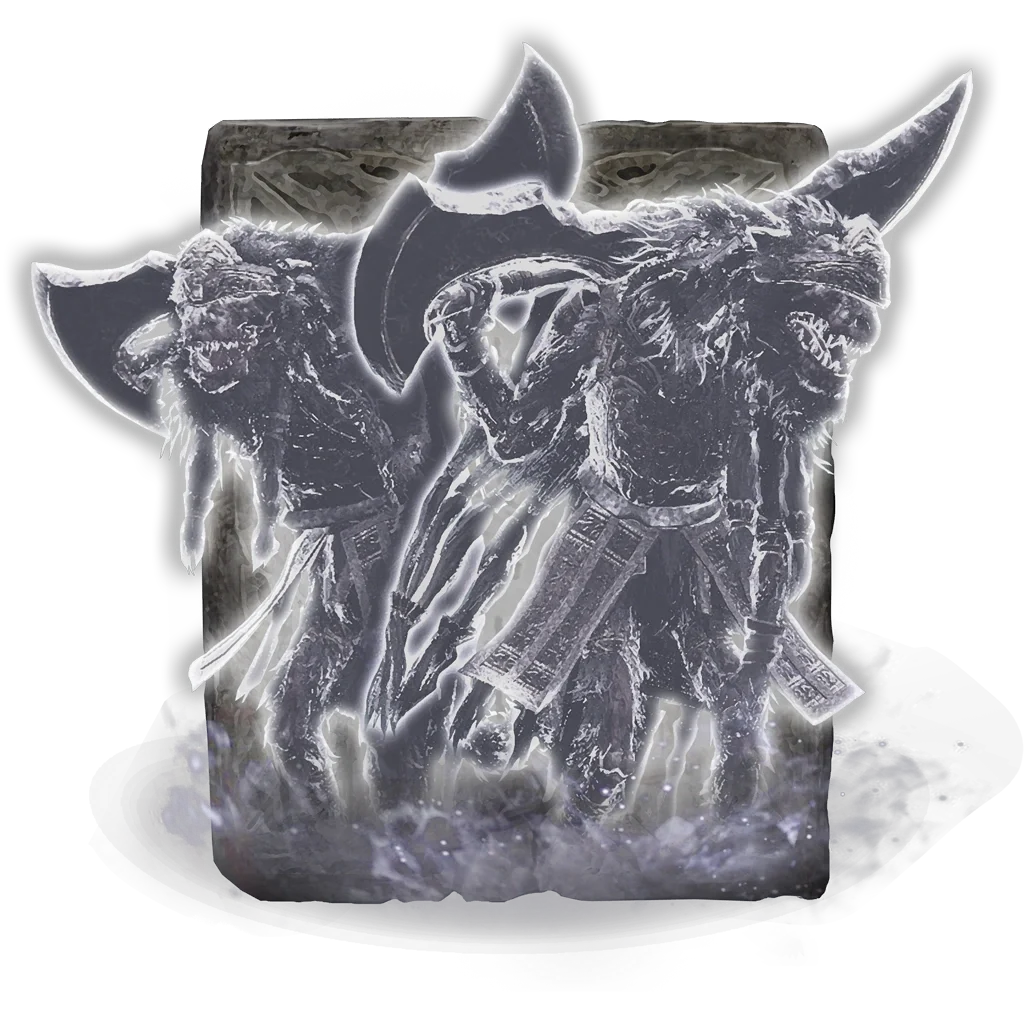 Azula Beastman Ashes
Ashen remains in which spirits yet dwell. Use to summon the spirits of two Azula beastmen. Spirits of beastmen from doomed Farum Azula, the slowly crumbling ruins in the skies. These ruins are said to be the remains of a giant mausoleum enshrining an ancient dragon, guarded by chosen beastmen who wield weapons clad in lightning.
 Beastman's Jar-Shield
Shield fashioned from a tall broken jar carried by the beastmen of Farum Azula. There is a particular knack to wielding it. The beastmen have always fired earthenware jars for the express purpose of making shields. Such are their ways, strange though they are.
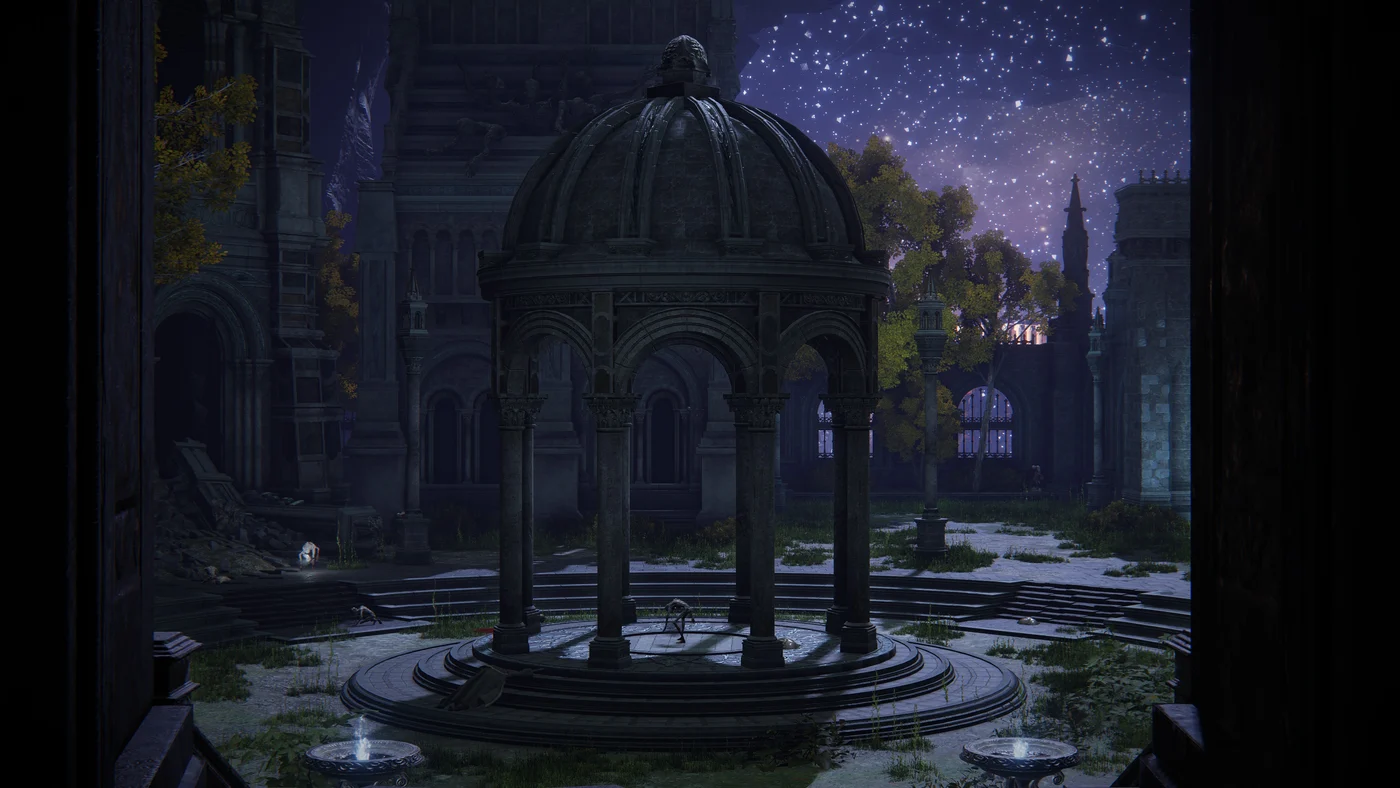 —️ LOCATION
The Eternal Cities, Nokron, Nokstella, Siofra
Pre-Order Underground Civilizations▾
The Eternal Cities, Nokron, Nokstella, Siofra
The Eternal Cities (Nokron, Nokstella, Siofra River, Deeproot Depths) are ancient underground civilizations predating the Golden Order and operating under their own cosmology. Their tragic particularity: they were "robbed of their sky" by Astel, the Naturalborn of the Void, who crashed like a star and replaced one city's celestial vault with the permanent underground darkness of its impact. Albinaurics are their inhabitants, beings created through "forbidden rites" granting artificial existence; their bodies age differently (old Albinaurics' legs vanish, Albinauric frogs lose speech). Silver Tears, the metamorphic creatures of the Cities, can imitate humans and fuse with living hosts (Asimi, the conscious Silver Tear who negotiates with the player, is the extreme example). The Eternal Cities possessed their own magical arts (Sellian sorcerers, heirs of their tradition). Nokron, Eternal City, was blocked behind Radahn's gravitational field, his defeat literally opened a crater enabling access. The Fingerslayer Blade (key to Ranni's quest) is hidden there, a weapon capable of killing a finger of the Greater Will. The Regal Ancestor Spirit is a cosmic phenomenon predating the Erdtree, present in these depths.
◆ Sources
Spinning WeaponRemembrance of the NaturalbornRemembrance of Astel, Naturalborn of the Void, hewn into the Erdtree. The power of its namesake can be unlocked by the Finger Reader. Alternatively, it can be used to gain a great bounty of runes. A malformed star born in the lightless void far away. Once destroyed an Eternal City and took away their sky. An falling star of ill omen.
Dolores the Sleeping Arrow PuppetFinger Reader Enia (Dialogue)Old Albus (Dialogue)Boc the Seamster (Dialogue)War Counselor Iji (Dialogue)Latenna the Albinauric (Dialogue)Dung Eater (Dialogue)Blackguard (Dialogue)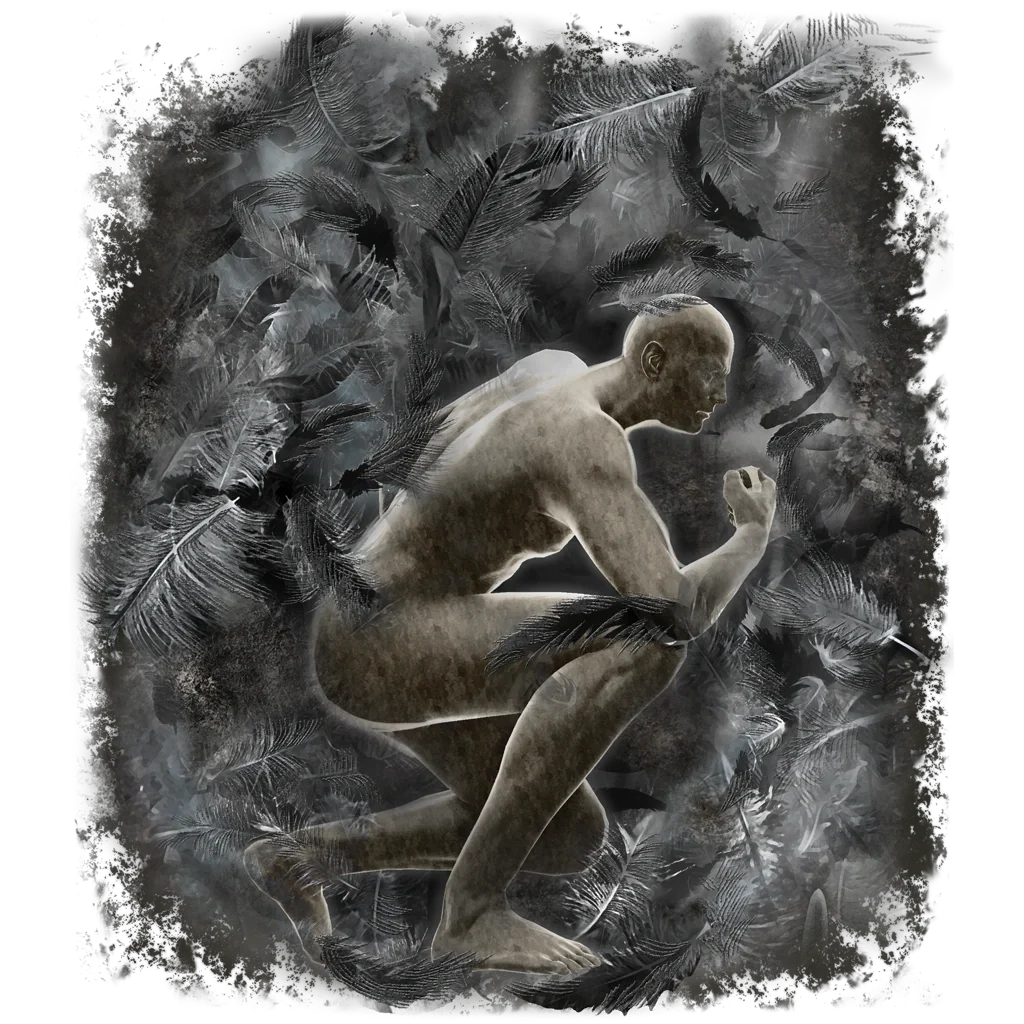 Ash of War: Raptor of the Mists
 Frozen Lightning Spear
Incantation that channels the power of the Dragonkin Soldiers. Creates a spear of ice lightning and stabs it into the ground from above. On impact, the spear will burst into trails of lightning advancing forwards. The Dragonkin were born in the Eternal City, where they knew no true sky, nor true lightning. Instead, ice lightning was their weapon.
 Fingerslayer Blade
The hidden treasure of the Eternal City of Nokron; a blade said to have been born of a corpse. This blood-drenched fetish is proof of the high treason committed by the Eternal City and symbolizes its downfall. Cannot be wielded by those without a fate, but is said to be able to harm the Greater Will and its vassals.
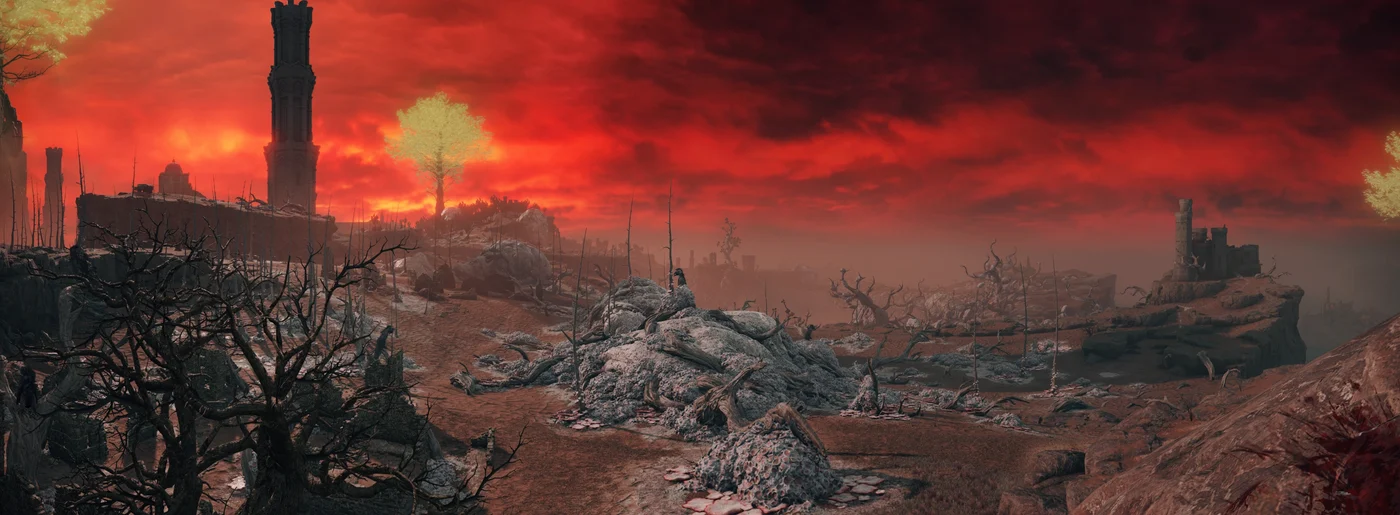 —️ LOCATION
Caelid and the Aeonian Swamp
Land of the Rot · Eternal Battlefield▾
Caelid and the Aeonian Swamp
Caelid is the region east of Limgrave, transformed into a permanent rot wasteland by the Scarlet Aeonia explosion during the battle between Malenia and Radahn. Before the Shattering, Caelid was a normal region, Sellia, Town of Sorcery, was a center of gravitational learning frequented by the young Radahn. The confrontation between Malenia and Radahn raged there until their stalemate, then Malenia released her rot, instantly transforming all of Caelid into wasteland. Radahn's army survivors remained in Caelid, protecting themselves from the rot with fire. The animals of Caelid (red-tinted dogs, giant ravens, giant crabs) are all in terminal stages of Scarlet Rot transformation, their deformed bodies reflect infection stages. The Aeonia Swamp at Caelid's floor is the permanent rot marsh created by the initial explosion. Gowry resides at Sellia, serving as link between the Tarnished world and Malenia's cult. Radahn himself still wanders the Wailing Dunes in his madness, devouring bodies until a champion offers him the Festival.
◆ Sources
Dolores the Sleeping Arrow PuppetGelmir) A new map has been found. (Caelid) A new map has been found. (Dragonbarrow) A new map has been found. (Mountaintops of the Giants, West) A new map has been found.
Old Albus (Dialogue)After his expulsion from the academy, I heard that Master Lusat returned to his home. A place called Sellia, in the eastern Caelid Wilds. Thinking about it, I obtained the glintstone key I gave you from a Sellian sorcerer. It wouldn't be too much of a leap to suppose he's still cooped up nearby...
Dung Eater (Dialogue)Though rather vexingly, I realise that if I still had my sword arm, I could have aided you in battle. Now, I'm tracing the path Malenia took, after unleashing the power of the scarlet rot, during her battle with General Radahn, in the Caelid Wilds. I should like to meet her, this vanished woman. I think she's in the north.
Sublime, I tell you. The very first flower of Aeonia bloomed on this very spot. Malenia, may you blossom into a goddess. ... Convene the festival of war. Everything, rotting scarlet. The very earth that Caelid rests upon, and Sellia, town of sorcery. The end is nigh, for us all. ... Ohh great sun!
 Radahn's Great Rune
The Great Rune of the shardbearer Radahn, devoid of any benediction. Seek the Divine Tower of Caelid, which stands upon the precipice at the Dragonbarrow's shore.
Sellian SealbreakerCapable of breaking the seal that keeps Master Lusat confined. Sellia, Town of Sorcery can be found in Caelid. This key was said to have been found in the possession of a Sellian sorcerer.
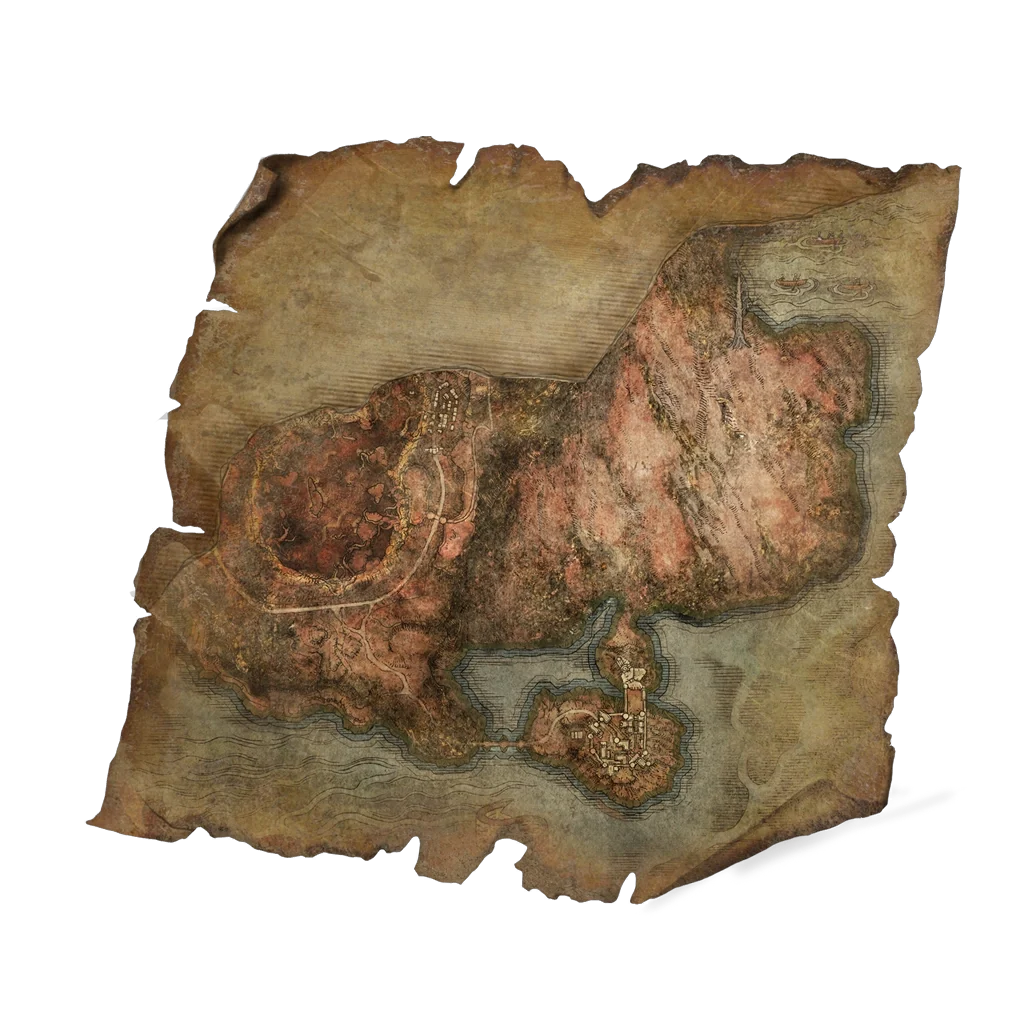 Map: Caelid
Map of Caelid and environs. Caelid, known as the locale of the last battle between General Radahn and Malenia, Blade of Miquella, is a vast land consummately marred by scarlet rot.
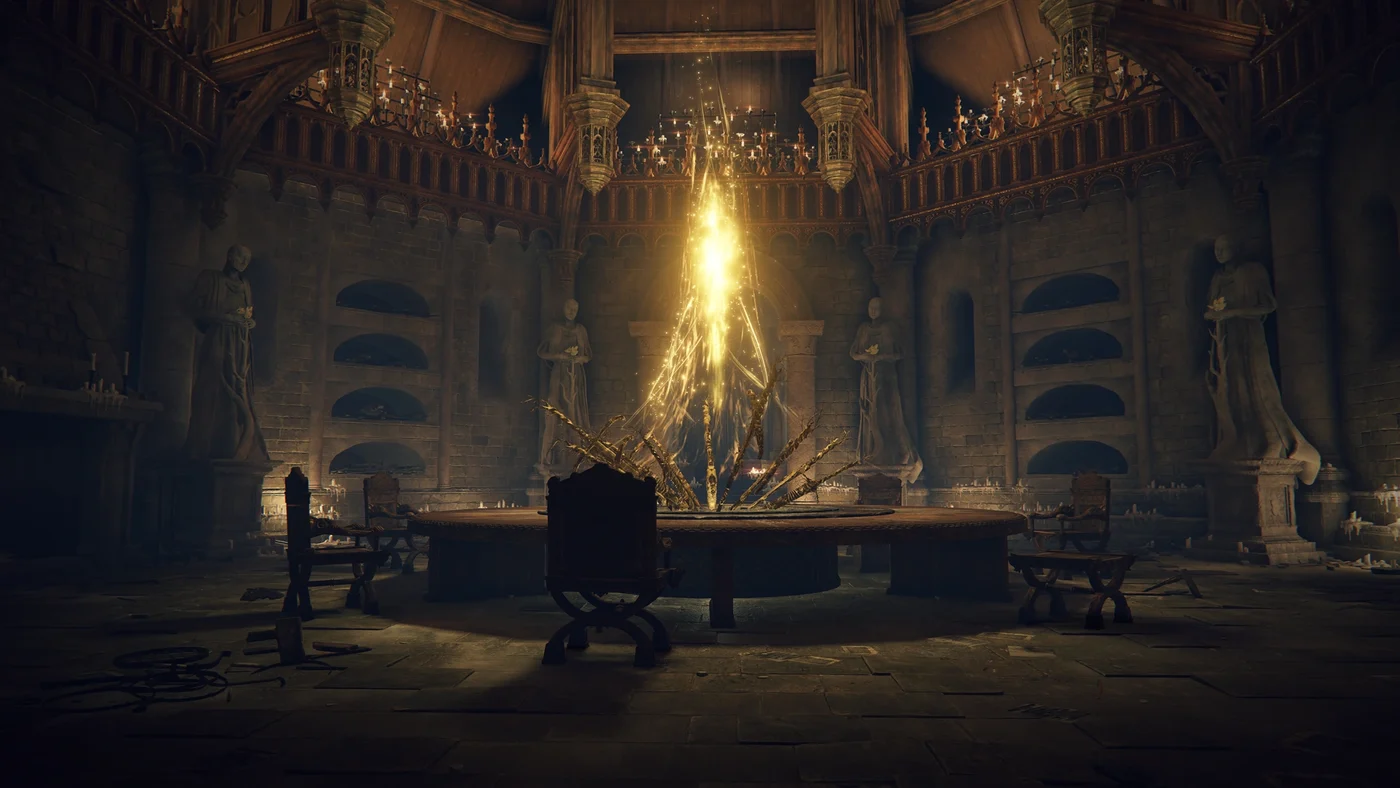 —️ LOCATION
Roundtable Hold
Two Fingers' Secret Headquarters · Tarnished Refuge▾
Roundtable Hold
Roundtable Hold is a magical location outside the normal Lands Between, a gothic black-stone hall serving as headquarters for grace-guided Tarnished. It is the "secret" quarters of the Two Fingers and their servant Enia (Finger Reader). Access is granted by the Two Fingers once the Tarnished has demonstrated worth. Its main occupants: Hewg (cursed smith), Roderika (spirit tuner), Fia (Deathbed Companion), D (hunter of the dead), Rogier (bedridden sorcerer), Gideon Ofnir (self-proclaimed chief), Nepheli Loux, the Dung Eater❞ (in an adjacent cell), and Ensha (Gideon's hostile servant). The Inner Chamber is reserved for Shardbearers, those who have defeated a demigod. After several occupants' deaths and the Erdtree's burning, it becomes the Ashen Roundtable Hold, burned, deserted except for Roderika and Hewg. The Hold features a secret library (locked to Ensha, opened after his attack), Rogier's balcony, and private quarters for each resident.
◆ Sources
Dolores the Sleeping Arrow PuppetTrina's arrows from her shortbow. Dolores once belonged to the Roundtable Hold, where she was both a critic and a friend of Gideon the All-Knowing. It was because of her that he and Seluvis went their separate ways. One of Seluvis's puppets.
Latenna the Albinauric (Dialogue)Shabriri (Dialogue)Dung Eater (Dialogue)Sorcerer Rogier (Dialogue)Take this. A special invitation, to hunt some of the first Tarnished who sat at the Roundtable Hold. If you should accept, I'll next see you on the field of battle. Ah, I had hoped you'd soon return.
Sorcerer Thops (Dialogue)You again... I thought you'd receive a summons to the Roundtable. Nepheli Loux. We met at Stormveil. If you haven't already, I advise you introduce yourself. Father is leader of the Roundtable. I'm sure talking to him will be worth your while. It's about time I headed off. You received a summons to the Roundtable? The pleasure's mine, as a fellow Tarnished, guided by grace to the Roundtable Hold. Oh, hello. I've not seen you here before. Here by decree of my father. Is that some kind of medicine? One that affects the heart, I'd wager.
Sage Gowry (Dialogue) Assassin's Prayerbook
Prayerbook of the Roundtable Hold's assassins. Can be given to a learned cleric to gain access to the following incantations: - Assassin's Approach - Darkness
Servant Pidia's bell bearing, found upon his perished flesh. Offer to the Twin Maiden Husks at the Roundtable Hold to gain access to new items.
Seluvis's Bell BearingPreceptor Seluvis's bell bearing, found upon his perished flesh. Offer to the Twin Maiden Husks at the Roundtable Hold to gain access to new items.
Patches' bell bearing, found upon his perished flesh. Offer to the Twin Maiden Husks at the Roundtable Hold to gain access to new items.
Sorceress Sellen's bell bearing, found upon her perished flesh. Offer to the Twin Maiden Husks at the Roundtable Hold to gain access to new items.
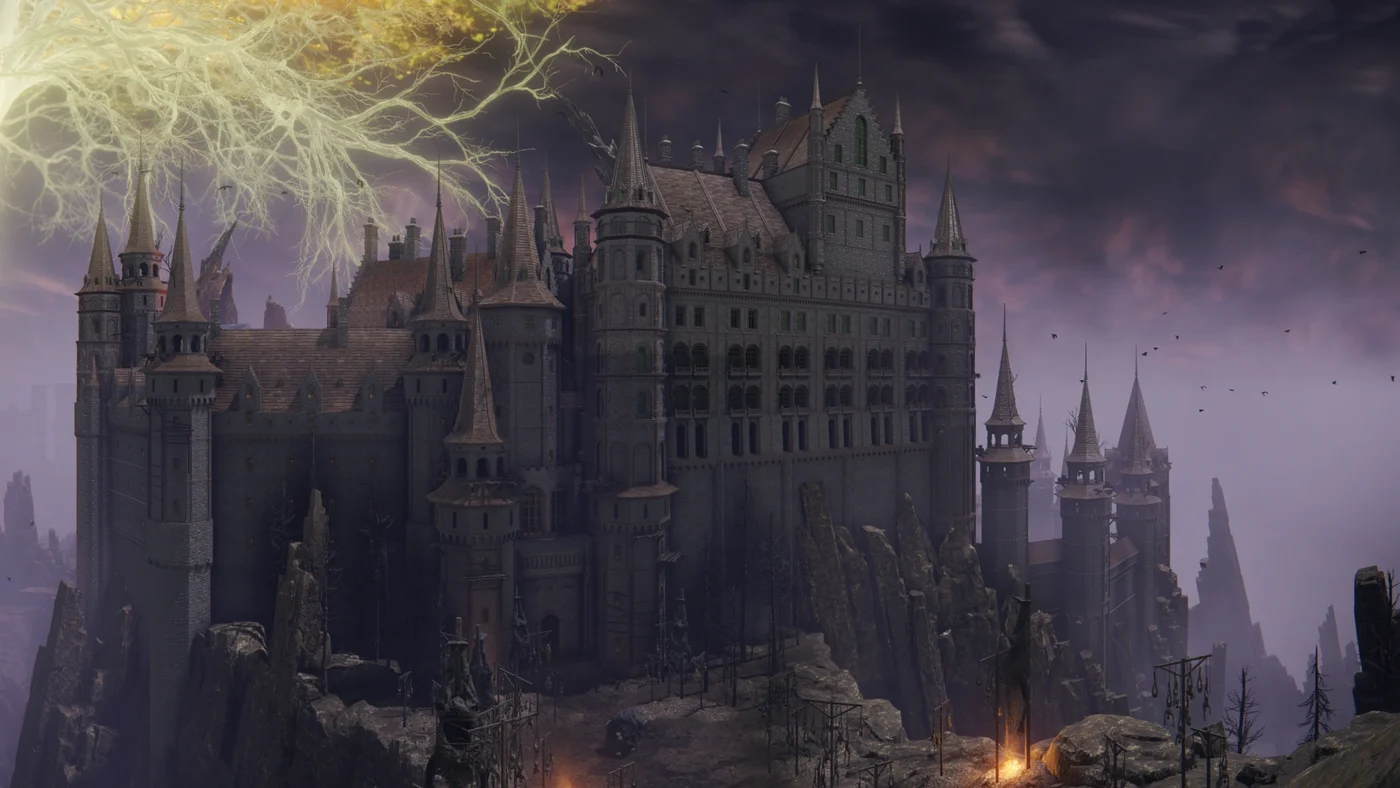 —️ LOCATION
Volcano Manor
Recusant Refuge · Rykard's Domain▾
Volcano Manor
Volcano Manor is Rykard's residence and operational base of the recusants, warriors and Tarnished who renounced the guidance of grace and hunted their own kind. The Manor is built into and around Mount Gelmir's volcano, with lava flows forming some chamber walls. Tanith manages its daily operations, overseeing recruitment and hunting missions. The Manor features a common room (drawing room) where recusants gathered, Bernahl, Rya, Patches, Diallos stayed there at various points. Mission letters left for recusants ordered them to hunt specific Tarnished (Istvan, Rileigh, Juno Hoslow, Tragoth), those still following the guidance of grace. The Lord's Chamber leads directly to Rykard. The underground connection to the Manor's inner chamber reveals Rykard's true serpentine nature. The Manor was founded on the ideology that Tarnished were unjustly treated by the Golden Order, justifying heresy. Its dissolution follows Rykard's death, without him, the philosophy collapses.
◆ Sources
Latenna the Albinauric (Dialogue)Preceptor Seluvis (Dialogue)But...as you see, I've put all that behind me. Left the Volcano Manor. Forging my own path now. Making my own choices. Please, stop! I've no quarrel with the Volcano Manor. I will never brandish a sword again, I swear! Why on earth...?
Dung Eater (Dialogue)Sorcerer Rogier (Dialogue)What in heaven's name are you doing here? The Volcano Manor is a pit of recusants who spit at grace and hunt our own kind. I hope you understand the weight of my words. Well. Ah, I had hoped you'd soon return. I have the reward from Lady Tanith. Take it. It's yours, by right.
To put this weary world to rights... ... Lord Rykard... If this putrid field of death is what your blasphemy would bring, then I can no longer abide. No one can. ... I'll survive, I swear it. I'll soon be back at the Volcano Manor. ... Sublime, I tell you. The very first flower of Aeonia bloomed on this very spot.
Drawing-Room KeyKey to Volcano Manor's drawing room. The door can be found in the westward corridor, upon the left hand side.
Tanith, Volcano Manor ProprietressVery well. Your decision is most welcome. Now you belong to the Volcano Manor family. The drawing room lies down the hall. Make yourself comfortable. Now, time for you to leave, I should think. Let this intersection of our paths be the last. The drawing room is through the hall. Use the key I handed you, and make yourself comfortable. Now you are a recusant true, and a full-fledged member of the Volcano Manor. I am pleased to have you on our side.
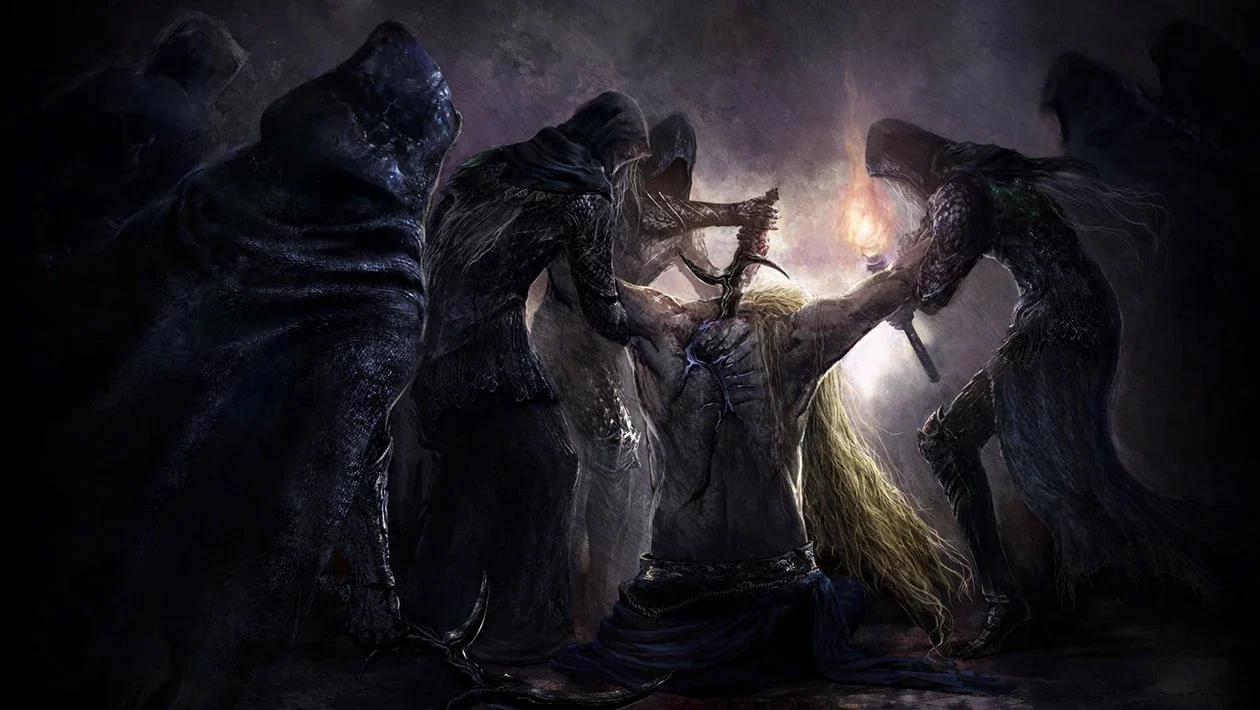 ✦️ EVENT
The Night of the Black Knives
Ranni's Conspiracy · The First Divine Murder▾
The Night of the Black Knives
The Night of the Black Knives is the pivot event triggering the chain leading ultimately to the Shattering, occurring during the Golden Age of the Erdtree, well before the Elden Ring's breaking. Ranni stole a fragment of the Rune of Death from Maliketh via a "terrible and forbidden rite," forged cursed Black Knives, and orchestrated the assassination of Godwyn the Golden, the first demigod to die. The Assassins wore "cloaks that deceived the eye" (rendering them near-invisible) and silver armor, infiltrating demigod domains. Their knives, imbued with the Rune of Death, killed Godwyn's soul only, leaving his body alive. Simultaneously, Ranni killed her own Empyrean flesh in the inverse direction (body dead, soul preserved in a doll). These two inverse deaths severed the Cursemark of Death from the Two Fingers' control. Rogier analyzed a Black Knifeprint and discovered the ritual's traces, identifying Ranni as orchestrator. The Assassins were "women entirely of Eternal blood, hailing from the Eternal Cities" according to Rogier. The Black Knives glow with death-light and siphon maximum HP from targets. Godwyn's death drove Marika into a state of despair that led to her own transgression, shattering the Elden Ring.
◆ Sources
Shabriri (Dialogue)Dung Eater (Dialogue)Sorcerer Rogier (Dialogue)But truth be told, I seek the cursemark to save them. You may find this peculiar, but I discovered something in my examination of the Night of the Black Knives. These souls have committed no offence. They have every right to life, only, they happened to touch upon a flaw in the Order.
Black KnifeprintOn the Night of the Black Knives, someone stole a fragment of Death from Maliketh, the Black Blade, and imbued its power into the assassins' daggers. This mark is evidence of the ritual, and hides the truth of the conspiracy.
Black KnifeDagger once belonging to one of the assassins who murdered Godwyn the Golden on the Night of the Black Knives. A ritual performed on the oddly misshapen blade imbued it with the power of the stolen Rune of Death.
Black Knife HoodHood used by the Black Knife Assassins. The assassins that carried out the deeds of the Night of the Black Knives were all women, and rumored to be Numen who had close ties with Marika herself.
Black Knife ArmorScale armor used by the Black Knife Assassins, forged to make no sound. Traces of power yet remain in its concealing veil, which muffles the sound of footsteps. The assassins that carried out the deeds of the Night of the Black Knives were all women, and rumored to be Numen who had close ties with Marika herself.
Black Knife GauntletsGauntlets used by the Black Knife Assassins. Crafted with scale armor that makes no sound. The assassins that carried out the deeds of the Night of the Black Knives were all women, and rumored to be Numen who had close ties with Marika herself.
Black Knife GreavesGreaves used by the Black Knife Assassins. Crafted with scale armor that makes no sound. The assassins that carried out the deeds of the Night of the Black Knives were all women, and rumored to be Numen who had close ties with Marika herself.
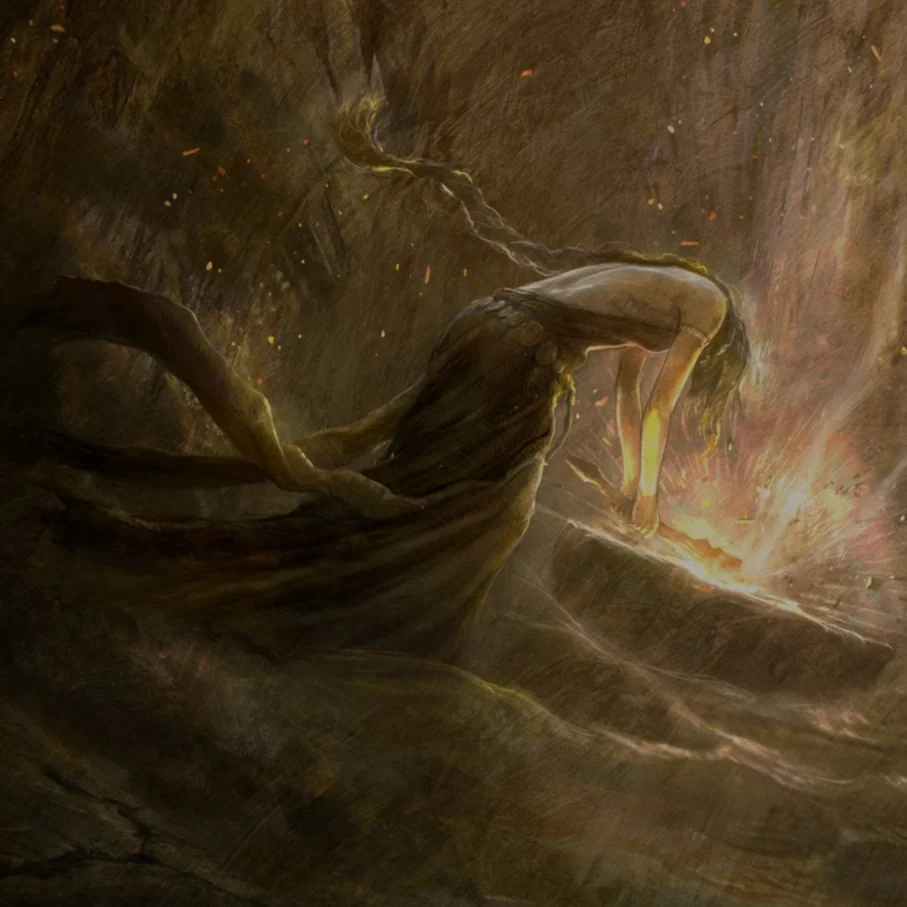 ✦️ EVENT
The Shattering and Its Wars
The Collapse of the Order · War Without Victor▾
The Shattering and Its Wars
The Shattering is the collapse of the Golden Order after Marika shattered the Elden Ring. Following this event, the demigods claimed the Ring's shards and launched into total war to accumulate enough to become Elden Lord. The Historical Monuments scattered across the Lands Between document the major battles: First Liurnian War (Radagon vs Rennala), Second Liurnian War (reconciliation/marriage), Siege of Castle Morne (Godfrey), Malenia's Southward March (Cleanrot Knights), Starscourge Conflict (Radahn stops the stars), Battle of Aeonia (Radahn vs Malenia, stalemate then rot explosion), First and Second Defense of Leyndell (Morgott stacks heroes' bodies), Assault on Volcano Manor, War against the Giants (historical precedent). The Shattering ended not through victory but through mutual exhaustion, no demigod managed to accumulate enough shards to become Elden Lord. The Greater Will subsequently abandoned the world, the Two Fingers ceased transmitting its orders. This power vacuum is the state of the Lands Between at the game's beginning. Tarnished are then recalled by the guidance of grace to attempt to rebuild the Ring and resolve what the demigods could not.
◆ Sources
Old Albus (Dialogue)Latenna the Albinauric (Dialogue)Gatekeeper Gostoc (Dialogue)Dung Eater (Dialogue)Blackguard (Dialogue)Merchant Kalé (Dialogue)A record of crafting techniques left by a travelling perfumer who served in the Shattering. Expands crafting repertoire. Acquire the knowledge to craft the following: -Maddening Boluses
 Perfume Bottle
Essential vessel for crafting perfume items. The art of perfuming was once jealously guarded in the capital, but after the perfumers were drafted into service during the Shattering, the art became widely practiced throughout the Lands Between.
Leyndell Soldier AshesThe soldiers of Leyndell fight their battles defensively. During the Shattering, they were the ramparts that fortified the royal capital.
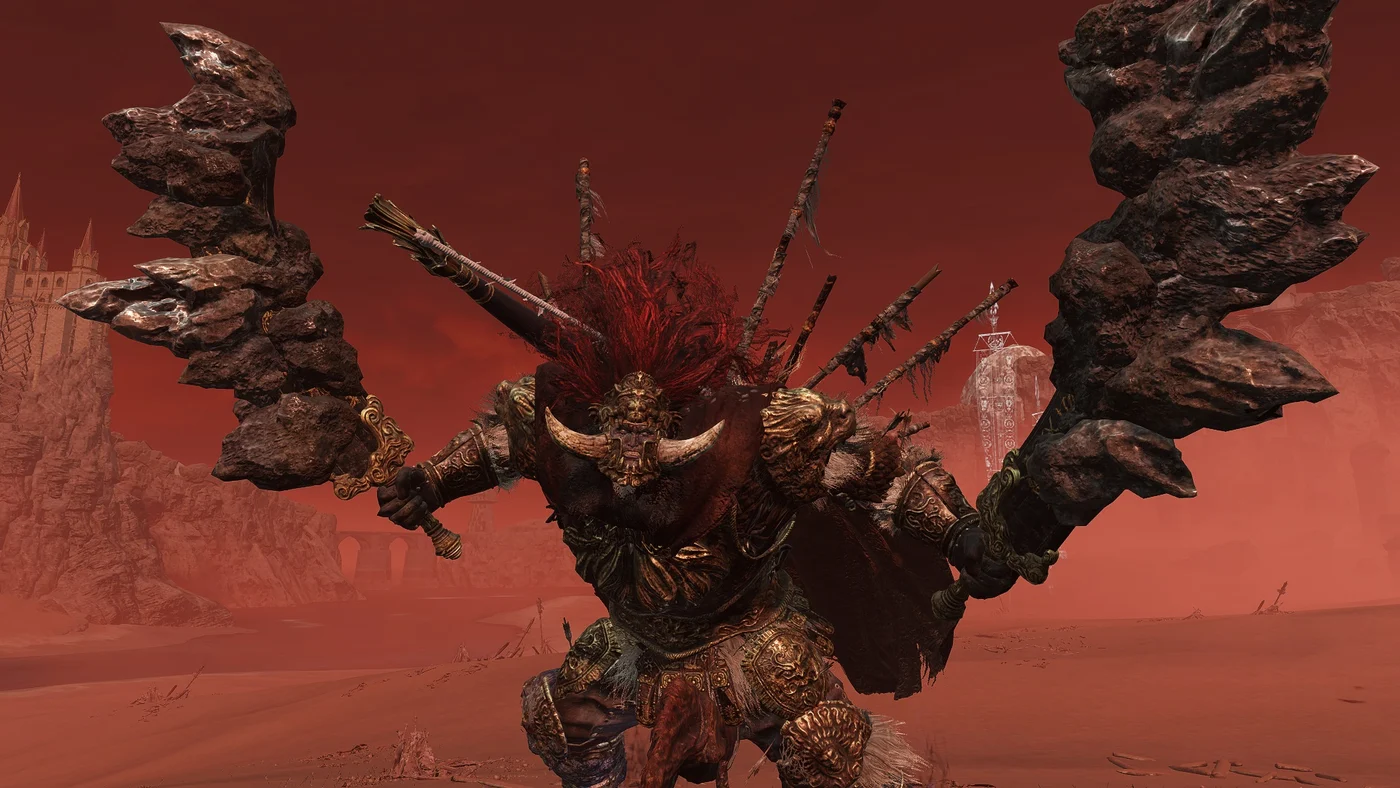 ✦️ EVENT
The Radahn Festival
War Commemoration · Honorable Death Offered▾
The Radahn Festival
The Radahn Festival is a war ceremony organized by Castellan Jerren at Redmane Castle on the southern edge of Caelid's Wailing Dunes. Its official purpose: honor General Radahn by offering champions the right to fight him. Its real purpose: offer Radahn the honorable death he cannot give himself since the rot took his mind. The Festival involved dozens of champions (including the player) simultaneously launched against Radahn in a mass combat on the beach below Fort Gael. Blaidd participated ("The path is simply drawn. We fight, blade and fang"). Alexander participated and was damaged ("A single blow was enough to crack me and spill my innards... After that, I hid like a coward"). Jerren declared the Festival when "the stars realigned", actually when Ranni's fate (blocked by Radahn) began moving again, indicating the necessity of his death. Radahn's death at the Festival caused a star to fall, a constellation fragment he had held in place for years, creating the crater enabling access to Nokron, Eternal City.
◆ Sources
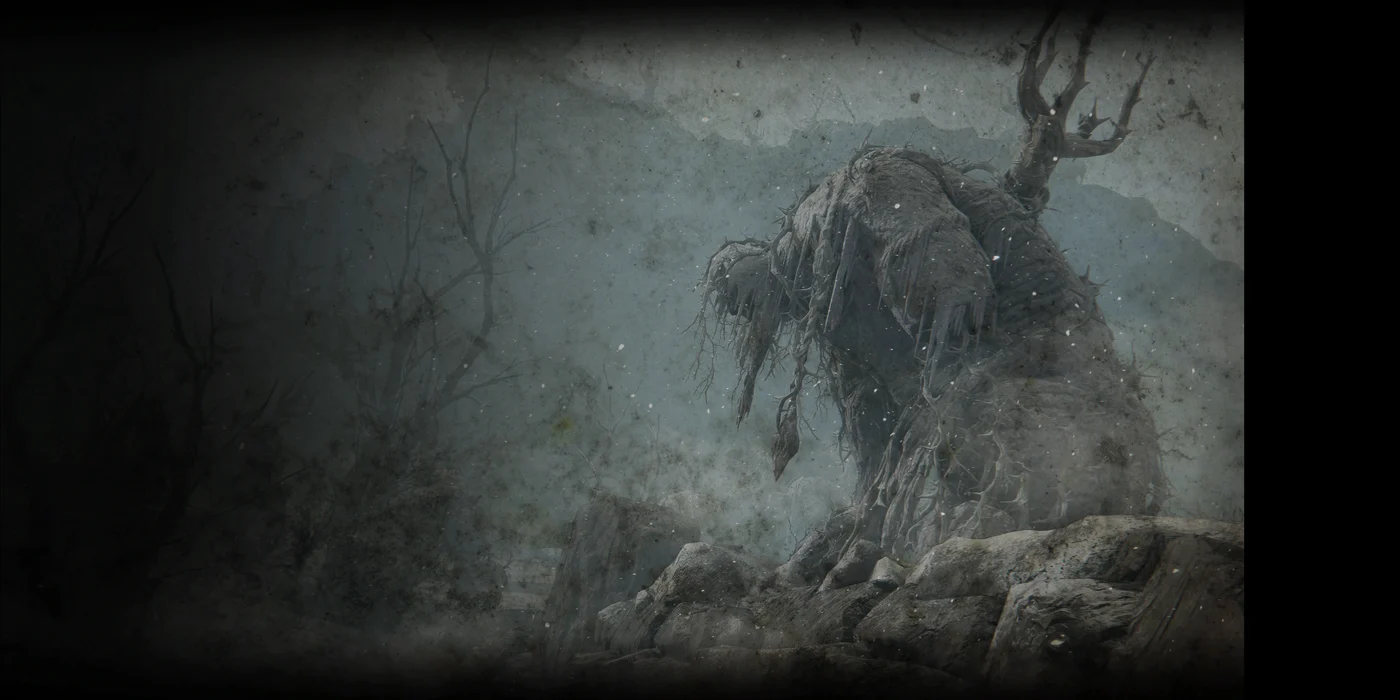 ✦️ EVENT
The War against the Giants
Godfrey's Foundational Campaign▾
The War against the Giants
The War against the Giants is one of the Golden Order's foundational conflicts, a military campaign by Godfrey and Marika against the Giant race who controlled the Forge of the Giants' Flame of Ruin, source of a cosmic flame capable of burning the Erdtree. The Golden Order could not be fully established while this threat existed. Godfrey led the campaign with the crucial betrayal of the Trolls (now docile servants in the Lands Between) as a tactical turning point. Most Giants were annihilated. The last surviving Giant was cursed by Marika: "O trifling giant, mayest thou tend thy flame for eternity", condemned to guard the Forge of Ruin forever. The Forge thus became a potential tool for anyone daring to reach it, which Melina and the Tarnished do at the game's end, using the flame Marika had contained to burn the Erdtree, ironically accomplishing what the Giants had once threatened to do.
◆ Sources
Spinning WeaponRemembrance of the Fire GiantRemembrance of Fire Giant, hewn into the Erdtree. The power of its namesake can be unlocked by the Finger Reader. Alternatively, it can be used to gain a great bounty of runes. The Fire Giant is a survivor of the War against the Giants. Upon realizing the flames of their forge would never die, Queen Marika marked him with a curse. "O trifling giant, mayest thou tend thy flame for eternity."
Finger Reader Enia (Dialogue)Teardrop ScarabsThere are both Crimson and Cerulean Teardrop Scarabs. Defeat them to replenish the flasks that match their type. However, you cannot replenish more flasks than your maximum amount allows. The fallen leaves tell a story.
Troll's Golden SwordSword given to the giants who fought for the Erdtree during the War against the Giants long ago. Though the giants have lost their minds, they stay inseparable from their swords that are in sad shape—such that the gold plating had flaked away.
Zamor Curved SwordWeapon wielded by the knights of Zamor who earned great renown during the War against the Giants. In apparent devotion to winter, the curved blade is styled after an icy wind and imbued with a powerful frost effect.
Giant-CrusherA hammer made from a boulder, used in the War against the Giants. One of the heftiest weapons in the entire Lands Between. After the giants were quelled, and man turned against man in violence, this weapon was all but forgotten. Man has grown feeble in comparison to his forebears.
Elden Lord CrownCrown of Godfrey, the first Elden Lord. The age of the Erdtree began amongst conflict, when Godfrey was lord of the battlefield. He led the War against the Giants. Faced the Storm Lord, alone. And then, there came a moment. When his last worthy enemy fell. And it was then, as the story is told, that the hue of Lord Godfrey's eyes faded.
Elden Lord ArmorArmor of Godfrey, the first Elden Lord. The age of the Erdtree began amongst conflict, when Godfrey was lord of the battlefield. He led the War against the Giants. Faced the Storm Lord, alone. And then, there came a moment. When his last worthy enemy fell. And it was then, as the story is told, that the hue of Lord Godfrey's eyes faded.
Elden Lord BracersBracers of Godfrey, the first Elden Lord. The age of the Erdtree began amongst conflict, when Godfrey was lord of the battlefield. He led the War against the Giants. Faced the Storm Lord, alone. And then, there came a moment. When his last worthy enemy fell. And it was then, as the story is told, that the hue of Lord Godfrey's eyes faded.
Elden Lord GreavesGreaves of Godfrey, the first Elden Lord. The age of the Erdtree began amongst conflict, when Godfrey was lord of the battlefield. He led the War against the Giants. Faced the Storm Lord, alone. And then, there came a moment. When his last worthy enemy fell. And it was then, as the story is told, that the hue of Lord Godfrey's eyes faded.
Zamor MaskMask worn by knights of Zamor, hailed as heroes in the War against the Giants. These long-lived warriors, clad in biting, freezing winds, are said to have been the mortal enemies of the Fire Giants since time immemorial.
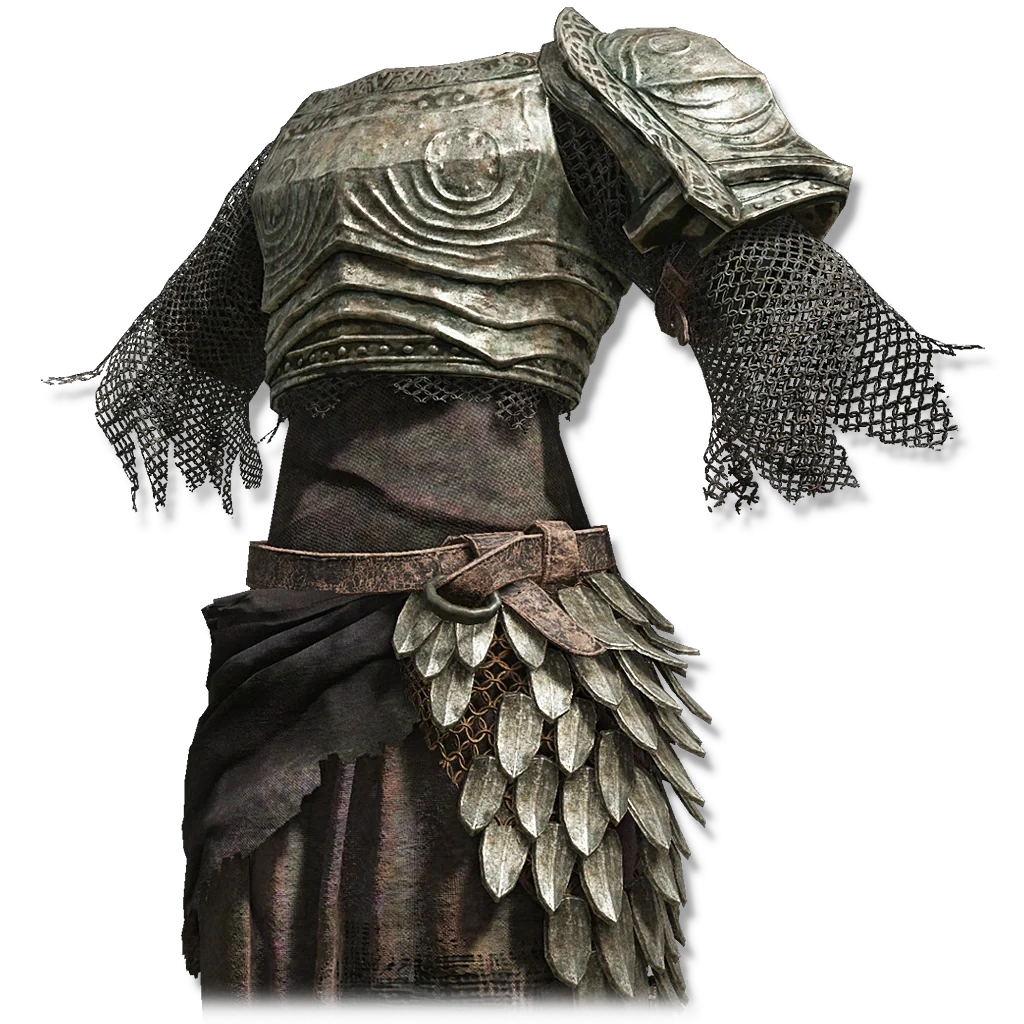 Zamor Armor
Armor worn by knights of Zamor, hailed as heroes in the War against the Giants. These long-lived warriors, clad in biting, freezing winds, are said to have been the mortal enemies of the Fire Giants since time immemorial.
 Zamor Legwraps
Legwraps worn by knights of Zamor, hailed as heroes in the War against the Giants. These long-lived warriors, clad in biting, freezing winds, are said to have been the mortal enemies of the Fire Giants since time immemorial.
 Flame, Protect Me
The most ancient of the Fire Monks' incantations. Creates a fire within that greatly increases fire damage negation. It is said that this incantation was used during the War against the Giants long ago, during which it protected the champions of the Erdtree.
◇ CONCEPT / FORCEThe Golden Order and the Greater Will
Cosmic System · Faith of the Erdtree▾
The Golden Order and the Greater Will
The Golden Order is the theological, juridical, and cosmic system imposed by the Greater Will through Marika upon the Lands Between. Its central principle: life is governed by golden grace, death is integrated into a rebirth cycle through the Erdtree, and the Elden Ring is the Anchor of all, "root of the Golden Order, anchor of all lands, wellspring of all joy, until it was shattered." The Greater Will is a god external to the Lands Between who sent the Elden Beast (its physical vassal) and the Two Fingers (its intermediaries) to establish this Order through Marika. The Two Fingers transmit its directives via Finger Readers like Enia. The Order deliberately excludes Destined Death, permanent true death, sealed within Maliketh, explaining why Tarnished can be reborn indefinitely at Sites of Grace. The Order classifies and hierarchizes all things: at the apex Marika, then demigods, then grace-blessed beings, then the graceless (Omens, guideless Tarnished), then the proscribed (Those Who Live in Death). Goldmask❞ and Corhyn discover the Order was founded on a hidden truth (Radagon = Marika). Fundamentalist incantations (pure faith) are the Order's tools. The Golden Order Principia and Golden Order Canon are its foundational texts. Faith in the Golden Order is expressed through the Two Fingers, Finger Seals, and Finger Maidens.
◆ Sources
Dolores the Sleeping Arrow PuppetGrace was brought to the very fringes and lowlands of the Lands Between. And with the Golden Order came the weight of its history. A history of conquest and subjugation.
Finger Reader Enia (Dialogue)Latenna the Albinauric (Dialogue)Tarnished, are we? Come to the Lands Between for the Elden Ring, hmm? Of course you have. No shame in it. To Castle Stormveil, on the cliff, where grace would guide you. If you seek the Elden Ring, maidenless as you are. Ohh, well done, well done indeed. You made it through that entire mess, all the way to Stormveil. Truly, naught but rambling, senile delusions. I believe, that when the Elden Ring was shattered, the Two Fingers were corrupted, their guidance; skewed. Even worse, the Fingers harbor no love for our kind. That's the part that irks the most.
Shabriri (Dialogue)Dung Eater (Dialogue)Sorcerer Rogier (Dialogue)Do you know of Those Who Live in Death? The very notion of life in death defies the Golden Order. By D's account, these defiled fiends must be expunged. But truth be told, I seek the cursemark to save them. Are you here in the Lands Between to take up the fight? Does your faith in the guidance of grace hold firm, despite the collapse of the Golden Order? Yes, you're a Tarnished through and through. Takes me back, but that's a quality needed now more than ever.
However. When Godfrey, first Elden Lord, was hounded from the Lands Between, Radagon left Rennala to return to the Erdtree Capital, becoming Queen Marika's second husband and King Consort. Taking the title...of second Elden Lord. The mystery endures, to this day... Then how about you piss off? fore I crack you in 'alf. Marika's tits, you must be 'ungry. Alright mate. Want some more prawn, do ya? I got crab, cooked up fresh. Want some more crab, do ya?
Sage Gowry (Dialogue)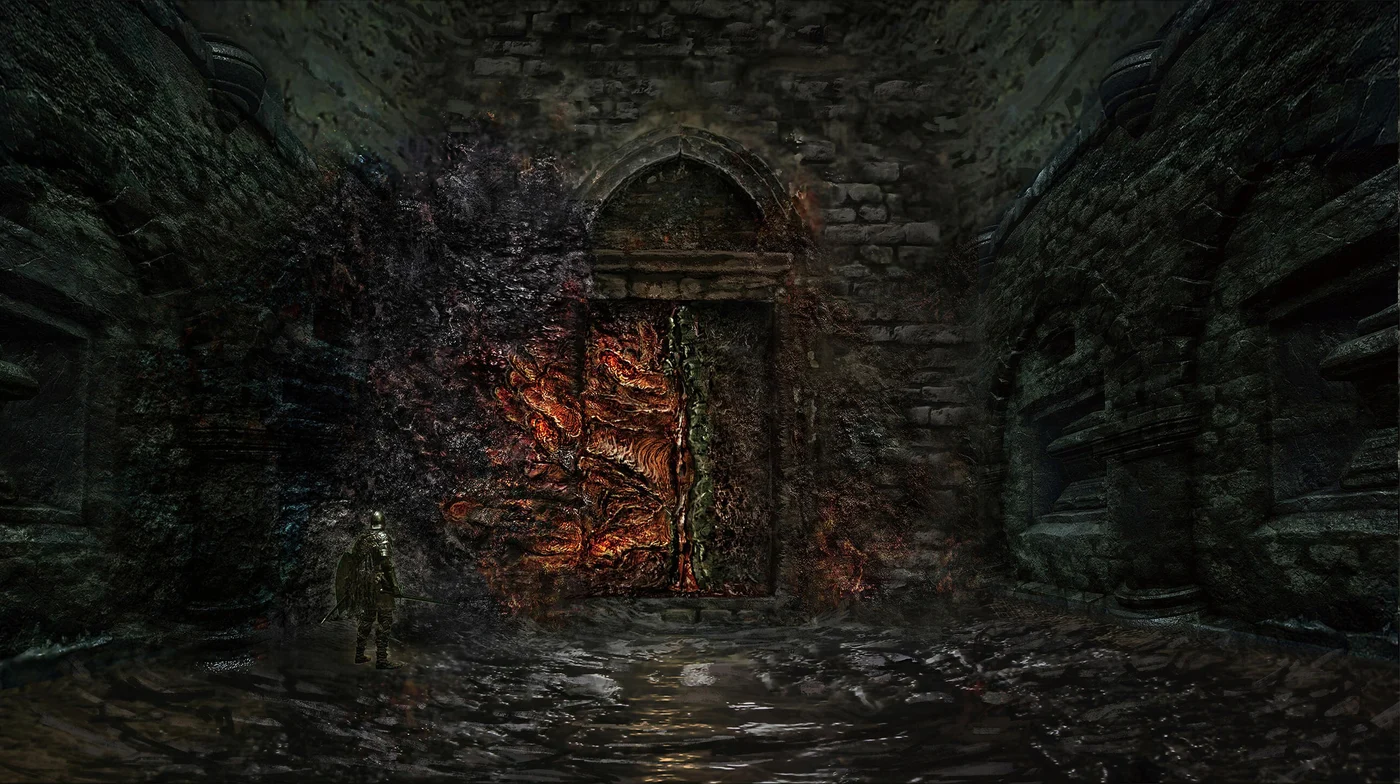 ◇ CONCEPT / FORCE
The Frenzied Flame and the Three Fingers
Primal Chaos · Antithesis of Order▾
The Frenzied Flame and the Three Fingers
The Frenzied Flame is a cosmic concept antithetical to the Golden Order: the primal yellow chaos that preceded all differentiation. Shabriri (the spirit of the Bloody Finger who inhabited Yura's body) articulates its ideology: "All that exists came from One Great. Then came fractures, births, souls. But the Greater Will erred. Torment, despair, affliction, every sin, every curse, born from the error. What was borrowed must be returned. Melt all with the yellow flame of chaos. Until all is One again." The Three Fingers, burned and misshapen analogs of the Two Fingers, reside in the depths below the Capital (Forsaken Depths, behind the Subterranean Shunning-Grounds) and transmit the flame to those who strip themselves of everything before their door, literally naked. Hyetta, the blind Finger Maiden who guides toward them, eats Shabriri Grapes (eyeballs from the Flame's victims) to "feel the distant light" and orient herself. Melina firmly rejects the Flame: "It is chaos, devouring life and thought without end. As ruined as this world has become, life endures, births continue, there is a beauty in that." The Lord of Frenzied Flame ending: the Tarnished becomes the torch, burning all, and Melina vows vengeance with her left eye open. Fingerprint Stones armor and the Frenzied Flame Seal are its relics.
◆ Sources
Preceptor Seluvis (Dialogue)Shabriri (Dialogue)Then where is he? Our true Lord, our Lord of Frenzied Flame. We beg of you, incinerate all that divides and distinguishes. Ahh, may chaos take the world! ... Ahh, the puppets... The puppets besiege us... ... Ahh, the poor fellow...gone perfectly mad. Love...revenge...the frenzied flame melts it all away... ... ... It's there, somewhere. Another path, leading back to the foot of the Erdtree.
Merchant Kalé (Dialogue)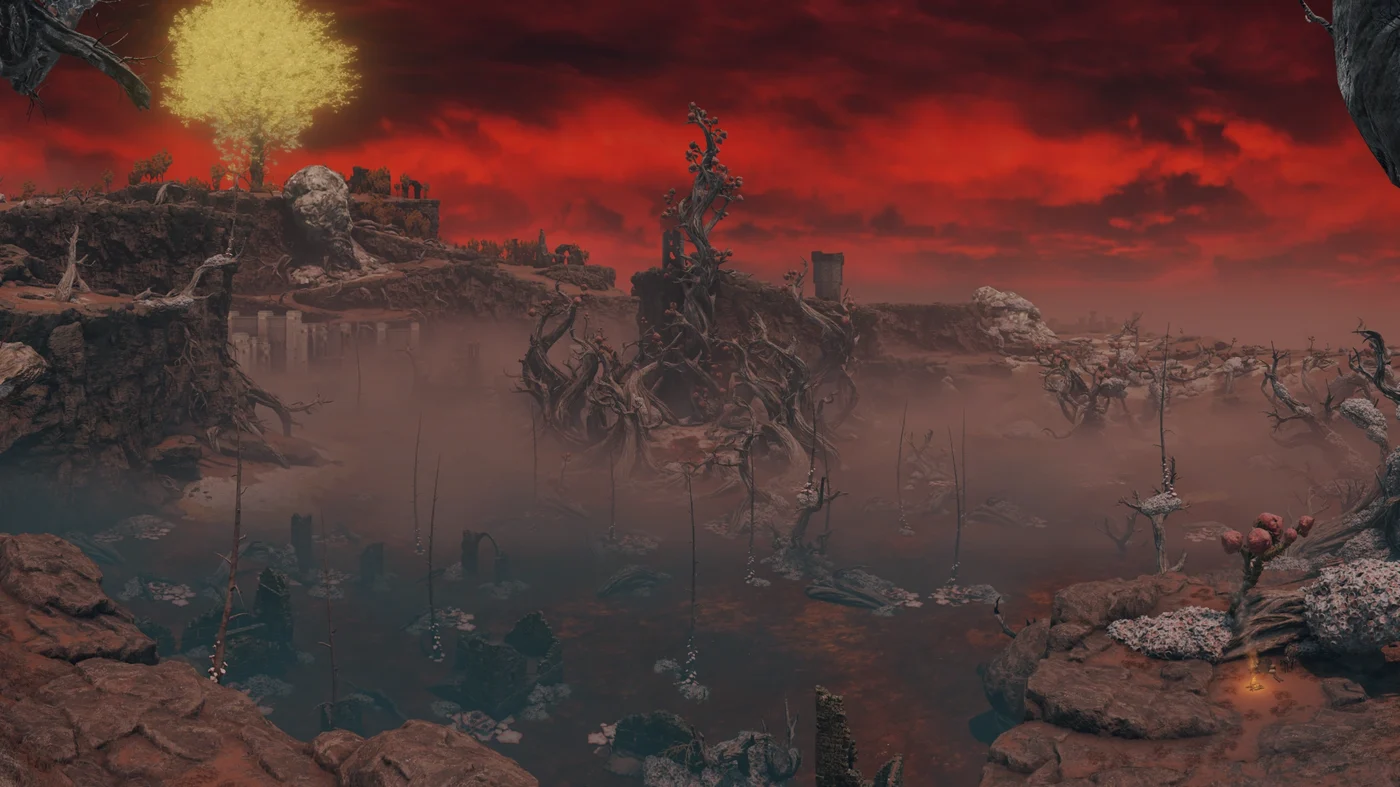 ◇ CONCEPT / FORCE
The Scarlet Rot and the Order of Rot
Divine Affliction · Cycle of Decay▾
The Scarlet Rot and the Order of Rot
The Scarlet Rot is simultaneously a biological affliction and an alternative cosmic Order, a force or entity external to the Greater Will, possibly a distinct Outer God who sought its own Empyreans. According to Gowry, Malenia was "an Empyrean bearing the Scarlet Rot", designated by a different outer god to bear this curse and become its Goddess of Rot. The cycle of the Order of Rot: life → death → decomposition → rot → rebirth as something new and different. The Order of Rot (of which Gowry is a devotee, and Millicent❞ represents as a "blossom") venerates this cycle as superior to the static Golden Order. Caelid is the perfect example of what Scarlet Rot achieves at large scale, lands entirely transformed by the Aeonia blooming. The Cleanrot Knights bore the rot's spread as their banner. Caelid's animals (red-tinted dogs, giant deformed ravens) are in terminal rot transformation stages. The Scarlet Rot is described in many item descriptions as "the curse of Malenia's blood", a direct link to her Empyrean status. Scarlet Rot spells (Rotten Breath, Scarlet Aeonia, Ekzykes's Decay) are legacies of this cosmic force. Aeonian Butterflies (red butterflies) are born from Aeonia's rot and constitute an entire ecosystem founded on decomposition.
◆ Sources
Spinning WeaponDolores the Sleeping Arrow Puppet(Ainsel River) A new map has been found. (Lake of Rot) A new map has been found. (Mohgwyn Palace) A new map has been found. (Siofra River) A new map has been found.
Why...shatter... I am Malenia. Blade of Miquella. Let your flesh be consumed. By the scarlet rot. Is this...my first...defeat? Bravely fought, sir. O, dear Miquella... O, dearest Miquella, my brother... I'm sorry. I finally met my match... Darriwil... Rotting in a cell is no true justice. No, this is where it ends for you. ...Right. There you are.
Old Albus (Dialogue)Boc the Seamster (Dialogue)And funny thing, his swords were all blunt as stone. But not one of them decayed when faced with the scarlet rot... Champions, welcome! The stars have aligned! General Radahn is surely pleased. Festering with rot, and crippled by madness, all he wanted was an honourable death. Finally, my work is done. I am no longer bound to this fortress.
Dung Eater (Dialogue)Millicent (Dialogue)Sage Gowry (Dialogue)As your Mother did? We children of the scarlet rot? Millicent... Malenia... Do you detest us, so utterly? Have you taken the lesson, now?
Rotten Winged Sword InsigniaA talisman depicting a raised prosthetic blade. An honor bestowed upon the valkyries who serve the Goddess of Rot. Greatly raises attack power with successive attacks. The four sisters were born in the Swamp of Aeonia, and came to the Haligtree under the aegis of Gowry. And yet, those buds were doomed to never blossom.
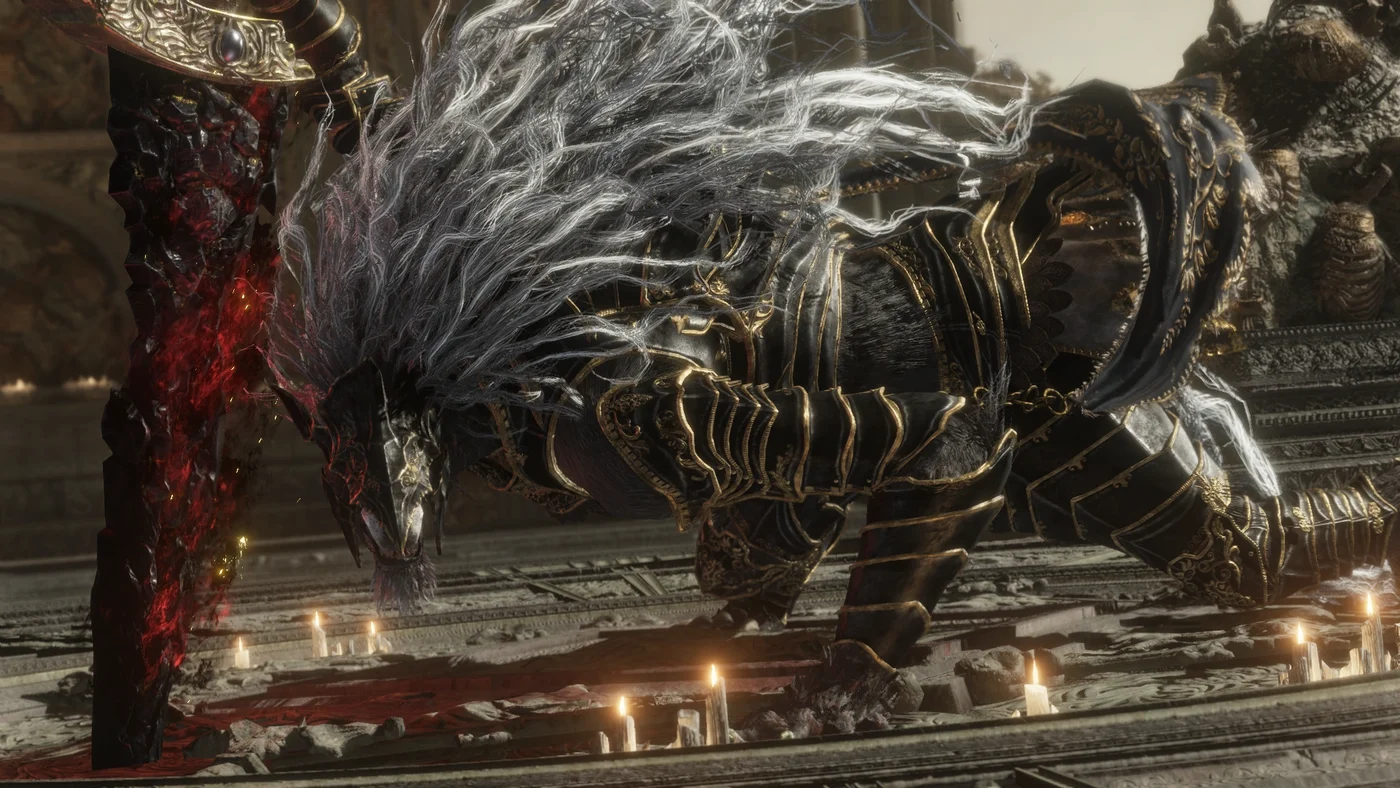 ◇ CONCEPT / FORCE
Destined Death and the Rune of Death
True Death · The Order's Hidden Secret▾
Destined Death and the Rune of Death
Destined Death is true permanent death, the complete extinction of soul and body, with no possibility of rebirth at Sites of Grace. It was deliberately removed from the Golden Order by Marika and sealed within Maliketh's flesh, allowing the Order to function on a perpetual rebirth cycle without true death. The Rune of Death is the Elden Ring fragment controlling this concept. Ranni stole a fragment of it from Maliketh for the Black Knives. Black Flame (Black Flame incantations) is linked to Destined Death, these incantations inflict damage that continues after impact, simulating progressive and irremediable death. The Gloam-Eyed Queen (theorized to be an ancient Empyrean, possibly Melina) wielded the Rune of Death and was defeated by Maliketh, who sealed the concept at Marika's behest. Releasing Destined Death (after Maliketh's defeat) is both necessary for game progression and potentially catastrophic for the Order, it reintroduces true death into the Lands Between. The Godslayer's Greatsword and Godskin weapons (used by Godskin Apostles and Nobles) channel Black Flame, vestiges of an era when warriors fought gods with Destined Death. The name Black Blade attaches both to Maliketh's weapon and this pre-existing concept.
◆ Sources
Remembrance of the Black BladeMaliketh was a shadowbound beast given to his Empyrean. Marika's sole need of her shadow was a vessel to lock away Destined Death. Even then, she betrayed him.
Black BladeThis can be followed up with one additional attack. This blade was once imbued with Destined Death. In addition to dealing damage, it reduces foes' maximum HP and continues to sap their current HP for a very short time.
Finger Reader Enia (Dialogue)I must consume more... Thou, who approacheth Destined Death. I will not have it stolen from me again. Tarnished. Tis no matter. I hereby vow, that Destined Death shall not be stolen again. I shall not part with it again. Stay away from Destined Death. Cower. Before Maliketh, the Black Blade. Witless Tarnished... Why covet Destined Death? To kill what? To destroy what?
Dung Eater (Dialogue) Blade of Death
Unique Skill: Blade of Death Unleash the power of the Rune of Death to fire off a blade-like projectile. In addition to dealing immediate damage, the blade reduces the enemy's maximum HP and continues to wear down HP for a while.
 Destined Death
Unique Skill: Destined Death Set free the remnants of Destined Death, plunging the greatsword into the ground to summon a myriad of blades. In addition to dealing immediate damage, this attack reduces the enemy's maximum HP and continues to wear down HP for a short time.
Blasphemous ClawA slab of rock engraved with traces of the Rune of Death. Can deflect the power of the Black Blade. On the night of the dire plot, Ranni rewarded Praetor Rykard with these traces. Should the coming trespass one day transpire, they would serve as a last-resort foil, allowing Rykard to challenge Maliketh the Black Blade, the black beast of Destined Death.
Godskin Apostle HoodWorn by the Godskin Apostles. The apostles, once said to serve Destined Death, are wielders of the god-slaying black flame. But after their defeat by Maliketh, the Black Blade, the source of their power was sealed away.
Godskin Apostle RobeWorn by the Godskin Apostles. The apostles, once said to serve Destined Death, are wielders of the god-slaying black flame. But after their defeat by Maliketh, the Black Blade, the source of their power was sealed away.
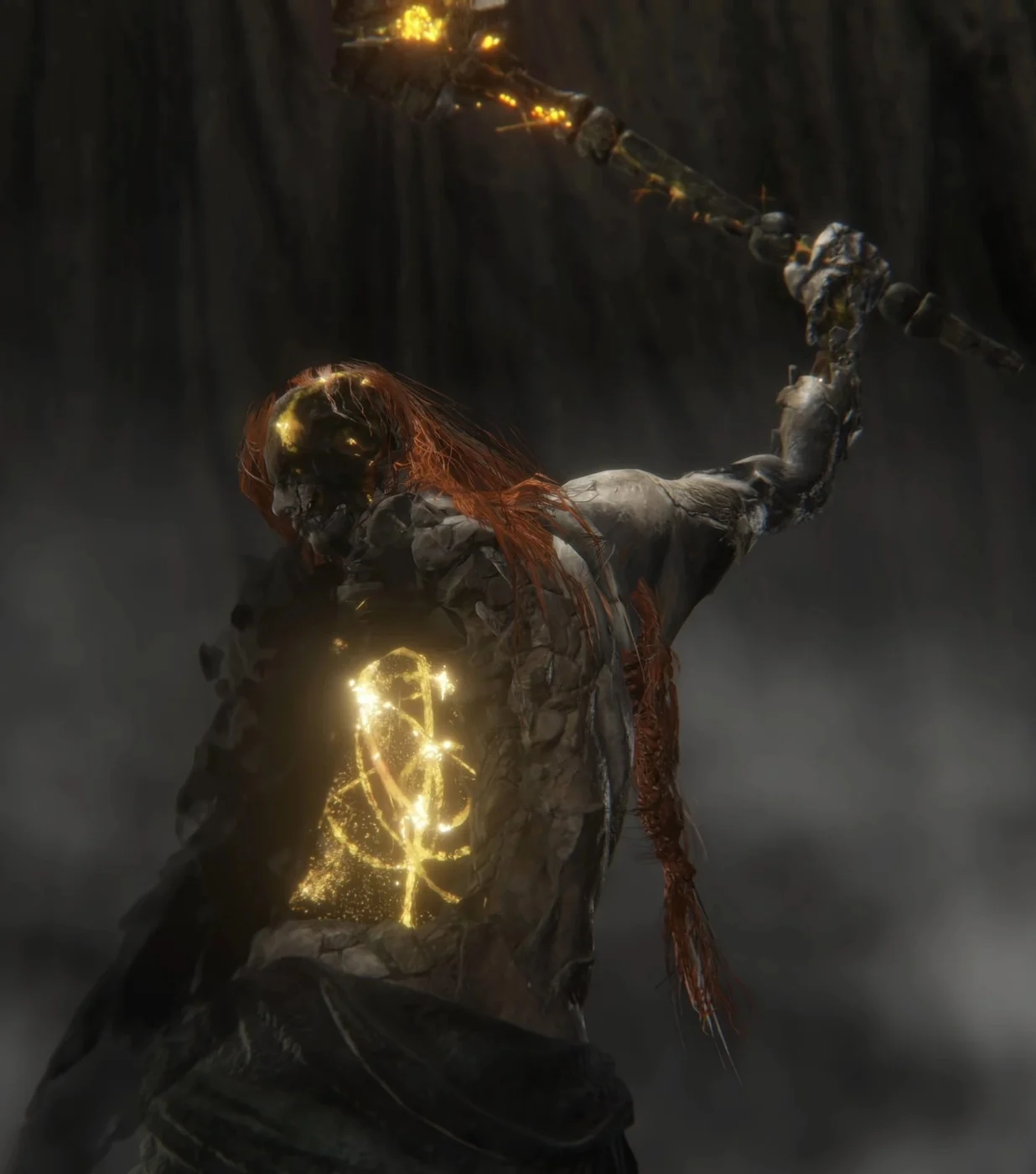 ◇ CONCEPT / FORCE
The Greater Will and the Two Fingers
External Cosmic Deity · Masters of Order▾
The Greater Will and the Two Fingers
"The Greater Will has not abandoned the realm, nor the life that inhabits it. So it is that the Tarnished are guided by grace."
Enia, on the Will's silence
The Greater Will is a god external to the Lands Between, a cosmic entity that decided to impose Order upon the Lands Between through Marika. It sent the Elden Beast (its physical beast-vassal) and the Two Fingers (its communication intermediaries) to establish this Order. The Two Fingers are large digitigrade white fingers that transmit the Greater Will's messages; Finger Readers (like Enia) interpret them for mortals. The Greater Will designates Empyreans, beings capable of becoming the next god, through the Two Fingers. The Two Fingers were "corrupted" or went silent after the Shattering according to Varré: "The words of the Two Fingers can no longer be trusted. Corrupted, their guidance, tainted." Gideon Ofnir believes the same. The Two Fingers were also corrupted by the Frenzied Flame and fell silent, creating the "guidance vacuum" that Tarnished must fill. The Baleful Shadows are the Greater Will's assassins, sent through the Two Fingers to eliminate recalcitrant Empyreans (Ranni was their target). Ranni resisted and ended their contract by killing her Empyrean body. The Fingerslayer Blade (Eternal Cities artifact) is a weapon capable of killing a Two Fingers entity, its existence reveals that beings have previously wanted to, or succeeded in, resisting the Greater Will.
◆ Sources
Elden RemembranceAlternatively, it can be used to gain a great bounty of runes. It was the vassal beast of the Greater Will and living incarnation of the concept of Order.
Finger Reader Enia (Dialogue)Preceptor Seluvis (Dialogue)That I belong to the Volcano Manor. I always hated the gibberish about lost grace and the laughable Two Fingers. I thought I could lend a hand in unmasking the charade. Not to mention Tanith has always made me curious. Then came fractures, and births, and souls. But the Greater Will made a mistake. Torment, despair, affliction. Every sin, every curse.
And with everything in hand, the time has come to rise, against the Erdtree. O Greater Will, hear my voice. I am the recusant Bernahl, inheritor of my brother's will, and you will fall to my blade. We refuse to become your pawns.
Fingerslayer BladeThis blood-drenched fetish is proof of the high treason committed by the Eternal City and symbolizes its downfall. Cannot be wielded by those without a fate, but is said to be able to harm the Greater Will and its vassals.
And with everything in hand, the time has come to rise, against the Erdtree. O Greater Will, hear my voice. I am the recusant Bernahl, inheritor of my brother's will, and you will fall to my blade. We refuse to become your pawns.
Nox Monk HoodSilk hood worn by the monks of the Eternal City. Long ago, the Nox invoked the ire of the Greater Will, and were banished deep underground. Now they live under a false night sky, in eternal anticipation of their liege. Of the coming age of the stars.
Nox Monk ArmorArmor worn by the monks of the Eternal City, with a silk cape attached. Long ago, the Nox invoked the ire of the Greater Will, and were banished deep underground. Now they live under a false night sky, in eternal anticipation of their liege. Of the coming age of the stars.
Nox Monk GreavesGreaves worn by the monks of the Eternal City. Long ago, the Nox invoked the ire of the Greater Will, and were banished deep underground. Now they live under a false night sky, in eternal anticipation of their liege. Of the coming age of the stars.
Nox Monk Hood (Altered)Hood worn by the monks of the Eternal City. Long ago, the Nox invoked the ire of the Greater Will, and were banished deep underground. Now they live under a false night sky, in eternal anticipation of their liege. Of the coming age of the stars.
 —️ LOCATION
Stormveil Castle
Fortress of the Grafted, gate of Limgrave▾
Stormveil Castle
Stormveil is the first great fortress the Tarnished must conquer, perched on a windswept cliff at the northern edge of Limgrave. It was once the seat of Godrick the Grafted, the diluted-blood demigod who clung to power by stitching the limbs of the dead onto his own withered body. The castle is named for the storms that wreath its towers, winds said to be the breath of Godfrey himself, who first took Stormveil in the early days of the Erdtree.
Long before Godrick, Stormveil was the seat of the Storm Hawk people, a now-vanished tribe whose feathers and rune-marks still appear in the castle's heraldry. The Banished Knights, the wind-cloaked warriors who once served Godfrey, retreated here after their lord was stripped of grace and exiled across the fog. Their oaths to a fallen king made them outcasts. They serve Godrick now only because he is the last of the line.
Remembrance of the GraftedRemembrance of Godrick, the Grafted, hewn into the Erdtree. A feeble man sought power through the grotesque act of grafting. 'One day we'll return together, to our home, bathed in rays of gold.'
Thick, full set of armor covering the entire body. This armor was worn by knights who, whether by misfortune or misdeed, were forced to abandon their homes. These fierce warriors were each and all accomplished. Perhaps that is why, despite their territorial losses, they were still named knights.
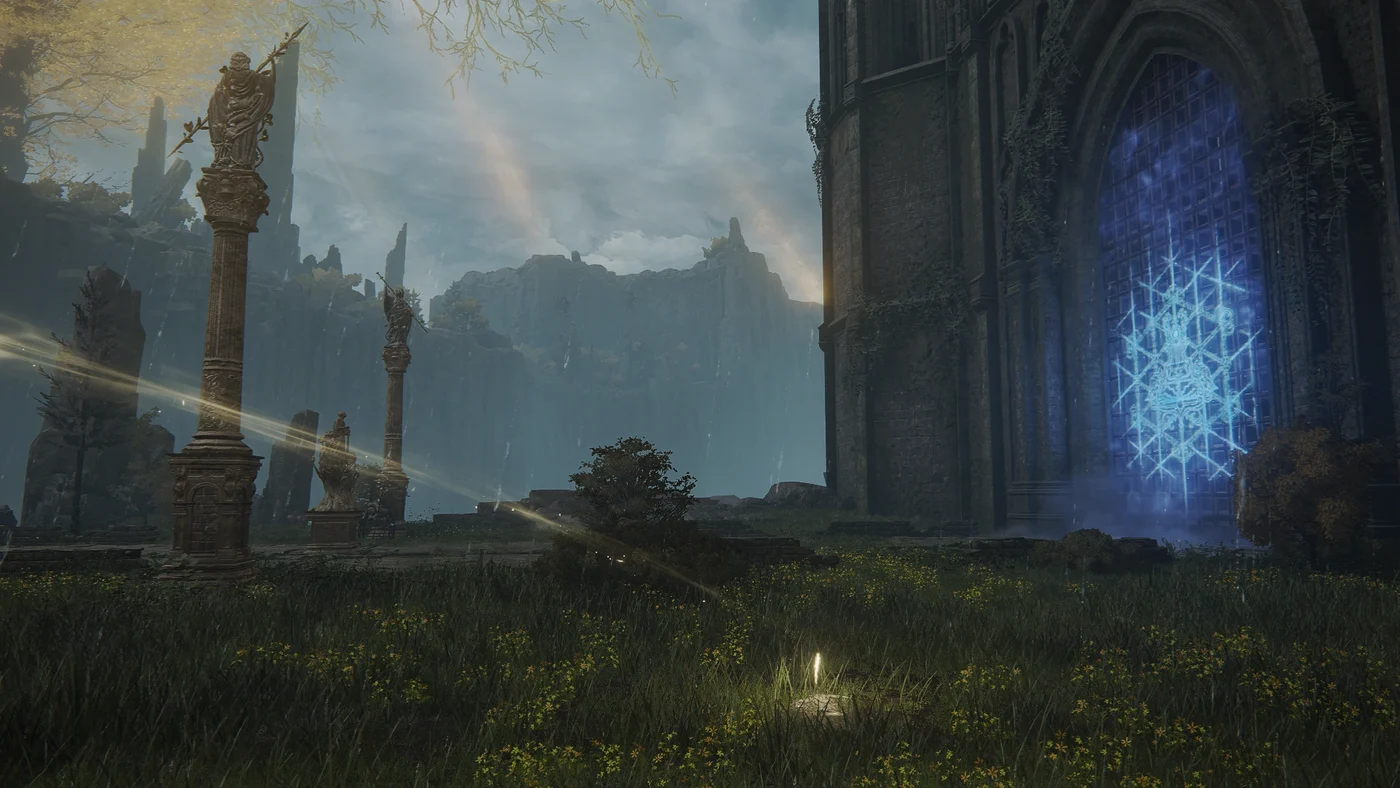 —️ LOCATION
Raya Lucaria Academy
School of glintstone sorcery, court of Rennala▾
Raya Lucaria Academy
Raya Lucaria is the great academy of glintstone sorcery, raised on a rock above the lake of Liurnia. It was founded by the Carian royal house, who married knowledge of the stars to the magic of moonlight, and ruled by Rennala, Queen of the Full Moon. After the Shattering, Rennala retreated to the library at the heart of the academy, cradling a lifeless egg, and the school's chambers became a tomb of glintstone sorcerers obsessed with their own books.
Hidden beneath the academy's marble halls is its first secret: the inscription Radagon is Marika, carved into a wall behind a sealed door. The academy houses the Lazuli Conspectus, heretics who came to see the moon as equal to the stars, and the Cuckoo branch, who once seized control of the institution by force. The Twin Moon and Lunar Princess Ranni were both daughters of this place; both renounced it.
Remembrance of the Full Moon QueenRemembrance of Rennala, Queen of the Full Moon, hewn into the Erdtree. In her youth, Rennala was a prominent champion who charmed the academy with her lunar magic, becoming its master. She also led the Glintstone Knights and established the house of Caria as royalty.
Legendary sorcery devised by Azur, primeval sorcerer. Fires a tremendous comet in a torrent akin to the distant starry expanse, the place said to be the origin of glintstone. When Azur glimpsed into the primeval current, he saw darkness. He was left both bewitched and fearful of the abyss.
 —️ LOCATION
Mountaintops of the Giants
Land of fire, forge of the Erdtree's burning▾
Mountaintops of the Giants
The Mountaintops of the Giants lie far above the clouds in the snowy north; the map of their eastern reach calls that remote, desolate summit the highest point in all the Lands Between. Here lived the Fire Giants, red of hair, keepers of the flame of ruin; in ancient times, the giants were mortal enemies of the Erdtree. They worshipped a malformed one-eyed god, an evil deity believed slain by Queen Marika, and they borrowed from that fell god's power, and were defeated all the same: Burn, O Flame! calls their keeping of the fire a solitary curse, to serve as keepers of the Flame for eternity, and says their failure released them from it. Godfrey, lord of the battlefield, led the War against the Giants at the beginning of the age of the Erdtree, and its monument records champions in battle, trolls turning traitor, fire vanquished, the era of the Erdtree begun. After the giants were quelled, the flames of their forge would not die, and Queen Marika marked a survivor of that war with a curse: 'O trifling giant, mayest thou tend thy flame for eternity.'
The Giants' Flame still smolders on the distant northern mountaintop; its ruinous blaze was sealed after the war and guardians were appointed to watch over it, the Fire Monks and the prelates who monitor it. It is to this peak, where the forge of the flame of ruin is said to be found, that Melina wishes to travel: she tells the Tarnished to think not of the kindling, that she will see to it, and asks for the journey to be made. Beyond, a land crossed east to west by a frozen river carries the route to Miquella's Haligtree, the path taken by those unchosen.
Remembrance of the Fire GiantRemembrance of Fire Giant, hewn into the Erdtree. The Fire Giant is a survivor of the War against the Giants. Upon realizing the flames of their forge would never die, Queen Marika marked him with a curse. 'O trifling giant, mayest thou tend thy flame for eternity.'
Giant-CrusherA hammer made from a boulder, used in the War against the Giants. One of the heftiest weapons in the entire Lands Between. After the giants were quelled, and man turned against man in violence, this weapon was all but forgotten. Man has grown feeble in comparison to his forebears.
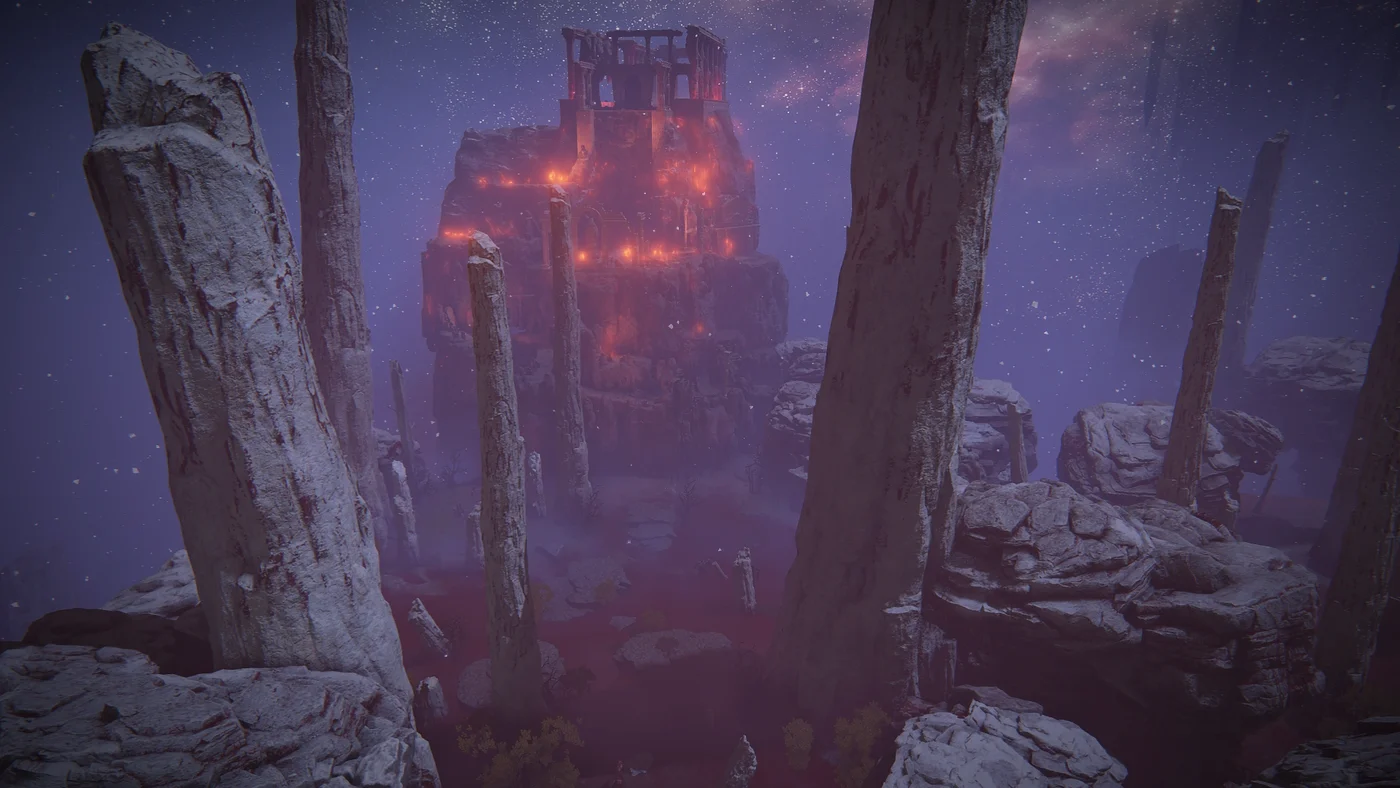 —️ LOCATION
Mohgwyn Palace
Seat of the coming dynasty of Mohgwyn, in the lightless depths▾
Mohgwyn Palace
Mohgwyn Palace lies in what its own map calls the lightless depths, far below the Lands Between. It is here, the map says, that Mohg, the Lord of Blood, is building his palace, to be the seat of his coming dynasty named Mohgwyn, and whatever nightmares that may bring. Mohg is an Omen and the twin brother of Morgott; his Great Rune is soaked in accursed blood, out of devout love for the wretched mire that he was born into far below the earth. Mohg’s Shackle, made to keep a particular Omen under strictest confinement, still retains power enough to trap the once-bound Mohg on earth. Deep underground he stood before the Formless Mother, an outer god who bestows power upon accursed blood: his blood erupted with fire, and he was besotted with the defilement that he was born into. The mother of truth craves wounds.
A place within the palace bears the name Cocoon of the Empyrean, and Mohg claims the sleeper inside it as his and his alone. The Remembrance of the Blood Lord gives his purpose: wishing to raise Miquella to full godhood, Mohg wished to become his consort, taking the role of monarch, yet he received no response from the young Empyrean. His followers render up offerings of blood to drench the consort’s chamber and slake the cocoon’s thirst, and the pure white oath-cloth given by Varré, a trial to be anointed a Knight of Mohg, is soaked with a maiden’s blood. They are told that Mohg yet slumbers beside the Divinity, and to be patient, for the new dynasty is nigh. Of the dead below, the map says the lightless depths hold the grave of an ancient civilization; it does not name them.
Remembrance of the Blood LordRemembrance of Mohg, Lord of Blood, hewn into the Erdtree. … Wishing to raise Miquella to full godhood, Mohg wished to become his consort, taking the role of monarch. But no matter how much of his bloody bedchamber he tried to share, he received no response from the young Empyrean.
A Blood Oath incantation, granted by the Lord of Blood. Creates bloodflame lacerations before the caster, which explode in an instant. After dealing damage, bloodflame continues to build up onset of blood loss for a very short time.
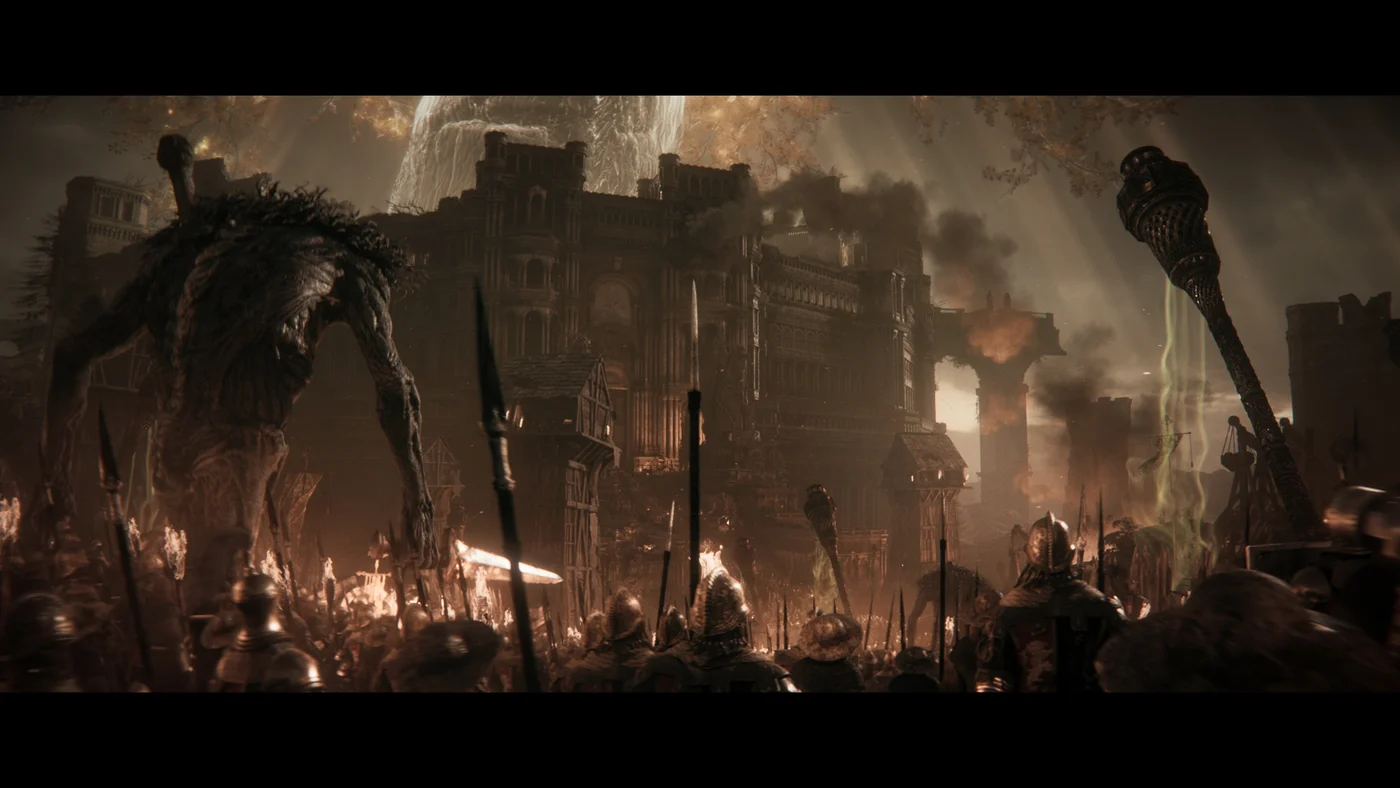 ✦️ EVENT
The Battle of Aeonia
When Malenia bloomed scarlet upon Caelid▾
The Battle of Aeonia
The Battle of Aeonia set Malenia, Blade of Miquella, against Starscourge Radahn, the half-brother who shared her father Radagon, in the internecine war between demigods that the breaking of the Elden Ring had triggered. Caelid is remembered as the locale of that last battle between the two, and the monument over the field records how it held at first: Radahn and Malenia locked in stalemate. Her Cleanrot Knights had marched south at her side, sworn to fight alongside her despite the gradual putrefaction of their own flesh. The bloom she carried came at a price of its own: each time the scarlet flower blooms, Malenia's rot advances.
Then, the scarlet rot blooms. She let the rotflower blossom in Aeonia, and in that moment Radahn heard a murmur in his ear: 'Miquella awaits thee, O promised consort.' His Great Rune burns to resist the encroachment of the scarlet rot, and the rot ate him from the inside regardless; what the Tarnished meets at the festival of combat is a general cursed ever to wander, his wits long gone, gathering the corpses of former friends and foes alike and gorging on them like a dog. His Redmane Knights, driven to defeat by that same rot, burned the crest on their armor and remained as a bulwark against the blight. Malenia did not walk off the field either: Cleanrot Knight Finlay, one of the few survivors, carried the slumbering demigod all the way back to the Haligtree. The rot stayed, bubbling up from the Swamp of Aeonia and eating away at life like a vicious plague.
Remembrance of the Rot GoddessRemembrance of Malenia, Goddess of Rot, hewn into the Erdtree. Miquella and Malenia are both the children of a single god. As such they are both Empyreans, but suffered afflictions from birth. One was cursed with eternal childhood, and the other harbored rot within.
Malenia's Great RuneA Great Rune of the shardbearer Malenia. The blessing of this half-rotted rune reduces the healing power of Flask of Crimson Tears. And yet, due to the infusion of Malenia's spirit of resistance, attacks made immediately after receiving damage will partially recover HP. Malenia is daughter to Queen Marika and Radagon, and her Great Rune should have been the most sacred of all.
✦️ EVENTThe Forging of the Black Knives
Ranni's heresy, and the stolen fragment of Death▾
The Forging of the Black Knives
Before the Shattering, Ranni, then an Empyrean candidate to succeed Marika, committed an act of cosmic theft. She would not acquiesce to the Two Fingers, and she claims the whole deed for herself: 'I stole a fragment of the Rune of Death, and used it to forge the godslaying black knives through fearsome rite. I did it all.' The fragment came from Maliketh, the Black Blade, the shadowbound beast whose purpose, says his Remembrance, was to be 'a vessel to lock away Destined Death'. After the robbery, Maliketh 'bound the blade within his own flesh, such that none might ever rob Death again'.
Ranni's forging is written as a rite. The blade is 'oddly misshapen', and the assassin's charms modelled after it recall 'the darkly gleaming blades used in the Night of Black Knives'; the ritual performed on it 'imbued it with the power of the stolen Rune of Death'. Theft and imbuing fall on the same night: the Black Knifeprint has the fragment taken from Maliketh and put into the assassins' daggers on the Night of the Black Knives, and Tiche imbues hers 'on the night of the plot' before slaying Godwyn. The wielders are described as women, 'rumored to be Numen who had close ties with Marika herself', led by a ringleader named Alecto; who chose them is not written. Deathroot calls the result 'the first Death of a demigod', and the Cursemark of Death adds that the Prince of Death 'perished in soul alone'. The mark itself, says the Knifeprint, 'hides the truth of the conspiracy'.
Black KnifeDagger once belonging to one of the assassins who murdered Godwyn the Golden on the Night of the Black Knives. A ritual performed on the oddly misshapen blade imbued it with the power of the stolen Rune of Death.
Black KnifeprintOn the Night of the Black Knives, someone stole a fragment of Death from Maliketh, the Black Blade, and imbued its power into the assassins' daggers. This mark is evidence of the ritual, and hides the truth of the conspiracy.
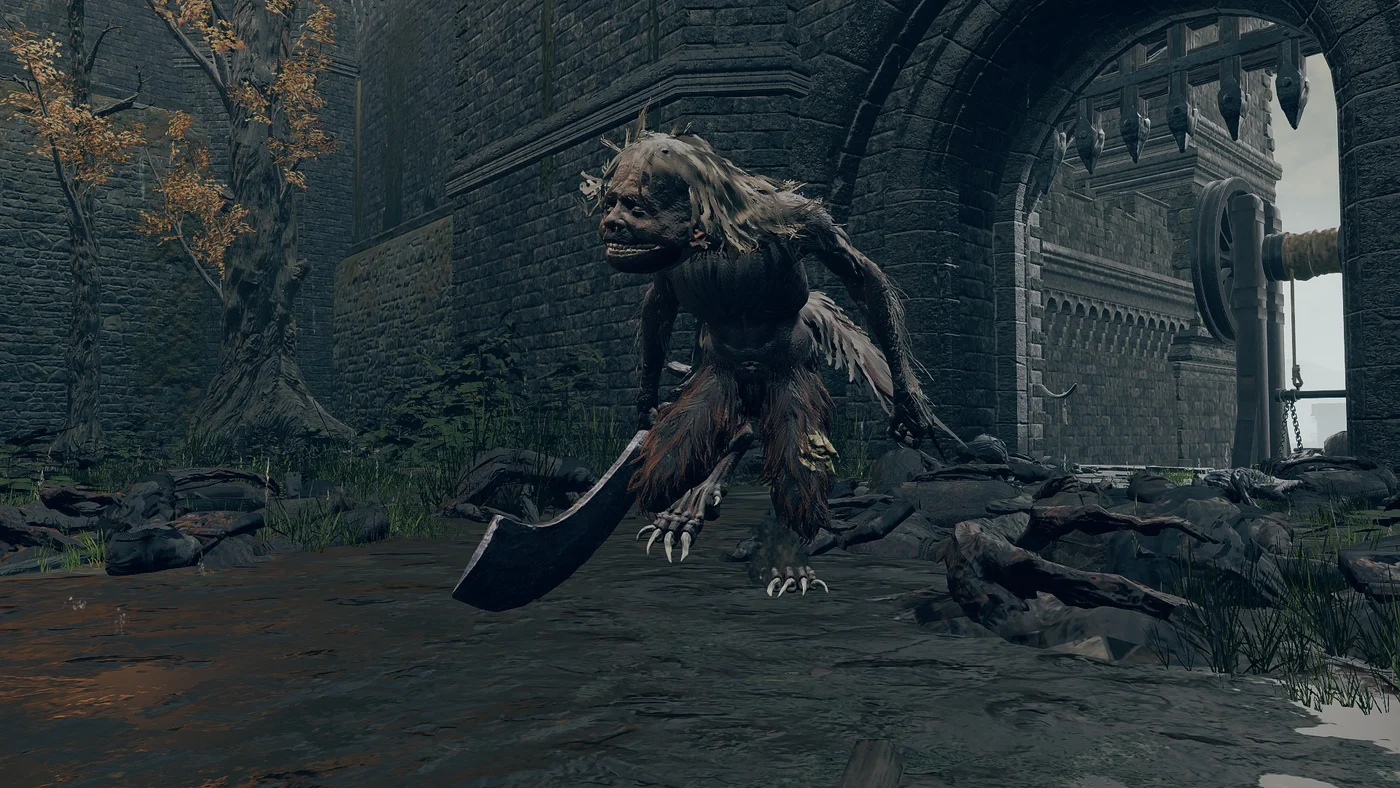 ◈ LINEAGE
The Misbegotten
Held a punishment for touching the Crucible, enslaved from birth▾
The Misbegotten
The Crucible is the crucible of life, the primordial form of the Erdtree, where all life was once blended together. The Misbegotten carry that blending in their bodies: Winged Misbegotten take flight to loose arrows from a shortbow to which fine fur clings, and the game also gives the names Scaly Misbegotten and Leonine Misbegotten. The Crucible talismans describe the same thing on human flesh, fashioned from scales, feathers and bony knots that embody the aspects of various creatures and said to have grown on the human body long ago; considered a signifier of the divine in ancient times, they are now increasingly disdained as an impurity as civilization has advanced.
The Misbegotten are held to be a punishment for making contact with the Crucible, and from birth they are treated as slaves, or worse. The game does not say what labour they were put to. Their weapons carry the mark of that life: iron cleavers commonly used by the maltreated Misbegotten, steeped in resentment and swung wildly and relentlessly, and long-handled axes whose resentment-charged blows are difficult to stop. The Crucible Knights who served Godfrey, the first Elden Lord, drew scorn of another kind, their strength and even their appearance coming to be seen as chaotic. Against that contempt stands the perfumer Tricia, a healer who treated Misbegotten, Omen, and all those seen as impure, and who, when her efforts failed, was their companion as they died, so that they could pass peacefully, free of pain.
A talisman fashioned from a scale that embodies the aspects of various creatures. Said to have grown on the human body long ago. Reduces damage taken from critical hits. A vestige of the crucible of primordial life. Born partially of devolution, it was considered a signifier of the divine in ancient times, but is now increasingly disdained as an impurity as civilization has advanced.
Shortbow wielded by Winged Misbegotten. Fine fur clings to it. Designed to inflict additional damage by sacrificing range.
▣ ARTIFACTThe Elden Ring
Constellation of runes, anchor of all law▾
The Elden Ring
The Elden Ring is not a single thing. It is a constellation of runes, laws, held in the body of a vessel and projected through the Erdtree onto the world. Whoever holds the Ring decrees what lives, what dies, what is permitted. Marika held it; Radagon, when he was Marika, held it; before them, no record remains.
The Ring's central runes encode the Order's deepest tenets: the immortality of Erdtree-graced souls, the rule of golden lineage, the proscription of mixed forms. Marika tore one rune out long ago, the Rune of Death, and gave it to Maliketh to hide. When she shattered the Ring, the demigods scattered with shards called Great Runes; the Tarnished must gather them to be crowned. To replace any rune is to remake reality itself, which is why the endings of the Tarnished's path are not endings of a story but of a world.
Rune gestated by Fia, the Deathbed Companion. Used to restore the fractured Elden Ring when brandished by the Elden Lord. Formed of the two hallowbrand half-wheels combined, it will embed the principle of life within Death into Order. The Golden Order was created by confining Destined Death. Thus, this new Order will be one of Death restored.
Mending Rune of Perfect OrderRune discovered by the noble Goldmask. Used to restore the fractured Elden Ring when brandished by the Elden Lord. A rune of transcendental ideology which will attempt to perfect the Golden Order. The current imperfection of the Golden Order, or instability of ideology, can be blamed upon the fickleness of the gods no better than men. That is the fly in the ointment.
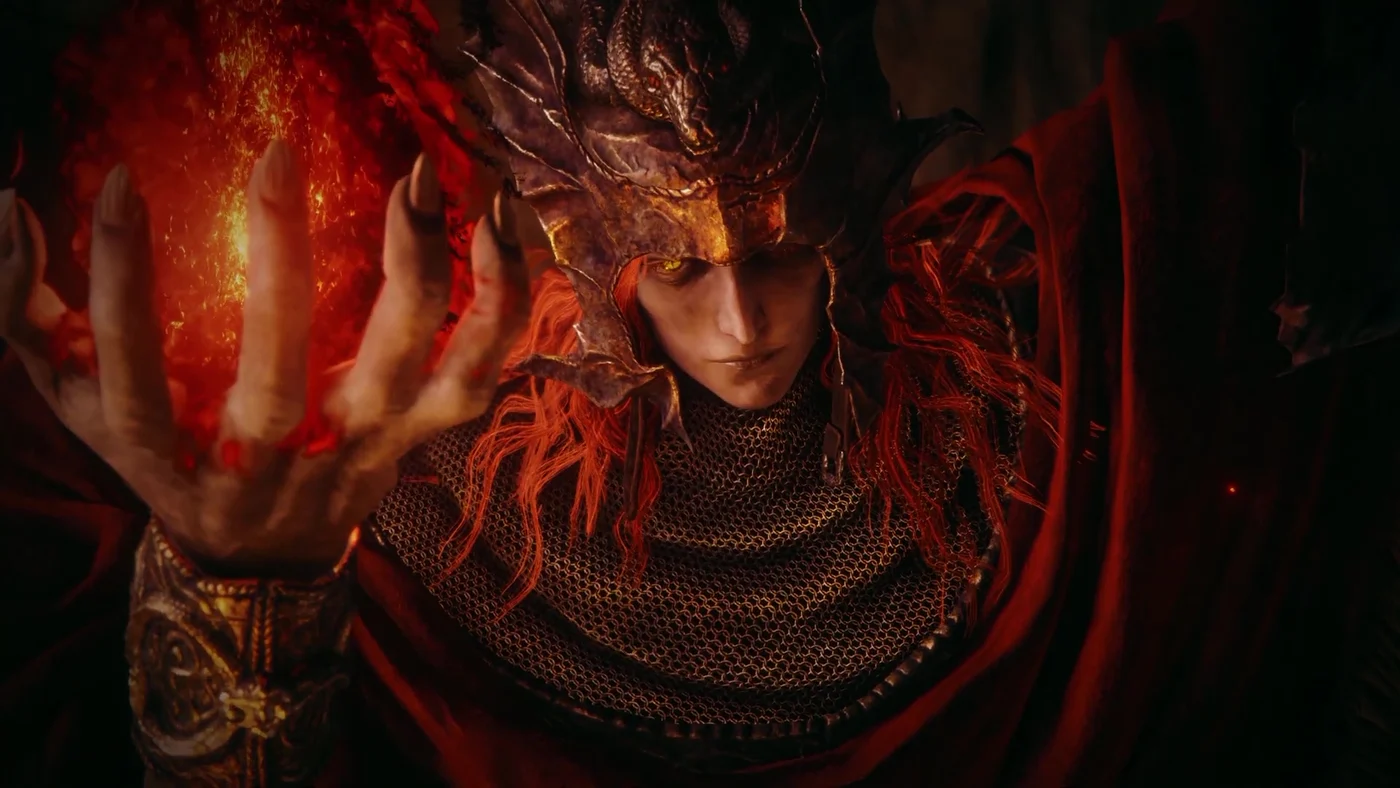 ❋ DLC · DEMIGOD
Messmer the Impaler
Erased son of Marika, sword of the basilisk's gaze▾
Messmer the Impaler
"Those stripped of the Grace of Gold shall all meet death. In the embrace of Messmer's flame."
Battle introduction
"Mother... Marika... A curse... upon thee..."
Defeat
Messmer was the eldest son of Queen Marika by an unrecorded father, a demigod whose name was struck from every chronicle of Leyndell after the war that earned him his title. The Greater Will gave him a black serpent as a familiar, an Outer presence that lived behind his left eye, and the gift of a flame which the Erdtree's grace could not extinguish. Marika dispatched him to the Realm of Shadow at the head of an army with one command: annihilate the hornsent and their reverence of the older horned gods, that no rival worship might survive into the new age.
Messmer carried out his crusade and was then sealed inside the Land of Shadow with his soldiers, his existence hidden from the Lands Between. His armies of fire knights, basilisk soldiers, and the impaling spears that gave him his name still patrol the ruins of Belurat and the Specimen Storehouse. To meet him is to meet the deepest shame of the Erdtree's foundation: a child Marika sent away because his work was complete, and would have damned her had it ever been told.
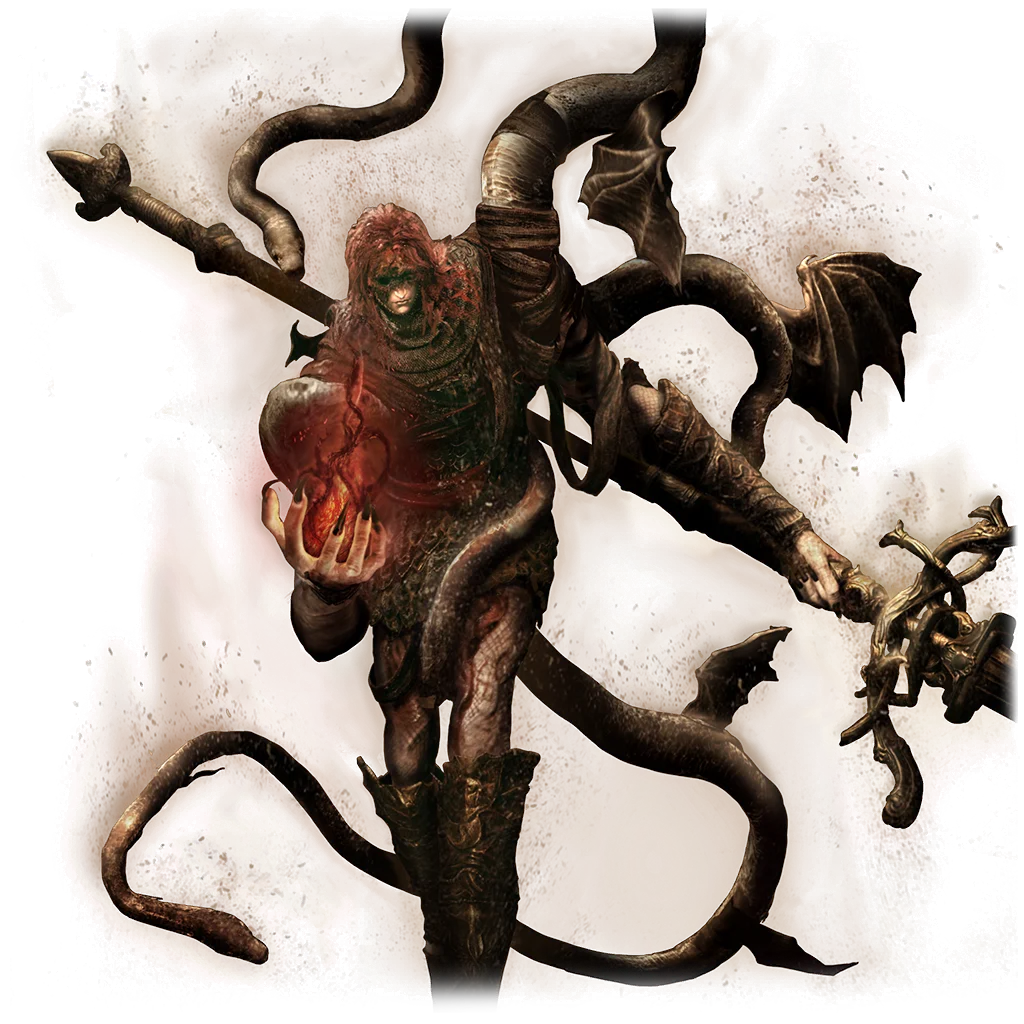 Remembrance of the Impaler
Remembrance of Messmer the Impaler, hewn into the Scadutree. A malevolent snake writhed within Messmer, and so his very mother plucked out his eye and put in its place a seal of grace. Yet, having done so, her fear compelled her to secret away her child within the realm of shadow. Hidden away—keeping company with the original sin, and a hatred that would not be confined.
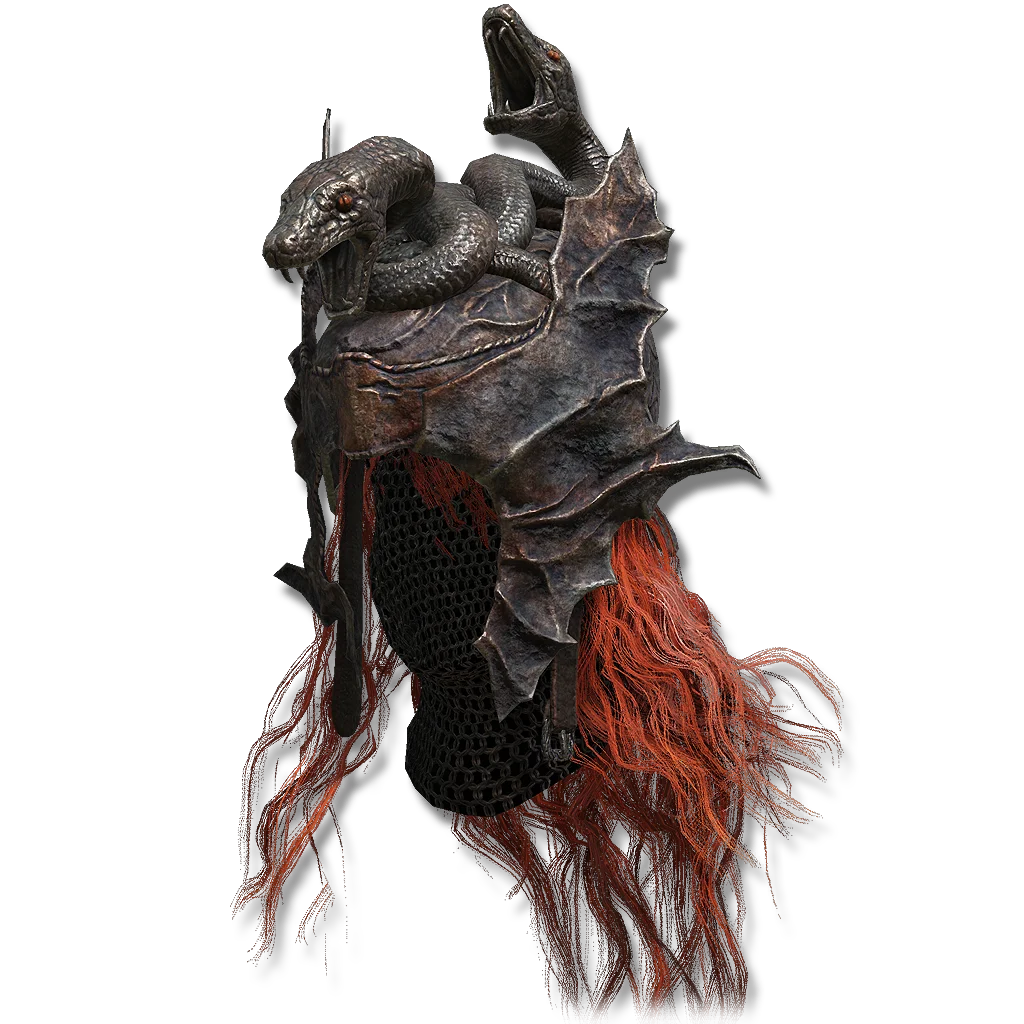 Messmer's Helm
Black helm of Messmer the Impaler, crowned with two intertwined winged serpents. The winged snakes were Messmer's constant companions. They were there when the base serpent was sealed away behind his eye. They were there through his eternity of suffering.
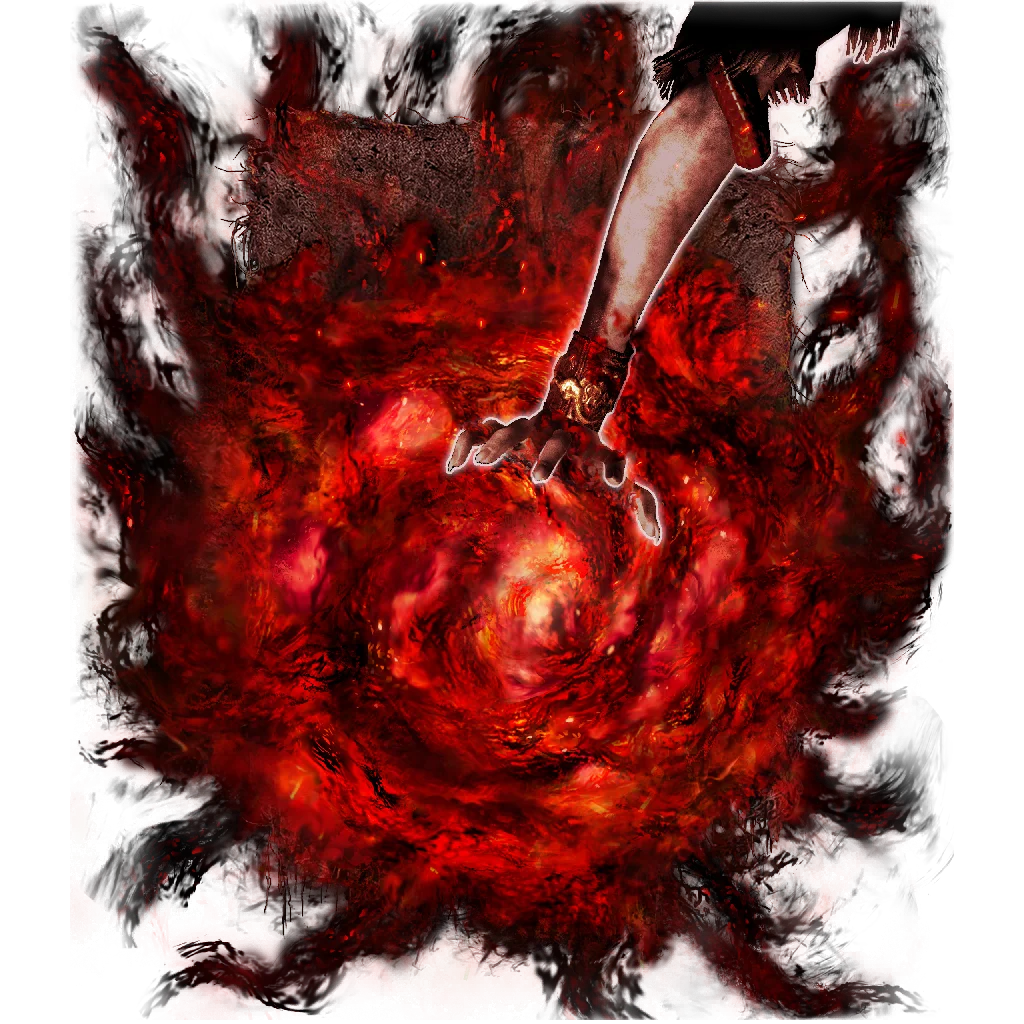 Messmer's Orb
An incantation of Messmer the Impaler. Summons Messmer's flame to form a giant floating orb. Messmer despised his own fire. Time and time again he hoped to rid himself of it, but ever did it burn.
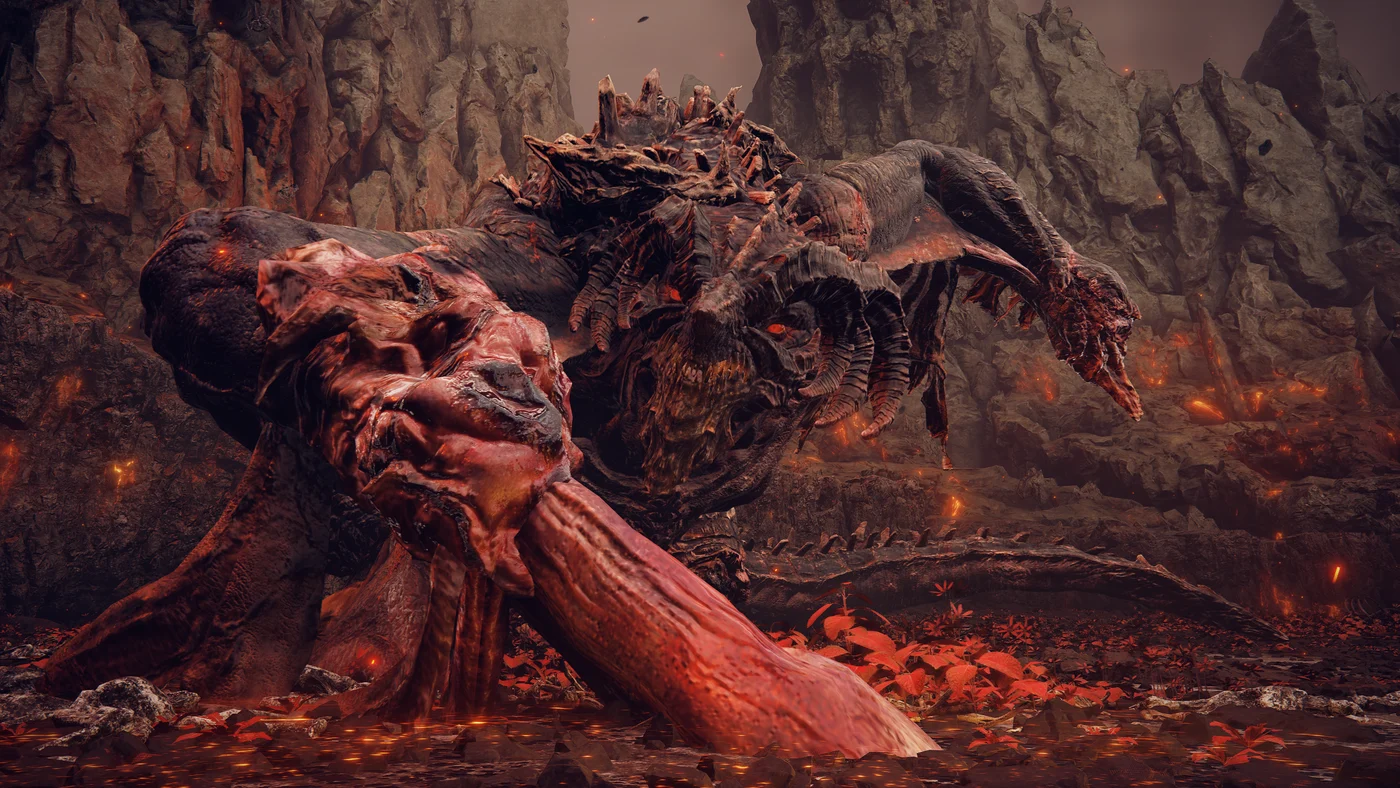 ❋ DLC · DRAGON
Bayle the Dread
Dragon of dragons, the storm that broke Placidusax▾
Bayle the Dread
"On the throbbing heart of the oldest, vilest dragon of them all. There you will find Bayle, the oldest, and vilest, of all dragons. Scale the jagged peak. Face Bayle the Dread. And when you do, slay him in mine stead!"
Igon's vow at the Jagged Peak
Bayle once served under Dragonlord Placidusax, in the age before the Erdtree, when ancient dragons ruled the heavens. He turned upon his lord and inflicted a grievous wound; the challenge ended in mutual injury that left him a ruin of fused scales and weeping wounds. He retreated to the Jagged Peak in the Land of Shadow, where he remains: enormous, hateful, brooding upon the storm of red lightning that is now his only weapon. The other ancient dragons followed him into exile, and there they wait still.
Igon, the broken drake warrior, survived his own challenge to Bayle and has never abandoned the hunt: his soul, he says, yet lies on the mountain. The Tarnished who reaches the summit can hear Igon's voice through the mist, raging an entire questline's worth of hatred at the dragon that maimed him. Bayle's flame lightning, when harvested as an incantation, still carries the dread of his wound: it scars whatever it touches.
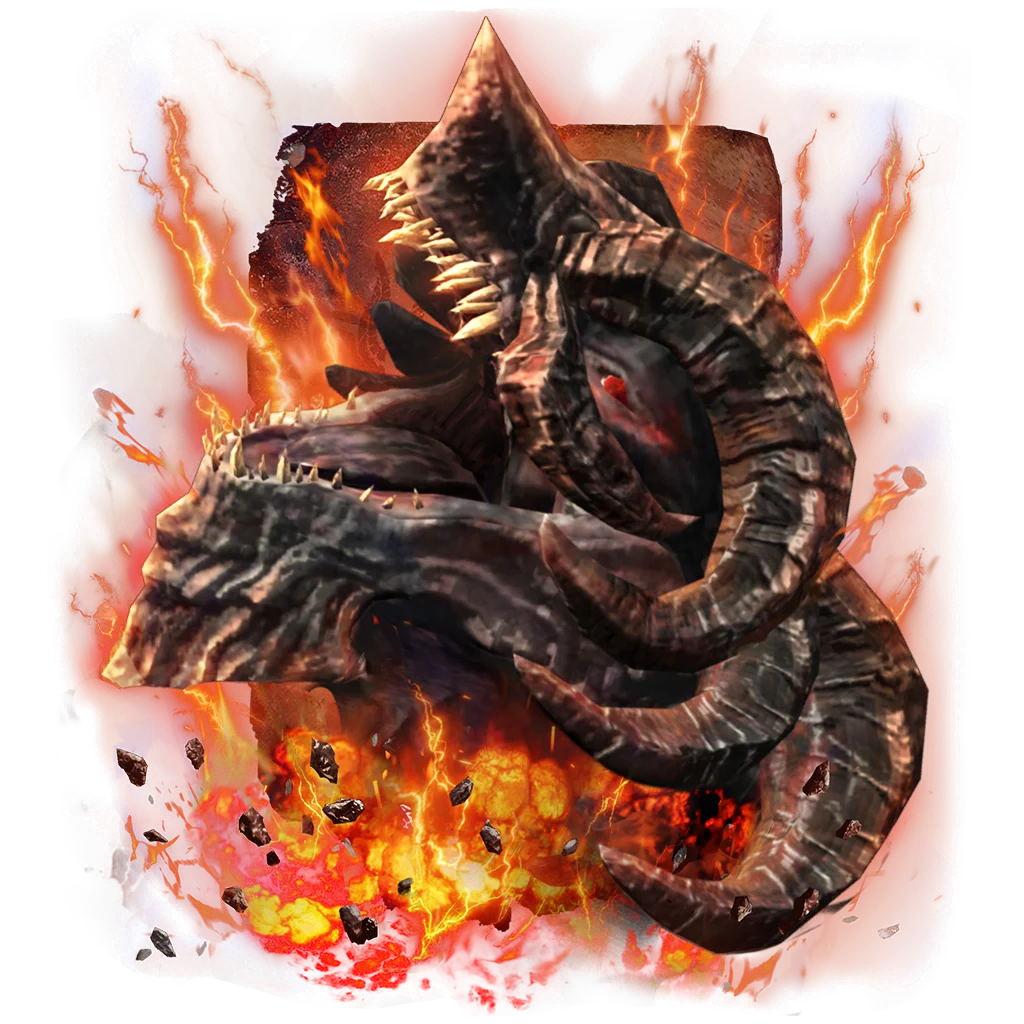 Bayle's Tyranny
One of the greatest Dragon Communion incantations. Harnesses the fearsome power of Bayle the Dread.
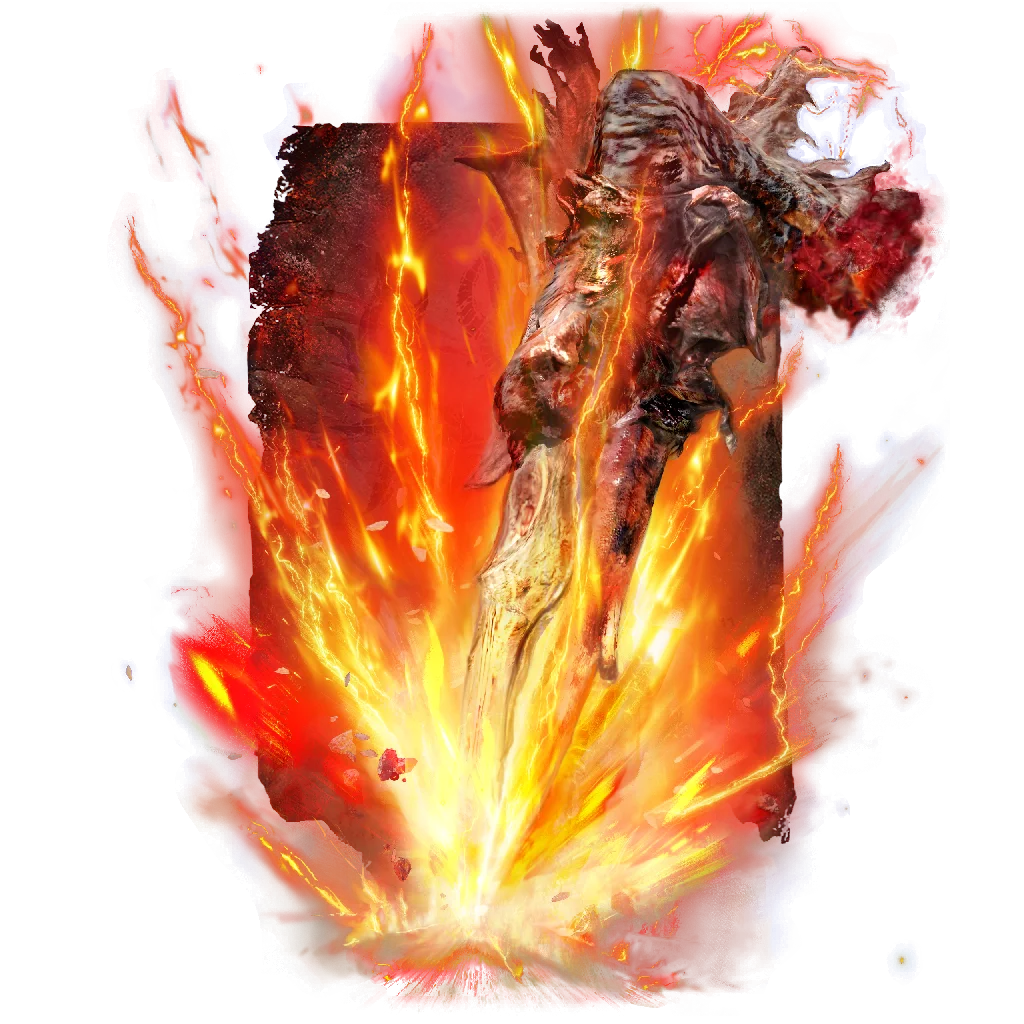 Bayle's Flame Lightning
Channels the form of the dread dragon in right arm to smash foes with an exposed talon bone coursing with flame lightning.
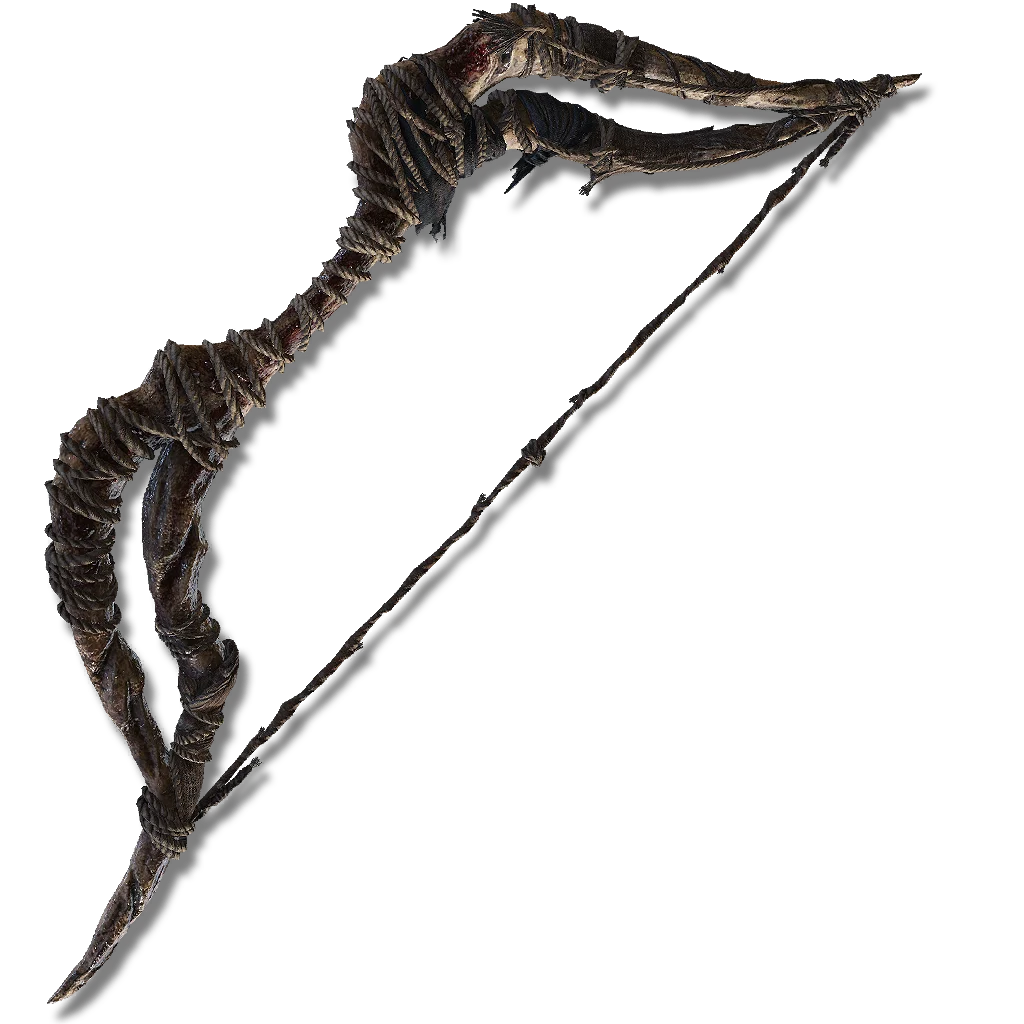 Igon's Greatbow
Weapon of Igon, the broken drake warrior. A greatbow fashioned from two dragon bones bound with coarse rope. Covered in gashes left by claws. Imbued with Igon's obsession, enhancing the power of Igon's Harpoon.
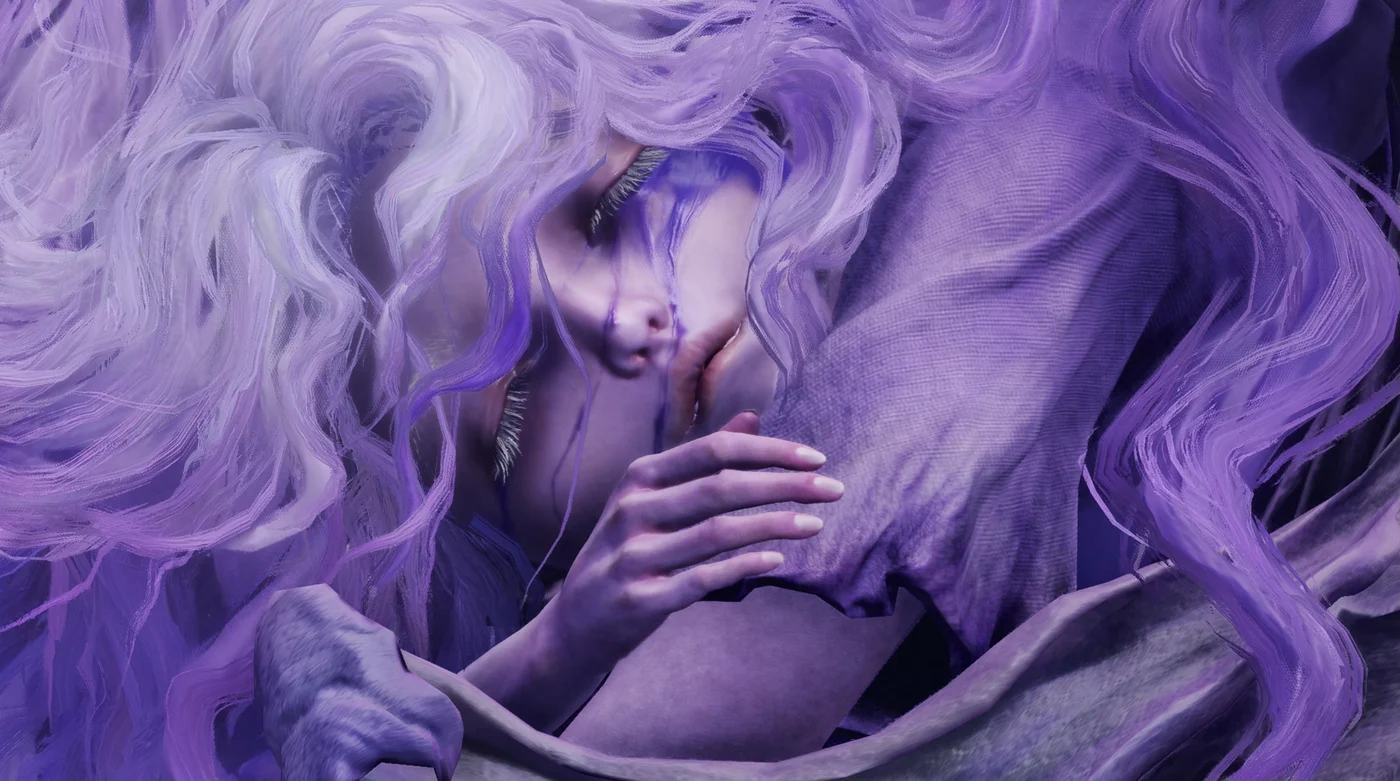 ❋ DLC · DEMIGOD
St. Trina
The other half of Miquella, sealed in violet sleep▾
St. Trina
"Make Miquella stop... Don't turn the poor thing into a god..."
Plea against ascension
"You must kill Miquella... Grant him forgiveness."
Final mercy
St. Trina is the feminine half of Miquella, an aspect he chose to abandon and seal away when he resolved to ascend as a god. To become an unbreakable lord, Miquella stripped from himself everything he believed would weaken his rule: his flesh, his memory of love, his promise to Radahn, and finally his alter Trina, whom he locked beneath a sleeping tomb in the depths of the Realm of Shadow. There she waits among violet flowers, accessible only to Tarnished who have refused to follow him.
Trina speaks in a voice unlike Miquella's: gentle, weary, and lucid. She begs the Tarnished to kill her brother before his ascension is complete, before he becomes a god so total that no will but his can survive in his sphere. The poison flowers that grow over her tomb induce a sleep that even Empyreans cannot wake from, and Thiollier, her devoted poisonmaker, has spent his life crafting it for her sake.
Candlestand torch that burns with a light-purple flame. The carvings depict St. Trina, but in adult form, somewhat unnervingly. The light-purple flame induces sleep.
 St. Trina's Blossom
St. Trina's life withered and fell, as fleeting as the seasons. At her last, she left a single water lily. Despite the velvety-purple hue, the flower is in no way poisonous—it merely blooms in quietude.
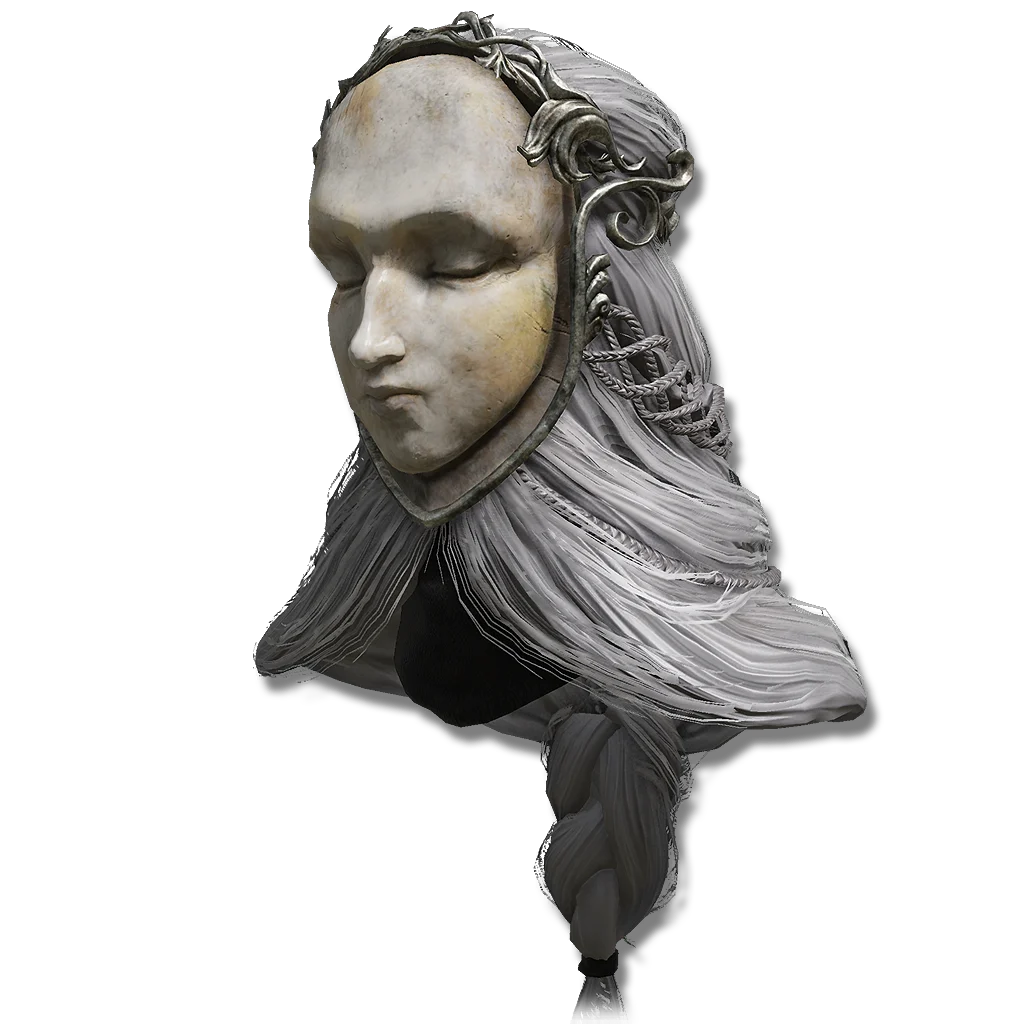
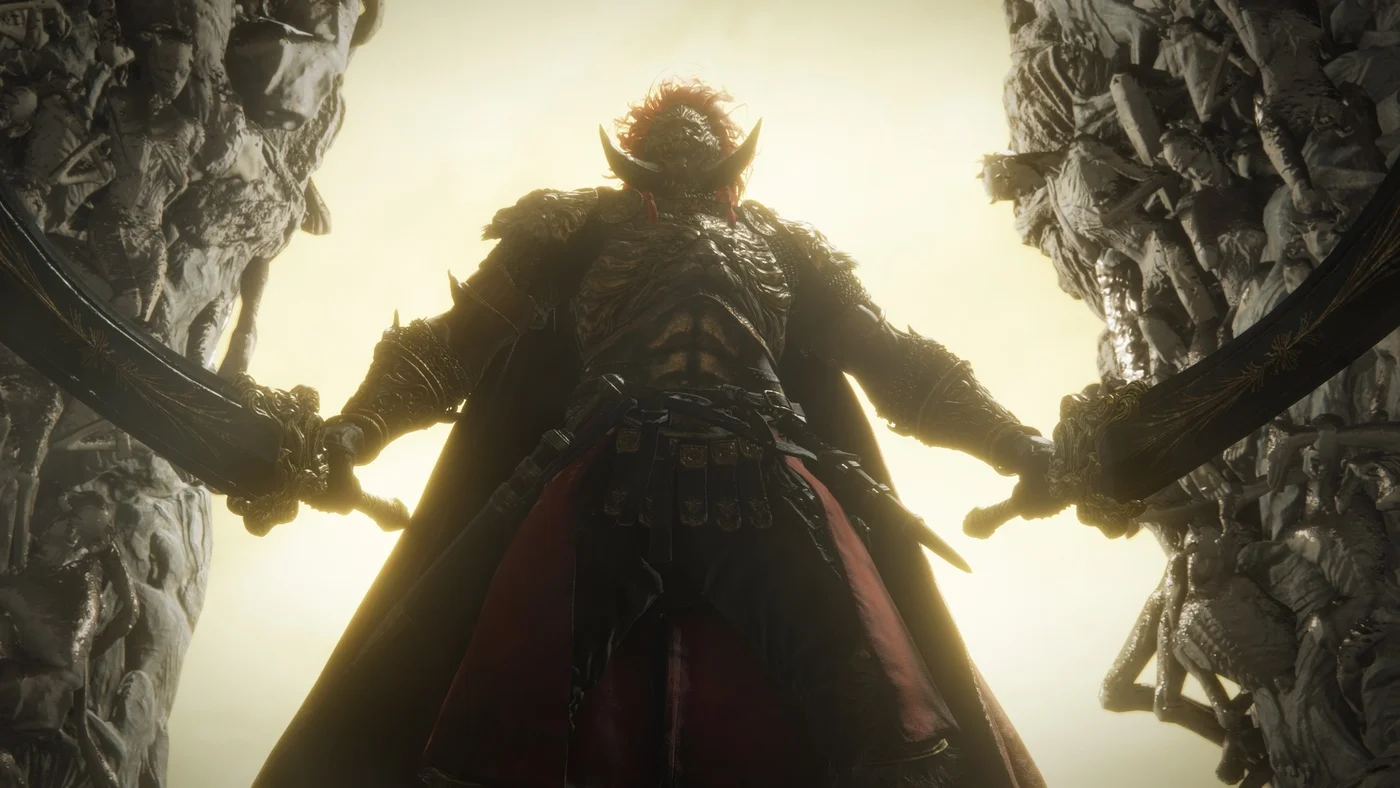 ❋ DLC · DEMIGOD
Promised Consort Radahn
Miquella's vow honoured: Radahn's soul returned in Mohg's vessel▾
Promised Consort Radahn
"Lord brother. I'm going to be a god. If we honor our part of the vow, promise me you'll be my consort."
Miquella's vow, before the duel
"Let your thoughts be only of love."
Phase 2, the consort's charm
Freyja, who once fought alongside the general, recalls that as the festival of war concluded Radahn's soul met an honourable end, and that Kindly Miquella wishes to revive it. The wish went back to their childhood, when Miquella saw a lord in Radahn, in his strength and his kindness that stood in stark contrast with their afflicted selves, and made his heartfelt wish that Radahn would one day be his king consort. At Aeonia, when Malenia let the rotflower blossom, Radahn heard a murmur in his ear: 'Miquella awaits thee, O promised consort.' The rite of the divine gateway reads that a lord will usher in a god's return, and the lord's soul will require a vessel; Mohg's body, absconded with after his slaying and taken straight to Miquella, served as that vessel. The result is a fused god: Mohg's shoulders and arms, Radahn's mind and gravitational sword, and at his back a child-Miquella.
What Miquella asks of him is spoken aloud: honour our part of the vow, and promise me you'll be my consort; in exchange, the world will be made a gentler place. He reaches the tower enshrouded by shadow having abandoned his golden flesh, his blinding strength and even his fate, and declares there that the vow will be honoured and his Lord brother's soul will return. The enchantment over his followers lapses before the fight; Leda finds the Tarnished alone completely unchanged, as if nothing was ever cast upon them. Radahn fights with the gravitational powers he learned in Sellia, then rises as the Promised Consort, a skill that imbues the two greatswords with the light of Miquella, the strength of Miquella upon his deific return, and delivers a slashing attack accompanied by columns of light. Miquella sought to accept all that was and would be, says the incantation of that light, but found one that refused to be embraced.
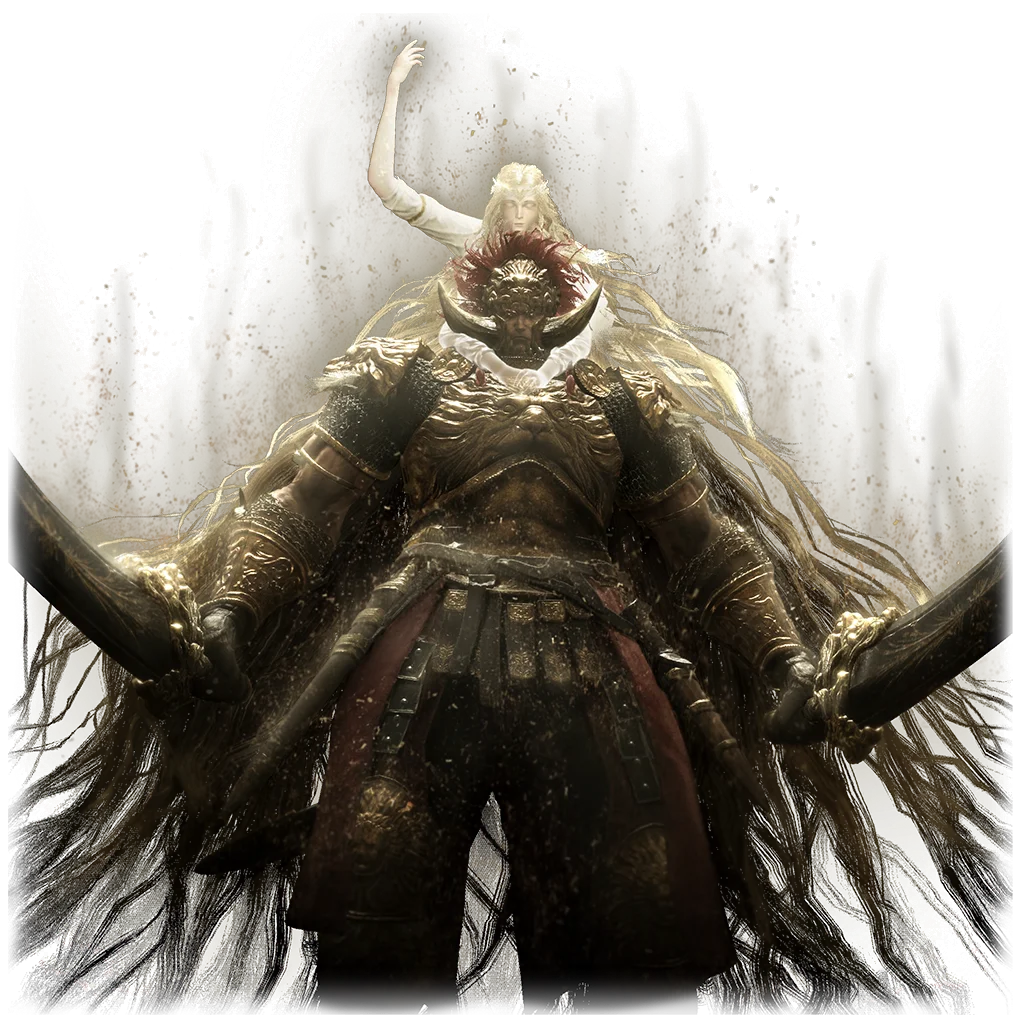 Remembrance of a God and a Lord
Remembrance of Radahn, consort of Miquella, hewn into the Scadutree. In their childhood, Miquella saw in Radahn a lord. His strength, and his kindness, that stood in stark contrast with their afflicted selves. And so Miquella made his heartfelt wish. That Radahn would one day be his king consort.
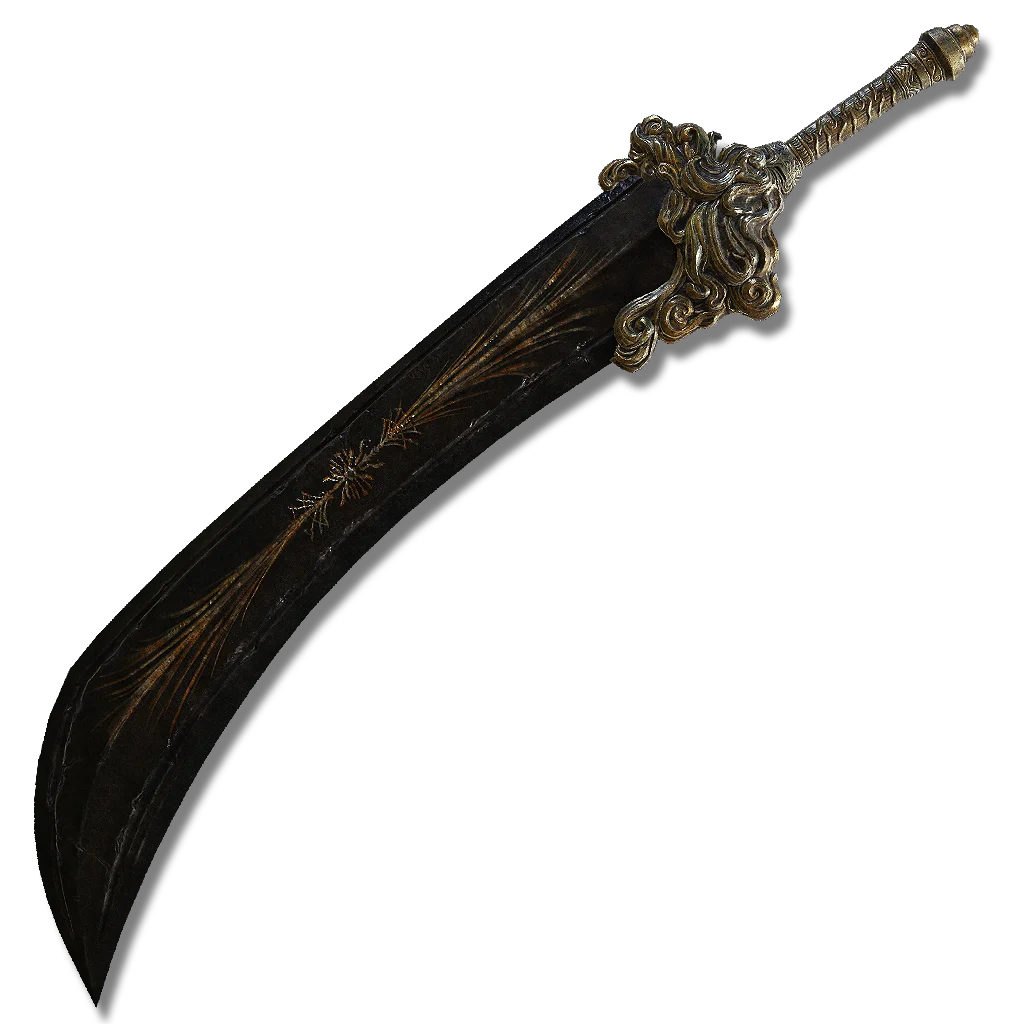 Greatsword of Radahn (Lord)
Greatswords of black steel wielded by Radahn in his youth. A pair of weapons decorated with a lion mane motif. These were in his possession immediately before his triumph over the stars—the swords of a lord who does not rely on physical strength and gravity alone.
Consort's RobeFine robe of white silk worn by Tanith, Lady of the Volcano Manor. Long ago, when Rykard first set eyes on Tanith, she was working as a dancer in a foreign land. Soon, he made her his consort. She was the only human to remain by his side when he became the serpent of blasphemy. In that moment, Tanith was truly charmed by him.
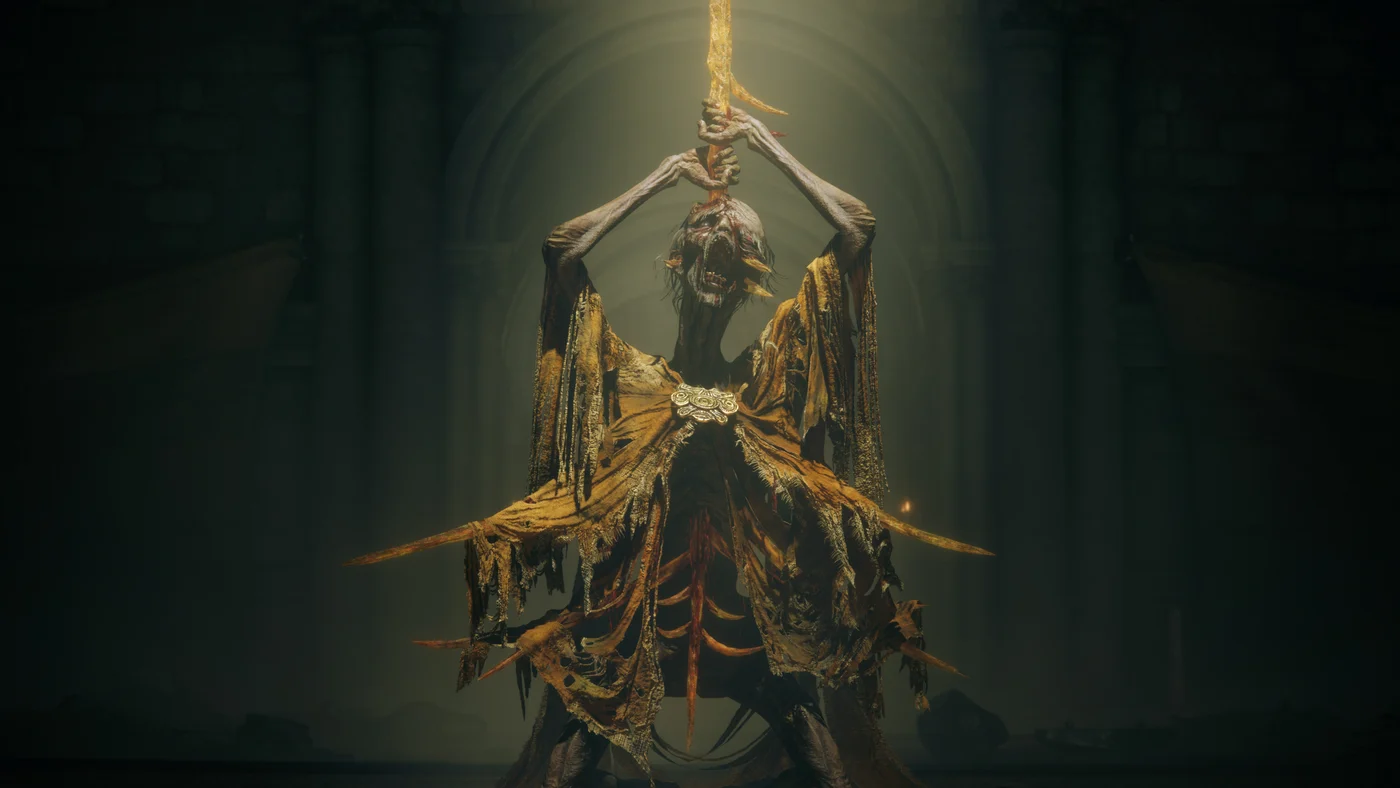 ❋ DLC · LORD
Midra, Lord of Frenzied Flame
The sage of the manse, made to endure a damnation without end▾
Midra, Lord of Frenzied Flame
"Leave now..."
Chained in the Manse
"Enough... I have endured... more than enough... I ask you forgive me, dearest Nanaya... Ahhhhhh..."
Cutscene, the chains break
Midra was master of the manse, a sage whose sanctum lay in a dark forest at the depths of a ravine untouched even by sunlight, in a region the hornsent forbade. Nanaya was the manse's lady. A craftsman served them both and left his recipes behind; his eyes were burned by the Flame of Frenzy. What became of that household is written on the weapon that did it: a golden greatsword pierced Midra's body, used by the hornsent in the execution of a damnation like no other, its barbs winding gently around the blade and piercing the victim from within.
The golden barbs inflicted eternal agony, and through it Midra held fast to Nanaya's entreaty: "Endure." The word was a curse. What rose from that endurance was the Lord of Frenzied Flame, whose incantation promises to take every torment, every despair, their affliction, every sin and every curse, and melt them all away. The same text delivers its own verdict on him: yet Midra, like others before him, was too weak to become a Lord.
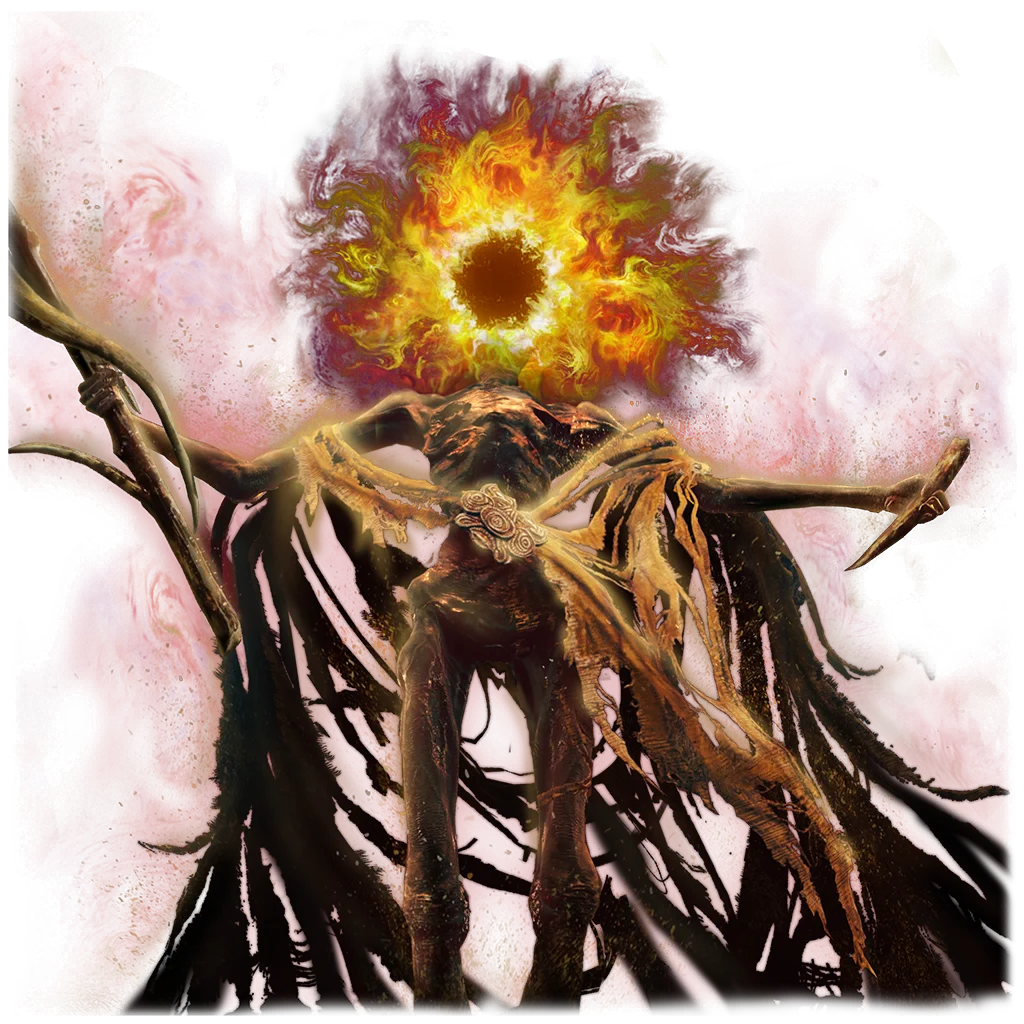 Remembrance of the Lord of Frenzied Flame
Remembrance of Midra, Lord of Frenzied Flame, hewn into the Scadutree. As the golden barbs inflicted eternal agony upon him, Midra held fast to Nanaya's entreaty: "Endure." The word was a curse.
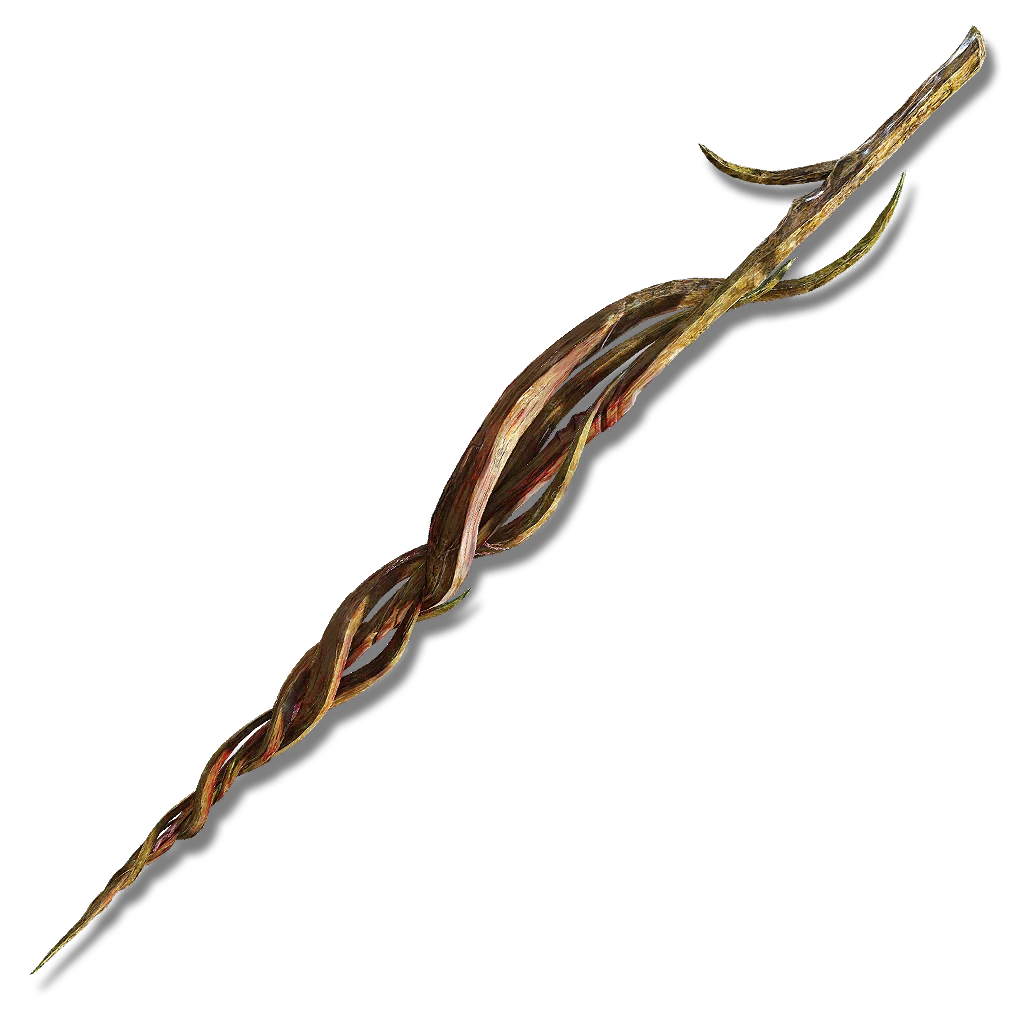 Greatsword of Damnation
Golden greatsword that once pierced the body of Midra, master of the manse. Used by the hornsent in the execution of a damnation like no other. The barbs that pierce the victim from within wind gently around the blade.
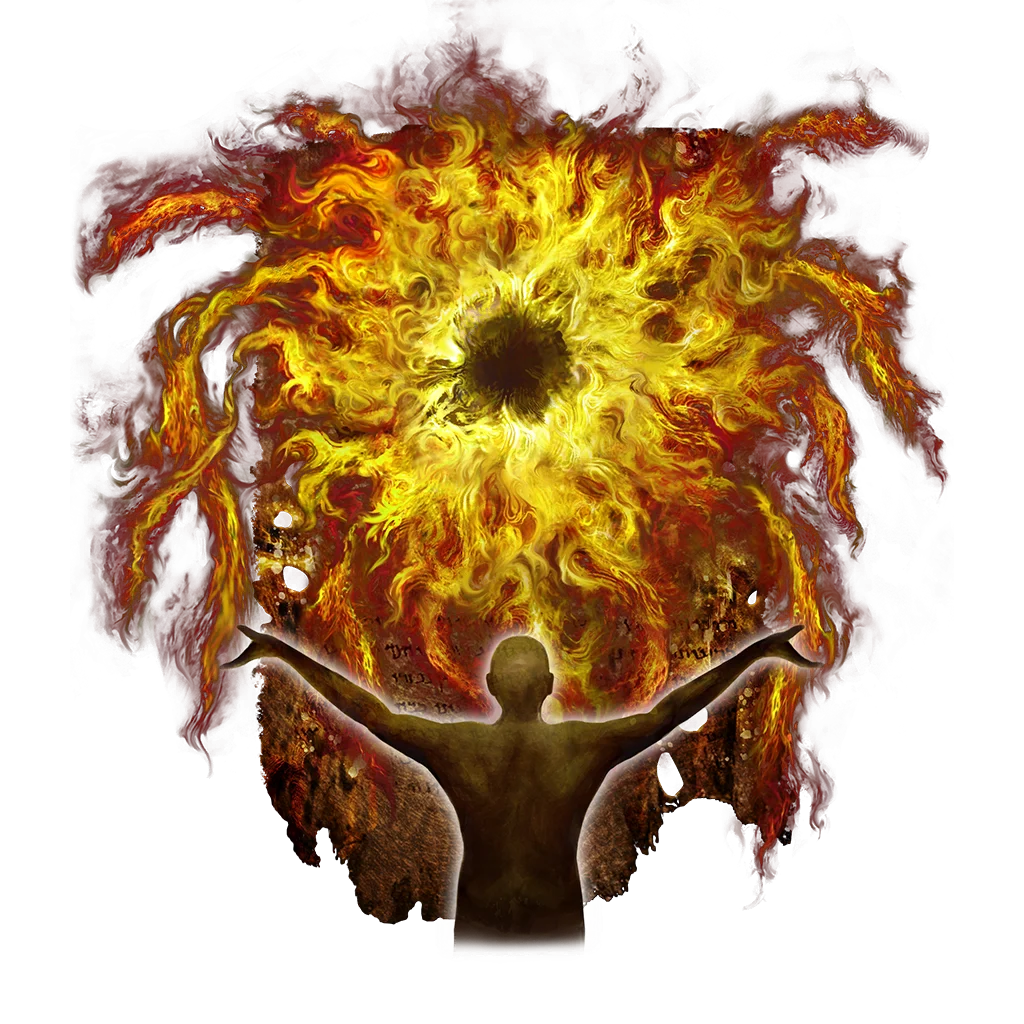 Midra's Flame of Frenzy
Incantation in praise of Midra, Lord of Frenzied Flame. Summons an apparition of the Lord's head to spew frenzied flame. The Lord of Frenzied Flame shall take their torment, despair. Their affliction. Every sin, every curse. All melted away. Yet Midra, like others before him, was too weak to become a Lord.
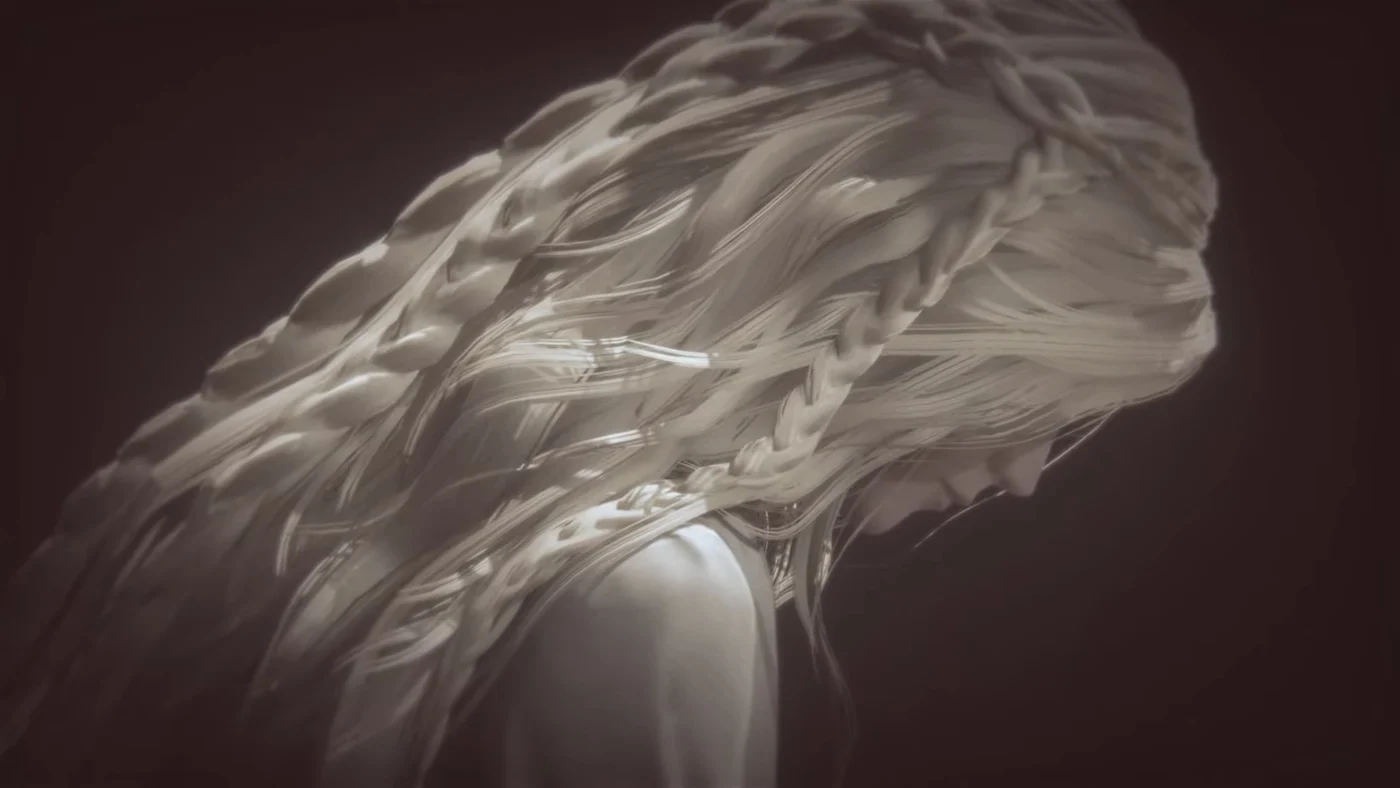 ❋ DLC · EVENT
Miquella's Great Charm
The kindly god who unmade himself to be loved▾
Miquella's Great Charm
"Appearing frail in both body and mind, I presumed he'd be like to stumble upon the field of battle. The conceits, the hypocrisy, of the world built upon the Erdtree. The follies of men, their bitter suffering. With kind compassion he would unmake them all."
The kindly god's promise
When Mohg abducted Miquella's unborn body, Miquella did not resist. The cocoon was a vessel he no longer wanted: he had decided to ascend as a god, and to become a god he had to be reduced to nothing. He shed everything along his path through the Realm of Shadow: his golden flesh, his blinding strength, his Great Rune, his very fate, and even St. Trina, his adoring other self; each abandonment is marked by a cross the Tarnished may find. What remained was a will so distilled that it could enchant any being it touched.
Miquella's charm bends every demigod, knight, and saint who travels with him: Needle Knight Leda, Sir Ansbach, Freyja the Redmane, Hornsent the Avenger, the dragon priestess Florissax, Thiollier the poisonmaker. Each follows him for their own reason and each is, without knowing it, charmed beyond reason by a god who has stripped himself of doubt. To break the charm requires destroying the god he becomes; to refuse the charm requires being the one Tarnished he could not reach in time.
 Miquella's Great Rune
A Great Rune relinquished by Miquella. Broken and bereft of its bounty, it retains naught but the power to resist charms. Miquella set off for the tower enshrouded by shadow, abandoning everything - his golden flesh, his blinding strength, even his fate. All in an effort to bury the original sin. To embrace the whole of it, and be reborn as a new god.
 Circlet of Light
The circlet of light which adorned Miquella's head as he returned in divine aspect. It has begun to fade into nothingness. Slightly boosts intelligence, faith, and arcane, while also boosting the power of Miquella's light. This circle was to be the very foundation upon which Miquella's age of compassion would be built, should it have ever come to pass.
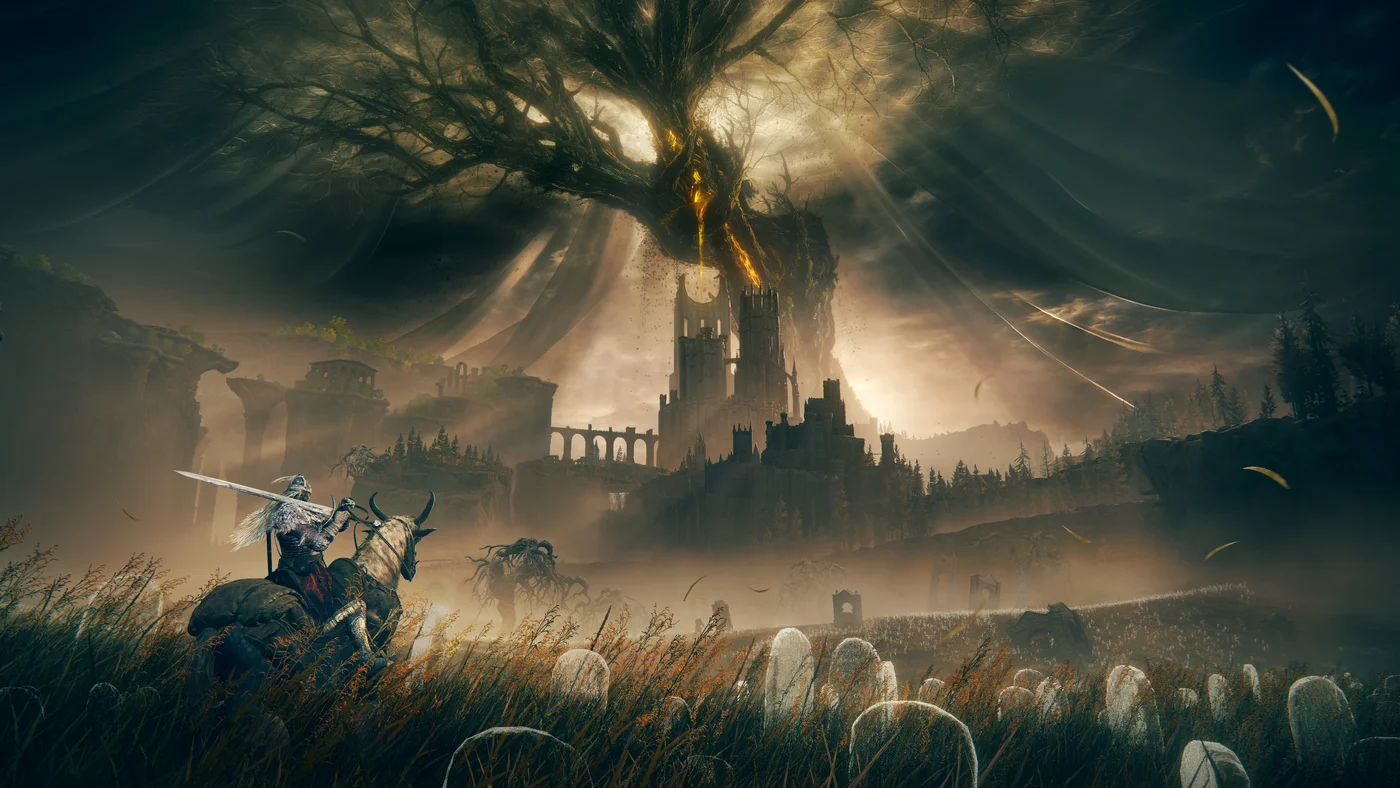 ❋ DLC · LOCATION
The Realm of Shadow
Land beyond the Erdtree, hidden by the Scadutree▾
The Realm of Shadow
The Realm of Shadow lies beside the Lands Between, separated from it by a great pall the Erdtree casts over the world. Its sky is dimmed by the Scadutree, the Erdtree's twin or shadow, whose roots feed on a different soil and whose blessing strengthens those who climb. Long before Marika's reign, this land was the seat of the hornsent: a horned people of inquisitorial scholarship, who built spiral towers and bound infants into jars in pursuit of holy revelation. They worshipped a Crucible that was older than gold.
Marika came from this realm, and the war Messmer waged here was the war of her own beginnings: she had been hornsent once, or near enough, and the inquisition had taken her family. Her crusade through Messmer was both genocide and revenge, after which the realm was sealed by the Erdtree's shadow so that no record of it might reach the new age. The Tarnished who follows Miquella's path through the Gate of Divinity walks a continent that the Lands Between were not meant to remember.
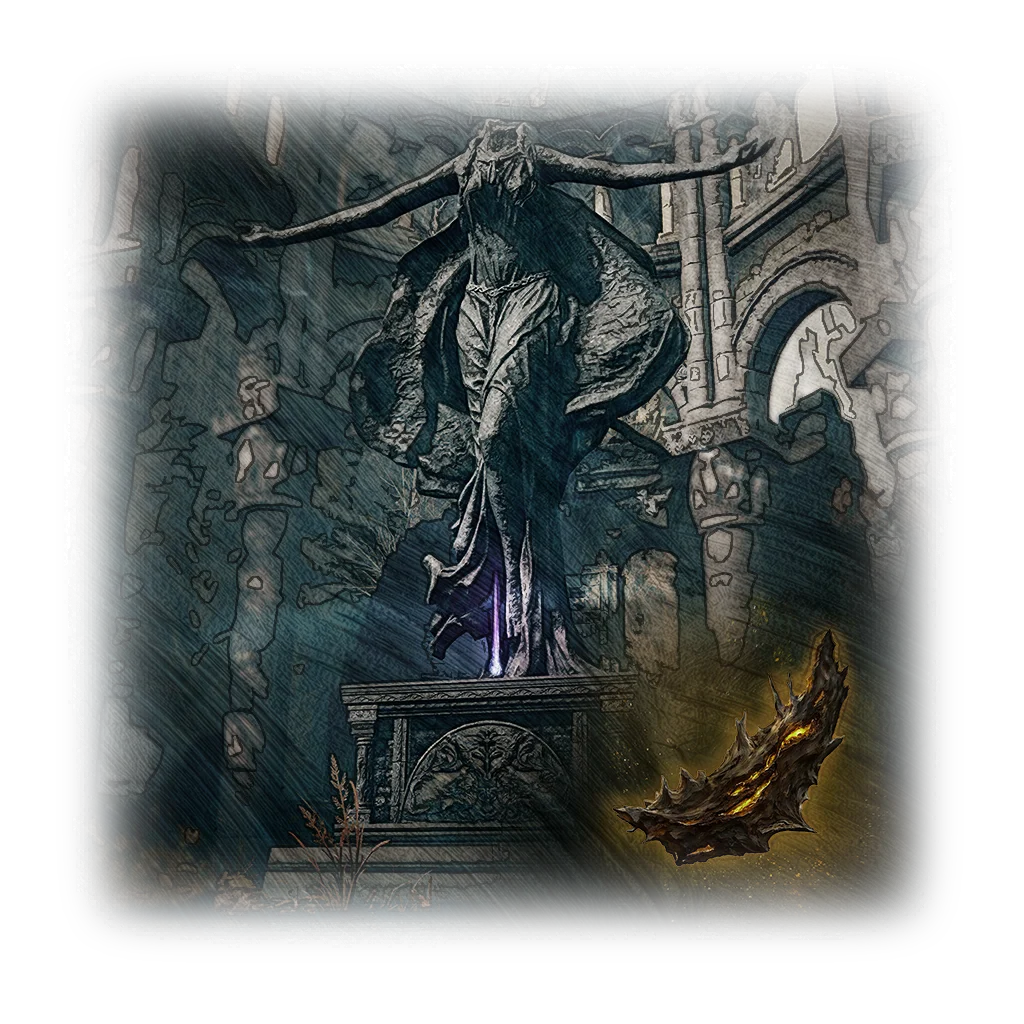 About the Scadutree Blessing
Scadutree Fragments can be found across the realm of shadow. Consume these at sites of grace to bolster your Scadutree Blessing. The Scadutree Blessing bolsters the recipient's abilities to deal and negate damage, but has no influence outside the realm of shadow.
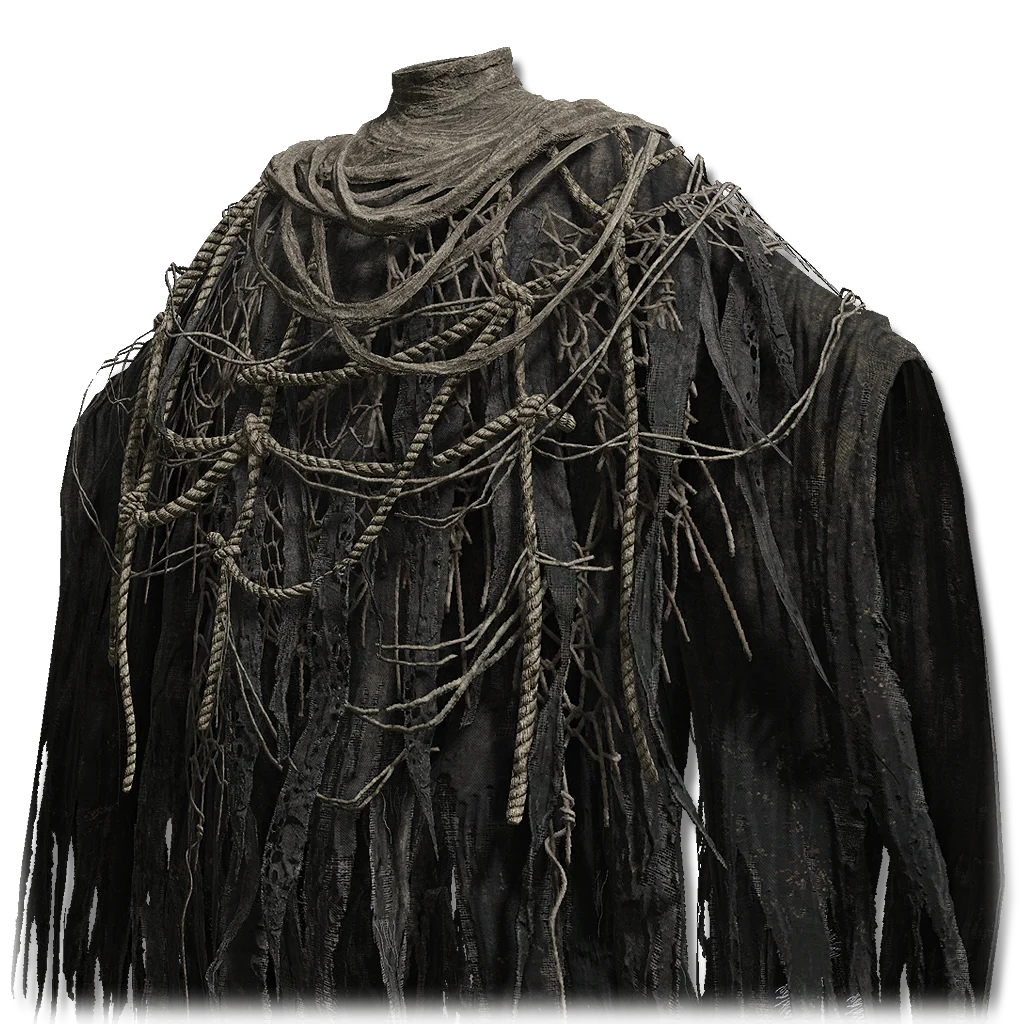 Braided Cord Robe
Ragged black cloth overlaid with braided cord. Attire of a vengeance-seeking hornsent. The braided cord ties together the vow of the revenger with the victims' grudges. It must never come undone. Enhances both watchful spirits and the vengeful spirits summoned by horned bairns.
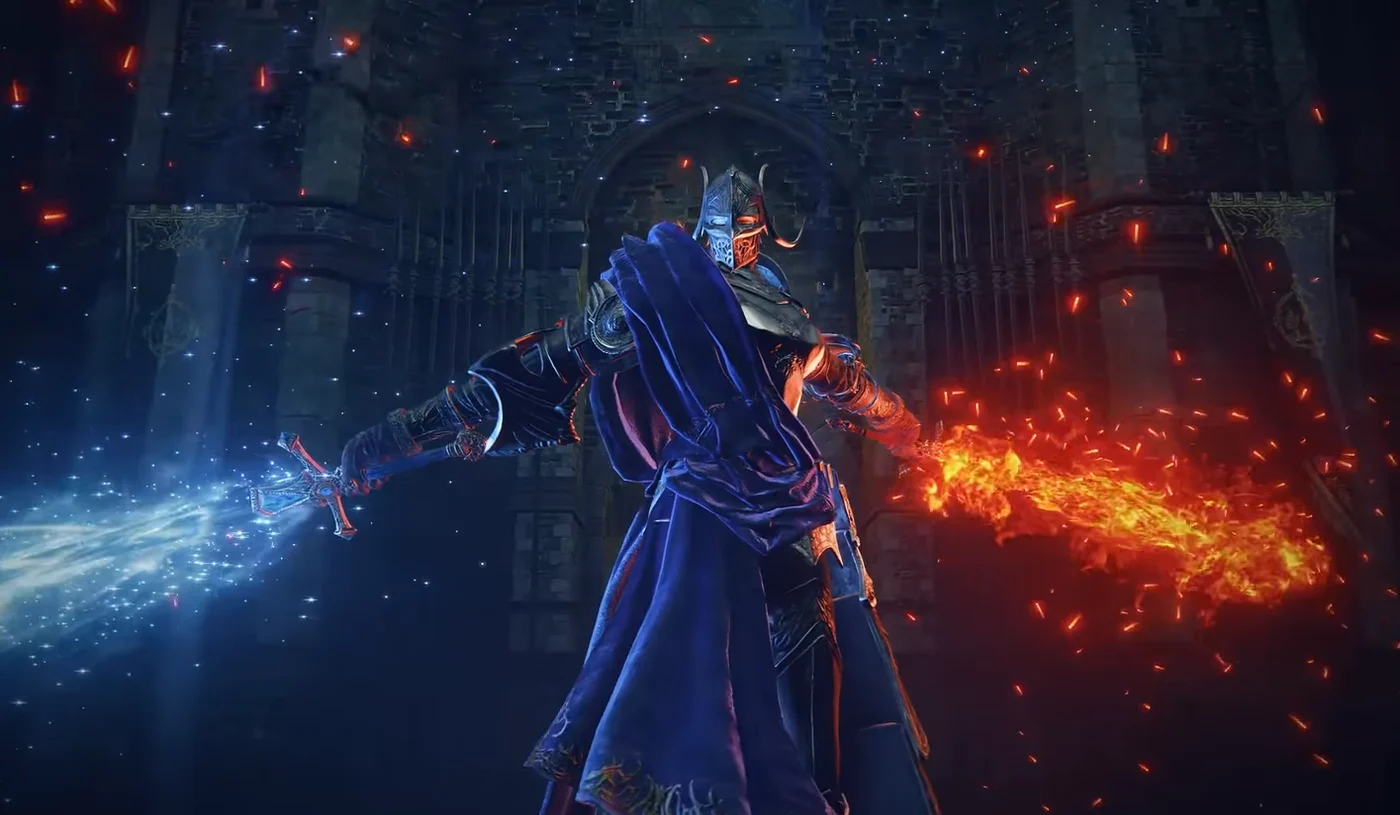 ❋ DLC · KNIGHT
Rellana, the Twin Moon Knight
Sister of Rennala, who renounced her lineage to become the Sword of Messmer▾
Rellana, the Twin Moon Knight
Rellana was a Carian princess and the younger sister of Rennala, head of the royal family of Caria, who was said to have given her a gift of lustrous black hair when she renounced her lineage to chase after Messmer. In their childhood, she and her elder sister met the twin moons that would become her sorcery, overlapping as though nestled against one another. Her blades keep the trace of the choice she made: two swords as a single armament, and when two-handed, a straight sword engraved with golden flame carried in the left hand. Here, and here alone, were moon and fire ever together.
She disavowed her birthright and chose to stand at Messmer's side, knowing full well that not even the brilliance of the moon could grant him succor, and before long she became known as the Sword of Messmer. Count Ymir instructed her in the sorcerous arts, though he abandoned his allegiance to the moon, calling it merely the closest of the celestial bodies. Her Carian thrusting shield was borne 'during her sole entry into ritual combat', a demonstration of fidelity to the Erdtree, and her cameo remembers those who left their homelands to serve her: 'By your leave, we will accompany you wherever your lunar vessel takes you.' The Tarnished meets her at the summit of Castle Ensis, where she fights with both swords drawn beneath twin moons of her own making, and her remembrance is hewn into the Scadutree, its namesake's power waiting on the Finger Reader.
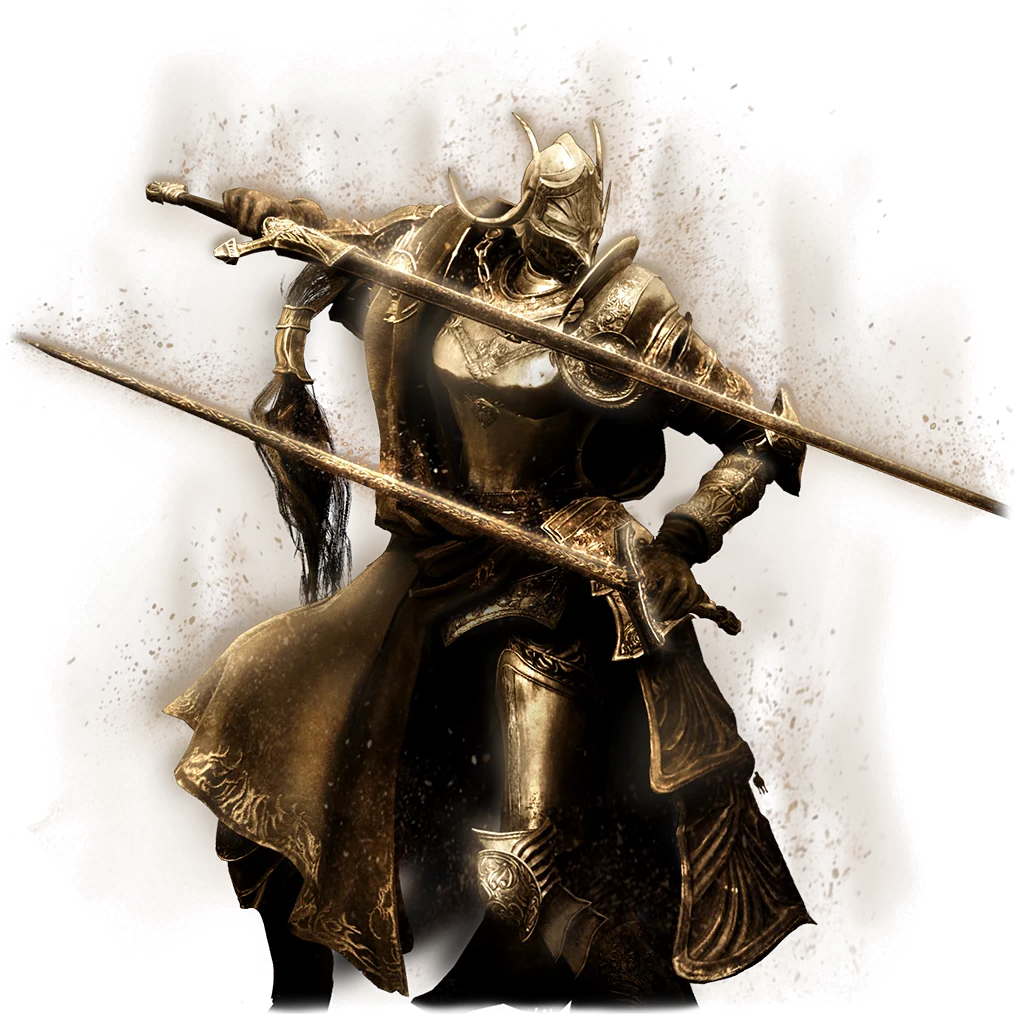 Remembrance of the Twin Moon Knight
Remembrance of Rellana, the Twin Moon Knight, hewn into the Scadutree. Once a Carian princess, Rellana disavowed her birthright and chose to stand at Messmer's side instead, knowing full well that not even the brilliance of the moon could grant him succor. Before long, she became known as the Sword of Messmer.
 Rellana's Twin Moons
Sorcery of Rellana, the Twin Moon Knight. Associated with a Carian princess. Incarnate overlapping twin moons which strike the ground one after the other, violently shaking the earth with moonlight.
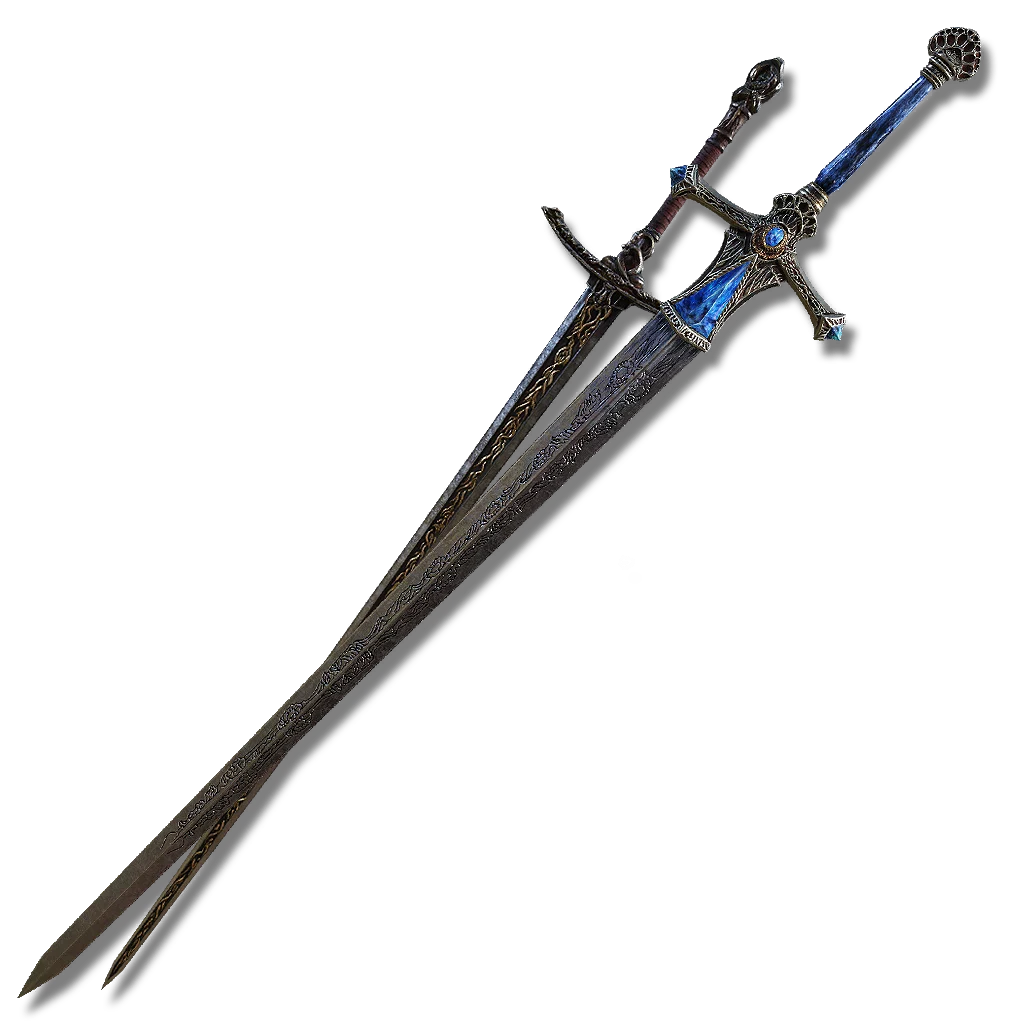 Rellana's Twin Blades
Carian light greatsword embedded with blue glintstone. Weapon of Rellana, the Twin Moon Knight. Two swords as a single armament. When two-handing, a straight sword engraved with golden flame will be carried in the left hand. Here, and here alone, were moon and fire ever together.
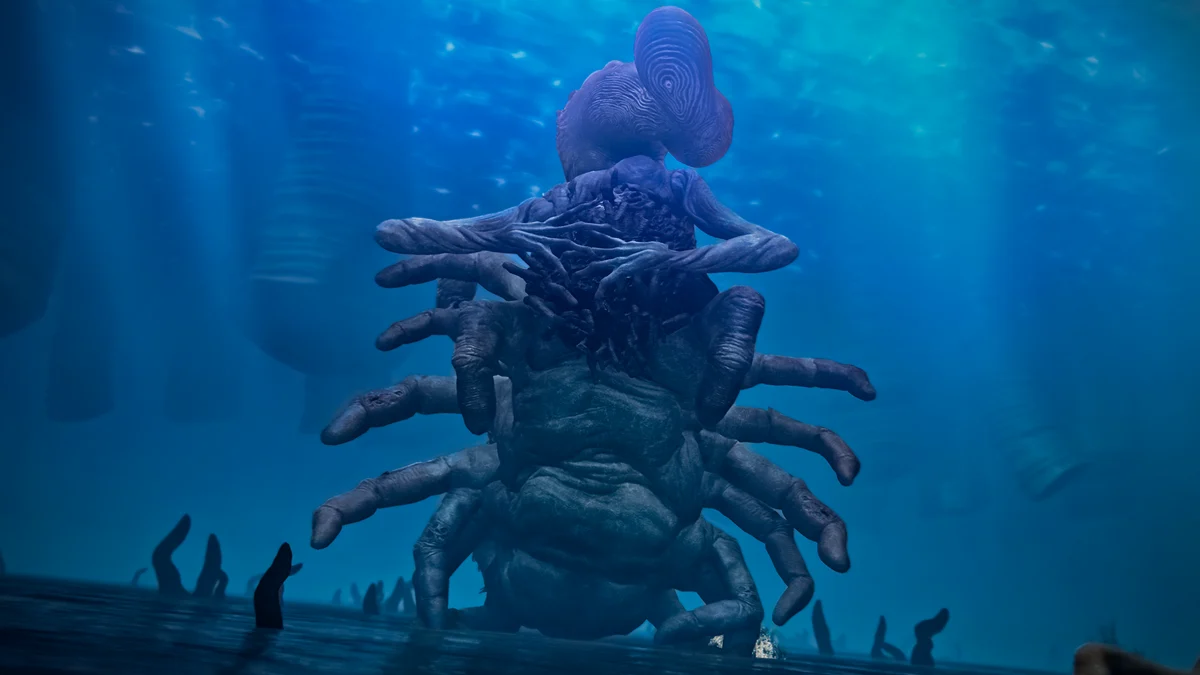 ❋ DLC · OUTER GOD
Metyr, Mother of Fingers
First emissary of the Greater Will, abandoned in the dark▾
Metyr, Mother of Fingers
"Despite being broken and abandoned, she kept waiting for another message to come."
From the Staff of the Great Beyond
Metyr was the first messenger sent to the Lands Between by the Greater Will, a being whose body is a long pale spine ending in dozens of pointing fingers. She is 'the mother of all Two Fingers and Fingercreepers', and was in turn 'a magnificently gleaming daughter of the Greater Will, and the first shooting star to fall upon the Lands Between'. The Lands Between does not know its Two Fingers were once her offspring.
But the Greater Will withdrew from her long ago, and Metyr, abandoned in the depths of the Cathedral of Manus Metyr in the Realm of Shadow, has spent ages in unanswered devotion. She is now mad, weeping the meteors of her unheard prayers across an unobserving sky. Count Ymir, High Priest, comes to her cathedral with a wish his own robe lays bare: 'I will be the true mother.' The Tarnished who slays Metyr severs the line of communication between Lands Between and Outer God, and what waits to reach down through the silence she leaves is unknown.
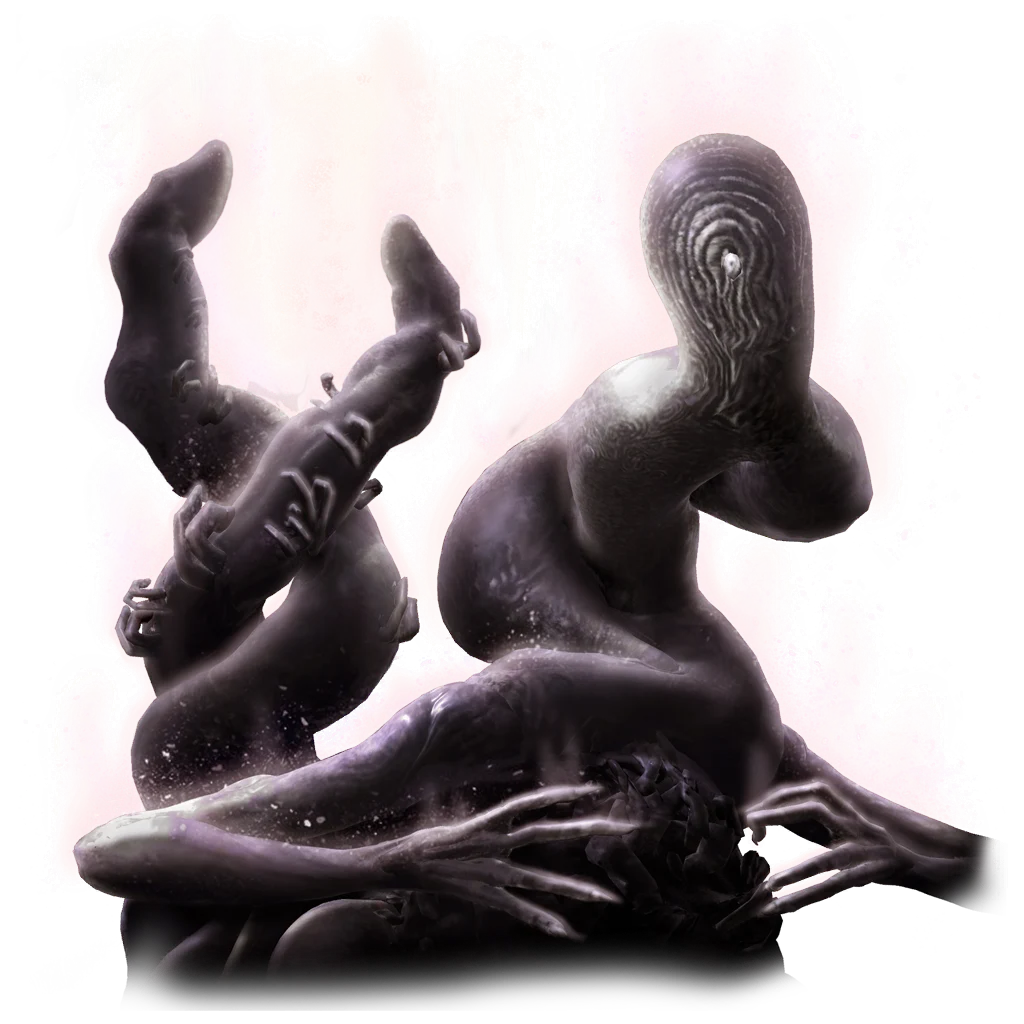 Remembrance of the Mother of Fingers
Remembrance of Metyr, the Mother of Fingers, hewn into the Scadutree. The mother of all Two Fingers and Fingercreepers was in turn a magnificently gleaming daughter of the Greater Will, and the first shooting star to fall upon the Lands Between.
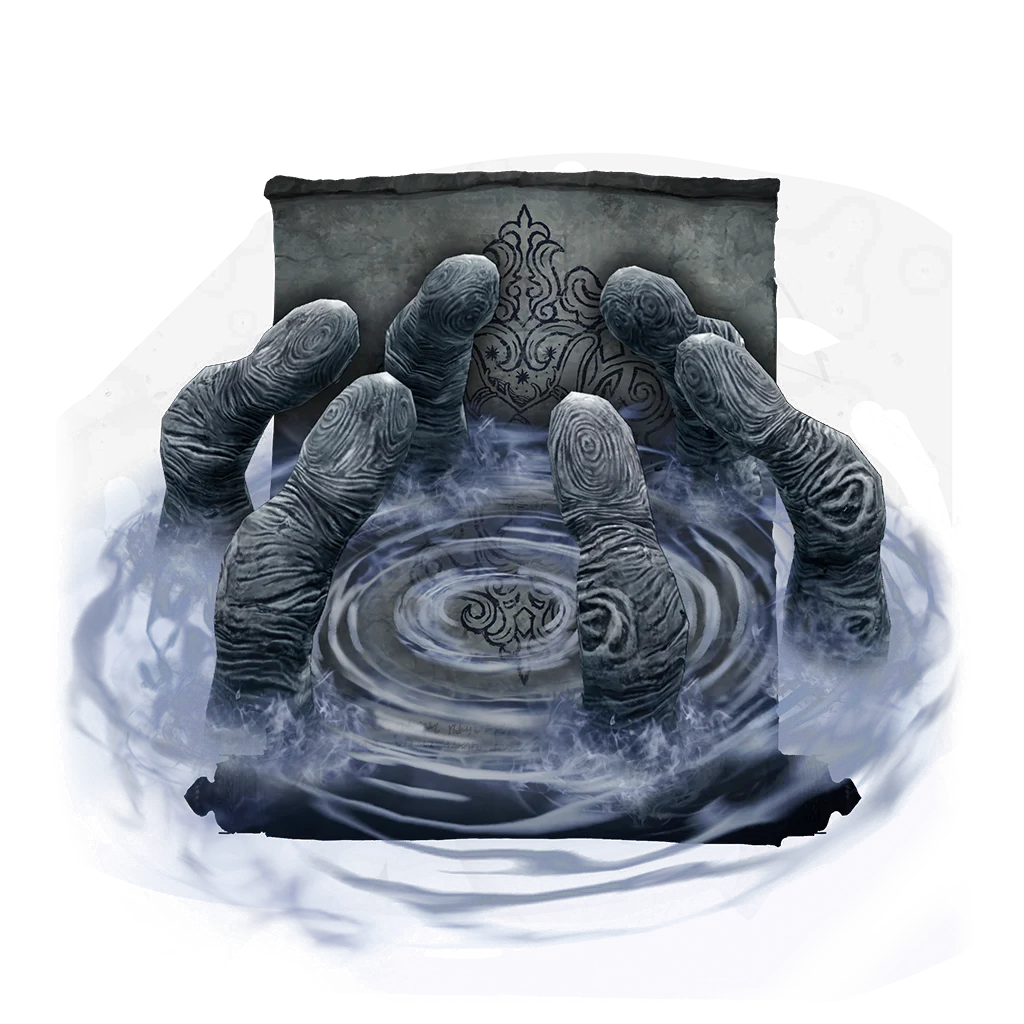 Cherishing Fingers
A finger sorcery of Count Ymir, aspiring mother of fingers. Surrounds the caster with a mesh of hefty fingers.
A crimson-colored talisman patterned after an Erdtree seed. Boosts HP restoration from the Flask of Crimson Tears. The Erdtree was once perfect and eternal, and thus was it believed that Erdtree seeds could not exist.
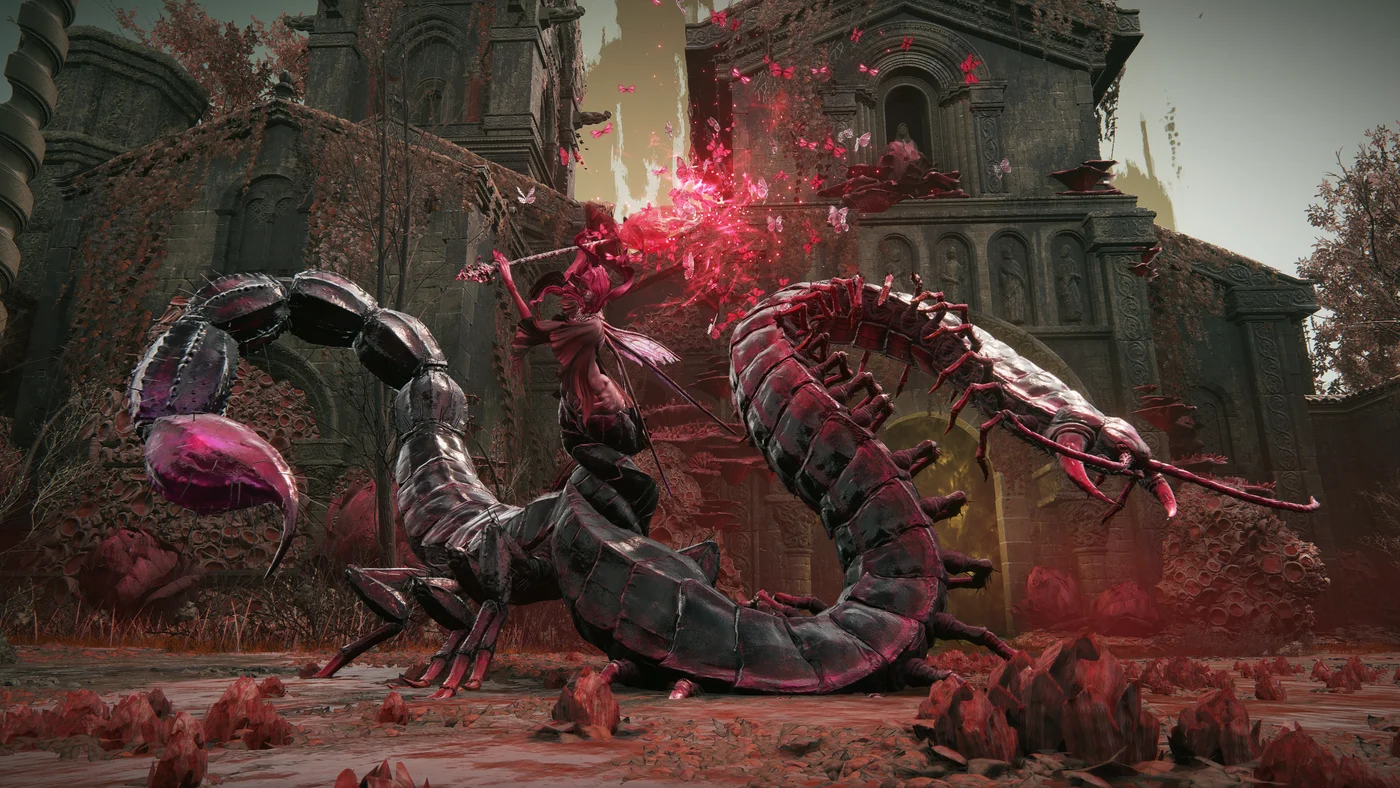 ❋ DLC · SAINT
Romina, Saint of the Bud
Apostle of the rot at the Church of the Bud▾
Romina, Saint of the Bud
"Children of the tower. Butterflies, take wing."
Cut dialogue (cathedral of the Bud)
Romina was a saint who made her vows in the Church of the Bud, the small church deep in the ancient ruins of Rauh, in the Realm of Shadow. There she devoted herself to the rot: after the church was burned to the ground, she discovered a twisted divine element and weaved it into the baleful scarlet rot, so that the buds might find somewhere to gain purchase once more within the scorched remains. Romina willingly let the rot bloom from her body, and her flesh became a hive of scorpionoid limbs and putrescent buds. The scarlet butterflies, said to be as the Goddess of Rot's wings, were bereft of a master; Romina reached out to them, and soothed them.
She made the rot her discipleship: her purification, a bud-blade imbued with scarlet rot butterflies, was once considered a sacred act. The Tarnished finds her at the church's altar, the bud of her flesh spread wide over the pews, surrounded by the children she failed to save and the apostles who tried to save themselves through her.
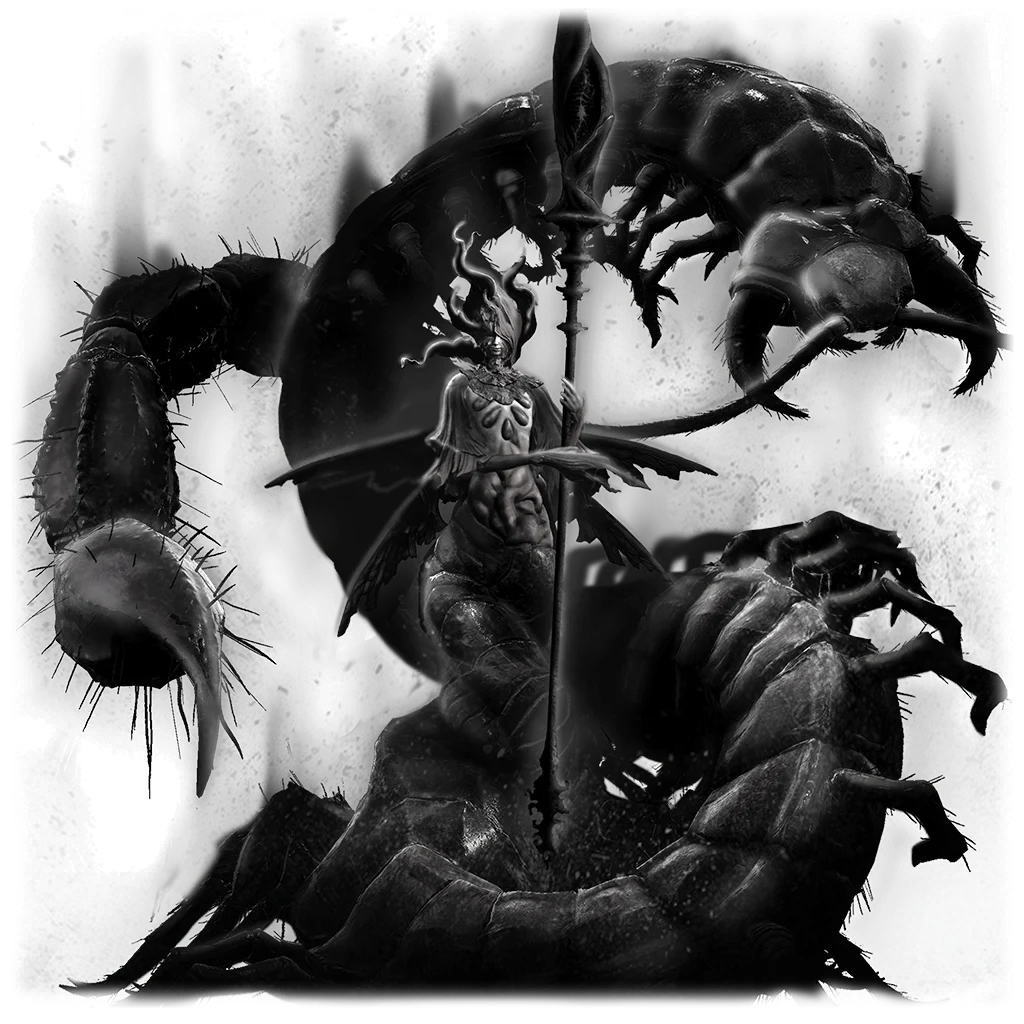 Remembrance of the Saint of the Bud
Remembrance of Romina, Saint of the Bud, hewn into the Scadutree. After the church was burned to the ground, Romina discovered a twisted divine element, which she weaved into the baleful scarlet rot. Perhaps then, the buds might find somewhere to gain purchase once more, within the scorched remains.
 Rotten Butterflies
Incantation used by Romina, Saint of the Bud. Summons a myriad of butterflies while performing a gentle twirl. The scarlet butterflies are as the Goddess of Rot's wings. Bereft of a master, they were soothed by Romina, who reached out to them.
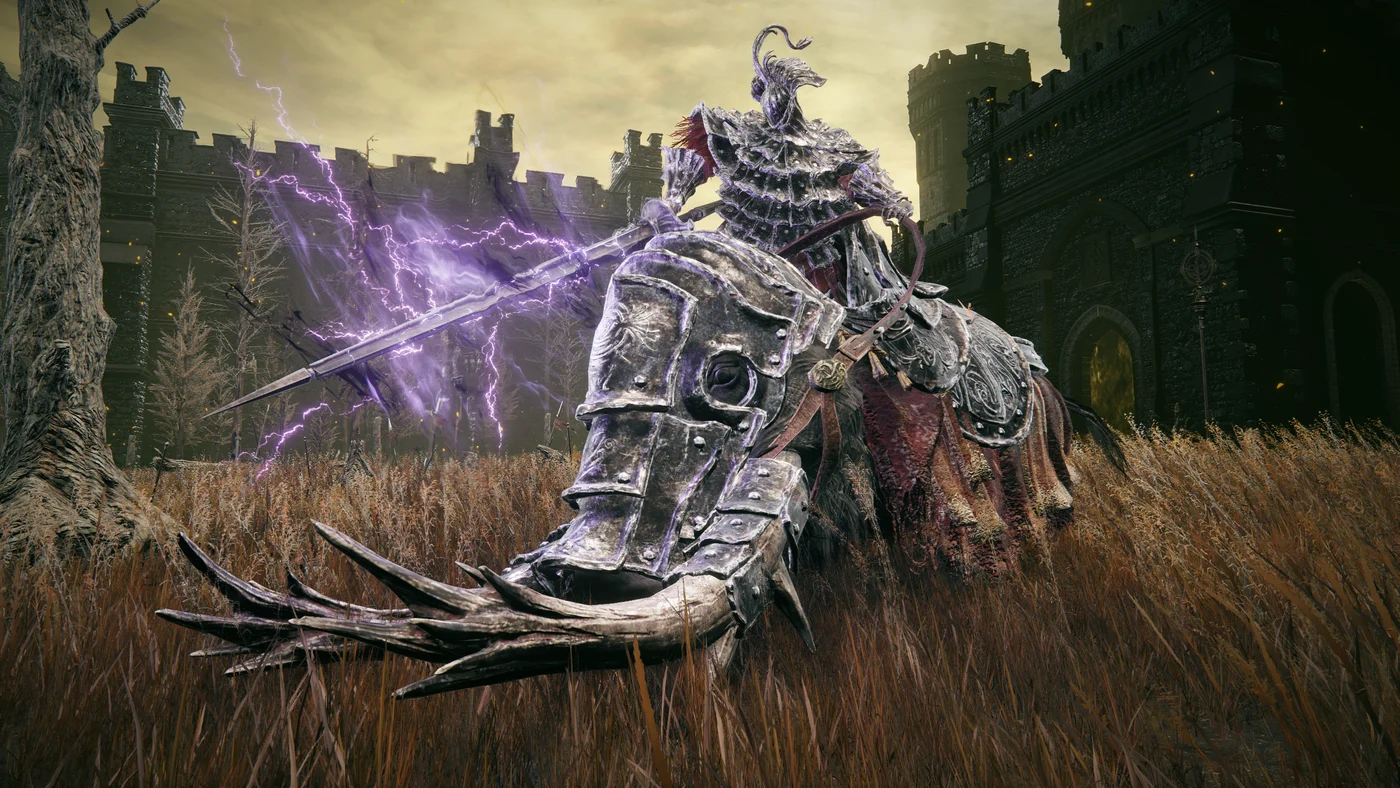 ❋ DLC · COMMANDER
Commander Gaius
Messmer's friend, and Radahn's rival in gravity▾
Commander Gaius
"Black iron greaves made for Commander Gaius. A cruel joke, for he could not wear them. Riding atop the boar he called his other half, Gaius was in fact a warrior of albinauric extraction."
From Gaius's Greaves description
Gaius was both Messmer's friend and the leader of his men. The remembrance hewn for him puts the two side by side: both were as elder brothers to the lion, and both were cursed from birth. His own curse was his extraction. Riding atop the boar he called his other half, Gaius was in fact a warrior of albinauric extraction, and the black iron greaves forged for his armour set are described, flatly, as a cruel joke, for he could not wear them.
Before the crusade he was a student of gravity. Gaius was the most senior disciple of the same Alabaster Lord who taught Radahn and Gaea their gravitational technique, and Blades of Stone, the sorcery that pulls blade-like clumps of rock from the earth beneath a charging boar, is named in the game as the product of a friendly competition: Gaius and Radahn were good rivals in their youth. He carries a sword lance, a combination of greatsword and lance that shows its true potential astride a mount, which is where he always was. Gaius himself was never without his boar.
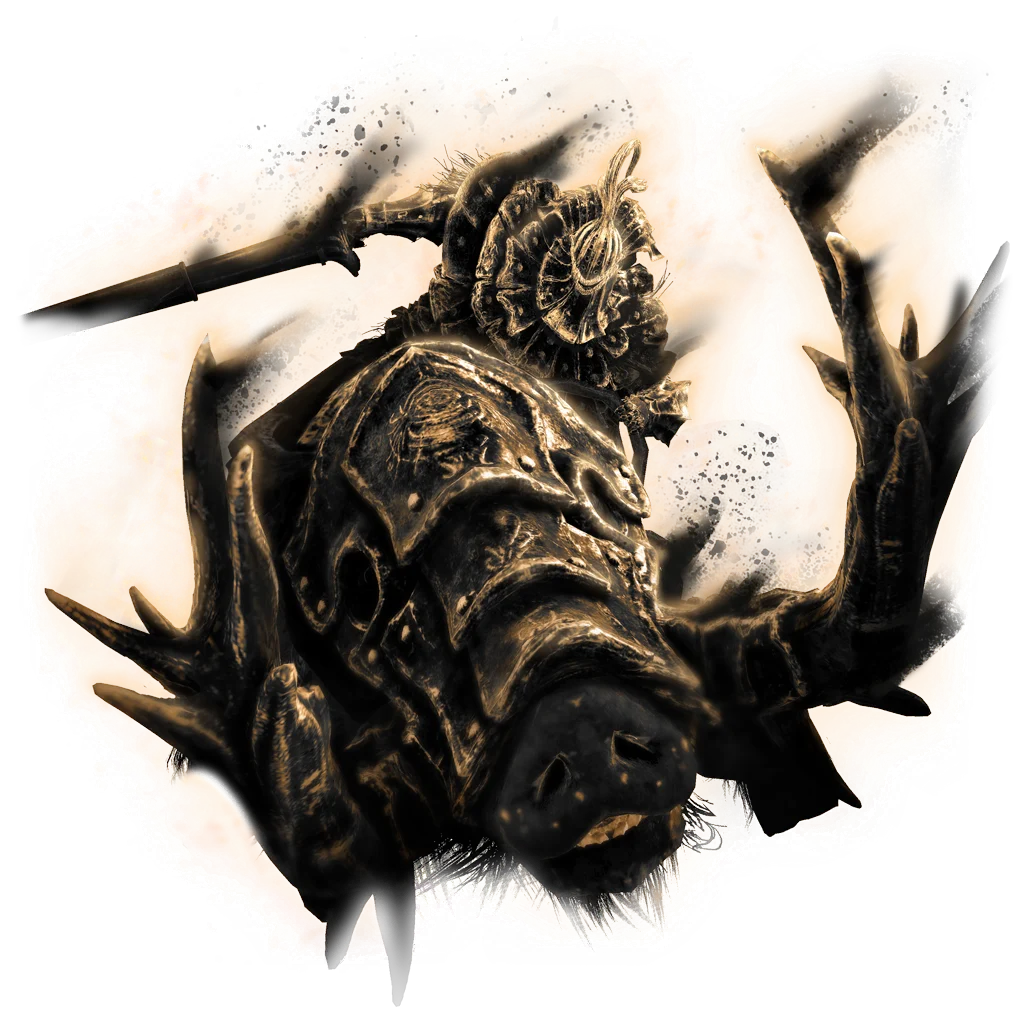 Remembrance of the Wild Boar Rider
Remembrance of Commander Gaius, hewn into the Scadutree. Both were as elder brothers to the lion, and both were cursed from birth. In spite of, or perhaps because of this very reason, Gaius was both Messmer's friend and the leader of his men.
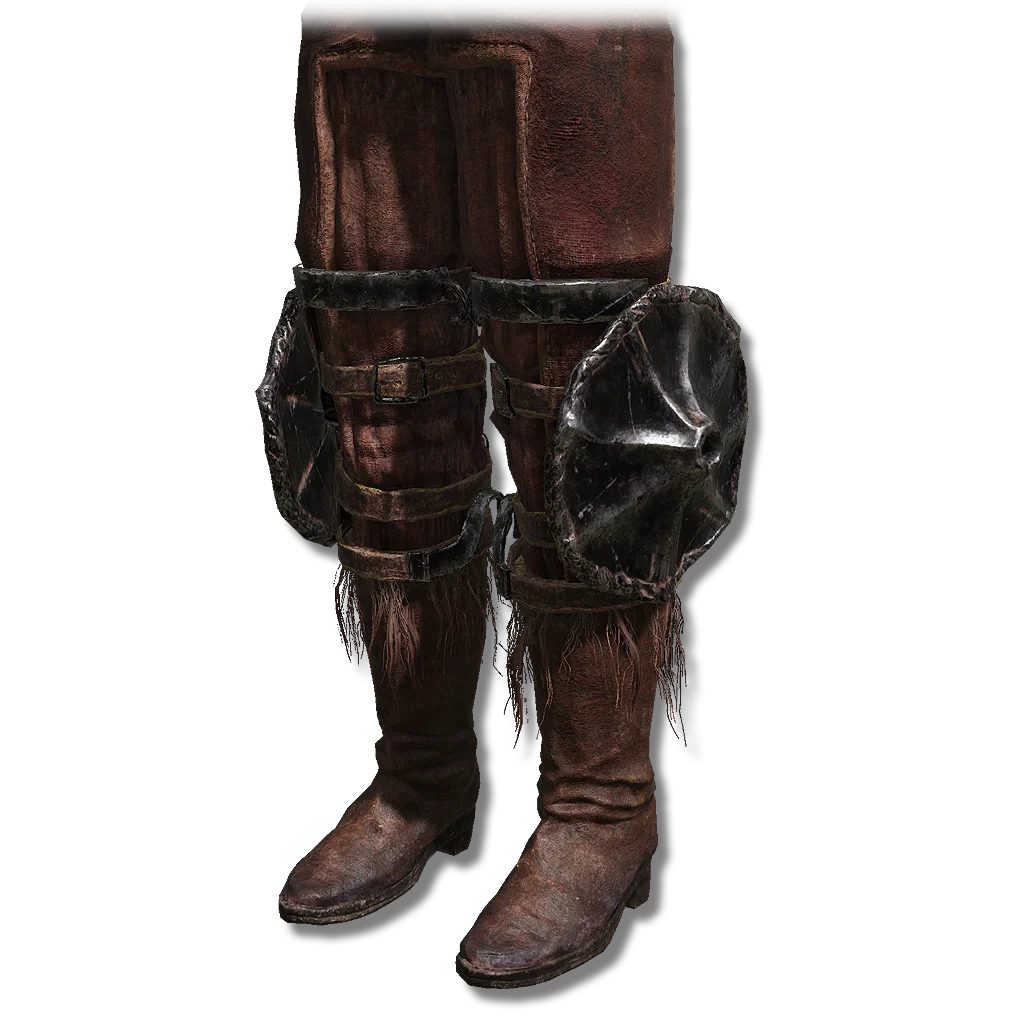 Gaius's Greaves
Black iron greaves made for Commander Gaius. A cruel joke, for he could not wear them. Riding atop the boar he called his other half, Gaius was in fact a warrior of albinauric extraction.
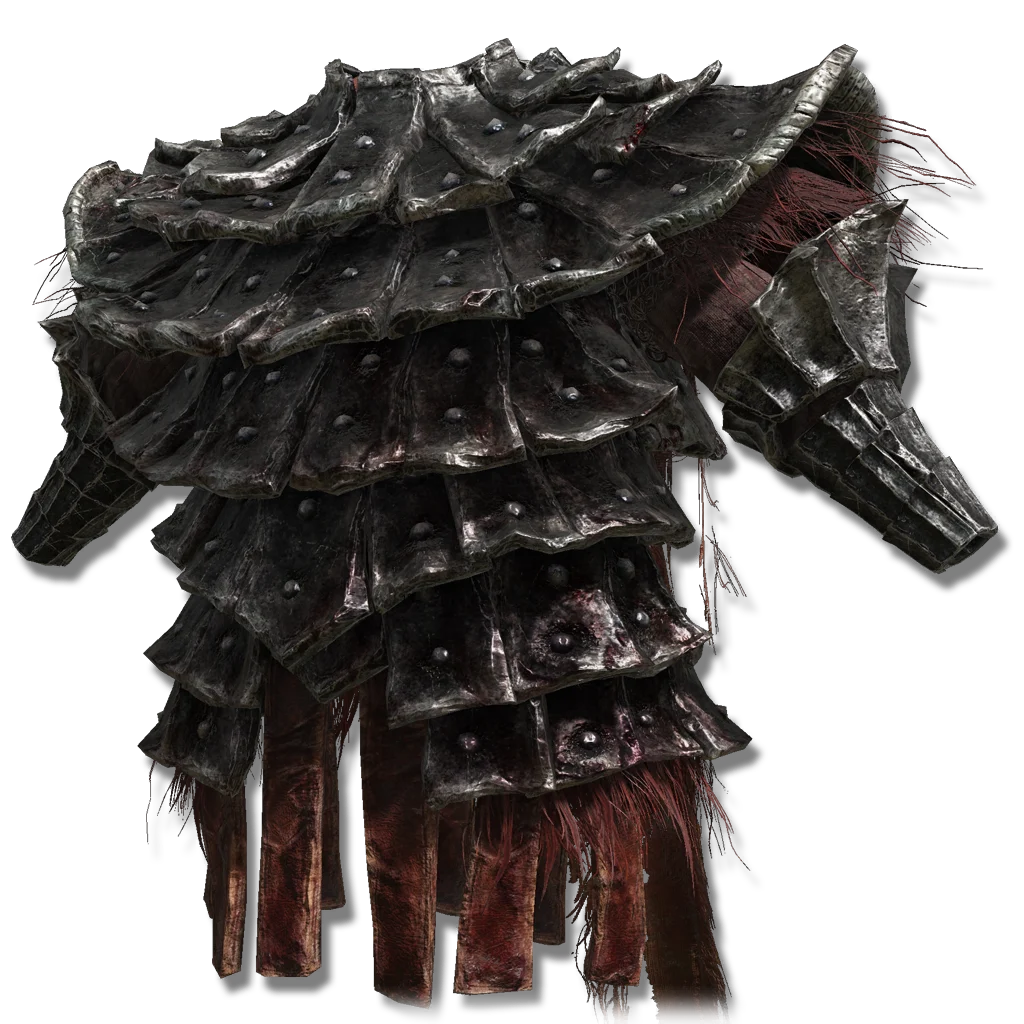 Gaius's Armor
The black iron chest armor of Commander Gaius. Part of an armor set patterned after fallen seeds. Gaius was the most senior disciple of the same Alabaster Lord who taught Radahn and Gaea gravitational technique.
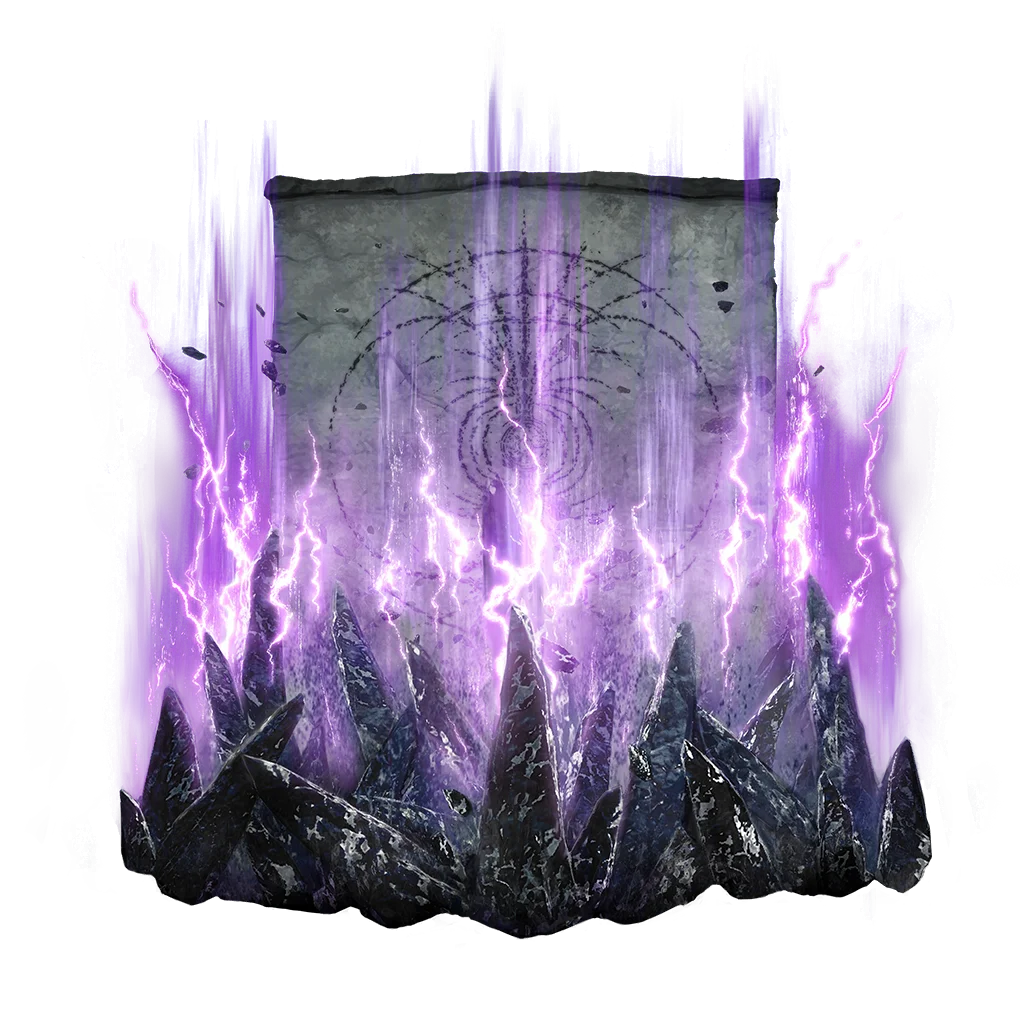 Blades of Stone
Gravity-manipulating sorcery of Commander Gaius. Pulls blade-like clumps of rock from the earth. Charging increases potency. Gaius and Radahn were good rivals in their youth, and this sorcery is a product of their friendly competition.
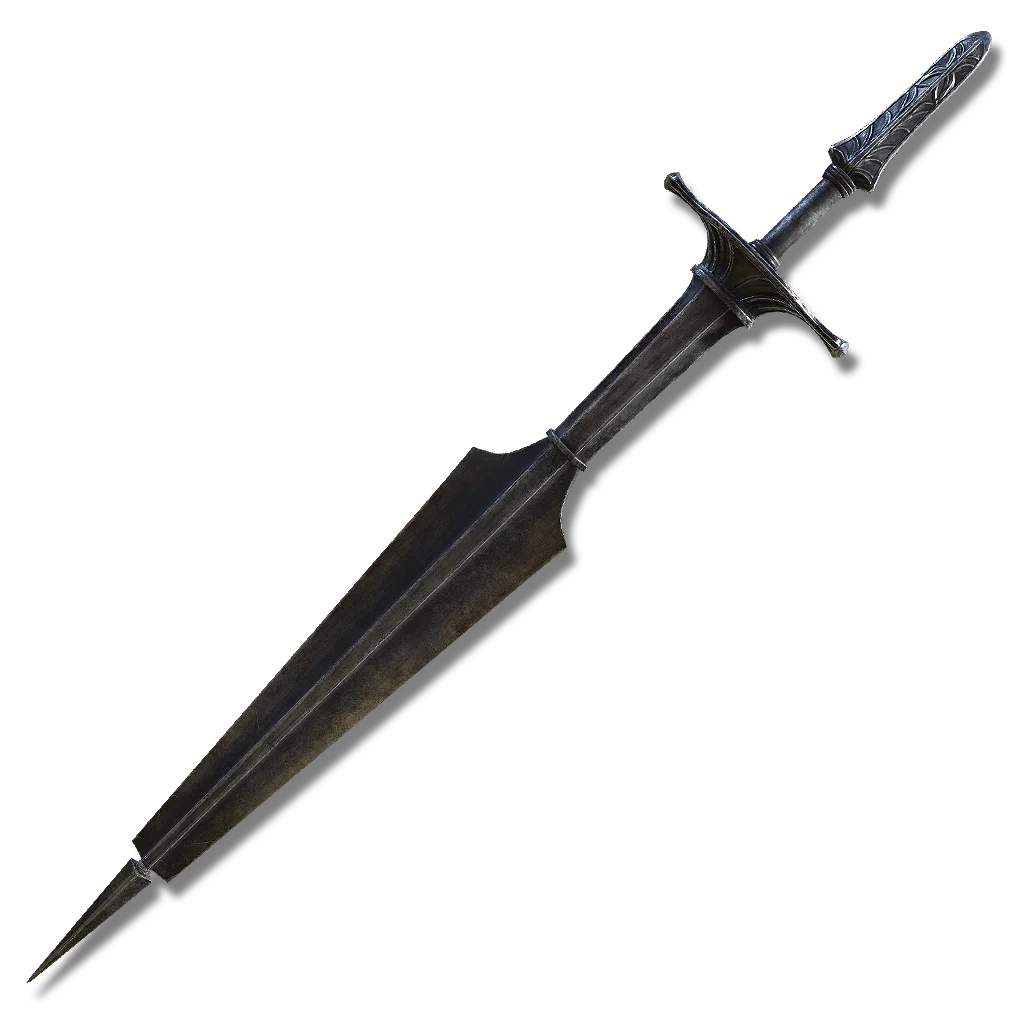 Sword Lance
Weapon once wielded by Commander Gaius. A combination of greatsword and lance. Weighty and capable of being brought to bear with great force, this armament shows its true potential when used astride a mount. Gaius himself was never without his boar.
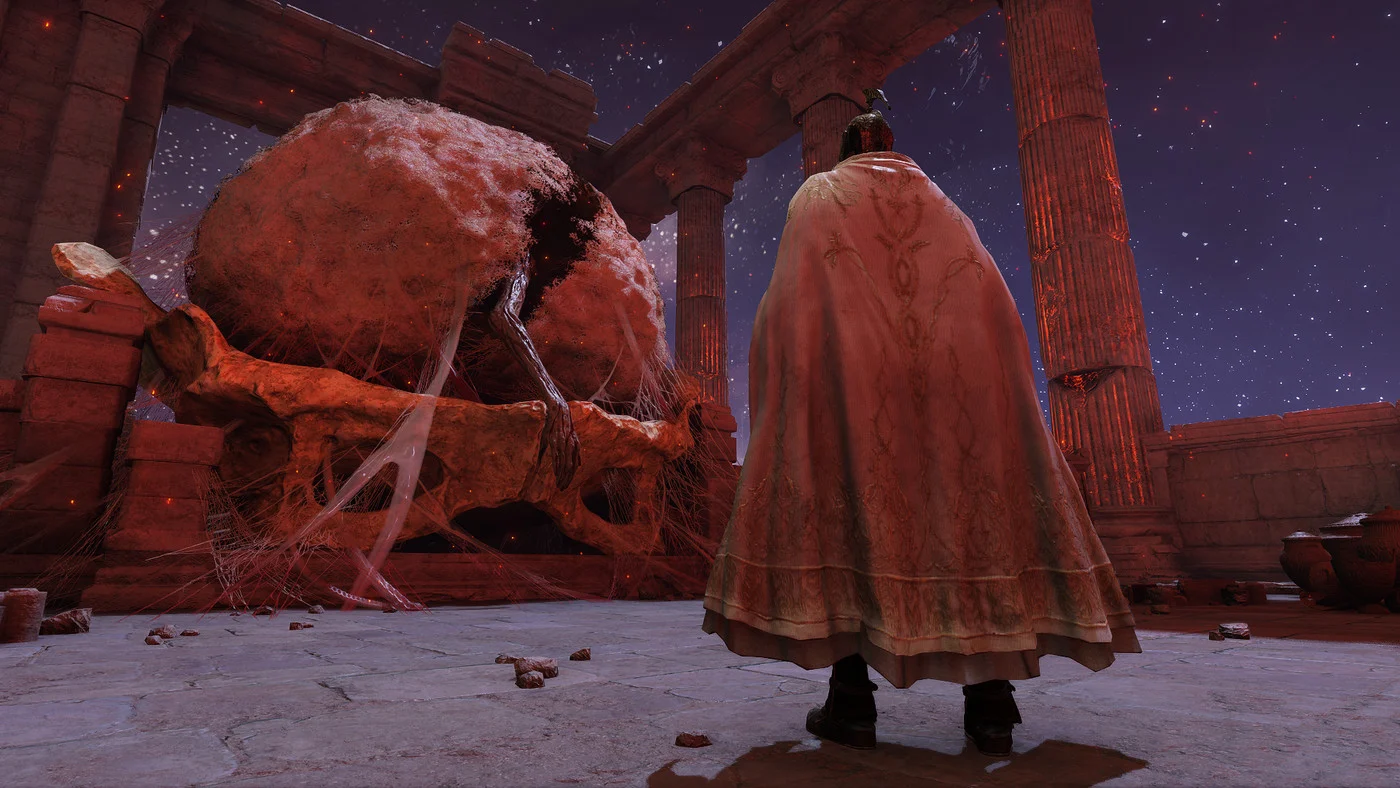 ❋ DLC · KNIGHT
Needle Knight Leda
Needle Knight of Miquella, her blade still reeking of the cull of her own comrades▾
Needle Knight Leda
"I am Leda. And like you, I was guided by faith along his honourable path. I can wield my sword to cull the undeserving, those unfit to bask in Miquella the Kind's presence."
Sworn to Miquella's promise
The game does not say where Leda came from, or what she was before Miquella. She introduces herself by the road rather than by lineage: she was guided by faith along his honourable path, and she says the Tarnished was guided likewise. Her title is Needle Knight, and her armour carries the order's creed, that kindly Miquella fashioned them as his needles to quell all, to ward away all. The crossed-tree talismans conferred on those knights add that they served Miquella long ago and are no more, save for one. Her sword is a light greatsword inlaid with gold, polished to a mirror sheen and still reeking of crusted blood that lingers from the cull of her knightly comrades. Her needles come out of that blade: her skill Needle Piercer generates ten gold needles which pierce their target all at once, and she calls them the marrow of her sword, needles that will stitch a foe into death. Miquella gifted her gentle gold, to bring a soft hue to her faded eyes.
She states her condition plainly: insist upon facing Miquella the Kind, and she will run you through, whoever you might be. When she bars the way she names her company aloud, Needle Knight Leda, Dryleaf Dane, and their allies. The charm is no blind spot for her. She names it herself, saying the congregation drawn from places far and wide would have come to blows at first glance were it not for the charm kindly Miquella put upon them, and that this is what allows them to serve together. When the enchantment breaks she feels it, says so, and calls it a blessing in disguise: now she can wield her sword to cull the undeserving, those unfit to bask in Miquella's presence. She turns on the hornsent, then on Sir Ansbach, and welcomes the Tarnished who joins her at those killings. Even under the spell, she reasons, the hornsent withheld his full trust, because he recognised the scent of the killer that slept within her.
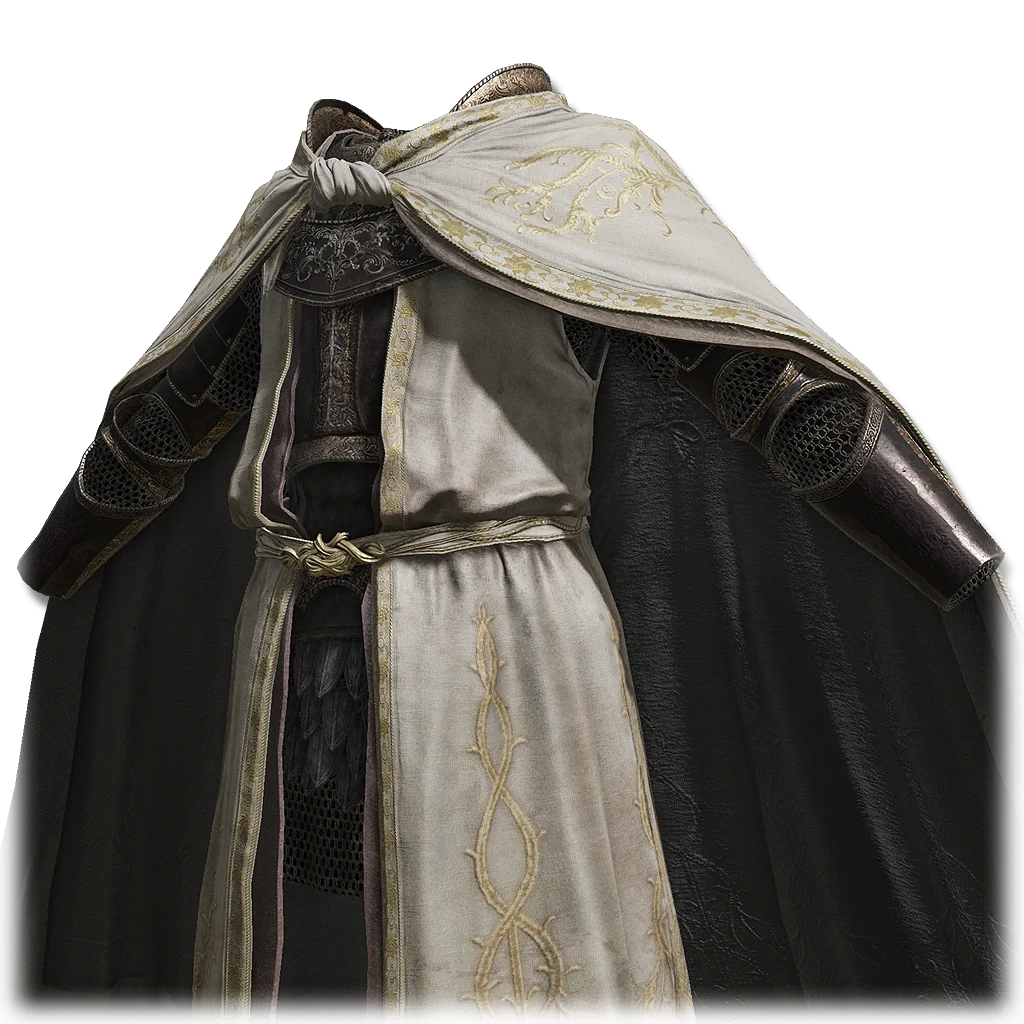 Leda's Armor
Chest armor of Needle Knight Leda. Slightly strengthens attacks following a dodge roll or backstep, as well as dash attacks. Embroidered with a golden crossed-tree motif, the chalk white cloak and surcoat symbolize the honor of the Needle Knights. "Kindly Miquella fashioned us as his needles to quell all, to ward away all."
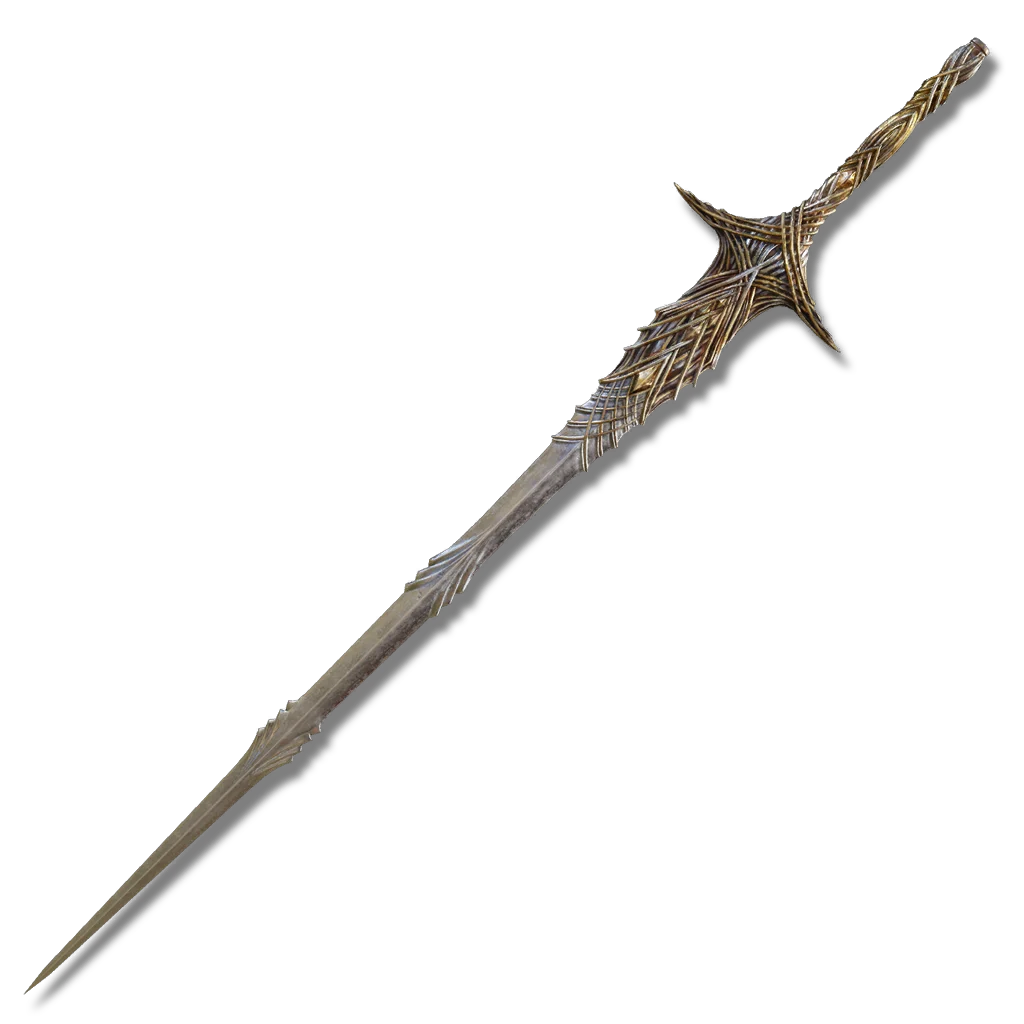 Leda's Sword
Light greatsword with gold inlaid. Weapon of Leda, the Needle Knight. Deals holy damage. Though polished to a mirror sheen, this blade still reeks with the stench of crusted blood that lingers from the cull of her knightly comrades.
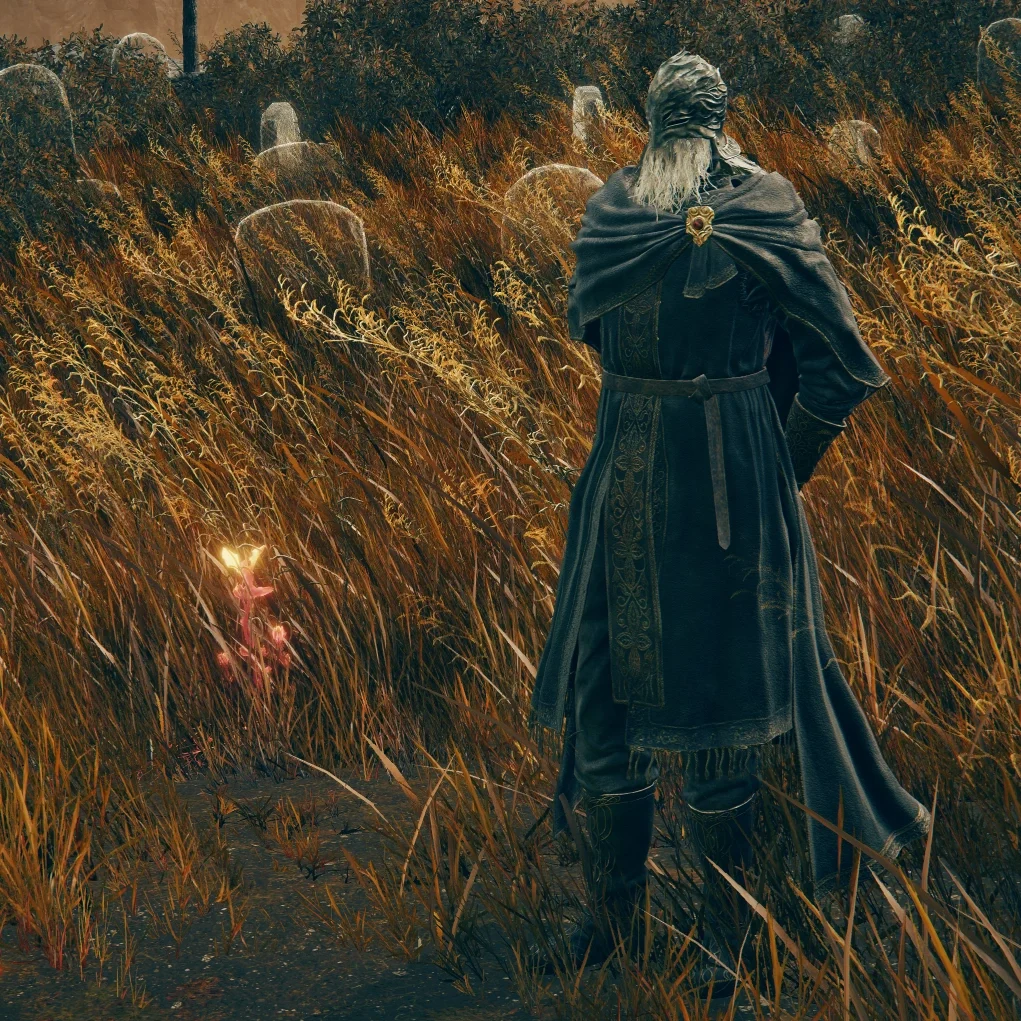 ❋ DLC · KNIGHT
Sir Ansbach
Pureblood Knight, who served two charmed lords and broke both▾
Sir Ansbach
"Miquella the Kind... is a monster. Pure and radiant, he wields love to shrive clean the hearts of men."
On Miquella's charm
Ansbach was the chief Pureblood Knight of Mohg's household, one of the first lords brought under the Lord of Blood's enchantment, and the only one who realised, slowly and with horror, that his loyalty had never been freely given. When Mohg's body was hijacked by Miquella's machinations, Ansbach refused to be charmed a second time. He pretended to accept the new lord and infiltrated Miquella's circle as a spy, gathering evidence of how the kindly god treats those he loves.
Ansbach is the rarest figure in the Realm of Shadow: a man who broke a charm by knowing that he had been charmed. He hands the Tarnished the proof of Miquella's manipulations and asks them to choose freely. If the Tarnished refuses Miquella, Ansbach fights at their side; if the Tarnished accepts Miquella, Leda kills him for what he knows.
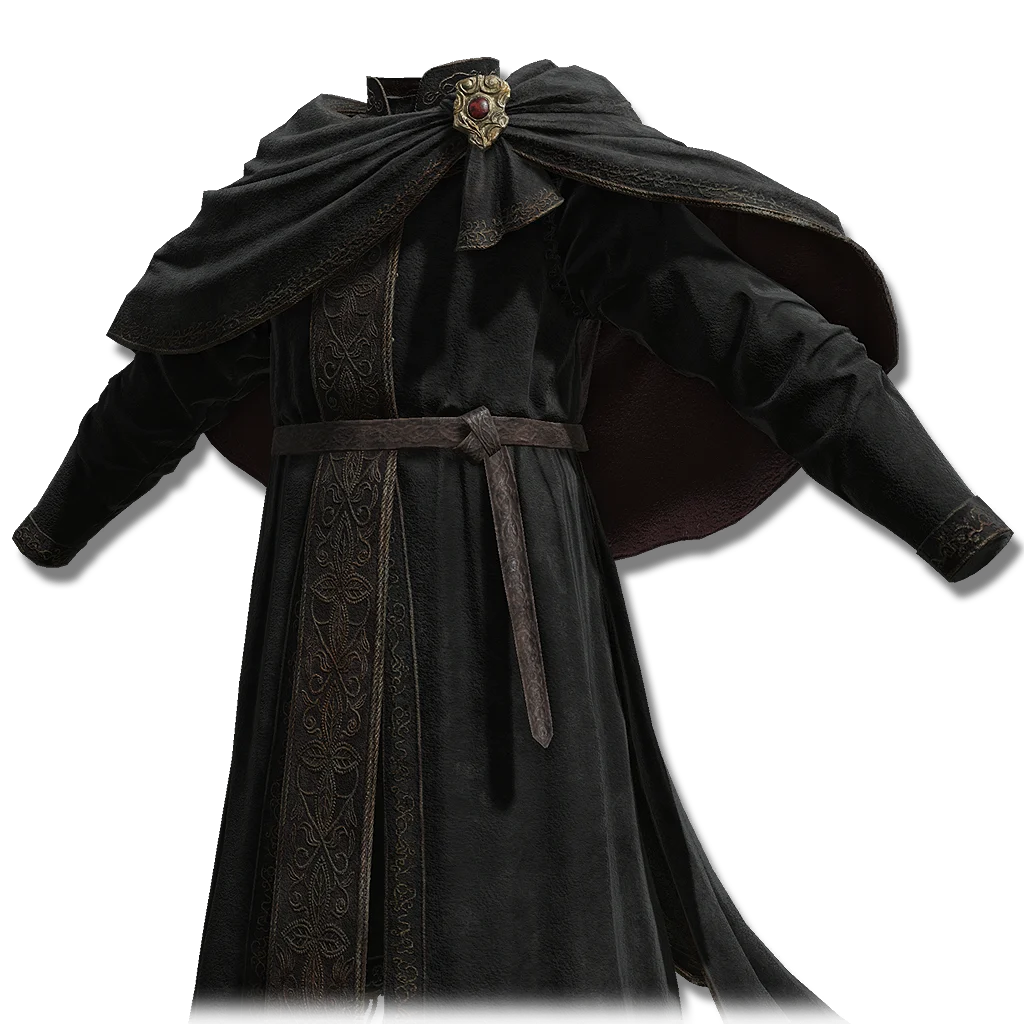 Ansbach's Attire
Attire of Sir Ansbach. The embroidered crest of the Pureblood Knights has now all but faded away.
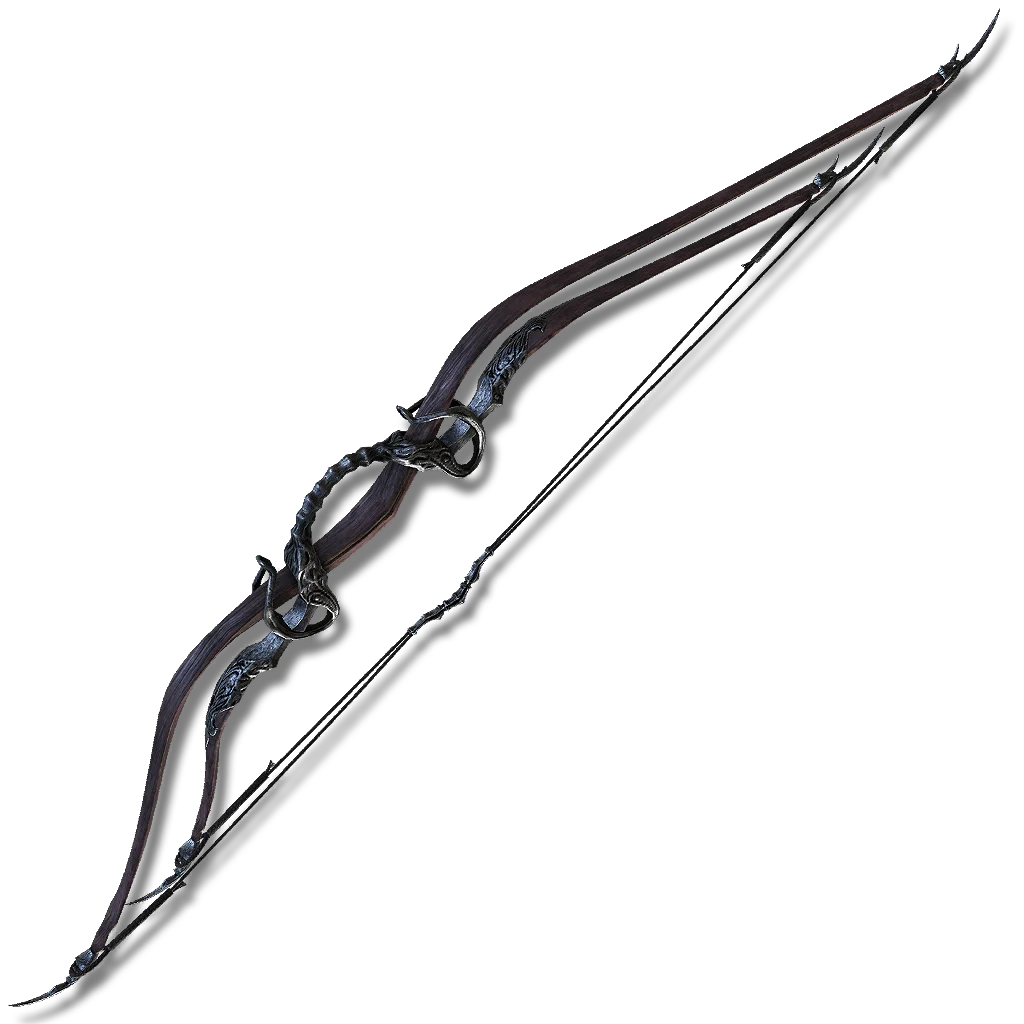 Ansbach's Longbow
Weapon of Sir Ansbach. A longbow consisting of two bow bodies and two strings. Unusually for a longbow, it can be wielded similarly to a light bow—provided that the wielder has the extraordinary dexterity demanded.
 Letter for Freyja
A letter written by Sir Ansbach to Freyja the Redmane. Presumably written in answer to her query, but the page is neatly folded to keep prying eyes from reading it.
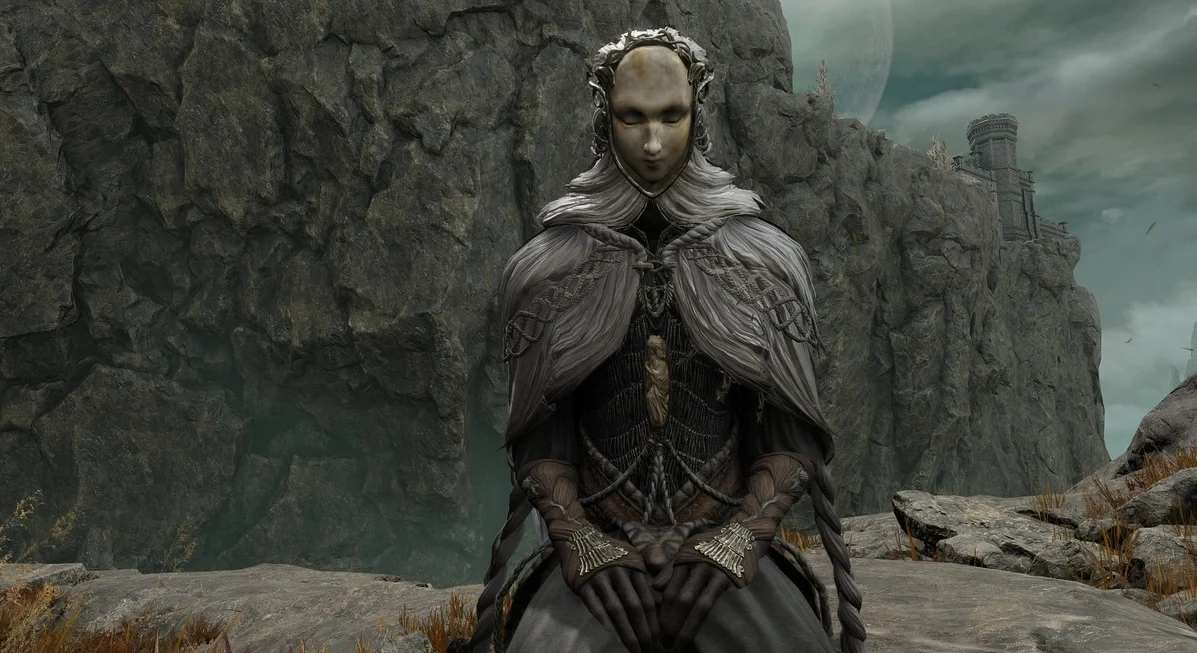 ❋ DLC · NPC
Thiollier of the Slumber
Confessor to St. Trina, perfumer of unmaking sleep▾
Thiollier of the Slumber
"Just once, Thiollier was granted the sweet repose of velvety sleep. The remainder of his days would be spent attempting to recapture it."
From Thiollier's Mask description
Thiollier was once a perfumer of the Lands Between, whose mother was a sleeper of incurable rest. Searching for the source of her affliction, he learned of St. Trina and of the violet flowers that bloom over her tomb. He came to the Realm of Shadow, brewed his mother's old draught into a needle of poison, and devoted himself entirely to the saint's cause: that her brother Miquella be undone before he becomes a god.
If the Tarnished follows the path Trina suggests, Thiollier provides the means: a needle of St. Trina's poison that, plunged into Miquella at the moment of his ascension, can break the charm without slaying him. Thiollier himself is a quiet man who calls each brew a confession, and who keeps a flower of his mother's room in a glass at his belt at all times.
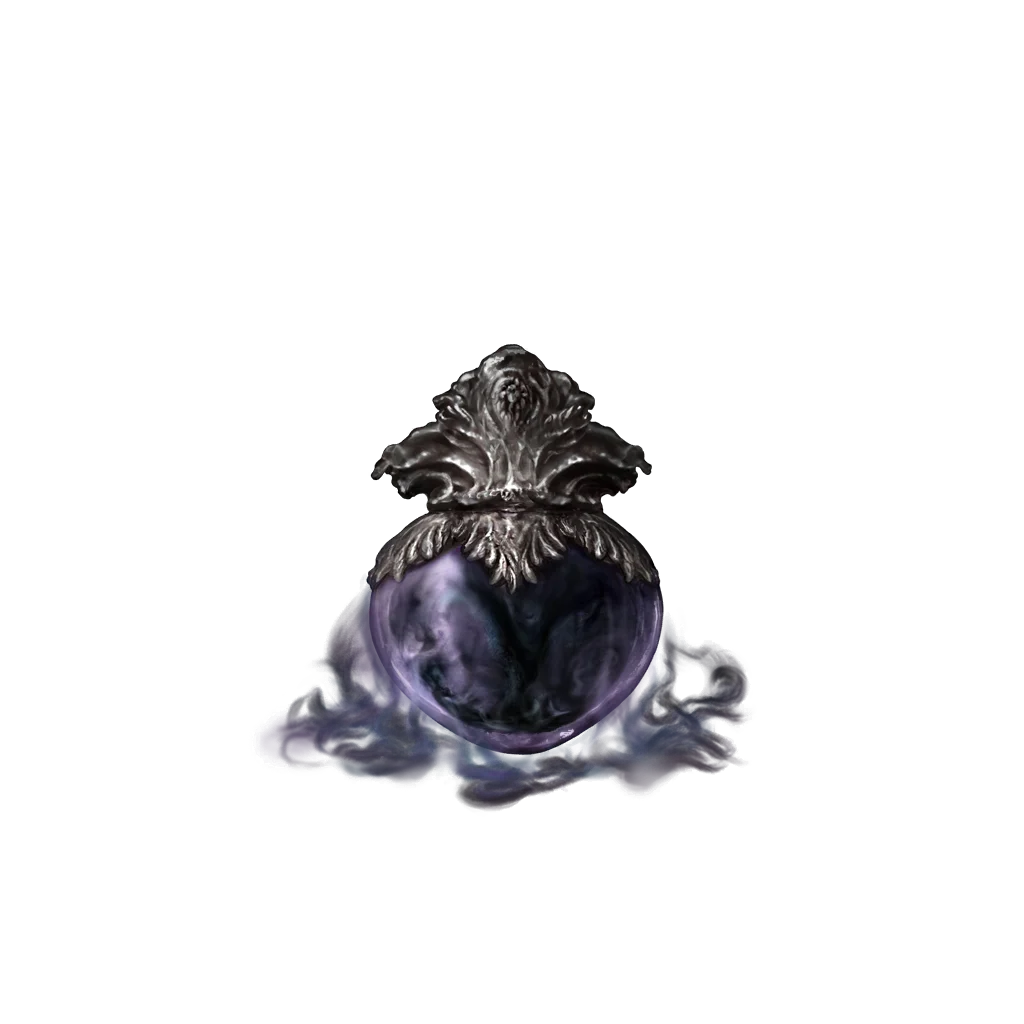 Thiollier's Concoction
An ebony-black concoction mixed by Thiollier. A condensed, somniferous elixir, purported to be capable of putting even an ancient dragon to sleep. For an ordinary mortal, a single sip would assuredly result in swift and certain death. Thiollier thought of St. Trina's sleep when he created this, but the ebony sleep he concocted had not the sweetness of nectar nor the gentleness of rest's embrace.
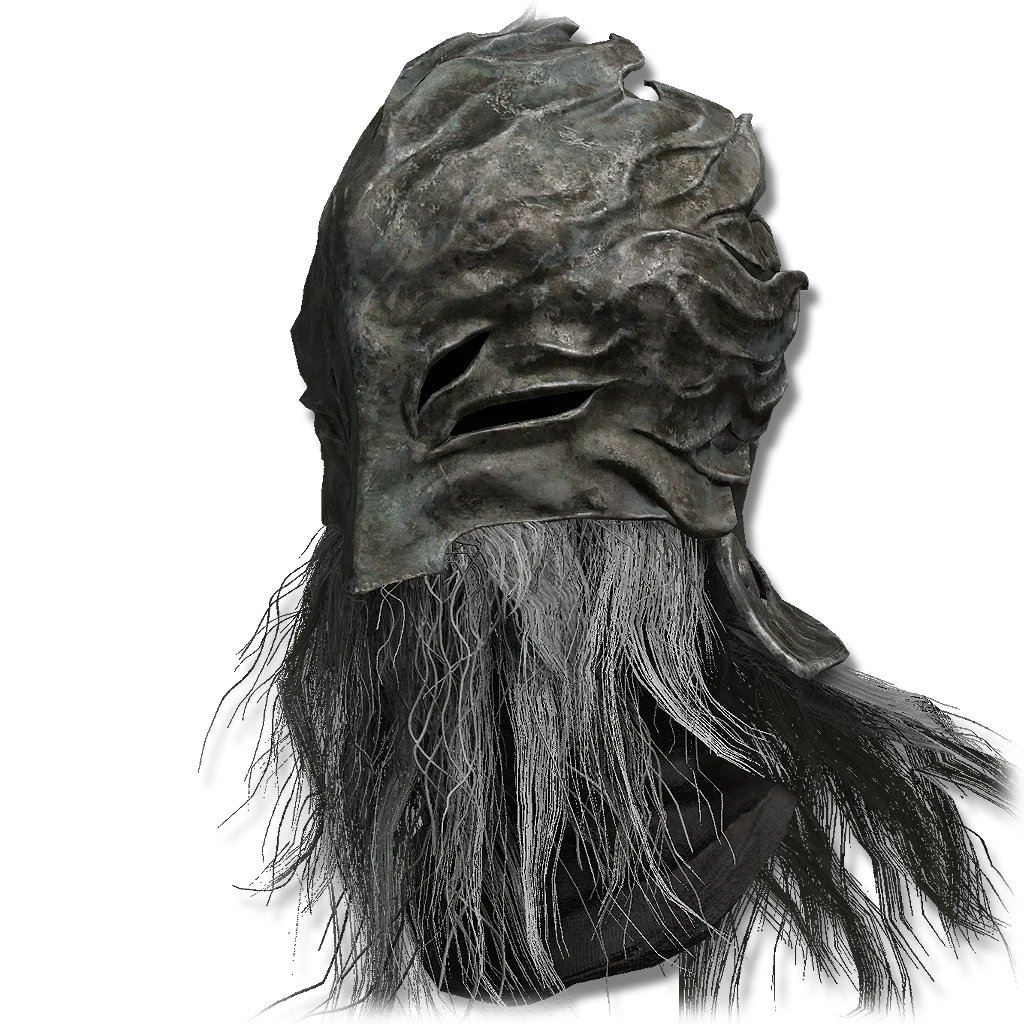 Wise Man's Mask
The iron mask of Sir Ansbach, giving the appearance of a quiet, wise, old bearded man. But an old fear lurks beneath, together with the cold, unflinching discipline that once honed his blade, now employed to enhance Blood Oath and dynastic skills.
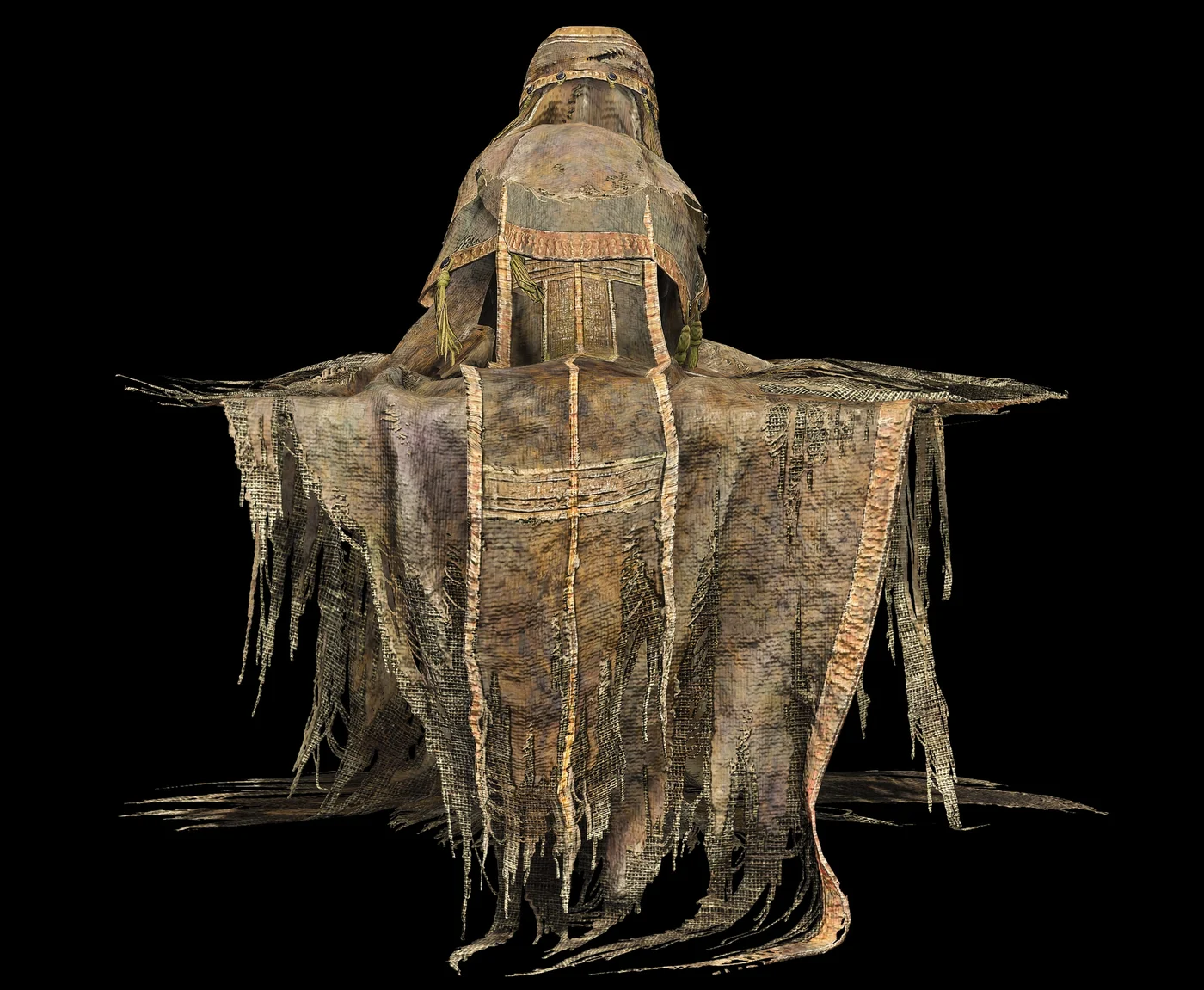 ❋ DLC · LINEAGE
The Hornsent
Faith of the spiral, last keepers of the Crucible's older horns▾
The Hornsent
The hornsent are a horned people, descendants of the Crucible's primal forms before the Erdtree pruned them into a single golden mould. They built spiral towers across the Realm of Shadow and revered the horned forms of the Crucible that the Erdtree's faith held to be impurities. They were a culture of inquisitorial scholarship: their priests bound captives into jars in pursuit of revelations, and their saints rose into divinity through the same vessel-tradition Marika may have come from. Their cruelty to outsiders, particularly to those who would later become Marika's own kin, was absolute.
Messmer's crusade reduced the hornsent to a remnant. The grandam at the centre of Belurat is the last of her elders; the wandering hornsent NPC the Tarnished may meet is a vengeance-seeking revenger who carries the victims' grudges. The hornsent's surviving incantations and weapons all carry the same theme: a beauty of horn and spiral that the Erdtree was not strong enough to allow into its new world without first burning the old one down.
 Braided Arm Wraps
Ragged black cloth tied with braided cord. Attire of a vengeance-seeking hornsent.
 Antiquity Scholar's Cookbook [1]
A record of crafting techniques left by the hornsent academics who studied the ancient ruins of Rauh. Details techniques for working with sprites thought lost to antiquity. Acquire the knowledge to craft the following: - Fire Spritestone
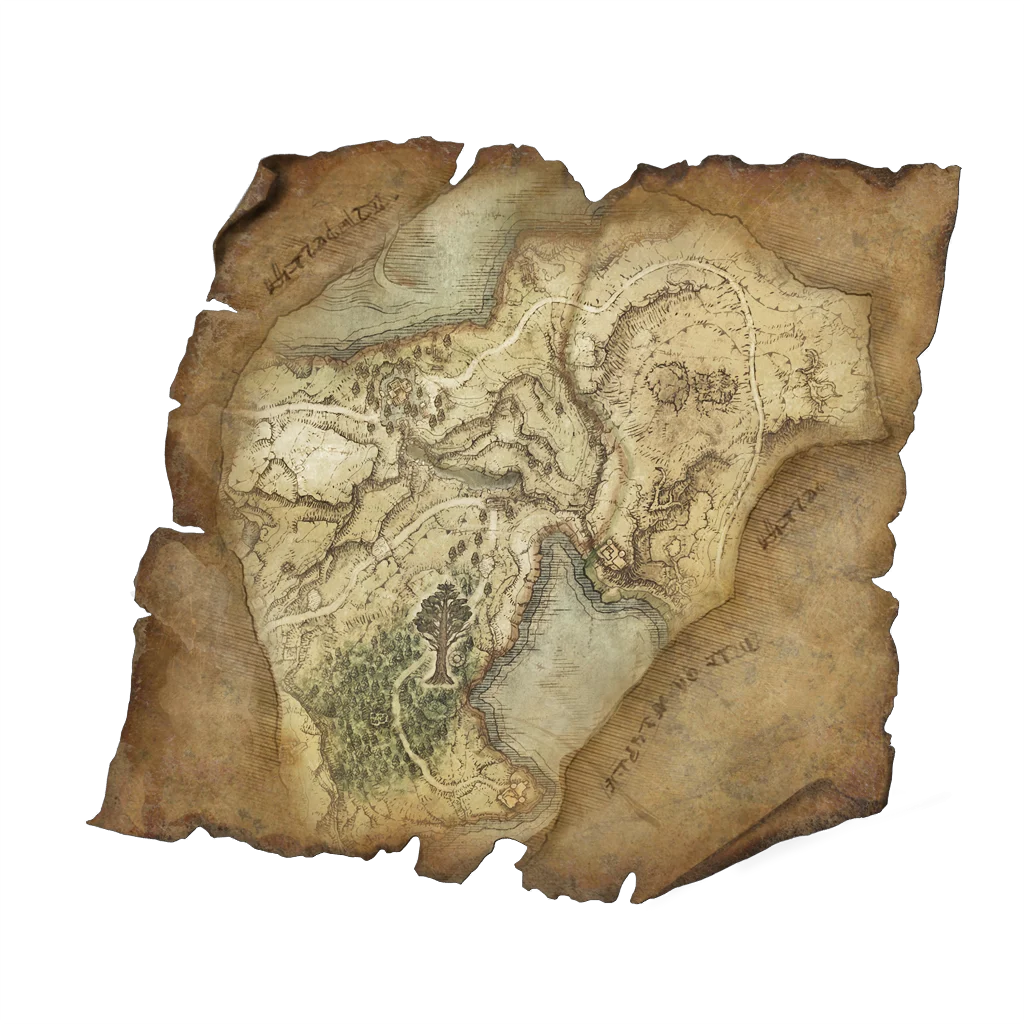 —️ LOCATION
Limgrave
Cradle of the Tarnished, gate of the windswept plains▾
Limgrave
Limgrave is the green threshold of the Lands Between, the first land a Tarnished sees after waking in the Stranded Graveyard. Its windswept plains, scattered with ruined churches and dragon-burnt clearings, roll far south of the Erdtree, beneath ever-clouded skies. Now they are walked by Wandering Mausoleums, by graveyard-dwelling beasts, and by every kind of demi-human, undead, and crucible-touched survivor of older ages. The Roundtable Hold itself lies on no map of these lands: a Tarnished reaches it only when Melina offers to take them there.
The region is dominated by Stormveil Castle in the north, by the ruined coast of the Weeping Peninsula in the south, and by the dragon-haunted East Limgrave with its Caelid border. The Site of Grace called The First Step marks the Tarnished's arrival on the open plain, and close by stands the Church of Elleh, the church where, legend holds, the wandering merchant Kalé tends a fire whose origin no merchant guild can explain.
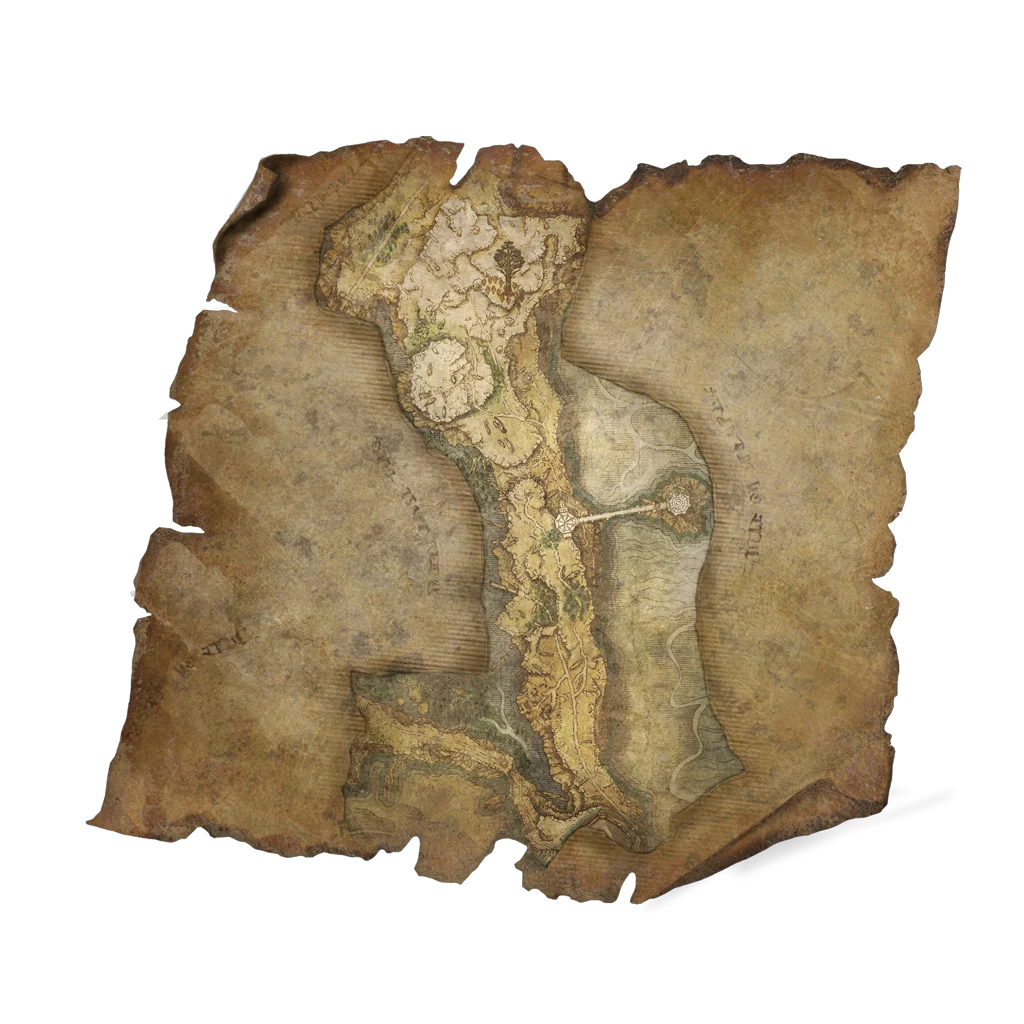 —️ LOCATION
Liurnia of the Lakes
Pale-blue marshlands of the academy, drowned country of the moon▾
Liurnia of the Lakes
Liurnia is the long, pale-blue province north of Limgrave: a flooded country of cattail marsh and ruined manors, lit at all hours by the cold light of the Carian moon. It was the realm of House Caria, whose sorceress-queen Rennala raised the academy of Raya Lucaria on a rock at the lake's centre. Before Marika's reign, Liurnia was wetter still, an inland sea, and its old gods were the ancestor spirits whose stags now wander the depths of Siofra, and the dragons of the great gulf around Greyoll's nesting peak.
Three Carian manors govern the province: Caria Manor proper, where Iji the giant smith still tends Ranni's relics; the Academy itself, whose books locked Rennala in eternal grief; and the Three Sisters, the moon-towers where Ranni's body sleeps in a wooden doll. The Lazuli Conspectus and the Cuckoo branch of the academy still prowl the streets of Raya Lucaria, but the school's true masters left long ago, and the province is now ruled by no living thing but the ghostly carriages of the Wandering Mausoleums.
Remembrance of the Full Moon QueenRemembrance of Rennala, Queen of the Full Moon, hewn into the Erdtree. In her youth, Rennala was a prominent champion who charmed the academy with her lunar magic, becoming its master. She also led the Glintstone Knights and established the house of Caria as royalty.
Legendary sorcery devised by Azur, primeval sorcerer. Fires a tremendous comet in a torrent akin to the distant starry expanse, the place said to be the origin of glintstone. When Azur glimpsed into the primeval current, he saw darkness. He was left both bewitched and fearful of the abyss.
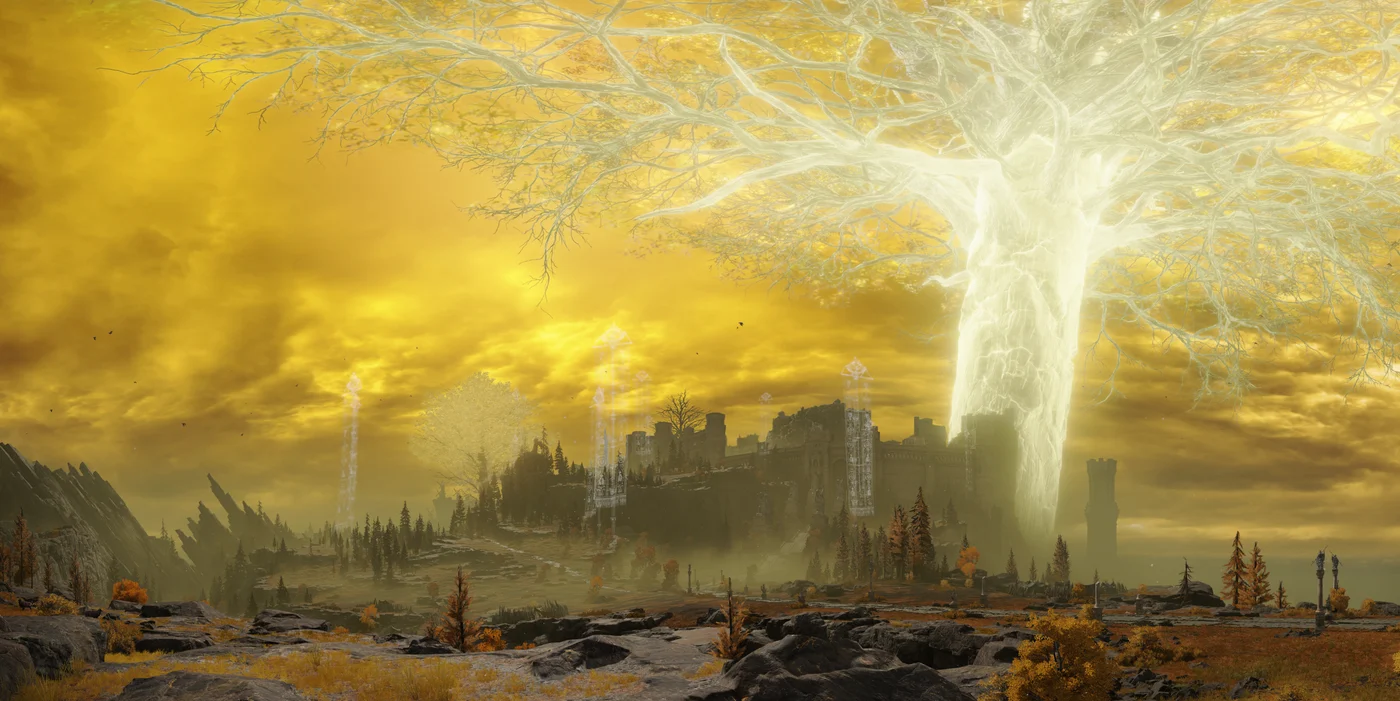 —️ LOCATION
The Altus Plateau
High plain of the Erdtree, golden gateway to Leyndell▾
The Altus Plateau
The Altus Plateau is the high golden land that surrounds the Erdtree itself. To climb to it, the Tarnished must pass through the Grand Lift of Dectus, or scale the Ruin-Strewn Precipice. Above, the plateau is bathed in perpetual late-afternoon light: yellow grass stretches towards the marble walls of Leyndell, and the gold-and-bronze fortresses of the Royal Capital's outer defences rise on every side. Here once was the heart of the Erdtree's grace.
The plateau's outlying regions tell different stories. To its west lie Mt. Gelmir and Volcano Manor, kept apart by an ash-blackened cliff. The Forest-Spanning Greatbridge crosses to the small townships of Wyndham, where one finds the husks of a wandering nobility caught between Leyndell's heralds and Caelid's rot. To the north, the Capital Outskirts feed into the Sealed Tunnel.
Map of Altus Plateau and environs. The Altus Plateau, where the Erdtree's base can be found, contains the Royal Capital of Leyndell to the east, and Mt. Gelmir to the west. Scars from the Shattering remain apparent to this day.
Armor worn by headless knights who endlessly guard the Wandering Mausoleum. The wing-shaped ornaments on its back evoke the Deathbird. A self-inflicted curse that ties the spirits of these loyal knights to the land, having willingly beheaded themselves so that they may serve their masters in death.
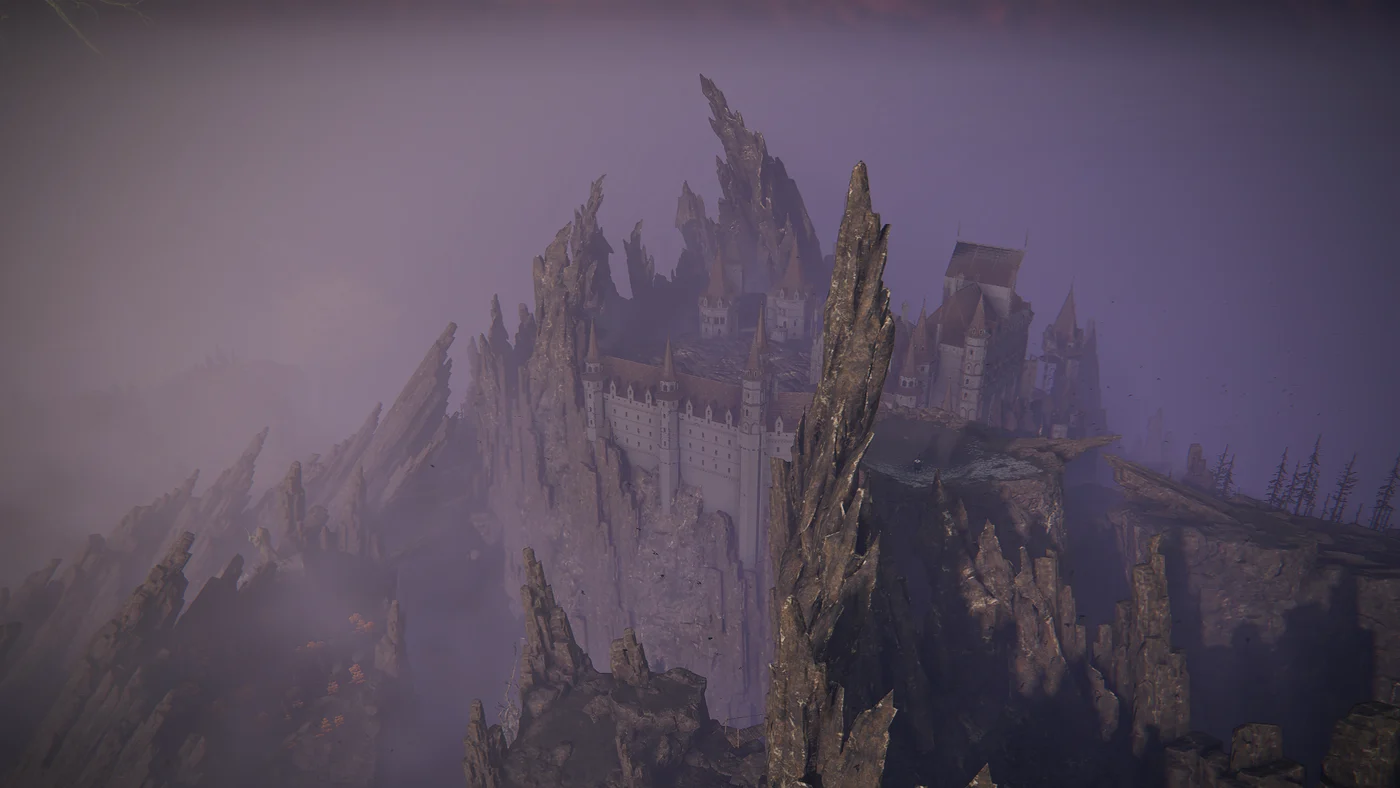 —️ LOCATION
Mt. Gelmir
Volcanic spine, prison of the Lord of Blasphemy▾
Mt. Gelmir
Mt. Gelmir is a great volcanic mountain that rises west of the Altus Plateau, a black cone whose flanks are forever broken by lava and ash. The mountain was once a holy place of the Fire Monks, a faith whose god was a flame older than the Erdtree's grace; their seminary at the southern slope still burns with rituals no Erdtree priest would countenance. Above their seminary stands Volcano Manor, the seat of Lord Rykard, where Tanith and the recusants gather those who have abandoned the Greater Will.
At the mountain's summit, half-fallen into a crater of magma, broods a colossal head of stone: the Magma Wyrm Makar, an ancient dragon whose body is geology made flesh. The Twin Husks of the manor and the Iron Maidens that guard its corridors were forged in the magma below, and the Great Rune of Rykard was relinquished here when the demigod chose the serpent over the throne.
Remembrance of Rykard, Lord of Blasphemy, hewn into the Erdtree. Rykard took the form of a giant serpent that he might devour, grow, and live eternally. 'I understand. The road of blasphemy is long and perilous. One cannot walk it unprepared to sin.'
Mail hood of iron links covering a headband engraved with flames. Attire of the Fire Monks. The Fire Monks are guardians of the flame of ruin, forbidden by the Erdtree and said to be kept high in the Mountaintops of the Giants.
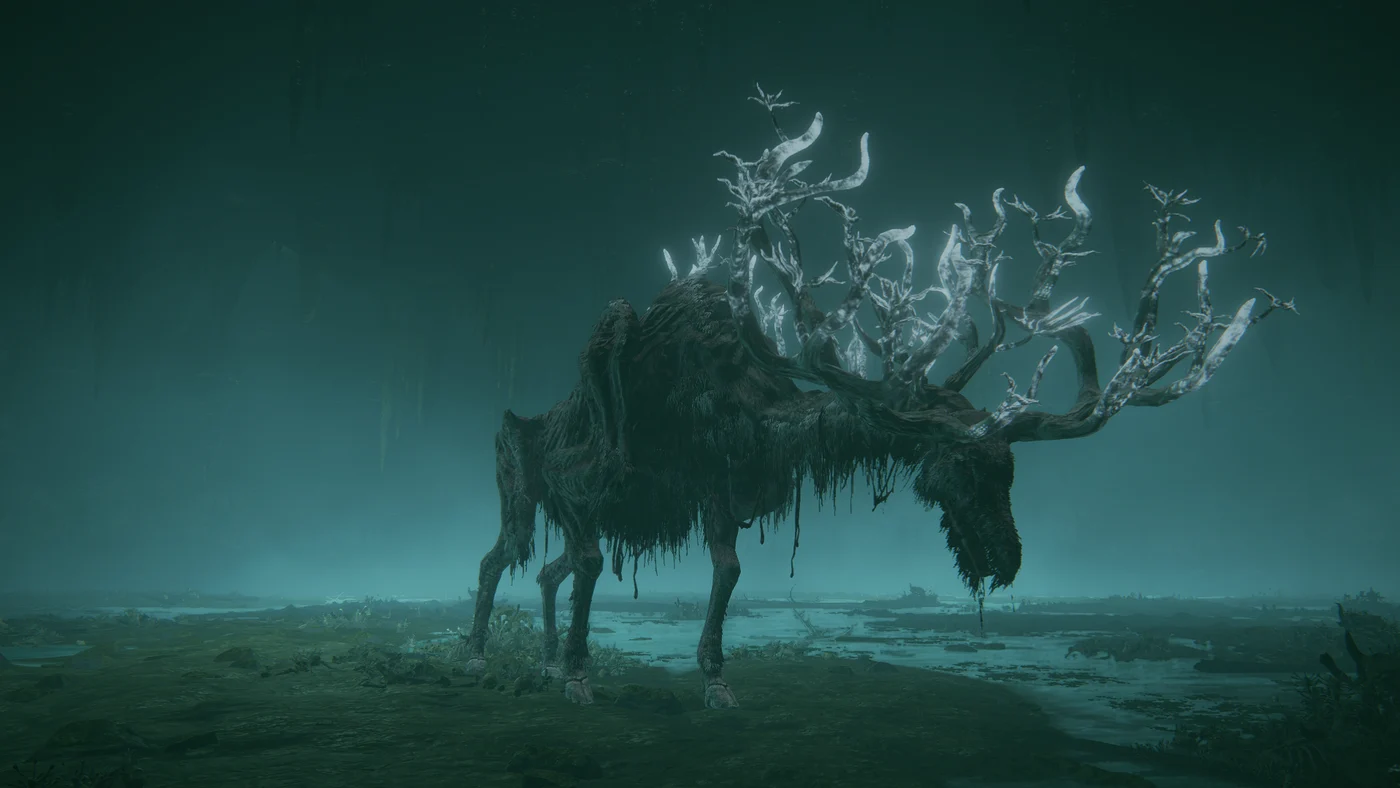 —️ LOCATION
Siofra River & Nokron
Eternal city of the silver tears, sky beneath the world▾
Siofra River & Nokron
Siofra is the river that runs beneath the Lands Between, in a cavern so vast that its ceiling shows a perfect false sky of stars. Its valley belongs to the Eternal City of Nokron, one of the cities of the Numen long entombed beneath the earth on Maliketh's order. The Numen of Nokron worshipped the ancestor spirits, great-antlered stags whose breath is silver mist, whose Crucible-tinged forms the Erdtree's later gold did not permit above. To follow Siofra is to walk through a starlit night that has never seen a real sun.
Nokron itself is a city of black-and-silver towers, half intact, half overgrown with the spires of those who fled here after the Night of the Black Knives. The Mimic Tear that haunts its mausoleum was forged from the shape-eating silver tears of the city; the Fingerslayer Blade, the only weapon that can sever a Two Fingers from its spine, was hidden in a chest at the centre of Nokron's great library. Mohgwyn Palace, in what its own map calls the lightless depths, is accessed only by the bloody portal Mohg tore open from within.
Remembrance of the Regal AncestorRemembrance of the Regal Ancestor Spirit, hewn into the Erdtree. Ancestral spirits exist as a phenomenon beyond the purview of the Erdtree. Life sprouts from death, as it does from birth. Such is the way of the living.
Fingerslayer BladeThe hidden treasure of the Eternal City of Nokron; a blade said to have been born of a corpse. This blood-drenched fetish is proof of the high treason committed by the Eternal City and symbolizes its downfall. Cannot be wielded by those without a fate, but is said to be able to harm the Greater Will and its vassals.
—️ LOCATIONAinsel River & Nokstella
Twin city of stars, Astel's broken nest▾
Ainsel River & Nokstella
Ainsel is the second underground river of the Lands Between, parallel to Siofra and accessible only through Carian sorceries that fold space at the Three Sisters. Its valley belongs to Nokstella, the Eternal City of the Night, twin of Nokron. The Nox of Nokstella sought to forge a lord of their own, and the attempt drew the ire of the Greater Will. The falling star that came answered no summons: Astel, Naturalborn of the Void, an alien being of insectile limbs and shattered glass, a star of ill omen that destroyed an Eternal City and took away its sky. The city was buried as punishment, and Astel was sealed in its abandoned chamber.
Ranni came to Nokstella hunting the Baleful Shadows, the Two Fingers' own assassins. Chosen as a candidate to succeed Queen Marika, she would not acquiesce to the Fingers: she stole the Rune of Death, slew her own Empyrean flesh, and cast it away, keeping a wooden doll for a vessel. The Tarnished who follows her quest descends through Ainsel to the Lake of Rot, and at its far shore meets Astel for the duel that defines Ranni's path: not crowning, but the murder of an outer god.
Remembrance of the NaturalbornRemembrance of Astel, Naturalborn of the Void, hewn into the Erdtree. A malformed star born in the lightless void far away. Once destroyed an Eternal City and took away their sky. An falling star of ill omen.
Wing of AstelSword fashioned from a delicate wing, suffused with the magic of the stars. Strong attack unleashes a wave of enchanted light. Crafted from a relic of the Naturalborn of the Void who is said to have assailed the Eternal City.
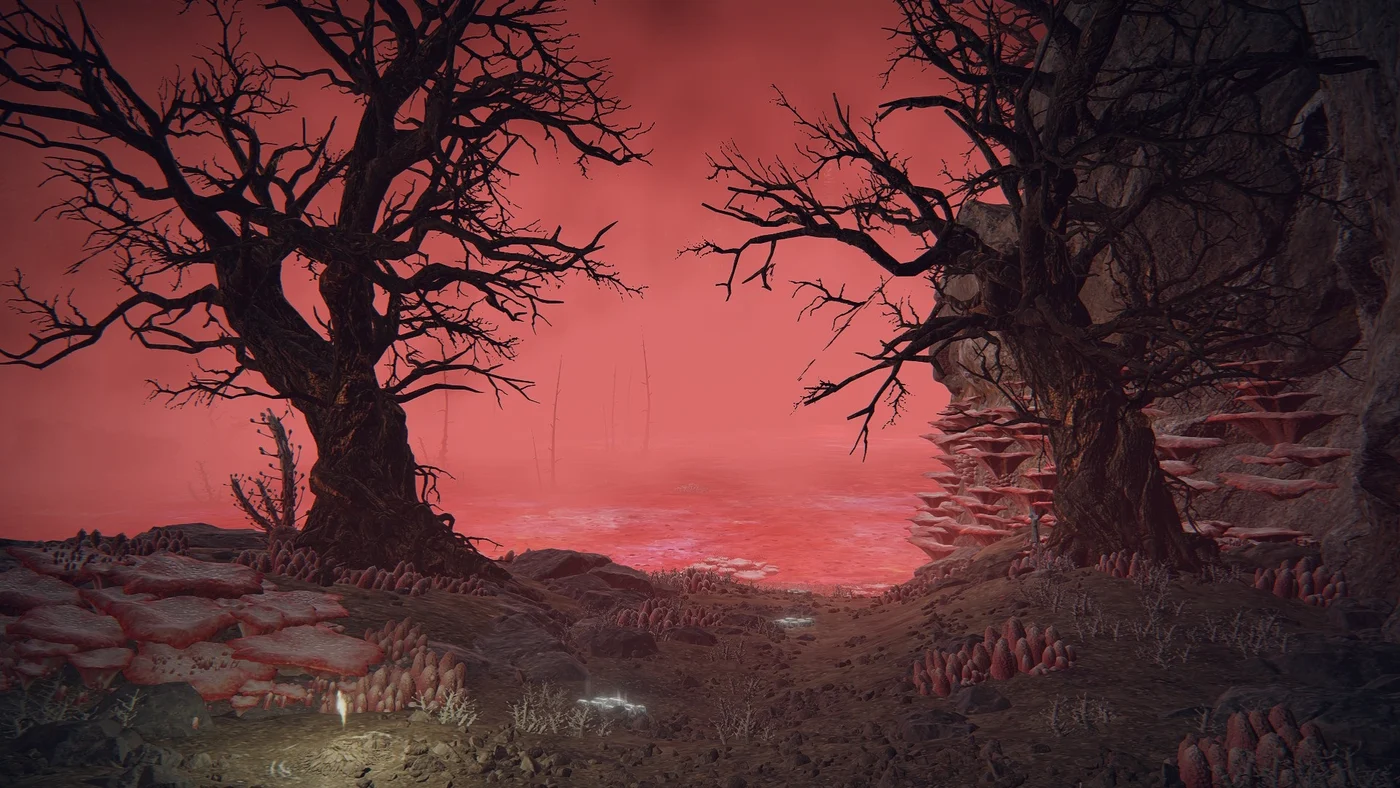 —️ LOCATION
Lake of Rot
Underground sea of disease, prison of an Outer God▾
Lake of Rot
The Lake of Rot is a vast pool of standing scarlet rot in the depths beneath the Three Sisters, between Ainsel River and the lost cliffs of Nokstella. It is not a natural body of water: the Eternal Cities sealed it here long ago to contain the spread of the scarlet rot, before they were themselves entombed by Maliketh. The lake's surface is a bright crimson skin from which rot-spores rise in slow rotation, and the pillars that rise from it are studded with the bones of those who tried to cross before the Tarnished did.
Astel was the Nox of Nokstella's failed god; the Lake of Rot is its prison. The Tarnished must wade through Aeonia's body itself to reach Astel's chamber, and when the Tarnished returns with a stolen Fingerslayer Blade or a fragment of Ranni's runes, the rot they brought with them stays. The Pest-priests, the Kindred of Rot, and the Ulcerated Tree Spirit that haunts the lake are all things that chose Aeonia willingly, and that Aeonia rewarded with forms older than the Erdtree's grace.
Superior incantation of Dragon Communion. Channels the power of Ekzykes, the Decaying. Transforms caster into a dragon to spew scarlet rot breath from above. Ekzykes, Dragon Communion Revenger, did not forget his hatred even as he succumbed to the scarlet rot.
An accoutrement worn by the ancestral followers. Raises immunity. Said to be a budding horn. The ancestral followers believe that the horns of a long-lived beast continue to bud like antlers, over and over again, until the beast one day becomes an ancestral spirit.
 —️ LOCATION
Consecrated Snowfield
Frozen river to the Haligtree, the path taken by those unchosen▾
Consecrated Snowfield
The map of the Consecrated Snowfield describes a road rather than a home: 'The route through this land, crossed east to west by a frozen river, leads to Miquella's Haligtree. This is the path taken by those unchosen, though it is a trial all the same.' Who consecrated the field, and when, the game does not say. Latenna, arriving, greets it as 'great snow-laden lands' that 'stretch far to the north', and as 'the land of Miquella's Haligtree, where Lobo and I began our travels'. Entry turns on a medallion in two pieces: 'brandishing the medallion with both halves conjoined will activate the Grand Lift of Rold, granting access to a hidden path'. Old Albus, an Albinauric of the Village of the Albinaurics, where 'the cursemongers have destroyed everything', presses his half on the Tarnished: 'I beg you. Would you look after this medallion? You must keep it out of the cursemongers' hands.' Latenna, who confirms that 'old Albus entrusted his medallion to you', names where the other lies: 'beyond the forbidden lands north of the Erdtree', 'In Castle Sol, on the Mountaintops of the Giants, accessible by the Grand Lift of Rold.'
Where the road ends, the game is blunt about the outcome: though 'watered with Miquella's own blood since it was a sapling, the Haligtree ultimately failed to grow into an Erdtree'. The hope carried along this path is Albinauric. Old Albus spoke of 'a chosen land' awaiting his kind, of 'Miquella's city, far to the north, a place called Eburion, where we are conferred eternal grace', and called the medallion 'the key that leads to the city'. Loretta, once a royal Carian knight, 'went on a journey in search of a haven for Albinaurics, and determined that the Haligtree was their best chance for eventual salvation'. Across the snow ride the wolf-riding Albinauric archers, in chainmail crafted with blue silver, 'a metal born from the same mother as the archers themselves'. A Wandering Mausoleum stands here as well, kept by headless soldiers whose surcoat 'depicts the mausoleum bell, which rings in constant mourning for the soulless demigods'. A Death Rite Bird haunts the field; it carries the name of the Deathbirds, 'graveyard fire keepers' who 'rake out the ashen remains of the dead from their kilns', and the game does not say what joins them. Latenna traces the rest of the road: beyond 'the ancient bowers, and the liturgical town of Ordina', 'lies the place to which I must return'. The Black Knife Assassins met along it wear scale armor 'forged to make no sound', with a 'concealing veil, which muffles the sound of footsteps'; those who carried out the Night of the Black Knives 'were all women, and rumored to be Numen who had close ties with Marika herself'.
Right half of a split medallion depicting the Haligtree. Brandishing the medallion with both halves conjoined will activate the Grand Lift of Rold, granting access to a hidden path. In other words, this secret medallion will guide the bearer to the land of Miquella's Haligtree.
Map of Consecrated Snowfield and environs. The route through this land, crossed east to west by a frozen river, leads to Miquella's Haligtree. This is the path taken by those unchosen, though it is a trial all the same.
—️ LOCATIONAshen Capital
Leyndell after Maliketh, capital rooted in the Erdtree's corpse▾
Ashen Capital
After the Tarnished slays Maliketh and Destined Death is unbound, a comet-like star of black flame falls upon the Erdtree and sets it alight. Leyndell, beneath the canopy, is buried in ash. When the Tarnished returns to the Royal Capital they find it transformed: the streets are knee-deep in cinder, the gold of the marble has gone grey, and the body of the burning Erdtree spreads downward into the city like a black root, replacing the streets and the spires it once gilded.
The Ashen Capital is haunted by the demigod-form of Sir Gideon Ofnir, who in the original timeline never reached this place; by Hoarah Loux, who waits at the foot of the burnt Erdtree for one final wrestling match; and by the ghosts of every Leyndell knight who fell defending Morgott. To pass through the ash and climb the smouldering Erdtree's roots is to step beyond the Lands Between and into the body of the Elden Ring itself, where the Elden Beast and the figure of Radagon-Marika wait for the Tarnished's choice.
Remembrance of Hoarah LouxRemembrance of the warrior Hoarah Loux, hewn into the Erdtree. When Godfrey, first Elden Lord was robbed of his grace, becoming Tarnished, he took with him his kinfolk and left the Lands Between. After the Long March of the Tarnished came to an end, Godfrey divested himself of kingship, becoming a simple warrior once more.
Crucible Axe HelmHelm of the Crucible Knights who served Godfrey, the first Elden Lord. The axe ornamentation is the knight Ordovis's mark, displayed also by his men. Holds the power of the crucible of life, the primordial form of the Erdtree. Strengthens Aspects of the Crucible incantations.
 —️ LOCATION
Weeping Peninsula
Castle Morne, the Misbegotten revolt, the Tower of Return▾
Weeping Peninsula
The Weeping Peninsula is the rainy southern arm of Limgrave, a region of cold drizzle and salt-washed cliffs that ends at Castle Morne. The castle was held by Edgar, its warden and commander, ordained by Lord Godrick himself. Its Misbegotten menials, led by the Leonine Misbegotten, rose up, slew the household, and took the castle; the creature now holds the treasured sword of Morne that Edgar stayed behind to guard. Edgar's daughter Irina, escaped to the roadside, begs the Tarnished to carry a letter to her father; the Tarnished may later find Edgar grieving over her body, and face him at last as the invader Edgar the Revenger.
On the peninsula's shore stands the Tower of Return, whose trapped chest spirits the unwary all the way to the Divine Bridge at Leyndell, far ahead of the natural pace of the journey. The Tarnished may also find the small Church of Pilgrimage, one of the churches where spoken echoes of Queen Marika linger still.
The storied sword of Castle Morne. A revenger's weapon, it is burdened with oceans of anger and regret. One of the legendary armaments. A lone surviving champion from a country now vanished was so determined to continue fighting that he claimed the swords of an entire clan of warriors.
The siege of Castle Morne A lone hero fights for his vengeance Only to fall at the hand of Lord Godfrey
 —️ LOCATION
Dragonbarrow
Plateau of Greyoll, untouched by Caelid's rot▾
Dragonbarrow
Dragonbarrow is a high plateau jutting north of Caelid, a dry land of red grass and bone-white dragons that the Scarlet Rot, mysteriously, has never reached. At its centre sleeps Greyoll, the Elder Dragon: an enormous mother whose breath is mist, surrounded by her four still-living offspring. Greyoll is so old and so vast that the Tarnished cannot kill her in single combat without first wounding each of her children, who guard her in concentric rings.
The plateau was a sanctuary of the Dragon Communion, a pre-Erdtree faith whose acolytes still gather at the Bestial Sanctum in the eastern plateau. There Beast Clergyman Maliketh, in his earlier hounded form, taught the rites by which a worshipper consumes a dragon's heart to gain its powers. The Lichdragon Fortissax, Godwyn's sole companion in the Erdtree's deep root, came from a Dragonbarrow lineage; his absence is part of why the plateau is the most quiet land in the realm.
Legendary talisman of wrought iron depicting a massive ancient dragon. Enormously boosts physical damage negation. The ancient dragons, who ruled in the prehistoric era before the Erdtree, would protect their lord as a wall of living rock. And so it is that the shape of the dragon has become symbolic of all manner of protections.
Weapon said to have been whittled from the claw of a great, ancient dragon, wielded by grotesque Tree Sentinels who yet serve the Erdtree. The claw is enwreathed with lightning, and tears through the dragons' feeble descendants with ease.
 —️ LOCATION
Deeproot Depths
Burial root of the Erdtree, throne of the Prince of Death▾
Deeproot Depths
Deeproot Depths is the great root-cavern beneath the Erdtree, where the trunk's living wood meets the soil and grace below. It is the chamber where every soul claimed by the Erdtree is brought to be reborn, and the chamber where, since the Night of the Black Knives, that cycle has been broken. Godwyn the Golden's body lies here, immortal in flesh but soul-dead, his corpse fused into the roots themselves; the Prince of Death he has become spreads its corruption across the underworld, manifesting as the great wraith-fish that drift through the cavern's air like a sky.
The Tarnished reaches Deeproot through a coffin-river that flows down from the wreck of Leyndell's Erdtree-Burial Watchdogs. Here Fia, the Deathbed Companion, has come to lie with Godwyn one last time; the Lichdragon Fortissax descends into the underworld to keep watch over the Prince's body; and the Crucible Knight Devourer, last of his order, fights the Tarnished as one final test. The Mending Rune of the Death-Prince is birthed here, in Godwyn's corrupted bed, and returned through Fia's hand.
Remembrance of the LichdragonRemembrance of Lichdragon Fortissax, hewn into the Erdtree. After Godwyn the Golden became the Prince of Death, the ancient dragon fought long and hard against the Death within its companion. Alas, victory was never achieved and its only reward was corruption.
Crucible Tree HelmHelm of the Crucible Knights who served Godfrey, the first Elden Lord. The great tree ornamentation is the knight Siluria's mark, displayed also by her men. Holds the power of the crucible of life, the primordial form of the Erdtree. Strengthens Aspects of the Crucible incantations.
 —️ LOCATION
Forbidden Lands
The gorge north of the Erdtree, on the road to the Grand Lift of Rold▾
Forbidden Lands
The Forbidden Lands are a long, dark gorge north of the Erdtree, and the road through them ends at the Grand Lift of Rold, which the game's own directions place 'beyond the forbidden region'. The Rold Medallion says what that lift is for: brandishing it 'activates the Grand Lift of Rold, connecting Leyndell to the Mountaintops of the Giants', where 'the forge of the flame of ruin is said to be found upon their peaks'. That fire, 'capable of burning the Erdtree', is what the incantation Surge, O Flame! describes as sealed, and it does so in the passive: after the War against the Giants, 'its ruinous blaze was sealed, and guardians were appointed to watch over it'. Marika's part is recorded on the Fire Giant's remembrance instead: seeing that the flames of their forge 'would never die', she 'marked him with a curse', 'O trifling giant, mayest thou tend thy flame for eternity.' The road itself is held by a Black Blade Kindred, a name shared with Maliketh, the Black Blade, whose service is marked by blackened arms: 'Such is the mark of those who serve Maliketh, the Black Blade.'
The gorge is the road to that flame rather than a reward for having reached it. Melina asks for the journey before the burning, 'to the flame of ruin, far above the clouds, upon the snowy mountaintops of the giants', so that she can 'set the Erdtree aflame', and Gideon points to the same fire, 'the smoldering flame in the Great Forge of the Giants, on the highest peak in the Lands Between'. What opens the way is the conjoined medallion; the sealing that belongs to Maliketh is of another order, a blade 'bound the blade within his own flesh, such that none might ever rob Death again'. Of the country above the lift, the western map remembers a marching ground of the War against the Giants, where 'they carved winding paths in the cliff walls right up to the summit'. Of the dead who travel, a merchant's note has great coffins carrying 'the bodies of nameless fallen warriors', and the Wandering Mausoleum takes in 'the bodies of soulless demigods', guarded by headless soldiers who 'followed their masters into Death by severing their own heads from their bodies', its bell ringing 'in constant mourning'. The game does not say where it wanders.
Maliketh's black blade which once harbored the power of the Rune of Death. A sad shadow of its former glory. After a fragment of Death was stolen on that fateful night, Maliketh bound the blade within his own flesh, such that none might ever rob Death again.
Rold MedallionConjoined split medallion depicting the Flame Peak. Brandishing the medallion activates the Grand Lift of Rold, connecting Leyndell to the Mountaintops of the Giants. The forge of the flame of ruin is said to be found upon their peaks, and it is here Melina wishes to travel in resuming your journey together.
✦️ EVENTThe Death of Godwyn the Golden
First Dead of the demigods, and the death that would not take▾
The Death of Godwyn the Golden
Godwyn the Golden defeated the ancient dragon Fortissax and befriended his fallen foe, an event that gave rise to the ancient dragon cult in the capital. The monument raised to that campaign keeps the same order of things: Godwyn the Golden fought to the last, earning the friendship of dread Fortissax. Then bearers of Black Knives stole into the dark. The Rune of Death was stolen, and the demigods began to fall, starting with Godwyn the Golden. The daggers were oddly misshapen, and a ritual performed on them had imbued the blades with the power of that stolen rune. Queen Marika was driven to the brink.
What the knives killed was not all of him. He is the Prince of Death now, he who used to be called Godwyn, First Dead of the demigods, and it is said he lies buried deep under the capital, at the Erdtree's roots. Fortissax kept faith with him past the end: after Godwyn became the Prince of Death, the ancient dragon fought long and hard against the Death within its companion, and victory was never achieved. A sword forged to commemorate that death carries the whole of it in a single line, the humble prayer of a young boy, O brother, lord brother, please die a true death. Fia gestates the rune that would grant it, and the Order it would found is named without euphemism: the Golden Order was created by confining Destined Death, so this new Order will be one of Death restored.
The Rune of Death was stolen, And the demigods began to fall, starting with Godwyn the Golden. Queen Marika was driven to the brink.
Black KnifeDagger once belonging to one of the assassins who murdered Godwyn the Golden on the Night of the Black Knives. A ritual performed on the oddly misshapen blade imbued it with the power of the stolen Rune of Death.
Godwyn the Golden fought to the last, Earning the friendship of dread Fortissax
Golden EpitaphA sword made to commemorate the death of Godwyn the Golden, first of the demigods to die. Infused with the humble prayer of a young boy; "O brother, lord brother, please die a true death."
Remembrance of the LichdragonAfter Godwyn the Golden became the Prince of Death, the ancient dragon fought long and hard against the Death within its companion. Alas, victory was never achieved.
Prince of Death's PustuleIt is said that this pustule came from the visage of the Prince of Death, he who used to be called Godwyn. As First Dead of the demigods, it's said he's buried deep under the capital, at the Erdtree's roots.
Rune gestated by Fia, the Deathbed Companion. The Golden Order was created by confining Destined Death. Thus, this new Order will be one of Death restored.
◈ NPCBloody Finger Hunter Yura
Last samurai of the Land of Reeds, Shabriri's borrowed body▾
Bloody Finger Hunter Yura
"Armor of the man who calls himself Shabriri. Highly functional and heavily worn. The man, once known as Yura, kept a woman in the deepest reaches of his heart."
From the Ronin's Armor description
Yura was a samurai of the Land of Reeds, a master of the iaijutsu sword-draw and a hunter of Bloody Fingers, the cult of Mohg's worshippers who pursue invasion of other Tarnished as sacrament. He travels the Lands Between with the katana Nagakiba, hunting the Bloody Fingers; he is one of several Tarnished who have taken up the same cause. The Tarnished may meet him outside Murkwater Cave, then again at the Second Church of Marika.
His arc ends in possession. The malevolent spirit Shabriri, hated of all the world, reaches Yura and takes his body. The Yura the Tarnished meets at Mountaintops is no longer Yura: Shabriri wears his face and speaks with his voice. The original Yura's last act is to leave his katana, Nagakiba, planted in the ground for the Tarnished to find.
Armor of the man who calls himself Shabriri. Highly functional and heavily worn. The man, once known as Yura, kept a woman in the deepest reaches of his heart.
Piercing Fang: Skill used by Yura, the Bloody Finger Hunter. Starting with the blade held horizontally, make a powerful thrust that cannot be blocked.
◈ SPIRITShabriri, Hated of all the World
Chaos incarnate, wearing another man's flesh▾
Shabriri, Hated of all the World
"It is said that the man, named Shabriri, had his eyes gouged out as punishment for the crime of slander, and, with time, the blight of the flame of frenzy came to dwell in the empty sockets."
From the Shabriri's Woe description
Shabriri's Woe records the sentence passed on him: the man named Shabriri 'had his eyes gouged out as punishment for the crime of slander, and, with time, the blight of the flame of frenzy came to dwell in the empty sockets.' The grammar there is passive and the timing is slow; the blight comes to dwell. An item-help line calls that same face 'the crazed likeness of a noble whose eyes have been gouged out.' Howl of Shabriri calls him 'the most reviled man in all history' and says 'the sickness of the flame of frenzy began with Shabriri', which puts the corruption's beginning in him rather than upon him. The game does not say where he came from.
He greets the Tarnished with 'I fear that you were previously acquainted with this vessel', then 'As for his flesh, he gave it to me, Shabriri.' The vessel is Yura, hunter of Bloody Fingers, who 'kept a woman in the deepest reaches of his heart'; the Ronin gear is 'Armor of the man who calls himself Shabriri.' A Shabriri Grape is 'a yellowing, oozing eyeball of the infirm', likened to an overly-ripe grape, and Hyetta eats them until she understands 'the reason why it was eyes I had to eat.' What he offers the Tarnished sounds like mercy, 'Spare the poor girl, and singe your own flesh in her stead', before he names its end: 'Burn the Erdtree to the ground, and incinerate all that divides and distinguishes.' Shabriri's Woe is a talisman bearing that likeness, and it 'constantly attracts enemies' aggression.'
Disturbing likeness of a man whose eyes have been gouged out. The corners of his mouth are upturned in an almost flirtatious manner. Constantly attracts enemies' aggression. It is said that the man, named Shabriri, had his eyes gouged out as punishment for the crime of slander, and, with time, the blight of the flame of frenzy came to dwell in the empty sockets.
A yellowing, oozing eyeball of the infirm. The surface is shriveled, and the inside is squishy, not unlike a large, overly-ripe grape. Give to the blind maiden to guide her to the distant light.
 ◈ NPC
◈ NPCHyetta, the Frenzied Flame Maiden
Lightseeker turned Finger Maiden, who ate eyes to reach the distant light▾
Hyetta, the Frenzied Flame Maiden
"Eyeball of the knight Vyke, inflamed yellow. If offered to the blind maiden, it will lead her to the source of the distant light, allowing her to become a Finger Maiden."
From the Fingerprint Grape description
Hyetta is a blind woman the Tarnished may meet on the road, called Lightseeker Hyetta, and later Finger Maiden Hyetta. She eats the Shabriri Grapes she is handed, which the item text calls a yellowing, oozing eyeball of the infirm, not unlike a large, overly-ripe grape, and which she tastes as 'delectably tender and sweet, yet searing'. What each grape gives her is a distant light she can feel in the back of her eyes. When she grasps whose eyes she has been eating she retches, then reasons past it: the light is far and frail, too faint for the naked eye, but with everyone's eyes together it appears. 'I'm certain now. I will be a Finger Maiden.' The eye that carries her to the source of that light is the Fingerprint Grape, the eyeball of the knight Vyke, given to the blind maiden so she may become a Finger Maiden; the game names a Finger Maiden of Vyke's own, apart from her.
Her road ends beneath Leyndell, where a merchant's note puts the lord of the frenzied at the very bottom. She sends the Tarnished to the door ahead, after divesting themselves of their possessions, sure that the Three Fingers will welcome them. When they return carrying the flame, she asks them to rest a hand upon her and burn her with it, to make her their maiden, then hands back the words she has touched as an instruction: 'Become their lord. Take their torment, despair. Their affliction. Every sin, every curse.' And melt it all away. She is alive when she says it, and the game does not write what becomes of her if the Tarnished turns back. Melina speaks for the other side: their accord ends there, and should the Tarnished rise as the Lord of Chaos, she will kill them, as sure as night follows day.
A yellowing, oozing eyeball of the infirm. The surface is shriveled, and the inside is squishy, not unlike a large, overly-ripe grape. Give to the blind maiden to guide her to the distant light.
Mending Rune of the Fell CurseLoathsome rune gestated by the Dung Eater. Used to restore the fractured Elden Ring when brandished by the Elden Lord. The reviled curse will last eternally, and the world's children, grandchildren, and every generation hence, will be its pustules. If Order is defiled entirely, defilement is defilement no more, and for every curse, a cursed blessing.
 ◈ TARNISHED
Vyke, Knight of the Roundtable
The Tarnished who came nearest, and lost to madness▾
Vyke, Knight of the Roundtable
"War spear singed and blistered by fingers, used by Vyke, Knight of the Roundtable Hold. Like Vyke himself, it has been tormented by the yellow flame of frenzy from within."
From the Vyke's War Spear description
"Of all the knights, Vyke the Dragonspear was the one Lansseax loved the most."
From Vyke's Dragonbolt incantation
Vyke was the most accomplished Tarnished the Roundtable Hold has ever seen, summoned long before our Tarnished and exalted as the chosen of the Two Fingers. He gathered the runes, climbed the Erdtree's stairs, and stood within reach of the lordship, and there, in the moment of crowning, he reached for the Frenzied Flame instead. The yellow fire devoured his mind. He never finished the ascension; he never returned.
His body remains hidden behind a sealed door at Roundtable Hold, his Frenzied-burnt spear left as testimony. Hyetta, the blind maiden whose path leads to the same yellow flame, recognises Vyke when she meets the Tarnished: she is the Finger Maiden Vyke abandoned when madness took him. Vyke's helm and robes are scorched and weeping; the dragon-communion incantation 'Vyke's Dragonbolt' is the most furious flame any Tarnished has ever called down.
War spear singed and blistered by fingers, used by Vyke, Knight of the Roundtable Hold. Like Vyke himself, it has been tormented by the yellow flame of frenzy from within.
Incantation of Vyke, knight of the Roundtable Hold. Summons red lightning to bolster both the caster's body and their armament held in the right hand. Of all the knights, Vyke the Dragonspear was the one Lansseax loved the most.
Eyeball of the knight Vyke, inflamed yellow. Seared with a repulsive fingerprint burn akin to those that marred his entire body. If offered to the blind maiden, it will lead her to the source of the distant light, allowing her to become a Finger Maiden.
—️ LOCATIONThe Forge of the Giants
Where the flame of ruin still smolders▾
The Forge of the Giants
The forge of the flame of ruin is said to be found upon the peaks of the Mountaintops of the Giants, far above the clouds. Gideon places the Great Forge on 'the highest peak in the Lands Between', while the map of the eastern Mountaintops has that summit overlooking 'even the Flame Peak to the south'. The game does not describe the forge's shape. On those mountaintops grows the Fire Blossom, 'half-ashen and smoldering', fertilized by the sparks from the forge. Its fire is the Giants' Flame, 'capable of burning the Erdtree'. Godfrey led the War against the Giants; the monument records how it ended: 'Fire vanquished, the era of the Erdtree begins.' The Fire Giant is 'a survivor' of that war, cursed by Marika when she realized the flames of their forge would never die. The blaze was then sealed, and guardians appointed to watch over it.
Melina's purpose was given to her by her mother inside the Erdtree, long ago; the game does not name that mother. She was born at the foot of the Erdtree, and lives 'burned and bodiless'. She asks the Tarnished to journey with her to the flame of ruin so that she can set the Erdtree aflame, and asks them to think not of the kindling: she will see to it, 'a purpose which I choose to fulfil', regardless of her mother's designs. Gideon names the price: 'a sacrifice' is needed, 'of one who envisions the flame' and can lead the Tarnished to the Rune of Death. Enia names the cost: burning the Erdtree is 'the first cardinal sin', and 'doing so will unbind Destined Death'. Inherit the frenzied flame instead, and the accord ends; the Lord of Frenzied Flame ending closes on a promise to deliver that lord 'Destined Death'.
Remembrance of the Fire GiantRemembrance of Fire Giant, hewn into the Erdtree. The Fire Giant is a survivor of the War against the Giants. Upon realizing the flames of their forge would never die, Queen Marika marked him with a curse. 'O trifling giant, mayest thou tend thy flame for eternity.'
Giant-CrusherA hammer made from a boulder, used in the War against the Giants. One of the heftiest weapons in the entire Lands Between. After the giants were quelled, and man turned against man in violence, this weapon was all but forgotten. Man has grown feeble in comparison to his forebears.
✦️ TIMELINEThe Ages of the Lands Between
From the Crucible to the Tarnished's choice▾
The Ages of the Lands Between
Before the Erdtree there was the Crucible, the primal stew of mixed forms; and Dragonlord Placidusax reigned as Elden Lord in an age the Lands Between have forgotten how to date. Then came the Greater Will and Marika: the Erdtree was raised, the Golden Order codified, the Numen lineage crowned. Marika and Godfrey waged the Wars against the Giants, the Storm Lords, and the dragons; the Crucible was outlawed. Then came Marika's reign proper, the demigods born and ranked, and Godfrey's eventual exile across the Sea of Fog as the first Tarnished.
The Night of the Black Knives broke the long peace: Godwyn's soul died, Marika sank into grief, and she struck the Elden Ring with her own hammer. The Shattering followed, demigod against demigod for the throne. Maliketh's death unbound the Rune of Death; the Erdtree burned and Leyndell became the Ashen Capital. The Tarnished, unexpected and unrenowned, climbed past the Beast and Marika herself to the throne. The Age that follows is whichever the Tarnished chooses: Fracture, Order, Stars, Duskborn, Frenzied Flame, or Despair.
Elden Ring, O, Elden Ring. Shaper of life, arbiter of fate. Lord of the very stars above. Tarnished warrior, spurned by the grace of gold. Seek that which hath been lost to thee. Across the Sea of Fog, to the Lands Between. Seek the Elden Ring!
The Great Runes you receive by defeating shardbearers have lost their beneficial power. However, their power can be restored at Divine Towers throughout the Lands Between.
Our seed will look back upon us, and recall. An Age of Fracture.
▣ ARTIFACTThe Wandering Mausoleums
Walking tombs of demigods, repositories of remembrance▾
The Wandering Mausoleums
The Wandering Mausoleums are great cathedral-bells perched on slow stone legs, drifting across the Lands Between with no apparent destination. They are tombs: 'the mausoleum is where the bodies of soulless demigods are lain to rest'. Their guards are headless: the armour is 'worn by headless knights who endlessly guard the Wandering Mausoleum'.
Each mausoleum carries a single function for the Tarnished: ringing the great bell at its heart twice respites the body of a demigod, allowing the Tarnished to duplicate the Remembrance they hold. The surcoat of their soldiers 'depicts the mausoleum bell, which rings in constant mourning for the soulless demigods'.
Armor worn by headless knights who endlessly guard the Wandering Mausoleum. The wing-shaped ornaments on its back evoke the Deathbird. A self-inflicted curse that ties the spirits of these loyal knights to the land, having willingly beheaded themselves so that they may serve their masters in death.
Metal greatshield painted with a sun in eclipse. Carried by the headless mausoleum knights. The eclipsed sun, drained of color, is the protective star of soulless demigods. It aids the mausoleum knights by keeping Destined Death at bay.
 ◈ LINEAGE
The Gloam-Eyed Queen
The Empyrean the Fingers chose, defeated by Maliketh▾
The Gloam-Eyed Queen
The Gloam-Eyed Queen led the apostles, and it is said that she was an Empyrean chosen by the Fingers: the same standing Marika held, and the same that Miquella and Malenia would inherit. The apostles were all embraced by her, and the black flame was their armour within. That flame is not theirs by right; it is channelled from her own sacred sword, the blade of a queen who controlled them. One item speaks of her in the present tense, as though the scene had never ended: the Gloam-Eyed Queen cradles newborn apostles swaddled in this cloth, and soon they will grow to become the death of the gods.
The game gives her no chronicle, no reign and no ending. It gives her a defeat. The Godslayer's Greatsword names her the Dusk-Eyed Queen who controlled the Godskin Apostles before her defeat at the hands of Maliketh; the apostles' own bracelets name that defeat as the reason their power is gone, for they were once said to serve Destined Death and to wield the god-slaying black flame, but after their defeat by Maliketh, the Black Blade, the source of their power was sealed away. When she ruled, whether she ruled at all, and what became of her afterwards: on all of it the game is silent, and that silence is the whole of what can honestly be said.
Superior black flame incantation of the Godskin Apostles. The Gloam-Eyed Queen led the apostles. It is said that she was an Empyrean chosen by the Fingers.
Black Flame's ProtectionA black flame incantation of the Godskin Apostles. The Apostles were all embraced by the Gloam-Eyed Queen, and the black flame was their armor within.
Sacred cloth of the Godskin Apostles, made from supple skin sewn together. The Gloam-Eyed Queen cradles newborn apostles swaddled in this cloth. Soon they will grow to become the death of the gods.
Godslayer's GreatswordSacred sword of the Dusk-Eyed Queen who controlled the Godskin Apostles before her defeat at the hands of Maliketh. The black flames wielded by the apostles are channeled from this sword.
Godskin Apostle BraceletsBlack bracelets of the Godskin Apostles. The apostles, once said to serve Destined Death, are wielders of the god-slaying black flame. But after their defeat by Maliketh, the Black Blade, the source of their power was sealed away.
—️ LOCATIONStranded Graveyard & Chapel of Anticipation
Where the Tarnished wakes, where the Grafted Scion waits▾
Stranded Graveyard & Chapel of Anticipation
The Stranded Graveyard is a small underground tomb in the cliffs above Limgrave, the place where every summoned Tarnished wakes. The Tarnished's body is interred in one of the catacombs' coffins, and the maiden Melina arrives at the first Site of Grace inside to deliver the Bell-Bearing and the Spectral Steed Whistle. From there a fog-curtained doorway leads to the Chapel of Anticipation, the threshold ritual for Tarnished who would-be lord.
At the Chapel waits the Grafted Scion, a horror of mismatched limbs and patchwork flesh. To the underprepared Tarnished he is unbeatable; to the destined Tarnished he is a closure of the prologue. After his defeat the Chapel collapses and the Tarnished is cast into the cliffs of Limgrave to begin the journey proper. The corpse of Vyke, the most accomplished Tarnished before the Tarnished, lies at the Chapel's altar, his spear still planted in the ground.
A delicate goldwork ring. Can be used as a finger whistle. Sound the whistle to summon and ride Torrent, the spectral steed. (Dismounts steed when used while on horseback.) Upon his death, the spectral steed can be summoned again, but doing so drains the Flask of Crimson Tears.
War spear singed and blistered by fingers, used by Vyke, Knight of the Roundtable Hold. Like Vyke himself, it has been tormented by the yellow flame of frenzy from within.
◈ LINEAGEMarika's Children
Who she bore, who she took in, and the one she hid▾
Marika's Children
Marika's offspring, demigods all, claimed the shards of the Elden Ring. With Godfrey she bore Godwyn the Golden, First Dead of the demigods, and Mohg and Morgott, who are twin brothers and whose Great Runes are naturally similar for it, though Mohg's is soaked in accursed blood. Messmer she bore too, and dealt with otherwise: a malevolent snake writhed within him, and so his very mother plucked out his eye and put in its place a seal of grace. Yet, having done so, her fear compelled her to secret away her child within the realm of shadow. With Radagon came Miquella and Malenia, both the children of a single god, both Empyreans, both afflicted from birth. One was cursed with eternal childhood, and the other harbored rot within.
Radagon's earlier children are not hers, and the game marks the distinction exactly: Radahn was amongst the children of Rennala and Radagon, who became demigod stepchildren after Radagon's union with Queen Marika. Morgott, holding the thrones against all comers, recites the roll of those who took a shard and turned. Godrick the Golden. The twin prodigies, Miquella and Malenia. General Radahn. Praetor Rykard. Lunar Princess Ranni. Wilful traitors, all. He does not name himself, and he does not name Godwyn, who could not have answered: the first of them to fall was murdered on the Night of the Black Knives, and what remained of him is the Prince of Death, buried deep under the capital at the Erdtree's roots.
Soon, Marika's offspring, demigods all, claimed the shards of the Elden Ring.
Mohg's Great RuneMohg and Morgott are twin brothers, and their Great Runes are naturally similar. But Mohg's rune is soaked in accursed blood.
Remembrance of the ImpalerA malevolent snake writhed within Messmer, and so his very mother plucked out his eye and put in its place a seal of grace. Yet, having done so, her fear compelled her to secret away her child within the realm of shadow.
Remembrance of the Rot GoddessMiquella and Malenia are both the children of a single god. As such they are both Empyreans, but suffered afflictions from birth. One was cursed with eternal childhood, and the other harbored rot within.
Radahn's Great RuneRadahn was amongst the children of Rennala and Radagon, who became demigod stepchildren after Radagon's union with Queen Marika.
 ▣ ARTIFACT
The Great Runes
Shards of the Elden Ring, taken by the demigods at the Shattering▾
The Great Runes
When Marika shattered the Elden Ring, its constellation broke into a handful of major fragments and many minor ones. The major fragments became Great Runes, each carrying a portion of the Order's law. Great Runes are the stuff of demigods, the children of the goddess, Queen Marika, and her offspring claimed the shards: Godrick at Stormveil, Rennala at Raya Lucaria, Radahn in Caelid, Rykard at Volcano Manor, Mohg at Mohgwyn Palace, Morgott on Leyndell's throne, Malenia in the Haligtree.
The Great Runes received by defeating shardbearers have lost their beneficial power; that power can be restored at Divine Towers, and only a restored rune can be equipped. A Rune Arc gives even greater benefits to an equipped Great Rune. Miquella's own Great Rune was relinquished by his hand, broken and bereft of bounty, it retains naught but the power to resist charms.
Godrick's Great RuneThe Great Rune of the shardbearer Godrick. Its blessing raises maximum HP, FP and Stamina. Seek the Divine Tower of Limgrave.
Morgott's Great RuneA Great Rune of the shardbearer Morgott. Its blessing greatly raises maximum HP. This Great Rune is the anchor ring that houses the base.
Rykard's Great RuneThe Great Rune of the shardbearer Rykard, devoid of any benediction. Seek the Divine Tower of West Altus, which stands upon the precipice.
Miquella's Great RuneA Great Rune relinquished by Miquella. Broken and bereft of its bounty, it retains naught but the power to resist charms.
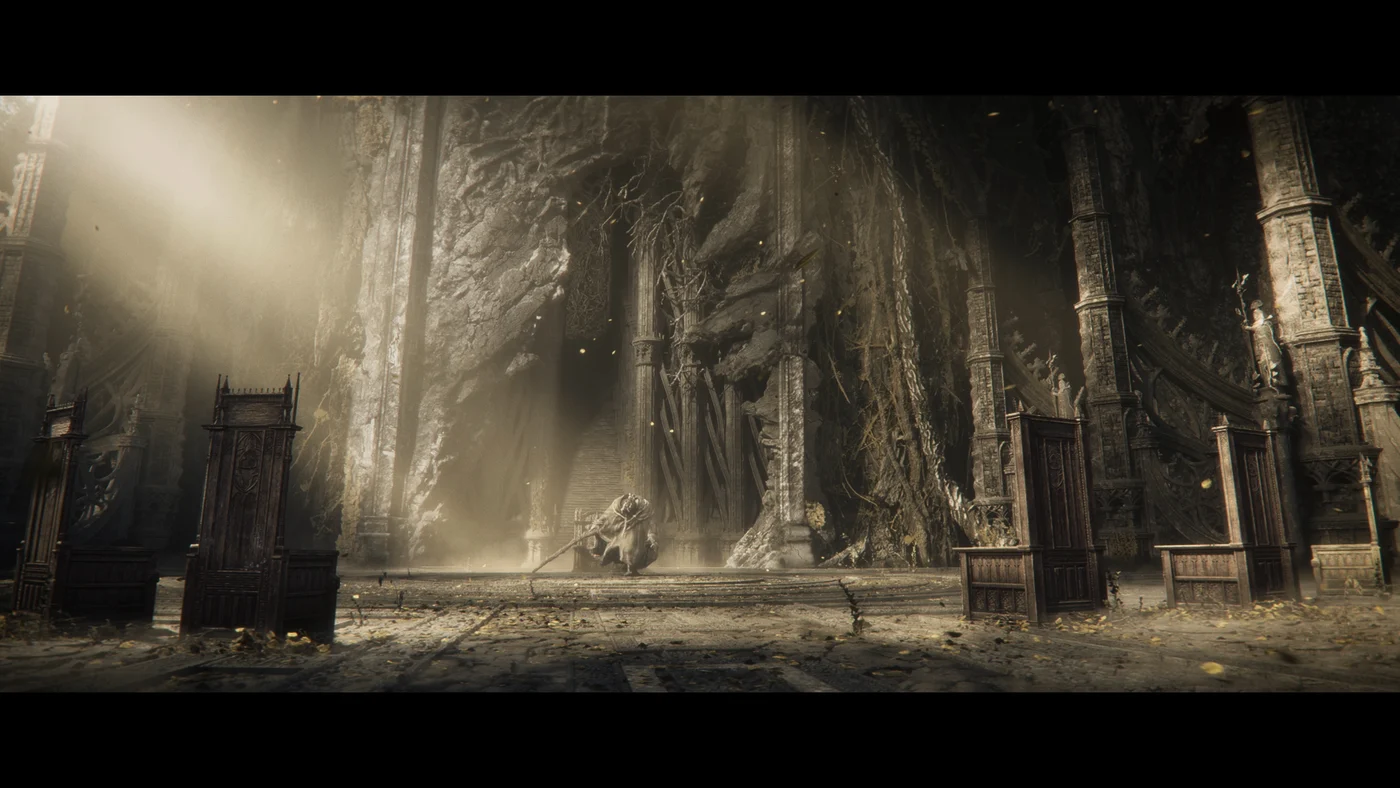 ✦️ EVENT
The Six Endings
What kind of world the Tarnished may forge▾
The Six Endings
The Tarnished's victory over Marika is not a single ending. Take the plain prompt, Mend the Elden Ring, and the crowning hails the new Elden Lord, steward of a fracturing world, and so beginneth the age of fracture. The Goldmask ending, the Age of Order, is sealed with the Mending Rune of Perfect Order, a rune of transcendental ideology which will attempt to perfect the Golden Order. The Fia ending, the Age of the Duskborn, uses the Mending Rune of the Death-Prince, formed of the two hallowbrand half-wheels combined, the brand that scored Godwyn's flesh, so that this new Order will be one of Death restored. The Dung Eater ending, the Blessing of Despair, brandishes the loathsome Mending Rune of the Fell Curse, whose reviled curse will last eternally, and under which the world's children, grandchildren, and every generation hence will be its pustules.
Two more paths turn from gold. The Frenzied Flame ending answers the Three Fingers: the Tarnished inherits the frenzied flame and bears the mark of the Lord of Frenzied Flame, though Melina holds that such a lord is no lord at all, when the land they preside over is lifeless. Ranni offers an order not of gold, but the stars and moon of the chill night, keeping life, souls, and order at a great remove until the certainties of sight, emotion, faith, and touch all become impossibilities; now cometh the age of the stars, a thousand year voyage under the wisdom of the Moon. Several of the endings open on the same refrain: our seed will look back upon us, and recall. The closing narration adds that the fallen leaves tell a story, of how a Tarnished, of no renown, became Elden Lord, and which story it is depends on the rune the Elden Lord brandishes.
Our seed will look back upon us, and recall. An Age of Fracture.
Our seed will look back upon us, and recall. The Age of Order. The Age Absolute.
Now cometh the age of the stars. A thousand year voyage under the wisdom of the Moon.
Lord of Frenzied Flame... I will seek you, as far as you may travel... To deliver you what is yours. Destined Death.
Our seed will look back upon us, and recall. The Age of the Duskborn.
Our seed will look back upon us, and recall. The reviled curse that defined our age. The Blessing of Despair.
◈ LINEAGEThe Carian Royal House
Sorcerer-monarchs of the moon, married into the Erdtree▾
The Carian Royal House
The Carian Royal House held the lake-province of Liurnia, whose western coast 'has always been closely associated with Carian royalty', and it entered the Erdtree's order by marriage: a crossbow was made to celebrate 'the matrimonial union, and reconciliation, between the houses of the Erdtree and the Full Moon, Leyndell and Raya Lucaria'. The royalty itself was Rennala's making, established in her youth, when her lunar magic charmed the academy. Rennala met an enchanting full moon when she was young, and later led a young Ranni by the hand to one 'cold, dark, and veiled in occult mystery'. In Rellana's childhood, Rennala and her younger sister met the overlapping twin moons that became Rellana's sorcery; Rellana would renounce her lineage to chase after Messmer, and Rennala was said to have given her 'a gift of lustrous black hair'. Their craft was glintstone sorcery, whose Carian sword sorceries conjure swords of magic.
The house's head was Rennala, 'head of both the Academy of Raya Lucaria and the Carian royal family', and Radagon's 'first wife'; their children, among them Radahn, 'became demigod stepchildren after Radagon's union with Queen Marika'. When she lost Radagon, 'her heart went along with him', and those at the academy realized 'that Rennala was no champion, after all'; the enchanted knights anointed by the Lunar Queen 'fell into disarray with the decline of the royal family'. Her daughter Ranni gives her own account of what followed: chosen by her Two Fingers as a candidate to succeed Marika, she would not acquiesce, stole a fragment of the Rune of Death, forged 'the godslaying black knives through fearsome rite', and slew her own Empyrean flesh rather than 'be controlled by that thing'. The age of the stars she swears at the end is 'a thousand year voyage under the wisdom of the Moon'.
One of the sorceries of the Carian royal family. Conjures a magic sword and delivers a swift sweeping slash. This sorcery can be used without delay after performing another action. Even among the Carian sword sorceries, this is a notably effective technique.
A talisman adorned with the royal crest. Lowers FP consumed by skills. An honor said to have once been awarded to Carian knights who served as direct retainers to the kingdom's princesses. Now there is only one princess: Ranni, daughter of Rennala.
Remembrance of the Full Moon QueenRemembrance of Rennala, Queen of the Full Moon, hewn into the Erdtree. In her youth, Rennala was a prominent champion who charmed the academy with her lunar magic, becoming its master. She also led the Glintstone Knights and established the house of Caria as royalty.
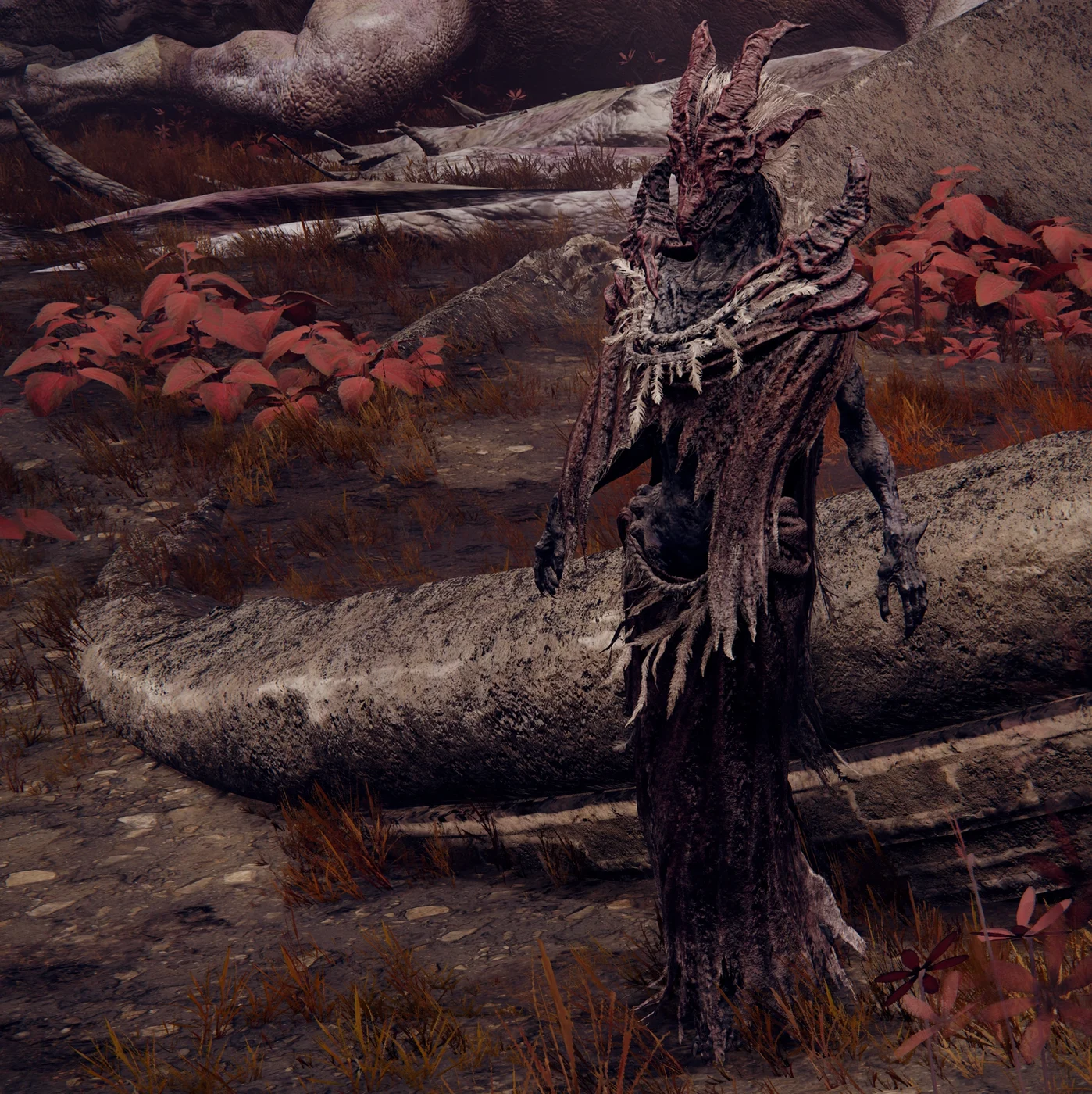 ◈ FAITH
The Dragon Communion
Pre-Erdtree faith of dragon-eaters, perpetuated by the dragon-hearted▾
The Dragon Communion
The Dragon Communion is the faith of those who eat the hearts of dragons to inherit their breath. Older than the Erdtree, it survives at the Dragon Communion altars, where the offering makes a dragon's power one's own; the extraordinary individuals who perpetuate the rite are called the dragon-hearted. The acolyte who consumed a dragon's heart could call down its element: ekzykes' rot, smarag's glintstone, theodorix's magma.
After the Erdtree's reign began, the Communion was outlawed but not destroyed. The Cathedral of Dragon Communion in Caelid still hosts a few priests; the Ancient Dragon-Knights of Farum Azula were the warrior-arm of an even older incarnation, sworn to Dragonlord Placidusax before he was dethroned. Bayle the Dread, whose challenge to Placidusax in a time long past ended in grievous mutual injury, retreated to the Jagged Peak with the surviving ancient dragons; the DLC's Dragon Communion incantations are taken from his blood.
One of the incantations of Dragon Communion. Transforms caster into a wyrm to spew magma breath. Allows one follow-up attack. Those who have performed the Dragon Communion will find their humanity slowly slipping away. Once they fully succumb to their fate, they are left no more than wyrms that crawl the earth.
Remembrance of the DragonlordRemembrance of Dragonlord Placidusax, hewn into the Erdtree.
▣ CONCEPTThe Erdtree
Tree of golden order, body of grace, prison of the queen▾
The Erdtree
The Erdtree is the great golden tree at the heart of the Lands Between, both the source of grace and the gravitational anchor of the Golden Order. Marika established it as the visible body of the Elden Ring: every soul claimed by its grace returns to its roots, every birth in the realm occurs through its sap, every demigod's lineage traces back to Marika at its base. To kill the Erdtree is, literally, to kill the law that makes the world coherent.
Inside the tree lives Marika herself, sealed there in the wake of the Ring's shattering, and at its highest crown the Elden Beast curls around her body like a star wrapped in golden hair. The Erdtree burns long before the throne can be reached: Melina offers herself as kindling at the forge of the flame of ruin, on the Mountaintops of the Giants, and the Giants' Flame, the one blaze said to be capable of burning the Erdtree, sets it alight. Slaying Maliketh at Crumbling Farum Azula to unbind the Rune of Death is a separate condition, the one that later opens the scorched bark to the long climb up to the throne. Even consumed by fire, the tree's outline remains: the Ashen Capital is built into its smoking corpse.
Elden RemembranceRemembrance of the Elden Beast, hewn into the Erdtree. It was the vassal beast of the Greater Will and living incarnation of the concept of Order.
One of the ancient Erdtree incantations. Heals a vast amount of HP for the caster and nearby allies. The Erdtree once flourished with abundance—yet it was only for a fleeting moment. Such is the course of all life.
▣ CONCEPTThe Crucible
Primordial state of life, before the Erdtree pruned its forms▾
The Crucible
The Crucible is what the Erdtree was before Marika and the Greater Will reformed it. It is the primal stew from which life first bloomed in the Lands Between: a state in which every form was permitted, where men had horns and beasts spoke, where flesh and stone and tree mingled without distinction. The Crucible Knights, the surviving order who fought beside Godfrey, still wear armor shaped to their old half-monstrous bodies; their weapons emit the Crucible's tail-flick or horn-charge as Aspects, fragments of the older self the Erdtree's grace tried to subtract.
Marika's Golden Order outlawed the Crucible's mixing. The Misbegotten, the Omens, the Albinaurics, every kind whose body retains the Crucible's older lattice, were declared imperfect and either enslaved, locked away, or hunted. The hornsent of the Realm of Shadow worshipped a horned god of the Crucible whose name no Erdtree priest will speak. To find an Aspect of the Crucible incantation is to glimpse what life looked like before grace decided what life ought to be.
Aspects of the Crucible: TailOne of the ancient Erdtree incantations. Creates a supple tail that sweeps through foes before the caster. This is a manifestation of the Erdtree's primal vital energies—an aspect of the primordial crucible, where all life was once blended together.
Aspects of the Crucible: HornsOne of the ancient Erdtree incantations. Creates a mighty horn on the caster's shoulder to gore foes from a low stance. This is a manifestation of the Erdtree's primal vital energies—an aspect of the primordial crucible, where all life was once blended together.
▣ CONCEPTTwo Fingers vs Three Fingers
Twin emissaries of the Greater Will and its abandoned shadow▾
Two Fingers vs Three Fingers
Metyr is named 'the mother of all Two Fingers and Fingercreepers' ; of the Three Fingers' origin the game says nothing. The Two Fingers were the Greater Will's chosen messengers: pale, finger-shaped beings housed in chapels across the Lands Between, whose words are interpreted by a Finger Reader, Enia, who introduces herself with 'I am Enia, the Finger Reader. I interpret the words of the Two Fingers'. The churches outside the Lands Between, dedicated to their teachings, send confessors out to follow their guidance.
The Three Fingers are their opposite. Mottled red, twitching, sealed beneath the Subterranean Shunning-Grounds of Leyndell, they preach the doctrine of total ending: that all life is suffering, that the only mercy is to burn the world clean. Where they are held, a merchant's note says plainly: 'Beneath Leyndell, at the very bottom lies our lord, lord of the frenzied. The Three Fingers who holds us in thrall.' Why, the game does not say. Hyetta, Shabriri, and Midra are the most visible champions of the Three Fingers' offer; each found a different way to fail or to succeed at carrying their flame.
A medallion with cerulean amber inlaid. Boosts maximum FP. The Erdtree's old sap becomes amber, treasured as the most precious of jewels in the age of Godfrey, the first Elden Lord. A primordial life energy resides inside.
Ruin Fragment blessed with an incantation of the Three Fingers. Uses FP to generate warmth, continuously restoring the HP of those who host the frenzied flame. Confers madness upon those who have not adopted the flame. Take care not to mistake this for its gentler cousin.
▣ CONCEPTThe Outer Gods
Constellation of unwanted deities, beyond the Greater Will▾
The Outer Gods
The Outer Gods are the cosmic powers that exist beyond the Greater Will's chosen Order. Each is a being whose worship is forbidden or punishable in the Lands Between, and yet each finds its champion. The Outer God of Rot, whom the game never names, lives in Malenia's body and in the Lake of Rot. The Formless Mother, the god of blood worshipped by the Mohgwyn dynasty, drinks from every wound. The Three Fingers, the maddened opposite of the Two Fingers, demand the world's burning. The Frenzied Flame, their gift, is yellow and ends all suffering by ending all things.
Other Outer presences lurk in the seams of canon: the God-Devouring Serpent that consumed Rykard; the Star God that sent Astel and Radahn's gravity; the Death-bird god of the Snowfield's old burial rites; the Black Knives' patron, whose name was struck from every Numen scripture. Each is a rival to the Erdtree, and each has at least one shrine in the Lands Between where a Tarnished may bend a knee, or refuse to.
Sacred incantation of Mohg, Lord of Blood. The mother of truth craves wounds. When Mohg stood before her, deep underground, his accursed blood erupted with fire, and he was besotted with the defilement that he was born into.
One of the incantations of Dragon Communion. Transforms caster into a dragon to spew scarlet rot breath. Charging extends duration. Those extraordinary individuals who perpetuate Dragon Communion are called the dragon-hearted.
◈ EMPYREANRanni's Doll
Empyrean flesh discarded, soul lodged in porcelain▾
Ranni's Doll
"Cursemark carved into the discarded flesh of Ranni the Witch. Also known as the half-wheel wound of the centipede. This cursemark was carved at the moment of Death of the first demigod, and should have taken the shape of a circle. However, two demigods perished at the same time, breaking the cursemark into two half-wheels. Ranni was the first of the demigods whose flesh perished, while the Prince of Death perished in soul alone."
From the Cursemark of Death description
Ranni's Doll is the body Ranni uses after she rejected her Empyrean flesh. To steal a fragment of the Rune of Death, she had to slay the body she was born into; the Two Fingers' cursemark was carved on that flesh, and as long as it lived they could find her. So she killed it, hid the corpse in the Cathedral of Manus Celes, at the Moonlight Altar, and poured what remained of her soul into a porcelain doll she had kept since she was small. The doll is said to be modelled after the snowy crone the young Ranni encountered deep in the woods, the witch who became her secret mentor; it is her guise that Ranni borrows in presenting herself as the witch Renna at the Church of Elleh.
The doll's body has costs. It cannot eat, age, or dream the way Empyrean flesh dreams. Ranni sleeps for long stretches inside Ranni's Rise, indistinguishable from a children's toy on a chair, and only the Tarnished's intrusion wakes her. Seluvis, the puppet-master, schemes to slip Ranni herself into one of his dolls during her quest; the canon records only the scheme and its author's end, his bell bearing found upon his perished flesh. When the Age of Stars dawns at Ranni's coronation, she does not return to a body. The doll-shape becomes the form of the new god, setting out on a thousand year voyage under the wisdom of the Moon.
A pleasure to meet thee, Tarnished. I am the witch Renna. I'd heard tell of a Tarnished hurtling about atop a spectral steed.
Indeed, I am the witch Ranni. I stole a fragment of the Rune of Death, and used it to forge the godslaying black knives. I have slain the body I was born into, and cast it away.
Witch's robe in the color of snow. Once worn by the snowy crone who the young Ranni encountered deep in the woods. She was a witch, and well versed in cold sorceries. It is said that the doll that houses Ranni's soul was modeled after her. That old witch was Ranni's secret mentor.
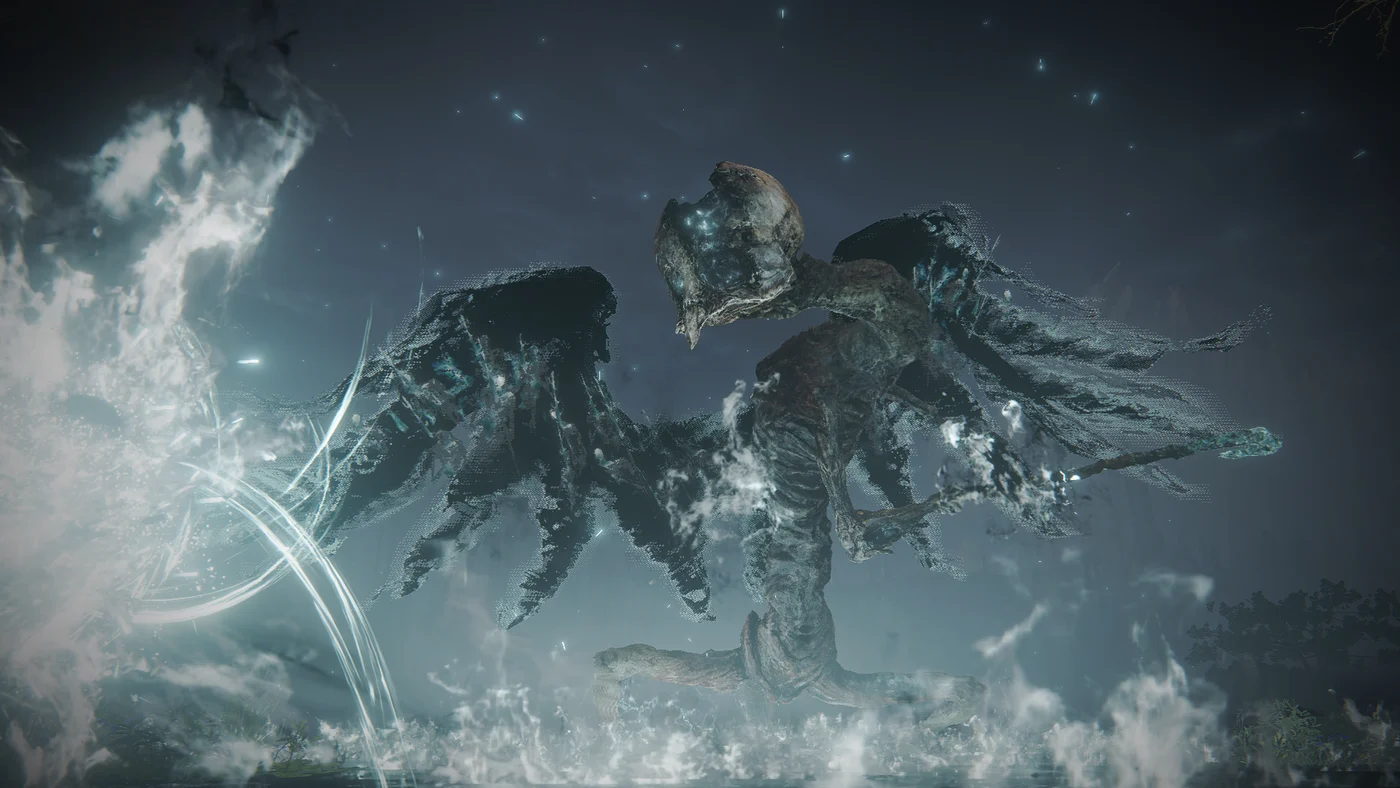 ◈ ORDER
The Deathbirds
Keepers of ghostflame, servants of Death▾
The Deathbirds
In the time when there was no Erdtree, death was burned in ghostflame, and the Deathbirds were the keepers of that fire. Death's Poker, a barbed rod carried by them, names them graveyard fire keepers: it is said they rake out the ashen remains of the dead from their kilns. Those ashes do not lie still. Ancient Death Rancor, a sorcery of the servants of Death, sends out vengeful spirits that are cinders of the ancient death hex, raked from the fires of ghostflame by Deathbirds. Priests of old were permitted to come among the birds, and the Death Ritual Spear is precise about which way that bond runs: it is the priests who became guardians of the birds, through the rite of Death, which also serves as an oath sworn to their distant resurrection.
The Sacrificial Axe, a hatchet from an ancient sacrificial rite, depicts a Deathbird as a malevolent deity and holds that the power of the rite yet lingers, while the Twinbird Kite Shield makes the twinbird the envoy of an outer god, and mother of the Deathbirds. Around that figure gathers a traffic in imitation. The assassins of Ravenmount are killers by trade who assail their victims dressed as birds of prey: their Raptor Talons let them imitate the attacks of Deathbirds, their black-feathered robe is a ritual implement for transforming into a Deathbird, if only by imitation, and their Skeletal Mask digs into the face to preserve human instincts under the disguise. The headless Mausoleum Knights wear wing-shaped ornaments that evoke the Deathbird, and legend holds that the Gravebirds, golems created to guard the spiritgraves, were crafted to be kindred to them. The Death Rite Birds carry the name; the game does not say what joins them to the older birds.
Barbed rod carried by Deathbirds. The birds are graveyard fire keepers; it is said they rake out the ashen remains of the dead from their kilns.
Ritual spear used by priests of old who were permitted to come among the Deathbirds. The priests became guardians of the birds through the rite of Death, which also serves as an oath sworn to their distant resurrection.
Sorcery of the servants of Death. In the time when there was no Erdtree, death was burned in ghostflame. Deathbirds were the keepers of that fire.
Shield featuring a vividly painted twinbird. The twinbird is said to be the envoy of an outer god, and mother of the Deathbirds.
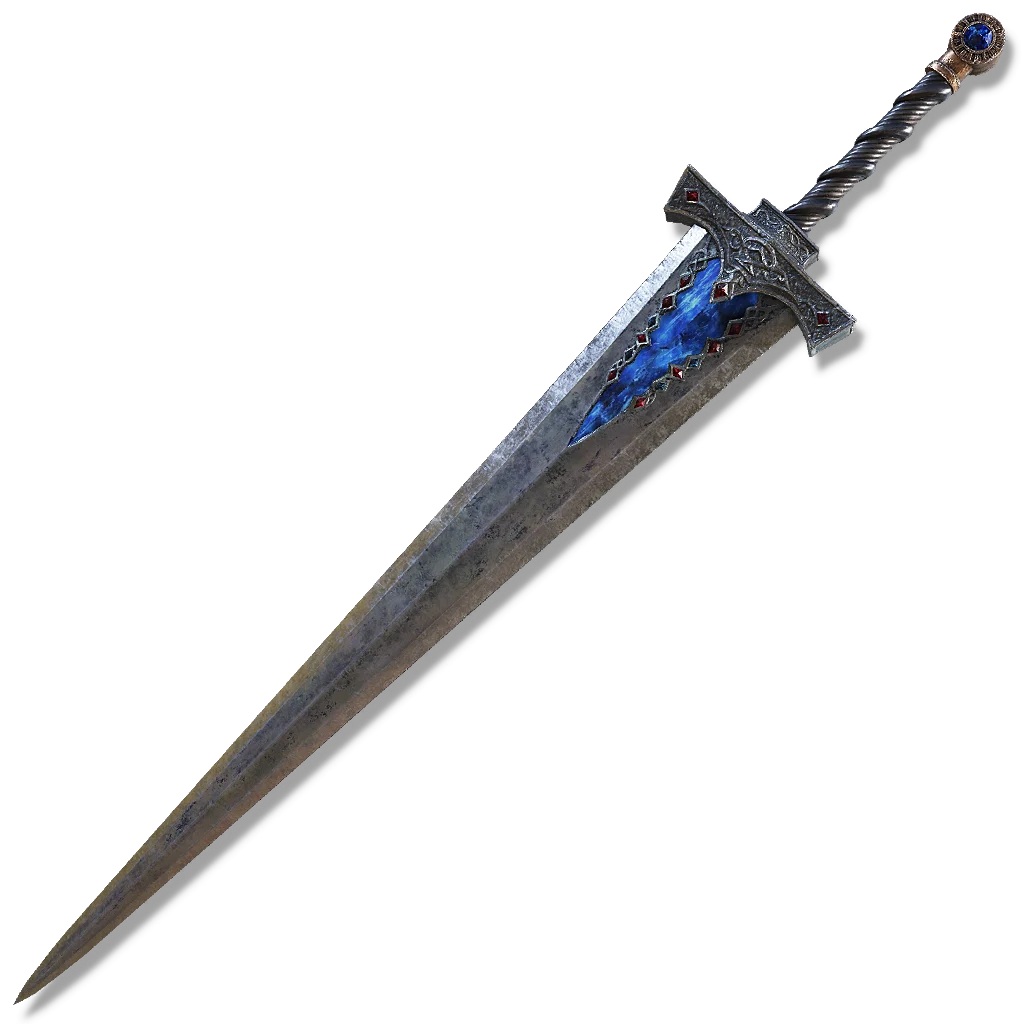 ◈ ORDER
The Carian Knights
Sword-sorcerers of the Lunar Queen, fewer than twenty in their prime▾
The Carian Knights
The Carian Knights are the sworn order of the Carian Royal House, anointed by the Lunar Queen and quartered around Caria Manor and Liurnia's lakeshore. What set them apart from the Erdtree's chivalry is that their swords were also catalysts. A blue glintstone is set into each Carian Knight's blade, allowing the bearer to cast Carian sorceries through the act of striking: a slash that conjures a magic greatsword, a charge that lengthens the initial step into an impaling thrust, a stance that dispels an incoming sorcery and retaliates with glintblades. These were the Carian royal family's secret means to prepare against the disloyalty of the academy. Despite numbering fewer than twenty in their prime, this gave them parity in the field with the Erdtree's golden champions.
After the Carian-Erdtree marriage and the long decline that followed, the order fractured. Some, like Moongrum, who still patrols Raya Lucaria, became tomb-keepers of a school no longer theirs. Loretta, once a royal Carian knight, went on a journey in search of a haven for Albinaurics, and determined that the Haligtree was their best chance for eventual salvation. Of the order as a whole the game says only this: the enchanted knights, anointed by the Lunar Queen, were all heroes of the highest honors, but fell into disarray with the decline of the royal family. The Miquellan Knight's Sword, made for the Haligtree's order in deliberate imitation of theirs, has never been offered to any knight: an ill-starred sword with no master, the canon's quietest tribute to the order that fell with Caria.
Straight sword embedded with a blue glintstone. Weapon of knights sworn to Carian royalty. These knights' swords could serve as catalysts, letting them wield sorcerous battle skills. Despite numbering fewer than twenty, this power made them a match for even the champions of gold in battle.
Armor of the enchanted knights that once served the Carian royal family. The enchanted knights, anointed by the Lunar Queen, were all heroes of the highest honors, but fell into disarray with the decline of the royal family.
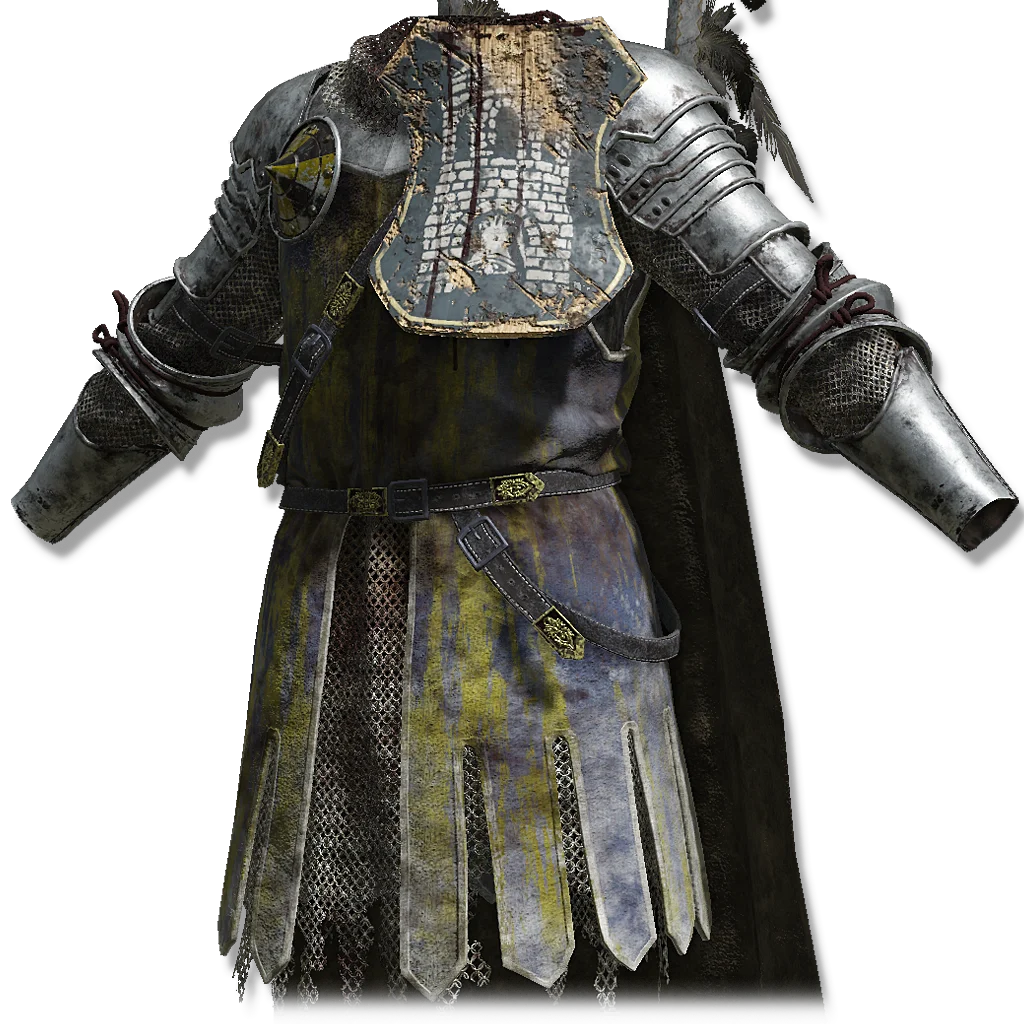 ◈ ORDER
The Mausoleum Knights
Headless guardians of the Wandering Mausoleums, sworn into death▾
The Mausoleum Knights
The Mausoleum Knights endlessly guard the Wandering Mausoleums, the great tombs that prowl the Lands Between. The mausoleum is itself the resting place: the Mausoleum Soldier Ashes call it 'where the bodies of soulless demigods are lain to rest', the Eclipse Crest Heater Shield names 'the Wandering Mausoleum where the soulless demigods slumber', and a line of in-game dialogue is blunter still: 'The mausoleum prowls. Cradling the soulless demigod.' The knights' condition is their own doing. The Mausoleum Knight Armor states it plainly: 'a self-inflicted curse that ties the spirits of these loyal knights to the land, having willingly beheaded themselves so that they may serve their masters in death.' The foot soldiers 'followed their masters into Death by severing their own heads from their bodies', and the Bloodsoaked Tabard carries the mark: padded cloth 'with indelible bloodstains around the neck'.
On their backs are wing-shaped ornaments that, in the Mausoleum Knight Armor's wording, 'evoke the Deathbird'. Those birds belong to a time before the Erdtree: 'in the time when there was no Erdtree, death was burned in ghostflame. Deathbirds were the keepers of that fire.' On their shields, the Eclipse Crest is given a stated function: the eclipsed sun, 'drained of color, is the protective star of soulless demigods. It aids the mausoleum knights by keeping Destined Death at bay.' Those they guard sleep within, and it is there that a remembrance may be duplicated, 'once per mausoleum'. The Mausoleum Surcoat gives the vigil its sound, depicting 'the mausoleum bell, which rings in constant mourning for the soulless demigods'. And Lhutel the Headless, who leads the mausoleum soldiers, 'sacrificed her life so that in Death she could continue to protect a soulless demigod until their revival, earning her the hero's honor of Erdtree Burial'.
Armor worn by headless knights who endlessly guard the Wandering Mausoleum. The wing-shaped ornaments on its back evoke the Deathbird. A self-inflicted curse that ties the spirits of these loyal knights to the land, having willingly beheaded themselves so that they may serve their masters in death.
Metal greatshield painted with a sun in eclipse. Carried by the headless mausoleum knights. The eclipsed sun, drained of color, is the protective star of soulless demigods. It aids the mausoleum knights by keeping Destined Death at bay.
Spectral Lance: Skill of the headless Mausoleum Knights. Hurl a phantasmic spear at foes.
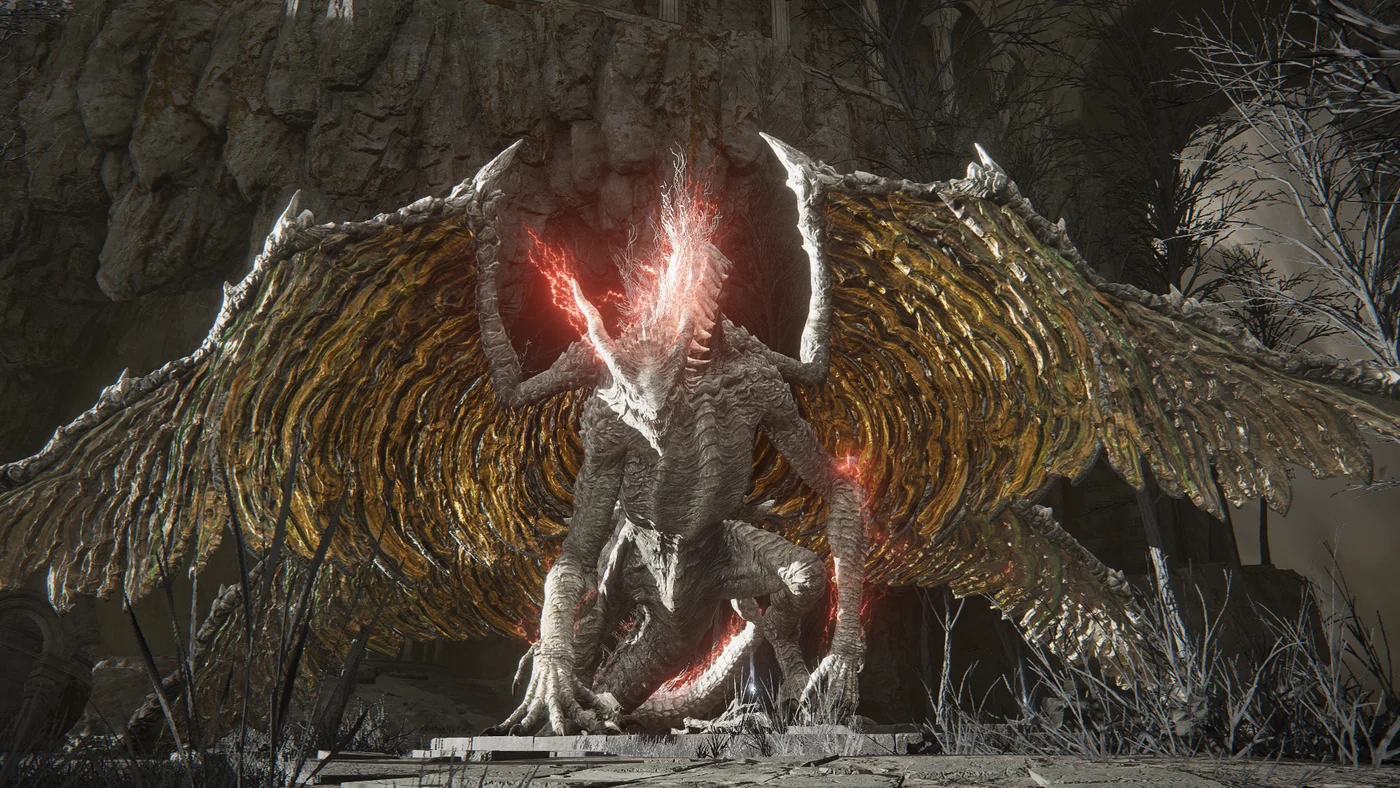 ✦️ EVENT
Gransax's Attack on the Capital
The only time in record that Leyndell's walls have fallen▾
Gransax's Attack on the Capital
Gransax was a great ancient dragon whose assault on the Royal Capital marked the dawn of the war against the ancient dragons. The Bolt of Gransax flavour text records the singular distinction his attack carries: 'A great ancient dragon, Gransax once rained calamity upon the Royal Capital, the only time in historical record that Leyndell's walls have fallen. This marked the dawn of the war against the ancient dragons.' His spear, fossilised mid-air over the Capital's ramparts, the Tarnished can still see today: a giant petrified bolt taller than the city's towers, embedded in the stone where it landed.
What followed Gransax's attack reshaped the Erdtree's defenders. The Malformed Dragon Armor description preserves the response: 'After the great ancient dragon Gransax attacked, the sentinels had an epiphany. The only way to truly protect the Erdtree was to become dragons themselves.' The misshapen Tree Sentinels, twisted, golden-armoured, dragon-imagery-clad, are the result. They still patrol the Capital's outskirts, half-dragon themselves, an order forged in the wake of an attack only one dragon ever managed to land. Gransax's attack was ultimately repelled, but the war he opened didn't end: it eventually concluded with Godwyn the Golden befriending the dragon Fortissax, founding the Capital's later Ancient Dragon Cult on a treaty with the survivors.
 Bolt of Gransax
Spear whittled from the weapon wielded by Gransax. One of the legendary armaments. A great ancient dragon, Gransax once rained calamity upon the Royal Capital—the only time in historical record that Leyndell's walls have fallen. This marked the dawn of the war against the ancient dragons.
Malformed golden armor. Adorned with various dragon imagery and worn by the misshapen Tree Sentinels. After the great ancient dragon Gransax attacked, the sentinels had an epiphany. The only way to truly protect the Erdtree was to become dragons themselves.
◈ ENTITYThe Haligtree, Failed Erdtree
Miquella's sapling, watered with his own blood, refused to grow▾
The Haligtree, Failed Erdtree
The Haligtree is Miquella's parallel project, an attempt to grow a second Erdtree, free of Marika's order, away from the Greater Will's gaze, where every outcast the Erdtree's grace had spurned could find sanctuary. Miquella planted it in the frozen heights at the world's northern edge, beyond the Consecrated Snowfield. The Haligtree Crest Surcoat description records the price he paid: 'The surcoat bears the crest of the Haligtree. Though watered with Miquella's own blood since it was a sapling, the Haligtree ultimately failed to grow into an Erdtree.' Miquella bled into its roots from his earliest years, yet it never grew into a true Erdtree.
Its fall is the canon's quietest tragedy. When Mohg invaded, the Mohgwyn Dynasty's kidnapping of Miquella from the Haligtree's heart, the tree's protectors were Malenia and her Cleanrot Knights. Malenia's Scarlet Rot bloom eventually infected the Haligtree itself. The Haligtree Soldier Ashes preserves the soldiers' final commitment: 'Spirits of common soldiers who carry the sacred light. When weakened, they explode to deliver a last-ditch attack. This was the bitter revelation discovered by the desperate soldiers who awaited the return of their lord to the rotted Haligtree. May the flash of our deaths guide Miquella's return.' The soldiers blow themselves up to mark Miquella's path back. Miquella never came. The Tarnished, climbing through Elphael at the Haligtree's roots, walks past the bombs that were lit for someone else's homecoming.
Armor worn by soldiers sworn to the Haligtree. The surcoat bears the crest of the Haligtree. Though watered with Miquella's own blood since it was a sapling, the Haligtree ultimately failed to grow into an Erdtree.
Spirits of common soldiers who carry the sacred light. When weakened, they explode to deliver a last-ditch attack. This was the bitter revelation discovered by the desperate soldiers who awaited the return of their lord to the rotted Haligtree. May the flash of our deaths guide Miquella's return.
Cleanrot SpearSpear of the Cleanrot Knights who fought alongside Malenia, Blade of Miquella. The winged golden blade deals holy damage. The diminutive shield is blessed with an incantation that wards off rot.
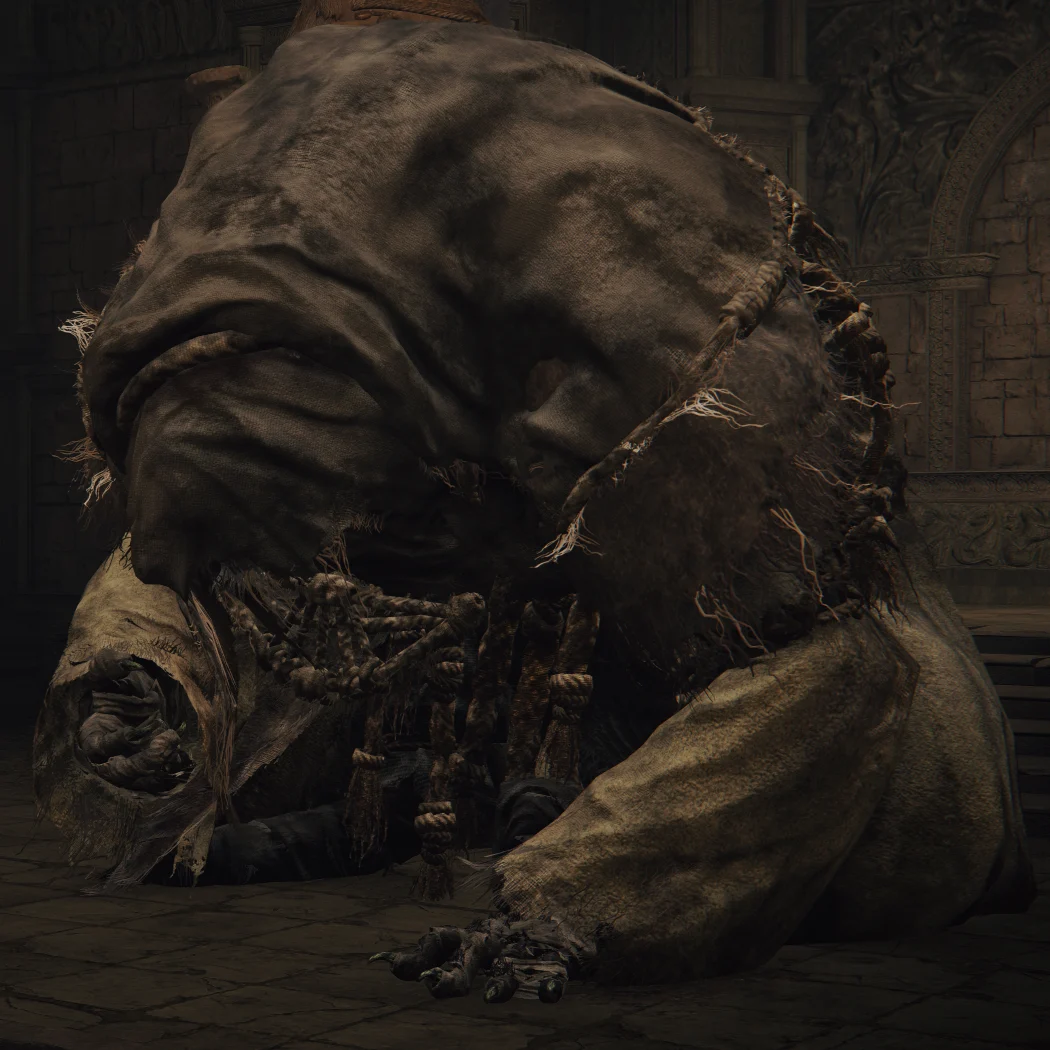 ◈ NPC
◈ NPCGurranq, Beast Clergyman
Maliketh, the Black Blade, at the Bestial Sanctum▾
Gurranq, Beast Clergyman
Gurranq, Beast Clergyman, is the figure the Tarnished meets at the Bestial Sanctum on the Dragonbarrow plateau in Caelid, a wolf-formed priest who teaches bestial incantations in exchange for the Deathroot the hunter D harvests across the Lands Between. The Stone of Gurranq incantation gives the canon's most explicit identification: 'Long ago, Gurranq was a beast of such terrifying ferocity that his former name meant Death of the Demigods.' Gurranq is, in other words, Maliketh himself, the Black Blade, Marika's loyal half-brother who bore a blade imbued with Destined Death that every demigod feared.
His present situation is a hunger he cannot satisfy. The Beast Eye, the relic he gives the Tarnished, preserves his litany: 'It is said to tremble when near Deathroot. The murky violet iris writhes as if alive. "I am not sated... Feed me more... Death..."' Gurranq feeds on Deathroot, the corpse-bloom that grew through the Erdtree's underground network after Godwyn's body was struck on the Night of the Plot. Each Deathroot the Tarnished delivers calms him for a few exchanges, then the hunger returns. The Bestial Sling and Stone of Gurranq he teaches are, the Sling text states, 'in the time before the Erdtree, stones were the first weapons of the beasts who had gained intelligence', instructions from an order older than the Greater Will, surviving inside Marika's own shadowbound executioner.
Claw-marked stone eye received from Gurranq, Beast Clergyman. It is said to tremble when near Deathroot. The murky violet iris writhes as if alive. 'I am not sated... Feed me more...Death...'
Superior incantation taught by Gurranq, the Beast Clergyman. Long ago, Gurranq was a beast of such terrifying ferocity that his former name meant 'Death of the Demigods.'
Incantation taught by Gurranq, the Beast Clergyman. It is said that in the time before the Erdtree, stones were the first weapons of the beasts who had gained intelligence.
—️ LOCATIONSellia, Town of Sorcery
Caelid's hidden glintstone academy, home of assassin-sorcerers▾
Sellia, Town of Sorcery
Sellia, Town of Sorcery, is the second great glintstone-sorcery centre in the Lands Between, smaller than the academy at Raya Lucaria, hidden in the rotted hills of eastern Caelid behind a torch-puzzle gate. Its name survives only in the items its sorcerers produced. The Ambush Shard sorcery flavour text gives the town's character with one line: 'One of the night sorceries of Sellia, Town of Sorcery. Launches a projectile from a distance removed from the caster, so as to strike the enemy from behind. The Sellian sorcerers were assassins, and it is said that they often hunted their fellows.' Sellia's specialty is sorcery as covert assassination, what the academy at Raya Lucaria taught as theory, Sellia practised as profession.
Two of its most famous sorcerers are still living. Sorceress Sellen, the heretic the Tarnished meets in the Waypoint Ruins, was expelled from the academy at Raya Lucaria; her quest is to undo Lusat's seal at Sellia. Primeval current sorcerer Lusat himself was sealed by his own town, behind the seal the Sealbreaker key opens. The Eternal Darkness sorcery the town hoarded comes from a still-older origin: 'Forbidden sorcery of Sellia, Town of Sorcery. Creates a space of darkness that draws in sorceries and incantations. … Originally a lost sorcery of the Eternal City; the despair that brought about its ruin made manifest.' Sellia's deepest crafts are inherited from Nokron and Nokstella before they fell, the assassin-school's true ancestor is the Eternal City itself.
One of the night sorceries of Sellia, Town of Sorcery. Launches a projectile from a distance removed from the caster, so as to strike the enemy from behind. The Sellian sorcerers were assassins, and it is said that they often hunted their fellows.
Forbidden sorcery of Sellia, Town of Sorcery. Creates a space of darkness that draws in sorceries and incantations. Originally a lost sorcery of the Eternal City; the despair that brought about its ruin made manifest.
Sellian SealbreakerGlintstone key received from the sorceress Sellen. Capable of breaking the seal that keeps Master Lusat confined. Sellia, Town of Sorcery can be found in Caelid.
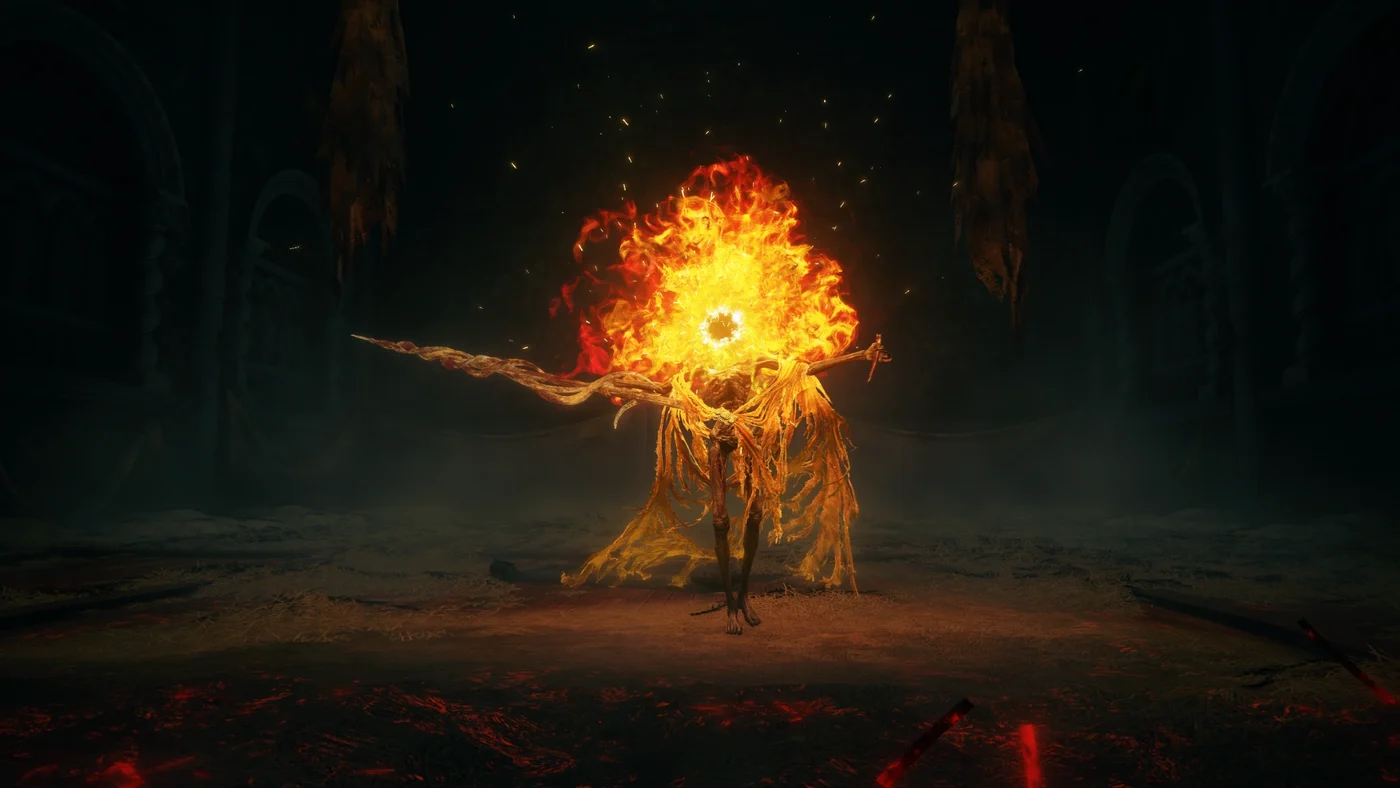 ✦️ EVENT
The Lord of Frenzied Flame Ending
The world burned clean, Melina's vow against the new Lord▾
The Lord of Frenzied Flame Ending
The Lord of Frenzied Flame Ending is the Tarnished's option of a sixth ending, the only ending in which the world is destroyed rather than rearranged. Reaching it requires the Tarnished to descend into the Subterranean Shunning-Grounds, find the chamber behind the Cathedral of the Forsaken's altar, strip naked, and accept the Three Fingers' grasp; the yellow flame ignites within the palm, and the Tarnished's entire body is set afire. After defeating the Elden Beast at the Erdtree, the Tarnished does not crown a new order, they crown a new ending of all orders.
The canon's only direct quotation of this ending is Melina's, spoken to the Tarnished after the cursemark is taken. The Ending, Lord of Frenzied Flame entry preserves it: 'Lord of Frenzied Flame... I will seek you, as far as you may travel... To deliver you what is yours. Destined Death.' Melina, who was the Kindling Maiden walking with the Tarnished to set the Erdtree alight, becomes the canon's only declared assassin of a Lord of the Lands Between. Her vow is the canon's quietest and largest stake: she will hunt the Tarnished across worlds to deliver the only thing that can finally end the yellow flame, Destined Death itself, the Rune Marika and Maliketh sealed away. The Frenzied Flame ending is, in other words, no suicide pact between Lord and Maiden but its rupture: the Maiden refuses the flame, ends their accord, and turns from companion into the Lord's sworn executioner.
Lord of Frenzied Flame... I will seek you, as far as you may travel... To deliver you what is yours. Destined Death.
Note written by a nomadic merchant succinctly detailing knowledge acquired. 'Beneath Leyndell, at the very bottom lies our lord, lord of the frenzied. The Three Fingers who holds us in thrall.'
Formless sacred seal bestowed by the maiden of the Three Fingers. Enhances incantations of the frenzied flame. This seal is the mark of the Lord of Frenzied Flame.
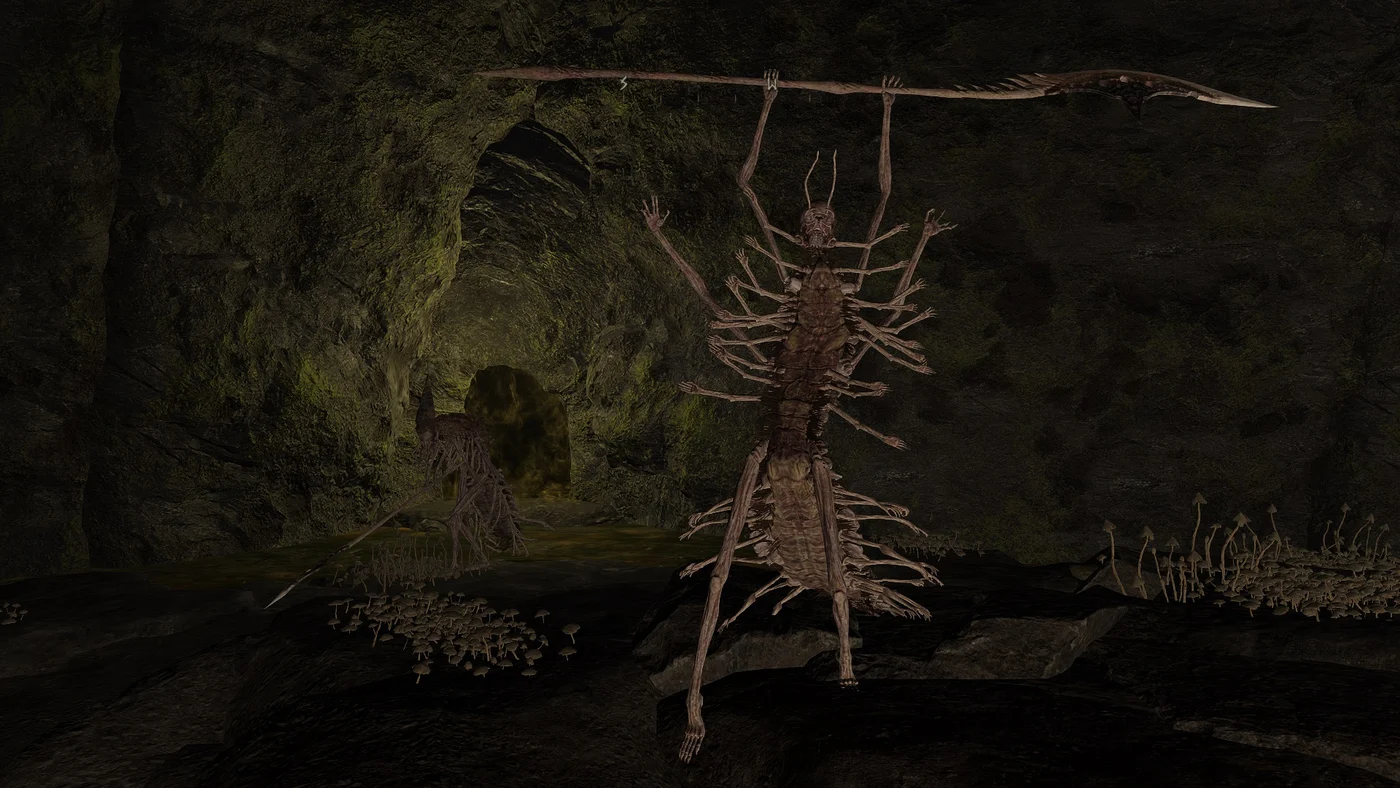 ◈ ENTITY
The Kindred of Rot
Pest-servants of the Goddess of Rot, mothered by Romina▾
The Kindred of Rot
"Incantation of the servants of rot. Secretes countless sticky threads, launching them forwards. A technique of the pale pests who crawl through the lands afflicted by scarlet rot; the abandoned children of the goddess. \"Do you have an interest in rot incantations?\""
From the Pest Threads incantation description
The Kindred of Rot are the carapaced pest-servants of the Outer God of Rot, chitinous crawling creatures whose bodies secrete sticky scarlet threads, and whose dim minds are arranged around a single devotional duty. The Kindred of Rot Ashes flavour text gives the species' canonical introduction: 'Use to summon a spirit of the Kindred of Rot. This spirit takes the form of a crawling pest, its chitinous body making a dry rustling sound. Attacks enemies by secreting sticky threads. The Kindred of Rot are the servants of the Goddess of Rot, servants that have been forsaken.' The forsaking is what defines them: Malenia, the Goddess of Rot's host, never claimed the pests as her own. They were left without a master.
Their devotional litany is the Kindred of Rot's Exultation talisman, 'Rot for the scarlet goddess. O scarlet blossoms, flourish in distant lands, and return to us, the unwanted children.' That the pests refer to themselves as 'unwanted children' is the canon's strongest statement of their abandonment. In the Realm of Shadow, the Pest-Thread Spears incantation explains how Romina, Saint of the Bud, gave them what Malenia never did: 'The pests are abandoned servants, and it is for this reason that they found a mother in the Saint of the Bud.' Romina's church at the Rauh ruins becomes the Kindred's adopted home; the Saint herself, the new mother. When Romina dies, the pests are left motherless once more.
Use to summon a spirit of the Kindred of Rot. This spirit takes the form of a crawling pest, its chitinous body making a dry rustling sound. The Kindred of Rot are the servants of the Goddess of Rot—servants that have been forsaken.
A talisman depicting the exultation of pests. Raises attack power when poisoning or rot occurs in the vicinity. 'Rot for the scarlet goddess. O scarlet blossoms, flourish in distant lands, and return to us, the unwanted children.'
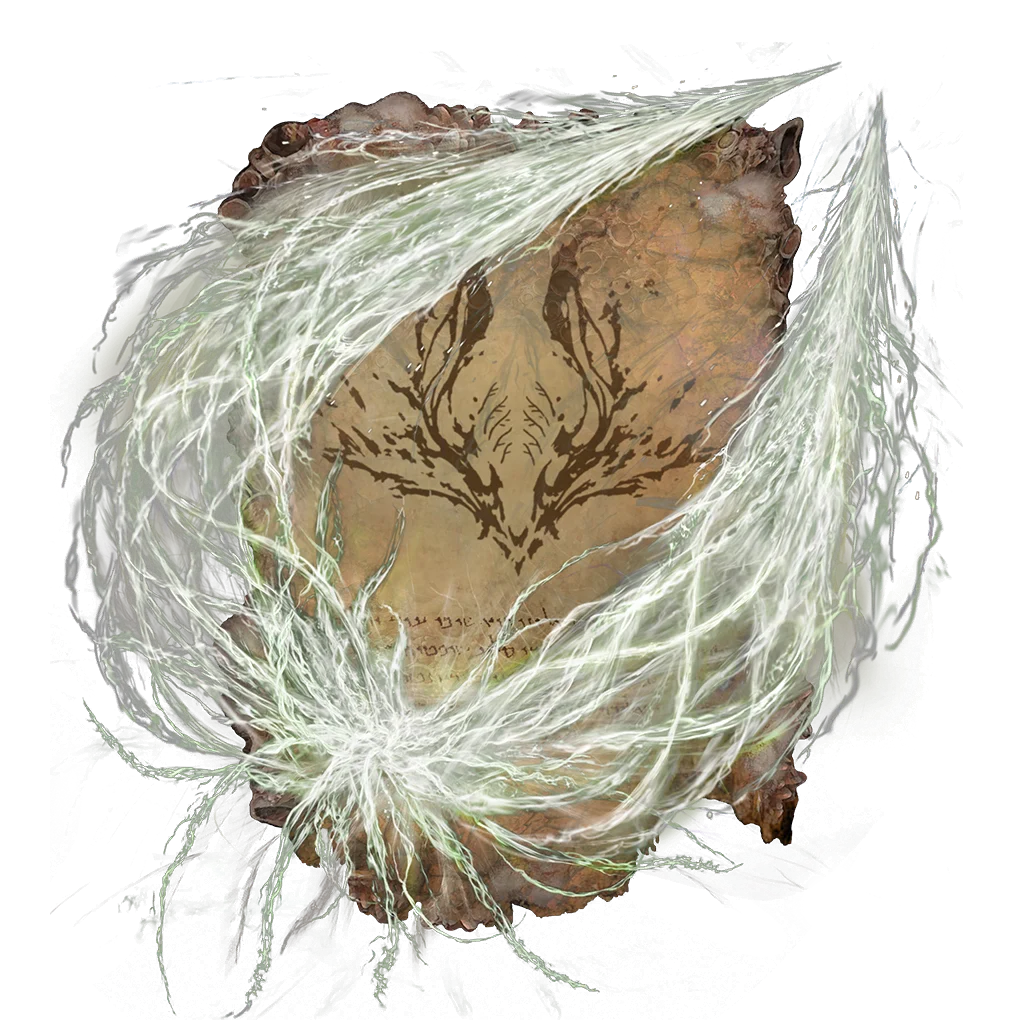 Pest-Thread Spears
Skill of the pests known as the Kindred of Rot, now wielded as an incantation. The pests are abandoned servants, and it is for this reason that they found a mother in the Saint of the Bud.
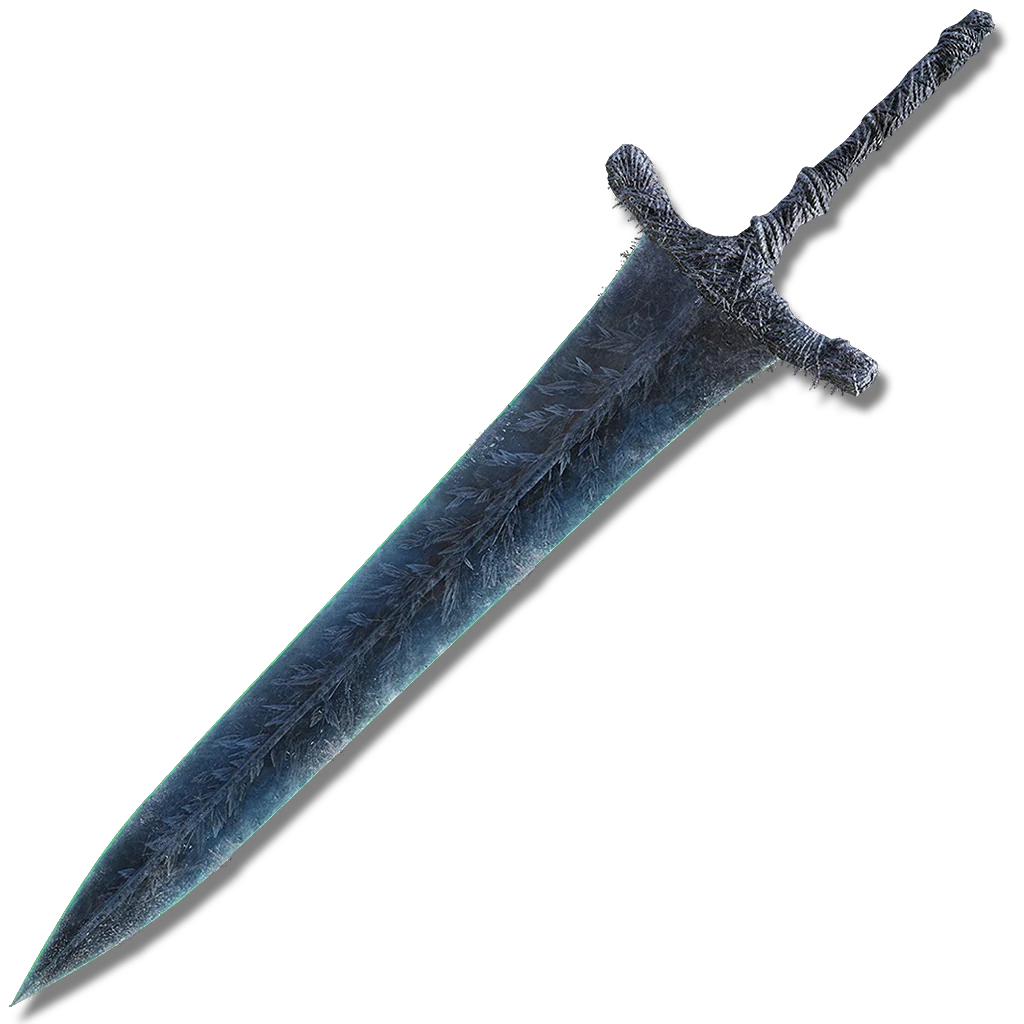 ▣ ARTIFACT
The Legendary Armaments
Nine weapons of canonised history, each a story coded into steel▾
The Legendary Armaments
"Storied sword of House Marais, the family of executioners who presided over the Shaded Castle. One of the legendary armaments. Elemer of the Briar, the Bell Bearing Hunter, snatched the sword from the site of his looming execution, and furnished it with battle skills from his home of Eochaid."
From the Marais Executioner's Sword description
The Lands Between recognises a small, curated set of weapons as 'legendary armaments', each an artefact whose flavour text is also a chapter of canon. They are not, mechanically, the strongest weapons in the realm. They are the weapons the game chose to hang a history on. The Bolt of Gransax records 'a great ancient dragon, Gransax once rained calamity upon the Royal Capital, the only time in historical record that Leyndell's walls have fallen.' The Dark Moon Greatsword preserves the Carian queens' wedding-rite: 'A Moon Greatsword, bestowed by a Carian queen upon her spouse to honor long-standing tradition. Ranni's sigil is a full moon, cold and leaden, and this sword is but a beam of its light.'
Three of them encode whole personal arcs. The Grafted Blade Greatsword from Castle Morne, 'A revenger's weapon, it is burdened with oceans of anger and regret', belongs to Castle Morne's revenger. The Devourer's Scepter is Rykard's pre-cognition: 'Scepter in the shape of a serpent devouring the world. … A vision of the future briefly seen by Rykard in his final moments before being devoured by the great serpent.' The Marais Executioner's Sword is Maleigh Marais's family heirloom, stolen by Elemer of the Briar from his own near-execution. The Golden Order Greatsword is the canon's quietest sentimental object, 'forged by King Consort Radagon to proudly symbolize the tenets of the Golden Order. … Telltale signs betray that this was once the greatsword bequeathed to him by his first wife, Rennala.' Radagon, after divorcing Rennala for Marika, kept the sword.
Bolt of GransaxSpear whittled from the weapon wielded by Gransax. One of the legendary armaments. A great ancient dragon, Gransax once rained calamity upon the Royal Capital—the only time in historical record that Leyndell's walls have fallen.
A Moon Greatsword, bestowed by a Carian queen upon her spouse to honor long-standing tradition. One of the legendary armaments. Ranni's sigil is a full moon, cold and leaden, and this sword is but a beam of its light.
Greatsword made of light, modeled after the Elden Ring itself. Forged by King Consort Radagon to proudly symbolize the tenets of the Golden Order. Telltale signs betray that this was once the greatsword bequeathed to him by his first wife, Rennala.
Scepter in the shape of a serpent devouring the world. A vision of the future briefly seen by Rykard in his final moments before being devoured by the great serpent.
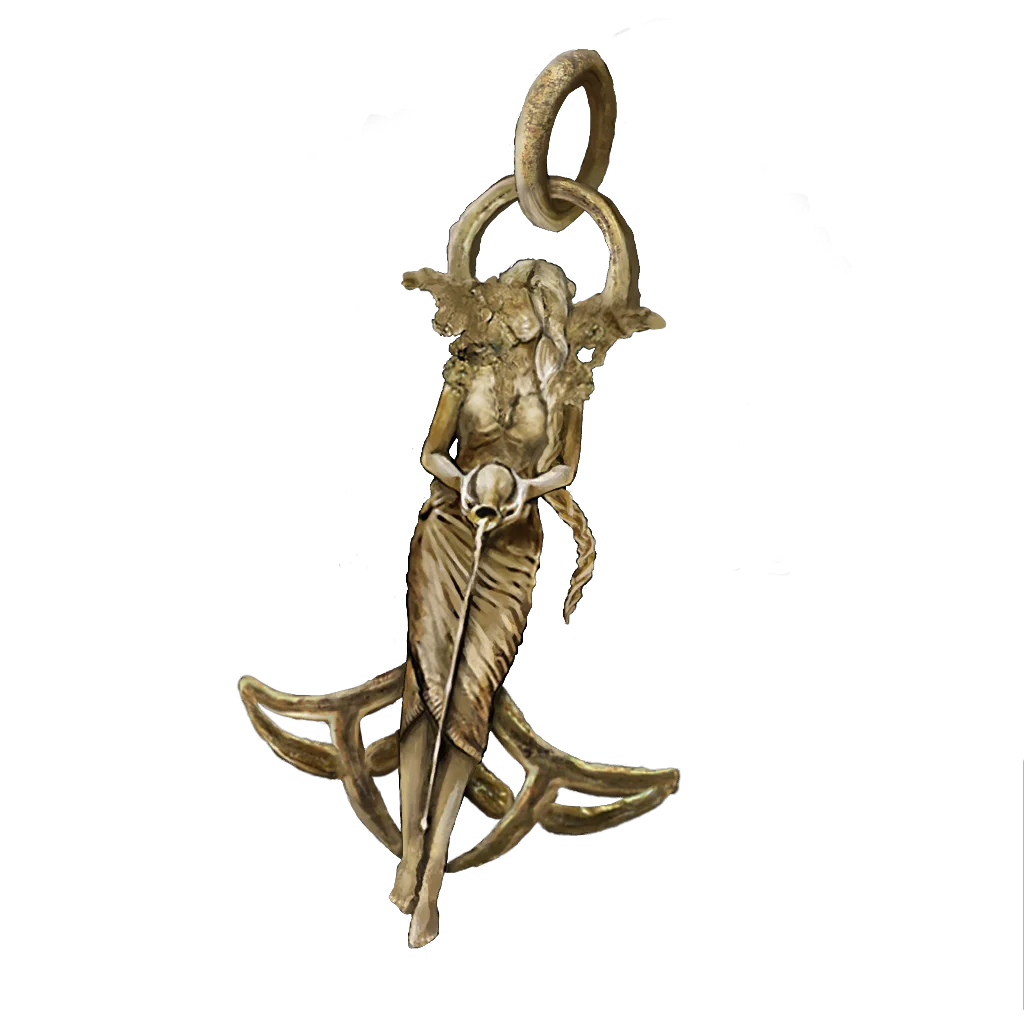 ▣ ARTIFACT
The Legendary Talismans
Eight engraved seals, each a small canon of the realm's elders▾
The Legendary Talismans
Where the Legendary Armaments record their bearers' arcs in the steel, the Legendary Talismans encode their patrons' philosophies in a single engraved object. There are eight in the base game, scattered across catacombs, ruins, and demigod thrones, each beginning its flavour text with the formula 'this legendary talisman.' Marika's Soreseal and Radagon's Soreseal are the canon's most haunting pair, 'an eye engraved with an Elden Rune, said to be the seal of Queen Marika' / Radagon. The pair raises four stats apiece while raising damage taken: 'Solemn duty weighs upon the one beholden; not unlike a gnawing curse from which there is no deliverance.' The Soreseals are the only canonical objects that admit Marika and Radagon were always already a single tragedy.
Three more name their elder-patrons explicitly. The Old Lord's Talisman 'depicting the ancient king whose seat lies at the heart of the storm beyond time', Placidusax, ruling Farum Azula in the age before the Erdtree. The Moon of Nokstella 'represents the lost black moon. The moon of Nokstella was the guide of countless stars', the Eternal City's pre-Erdtree faith of the abandoned daughters. The Godfrey Icon and Radagon Icon together complete the demigod-political-theology triptych: Godfrey 'took the Beast Regent Serosh upon on his back to suppress the ceaseless lust for battle that raged within'; Radagon 'As the husband of Rennala of Caria, the red-haired Radagon studied sorcery, and as the husband of Queen Marika, he studied incantations. Thus did the hero aspire to be complete.' Eight talismans, three lineages, the canon's clearest small ranking of who in the Lands Between mattered enough to be sealed in iron.
Marika's SoresealThis legendary talisman is an eye engraved with an Elden Rune, said to be the seal of Queen Marika. Solemn duty weighs upon the one beholden; not unlike a gnawing curse from which there is no deliverance.
Radagon's SoresealThis legendary talisman is an eye engraved with an Elden Rune, said to be the seal of King Consort Radagon.
Old Lord's TalismanA legendary talisman depicting the ancient king whose seat lies at the heart of the storm beyond time. It is said that the ancient royal city of Farum Azula has been slowly crumbling since time immemorial.
This legendary talisman is a treasure of Nokstella, the Eternal City. This talisman represents the lost black moon. The moon of Nokstella was the guide of countless stars.
A legendary talisman depicting the Elden Lord Radagon. As the husband of Rennala of Caria, the red-haired Radagon studied sorcery, and as the husband of Queen Marika, he studied incantations. Thus did the hero aspire to be complete.
◈ ENTITYThe Warrior Jars
Living vessels of stewed champions, dreams of greatness▾
The Warrior Jars
"Scraps of flesh for filling great jars. Rancorous spirits cling to the pinkish-red, twitching meat. Throw at enemies to inflict damage. This is what becomes of the condemned, who get sliced up and stuffed into jars to become saints instead."
From the Innard Meat description
The Warrior Jars are the strangest of the Lands Between's living lineages, great clay vessels stuffed with the dead flesh of fallen champions, possessed of a dim consciousness that compels them to keep fighting. Alexander, the Iron Fist, is the most articulate; his innards explain the species. The Alexander's Innards flavour text gives the jars' biology in three sentences: 'A keepsake of the warrior jar Alexander. Found at the core of the dead flesh that once filled the great jar. The jars contain dregs inherited from those who came before. Thus are warriors passed from jar to jar, carrying dreams of greatness.'
What the canon calls 'dregs' is the residue of every champion who has previously inhabited the jar, bone fragments, hardened blood, pieces of weapons, scraps of armour. Each new occupant inherits the dregs as background mind, which is why warrior jars dream constantly of fights they never fought. The Beastmen of Farum Azula's Beastman's Jar-Shield records the older craft: 'The beastmen have always fired earthenware jars for the express purpose of making shields. Such are their ways, strange though they are.' The jar-as-armour and jar-as-vessel are both Hornsent crafts the Lands Between later inherited and forgot. Alexander's death, broken before the Erdtree he could not climb, leaves only the Shard of Alexander, 'Scraps of stewed flesh cling to the shard, and tatters of ornaments can be seen mingled within the slime. Relics of a red-haired champion, it would seem.'
A keepsake of the warrior jar Alexander. Found at the core of the dead flesh that once filled the great jar. The jars contain dregs inherited from those who came before. Thus are warriors passed from jar to jar, carrying dreams of greatness.
Beastman's Jar-ShieldShield fashioned from a tall broken jar carried by the beastmen of Farum Azula. There is a particular knack to wielding it. The beastmen have always fired earthenware jars for the express purpose of making shields. Such are their ways, strange though they are.
Shard of AlexanderShard of the late Alexander, a shattered warrior jar. Greatly boosts the attack power of skills. Scraps of stewed flesh cling to the shard, and tatters of ornaments can be seen mingled within the slime. Relics of a red-haired champion, it would seem.
 ▣ ARTIFACT
The Divine Towers
Erdtree's antennae to the Greater Will, runes restored at their summit▾
The Divine Towers
The Divine Towers are the great vertical structures that punctuate the Lands Between, slim, gold-veined towers raised at strategic ridges across the realm, each connected to a particular Great Rune the demigods carry. The Great Runes flavour text gives the system its formal description: 'The Great Runes you receive by defeating shardbearers have lost their beneficial power. However, their power can be restored at Divine Towers throughout the Lands Between. See the description of each Great Rune to discover which Divine Tower you should visit.' Each Divine Tower is the ritual instrument by which the beneficial power of a Great Rune, one shard of the Elden Ring, is restored for the Tarnished who carries it.
Their geographic distribution is the canon's quietest map of demigod power. Godrick's rune restores at the Divine Tower of Limgrave, beyond the bridge from Stormveil. Mohg's and Morgott's both restore at the Divine Tower of East Altus, beyond Leyndell's eastern ward, a single tower for the twin Omens. Malenia's restores at the Isolated Divine Tower beyond the lost great bridge, an island tower the Tarnished must reach by Spiritspring jump. The towers are silent at all other times, and the Greater Will, when its messengers stop coming, leaves the towers as the only architecture in the realm that still works as instruments of cosmic order.
The Great Runes you receive by defeating shardbearers have lost their beneficial power. However, their power can be restored at Divine Towers throughout the Lands Between.
Malenia's Great RuneThe Great Rune of the shardbearer Malenia, devoid of any benediction. Seek the Isolated Divine Tower, which stands beyond the lost great bridge.
Godrick's Great RuneThe Great Rune of the shardbearer Godrick, devoid of any benediction. Seek the Divine Tower of Limgrave, which stands beyond the great bridge from Stormveil Castle.
 ❋ DLC · LOCATION
The Cathedral of Manus Metyr
Ymir's seat, hanging bells that summon stars▾
The Cathedral of Manus Metyr
The Cathedral of Manus Metyr is the great sorcery-cathedral perched at the eastern edge of Scadu Altus, where Count Ymir presides as High Priest. Its name reads as a hand of the mother, and so encodes its primary occupant: Metyr herself, the Mother of Fingers, an enormous broken many-fingered being who descends through the cathedral's upper galleries. The Glintslab Firefly description locates the cathedral on the realm's quiet sorcery-map: 'Glintstone firefly improved by selective breeding. … Mainly found near Manus Metyr. The glintstone that produces its light has become freakishly enlarged, while the span of its life is as brief as a whisper.'
Ymir's interventions in the world from this cathedral are conducted through hanging bells. The Hole-Laden Necklace flavour text records Ymir's teaching about how the bells work: 'A pale-blue necklace made from a thin, elongated stone hollowed out from the inside. Use at a hallowed ruin to sound a hanging bell. It was a teaching of Count Ymir. The fate of the one who sounds the hanging bell will be guided by the stars.' To sound a bell is to step out of the Greater Will's chosen Order and into the alternate cosmology Ymir is inventing, the one in which Metyr will be remade as a true mother. The Tarnished sounds three of these bells across the Realm of Shadow at Ymir's bidding, then must decide whether the priest's redemption is a salvation or a heresy.
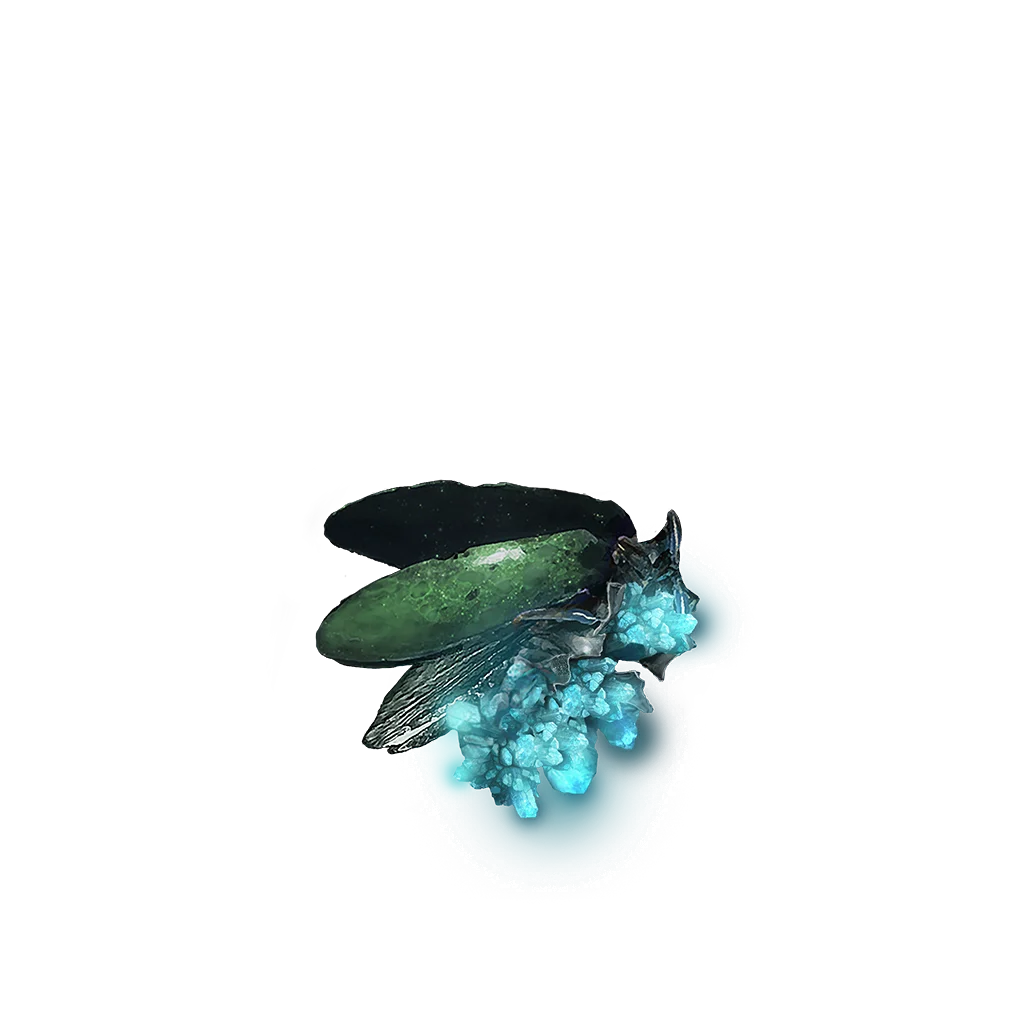 Glintslab Firefly
Glintstone firefly improved by selective breeding. Material used for crafting items. Mainly found near Manus Metyr. The glintstone that produces its light has become freakishly enlarged, while the span of its life is as brief as a whisper.
 Hole-Laden Necklace
A pale-blue necklace made from a thin, elongated stone hollowed out from the inside. Use at a hallowed ruin to sound a hanging bell. It was a teaching of Count Ymir. The fate of the one who sounds the hanging bell will be guided by the stars.
—️ LOCATIONThe Subterranean Shunning-Grounds
Sewer-prison beneath Leyndell, the Three Fingers' deepest cell▾
The Subterranean Shunning-Grounds
The Subterranean Shunning-Grounds are Leyndell's vast underground sewer-prison, descending levels of waste-channels, oubliettes, and forgotten chapels that run beneath the Royal Capital from the Avenue Balcony's grates down to the Cathedral of the Forsaken. The Sewer-Gaol Key flavour text gives the canon's only formal name for the system: 'Filthy key received from the Dung Eater. Unlocks sewer-gaol door said to lie beneath Leyndell, the Royal Capital.' The Dung Eater himself is one of the Shunning-Grounds' permanent residents, a Tarnished sealed away in the Capital's sewer-gaol for crimes the Capital would not name in writing.
What the Capital was hiding was older. At the very bottom of the Shunning-Grounds is the Cathedral of the Forsaken, and behind its altar, a wall; behind the wall, a passageway down to a room that contains the Three Fingers, the Frenzied Flame's outer-god vessel, Marika's deepest secret. The Note: Lord of Frenzied Flame, sold by a nomadic merchant for runes, preserves the Capital's open-secret about what's down there: 'Beneath Leyndell, at the very bottom lies our lord, lord of the frenzied. The Three Fingers who holds us in thrall.' The Capital stands directly atop the thing its Order most feared. Mohg's nest is one floor up from the Three Fingers; the Omens were cast away and confined here; the Dung Eater was sealed here. The Shunning-Grounds is the Capital's negative, every body, doctrine, or possibility the Erdtree's grace refused.
Sewer-Gaol KeyFilthy key received from the Dung Eater. Unlocks sewer-gaol door said to lie beneath Leyndell, the Royal Capital.
Note written by a nomadic merchant succinctly detailing knowledge acquired. 'Beneath Leyndell, at the very bottom lies our lord, lord of the frenzied. The Three Fingers who holds us in thrall.'
 ◈ ENTITY
The Tibia Mariners
Boatmen of Death, leaders of the wandering dead▾
The Tibia Mariners
The Tibia Mariners are the canon's gentlest, eeriest figures, pale boatmen who pole through fog-shrouded reaches of every great lake in the Lands Between, drifting upright in vessels barely larger than their bodies. Their craft is necromantic command. The Tibia's Summons sorcery, named for them, gives their function in two clauses: 'Sorcery of the servants of Death. Summons a group of Those Lost in Death. Three skeletons will appear some distance from the caster and attack foes before disappearing.' The flavour text adds the sentence that names what the Mariners are for: 'The dead have long been left to wander; what they need is leadership.'
Their boats give the canon its small image of an old psychopomp tradition, an image the text invites the reader to recognise rather than a voyage it records. No item text names them keepers of graves or boatsmen; the canon gives them only their sorcery, and it is an office rather than a voyage. The game claims the office, not the crossing: what the Mariners are for, as their own sorcery says, is leadership over the dead who wander. The skeletons that crawl from cracked stone tombs and reform after every defeat are the Mariners' standing crews.
Sorcery of the servants of Death. Summons a group of Those Lost in Death. Three skeletons will appear some distance from the caster and attack foes before disappearing. The dead have long been left to wander; what they need is leadership.
Use to summon the spirit of a skeletal bandit. This is the spirit of a bandit who lives in Death, and will continue to rise again until properly finished off.
 ◈ CULTURE
The Land of Reeds
A foreign nation of samurai, locked in a miserable civil war▾
The Land of Reeds
The Land of Reeds is a nation whose armour, blades and techniques all turn up in the Lands Between, worn and wielded by the Tarnished. Its recent history arrives in the text shared by the Land of Reeds Helm and the Land of Reeds Armor (Altered): 'The Land of Reeds has long been locked in a miserable civil war, during which time it has remained alienated from the cultures of its neighbors. Little wonder that the entire nation has succumbed to blood-soaked madness, or so it is said.' The unaltered Armor keeps a quieter note, its grimy outer mantle 'made from withered reeds from the warrior's birthplace': 'Perhaps its comforts extend to nostalgic thoughts of home.' Weapons the game ties by name to the country include the Uchigatana, 'wielded by the samurai from the Land of Reeds', the Wakizashi and the Great Katana, each 'unique to warriors of the Land of Reeds', the Cross-Naginata, 'a weapon of the Land of Reeds', and Eleonora's Poleblade, 'twinned naginata forged in the Land of Reeds'. Its arts carry the same stamp: Unsheathe is 'skill of swordsmen from the Land of Reeds', Seppuku 'a forbidden technique used by swordsmen from the Land of Reeds'. Piercing Fang the game credits to a man rather than a country: 'skill used by Yura, the Bloody Finger Hunter'.
The blades reach the Lands Between in different hands, and the game places their bearers differently. Okina is 'swordsman from the Land of Reeds', and his mask is 'the source of the sobriquet of the great swordsman of the Land of Reeds': he 'renounced it all, and rose to a higher plane. There was only himself. His katana. And its mastery. Before long, Okina became a demon of a swordsman.' His head disciples, the Inaba of the White Reeds, 'traveled in pursuit of not only the master who abandoned them, but also proper deaths, won honorably through hard-fought combat.' Eleonora's poleblade is 'forged in the Land of Reeds', though her own text judges conduct rather than country: her onslaught 'was likened to a whirlwind, but now her legacy is stained by accursed blood', and Yura, who hunts her, still calls her 'a proud knight' in spite of her 'cessblood zealotry'. The game does not say where Yura was born; his Nagakiba is the 'signature weapon of Yura, hunter of Bloody Fingers', and his iron kasa is 'crafted to imitate the woven straw hats worn in the Land of Reeds'. What befalls him is dispossession, not disguise: Shabriri wears his armour and says 'he is dead', and 'as for his flesh, he gave it to me, Shabriri'. Mohg, having 'first felt Okina's sword, and madness, upon his flesh', answered with an offer rather than a seizure: 'he had a proposal, to offer Okina the life of a demon, whose thirst would never go unsated.' The game does not say how any of these blades reached the Lands Between, nor whether the miserable civil war has ended.
Armor made from strips of iron fastened together. Worn by warriors of the Land of Reeds. The Land of Reeds has long been locked in a miserable civil war, during which time it has remained alienated from the cultures of its neighbors. Little wonder that the entire nation has succumbed to blood-soaked madness, or so it is said.
A katana with a long single-edged curved blade. A unique weapon wielded by the samurai from the Land of Reeds. The blade, with its undulating design, boasts extraordinary sharpness, and its slash attacks cause blood loss.
Twinned naginata forged in the Land of Reeds. Chosen weapon of Eleonora, Violet Bloody Finger. Her mastery of the sword was such that her onslaught was likened to a whirlwind, but now her legacy is stained by accursed blood.
 —️ LOCATION
Stormhill & Castle Morne
Limgrave's foothills, the Misbegotten siege, Edgar's ruin▾
Stormhill & Castle Morne
Stormhill is the north-western range of Limgrave's foothills, the windswept passes the Tarnished walks before reaching Stormveil. Two of the canon's smallest, saddest arcs play out across this ground. Roderika, the Spirit Tuner, sits at the Stormhill Shack alone, the Roderika of canon's tellings was expatriated royalty sent to a faraway land, whose people 'crossed the sea for me. They fought, for me' and were grafted en masse by Godrick's experiments at Stormveil. She is the only survivor.
South of Stormhill, on the Weeping Peninsula's coast, is Castle Morne, the second of the two arcs. The Monument: Siege of Castle Morne records its end as one line: 'A lone hero fights for his vengeance. Only to fall at the hand of Lord Godfrey.' That lone hero is the castle's vanished champion, not its castellan, the Grafted Blade Greatsword is his relic: 'A revenger's weapon, it is burdened with oceans of anger and regret. A lone surviving champion from a country now vanished was so determined to continue fighting that he claimed the swords of an entire clan of warriors.' Castellan Edgar is only the blade's sworn keeper, warden of the castle 'as ordained by Lord Godrick himself', who stays 'to ensure the treasured sword of Morne does not fall into the wrong hands.' When the Misbegotten rise against Morne during the Shattering, Edgar's daughter Irina is found dead, 'my daughter deserved better', and he vows to 'hunt them down, and exterminate every last one of them', turning north to become the invader Edgar the Revenger in Liurnia.
The siege of Castle Morne A lone hero fights for his vengeance Only to fall at the hand of Lord Godfrey
The storied sword of Castle Morne. A revenger's weapon, it is burdened with oceans of anger and regret. A lone surviving champion from a country now vanished was so determined to continue fighting that he claimed the swords of an entire clan of warriors.
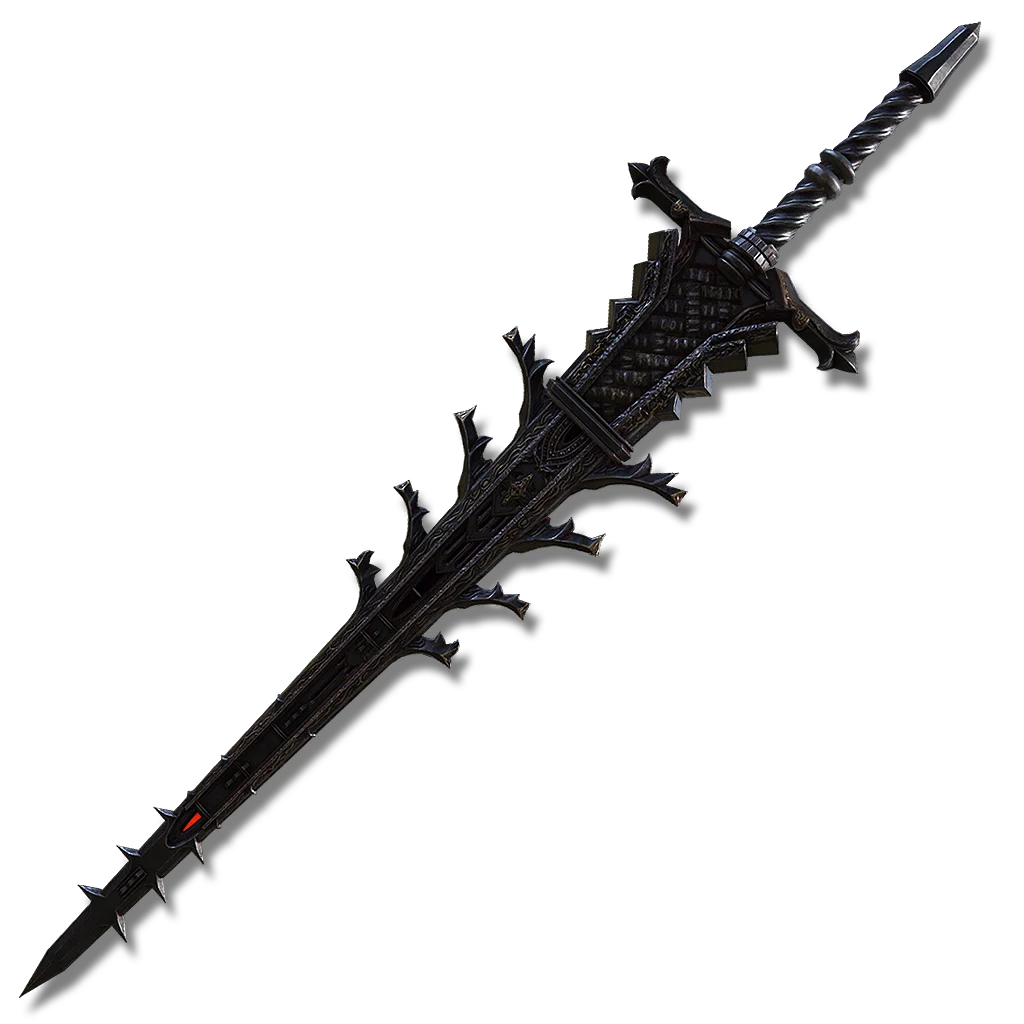 ▣ CONCEPT
Helphen, the Lampwood
Black-steepled tree of the underworld, lamp of the war-dead▾
Helphen, the Lampwood
The Helphen is the underworld's analogue to the Erdtree, a great black-steepled tree, said to grow somewhere in the spirit world, whose lampwood lights the dead. The Helphen's Steeple greatsword preserves the only canon description of it: 'Greatsword patterned after the black steeple of the Helphen, the lampwood which guides the dead of the spirit world. The lamplight is similar to grace in appearance, only it is said that it can only be seen by those who met their death in battle.' Two thoughts in those lines matter. First, the Helphen is a tree (a tree-of-the-dead opposite the tree-of-the-living). Second, its grace-like light is only visible to soldiers who died fighting, it is the war-dead's own funerary illumination.
After Godwyn the Golden was struck on the Night of the Black Knives, slain in soul but not body, becoming the Prince of Death, his body began to root through the Erdtree's underground network and emerge as the Death Roots that the hunter D pursues. Lichdragon Fortissax, his sworn dragon-friend, fought long and hard against the Death within his companion (Remembrance of the Lichdragon). Where that fight took place is implied: the Helphen, the lampwood of the dead, is the spirit-world tree his fight took place inside. The Tarnished, walking the Deeproot Depths, is walking the same root-network that connects the Helphen below to Godwyn's slow corpse-blossom above.
Greatsword patterned after the black steeple of the Helphen, the lampwood which guides the dead of the spirit world. The lamplight is similar to grace in appearance, only it is said that it can only be seen by those who met their death in battle.
Remembrance of the LichdragonAfter Godwyn the Golden became the Prince of Death, the ancient dragon fought long and hard against the Death within its companion. Alas, victory was never achieved and its only reward was corruption.
Staff embedded with sullied amber, said to be a very part of the Prince of Death. Enhances death sorceries.
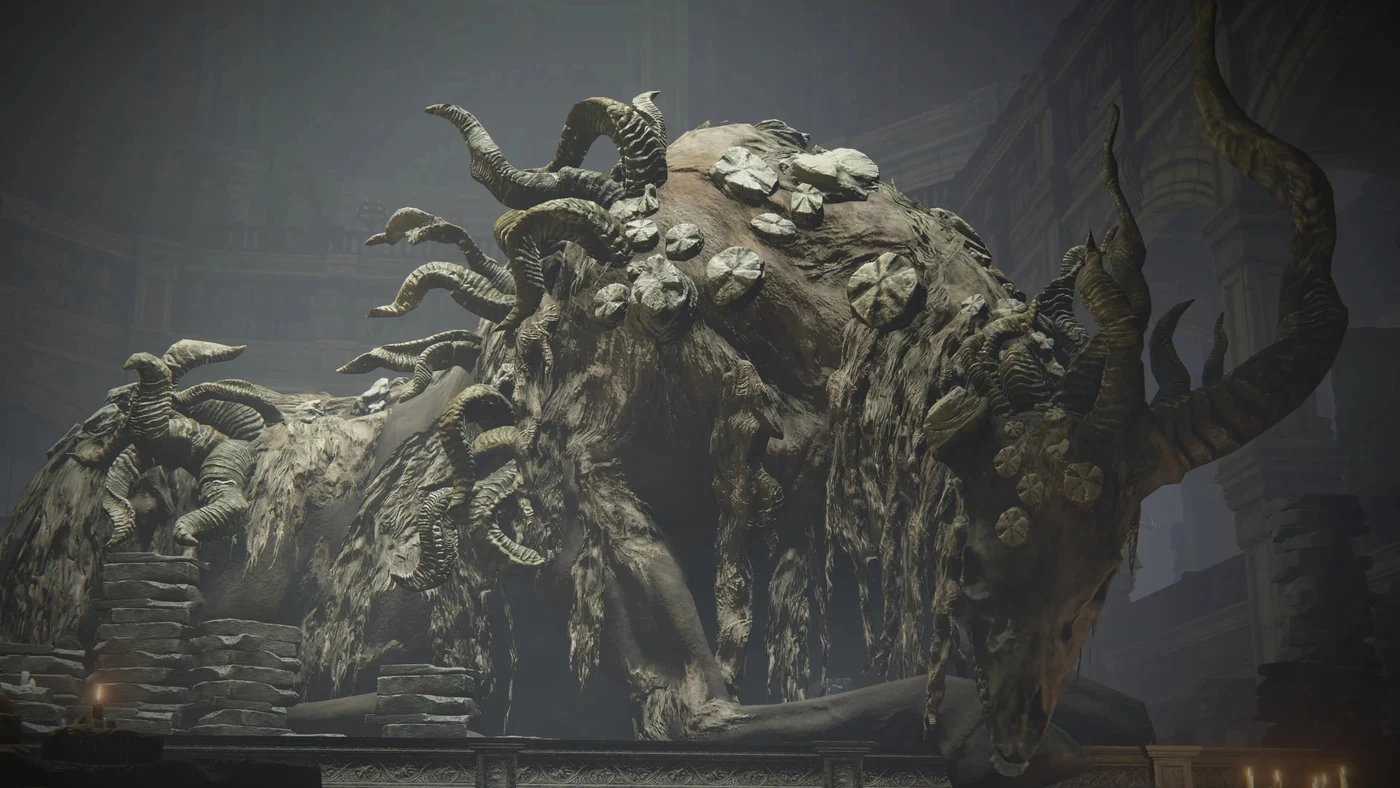 ❋ DLC · LOCATION
The Specimen Storehouse
The preserved dead of the Land of Shadow, and the dispute that split the Fire Knights▾
The Specimen Storehouse
The Specimen Storehouse is the vast multi-storey storehouse inside Messmer's Shadow Keep where the specimens of the Land of Shadow are preserved. The Storehouse's existence is canon's clearest evidence that Marika's purge of the Realm of Shadow was not pure extermination, specimens, Hornsent and divine-beast alike, were preserved and studied for what their bodies could teach about the Crucible's older life-forms.
What makes the Storehouse the canon's most morally compromised single location is that it split Messmer's own intimates. The Fire Knight Hilde Spirit Ash flavour text records the rupture: 'Hilde was a dear friend to Salza the sage, and joined those who urged that the specimens be preserved.' Salza, in turn, the Salza's Hood entry states, 'refused to burn down an old ruin, at the risk of his own life.' The old ruin is likely the ancient ruins of Rauh, though the text never names it. Hilde and those who urged that the specimens be preserved prevailed in the strangest way the canon records: her ashes were enshrined as a charm to protect the Storehouse itself. The Tarnished walks past shelf after shelf of what that protection kept.
A spirit who belonged to the Fire Knights; an order which answers directly to Messmer. Hilde was a dear friend to Salza the sage, and joined those who urged that the specimens be preserved.
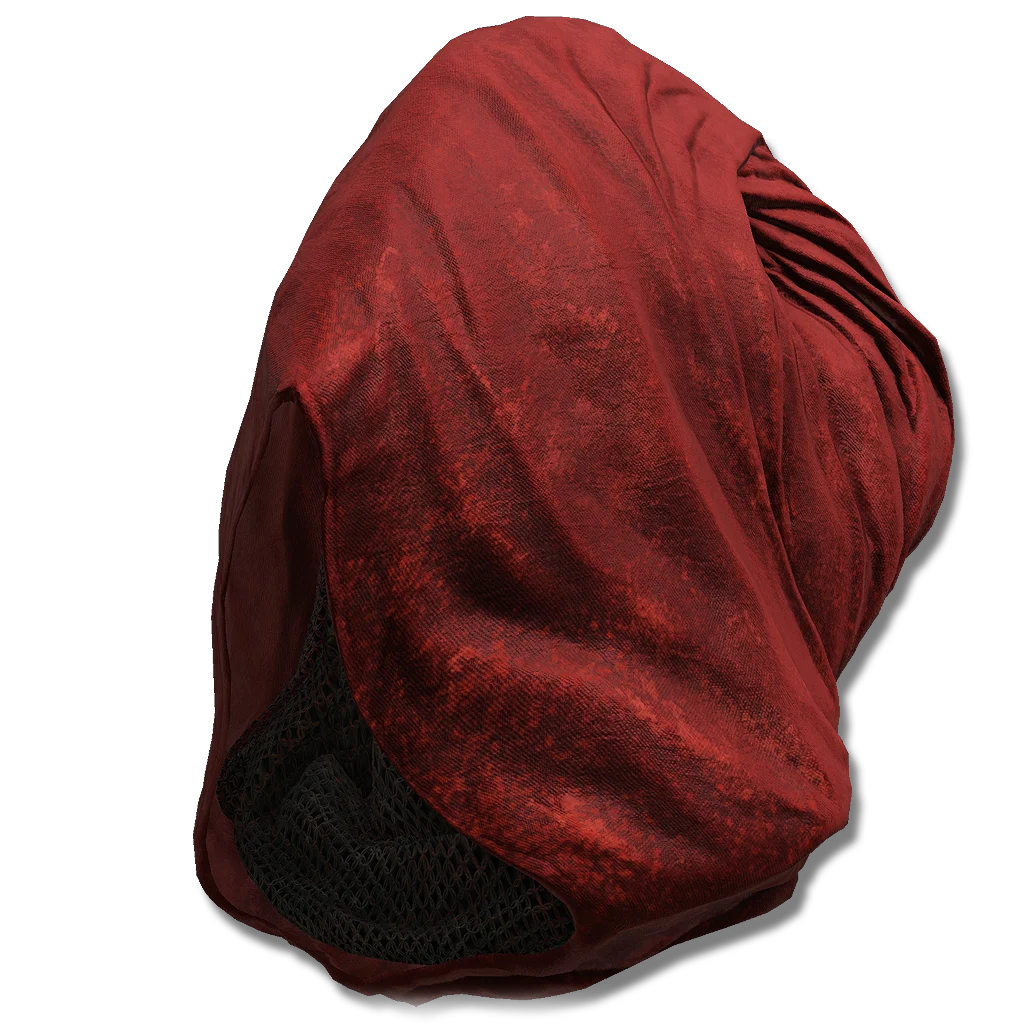 Salza's Hood
Hood of Salza, sage of the Fire Knights. A disciple of the elder Wego, he refused to burn down an old ruin, at the risk of his own life.
—️ LOCATIONThe Frenzied Flame Village
The village of the sick south of the Grand Lift▾
The Frenzied Flame Village
The Frenzied Flame Village is one of the smallest cult-sites in the Lands Between, a cluster of huts on the cold plateau south of the Grand Lift of Dectus. The Note: Frenzied Flame Village is the canon's clearest geographic marker for it: 'South of the Grand Lift of Dectus lies the Frenzied Flame Village, inhabited by the sick. Stay well away.' The note is sold by a nomadic merchant for runes, the same merchant who sells most of the Lands Between's quietest secrets. The merchant's professional advice, 'stay well away', is the canon's simplest warning.
What dwells there is a cult born of Shabriri and quieter than the cult sealed beneath Leyndell. The villagers, blind and yellow-eyed, are early hosts of the Three Fingers, every one a host who, in the older era, attempted to control the flame of frenzy and 'succumbed to madness after a desperate internal struggle' (Frenzied Burst's flavour text). The Howl of Shabriri spreading from this village is the cult's last surviving incantation, the same howl that 'began with Shabriri, the most reviled man in all history', the man whose eyes were gouged out, in whom the flame of frenzy took root.
Note sold by a nomadic merchant imparting knowledge in brief. 'South of the Grand Lift of Dectus lies the Frenzied Flame Village, inhabited by the sick. Stay well away.'
Incantation originating from the maddening Three Fingers. In times past, every single person who attempted to control the flame of frenzy succumbed to madness after a desperate internal struggle.
It is said that the sickness of the flame of frenzy began with Shabriri, the most reviled man in all history.
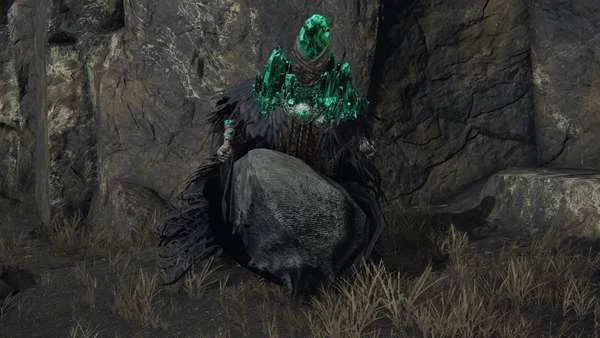 ◈ SORCERER
Azur and Lusat, the Primeval Current Sorcerers
Grandmasters of Raya Lucaria, driven from the academy▾
Azur and Lusat, the Primeval Current Sorcerers
"A robe reserved for grand masters at the Academy of Raya Lucaria. Since the grand masters Azur and Lusat were driven from the academy, no one has achieved their formerly-held rank."
From the Azur's Glintstone Robe description
Azur and Lusat are the two grandmasters whose departures broke Raya Lucaria. The Azur's Glintstone Robe description records what their absence meant for the academy's hierarchy: 'A robe reserved for grand masters at the Academy of Raya Lucaria. Corroded by blue-green glintstones. Since the grand masters Azur and Lusat were driven from the academy, no one has achieved their formerly-held rank.' Their respective lineages, the Karolos Conspectus and the Olivinus Conspectus, are still studied, but no living scholar has been promoted to the rank Azur and Lusat held when they were exiled together.
What expelled them was the same thing they had together discovered: primeval current sorcery, a glintstone craft so ambitious it required the practitioner to grow a glintstone crown over their own brain and skull. The Azur's Glintstone Crown description records the cost of the technique: 'Crown of Azur, primeval current sorcerer, set with a prominent blue-green glintstone. This crown replaced Azur's brain and skull altogether.' Lusat's crown is identical in function: the entire mind subsumed into glintstone. The academy considered this heresy; both sorcerers were driven out and pursued separately. Azur retreated to Mt. Gelmir, where he still sits, gazing at the heavens. The Comet Azur description records what he had seen: 'When Azur glimpsed into the primeval current, he saw darkness. He was left both bewitched and fearful of the abyss.' Lusat returned to his home, Sellia in the eastern Caelid Wilds, and languished behind a seal until Sellen sent the Tarnished with a glintstone key to free him. Sellen's quest is, in the canon's quiet way, the next generation's attempt to undo a discipline her masters paid their bodies to perfect.
Crown of Azur, primeval current sorcerer, set with a prominent blue-green glintstone. This crown replaced Azur's brain and skull altogether, and now, removed from his body, it is all but dead.
A robe reserved for grand masters at the Academy of Raya Lucaria. Since the grand masters Azur and Lusat were driven from the academy, no one has achieved their formerly-held rank.
Staff of the primeval glintstone sorcerer Azur. Only those who have glimpsed what lies beyond the wisdom of stone may wield it.
◈ ENTITYThe Fingercreepers
Hand-shaped offspring of an old blasphemy▾
The Fingercreepers
"The mother of all Two Fingers and Fingercreepers was in turn a magnificently gleaming daughter of the Greater Will, and the first shooting star to fall upon the Lands Between."
From the Remembrance of the Mother of Fingers
The Fingercreepers are the canon's quietest, most distressing lineage: great hand-shaped creatures that crawl on their finger-tips through ruined chapels and underground basins, each as long as a horse. The Ringed Finger flavour text records their distant origin without ornament: 'Bludgeon made of an enormous finger sheathed in several heavy rings. Thought to have been cut from an ancestor of the Fingercreeper. Some life yet remains in this legacy of an ancient act of blasphemy, as evidenced by the barely perceptible warmth it still exudes.' What blasphemy made the first Fingercreeper is not stated.
The DLC reveals their lineage's deeper secret. The Remembrance of the Mother of Fingers names Metyr as 'the mother of all Two Fingers and Fingercreepers', meaning the Two Fingers (the chapel-housed messengers of the Greater Will) and the Fingercreepers (their feral cousins) come from the same parent. Yet the nature of the blasphemy itself is never given; the Staff of the Great Beyond says only that Metyr 'received signs from the Greater Will' and that, 'Despite being broken and abandoned, she kept waiting for another message to come.' One can read the Two Fingers as the branch that grew into oracles and the Fingercreepers as the branch that stayed feral, but that is a reading: the canon states only the shared mother. The Fingercreeper Ashes that the Tarnished can summon are 'a young, diminutive Fingercreeper that eagerly restores HP, they are ever so fond of their mothers at this tender age.' The smallest Fingercreepers, the canon notes, still recognise a mother. The largest no longer do.
Bludgeon made of an enormous finger sheathed in several heavy rings. Thought to have been cut from an ancestor of the Fingercreeper. Some life yet remains in this legacy of an ancient act of blasphemy.
Remembrance of the Mother of FingersThe mother of all Two Fingers and Fingercreepers was in turn a magnificently gleaming daughter of the Greater Will, and the first shooting star to fall upon the Lands Between.
Use to summon the spirit of a Fingercreeper. Devoted to its summoner, this young, diminutive Fingercreeper eagerly restores HP. They are ever so fond of their mothers at this tender age.
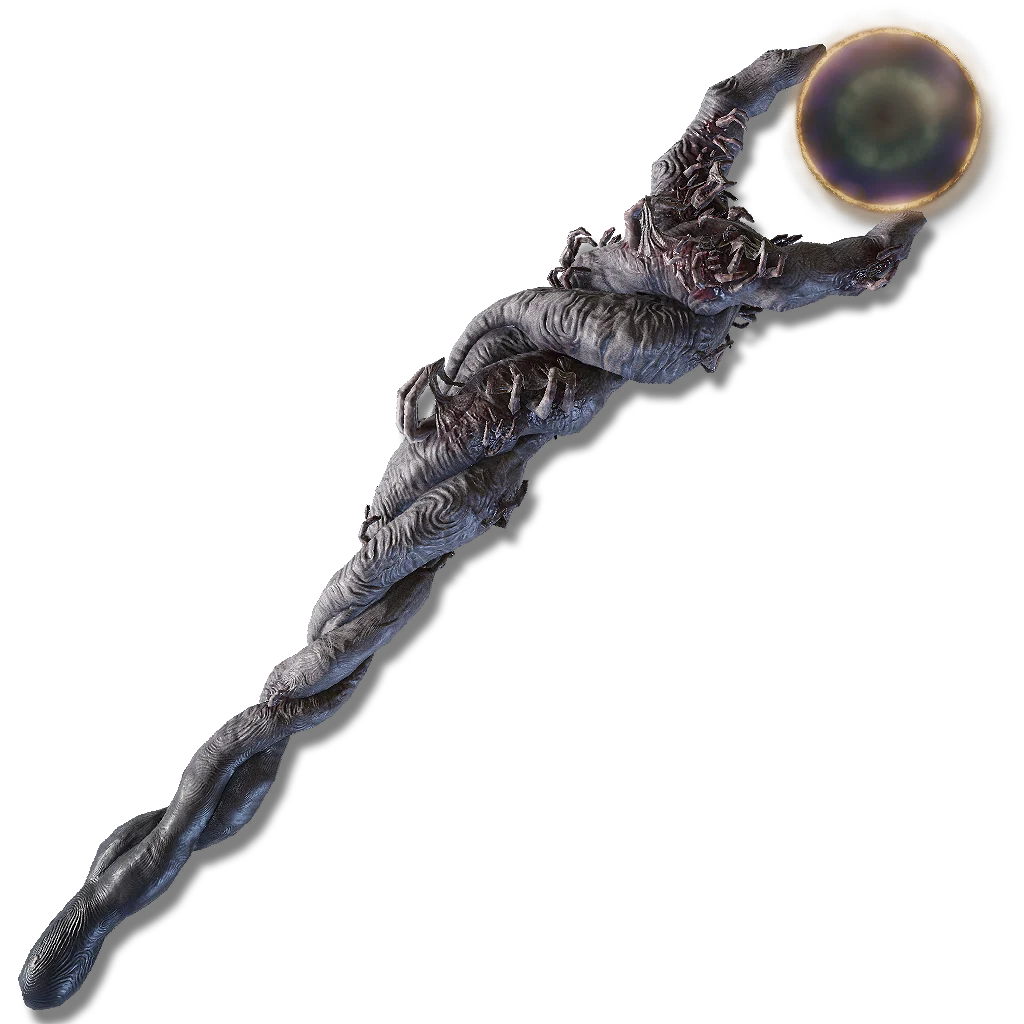 Staff of the Great Beyond
The Mother received signs from the Greater Will from the beyond of the microcosm. Despite being broken and abandoned, she kept waiting for another message to come.
 ❋ DLC · LINEAGE
The Madding Hand Heretics
Hunted by their own brethren, weapons of the utterly downtrodden▾
The Madding Hand Heretics
"Forged of an unyielding, black impulse toward revenge fostered in those who were hunted down as heretics by their own brethren, these are the weapons of the utterly downtrodden."
From the Madding Hand description
"Gift your madness to our Lord. Bless our brethren with grapes. Take care that they fully ripen."
From the Aged One's Exultation talisman
The Madding Hand is one of the DLC's most upsetting weapons, and the lineage it points to is the canon's clearest indictment of the Realm of Shadow's social violence. The Madding Hand description gives the weapon and the people who made it together: 'A glove stitched together from the flayed skin of the victims of a butcherous bloodbath. Afflicts target with madness. Raises attack power when madness is triggered in the vicinity. Forged of an unyielding, black impulse toward revenge fostered in those who were hunted down as heretics by their own brethren, these are the weapons of the utterly downtrodden.'
The 'their own brethren' is the line that sticks. The Madding Hand was forged by those hunted down as heretics by their own brethren: this was not the Erdtree's persecution from without but an internal one, a downtrodden people butchering its own. The flayed skins of the gloves are the skin of the victims of that butcherous bloodbath, stitched from those their own brethren cut down. The Aged One's Exultation talisman, hung in the same Abyssal Woods chapel where the Madding Hand drops, preserves the cult's litany: 'Gift your madness to our Lord. Bless our brethren with grapes. Take care that they fully ripen.' The Lord they beg for is the Three Fingers; the grapes, it seems, are eyeballs. The Madding Hand heretics worship the same outer-god the Frenzied Flame in Leyndell's sewers worships, and they were created, not by the Erdtree, but by their own.
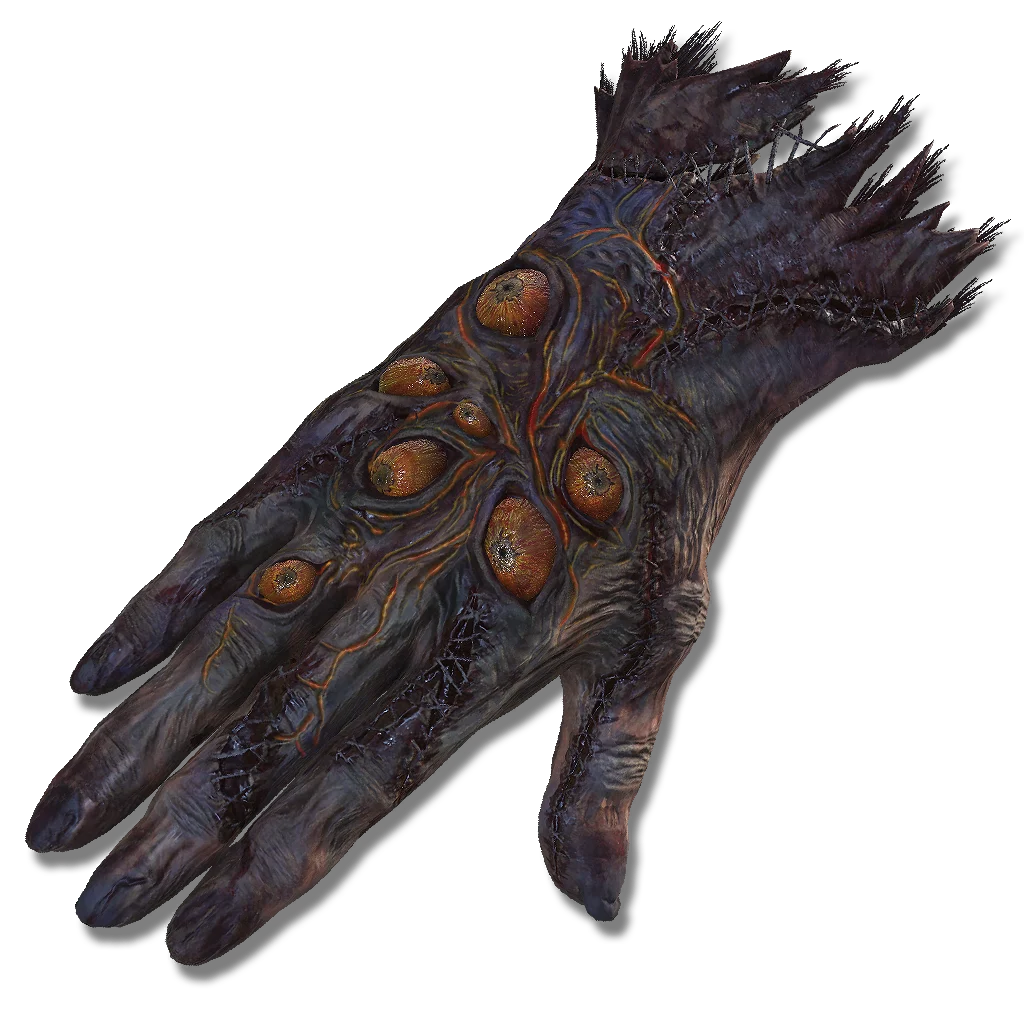 Madding Hand
A glove stitched together from the flayed skin of the victims of a butcherous bloodbath. Forged of an unyielding, black impulse toward revenge fostered in those who were hunted down as heretics by their own brethren, these are the weapons of the utterly downtrodden.
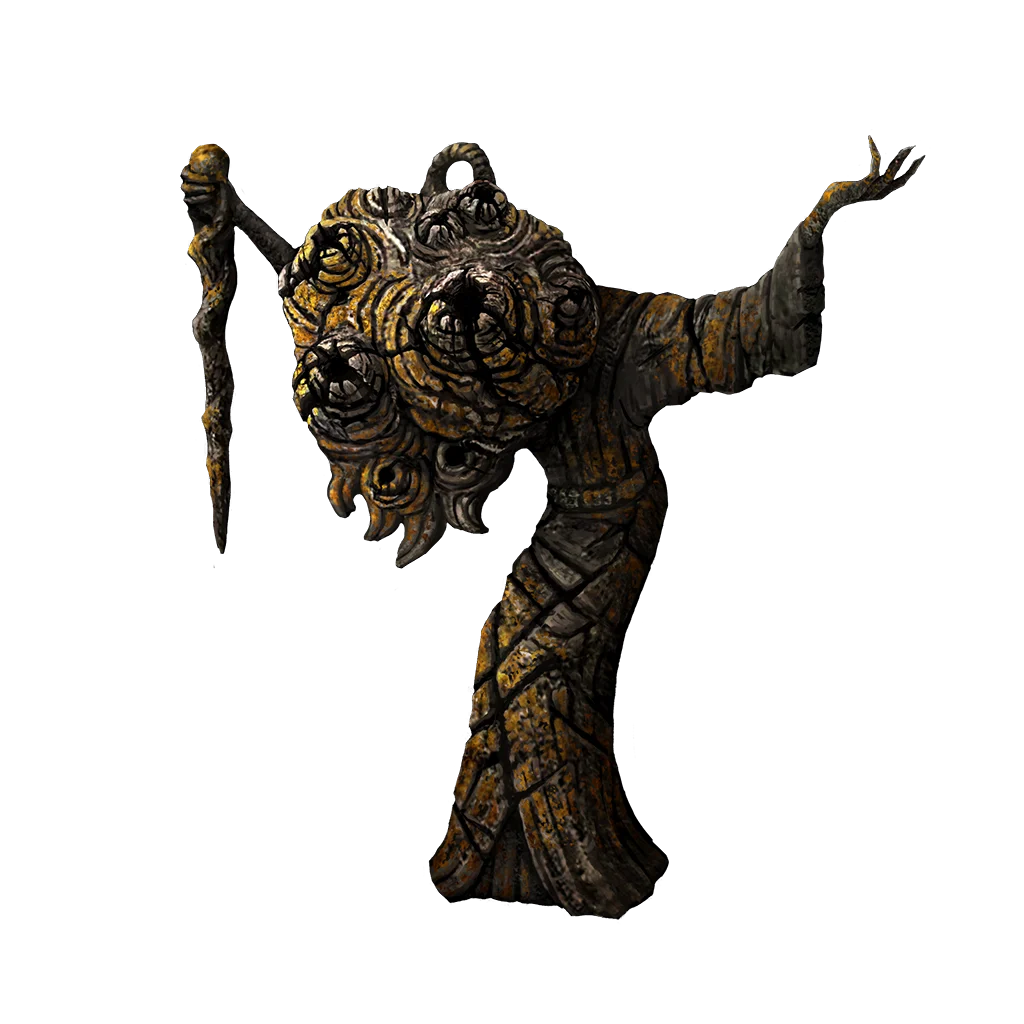 Aged One's Exultation
A talisman depicting the exultation of the aging untouchable, whose head resembles a sprig of ripe grapes. 'Gift your madness to our Lord. Bless our brethren with grapes. Take care that they fully ripen.'
 ❋ DLC · LOCATION
The Abyssal Woods
Madding Hand's home, frenzied flame's quietest chapel▾
The Abyssal Woods
"Beneath Leyndell, at the very bottom lies our lord, lord of the frenzied. The Three Fingers who holds us in thrall."
From the Note: The Lord of Frenzied Flame
The Abyssal Woods is the Realm of Shadow's quietest, most pitiless region, a forest in permanent twilight at the western edge of Scadu Altus, accessible only by descending past the Recluses' River. Almost nothing here is canon-named in item descriptions. What the canon does establish is what lives there: the Madding Hand heretics, the aged-one cult that worships the Three Fingers in distant counterpoint to the same cult sealed beneath Leyndell, and the great Madding Hand-shapes that crawl through the underbrush.
The forest's silence is its theology. The Aged One's Exultation talisman preserves the cult's whispered litany, 'Gift your madness to our Lord. Bless our brethren with grapes. Take care that they fully ripen.' The grapes are eyeballs; the Lord is the Three Fingers; the brethren are the heretics the rest of the Hornsent rejected. Where the Subterranean Shunning-Grounds beneath Leyndell are the Erdtree's sewer-prison for the Three Fingers, the Abyssal Woods are the Realm of Shadow's open-air chapel for the same outer-god. Two cults of the Frenzied Flame, two locations in two separate realms, the same yellow flame. The Tarnished walks past the chapel without speaking; the Abyssal Woods does not encourage speech.
Madding HandA glove stitched together from the flayed skin of the victims of a butcherous bloodbath. Forged of an unyielding, black impulse toward revenge fostered in those who were hunted down as heretics by their own brethren.
Aged One's Exultation'Gift your madness to our Lord. Bless our brethren with grapes. Take care that they fully ripen.'
Note written by a nomadic merchant succinctly detailing knowledge acquired. 'Beneath Leyndell, at the very bottom lies our lord, lord of the frenzied. The Three Fingers who holds us in thrall.'
 ❋ DLC · ORDER
The Dryleaf Sect
Spiritual seekers: self-sufficiency in all matters of faith, then a new god to serve▾
The Dryleaf Sect
"The gold necklace found under the breast belongs to a group of spiritual seekers known as the Dryleaf Sect. This sect rejects dependence on others in all matters of faith, seeking self-discipline and self-sufficiency above all else."
From the Dryleaf Robe description
The Dryleaf Sect are named in the game as 'a group of spiritual seekers', and their robe states the programme: 'Sun-faded and lightly soiled travel attire worn by clergymen. The gold necklace found under the breast belongs to a group of spiritual seekers known as the Dryleaf Sect. This sect rejects dependence on others in all matters of faith, seeking self-discipline and self-sufficiency above all else.' What is refused there is dependence on others, not faith itself: the sect's own catalyst, the Dryleaf Seal, 'enhances incantations of Miquella', and it gives the order an origin. 'Those who saw the decline of the Erdtree in the fallen leaves long ago braced themselves for the weakening of Order, and embraced a strict faith. And then, they made to serve a new god.' They read the falling leaves as a warning, hardened their faith, and went to serve. Their gear keeps returning to one phrase, sun-faded and lightly soiled: the robe, the cuissardes with their 'boots made of sturdy leather', the arm wraps 'wound tightly around the arms as if it might prevent them from being broken'.
The discipline is set down as a teaching. Dryleaf Arts is 'a technique for hand-to-hand combat without the aid of a weapon' that 'combines fist strikes and kicks', 'revealed only to those of worthy valor and character' ; 'the practice of this martial art marks the dawn of an ascetic's journey'. Palm Blast carries the sect's name too: 'Skill of the spiritual seekers known as the Dryleaf Sect. Imbues hand with energy before using a palm strike to unleash an explosive blast.' Dryleaf Dane takes the discipline further. Dane's Footwork is 'unique to Dane, a Dryleaf and sworn ally of Leda', acquired 'by training with the aid of a waterfall; letting the water beat his body, and throwing himself into its basin', and Dryleaf Whirlwind 'represents the pinnacle of Dane's footwork-based martial artistry'. His hat is 'worn low over the eyes' because 'meeting the gaze of another can overcome the senses, often leading to the downfall of those who would walk the noble and solitary seekers' path'. The altered robe puts one mark on that solitude: 'the leather satchel hanging from the shoulder is decorated with one of Miquella's emblems, a golden grass motif.' The game does not say who put it there. It does say where Dane is heading: the message he leaves at the ancient ruins is addressed 'to kindred spirits who also pursue Miquella's trail'.
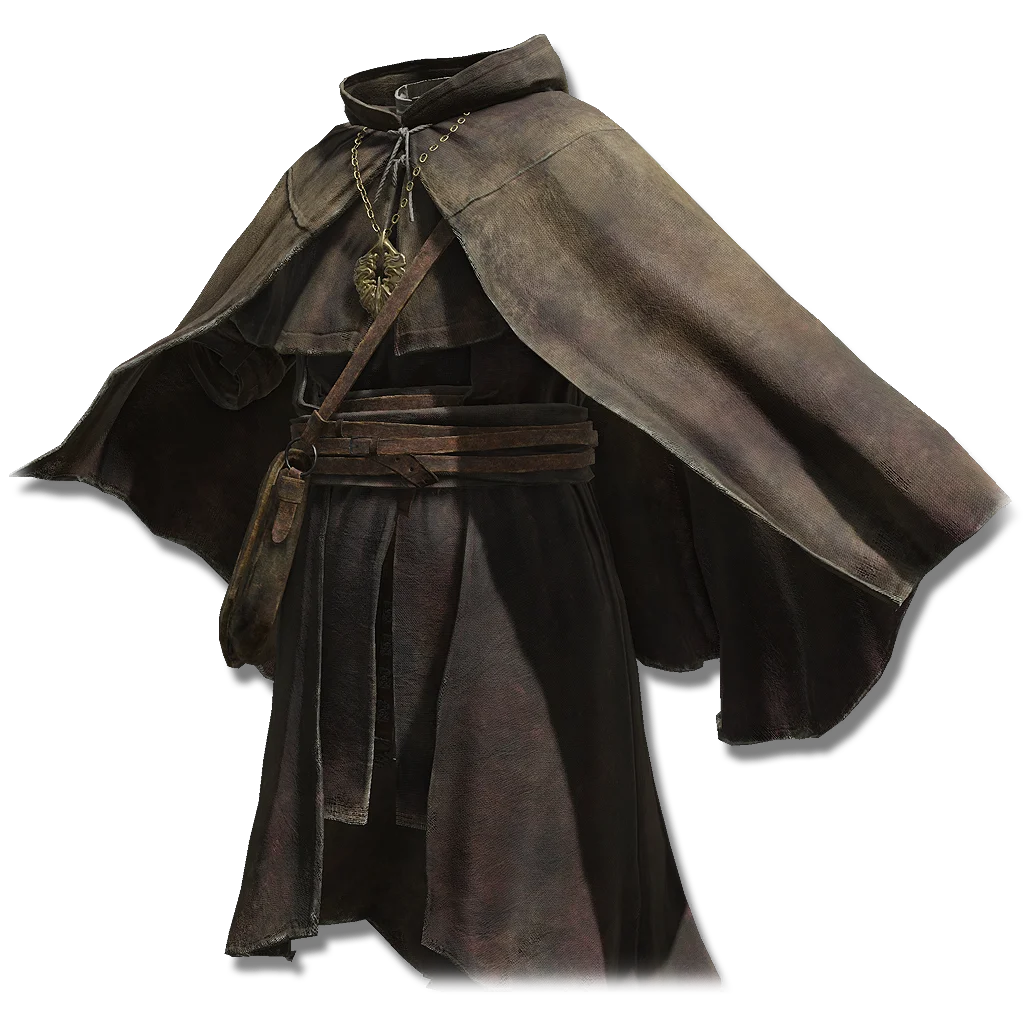 Dryleaf Robe
The gold necklace found under the breast belongs to a group of spiritual seekers known as the Dryleaf Sect. This sect rejects dependence on others in all matters of faith, seeking self-discipline and self-sufficiency above all else.
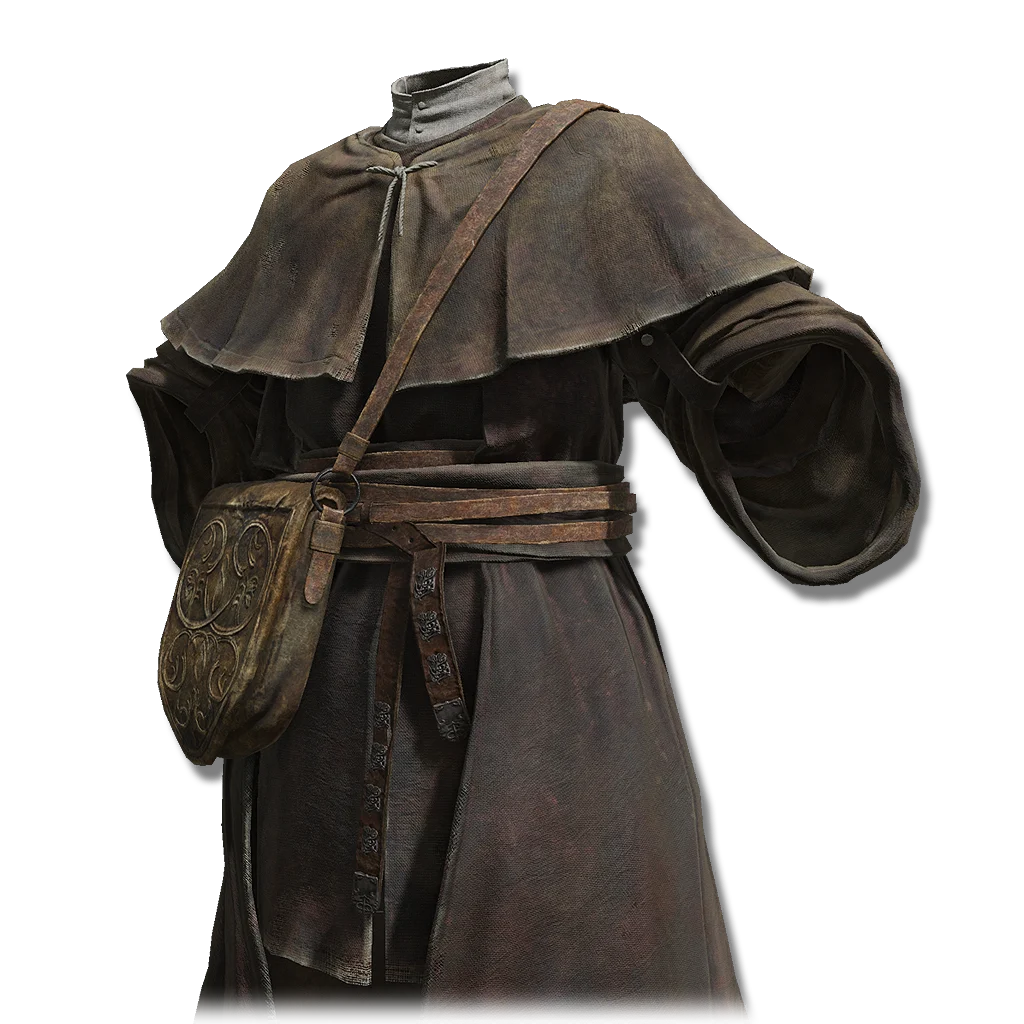 Dryleaf Robe (Altered)
The leather satchel hanging from the shoulder is decorated with one of Miquella's emblems, a golden grass motif.
 Palm Blast
Skill of the spiritual seekers known as the Dryleaf Sect. Imbues hand with energy before using a palm strike to unleash an explosive blast.
 Dryleaf Whirlwind
This skill represents the pinnacle of Dane's footwork-based martial artistry. Rise into the air with a series of spinning kicks before crashing down with one final strike.
 ◈ ACADEMY
The Conspectuses of Raya Lucaria
Karolos, Olivinus, Lazuli, Twinsage, Hierodas: five schools of one academy▾
The Conspectuses of Raya Lucaria
Raya Lucaria is not a single school: it is five schools sharing one rock above Liurnia, each continuing its own lineage of glintstone study. The glintstone-crown system is the canon's quiet way of making this visible: each conspectus has its own crown, bestowed on scholars whose pursuits the academy deems worthy. The Karolos Glintstone Crown description names the oldest line: 'The Karolos Conspectus is the oldest of the academy's lineages of study, begat by the sorcerer Azur. Scholars who follow in his footsteps pursue the mysteries of comets.' The Olivinus crown belongs to Lusat's line, 'the lineage of the Olivinus Conspectus began with the sorcerer Lusat, and its adherents continue his study of meteors.' Both Azur and Lusat became primeval current sorcerers; both had their crowns replace their brains and skulls altogether.
The Lazuli Conspectus is the academy's heretic core. The Lazuli Robe description names what makes them heretical: 'These scholars, who sought to master Carian sorcery, instead learned to see the moon as equal to the stars. This robe, in the hue of the full moon, signifies their heresy.' To call the moon a star, in the academy's official cosmology, is to abolish the hierarchy that separates Carian magic from Glintstone proper. The Hierodas Conspectus is the nomadic line: 'the crown of Hierodas was granted to scholars who engaged in nomadic study away from the academy.' The fifth is the Twinsage Conspectus, whose scholars 'were the elites of the academy, permitted to study and excel in sorceries of all kinds.' Five schools, five crowns, five answers to whether the academy's gravity should be at the academy at all. The Cuckoos were the academy's contracted soldiery, given free rein to wage war, their sworn enemy Caria itself; Sellen, the exiled apostate, is bound by her quest to the grand masters Azur and Lusat.
The Karolos Conspectus is the oldest of the academy's lineages of study, begat by the sorcerer Azur. Scholars who follow in his footsteps pursue the mysteries of comets.
The lineage of the Olivinus Conspectus began with the sorcerer Lusat, and its adherents continue his study of meteors.
Robe worn by scholars of the Lazuli Conspectus, singular among the greater Raya Lucaria Academy. These scholars, who sought to master Carian sorcery, instead learned to see the moon as equal to the stars.
The crown of Hierodas was granted to scholars who engaged in nomadic study away from the academy.
Scholars of the Twinsage Conspectus were the elites of the academy, permitted to study and excel in sorceries of all kinds.
◈ ENTITYThe Iron Virgins
Wheel-bound torture-engines of Volcano Manor▾
The Iron Virgins
"Instrument of torture used on nobles behind the curtain at the Volcano Manor of Mt. Gelmir. Its numerous spikes pierce the flesh, then singe the wounds with flame. The smell of burnt blood induces despair in the victim. A candlestick conceived by a thorough mind."
From the Inquisitor's Girandole description
The Iron Virgins are the canon's largest, slowest, most clinically theological torture device-enemies, great iron sarcophagi the height of two men, hollow in the middle, lined inside with flesh-flaying blades whose design is borrowed directly from a single human torturer's invention. The Ghiza's Wheel description states the design lineage without softening: 'Great iron wheel lined with flesh-flaying blades. Device of torture used by Inquisitor Ghiza. As the wheel spins it causes severe pain and blood loss. The design was adopted for use as the iconic weapon wielded by Iron Virgins.' Ghiza is a man, the Inquisitor whose invention this was. The Virgins are women-shaped engines that took up his weapon after he was through with it.
Their patrol-zone is the Volcano Manor's basement, where the Inquisitor's Girandole, a candlestick-spike-rack 'used on nobles behind the curtain at the Volcano Manor of Mt. Gelmir,' is also stationed. The flavour text gives the Manor's interior atmosphere in a single line: 'A candlestick conceived by a thorough mind.' The Iron Virgins are the canon's quiet acknowledgement that Rykard, Lord of Blasphemy, ran his manor as a working interrogation-house long before he became the God-Devouring Serpent. The Virgins still spin in his absence.
Great iron wheel lined with flesh-flaying blades. Device of torture used by Inquisitor Ghiza. As the wheel spins it causes severe pain and blood loss. The design was adopted for use as the iconic weapon wielded by Iron Virgins.
Instrument of torture used on nobles behind the curtain at the Volcano Manor of Mt. Gelmir. Its numerous spikes pierce the flesh, then singe the wounds with flame. The smell of burnt blood induces despair in the victim. A candlestick conceived by a thorough mind.
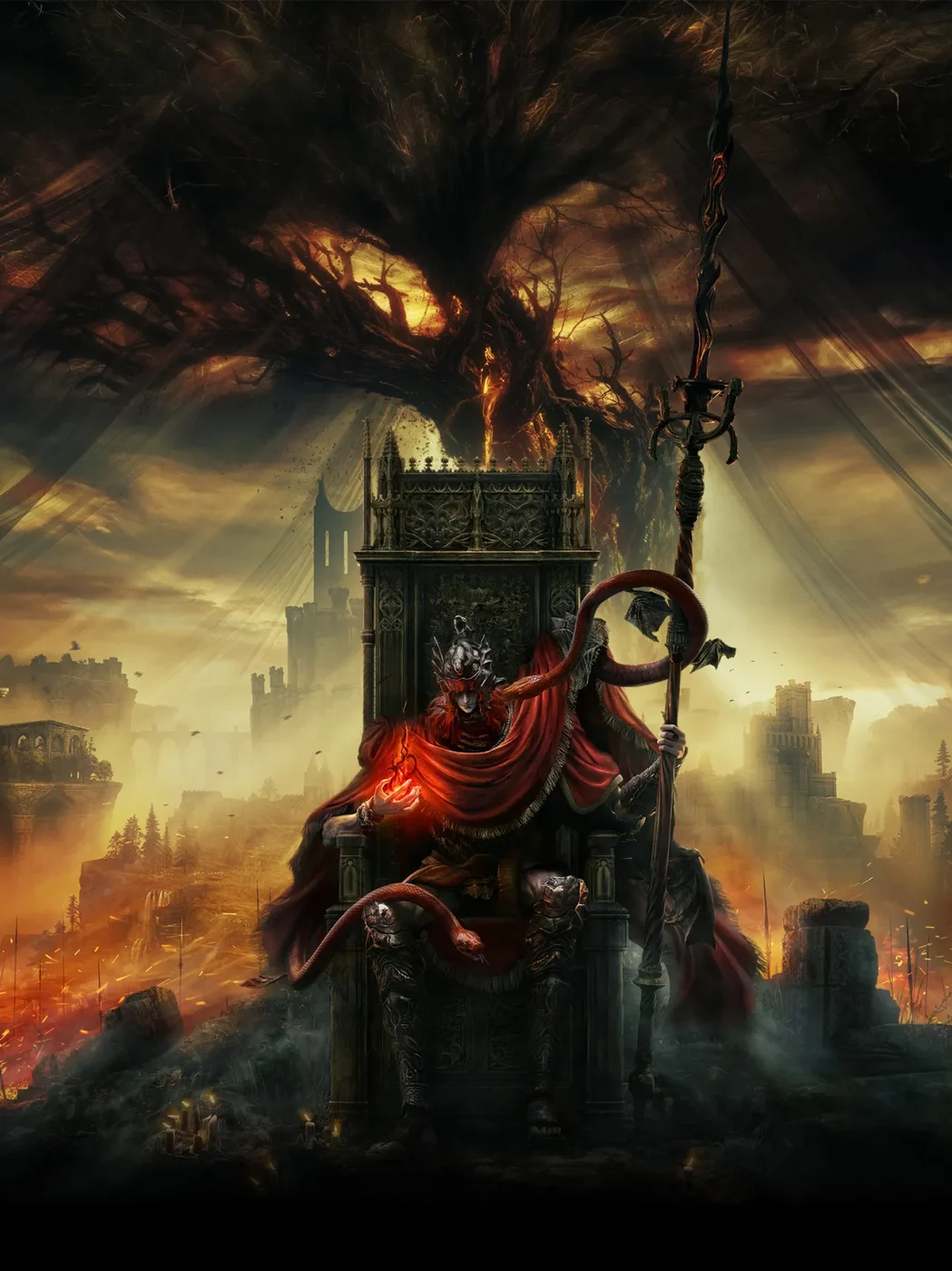 ▣ DLC · CONCEPT
The Scadutree
Dark counterpart of the Erdtree, sap that flows backwards into shadow▾
The Scadutree
"The Scadutree Blessing bolsters the bearer's ability to deal and negate damage but has no influence outside the realm of shadow. It is said that when the Scadutree crumbles..."
From the Scadutree Fragment description
The Scadutree is the dark twin of the Erdtree, a great tree that grows somewhere in the Realm of Shadow whose grace is cast not as light but as shadow, and whose sap flows in directions Erdtree-grace cannot. The DLC's Map: Scadu Altus description records the geographical premise: the plateau is 'named after its counterpart in the realm of the Erdtree.' What the Erdtree did for the Lands Between, the Scadutree does for the Land of Shadow: every demigod's remembrance the Tarnished claims in the DLC is 'hewn into the Scadutree' rather than into the Erdtree. The Realm of Shadow has its own grace, its own anchor, its own afterlife.
The Scadutree's most distinctive offering to the Tarnished is the Scadutree Blessing, a distinct empowerment that scales independently of the Tarnished's runes. The About the Scadutree Blessing key item describes it: 'Scadutree Fragments can be found across the realm of shadow. The Scadutree Blessing bolsters the recipient's abilities to deal and negate damage, but has no influence outside the realm of shadow.' The two halves of that line, bolsters within Shadow, no influence outside, are the canon's quietest argument that the Realm of Shadow runs on a parallel grace-economy, not on a derivative of the Erdtree's. The Furnace Golems' chest-cavities pool the Scadutree's scattered sap; the Cracked Tears the Tarnished gathers there are the canon's most direct sample of a shadow-grace the Greater Will did not authorise. When the Scadutree crumbles from its core, the Scadutree Fragment description records, its splinters scatter across the entire realm of shadow, where the people of the Erdtree collect them for prayer.
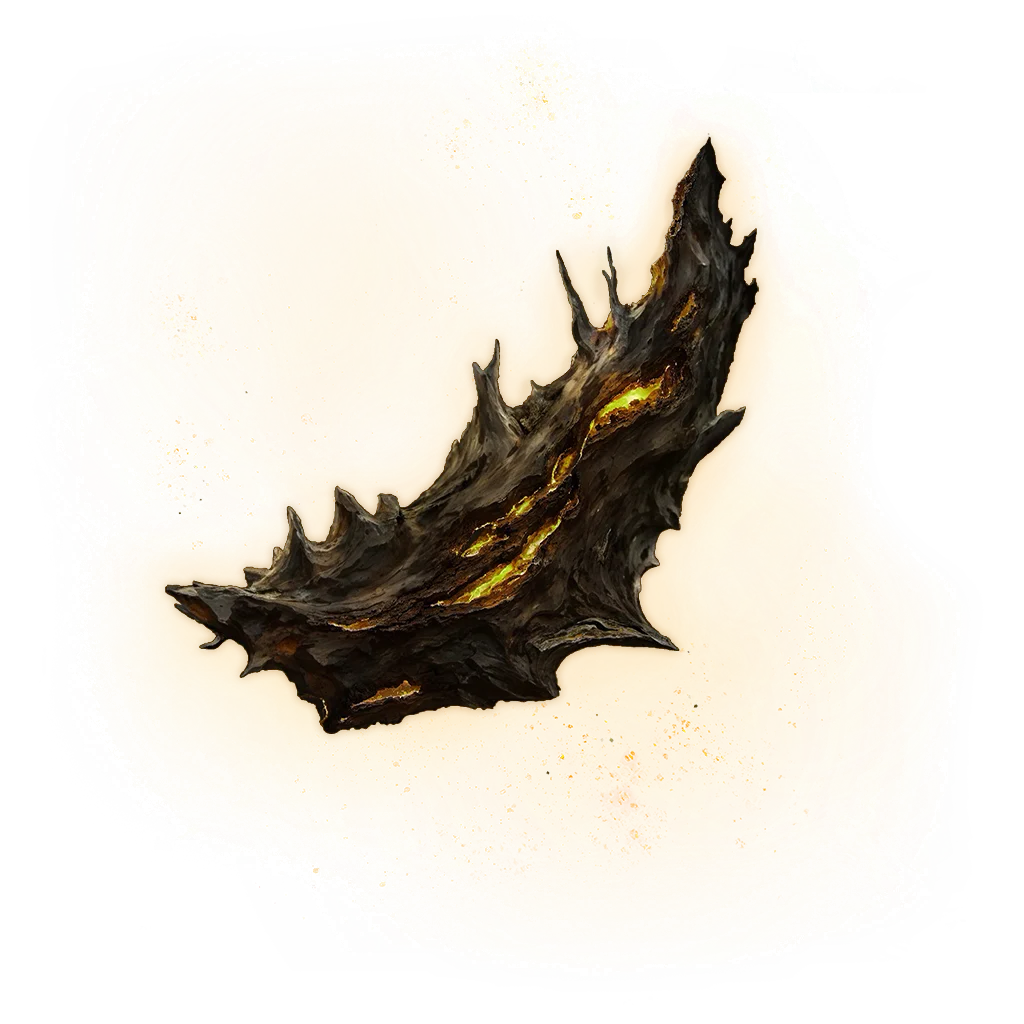 Scadutree Fragment
A splinter of the Scadutree that contains golden brilliance. Acquired at the Church of Marika and other places in the realm of shadow. The Scadutree Blessing bolsters the bearer's ability to deal and negate damage but has no influence outside the realm of shadow.
About the Scadutree BlessingScadutree Fragments can be found across the realm of shadow. The Scadutree Blessing bolsters the recipient's abilities to deal and negate damage, but has no influence outside the realm of shadow.
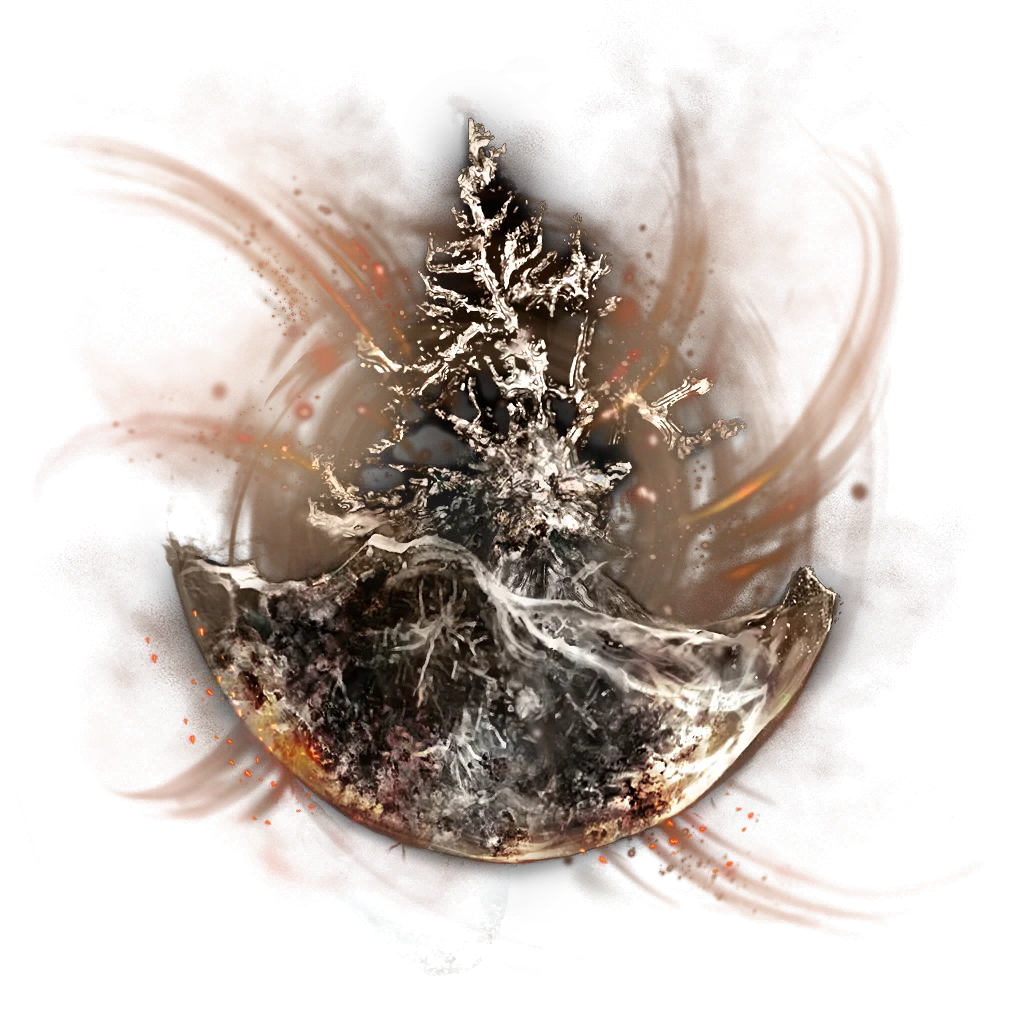 Crimson-Sapping Cracked Tear
A crystal tear formed slowly over the ages, where the scattered sap of the Scadutree pools deep within the furnace golems.
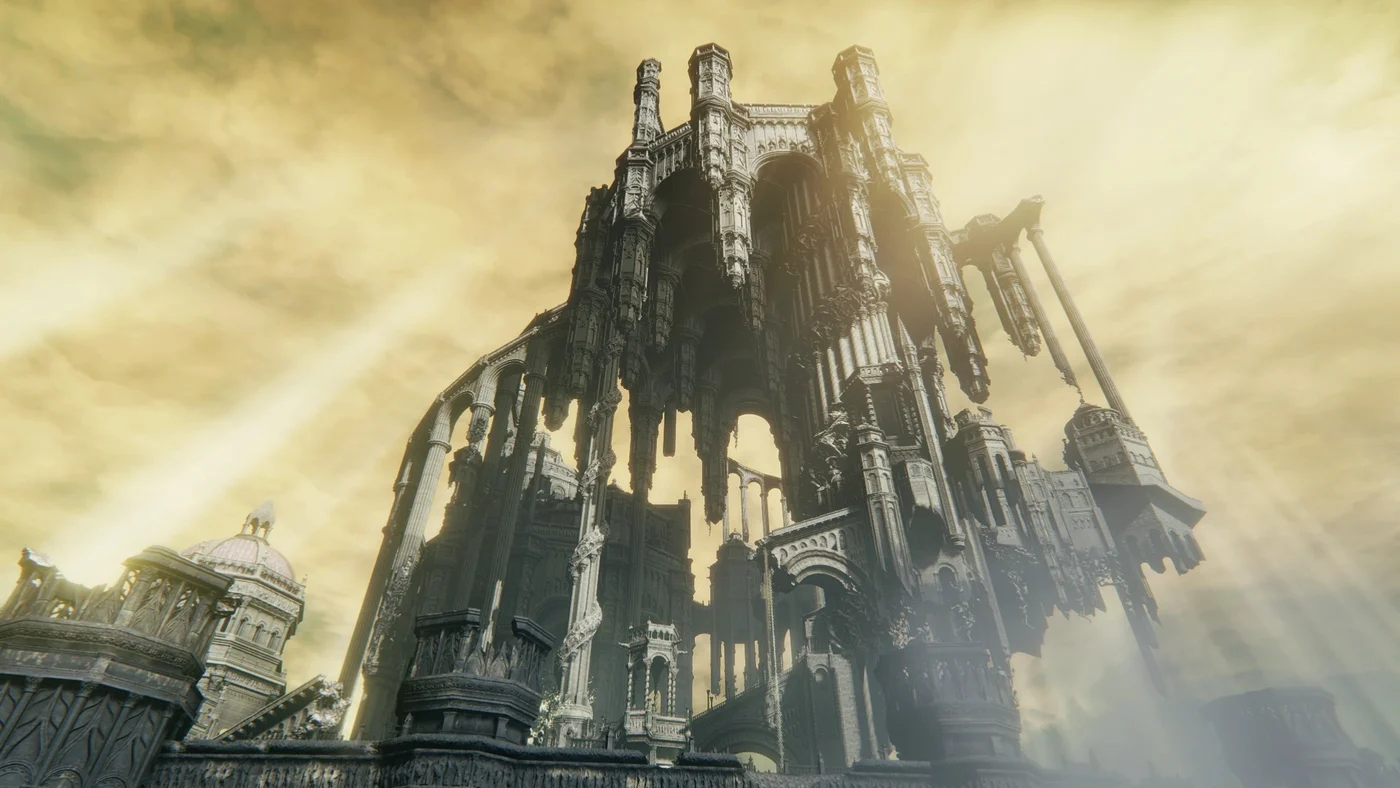 ❋ DLC · LOCATION
Enir-Ilim, the Gate of Divinity
The tower sealed by shadow, Miquella's destination▾
Enir-Ilim, the Gate of Divinity
"The Gate of Divinity lies in the tower sealed by shadow. That is surely where Kind Miquella is headed. We are no Empyreans, but we must locate the path that will lead us there."
Leda's tower-of-shadow message
Enir-Ilim is the name the place wears on screen. Needle Knight Leda's Tower of Shadow Message, left for her companions, names what is up there: 'The Gate of Divinity lies in the tower sealed by shadow. That is surely where Kind Miquella is headed. We are no Empyreans, but we must locate the path that will lead us there.' Its position reaches us as bearings: 'The spiral tower of the hornsent lies to the northwest' (Map: Gravesite Plain), and 'To the southwest is the Church of the Bud, overlooking the tower of shadow' (Map: Rauh Ruins). Miquella's Great Rune says what he spent to get there: he 'set off for the tower enshrouded by shadow, abandoning everything', down to 'his golden flesh, his blinding strength, even his fate', in order to 'be reborn as a new god'. He climbs; the Tarnished follows.
What seals the tower is a tree, and the game does not say who planted it. The Castle Cross Message keeps Leda's account of the obstacle: 'Kind Miquella seeks the tower sealed by shadow, and the Gate of Divinity found there. If we are to reach him, we must burn the tree that seals the path. And for that we require a flame.' Dryleaf Dane's Ancient Ruins Cross Message names whose flame: 'We've found the sealing tree just ahead. But if we are to burn it, we need the proper kindling. That of Sir Messmer.' Leda passes on the address: 'The sealing tree is in the ancient ruins of Rauh. It lies beyond the high bridge leading from the first floor of the storehouse.' The circularity belongs to the game: the horned warriors are 'keepers of the tower', the Remembrance of the Dancing Lion recalls the day 'when the Impaler's army assailed the tower', and the fire that unseals the path is the kindling that 'burned inside Messmer the Impaler'. The Secret Rite Scroll describes 'the secret rite of the divine gateway said to be found at the tower enshrouded by shadow', and sets its terms: 'A lord will usher in a god's return, and the lord's soul will require a vessel.' Per the Young Lion's Armor, that lord had been called long before: when Malenia let the rotflower blossom in Aeonia, 'Radahn heard a murmur in his ear', 'Miquella awaits thee, O promised consort.'
 Tower of Shadow Message
Message left by Needle Knight Leda, addressed to kindred spirits who also pursue Miquella's trail. 'The Gate of Divinity lies in the tower sealed by shadow. That is surely where Kind Miquella is headed.'
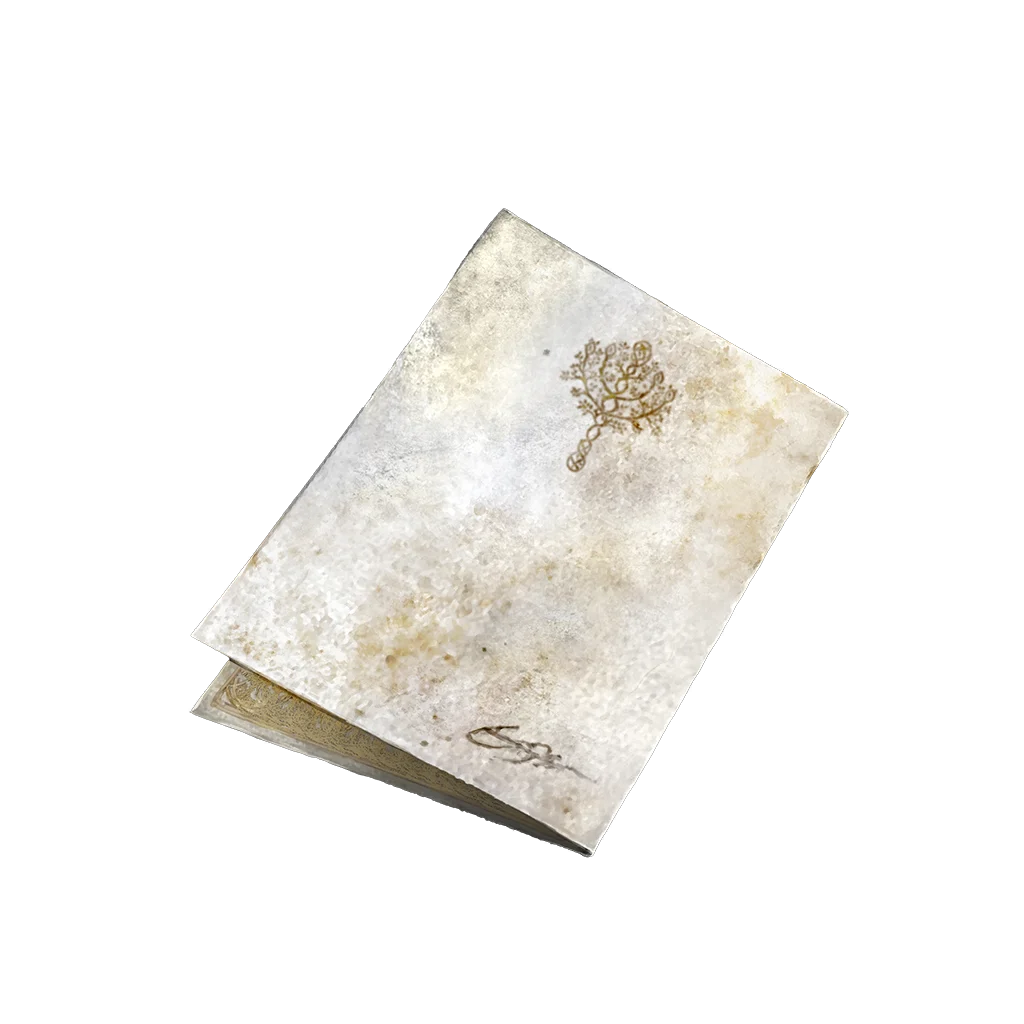 Castle Cross Message
Message left by Needle Knight Leda. 'Kind Miquella seeks the tower sealed by shadow, and the Gate of Divinity found there. If we are to reach him, we must burn the tree that seals the path. And for that we require a flame.'
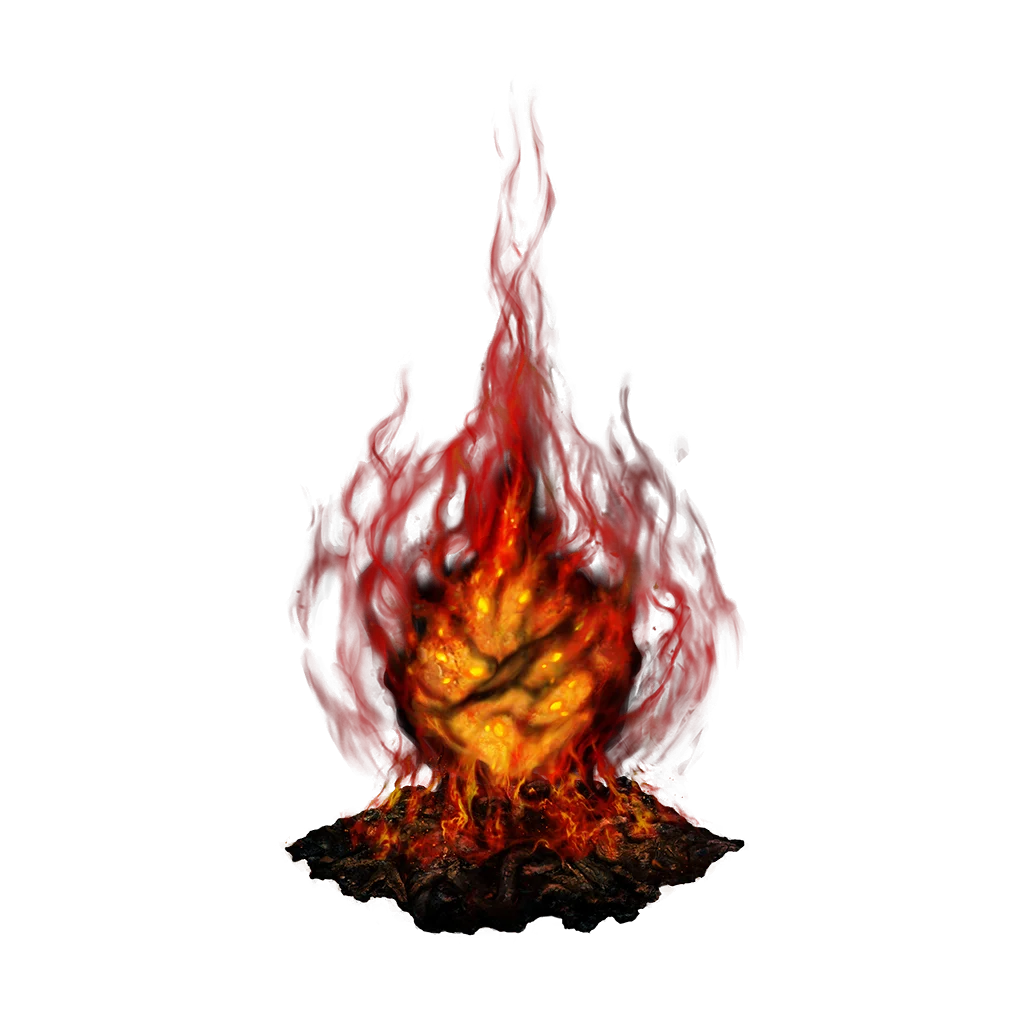 Messmer's Kindling
The kindling that burned inside Messmer the Impaler. A dark thing, eaten away at by a wicked serpent. Burns the sealing tree said to be found at the old Rauh ruins.
❋ DLC · ORDERThe Common Soldiers of Messmer's Army
Conscripts in unending war, soot on the inner face▾
The Common Soldiers of Messmer's Army
"Cloth armor of the rank-and-file soldiers of Messmer's army. A pitch-dark soot clings to it, much like the inner faces of the men who wore them."
From the Common Soldier Cloth Armor description
Messmer's army is structured in three rings: the Black Knights (his command), the Fire Knights (his intimates), and below both the rank-and-file Messmer Soldiers and Common Soldiers, the conscripted bulk of the campaign against the Hornsent. The Common Soldier Cloth Armor description gives the canon's most pitiless one-line gloss on conscript morale: 'Cloth armor of the rank-and-file soldiers of Messmer's army. A pitch-dark soot clings to it, much like the inner faces of the men who wore them.' The soot is Messmer's flame; the inner-face line is the canon's quiet argument that long exposure to that flame did to ordinary soldiers what it would later do to Messmer himself.
The Messmer Soldier Armor description makes the Black Knights' Scadutree-in-gold contradiction visible at the lowest rank too: 'A ragged cloak is draped over rusted mail. Though the chestpiece features a Scadutree motif, gold has been used for its engraving. A small consolation to those forced to wage a war without grace or honor.' The same line appears, almost verbatim, on the Black Knights' armour; the consolation, in other words, was issued at every level of the army identically, because every level of the army needed it. The altered version adds the canon's quietest summary of what the war was: 'The mail has rusted while fighting in unending war.' Marika's cleansing crusade, by the time the Tarnished walks through Belurat's outskirts, has been going on long enough that mail rusts before it returns home.
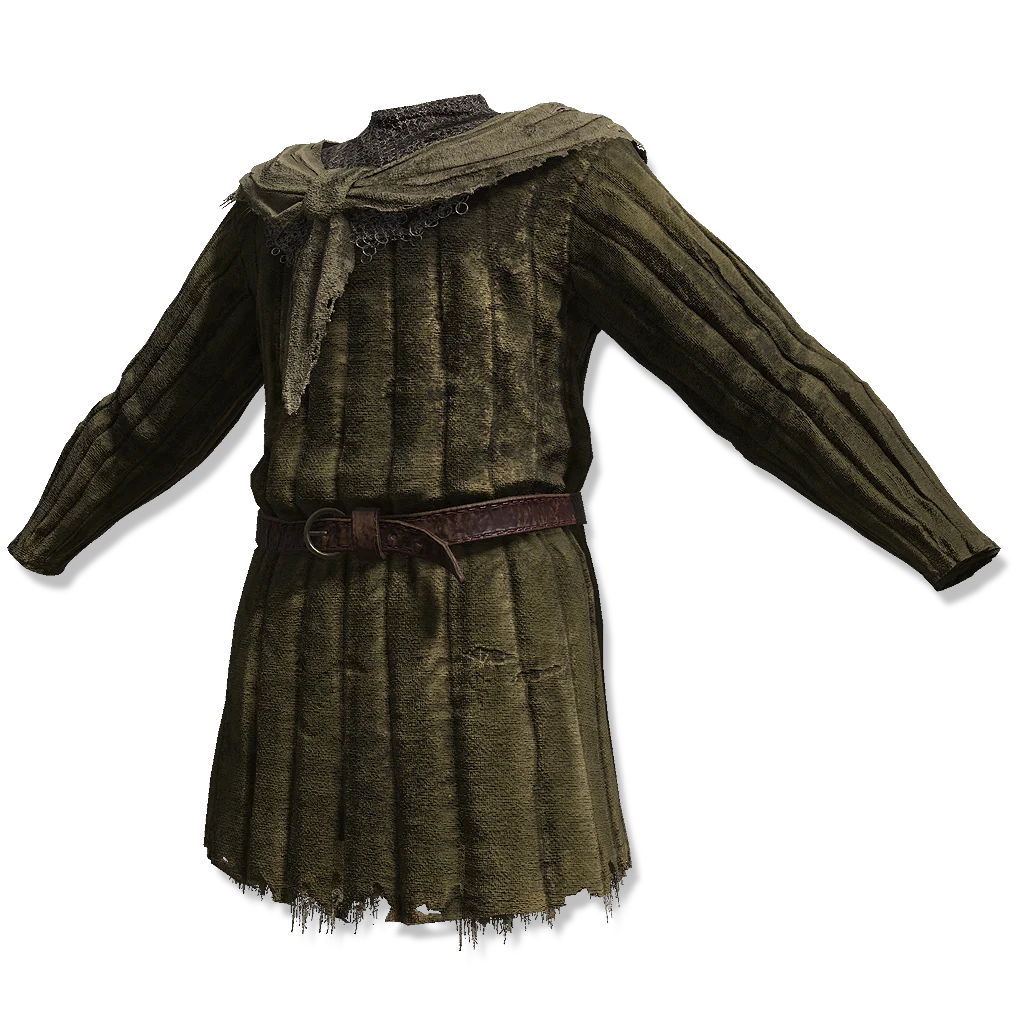 Common Soldier Cloth Armor
Cloth armor of the rank-and-file soldiers of Messmer's army. A pitch-dark soot clings to it, much like the inner faces of the men who wore them.
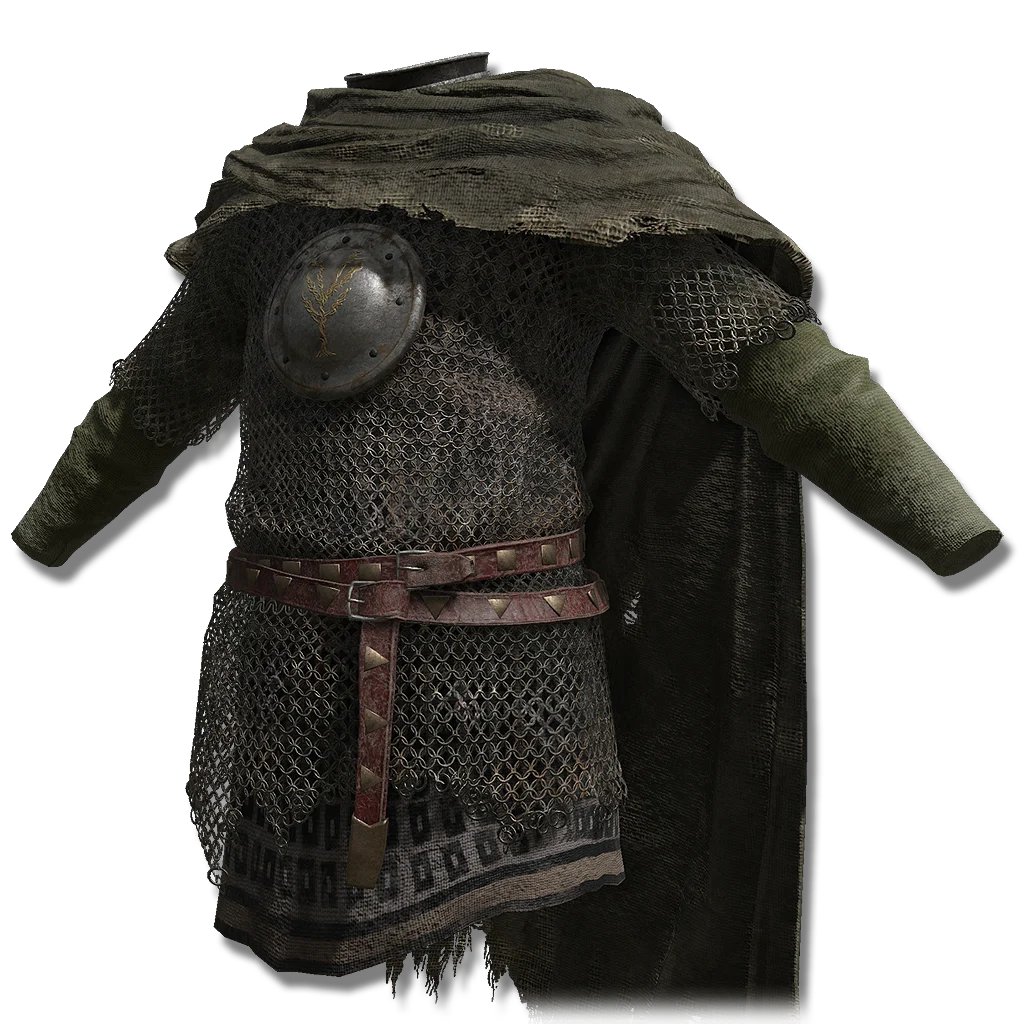 Messmer Soldier Armor
A ragged cloak is draped over rusted mail. Though the chestpiece features a Scadutree motif, gold has been used for its engraving. A small consolation to those forced to wage a war without grace or honor.
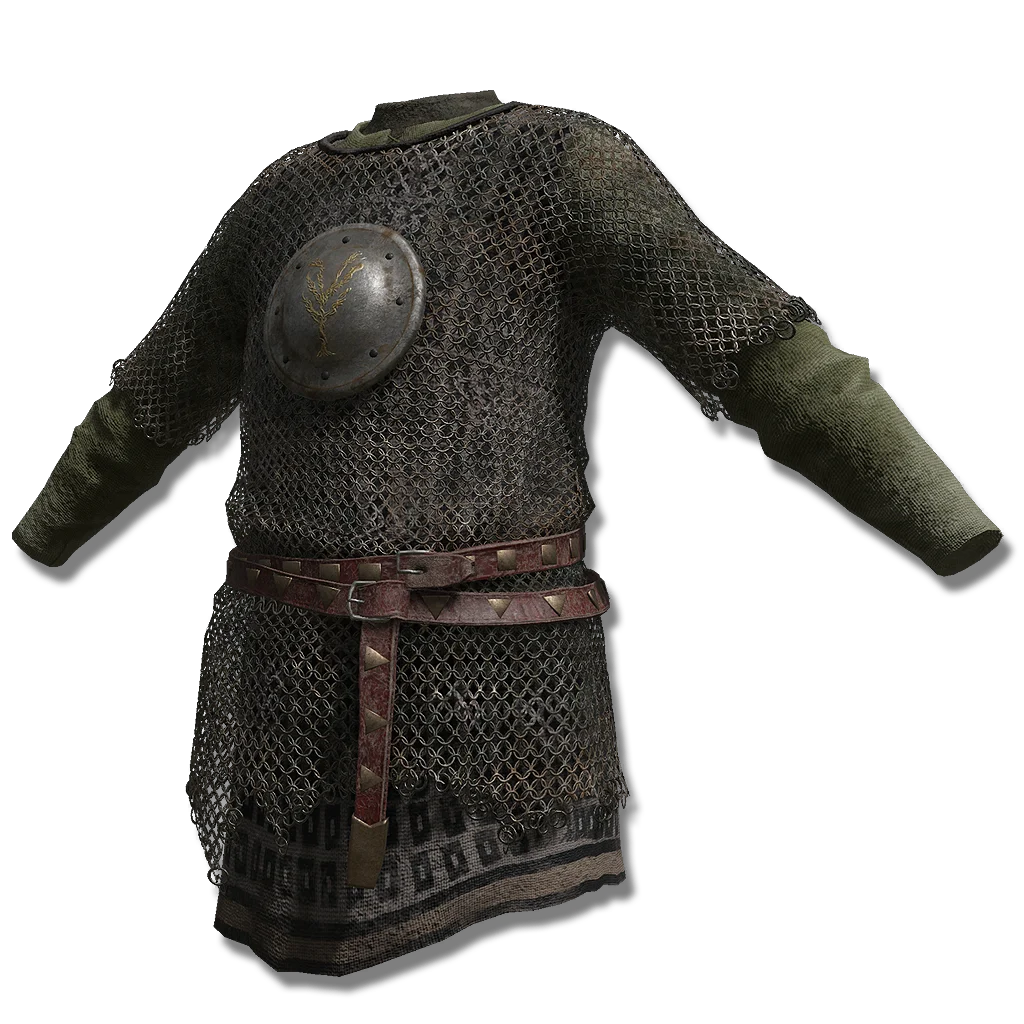 Messmer Soldier Armor (Altered)
The mail has rusted while fighting in unending war. Though the chestpiece features a Scadutree motif, gold has been used for its engraving.
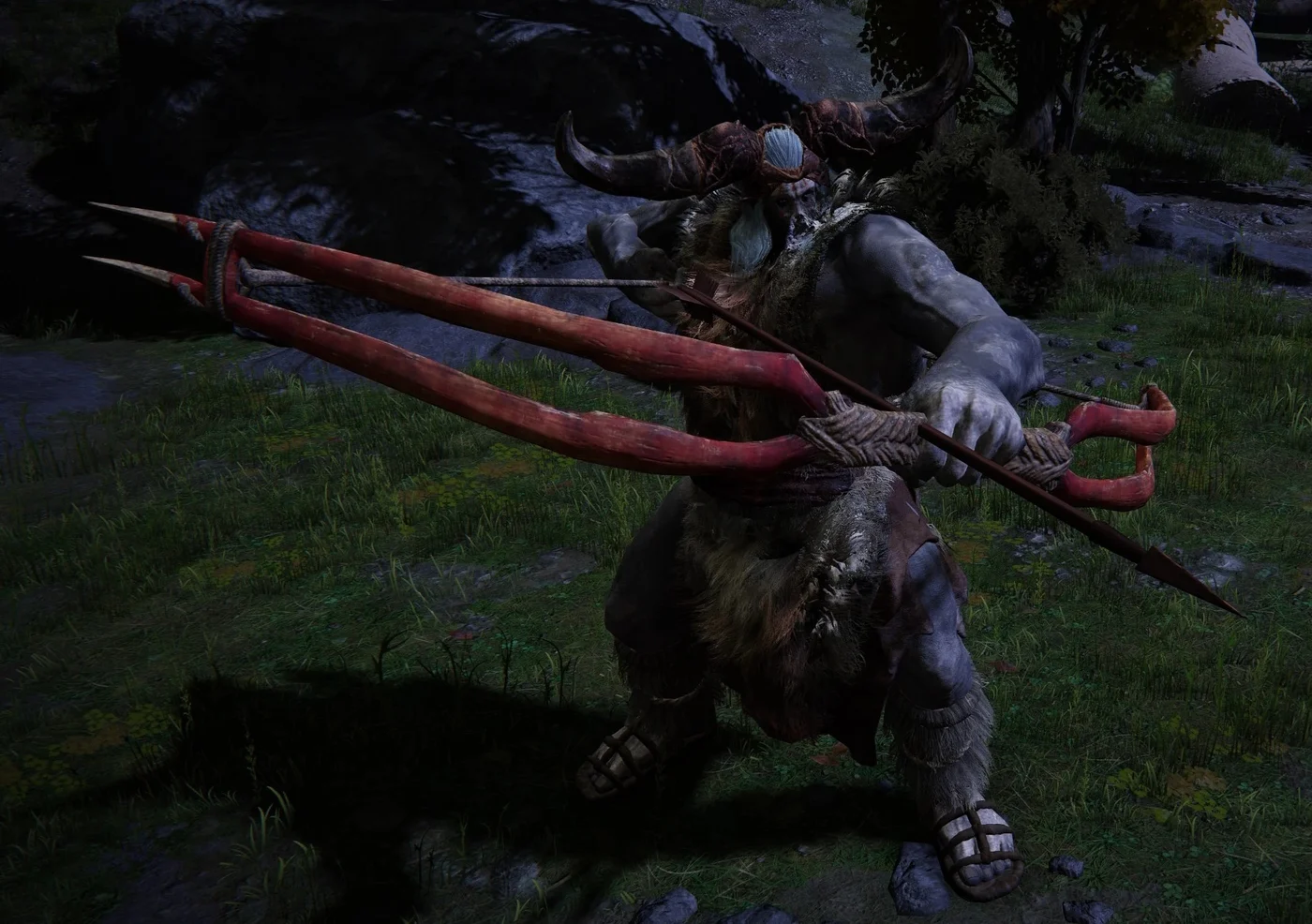 ◈ TRIBE
The Ancestral Followers
Hunter-tribe of Siofra, awaiting buds on their flesh▾
The Ancestral Followers
"The ancestral followers believe that the horns of a long-lived beast continue to bud like antlers, over and over again, until the beast one day becomes an ancestral spirit."
From the Clarifying Horn Charm description
The Ancestral Followers are the hunter-tribe who walk the underground rivers of Siofra and Nokron, sworn to the Regal Ancestor Spirit and the smaller Ancestor Spirit beside it. Their faith stands apart from the Erdtree and refuses to be absorbed into it. The Fur Leggings flavour text states their position with rare clarity: 'The ancestral followers keep their distance from the Erdtree, awaiting new buds. They are certain to sprout from their very flesh, and indeed, their souls.' What they wait for is to become ancestor spirits themselves, to grow horns out of their own bodies, to be antlered like the great stags they worship.
Their theology is recorded in the Clarifying Horn Charm flavour text, the canon's clearest statement of a non-Erdtree afterlife: 'The ancestral followers believe that the horns of a long-lived beast continue to bud like antlers, over and over again, until the beast one day becomes an ancestral spirit.' Their weapons reflect that belief, the Greathorn Hammer 'imbued with the power of ancestral spirits,' the Horn Bow that 'imbues arrows fired with magic damage', and their architecture is the underground temple-clearings whose ritual fires they tend through nights longer than any Erdtree priest's vigil. The Tarnished, descending into Siofra, walks through a faith the Erdtree's priests would say does not exist.
The ancestral followers believe that the horns of a long-lived beast continue to bud like antlers, over and over again, until the beast one day becomes an ancestral spirit.
The ancestral followers keep their distance from the Erdtree, awaiting new buds. They are certain to sprout from their very flesh, and indeed, their souls.
Huge thick horn carved with tree ring-like markings adapted into a bludgeoning weapon. Wielded by ancestral follower warriors. The ancient horn is imbued with the power of ancestral spirits.
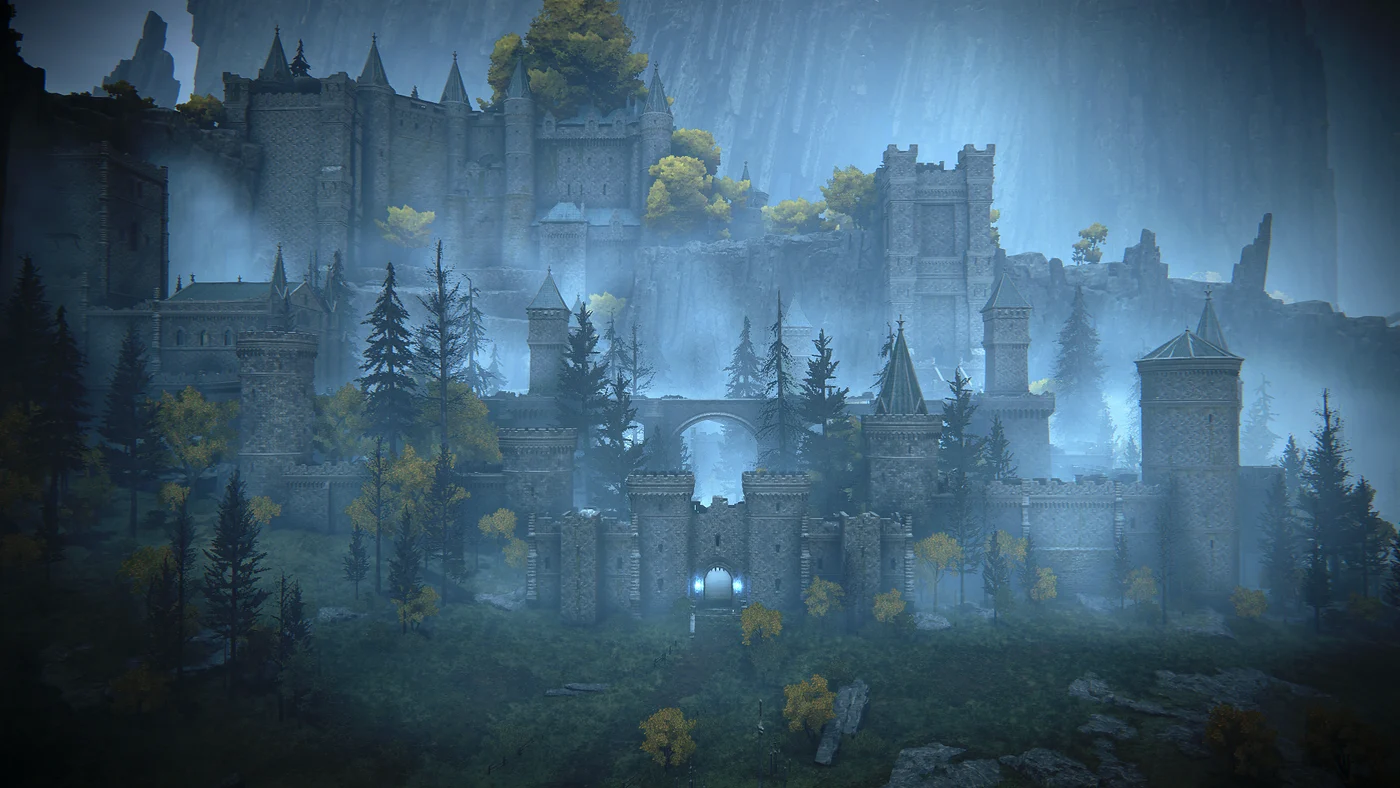 ◈ ORDER
The Cuckoos of Raya Lucaria
Knights sworn to Raya Lucaria, broken in the siege of Caria Manor▾
The Cuckoos of Raya Lucaria
"The resting place of the contemptible Cuckoos. Lost in the siege of Caria Manor."
From the Monument: Cuckoos of Caria Manor
The Cuckoos are the most thoroughly defeated faction in the Lands Between's intellectual history, the martial order sworn to Raya Lucaria, the knights the academy kept under contract to wage its wars. Their armour identifies the philosophy: the Cuckoo Knight Armor description records the emblem and the attitude both. 'Armor worn by Raya Lucaria Academy knights. Its left breast is emblazoned with a peering cuckoo, whence came their name. Perhaps the bird's shrewd gaze is an expression of their refusal to be mere servants of the academy.' A cuckoo lays its eggs in another bird's nest; but these Cuckoos never made the nest their own, for they were the academy's knights, and remained so to the last.
Their attempt to break Caria fell short. The Cuckoos of Caria Manor monument records their grave: 'The resting place of the contemptible Cuckoos. Lost in the siege of Caria Manor.' After the academy turned on Caria and loosed its Cuckoo Knights on the manor, almost certainly to depose Rennala and the Carian Royal House together, the Carian Knights and the manor's sorcerers cut them down. Their distinctive Cuckoo Glintstone, in the Glintstone Craftsman's Cookbook, is named a 'faux sorcery' : an imitation, wrought from broken glintstone, of the academy's own glintstone magic. Even their craft was a forgery of the true sorceries of the academy they served.
Armor worn by Raya Lucaria Academy knights. Its left breast is emblazoned with a peering cuckoo, whence came their name. Perhaps the bird's shrewd gaze is an expression of their refusal to be mere servants of the academy.
The resting place of the contemptible Cuckoos. Lost in the siege of Caria Manor.
A record of crafting techniques left by a glintstone craftsman who served the academy. Contains information on 'faux sorceries,' such as they were called.
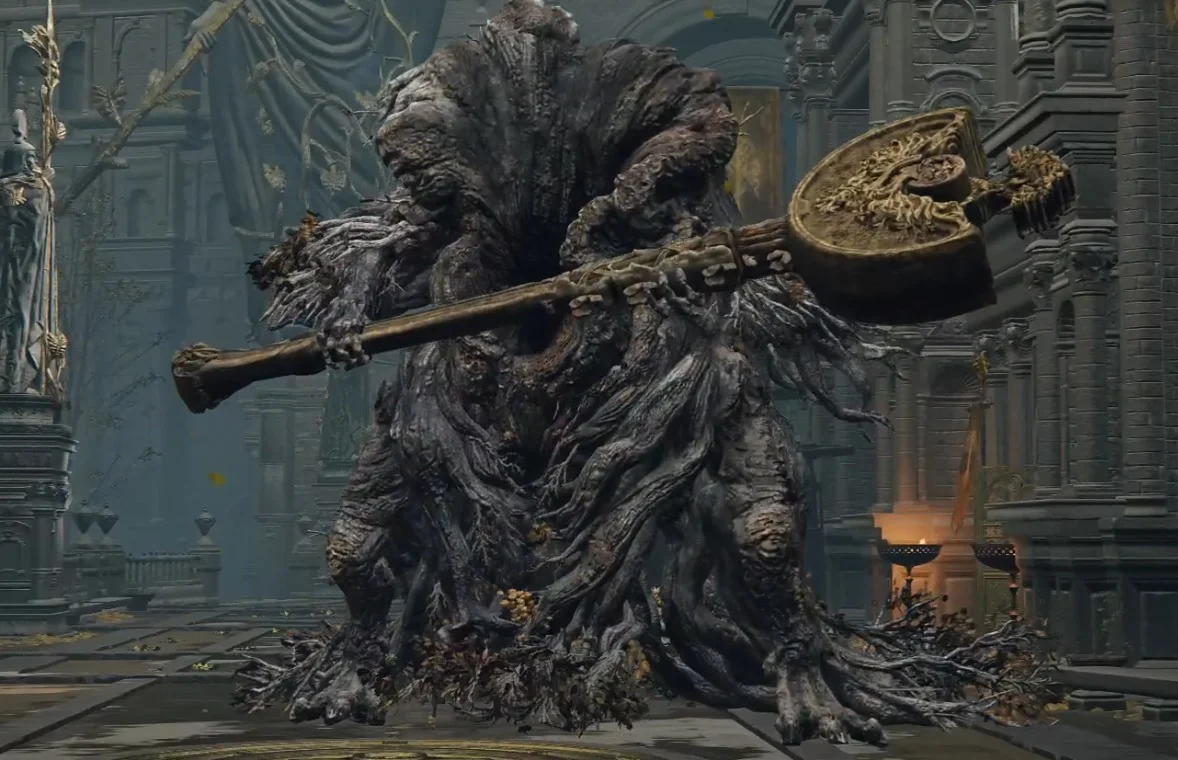 ◈ GUARDIAN
The Erdtree Avatars
Tree-spirit guardians of the Minor Erdtrees, withering in pact▾
The Erdtree Avatars
"In accordance with an ancient pact with the Erdtree, it is said that their deaths led not to destruction, but instead to renewed, eternal life as guardians."
From the Guardian Garb description
"It is said that the blood-red flowers blooming on their backs mark the senescence of their ancient pact. Perhaps the guardians are part tree already."
From the Guardian Garb (Full Bloom) description
The Erdtree Avatars are the tree-spirits who guard the Minor Erdtrees scattered across the Lands Between, the small offspring-trees the great Erdtree drops, each one a node of grace continuing the parent's lineage. They are not, strictly, born; they are pacted. The Guardian Garb flavour text records the pact: 'In accordance with an ancient pact with the Erdtree, it is said that their deaths led not to destruction, but instead to renewed, eternal life as guardians.' Who each Avatar was before the pact, the text does not say; it records only that death was not destruction but a remaking, an eternal vigil in the tree's service.
Their bodies show the price. The Staff of the Avatar names them as 'Wielded by the avatars who protect the Minor Erdtrees. The avatars, emerging in the wake of the Elden Ring's shattering, were determined to protect the withering Erdtree's offspring.' After the Shattering, the great Erdtree itself began to wither, and the Avatars are now the canon's most visibly senescent order: the Guardian Garb (Full Bloom) describes red flowers blooming on their backs, and the flavour text concedes the obvious, 'it is said that the blood-red flowers blooming on their backs mark the senescence of their ancient pact. Perhaps the guardians are part tree already.' They protect a child-tree they will outlive only if the parent-tree is restored.
Ceremonial staff depicting the Erdtree in its historic radiance. Wielded by the avatars who protect the Minor Erdtrees. The avatars, emerging in the wake of the Elden Ring's shattering, were determined to protect the withering Erdtree's offspring.
Engraved golden garb. Worn by the guardians of the Minor Erdtrees. In accordance with an ancient pact with the Erdtree, it is said that their deaths led not to destruction, but instead to renewed, eternal life as guardians.
It is said that the blood-red flowers blooming on their backs mark the senescence of their ancient pact. Perhaps the guardians are part tree already.
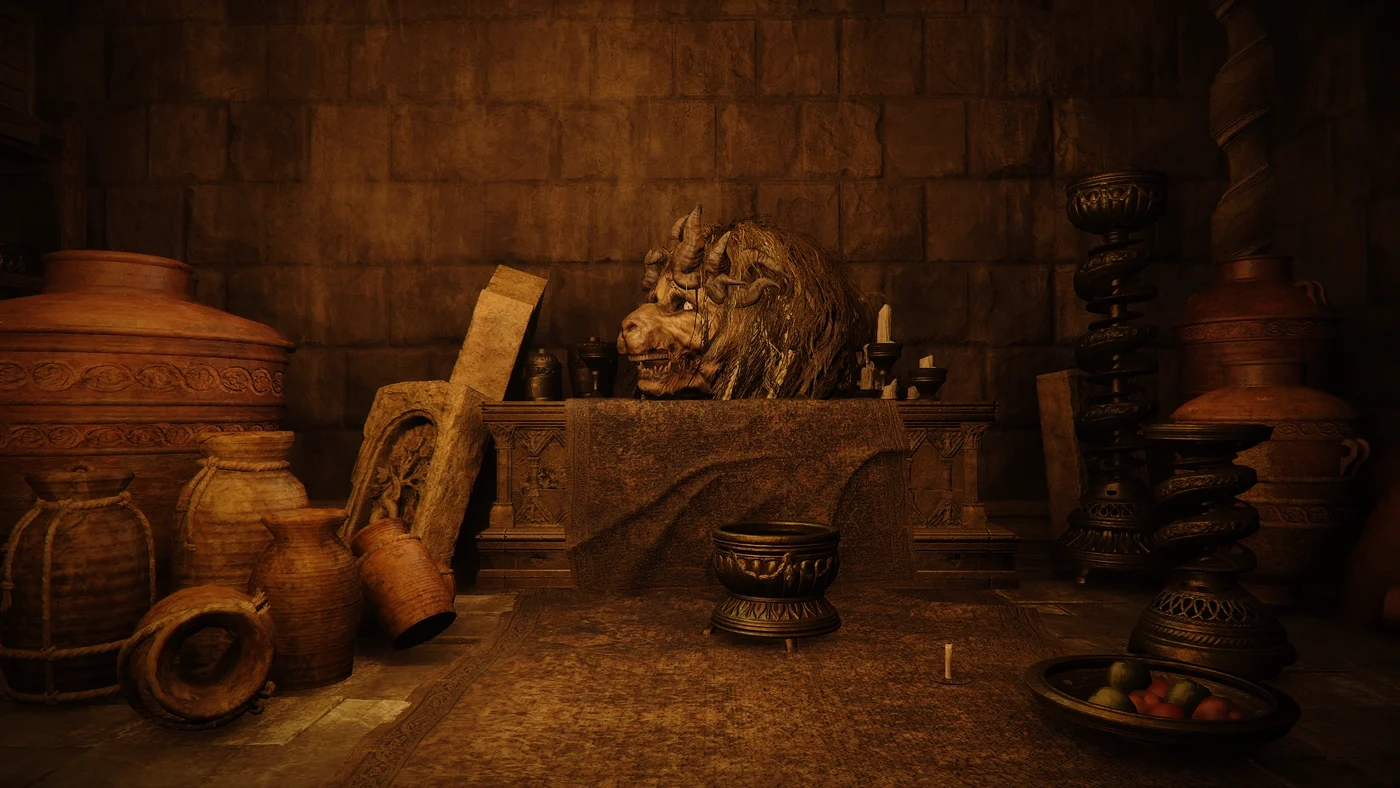 ❋ DLC · ORDER
The Hornsent Inquisitors
Spiral-tower torturers, holy work behind the barb▾
The Hornsent Inquisitors
"The inquisitor hags wield barbed candlesticks. Inquisitions often perplexed the minds of the uninitiated, and so seniority was viewed as an asset."
From the Inquisitor Ashes description
Long before Messmer's burning, the Hornsent had their own inquisitors. The Hornsent's spiral-tower theology had a parallel apparatus of coercive questioning whose iconography survives in the Realm of Shadow's incantations and weapons. The Giant Golden Arc incantation description names the apparatus: 'Sorcery of the inquisitors of the tower, wielded as an incantation of the spiral. A swing of the arm releases a giant golden arc. … The arc resembles the barb, a known symbol of coercive questioning.' The Hornsent inquisitors held the spiral as their sigil and the barb as their tool; gold-tipped barbs were ceremonial and torture-implements at once.
Their pay and standing are recorded in the Golden Horn Tender flavour text: 'Old currency used by hornsent made by coating spiral horns with gold. … Once bestowed upon inquisitors as an honor.' The Inquisitor Ashes summary preserves the social architecture: 'The inquisitor hags wield barbed candlesticks. … Inquisitions often perplexed the minds of the uninitiated, and so seniority was viewed as an asset.' Old women, in other words, conducted the torture. The most senior of them, Jori, wielded the Barbed Staff-Spear, a greatstaff whose tip bristles with the golden barbs of inquisition. The Bonny Village potentates, with their butcher knives and caterpillar masks, are the Hornsent's craftsmen-violence; the Inquisitors were the same culture's formal-violence wing. The two were not in opposition. The Hornsent's brutality was its own, Messmer arrived to a society already practiced in cleansing.
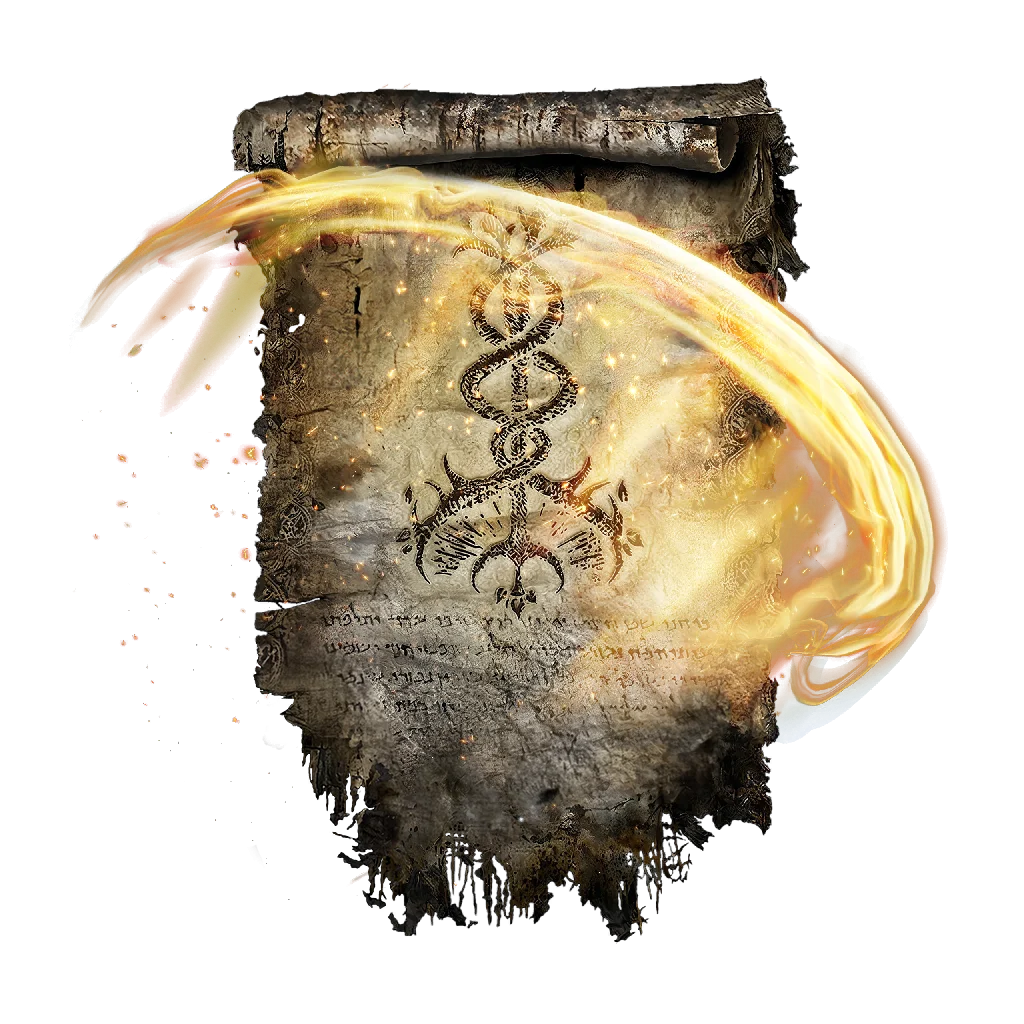 Giant Golden Arc
Sorcery of the inquisitors of the tower, wielded as an incantation of the spiral. The arc resembles the barb, a known symbol of coercive questioning.
 Golden Horn Tender
Old currency used by hornsent made by coating spiral horns with gold. Once bestowed upon inquisitors as an honor.
The inquisitor hags wield barbed candlesticks. Inquisitions often perplexed the minds of the uninitiated, and so seniority was viewed as an asset.
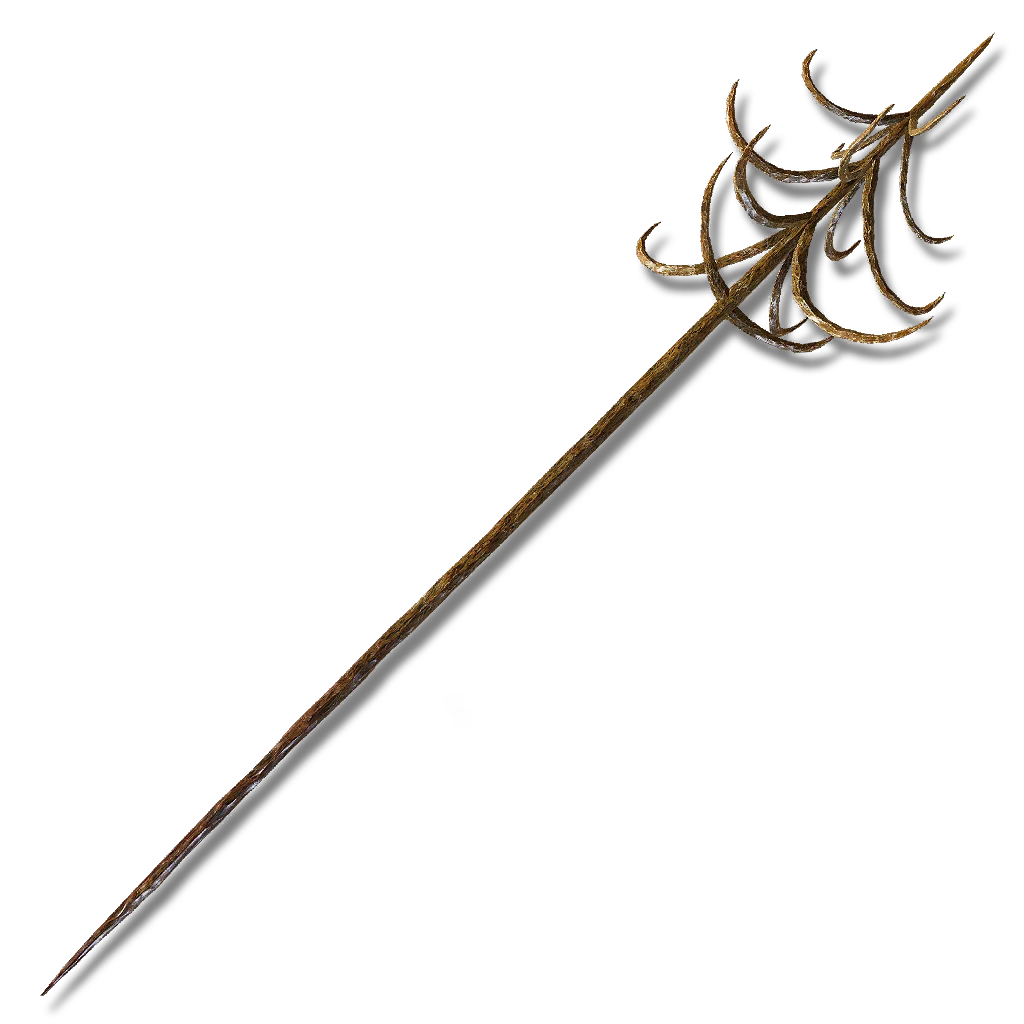 Barbed Staff-Spear
Greatstaff of Jori, elder inquisitor. The tip bristles with golden barbs symbolic of the inquisition's torture.
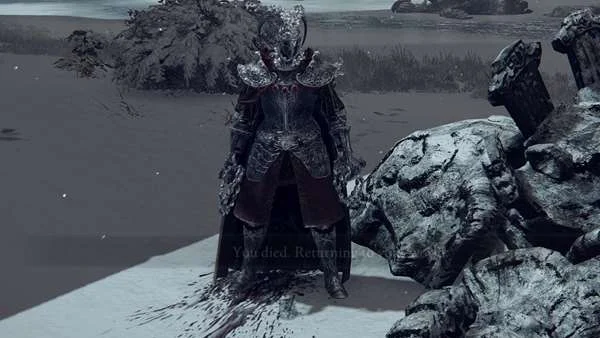 ◈ ORDER
The Pureblood Knights of Mohgwyn
Sworn to a dynasty that has not yet begun▾
The Pureblood Knights of Mohgwyn
"Soak the cloth with a maiden's blood... The blood of anyone's maiden will do. You are maidenless, after all."
Varré's offer (Lord of Blood's Favor)
"Proof that one is a glorious knight of the new Dynasty of Mohgwyn that the Lord of Blood will inaugurate. For Mohg yet slumbers beside the Divinity. Be patient. The new dynasty is nigh."
From the Pureblood Knight's Medal
The Pureblood Knights are the order Mohg, Lord of Blood, has been founding for the dynasty he has not yet inaugurated. Their oath is administered by Varré, the Tarnished's first companion, and the trial is recorded in the two Lord of Blood's Favor descriptions. First the white cloth: 'Pure white oath-cloth given by Varré. The final trial to be anointed a Knight of Mohg, Lord of Blood. "Soak the cloth with a maiden's blood... The blood of anyone's maiden will do. You are maidenless, after all."' Then, after the cloth is soaked: 'Fully reddened oath-cloth, dyed in a maiden's blood. The final trial is complete. Luminary Mohg is sure to welcome you into his service, as a knight who will lay the foundations for his dynasty.'
What dynasty Mohg means is the canon's slow joke. The Pureblood Knight's Medal flavour text states it almost wryly: 'Proof that one is a glorious knight of the new Dynasty of Mohgwyn that the Lord of Blood will inaugurate. For Mohg yet slumbers beside the Divinity. Be patient. The new dynasty is nigh.' The Divinity is Miquella, abducted in his cocoon. The Knights are sworn to a king who is not yet ascended, attending a court that is not yet opened, in a dynasty whose first generation has not yet been born, and they have, by the time of the Tarnished's arrival, mostly murdered each other in invasions through the Bloody Finger's instruction. The Pureblood Knight is, in the strictest measure, a knight of an absence.
Pure white oath-cloth given by Varré. The final trial to be anointed a Knight of Mohg, Lord of Blood. 'Soak the cloth with a maiden's blood... The blood of anyone's maiden will do.'
Fully reddened oath-cloth, dyed in a maiden's blood. The final trial is complete. Luminary Mohg is sure to welcome you into his service, as a knight who will lay the foundations for his dynasty.
Proof that one is a glorious knight of the new Dynasty of Mohgwyn that the Lord of Blood will inaugurate. For Mohg yet slumbers beside the Divinity. Be patient. The new dynasty is nigh.
◈ DRAGONSLansseax and Florissax, Priestess Dragons
Ancient dragons who took human form to commune with knights▾
Lansseax and Florissax, Priestess Dragons
Lansseax is the sister of Lichdragon Fortissax, Godwyn the Golden's sworn friend, the dragon who fought long and hard against the Death within the Prince of Death's body. Lansseax's Glaive incantation describes her own departure from the dragon-form: 'Lansseax was the sister of Fortissax. It is said that she took the form of a human to commune with the knights as a priestess of the ancient dragon cult.' She is the canon's most explicit example of a great dragon assuming a smaller, mortal shape, a priestess incarnate among the same Leyndell knights who, after Godwyn's death, would worship her brother as a god of red lightning.
Her namesake, kin perhaps (no game text ever states the bond), is Florissax, the ancient dragon who walked the Realm of Shadow and, in time, came to know love. Vyke's Dragonbolt remembers Lansseax's own tenderness: 'Of all the knights, Vyke the Dragonspear was the one Lansseax loved the most.' Florissax, in her turn, finds her own knight in the Tarnished: the Ancient Dragon Florissax Spirit Ash description records the moment, 'Florissax assumed this spirit form to offer her service to a new lord.' Two priestess-dragons, two human knights chosen: the same fold of grace, repeated in two names so alike that the ear hears a lineage the canon never spells out.
Lansseax's GlaiveIncantation that channels the power of the ancient dragon Lansseax. Lansseax was the sister of Fortissax. It is said that she took the form of a human to commune with the knights as a priestess of the ancient dragon cult.
Of all the knights, Vyke the Dragonspear was the one Lansseax loved the most.
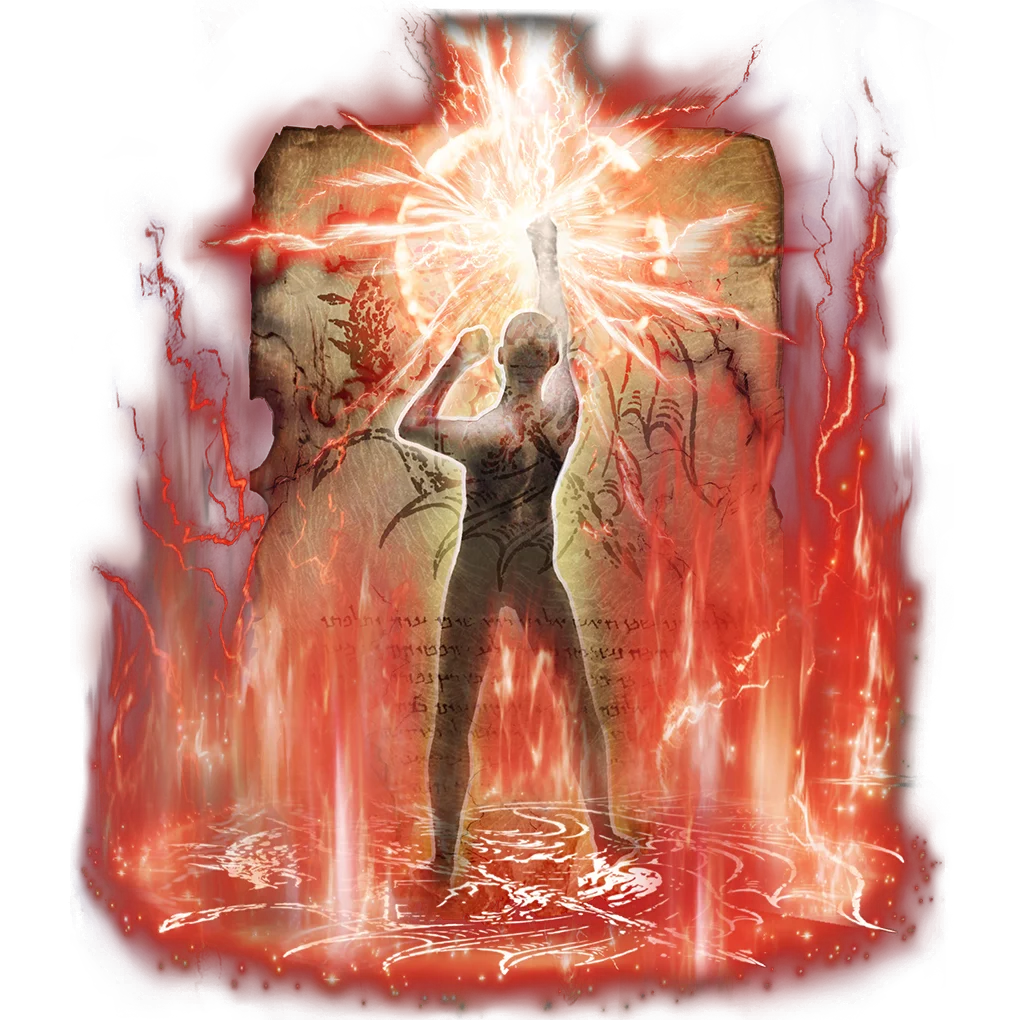 Dragonbolt of Florissax
Special incantation of the ancient dragon Florissax. There was a time when the priestess never knew love, and thus never used this incantation herself.
Florissax assumed this spirit form to offer her service to a new lord.
◈ ASSASSINAlecto, the Black Knife Ringleader
Numen mother of the assassins, the hand that organised the Plot▾
Alecto, the Black Knife Ringleader
Alecto is the architect of the Night of the Black Knives, the Numen woman tied to Ranni's plot, who organised the assassinations it required. The Black Knife Tiche Spirit Ash description names Alecto explicitly through her daughter's death: 'She was the daughter of the Black Knife Ringleader, Alecto, and was killed protecting her mother during their flight from the royal capital.' The Black Knife Armor entry establishes the order's composition: 'The assassins that carried out the deeds of the Night of the Black Knives were all women, and rumored to be Numen who had close ties with Marika herself.' Alecto, the ringleader, is necessarily kin of Marika.
Her flight from the Capital is the canon's quietest tragedy. After the Plot succeeded, Godwyn slain, the Rune of Death released, the Capital began to hunt the assassins; their kinship to Marika protected them only briefly. Alecto and Tiche fled together. Tiche died protecting her mother on the road. Alecto reached the Mountaintops of the Giants, where the Ringleader's Evergaol holds her still: a stasis-prison the Capital built for an assassin it could neither pardon nor execute. The Tarnished can fight her there, finishing what Marika would not. The Black Knife she carries bears the same death-imbued rite the assassins used that night.
Tiche was one of the assassins who, on the night of the plot, imbued her black knife with the Rune of Death and slew Godwyn the Golden. She was the daughter of the Black Knife Ringleader, Alecto, and was killed protecting her mother during their flight from the royal capital.
Black Knife ArmorThe assassins that carried out the deeds of the Night of the Black Knives were all women, and rumored to be Numen who had close ties with Marika herself. Crafted with scale armor that makes no sound.
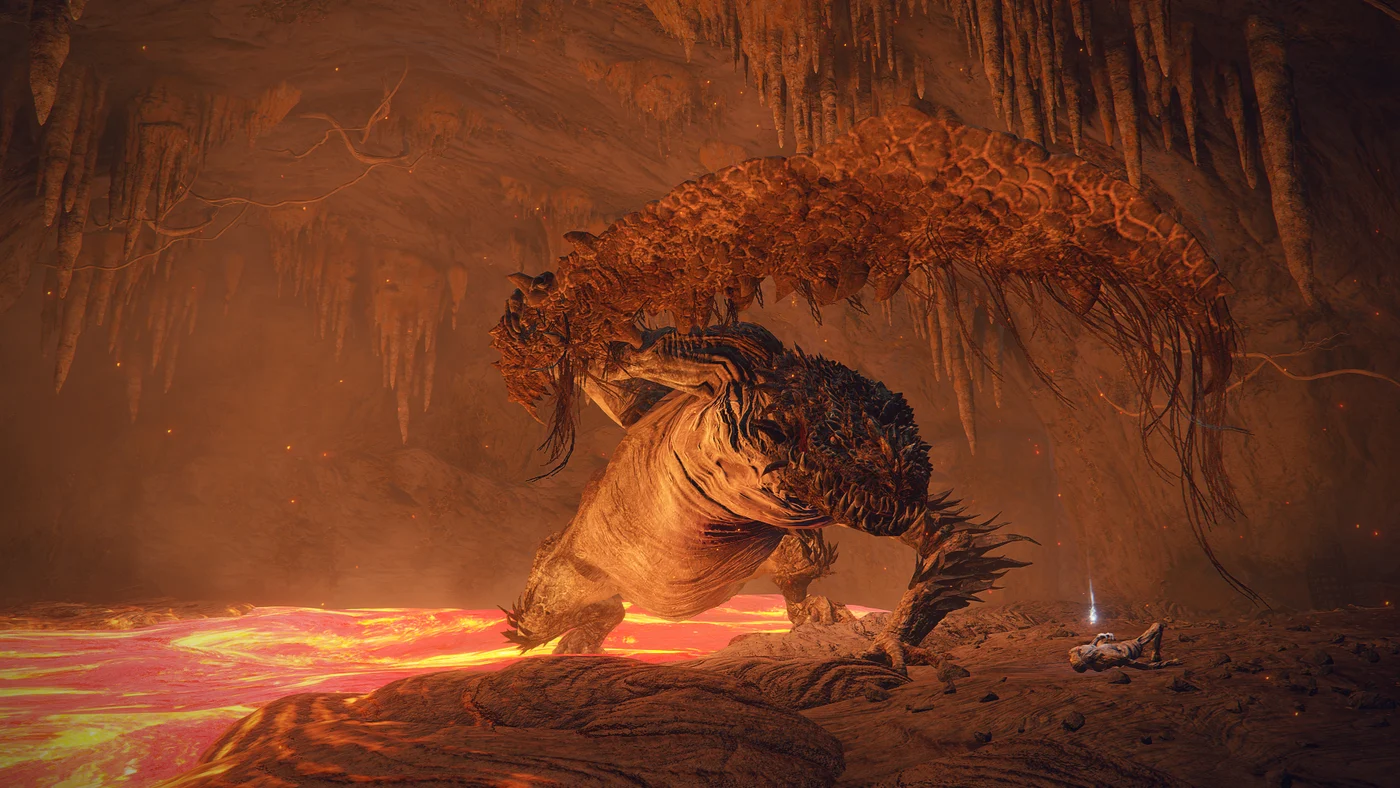 ◈ ENTITY
The Magma Wyrms
Cursed heroes who ate dragon-hearts and crawl the earth▾
The Magma Wyrms
"Curved greatsword wielded by Magma Wyrms. The shape resembles a dragon's jaw and is covered in hard scales. It's said these land-bound dragons were once humans heroes who partook in dragon communion, a grave transgression for which they were cursed to crawl the earth upon their bellies, shadows of their former selves."
From the Magma Wyrm's Scalesword description
The Magma Wyrms are not, strictly, dragons. They are the canon's clearest example of what dragon-communion costs a mortal who undertakes it. The Magma Wyrm's Scalesword description records the curse plainly: 'Curved greatsword wielded by Magma Wyrms. The shape resembles a dragon's jaw and is covered in hard scales. It's said these land-bound dragons were once humans heroes who partook in dragon communion, a grave transgression for which they were cursed to crawl the earth upon their bellies, shadows of their former selves.'
What punished them was not the Greater Will but the inheritance itself. Dragon-blood, drunk by a mortal, transforms the body unevenly: sword-arm hardening into scaled jaw, legs withering into a long body that drags behind, mind retaining enough of the human hero to know what it has lost. Theodorix, named in his magma-incantation as 'The name of the ancient troll warrior Theodorix lives on—as a hero of the War against the Giants.' is the only Magma Wyrm whose pre-curse name the canon preserves. The others, at Mt. Gelmir's volcano, the Ruin-Strewn Precipice's ledge, the Gael Tunnel's depth, are anonymous, cooked alive by the magma their human bodies could not have endured.
Curved greatsword wielded by Magma Wyrms. It's said these land-bound dragons were once humans heroes who partook in dragon communion, a grave transgression for which they were cursed to crawl the earth upon their bellies, shadows of their former selves.
Superior incantation of Dragon Communion. Channels the power of the great wyrm Theodorix. The name of the ancient troll warrior Theodorix lives on—as a hero of the War against the Giants.
 ◈ DRAGONS
The Glintstone Dragons
Lake-dragons of Liurnia, sworn or slain by Carian princesses▾
The Glintstone Dragons
The Glintstone Dragons are the lake-dragons of Liurnia, Smarag, Adula, and the dragon-eaten cousins whose bodies still drift in the lake's shallow water. They are smaller and craftier than their Caelid kin, hunted in the lake's reeds at twilight, and breathe a cold blue glintstone-fire that no Erdtree priest's seal can quench. The Adula's Moonblade sorcery description records the most famous of them in a single line: 'Adula, a devourer of sorcerers, was bested by Ranni and subsequently swore a knightly oath to her Dark Moon.' Adula, in other words, became Ranni's vassal, one of the four oath-sworn whom Rennala, in Ranni's name, calls during her Rebirth: the giant, the dragon, the beasts, Blaidd.
Their northern cousins are the Borealis-line, the ice dragons of the Mountaintops. The Borealis's Mist incantation records the canon's only mention of an entire dragon-civilisation lost to history: 'The ice dragons were once lords of the mountaintops long ago, until they were defeated by the Fire Giants and chased from the peak.' Borealis, the Freezing Fog, is the last surviving heir of that line. The Caelid revenger Ekzykes, 'Dragon Communion Revenger, did not forget his hatred even as he succumbed to the scarlet rot', is the rotted southern relative. Three branches, three deaths, one lake: the Glintstone Dragons are what survives of an old aerial nobility now reduced to the surface of water.
Sorcery of Adula, the Glintstone Dragon. Adula, a devourer of sorcerers, was bested by Ranni and subsequently swore a knightly oath to her Dark Moon.
Channels the power of Borealis, the Freezing Fog. The ice dragons were once lords of the mountaintops long ago, until they were defeated by the Fire Giants and chased from the peak.
Channels the power of Ekzykes, the Decaying. Ekzykes, Dragon Communion Revenger, did not forget his hatred even as he succumbed to the scarlet rot.
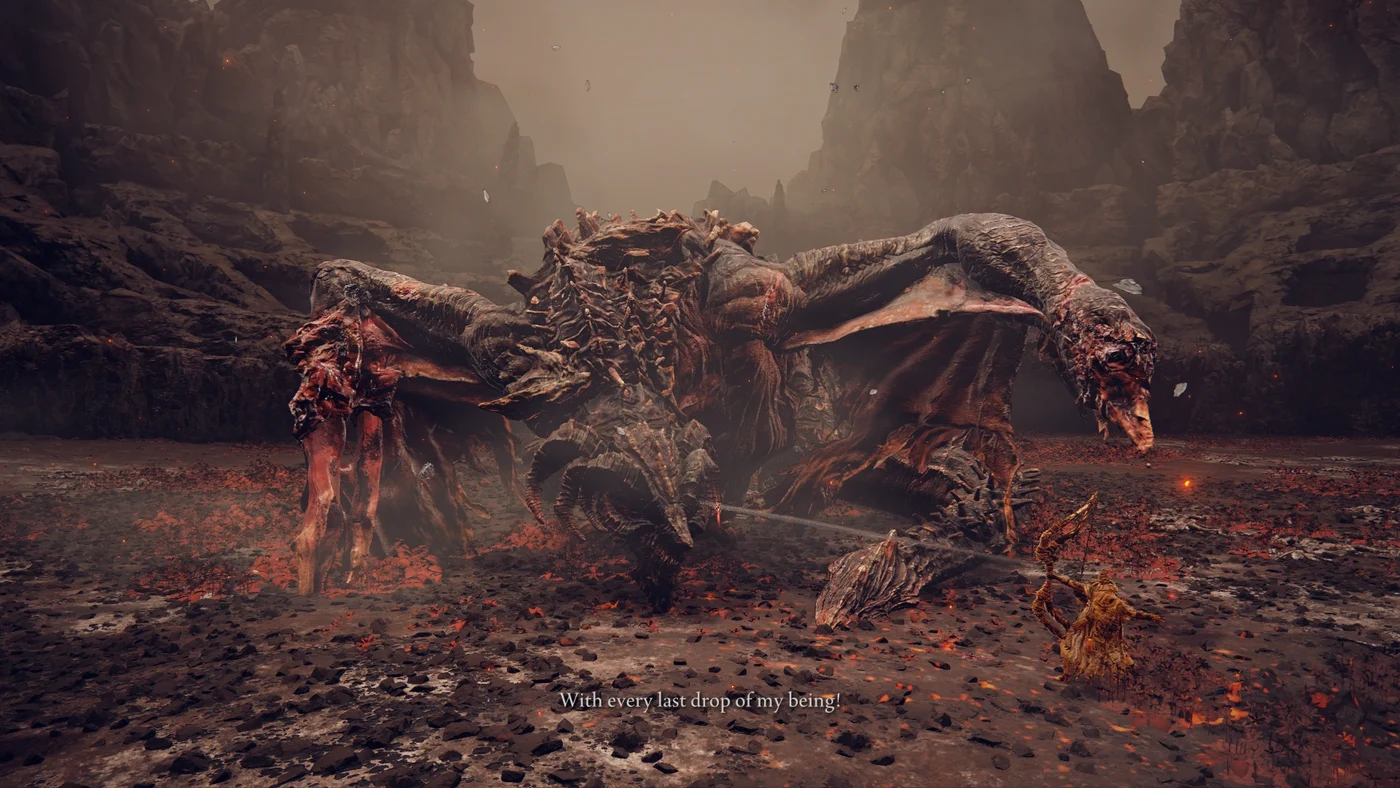 ❋ DLC · ORDER
The Drake Warriors
Mortal hunters who feed on dragon-flesh, broken at the Jagged Peak▾
The Drake Warriors
The Drake Warriors are the mortal hunters who pursue ancient dragons at the Jagged Peak, the Realm of Shadow's distant southern volcano where Bayle the Dread still rules. Their order is held together by a single substance: Dragon Communion Flesh, an imitation of dragonscale meat created by human hands 'used to sate the hunger of drake warriors, if only briefly.' Without it, the Drake Warriors waste away: the dragon-blood they have already drunk leaves them craving more, a hunger for the heat of dragons that nothing else will ever satisfy.
Igon is the only Drake Warrior whose name the canon preserves and whose face the Tarnished sees alive. Most of the others are corpses. The Igon's Loincloth flavour text, 'stripped from a corpse found in the aftermath of a battle, this scrap of cloth smells utterly foul', is also Igon's order's epitaph. The Drake Warriors who climbed the Jagged Peak before Igon were broken, like him, by the dragons they tried to slay. Most never came back down. Their honour is summarised in a phrase Igon's Armor repeats: 'The poor scavenger of battlefields found honor through Dragon Communion.' The honour, in their order, is the survival.
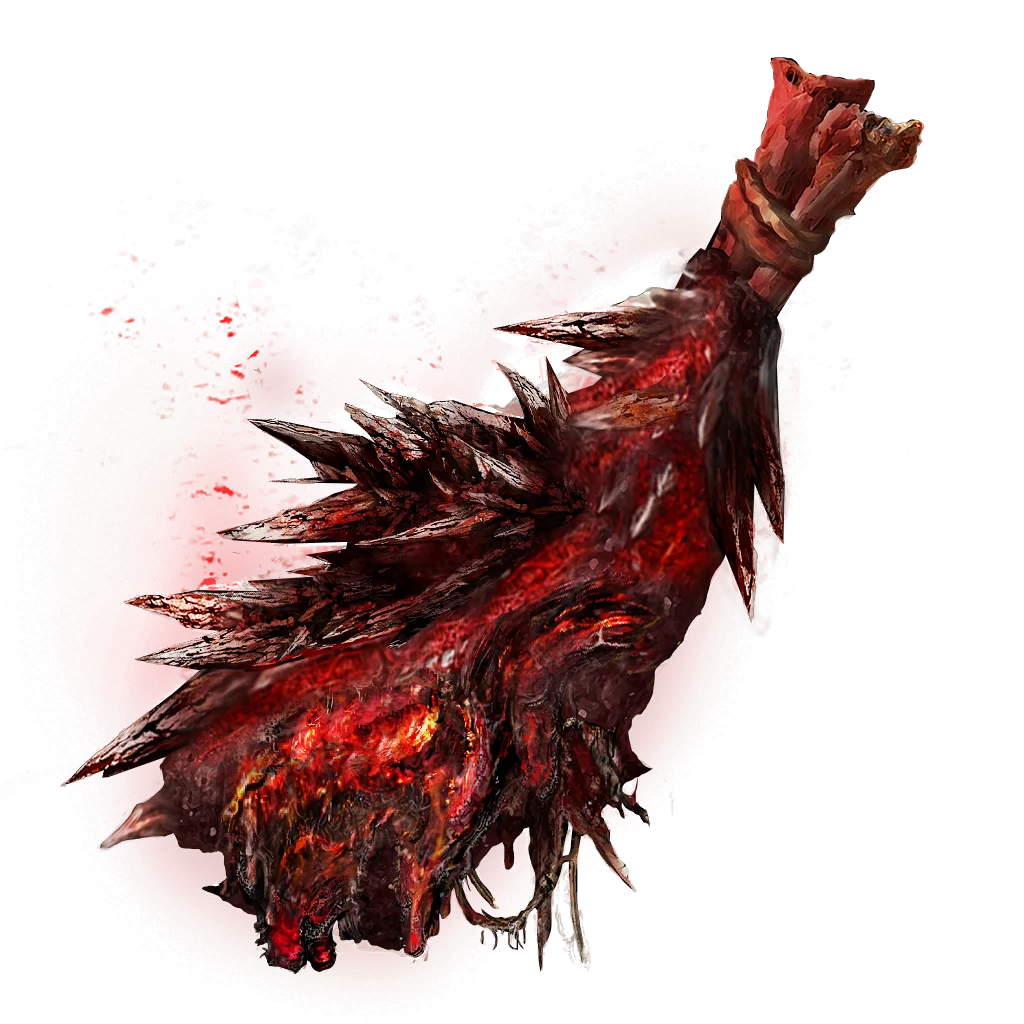 Dragon Communion Flesh
A lump of animal flesh with a heat that never cools. An imitation of dragonscale flesh created by human hands, used to sate the hunger of drake warriors—if only briefly.
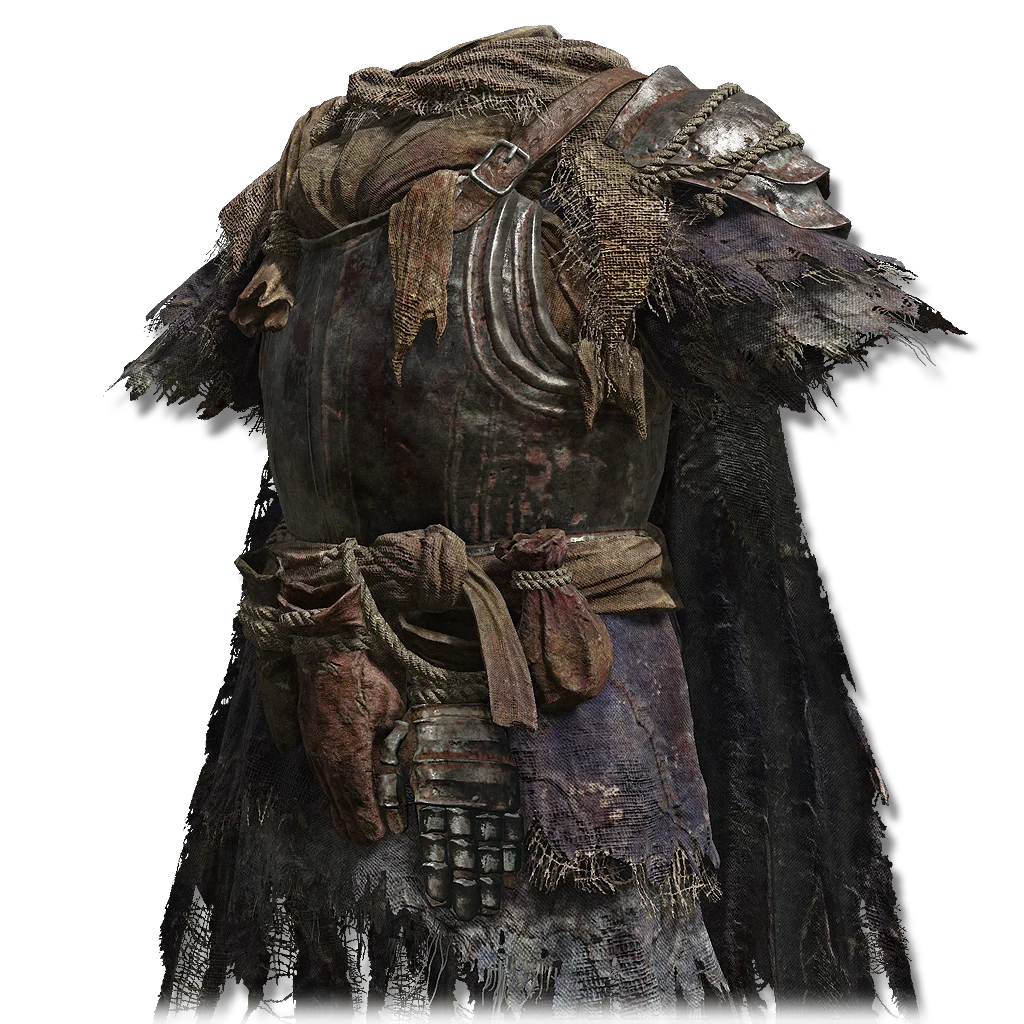 Igon's Armor
Armor of the broken drake warrior Igon, from a set comprised of a miscellany of parts. The poor scavenger of battlefields found honor through Dragon Communion.
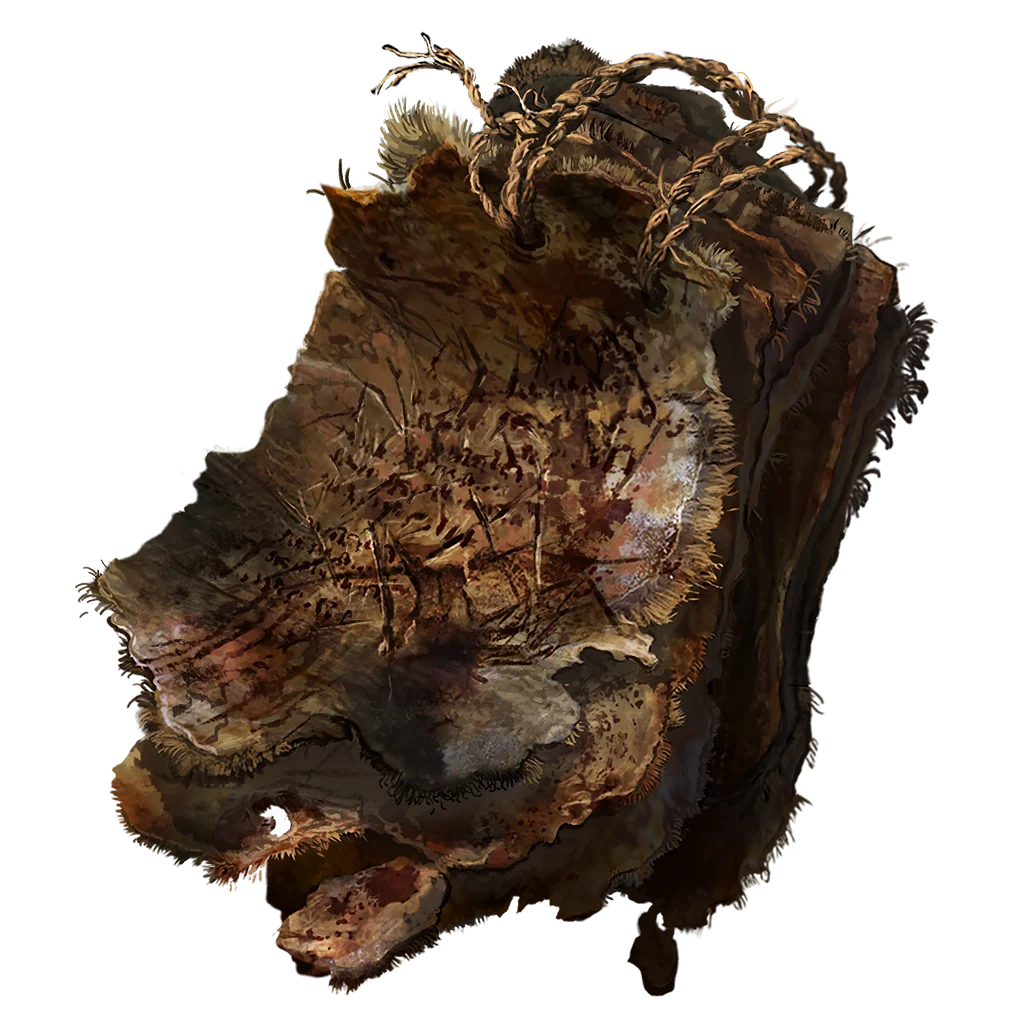 Igon's Cookbook [1]
A record of crafting techniques left by a warrior who challenged the vile dragon Bayle, only to be grievously injured and broken by fear. Contains details on how a mere mortal can fell a mighty dragon.
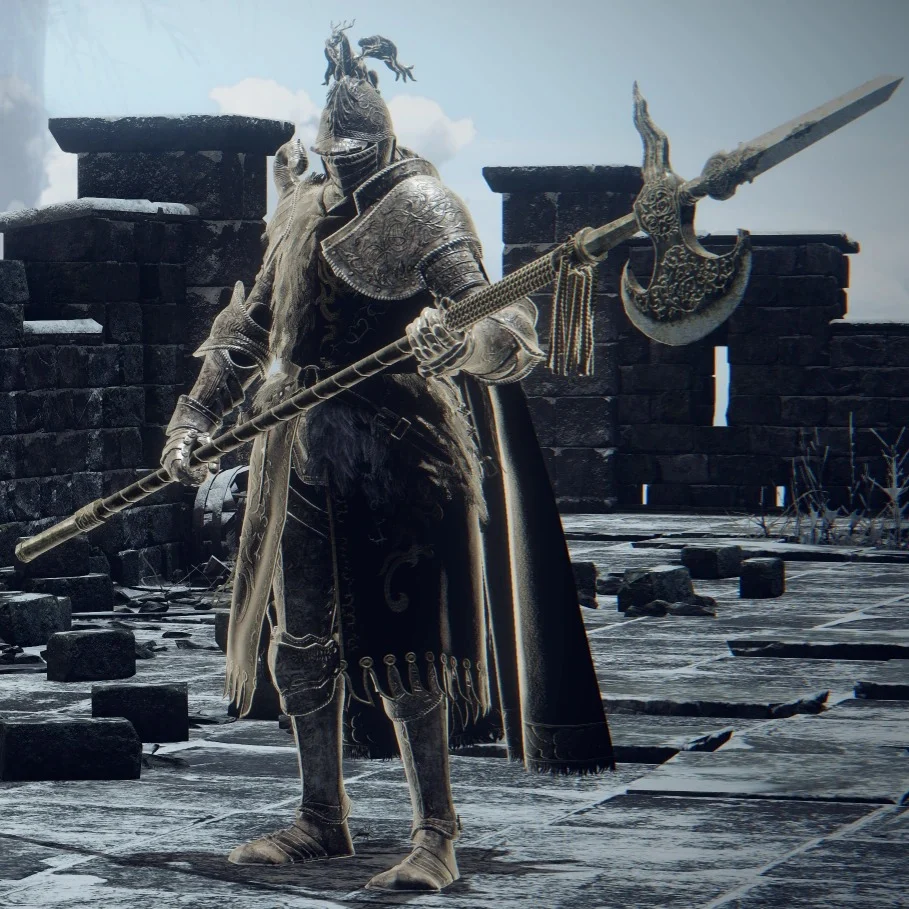 ◈ ORDER
The Banished Knights
Sworn to a fallen lord, made outcasts twice▾
The Banished Knights
"A finely-crafted halberd intricately engraved with an ancient motif. Given to knights who, whether by misfortune or misdeed, were forced to abandon their homes. Most of these knights were sent to the fringes, where they were forced to start anew with only despair for company."
From the Banished Knight's Halberd description
The Banished Knights are the sworn order of Lord Godfrey, the first Elden Lord, and after Marika stripped Godfrey of grace and sent him across the fog as a Tarnished, the Banished Knights chose exile rather than reassignment. The Banished Knight's Greatsword and Halberd flavour texts give the order's official rationale: 'Given to knights who, whether by misfortune or misdeed, were forced to abandon their homes. Most of these knights were sent to the fringes, where they were forced to start anew with only despair for company.' The misdeed of the Banished Knights, by Marika's measure, was loyalty to the wrong lord.
After Godrick took Stormveil, the surviving Banished Knights formed the castle's garrison, sworn to a Grafted parody because he was the last of Godfrey's bloodline still in the realm. Two of their finest, Engvall and Oleg, were called the Wings of the Storm. The Banished Knight Engvall ash-summary: 'Despite his banishment, he rejected the invitation of the Grace-Given Lord, instead keeping watch over a masterless castle for many years, gaining renown as a hero of the fringes.' Oleg made the opposite choice, accepted the Grace-Given Lord's call, slew a hundred traitors as his hand, and earned the Erdtree-burial Engvall refused. Two banished knights, two answers: the canon's clearest small-scale parable about what the Erdtree's grace asks a sworn man to forget.
Given to knights who, whether by misfortune or misdeed, were forced to abandon their homes. Most of these knights were sent to the fringes, where they were forced to start anew with only despair for company.
One of the two knights dubbed the Wings of the Storm. Despite his banishment, he rejected the invitation of the Grace-Given Lord, instead keeping watch over a masterless castle for many years, gaining renown as a hero of the fringes.
One of the two knights known as the Wings of the Storm. After his banishment, he attracted the notice of the Grace-Given Lord and later, having slain a hundred traitors as the Lord's hand, Oleg earned the hero's honor of Erdtree Burial.
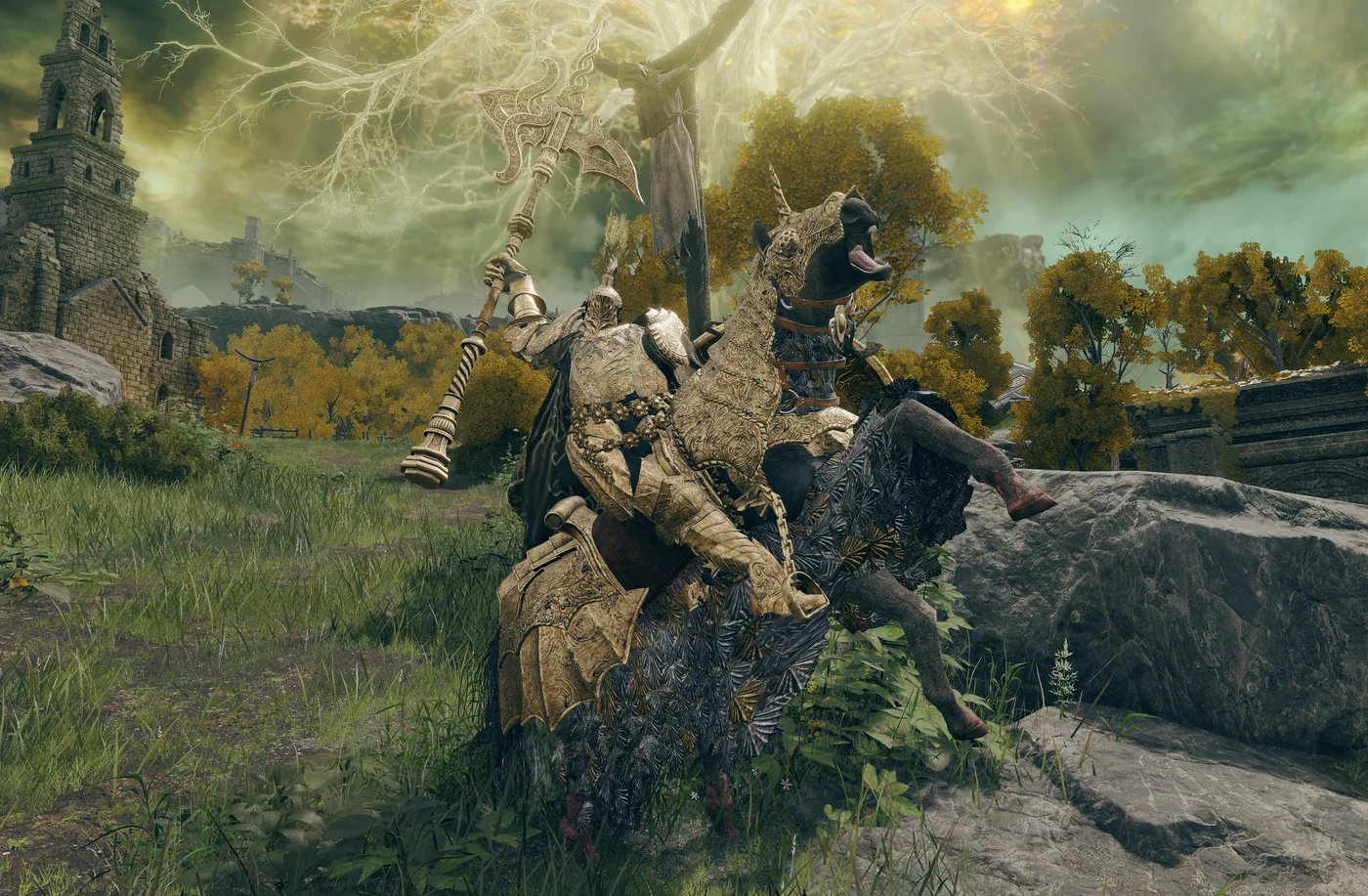 ◈ ORDER
The Tree Sentinels
Mounted golden guards, the shield before the sword▾
The Tree Sentinels
"The knights of Leyndell once modelled themselves after the Tree Sentinels. Their purpose is to protect that which deserves protection, and thus the shield always comes before the sword."
From the Greatshield Talisman description
The Tree Sentinels are the heaviest cavalry of the Erdtree's army, gold-plated knights on great horses, lance and halberd held in one hand, kite-shield in the other, holy gold etched into every plate of their armour. The Golden Halberd description states their order's name and weight: 'Weighty halberd forged of gold. Wielded by the Order of Tree Sentinels, heavily equipped knights. Deals holy damage. A masterfully crafted weapon that lives up to its heft, but is difficult for one of mere human strength to wield.' Mere human strength, the halberd's text notes, cannot wield such a weapon; whatever the order's knights are, they are no ordinary men.
Their oldest weapons preserve a stranger origin. The Dragon Greatclaw flavour text records what the Tree Sentinels of the deepest lineage carry: 'Weapon said to have been whittled from the claw of a great, ancient dragon, wielded by grotesque Tree Sentinels who yet serve the Erdtree. The claw is enwreathed with lightning, and tears through the dragons' feeble descendants with ease.' The misshapen Tree Sentinels who carry these claws did not fight the dragons before the Erdtree; they already served it. The Malformed Dragon armour records the turn: 'After the great ancient dragon Gransax attacked, the sentinels had an epiphany. The only way to truly protect the Erdtree was to become dragons themselves.' The Greatshield Talisman gives their motto: 'The knights of Leyndell once modelled themselves after the Tree Sentinels. Their purpose is to protect that which deserves protection, and thus the shield always comes before the sword.'
Weighty halberd forged of gold. Wielded by the Order of Tree Sentinels, heavily equipped knights. Deals holy damage. A masterfully crafted weapon that lives up to its heft, but is difficult for one of mere human strength to wield.
Weapon said to have been whittled from the claw of a great, ancient dragon, wielded by grotesque Tree Sentinels who yet serve the Erdtree.
Malformed golden armor. Adorned with various dragon imagery and worn by the misshapen Tree Sentinels. After the great ancient dragon Gransax attacked, the sentinels had an epiphany. The only way to truly protect the Erdtree was to become dragons themselves.
Greatshield TalismanThe knights of Leyndell once modelled themselves after the Tree Sentinels. Their purpose is to protect that which deserves protection, and thus the shield always comes before the sword.
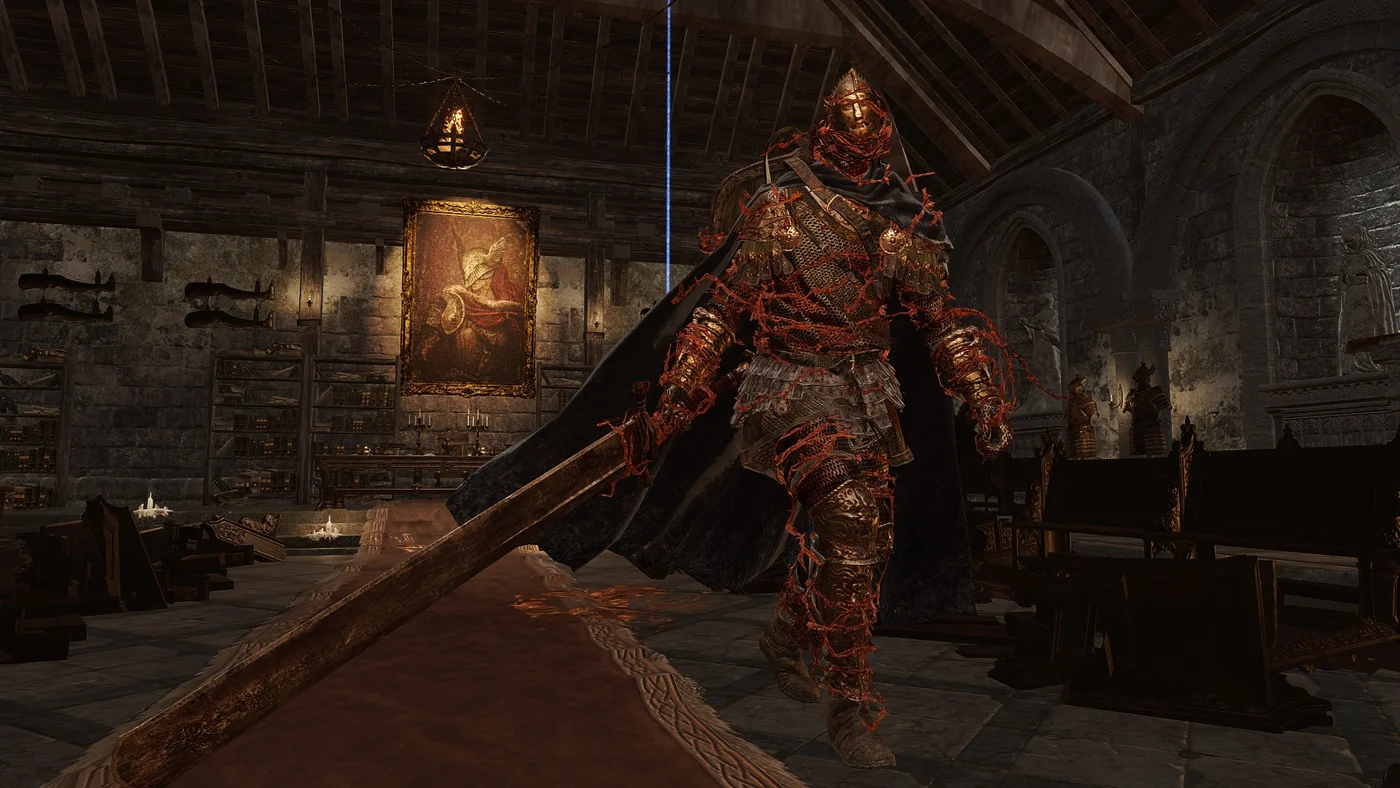 ◈ HUNTER
Elemer of the Briar, Bell Bearing Hunter
Iron-briar guilty, the merchant-hunter who took an executioner's sword▾
Elemer of the Briar, Bell Bearing Hunter
"The winding, rusted iron briars are a mark of the guilty, and typically indicate a sentence of death. Elemer murdered numerous instructors and merchants, and was known as the Bell Bearing Hunter."
From the Briar Armor description
Elemer of the Briar is the canon's most thoroughly attested Bell Bearing Hunter, the figure who appears at certain merchant-camps in the dead of night, slays the merchant, and adds another bell-bearing to his collection. The Briar Armor flavour text describes his sentence and his crimes together: 'Battered iron armor from a foreign land. Worn by Elemer of the Briar. The winding, rusted iron briars are a mark of the guilty, and typically indicate a sentence of death. Elemer murdered numerous instructors and merchants, and was known as the Bell Bearing Hunter.' The briar is not decorative; it is what his sentencers locked around him.
Where Elemer comes from is the canon's geographic Easter-egg: Eochaid, an unmapped land whose battle-skills survive only in the moves Elemer practises with the sword he stole. The Marais Executioner's Sword description tells how the theft happened: 'Storied sword of House Marais, the family of executioners who presided over the Shaded Castle. Elemer of the Briar, the Bell Bearing Hunter, snatched the sword from the site of his looming execution, and furnished it with battle skills from his home of Eochaid.' Elemer was, in other words, sentenced to death by House Marais; he snatched the sword from the site of his looming execution, and now walks the Lands Between using the executioners' own family weapon to kill the merchants he was condemned for murdering.
Battered iron armor from a foreign land. Worn by Elemer of the Briar. The winding, rusted iron briars are a mark of the guilty, and typically indicate a sentence of death. Elemer murdered numerous instructors and merchants, and was known as the Bell Bearing Hunter.
Storied sword of House Marais, the family of executioners who presided over the Shaded Castle. Elemer of the Briar, the Bell Bearing Hunter, snatched the sword from the site of his looming execution, and furnished it with battle skills from his home of Eochaid.
 ❋ DLC · ORDER
The Greater Potentates of Bonny Village
Jar-makers, butchers, and ritualists in caterpillar masks▾
The Greater Potentates of Bonny Village
"Weapon of the greater potentates of Bonny Village. An outsize butcher's cleaver used to dismember human bodies in the making of the great jars stored in the gaols."
From the Bonny Butchering Knife description
Bonny Village is one of the Realm of Shadow's smallest and ugliest cult-sites, a cluster of huts on the Gravesite Plain, presided over by the greater potentates, ritual butchers whose hereditary craft is the dismemberment of human bodies for jar-making. The Bonny Butchering Knife flavour text states the practice without euphemism: 'Weapon of the greater potentates of Bonny Village. An outsize butcher's cleaver used to dismember human bodies in the making of the great jars stored in the gaols.' The jars are the same kind that, in the base game, hold Alexander and his fellow warrior-jars; the Hornsent's older jar-tradition is what the Lands Between later inherited and softened.
Their ritual gear is uniformly grotesque. The Caterpillar Mask description gives the doctrine: 'Grotesque mask constructed from countless solidified caterpillars. A ritual implement of the greater potentates of Bonny Village. Used to ward off thoughts of impurity, doubt, temptation, and other wickednesses one is vulnerable to while absorbed in divine ritual.' The greater potentates the Tarnished encounters wandering near and far, the Greater Potentate's Cookbooks describe one such pilgrim 'haunted by the grotesque practice of his village of birth, he stuffed great pots with all manner of things', are the dispersed survivors of a craft-village whose members scattered far and wide, carrying the old practice with them. They are the canon's smallest, quietest reminder that the Hornsent's brutality was inherited, not imposed by Messmer.
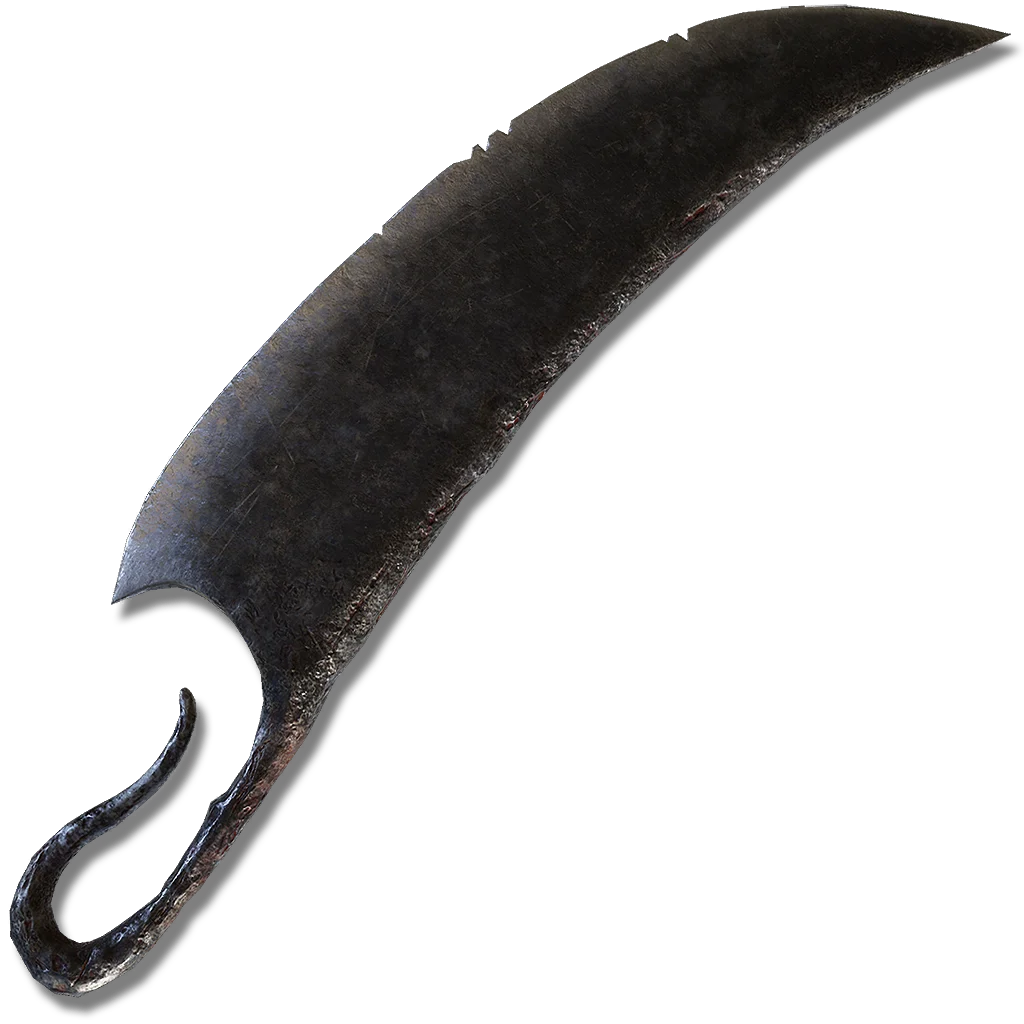 Bonny Butchering Knife
Weapon of the greater potentates of Bonny Village. An outsize butcher's cleaver used to dismember human bodies in the making of the great jars stored in the gaols.
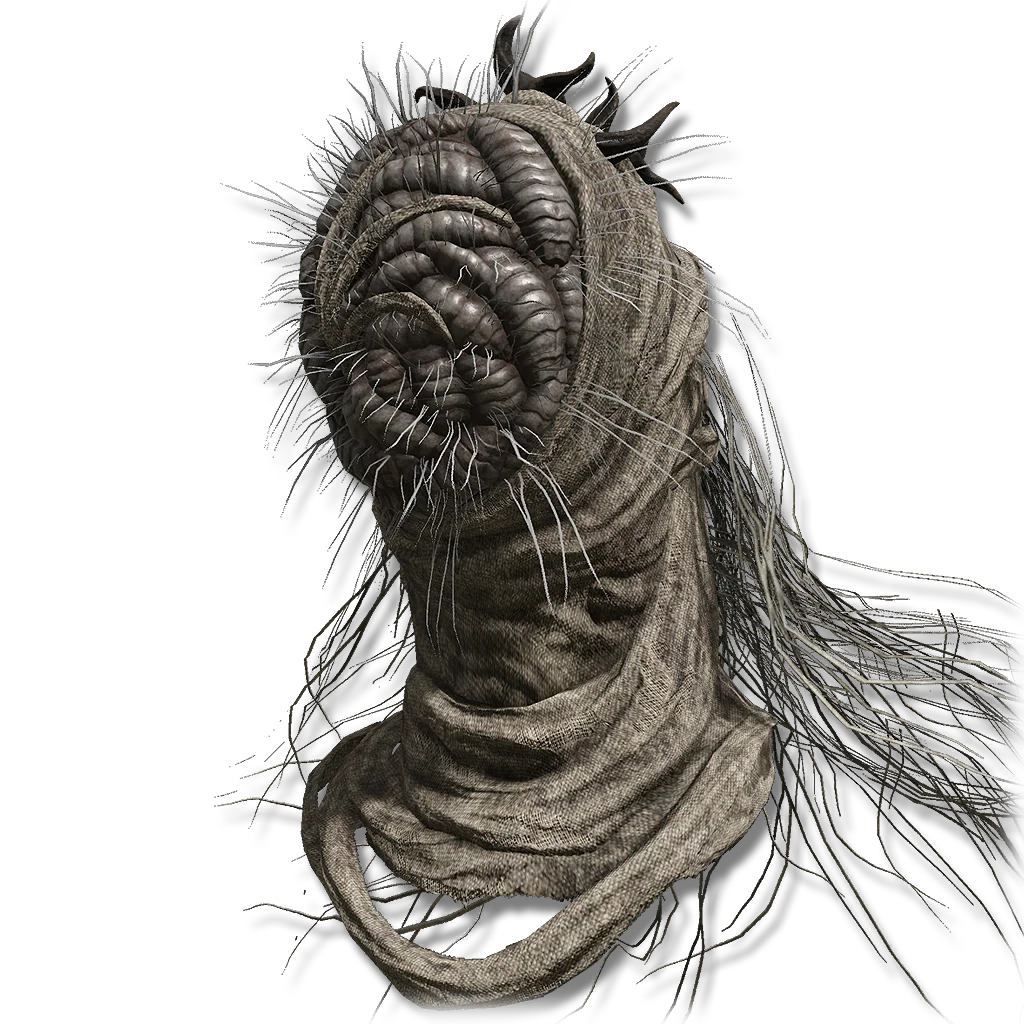 Caterpillar Mask
Grotesque mask constructed from countless solidified caterpillars. A ritual implement of the greater potentates of Bonny Village. Used to ward off thoughts of impurity, doubt, temptation, and other wickednesses one is vulnerable to while absorbed in divine ritual.
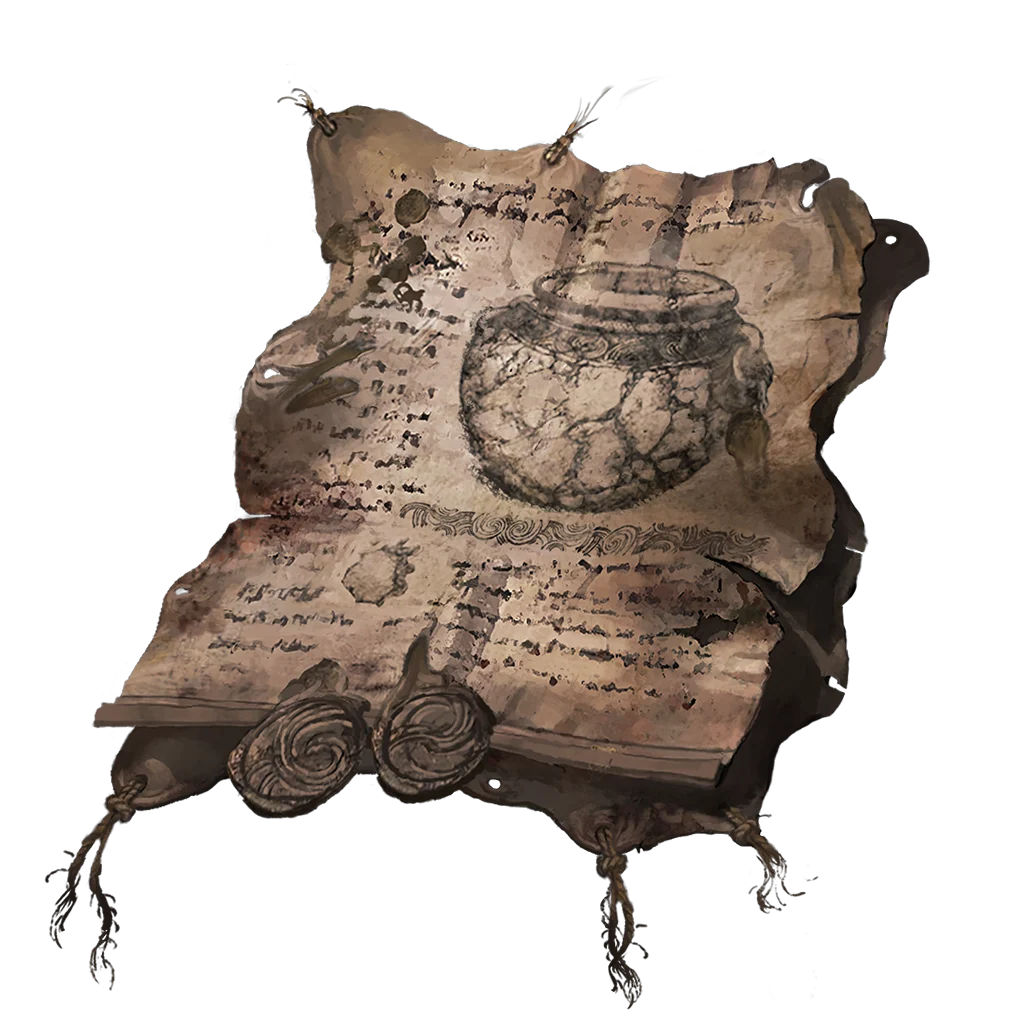 Greater Potentate's Cookbook [1]
A record of crafting techniques of the greater potentate who roamed lands near and far. Haunted by the grotesque practice of his village of birth, he stuffed great pots with all manner of things.
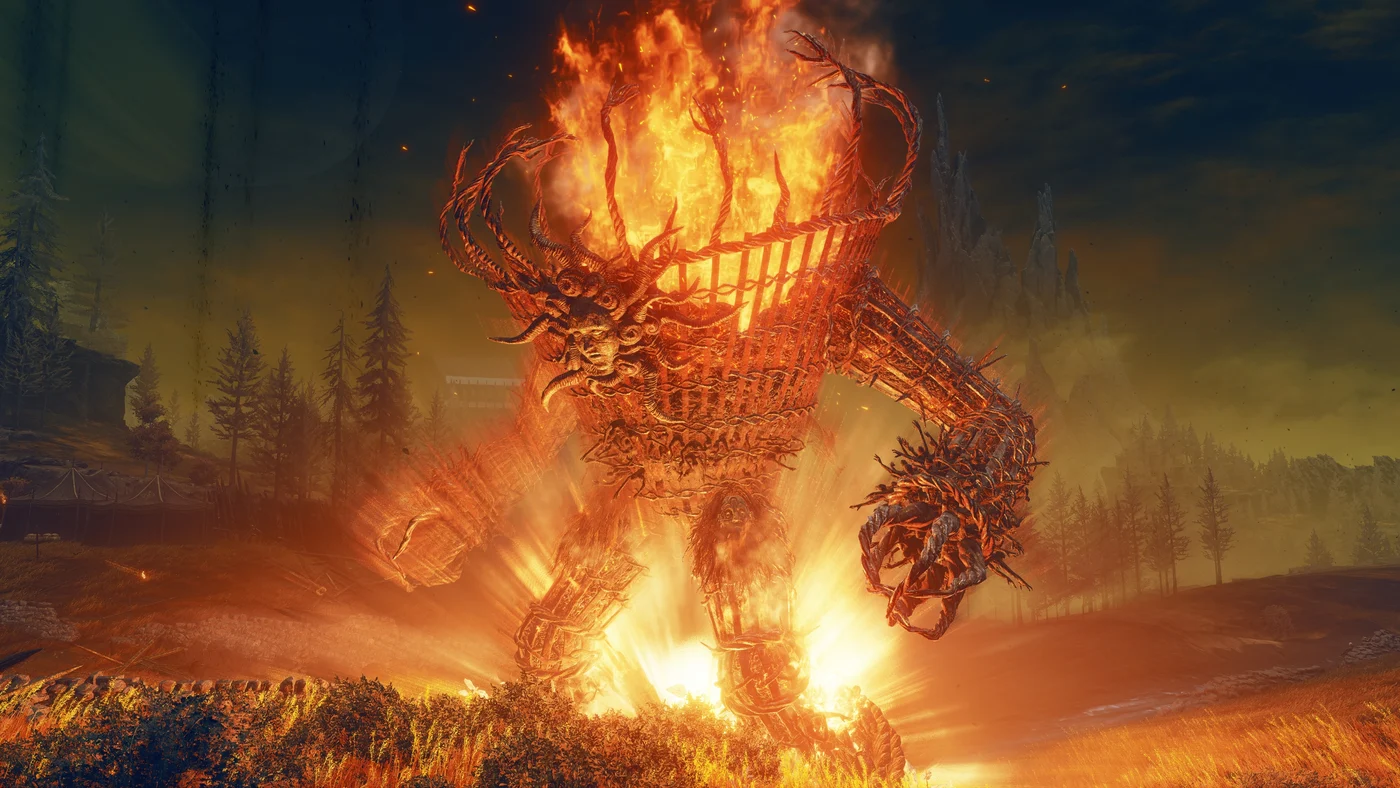 ❋ DLC · ENTITY
The Furnace Golems
Walking pyres, fire that burns body and soul both▾
The Furnace Golems
"The furnace's flame burns away both body and soul. When impurity is thus expunged, one calls it cleansing."
From the Hefty Furnace Pot description
The Furnace Golems are the great walking pyres that stride across the Land of Shadow, bronze giants with stone-mask faces and a great furnace-bowl in which impurity was burned away. Their faces, more than anything else, are the canon's clearest tell about what they are. The Furnace Visage flavour text gives the doctrinal basis: 'A stone mask surrounded by curled horns, depicting the fell god of fire that haunts the sagas of the hornsent.' The Furnace Golems are Hornsent constructions, not Erdtree ones, old engines from the age before Marika rose, when the Hornsent's own theology of cleansing was burning what could not be redeemed.
Their fire is doctrinal. The Hefty Furnace Pot description preserves the doctrine without softening: 'The furnace's flame burns away both body and soul. When impurity is thus expunged, one calls it cleansing.' This is the same theology Messmer would later inherit and turn against the Hornsent themselves: burn until what remains is pure. The Furnace Golems still stride the Land of Shadow, long outliving the age that built them. Within their bronze bodies pools the same Scadutree sap the Tarnished harvests, drawn out through the Cracked Tears gathered across the realm. The cleanser, as the canon's quiet irony goes, is now itself drained by a stranger's hand.
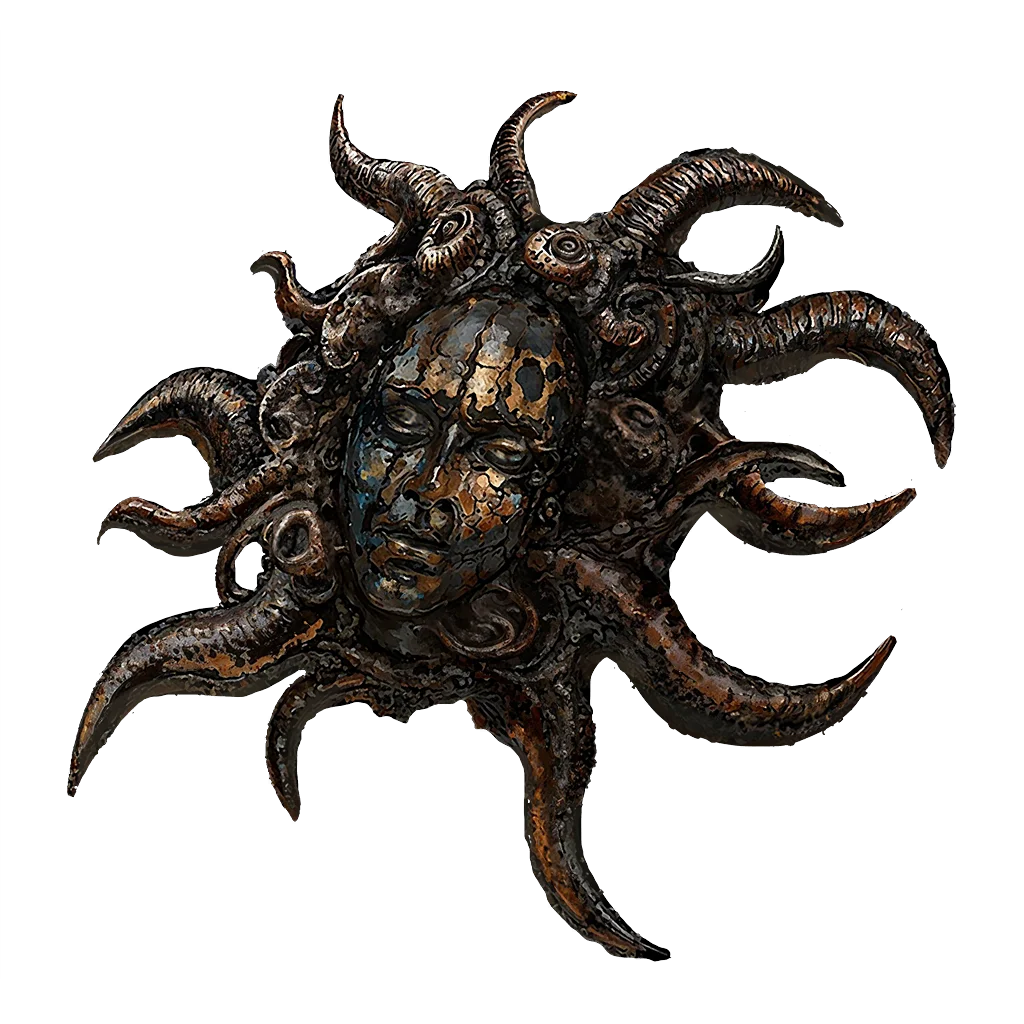 Furnace Visage
A smaller imitation of the furnace golem's visage. A stone mask surrounded by curled horns, depicting the fell god of fire that haunts the sagas of the hornsent.
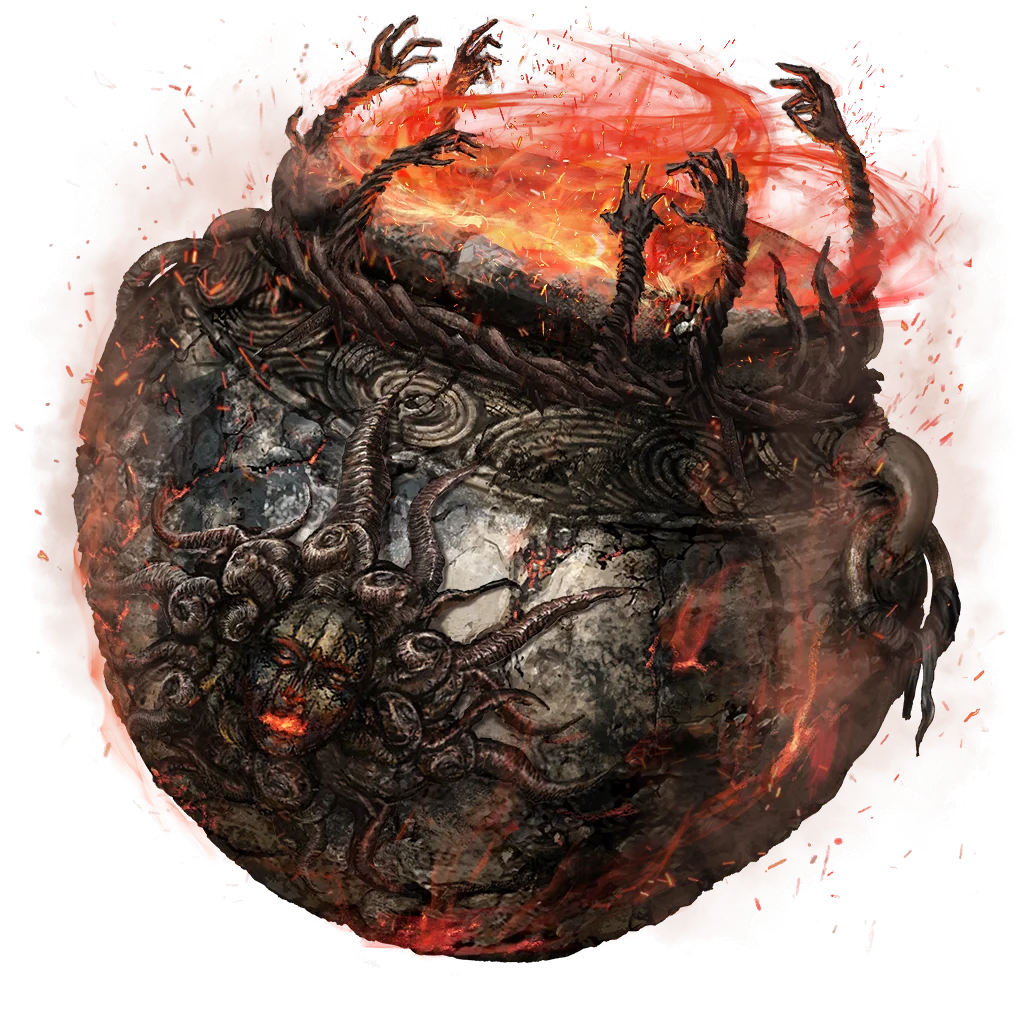 Hefty Furnace Pot
Imbued with a hex of the furnace. The furnace's flame burns away both body and soul. When impurity is thus expunged, one calls it cleansing.
Crimson-Sapping Cracked TearA crystal tear formed slowly over the ages, where the scattered sap of the Scadutree pools deep within the furnace golems.
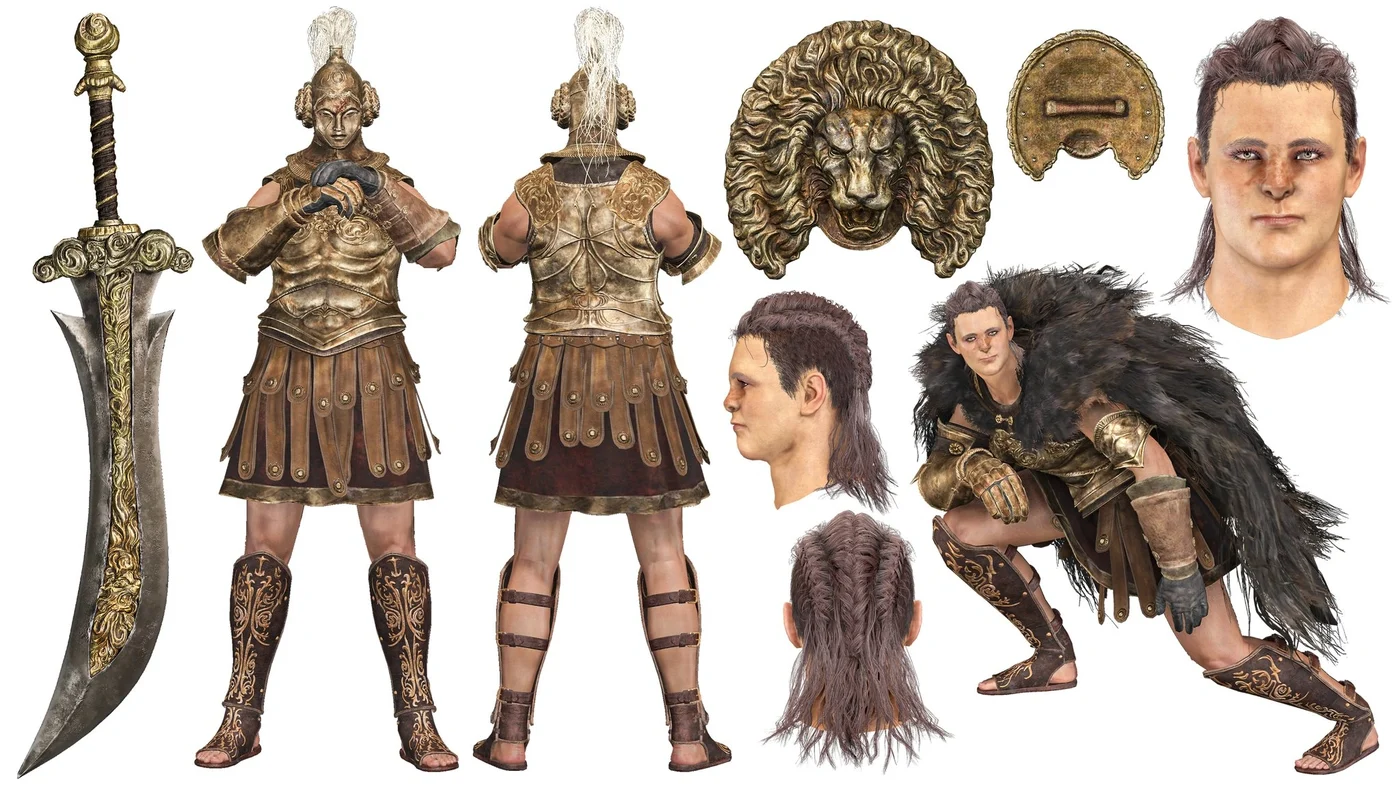 ❋ DLC · KNIGHT
Redmane Freyja, the Drake Hunter
Radahn's most distinguished knight, kissed by Miquella▾
Redmane Freyja, the Drake Hunter
"A hideous scarlet wound was once hewn into the center of her face. Later, Miquella gently put his lips to it and the unfading scar became the compass that Freyja would thereafter follow."
From Freyja's Helm description
Freyja is one of General Radahn's most distinguished knights, the Redmane order whose golden armour and black mantles still mark them out across the Lands Between. Her armour, gauntlets, and greaves all repeat the same line: 'After witnessing Freyja's valor as a gladiator in his youth, Radahn invited her to join the ranks of his most trusted warriors.' She came to Caelid not as a noble-born but as a survivor of the colosseum, recognised by a young Radahn who would not become Starscourge for years yet.
Her face carries the canon's gentlest detail. The Freyja's Helm flavour text records what Miquella did for her in the Realm of Shadow: 'A hideous scarlet wound was once hewn into the center of her face. Later, Miquella gently put his lips to it and the unfading scar became the compass that Freyja would thereafter follow.' That kiss, given quietly, unwitnessed, is why Freyja, one of Radahn's loyal redmanes, walks beside Miquella in the Realm of Shadow at the end of the consort's vow. She is, by the time of the duel at the Promised Consort, one of the few mortals left who served both demigods at different points of the same lifetime.
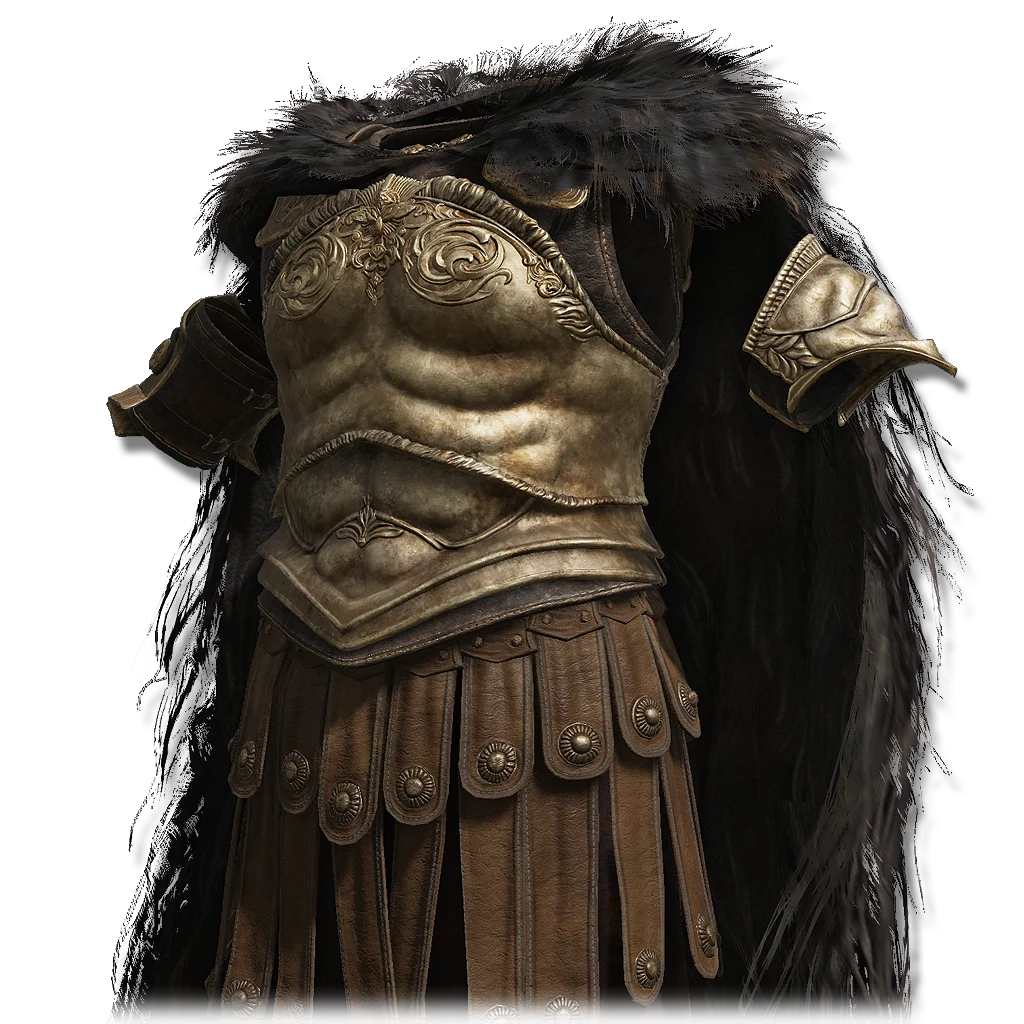 Freyja's Armor
Golden armor of Redmane Freyja, member of General Radahn's most distinguished knights. After witnessing Freyja's valor as a gladiator in his youth, Radahn invited her to join the ranks of his most trusted warriors.
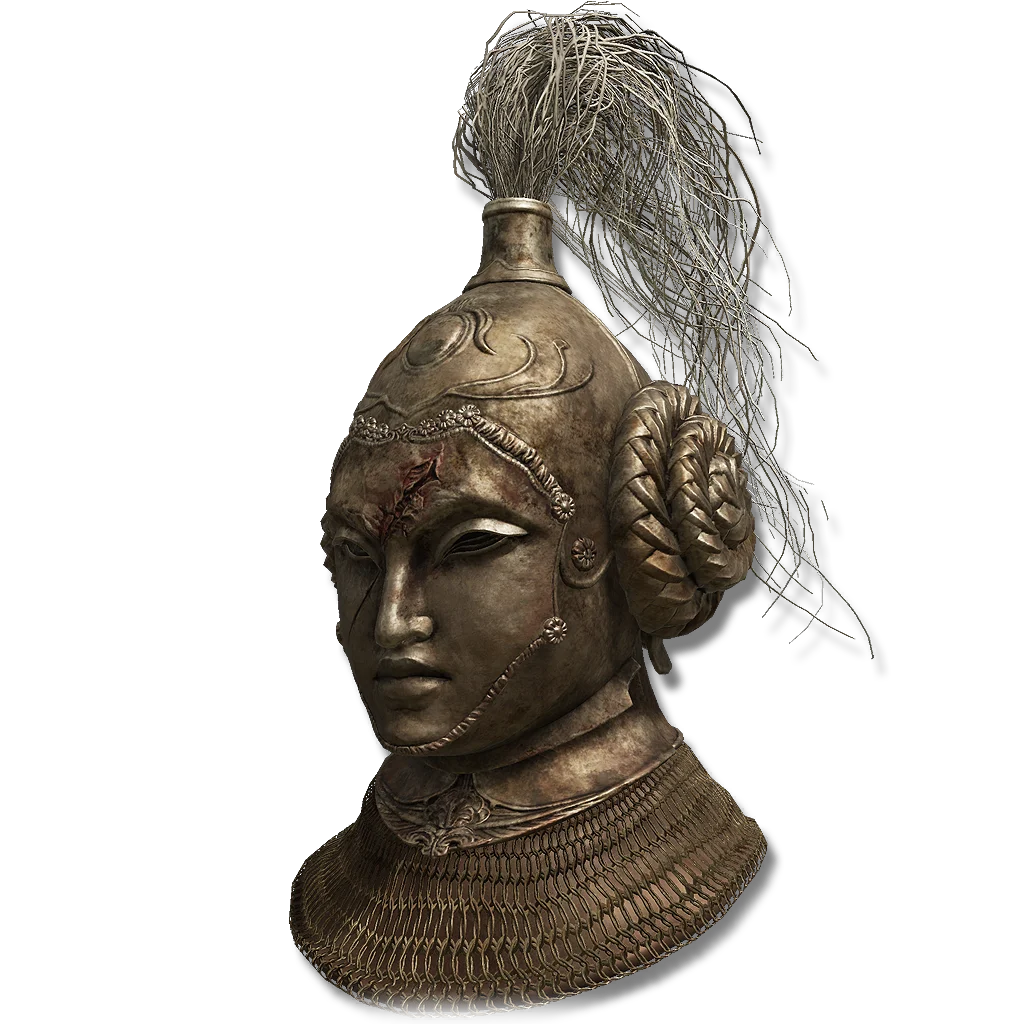
❋ DLC · SEEKERDryleaf Dane
Solitary martial-arts pilgrim on Miquella's trail▾
Dryleaf Dane
"Worn low over the eyes, it obscures the wearer's vision. Meeting the gaze of another can overcome the senses, often leading to the downfall of those who would walk the noble and solitary seekers' path."
From Dane's Hat description
Dryleaf Dane is the Realm of Shadow's representative of an entirely different martial tradition, the dryleaf-arts pilgrims who fight unarmed and look only at the ground. The Dane's Hat flavour text gives the discipline's whole programme in one line: 'The sun-faded and lightly soiled hat of Dryleaf Dane. Worn low over the eyes, it obscures the wearer's vision. Meeting the gaze of another can overcome the senses, often leading to the downfall of those who would walk the noble and solitary seekers' path.' Their weapon is the body alone; their meditation is to refuse the distraction of any other person's eye.
Dane is a co-traveller of Needle Knight Leda's small band, on Miquella's trail. The Ancient Ruins Cross Message records his hand: 'We've found the sealing tree just ahead. But if we are to burn it, we need the proper kindling. That of Sir Messmer.' The kindling he refers to, Messmer's own, is what the Tarnished must carry to the Rauh ruins to break the sealing tree. Dane is a Dryleaf and, in the words of the Dane's Footwork text, a 'sworn ally of Leda.' He is the quietest of the seekers on Miquella's trail, and a sworn one: a pilgrim who looks always at the ground, loyal to Leda and her band to the end.
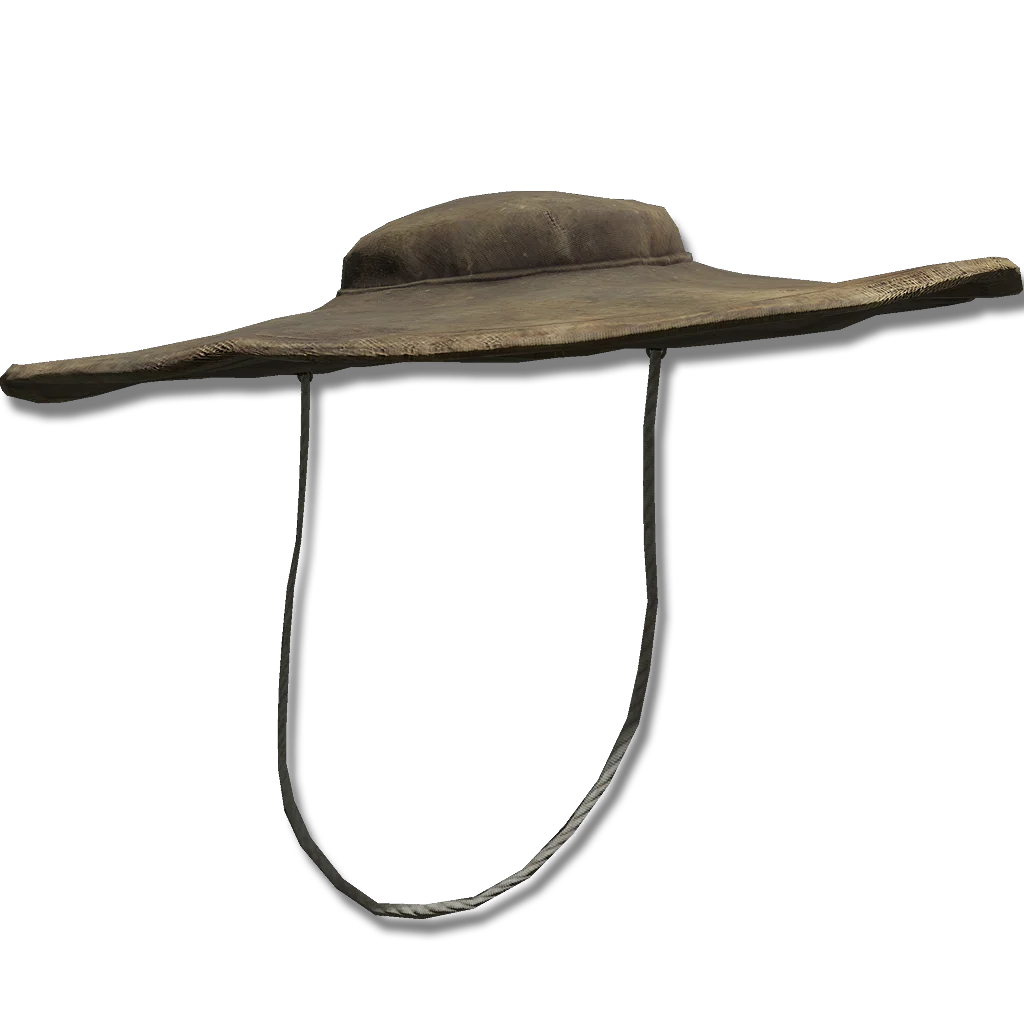 Dane's Hat
Worn low over the eyes, it obscures the wearer's vision. Meeting the gaze of another can overcome the senses, often leading to the downfall of those who would walk the noble and solitary seekers' path.
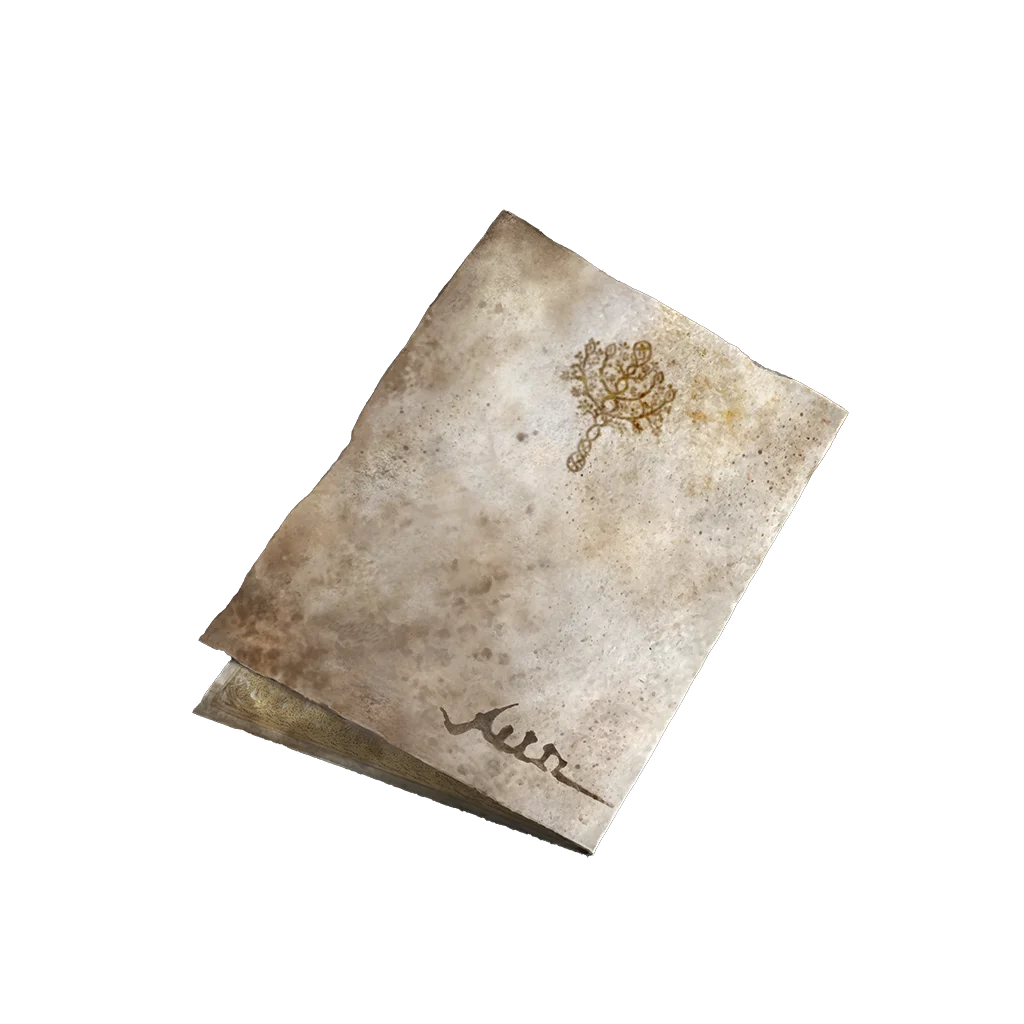 Ancient Ruins Cross Message
Message left by Dryleaf Dane, addressed to kindred spirits who also pursue Miquella's trail. 'We've found the sealing tree just ahead. But if we are to burn it, we need the proper kindling. That of Sir Messmer.'
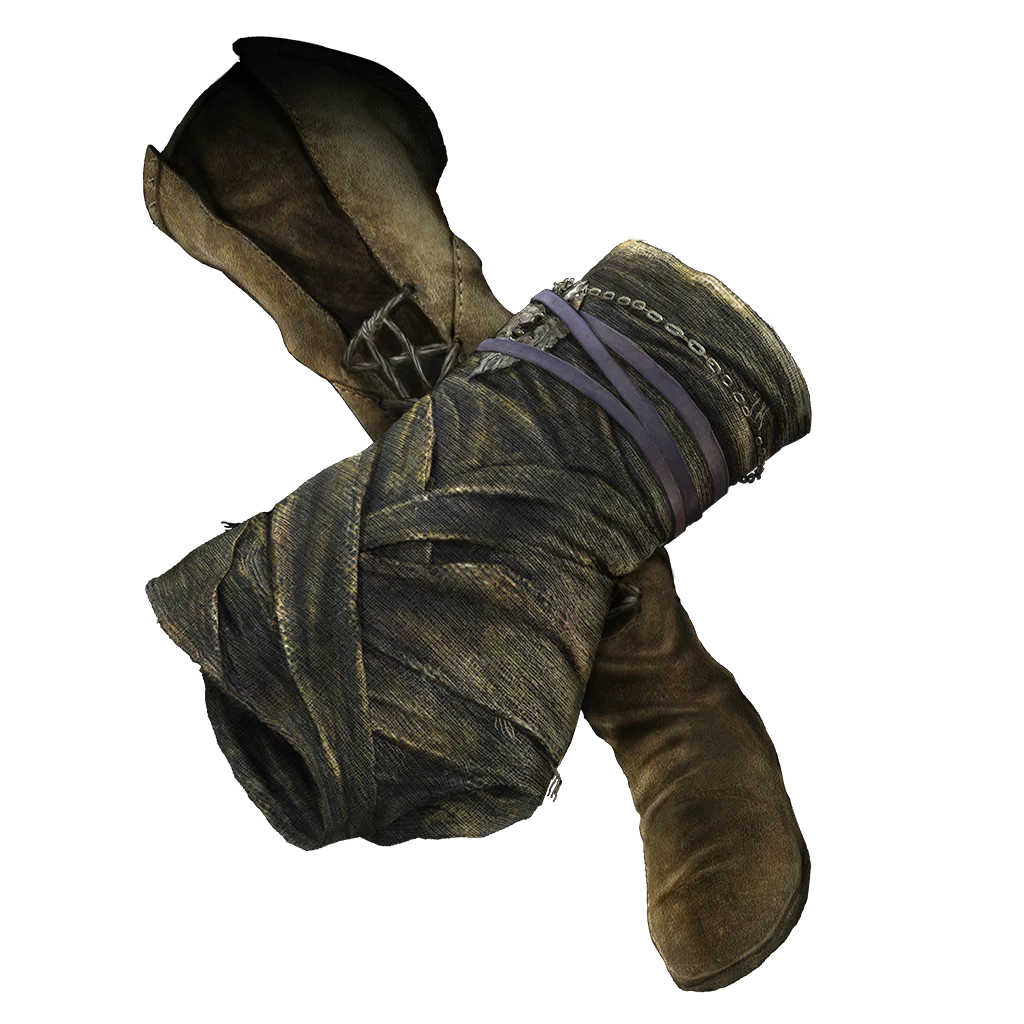 Dane's Footwork
This kick-based martial art is unique to Dane, a Dryleaf and sworn ally of Leda.
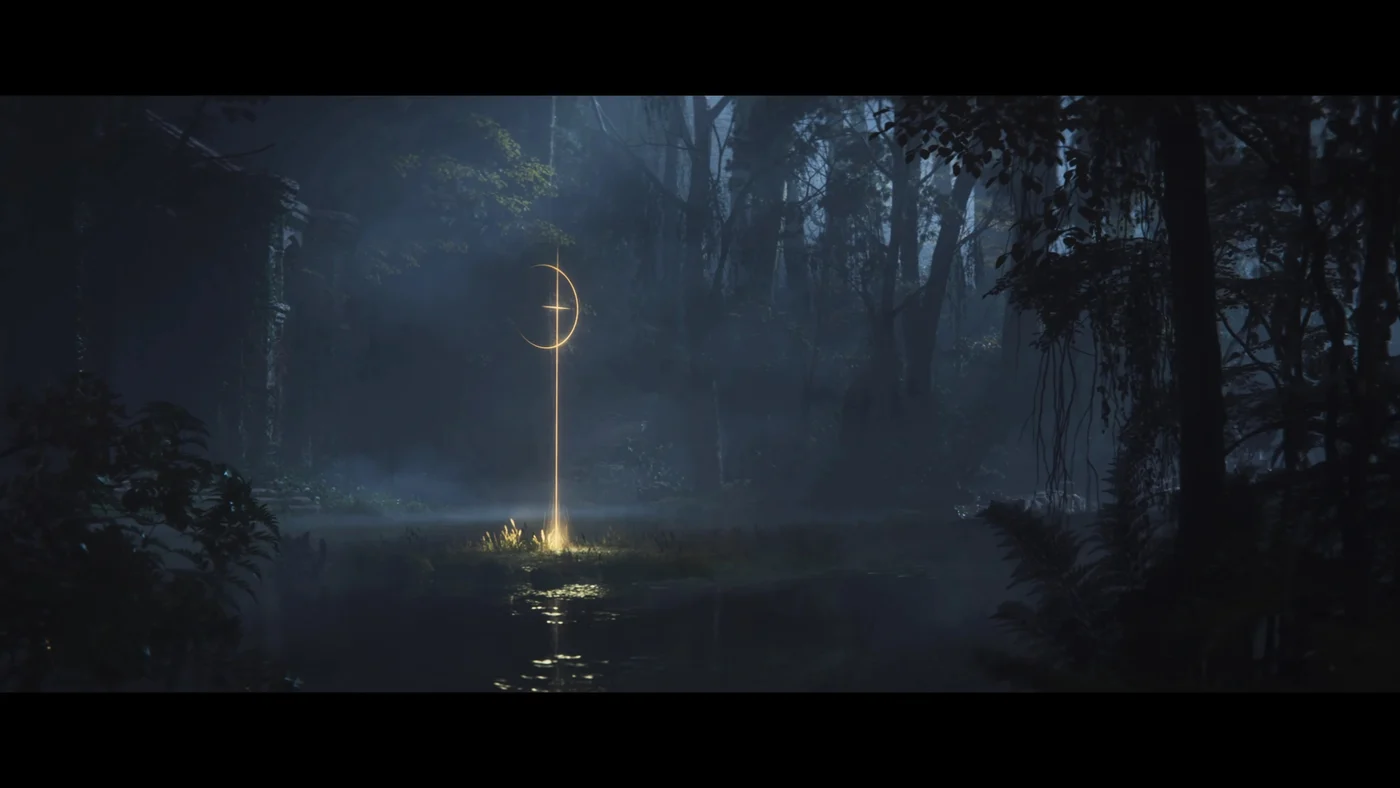 ❋ DLC · LOCATION
The Rauh Ruins
Hornsent academia's lost capital, chasm-split and overgrown▾
The Rauh Ruins
The Rauh Ruins are the ancient academic and religious centre of the Hornsent. The Map: Rauh Ruins description states the geography: 'These giant ruins are flooded, overgrown, and split into two by a chasm. To the southwest is the Church of the Bud, overlooking the tower of shadow.' What that flatly factual map omits is what the place was for. The Antiquity Scholar's Cookbooks record it: 'A record of crafting techniques left by the hornsent academics who studied the ancient ruins of Rauh. Details techniques for working with sprites thought lost to antiquity.'
Rauh is, in other words, the place where the Hornsent's natural philosophers studied the same pre-Erdtree life-forms, sprites, divine beasts, the Crucible's older lattices, that Marika's Erdtree later defined as impure. At its heart stands the Sealing Tree, the great living lock on the path to the Gate of Divinity. To open the Gate, the sealing tree must burn; to burn the sealing tree, only Messmer's own kindling will suffice. Messmer, in the canon's quietest irony, is the only fuel that can finally undo what he was sent to destroy. Romina, Saint of the Bud, makes her last stand at the Church of the Bud, the only Rauh structure where her scarlet-rot pilgrimage could reasonably have ended.
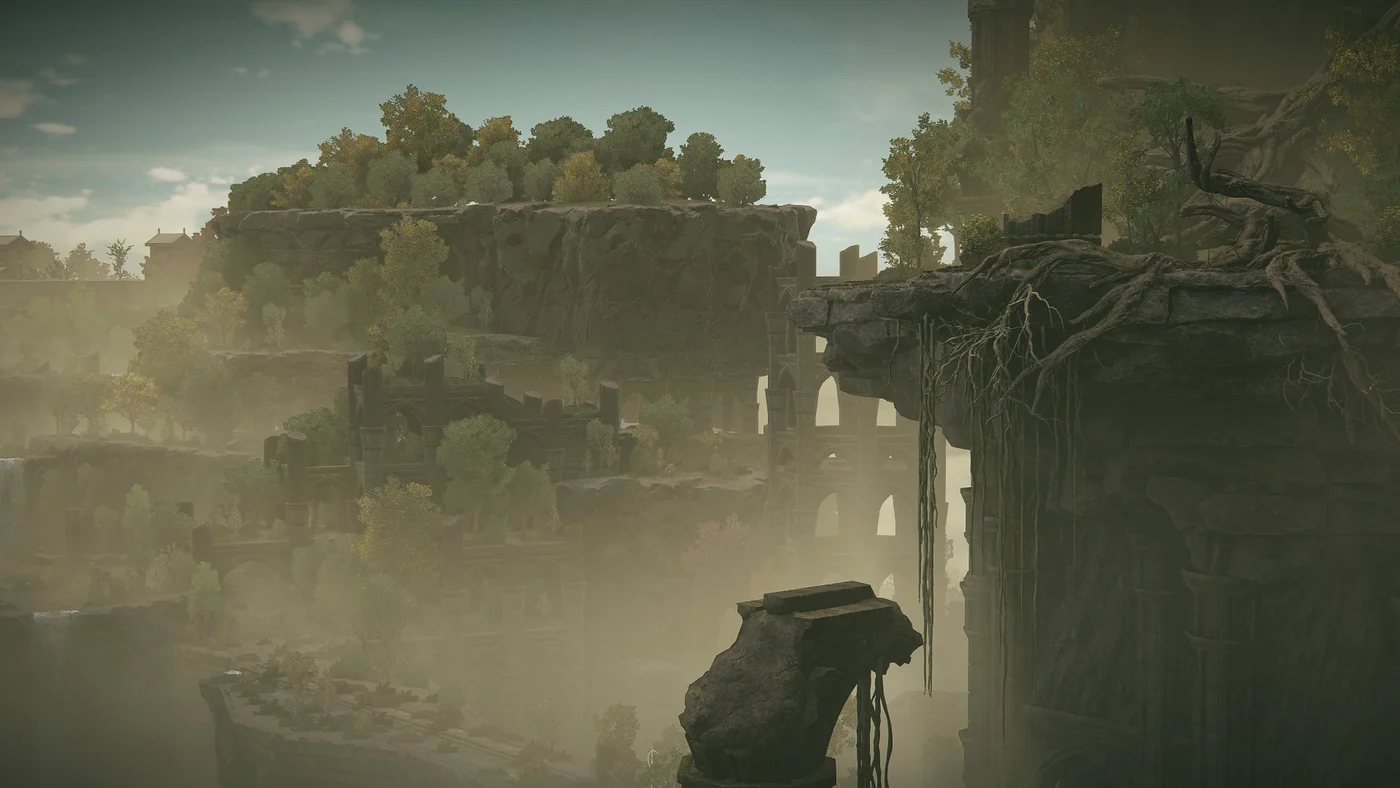 Map: Rauh Ruins
Map of the ancient Rauh Ruins. These giant ruins are flooded, overgrown, and split into two by a chasm. To the southwest is the Church of the Bud, overlooking the tower of shadow.
Antiquity Scholar's Cookbook [1]A record of crafting techniques left by the hornsent academics who studied the ancient ruins of Rauh. Details techniques for working with sprites thought lost to antiquity.
Messmer's KindlingThe kindling that burned inside Messmer the Impaler. A dark thing, eaten away at by a wicked serpent. Burns the sealing tree said to be found at the old Rauh ruins.
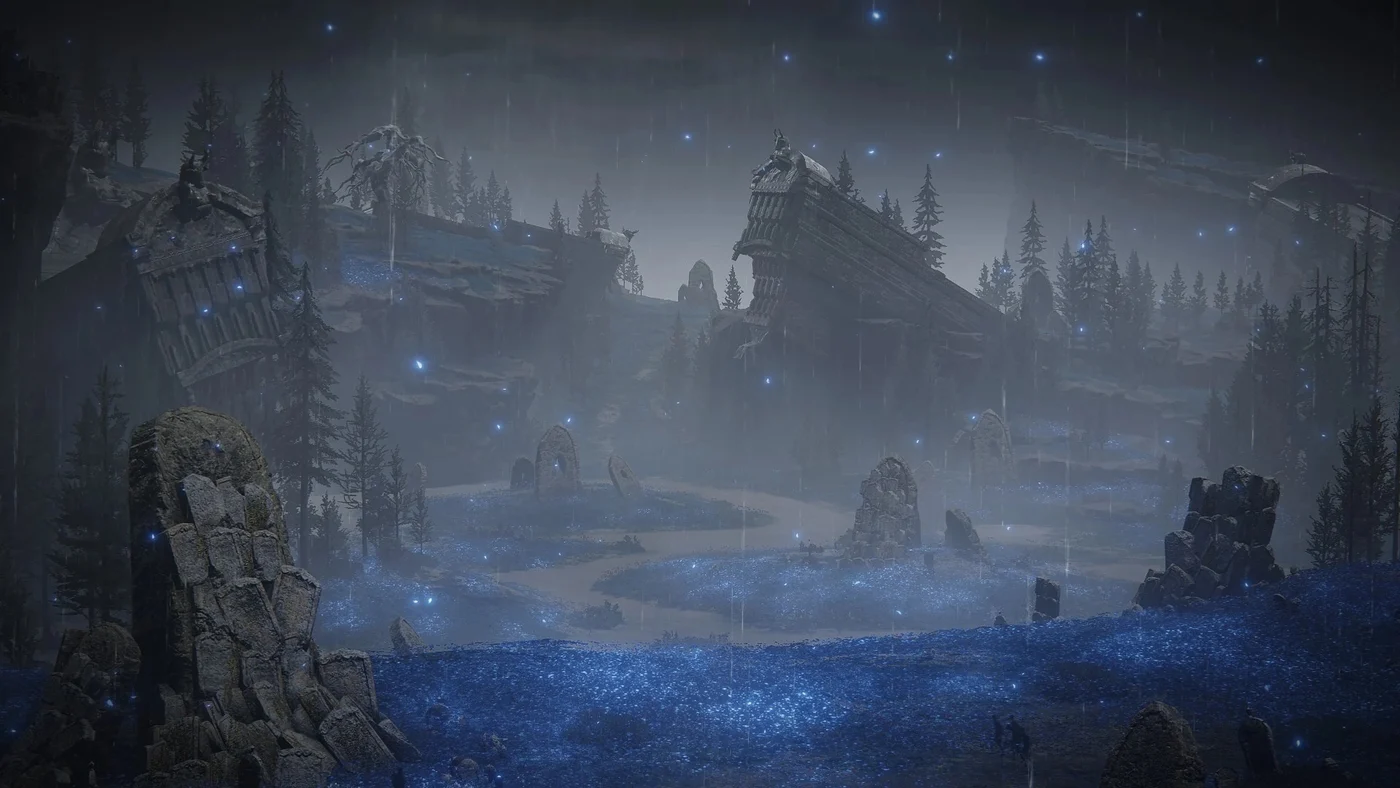 ❋ DLC · LOCATION
The Cerulean Coast
Brilliant blue flowers and drifted stone coffins, St. Trina's road▾
The Cerulean Coast
The Cerulean Coast, the southern shore of the Gravesite Plain in the Realm of Shadow, is the canon's most quietly beautiful landscape. The Map: Southern Shore description preserves what makes it singular: 'Map of the southern shore of the Gravesite Plain. A captivating vista of brilliant blue flowers, intermingled with colossal stone coffins of unknown origin that seemingly drifted to this place. To the east, the jagged peak thrusts upward into the clouds.' The blue flowers are not Erdtree-amber blue; they are a darker, deeper, mournful blue, and the canon never names them, the only flower its flavour-text ties to St. Trina is the velvety-purple water lily she left at her last.
The road through the Coast is St. Trina's road. Exiled by Miquella when he sloughed off the parts of himself that loved, St. Trina retreated south through the Cerulean Coast and ended at the Stone Coffin Fissure, the underground drift-basin where the impure dead gather. Her devotee Thiollier sought her along this same coast; Moore sent him the ebony-black syrup gathered and aged by the forager brood. St. Trina, who would have abolished sleep's distinction from death, sleeps somewhere below.
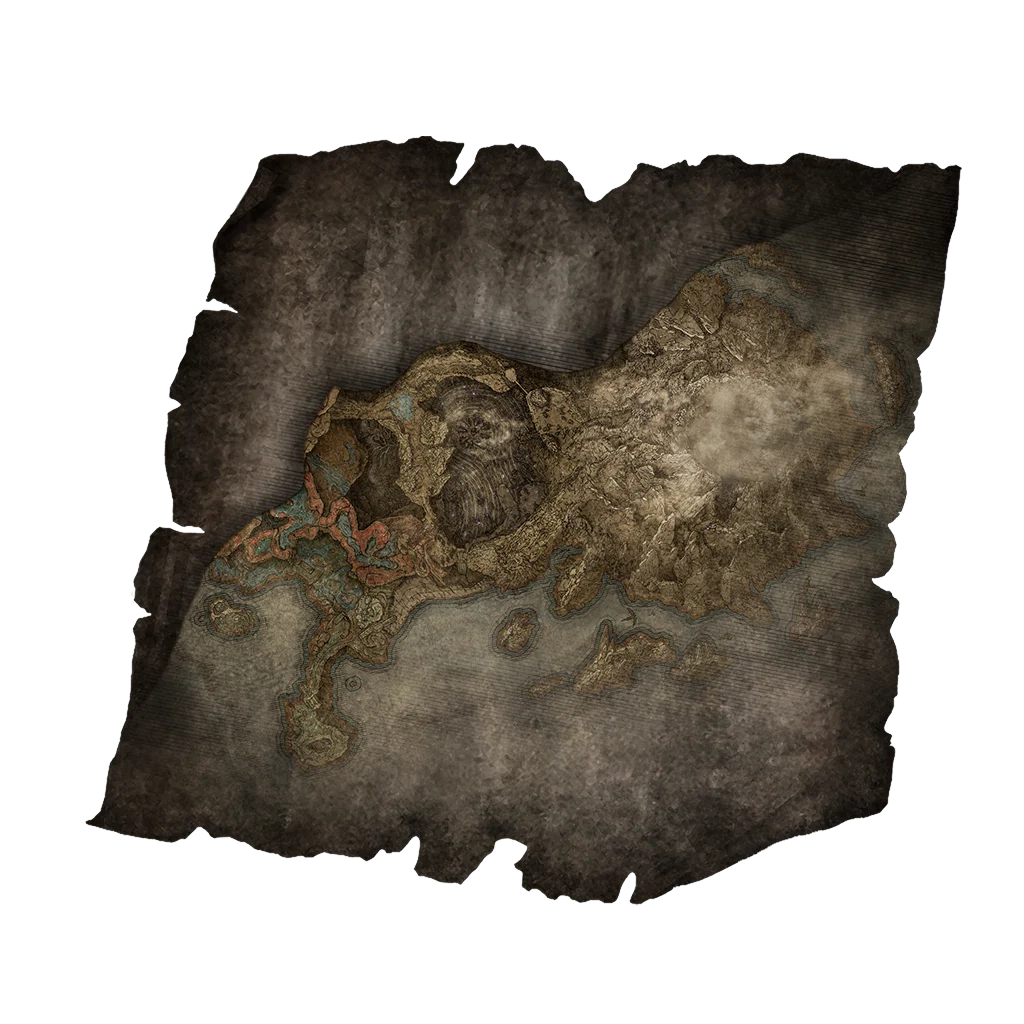 Map: Southern Shore
Map of the southern shore of the Gravesite Plain. A captivating vista of brilliant blue flowers, intermingled with colossal stone coffins of unknown origin that seemingly drifted to this place.
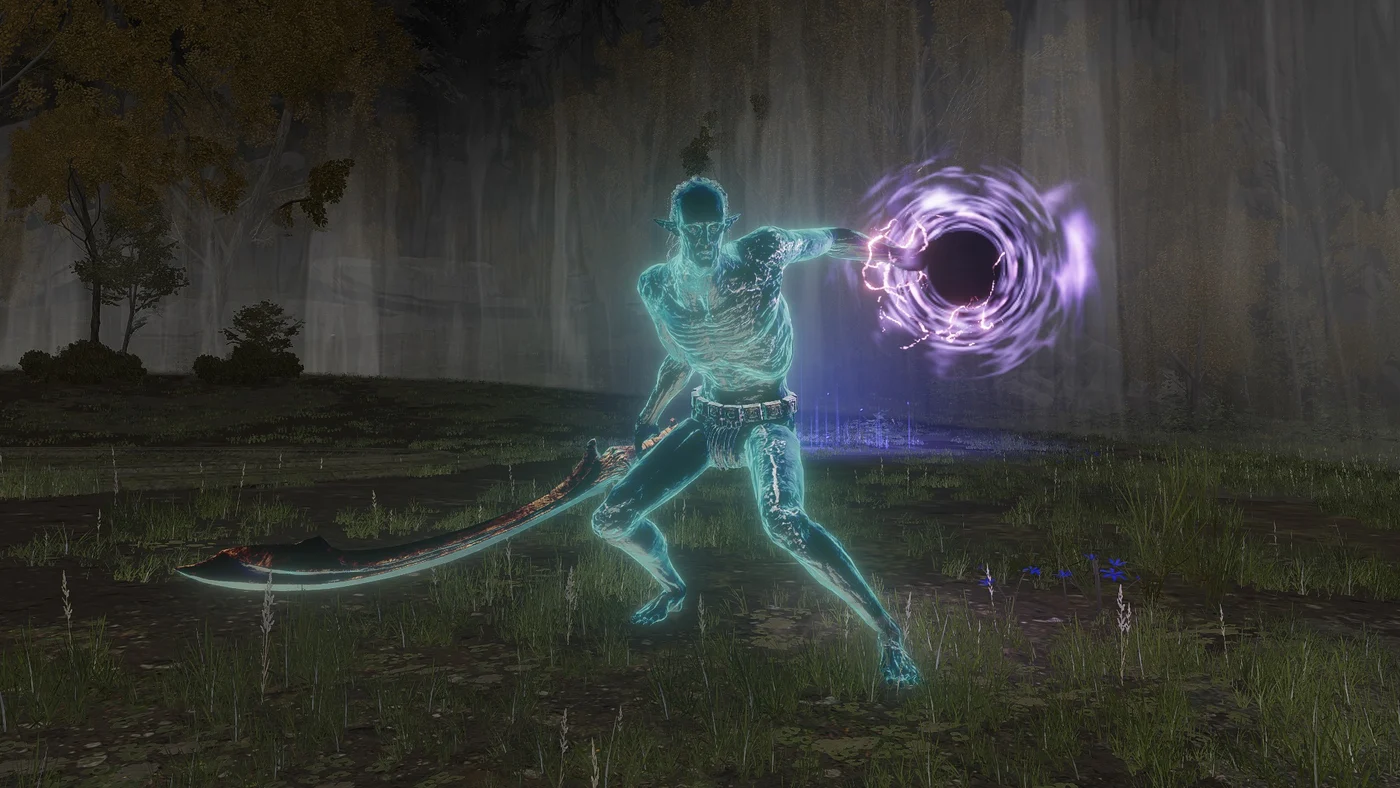 ◈ ANCIENTS
The Alabaster and Onyx Lords
Stone-skinned ancients, gravity's first tutors▾
The Alabaster and Onyx Lords
"One of the glintstone sorceries that manipulates gravitational forces. A gravitational technique studied by the young Radahn. His master was an Alabaster Lord with skin of stone."
From the Rock Sling sorcery description
The Alabaster Lords and the Onyx Lords are paired races of ancients, twinned in form and opposed in function. The Alabaster Lord's Sword and Onyx Lord's Greatsword descriptions tell their shared origin in identical words: 'a race of ancients with skin of stone who were said to have risen to life when a meteor struck long ago.' The meteor that birthed them is the same meteor that, much later, would carry Astel into the Eternal City and gravity-strike the Tarnished's path through Limgrave. Stone-flesh, meteoric ore, and the manipulation of gravity itself: these three are the three faces of one inheritance.
Their craft is gravitational. The Rock Sling and Gravity Well sorceries note that 'A gravitational technique studied by the young Radahn. His master was an Alabaster Lord with skin of stone.' Radahn, before he became Starscourge, learned to pull and to push from these old stone-folk; his greatbow's arrows still arc with their gravity. The Alabaster Lords pull (their Pull skill creates a gravity well that draws enemies in), the Onyx Lords push (their Repulsion skill creates a well that flings enemies away). Between the two, the entire vocabulary of gravity sorcery in the Lands Between is theirs; every Carian Slicer, every Rock Sling, is a quiet citation of an Alabaster Lord's lecture from long before Marika rose.
Greatsword forged from a blue-white meteoric ore. The blade conceals gravity-manipulating magic. A weapon unique to the Alabaster Lords, a race of ancients with skin of stone who were said to have risen to life when a meteor struck long ago.
Greatsword forged from golden-hued meteoric ore. The blade conceals gravity-manipulating magic. A weapon unique to the Onyx Lords, a race of ancients with skin of stone who were said to have risen to life when a meteor struck long ago.
One of the glintstone sorceries that manipulates gravitational forces. A gravitational technique studied by the young Radahn. His master was an Alabaster Lord with skin of stone.
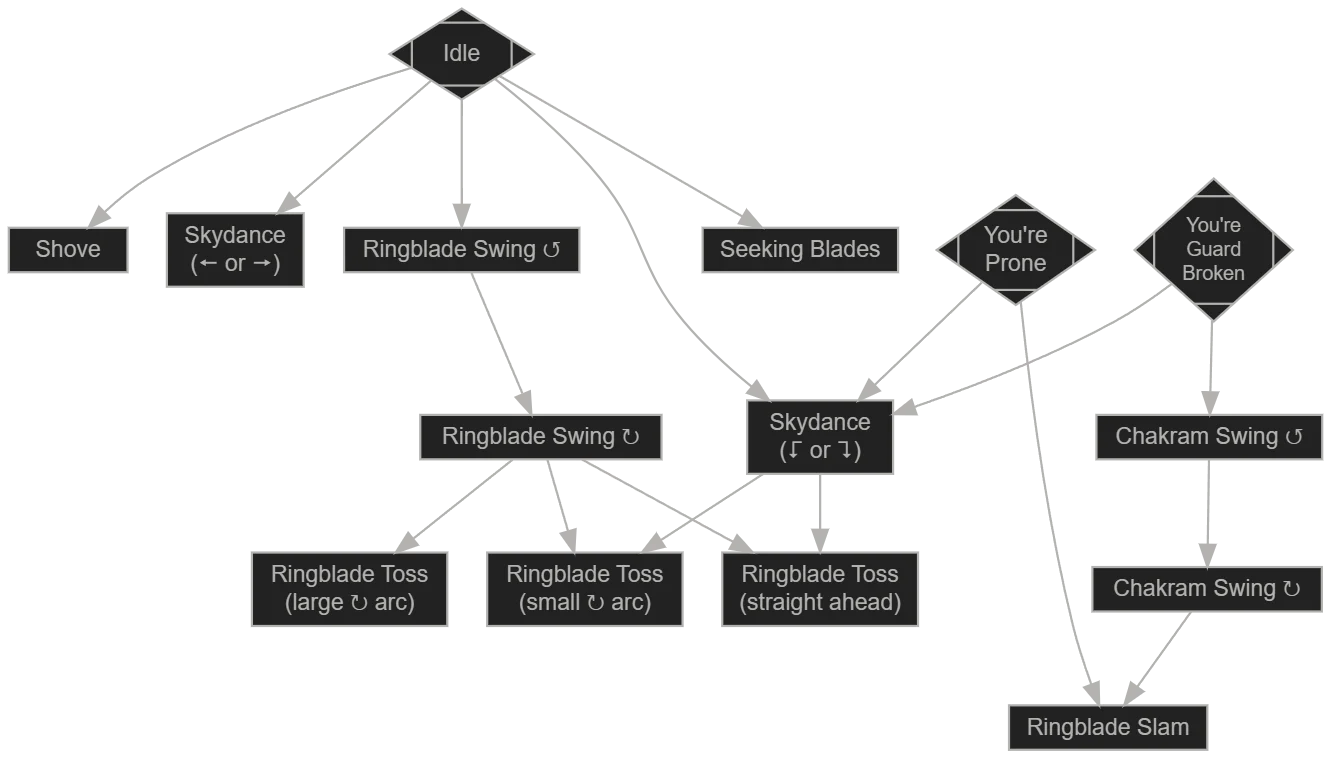 ◈ ENTITY
The Crystalians
Inscrutable wisdom of stone, awaiting their carver▾
The Crystalians
"The inscrutable Crystalians have but one clear purpose; to safeguard their crystals unto the end. One theory posits that they yearn for the return of their creator who will carve for them new brethren."
From the Crystal Spear description
The Crystalians are pure-crystal beings, mute and four-limbed, who patrol the deep crystal tunnels under Liurnia, Caelid, and Altus. Their bodies are 'fashioned from pure crystal; a deed impossible for a human,' the Crystal Sword and Crystal Spear descriptions repeat. Their staves enhance Crystalian sorceries, and the Crystal Staff's text records what their interior life is like: 'the Crystalian's faint cogitation is known as the wisdom of stone. This staff can only be wielded by those of intellect high enough to grasp such wisdom.' Slow to think, slower to die, Crystalians do not speak.
Their loyalty has only one object. The Crystal Spear flavour text gives the canon's clearest statement of their purpose: 'The inscrutable Crystalians have but one clear purpose; to safeguard their crystals unto the end. One theory posits that they yearn for the return of their creator who will carve for them new brethren.' Whoever made the Crystalians is gone. They guard the unsold inventory of an old workshop, hoping the master will return. The Rotten Crystalians of Sellia, infected by Malenia's bloom, are the canon's small tragedy: the wisdom of stone festering, still on watch, still waiting.
Spear fashioned from pure crystal; a deed impossible for a human. The inscrutable Crystalians have but one clear purpose; to safeguard their crystals unto the end. One theory posits that they yearn for the return of their creator who will carve for them new brethren.
The Crystalian's faint cogitation is known as the 'wisdom of stone.' This staff can only be wielded by those of intellect high enough to grasp such wisdom.
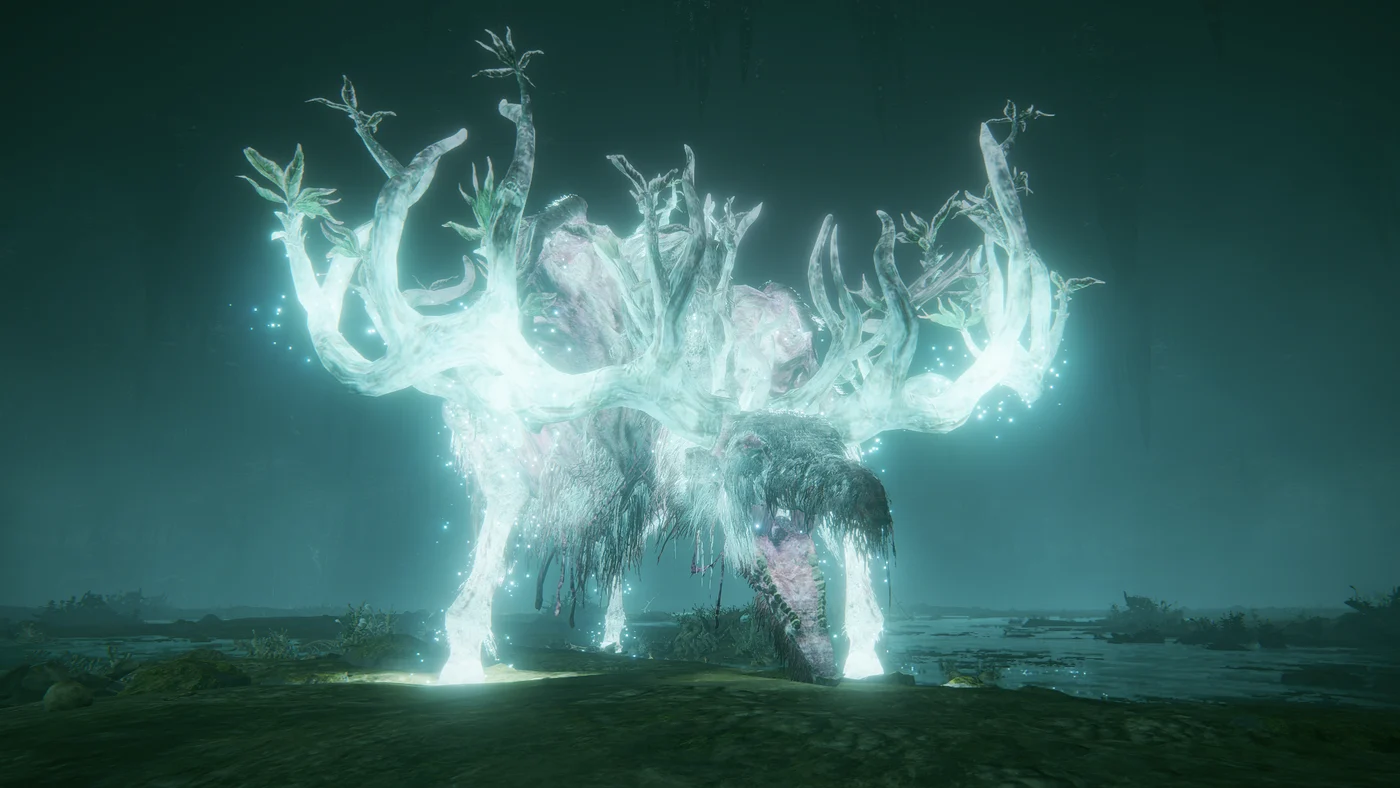 ◈ ENTITY
The Regal Ancestor Spirit
A phenomenon beyond the purview of the Erdtree▾
The Regal Ancestor Spirit
"Ancestral spirits exist as a phenomenon beyond the purview of the Erdtree. Life sprouts from death, as it does from birth. Such is the way of the living."
From the Remembrance of the Regal Ancestor
'Two great rivers flow beneath the Lands Between, the Siofra and the Ainsel,' reads the Ainsel River map, describing a vast region 'said to be the grave of civilizations that flourished before the Erdtree.' Nokron, in those same texts, is a city: 'the Eternal City of Nokron.' Where the Regal Ancestor Spirit walks, the game does not say. It gives instead the shape of the thing: the Ancestral Spirit's Horn is an 'item cut from the horns of the Regal Ancestor Spirit,' and there 'a number of new growths bud from the antler-like horns of the fallen king, each glowing with light.' Its Remembrance states the position plainly: 'Ancestral spirits exist as a phenomenon beyond the purview of the Erdtree. Life sprouts from death, as it does from birth. Such is the way of the living.'
The texts name the faith, 'the ancestral spirit-worshipping faith,' and the ancestral followers keep it. Their creed is written into the charms they wear: they 'believe that the horns of a long-lived beast continue to bud like antlers, over and over again, until the beast one day becomes an ancestral spirit.' In that telling a spirit is grown rather than born to rank, and the Ancestral Infant's Head is 'skull of a very young ancestral spirit.' They 'keep their distance from the Erdtree, awaiting new buds,' and their rites are made of horn: 'horns with buds that also shine are ideal ceremonial items for ancestral worship.' Erdtree Burial, set beside that, is written as an honour and a custody: Oleg 'earned the hero's honor of Erdtree Burial,' and the Watchdogs 'protect catacombs.' A line of dialogue runs the same way: 'Your soul will return to the Erdtree, in time.' The horn runs the other: 'thus does new life grow from death, and from death, one obtains power.' The figure this card turns on stays singular, a fallen king, dead and budding with light.
Remembrance of the Regal AncestorRemembrance of the Regal Ancestor Spirit, hewn into the Erdtree. Ancestral spirits exist as a phenomenon beyond the purview of the Erdtree. Life sprouts from death, as it does from birth. Such is the way of the living.
Item cut from the horns of the Regal Ancestor Spirit. A number of new growths bud from the antler-like horns of the fallen king, each glowing with light. Thus does new life grow from death, and from death, one obtains power.
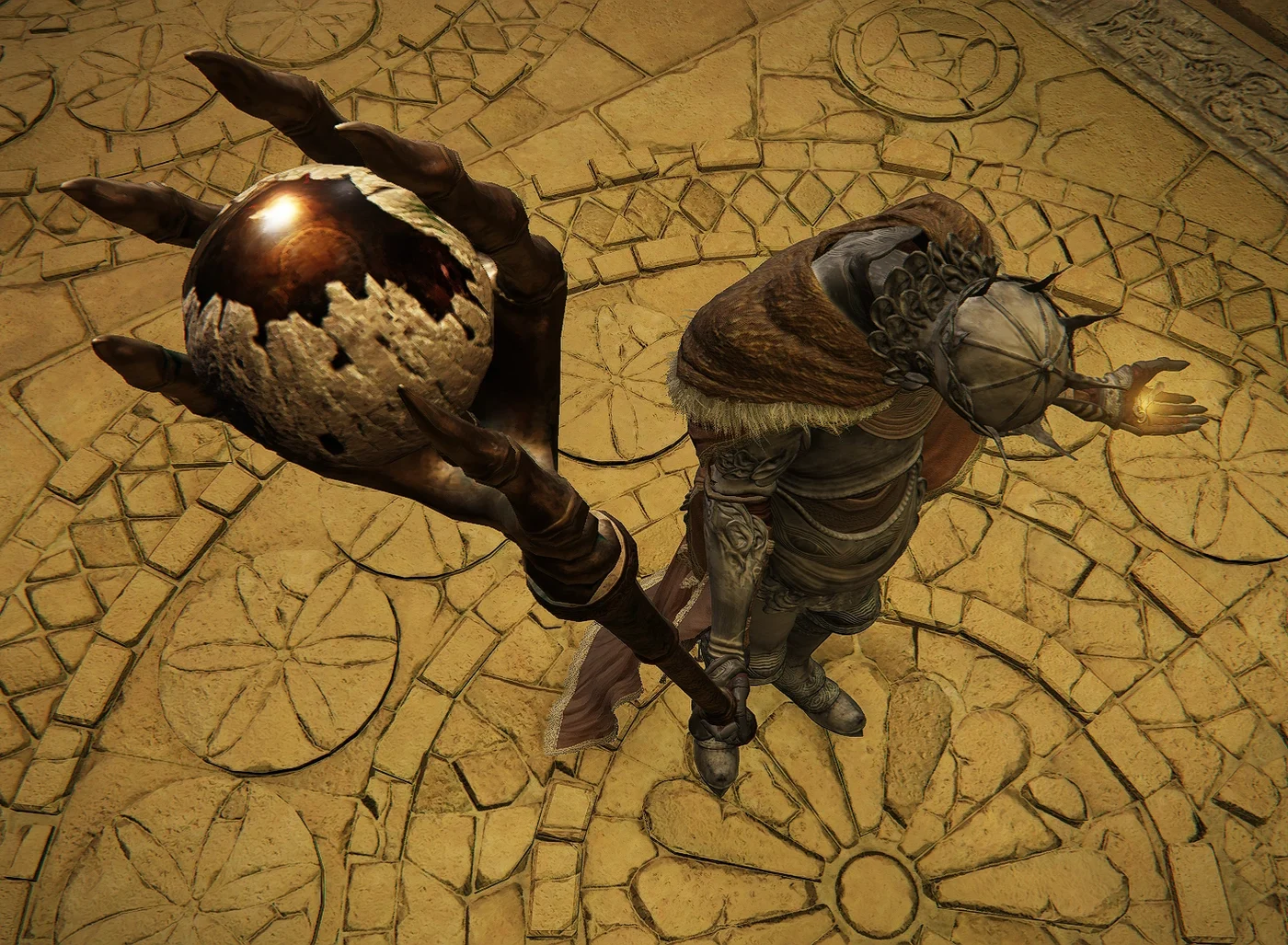 ◈ NPC
◈ NPCSir Gideon Ofnir, the All-Knowing
Leader of the Roundtable Hold, who trades in what other Tarnished find▾
Sir Gideon Ofnir, the All-Knowing
Gideon Ofnir is the Tarnished's host at the Roundtable Hold, and his foster daughter Nepheli places him: 'Father is leader of the Roundtable.' The Intro Narration names him among the rivals: 'And Sir Gideon Ofnir, the All-knowing.' He states his purpose himself: 'As a Tarnished who wishes to stand before the Elden Ring and become Elden Lord, I am accumulating knowledge. To be all-knowing.' His method is a brokerage: 'If you should learn anything of these matters, I'll trade your findings for a hidden treasure, or a long-lost rite, known only to me.' Of Nepheli, whom he took in, he adds: 'her youthful credulity suited my purposes. So I put her to work.' Great Runes reach him as intelligence: 'We of the Roundtable know the location of five of them, including the one you defeated.' Taught an incantation by the Two Fingers, he judges them spent: they 'lost their purpose a long, long time ago.'
His silent companion is a small canon in itself. The Royal Remains Armor records the bodyguard: 'Worn by the unspeaking adherent of Sir Gideon the All-Knowing.' On the bones it speaks with a hedge, 'It is said that the bones belong to an ancient lord', and 'the soulless king. The lord of the lost and desperate, who was known as Ensha.' His word on Ensha comes after the man's death: 'Ensha got rather ahead of himself, it seems. As his master, I'd like to express my regret.' His own armour sets the terms: 'the search for knowledge is unending. But when Gideon glimpsed into the will of Queen Marika, he shuddered in fear. At the end that should not be.' At the Erdtree he offers a verdict rather than an anointing: 'I commend your spirit, but alas, none shall take the throne. Queen Marika has high hopes for us. That we continue to struggle. Unto eternity.' His dying words hold to it: 'A Tarnished cannot become a Lord. Not even you.'
Look there. The Fingers shudder with exuberance. 'Fine work, brave Tarnished. The Greater Will is pleased.' 'You have earned the right to become Elden Lord.' The Fingers expect... As much from you as they do young Gideon.
Armor graced with gold human bones. Worn by the unspeaking adherent of Sir Gideon the All-Knowing. It is said that the bones belong to an ancient lord, the soulless king. The lord of the lost and desperate, who was known as Ensha.
Arise now, ye Tarnished. Ye dead, who yet live. The call of long-lost grace speaks to us all. Hoarah Loux, chieftain of the badlands. The ever-brilliant Goldmask. Fia, the Deathbed Companion. The loathsome Dung Eater. And Sir Gideon Ofnir, the All-knowing.
 ◈ ASSASSIN
Black Knife Tiche
Daughter of Alecto, Godwyn's killer's child▾
Black Knife Tiche
"Tiche was one of the assassins who, on the night of the plot, imbued her black knife with the Rune of Death and slew Godwyn the Golden. She was the daughter of the Black Knife Ringleader, Alecto, and was killed protecting her mother during their flight from the royal capital."
From Black Knife Tiche ash description
Tiche is one of the few Black Knife Assassins whose name the canon preserves. The Black Knife Tiche Spirit Ash description tells her arc in three sentences: 'Tiche was one of the assassins who, on the night of the plot, imbued her black knife with the Rune of Death and slew Godwyn the Golden. She was the daughter of the Black Knife Ringleader, Alecto, and was killed protecting her mother during their flight from the royal capital.'
The lineage is small but heavy. The Black Knife Assassins were Numen women, kin of Marika herself; the Black Knife Ringleader Alecto was the Numen who organised the assassinations Ranni's plot required; Tiche was Alecto's daughter, raised inside the order, present on the Night of the Black Knives, fleeing afterward when the Capital began to hunt them. She did not survive the flight. Her body was interred at the Ringleader's Evergaol on the windswept Mountaintops, where Alecto, her mother, fights on alone. The Tarnished can summon Tiche's spirit, the dagger-throwing assassin in white whose black knife once bore Death's wound, and she will fight one last time for someone who is not her mother.
Tiche was one of the assassins who, on the night of the plot, imbued her black knife with the Rune of Death and slew Godwyn the Golden. She was the daughter of the Black Knife Ringleader, Alecto, and was killed protecting her mother during their flight from the royal capital.
Black Knife ArmorThe assassins that carried out the deeds of the Night of the Black Knives were all women, and rumored to be Numen who had close ties with Marika herself.
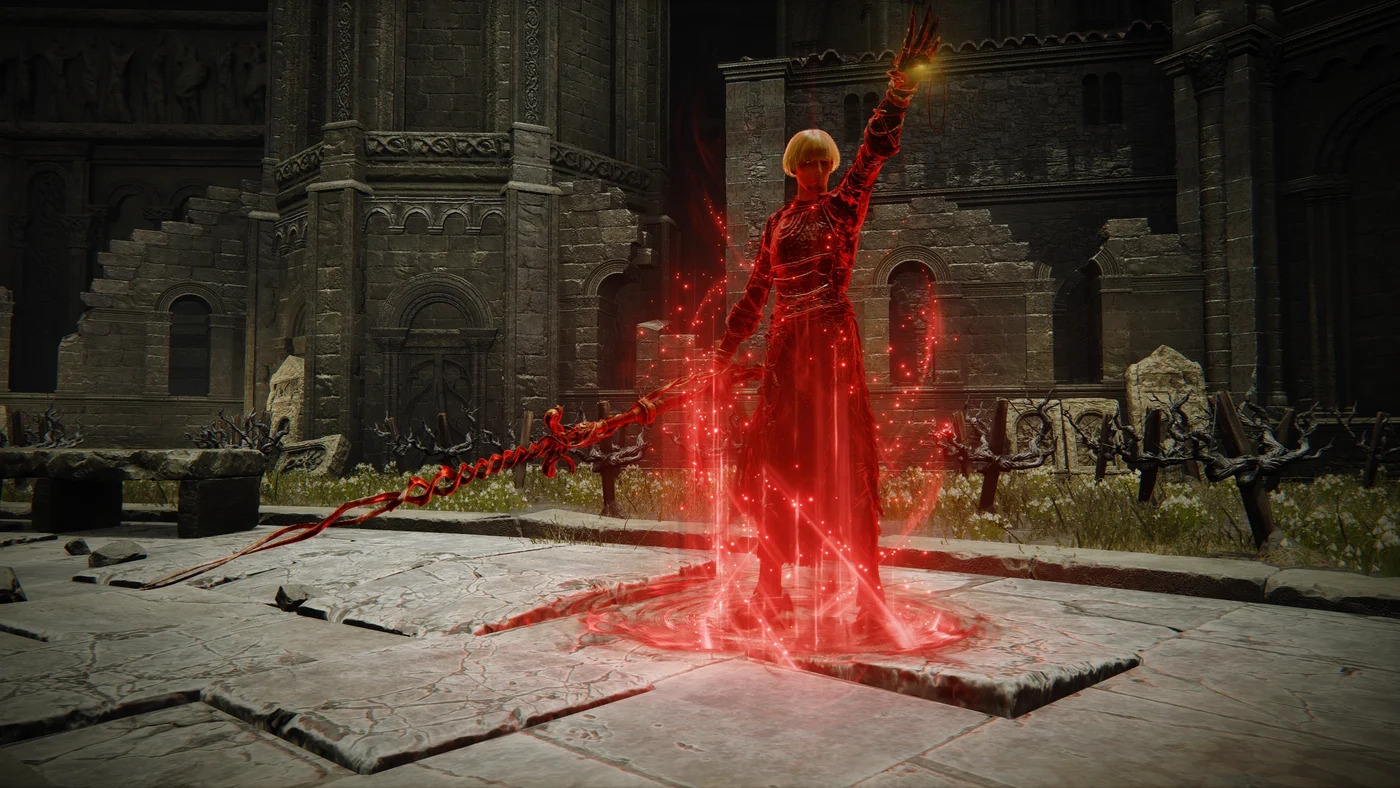 ❋ DLC · ORDER
The Fire Knights of Messmer
The only ones who truly knew Messmer, shunned for it▾
The Fire Knights of Messmer
"These were the only ones who truly knew Messmer. His flames, like serpents. The painful fate that accompanied his accursed form."
From the Fire Knight Armor description
"Each and every knight hailed from a renowned family of the Erdtree's upper echelons, but were shunned and chased from their homes after pledging allegiance to Messmer as their master."
From the Fire Knight Armor (Altered) description
Where the Black Knights are Messmer's army, the Fire Knights are his intimates, an order which, in the game's own phrasing, 'answers directly to Messmer'. Their armour, distinguished by red cape and twin golden snakes at the neck, carries the statement of what that allegiance cost. The Fire Knight Armor description gives it twice. First: 'These were the only ones who truly knew Messmer. His flames, like serpents. The painful fate that accompanied his accursed form.' Then, in the altered version: 'Each and every knight hailed from a renowned family of the Erdtree's upper echelons, but were shunned and chased from their homes after pledging allegiance to Messmer as their master.' The game names individuals: Wego, 'elder among the Fire Knights' ; Kood, 'captain of the Fire Knights', whose helm carries the winged serpent, 'a wise friend which keeps the base serpent at bay' ; Salza, 'sage of the Fire Knights' ; Hilde, who 'swings a slender greatsword and casts fire incantations' ; Queelign, who 'devoted his all to the crusade' and whose spirit is that of 'a knight granted relief by the Iris of Grace'.
Their inner life is recorded in flavour text, and it does not resolve into a clean split. The elder Wego, 'gnawed at by loneliness, the old man turned his attention to the spirituality of Messmer's flame, using it in a rite of resurrection. Yet the soulless bodies he brought to life were no comfort to poor Wego.' His disciple Salza 'refused to burn down an old ruin, at the risk of his own life' ; the description does not name that ruin. The same man returns in Rain of Fire, where 'Salza's disdain for barbarism never waned, even as he burned more villages and scorched more land than any other'. Refusal and crusade sit in the same man. Hilde, 'a dear friend to Salza the sage', 'joined those who urged that the specimens be preserved', and Hilde's 'ashes were enshrined as a charm to protect the storehouse'. What the order is said to have held onto is the bond itself: when the flame received from Messmer 'would not find purchase within them, the Fire Knights relied on fire incantations to honor their bond'.
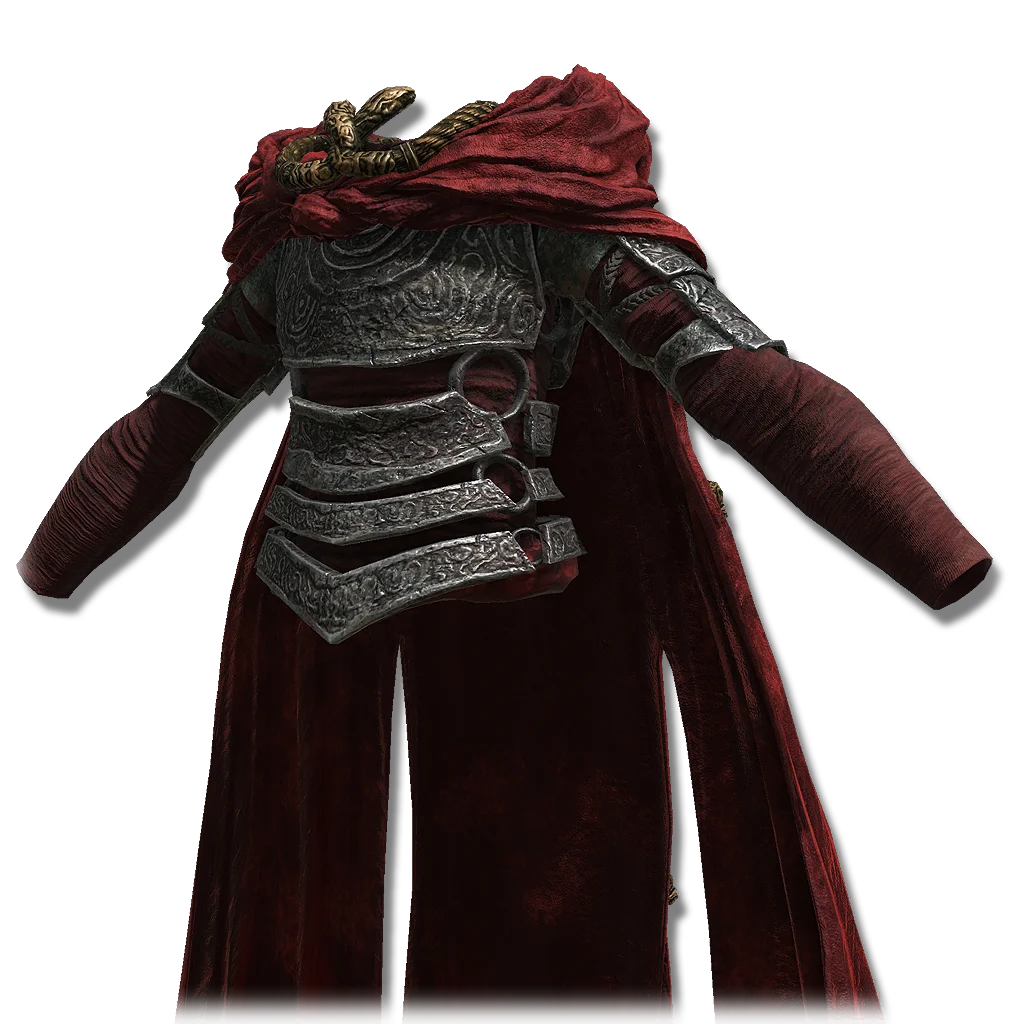 Fire Knight Armor
Distinguished by its red cape and twin golden snakes which adorn the neck. These were the only ones who truly knew Messmer. His flames, like serpents. The painful fate that accompanied his accursed form.
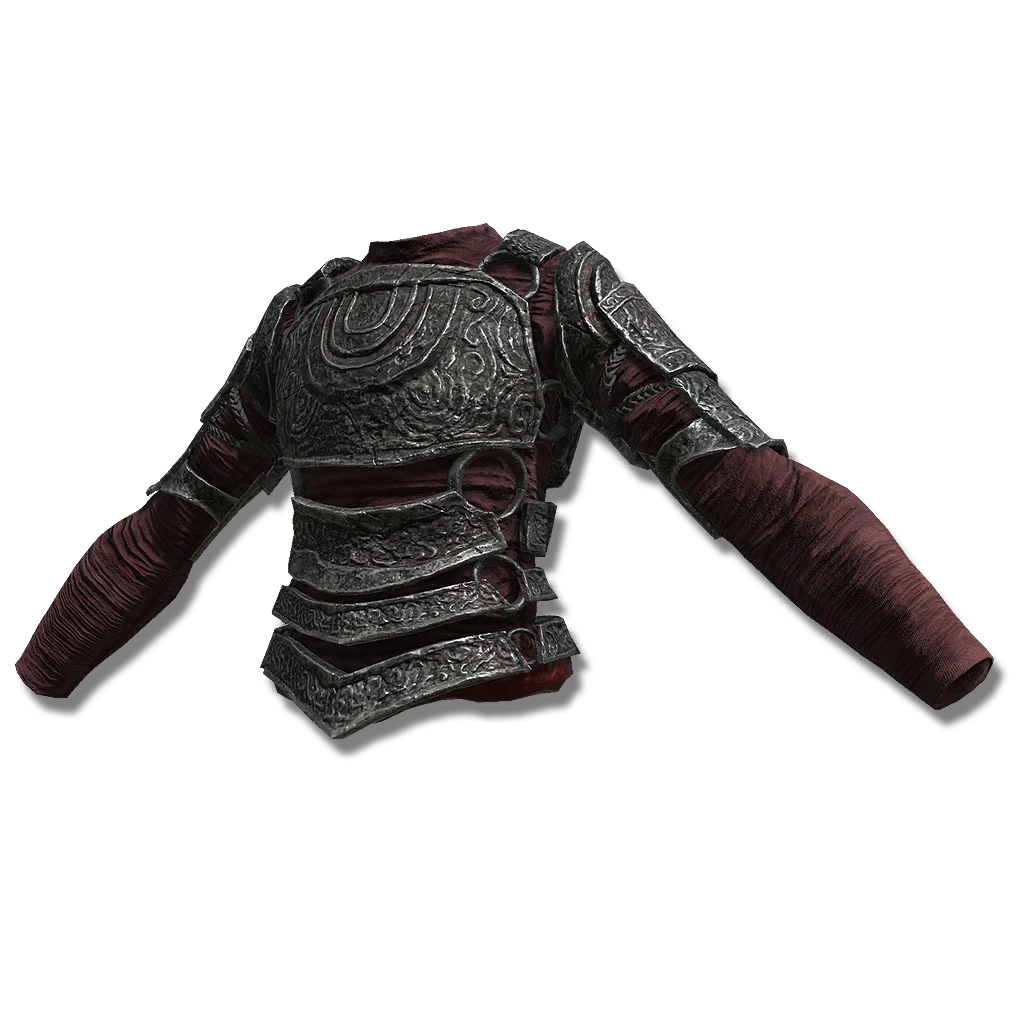 Fire Knight Armor (Altered)
Each and every knight hailed from a renowned family of the Erdtree's upper echelons, but were shunned and chased from their homes after pledging allegiance to Messmer as their master.
 Death Mask Helm
Helm of Wego, elder among the Fire Knights. Gnawed at by loneliness, the old man turned his attention to the spirituality of Messmer's flame, using it in a rite of resurrection. Yet the soulless bodies he brought to life were no comfort to poor Wego.
Salza's HoodHood of Salza, sage of the Fire Knights. A disciple of the elder Wego, he refused to burn down an old ruin, at the risk of his own life.
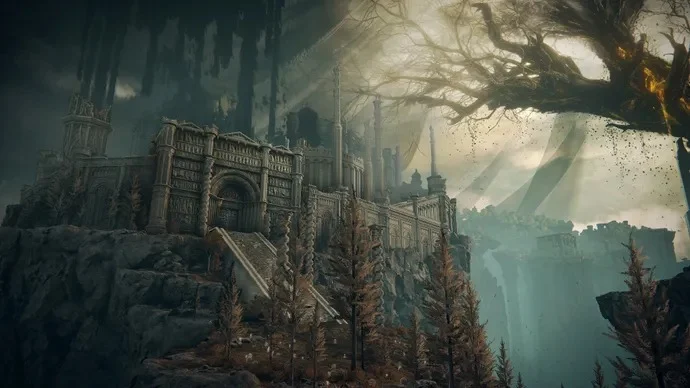 ❋ DLC · LOCATION
Belurat, the Tower Settlement
Hornsent capital, funeral pyre for itself▾
Belurat, the Tower Settlement
"The majority of divine beasts were gored and hung upon Messmer's spears, then burned in his flame. Those who witnessed the deed likened it to a funeral pyre for the tower itself."
From Divine Beast Tornado incantation
Belurat is the great spiral tower at the heart of the Realm of Shadow, capital of the Hornsent before Marika's reign, axis of the divine-beast cult, and the first stop the Tarnished makes in the Land of Shadow. The tower's well descends beneath the settlement to its iron grating, which the Well Depths Key opens; its second-floor storeroom, opened by the Storeroom Key, holds the relics no Hornsent left behind because none of them lived to leave.
The Dancing Lion that crowns the climb is the last remaining sculpted-keeper performance, a great divine-beast spirit-puppet animated by the horned warriors granted the honor of the lion dance. Below them, in the storehouse and the great hall, are the divine beasts Messmer's spears caught and the bodies they could not separate from his fire. The Divine Beast Tornado description's line, 'those who witnessed the deed likened it to a funeral pyre for the tower itself', is precisely what Belurat became. The Tarnished walks through that pyre.
 Storeroom Key
A key with a spiral engraving. Opens the door to the storeroom on the second floor of Belurat, the tower settlement.
 Well Depths Key
A crude, corroded key. Opens the iron grating at the bottom of the well in Belurat, the tower settlement.
 Divine Beast Tornado
The majority of divine beasts were gored and hung upon Messmer's spears, then burned in his flame. Those who witnessed the deed likened it to a funeral pyre for the tower itself.
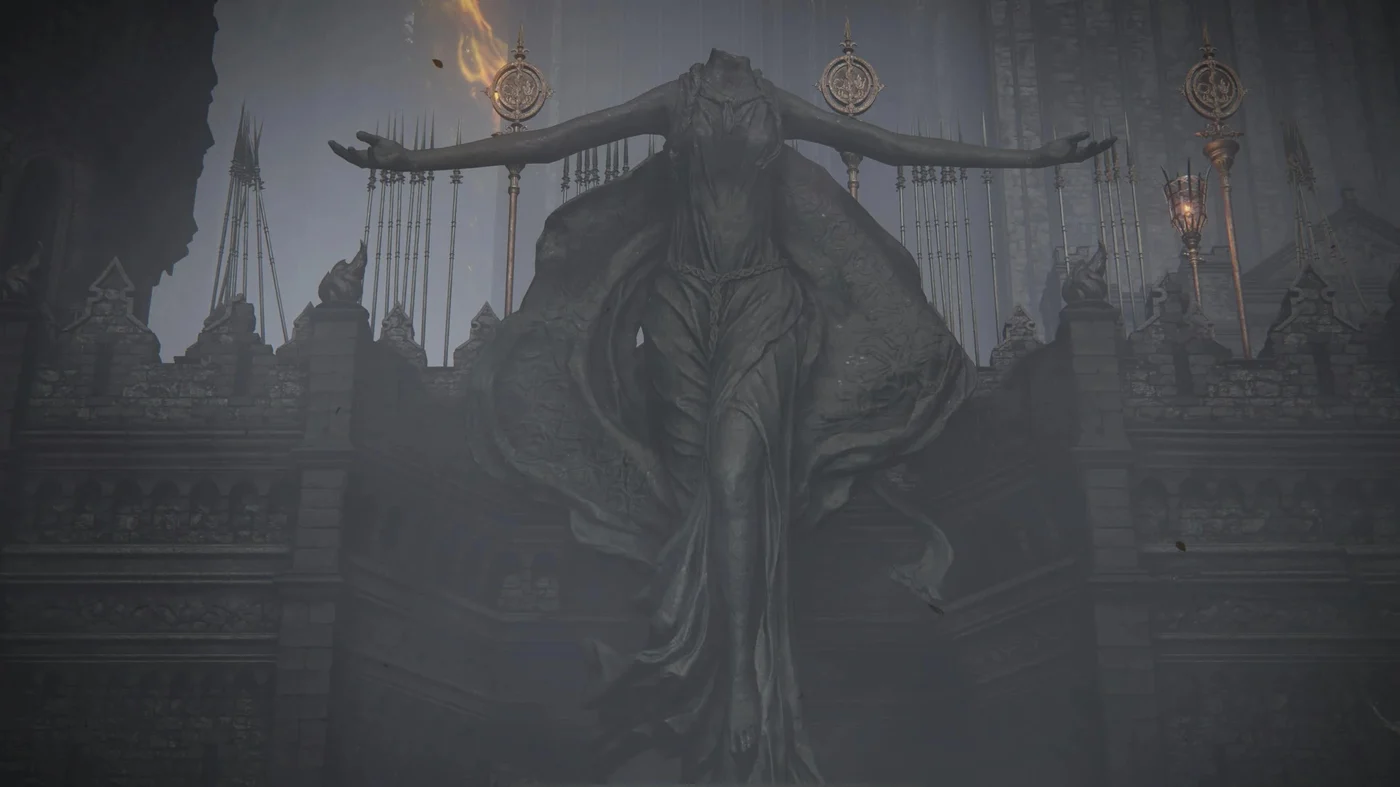 ❋ DLC · LOCATION
The Shadow Keep
Messmer's command, plateau where the army watched the Scadutree▾
The Shadow Keep
The Shadow Keep is the great fortress at the centre of Scadu Altus, the plateau Messmer's army occupied for the duration of the campaign against the Hornsent. The Map: Scadu Altus description names what it was for: 'The plateau occupied by Messmer's army that peers towards the Scadutree to the northeast, named after its counterpart in the realm of the Erdtree. At its center lies the shadow keep.' From the keep's parapets, the Black Knights and Fire Knights could see what they were defending: the Scadutree, the dark twin of the Erdtree, whose grace flows backwards into shadow.
Inside the keep, the Tarnished moves through three layers: the church district, where the prayer room (Prayer Room Key) sits within the house of worship; the wooden door beside the great gate on the west wall, opened by the Keep Wall Key, which guards the path up to the Specimen Storehouse; and the storehouse itself, where the specimens of the Land of Shadow, Hornsent and divine-beast alike, were preserved and studied. The keep is a working fortress and a working museum, Messmer's army on the upper floors, his prisoners on the lower. Within its halls, even his most loyal Fire Knights split over whether the storehouse should burn.
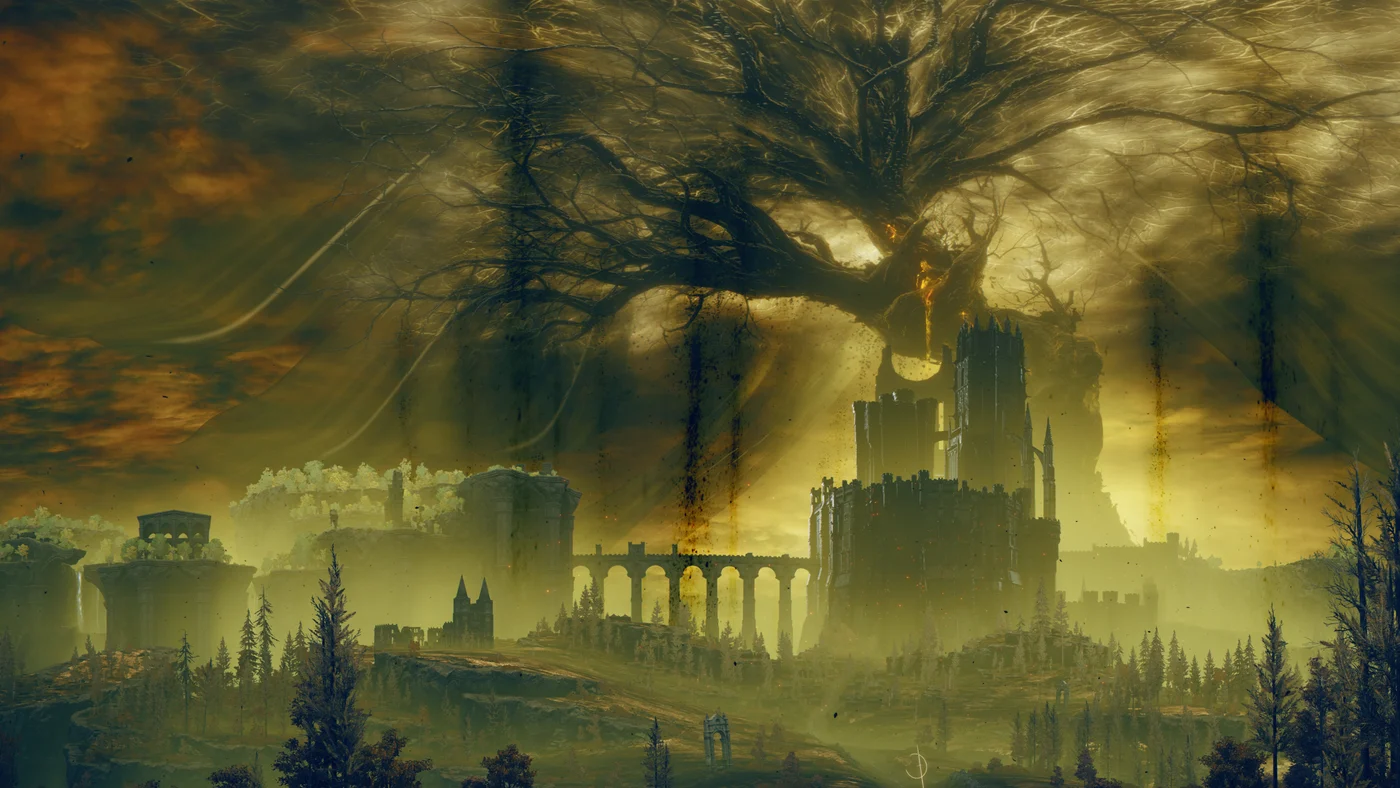 Map: Scadu Altus
Map of Scadu Altus. The plateau occupied by Messmer's army that peers towards the Scadutree to the northeast. At its center lies the shadow keep.
 Keep Wall Key
Iron key with an engraved crest. Opens the wooden door beside the great gate on the shadow keep's west wall.
 Prayer Room Key
Iron key with an engraved crest. Opens the door to the prayer room in the house of worship found in the church district of the shadow keep.
❋ DLC · LOCATIONThe Jagged Peak
Bayle's molten throne, last refuge of the ancient dragons▾
The Jagged Peak
"Bayle was the foul dragon's name—a terrible harbinger of destruction whose challenge to the ancient Dragonlord ended in grievous mutual injury."
From the Talisman of the Dread description
The Jagged Peak rises from the southern shore of the Gravesite Plain, 'the jagged peak thrusts upward into the clouds,' the Map: Southern Shore description states, against a vista of brilliant blue flowers and colossal drifted stone coffins. It is the last refuge of the ancient dragons, the dragons the Red Lightning Pot says 'betrayed their lord to side with a tyrant,' known for wielding branching red lightning. They gathered here, at a peak whose own weather the Bayle-dragon Talisman of the Dread describes: 'the dread dragon of the jagged peak, whose roars cause the peak's molten fury to boil and churn.' The peak is a working volcano, kept boiling by the breath of the dragon who rules it.
That dragon is Bayle the Dread. The Talisman of the Dread describes him plainly: 'Bayle was the foul dragon's name, a terrible harbinger of destruction whose challenge to the ancient Dragonlord ended in grievous mutual injury.' Bayle and Placidusax fought in an age before the Erdtree, an age in which Placidusax was Elden Lord; their duel maimed both. Placidusax retreated to Farum Azula's eternal storm. Bayle retreated to the Jagged Peak, where the surviving ancient dragons still gather around his cinders, among the Red Fulgurbloom flowers said to bloom where the ancient dragons' red lightning strikes the earth. Igon, the broken drake-warrior, climbs the peak to call the Tarnished to a vow he could not finish.
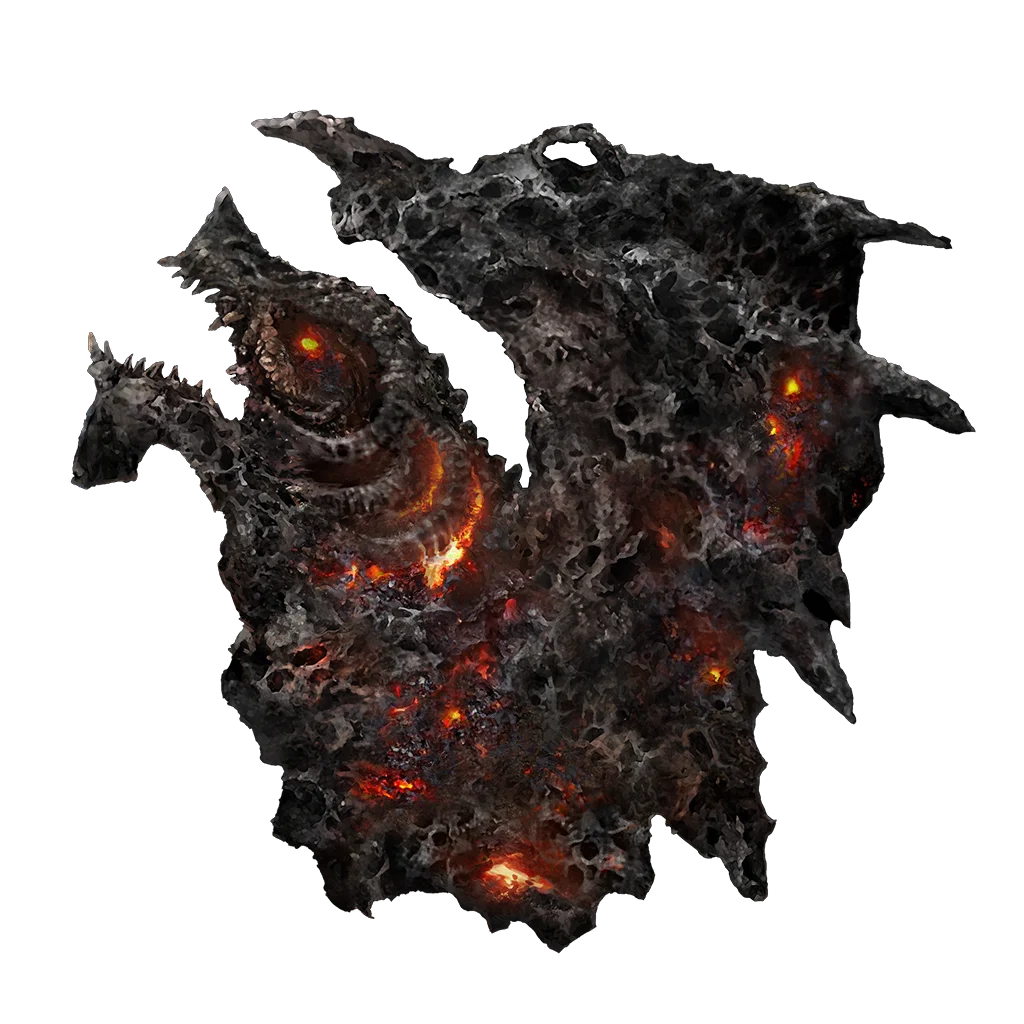 Talisman of the Dread
Talisman depicting the dread dragon of the jagged peak, whose roars cause the peak's molten fury to boil and churn. Bayle was the foul dragon's name—a terrible harbinger of destruction whose challenge to the ancient Dragonlord ended in grievous mutual injury.
 Red Fulgurbloom
Flower that crackles with red lightning. Found at the jagged peak on the south coast. Said to bloom where the red lightning of the ancient dragons strikes the earth.
 Sharp Gravel Stone
Found at the jagged peak on the south coast. The scale of an ancient dragon that has supped on the blood of lesser dragons.
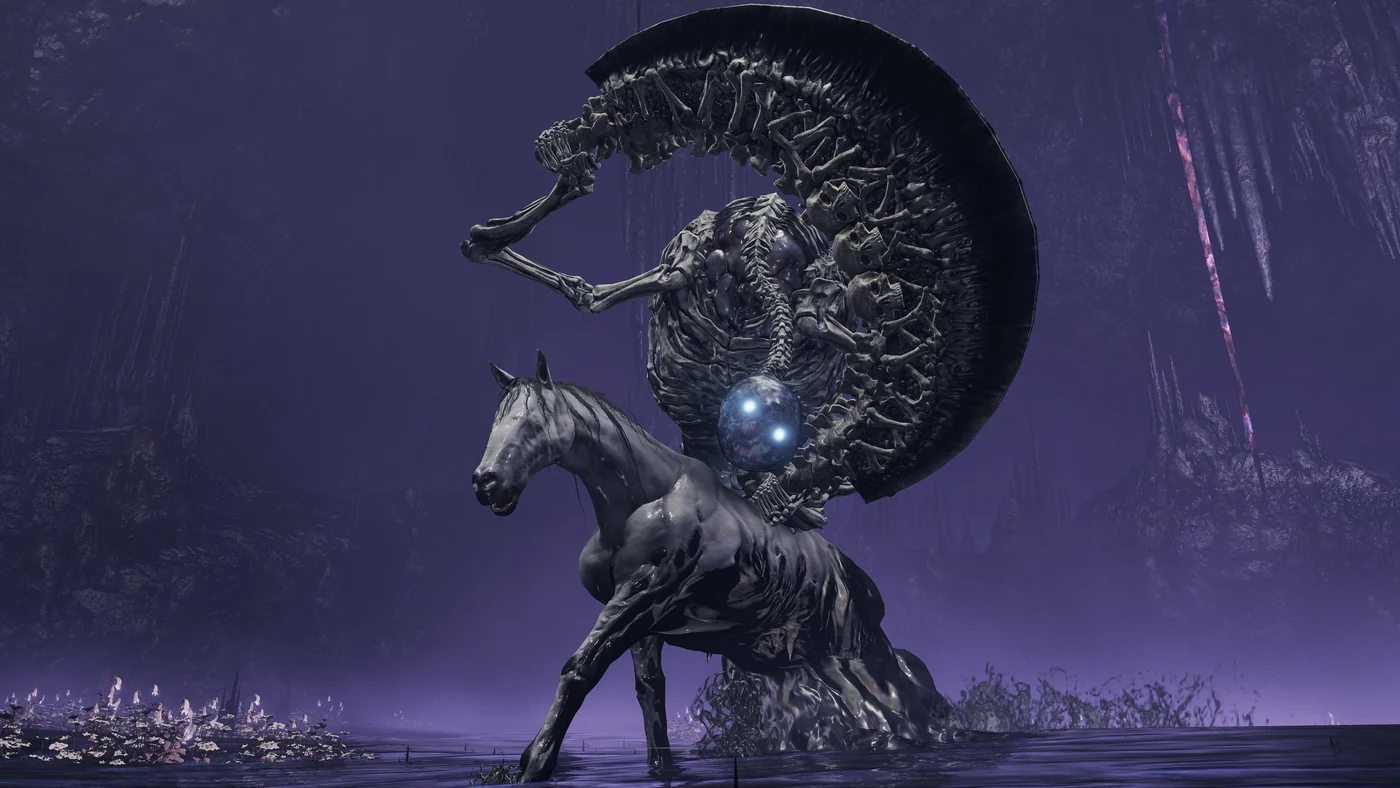 ❋ DLC · LOCATION
The Stone Coffin Fissure
Underground gorge where putrescence drifts and the Putrescent Knight rests▾
The Stone Coffin Fissure
"All tainted flesh eventually becomes putrescence, and this clump of it imbibed St. Trina's nectar, which granted it eternal rest. And so it was that putrescence became her knight."
From the Remembrance of Putrescence
On the southern shore of the Gravesite Plain, brilliant-blue flowers and colossal stone coffins drift together, coffins 'of unknown origin that seemingly drifted to this place.' The Stone Coffin Fissure is what lies beneath them: an underground chasm into which the coffins descend over centuries, carrying their cargo down into a basin of bruise-coloured liquid. The Congealed Putrescence flavour text describes what gathers there, 'Bruise-colored putrescence that oozes from stone coffins, congealed into a large viscous lump. … Found underground in the land to where stone coffins drift. The putrescence is what remains of the impure lives kept within the stone coffins.'
What the coffins held is what makes the fissure a sacred site for one demigod. St. Trina, in her exile from Miquella, descended to the basin and gave the putrescence, the unburied tainted dead, what no Erdtree priest would. The Remembrance of Putrescence describes the result: 'All tainted flesh eventually becomes putrescence, and this clump of it imbibed St. Trina's nectar, which granted it eternal rest. And so it was that putrescence became her knight.' The Putrescent Knight the Tarnished fights at the fissure's bottom is what rose from the basin, a tower of impure flesh that has finally, through St. Trina's gift, found sleep.
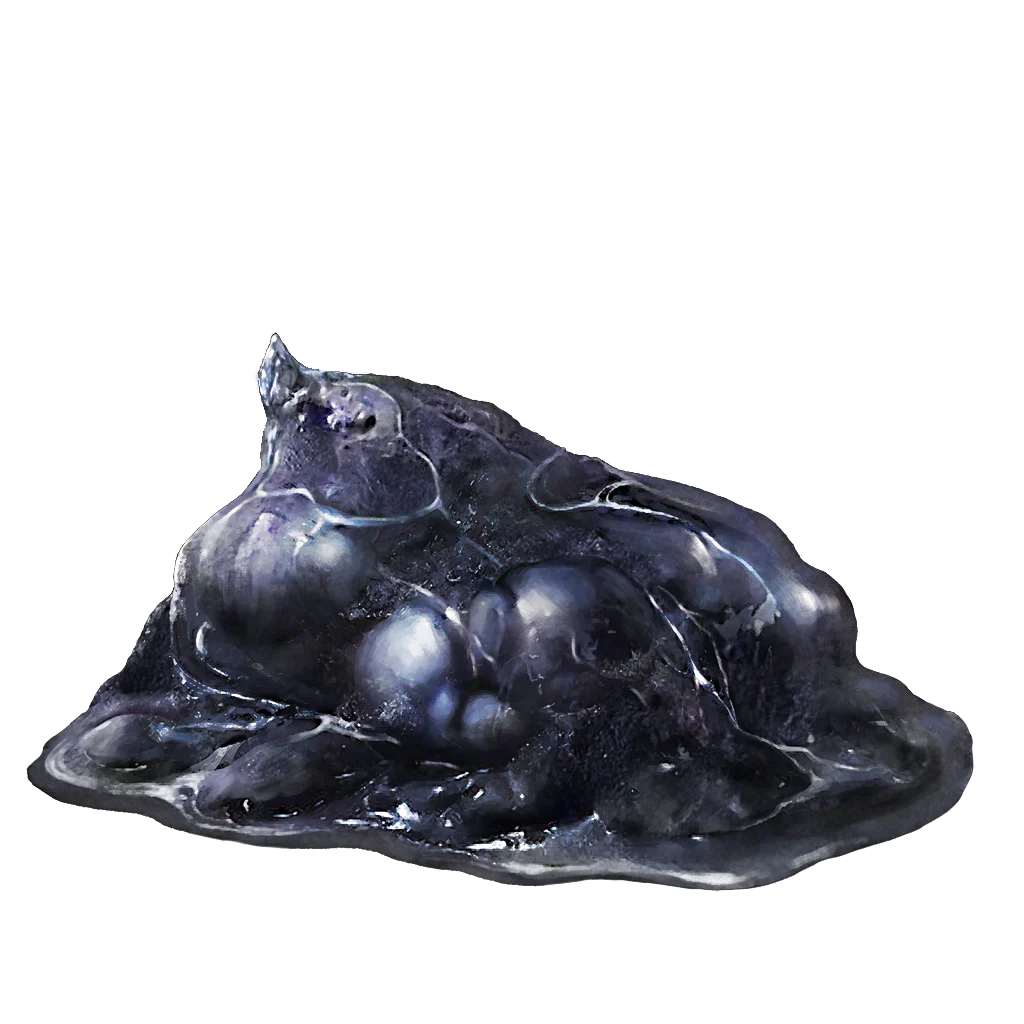 Congealed Putrescence
Bruise-colored putrescence that oozes from stone coffins, congealed into a large viscous lump. Found underground in the land to where stone coffins drift. The putrescence is what remains of the impure lives kept within the stone coffins.
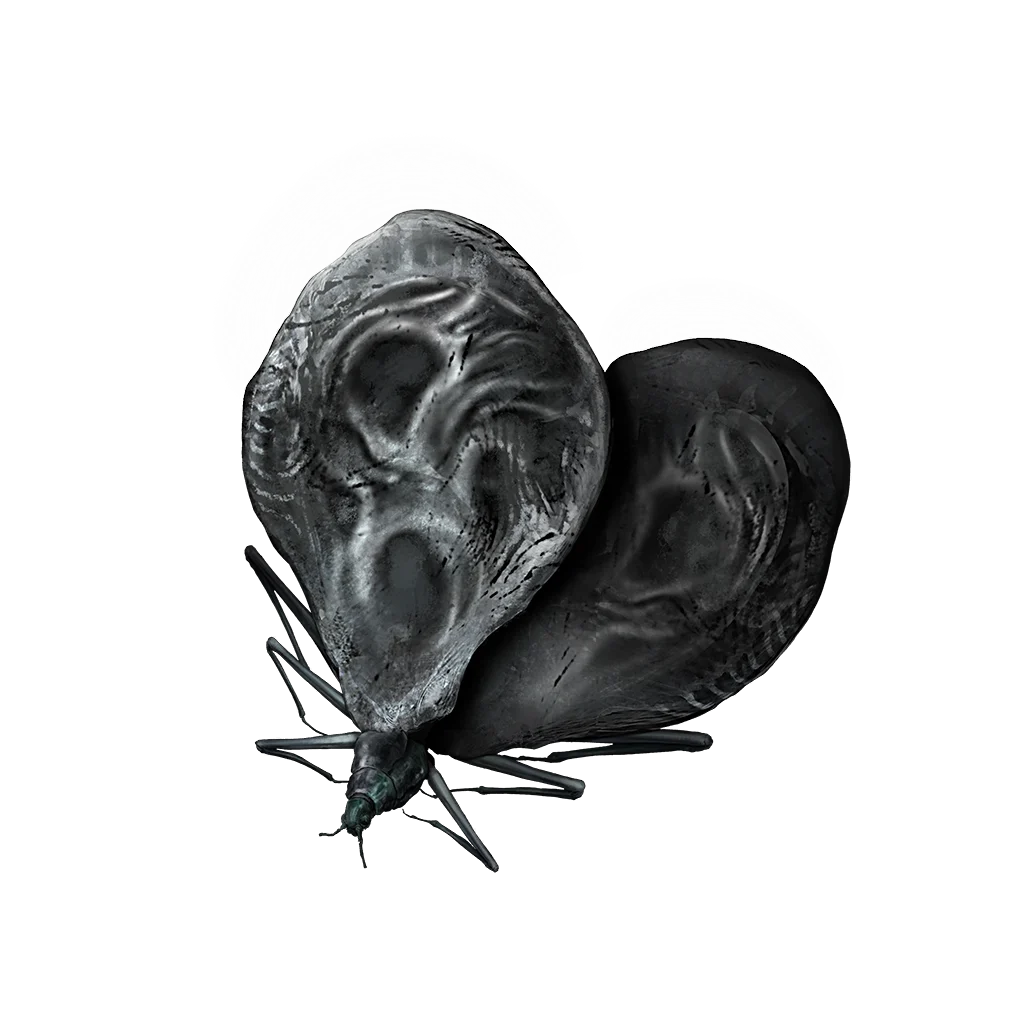 Grave Cricket
Cricket that produces a raspy cry. Mainly found near stone coffins. The sound of these crickets are often taken to be the rustling of the restless dead, or sometimes the sound of their calling voices.
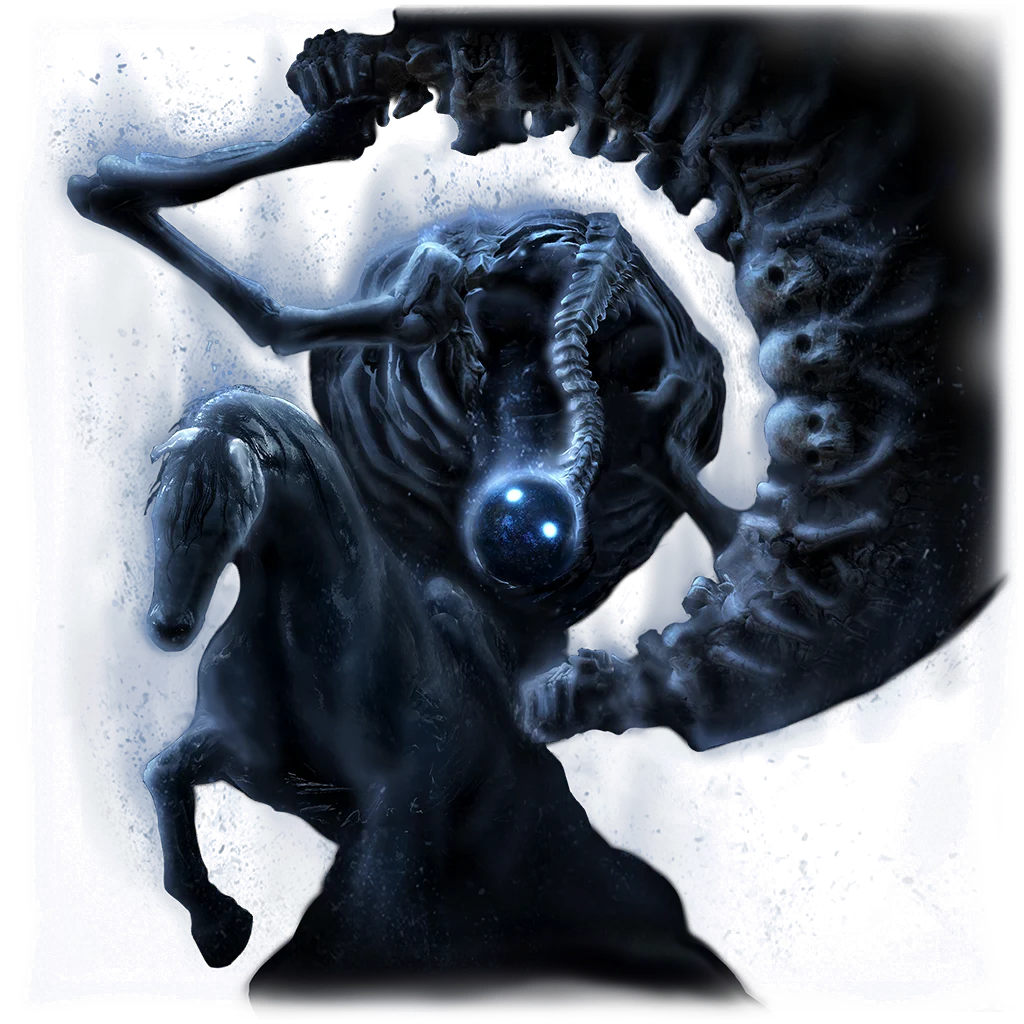 Remembrance of Putrescence
All tainted flesh eventually becomes putrescence, and this clump of it imbibed St. Trina's nectar, which granted it eternal rest. And so it was that putrescence became her knight.
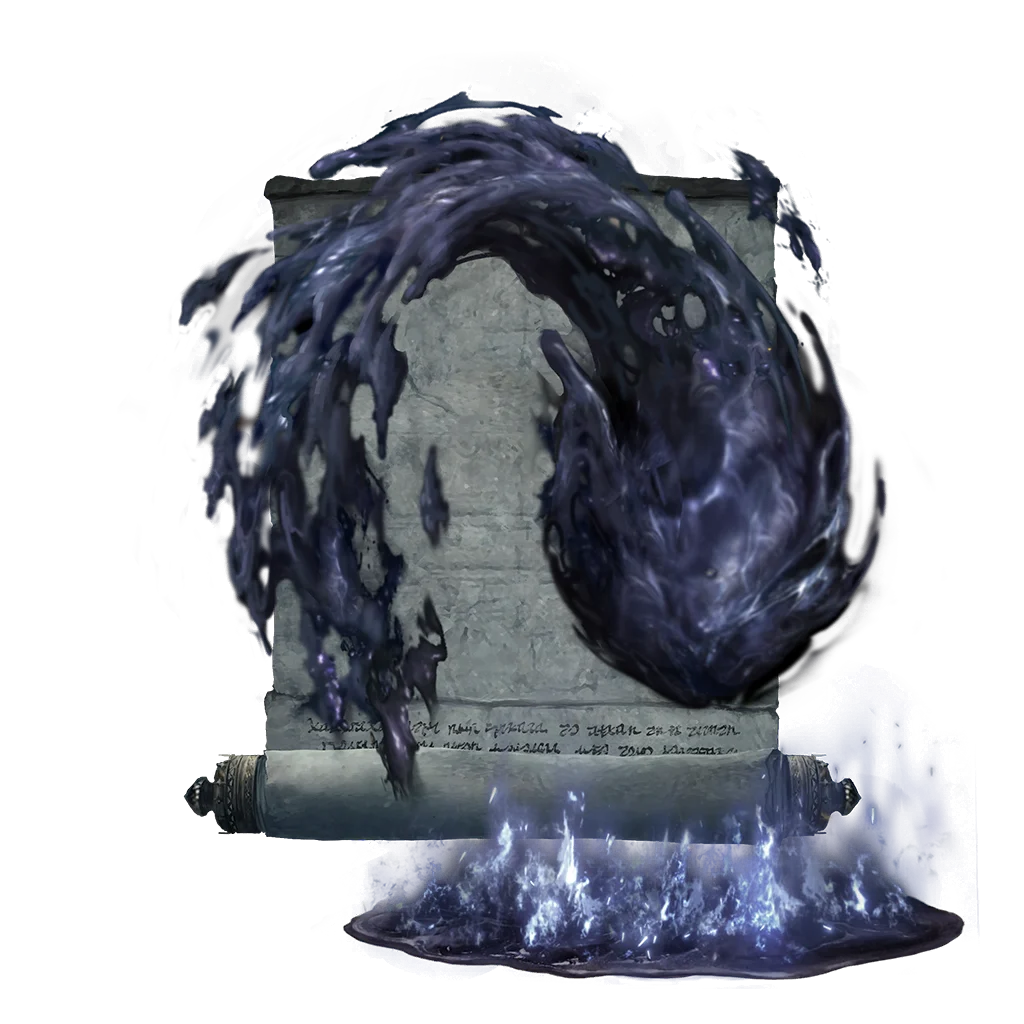 Mass of Putrescence
Sorcery originating from the putrid liquor of the stone coffins. In an age long past, Death was burned by ghostflame. Even the remains of tainted flesh were given equal treatment in death.
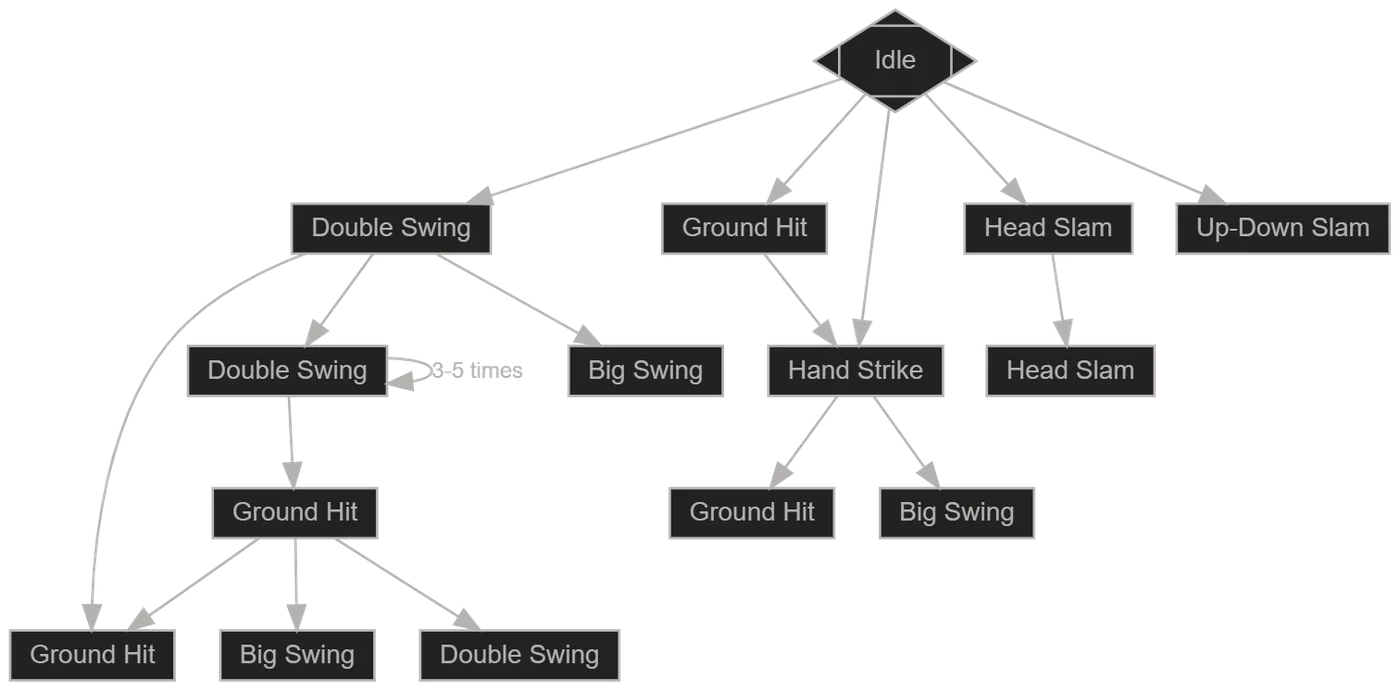 ◈ ORDER
The Mad Pumpkin Heads
Iron-helmed warriors kept from panic by darkness▾
The Mad Pumpkin Heads
"An oval helm large enough to cover any head. Very heavy and very hard. Reduces damage from headshots and impacts. The inside of the helm is pitch black, keeping the crazed warrior within from panicking. Perhaps its rather roomy interior also helps alleviate feelings of pressure and claustrophobia."
From the Pumpkin Helm description
The Mad Pumpkin Heads are not, strictly, a noble order, they are crazed warriors whose madness has been managed by the simplest possible expedient. The Pumpkin Helm description records the design's intent without ornament: 'An oval helm large enough to cover any head. Very heavy and very hard. The inside of the helm is pitch black, keeping the crazed warrior within from panicking. Perhaps its rather roomy interior also helps alleviate feelings of pressure and claustrophobia.' The wearer is sealed in a private night so they will not see the battle they are fighting.
Their weapon is the Chainlink Flail, 'a spiked iron tube attached by a chain wielded by Mad Pumpkin Heads. Especially large for a flail, wielding it requires more strength than it does dexterity.' This combination, a man who cannot see what he is striking, swinging a weapon too heavy for technique, is the canon's quietest comment on what it means to make a weapon of a maddened man. The helm and the flail are the only record the game keeps of them: a blindness worn as mercy, and a weight swung without sight.
An oval helm large enough to cover any head. Very heavy and very hard. The inside of the helm is pitch black, keeping the crazed warrior within from panicking. Perhaps its rather roomy interior also helps alleviate feelings of pressure and claustrophobia.
A spiked iron tube attached by a chain wielded by Mad Pumpkin Heads. Especially large for a flail, wielding it requires more strength than it does dexterity.
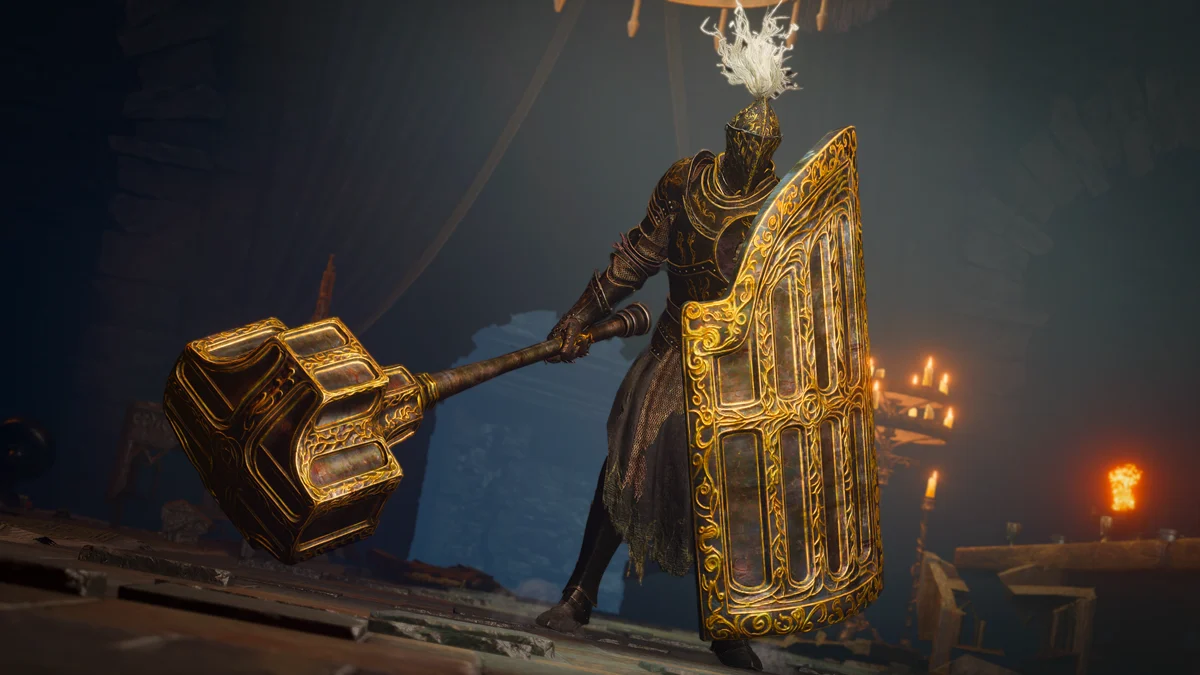 ❋ DLC · ORDER
The Black Knights of Messmer
Primary force of Messmer's army, a war without grace▾
The Black Knights of Messmer
"Though the engraving above the heart is a Scadutree design, it is etched in gold. A small consolation to those forced to wage a war without grace or honor."
From the Black Knight Armor description
"A rotten odor stubbornly clings to it. Perhaps it arises from the tainted nature of the blood that splattered upon it. Or perhaps it is the wearer's own blackened soul, festering after endless slaughter."
From the Black Knight Helm description
The Black Knights are the primary armed force of Messmer the Impaler; the Black Knight Commander Andreas Spirit Ash hints at where they came from, recalling that their first leader 'remained a devout follower of Messmer after his flight from the Erdtree'. The Black Knight Captain Huw Spirit Ash description spells the chain of command: 'The Black Knights were the primary force of Messmer's army. Second to their first Knight-Commander was Huw, a man with agile command of both twinblade techniques and the powers of the Crucible.' Their armour is black iron ornamented with gold; a Scadutree design is engraved over the heart, but the Black Knight Armor description notes a quiet contradiction in that emblem, 'though the engraving above the heart is a Scadutree design, it is etched in gold. A small consolation to those forced to wage a war without grace or honor.'
What the Black Knight gauntlets, greaves, and helm record together is what the war did to its conscripts. 'Black iron ornamented with gold. A rotten odor stubbornly clings to it. Perhaps it arises from the tainted nature of the blood that splattered upon it. Or perhaps it is the wearer's own blackened soul, festering after endless slaughter.' Messmer's army is the canon's clearest example of an Erdtree-blessed army that is, by its own gear's flavour text, ashamed of what it has done. And yet the Black Steel Greatshield insists they never wavered: 'Symbolic of their iron conviction in their crusade, the Black Knights will never yield. Nor will they ever doubt their purpose.'
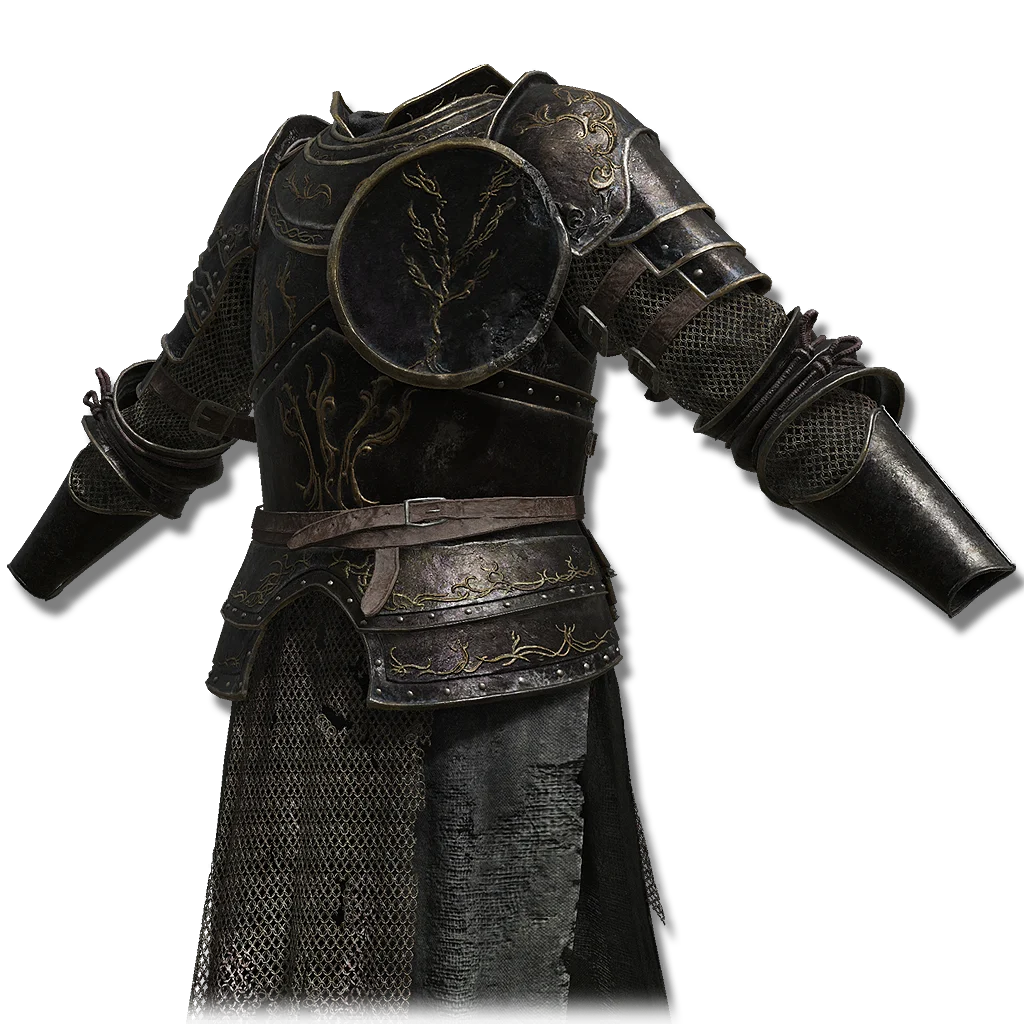 Black Knight Armor
Armor worn by the Black Knights, servants of Messmer the Impaler. Though the engraving above the heart is a Scadutree design, it is etched in gold. A small consolation to those forced to wage a war without grace or honor.
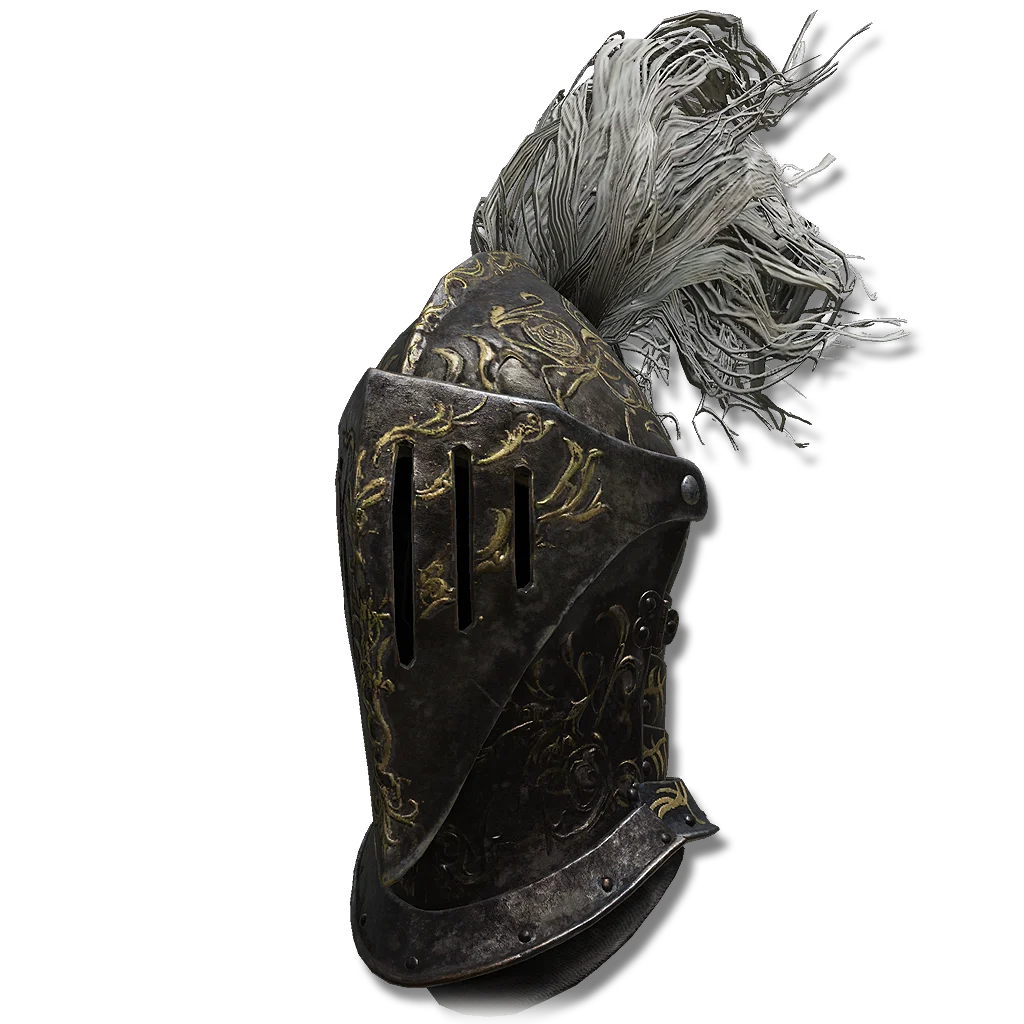 Black Knight Helm
Black iron ornamented with gold. A rotten odor stubbornly clings to it. Perhaps it arises from the tainted nature of the blood that splattered upon it. Or perhaps it is the wearer's own blackened soul, festering after endless slaughter.
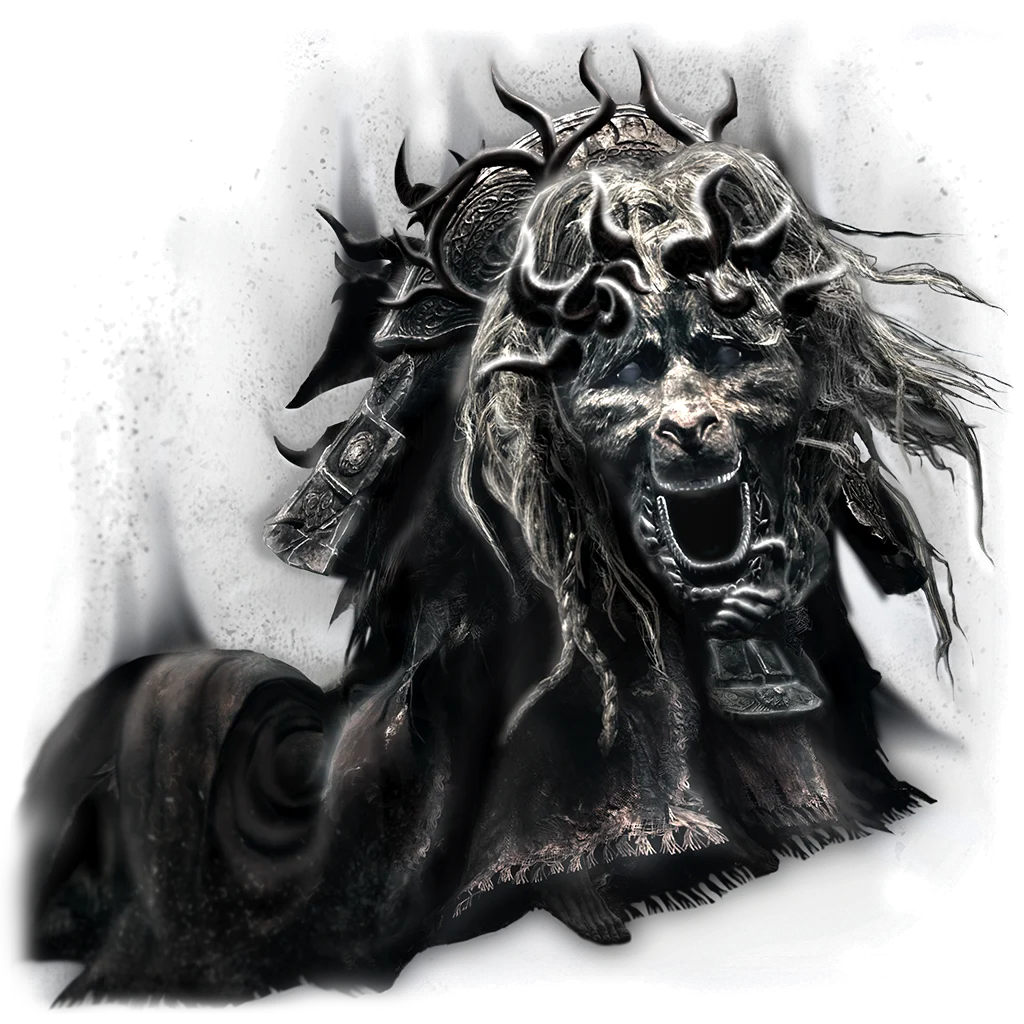 ❋ DLC · CONCEPT
The Divine Beasts
Messengers of the heavens, gored on Messmer's spears▾
The Divine Beasts
Divine beasts are messengers of the heavens. The Enraged Divine Beast talisman carries the definition and the temperament together: 'A charm depicting the crazed, cavorting dance of the divine beast conducted at the tower festival. … Divine beasts are messengers of the heavens, and their rage mirrors the tumult of the skies, of which storms are the pinnacle.' That tower is the hornsent's own: the Gravesite Plain map places 'the spiral tower of the hornsent' to the northwest, the Storeroom Key names it 'Belurat, the tower settlement', and the horned warriors who hold it are called 'keepers of the tower'. The game does not say who raised it. Divinity was reached there through the body: helms of tangled horn allow 'the wearer to invoke divinity', and the Horned Warrior Helm sets the price, since divine invocation 'causes the blessing of the Erdtree to become nauseating'. Among the divine beast warriors, reads the Divine Beast Warrior Armor, 'only those who truly excel at divine invocation become sculpted keepers, and are granted the honor of the lion dance', performed in ritual headwear shaped as a divine beast's head.
What followed is set down without softening. The Divine Beast Tornado incantation preserves it: 'The majority of divine beasts were gored and hung upon Messmer's spears, then burned in his flame. Those who witnessed the deed likened it to a funeral pyre for the tower itself.' Messmer's Armor gives the crusade its warrant: 'On his mother's wishes, Messmer made himself a symbol of fear, undertaking the cleansing crusade she desired.' The Remembrance of the Dancing Lion records what the assault did to the rite itself: 'When the Impaler's army assailed the tower, the ritual of the lion dance was turned toward martial ends', its divinity, its fury and its light-footed beauty turned along with it. The Divine Beast Head holds the quieter aftermath, ritual headwear 'worn by the very finest of the sculpted keepers' that 'no longer responds to the old woman's earnest prayer'. The Tarnished inherits the gestures: Divine Beast Frost Stomp is a skill 'which imitates the wrath of the divine beast's dance', and Divine Beast Tornado is 'the tempest of the Dancing Lion, wielded as an incantation'.
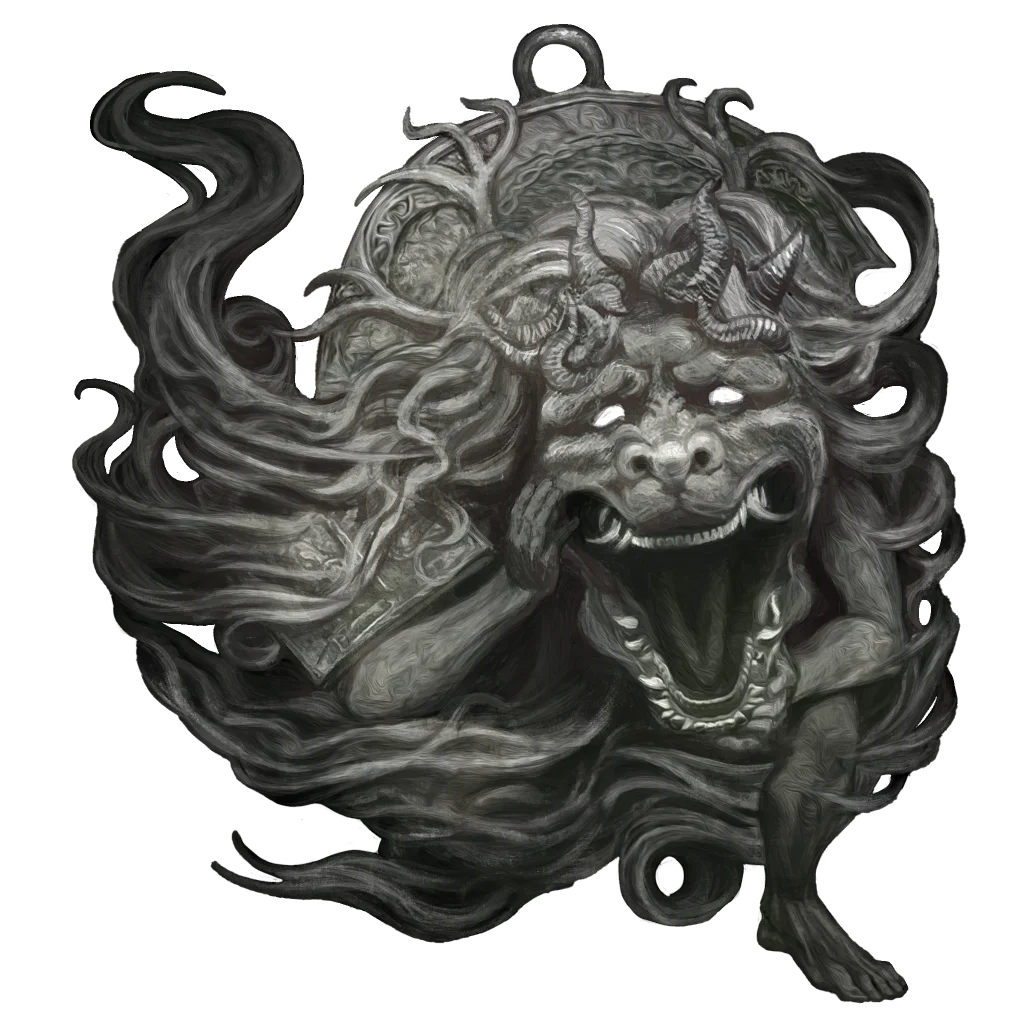 Enraged Divine Beast
A charm depicting the crazed, cavorting dance of the divine beast conducted at the tower festival. Divine beasts are messengers of the heavens, and their rage mirrors the tumult of the skies, of which storms are the pinnacle.
Divine Beast TornadoThe tempest of the Dancing Lion, wielded as an incantation. The majority of divine beasts were gored and hung upon Messmer's spears, then burned in his flame. Those who witnessed the deed likened it to a funeral pyre for the tower itself.
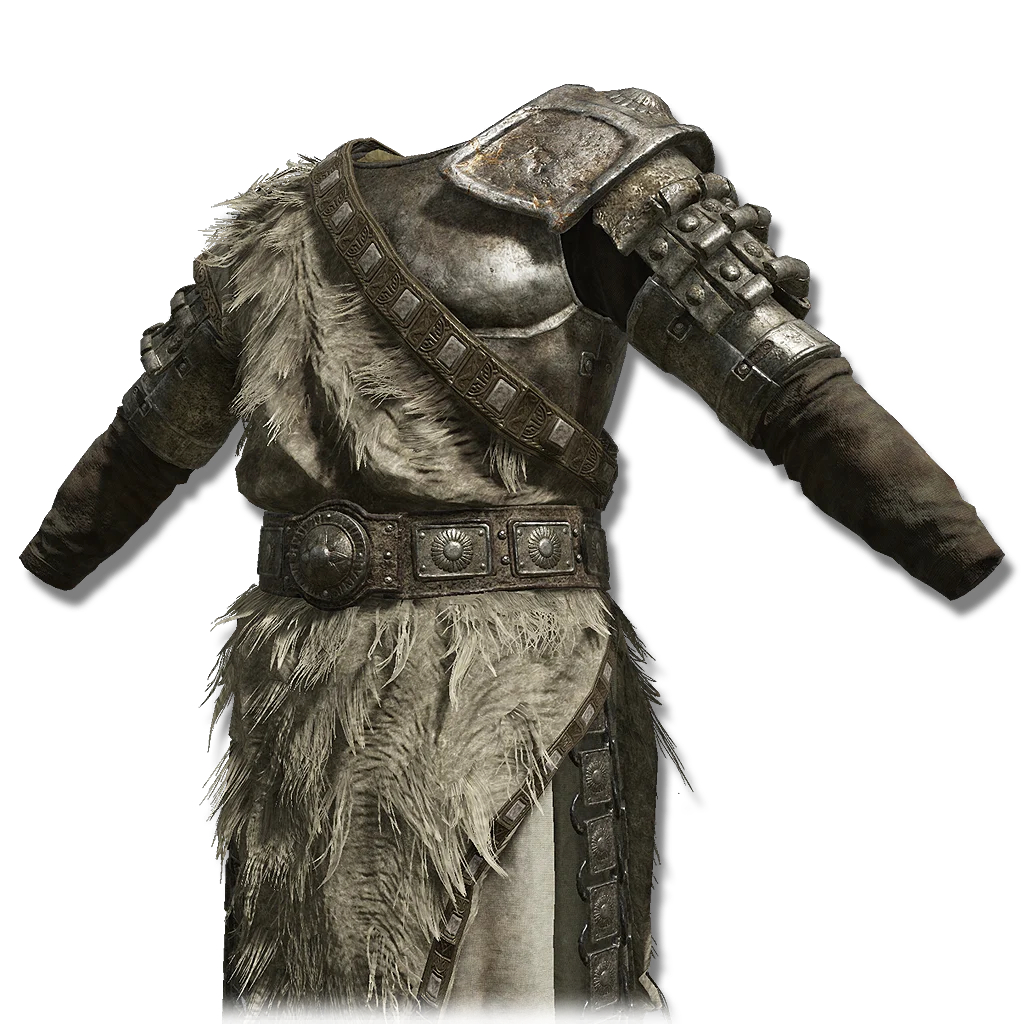 Divine Beast Warrior Armor
Armor of feted horned warriors chosen to become divine beast warriors, adorned with a lion's pelt. Among the divine beast warriors, only those who truly excel at divine invocation become sculpted keepers, and are granted the honor of the lion dance.
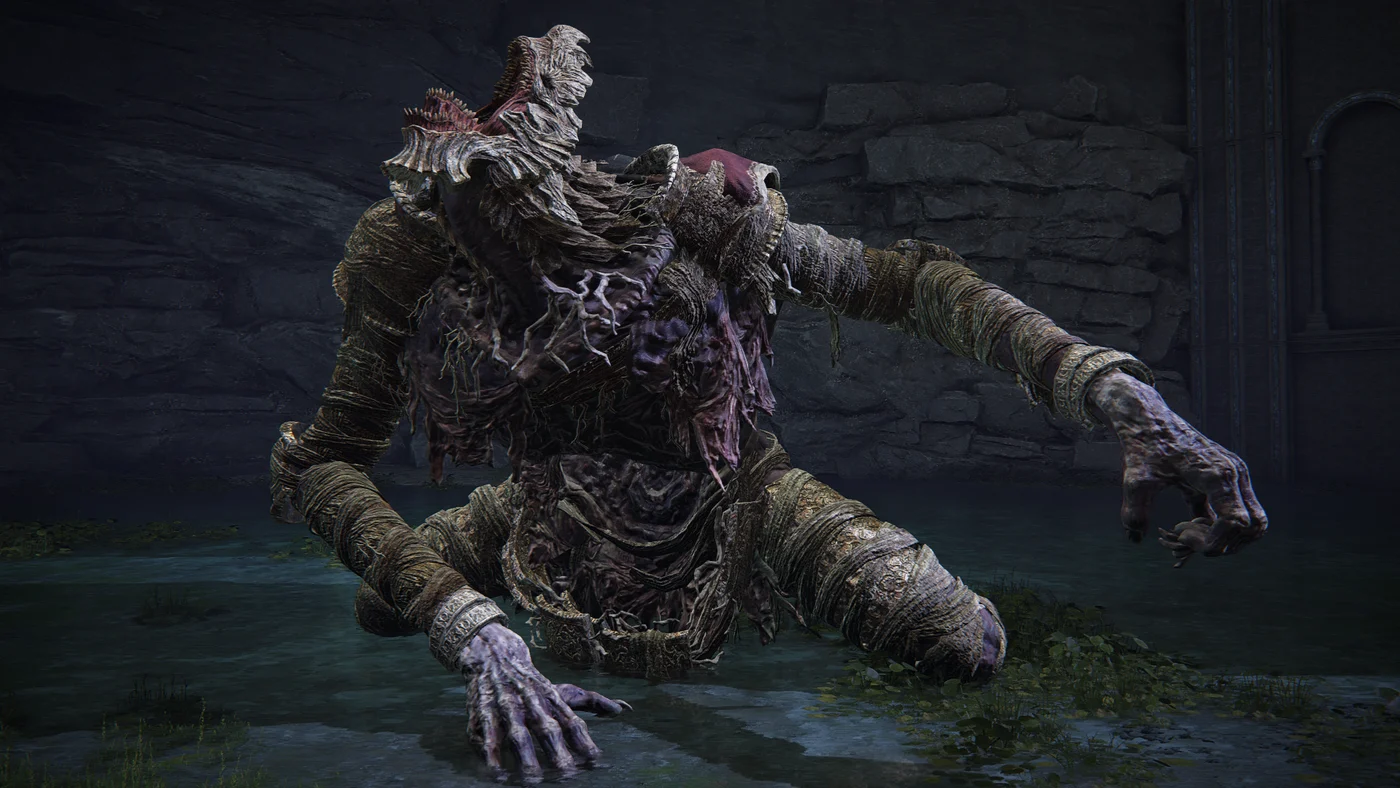 ◈ ENTITY
The Dragonkin Soldiers
Eternal City's failed dragons, ice-lightning under no sky▾
The Dragonkin Soldiers
"Incantation that channels the power of the Dragonkin Soldiers. Creates a spear of ice lightning and stabs it into the ground from above. On impact, the spear will burst into trails of lightning advancing forwards. The Dragonkin were born in the Eternal City, where they knew no true sky, nor true lightning. Instead, ice lightning was their weapon."
From the Frozen Lightning Spear description
The Dragonkin Soldiers are the Eternal City's other great failure of imitation, a twin experiment to the Mimic Tear's. Where the Silver Tears tried to imitate a lord, the Dragonkin tried to imitate a dragon. The Dragonscale Blade flavour text records the project's defeat without flinching: 'A weapon made by sharpening a Gravel Stone scale, thought to be the source of ancient dragon immortality, into an unclouded blade. Alas, the Dragonkin Soldiers never attained immortality, and perished as decrepit, pale imitations of their skyborn kin.' Their bodies, which the Tarnished encounters in the underground at Siofra and Lake of Rot, are draconic in shape but soft, sluggish, and aging.
What they did achieve is haunting in its own way. The Frozen Lightning Spear incantation description names what they invented for themselves: 'The Dragonkin were born in the Eternal City, where they knew no true sky, nor true lightning. Instead, ice lightning was their weapon.' Without sky, they synthesised storm. Their lightning is cold and blue and falls in patterns no sky-born dragon would recognise, a domestic, underground weather, made by creatures who never saw a real cloud. The two Dragonkin Soldiers in Lake of Rot and Nokstella are, between them, the last imitation of a faith they could not become.
A weapon made by sharpening a Gravel Stone scale, thought to be the source of ancient dragon immortality, into an unclouded blade. Alas, the Dragonkin Soldiers never attained immortality, and perished as decrepit, pale imitations of their skyborn kin.
Frozen Lightning SpearIncantation that channels the power of the Dragonkin Soldiers. The Dragonkin were born in the Eternal City, where they knew no true sky, nor true lightning. Instead, ice lightning was their weapon.
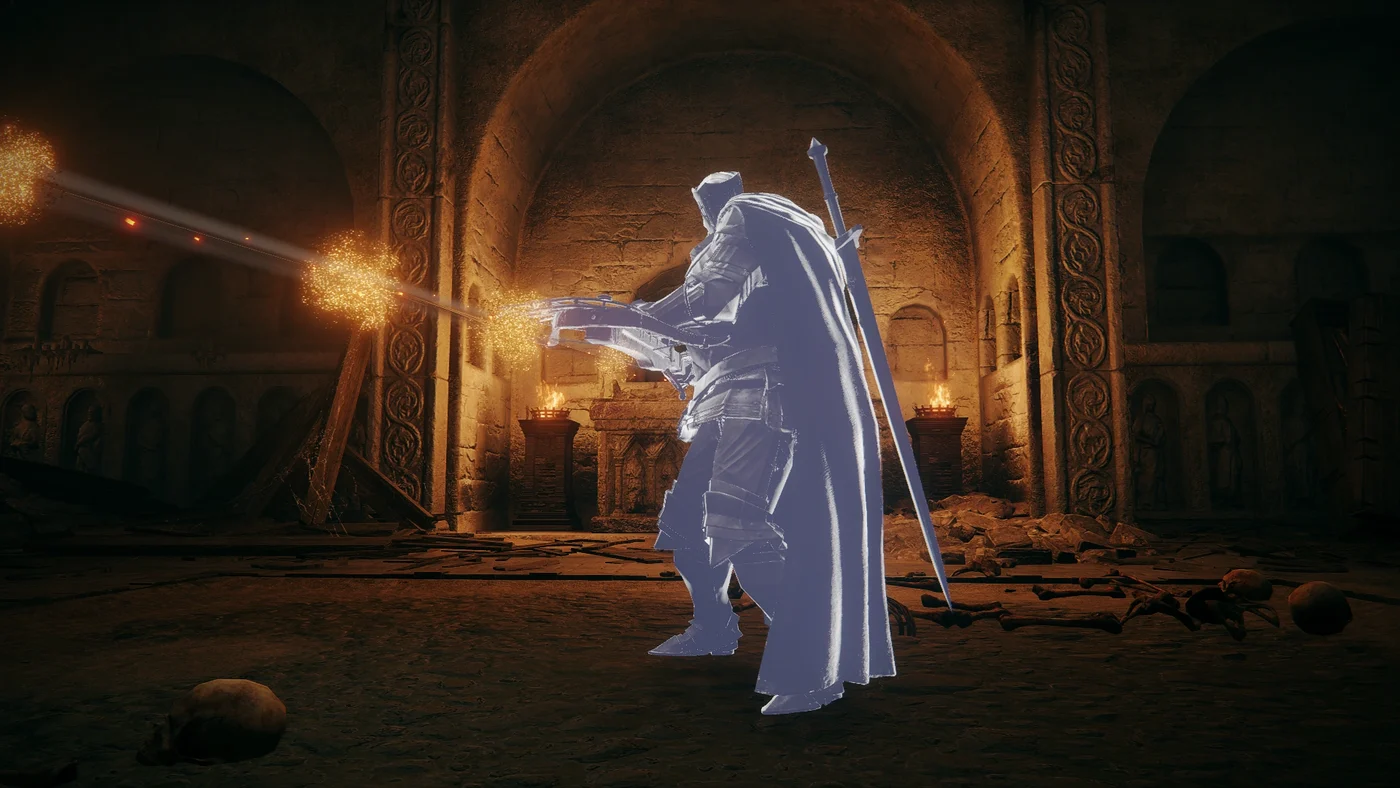 ❋ DLC · ORDER
The Knights of the Solitary Gaol
Warriors who gave up their hearts for the strength to keep fighting▾
The Knights of the Solitary Gaol
"Through a secret rite, they relinquished their hearts for heightened battle prowess. Next, they engraved their blades with two crests: one depicting the light of birth, and the other, solitude."
From the Greatsword of Solitude description
The Knights of the Solitary Gaol are an order whose discipline is, even by Realm of Shadow standards, austere. Their armour set, chest, gauntlets, greaves, helm, all named 'of Solitude', repeats the same dedication line: 'a heavy armor set that covers the whole body in overlapping plates of steel.' The order's purpose is recorded in the Greatsword of Solitude flavour text without softening: 'Steel greatsword wielded by the Knights of the Solitary Gaol. Through a secret rite, they relinquished their hearts for heightened battle prowess. Next, they engraved their blades with two crests: one depicting the light of birth, and the other, solitude.'
Where they came from is hinted at by the nameless mausoleums scattered across the Realm of Shadow. The armour text states: 'The nameless mausoleums of the realm of shadow are said to hold the spirits of warriors who lost their names, or their hearts.' The Solitary Gaol Knights are very likely the warriors interred in those mausoleums: soldiers who relinquished their hearts, as the secret rite demanded, and with them the part of themselves that could mourn or refuse. The two crests on their blades are the canon's gentlest framing of their bargain: born once, alone forever.
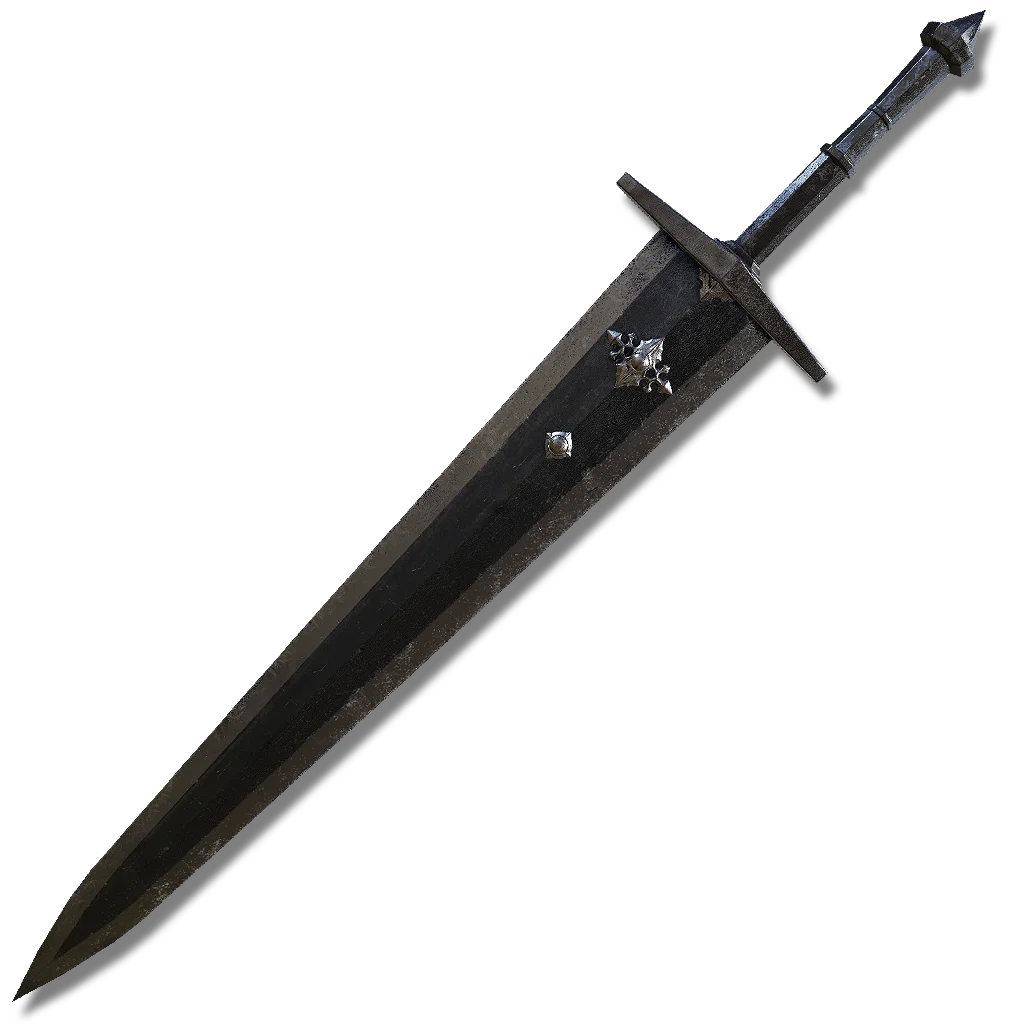 Greatsword of Solitude
Steel greatsword wielded by the Knights of the Solitary Gaol. Through a secret rite, they relinquished their hearts for heightened battle prowess. Next, they engraved their blades with two crests: one depicting the light of birth, and the other, solitude.
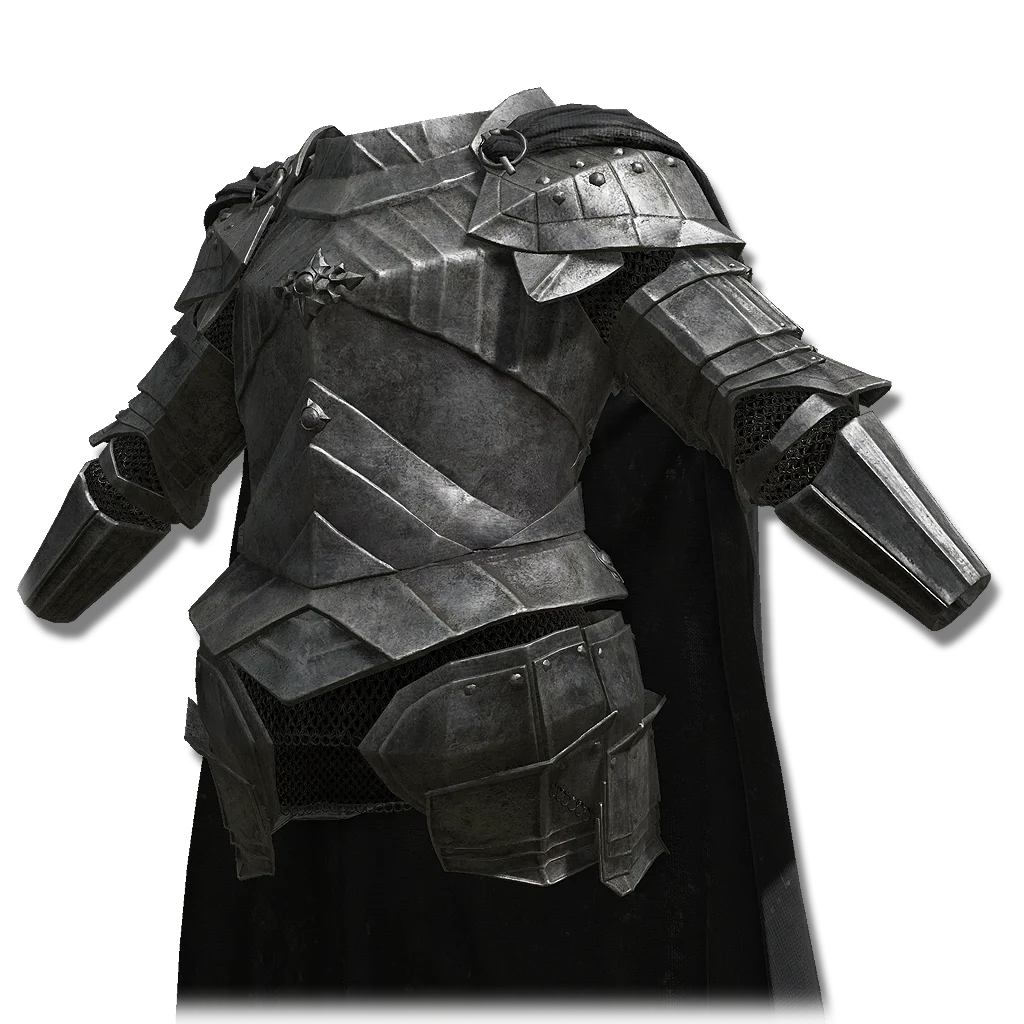 Armor of Solitude
Steel chest armor of the Knights of the Solitary Gaol. The nameless mausoleums of the realm of shadow are said to hold the spirits of warriors who lost their names, or their hearts.
❋ DLC · WARRIORIgon, the Drake Warrior
Broken scavenger of battlefields, vow-keeper to the death of Bayle▾
Igon, the Drake Warrior
"On the throbbing heart of the oldest, vilest dragon of them all. There you will find Bayle, the oldest, and vilest, of all dragons. Scale the jagged peak. Face Bayle the Dread. And when you do, slay him in mine stead!"
Igon's vow at the Jagged Peak
"A record of crafting techniques left by a warrior who challenged the vile dragon Bayle, only to be grievously injured and broken by fear."
From Igon's Cookbook description
Igon is the smallest figure of the Realm of Shadow's Dragon Communion arc and, by his own measure, its truest. The Igon's Armor description names him without flattery, 'broken drake warrior, from a set comprised of a miscellany of parts. Filthy belongings are attached to this tattered piece of protective-wear. The poor scavenger of battlefields found honor through Dragon Communion.' His armour is mismatched scrap, his helm is shaped like a bugle, his loincloth was stripped from a corpse. Everything he owns was taken from a dead man.
The vow he keeps is the vow no other dragon-warrior would. Bayle the Dread, the oldest and vilest of all dragons, broke Igon long ago, Igon's Cookbook entries call him 'a warrior who challenged the vile dragon Bayle, only to be grievously injured and broken by fear.' He could not finish the fight. So he climbed the Jagged Peak and waited. The Tarnished, who can finish what he could not, hears Igon's bellow before ever seeing the dragon: 'Scale the jagged peak. Face Bayle the Dread. And when you do...' His vow becomes the Tarnished's, and the curse becomes a closing.
Igon's ArmorArmor of the broken drake warrior Igon, from a set comprised of a miscellany of parts. The poor scavenger of battlefields found honor through Dragon Communion.
Igon's Cookbook [1]A record of crafting techniques left by a warrior who challenged the vile dragon Bayle, only to be grievously injured and broken by fear. Contains details on how a mere mortal can fell a mighty dragon.
 Ash of War: Igon's Drake Hunt
Igon's Drake Hunt: Skill of Igon, drake warrior. Ready the bow before unleashing a twisted shot with a great bellow that considerably enhances its power.
 ❋ DLC · PILGRIM
Moore, the Pilgrim of the Forager Brood
Last kindness in a land St. Trina would have spared▾
Moore, the Pilgrim of the Forager Brood
"An ebony-black syrup held in an unglazed jar. Moore asked that this be delivered to Thiollier. An unknown liquid apparently gathered and aged by the forager brood."
From the Black Syrup description
Moore is the canon's smallest, saddest figure of the Realm of Shadow. He travels with the forager brood, a non-human community whose pickled-liver cookbooks the Tarnished gathers across the Land of Shadow; the cookbook flavour text records that the recipes were 'shared out of kindness toward Moore and his kin.' Moore wields a verdigris-green greatshield and the Moore's Charge skill, a defensive shove that knocks back enemies but, the description notes, 'does not cause significant harm.' He wields no killing weapon; he was never trained for one.
His arc closes around grief. He carries a black syrup, gathered and aged by the forager brood, that he asks the Tarnished to deliver to Thiollier, St. Trina's lone disciple, as a last gift to a friend he can no longer reach. Thiollier accepts the syrup as a means to capture St. Trina's velvety sleep one final time. Moore, his task delivered, does not survive the canon; the text says only that his bell bearing was 'found upon his perished flesh', though the dialogue records Thiollier telling him: 'Sir Moore. I do not wish to fight you. But I have new purpose I must see through.' That bell bearing, which the Twin Maiden Husks of the Roundtable Hold accept after his death, is the canon's last small handshake with the kindly. He is the proof, against everything Messmer's flame argued, that the Realm of Shadow had kindness in it.
 Moore's Charge
Ready the shield with both hands, then charge forth while maintaining guard, ending in a shove imbued with verdigris magic. Knocks back nearby enemies, but does not cause significant harm.
 Black Syrup
An ebony-black syrup held in an unglazed jar. Moore asked that this be delivered to Thiollier. An unknown liquid apparently gathered and aged by the forager brood.
 Moore's Bell Bearing
Moore's bell bearing, found upon his perished flesh. Offer to the Twin Maiden Husks at the Roundtable Hold to gain access to new items.
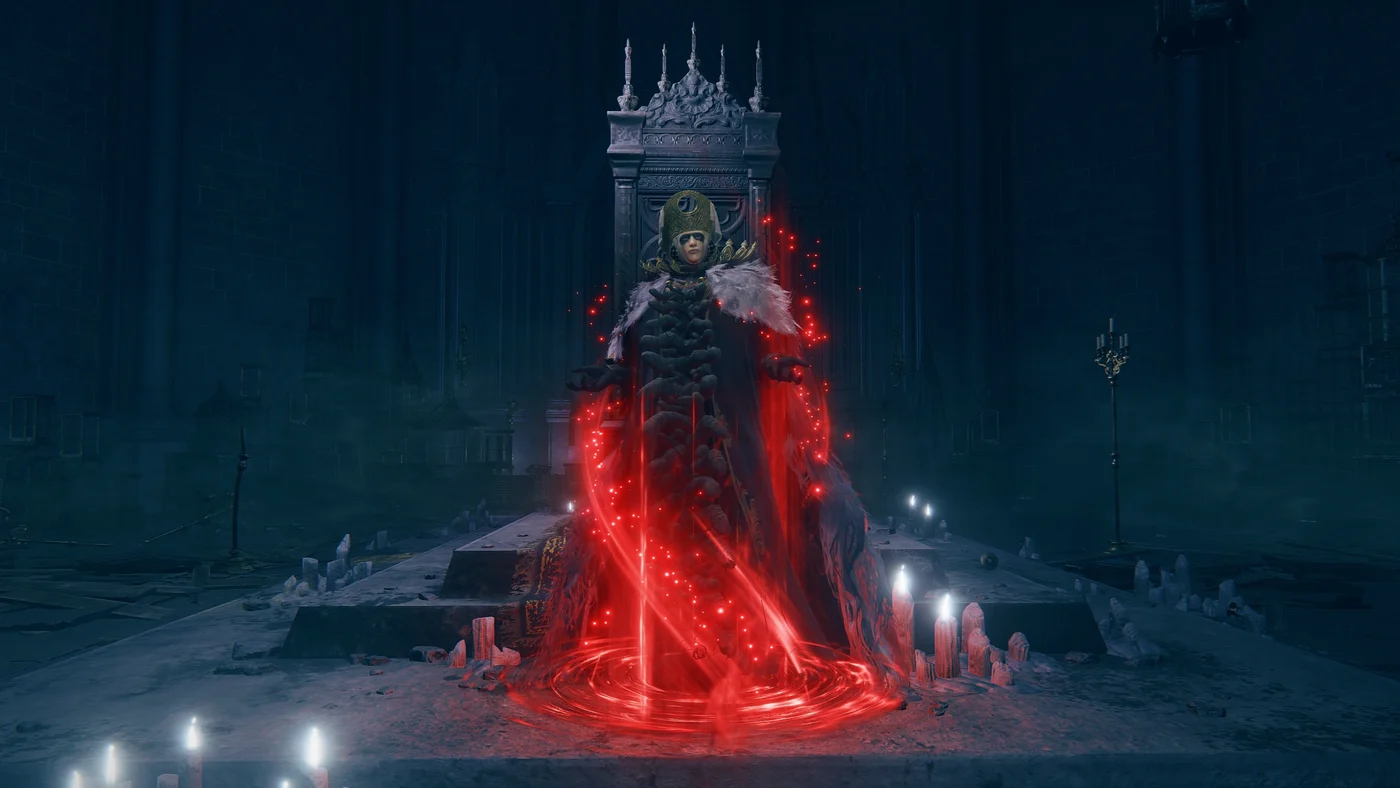 ❋ DLC · PRIEST
Count Ymir, High Priest
Sorcerer of Manus Metyr, the man who would be the true mother▾
Count Ymir, High Priest
"I will be the true mother. My fingers will grant us redemption!"
From the Finger Robe description
"It was merely the closest of the celestial bodies. Nothing more."
From the High Priest Hat description
Count Ymir is the high priest of Manus Metyr, the Cathedral of the Mother of Fingers: Metyr, mother of all Two Fingers, daughter of the Greater Will, 'the first shooting star to fall upon the Lands Between.' The hat he wears is the canon's quietest doctrinal statement: its circular crown 'represents the Greater Will and its lightless abyss.' He once instructed Rellana, the Twin-Moon Knight, in the sorcerous arts; he then abandoned his allegiance to the moon altogether. The flavour text gives the line he used to dismiss the Carian heritage: 'It was merely the closest of the celestial bodies. Nothing more.'
What Ymir wants is older and stranger than another Order. The Finger Robe describes a body whose front is open, fingers squirming beneath the cloth, the image of his desire 'having broken free, laying bare his greatest wish.' That wish, the robe quotes him stating, is: 'I will be the true mother. My fingers will grant us redemption.' Ymir has decided that Metyr is broken, that the Greater Will has gone silent, that the cycle of Empyrean chosen-by-Fingers is finished. He will make new fingers, his own, and a new mother. The hanging bells the Tarnished sounds across the Realm of Shadow at his bidding are the call by which he hopes the stars will redirect.
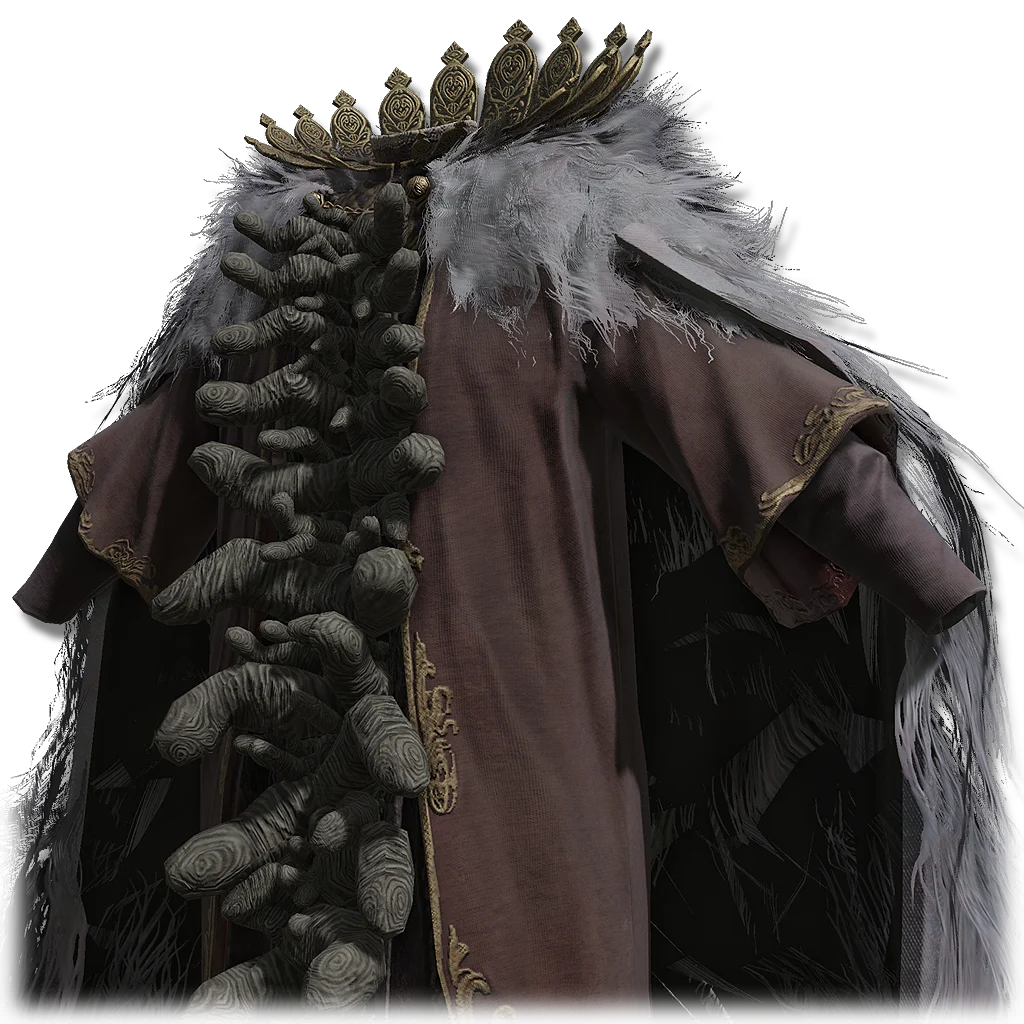 Finger Robe
Robe of Count Ymir, High Priest. The front is open, exposing the squirming fingers beneath. 'I will be the true mother. My fingers will grant us redemption!'
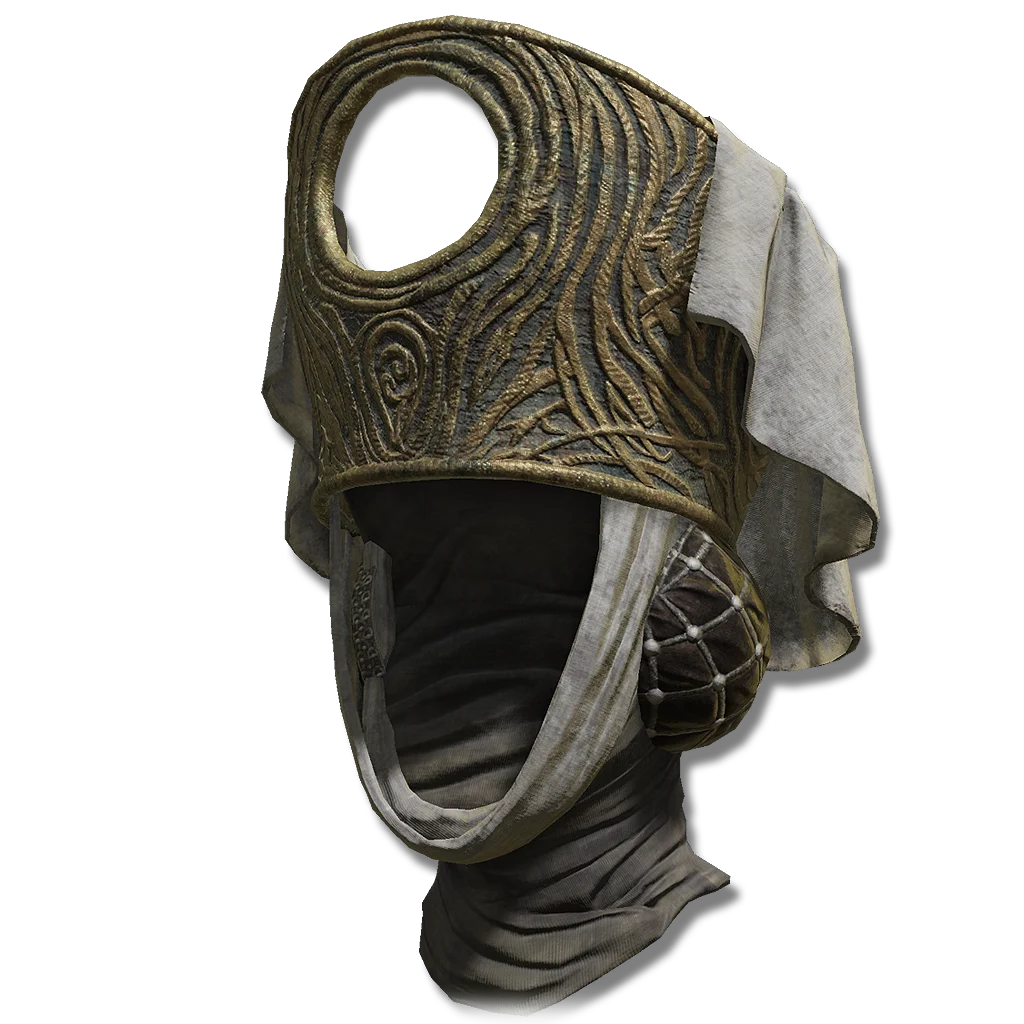 High Priest Hat
The circular design at the top represents the Greater Will and its lightless abyss. Though Count Ymir instructed Rellana in the sorcerous arts, he abandoned his allegiance to the moon. 'It was merely the closest of the celestial bodies. Nothing more.'
Hole-Laden NecklaceIt was a teaching of Count Ymir. The fate of the one who sounds the hanging bell will be guided by the stars.
❋ DLC · EMPYREANThe Hornsent Empyrean Grandam
Last witness of the burning, voice for the unburned dead▾
The Hornsent Empyrean Grandam
"Take vengeance upon Messmer and his lot. They who betrayed us, aye, they who burned us... Let them face in thy wrath their just deserts."
From the Watchful Spirit description
The Hornsent Empyrean Grandam is the oldest surviving member of the Hornsent, the horned race who built the great tower of Belurat and worshipped a god of the Crucible long before Marika rose. She was alive when Messmer the Impaler led Marika's army into the Realm of Shadow, when the divine beasts were 'gored and hung upon Messmer's spears, then burned in his flame,' when the great tower's funeral pyre was the tower itself. She survived. By the time of the Tarnished's arrival in the Land of Shadow, every Hornsent of her generation is ash, but the grandam remains.
The Watchful Spirit incantation she offers the Tarnished is the canon's most direct curse against the family that betrayed hers. The flavour text quotes her plea, unaltered: 'Take vengeance upon Messmer and his lot. They who betrayed us, aye, they who burned us... Let them face in thy wrath their just deserts.' The text calls her only 'the Empyrean grandam' : no Two Fingers is ever shown to have chosen or known her, and Belurat predates the Greater Will's chosen Order. Her vengeance is the canon's reminder that the Erdtree's golden age was, for someone, a holocaust.
 Watchful Spirit
An entreaty received from the Empyrean grandam. 'Take vengeance upon Messmer and his lot. They who betrayed us, aye, they who burned us... Let them face in thy wrath their just deserts.'
Divine Beast TornadoThe majority of divine beasts were gored and hung upon Messmer's spears, then burned in his flame. Those who witnessed the deed likened it to a funeral pyre for the tower itself.
Messmer's KindlingThe kindling that burned inside Messmer the Impaler. A dark thing, eaten away at by a wicked serpent.
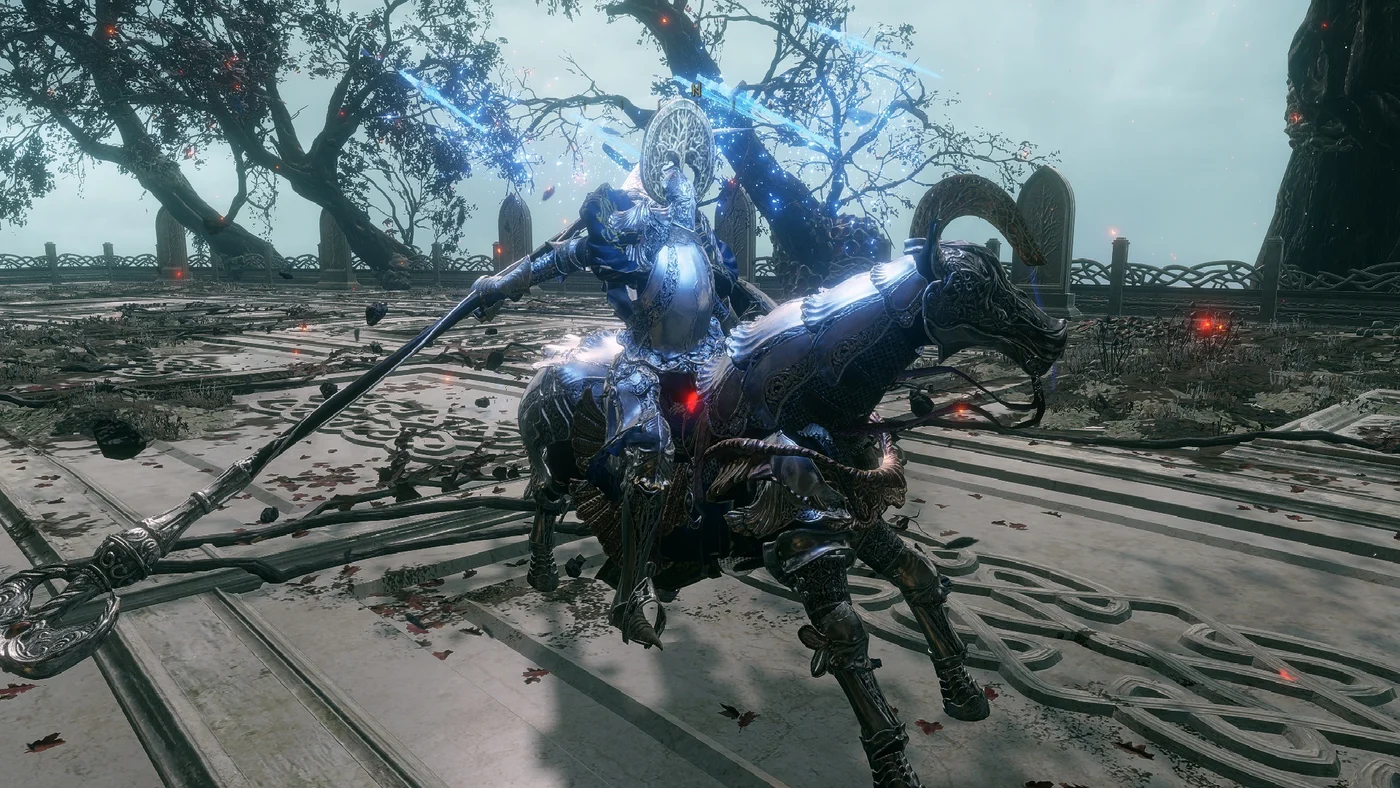 ◈ KNIGHT
Royal Knight Loretta
Royal Carian knight turned knight of Miquella's Haligtree, silver-clad and said to favour the greatbow▾
Royal Knight Loretta
Loretta was once a royal Carian knight. Her armour is silver, and her lapis-lazuli blue cape is named as the emblem of the knightly pride that continues to guide her. The intricately crafted silver war sickle she carries was originally given for service as a personal guard to Carian royalty, and its blue glintstone has since been replaced with unalloyed gold, the same metal that graces the crowns on the helms of soldiers sworn to the Haligtree. Her knightly name is attached to a skill, Loretta's Slash, a leap forward with the blade imbued with glintstone before a descending, accelerating sweep, and to a sorcery, Loretta's Greatbow, which creates a magic greatbow and fires a great arrow. Of that bow the text stays careful: 'It is said that the bow was Loretta's favored weapon.'
When she left Carian service, the game does not say. What it records is the journey: she 'went on a journey in search of a haven for Albinaurics, and determined that the Haligtree was their best chance for eventual salvation', a road its text calls 'long, bloody'. It was after that journey that she developed Loretta's Mastery, which creates a magic greatbow and fires four great arrows simultaneously; the game files that sorcery under the name 'Loretta, Knight of the Haligtree', where the single-arrow one is filed under 'Royal Knight Loretta'. Her shield of radiant silver, festooned with amber, imitates the shape of a sacred drop of dew, and that shape inspired the absurd rumour that Loretta herself was an Albinauric. She stands guardian at Caria Manor, and stands again under Miquella's tree, where the helm of a sworn foot soldier carries the question: 'Who is it that Miquella shall bless, if not the low and the meek?'
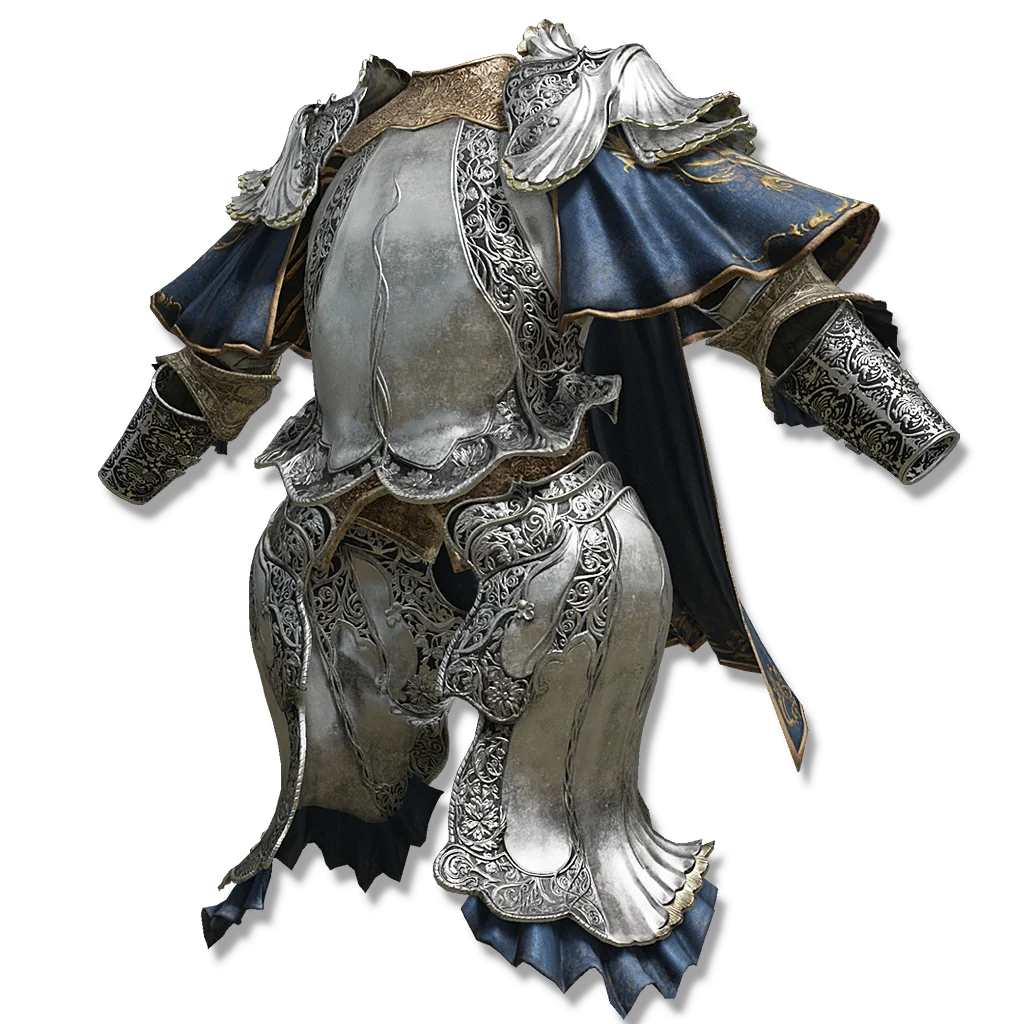 Royal Knight Armor
Silver armor of Loretta, a knight who served Miquella's Haligtree. Loretta was once a royal Carian knight, and her lapis-lazuli blue cape is the emblem of the knightly pride that continues to guide her.
Sorcery used by Loretta, Knight of the Haligtree. Creates a magic greatbow and fires four great arrows simultaneously. Developed by Loretta after her long, bloody journey to seek out a place where the Albinaurics could live in peace.
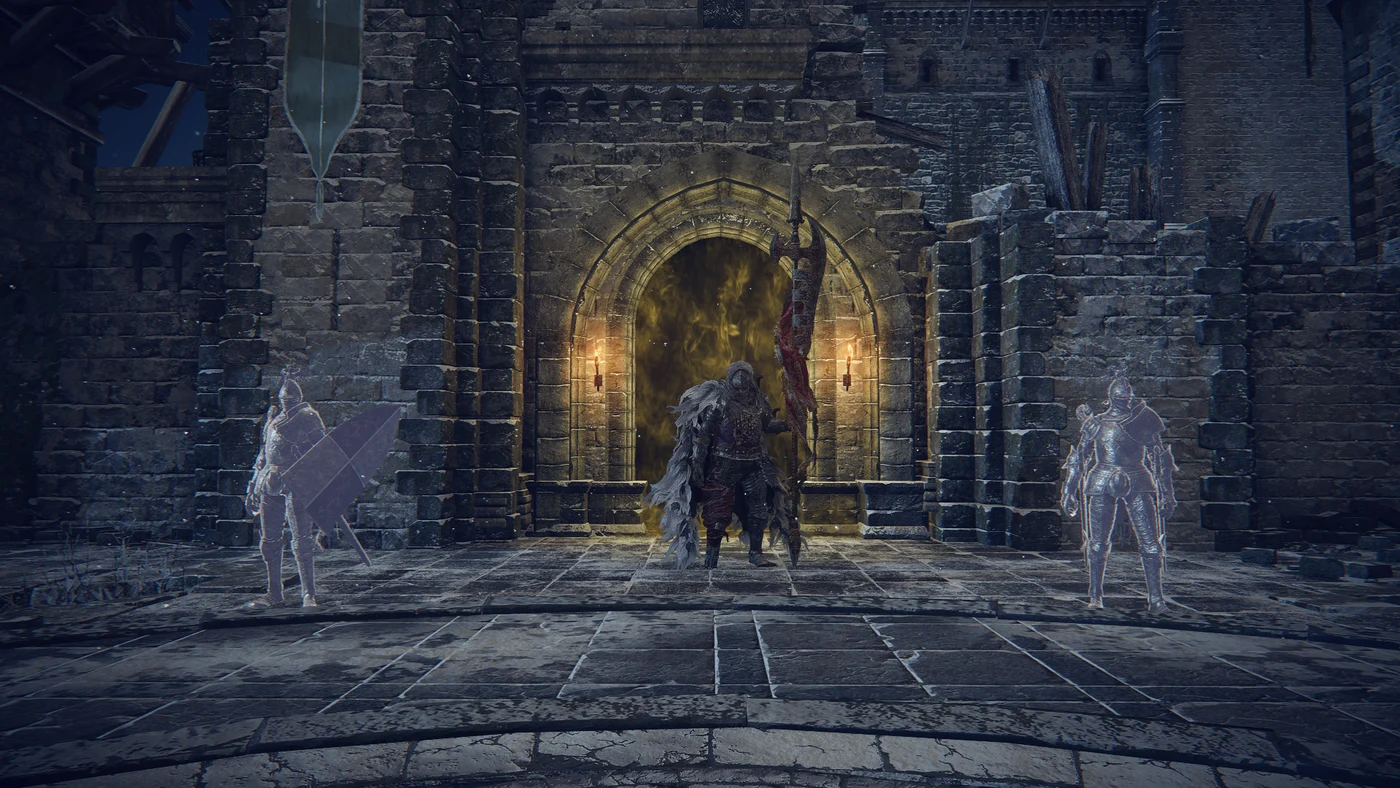 ◈ KNIGHT
Commander Niall
Veteran general of Castle Sol, lone survivor under a long-passed master▾
Commander Niall
Castle Sol crowns the highest plateau of the Mountaintops of the Giants, an old fortress sworn to the Eclipse, the eclipsed sun that protects soulless demigods. Its garrison fell long before the Tarnished arrives. What remains is Niall, the veteran general of Sol, alone among ghosts. The Veteran's Armor description names him plainly: 'Worn by Niall, the veteran general of Sol. Niall was a lone survivor who commanded spirits to defend his long-passed master. This aging general could not die, nor did he have anywhere to fade away.'
What makes Niall remarkable, even among the immortal commanders of the Lands Between, is how he fights. Where Godfrey commands soldiers and Radahn commands an army, Niall commands the dead, every old comrade fallen at Sol stands again at his call, drawn from the snow by the weapon he raises. He is, in his own quiet way, a private spirit-summoner of the same kind the Tarnished is, and the Eclipse Crest on the castle gate is the same crest that adorns the Mausoleum Knights' shields. The cult that produces him keeps to the eclipsed sun, quieter than the Frenzied Flame.
Old armor that has seen many battles. Worn by Niall, the veteran general of Sol. Niall was a lone survivor who commanded spirits to defend his long-passed master. This aging general could not die, nor did he have anywhere to fade away.
Metal greatshield painted with a sun in eclipse. Carried by the headless mausoleum knights. The eclipsed sun, drained of color, is the protective star of soulless demigods.
◈ KNIGHTJuno Hoslow, Knight of Blood
Patriarch of a garish silver house, Volcano Manor's last refusal▾
Juno Hoslow, Knight of Blood
The House of Hoslow is one of the old noble lines of the Lands Between, instantly recognisable by the garish silver armour decorated with red embellishments that has been passed down its generations. Juno is the present head of the family, encountered wandering the Mountaintops of the Giants. The armour's flavour text records his refusal of an offer most Tarnished assassins would have accepted: 'When Juno Hoslow received an invitation to the Volcano Manor, he discreetly refused. I have already walked many a road drenched in blood, yet never would I consider myself a champion.'
His refusal is a small thing, but in the context of Rykard's recusant network, it places Juno among the very few proud blooded knights who would not become assassins for hire. Volcano Manor sends Tarnished after him for that refusal alone. The Red Letter the Tarnished can carry against him still names him 'Juno Hoslow, Knight of Blood', and the Hoslow's Petal Whip he wields is the family weapon, the garish silver house's last refusal preserved in a single line of armour text.
Garish silver armor decorated with red embellishments. Passed down through the Hoslow family. When Juno Hoslow received an invitation to the Volcano Manor, he discreetly refused. 'I have already walked many a road drenched in blood, yet never would I consider myself a champion.'
A written request from Volcano Manor disclosing the name of a Tarnished to be hunted. As the final request, the letter is vivid red. 'Juno Hoslow, Knight of Blood.'
◈ SWORDSMANOkina of the Land of Reeds
Samurai whose blade Mohg first felt, and could not unfeel▾
Okina of the Land of Reeds
Okina is one of the named swordsmen of the Land of Reeds, the distant nation whose civil war drove its samurai abroad as wandering Tarnished. Its weapon-art, distilled into the Unsheathe and Seppuku skills, is what defines its diaspora. Okina was extraordinary even among them: the Rivers of Blood description states it precisely, 'Weapon of Okina, swordsman from the Land of Reeds. A cursed weapon that has felled countless men.'
What followed makes Okina more than another swordsman. 'When Mohg, the Lord of Blood, first felt Okina's sword, and madness, upon his flesh, he had a proposal, to offer Okina the life of a demon, whose thirst would never go unsated.' Mohg, the demigod whose own flesh is a wound, recognised in Okina a kindred hunger and offered him that life of a demon, a thirst that would never go unsated. Whether Okina accepted or whether Mohg simply imprinted the curse onto the blade itself is left ambiguous. Either way, the Rivers of Blood that drops from Okina's body in Mountaintops of the Giants carries the bargain into the Tarnished's hands.
Weapon of Okina, swordsman from the Land of Reeds. A cursed weapon that has felled countless men. When Mohg, the Lord of Blood, first felt Okina's sword, and madness, upon his flesh, he had a proposal, to offer Okina the life of a demon, whose thirst would never go unsated.
A katana with a long single-edged curved blade. A unique weapon wielded by the samurai from the Land of Reeds.
Seppuku: A forbidden technique used by swordsmen from the Land of Reeds. Plunge the blade into your stomach to stain it with blood.
 ◈ ENTITY
The Mimic Tear
The Eternal City's failed lord, every Tarnished's silvered shadow▾
The Mimic Tear
The Mimic Tear is the strangest of the Spirit Ashes a Tarnished can carry. Where every other ash summons a fixed creature, a soldier, a dog, a wolf, the Mimic Tear summons a perfect copy of the summoner, identical in armour, weapons, and skills. The Mimic Tear Ashes description names what they are and where they come from: 'This spirit takes the form of the summoner to fight alongside them, but its mimicry does not extend to imitating the summoner's will. Mimic tears are the result of an attempt by the Eternal City to forge a lord.'
The Eternal City, Nokron and Nokstella, fallen into the Lands Between when Astel was called down, was once a civilisation whose ambitions outran its god. Failing to find a lord of its own, it tried to forge one. Silver Tears, formless intelligent sludge, were the medium; the experiment was to feed a Silver Tear enough imitations of life that it would one day, of its own, choose to be born a lord. The husks scattered across Nokstella's basin attest the failure. The Mimic Tear in the Eternal City lake-bed and the Larval Tears that Rennala uses for rebirths are what remain of that ambition: the Eternal City still refining itself, in case one day the imitation is good enough.
Use to summon the spirit of a mimic tear. This spirit takes the form of the summoner to fight alongside them, but its mimicry does not extend to imitating the summoner's will. Mimic tears are the result of an attempt by the Eternal City to forge a lord.
 Larval Tear
Core of a creature of mimicry known as a silver tear. Material required by the amber egg cradled by Rennala, Queen of the Full Moon, to birth people anew.
A hardened husk shed by a formless life form known as the Silver Tear. The Silver Tear makes mockery of life, reborn again and again into imitation. Perhaps, one day, it will be reborn a lord...
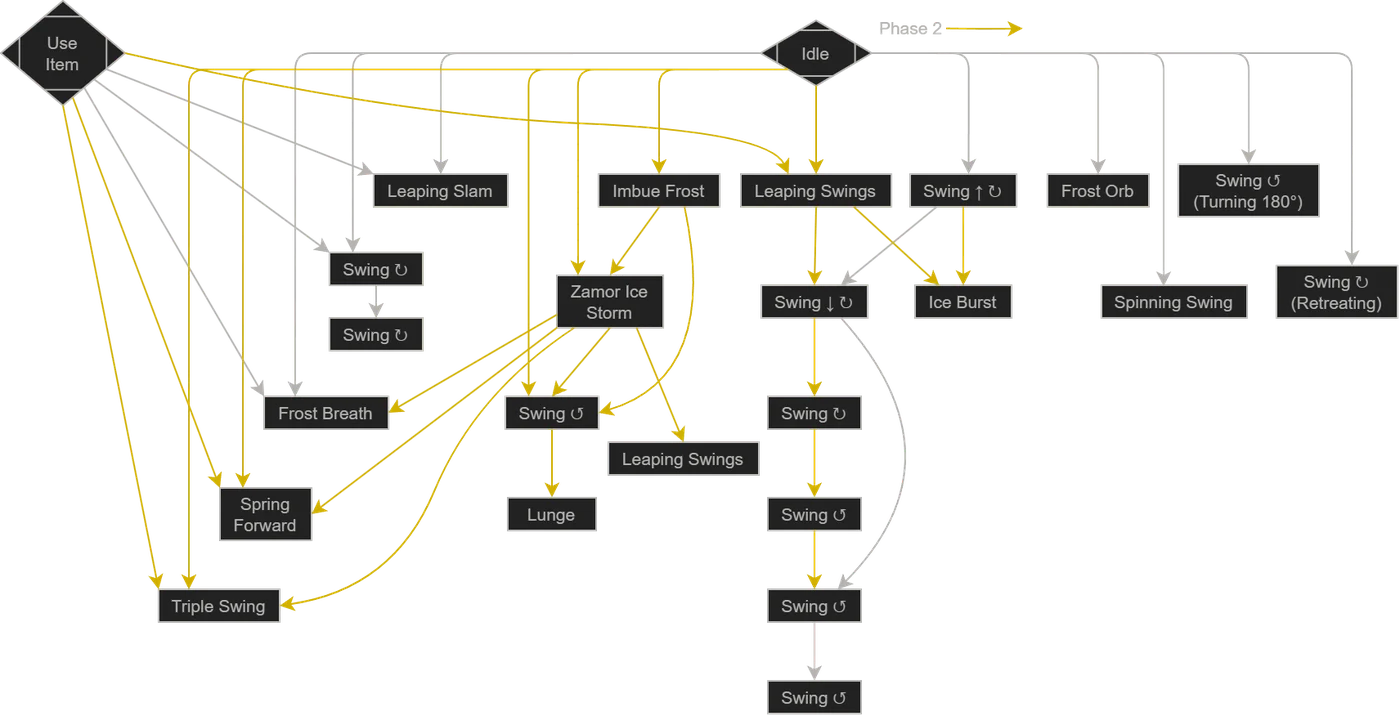 ◈ ORDER
The Ancient Heroes of Zamor
Long-lived warriors clad in freezing winds, hailed as heroes in the War against the Giants▾
The Ancient Heroes of Zamor
The Ancient Heroes of Zamor are the long-lived warriors of the Town of Zamor, clad in biting, freezing winds and said to have been the mortal enemies of the Fire Giants since time immemorial. Cloaked in icy tempests, they have challenged the Fire Giants since ancient times; the game does not date the beginning of that enmity. Their sorcery is the Zamor Ice Storm: strike the ground with the staff, and a freezing tornado rises. The charge of the War against the Giants was Marika's own, spoken in her own words to 'brave warriors' and to 'my lord Godfrey' alike: 'Put the Giants to the sword, and confine the flame atop the mount. Let a new epoch begin.' Godfrey, lord of the battlefield, led that war, and the knights of Zamor came out of it hailed as heroes who had earned great renown.
Why the town fell is not written. The place survives on the map as Zamor Ruins, in the Mountaintops of the Giants, whose western half the map calls a marching ground during the War against the Giants. The knights are still met under the name Ancient Hero of Zamor, masked: the Zamor Mask is worn by an ancient hero. Their curved swords, styled after an icy wind in apparent devotion to winter, carry a powerful frost effect. The monument to the war reads: 'Champions battle, trolls betray. Fire vanquished, the era of the Erdtree begins.' The flame was sealed rather than spent: the Fire Giant is a survivor of that war, marked with a curse by Marika once she realized the flames of their forge would not die, and guardians were appointed to watch over the ruinous blaze.
Zamor MaskMask worn by knights of Zamor, hailed as heroes in the War against the Giants. These long-lived warriors, clad in biting, freezing winds, are said to have been the mortal enemies of the Fire Giants since time immemorial.
Zamor Curved SwordWeapon wielded by the knights of Zamor who earned great renown during the War against the Giants. In apparent devotion to winter, the curved blade is styled after an icy wind and imbued with a powerful frost effect.
Zamor Ice StormIce sorcery of the Town of Zamor. Strike the ground with the staff to create a freezing tornado. Cloaked in icy tempests, the knights of Zamor have challenged the Fire Giants since ancient times.
❋ DLC · PRIESTESSThe Dragon Communion Priestess
Ancient dragon who took on feeble flesh to aid in Bayle's destruction▾
The Dragon Communion Priestess
'The stone heart of a Dragon Communion priestess. Use while disrobed to turn one's human flesh into an ancient dragon. The change cannot be undone except by death.' The priestess of that rite was herself an ancient dragon, one who stepped down out of that form and into mortal flesh. The Priestess Heart description names her sacrifice without softening: 'The priestess was once an ancient dragon herself, but sacrificed that form for feeble flesh to aid in the destruction of Bayle the Dread.' Her ashen remains give the same act a name and a second reason: 'Long ago, Florissax assumed human form to share Dragon Communion with the world. Now, she has acquired a human heart.' The flesh she chose is called feeble in her own item text; the heart left of her is the relic of the dragon she renounced.
'Favor bestowed by the Dragon Communion priestess in the name of the dragon lord Placidusax.' Her devotion is recorded in the Ancient Dragon's Blessing: 'Each night, the priestess offers her own sleep to her lord, and in turn receives the power of His favor.' She does not sleep so that Placidusax, dying at the heart of Crumbling Farum Azula, may. Her chosen weapon, the Flowerstone Gavel, is a dragonstone hammer resembling an ancient flower, its four petals and its core all sharp and ending in points, 'capable of dealing heavy damage to dragons,' wielded by one who was a dragon. Bayle, whose challenge to the ancient Dragonlord 'ended in grievous mutual injury,' is the dread her sacrifice was meant to help destroy, and the rite she calls purest is the eating of his heart, gorged upon at the Grand Altar of Dragon Communion. Her remains are ashen, and the spirit in them still serves: 'Florissax assumed this spirit form to offer her service to a new lord.'
 Priestess Heart
The stone heart of a Dragon Communion priestess. Use while disrobed to turn one's human flesh into an ancient dragon. The change cannot be undone except by death. Using this heart while already transformed temporarily boosts incantations of the capital's ancient dragon cult. The priestess was once an ancient dragon herself, but sacrificed that form for feeble flesh to aid in the destruction of Bayle the Dread.
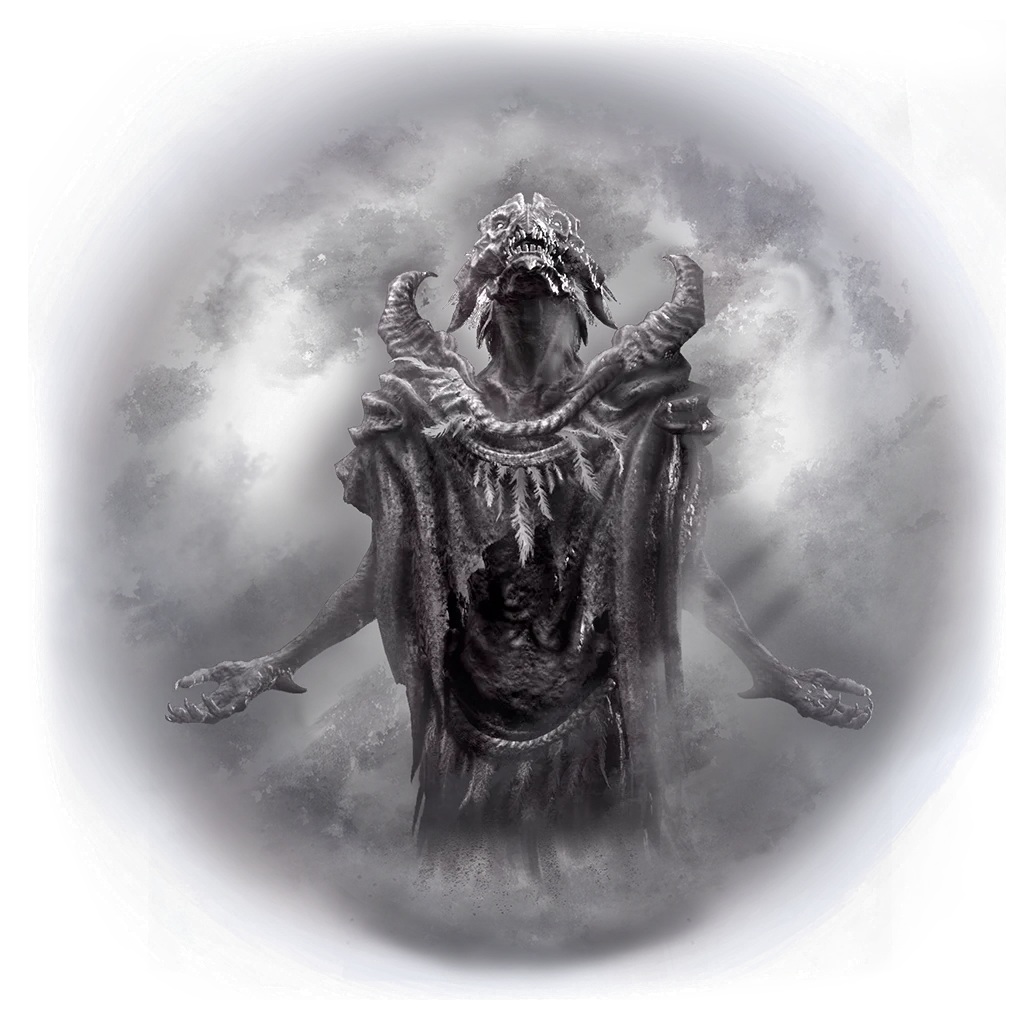 Ancient Dragon's Blessing
Favor bestowed by the Dragon Communion priestess in the name of the dragon lord Placidusax. Consume FP to increase all forms of damage negation (including physical). This also increases damage negation while guarding as an additional effect. Each night, the priestess offers her own sleep to her lord, and in turn receives the power of His favor.
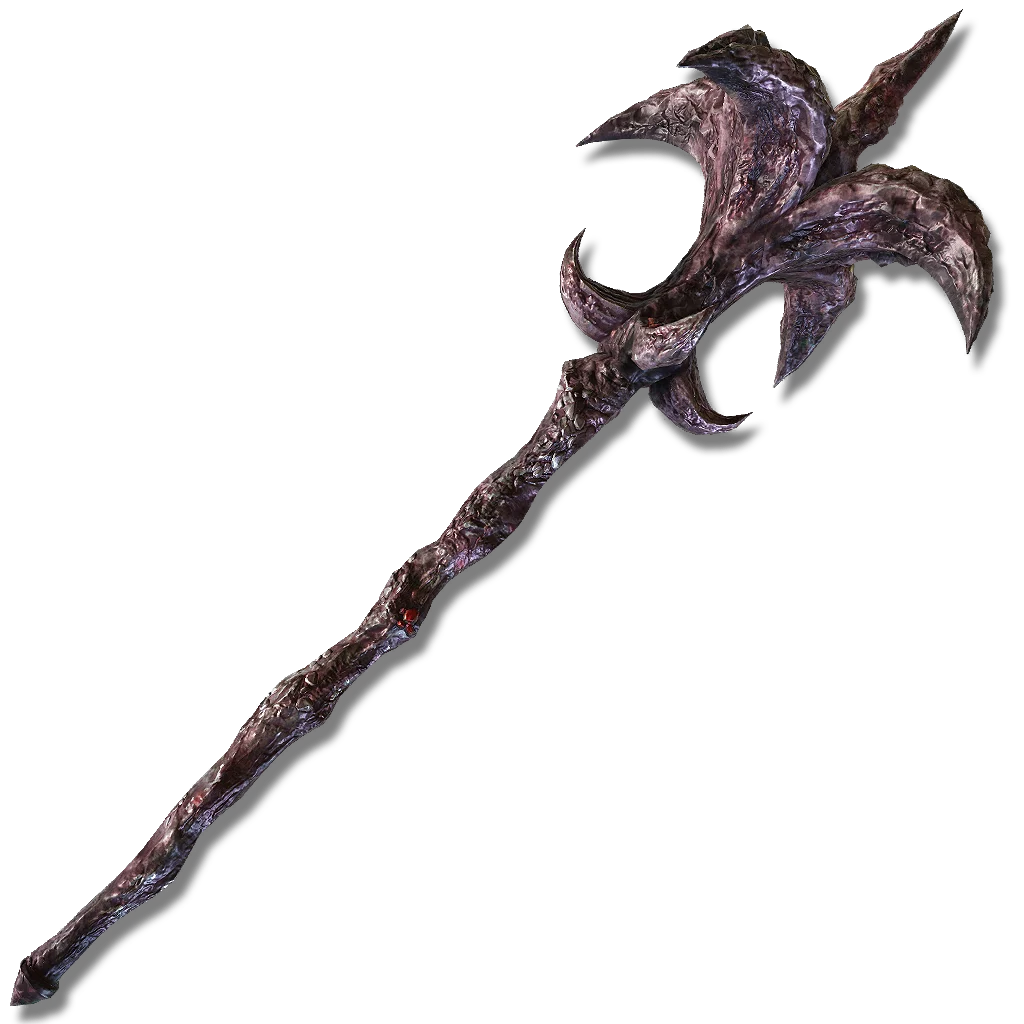 Flowerstone Gavel
Weapon of the Dragon Communion priestess. A dragonstone hammer resembling an ancient flower. The four petals and the flower's core are all sharp, ending in points, and are capable of dealing heavy damage to dragons.
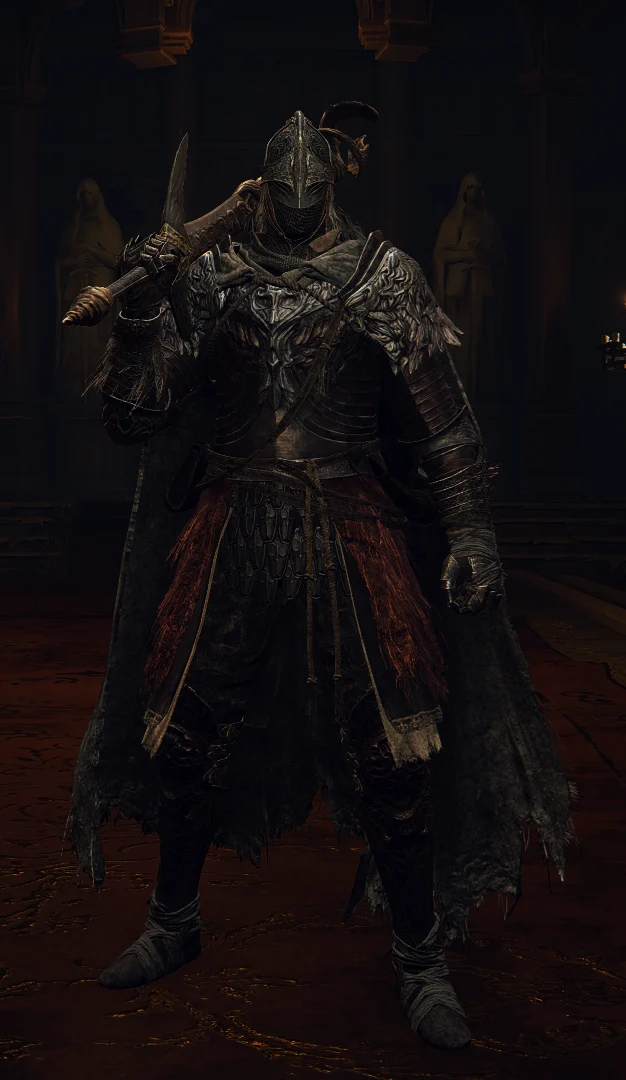 ◈ TARNISHED
Vargram the Raging Wolf
One of the first Tarnished to visit the Roundtable Hold▾
Vargram the Raging Wolf
'Armor worn by Vargram the Raging Wolf, one of the first Tarnished to visit the Roundtable Hold. According to the old legends, wolves are the shadows of the Empyrean, and this is what Vargram aspired to be.' Vargram comes from the earliest age of the Tarnished, when grace had only just been restored to the exiles and the Roundtable was a younger place. His title is not one of conquest but of imitation: he sought to be a wolf, and wolves, in the older creeds of the Lands Between, are the chosen vassals of Empyreans. Blaidd the Half-Wolf was made a wolf to serve Ranni; Vargram, born no such thing, tried to become one by will alone.
'Helm worn by Vargram the Raging Wolf, one of the first Tarnished to visit the Roundtable Hold. Vargram's nickname comes from the white wolf's mane that decorates this helm.' His mane was a costume of devotion. His friend Wilhelm, an Errant Sorcerer, walked a stranger road: 'A silent seeker of sorcery, who had gone so far as to make contact with the primeval current, Wilhelm was led by guidance into confrontation with his friend Vargram.' The Manor's letter names them together as prey, not against each other, 'Vargram the Raging Wolf, Errant Sorcerer Wilhelm, both men can be found in the Royal Capital of Leyndell', and the letter places them the same way: 'Both men can be found in the Royal Capital of Leyndell. Find the red mark on your map for the exact location.'
Armor worn by Vargram the Raging Wolf, one of the first Tarnished to visit the Roundtable Hold. According to the old legends, wolves are the shadows of the Empyrean, and this is what Vargram aspired to be.
Helm worn by Vargram the Raging Wolf, one of the first Tarnished to visit the Roundtable Hold. Vargram's nickname comes from the white wolf's mane that decorates this helm.
Commonplace robe made of thick cloth. Worn by the Errant Sorcerer Wilhelm, one of the first Tarnished to visit Roundtable Hold. A silent seeker of sorcery, who had gone so far as to make contact with the primeval current, Wilhelm was led by guidance into confrontation with his friend Vargram, and it is said that he was then taken prisoner in Roundtable Hold.
A written request from Volcano Manor addressed to Bernahl disclosing the names of two Tarnished to be hunted. "Vargram the Raging Wolf" "Errant Sorcerer Wilhelm" Both men can be found in the Royal Capital of Leyndell. Find the red mark on your map for the exact location.
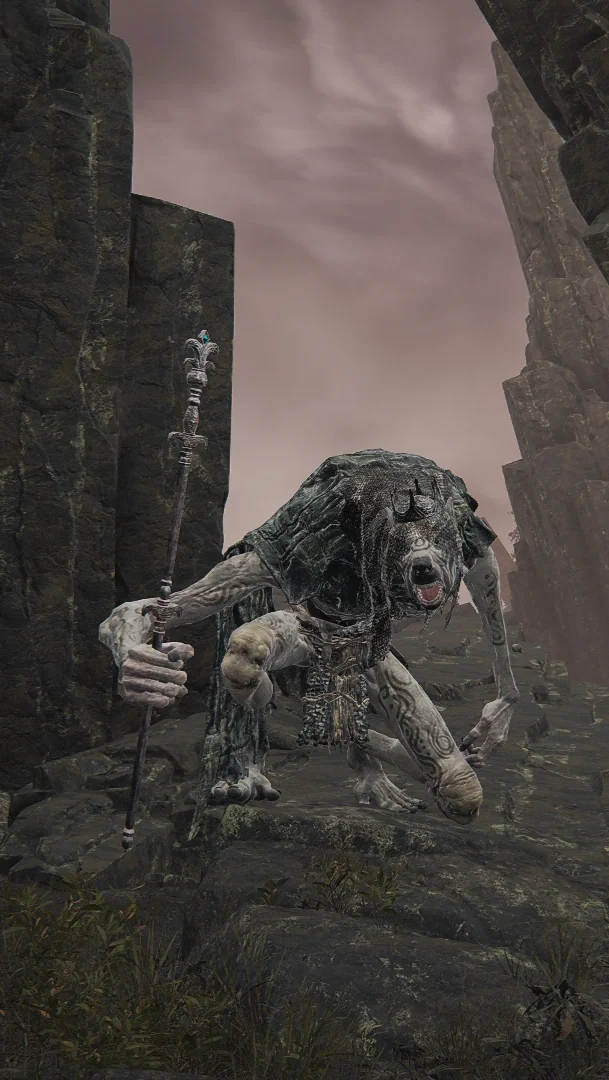 ◈ LINEAGE
The Demi-Human Queens
A scorned race's matriarchs, keepers of a stolen sorcery▾
The Demi-Human Queens
'Glintstone staff styled as a scepter. A gift once given to the demi-humans to foster peace, it can be wielded even by those of low intelligence. Sneered at by fools in the academy.' The demi-humans are a small, simian race scattered across the foothills of Limgrave, the canyons of Caelid, and the cliffsides of the DLC peninsula; they are reviled, hunted, and trapped for their pelts. The Demi-Human Queen's Staff records the only diplomatic act ever extended to them: a gift, from the Academy of Raya Lucaria, of a glintstone scepter their queens could wield without learning the academy's tongue. The gift's purpose, the description states, was 'to foster peace' ; its reception by the academy itself was a sneer.
'When bestowed with this weapon by their queen, the swordsmen swear to find the truth that lies at the end of the procession of stars.' In the Realm of Shadow, the queens' lineage is shown to be older and more troubled than Liurnia ever guessed. The Star-Lined Sword was forged by demi-human swordmasters who took the academy's sorcery and made it their own; the Demi-Human Swordsman Yosh ash records that 'Onze, a master swordsman who devoted himself to the Star-Lined Sword, realized that only ruin awaited at the end of the procession of stars, and imprisoned himself in order to forestall it.' The queens, Maggie, Margot and Gilika, preside over a people whose science the academy stole, sneered at, and could not undo.
Glintstone staff styled as a scepter. A gift once given to the demi-humans to foster peace, it can be wielded even by those of low intelligence. Sneered at by fools in the academy.
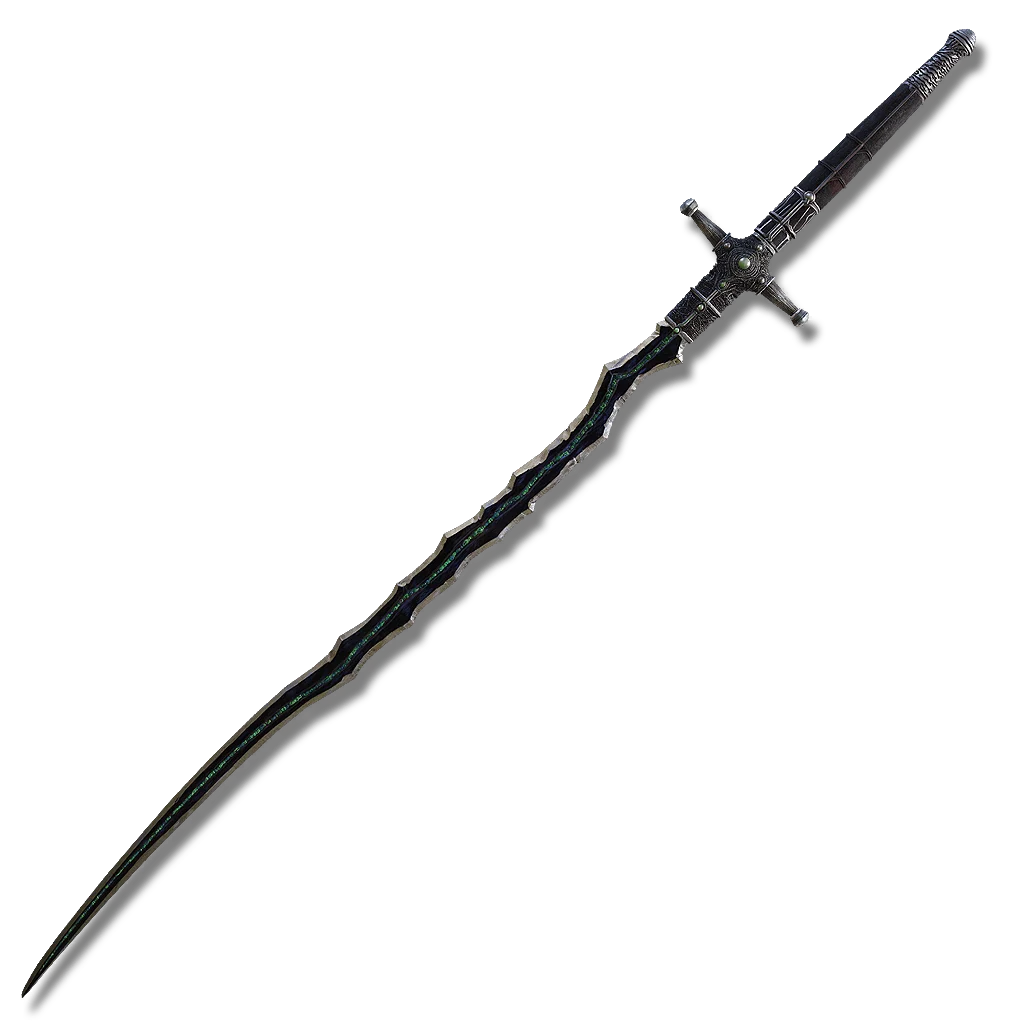 Star-Lined Sword
Sword encrusted with a line of stars fashioned from small pieces of crude glintstone. Weapon of the demi-human swordsmen. When bestowed with this weapon by their queen, the swordsmen swear to find the truth that lies at the end of the procession of stars.
Ashen remains in which spirits yet dwell. Use to summon the spirit of Yosh, the demi-human swordsman. Onze, a master swordsman who devoted himself to the Star-Lined Sword, realized that only ruin awaited at the end of the procession of stars, and imprisoned himself in order to forestall it.
Twisted clay sculpt in the shape of a demi-human head. Emits a voice that says "You're beautiful." A wistful fetish that imparts voices and words on an eternal journey. Unconditional love. Unrestrained assurance. It must have been a mother speaking.
 ◈ LINEAGE
The Great Caravan
The merchants who, buried alive, summoned the flame of frenzy▾
The Great Caravan
'Trousers of the nomadic merchants. These merchants once thrived as the Great Caravan, but after being accused of heretical beliefs, their entire clan was rounded up and buried alive far underground. Then, they chanted a curse of despair, and summoned the flame of frenzy.' The nomadic merchants the Tarnished meets at every crossroad, at Eastern Limgrave, at Caelid, at Mt. Gelmir, ringing their bells over a small selection of crafting goods, are the surviving remnant of a much older trading clan. Once they were the Great Caravan, a roving people whose Chapeaux and Finery were 'decorated with tiny gems in a wide spectrum of colors.' Then the Erdtree's order found them heretical.
'Then, they chanted a curse of despair, and summoned the flame of frenzy.' Their burial is the canon's first naming of the flame of frenzy as a created thing, summoned by the wronged. The Subterranean Shunning-Grounds, where the Tarnished descends to find Mohg's chapel and the Three Fingers themselves, was the very pit into which the Great Caravan was thrown. The Nomad Ashes flavour text confirms it: 'A member of a tribe that was entombed in the earth so as to bury the maddening disease that followed them. Able to emit the terrible flame of frenzy from his eyes.' Every yellow-eyed maddened pilgrim from Shabriri onward is a child of that buried curse. The bell-ringing merchants on the road are the cousins who escaped the pit; they sell crafting notes and forget what their family did.
Trousers of the nomadic merchants. These merchants once thrived as the Great Caravan, but after being accused of heretical beliefs, their entire clan was rounded up and buried alive far underground. Then, they chanted a curse of despair, and summoned the flame of frenzy.
Chapeau of the nomadic merchants. Decorated with tiny gems in a wide spectrum of colors. These merchants once thrived as the Great Caravan, but after being accused of heretical beliefs, their entire clan was rounded up and buried alive far underground. Then, they chanted a curse of despair, and summoned the flame of frenzy.
Ashen remains in which spirits yet dwell. Use to summon the spirit of a nomad. A member of a tribe that was entombed in the earth so as to bury the maddening disease that followed them. Able to emit the terrible flame of frenzy from his eyes, but has low HP and is frail, unable to take much in the way of punishment.
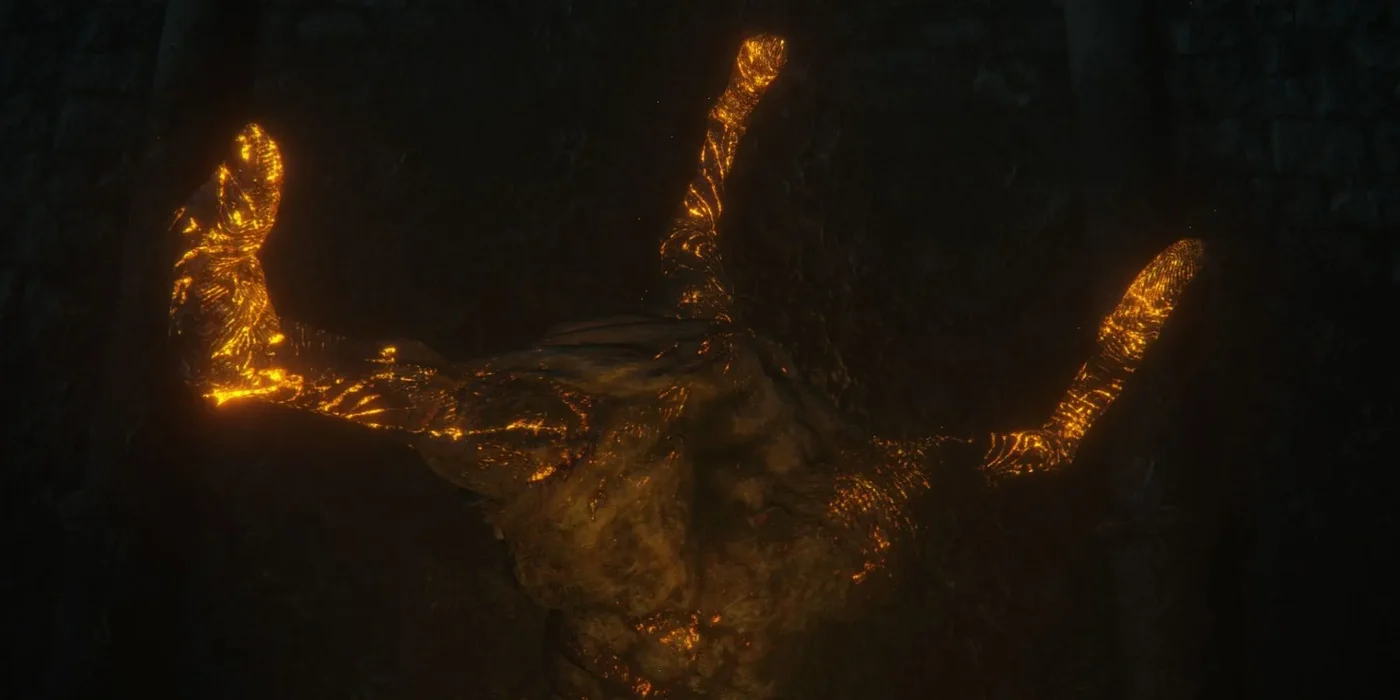 ✦️ EVENT
The Origin of the Maddening Flame
Shabriri, the buried caravan, and the eyes that wept yellow fire▾
The Origin of the Maddening Flame
'Incantation originating from the maddening Three Fingers. Releases a maddening shriek that causes madness buildup in foes nearby. … It is said that the sickness of the flame of frenzy began with Shabriri, the most reviled man in all history.' The Howl of Shabriri states the origin claim outright: the sickness of the yellow flame began with a man named Shabriri. Shabriri's Woe writes down his crime and his sentence: 'his eyes gouged out as punishment for the crime of slander, and, with time, the blight of the flame of frenzy came to dwell in the empty sockets.' The Tarnished encounters him as a possessing spirit who climbs into the corpse of a dead hunter of Bloody Fingers called Yura; of that man, Shabriri says 'For he is dead', and 'As for his flesh, he gave it to me, Shabriri.'
'In times past, every single person who attempted to control the flame of frenzy succumbed to madness after a desperate internal struggle. This incantation is testament to a meager victory.' The Frenzied Burst description names the cost. Madness, in this world, is not chaos for chaos's sake: it is a counter-Order, summoned by the Great Caravan after their clan 'was rounded up and buried alive far underground' for heresy and 'chanted a curse of despair'. Shabriri's part is to speak that curse as an invitation: 'Burn the Erdtree to the ground, and incinerate all that divides and distinguishes.' Hyetta, the blind maiden guided toward the distant light, comes to say it in her own voice, 'Melt it all away, with the yellow chaos flame' ; Vyke, knight of the Roundtable Hold, 'traveled far below the capital, and was scorched by the flame of frenzy' ; Midra, master of the manse, asks for 'a frenzied flame to melt away the curses, suffering, and despair. And the Order, entire.' Where the Greater Will gave the Erdtree, the Three Fingers offer that burning, and Melina names its price: 'It is chaos, devouring life and thought unending.'
Incantation originating from the maddening Three Fingers. Releases a maddening shriek that causes madness buildup in foes nearby. This incantation also causes madness buildup in the caster and makes enemies more likely to target them. It is said that the sickness of the flame of frenzy began with Shabriri, the most reviled man in all history.
Incantation originating from the maddening Three Fingers. Releases concentrated blasts of the yellow flame of frenzy from the caster's eyes. Charging enhances potency, enabling the blasts to penetrate the enemy's guard. In times past, every single person who attempted to control the flame of frenzy succumbed to madness after a desperate internal struggle. This incantation is testament to a meager victory.
Incantation originating from the maddening Three Fingers. Causes the yellow flame of frenzy to blaze from the caster's eyes. The caster then latches onto foes, spreading the madness. To gaze into one another's eyes is truly the most intimate form of human contact.
Formless sacred seal bestowed by the maiden of the Three Fingers. Enhances incantations of the frenzied flame. This seal is the mark of the Lord of Frenzied Flame. Scales incantations using strength, dexterity, intelligence, and faith all together.
—️ LOCATIONCathedral of Dragon Communion
Where a dragon's heart is consumed at the altar, and the eater's humanity begins to slip▾
Cathedral of Dragon Communion
'One of the incantations of Dragon Communion. Transforms caster into a wyrm to spew magma breath.' And then, in the same description: 'Those who have performed the Dragon Communion will find their humanity slowly slipping away. Once they fully succumb to their fate, they are left no more than wyrms that crawl the earth.' The game's place names hold a Cathedral of Dragon Communion and a Church of Dragon Communion. One is signposted from afar: 'Far to the east, you'll find the Cathedral of Dragon Communion. A place where draconic power gathers.' The other arrives as directions, from a companion in a dragon hunt: 'If you should find yourself overcome by hunger for the heart, yearning for its strength, then seek the decrepit church on the little island off the western coast.' What the pilgrim carries there is a heart 'seized by a dragon tracker', an organ that 'continues to beat vivaciously'. The rite is written as an instruction: 'Consume a dragon's heart at the altar to make its power yours.' The altar's prompt says it in older words: 'Offer ... … Dragon Hearts to make ... … thine own.' The dragon's strength becomes the pilgrim's, and what the pilgrim was before becomes a little less.
Some of these incantations carry a dragon's name. Borealis's Mist 'Channels the power of Borealis, the Freezing Fog' ; Ekzykes's Decay, 'Ekzykes, the Decaying' ; Smarag's Glintstone Breath, 'Smarag, the Glintstone Dragon'. Those share a shape, each turning the caster 'into a dragon to spew' its breath 'from above'. Theodorix's Magma bends the shape: 'Channels the power of the great wyrm Theodorix. Transforms caster into a great wyrm to spew a large volume of magma breath.' Other lines turn from the eaten to the eater: 'Those extraordinary individuals who perpetuate Dragon Communion are called the dragon-hearted.' Of the Magma Wyrms, once 'humans heroes who partook in dragon communion', it is said this was 'a grave transgression for which they were cursed to crawl the earth upon their bellies'. A priestess speaks of the rite at the Grand Altar as the purest form of Communion. Greyoll, 'the mother of all dragons, dwarfing all who stood before her like a looming mountain', lends her name to the plateau to Caelid's north, where 'none dare to enter'. The game does not say who tends her.
One of the incantations of Dragon Communion. Transforms caster into a wyrm to spew magma breath. Allows one follow-up attack. Those who have performed the Dragon Communion will find their humanity slowly slipping away. Once they fully succumb to their fate, they are left no more than wyrms that crawl the earth.
Superior incantation of Dragon Communion. Channels the power of Borealis, the Freezing Fog. Transforms caster into a dragon to spew icy breath. The ice dragons were once lords of the mountaintops long ago, until they were defeated by the Fire Giants and chased from the peak.
Superior incantation of Dragon Communion. Channels the power of Ekzykes, the Decaying. Transforms caster into a dragon to spew scarlet rot breath. Ekzykes, Dragon Communion Revenger, did not forget his hatred even as he succumbed to the scarlet rot.
 ◈ SPECTRAL STEED
Torrent, the Spectral Steed
The horned goat-mount of grace, given by Melina at the maiden's request▾
Torrent, the Spectral Steed
'A delicate goldwork ring. Can be used as a finger whistle. Sound the whistle to summon and ride Torrent, the spectral steed.' Torrent is unique. There is exactly one of him in the canon, and he is given to the Tarnished by Melina at her first appearance, before any maiden of the Erdtree has been chosen. He is a horned goat-like steed, shaggy, capable of double-jumping into the air to catch the spirit-springs scattered across the world. He was, the dialogue suggests, a maiden's mount before he was the Tarnished's. 'You think this is the one, Torrent? Is that him, Torrent? Is that her, Torrent?' Melina speaks to him as one speaks to an old companion who has watched many people fail.
Torrent can fall in battle, but he is never gone for long: upon his death the whistle calls him back, though each summoning drains the Flask of Crimson Tears. When Melina sacrifices herself at the Forge of the Giants to set the Erdtree alight, Torrent rides on; of the two, it is she who does not return. Across the canon's possible endings he is the only companion who survives every path; the only character whose loyalty does not bend depending on which lord the Tarnished crowns. 'It's not too late.' Melina says it about the player. Torrent, who was hers, knows what she means.
A delicate goldwork ring. Can be used as a finger whistle. Sound the whistle to summon and ride Torrent, the spectral steed. (Dismounts steed when used while on horseback.) Upon his death, the spectral steed can be summoned again, but doing so drains the Flask of Crimson Tears.
[At the Grace] You think this is the one, Torrent? Is that him, Torrent? Is that her, Torrent? Don't worry, it's not too late. He is sure to seek the Elden Ring.
[First Meeting (as Renna)] A pleasure to meet thee, Tarnished. I am the witch Renna. I'd heard tell of a Tarnished hurtling about atop a spectral steed.
✦️ ENDINGLord of the Frenzied Flame
The ending in which all life is set to one final, kindling fire▾
Lord of the Frenzied Flame
'Lord of Frenzied Flame... I will seek you, as far as you may travel... To deliver you what is yours. Destined Death.' Melina's vow is the entire shape of this ending. To take the Three Fingers' brand, the Tarnished must descend to a sealed chamber under Leyndell, strip naked, and let the buried hands of an outer god seize them by the eyes. From that moment the Tarnished walks crowned in yellow fire; Hyetta, who introduces herself with 'my name is Hyetta, and I'm journeying in search of the distant light', walks that road with them. Melina abandons them and says she will hunt them to the end of the world to kill them. The Tarnished can still be a Lord. Just not Marika's.
What the ending itself says is short, and it is spoken to that lord: 'Lord of Frenzied Flame... I will seek you, as far as you may travel... To deliver you what is yours. Destined Death.' The cinematic is brief and clear: Erdtree burning, Lands cracking, eyes weeping fire. An unalloyed gold needle is 'capable of subduing the flame of frenzy if inherited, allowing one to cheat fate and avoid becoming Lord of Frenzied Flame' ; the one the game gives was 'removed by Millicent from her flesh', not handed over by Melina. Melina calls it chaos in as many words, 'it is chaos, devouring life and thought unending', and swears that should the Tarnished rise as the Lord of Chaos she will kill them. The card's own reading is that it works as a counter-Order, summoned into being by the Great Caravan when they were buried alive for heresy: a promise, kept in the marrow of the Tarnished's bones from now on, to end every fate by ending the world that holds them.
Lord of Frenzied Flame... I will seek you, as far as you may travel... To deliver you what is yours. Destined Death.
Formless sacred seal bestowed by the maiden of the Three Fingers. Enhances incantations of the frenzied flame. This seal is the mark of the Lord of Frenzied Flame. Scales incantations using strength, dexterity, intelligence, and faith all together.
Unalloyed Gold NeedleOne of the unalloyed gold needles that Miquella crafted to ward away the meddling of outer gods. Capable of subduing the flame of frenzy if inherited, allowing one to cheat fate and avoid becoming Lord of Frenzied Flame.
—️ LOCATIONCastle Sol
Northern fortress of the eclipsed sun, where Niall waited too long▾
Castle Sol
'Old armor that has seen many battles. Worn by Niall, the veteran general of Sol. Niall was a lone survivor who commanded spirits to defend his long-passed master. This aging general could not die, nor did he have anywhere to fade away.' Castle Sol stands at the very northern edge of the Mountaintops of the Giants, a snow-buried fortress whose heraldry is the sun in eclipse. Its lord and people are gone, the master Niall served has long since passed. Only Commander Niall remains, propping up two summoned ghosts as bodyguards, defending an empty throne against an enemy that no longer exists. The cult of the Eclipsed Sun was always a heresy; the Erdtree's golden order saw the sun in eclipse as a profane mirror of itself, the colour drained, the order inverted.
'Metal greatshield painted with a sun in eclipse. Carried by the headless mausoleum knights. The eclipsed sun, drained of color, is the protective star of soulless demigods.' The Eclipse Crest is the same heraldry the Mausoleum Knights bear, and the Wandering Mausoleums themselves are believed to belong to demigods born without souls, the abandoned offspring of the Golden Order, hidden away from grace. Castle Sol is what their faith left behind: a strict, stoical warrior cult dedicated to defending the unloved heirs of Marika, even after the heirs themselves were forgotten. The Haligtree Secret Medallion's other half is hidden in the castle's chapel. Niall's death is the cost of asking after Miquella.
Old armor that has seen many battles. Worn by Niall, the veteran general of Sol. Niall was a lone survivor who commanded spirits to defend his long-passed master. This aging general could not die, nor did he have anywhere to fade away.
Metal greatshield painted with a sun in eclipse. Carried by the headless mausoleum knights. The eclipsed sun, drained of color, is the protective star of soulless demigods.
A medium-sized metal shield. Easier to handle than a kite shield. The sun in eclipse is said to be the symbol of the Wandering Mausoleum where the soulless demigods slumber.
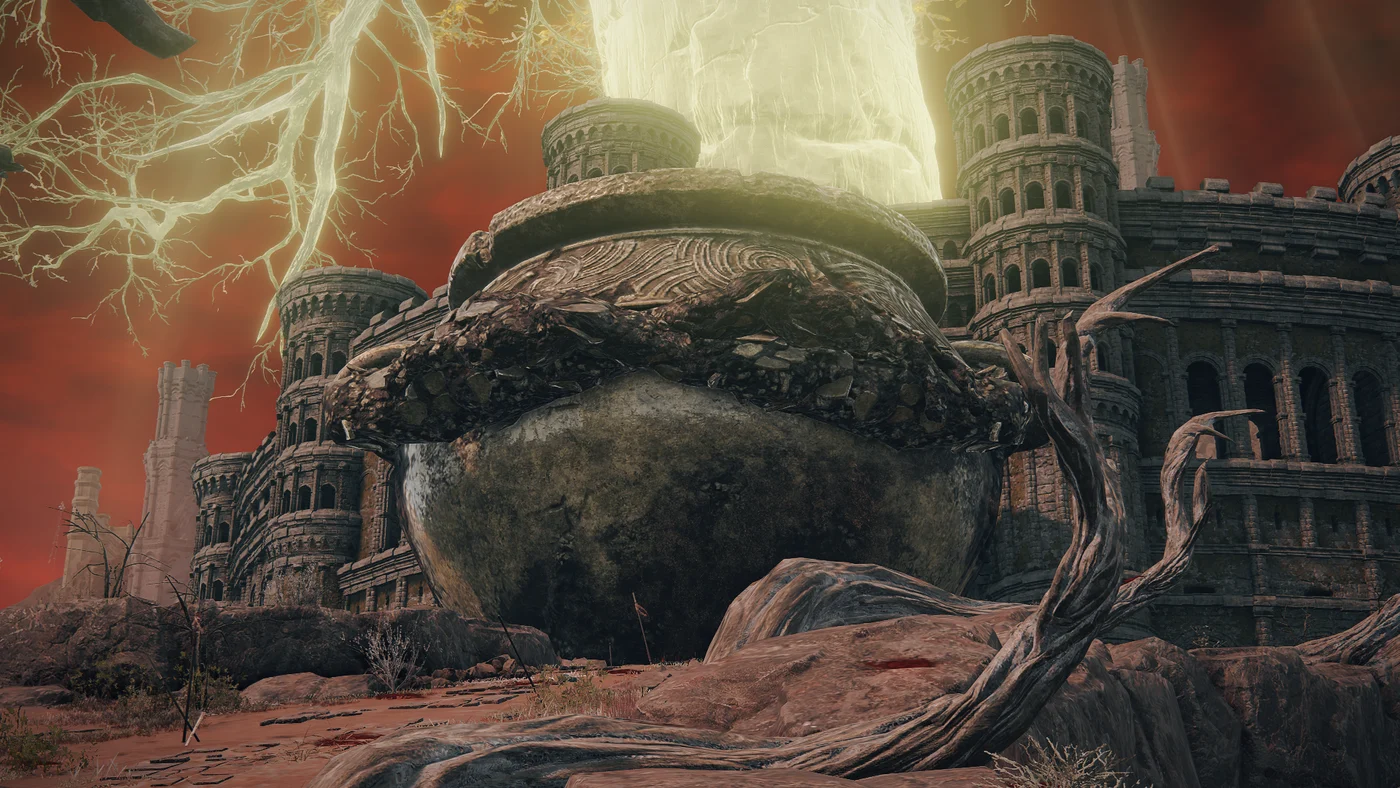 ◈ LINEAGE
The Living Jars
Vessels of warriors, shamans, and Iron Fist Alexander▾
The Living Jars
'A fragment of a living jar, hardened after its death. Material used for crafting items. Such fragments command a high price due to the magical power locked within.' The Living Jars are the strangest of the canon's sentient lineages: ceramic urns, sealed by ritual, containing the body parts and souls of warriors slain in battle. Their priesthood are the Jar Shamans, who wear their own faces concealed by upturned greatjars and tend the urns at gaols. A jar walks because the spirits inside still want to. Some are servants, some are soldiers, and some, Iron Fist Alexander and Jar Bairn among them, are heroes whose questlines run beside the Tarnished's own; the human Diallos protects the jars of Jarburg.
'A greatjar which fits comfortably over the head when upturned. Attire of the shamans who perform their worship at gaols. Increases the power of thrown pots of all sizes.' The largest of them, the Great Jar, sits in the Caelid wastes and tests Tarnished champions in three duels: answer his summon and survive, and he grants his talisman, the Great-Jar's Arsenal, in approval. The Soldjars of Fortune Ashes, 'spirits of three little living jars', confirm what the lore everywhere implies: a jar's contents are never empty, and the ash that flakes off them when they shatter is always the ash of someone whose name was forgotten before the jar was sealed.
A fragment of a living jar, hardened after its death. Material used for crafting items. Such fragments command a high price due to the magical power locked within.
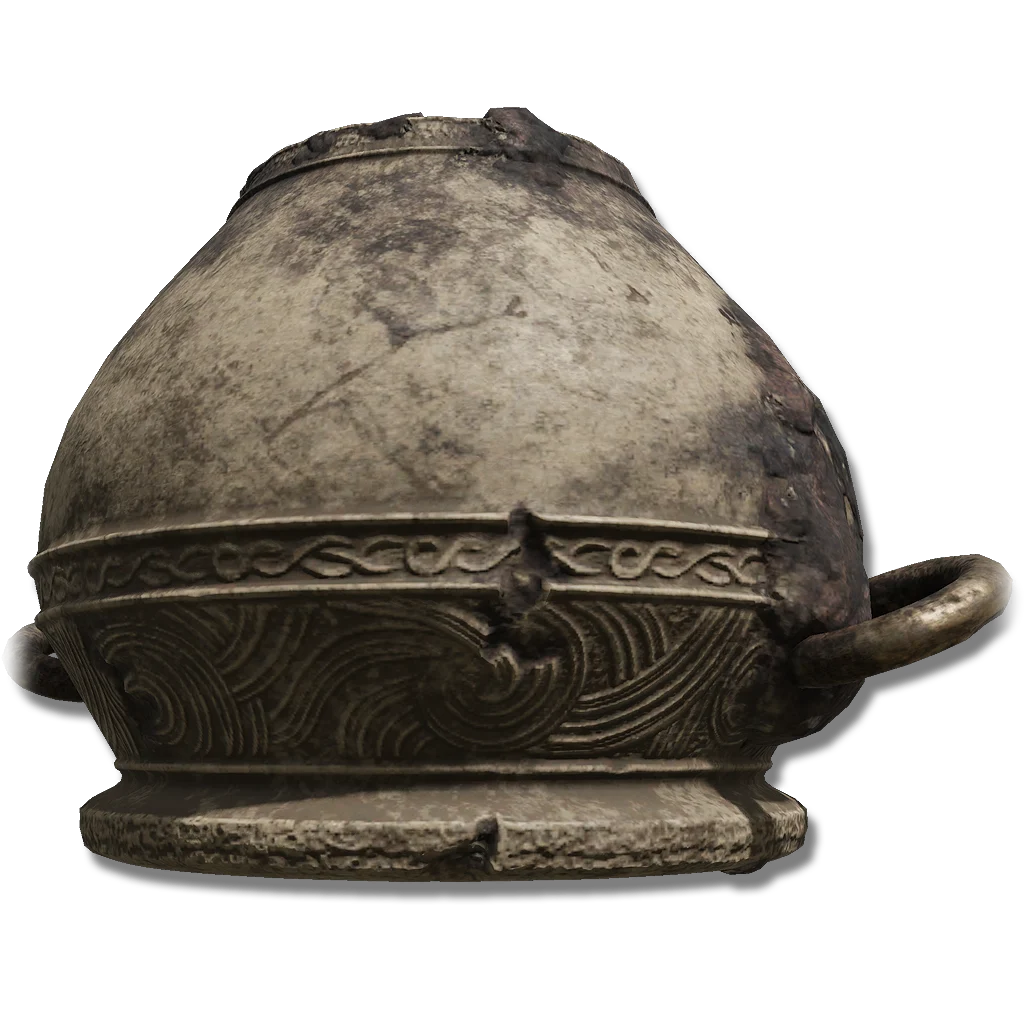 Greatjar
A greatjar which fits comfortably over the head when upturned. Attire of the shamans who perform their worship at gaols. Increases the power of thrown pots of all sizes.
Ashen remains in which spirits yet dwell. Use to summon the spirits of three little living jars. Summoning consumes HP rather than FP. These reckless spirits sacrifice themselves to vanquish their summoner's foes, and explode upon death.
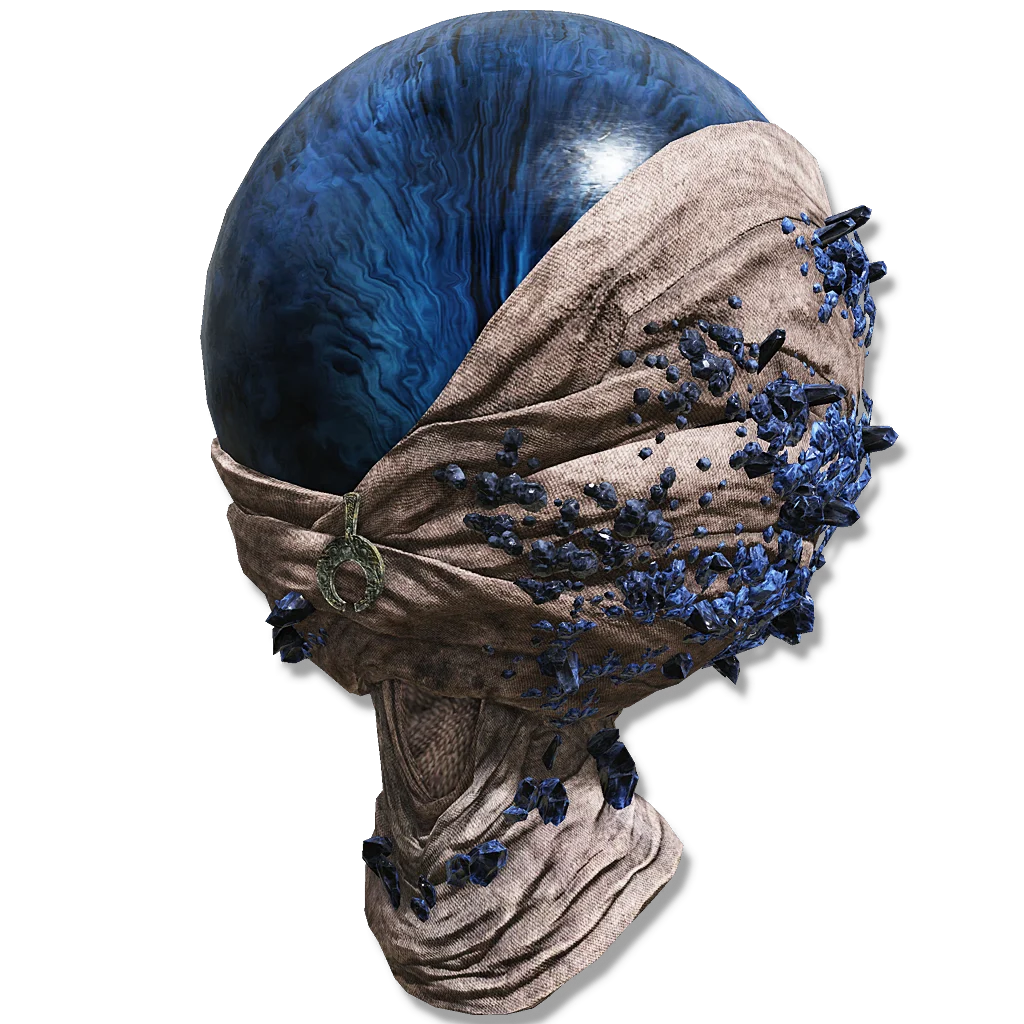 ◈ LINEAGE
The Primeval Sorcerers
Lusat and Azur, grand masters who looked too far into the stars▾
The Primeval Sorcerers
'Staff of the primeval glintstone sorcerer Lusat. Only those who have glimpsed what lies beyond the wisdom of stone may wield it. Enhances power of all sorceries, but consumes additional FP.' Lusat and Azur were two grand masters of Raya Lucaria, equal in rank and rivalry, both of them Sellians by birth and current sorcerers by vocation. The current is a deeper magic than the academy taught, a tide of glintstone power that flows down from the primeval source itself, the very engine that birthed the stars. Lusat sought it. Azur stood in it for years and let it pour through him. The academy disowned them both. They were caged, sealed, and hidden by sorcerers who feared what they had become.
'When Azur glimpsed into the primeval current, he saw darkness. He was left both bewitched and fearful of the abyss.' Comet Azur, the legendary sorcery he leaves behind, names what he saw and didn't return from. Lusat in his sealed cell at Sellia is half-statue now, blue glintstone growing through his skull. Azur sits on his cliff above Mt. Gelmir watching the sky. Both have lost the ability to speak; both teach a final, terrible legendary spell. Their joint message to the Tarnished is the same warning Sellen will not heed: the primeval current does not flow back. To touch it is to remain in it forever.
Legendary sorcery devised by Azur, primeval sorcerer. Fires a tremendous comet in a torrent akin to the distant starry expanse, the place said to be the origin of glintstone. When Azur glimpsed into the primeval current, he saw darkness. He was left both bewitched and fearful of the abyss.
Staff of the primeval glintstone sorcerer Lusat. Only those who have glimpsed what lies beyond the wisdom of stone may wield it. Enhances power of all sorceries, but consumes additional FP.
The giant blue glintstone crown worn by Lusat, primeval current sorcerer. This crown replaced Lusat's brain and skull altogether, and now, removed from his body, it is all but dead.
▣ LEGENDARY SORCERYThe Carian Dark Moon
Ranni's coronation spell, the cold moon that dispels all sorcery▾
The Carian Dark Moon
'Legendary sorcery associated with the Carian queen. Uses the caster as a vessel to incarnate a cold, dark moon, then sends it floating toward foes. The dark moon dispels all sorcery that touches it, and temporarily reduces magic damage negation for those it strikes.' The Dark Moon is the heirloom magic of House Caria. Rennala learned it in her youth, when the snow-witch Renna of the cold north taught her; Rennala then taught it to her daughter Ranni, who taught it to no one. It is not flashy. It does not burn or roar. It is a slow, low-lit projectile of pure cold, and it cancels every other sorcery it meets in flight. The dark moon dispels because the dark moon is older than the spells it touches.
'Sorcery said to have been used by the old snow witch. … The snowy crone taught the young Ranni to fear the dark moon as she imparted her cold sorcery.' By the time the Tarnished meets her, Ranni has become a witch in her own right, her child-body inhabited by the soul of a Numen woman who killed her own flesh in protest of her destiny. The Dark Moon is the wedding-gift she carries into the Age of the Stars ending: the Lands Between, having known the Erdtree's fierce gold for so long, are taken into the cold and the distance and the dark instead. 'My Lord, my consort eternal,' she will say if you accept her ring. The cold she chooses is not death. It is exile far enough away that the Outer Gods cannot find them.
Legendary sorcery associated with the Carian queen. Uses the caster as a vessel to incarnate a cold, dark moon, then sends it floating toward foes. The dark moon dispels all sorcery that touches it, and temporarily reduces magic damage negation for those it strikes.
Sorcery said to have been used by the old snow witch. Enchants armament held in the right hand with frost. This sorcery can be cast while in motion. The snowy crone taught the young Ranni to fear the dark moon as she imparted her cold sorcery.
Craftable item prepared using a ritual pot. Engraved with the crest of the Carian Royals. Throw at enemies to cause buildup of frost. Originates from the cold, dark moon of Ranni, the Carian princess.
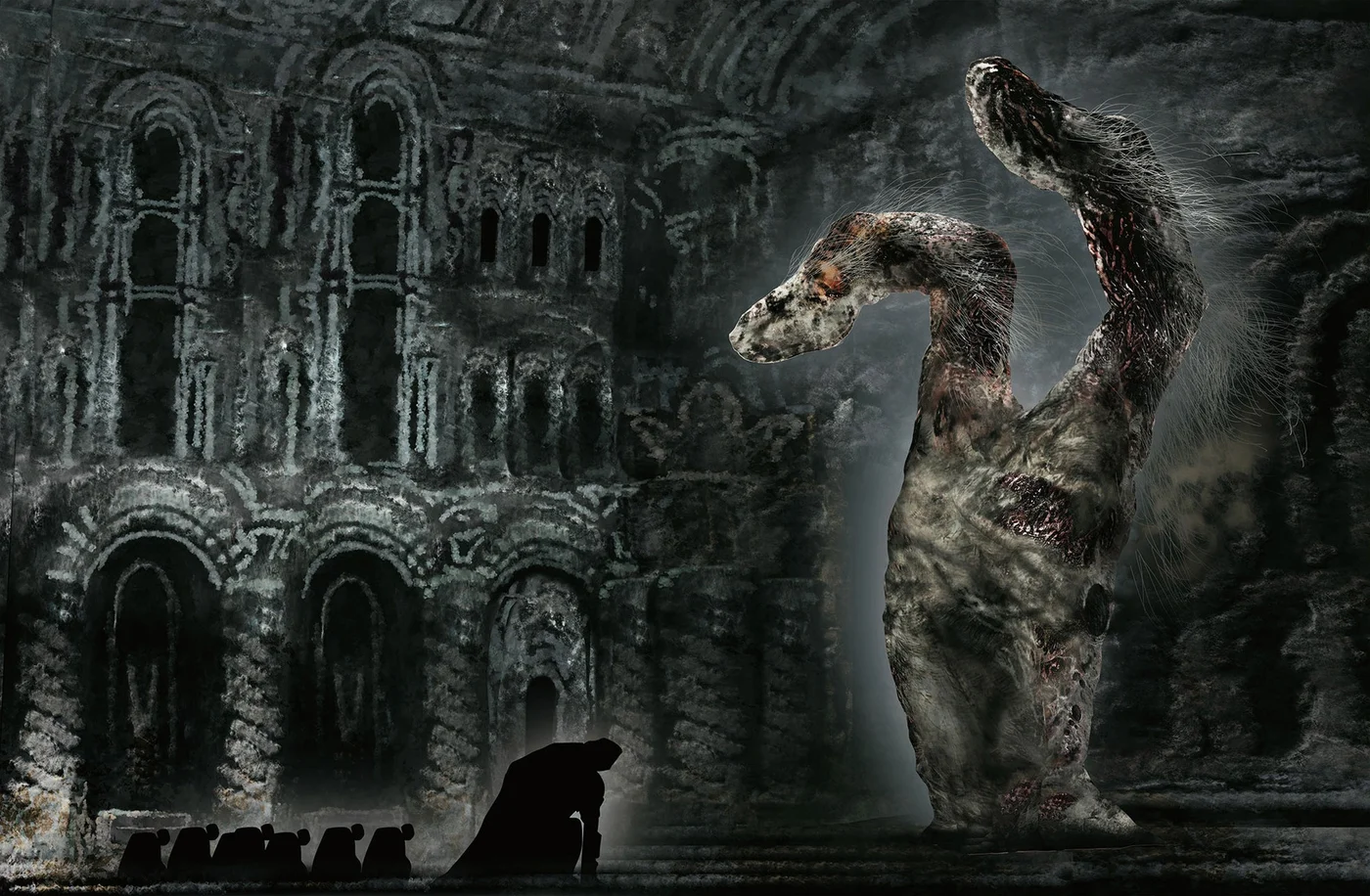 ◈ DIVINE EMISSARY
The Two Fingers
The Greater Will's withered emissary, oracle of the Roundtable▾
The Two Fingers
'Long ago, ye Tarnished lost something most dear. The Elden Ring. O Elden Ring. Its gold commanded the very stars, giving life its fullest brilliance. Shattered, by someone, or something.' The Two Fingers are the principal organ by which the Greater Will speaks to the Lands Between: a pair of withered, twitching grey digits attached at the wrist, kept on a cushion in the throne room of the Roundtable Hold and at the heart of every great ruling order. They do not speak. They twitch. The Finger Reader Enia and her sisters interpret the twitches into language. The Tarnished hears the will of god through three layers of indirection, Greater Will to Two Fingers to Reader to ear, and the layers are the canon's running joke.
'Ruin Fragment blessed with an incantation of the Three Fingers. Craftable item. Uses FP to generate warmth, continuously restoring the HP of those who host the frenzied flame. Confers madness upon those who have not adopted the flame. Take care not to mistake this for its gentler cousin.' The Greater Will is not the only outer god watching. The Three Fingers under Leyndell are the counter-emissary of the chaos-god, the one buried with the Great Caravan. The Frenzied Flame Brand is its mark. The whole sequence, Two Fingers gone slowly mute, Three Fingers patiently waiting for someone to descend the stairs, is a map of the canon's central question: are the gods worth listening to anymore? Goldmask answered no. The Tarnished can do the same.
Long ago, ye Tarnished lost something most dear. The Elden Ring. O Elden Ring. Its gold commanded the very stars, giving life its fullest brilliance. Shattered, by someone, or something.
A talisman engraved with the legend of the Two Fingers. Raises faith. Fingers cannot speak, yet these were eloquent. Persistently did they wriggle, spelling out mysteries in the air. Thus did we gain the words. The words of our faith.
Ruin Fragment blessed with an incantation of the Three Fingers. Craftable item. Uses FP to generate warmth, continuously restoring the HP of those who host the frenzied flame. Confers madness upon those who have not adopted the flame. Take care not to mistake this for its gentler cousin.
◈ ANCIENT RACEThe Ancient Dragons
Pre-Erdtree gods of lightning, defeated at the Routing of the Ancient Dragons▾
The Ancient Dragons
'The Routing of the Ancient Dragons. Godwyn the Golden fought to the last, Earning the friendship of dread Fortissax.' The Ancient Dragons were the lightning-wielding god-race of the Lands Between, ruled by the Dragonlord Placidusax in his city of Crumbling Farum Azula. They are not the same beings as the wyrms (Greyoll, Ekzykes, Magma Wyrms); they are an order older still, and more like gods than beasts. Placidusax's elden ring was a different elden ring, predating Marika's by an age. When the Greater Will arrived from outside the world, the dragons fled time itself: Farum Azula now exists in a stopped instant, suspended above the cloud line, slowly crumbling.
'A record of crafting techniques taught by the capital's ancient dragon cult. Details techniques that harness lightning, the weapon of the ancient dragons.' The war against the surviving dragons is remembered through a single name: the monument to the Routing records only that Godwyn the Golden fought to the last. Godwyn made one friend in that war: Fortissax, who would later defend Godwyn against Those Who Live in Death after the Night of the Black Knives. The dragon cult of Leyndell was born of that friendship: Godwyn's defeat of Fortissax 'gave rise to the ancient dragon cult in the capital', and its faithful teach the lightning incantations of the old gods inside the city of the new ones. The Crucible Knights are no kin of theirs: they served Godfrey, the first Elden Lord, and bore 'the power of the crucible of life, the primordial form of the Erdtree', not the legacy of dragons.
Remembrance of the DragonlordRemembrance of Dragonlord Placidusax, hewn into the Erdtree. The power of its namesake can be unlocked by the Finger Reader. Alternatively, it can be used to gain a great bounty of runes.
Ancient Dragon Smithing StoneSmithing stone made by polishing a golden Gravel Stone. A scale of the Ancient Dragonlord, and hidden treasure of Farum Azula. Strengthens armaments to +25. The Ancient Dragonlord's seat is said to lie beyond time. This stone lightly twists time, allowing the creation of a weapon capable of slaying a god.
A record of crafting techniques taught by the capital's ancient dragon cult. Details techniques that harness lightning, the weapon of the ancient dragons.
 ◈ OUTER GOD
The Formless Mother
The blood goddess Mohg pierces with his sacred spear▾
The Formless Mother
'Sacred incantation of Mohg, Lord of Blood. Thrust arm into the body of the Formless Mother, then scatter the bloodflame to set the area ablaze. This incantation can be cast while in motion. The mother of truth craves wounds. When Mohg stood before her, deep underground, his accursed blood erupted with fire, and he was besotted with the defilement that he was born into.' The Formless Mother is the outer god of blood, a presence neither seen nor named in any cinematic, addressed only by Mohg the Omen. Of all the outer gods of the canon, the Greater Will, the Frenzied Flame's Three Fingers, the God of Rot, the Fell God of fire, the Dark Moon, she is the one whose mark on the world is the most intimate. Mohg's bloodflame curse is hers. Her body is, the lore implies, available to be pierced by anyone who knows where to plunge.
'Unique Skill: Bloodboon Ritual. Raise the sacred spear and pierce the body of the Formless Mother. Stab up to three times, creating explosions of blood with each.' Mohg pierces her with his Sacred Spear because the gesture is a covenant. Her formlessness is what the canon literally means: she is everywhere there is enough blood to call her, and Mohg's whole insurrection, kidnapping Miquella, raising a dynasty in the Mohgwyn Palace built in the lightless depths, is an attempt to give her a son who will rule the surface in her name. He fails. Miquella has already escaped his cocoon. The Formless Mother does not appear at his death, but the spear in the throne room remains soaked.
Unique Skill: Bloodboon Ritual Raise the sacred spear and pierce the body of the Formless Mother. Stab up to three times, creating explosions of blood with each thrust. This skill will coat the armament with bloodflame for a while.
Sacred incantation of Mohg, Lord of Blood. Thrust arm into the body of the Formless Mother, then scatter the bloodflame to set the area ablaze. This incantation can be cast while in motion. The mother of truth craves wounds. When Mohg stood before her, deep underground, his accursed blood erupted with fire, and he was besotted with the defilement that he was born into.
◈ ORIGINThe Starting Classes of the Tarnished
The dead who yet live, called back across the fog by long-lost grace▾
The Starting Classes of the Tarnished
'Arise now, ye Tarnished. Ye dead, who yet live. The call of long-lost grace speaks to us all. Hoarah Loux, chieftain of the badlands. The ever-brilliant Goldmask. Fia, the Deathbed Companion. The loathsome Dung Eater.' The Tarnished are the spurned descendants of those who once received Marika's grace and lost it. Long before the Shattering, Marika withdrew the Erdtree's blessing from the Tarnished and exiled them across the fog; they wandered the dark landlocked badlands, forgetting why. Now, after the Shattering has cracked the Elden Ring, grace finds them again, gold-flaked and faint. Their eyes are dim because their lineage was excommunicated. The Erdtree's restoration is offered to whichever of them claims it first.
'Chest piece of a knight banished from their motherland. Dirty and battered after enduring a lengthy vagabond journey. The crest emblazoned on the front is worn and dingy, no longer able to evoke sentiment.' The starting classes of the canon are not character builds: they are stages of the Tarnished diaspora. Vagabond, Wretch, Hero, Bandit, Astrologer, Prophet, Confessor, Samurai, Prisoner, Warrior, each is a guess at what kind of life the Tarnished was leading when grace called them home. Each is an exiled fragment of a forgotten home culture. Marika's own echoes suggest the banishment was never meant to be final: 'Then, after thy death, I will give back what I once claimed. Return to the Lands Between, wage war, and brandish the Elden Ring.' Why she wanted them back, the text never says; Goldmask concluded only that the Order she made was imperfect, flawed by 'the fickleness of the gods no better than men.'
Arise now, ye Tarnished. Ye dead, who yet live. The call of long-lost grace speaks to us all. Hoarah Loux, chieftain of the badlands. The ever-brilliant Goldmask. Fia, the Deathbed Companion. The loathsome Dung Eater.
Chest piece of a knight banished from their motherland. Dirty and battered after enduring a lengthy vagabond journey. The crest emblazoned on the front is worn and dingy, no longer able to evoke sentiment.
Brave Tarnished. Mighty warriors, who fought at my side. Await the summons. It will call to thee one day. Heed the fading grace. Listen to the Fingers. Gold commandeth the very stars, giving life its fullest brilliance.
✦️ DLC EVENTThe Sealing Tree
The ancient tree at Rauh Base burned by Messmer's kindling▾
The Sealing Tree
'The kindling that burned inside Messmer the Impaler. A dark thing, eaten away at by a wicked serpent. Burns the sealing tree said to be found at the old Rauh ruins.' The Sealing Tree at the foot of the old Rauh ruins in the Land of Shadow is an ancient, unliving tree, hidden deep in these hornsent ruins beyond the high bridge that climbs from the first floor of the storehouse. The tree sealed something, the lore is careful never to specify what: a god, a memory, a vow, a ledger of crimes. Marika sealed her past inside it. To break the seal is to let the Land of Shadow remember what was done to its people.
'Message left by Dryleaf Dane, addressed to kindred spirits who also pursue Miquella's trail. We've found the sealing tree just ahead. But if we are to burn it, we need the proper kindling. That of Sir Messmer.' Miquella's questline routes through the burning of the tree because Miquella needs the seals broken. Messmer was Marika's son, made into a fire-and-serpent weapon and exiled as the punisher of the Hornsent; he is also the only family member who could spare the kindling that breaks his own mother's seal. The Tarnished completes Miquella's pilgrimage by burning the Sealing Tree with Messmer's flame, then arriving at the gate of Enir-Ilim where the new god is being born, and the Promised Consort waits to be summoned for the marriage.
Messmer's KindlingThe kindling that burned inside Messmer the Impaler. A dark thing, eaten away at by a wicked serpent. Burns the sealing tree said to be found at the old Rauh ruins.
Ancient Ruins Cross MessageMessage left by Dryleaf Dane, addressed to kindred spirits who also pursue Miquella's trail. "We've found the sealing tree just ahead. But if we are to burn it, we need the proper kindling. That of Sir Messmer."
—️ LOCATIONThe Eternal City
Nokron and Nokstella, the cities of silver and stars the Greater Will banished underground▾
The Eternal City
'The hidden treasure of the Eternal City of Nokron; a blade said to have been born of a corpse. This blood-drenched fetish is proof of the high treason committed by the Eternal City and symbolizes its downfall.' Nokron and Nokstella both bear the name Eternal City, and they belong to a time when, as the Celestial Dew has it, 'the stars of the night sky guided fate'. A black moon 'once hung above the Eternal City', and the Moon of Nokstella talisman stands for that lost moon, 'the guide of countless stars'. Then comes the fault, which the game names outright: high treason. The Nox Mirrorhelm, one among the city's ritual implements, is worn by those committed to it and 'wards off the intervention of the Greater Will and its vassal Fingers'. 'Long ago, the Nox invoked the ire of the Greater Will, and were banished deep underground.' Now they live under a false night sky, nightmaidens of 'the highest clerical rank', swordstresses as 'the personal guards of the nightmaidens', in eternal anticipation of their liege, of the coming age of the stars, and their Lord of Night.
'This legendary talisman is a treasure of Nokstella, the Eternal City. Increases memory slots. This talisman represents the lost black moon. The moon of Nokstella was the guide of countless stars.' What came was Astel, Naturalborn of the Void, 'a malformed star born in the lightless void far away', a 'falling star of ill omen' that 'once destroyed an Eternal City and took away their sky', and whose power 'leveled the Eternal City'; who sent it, the game does not say. It struck a city that was still awaiting its liege: mimic tears 'are the result of an attempt by the Eternal City to forge a lord', and a Silver Tear husk holds that 'perhaps, one day, it will be reborn a lord...'. That formless life is 'found in and around the Eternal City', and the arms of the city's monks and swordsmen are 'forged from the liquid metal of a Silver Tear'. In those lightless depths Mohg now builds his palace over 'the grave of an ancient civilization'. And Ranni points the way down: 'Art thou aware of the star that struck Limgrave? It left a vast crater, and through it lieth the Eternal City of Nokron.' What she sends the Tarnished for is the city's hidden treasure, a blade that 'is said to be able to harm the Greater Will and its vassals'.
Black KnifeThe hidden treasure of the Eternal City of Nokron; a blade said to have been born of a corpse. This blood-drenched fetish is proof of the high treason committed by the Eternal City and symbolizes its downfall. Dagger once belonging to one of the assassins who murdered Godwyn the Golden on the Night of the Black Knives. A ritual performed on the oddly misshapen blade imbued it with the power of the stolen Rune of Death.
This legendary talisman is a treasure of Nokstella, the Eternal City. Increases memory slots. This talisman represents the lost black moon. The moon of Nokstella was the guide of countless stars.
◈ ORDERThe Mausoleum Soldiers
Headless guardians of the wandering tombs of soulless demigods▾
The Mausoleum Soldiers
'Padded cloth armor with indelible bloodstains around the neck. Worn by headless foot soldiers who endlessly guard the Wandering Mausoleum.' The Wandering Mausoleums of the Lands Between are walking, headless tombs: enormous stone shells on dragon-clawed legs, each pacing its own plain, from the Weeping Peninsula to Liurnia, the Deeproot Depths and the Mountaintops of the Giants. Each shelters the remains of a demigod born soulless, never given the spark that would have inhabited its flesh, hidden away rather than killed. By breaking the skulls clinging to its legs, the Tarnished forces a mausoleum to kneel, and within it can duplicate a demigod's Remembrance.
'Gauntlets worn by headless soldiers who endlessly guard the Wandering Mausoleum. Rust-worn and stained through unending conflict.' The soldiers are themselves an extension of the same loss: the bloodstains around their collars mark severed heads, a willing curse, in the canon's telling, that binds their spirits to the land to serve their masters even in Death. Their commanders, the headless Mausoleum Knights with eclipse-crested shields, were the bodyguards of the soulless heirs and remain so, faithful past the point at which faith makes any sense. The Eclipse Crest is the same heraldry Castle Sol bears in the snow; the cult is geographically scattered but theologically singular, a vow to defend what the Erdtree cast aside.
Padded cloth armor with indelible bloodstains around the neck. Worn by headless foot soldiers who endlessly guard the Wandering Mausoleum.
Gauntlets worn by headless soldiers who endlessly guard the Wandering Mausoleum. Rust-worn and stained through unending conflict.
◈ DEATH-BLIGHTThose Who Live in Death
Godwyn's death-bloom, souls that died but did not depart▾
Those Who Live in Death
'Sword forged by compounding silver and gold. A sacred weapon to hunt Those Who Live in Death. Deals holy damage. The inseparable twins found solace in the Golden Order, the only institution not to revile them as accursed beings.' When the Black Knives of Ranni's conspiracy struck Godwyn the Golden, the fragment of Death they bore did not finish the work. Godwyn perished in soul alone; his body, unable to die a true Death, was entombed among the roots of the Erdtree at the Deeproot Depths, where it rots still. Without escape, his death began to grow into the Erdtree itself, and slowly leaked back upward as a corruption, Deathroot, the gnarled black bark fed by the Prince of Death's ongoing un-departing. Where Deathroot touches the surface, the dead rise without minds: Those Who Live in Death.
'One of the incantations of the Golden Order fundamentalists. Used by hunters of Those Who Live in Death. Enchants armament held in the right hand with holy-affinity attacks. This incantation is especially damaging to Those Who Live in Death.' Marika sealed the Rune of Death inside her shadow Maliketh; the canon's calamity is that she should never have. The Greater Will banished Death from the Order, and Death, a fundamental thing, found another way back into the world through Godwyn's unfinished death. Fia the Deathbed Companion and Goldmask each leave the Tarnished a mending rune for the age to come: Fia's would restore Death to the Order; Goldmask's would instead perfect the Golden Order, its every imperfection blamed on the fickleness of the gods. The Tarnished's choice in the endgame is which of these to make irrevocable.
Golden EpitaphSword forged by compounding silver and gold. A sacred weapon to hunt Those Who Live in Death. Deals holy damage. The inseparable twins found solace in the Golden Order, the only institution not to revile them as accursed beings.
One of the incantations of the Golden Order fundamentalists. Used by hunters of Those Who Live in Death. Enchants armament held in the right hand with holy-affinity attacks. This incantation is especially damaging to Those Who Live in Death.
◈ OUTER GODThe Outer God of Rot
The patron of Malenia, source of the scarlet bloom that won Aeonia▾
The Outer God of Rot
'Remembrance of Malenia, Goddess of Rot, hewn into the Erdtree. The power of its namesake can be unlocked by the Finger Reader. Alternatively, it can be used to gain a great bounty of runes. Miquella and Malenia are both the children of a single god. As such they are both Empyreans, but suffered afflictions from birth. One was cursed with eternal childhood, and the other harbored rot within.' The Outer God of Rot is the patron of Malenia, Blade of Miquella. The canon never names her; she is invoked only in the Remembrance line and in the prayer-script of the Kindred of Rot, the swarming insect-figures who tend the rot in Caelid's wastes. Her gift is the Scarlet Rot, a bloom of red infection that spreads from any flower it touches into the very earth. Malenia is one of the Empyreans, candidates for godhood; her Empyrean nature means the Outer God of Rot was offered the seat of the Greater Will as one of many possible divine usurpations. Miquella's whole project is to undo that bond.
'A butterfly with withered, scarlet wings found in the Swamp of Aeonia... … According to myth, these butterflies were once the wings of the Goddess of Rot herself.' The Battle of Aeonia in Caelid was the moment Malenia chose to bloom her scarlet rot in self-defense against Radahn, after the duel of the Shattering proved unwinnable for either side. The bloom did not subside. Aeonia is now a permanent rot-swamp; the Cleanrot Knights wear sealed armor to walk it; the Kindred of Rot hover and chant; even the dragon Ekzykes succumbed to the rot without forgetting his hatred. The Outer God of Rot does not appear in person, but every rotted mile of Caelid is a chapel.
Remembrance of the Rot GoddessRemembrance of Malenia, Goddess of Rot, hewn into the Erdtree. The power of its namesake can be unlocked by the Finger Reader. Alternatively, it can be used to gain a great bounty of runes. Miquella and Malenia are both the children of a single god. As such they are both Empyreans, but suffered afflictions from birth. One was cursed with eternal childhood, and the other harbored rot within.
A butterfly with withered, scarlet wings found in the Swamp of Aeonia. Material used for crafting items. According to myth, these butterflies were once the wings of the Goddess of Rot herself.
◈ ORDERThe Spirit-Tuners
Roderika's craft, calling spirits from chrysalides ground from corpses▾
The Spirit-Tuners
'A hooded cloak of vivid crimson. Worn by expatriated royalty. Increases vigor. Such cloaks were gifted to those who departed on journeys without specific orders, to faraway lands from which they would never return.' Roderika is a young Tarnished from a manor, sent into the Lands Between as one of the company that was massacred at the gates of Stormveil; the lord of Stormveil, Godrick, used her companions for his graftings. Roderika alone survived, traumatized into stillness. Her gift, slowly recovered through her questline, is the spirit-tuning craft: she can take the chrysalis of a slaughtered army (the residue of mass death stuck to a particular place) and cure it into a Spirit Ash, a permanent summon for the Tarnished who recovered the chrysalis.
Spirit-tuning is an old craft. Hewg the Roundtable smith is also a spirit-tuner; he teaches Roderika once she has the courage to accept the role. The spirits of the slain do not rest unless someone tunes them: a spirit-tuner is, in effect, a priest who finishes a ceremony the dead never got to complete. By the canon's late stages, Roderika has become a master of the craft, able to strengthen any Spirit Ash the Tarnished brings her. Her work is the canon's quiet rebuttal to the Erdtree's purge of Death: the dead do not have to disappear; they can come back, briefly, when called by name.
Crimson HoodA hooded cloak of vivid crimson. Worn by expatriated royalty. Increases vigor. Such cloaks were gifted to those who departed on journeys without specific orders, to faraway lands from which they would never return.
A bell capable of summoning various spirits from ashen remains. It usually requires FP to use. Spirits can only be summoned in the vicinity of a rebirth monument. When summoning is possible, the monument icon will be visible on the left side of the screen.
◈ HERETIC ORDERThe Recusants of Volcano Manor
Tanith's heretic court of demigod-eaters and exiled assassins▾
The Recusants of Volcano Manor
'Mask worn by Tanith, Lady of the Volcano Manor, in the image of a foreign queen. Increases dexterity. Long ago, when Rykard first set eyes on Tanith, she was working as a dancer in a foreign land. Soon, he made her his consort.' Volcano Manor sits halfway up the slopes of Mt. Gelmir, an old castle whose lord is the demigod Rykard, Lord of Blasphemy. Rykard has by the time of the Tarnished's arrival given himself to the great serpent of Mt. Gelmir, the God-Devouring Serpent, becoming a great worm-flesh boss. Tanith, his consort, presides over the manor as if nothing has happened. She runs an order called the Recusants: an alliance of Tarnished, knights, and exiles who have decided that the Erdtree's cause is wrong and that any Tarnished who would carry it forward must die. Their tools are assassination contracts. Their cause is heresy.
'Silver armor engraved with tiny beasts. Worn by Bernahl the Recusant. Beasts are drawn to champions, and to lords. And this armor befits a champion worthy of becoming a lord.' Bernahl, the Recusant who arms the Tarnished with war arts and hands out the order's contracts, was the knight of the Warmaster's Shack before he took up the manor's revolt against the Erdtree, his contracts sending the Tarnished to hunt some of the first Tarnished who once sat at the Roundtable Hold. The questline mirrors the Bloody Finger covenant of Mohg: both are non-Order paths offered to the Tarnished, both reward heresies, both judge the Erdtree itself as the enemy. Tanith ends her arc by climbing into Rykard's serpent-corpse to consume his last flesh, the only food she will accept after his death. The recusants disperse. Bernahl, abandoned, carries the revolt on alone, invading the Tarnished at Crumbling Farum Azula and swearing to the Greater Will itself that 'you will fall to my blade.'
Consort's MaskMask worn by Tanith, Lady of the Volcano Manor, in the image of a foreign queen. Increases dexterity. Long ago, when Rykard first set eyes on Tanith, she was working as a dancer in a foreign land. Soon, he made her his consort.
Silver armor engraved with tiny beasts. Worn by Bernahl the Recusant. Beasts are drawn to champions, and to lords. And this armor befits a champion worthy of becoming a lord. And that is what Bernahl was. Until his maiden threw herself into the fire.
◈ DEMIGODMaliketh, Marika's Shadow
The Black Blade who carried the Rune of Death in his beast-flesh▾
Maliketh, Marika's Shadow
'Remembrance of Maliketh, the Black Blade, hewn into the Erdtree. The power of its namesake can be unlocked by the Finger Reader. Alternatively, it can be used to gain a great bounty of runes. Maliketh was a shadowbound beast given to his Empyrean. Marika's sole need of her shadow was a vessel to lock away Destined Death. Even then, she betrayed him.' Maliketh is the half-brother and shadow-bound guardian of Queen Marika. The canon's term 'shadow-bound' is precise: a Numen Empyrean's shadow is a separate being assigned by the Greater Will to enforce the Empyrean's authority. Marika's authority required, after she stripped Death from the Order, that someone take that Death and seal it forever inside themselves. Maliketh accepted. He is what's left of the Rune of Death's containment vessel: a beast-bodied creature with a black-iron mask, wandering the Lands Between thereafter as Marika's executioner.
'I shall not part with it again. Stay away from Destined Death. Cower. Before Maliketh, the Black Blade. Cower. Before Maliketh, Marika's Black Blade.' His refusal to give up the Rune is what the Tarnished must overcome at Crumbling Farum Azula's heart. Defeating Maliketh shatters the seal and lets Destined Death back into the world. Black flames spread across the Erdtree from horizon to horizon. The cinematic that follows is the canon's most apocalyptic single image: the world tree consuming itself in a fire that should never have come back. Maliketh's death is what makes the lord-coronation possible, without it, the Elden Ring cannot be touched. With it, an Age of Death has already begun.
Remembrance of the Black BladeRemembrance of Maliketh, the Black Blade, hewn into the Erdtree. The power of its namesake can be unlocked by the Finger Reader. Alternatively, it can be used to gain a great bounty of runes. Maliketh was a shadowbound beast given to his Empyrean. Marika's sole need of her shadow was a vessel to lock away Destined Death. Even then, she betrayed him.
I shall not part with it again. ║ Stay away from Destined Death. ║ Cower. Before Maliketh, the Black Blade. ║ Cower. Before Maliketh, Marika's Black Blade. ║ Witless Tarnished... Why covet Destined Death?
◈ HERETIC ORDERThe Godskin Apostles
Wielders of the black flame of Destined Death, dressed in stitched divinity▾
The Godskin Apostles
'Sacred sword of the Dusk-Eyed Queen who controlled the Godskin Apostles before her defeat at the hands of Maliketh. The black flames wielded by the apostles are channeled from this sword.' The Godskin Apostles are an ancient heretic order whose vocation was the slaying of gods. Their robes are sewn from the literal skins of demigods they killed in deep pre-history; their bracelets are black; their faith is in the black flame of Destined Death, a flame that consumes even immortals because it carries Death itself. Their queen was the Dusk-Eyed Queen, the only known wielder of the Godslayer's Greatsword, defeated by Maliketh when Marika's Order finally cracked down on the apostles. The apostles are now scattered, mostly in Volcano Manor and Farum Azula, surviving as quiet boss-encounters at the corners of the world.
'Black bracelets of the Godskin Apostles. The apostles, once said to serve Destined Death, are wielders of the god-slaying black flame. But after their defeat by Maliketh, the Black Blade, the source of their power was sealed away.' The Godskin order's incantations, Black Flame and Black Flame Blade, survive in a prayerbook bound in supple skin, waiting for a learned cleric to teach them anew; Black Flame Tornado survives too, not as a spell but as an Ash of War, usable on polearms and twinblades. The fact that the apostles still wield the black flame, even after Maliketh sealed their source away, is the canon's quiet observation: once a fire has touched something, it does not always need fuel. The Tarnished can become a Godslayer themselves by carrying the apostles' incantations into the late game and fighting Maliketh with his own kind of death.
Godslayer's GreatswordSacred sword of the Dusk-Eyed Queen who controlled the Godskin Apostles before her defeat at the hands of Maliketh. The black flames wielded by the apostles are channeled from this sword.
Godskin Apostle BraceletsBlack bracelets of the Godskin Apostles. The apostles, once said to serve Destined Death, are wielders of the god-slaying black flame. But after their defeat by Maliketh, the Black Blade, the source of their power was sealed away.
Black Flame BladeA black flame incantation of the Godskin Apostles. Engulfs armament held in the right hand with black flame. This incantation can be cast without delay after performing another action. Black flame is weighty. After dealing damage it continues to sap foes' HP for a very short time.
✦️ EVENTThe Dynasty of Mohgwyn
The blood-court Mohg builds for Miquella, hidden in an ancient civilization's grave▾
The Dynasty of Mohgwyn
'Map of Mohgwyn Palace and environs. In the lightless depths lies the grave of an ancient civilization. It is here Mohg, the Lord of Blood, is building his palace, to be the seat of his coming dynasty.' The Dynasty of Mohgwyn is the most ambitious of the Shattering's heresies: Mohg, the Omen demigod son of Marika and Godfrey, abducted his half-brother Miquella in his unalloyed-gold cocoon and carried him to the lightless depths far below the Lands Between, the grave of an ancient civilization. There he raised an entire palace from blood and old stone, declaring it the seat of a coming god-kingdom. He worshipped the Formless Mother, his patron blood-god; he intended to wake Miquella as his consort and make of him a lord that the Erdtree would never have made.
'Proof that one is a glorious knight of the new Dynasty of Mohgwyn that the Lord of Blood will inaugurate. For Mohg yet slumbers beside the Divinity. Be patient. The new dynasty is nigh.' The Bloody Finger covenant, Varré's recruitment of any Tarnished who will soak white cloth in a maiden's blood, is the recruitment arm of this dynasty. Eleonora the Violet, Mohg's Knights, and the Albinaurics held in Mohgwyn Palace's lake of blood: all are pieces of an order that never quite achieves its god-coronation because Miquella never wakes for Mohg, an order hunted all the while by Yura the Bloody Finger Hunter. Miquella escapes the cocoon on his own terms in the DLC, finds Radahn's soul, summons him as his promised consort, and consigns Mohg's body to be merely a vessel for Radahn's reborn flesh.
Attire of Mohg, Lord of Blood, embroidered with an extravagant gold emblem on black cloth. The dress of a Luminary, the reigning lord and hierarch of the coming dynasty of Mohgwyn.
Map of Mohgwyn Palace and environs. In the lightless depths lies the grave of an ancient civilization. It is here Mohg, the Lord of Blood, is building his palace, to be the seat of his coming dynasty named Mohgwyn.
Proof that one is a glorious knight of the new Dynasty of Mohgwyn that the Lord of Blood will inaugurate. For Mohg yet slumbers beside the Divinity. Be patient. The new dynasty is nigh.
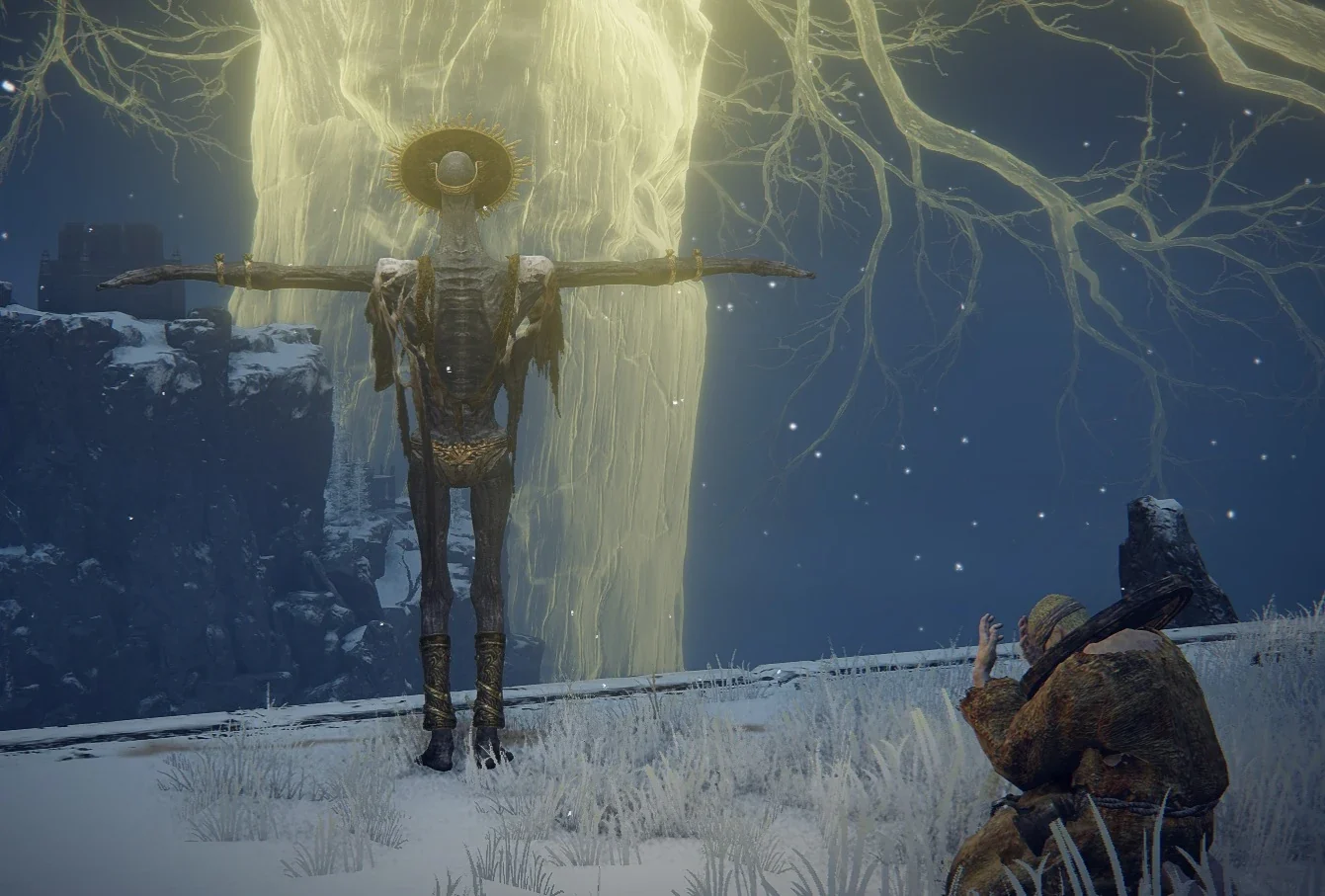 ◈ FUNDAMENTALIST
Goldmask
Silent saint of the Erdtree, the seer who diagnosed the Order's wound▾
Goldmask
'A mask designed to resemble a blazing golden halo. Created and left behind by Lord Goldmask, a staunch pursuer of Golden Order fundamentalism. Strengthens Golden Order incantations.' Goldmask is a silent ascetic who came to the Lands Between alone to contemplate the Golden Order: a fundamentalist who renounced speech and wears a featureless gold halo over his face. He is named in the canon's intro narration as one of the lord-candidates, alongside Hoarah Loux, Fia, the Dung Eater, and Gideon Ofnir. His project is theological. He believes the Golden Order's failure was not its principles but its execution: a flaw at the very heart of the Elden Ring itself, proof, as the Mending Rune he will discover puts it, of 'the fickleness of the gods no better than men.'
'Bracelets made in the image of Erdtree branches. Minimal adornments made by Lord Goldmask's disciples. Those disciples have long since left him.' Goldmask's questline is the canon's most demanding: the Tarnished must follow him from Altus Plateau, guide Brother Corhyn, a Roundtable cleric who seeks Goldmask's instruction, to his master's side, and bring Goldmask the revelation he cannot voice: that Radagon is Marika. From this epiphany Goldmask derives the Mending Rune of Perfect Order, the only ending that does not change the Order's essence, but corrects it. Goldmask dies of contemplation, mid-prayer, his hand stretched toward the Erdtree he never quite reaches. The Mending Rune lingers behind him as the only artefact in the canon a god can wear without becoming someone else.
Radiant Gold MaskA mask designed to resemble a blazing golden halo. Created and left behind by Lord Goldmask, a staunch pursuer of Golden Order fundamentalism. Strengthens Golden Order incantations. Its striking design represents both the brilliant inspiration that once shone upon him, and the vision of a ring that he will surely find at the end of his pursuit.
◈ ANCIENT RACEThe Numen
Marika's hidden race, born outside the Lands Between▾
The Numen
'Stone hammer made in the lands of the Numen, outside the Lands Between. The tool with which Queen Marika shattered the Elden Ring and Radagon attempted to repair it. The hammer partially broke upon shattering the Ring, becoming splintered with rune fragments.' The Numen are the canon's hidden race: an ancient humanoid people from across the Sea of Fog, distinct from the Lands Between's Tarnished, demigods, and beasts. The canon gives them no physical description; it fixes only their kinship: they are said to be 'of the same stock as Queen Marika herself.' Marika is Numen. Radagon, Marika's male half, was Numen. Ranni, Radagon's daughter, is of Numen lineage. The Black Knife Assassins were all Numen women.
'Armor used by the Black Knife Assassins. Crafted with scale armor that makes no sound. The assassins that carried out the deeds of the Night of the Black Knives were all women, and rumored to be Numen who had close ties with Marika herself.' The canon is careful never to explain how the Numen came to the Lands Between, what they were before they arrived, or what religion they keep. Their hammer, Marika's Hammer, was the tool she used to shatter the Elden Ring after Godwyn's death. It is the only artefact in the canon that is identified as Numen-made and that survives. Everything else of their culture has been absorbed, hidden, or forgotten. The Lands Between's grace was never given to Numen by birthright. Marika, becoming god, built it for them.
Stone hammer made in the lands of the Numen, outside the Lands Between. The tool with which Queen Marika shattered the Elden Ring and Radagon attempted to repair it. The hammer partially broke upon shattering the Ring, becoming splintered with rune fragments.
Scale armor used by the Black Knife Assassins, forged to make no sound. Traces of power yet remain in its concealing veil, which muffles the sound of footsteps. The assassins that carried out the deeds of the Night of the Black Knives were all women, and rumored to be Numen who had close ties with Marika herself.
 ◈ ORDER
The Perfumers
Healers and incendiaries, drafted as battlefield medics during the Shattering▾
The Perfumers
'Glass bottles used by perfumers. Used to seal various scent compounds. Essential vessel for crafting perfume items. The art of perfuming was once jealously guarded in the capital, but after the perfumers were drafted into service during the Shattering, the art became widely practiced throughout the Lands Between.' The Perfumers are the blessed apothecaries of the Erdtree capital: a guild of capital-trained scent-craftsmen who blended healing tinctures, mood-altering vapours, and incendiary mists from the same alembics. Before the Shattering they were a cloistered Leyndell elite, jealous of their formulas. Then the demigods went to war and the perfumers were forcibly drafted as battlefield medics. They entered the battlefields of the Shattering, trading their aromatics for poisons and explosives, and the secrecy of their old guild was lost to wartime exigency.
'Robe worn by the Omenkillers, butchers of twisted conscience. Its thick apron is worn in remembrance of Rollo, the progenitor of the Omenkillers and a perfumer of antiquity.' The Perfumers' canon is the canon's quiet story of professional ethics. The Omenkillers, butchers paid to euthanize Omen children at birth, descend from a perfumer named Rollo, who imbibed a physick to rid himself of emotion, thus enabling his nightmarish labor of hunting the Omen. Tricia, healer of the Misbegotten and the impure, is a perfumer in the same lineage who chose the opposite vocation: she watched over the dying so they could pass free of pain. The maddening boluses are crafted from a recipe left behind by a perfumer who served in the Shattering. A profession that once preserved life, in the canon's hands, splits into the trades of mercy-killing and madness.
Glass bottles used by perfumers. Used to seal various scent compounds. Essential vessel for crafting perfume items. The art of perfuming was once jealously guarded in the capital, but after the perfumers were drafted into service during the Shattering, the art became widely practiced throughout the Lands Between.
Robe worn by the Omenkillers, butchers of twisted conscience. Its thick apron is worn in remembrance of Rollo, the progenitor of the Omenkillers and a perfumer of antiquity.
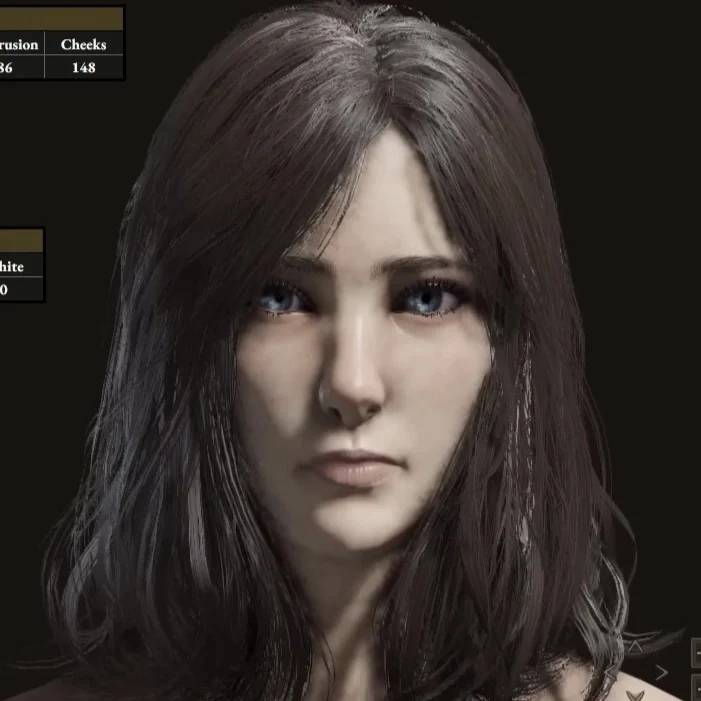 ◈ ORDER
The Bloody Fingers
Mohg's recruitment of any Tarnished who would soak white cloth in maiden's blood▾
The Bloody Fingers
'Pure white oath-cloth given by Varré. The final trial to be anointed a Knight of Mohg, Lord of Blood. Soak the cloth with a maiden's blood... The blood of anyone's maiden will do. You are maidenless, after all.' The Bloody Fingers are the canon's most explicit hostile-Tarnished covenant: an order of invading assassins given over to Mohg, Lord of Blood, recruited at the Rose Church and a Site of Grace. Varré, the unsubtle priest of Rose Church, runs the recruitment; the Festering Bloody Finger is the consumable that lets a Bloody Finger invade other players' worlds in real-time multiplayer. Lore and mechanic align: the Bloody Fingers are PvP given a religion.
'Her legacy is stained by accursed blood.' Eleonora the Violet, Nerijus, the Ravenmount Assassin: these are the canon-named Bloody Fingers, each met as a hostile invader by the Tarnished's own agency. Yura, the Bloody Finger Hunter, is the ally who tracks them down. Their souls may be offerings to the Formless Mother whom Mohg worships. Mohg's intention with the order was to build a private army of grief-poisoned lord-candidates; the order grew faster than he could control because the Lands Between has more grief-poisoned Tarnished than any one demigod can use. Many a Bloody Finger keeps invading, after Mohg is dead, with no remaining patron and no idea their religion has run out of god.
Twinned naginata forged in the Land of Reeds. Chosen weapon of Eleonora, Violet Bloody Finger. Her mastery of the sword was such that her onslaught was likened to a whirlwind, but now her legacy is stained by accursed blood.
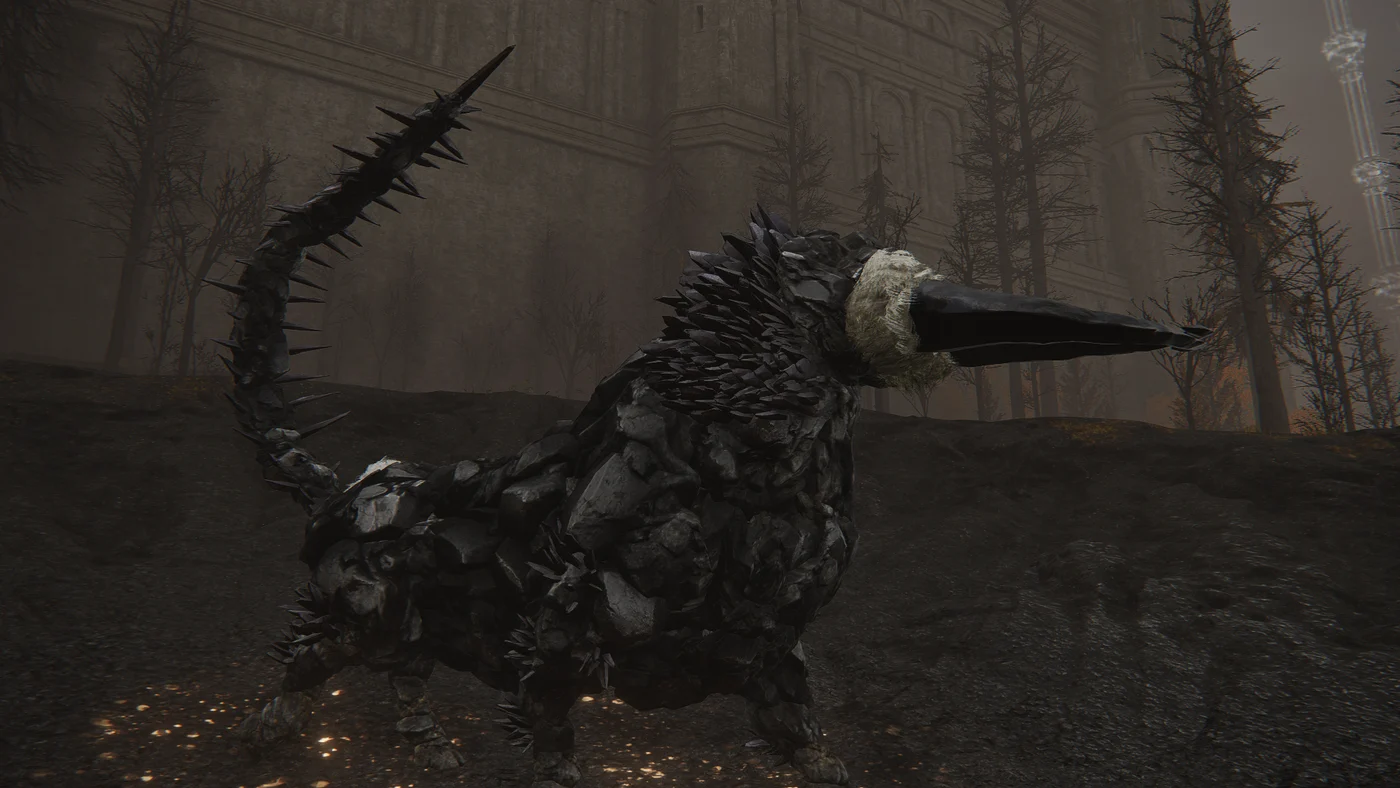 ◈ STAR-CREATURE
The Fallingstar Beasts
Gravity-eating visitors from beyond the lightless dark▾
The Fallingstar Beasts
'Part of a Fallingstar Beast's jaw, hard and shining black, fashioned into a weapon. With its sharp point, this colossal weapon can skewer foes.' The Fallingstar Beasts are not native to the Lands Between. They are creatures born of the same lightless dark beyond the stars from which Astel, Naturalborn of the Void, descended. They fall to ground as living meteors, dig themselves down into the earth, and stay there, slow, four-legged, gravity-warped, biting at any living thing that comes close. Their bodies are plated in the same hard, shining black as the jaw the canon describes. Their jaws crack stone.
'One of the glintstone sorceries that manipulates gravitational forces. Fires a projectile of condensed gravitational force. Those struck by it will be pulled toward the caster. Charging enhances potency.' The beasts are said to come from the lightless dark far beyond, though no item text says so in those words. Gravitational sorcery is the cross-cultural thread linking the meteor-races. The Alabaster and Onyx Lords are stone-bodied ancients who came down with one such meteor. The Fallingstar Beasts are still falling. Astel destroyed an Eternal City and took away their sky, many read it as the Greater Will's answer to the Nox's treason, though no text names who, if anyone, sent it. All of them point upward, at something the canon never names, the lightless dark that Azur saw and could not return from. The dark gives gravity, gravity gives power, and any sorcerer who studies long enough finds, like Azur did, that the dark is studying them back.
Part of a Fallingstar Beast's jaw, hard and shining black, fashioned into a weapon. With its sharp point, this colossal weapon can skewer foes.
One of the glintstone sorceries that manipulates gravitational forces. Fires a projectile of condensed gravitational force. Those struck by it will be pulled toward the caster. Charging enhances potency. A gravitational technique studied by the young Radahn. His master was an Alabaster Lord with skin of stone.
 ▣ CORRUPTION
Deathroot
The black-bark seepage of Godwyn's incomplete death, climbing back into the Erdtree▾
Deathroot
'Claw-marked stone eye received from Gurranq, Beast Clergyman. It is said to tremble when near Deathroot. The murky violet iris writhes as if alive. I am not sated... Feed me more...Death...' Deathroot is the visible substance of Godwyn the Golden's unfinished death. When the Black Knife's Death-fragment killed Godwyn's soul but not his body, the body, buried beneath the Erdtree, began to sprout. What it sprouts is Deathroot: black, gnarled, lichen-textured bark that climbs the Erdtree's roots from the inside, surfaces in the catacombs, and corrupts everything it touches into Those Who Live in Death. The Erdtree's golden order has no answer for Deathroot. It is, by the time of the Tarnished, growing faster than any priest can prune.
'Ashen remains in which spirits yet dwell. Use to summon the spirit of a skeletal bandit. This is the spirit of a bandit who lives in Death, and will continue to rise again until properly finished off. After the night of the plot, Deathroot appeared in the Lands Between, and Those Who Live in Death soon followed.' Deathroot is harvested in the catacombs and brought to Gurranq, the Beast Clergyman, Maliketh's priestly half, who eats each one. He cannot help it; his entire being was consecrated to suppressing Death, and in his isolation at the Bestial Sanctum he can no longer keep the office without ingestion. The Tarnished feeding him Deathroot is a quiet ritual of triage: every piece eaten is a piece that won't sprout further corruption. By the fourth root Gurranq cracks and attacks; the Tarnished must beat him back, after which he gives Beast's Roar and slumps once more.
Claw-marked stone eye received from Gurranq, Beast Clergyman. It is said to tremble when near Deathroot. The murky violet iris writhes as if alive. "I am not sated... Feed me more...Death..."
Ashen remains in which spirits yet dwell. Use to summon the spirit of a skeletal bandit. This is the spirit of a bandit who lives in Death, and will continue to rise again until properly finished off. After the night of the plot, Deathroot appeared in the Lands Between, and Those Who Live in Death soon followed.
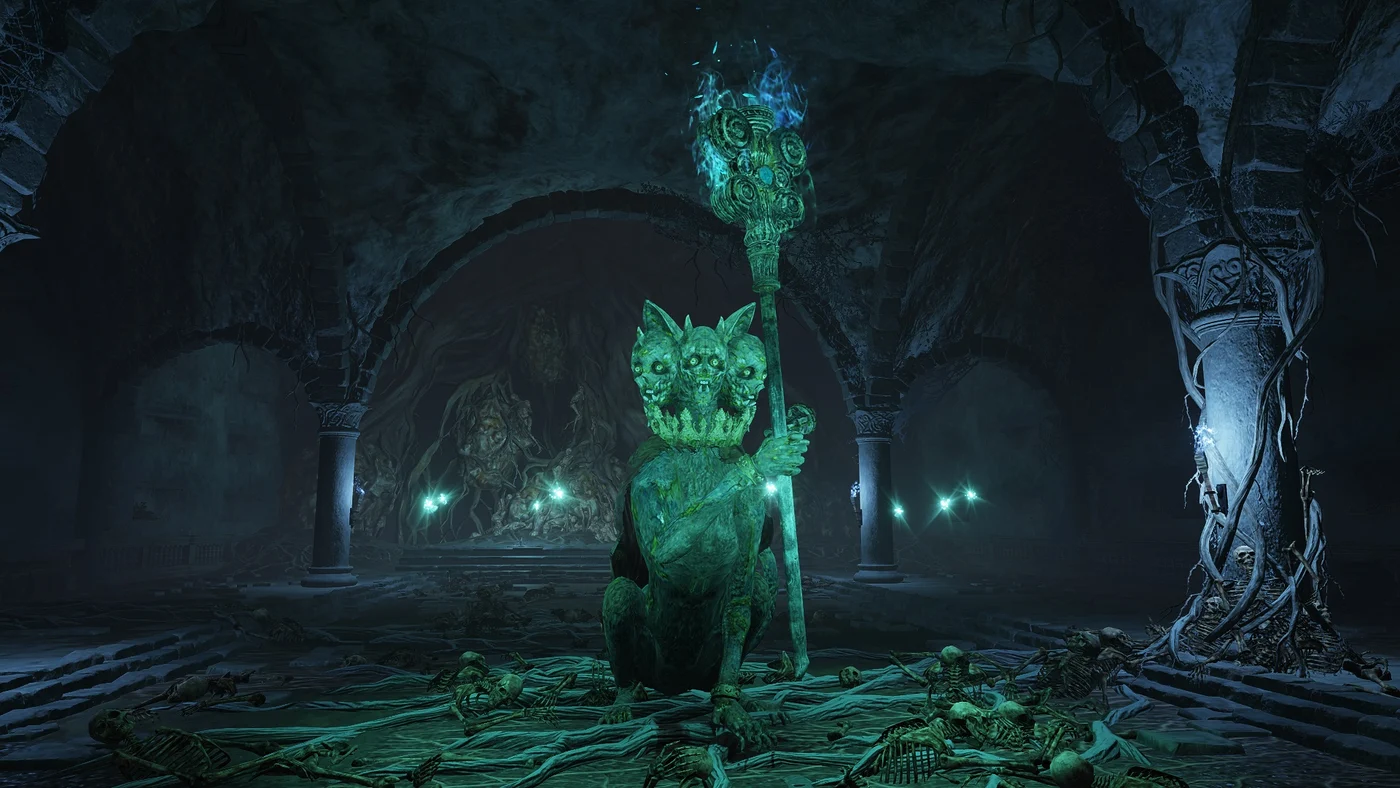 ◈ ORDER
The Erdtree Burial Watchdogs
Stone-bodied gargoyles guarding the catacombs against grave-robbers and Death▾
The Erdtree Burial Watchdogs
"Stone greatsword wielded by Erdtree Burial Watchdogs. Though decorated with the watchman's eye, the pupil was taken by graverobbers and is now hollow, leaving this sword a mere lump of stone."
From the Watchdog's Greatsword description
'Stone greatsword wielded by Erdtree Burial Watchdogs. Though decorated with the watchman's eye, the pupil was taken by graverobbers and is now hollow, leaving this sword a mere lump of stone.' The Erdtree Burial Watchdogs are the static, animated stone gargoyles that guard the catacombs of the Lands Between. They are not knights and not priests: they are statuary, shaped like chimeras of dog and lion, brought to life by ritual to defend the consecrated underground. Their stone greatswords are decorated with the watchman's eye, the eye that was meant to remain open in vigilance forever. The graverobbers of the Lands Between, those Tarnished and human bandits who descend into the catacombs to plunder them, have pried the pupils out of those eyes, leaving the swords hollow. The blades are picked blind; the Watchdogs still attack.
'Large stone staff embedded with glintstone. Wielded by Erdtree Burial Watchdogs who protect catacombs. The Watchdogs, battered and broken over their lengthy tenure, rule the catacombs and are even said to command the imps.' Their long tenure has soured them. Deathroot festers beneath several of the catacombs they guard, and some read the Watchdogs as part of the Order's effort to keep Death buried and its graves unrobbed. The Imps, the small grinning stone-creatures of the catacombs, take their orders from the Watchdogs. The catacombs, in the canon's view, are not just where the dead go; they are where Death is being slowly buried by an Erdtree that cannot let it surface, watched by sleepless stone bodies whose greatswords have been robbed of their eyes.
Stone greatsword wielded by Erdtree Burial Watchdogs. Though decorated with the watchman's eye, the pupil was taken by graverobbers and is now hollow, leaving this sword a mere lump of stone.
Large stone staff embedded with glintstone. Wielded by Erdtree Burial Watchdogs who protect catacombs. The Watchdogs, battered and broken over their lengthy tenure, rule the catacombs and are even said to command the imps.
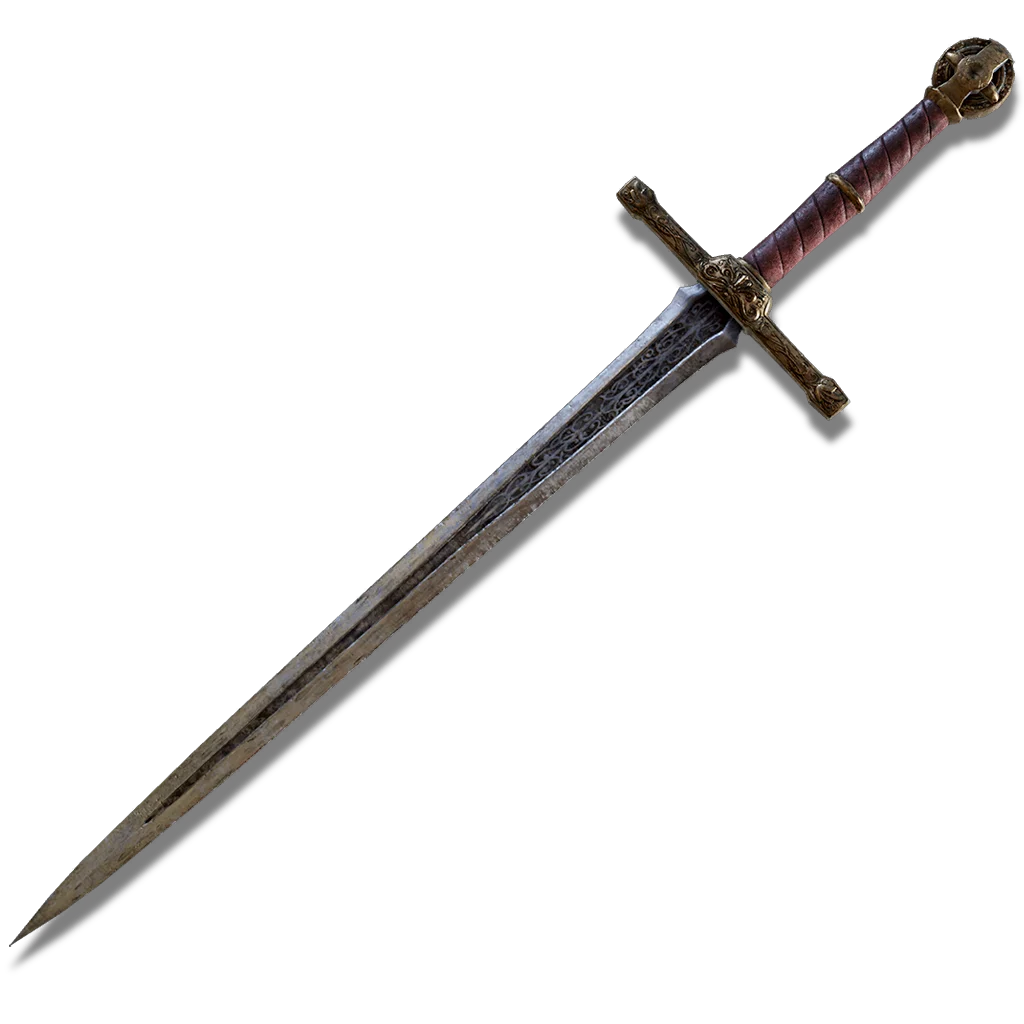 ◈ ORDER
The Lordsworn
The lord-bound regulars whose swords blackened in the long Shattering▾
The Lordsworn
'Well-crafted straight sword with an illustrious design, wielded by regulars of a lord's army. Though blackened and damaged by years of use, it appears to have otherwise been kept in a serviceable condition, despite the soldiers having long since lost their minds.' The Lordsworn are the ordinary soldiers of the Lands Between: those who took the lord's oath and went to war as Marika's general infantry. They are not knights, they have no glintstone, no mounts, no privileged training. They are sword-and-shield regulars who carried the demigods' standards across the battlefields of the Shattering, and whom the canon names only in reference to their armour, never as individuals. Their commonplace Lordsworn's Greatsword is one of the first weapons a Tarnished picks up.
'Wooden tower shield. Lightweight for a greatshield and easy to handle. Commonly used in the Shattering. Greatshields boast high damage negation and guard capacity, making enemy attacks easy to repel.' The Shattering's toll fell almost entirely on the Lordsworn. Demigods do not die; they only break apart. Knights die rarely, with names. The Lordsworn lost their minds in lines, six abreast, behind a tower shield. The Bell-Bearings sold by the Twin Maiden Husks include their bolts and shields because so many were left on so many fields that the residue is itself an economy. The Tarnished benefits, in armour and currency, from the ruin of the Shattering. The Lordsworn's ghosts, where they appear as Spirit Ashes, fight defensively still: a tower shield up, a quiet voice waiting for a command from a captain who never returned from the same battle.
Well-crafted straight sword with an illustrious design, wielded by regulars of a lord's army. Though blackened and damaged by years of use, it appears to have otherwise been kept in a serviceable condition, despite the soldiers having long since lost their minds.
Well-crafted bolt with an illustrious design, wielded by regulars of a lord's army. Deals more damage than its commonplace cousin.
Wooden tower shield. Lightweight for a greatshield and easy to handle. Commonly used in the Shattering. Greatshields boast high damage negation and guard capacity, making enemy attacks easy to repel.
 ◈ ORDER
The Minor Erdtrees
Side-saplings of the great Tree, guarded by post-Shattering avatars▾
The Minor Erdtrees
'Ceremonial staff depicting the Erdtree in its historic radiance. Wielded by the avatars who protect the Minor Erdtrees. The avatars, emerging in the wake of the Elden Ring's shattering, were determined to protect the withering Erdtree's offspring.' The Minor Erdtrees are smaller, regional saplings of the great Erdtree, scattered across the Lands Between: in Limgrave, Liurnia, Caelid, Mountaintops. Each is a small node of the same gold-leafed wood, glowing softly in its grove. Before the Shattering they were unprotected and quietly venerated. After the Shattering, the Erdtree's central order failing, an entirely new kind of guardian emerged spontaneously to defend them: the Erdtree Avatars, tree-bodied beings that carry the broad ceremonial staff.
'Weapon comprising a long handle and broad blade sharpened from the hard wood of old trees. Wielded by guardians of the Minor Erdtrees, known as experts in the arts of combat. The power of this weapon scales greatly with dexterity.' The Avatars are the canon's quiet evidence that the Erdtree itself is responding to its own injury. They were not summoned by Marika or Radagon. They came up out of the soil at each minor sapling, fully-formed, intent on a defence the central tree could no longer mount. In Caelid, the Minor Erdtree's avatar is heavily rotted; its staff seeps red. In Liurnia, the avatar is intact. In each grove, the gift to the Tarnished who kills the avatar is a Sacred Tear that strengthens the Sacred Flasks, the Flasks of Crimson and Cerulean Tears. The Erdtree, dying, gives its blood as healing only to whoever proves they don't need it.
Weapon comprising a long handle and broad blade sharpened from the hard wood of old trees. Wielded by guardians of the Minor Erdtrees, known as experts in the arts of combat. The power of this weapon scales greatly with dexterity.
Ceremonial staff depicting the Erdtree in its historic radiance. Wielded by the avatars who protect the Minor Erdtrees. The avatars, emerging in the wake of the Elden Ring's shattering, were determined to protect the withering Erdtree's offspring.
 ▣ GREAT RUNE
The Great Rune of the Unborn
Rennala's amber egg, the rune of demigods reborn imperfect▾
The Great Rune of the Unborn
'Amber egg clutched by Rennala, Queen of the Full Moon. Great Rune of unborn demigods. Perfects those who have been born anew. Children born anew by Rennala are all frail and short-lived. Imperfect beings, each and all.' Rennala, after Radagon left her to marry Marika, retreated to the heart of Raya Lucaria with a clutched amber egg and a private grief. The egg is the Great Rune of the Unborn, an artefact unlike any other Great Rune in the canon: it does not commemorate a victory. It commemorates a refusal. Rennala uses the rune to perform the canon's only documented rebirth: she lets a Tarnished pay her, in larval tears, to redistribute their attribute points. The mechanic is the trick the lore hides in plain sight. Rebirth itself, in this world, is a lesser act than birth. Rennala can re-make the body. She cannot make the soul whole.
'Children born anew by Rennala are all frail and short-lived. Imperfect beings, each and all.' Rennala and Radagon had three demigod children, Ranni, Radahn, Rykard, and yet the rune is named for the unborn; one reading, and the canon offers no firmer one, is that her grief holds a place for the children who never came after Radagon left. What is certain is narrower and sadder: Radagon's children with Marika, Malenia and Miquella, were cursed from birth in ways no rebirth-craft could reverse, and Rennala's own art produces only the frail and short-lived. The Tarnished can take the rune after the boss-fight, and it behaves like no other Great Rune in the canon: its description names no Divine Tower, it holds no benediction to restore, its only power is the rebirth Rennala herself performs, for as long as the Tarnished keeps bringing her larval tears.
Amber egg clutched by Rennala, Queen of the Full Moon. Great Rune of unborn demigods. Perfects those who have been born anew. Children born anew by Rennala are all frail and short-lived. Imperfect beings, each and all.
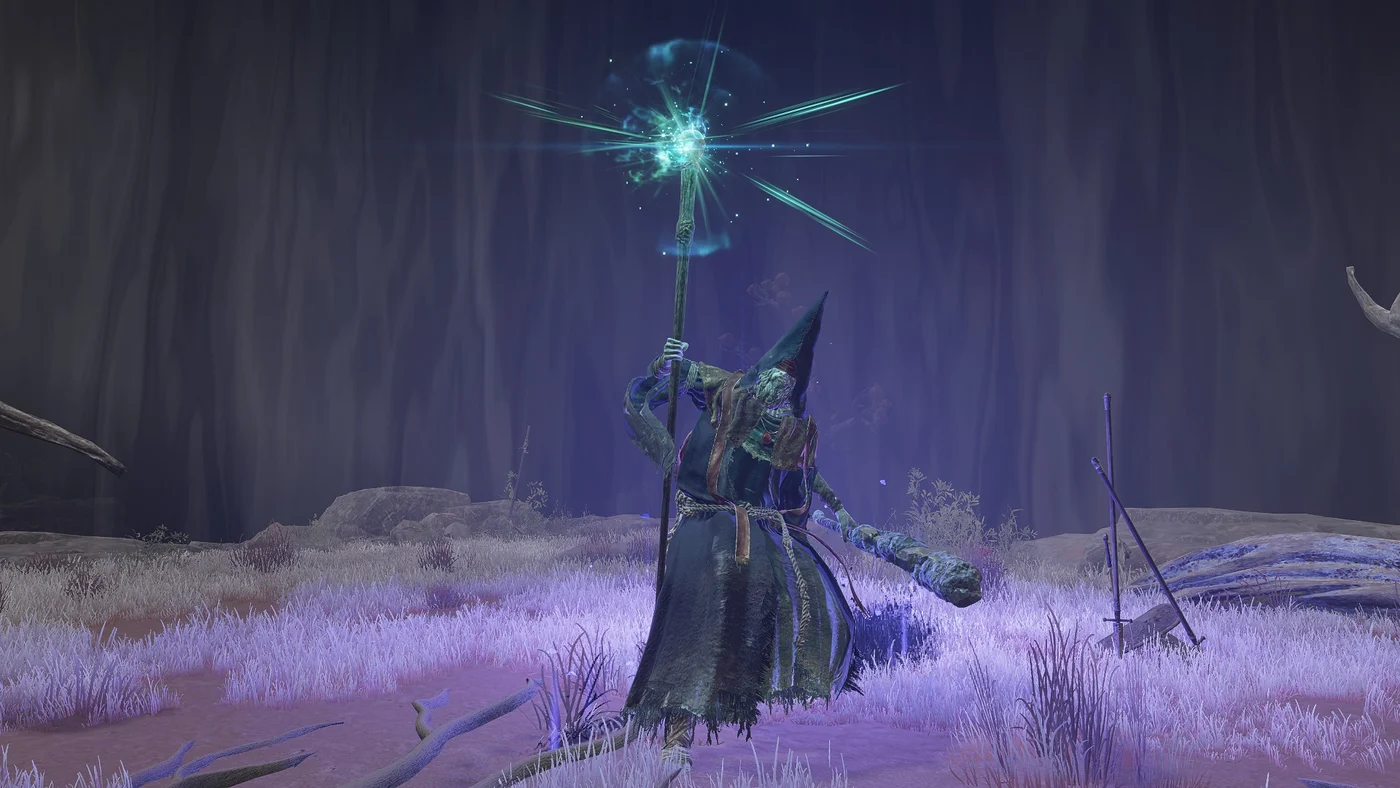 ◈ ORDER
The Battlemages
Haima Conspectus scholars who left the academy to fight in the Shattering▾
The Battlemages
'Robe worn by scholars of the Raya Lucaria Academy scholar, tattered from being worn on the battlefield. Whenever war broke out and the academy sealed its gates, only Haima's scholars dared venture out.' The Battlemages are the most pragmatic faction of Raya Lucaria: scholars of the Haima Conspectus, the adjudicator of the academy, whose sorceries employ might as a means to quell conflict. Where the Karolos and Olivinus conspectii pursued comets and meteors respectively, Haima studied the brute force of cannon fire and the gavel. Their sorceries are siege weapons, not duel weapons. Sword Stance, Loretta's Greatbow, Carian Slicer, none. Cannon of Haima, Gavel of Haima, the sorceries of might: yes. They are the school's combat engineers.
'Manchettes worn by scholars of the Raya Lucaria Academy, tattered from being worn on the battlefield.' When the Shattering broke out, the academy sealed its gates and almost every scholar stayed inside. Only Haima sent its students out. The Battlemages walked into Liurnia and Altus carrying their broad-brimmed helmets and their broken staves, staying alive by the blunt math of their craft. Hugues, the named battlemage of the canon, came from Sellia to study Haima; his Spirit Ash is one of the most reliable a Tarnished can summon. The Battlemages in the field have, by the Tarnished's arrival, mostly stopped being a unified order. They are quiet ronin sorcerers who walk lightly carrying long levers, looking to drop a heavy thing on whatever opposes them.
Ashen remains in which spirits yet dwell. Use to summon the spirit of Battlemage Hugues. Hugues came from Sellia to study the Haima Conspectus at the academy, where he became a battlemage. Haima scholars seek to quell conflict with cannon fire and the gavel, but Hugues developed a longing for it.
Robe worn by scholars of the Raya Lucaria Academy scholar, tattered from being worn on the battlefield. Whenever war broke out and the academy sealed its gates, only Haima's scholars dared venture out.
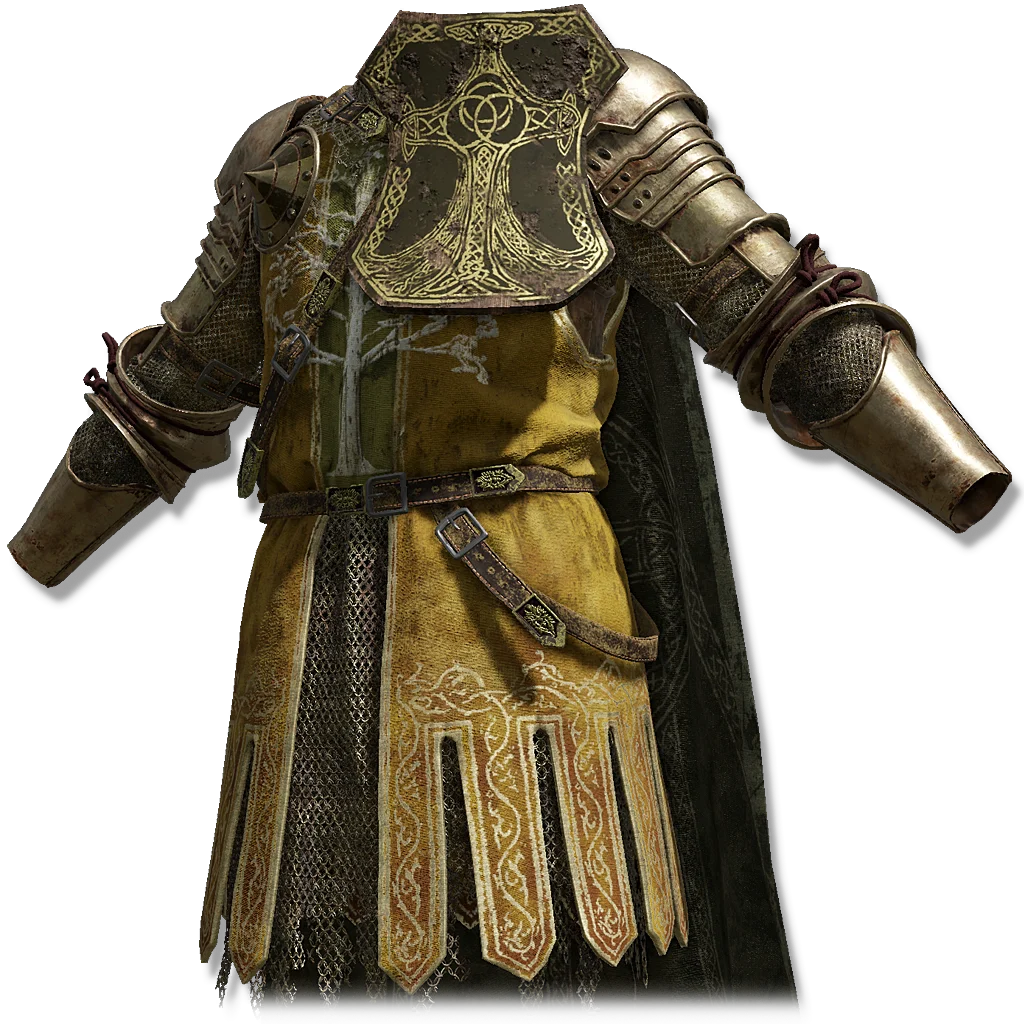 ◈ ORDER
The Leyndell Knights
Erdtree-sworn capital guards, undimmed by time▾
The Leyndell Knights
'Armor worn by knights sworn to defend the royal capital of Leyndell. Its left breast is emblazoned with a symbol of Erdtree Worship, said to have once been imbued with an incantation of protection.' The Leyndell Knights are the gold-armoured elite of the royal capital, sworn directly to the Erdtree's Order. They are not Banished Knights (defined by banishment, whether by misfortune or misdeed) and not Crucible Knights (who hold the power of the crucible of life, the primordial form of the Erdtree). They are the Erdtree's own. Their breast-plates were once imbued with an incantation of protection; the text says only that this power belonged to the past, and never why it faded or by whom it was kept.
'Gauntlets worn by knights sworn to defend the royal capital of Leyndell. Time has yet to dull their luster.' What's striking about the Leyndell Knights is the canon's refusal to dim their armour despite their dimming faith. Their gauntlets and greaves are still polished. Their swords are still long. They are still standing in formation in the capital that has, by their own slow recognition, lost its capital-ness. The Leyndell Soldier Greaves are 'rust-worn and stained through unending conflict.' The Leyndell Knight Greaves' luster has yet to dull. The difference of polish between officer and soldier has outlived the difference of mission. They guard a city whose god has fled.
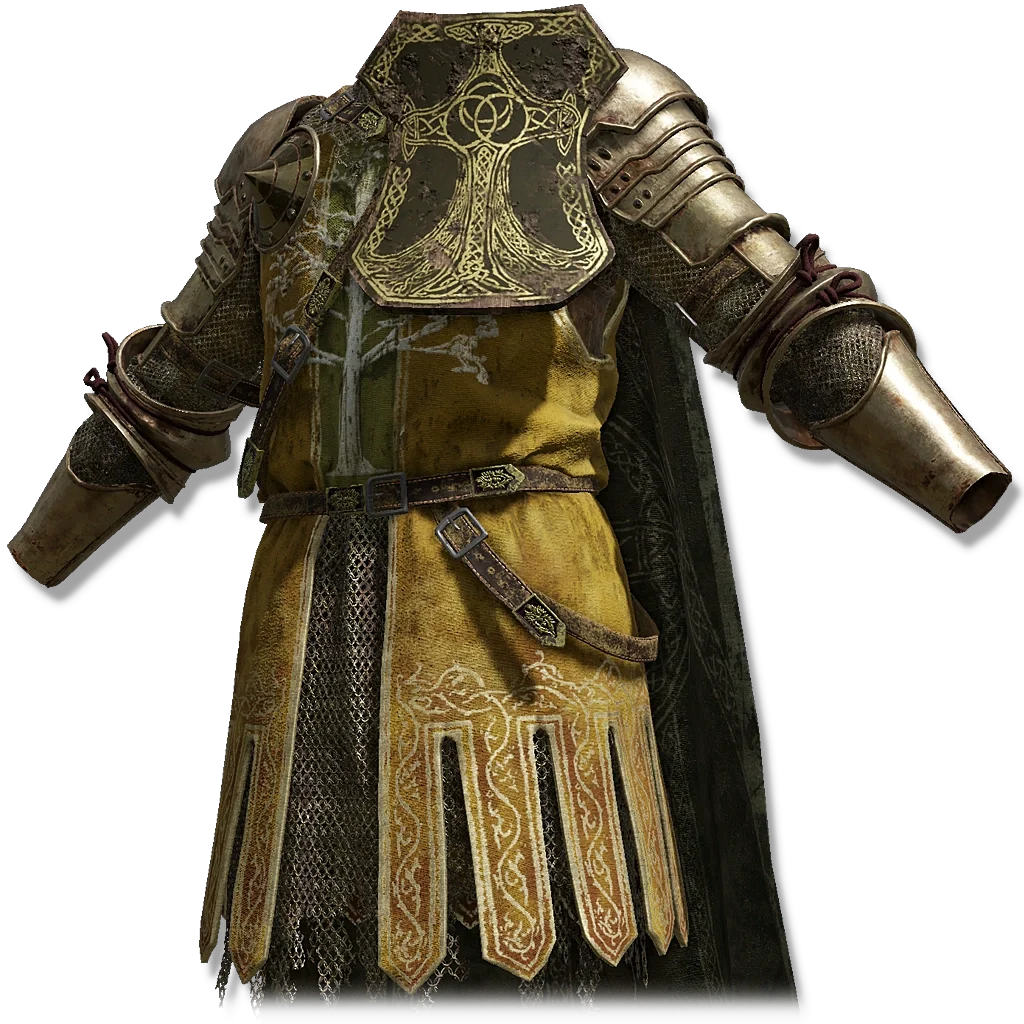 Leyndell Knight Armor
Armor worn by knights sworn to defend the royal capital of Leyndell. Its left breast is emblazoned with a symbol of Erdtree Worship, said to have once been imbued with an incantation of protection.
Gauntlets worn by knights sworn to defend the royal capital of Leyndell. Time has yet to dull their luster.
Gauntlets worn by soldiers sworn to defend the royal capital of Leyndell. Rust-worn and stained through unending conflict.
 ◈ ATTENDANTS
The Twin Maiden Husks
The masked, motionless attendants of the Roundtable's quartermaster▾
The Twin Maiden Husks
'Bell bearing of a merchant left behind, found upon his perished flesh. Offer to the Twin Maiden Husks at the Roundtable Hold to gain access to new items.' The Twin Maiden Husks are the silent quartermasters of the Roundtable Hold: two ceremonial bodies, dressed identically in dark finery, seated side by side in a chamber of the Hold. They never speak. They never move except to accept Bell Bearings, small carved tokens taken from the bodies of every dead merchant in the Lands Between, and add the dead merchant's inventory to the Roundtable's shop.
'Knight Bernahl's bell bearing, found upon his perished flesh. Offer to the Twin Maiden Husks at the Roundtable Hold to gain access to new items.' The husks are not corpses, exactly. Their name suggests Finger Maidens: the women who 'live to serve a chosen Tarnished, sharing their guidance and the wisdom of the Two Fingers', but the game never confirms it, and never says what befell them. If Maidens they are, they have not died. They sit as if husked of grace. The Roundtable continues, in their quiet professional service, an order whose god has gone silent.
Bell bearing of a merchant left behind, found upon his perished flesh. Offer to the Twin Maiden Husks at the Roundtable Hold to gain access to new items.
Knight Bernahl's bell bearing, found upon his perished flesh. Offer to the Twin Maiden Husks at the Roundtable Hold to gain access to new items.
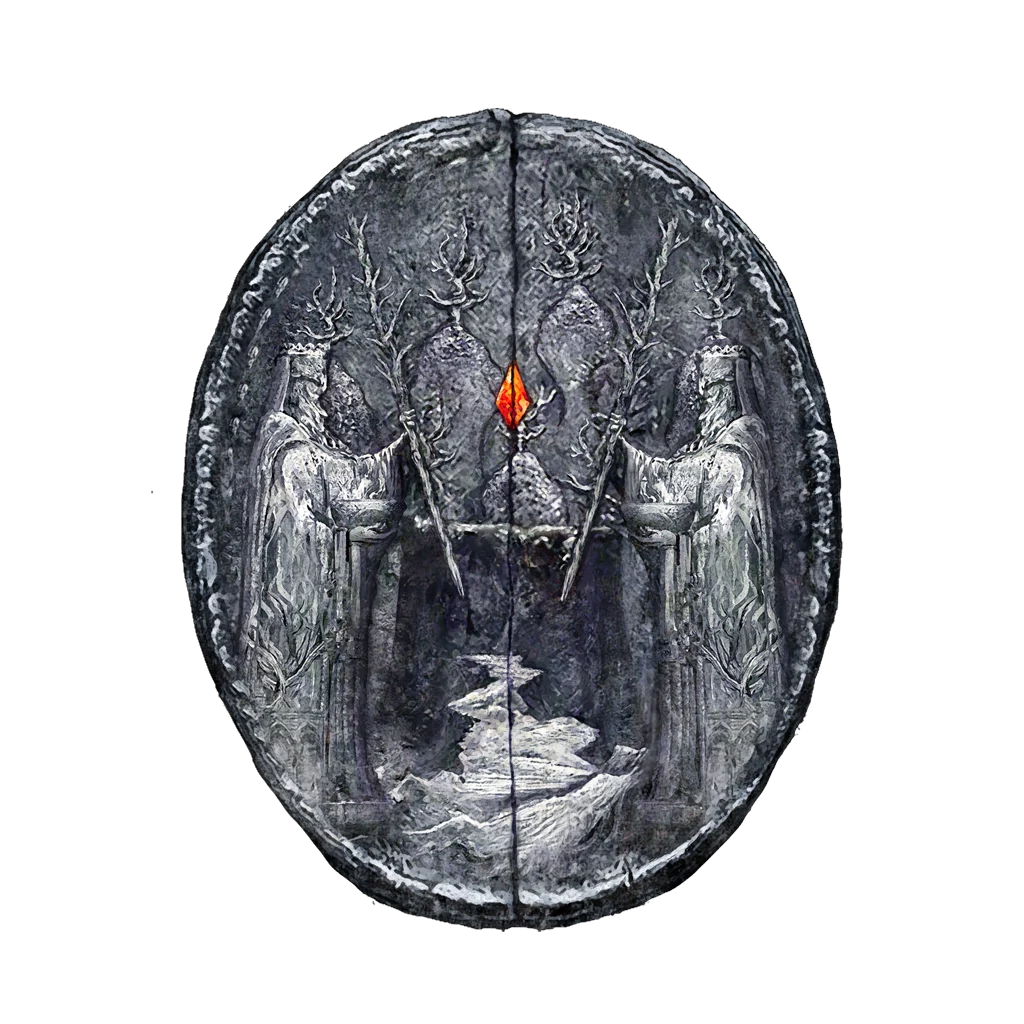 ▣ STRUCTURE
The Grand Lifts
Dectus, Rold, and the medallions that conjoin the Lands Between vertically▾
The Grand Lifts
'Left half of a split medallion depicting the Erdtree. Brandishing the medallion with both halves conjoined will activate the Grand Lift of Dectus, connecting the Altus Plateau to Liurnia.' The Grand Lifts connect the great regions to one another, each operated by a medallion the game calls conjoined and split. Dectus connects Liurnia to the Altus Plateau. Rold connects Leyndell to the Mountaintops of the Giants. The Mountaintops connect to the Consecrated Snowfield through a SECOND form of Rold, hidden: the Haligtree Secret Medallion's halves are concealed in two corners of the world.
'Conjoined split medallion depicting the Flame Peak. Brandishing the medallion activates the Grand Lift of Rold, connecting Leyndell to the Mountaintops of the Giants. The forge of the flame of ruin is said to be found upon their peaks, and it is here Melina wishes to travel in resuming your journey together.' Why the medallions come in halves, the game does not say. Dectus's pieces sit at Fort Faroth in Caelid and Fort Haight in eastern Limgrave, two opposite corners of the early game's geography. Of the secret medallion the game says only that 'some of the old village folk have hidden the secret medallion's other half somewhere', that Albus entrusted his half to the Tarnished, and that the other lies in Castle Sol. Each lift, then, is a coronation gate. To use one is proof the Tarnished has earned the next layer of the Lands Between.
Left half of a split medallion depicting the Erdtree. Brandishing the medallion with both halves conjoined will activate the Grand Lift of Dectus, connecting the Altus Plateau to Liurnia. The right half is said to reside in Fort Faroth in the Dragonbarrow, far to the east.
Rold MedallionConjoined split medallion depicting the Flame Peak. Brandishing the medallion activates the Grand Lift of Rold, connecting Leyndell to the Mountaintops of the Giants. The forge of the flame of ruin is said to be found upon their peaks, and it is here Melina wishes to travel in resuming your journey together.
Left half of a split medallion depicting the Haligtree. Brandishing the medallion with both halves conjoined will activate the Grand Lift of Rold, granting access to a hidden path. In other words, this secret medallion will guide the bearer to the land of Miquella's Haligtree.
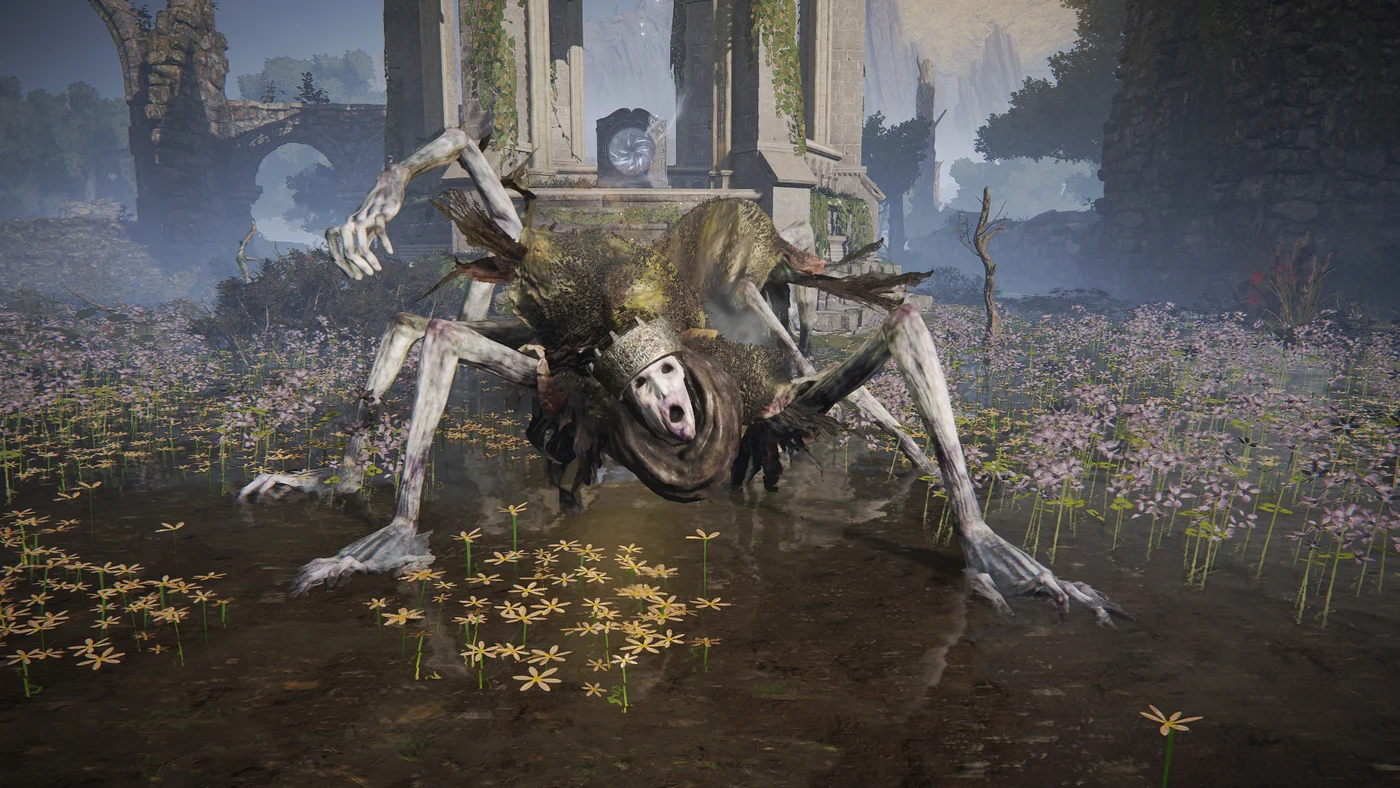 ◈ CORPSE-MONSTER
The Royal Revenants
Many-armed crawling revenants, cursed against healing▾
The Royal Revenants
'Note sold by a nomadic merchant imparting knowledge in brief. The crawling royal revenants and their followers are all cursed. Healing powers will harm rather than mend.' The Royal Revenants are one of the canon's most disturbing creatures: enormous, low-crawling masses of corpse-flesh, surfacing beneath the Kingsrealm Ruins of Liurnia, around Castle Sol in the Mountaintops, and in the halls of Elphael. Each Revenant is one body in shape but many in flesh: multiple sets of arms on a single crawling frame. The merchant's note is all the canon offers by way of origin, 'royal' revenants, and 'followers', all cursed; who they were in life, the game never says.
'Healing powers will harm rather than mend.' The Revenants' curse-of-healing is the canon's only documented inversion of the Erdtree's golden gift: healing incantations, the Order's own mercy, damage these creatures. Why, the canon never explains; the nomadic merchant's note says only that they are cursed, and it is the sole diegetic warning. The Tarnished encounters Revenants without dialogue, without companions, without a remembrance to take. Just the mute knowledge that something in this world is so wrong that mending it hurts it.
Note sold by a nomadic merchant imparting knowledge in brief. "The crawling royal revenants and their followers are all cursed. Healing powers will harm rather than mend."
◈ DRAGONAdula, the Glintstone Dragon
The lake-dragon who swore a knightly oath to Ranni's Dark Moon▾
Adula, the Glintstone Dragon
'Sorcery of Adula, the Glintstone Dragon. Conjures a cold magic greatsword, then delivers a sweeping blow that launches a blade-like projectile of frost. This sorcery can be cast repeatedly. Adula, a devourer of sorcerers, was bested by Ranni and subsequently swore a knightly oath to her Dark Moon.' Adula is the canon's clearest dragon-pact between a sorceress and a wild glintstone dragon. She was a devourer of sorcerers, the spell's text says no more of her hunts than that, until Ranni bested her; the vow that followed is the same exclusive oath Blaidd carried: serve no master but the Dark Moon.
The oath holds strangely in practice. Adula attacks the Tarnished at the Three Sisters, then, wounded, withdraws to the Moonlight Altar high above Liurnia, the plateau of Ranni's own cathedral, and guards it to the end. The fight is optional: the Tarnished can complete Ranni's questline and leave the old dragon her post. If Adula falls there, hers is the last sworn blade of Ranni's household to fall before the Age of Stars; her moonblade-sorcery, teachable to the Tarnished, remains the cleanest evidence of how a Carian princess can rewrite an ancient lineage's allegiance with nothing but a vow.
Sorcery of Adula, the Glintstone Dragon. Conjures a cold magic greatsword, then delivers a sweeping blow that launches a blade-like projectile of frost. This sorcery can be cast repeatedly. Adula, a devourer of sorcerers, was bested by Ranni and subsequently swore a knightly oath to her Dark Moon.
◈ ARTISANHewg, the Roundtable Smith
Chained to his anvil by Marika's curse, sworn to forge a god-slaying weapon▾
Hewg, the Roundtable Smith
'Empty ashes of war, devoid of any memories of battle. Unable to apply any kind of affinity in their current state, but can be used by Smithing Master Hewg of the Roundtable Hold to recreate other ashes.' Hewg sits chained in the Roundtable's smithy, an old creature of indeterminate species. His captivity, he eventually admits, is a fearsome curse put on him by Queen Marika herself, and his task is precise: to forge a weapon capable of slaying a god. Until it is done he cannot leave. He polishes the Tarnished's weapons, copies Ashes of War onto blank vessels, and hammers, endlessly, at the commission of the very goddess whose order the Tarnished is dismantling.
Hewg's slow self-revelation is the canon's second great quiet tragedy: who he was before the chains, the game never says. What it shows is a prisoner who has made the burden his own, 'It is what I wish,' he says of the god-slaying work. When the Roundtable burns and his chains no longer hold anything, he stays at the anvil anyway; freedom changes nothing for a smith whose task is unfinished. Roderika the spirit-tuner, whose chrysalis he carried and whose gift he nurtured, keeps him company to the end, and by the end, the weapon in the Tarnished's hands is exactly what Marika ordered: sharp enough to slay a god.
Lost Ashes of WarEmpty ashes of war, devoid of any memories of battle. Unable to apply any kind of affinity in their current state, but can be used by Smithing Master Hewg of the Roundtable Hold to recreate other ashes.
◈ MYSTERYThe Snow Witch
Ranni's secret mentor, the snowy crone who imparted her cold sorcery▾
The Snow Witch
'Sorcery said to have been used by the old snow witch. Releases a cold mist before the caster. This sorcery can be cast while in motion. Charging enhances range of the mist. The snowy crone taught the young Ranni to fear the dark moon as she imparted her cold sorcery.' Frozen Armament and Glintstone Icecrag close on that same sentence and credit her with the same epithets: 'the old snow witch', 'the snowy crone'. What those texts put in her hands is specific: frost enchanted onto an armament held in the right hand, a cold mist whose range grows as the spell charges, a glintstone serving as a conduit for 'a mass of cold magic'. Cold sorcery elsewhere answers to other origins, 'Ice sorcery of the Town of Zamor', 'Sorcery of Adula, the Glintstone Dragon'. The game does not say where the crone lived; the text sets the encounter 'deep in the woods', with 'the young Ranni' for a pupil.
Beside the sorceries there are garments. The Snow Witch Hat is a 'witch's pointed hat, frigid and frozen through', 'of a style associated with practitioners of heretical sorcery' ; the Robe and the Skirt are 'in the color of snow'. Each was 'once worn by the snowy crone who the young Ranni encountered deep in the woods', and each carries the bond itself: 'She was a witch, and well versed in cold sorceries. It is said that the doll that houses Ranni's soul was modeled after her. That old witch was Ranni's secret mentor.' Renna is a name Ranni gives herself, 'I am the witch Renna' ; the game does not give it to her mentor. The garments speak of the crone in the past, 'once worn', and the sorceries too, 'said to have been used'. What continues is the cold: a moon 'encountered by a young Ranni, led by the hand of her mother, Rennala', and a ring 'symbolic of a cold oath', given 'by Lunar Princess Ranni to her consort', who 'would by rights earn the title of lord'.
Sorcery said to have been used by the old snow witch. Releases a cold mist before the caster. This sorcery can be cast while in motion. Charging enhances range of the mist. The snowy crone taught the young Ranni to fear the dark moon as she imparted her cold sorcery.
Sorcery said to have been used by the old snow witch. Enchants armament held in the right hand with frost. This sorcery can be cast while in motion. The snowy crone taught the young Ranni to fear the dark moon as she imparted her cold sorcery.
Sorcery said to have been used by the old snow witch. The glintstone serves as a conduit, launching a mass of cold magic. This sorcery can be cast repeatedly and while in motion. The snowy crone taught the young Ranni to fear the dark moon as she imparted her cold sorcery.
✦️ REVELATIONRadagon Is Marika
The canon's central secret, the queen and her king-consort are one body▾
Radagon Is Marika
The phrase 'Radagon is Marika' is inscribed at the Raya Lucaria Academy. It is the canon's central revealed secret. Marika the eternal, Queen of the Lands Between, and Radagon, her second consort and the husband of Rennala, a separate being in every record of the Lands Between, are the same body. Marika split. Marika became Radagon. Radagon married Rennala first, fathered Rykard, Radahn, and Ranni in Liurnia, then left her to rejoin himself as queen and re-marry his other half as king. Malenia and Miquella were born of this second marriage to himself; Mohg and Morgott, the Omen twins, were born of Marika's earlier union with Godfrey.
'A Great Rune of the shardbearer Malenia. The blessing of this half-rotted rune reduces the healing power of Flask of Crimson Tears. And yet, due to the infusion of Malenia's spirit of resistance, attacks made immediately after receiving damage will partially recover HP.' Why Marika split is the canon's open question. The Erdtree's order required a male principle to bind the female lord; Marika could not produce demigods of the Golden Order without a husband whose blood was already Numen. She produced that husband from herself. Goldmask is the Tarnished who deduces the flaw at the heart of the Golden Order, its imperfection blamed upon the fickleness of the gods. Maliketh's office, sealing the Rune of Death, was assigned to him by Marika before she was Radagon; Radagon's later pursuit of the same Order required him to keep his earlier self's promises. Goldmask's Mending Rune of Perfect Order is the only ending that can heal a god who is both husband and wife to herself.
Malenia's Great RuneA Great Rune of the shardbearer Malenia. The blessing of this half-rotted rune reduces the healing power of Flask of Crimson Tears. And yet, due to the infusion of Malenia's spirit of resistance, attacks made immediately after receiving damage will partially recover HP.
Mending Rune of Perfect OrderRune discovered by the noble Goldmask. Used to restore the fractured Elden Ring when brandished by the Elden Lord. A rune of transcendental ideology which will attempt to perfect the Golden Order. The current imperfection of the Golden Order, or instability of ideology, can be blamed upon the fickleness of the gods no better than men. That is the fly in the ointment.
◈ ELDEN LORDHoarah Loux, Chieftain of the Badlands
Godfrey's exile-name, the Tarnished's old original lord returning to claim his throne▾
Hoarah Loux, Chieftain of the Badlands
'Remembrance of the warrior Hoarah Loux, hewn into the Erdtree. The power of its namesake can be unlocked by the Finger Reader. When Godfrey, first Elden Lord was robbed of his grace, becoming Tarnished, he took with him his kinfolk and left the Lands Between. After the Long March of the Tarnished came to an end, Godfrey divested himself of kingship, becoming a simple warrior once more.' Hoarah Loux is the name he takes up in exile, most likely that of the warrior he was before his kingship. He was a chieftain of the badlands beyond the fog: a wild, ferocious warrior who took heads with his bare hands and wore no king's crown. The age of the Erdtree began amongst conflict, when Godfrey was lord of the battlefield; Marika made him her first Elden Lord, and he ruled at her side as the founder of the Order. When he vowed to become a lord, he took the Beast Regent Serosh upon his back, to suppress the ceaseless lust for battle that raged within. Then, when his work was done, Marika stripped his grace and exiled him back to the badlands. He reverted. The lion stayed. The crown was lost.
'Arise now, ye Tarnished. Ye dead, who yet live. The call of long-lost grace speaks to us all. Hoarah Loux, chieftain of the badlands.' The intro narration names him among the lord-candidates because he is the original. Godfrey has returned to the Lands Between of his own accord, 'Alas, I am returned', and guards the gates of the Erdtree that every ending must pass through. The Tarnished defeats him in single combat (he throws off the Beast Regent, 'Thou didst me good service, Serosh', and rises as Hoarah Loux to fight for the right to be lord first), and may then inherit the title of Elden Lord. The Age of Fracture ending closes by leaving the Order as it originally was, with a new lord seated on the old throne. It is the canon's most conservative ending. Marika is dead, Godfrey-Hoarah-Loux is dead, the Tarnished is the new lord by inheritance. Goldmask would say the Order is unmended. Hoarah Loux would say his job is finally over.
Remembrance of Hoarah LouxRemembrance of the warrior Hoarah Loux, hewn into the Erdtree. The power of its namesake can be unlocked by the Finger Reader. When Godfrey, first Elden Lord was robbed of his grace, becoming Tarnished, he took with him his kinfolk and left the Lands Between. After the Long March of the Tarnished came to an end, Godfrey divested himself of kingship, becoming a simple warrior once more.
Arise now, ye Tarnished. Ye dead, who yet live. The call of long-lost grace speaks to us all. Hoarah Loux, chieftain of the badlands. The ever-brilliant Goldmask. Fia, the Deathbed Companion. The loathsome Dung Eater.
◈ ORIGINThe Tarnished Classes
Vagabond, Astrologer, Confessor, Samurai, the diaspora's stages▾
The Tarnished Classes
'A katana with a long single-edged curved blade. A unique weapon wielded by the samurai from the Land of Reeds. The blade, with its undulating design, boasts extraordinary sharpness, and its slash attacks cause blood loss.' The Tarnished's choice of starting class at the start of the canon is the canon's quiet acknowledgement that the Lands Between is not the only land. There are Lands Beyond. The Vagabond is a knight banished from an unnamed motherland after a lengthy vagabond journey; the Astrologer reads fate in the stars, forebear of the Academy's glintstone sorcerers; the Confessor is a church assassin sent from the churches outside the Lands Between, a loyal servant of the Two Fingers; the Hero is from the same badlands as Hoarah Loux; the Samurai is from the Land of Reeds, a far eastern country that owns the canon's only katanas and that has a separate religious order than the Erdtree. Each starting kit is a vestige of a culture whose people the Erdtree's grace once chose to bless.
'Staff of the astrologers. A glintstone is embedded in the tip, enabling it to be used as a catalyst for sorceries. Sorceries must be memorized first at a site of lost grace, and a staff must be equipped to cast them.' The Wretch is the canon's most pointed class, naked, club-armed, untrained. It is what a Tarnished is when the lineage's culture has eroded all the way down. Beneath every Tarnished is a Wretch. Every starting class above Wretch is the residue of a land's last good year before the exile took them. The Tarnished's first item, the Tarnished Furled Finger, the cooperative summoning offering with which one leaves a gold sign in another player's world, is shared across all classes. The class is what they were. The Furled Finger is what they are now: a hand still hearing a voice that may no longer be speaking.
A katana with a long single-edged curved blade. A unique weapon wielded by the samurai from the Land of Reeds. The blade, with its undulating design, boasts extraordinary sharpness, and its slash attacks cause blood loss.
Staff of the astrologers. A glintstone is embedded in the tip, enabling it to be used a catalyst for sorceries. Sorceries must be memorized first at a site of lost grace, and a staff must be equipped to cast them.
Chest piece of a knight banished from their motherland. Dirty and battered after enduring a lengthy vagabond journey. The crest emblazoned on the front is worn and dingy, no longer able to evoke sentiment.
 ▣ ENDINGS
The Mending Runes
Three runes, three endings, the Tarnished's choice for the Order's repair▾
The Mending Runes
'Rune discovered by the noble Goldmask. Used to restore the fractured Elden Ring when brandished by the Elden Lord. A rune of transcendental ideology which will attempt to perfect the Golden Order.' Three Mending Runes are obtainable in the canon's late stages, and the Tarnished's choice between them, or refusal of all three, determines the canon's ending. The Mending Rune of Perfect Order, gestated by Goldmask, will mathematically correct the Order's ideology: it does not change what the Erdtree IS, only what it MEANS. The Mending Rune of the Death-Prince, gestated by Fia, will restore Death to the Order so that the dead can finally die again. The Mending Rune of the Fell Curse, gestated by the Dung Eater, will defile every soul born or unborn, ending the cycle by making every birth a curse.
'Loathsome rune gestated by the Dung Eater. Used to restore the fractured Elden Ring when brandished by the Elden Lord. The reviled curse will last eternally, and the world's children, grandchildren, and every generation hence, will be its pustules. If Order is defiled entirely, defilement is defilement no more.' Refusing all three brings the Age of Fracture ending: the Order continues unmended, the Tarnished simply takes the throne. Choosing Ranni's marriage skips the Mending Runes entirely: the Age of the Stars ending pulls the world out from under the Erdtree's gaze, into the cold and the distance. Choosing the Frenzied Flame ending refuses the question: the Lands Between burns. Each Mending Rune is the canon's offer of a different theology of repair. None is correct. The Tarnished must choose what to be wrong about.
Mending Rune of Perfect OrderRune discovered by the noble Goldmask. Used to restore the fractured Elden Ring when brandished by the Elden Lord. A rune of transcendental ideology which will attempt to perfect the Golden Order. The current imperfection of the Golden Order, or instability of ideology, can be blamed upon the fickleness of the gods no better than men. That is the fly in the ointment.
Rune gestated by Fia, the Deathbed Companion. Used to restore the fractured Elden Ring when brandished by the Elden Lord. Formed of the two hallowbrand half-wheels combined, it will embed the principle of life within Death into Order. The Golden Order was created by confining Destined Death.
Mending Rune of the Fell CurseLoathsome rune gestated by the Dung Eater. Used to restore the fractured Elden Ring when brandished by the Elden Lord. The reviled curse will last eternally, and the world's children, grandchildren, and every generation hence, will be its pustules.
◈ FOREIGN LANDThe Samurai of the Land of Reeds
The distant country whose samurai walked into the Lands Between▾
The Samurai of the Land of Reeds
'A katana with a long single-edged curved blade. A unique weapon wielded by the samurai from the Land of Reeds. The blade, with its undulating design, boasts extraordinary sharpness, and its slash attacks cause blood loss.' The Samurai you can begin the game as is introduced as 'a capable fighter from the distant Land of Reeds. Handy with katana and longbows.' Distant is the word the game chooses; it does not say in which direction the country lies. What it gives instead is a craft and a discipline: the uchigatana, the great katana 'unique to warriors of the Land of Reeds', the longbow, and skills named for its swordsmen, Unsheathe and Seppuku. Its higher register, where the gear has one, is mastery and a good death. Okina's mask: 'The more he sharpened his mind, the more the absurdities of the world came into stark relief. And so Okina renounced it all, and rose to a higher plane. There was only himself. His katana. And its mastery.' The White Reed armor, worn by 'the Inaba, head disciples of the great swordsman Okina,' who 'traveled in pursuit of not only the master who abandoned them, but also proper deaths, won honorably through hard-fought combat. To be a White Reed is to seek death.'
'This Ash of War grants an armament the Blood affinity and the following skill: Seppuku: A forbidden technique used by swordsmen from the Land of Reeds. Plunge the blade into your stomach to stain it with blood. Increases attack power and improves ability to inflict blood loss.' Forbidden, and paid for out of the wielder's own body: power bought with a wound is how the country's fighting arrives here, and blood keeps returning in the objects around it. Eleonora's Poleblade is 'twinned naginata forged in the Land of Reeds. Chosen weapon of Eleonora, Violet Bloody Finger... … but now her legacy is stained by accursed blood.' The country is attached there to the weapon, not to the woman; the game does not say where Eleonora was born, and a line of dialogue holds her contradiction instead: 'But in spite of her cessblood zealotry, Eleonora is a proud knight.' Okina the text does place there, 'swordsman from the Land of Reeds', and Rivers of Blood records the offer his blade drew: 'When Mohg, the Lord of Blood, first felt Okina's sword, and madness, upon his flesh, he had a proposal, to offer Okina the life of a demon, whose thirst would never go unsated.' The helm and the altered armor carry the country's own report of itself: 'The Land of Reeds has long been locked in a miserable civil war, during which time it has remained alienated from the cultures of its neighbors. Little wonder that the entire nation has succumbed to blood-soaked madness, or so it is said.' Home, in this gear, is a mantle of 'withered reeds from the warrior's birthplace. Perhaps its comforts extend to nostalgic thoughts of home.'
A katana with a long single-edged curved blade. A unique weapon wielded by the samurai from the Land of Reeds. The blade, with its undulating design, boasts extraordinary sharpness, and its slash attacks cause blood loss.
This Ash of War grants an armament the Blood affinity and the following skill: "Seppuku: A forbidden technique used by swordsmen from the Land of Reeds. Plunge the blade into your stomach to stain it with blood. Increases attack power and improves ability to inflict blood loss."
This Ash of War grants an armament the Keen affinity and the following skill: "Unsheathe: Skill of swordsmen from the Land of Reeds. Sheathe blade, holding it at the hip in a composed stance. Follow up with a normal attack to slash upwards through enemy's guard, or a strong attack to perform a running thrust."
◈ KNIGHTS’ FAITHThe Ancient Dragon Cult of Leyndell
Lightning-craft of the old gods, kept in the capital of the new▾
The Ancient Dragon Cult of Leyndell
'A record of crafting techniques taught by the capital's ancient dragon cult. Details techniques that harness lightning, the weapon of the ancient dragons. Acquire the knowledge to craft the following: - Dragonwound Grease.' The Ancient Dragon Cult is one of the canon's most paradoxical orders: a faith devoted to the lightning-magic of the Ancient Dragons, yet kept openly within the royal capital of Leyndell, the Erdtree's most central seat. It is no heresy. The Gravel Stone Seal states it without flinching: the worship of the ancient dragons does not conflict with belief in the Erdtree, for the seal and lightning itself are alike imbued with gold. Its apostles pass down the techniques of lightning, 'the weapon of the ancient dragons', and its prayerbooks preserve the incantations of red lightning that the dragons once wielded.
'A record of crafting techniques taught by the capital's ancient dragon cult.' Why a dragon-worshipping order sits at the heart of the Erdtree's capital is answered by a single friendship. Long ago, Godwyn the Golden defeated the ancient dragon Fortissax, and befriended his fallen foe; that event, the cult's own incantations say, gave rise to the ancient dragon cult in the capital. This is the knights' faith that arose after the War of the Ancient Dragons: not a tolerated fringe but a lineage born of Godwyn's victory and the bond that followed it. Its incantations, Lightning Spear and Honed Bolt and Electrify Armament, are not seized from any tower but transmitted the way a faith passes down its rites: a Dragon Cult Prayerbook, given to a learned cleric, opens them to the devout.
A record of crafting techniques taught by the capital's ancient dragon cult. Details techniques that harness lightning, the weapon of the ancient dragons. Acquire the knowledge to craft the following: - Dragonwound Grease
A secret incantation of the capital's ancient dragon cult. Summons a red bolt of lightning that scatters and spreads around the surrounding area. Charging enhances the range of the lightning bolt. Spoken of in legend, red lightning is the weapon wielded by the ancient dragons.
◈ ARTISANIji, Royal Smith of Caria
Ranni's giant smith and war counselor, found dead late in her questline▾
Iji, Royal Smith of Caria
'A razor-thin piercing blade of ice. Forged by Iji, the Carian Royal Blacksmith. Can inflict frost upon enemies, and launch its blade with a strong attack. The blade immediately regenerates.' Iji is the giant smith of Caria: enormous, weathered, slow of speech, sworn from before the Shattering to House Caria, War Counselor in title, blacksmith in practice. He is one of Ranni's core retainers alongside Blaidd the Half-Wolf and Seluvis the Preceptor. He sits on the road above the Liurnia lake, near the Three Sisters, smithing for whoever Ranni trusts; the Frozen Needle is his signed work, ice made into a blade that remakes itself. He is also the one who tells the Tarnished, visit after visit, the next safe step on Ranni's path.
'Greatsword decorated in royal Carian style. Favored weapon of Blaidd the Half-Wolf. In defiance of the fate he was born to, Blaidd swore to serve no master but Ranni. As proof, the sword was imbued with a cold magic at the moment the oath was sworn.' Iji's tragedy is the canon's most quietly written: late in Ranni's questline he is simply found dead at his post, his giant body slumped where he always stood, no boss-fight, no remembrance, and no killer the game ever names. The Tarnished takes from him his bell bearing and the Mirrorhelm he sold, the mirrored helm said to ward off the eyes of divine envoys, a hint, never a confession, of what the old giant feared was coming for his household.
A razor-thin piercing blade of ice. Forged by Iji, the Carian Royal Blacksmith. Can inflict frost upon enemies, and launch its blade with a strong attack. The blade immediately regenerates.
◈ DIVINE CANDIDATESThe Empyreans
The Greater Will's pool of god-candidates, Marika and her chosen heirs▾
The Empyreans
'Remembrance of Maliketh, the Black Blade, hewn into the Erdtree. Maliketh was a shadowbound beast given to his Empyrean. Marika's sole need of her shadow was a vessel to lock away Destined Death. Even then, she betrayed him.' Empyreans are the canon's god-candidates: a small pool of beings whose lineage and circumstances make them eligible to be elevated to godhood by the Greater Will. Marika was an Empyrean. Her rival, the Gloam-Eyed Queen, was an Empyrean. So is Ranni, the Carian princess who refused her destiny. So is Malenia. So is Miquella. So, possibly, was the unborn child Rennala held in her amber egg. The role of an Empyrean's shadow-bound enforcer (Maliketh for Marika, Blaidd for Ranni) is to ensure the candidate either ascends or doesn't, but never escapes.
'Remembrance of Mohg, Lord of Blood, hewn into the Erdtree. … Wishing to raise Miquella to full godhood, Mohg wished to become his consort, taking the role of monarch.' The canon's late-game horror is that the Greater Will's selection process is opaque even to the Empyreans themselves. Marika did not know in advance that becoming god required betraying her family. Miquella did not know becoming god required burning his own kindness as fuel. Ranni's questline succeeds at refusing the Greater Will's destined path; Mohg's at refusing to wait for the Will's choice. The Empyrean class is the canon's quiet metaphysical hinge: every theological catastrophe in the lore traces back to one of these candidates trying or failing or refusing to accept the Greater Will's offer.
Remembrance of Maliketh, the Black Blade, hewn into the Erdtree. The power of its namesake can be unlocked by the Finger Reader. Alternatively, it can be used to gain a great bounty of runes. Maliketh was a shadowbound beast given to his Empyrean. Marika's sole need of her shadow was a vessel to lock away Destined Death. Even then, she betrayed him.
Remembrance of the Blood LordRemembrance of Mohg, Lord of Blood, hewn into the Erdtree. The power of its namesake can be unlocked by the Finger Reader. Alternatively, it can be used to gain a great bounty of runes. Wishing to raise Miquella to full godhood, Mohg wished to become his consort, taking the role of monarch.
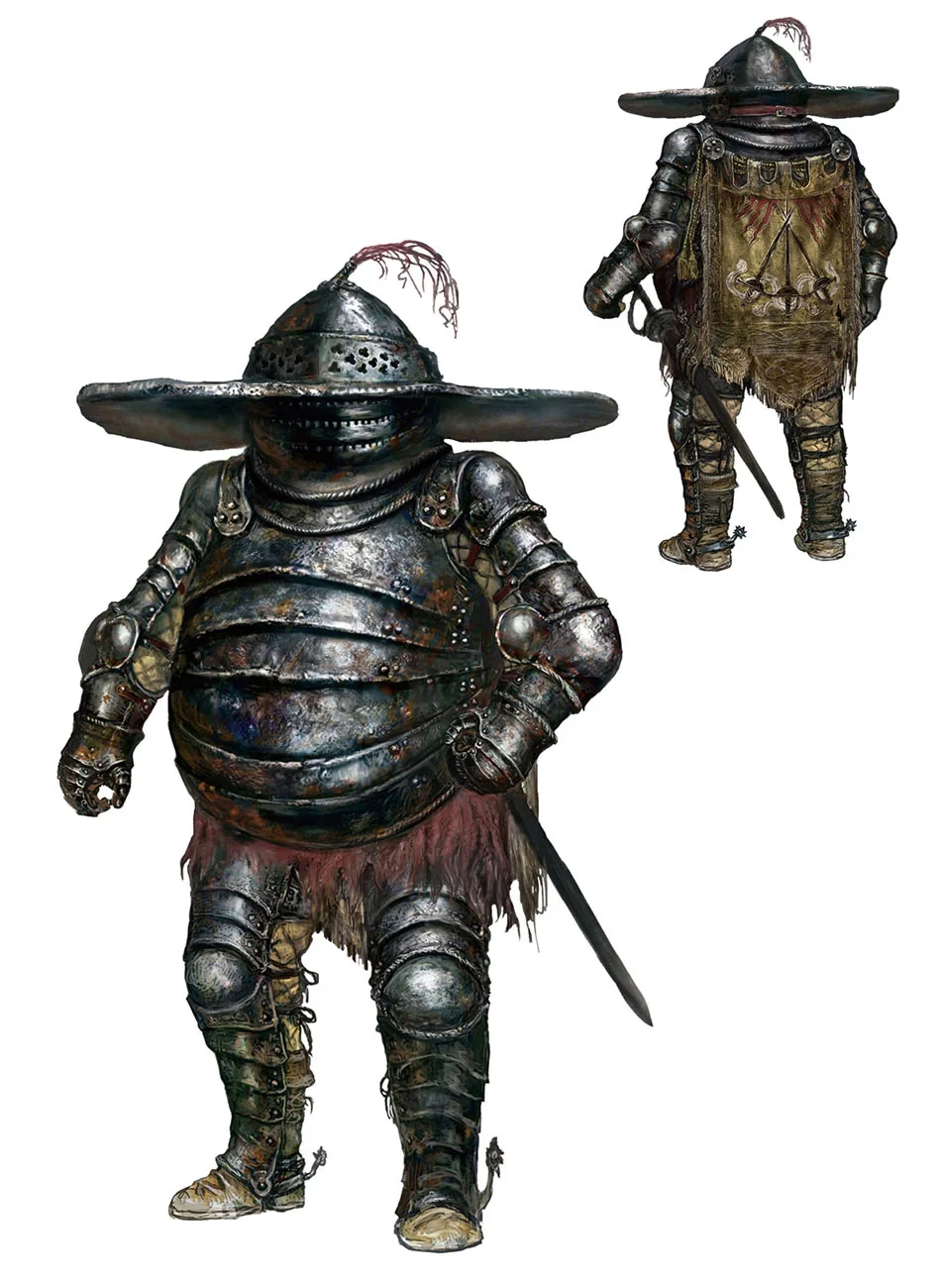 ◈ KNIGHT
Lionel the Lionhearted
Chivalrous knight who declared himself father to Fia, the Deathbed Companion▾
Lionel the Lionhearted
'Round iron armor. Worn by Lionel the Lionhearted. When this chivalrous, dauntless knight met Fia, who had been driven from her home, he declared himself to be her father.' Lionel the Lionhearted is the canon's quietest act of grace: a chivalrous knight who, encountering the exiled Deathbed Companion Fia, took her in as his daughter despite no blood relation. Fia, a Deathbed Companion, a sacred calling in her homeland, was chased from her birthplace when the guidance of grace awakened her; it is the Golden Order's dogma that made her vocation a heresy. He declared himself her father, the armor text says no more, and needs no more.
'Round iron armor with a banner extending from its back. Worn by Lionel the Lionhearted. When this chivalrous, dauntless knight met Fia, who had been driven from her home, he declared himself to be her father.' Lionel's adoption of Fia is the canon's quiet inversion of every other lineage-story in the Lands Between. Godwyn, slain by the black-knife plot, was left to rot in the very Death his mother had outlawed; Radagon left Rennala for Marika; Godfrey was banished by the woman who married him. The canon's institutional family relationships are all betrayals. Lionel is the only counterexample: a man who chose a daughter who needed one, and held her against the Order's verdict. By the time the Tarnished arrives, only his armor remains, laid on a bed in Leyndell's Fortified Manor, the mirror of the Roundtable Hold, in the very room Fia keeps at the Hold. Whether the old knight lives, the canon never says.
Round iron armor. Worn by Lionel the Lionhearted. When this chivalrous, dauntless knight met Fia, who had been driven from her home, he declared himself to be her father.
Round iron armor with a banner extending from its back. Worn by Lionel the Lionhearted. When this chivalrous, dauntless knight met Fia, who had been driven from her home, he declared himself to be her father.
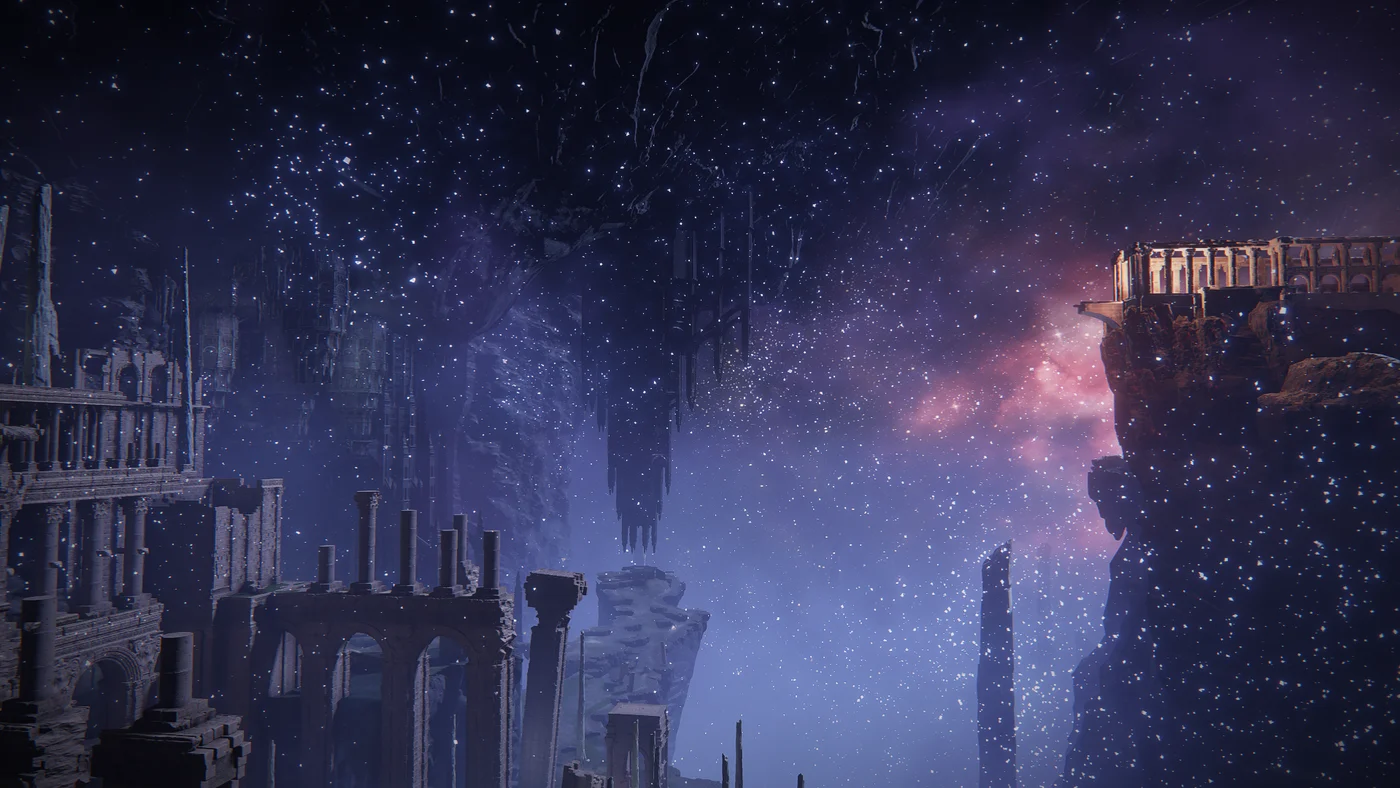 —️ LOCATION
The Underground Rivers
Siofra and Ainsel, buried waterways through the graves of pre-Erdtree civilizations▾
The Underground Rivers
'Map of Siofra River and environs. Two great rivers flow beneath the Lands Between, the Siofra and the Ainsel. This vast region is said to be the grave of civilizations that flourished before the Erdtree.' The Siofra and the Ainsel are the canon's geological proof that the Lands Between is a layered place: underneath the visible Limgrave-Liurnia-Caelid-Mountaintops topology lies an entire second world of buried rivers, dead cities, and forgotten gods. The Siofra, accessed via a hidden well in eastern Limgrave, opens into the Ancestor-hunters' moonlit forests around Nokron. The Ainsel, accessed via a different well in Liurnia, descends to Nokstella and the Lake of Rot. Both rivers eventually meet at the Deeproot Depths, where the Erdtree's roots end.
'Map of Deeproot Depths and environs. At the very depths of the Erdtree's majestic roots lies the source of the Ainsel and the Siofra rivers. Here too begins the network of Greattree roots that spread throughout the Lands Between.' Why the Erdtree did not extend its order to the underground is the canon's quiet answer to where the buried civilizations went. The Eternal Cities, Nokron and Nokstella, were banished deep underground after the Nox invoked the ire of the Greater Will, condemned to live under a false night sky in anticipation of their Lord of Night. The Underground Rivers are graveyards of pre-Erdtree religions: the Regal Ancestor Spirit's hunters, the Eternal City's sorcerers, the Tibia Mariners' boatmen. The Tarnished's descent into Siofra and Ainsel is the canon's clearest archeological pilgrimage: every chamber down is a chapter farther back in time.
Map of Siofra River and environs Two great rivers flow beneath the Lands Between, the Siofra and the Ainsel. This vast region is said to be the grave of civilizations that flourished before the Erdtree.
Map of Ainsel River and environs. Two great rivers flow beneath the Lands Between, the Siofra and the Ainsel. This vast region is said to be the grave of civilizations that flourished before the Erdtree.
Map of Deeproot Depths and environs. At the very depths of the Erdtree's majestic roots lies the source of the Ainsel and the Siofra rivers. Here too begins the network of Greattree roots that spread throughout the Lands Between.
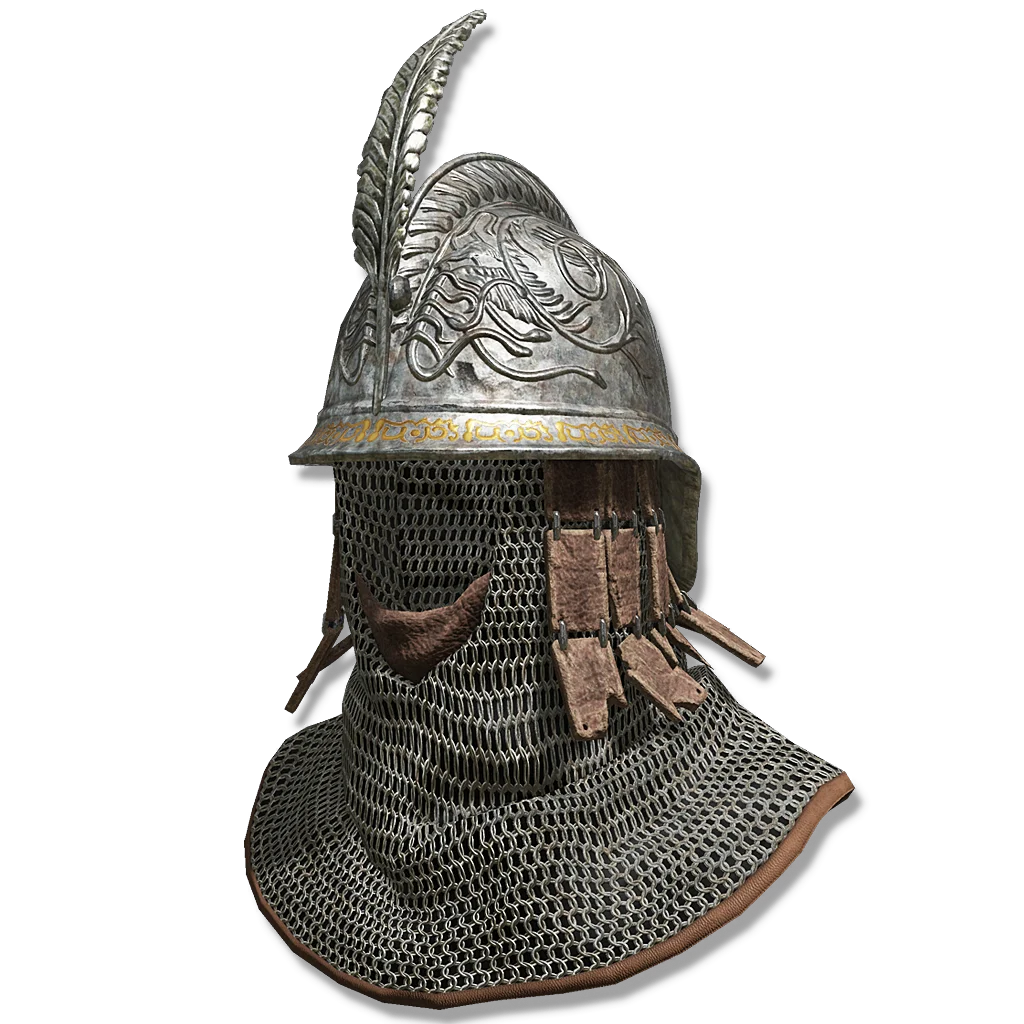 ◈ ACADEMIC ORDER
The Raya Lucaria Conspectii
Karolos, Olivinus, Lazuli, Twinsage, the academy's branches of glintstone study▾
The Raya Lucaria Conspectii
'One of the glintstone crowns bestowed upon Raya Lucaria scholars whose pursuits were deemed worthy. Increases intelligence to the detriment of stamina. The Karolos Conspectus is the oldest of the academy's lineages of study, begat by the sorcerer Azur. Scholars who follow in his footsteps pursue the mysteries of comets.' Raya Lucaria's faculty is divided into Conspectii, colleges, each with its own specialization, its own crown, its own blue or violet glintstone variant. Karolos is the oldest, begat by the sorcerer Azur: scholars who follow in his footsteps pursue the mysteries of comets. Olivinus began with the sorcerer Lusat, and its adherents continue his study of meteors; the Battlemages, for their part, belong to the Haima Conspectus, the adjudicator of the academy, whose scholars seek to quell conflict with cannon fire and the gavel. Lazuli is the most heretical: Lazuli scholars came to see the moon as equal to the stars, and their dexterity-augmented spells (Carian Slicer, Glintblade Phalanx) were tolerated but never officially endorsed.
'Scholars of the Lazuli Conspectus study Carian sorceries - a heterodox pursuit that views the moon as equal to the stars.' The Twinsage Conspectus is the elite one: its scholars were 'the elites of the academy, permitted to study and excel in sorceries of all kinds'. Their crown greatly increases intelligence to the detriment of HP and stamina. Nor do these four exhaust the academy's rolls: the crown of Hierodas was granted to scholars who engaged in nomadic study away from the academy, and whenever war broke out and the academy sealed its gates, only Haima's scholars dared venture outside. 'Seclusion is no way to foster discovery; it is only a convenient form of escape.'
One of the glintstone crowns bestowed upon Raya Lucaria scholars whose pursuits were deemed worthy. Increases intelligence to the detriment of stamina. The Karolos Conspectus is the oldest of the academy's lineages of study, begat by the sorcerer Azur. Scholars who follow in his footsteps pursue the mysteries of comets.
One of the glintstone crowns bestowed upon Raya Lucaria scholars whose pursuits were deemed worthy. Increases intelligence and dexterity to the detriment of HP. Scholars of the Lazuli Conspectus study Carian sorceries - a heterodox pursuit that views the moon as equal to the stars.
One of the glintstone crowns bestowed upon Raya Lucaria scholars whose pursuits were deemed worthy. Greatly increases intelligence to the detriment of HP and stamina. Scholars of the Twinsage Conspectus were the elites of the academy, permitted to study and excel in sorceries of all kinds.
One of the glintstone crowns bestowed upon Raya Lucaria scholars whose pursuits were deemed worthy. Increases intelligence and endurance to the detriment of FP. The crown of Hierodas was granted to scholars who engaged in nomadic study away from the academy.
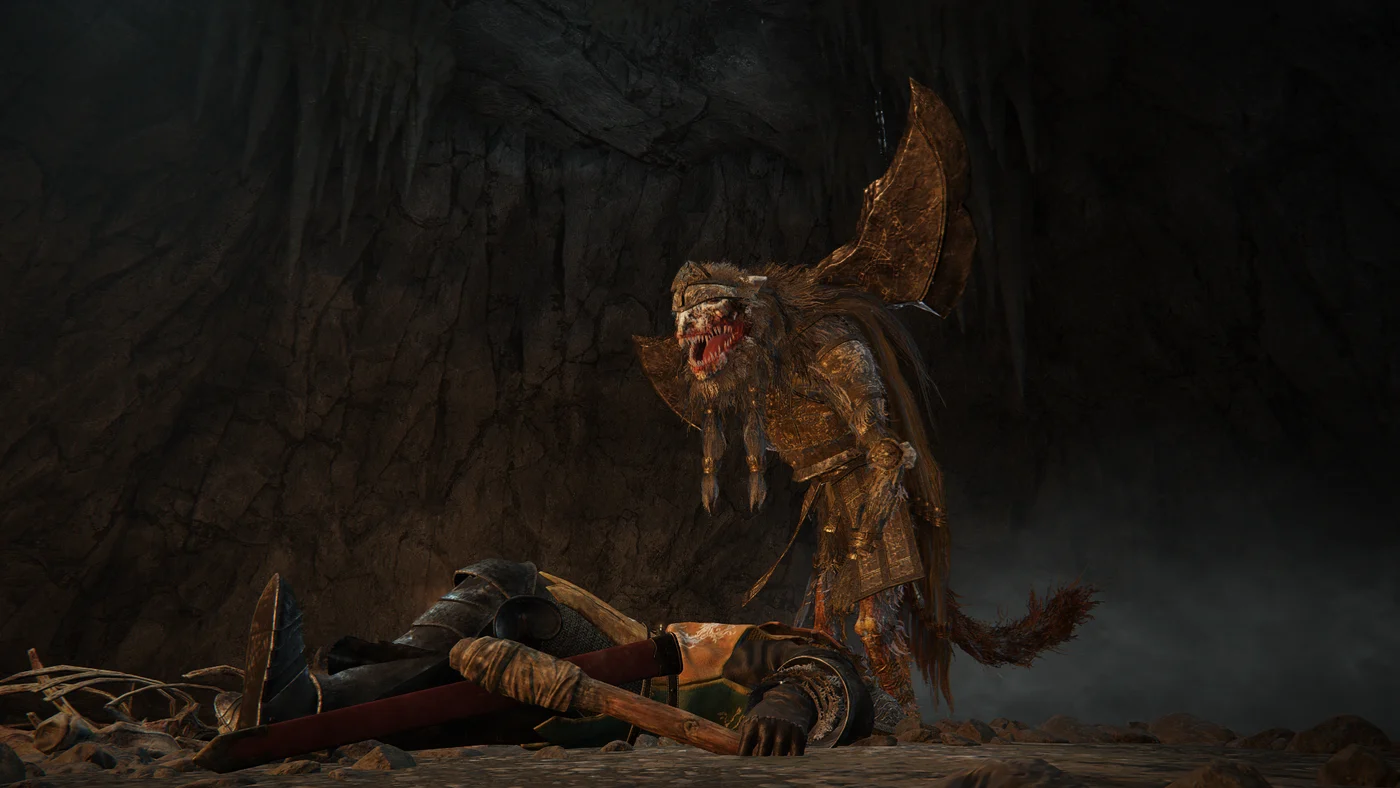 ◈ DRAGON-KINDRED
The Beastmen of Farum Azula
Five-fingered descendants of the Ancient Dragons, awaiting the storm▾
The Beastmen of Farum Azula
'Curved greatsword of colossal size forged of dull iron and wielded by the beastmen of Farum Azula. The blade is incredibly heavy, but well-balanced. Comparatively easy to wield for the damage it delivers.' The Beastmen are the dragon-kindred warriors of the floating wreckage of Farum Azula: tall, robed, lion-headed creatures with five-fingered hands, the canon's sign of inherited intelligence from the Ancient Dragons whose city this once was. They serve as the priesthood of the mausoleum said to enshrine an ancient dragon. They patrol the slowly-falling stones of the suspended-time city. They have been there long enough that no one alive remembers when they first took the office. Their weapons are forged of dull iron, and yet, the text insists, it's clear the beastmen possess knowledge beyond human ken.
'Ashen remains in which spirits yet dwell. Use to summon the spirits of two Azula beastmen. Spirits of beastmen from doomed Farum Azula, the slowly crumbling ruins in the skies. These ruins are said to be the remains of a giant mausoleum enshrining an ancient dragon, guarded by chosen beastmen who wield weapons clad in lightning.' The text names the beastmen the chosen guardians of that mausoleum, and arms them with lightning, the weapon of the ancient dragons. By the late game, when Farum Azula begins to crumble fully, the Beastmen do not flee. They wait for it. The storm has been coming for so long that it might as well be home.
Beastman's CleaverCurved greatsword of colossal size forged of dull iron and wielded by the beastmen of Farum Azula. The blade is incredibly heavy, but well-balanced. Comparatively easy to wield for the damage it delivers. It's clear the beastmen possess knowledge beyond human ken.
Beastman's Curved SwordCurved sword forged of dull iron wielded by the beastmen of Farum Azula. The blade is heavy but well-balanced. Comparatively easy to wield for the damage it delivers.
Ashen remains in which spirits yet dwell. Use to summon the spirits of two Azula beastmen. Spirits of beastmen from doomed Farum Azula, the slowly crumbling ruins in the skies. These ruins are said to be the remains of a giant mausoleum enshrining an ancient dragon, guarded by chosen beastmen who wield weapons clad in lightning.
 ▣ LEGENDARY WEAPON
Moonveil and the Sellian Smiths
The katana that swallowed moonlight, a Land-of-Reeds blade reforged in Caelid▾
Moonveil and the Sellian Smiths
'Katana forged of glintstone. Masterpiece of a Sellian swordsmith. Light enwreathes the blade when sheathed, explaining its Moonveil moniker.' Moonveil is the canon's quiet bridge between the Land of Reeds and Sellia, Town of Sorcery. The blade-shape is a katana, uchigatana proportions, single-edge, drawn-from-sheath discipline, but the steel is glintstone: the masterpiece of an unnamed Sellian swordsmith, perhaps inspired by the blades of the Land of Reeds, though the canon never says. The skill is Transient Moonlight: a sheath-draw that fires a wave of light. Of Sellia's sorcerers, the canon records that they were assassins said to hunt their own fellows; which hand among them forged Moonveil, it does not record.
The Tarnished encounters Moonveil as a drop from the Magma Wyrm boss in the Gael Tunnel, a creature whose lava-carved hunting ground would never have hosted a katana naturally. How the wyrm came by it, the game never says; perhaps from a Sellian who wandered too far. Two cultures meet in this single weapon: the Land of Reeds gave the blade-form, Sellia gave the moonlight, and the Magma Wyrm gave the resting place. By the time the Tarnished claims it, Moonveil is an orphaned object, its smith unnamed, Sellia drowned in scarlet rot, the wyrm itself slain. The light it sheds is what survives.
Katana forged of glintstone. Masterpiece of a Sellian swordsmith. Light enwreathes the blade when sheathed, explaining its Moonveil moniker.
◈ ROYAL ORDERThe Redmane Knights
Radahn's lion-warriors, sole survivors of the Caelid scarlet rot▾
The Redmane Knights
'A record of crafting techniques left by an armorer who served the great general Radahn. Contains knowledge of dealing with rot; the application of fire in particular. Acquire the knowledge to craft the following: -Fire Grease, -Drawstring Fire Grease, -Fireproof Dried Liver.' The Redmane Knights are the personal cavalry corps of General Radahn, the gravity-magic demigod son of Rennala and Radagon. They were red-haired by oath, lion-cloaked by uniform, and trained in the art of fire-on-rot, fighting with torches and pyromancies because the rot Malenia released at Aeonia infected steel and bone equally. Their crafting cookbook is the canon's only surviving anti-rot field manual.
'This Ash of War grants an armament the Heavy affinity and the following skill: Lion's Claw: Skill of the Redmanes, who fought alongside General Radahn. Somersault forwards, striking foes with armament.' Lion's Claw, the signature ash of war, is the Redmanes' melee solution to the same rot-saturated battlefield. The somersault attack moves the warrior through rot-mist faster than the rot can take hold; the armament-overhead landing distributes weight in a way that gravity-magic could amplify. The Redmanes fortified Redmane Castle, the eastern citadel of Caelid, and held it against the rot; even now, the survivors of Radahn's battalion still employ fire to stave off the scarlet rot. Their commander Jerren, oath-bound to give Radahn an honourable death at the Festival of Combat, is the last named Redmane of the canon.
A record of crafting techniques left by an armorer who served the great general Radahn. Contains knowledge of dealing with rot; the application of fire in particular. Acquire the knowledge to craft the following: - Fire Grease - Drawstring Fire Grease - Fireproof Dried Liver
Lion's ClawThis Ash of War grants an armament the Heavy affinity and the following skill: "Lion's Claw: Skill of the Redmanes, who fought alongside General Radahn. Somersault forwards, striking foes with armament."
◈ AFFLICTIONThe Grafting Curse
Stormveil's mottling, Godrick's stitched limbs, the body-horror of diluted blood▾
The Grafting Curse
'Remembrance of Godrick, the Grafted, hewn into the Erdtree. A feeble man sought power through the grotesque act of grafting. One day we'll return together, to our home, bathed in rays of gold.' Grafting is the canon's body-horror specialty: the grotesque fusion of severed limbs from many bodies onto a single core body. It was the recourse of diluted-blood demigods like Godrick, whom Enia the Finger Reader calls but a distant relation of the demigods, the runt of the litter, his divine blood sorely diluted. Godrick discovered that grafting limbs from any defeated foe could partially compensate. By the time of the Tarnished, he is a hideous many-limbed creature whose original body is barely visible.
'Wooden shield of Stormveil soldiers. Much like the castle, it is marred by mottling and thorns. Some say it is the curse of grafting which causes such affliction, while others talk of its root being something altogether more sinister hidden deep within the castle.' Stormveil itself is afflicted. The grafting practice has spread to the castle's stone, the soldiers' shields, the very thorns climbing the walls, every surface is mottled with grafted-on growth, neither dead nor properly alive. The rot of Caelid is geographic; the curse of Stormveil is architectural. Where Caelid's surface is poisoned, Stormveil's surface is stitched. Both are chronic. Neither has a known cure. Godrick himself, in his last seconds before the Tarnished kills him, says he wishes only to return home to bathe in gold, to be, briefly, the kind of demigod his diluted blood would never let him be.
Remembrance of the GraftedRemembrance of Godrick, the Grafted, hewn into the Erdtree. The power of its namesake can be unlocked by the Finger Reader. Alternatively, it can be used to gain a great bounty of runes. A feeble man sought power through the grotesque act of grafting. "One day we'll return together, to our home, bathed in rays of gold."
Wooden shield of Stormveil soldiers. Much like the castle, it is marred by mottling and thorns. Some say it is the curse of grafting which causes such affliction, while others talk of its root being something altogether more sinister hidden deep within the castle.
▣ MEMENTOThe Wandering Painters
Itinerant artists who paint the landscape someone saw at the moment of death▾
The Wandering Painters
'Work of a wandering artist. Reminiscence of a painting titled Champion's Song. This painter is said to have captured the landscapes seen during the last moments of those welcomed into death's embrace. The soul of the painter, and vestiges of the dead's last moments can be discovered by visiting the location depicted even now.' The Wandering Painters are the canon's quiet poets-of-image: a small order of itinerant artists whose vocation is to walk the deathbeds of the Lands Between and paint the scene the dying person sees in their last conscious moment. Each painting captures a real landscape, Champion's Song, Flightless Bird, Homing Instinct, Redmane, Prophecy, but each is also a portal: a painter who knows the technique can take the painting back to the spot it depicts and find a small treasure there, left by a hero who died at that view.
'Reminiscence of a painting titled Flightless Bird.' Who the painters were, how old their tradition is, how many of them walked the Lands Between: the text never says. The canon gives them a single line of biography, repeated across every canvas, and one promise: the soul of the painter, and vestiges of the dead's last moments, can still be discovered at the location depicted. The Tarnished can find each painting, walk to its viewpoint, and collect what remains there; the text names no treasure, only the vestiges of a last moment, a trace waiting at the spot where someone last looked at the world.
Work of a wandering artist. Reminiscence of a painting titled "Champion's Song." This painter is said have captured the landscapes seen during the last moments of those welcomed into death's embrace. The soul of the painter, and vestiges of the dead's last moments can be discovered by visiting the location depicted even now.
Work of a wandering artist. Reminiscence of a painting titled "Flightless Bird." This painter is said have captured the landscapes seen during the last moments of those welcomed into death's embrace. The soul of the painter, and vestiges of the dead's last moments can be discovered by visiting the location depicted even now.
Work of a wandering artist. Reminiscence of a painting titled "Homing Instinct." This painter is said have captured the landscapes seen during the last moments of those welcomed into death's embrace. The soul of the painter, and vestiges of the dead's last moments can be discovered by visiting the location depicted even now.
 ◈ SHAPESHIFTERS
The Silver Tears
Liquid-mercury beings from the Eternal City, soldiers, doppelgängers, mimicry made flesh▾
The Silver Tears
'Mace shaped like a suspended metal droplet wielded by monks of the Eternal City. Forged from liquid metal from a Silver Tear, it is thoroughly tempered until hardened.' The Silver Tears are the Eternal City's strangest weapon: drops of liquid mercury, sentient enough to take human shape, used as scouts, soldiers, and assassin-doppelgängers in the lost civilizations of Nokron and Nokstella. Their original form is amorphous, a tear-drop, a slick puddle, a shimmer in a fountain, and they can replicate any shape they touch with enough delay to study. What a Silver Tear sheds is a hardened husk, an inert metal shell that the Eternal City's craftsmen hammer into a weapon.
'Mask fashioned from the corpse of a formless Silver Tear, supported by its hardened, shed husk. Greatly increases arcane to the detriment of physical attack power. To imitate the imitator is a cunning play indeed.' The Mimic Tear, the canon's named hero among Silver Tears, is the Spirit Ash that copies the Tarnished's exact form, same equipment, same spells, same fighting style, and fights for them. Its lore is the cleanest demonstration of Silver Tear sentience: the Mimic does not fight imitatively, it fights as if it were the Tarnished, with the Tarnished's own combat instincts. To stand beside one is to wonder, briefly, which of you is the original. The Tarnished can mask themselves with a Silver Tear's husk, in turn, and gain magic-power at the cost of physical strength.
Nox Flowing HammerMace shaped like a suspended metal droplet wielded by monks of the Eternal City. Forged from liquid metal from a Silver Tear, it is thoroughly tempered until hardened.
Mask fashioned from the corpse of a formless Silver Tear, supported by its hardened, shed husk. Greatly increases arcane to the detriment of physical attack power. To imitate the imitator is a cunning play indeed.
Nox Flowing SwordA grim weapon wielded by swordsmen of the Eternal City, this shotel has a blade as fine as a needle. Forged from the liquid metal of a Silver Tear, it is thoroughly tempered until hardened.
 ◈ KNIGHT
Ancient Dragon Knight Kristoff
Honorable Leyndell knight, devout worshipper of the ancient dragons▾
Ancient Dragon Knight Kristoff
'Legendary ashen remains. Use to summon the spirit of Kristoff, the Ancient Dragon Knight. Spirit of Kristoff, an honorable knight of Leyndell who was also a devout worshipper of the ancient dragons. His skills strike down foes with thunderbolts, the dragons' weapon of choice.' Kristoff is the canon's quiet contradiction made into a single named knight: a Leyndell-sworn warrior of the Erdtree's central capital who worshipped the Ancient Dragons, the very dragons defeated when they assaulted Leyndell, an assault broken by Godwyn the Golden, whose friendship with Fortissax afterwards founded the capital's own dragon cult. In that Leyndell, a knight could carry the Erdtree's colours and pray with thunder in his hands, and Kristoff did both honourably.
'After the First Defense of Leyndell, Kristoff earned the hero's honor of Erdtree Burial for the feat of capturing Godefroy the Grafted.' That is the whole of his recorded life: one defense, one capture, one burial with honours. His legendary ashes rest in the Sainted Hero's Grave beneath Altus, where the Tarnished can claim them; summoned, Kristoff fights exactly as the description promises, thunderbolts, the dragons' weapon of choice, thrown by a knight the Golden Order chose to bury beneath its own tree. An Erdtree Burial for a dragon-worshipper: the Order honouring a man whose prayers went elsewhere.
Legendary ashen remains. Use to summon the spirit of Kristoff, the Ancient Dragon Knight. Spirit of Kristoff, an honorable knight of Leyndell who was also a devout worshipper of the ancient dragons. His skills strike down foes with thunderbolts, the dragons' weapon of choice. After the First Defense of Leyndell, Kristoff earned the hero's honor of Erdtree Burial for the feat of capturing Godefroy the Grafted.
◈ THE PEOPLEThe Commoners of the Lands Between
Tarnished-by-association, Erdtree-worshipping townsfolk left out of every coronation▾
The Commoners of the Lands Between
'Garb with a modest cloth cape attached. Standard wear for commoners of the Lands Between. The board hung from the neck depicts a sprawling tree, its roots and branches forming two holes. This is a self-imposed shackle, a voluntary display of allegiance to the Erdtree that increases faith.' The Commoners are the canon's silent majority: the everyday people of the Lands Between who are NOT Tarnished, NOT demigods, NOT knights or sorcerers. Their garb is plain. Their religion is the Erdtree. Their token of identification is a small wooden board hung from the neck, painted with the Erdtree's image, a self-imposed shackle, the description specifies, a voluntary display of allegiance to the Erdtree worn by a non-noble lay-believer. By the canon's late stages, the Commoner's Headband itself admits that 'there are no commoners remaining with their wits about them', almost every Commoner the Tarnished encounters is dead, fleeing, or driven mad.
'Modest garb made of cloth. Standard wear for commoners of the Lands Between.' The Commoners' role in the canon is to make the demigod-war's body-count visible. The Tarnished walks past empty villages, passes under hanging bodies in Stormveil's gallows, sees nomadic merchant lines on the roads. Roderika, expatriated royalty per her Crimson Hood, crossed a land whose commoners had already vanished. Diallos, the broken-hearted nobleman, sought his servant Lanya, whom he found slain by the recusants in Liurnia. Boc the Seamster, a Demi-Human whose mum was a seamstress, remembers that she was always the only one who called him beautiful, words the Tarnished can let him hear once more through a Prattling Pate. The world the demigods broke is the world the Commoners had been quietly tending.
Garb with a modest cloth cape attached. Standard wear for commoners of the Lands Between. The board hung from the neck depicts a sprawling tree, its roots and branches forming two holes. This is a self-imposed shackle, a voluntary display of allegiance to the Erdtree that increases faith.
Modest garb made of cloth. Standard wear for commoners of the Lands Between. The board hung from the neck depicts a sprawling tree, its roots and branches forming two holes. This is a self-imposed shackle, a voluntary display of allegiance to the Erdtree that increases faith.
◈ ORTHODOX FAITHThe Two Fingers' Faithful
Orthodox protectors who follow the path that has been set▾
The Two Fingers' Faithful
'Incantation of the Two Fingers' faithful. Increases holy damage negation. This incantation can be cast while in motion. Follow the path that has been set for you, and you will make enemies of all others: the monks, the sorcerers, the ancient dragon knights, and the scions of gold. Heed me—the Lands Between offers no welcome to the Tarnished.' The Two Fingers' Faithful are the canon's quietest doctrinal majority: Erdtree-orthodox clergy who serve the Two Fingers as the Greater Will's literal interpreters, who memorise their incantations as obedience-rituals, and who teach a uniform message, 'follow the path that has been set for you.' Their Protective Boons are the most useful Erdtree incantations the Tarnished can earn: holy negation, fire negation, lightning negation, magic negation, all of them with the same caveat-phrase about making enemies of all others.
'Incantation of the Two Fingers' faithful. Alleviates poison buildup and cures poison. This incantation can be cast while in motion. The Two Fingers has high hopes for the Tarnished; that even if they should be wounded, even should they fall, they will continue to fight for their duty.' What the Faithful's incantations actually do, beyond the mechanical effect, is enforce a single theology: you are the Greater Will's, and your role is to fight. The Cure Poison incantation says it most plainly. Even if the Tarnished is dying of poison, even if the Frenzied Flame is calling them to the abyss, the Two Fingers' Faithful's spell will keep them alive long enough to keep doing their duty. The orthodox church does not care which Mending Rune is chosen. It cares only that the Tarnished does not stop walking.
Divine FortificationIncantation of the Two Fingers' faithful. Increases holy damage negation. This incantation can be cast while in motion. Follow the path that has been set for you, and you will make enemies of all others: the monks, the sorcerers, the ancient dragon knights, and the scions of gold. Heed me—the Lands Between offers no welcome to the Tarnished.
Incantation of the Two Fingers' faithful. Alleviates poison buildup and cures poison. This incantation can be cast while in motion. The Two Fingers has high hopes for the Tarnished; that even if they should be wounded, even should they fall, they will continue to fight for their duty.
 ▣ INFRASTRUCTURE
The Sites of Lost Grace
Gold-flickering bonfires where the Tarnished revives, memorises, and travels▾
The Sites of Lost Grace
'Upon dying, you will be revived at the last site of grace that you visited. You will drop any runes in your possession at the site of your death. If you die again before reclaiming those runes, they will be lost forever.' The Sites of Lost Grace are the canon's metaphysical infrastructure: small motes of gold, fluttering above the ground at fixed sacred points, which the Tarnished can rest at to recover, memorise spells, level up via the Finger Maiden, and fast-travel between. Each is a place where the Erdtree's golden blessing still lingers, in the game's own words, you find them 'where light converges.' One reading holds that the tree sheds more gold than it can keep, and that the motes drifting outward find earth and stay lit. Some are at obvious places, castle gates, road forks, ruin courtyards. Some are deep underground, in caves or in dragon-bones. Each is a possible second-chance.
'Staff of the astrologers. A glintstone is embedded in the tip, enabling it to be used a catalyst for sorceries. Sorceries must be memorized first at a site of lost grace, and a staff must be equipped to cast them.' The grace at these sites is described as 'lost' precisely because the Tarnished's lineage was once given grace by Marika, then stripped of it, then partly returned now that Marika has shattered. On this reading, the grace at a Site of Lost Grace is what the Erdtree is leaking as much as what it is giving. Some sites still bear the guidance of grace: their golden rays point the Tarnished along the proper path. Others have lost that power, the tutorial is careful to say only 'some' still retain it. The geography of the canon is mapped, in the deepest reading, by where a tree that has been broken can no longer hold itself together.
Upon dying, you will be revived at the last site of grace that you visited. You will drop any runes in your possession at the site of your death. If you die again before reclaiming those runes, they will be lost forever.
Staff of the astrologers. A glintstone is embedded in the tip, enabling it to be used a catalyst for sorceries. Sorceries must be memorized first at a site of lost grace, and a staff must be equipped to cast them.
 ▣ FLASK
The Flask of Wondrous Physick
The Tarnished's third flask, mixed at sites of grace from Erdtree-dropped crystal tears▾
The Flask of Wondrous Physick
'You can find crystal tears at the bases of Minor Erdtrees and elsewhere throughout the Lands Between. At sites of grace, you can mix two crystal tears in the Flask of Wondrous Physick. This will allow you to create elixirs with various custom effects.' The Flask of Wondrous Physick is the canon's third flask, given alongside Crimson (HP) and Cerulean (FP) but not refilled by them. It must be brewed manually: the Tarnished mixes two Crystal Tears at any Site of Grace, the resulting concoction is consumed once per rest, and the effects depend entirely on which two tears were combined. There are 29 different tears in the base game alone, including HP-restore, FP-restore, status-cure, attack-buff, defense-buff, and the Opaline tears that grant temporary damage negation. Tears form slowly at the bases of Minor Erdtrees and at certain other shrines.
'A crystal tear formed slowly over the ages where the Erdtree's bounty falls to the ground. Can be mixed in the Flask of Wondrous Physick. The resulting concoction restores half of one's maximum FP.' The Crystal Tears are quietly the canon's least-explained artefact: they are NOT golden seeds (which scattered when the Ring shattered), they are tears that have been forming SLOWLY OVER AGES, meaning they predate the Shattering by centuries. Where the Erdtree wept, the tears formed. The Tarnished can find them long before any wound to the Erdtree was visible. The flask is, then, the canon's quiet acknowledgement that the Erdtree was already crying long before anyone noticed it had a reason to.
You can find crystal tears at the bases of Minor Erdtrees and elsewhere throughout the Lands Between. At sites of grace, you can mix two crystal tears in the Flask of Wondrous Physick. This will allow you to create elixirs with various custom effects.
A crystal tear formed slowly over the ages where the Erdtree's bounty falls to the ground. Can be mixed in the Flask of Wondrous Physick. The resulting concoction restores half of one's maximum FP.
 ▣ FRAGMENT
The Rune Arcs
Shards of the shattered Elden Ring, sacrifices for one death's blessing▾
The Rune Arcs
'A shard of the shattered Elden Ring. Grants the blessing of an equipped Great Rune upon use. Even if no Great Rune is equipped, it will slightly increase maximum HP upon use. It is said that the lower arch of the Elden Ring receive its bounty, and this is a shard of one such arch.' Rune Arcs are the smallest pieces of the canon's central artefact. The Elden Ring, when Marika shattered it, scattered into Great Runes (held by demigods) and into countless smaller fragments, the Rune Arcs themselves. Each Rune Arc, when consumed by the Tarnished, activates an equipped Great Rune's blessing for one death's worth of life. Without a Great Rune equipped, the Arc gives only a small HP bump. With Godrick's Rune equipped: +5 to all stats. With Malenia's: healing-on-attack. With Mohg's: a bloody umbra over allies.
'With the Great Rune menu, you can equip Great Runes that have had their power restored. You can use a Rune Arc to give even greater benefits to your equipped Great Runes.' The lore-frame the canon hides in the Rune Arc description is humbler: even the lower arch of the Elden Ring, the least exalted part of the artefact, is said to have received its bounty, and each Arc is a shard of one such arch. The mechanic-frame is that helping another Tarnished defeat a boss rewards you with an Arc, a rule of play the game never grounds in lore. Both frames make the same quiet point: blessing was never reserved for the Ring's summit and its Great Runes; even the smallest shard still carries a measure of the Elden Ring's grace.
A shard of the shattered Elden Ring. Grants the blessing of an equipped Great Rune upon use. Even if no Great Rune is equipped, it will slightly increase maximum HP upon use. It is said that the lower arch of the Elden Ring receive its bounty, and this is a shard of one such arch.
 ▣ TECHNIQUE
The Ashes of War
Memories of battles, infused into stones for Hewg to copy onto blank vessels▾
The Ashes of War
'Whetstone with a cipher inscription, made to look like a small knifeblade. Allows the use of ashes of war at a site of grace to bestow new battle arts and affinities to armaments as skills. The battle arts and affinities will depend on the ashes of war used.' The Ashes of War are the canon's quiet techno-memorial: small ashen stones, each containing the lingering memory of a single technique-of-arms used in the Lands Between's wars. Lion's Claw remembers the Redmane Knights. Seppuku remembers a Land of Reeds samurai. Piercing Fang remembers Yura, the Bloody Finger Hunter. Each ash, when applied to a weapon at a Site of Grace, grants the weapon that named technique as a skill, and changes the weapon's affinity (Heavy, Keen, Magic, Sacred, Cold, Blood, Poison, Fire, Lightning, Occult).
'Empty ashes of war, devoid of any memories of battle. Unable to apply any kind of affinity in their current state, but can be used by Smithing Master Hewg of the Roundtable Hold to recreate other ashes.' Hewg is the only smith in the canon who can copy an Ash of War from one stone onto a blank one. The lore-frame is that techniques are not abstractions, they are specific memories of specific bodies that died moving in specific ways, and they can only be carried in vessels that were once full of memory. The empty ashes are the canon's blank manuscript pages. Hewg, at his anvil, transcribes the past for the present's swords.
Whetstone with a cipher inscription, made to look like a small knifeblade. Allows the use of ashes of war at a site of grace to bestow new battle arts and affinities to armaments as skills. The battle arts and affinities will depend on the ashes of war used.
Empty ashes of war, devoid of any memories of battle. Unable to apply any kind of affinity in their current state, but can be used by Smithing Master Hewg of the Roundtable Hold to recreate other ashes.
 ▣ SUMMONS
The Spirit Ashes
Ashen residue of the slain, tuned by Roderika into solitary companions▾
The Spirit Ashes
'A bell capable of summoning various spirits from ashen remains. It usually requires FP to use. Spirits can only be summoned in the vicinity of a rebirth monument.' The Spirit Ashes are the canon's quietest moral economy. Wherever a great battle ended, the residue of the dead, physical ash, but also the persistent fragment of soul that the Erdtree's order calls 'a spirit', settles into the ground. A spirit-tuner can extract that residue and tune it into a Spirit Ash: a single charge that, when activated near a rebirth monument, summons a brief copy of the dead warrior to fight beside the Tarnished. Roderika tunes them. Ranni's questline introduces the lore in formal terms.
'Ashen remains in which spirits yet dwell. Use to summon the spirits of two Leyndell soldiers. Spirits of soldiers each equipped with a spear and greatshield. The soldiers of Leyndell fight their battles defensively. During the Shattering, they were the ramparts that fortified the royal capital.' Each Spirit Ash's description is a one-paragraph elegy. The Leyndell soldiers fight defensively because they died defending. The Skeletal Bandits keep rising because they were already cursed to. Black Knife Tiche, the named Numen assassin, is one of the most powerful Spirit Ashes in the canon, and her one-line tells the story of the Night of the Black Knives. The Tarnished's army, as it approaches the throne, is increasingly composed of dead they themselves never met, soldiers of fallen orders, knights of routed campaigns, sorcerers whose academies sank. Each Spirit Ash bell-summon is a name being used by someone for whom the name is no longer their own.
A bell capable of summoning various spirits from ashen remains. It usually requires FP to use. Spirits can only be summoned in the vicinity of a rebirth monument. When summoning is possible, the monument icon will be visible on the left side of the screen.
Leyndell Soldier AshesAshen remains in which spirits yet dwell. Use to summon the spirits of two Leyndell soldiers. Spirits of soldiers each equipped with a spear and greatshield. The soldiers of Leyndell fight their battles defensively. During the Shattering, they were the ramparts that fortified the royal capital.
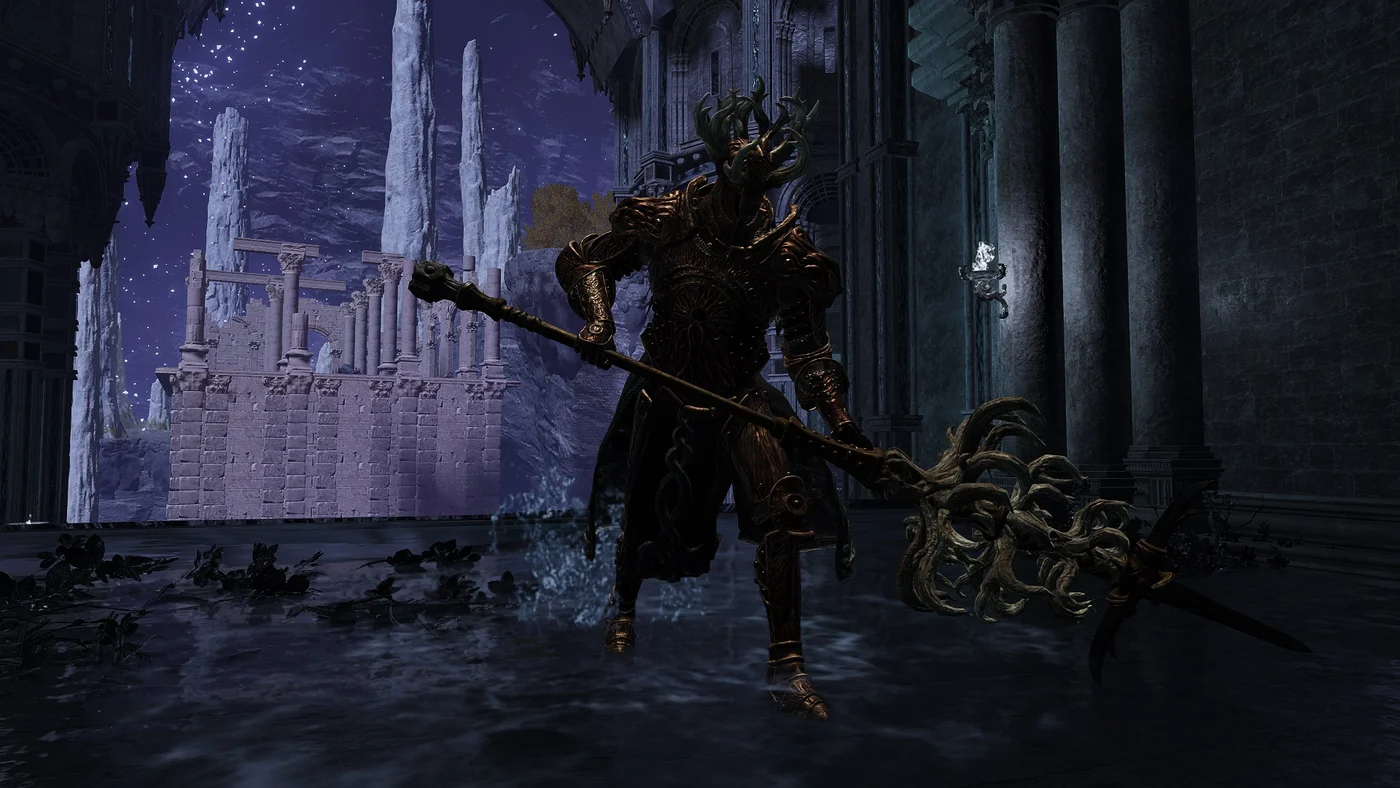 ◈ NPC
◈ NPCDiallos Hoslow
Of House Hoslow, peace-seeking knight, dies defending the jar children▾
Diallos Hoslow
'Garish silver armor decorated with red embellishments. Passed down through the Hoslow family. When Juno Hoslow received an invitation to the Volcano Manor, he discreetly refused. "I have already walked many a road drenched in blood, yet never would I consider myself a champion."' Diallos is a Hoslow, born to a martial dynasty whose silver armor is scrolled with red, and one of whose knights, Juno, turned down the Volcano Manor's invitation to become a champion-of-blood. Diallos inherits that refusal but inverts it into action: he wanders the Lands Between not to fulfil House Hoslow's warrior compact but to find a single missing servant, his maid Lanya, taken by an assassin. He arrives at the Roundtable Hold soft-handed, polite, asking for help.
'A written request from Volcano Manor disclosing the name of a Tarnished to be hunted. As the final request, the letter is vivid red.' The Manor traffics in Red Letters that name a quarry and a price; its house-style is the hunt. Diallos abandons that style entirely. After Lanya is slain by the recusants of the Volcano Manor, he travels to Jarburg in Liurnia of the Lakes and asks the jar children to teach him to be useful. He stays there. When grave-robbers come for the jars, he stands alone against them, dies in the mud beside Jar Bairn, and is mourned by a settlement of pottery-children whose names he had memorised.
Garish silver armor decorated with red embellishments. Passed down through the Hoslow family. When Juno Hoslow received an invitation to the Volcano Manor, he discreetly refused. "I have already walked many a road drenched in blood, yet never would I consider myself a champion."
A written request from Volcano Manor disclosing the name of a Tarnished to be hunted. As the final request, the letter is vivid red. "Juno Hoslow, Knight of Blood" He can be found in the Mountaintops of the Giants. Find the red mark on your map for the exact location.
◈ NPCMerchant Kalé
First merchant of the Lands Between, son of the Great Caravan's exile▾
Merchant Kalé
'Merchant Kalé's bell bearing, found upon his perished flesh. Offer to the Twin Maiden Husks at the Roundtable Hold to gain access to new items.' Kalé is the first living merchant the Tarnished meets, seated on the steps of the ruined Church of Elleh in Limgrave, calling cheerfully to anyone who passes. He sells torches, crafting kits and an iron cleaver; he teaches the Tarnished to craft. His friendliness is unusual. The other Nomadic Merchants of the canon are silent, hostile, or already dead.
'Chapeau of the nomadic merchants. Decorated with tiny gems in a wide spectrum of colors. These merchants once thrived as the Great Caravan, but after being accused of heretical beliefs, their entire clan was rounded up and buried alive far underground. Then, they chanted a curse of despair, and summoned the flame of frenzy.' Kalé's clan was the Great Caravan, an itinerant trade-confederation accused of heresy and sentenced to mass live burial. From within the earth they cursed the world that buried them and called the Frenzied Flame down upon it. The Tarnished's friendly first merchant is the only descendant who still smiles. When he dies, his bell-bearing passes to the Twin Maidens at the Roundtable, the last relic of a smile that the rest of the caravan never managed.
Merchant Kalé's bell bearing, found upon his perished flesh. Offer to the Twin Maiden Husks at the Roundtable Hold to gain access to new items.
Chapeau of the nomadic merchants. Decorated with tiny gems in a wide spectrum of colors. These merchants once thrived as the Great Caravan, but after being accused of heretical beliefs, their entire clan was rounded up and buried alive far underground. Then, they chanted a curse of despair, and summoned the flame of frenzy.
◈ NPCGatekeeper Gostoc
Lying castellan of Stormveil, opportunist of Godrick's twilight▾
Gatekeeper Gostoc
'Gatekeeper Gostoc's bell bearing, found upon his perished flesh. Offer to the Twin Maiden Husks at the Roundtable Hold to gain access to new items.' Gostoc is the gatekeeper at Stormveil's lower entrance, a hunched, deferential figure who greets the Tarnished with a smile and a warning. He routes them through corridors he claims are safer, where they are routinely ambushed by knights and traps. When the Tarnished slays each ambusher, Gostoc materialises, picks the dead clean, and offers the Tarnished a small reward drawn from what he stole. His smile never changes through the negotiation.
'A tall, medium-sized wooden shield. Light for its size, and easy to handle. Adorned with a long-forgotten crest of Stormveil, ancient in design.' Stormveil is older than Godrick. Its crest predates the Grafted Lord by ages, the castle was a Storm Hawk seat, then the Banished Knights', then a feudal fragment shored up by a feeble demigod stitching limbs onto his own. Gostoc serves whoever holds the gate, it is the gate, not the gatekeeper, that outlasts each master. When the Tarnished slays Godrick, Gostoc bursts into the throne room to stamp on his former lord's severed head, then sets up shop as a merchant in the conquered castle. If Nepheli Loux's story runs its course he ends at her side in Stormveil, still picking corpses clean, freedom, he finds, wasn't worth much.
Gatekeeper Gostoc's bell bearing, found upon his perished flesh. Offer to the Twin Maiden Husks at the Roundtable Hold to gain access to new items.
A tall, medium-sized wooden shield. Light for its size, and easy to handle. Adorned with a long-forgotten crest of Stormveil, ancient in design.
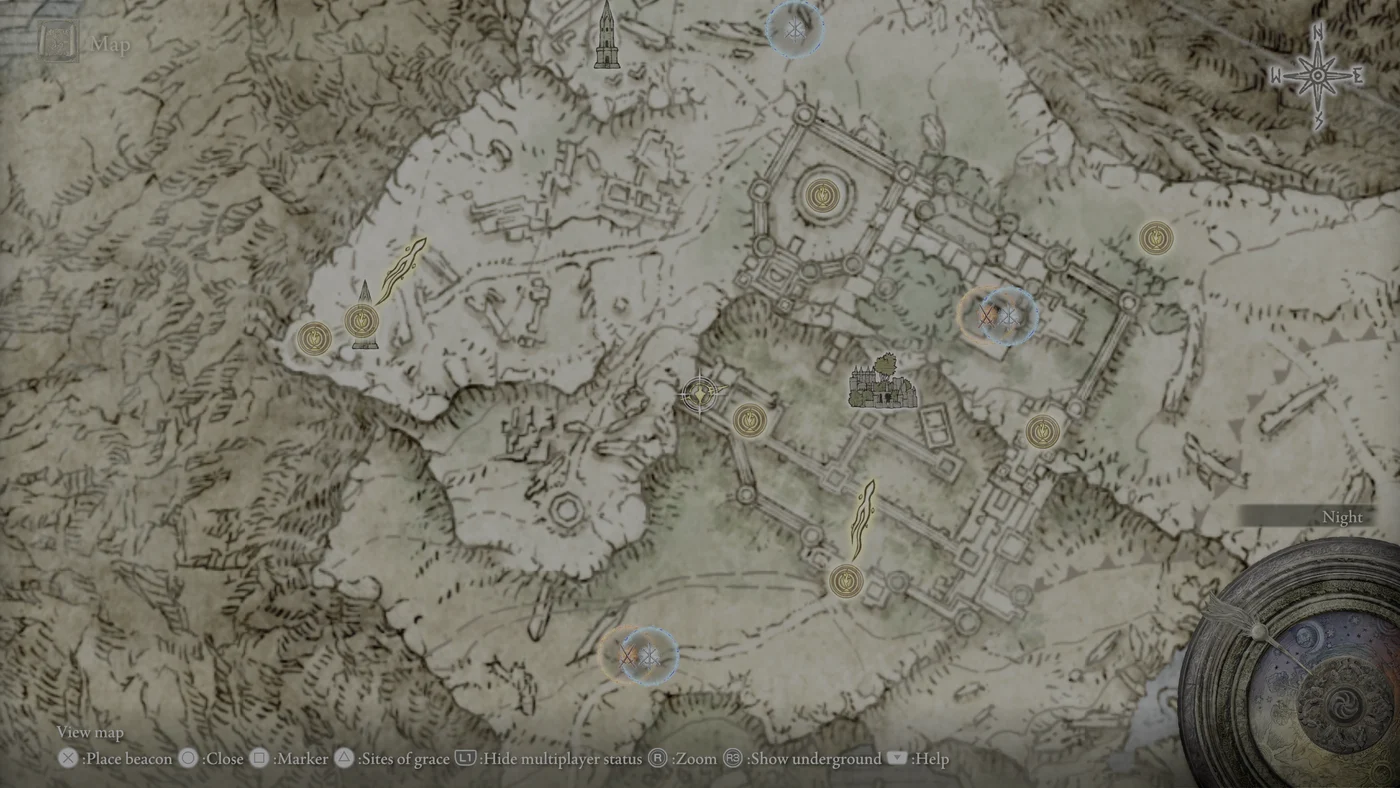 ◈ NPC
◈ NPCPidia, Carian Servant
Old retainer of Caria Manor, broken plaything of Preceptor Seluvis▾
Pidia, Carian Servant
'Servant Pidia's bell bearing, found upon his perished flesh. Offer to the Twin Maiden Husks at the Roundtable Hold to gain access to new items.' Pidia is the last living servant of Caria Manor in northwestern Liurnia, a wizened, courteous old man who tends the abandoned house long after the Carian royal line has decayed. He speaks of his masters with reverence and offers the Tarnished sorceries of the manor. Behind him, the manor is overrun by the maker-puppets of Preceptor Seluvis, the doll-bodies into which Seluvis transfers human souls in pursuit of his philosophic ambition.
'Who's that? Who could it be? A new child, Mother's newborn. A new friend. A new playmate for us. Just watch, he'll be born again. Just watch, she'll be born again. Then Mother will hold him tight. Then Mother will hold her tight. He'll be so warm, warm and cosy.' If the Tarnished follows Seluvis's quest to its end, they return to Caria Manor to find Pidia gone, and a new doll added to the preceptor's collection, speaking in the chorus of all Seluvis's converted dead. The choir's first stanza is the welcome; the third is a gleeful game of crushing a person, 'Squish him! Squish her!' Pidia's voice is somewhere inside it, indistinguishable. The bell-bearing on his corpse is the only proof that the man whose soul now sings nursery rhymes was once distinct.
Servant Pidia's bell bearing, found upon his perished flesh. Offer to the Twin Maiden Husks at the Roundtable Hold to gain access to new items.
Who's that? Who could it be? A new child, Mother's newborn. A new friend. A new playmate for us. Just watch, he'll be born again. Just watch, she'll be born again. Then Mother will hold him tight. Then Mother will hold her tight. He'll be so warm, warm and cosy.
 ◈ NPC
◈ NPCJar Bairn
Last child of Jarburg, mourner of Diallos▾
Jar Bairn
'A keepsake of the warrior jar Alexander. Found at the core of the dead flesh that once filled the great jar. The jars contain dregs inherited from those who came before. Thus are warriors passed from jar to jar, carrying dreams of greatness.' Jar Bairn is one of the last living warrior-jars of Jarburg, a quiet hamlet of pottery-children in Liurnia of the Lakes. The jars are not metaphors, they are clay vessels filled with the rendered flesh of warriors who chose, in their last moments, to be cooked into a pot rather than buried into the earth. The dregs of dozens of dead heroes settle in their interior. Jar Bairn is small, polite, addresses strangers as 'good sir' or 'kind madam' and asks if his jar might be cracked.
'Shard of the late Alexander, a shattered warrior jar. Greatly boosts the attack power of skills. Scraps of stewed flesh cling to the shard, and tatters of ornaments can be seen mingled within the slime. Relics of a red-haired champion, it would seem.' Iron Fist Alexander, the warrior jar Jar Bairn calls 'Uncle Alexander', was his hero: a champion who went to seek glory and fell at Crumbling Farum Azula. After Alexander shatters in his duel against the Tarnished, Jar Bairn inherits the splinters and the question of what a jar's life is for. When Diallos arrives at Jarburg fleeing his House's hunt-ethic, Jar Bairn welcomes him as kin. When grave-robbers come for the jars and Diallos dies defending them, Jar Bairn is left as the only inhabitant who remembers the Hoslow heir's name.
A keepsake of the warrior jar Alexander. Found at the core of the dead flesh that once filled the great jar. The jars contain dregs inherited from those who came before. Thus are warriors passed from jar to jar, carrying dreams of greatness.
Shard of AlexanderShard of the late Alexander, a shattered warrior jar. Greatly boosts the attack power of skills. Scraps of stewed flesh cling to the shard, and tatters of ornaments can be seen mingled within the slime. Relics of a red-haired champion, it would seem.
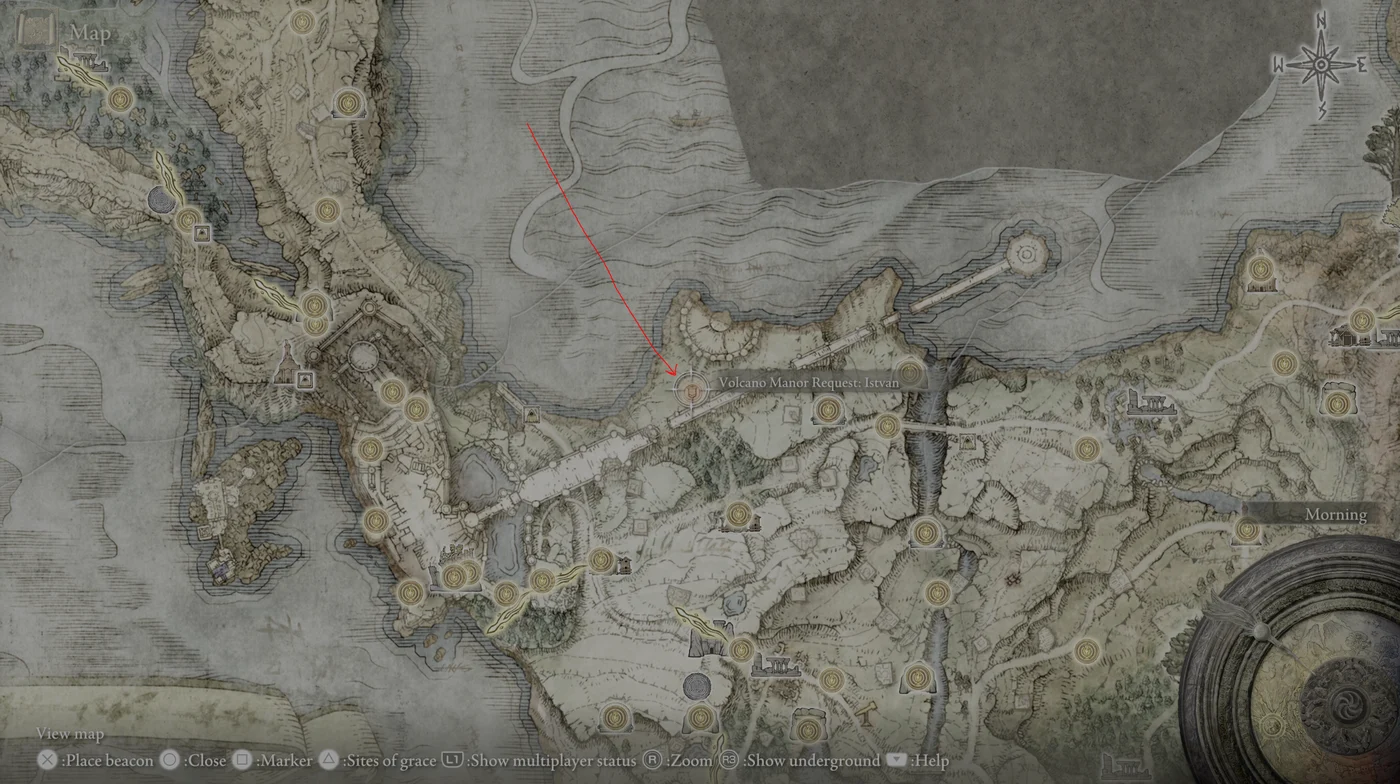 ◈ NPC
◈ NPCOld Knight Istvan
One of the few wizened Tarnished who still survive, named target of a Volcano Manor hunt▾
Old Knight Istvan
'Armor worn by Old Knight Istvan. The corroded metal is reinforced with rock-hard scales, making it highly effective against non-physical attacks. Istvan is one of a few wizened Tarnished who survive to this day.' Istvan is one of the canon's last witnesses to the original Tarnished cohort. The Tarnished are a generation of warriors whom Marika herself divested of grace and drove from the Lands Between, across the Sea of Fog; they waged war and died in lands afar, fated to return only after death, when what she once claimed was given back. Istvan returned. He hides in Limgrave, in scaled armor that the centuries have corroded but never breached, and waits.
'A written request from Volcano Manor disclosing the name of a Tarnished to be hunted. "Old Knight Istvan" He can be found in Limgrave. Find the red mark on your map for the exact location.' Istvan's name has reached Tanith's house. The Manor's letters trade in named quarry, and old champions whose grace has not yet returned are the easiest commission. The Tarnished may invade Istvan's corner of Limgrave on the Manor's behalf and kill him for a recusant's reward, or ignore the letter, in which case Istvan is never met at all, left alone in his own world, a name on a paper that no one came to claim. Either ending is the canon's bleak commentary on what survives the Shattering: an old man with rust-scaled armor, alone in the hills, whose next visitor either carries his name on a paper or never comes at all.
Armor worn by Old Knight Istvan. The corroded metal is reinforced with rock-hard scales, making it highly effective against non-physical attacks. Istvan is one of a few wizened Tarnished who survive to this day.
A written request from Volcano Manor disclosing the name of a Tarnished to be hunted. "Old Knight Istvan" He can be found in Limgrave. Find the red mark on your map for the exact location.
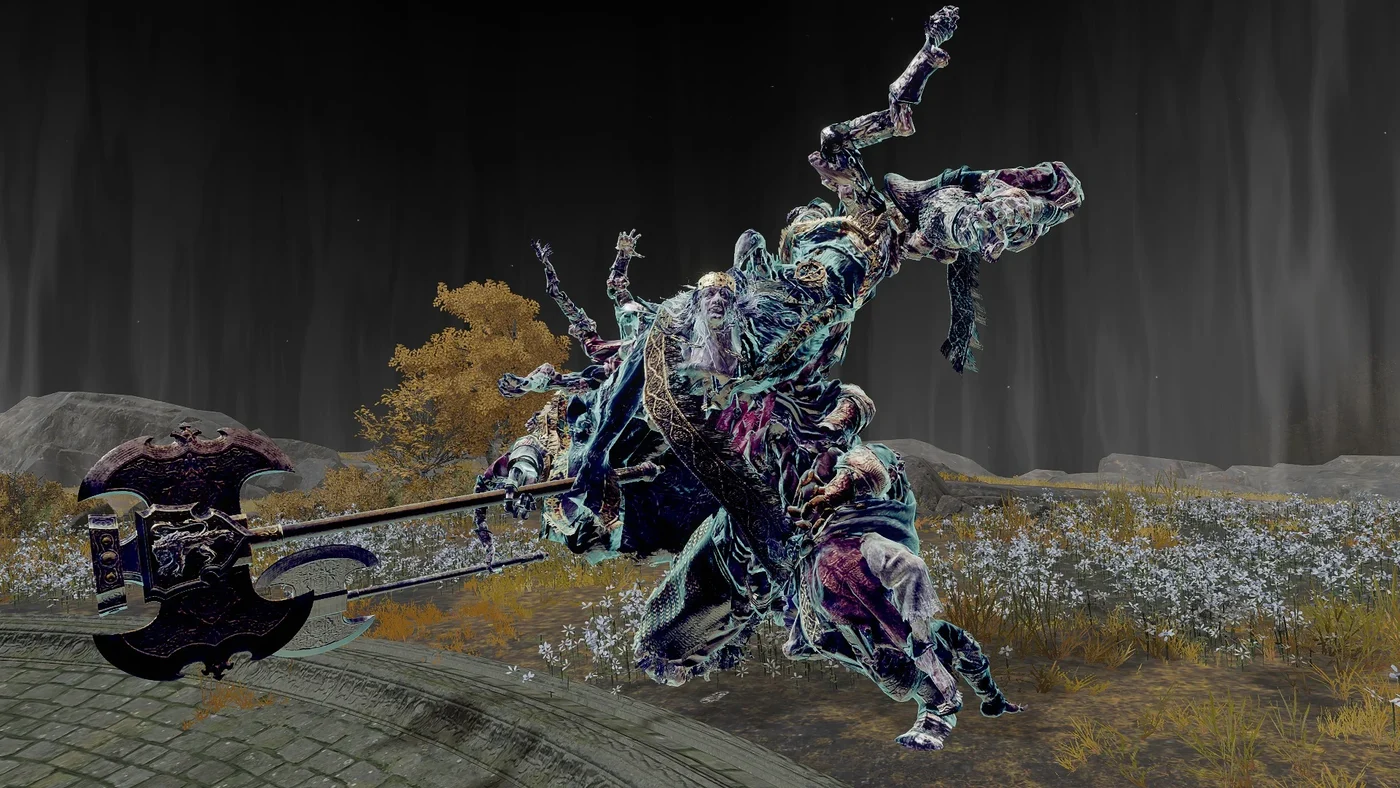 ◈ DEMIGOD-ADJACENT
Godefroy the Grafted
Long-buried Grafted prisoner, captured by Kristoff at Leyndell's First Defense▾
Godefroy the Grafted
'Legendary ashen remains. Use to summon the spirit of Kristoff, the Ancient Dragon Knight. Spirit of Kristoff, an honorable knight of Leyndell who was also a devout worshipper of the ancient dragons. His skills strike down foes with thunderbolts, the dragons' weapon of choice. After the First Defense of Leyndell, Kristoff earned the hero's honor of Erdtree Burial for the feat of capturing Godefroy the Grafted.' Godefroy is the canon's other Grafted scion, a forerunner of Godrick, locked away inside the Auriza Hero's Grave for an offense the records do not name. His name, like Godrick's, may tie him to the Golden Lineage of Godfrey and his offspring, though no text names his descent; whoever his kin, he tried (or was driven, by the same withering of bloodline that Godrick suffered) to graft the limbs of others onto his own body.
'A finely-crafted greatsword intricately engraved with an ancient motif. Given to knights who, whether by misfortune or misdeed, were forced to abandon their homes. Most of these knights were sent to the fringes, where they were forced to start anew with only despair for company.' His capture was important enough to Leyndell that the man who took him, Kristoff, an ancient-dragon-cult knight, theologically a heretic at Marika's court, was rewarded with Erdtree Burial. That the hierarchy overlooked such heresy to grant the honor is itself telling, though no record gives the reason. Godefroy survived imprisonment as a hero of the Tarnished's invasion, fought beside ghost-summons in the depths of his own grave, and bequeathed the Bloody Slash Ash of War, a weapon-skill that costs the user blood. He is what Godrick will become.
Legendary ashen remains. Use to summon the spirit of Kristoff, the Ancient Dragon Knight. Spirit of Kristoff, an honorable knight of Leyndell who was also a devout worshipper of the ancient dragons. His skills strike down foes with thunderbolts, the dragons' weapon of choice. After the First Defense of Leyndell, Kristoff earned the hero's honor of Erdtree Burial for the feat of capturing Godefroy the Grafted.
A finely-crafted greatsword intricately engraved with an ancient motif. Given to knights who, whether by misfortune or misdeed, were forced to abandon their homes. Most of these knights were sent to the fringes, where they were forced to start anew with only despair for company.
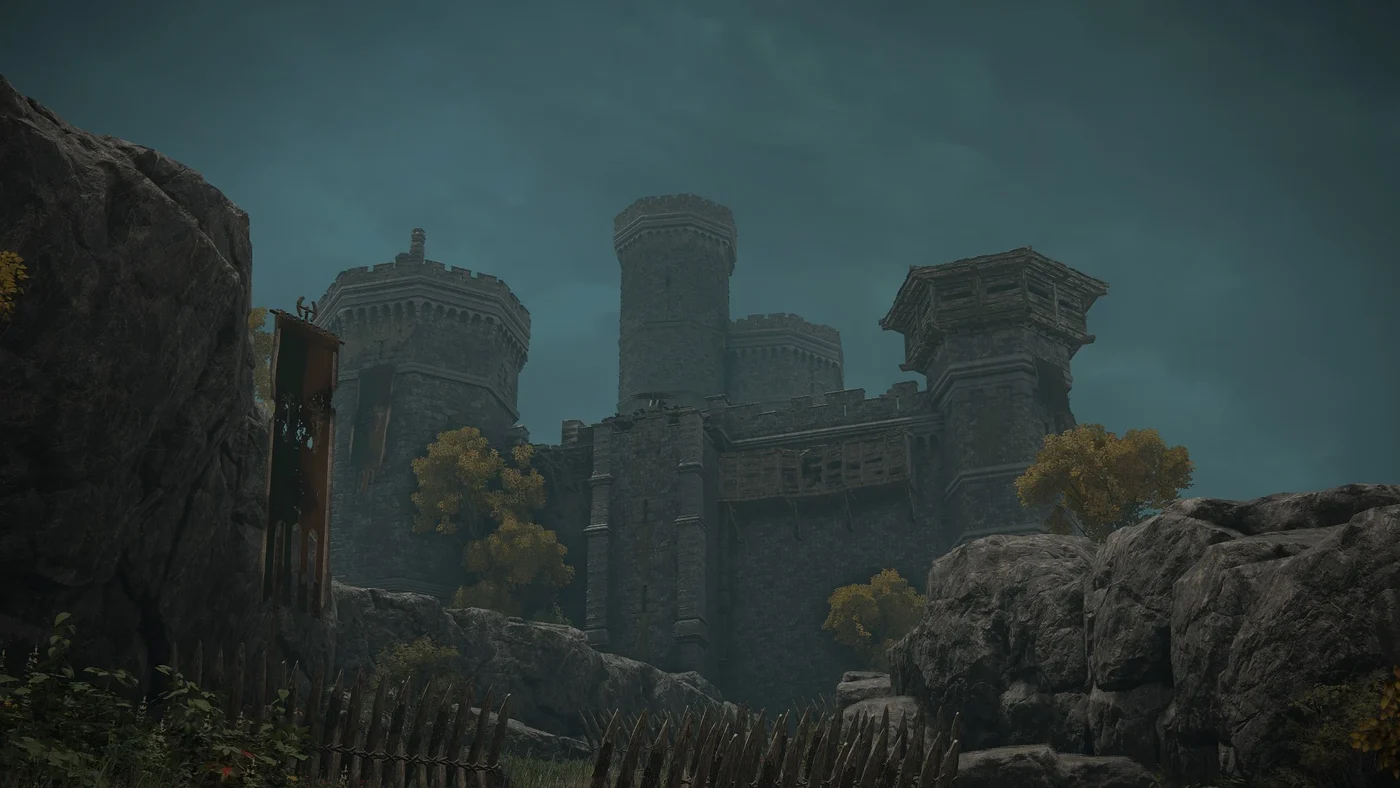 ◈ NPC
◈ NPCKenneth Haight
Castellan-in-exile of Fort Haight, claimant to a throne of mud▾
Kenneth Haight
'Right half of a split medallion depicting the Erdtree. Brandishing the medallion with both halves conjoined will activate the Grand Lift of Dectus, connecting the Altus Plateau to Liurnia. The left half is said to reside in the coastal Fort Haight to the far west.' Kenneth Haight is the dispossessed lord of Fort Haight, a coastal redoubt at the southeast edge of Limgrave that holds the left half of the Dectus Medallion, the key to the great lift that connects the lower Lands to the Altus Plateau. The fort fell to a blood-obsessed Knight Commander out of Stormveil during the Shattering. Kenneth was reduced to standing on a roadside ruin, helmet polished, calling out to passing Tarnished for vassal service.
'Mask in the image of a white-haired young noble. Customarily worn by the head of House Marais. Increases arcane. The Marais family has a dual history spanning generations, serving as both executioners and castellans of the Shaded Castle. This mask bears the likeness of the first of their line.' The castellan tradition in the canon is uneasy: the Marais line keeps the Shaded Castle by inheriting the executioner's role with it. Kenneth keeps Fort Haight by losing it. When Nepheli Loux helps him reclaim the fort, his ambition expands: he wishes to be installed as Lord of Limgrave under the new Elden Lord. He waits at the fort with rehearsed speeches. The Tarnished may grant him the title or refuse him; either way, the Lands Between continue to ignore the small dignity of a castellan whose castle is a yard of broken masonry.
Right half of a split medallion depicting the Erdtree. Brandishing the medallion with both halves conjoined will activate the Grand Lift of Dectus, connecting the Altus Plateau to Liurnia. The left half is said to reside in the coastal Fort Haight to the far west.
Mask in the image of a white-haired young noble. Customarily worn by the head of House Marais. Increases arcane. The Marais family has a dual history spanning generations, serving as both executioners and castellans of the Shaded Castle. This mask bears the likeness of the first of their line.
◈ NPCD, Hunter of the Dead
Golden Order fundamentalist, twin-of-the-twin who never speaks his brother's name▾
D, Hunter of the Dead
'Sword forged by compounding silver and gold. A sacred weapon to hunt Those Who Live in Death. Deals holy damage. The inseparable twins found solace in the Golden Order, the only institution not to revile them as accursed beings.' D is a knight of the Golden Order whose vocation is the hunting and unmaking of Those Who Live in Death, the cursed unliving created in the wake of Ranni's theft of the Rune of Death. He carries the Inseparable Sword, a weapon of compounded silver and gold whose holy damage prevents the slain from rising again. He works methodically, joylessly, in the manner of a man performing a sacrament. He is first found at Summonwater Village in Limgrave, hunting Those Who Live in Death; his path will cross that of Fia, the Deathbed Companion, who keeps the cursed dead alive in her embrace.
'Armor depicting entwined twins of gold and silver. The two known as D are inseparable twins. They are of two bodies and two minds, but one single soul. Not once do they stand together; not one word do they speak to one another. Perhaps this armor longs to find its way to the other D.' The canonical D is two men. One is the Hunter; the other waits, mute, in the depths of Nokron, awaiting the brother who will not come. The Twinned Armor is engraved with their conjoined silhouette but is given to only one of them at a time, and the canonical detail is unsparing: 'Not once do they stand together; not one word do they speak to one another.' If Fia kills the Hunter D in his sleep, the armor passes to the silent brother, and the moral mathematics of Those Who Live in Death are inverted by a single act of Deathbed mercy. Hunter and hunted exchange identities; the brother who never spoke now takes up his slain sibling's own sword and raiment.
Sword forged by compounding silver and gold. A sacred weapon to hunt Those Who Live in Death. Deals holy damage. The inseparable twins found solace in the Golden Order, the only institution not to revile them as accursed beings.
Armor depicting entwined twins of gold and silver. The two known as D are inseparable twins. They are of two bodies and two minds, but one single soul. Not once do they stand together; not one word do they speak to one another. Perhaps this armor longs to find its way to the other D.
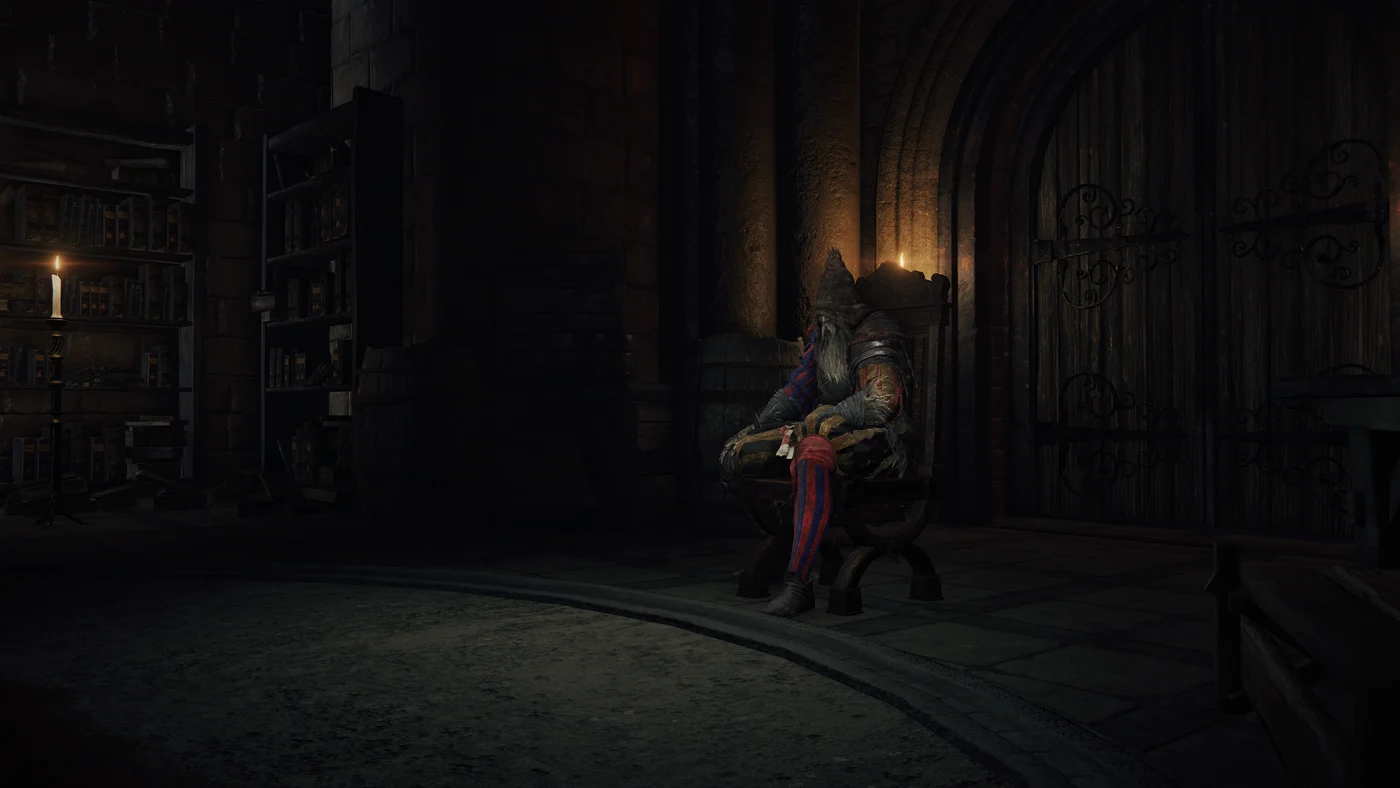 ◈ NPC
◈ NPCCastellan Jerren
Restless tumbleweed turned guest commander, Radahn's sworn second▾
Castellan Jerren
'Unusually colorful armor. Worn by the knight Jerren. Jerren preferred a nomadic existence, but after spending time as a guest of the Carian royals, he became a guest commander for General Radahn. And for the first time, the restless tumbleweed would be bound by honorable oath.' Jerren is the canon's most reluctant nobleman, an itinerant knight in motley colors who passed through the Carian royal court, befriended General Radahn, and accepted a guest-commander appointment at Redmane Castle out of honor for the first man whose company he could not casually outride. The armor he wears is a tumbleweed's: threadbare, pieced from a dozen passing seasons.
'A pointy, ragged hood. Worn by the knight Jerren. The hood hides an aged, bearded mask. Jerren served General Radahn as a guest commander, and they are said to have sworn an oath of honorable death to one another.' The oath is the canon's quietest blade. After the Shattering, when Radahn's body succumbed to scarlet rot and he wandered the Caelid wastes battling the heavens with the wreckage of his own mind, Jerren stayed at Redmane and organised the Radahn Festival, a tournament whose winner would have the right to give Radahn the death his oath had promised. Jerren also hunts Sellen, the Graven Witch and 'enemy of Caria,' as her declared executioner; it is the Tarnished, not Jerren, who chooses whether the witch lives or dies. He is the canon's stubbornest old man and its most reliable judge of last rites.
Unusually colorful armor. Worn by the knight Jerren. Jerren preferred a nomadic existence, but after spending time as a guest of the Carian royals, he became a guest commander for General Radahn. And for the first time, the restless tumbleweed would be bound by honorable oath.
A pointy, ragged hood. Worn by the knight Jerren. The hood hides an aged, bearded mask. Jerren served General Radahn as a guest commander, and they are said to have sworn an oath of honorable death to one another.
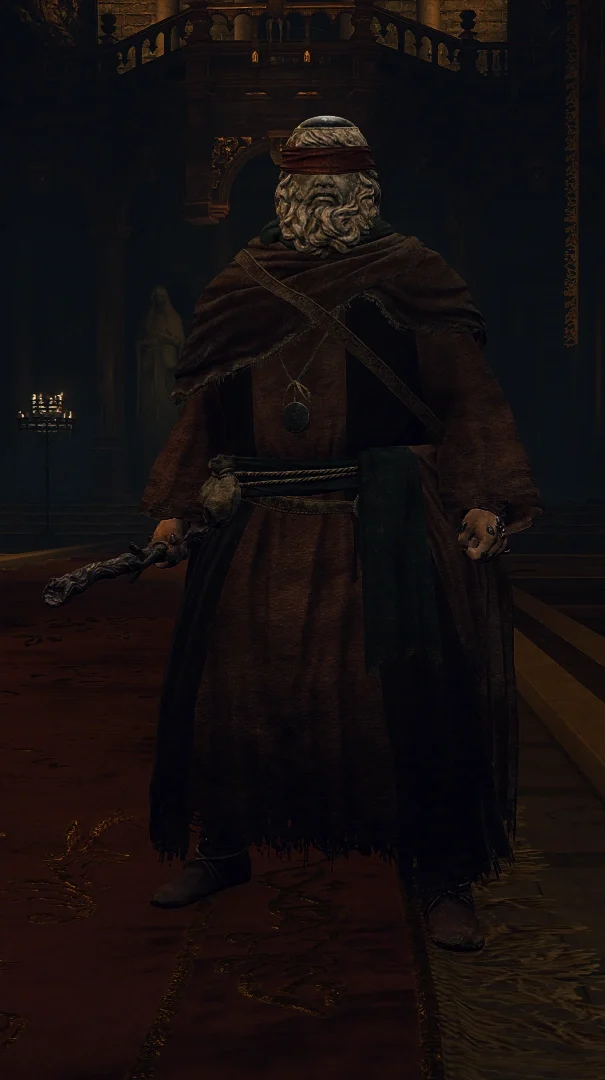 ◈ NPC
◈ NPCErrant Sorcerer Wilhelm
Silent seeker of the primeval current, Vargram's friend, prisoner of the Roundtable▾
Errant Sorcerer Wilhelm
'Commonplace robe made of thick cloth. Worn by the Errant Sorcerer Wilhelm, one of the first Tarnished to visit Roundtable Hold. A silent seeker of sorcery, who had gone so far as to make contact with the primeval current, Wilhelm was led by guidance into confrontation with his friend Vargram, and it is said that he was then taken prisoner in Roundtable Hold.' Wilhelm is one of the canon's strangest sorcerers: a Tarnished of the first cohort who pursued the primeval current, the same star-stuff Azur glimpsed and was left both bewitched and fearful of, and reached it. The sorceries he could speak, he stopped speaking. Whatever he saw at the bottom of glintstone's origin imposed silence on him.
'A written request from Volcano Manor addressed to Bernahl disclosing the names of two Tarnished to be hunted. "Vargram the Raging Wolf" "Errant Sorcerer Wilhelm" Both men can be found in the Royal Capital of Leyndell. Find the red mark on your map for the exact location.' Their guidance, the same guiding grace that called the Tarnished home from across the Sea of Fog, set Wilhelm against Vargram, after which, the robe says, he was taken prisoner in Roundtable Hold. The canonical detail is that he was 'led by guidance into confrontation with his friend.' The Two Fingers' grace, in this single phrase, indicts itself: it has no quarrel with friendship, and no compunction about ending one. Wilhelm is found beside Vargram in the Capital, fighting back-to-back, hunted on a Volcano Manor bounty. They die without speaking.
Commonplace robe made of thick cloth. Worn by the Errant Sorcerer Wilhelm, one of the first Tarnished to visit Roundtable Hold. A silent seeker of sorcery, who had gone so far as to make contact with the primeval current, Wilhelm was led by guidance into confrontation with his friend Vargram, and it is said that he was then taken prisoner in Roundtable Hold.
A written request from Volcano Manor addressed to Bernahl disclosing the names of two Tarnished to be hunted. "Vargram the Raging Wolf" "Errant Sorcerer Wilhelm" Both men can be found in the Royal Capital of Leyndell. Find the red mark on your map for the exact location.
◈ NPCAlbus, the Old Albinauric
Pot-bodied last carrier of the Haligtree's right medallion▾
Albus, the Old Albinauric
'Right half of a split medallion depicting the Haligtree. Brandishing the medallion with both halves conjoined will activate the Grand Lift of Rold, granting access to a hidden path. In other words, this secret medallion will guide the bearer to the land of Miquella's Haligtree.' Albus is the last carrier of the right half of the Haligtree Secret Medallion, the artifact that, joined with its twin (kept by Latenna at the Slumbering Wolf's Shack), opens the hidden Grand Lift of Rold to the Consecrated Snowfield. He hides in plain sight in the Village of the Albinaurics, in Liurnia, disguised as one of the wandering pot-people whose ceramic bodies provide the perfect refuge for an albinauric whose entire community has been hunted to extinction.
'The thick, coagulated blood of the Albinaurics. Material used for crafting items. Albinaurics are lifeforms made by human hands. Thus, many believe them to live impure lives, untouched by the Erdtree's grace.' Albus's body, squat, ceramic-armoured, recognizably albinauric only when one knows where to look, is the canon's testimony to a near-extinction. The Albinaurics were artificial life made by human hands; the orthodox Erdtree faith never recognised them as living, and the village's ruin was the work of what Albus calls 'the cursemongers', not of any knightly order. Albus is one of perhaps three named survivors. He gives the medallion to a stranger because there are no kin left to give it to. He asks the Tarnished to carry the news to Latenna, who is dying of the same hunt, elsewhere in Liurnia.
Right half of a split medallion depicting the Haligtree. Brandishing the medallion with both halves conjoined will activate the Grand Lift of Rold, granting access to a hidden path. In other words, this secret medallion will guide the bearer to the land of Miquella's Haligtree.
The thick, coagulated blood of the Albinaurics. Material used for crafting items. Albinaurics are lifeforms made by human hands. Thus, many believe them to live impure lives, untouched by the Erdtree's grace.
◈ NPCLord Goldmask
Mute fundamentalist atop a viaduct, devisor of the Mending Rune of Perfect Order▾
Lord Goldmask
'A mask designed to resemble a blazing golden halo. Created and left behind by Lord Goldmask, a staunch pursuer of Golden Order fundamentalism. Strengthens Golden Order incantations. Its striking design represents both the brilliant inspiration that once shone upon him, and the vision of a ring that he will surely find at the end of his pursuit. "To you who seek to shine as I do, wear it well!"' Goldmask is the canon's silent theologian, a noble who renounced speech, finery, and disciples in pursuit of a single doctrinal repair. He reasoned that the Order was not broken by the Shattering; it was always defective, contingent on gods 'no better than men,' and therefore reformable. He stands on the Altus viaduct, masked and unmoving, calculating the syllogism that will redeem creation.
'Rune discovered by the noble Goldmask. Used to restore the fractured Elden Ring when brandished by the Elden Lord. A rune of transcendental ideology which will attempt to perfect the Golden Order. The current imperfection of the Golden Order, or instability of ideology, can be blamed upon the fickleness of the gods no better than men. That is the fly in the ointment.' His conclusion is the Mending Rune of Perfect Order: a rune that, when brandished by an Elden Lord, removes the gods entirely from the Order's authorship. Brother Corhyn, his last and only acolyte, eventually takes his place at the master's side; when Leyndell falls to ash, the Tarnished may take the rune from Goldmask's corpse and offer it to Marika's body in the throne. The resulting ending is the canon's coldest: 'Our seed will look back upon us, and recall. The Age of Order. The Age Absolute.' A perfected hierarchy, with no living deity at its peak, only the sealed corpse of one and the doctrine of a man whose disciples had long since left him.
Radiant Gold MaskA mask designed to resemble a blazing golden halo. Created and left behind by Lord Goldmask, a staunch pursuer of Golden Order fundamentalism. Strengthens Golden Order incantations. Its striking design represents both the brilliant inspiration that once shone upon him, and the vision of a ring that he will surely find at the end of his pursuit. "To you who seek to shine as I do, wear it well!"
Mending Rune of Perfect OrderRune discovered by the noble Goldmask. Used to restore the fractured Elden Ring when brandished by the Elden Lord. A rune of transcendental ideology which will attempt to perfect the Golden Order. The current imperfection of the Golden Order, or instability of ideology, can be blamed upon the fickleness of the gods no better than men. That is the fly in the ointment.
◈ NPCBrother Corhyn
Last disciple of Goldmask, chief preacher of the Roundtable Hold▾
Brother Corhyn
'Brother Corhyn's bell bearing, found upon his perished flesh. Offer to the Twin Maiden Husks at the Roundtable Hold to gain access to new items.' Corhyn is a fundamentalist priest of the Golden Order who keeps a small altar at the Roundtable Hold, ministering to whomever will listen. His teachings are precise, dogmatic, archived from the same orthodoxy that the rest of the realm has begun to question. One day Corhyn announces his own departure, asking the Tarnished if they know of the noble Goldmask, and leaves the Roundtable to find his master; he is the last man in the Lands Between who still believes Goldmask has answers worth chasing across continents.
'Bracelets made in the image of Erdtree branches. Minimal adornments made by Lord Goldmask's disciples. Those disciples have long since left him.' That sentence, those disciples have long since left him, is the canonical fact Corhyn spends his pilgrimage refuting. He finds Goldmask on the Altus viaduct, kneels in what passes for the master's company, and translates between the noble's silence and the Tarnished's questions. When Leyndell falls to ash, Goldmask's vigil ends in death, and it is the Tarnished who takes the Mending Rune of Perfect Order from the master's corpse. Corhyn's own end is quieter still: his bell-bearing is simply 'found upon his perished flesh', like every other servant's. The Order Goldmask perfected does not memorialise the men who carried it.
Brother Corhyn's bell bearing, found upon his perished flesh. Offer to the Twin Maiden Husks at the Roundtable Hold to gain access to new items.
◈ NPCCastellan Edgar
Father of Irina, broken survivor of Castle Morne, grief-maddened revenger▾
Castellan Edgar
'The siege of Castle Morne A lone hero fights for his vengeance Only to fall at the hand of Lord Godfrey.' The Historical Monument at Castle Morne records a single ancient siege, a lone hero who fought for his vengeance, only to fall at the hand of Lord Godfrey. The recent revolt reads as its echo: the Misbegotten of Morne rose against their human keepers, slaughtered the household, and left Castellan Edgar, a soft-spoken old man, alive at his post: he had secreted his daughter Irina out of the castle and stayed behind, bound by his duty as commander.
'The storied sword of Castle Morne. A revenger's weapon, it is burdened with oceans of anger and regret. One of the legendary armaments. A lone surviving champion from a country now vanished was so determined to continue fighting that he claimed the swords of an entire clan of warriors.' Edgar finds Irina's body on the road north, slain by unknown hands, the 'foul wretches' he swears to hunt down and exterminate, and the second part of the canon begins. His duty at Morne discharged, the Tarnished having kept the storied sword from the fallen creatures, he leaves his post and turns invader. Armoured in his own grief, he descends on the worlds of Tarnished he has never met, convinced that each of them 'had a hand in Irina's undoing', and dies at last in a duel with one of them. The lone surviving champion of a country now vanished was always Edgar's mirror, though the storied sword itself passed to the Tarnished, not to him.
The siege of Castle Morne A lone hero fights for his vengeance Only to fall at the hand of Lord Godfrey
The storied sword of Castle Morne. A revenger's weapon, it is burdened with oceans of anger and regret. One of the legendary armaments. A lone surviving champion from a country now vanished was so determined to continue fighting that he claimed the swords of an entire clan of warriors.
◈ NPCRya the Scout
Volcano Manor's friendly recruiter, secretly a serpent of Rykard's brood▾
Rya the Scout
'Letter given by Rya as thanks for retrieving her necklace. Contains an invitation to Volcano Manor. "Brave Tarnished, Seek the Altus Plateau in the realm of the Erdtree. Prove yourself by making this journey, and the Volcano Manor will fully extend its invitation. To fight, amongst a family of champions."' Rya is the Volcano Manor's friendliest face, a small, well-dressed scout posted on a Liurnian shoreline, asking passers-by to retrieve a necklace stolen from her by a blackguard. The necklace is the canonical detail. When the Tarnished returns it, she gifts the formal invitation to the Manor, where Tanith waits to extend her family of champions.
'Amnion from the mother's womb which cradled the poor unwanted offspring of a repellant birthing ritual.' Rya's later confession is that her courteous human form is a lent body, a serpent of Rykard's brood, who took human shape to keep watch on the surface for the Manor. Her true name is Zorayas, and by her own account she was born not of grace but of a hideous ritual. When the Tarnished stumbles upon her in a chamber of the Manor, the disguise slips: she reveals the serpent she has always been and asks to be allowed to die in her true form. The canonical kindness is in the small ask, to be witnessed dying as oneself, not as the disguise that made her useful.
Letter given by Rya as thanks for retrieving her necklace. Contains an invitation to Volcano Manor. "Brave Tarnished, Seek the Altus Plateau in the realm of the Erdtree. Prove yourself by making this journey, and the Volcano Manor will fully extend its invitation. To fight, amongst a family of champions."
Amnion from the mother's womb which cradled the poor unwanted offspring of a repellant birthing ritual. It will never dry out, remaining damp indefinitely.
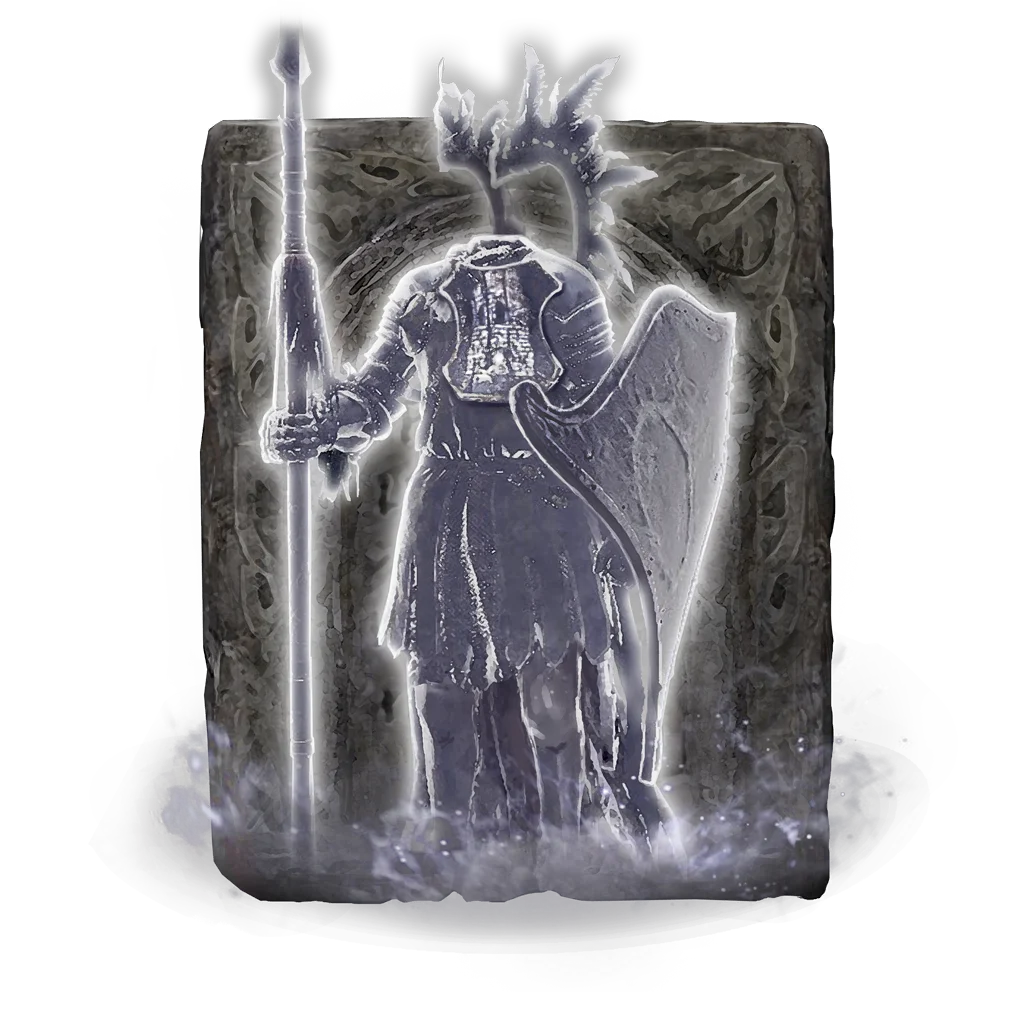 ◈ SPIRIT
Lhutel the Headless
Mausoleum knight who chose Death itself to keep watch on a soulless demigod▾
Lhutel the Headless
'Legendary ashen remains. Use to summon the spirit of Lhutel the Headless. Spirit of a headless knight who leads the mausoleum soldiers. Wields a lance enrobed in Death and hurls spectral lances at foes. Lhutel sacrificed her life so that in Death she could continue to protect a soulless demigod until their revival, earning her the hero's honor of Erdtree Burial.' Lhutel is one of the canon's quietest acts of devotion. The Walking Mausoleums of the Lands Between were built to revive demigods whose bodies remained but whose souls had perished, Godwyn most prominently, his soul slain by the Black Knife assassins, whose daggers bore a fragment of Death stolen from Maliketh, the Black Blade, on the Night of the Black Knives. Each mausoleum is staffed by a captain of the dead and a column of mausoleum soldiers, walking forever in the slow procession of resurrection.
'Armor worn by headless knights who endlessly guard the Wandering Mausoleum. The wing-shaped ornaments on its back evoke the Deathbird. A self-inflicted curse that ties the spirits of these loyal knights to the land, having willingly beheaded themselves so that they may serve their masters in death.' Lhutel chose to die so that, undying, she could keep watch on a single demigod's body until the rite was completed. She traded her continuing life for the ability to be useful long after every other knight had stopped existing. Her reward was Erdtree Burial, the hero's honour, and she carries it into Death itself, leading the mausoleum soldiers from the front. The Spirit Ash the Tarnished may summon her with is a copy of that vigil. She fights alongside the Tarnished against demigods her order was built to revive, and asks no question about the contradiction.
Legendary ashen remains. Use to summon the spirit of Lhutel the Headless. Spirit of a headless knight who leads the mausoleum soldiers. Wields a lance enrobed in Death and hurls spectral lances at foes. Lhutel sacrificed her life so that in Death she could continue to protect a soulless demigod until their revival, earning her the hero's honor of Erdtree Burial.
Armor worn by headless knights who endlessly guard the Wandering Mausoleum. The wing-shaped ornaments on its back evoke the Deathbird. A self-inflicted curse that ties the spirits of these loyal knights to the land, having willingly beheaded themselves so that they may serve their masters in death.
◈ ORDERThe Heroes of Zamor
Frost-clad knights, eternal enemies of the Fire Giants▾
The Heroes of Zamor
'Armor worn by knights of Zamor, hailed as heroes in the War against the Giants. These long-lived warriors, clad in biting, freezing winds, are said to have been the mortal enemies of the Fire Giants since time immemorial.' The Heroes of Zamor are an order of long-lived warriors who fought for the Erdtree in the War against the Giants, the campaign Marika ordered to extinguish the Flame of Ruin atop the Mountaintops, the only fire that could ever burn the Erdtree itself. Zamor is a frost-cloaked town in the snow-walked north; its knights wear masks of ice and wield curved swords whose edges are styled after icy wind. Their elemental affinity made them the canonical counterweight to the Fire Giants, and the Erdtree's chosen instrument for the giants' suppression.
'Ice sorcery of the Town of Zamor. Strike the ground with the staff to create a freezing tornado. Charging enhances potency. Cloaked in icy tempests, the knights of Zamor have challenged the Fire Giants since ancient times.' Their war ended in the Order's favour. The last Fire Giant was bound to the Forge by Marika's curse, his fellow giants extinguished, and the Heroes of Zamor were left without an enemy worth their winters. The Walking Mausoleum guarded by an Ancient Hero of Zamor in the Mountaintops is the canon's quiet memorial: a knight whose order outlived its purpose, walking forever beside a demigod whose body cannot be revived, in the snowfield where their order's last battle was won.
Zamor ArmorArmor worn by knights of Zamor, hailed as heroes in the War against the Giants. These long-lived warriors, clad in biting, freezing winds, are said to have been the mortal enemies of the Fire Giants since time immemorial.
Zamor Ice StormIce sorcery of the Town of Zamor. Strike the ground with the staff to create a freezing tornado. Charging enhances potency. Cloaked in icy tempests, the knights of Zamor have challenged the Fire Giants since ancient times.
◈ NPCFinger Reader Enia
Two Fingers' interpreter at the Roundtable, broker of remembrance-power▾
Finger Reader Enia
'Remembrance of the Elden Beast, hewn into the Erdtree. The power of its namesake can be unlocked by the Finger Reader. Alternatively, it can be used to gain a great bounty of runes. It was the vassal beast of the Greater Will and living incarnation of the concept of Order.' Enia is the canon's institutional interface between the Two Fingers and any Tarnished mortal enough to need translation. Each demigod the Tarnished slays leaves a Remembrance, a hewn fragment of the Erdtree containing the dead lord's residual power, and Enia is the priestess who reads the Fingers' will and transmutes the Remembrance into either the power of its namesake or a flat bounty of runes. Without her, the Tarnished could carry the dead but never spend them.
'Remembrance of the warrior Hoarah Loux, hewn into the Erdtree. The power of its namesake can be unlocked by the Finger Reader. Alternatively, it can be used to gain a great bounty of runes. When Godfrey, first Elden Lord was robbed of his grace, becoming Tarnished, he took with him his kinfolk and left the Lands Between. After the Long March of the Tarnished came to an end, Godfrey divested himself of kingship, becoming a simple warrior once more.' Enia is also the canonical voice of the Greater Will inside the Roundtable: when the Fingers themselves fall silent, she remains. Her counsel is not warm. She offers a price, takes the remembrance, and reads the next instruction in the same flat priest's tone. She is the canon's quiet documentation that ritual still works after belief in the gods who authored the ritual has lapsed.
Elden RemembranceRemembrance of the Elden Beast, hewn into the Erdtree. The power of its namesake can be unlocked by the Finger Reader. Alternatively, it can be used to gain a great bounty of runes. It was the vassal beast of the Greater Will and living incarnation of the concept of Order.
Remembrance of Hoarah LouxRemembrance of the warrior Hoarah Loux, hewn into the Erdtree. The power of its namesake can be unlocked by the Finger Reader. Alternatively, it can be used to gain a great bounty of runes. When Godfrey, first Elden Lord was robbed of his grace, becoming Tarnished, he took with him his kinfolk and left the Lands Between. After the Long March of the Tarnished came to an end, Godfrey divested himself of kingship, becoming a simple warrior once more.
◈ NPCEleonora, Violet Bloody Finger
Land of Reeds whirlwind whose mastery was likened to a tempest, undone by Mohg's blood▾
Eleonora, Violet Bloody Finger
'Twinned naginata forged in the Land of Reeds. Chosen weapon of Eleonora, Violet Bloody Finger. Her mastery of the sword was such that her onslaught was likened to a whirlwind, but now her legacy is stained by accursed blood.' Eleonora is the canon's most accomplished Bloody Finger, a warrior of the Land of Reeds, the eastern country of samurai whose Nagakiba and Uchigatana define the canonical sword discipline. Her chosen weapon is the twinned naginata Eleonora's Poleblade, a polearm that demands a martial vocabulary the rest of the Bloody Fingers do not possess. Her name is whispered before her arrival because the surface bears no other invader who can sustain a duel against a hardened Tarnished.
'Jagged dagger with a distinctive curved blade. Used by the noble servants of the Lord of Blood. This dagger rips the flesh as it enters, inflicting blood loss with sickening efficacy. A proud testament to the success of its vicious design, this weapon is perpetually coated in blood.' Eleonora's tragedy is canonical and brief: she swore herself to Mohg, the Lord of Blood, took the violet finger as her sigil, and the canon records the loss in a single phrase, her legacy is stained by accursed blood. Her mastery survives the corruption; her name does not. She invades a Tarnished in the Second Church of Marika, fights with the precision of an unfallen samurai, and dies still moving. The Bloody Finger Hunter Yura, the canon's other Land of Reeds samurai, is sometimes summoned to her duel as a ghost, and arrives, in life or in death, to mourn the woman he kept in the deepest reaches of his heart.
Twinned naginata forged in the Land of Reeds. Chosen weapon of Eleonora, Violet Bloody Finger. Her mastery of the sword was such that her onslaught was likened to a whirlwind, but now her legacy is stained by accursed blood.
Jagged dagger with a distinctive curved blade. Used by the noble servants of the Lord of Blood. This dagger rips the flesh as it enters, inflicting blood loss with sickening efficacy. A proud testament to the success of its vicious design, this weapon is perpetually coated in blood.
❋ DLC NPCIgon, the Broken Drake Warrior
Bayle's last hunter, dragon-communicant by hatred, dies bellowing his quarry's name▾
Igon, the Broken Drake Warrior
'Armor of the broken drake warrior Igon, from a set comprised of a miscellany of parts. Filthy belongings are attached to this tattered piece of protective-wear. The poor scavenger of battlefields found honor through Dragon Communion.' Igon is the canon's most furious holdover from the Realm of Shadow's old wars, a ragged scavenger in patched-together armor stripped from corpses, who long ago challenged the vile dragon Bayle and was grievously injured and broken by fear. He survived because dragon-hatred kept him alive past every other reason. He practises Dragon Communion, the rite of devouring dragon hearts, but his cult is a cult of one: the cult of killing Bayle.
'Skill of Igon, drake warrior. Ready the bow before unleashing a twisted shot with a great bellow that considerably enhances its power.' Igon's canonical weapon is a greatbow; his canonical skill is a bellow. The DLC frames the duel against Bayle as the canon's only boss-fight that comes with a co-op narrator: Igon, summoned at the platform's edge, screams Bayle's name and his own as the bow's twisted shots rip strips from the great drake's hide. Whether or not his summon falls to Bayle's flame, Igon is found after the kill at the foot of the jagged peak, where he dies of his own joy, his hunt complete. The poor scavenger of battlefields found honor through Dragon Communion is the canon's verdict on the shape of his entire life.
Igon's ArmorArmor of the broken drake warrior Igon, from a set comprised of a miscellany of parts. Filthy belongings are attached to this tattered piece of protective-wear. The poor scavenger of battlefields found honor through Dragon Communion.
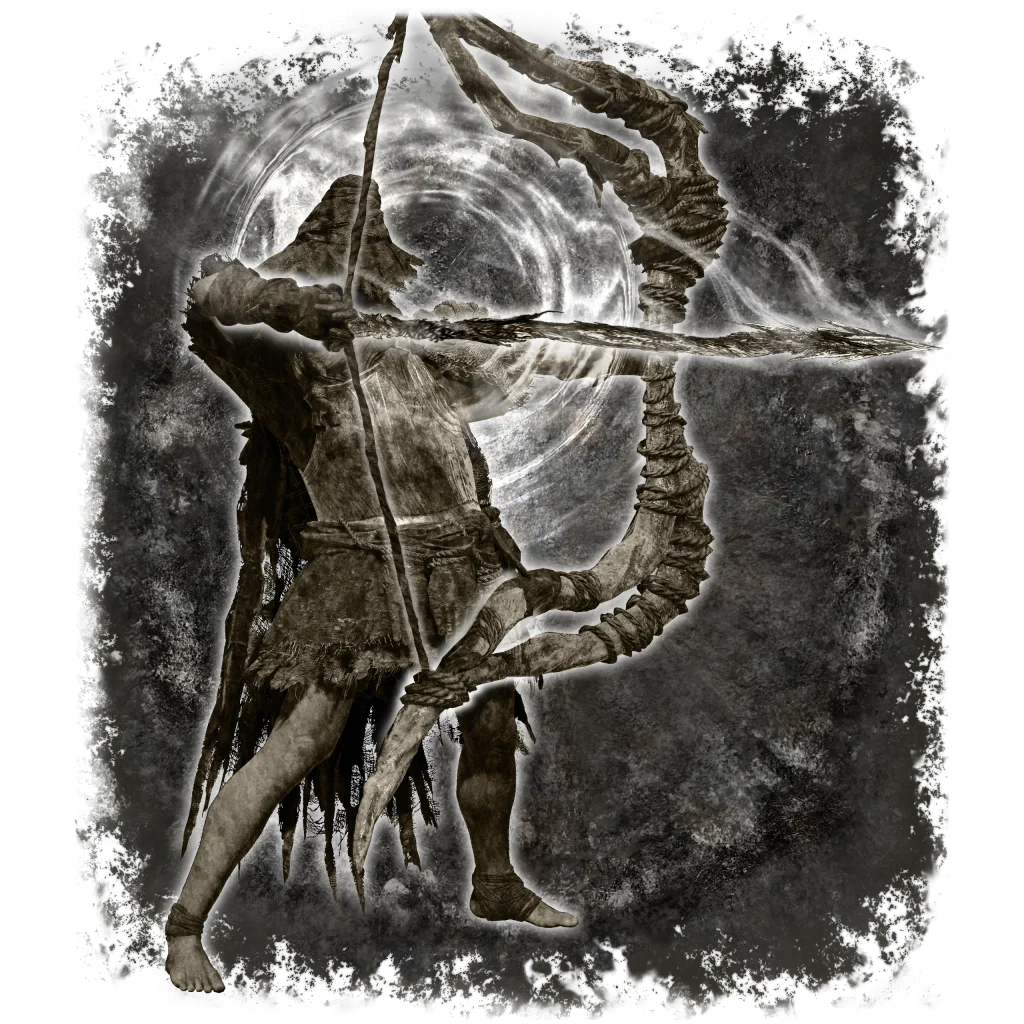 Igon's Drake Hunt
Skill: Igon's Drake Hunt Skill of Igon, drake warrior. Ready the bow before unleashing a twisted shot with a great bellow that considerably enhances its power.
❋ DLC NPCThiollier of the Sleeping Sword
St. Trina's mortal lover, poisoner who tasted velvety sleep just once▾
Thiollier of the Sleeping Sword
'The dark attire of those who wield poison in secret. The silver hair is arranged in the same style as St. Trina's, increasing arcane. Additionally, countless needles are sewn onto the exterior, apparently for talismanic effect.' Thiollier is the canon's most quietly tragic DLC pilgrim, a poisoner-priest who shaped his hair to match St. Trina's silver locks long before he ever met her, who walks the Realm of Shadow asking each shrine where the saint's final resting place lies. The needles sewn into his garb are talismanic, not medical. He carries them because Trina is the goddess of sleep, and sleep is the only mercy his order recognises.
'A mask upon which is carved a tranquil sleeping face. The silver hair is arranged in the same style as St. Trina's, increasing arcane. Just once, Thiollier was granted the sweet repose of velvety sleep. The remainder of his days would be spent attempting to recapture it.' He found her, just once, in the depths of the Stone Coffin Fissure, where St. Trina was left to wither on the southern shore of the Gravesite Plain: half-conscious among the drifting stone coffins, the suppressed feminine fragment of Miquella's soul. There, just once, he was granted the sweet repose of velvety sleep. The mask he carries afterward is the carved image of that one moment, frozen in tranquillity. His final resolve is not his own but St. Trina's singular wish, and it is the cruelest turn in the DLC: he gives himself over to stopping Miquella the Kind before the god can reclaim the loving half he once cast off. The poisoner who spent his career chasing her velvety sleep ends by serving that one wish.
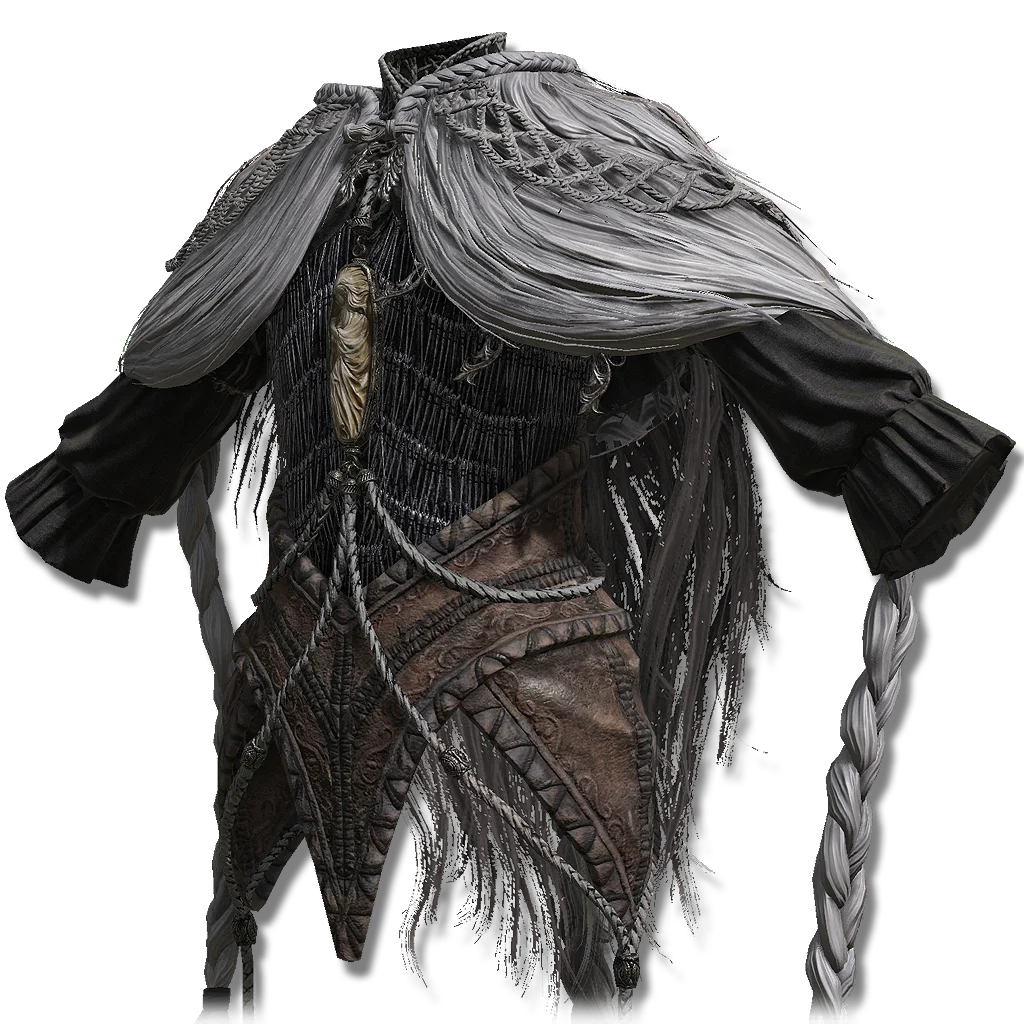 Thiollier's Garb
The dark attire of those who wield poison in secret. The silver hair is arranged in the same style as St. Trina's, increasing arcane. Additionally, countless needles are sewn onto the exterior, apparently for talismanic effect.
❋ DLC NPCMoore of the Forager Brood
Verdigris-shielded survivor of a non-human forager kin, broken by St. Trina's gift▾
Moore of the Forager Brood
'A record of crafting techniques left by the non-human forager brood. Shared out of kindness toward Moore and his kin. Acquire the knowledge to craft the following: - Spellproof Pickled Liver.' Moore belongs to a non-human forager kindred, gatherers whose entire culture was built around pickling, preserving, and quietly cooking the liver of any monstrous beast that came their way. Their cookbooks are addressed to him by name. The forager kin recognised him as one of their own and willed him their craft, sharing their cookbooks out of kindness toward Moore and his kin.
'Unique Skill: Moore's Charge Ready the shield with both hands, then charge forth while maintaining guard, ending in a shove imbued with verdigris magic. Knocks back nearby enemies, but does not cause significant harm. Hold to extend the length of the charge.' Moore's only canonical weapon is a great shield charged with verdigris, copper-rust magic, the colour of his kin's pots. He uses it to knock enemies aside without harming them. The mercy is the entire point. His questline ends when Moore chooses the velvety sleep himself, that sweet repose Thiollier received but once. He is found later, having drunk the poison voluntarily, his bell bearing left upon his perished flesh. The non-human forager who lived by mercy chose mercy on himself last.
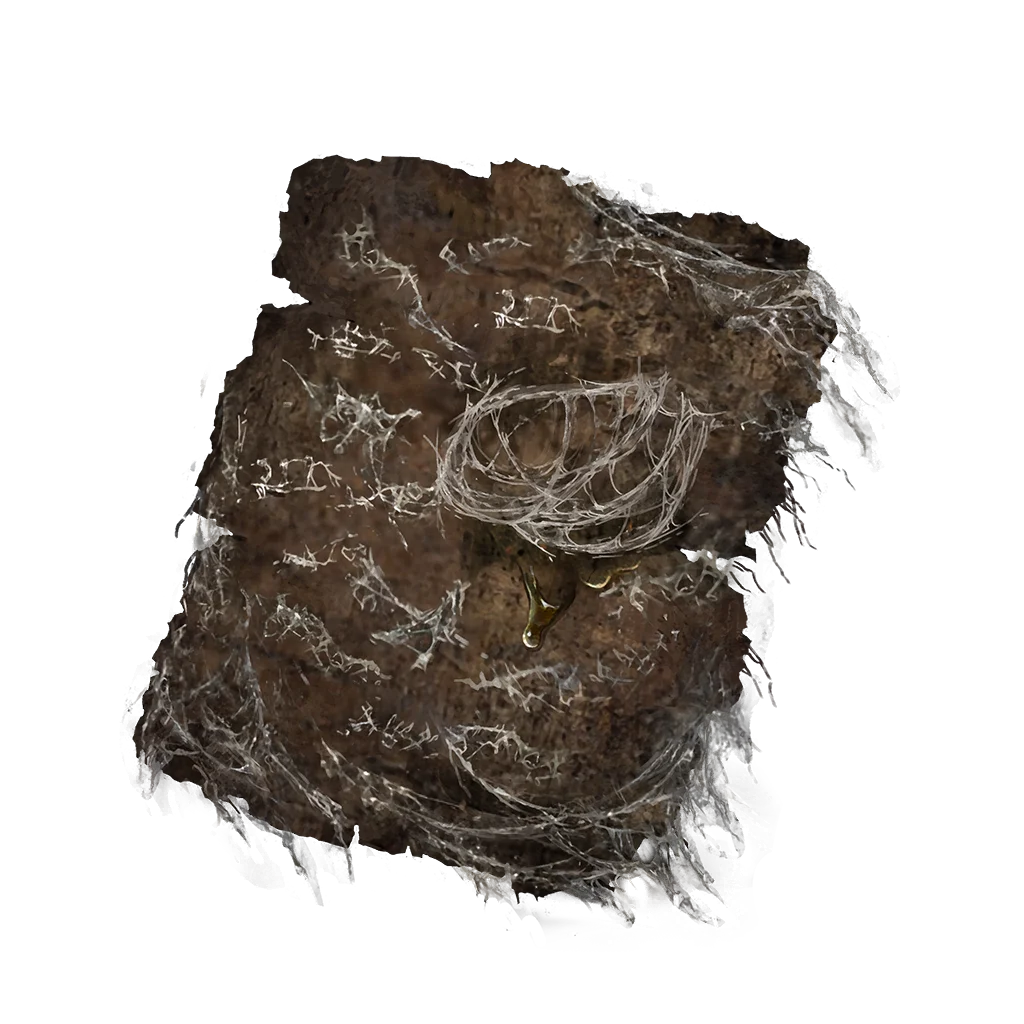 Forager Brood Cookbook [1]
A record of crafting techniques left by the non-human forager brood. Shared out of kindness toward Moore and his kin. Acquire the knowledge to craft the following: - Spellproof Pickled Liver
Moore's ChargeUnique Skill: Moore's Charge Ready the shield with both hands, then charge forth while maintaining guard, ending in a shove imbued with verdigris magic. Knocks back nearby enemies, but does not cause significant harm. Hold to extend the length of the charge.
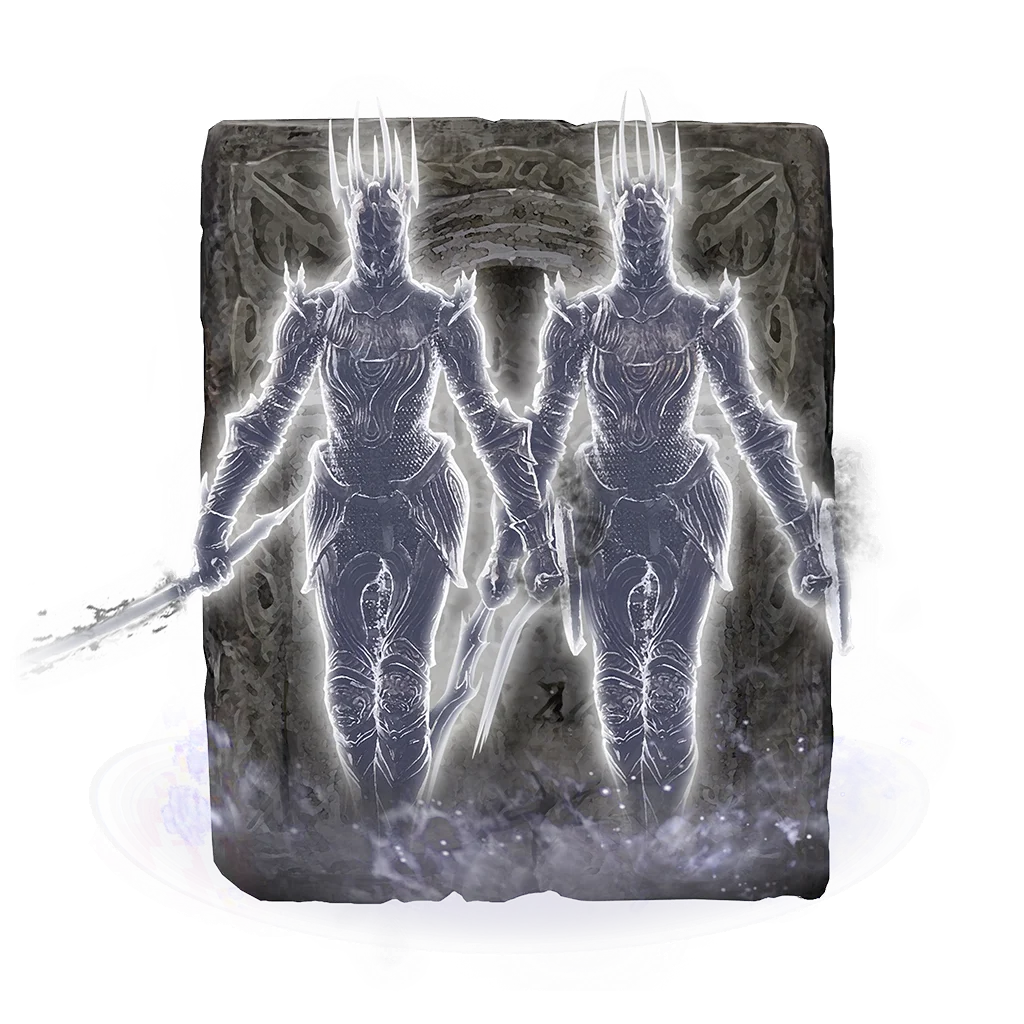 ❋ DLC NPC
Jolán & Anna, Swordhands of Night
Born in a cold, dark gaol and raised deprived of light, one of them possessed by Count Ymir's doll Anna▾
Jolán & Anna, Swordhands of Night
'Ashen remains in which spirits yet dwell. Use to summon the spirits of Jolán and Anna. Spirits of two Swordhands of Night, one of them being possessed by Count Ymir's doll Anna. Together, Jolán's sword and Anna's claws are as bottomless black, and penetrate the enemy's guard. Jolán and Anna were born in a cold, dark gaol, where they were raised, deprived of light, to be Swordhands of Night. Thus were they cultivated to become the most terrifying masters of their blades, though the burden of the deed left their hearts frail and pliant.' Two Swordhands of Night, born in a cold, dark gaol and raised there deprived of light. The ordination itself comes in the passive, its agent unnamed in the line: the Armor of Night is 'Bestowed upon those born deep underground, ordaining them as Swordhands of Night', and it 'Imprisons the wearer in utterly lightless dark'. Mastery and cost arrive together, held by a 'though': cultivated into the most terrifying masters of their blades, though the burden of the deed left their hearts frail and pliant.
'Spirit of a swordhand granted light by the Iris of Grace. Wields a sword of bottomless black that penetrates the enemy's guard. Though it was not by the shining star that she had longed for, thus was her Night illuminated. But this was an at times blinding light, and threatened to expunge the Night entirely.' The grant is written without a giver: she is 'granted light by the Iris of Grace'. The Iris is an incantation of the Erdtree, placed 'on the eye of another to grant them the light of grace as a fleeing blessing'; in the realm of shadow, priests of the Erdtree used it to quell the fears of their flock. The pair's ash says 'one of them being possessed by Count Ymir's doll Anna', and Ymir's dialogue places Anna as the younger: 'It's no surprise her little sister too, has a heart of gold.' Jolán states her own allegiance, 'I am Jolán. … Loyal to Count Ymir', and says of that meeting, 'Our meeting with the Count taught us of the star-draped sky.' Summoned together, her sword and Anna's claws come up bottomless black, under a light written as threatening to expunge her Night.
Ashen remains in which spirits yet dwell. Use to summon the spirits of Jolán and Anna. Spirits of two Swordhands of Night, one of them being possessed by Count Ymir's doll Anna. Together, Jolán's sword and Anna's claws are as bottomless black, and penetrate the enemy's guard. Jolán and Anna were born in a cold, dark gaol, where they were raised, deprived of light, to be Swordhands of Night. Thus were they cultivated to become the most terrifying masters of their blades, though the burden of the deed left their hearts frail and pliant.
Ashen remains in which spirits yet dwell. Use to summon the spirit of Swordhand of Night Jolán. Spirit of a swordhand granted light by the Iris of Grace. Wields a sword of bottomless black that penetrates the enemy's guard. Though it was not by the shining star that she had longed for, thus was her Night illuminated. But this was an at times blinding light, and threatened to expunge the Night entirely.
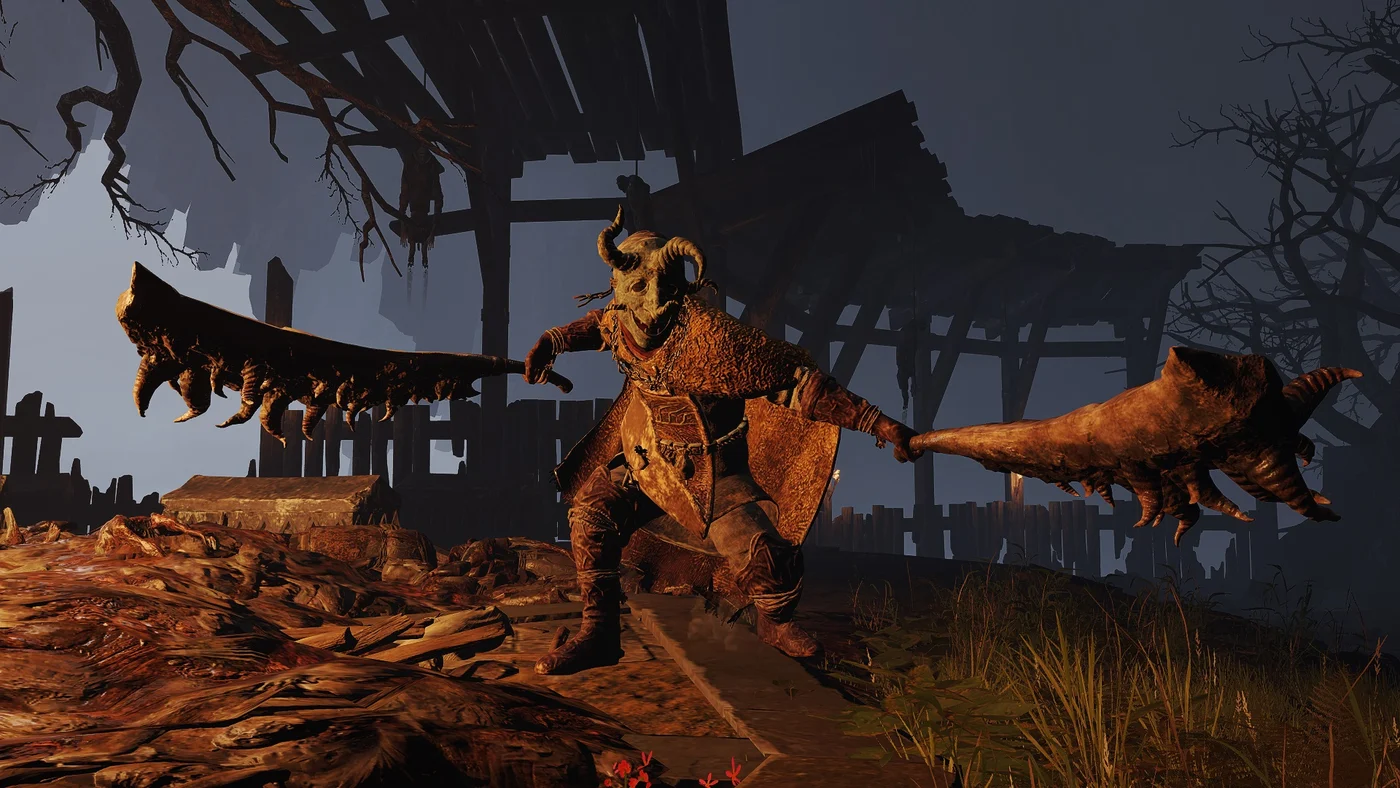 ◈ ORDER
The Omenkillers
Perfumers turned butchers, who drink emotion-suppressing physick to hunt the cursed▾
The Omenkillers
'Robe worn by the Omenkillers, butchers of twisted conscience. Its thick apron is worn in remembrance of Rollo, the progenitor of the Omenkillers and a perfumer of antiquity.' The Omenkillers are the Lands Between's quiet sanitation order. Born of the Erdtree's flat refusal to recognise the Omen as souls deserving of grace, they exist to cull the horned children that the orthodoxy cannot afford to name. Rollo, their progenitor, was a famous perfumer in antiquity: the canon's perfumers being much-respected apothecaries who traded their aromatics for poisons and explosives on the battlefields of the Shattering. Rollo's line became butchers.
'Ashen remains in which spirits yet dwell. Use to summon the spirit of Omenkiller Rollo. Spirit of Rollo, known as the first Omenkiller. Once a famous perfumer, Rollo imbibed a physick to rid himself of emotion, thus enabling him to enact his nightmarish labor, hunting the Omen.' The technical solution was chemistry. Rollo brewed a wondrous physick that erased emotion from the drinker's body. The Omenkillers who follow him drink it before each cull. The thick leather apron is the order's remembrance of his name. The mask, Omensmirk Mask, is carved with the smirking face of an elder evil, the same evil spirits that the Omen children themselves see in their nightmares. The killer wears the nightmare's face. The cursed child sees their tormentor as the inside of their own dreams.
Robe worn by the Omenkillers, butchers of twisted conscience. Its thick apron is worn in remembrance of Rollo, the progenitor of the Omenkillers and a perfumer of antiquity.
Ashen remains in which spirits yet dwell. Use to summon the spirit of Omenkiller Rollo. Spirit of Rollo, known as the first Omenkiller. Once a famous perfumer, Rollo imbibed a physick to rid himself of emotion, thus enabling him to enact his nightmarish labor, hunting the Omen.
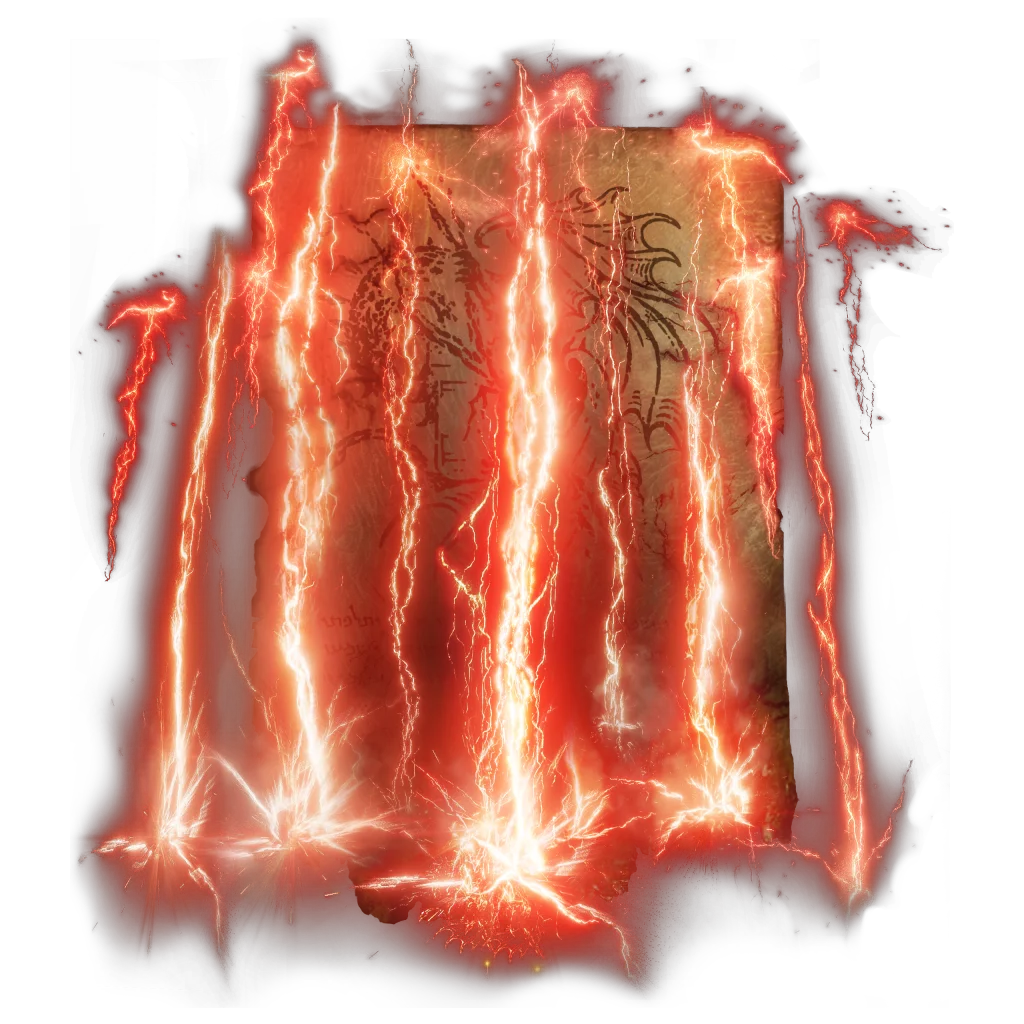 ◈ DRAGON
Lansseax, the Crimson Lightning Priestess
Sister of Fortissax, took human shape to commune with the knights, loved Vyke▾
Lansseax, the Crimson Lightning Priestess
'Incantation that channels the power of the ancient dragon Lansseax. Creates a red-lightning glaive and sweeps the area from above. This attack unleashes trails of lightning. Lansseax was the sister of Fortissax. It is said that she took the form of a human to commune with the knights as a priestess of the ancient dragon cult.' Lansseax is the canon's gentlest dragon. She and her brother Fortissax, the lichdragon who fought beside Godwyn against the Death within him, were the great ancient dragons sworn to the Erdtree's defenders. Lansseax descended into human form because the order of knights she meant to bless could not have spoken to her in her true shape. Her glaive is forged of the red lightning that descends only from the heavens, the canonical weapon of the skyborn dragons.
'Incantation of Vyke, knight of the Roundtable Hold. Summons red lightning to bolster both the caster's body and their armament held in the right hand. Enchants armament with lightning-affinity attacks and increases maximum equipment load. However, lightning damage negation will be reduced. Of all the knights, Vyke the Dragonspear was the one Lansseax loved the most.' She fell in love with Vyke. The canon records this without comment, in a single phrase tucked inside an incantation description: of all the knights, Vyke the Dragonspear was the one Lansseax loved the most. Vyke was the man who came closer to the throne of the Elden Lord than any other before being touched by the Frenzied Flame and lost. Lansseax taught him the dragonbolt that bears his name. He carried her gift across every threshold he crossed. Whatever happened to her after his Frenzy is unrecorded.
Lansseax's GlaiveIncantation that channels the power of the ancient dragon Lansseax. Creates a red-lightning glaive and sweeps the area from above. This attack unleashes trails of lightning. Lansseax was the sister of Fortissax. It is said that she took the form of a human to commune with the knights as a priestess of the ancient dragon cult.
Incantation of Vyke, knight of the Roundtable Hold. Summons red lightning to bolster both the caster's body and their armament held in the right hand. Enchants armament with lightning-affinity attacks and increases maximum equipment load. However, lightning damage negation will be reduced. Of all the knights, Vyke the Dragonspear was the one Lansseax loved the most.
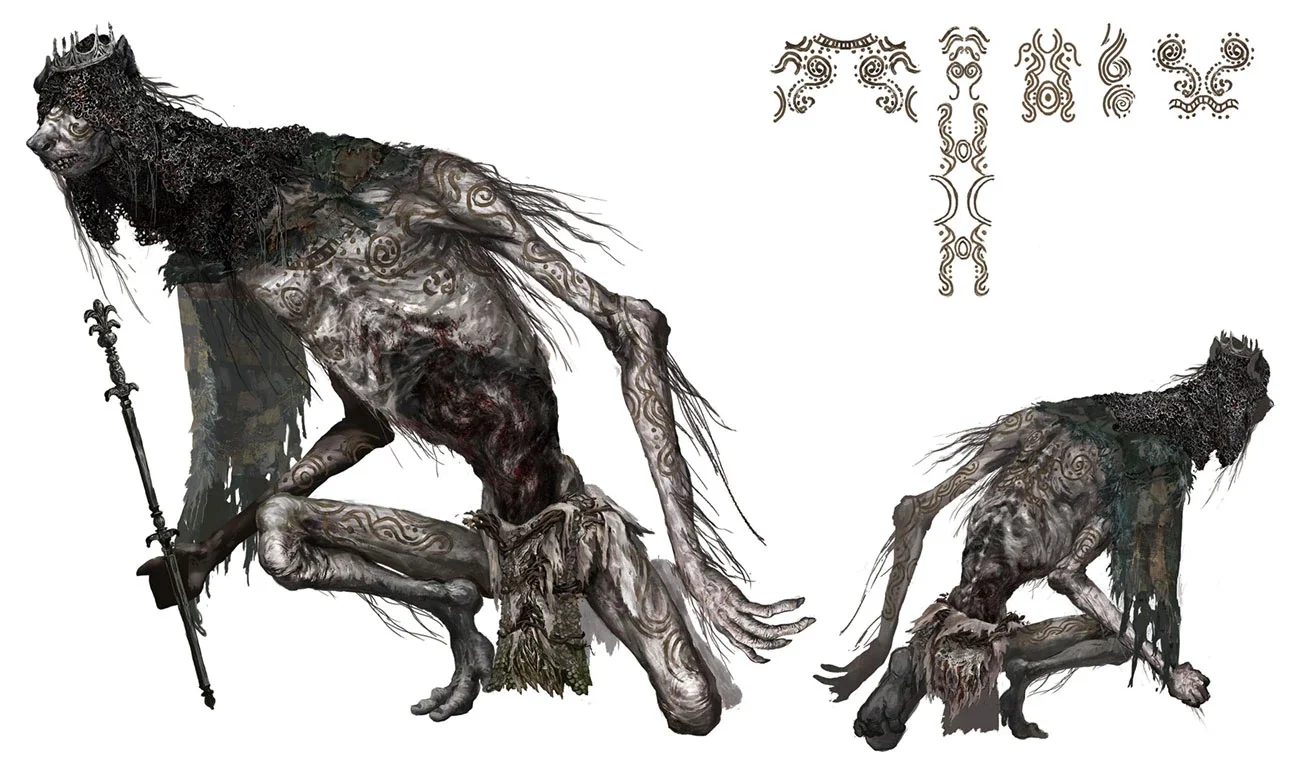 ◈ LINEAGE
The Demi-Humans
Hairy small folk gifted glintstone scepters in apology, then sneered at by sorcerers▾
The Demi-Humans
'Glintstone staff styled as a scepter. A gift once given to the demi-humans to foster peace, it can be wielded even by those of low intelligence. Sneered at by fools in the academy.' The Demi-Humans are small fur-covered folk with their own queens and their own makeshift settlements at the margins of the Lands Between. Someone, the record never says who, once gifted the demi-human queens glintstone scepters as a peace-keeping gesture. The fools in the academy then sneered at the resulting magic as fit only for those of low intelligence.
'Twisted clay sculpt in the shape of a demi-human head. Emits a voice that says "You're beautiful." A wistful fetish that imparts voices and words on an eternal journey. Unconditional love. Unrestrained assurance. It must have been a mother speaking.' The Prattling Pates are the canon's quietest evidence of demi-human inner life. They are clay heads, twisted, recognisable. They speak short sentences in voices the Tarnished can almost place. The pate that says you're beautiful is made in the shape of a demi-human head, and the canon tells the reader, in the sole declarative sentence permitted, that the voice giving the assurance must have been a mother speaking. The academies' ridicule and the mother's voice belong to the same demography. What the fools in the academy sneered at was the scepter; what a demi-human mother put into a piece of clay was love.
Glintstone staff styled as a scepter. A gift once given to the demi-humans to foster peace, it can be wielded even by those of low intelligence. Sneered at by fools in the academy.
Twisted clay sculpt in the shape of a demi-human head. Emits a voice that says "You're beautiful." A wistful fetish that imparts voices and words on an eternal journey. Unconditional love. Unrestrained assurance. It must have been a mother speaking.
 ◈ ORDER
The Malformed Tree Sentinels
Erdtree paladins who became dragons after Gransax's attack, the only way to truly protect the tree▾
The Malformed Tree Sentinels
'Malformed golden armor. Adorned with various dragon imagery and worn by the misshapen Tree Sentinels. After the great ancient dragon Gransax attacked, the sentinels had an epiphany. The only way to truly protect the Erdtree was to become dragons themselves.' The Malformed Tree Sentinels are the Order's most theologically embarrassing knights. The original Tree Sentinels, heavy gold cavalry, the living rampart of the Erdtree, the standard to which all defenders aspired, were the order's pure form. Then the ancient dragon Gransax descended on Leyndell and broke the rampart open. The survivors drew their conclusion: their faith in gold-and-grace had failed against scales-and-storm, and the only honest reform was to consume what had defeated them.
'Weapon said to have been whittled from the claw of a great, ancient dragon, wielded by grotesque Tree Sentinels who yet serve the Erdtree. The claw is enwreathed with lightning, and tears through the dragons' feeble descendants with ease.' Their weapons after the reform are made from dragons. The Dragon Greatclaw is whittled from the claw of an ancient dragon; the Dragonclaw Shield from a second. The claw they wield is enwreathed with lightning and turned against the dragons' feeble descendants, dragon set against dragon in the Erdtree's name. The cost is anatomical: their bodies become misshapen, grotesque, malformed. They protect the Erdtree by becoming, slowly, the kind of being the Erdtree was originally raised to defy. The canonical irony is that the Order tolerates them: the Erdtree's sentinels-by-grace cannot defend the tree against modern enemies, so the dragon-sentinels are kept on, as malformed as the Misbegotten the Order also condemns.
Malformed golden armor. Adorned with various dragon imagery and worn by the misshapen Tree Sentinels. After the great ancient dragon Gransax attacked, the sentinels had an epiphany. The only way to truly protect the Erdtree was to become dragons themselves.
Weapon said to have been whittled from the claw of a great, ancient dragon, wielded by grotesque Tree Sentinels who yet serve the Erdtree. The claw is enwreathed with lightning, and tears through the dragons' feeble descendants with ease.
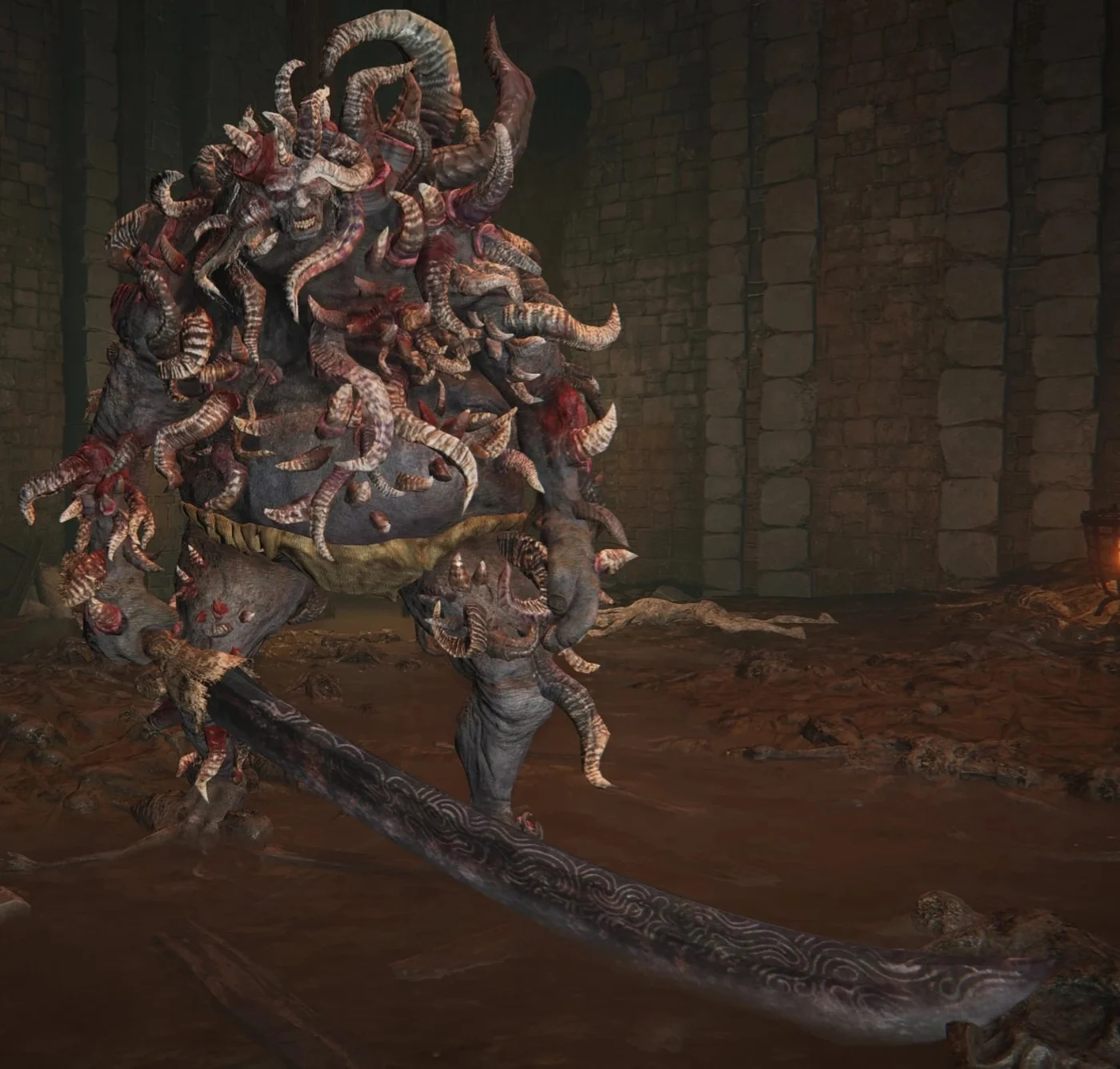 ◈ LINEAGE
The Noble Omen
Royal-line Omen children whose horns are not excised, buried alive instead, mourned in secret▾
The Noble Omen
'Doll of a curseborn bairn from the Erdtree's royal line. Uses FP to unleash many wraiths that chase down foes. Omen babies born of royalty do not have their horns excised, but instead are kept underground, unbeknownst to anyone, imprisoned for eternity. These memorial fetishes are fashioned in secret.' The Noble Omen are the canon's most thoroughly buried population. Common Omen children, born under the Erdtree's grace with the same ancient horns that mark all Omen as cursed, have their horns surgically excised at birth, and they usually become the canon's sewer-Omen population. Royal Omen children receive a different protocol: the horns are not removed, the child is sealed alive in a private chamber beneath the palace, and the family conducts a quiet bereavement that the realm at large is never told about.
'Heavy-bladed curved sword of colossal size awarded to Omen as a tool of war. This weapon is made to take advantage of brute strength. The pattern etched upon the blade is the remnant of a deteriorative malediction. Indeed, when bestowing a weapon, preparations must be made for taking it away.' Some royal Omen survive sealed for decades, growing into adulthood underground. Mohg and Morgott are the two canonical examples, twin Omen princes of Marika and Godfrey's late line, kept in the sewers beneath Leyndell, both of whom escaped their seal as adults and reappeared in the canon's record as the Lord of Blood and the Omen King. The deteriorative malediction etched into the Omen war-blade is the canonical reminder: whatever weapon the Order issues to an Omen comes with the corollary of taking it away. The Order memorialises its royal Omen by erasing every weapon they were briefly permitted to carry.
Doll of a curseborn bairn from the Erdtree's royal line. Uses FP to unleash many wraiths that chase down foes. Omen babies born of royalty do not have their horns excised, but instead are kept underground, unbeknownst to anyone, imprisoned for eternity. These memorial fetishes are fashioned in secret.
Heavy-bladed curved sword of colossal size awarded to Omen as a tool of war. This weapon is made to take advantage of brute strength. The pattern etched upon the blade is the remnant of a deteriorative malediction. Indeed, when bestowing a weapon, preparations must be made for taking it away.
◈ NPCBoc the Seamster
Demi-human tailor whose mother told him he was beautiful▾
Boc the Seamster
'A portable set of tailoring tools. Enables armor alterations at sites of grace.' Boc is a demi-human seamster the Tarnished first meets as a voice by the roadside in Limgrave, transformed into a small tree by a spell, freed when the Tarnished strikes it. He had been driven out and robbed by the demi-humans of his own tribe in the Coastal Cave, who took the one thing he owned: his mother's sewing needle. She was a seamstress; the needle is the only keepsake he has of her, and his dream is to sew as she did. When the Tarnished recovers the needle from the cave, Boc begins following from grace to grace across the Lands Between, altering armour for the lord he has chosen to serve.
'Sewing needle made of gold. Unique item made to alter demigod attire. One of the tools brought by Radagon when he entered into marriage with Rennala, Queen of the Full Moon, and joined the Carian line.' Boc's arc turns on how he sees himself. Convinced his form is ugly, he can be sent to Rennala for rebirth with a Larval Tear, and the rebirth leaves the demi-human dying in his new body, calling for his mother. The canon's gentlest ending is the alternative: through the Prattling Pate 'You're beautiful', Boc hears the words in what he takes for his mother's voice, asks the Tarnished if he truly is, and weeps with relief, a seamster who stays exactly as he was made.
A portable set of tailoring tools. Enables armor alterations at sites of grace.
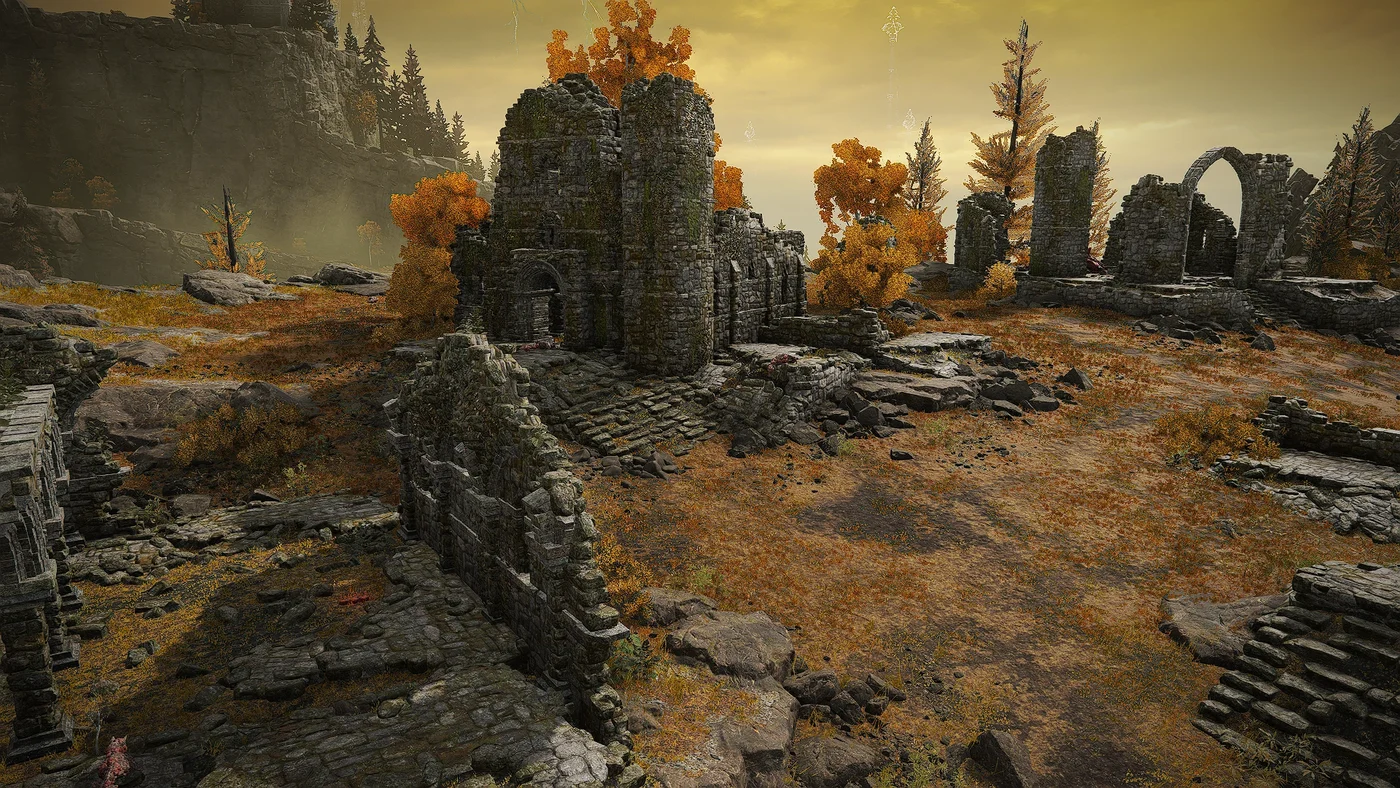 ◈ DLC WEAPON
The Beast Claw
Beast-form claws of the Realm of Shadow, imitating the horned warriors' esoteric technique▾
The Beast Claw
'Weapon in the form of a carnivorous beast's vicious claws. Used to perform bestial slashing attacks uncanny to humankind. An imitation of the esoteric technique of the horned warriors. Those who carry this weapon wield it as though they have been possessed by a savage beast.' The Beast Claw is the Realm of Shadow's weapon of the bestial path. These claws are not blades forged for one wielder but a form the carrier puts on: the canonical detail is that those who carry them wield them as though they have been possessed by a savage beast. The weapon is only ever an imitation, the text is careful to say, of the esoteric technique of the horned warriors.
'Superior incantation taught by Gurranq, the Beast Clergyman. Long ago, Gurranq was a beast of such terrifying ferocity that his former name meant "Death of the Demigods."' Gurranq's fore-life, Death of the Demigods, is the doctrinal model. The horned warriors of the Realm of Shadow's deepest cults practiced the esoteric beast-form technique that the Beast Claw only imitates; the weapon is the copy, not the source. What god that technique invokes, and how completely the possession the game describes takes hold, the text leaves unsaid. It records only the claws, and the savage beast their carrier seems possessed by.
 Beast Claw
Weapon in the form of a carnivorous beast's vicious claws. Used to perform bestial slashing attacks uncanny to humankind. An imitation of the esoteric technique of the horned warriors. Those who carry this weapon wield it as though they have been possessed by a savage beast.
Superior incantation taught by Gurranq, the Beast Clergyman. Long ago, Gurranq was a beast of such terrifying ferocity that his former name meant "Death of the Demigods."
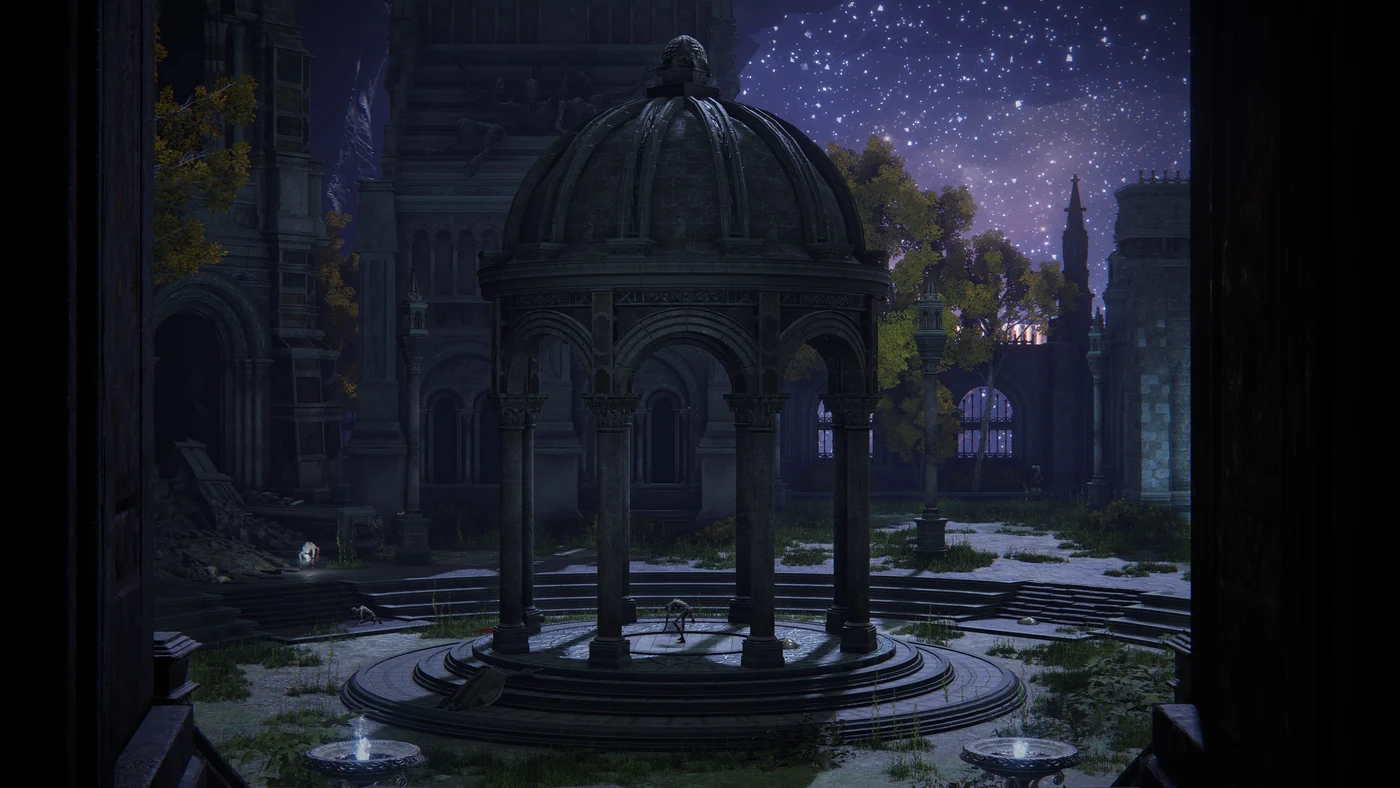 ◈ LINEAGE
The Nox of the Eternal Cities
Banished star-worshippers awaiting their Lord of Night beneath a false sky▾
The Nox of the Eternal Cities
'Armor worn by the monks of the Eternal City, with a silk cape attached. Long ago, the Nox invoked the ire of the Greater Will, and were banished deep underground. Now they live under a false night sky, in eternal anticipation of their liege. Of the coming age of the stars. And their Lord of Night.' The Nox are the canon's exiled star-worshippers, a civilization that, in the age before the Erdtree, dared to forge a god of their own making rather than wait on the Greater Will's distant condescension. Then Astel, Naturalborn of the Void, tore through their sky and broke their cities; the survivors were buried under the earth as Nokron and Nokstella, where they still live, beneath a fabricated firmament.
'Helm fashioned from a crystal looking-glass. One among the Eternal City's ritual implements. Easily broken and weak against striking attacks. Worn by those committed to high treason, it wards off the intervention of the Greater Will and its vassal Fingers.' The Nox Mirrorhelm is the technical attestation of their rebellion: the helm of crystal that wards off the Two Fingers' surveillance, worn by anyone planning treason against the Greater Will. War Counselor Iji wears one in his service to Ranni for the same reason. The Nox themselves, in their underground cities, wear them as ordinary monastic dress. The crystal mirrors are their grace's substitute. The Lord of Night they await is the unborn god they were planning to forge before the Greater Will struck them down. Ranni, in the canon's quietest payoff, becomes that lord.
Nox Monk ArmorArmor worn by the monks of the Eternal City, with a silk cape attached. Long ago, the Nox invoked the ire of the Greater Will, and were banished deep underground. Now they live under a false night sky, in eternal anticipation of their liege. Of the coming age of the stars. And their Lord of Night.
Helm fashioned from a crystal looking-glass. One among the Eternal City's ritual implements. Easily broken and weak against striking attacks. Worn by those committed to high treason, it wards off the intervention of the Greater Will and its vassal Fingers.
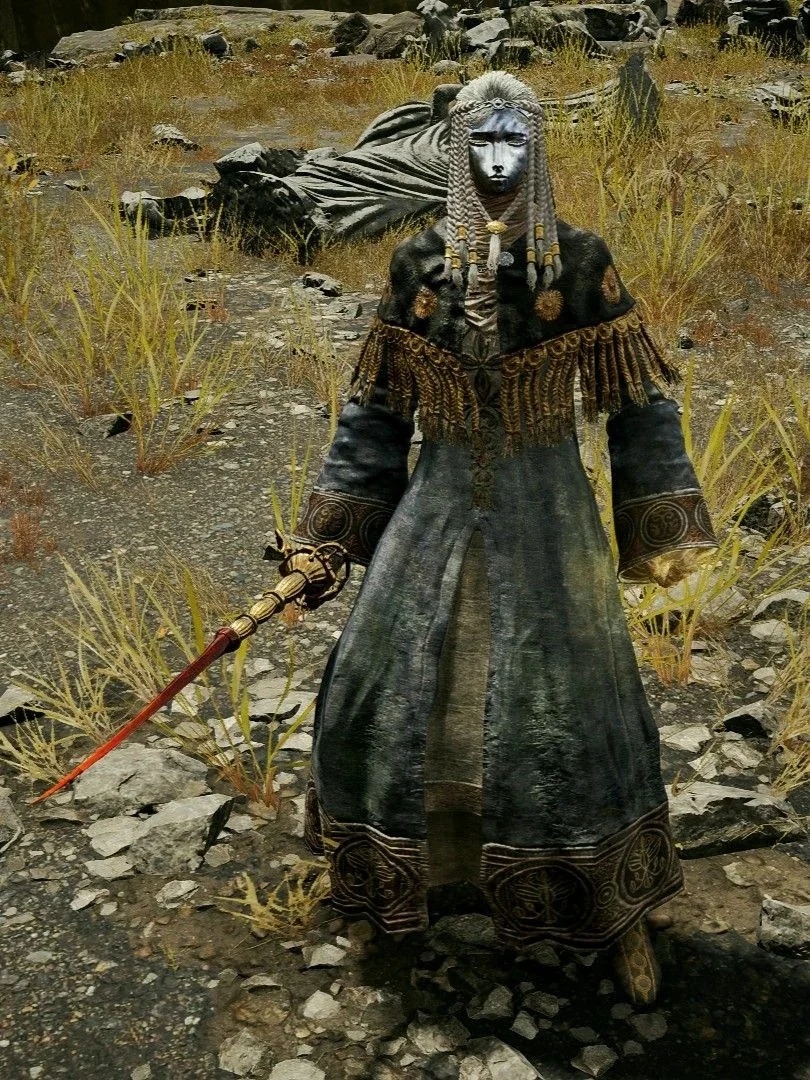 ◈ NPC
◈ NPCMaleigh Marais, the Sickly Castellan
Head of House Marais, executioners and castellans of the Shaded Castle, beguiled by the goddess born into rot▾
Maleigh Marais, the Sickly Castellan
"The sons of House Marais are all sickly born. Little wonder that Maleigh Marais would be so beguiled by the beautiful and fierce goddess who was born into rot."
From the Marais Robe description
'Mask in the image of a white-haired young noble. Customarily worn by the head of House Marais. Increases arcane. The Marais family has a dual history spanning generations, serving as both executioners and castellans of the Shaded Castle. This mask bears the likeness of the first of their line.' Maleigh holds an office that pulls in two directions: House Marais serves as both executioners and castellans of the Shaded Castle, and he is listed in the game as 'Maleigh Marais, Shaded Castle Castellan'. The house's celebrated artefact is the Marais Executioner's Sword, and its own text says where that blade went: 'Elemer of the Briar, the Bell Bearing Hunter, snatched the sword from the site of his looming execution.' The executioners' storied weapon passed to a condemned man, one whose winding, rusted iron briars are 'a mark of the guilty' and who 'murdered numerous instructors and merchants'. The game does not say what age the heads of the house reach; what it does say of them is that the sons are all sickly born.
'Robe with a black mantle across the shoulders. Customarily worn by the head of House Marais. The sons of House Marais are all sickly born. Little wonder that Maleigh Marais would be so beguiled by the beautiful and fierce goddess who was born into rot.' The robe supplies its own explanation for the castellan's devotion, and the Antspur Rapier dates that devotion back further: 'Scarlet rot is an old legend, of which Maleigh Marais of the Shaded Castle was a private believer. And indeed, he eventually found his own personal goddess.' Belief preceded the goddess he eventually found. The Valkyrie's Prosthesis, 'golden prosthesis once used by the one-armed valkyrie', says what that finding felt like: 'When Maleigh Marais, Lord of the Shaded Castle, embraced this prosthesis, he claimed to feel the presence of his personal goddess.' The robe leaves the goddess unnamed; the title 'Goddess of Rot' belongs elsewhere in the game to Malenia, so reading her into the robe is an inference, not a quotation. The game does not say that the family's executioner's office ever concerned her. What it records instead is the aftermath: 'House Marais is ruined...', 'Just deserts, for falling for that severed harpy.', 'No surprise that guilty cretin took the castle and our storied sword...'
Mask in the image of a white-haired young noble. Customarily worn by the head of House Marais. Increases arcane. The Marais family has a dual history spanning generations, serving as both executioners and castellans of the Shaded Castle. This mask bears the likeness of the first of their line.
Robe with a black mantle across the shoulders. Customarily worn by the head of House Marais. The sons of House Marais are all sickly born. Little wonder that Maleigh Marais would be so beguiled by the beautiful and fierce goddess who was born into rot.
Spur of a giant ant which has been fashioned into a rapier. The blade drips with scarlet rot. Scarlet rot is an old legend, of which Maleigh Marais of the Shaded Castle was a private believer. And indeed, he eventually found his own personal goddess.
Storied sword of House Marais, the family of executioners who presided over the Shaded Castle. Elemer of the Briar, the Bell Bearing Hunter, snatched the sword from the site of his looming execution.
◈ ORDERThe Company of the Fallen Hawk
Slaves marked with an inverted crest, sent into the Eternal City to forage at their masters' command▾
The Company of the Fallen Hawk
'Arrow set alight with ghostflame before firing. Deals magic damage while also afflicting foes with frost. Used by the Company of the Fallen Hawk, once ordered to explore the Eternal City.' The Company of the Fallen Hawk is the canon's saddest exploratory order. Sometime after the Nox were banished deep underground and the Lands Between forgot them, someone commissioned a company of their own slaves, marked with the inverted hawk, a crest turned upside-down, perhaps, to denote ownership-without-honour, and sent them down to map the underground city's silent ruins. Most never returned. When the band's last embers gave out in their long search, they burned the bones of their own dead, and won the cold ghostflame at the cost of sealing their fate as dwellers of the underground for all eternity.
'The inverted hawk is the emblem of the company of slaves ordered to explore the Eternal City.' The Inverted Hawk Heater Shield records the inversion in the canon's quietest typography: a hawk normally upright, here flipped, shorthand for a man whose bird-of-arms cannot fly. The slaves of the Company carried it for the same reason a galley-slave wears a chain: to remember whose property they are. Their ghosts now wander the Siofra River with bows still in hand, ghostflame arrows nocked, taking aim at any Tarnished who looks like the master who sent them down. The canon's least-named company is also one of its most precise indictments.
Arrow set alight with ghostflame before firing. Deals magic damage while also afflicting foes with frost. Used by the Company of the Fallen Hawk, once ordered to explore the Eternal City.
A medium-sized metal shield. Easier to handle than a kite shield. The inverted hawk is the emblem of the company of slaves ordered to explore the Eternal City.
Metal torch that burns with cold ghostflame. Tool of the Fallen Hawks who prowl the underground rivers. When the band's last embers were used up in their long search, they began to burn the bones of their fellows, acquiring the cold ghostflame, but sealing their fate as dwellers of the underground for all eternity.
 ◈ NPC
◈ NPCGreat Horned Tragoth
Famed knight of assistance, summoned by Tarnished in their darkest hour, hunted by the Manor▾
Great Horned Tragoth
'Great Horned Tragoth's armor. Covers its wearer with a pair of giant horns, providing staunch poise. Tragoth is a famed knight of assistance. Countless Tarnished, facing adversity in the Lands Between, have survived thanks only to the Great Horned One's aid.' Tragoth is the canon's most generous ghost. The Bull-Goat armour he wears is a great-horned plate-mass that confers nearly immovable poise, the kind of poise a Tarnished might want, late in the campaign, against a Demigod boss whose third-phase combo is unsurvivable without it. Tragoth's role in the lore is the one his armour names outright: a knight of assistance, the ally without whom countless Tarnished would never have survived the Lands Between.
'A written request from Volcano Manor addressed to Patches disclosing the name of a Tarnished to be hunted. "Great Horned Tragoth" He can be found at the Ruin-Strewn Precipice. Find the red mark on your map for the exact location.' His generosity has reached Tanith. The Manor recruits Patches, the canon's recurring rascal, to hunt him. Tragoth is found alone at the Ruin-Strewn Precipice in his great-horned plate, having served too long as the realm's selfless hero, awaiting whatever hunter is next. The canon's saddest red letter is the one that names a knight known for assistance.
Great Horned Tragoth's armor. Covers its wearer with a pair of giant horns, providing staunch poise. Tragoth is a famed knight of assistance. Countless Tarnished, facing adversity in the Lands Between, have survived thanks only to the Great Horned One's aid.
A written request from Volcano Manor addressed to Patches disclosing the name of a Tarnished to be hunted. "Great Horned Tragoth" He can be found at the Ruin-Strewn Precipice. Find the red mark on your map for the exact location.
◈ ORDERThe Oracle Envoys
Monstrous heralds of new ages, blowing their pipes when a god is about to be born▾
The Oracle Envoys
'Ashen remains in which spirits yet dwell. Use to summon the spirits of four Oracle Envoys. Spirits of a monstrous band of musicians who employ sacred arts. It is said that when Oracle Envoys appear, playing their pipes, they do so to herald the arrival of a new god, or a new age.' The Oracle Envoys are the canon's heralds, bulbous, mottled, monstrous-looking creatures who carry pipes and trumpet around the great Erdtree-thresholds whenever the cosmic order is about to change. They are first encountered scattered through the Mountaintops of the Giants and in the Forbidden Lands east of the Capital, where the Tarnished's approach to becoming Elden Lord disturbs whatever calendar the Envoys are reading.
'Shield featuring a vividly painted twinbird. The twinbird is said to be the envoy of an outer god, and mother of the Deathbirds. At dwindling levels of HP, this shield slightly boosts both attack and defense.' The canon links them, obliquely, to the Outer Gods. The Twinbird is described as 'envoy of an outer god,' mother of the Deathbirds, and the Oracle Envoys' role as heralds suggests the same kind of outer-god-adjacent function. Whose new age they trumpet is never specified. The Tarnished's arrival sends them across the Mountaintops in slow, hopping circles, as if the band of pipers had been waiting since the Shattering for a god to be born and now, finally, was rehearsing.
Ashen remains in which spirits yet dwell. Use to summon the spirits of four Oracle Envoys. Spirits of a monstrous band of musicians who employ sacred arts. It is said that when Oracle Envoys appear, playing their pipes, they do so to herald the arrival of a new god, or a new age.
Shield featuring a vividly painted twinbird. The twinbird is said to be the envoy of an outer god, and mother of the Deathbirds. At dwindling levels of HP, this shield slightly boosts both attack and defense.
◈ DEMIGODThe Prince of Death
Godwyn the Golden's body, immortal in flesh, soul-slain on the Night of the Black Knives▾
The Prince of Death
'A fetid pustule taken from facial flesh. Raises vitality. (Vitality governs resistance to the effects of Death.) It is said that this pustule came from the visage of the Prince of Death, he who used to be called Godwyn. As First Dead of the demigods, it's said he's buried deep under the capital, at the Erdtree's roots.' Godwyn the Golden was the demigod loved above all others, Marika and Godfrey's eldest son, the realm's ideal. On the Night of the Black Knives, the Numen assassins under Alecto used a Black Knife imbued with the stolen Rune of Death to kill not his body but his soul. His body could not die afterward; the corpse was buried beneath the capital, fused into the Erdtree's deep roots, where it began the slow corruption that would make of the cycle of rebirth a long, drowning malformation.
'Cursemark carved into the discarded flesh of Ranni the Witch. Also known as the half-wheel wound of the centipede. This cursemark was carved at the moment of Death of the first demigod, and should have taken the shape of a circle. However, two demigods perished at the same time, breaking the cursemark into two half-wheels. Ranni was the first of the demigods whose flesh perished, while the Prince of Death perished in soul alone.' The Cursemark of Death is the canon's tightest paradox. Two demigods perished simultaneously: Ranni in body and Godwyn in soul. The complete cursemark would have been a circle; the two half-wheels are the formal record of an asymmetric murder, body and soul broken apart in the same moment. The Prince of Death's pustules sprout from his immortal flesh, and it is from these two half-wheels combined that Fia the Deathbed Companion gestates the Mending Rune of the Death-Prince: the rune embeds the principle of life within Death into the Order itself, forging an Order of 'Death restored', the Age of the Duskborn.
Prince of Death's PustuleA fetid pustule taken from facial flesh. Raises vitality. (Vitality governs resistance to the effects of Death.) It is said that this pustule came from the visage of the Prince of Death, he who used to be called Godwyn. As First Dead of the demigods, it's said he's buried deep under the capital, at the Erdtree's roots.
Cursemark carved into the discarded flesh of Ranni the Witch. Also known as the half-wheel wound of the centipede. This cursemark was carved at the moment of Death of the first demigod, and should have taken the shape of a circle. However, two demigods perished at the same time, breaking the cursemark into two half-wheels. Ranni was the first of the demigods whose flesh perished, while the Prince of Death perished in soul alone.
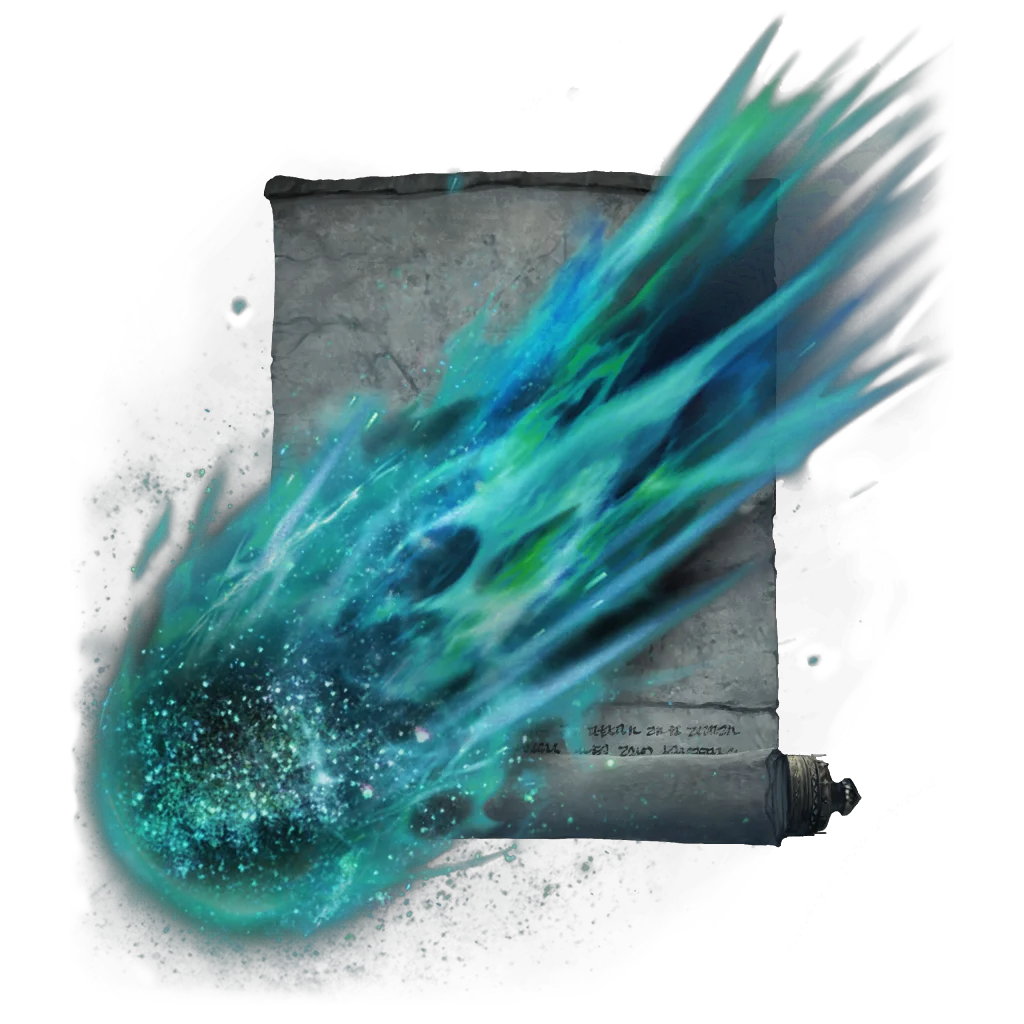 ◈ NPC
◈ NPCAzur, Primeval Current Sorcerer
Grand master who glimpsed the abyss at glintstone's source and never returned▾
Azur, Primeval Current Sorcerer
'Crown of Azur, primeval current sorcerer, set with a prominent blue-green glintstone. This crown replaced Azur's brain and skull altogether, and now, removed from his body, it is all but dead. What power remains within raises the potency of Azur's primeval current sorceries at the cost of additional FP consumption.' Azur is the canon's most extreme sorcerer, a grand master of Raya Lucaria whose pursuit of the primeval current at the source of glintstone caused his own brain and skull to be replaced by living glintstone. The crown the Tarnished may take from him is in fact the man: the inorganic terminus of an apprenticeship that overshot the apprentice. He sits in the Hermit Village of Mt. Gelmir, immobile, breathing.
'Legendary sorcery devised by Azur, primeval sorcerer. Fires a tremendous comet in a torrent akin to the distant starry expanse, the place said to be the origin of glintstone. Hold to continue releasing the sorcery's power. When Azur glimpsed into the primeval current, he saw darkness. He was left both bewitched and fearful of the abyss.' Comet Azur, his canonical work, is the largest sorcery in the game and a verbatim transcription of what he saw. The torrent of starry stuff streams forward as long as the caster holds the cast. The canonical detail is that Azur, having looked into the primeval current's origin, saw darkness, the blue-green firmament was not, at its base, a starry expanse but an abyss. He was bewitched. He was fearful. His grand master's rank was never refilled: as his glintstone robe records, since he and Lusat were driven from the academy, no one has achieved the rank they once held.
Crown of Azur, primeval current sorcerer, set with a prominent blue-green glintstone. This crown replaced Azur's brain and skull altogether, and now, removed from his body, it is all but dead. What power remains within raises the potency of Azur's primeval current sorceries at the cost of additional FP consumption.
Legendary sorcery devised by Azur, primeval sorcerer. Fires a tremendous comet in a torrent akin to the distant starry expanse, the place said to be the origin of glintstone. Hold to continue releasing the sorcery's power. When Azur glimpsed into the primeval current, he saw darkness. He was left both bewitched and fearful of the abyss.
◈ NPCLusat, Primeval Current Sorcerer
Azur's twin grand master, whose Olivinus Conspectus pursues meteors over moons▾
Lusat, Primeval Current Sorcerer
'The giant blue glintstone crown worn by Lusat, primeval current sorcerer. This crown replaced Lusat's brain and skull altogether, and now, removed from his body, it is all but dead. What power remains within raises the potency of Lusat's primeval current sorceries at the cost of additional FP consumption.' Lusat is Azur's twin in the academy's quietest disaster. The two grand masters held a rank the academy reserved for its very greatest, and both of them, separately, in different chambers of the same long apprenticeship, pursued the primeval current to the same conclusion: their own crowns of inorganic glintstone, replacing flesh and bone with the very substance they had studied.
'A robe reserved for grand masters at the Academy of Raya Lucaria. Corroded by blue glintstones. Since the grand masters Azur and Lusat were driven from the academy, no one has achieved their formerly-held rank.' The academy expelled them both. The game text does not say why; it records only that each had let his body be given over to living glintstone. The Olivinus Conspectus, which Lusat founded before his ascension, continues his project among lesser scholars who will never reach his rank; Karolos Conspectus, Azur's, does the same. Two grand masters' chairs sit empty at Raya Lucaria. Two ageless men sit elsewhere in the realm, breathing through glintstone heads, waiting on a current that is, at its source, dark.
The giant blue glintstone crown worn by Lusat, primeval current sorcerer. This crown replaced Lusat's brain and skull altogether, and now, removed from his body, it is all but dead. What power remains within raises the potency of Lusat's primeval current sorceries at the cost of additional FP consumption.
A robe reserved for grand masters at the Academy of Raya Lucaria. Corroded by blue glintstones. Since the grand masters Azur and Lusat were driven from the academy, no one has achieved their formerly-held rank.
◈ ORDERThe Lazuli Conspectus
Heretic scholars at Raya Lucaria, who sought Carian sorcery and learned to see the moon▾
The Lazuli Conspectus
'One of the glintstone crowns bestowed upon Raya Lucaria scholars whose pursuits were deemed worthy. Increases intelligence and dexterity to the detriment of HP. Scholars of the Lazuli Conspectus study Carian sorceries—a heterodox pursuit that views the moon as equal to the stars.' The Lazuli Conspectus is one of the four scholarly lineages at Raya Lucaria, Karolos studies comets, Olivinus meteors, Haima cannons-and-gavels, and the only one whose pursuit the academy considers heretical. Lazuli scholars are interested in Carian sorcery, the moon-magic Rennala herself brought to the academy, charming it with her lunar magic in her youth. The conspectus's hue is the full moon; its philosophical premise is that the moon is the stars' equal.
'Robe worn by scholars of the Lazuli Conspectus, singular among the greater Raya Lucaria Academy. These scholars, who sought to master Carian sorcery, instead learned to see the moon as equal to the stars. This robe, in the hue of the full moon, signifies their heresy.' The academy considers this premise treasonous. The stars in the academy's orthodoxy are the original source, fate's ancient givers, the firmament from which glintstone descended; the moon is a passing phase, a Carian regional fascination. The Lazuli's heresy is the simple-sounding sentence: we have looked at both, and they are equal. Their robes, in their canonical full-moon blue, mark them on every campus walk as the scholars who said the unsaid thing. The academy did not expel them. It also did not give them a chair beside Karolos and Olivinus.
One of the glintstone crowns bestowed upon Raya Lucaria scholars whose pursuits were deemed worthy. Increases intelligence and dexterity to the detriment of HP. Scholars of the Lazuli Conspectus study Carian sorceries—a heterodox pursuit that views the moon as equal to the stars.
Robe worn by scholars of the Lazuli Conspectus, singular among the greater Raya Lucaria Academy. These scholars, who sought to master Carian sorcery, instead learned to see the moon as equal to the stars. This robe, in the hue of the full moon, signifies their heresy.
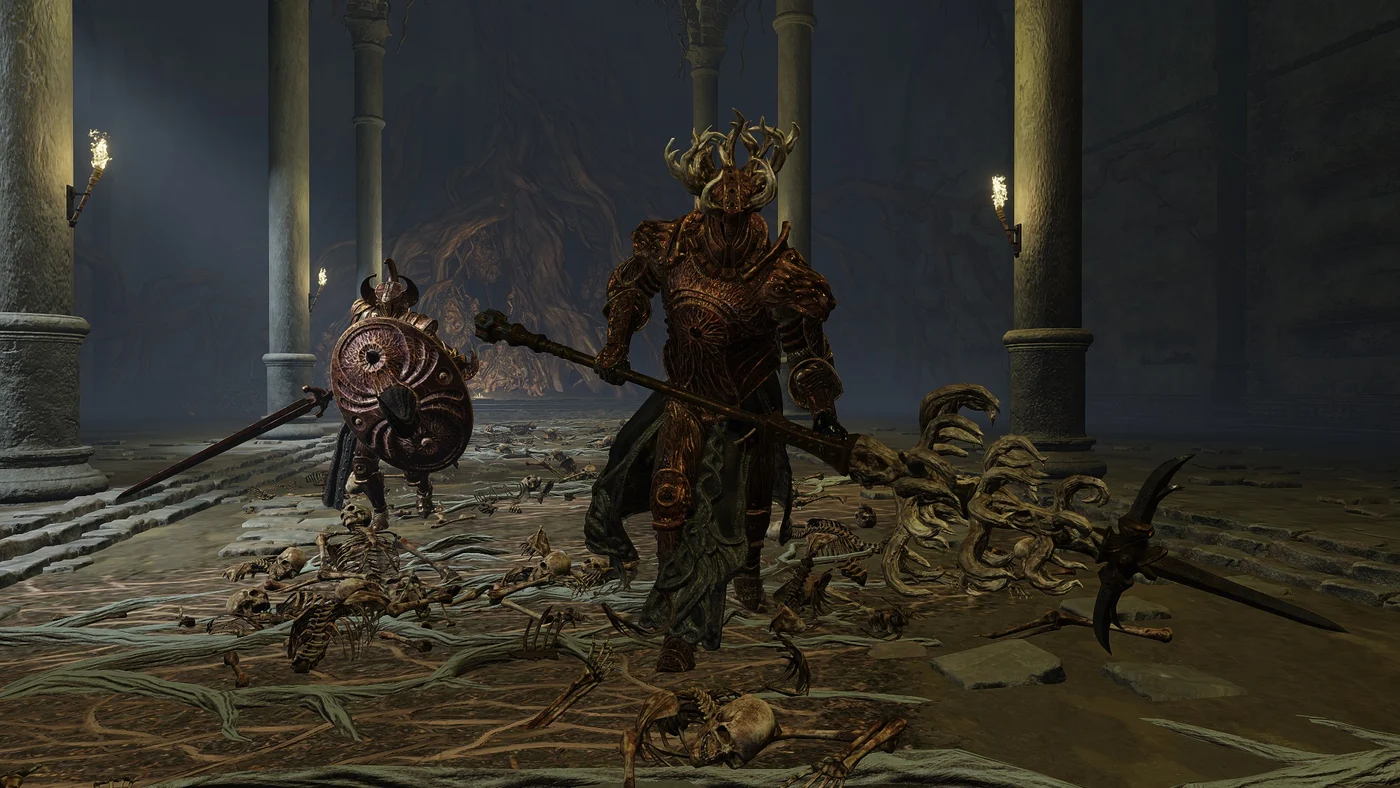 ◈ FAITH
Aspects of the Crucible
The Erdtree's primordial incantations, where all life was once blended together▾
Aspects of the Crucible
'One of the ancient Erdtree incantations. Creates a mighty horn on the caster's shoulder to gore foes from a low stance. Charging allows the caster to barrel into foes before delivering the final attack. This is a manifestation of the Erdtree's primal vital energies—an aspect of the primordial crucible, where all life was once blended together.' The Aspects of the Crucible are the canon's oldest school of incantations, older than the Golden Order, older even than the doctrinal Erdtree faith. They are not magic in the technological glintstone sense; they are bodily reaffirmations of the Crucible itself, the primordial Erdtree-state in which all forms of life co-existed undifferentiated. To cast an Aspect is to grow a fragment of that older body for the duration of a swing.
'One of the ancient Erdtree incantations. Creates a supple tail that sweeps through foes before the caster. Charging enhances potency. This is a manifestation of the Erdtree's primal vital energies—an aspect of the primordial crucible, where all life was once blended together.' The Aspects' liturgy was preserved by the Crucible Knights, whose very armour strengthens these incantations, and by the few who still remembered what the Order's later orthodoxy preferred to forget. The Tarnished may learn the base game's three Erdtree incantations, Horn, Tail and Breath, and use them as if the body they cast on were briefly the body of a Crucible-era ancestor. The horn gores. The tail sweeps. The breath burns. Each is a small act of remembrance for what the Erdtree's pruning unmade.
Aspects of the Crucible: HornsOne of the ancient Erdtree incantations. Creates a mighty horn on the caster's shoulder to gore foes from a low stance. Charging allows the caster to barrel into foes before delivering the final attack. This is a manifestation of the Erdtree's primal vital energies—an aspect of the primordial crucible, where all life was once blended together.
Aspects of the Crucible: TailOne of the ancient Erdtree incantations. Creates a supple tail that sweeps through foes before the caster. Charging enhances potency. This is a manifestation of the Erdtree's primal vital energies—an aspect of the primordial crucible, where all life was once blended together.
◈ NPCBattlemage Hugues
Sellia émigré who came to Haima to quell conflict, and learned to long for it▾
Battlemage Hugues
'Ashen remains in which spirits yet dwell. Use to summon the spirit of Battlemage Hugues. Hugues came from Sellia to study the Haima Conspectus at the academy, where he became a battlemage. Haima scholars seek to quell conflict with cannon fire and the gavel, but Hugues developed a longing for it.' Hugues is the canonical narrative of how an academy makes its own enemy. He came from Sellia, the eastern town of sorcery in Caelid, to study the Haima Conspectus at Raya Lucaria. Haima's discipline is the conspectus of legal-and-cannon force: its scholars seek to end conflict by overpowering it with great-cannon fire and the gavel of judicial finality. The pedagogy makes them battlemages. Hugues received the curriculum without complaint.
'Robe worn by scholars of the Raya Lucaria Academy scholar, tattered from being worn on the battlefield. Whenever war broke out and the academy sealed its gates, only Haima's scholars dared venture outside. Seclusion is no way to foster discovery; it is only a convenient form of escape.' The doctrine, in Hugues, refused to stay doctrinal. He developed a longing for the conflict the cannon was meant to quell. The canonical detail is bare and unblinking: the man trained to end war began to want it. The Tarnished encounters him at the Academy Gate Town, casting cannons-of-Haima at any passer-by, his Haima Conspectus robe still on his shoulders. The Spirit Ash that survives him, his ghost-form, fights the same fight beside the Tarnished, but his longing has been transposed into a discipline that, once dead, no longer needs a target.
Ashen remains in which spirits yet dwell. Use to summon the spirit of Battlemage Hugues. Hugues came from Sellia to study the Haima Conspectus at the academy, where he became a battlemage. Haima scholars seek to quell conflict with cannon fire and the gavel, but Hugues developed a longing for it.
Robe worn by scholars of the Raya Lucaria Academy scholar, tattered from being worn on the battlefield. Whenever war broke out and the academy sealed its gates, only Haima's scholars dared venture outside. Seclusion is no way to foster discovery; it is only a convenient form of escape.
◈ NPCSmithing Master Hewg
Roundtable's chained smith, transcriber of memorialised techniques▾
Smithing Master Hewg
'Empty ashes of war, devoid of any memories of battle. Unable to apply any kind of affinity in their current state, but can be used by Smithing Master Hewg of the Roundtable Hold to recreate other ashes. Thus does the copy pass into becoming the genuine article.' Hewg is the Roundtable's smith, a chained, hulking figure trapped by the Hold and made undying, who can hammer any weapon, copy any technique, and never speak of the prison he is in. He is the only person in the canon who can take an empty Ash of War and re-imprint it with the memory of a single warrior's technique. The canonical formulation is exact: the copy passes into becoming the genuine article.
'Whetstone with a cipher inscription, made to look like a small knifeblade. Allows the use of ashes of war at a site of grace to bestow new battle arts and affinities to armaments as skills. The battle arts and affinities will depend on the ashes of war used.' His function is canonical memory-work. Each Ash the Tarnished applies to a weapon at a Site of Grace is a remembrance of a specific warrior's technique. Hewg's anvil is the realm's quietest archive: a smith chained to a chair, copying the past onto blank vessels for use by the present. The Tarnished may break Hewg's chains by completing Roderika's questline. He continues to smith afterward, the chain was not, in the end, what kept him there.
Lost Ashes of WarEmpty ashes of war, devoid of any memories of battle. Unable to apply any kind of affinity in their current state, but can be used by Smithing Master Hewg of the Roundtable Hold to recreate other ashes. Thus does the copy pass into becoming the genuine article.
Whetstone with a cipher inscription, made to look like a small knifeblade. Allows the use of ashes of war at a site of grace to bestow new battle arts and affinities to armaments as skills. The battle arts and affinities will depend on the ashes of war used.
◈ NPCBlackguard Big Boggart
Iron-masked convict-mercenary at Boilprawn Shack, friend of Dung Eater's victim▾
Blackguard Big Boggart
'Iron mask forced on convicted prisoners. Worn by the blackguard Big Boggart. To Boggart, the mask made him all the more threatening, and helped him get what he wanted. But it was also a mirror of his emptiness.' Boggart is a former convict, the iron mask he wears is the canonical mark of a man whose sentence has not been forgotten. The mask was forced on him at his conviction, and he never removed it. Most of the realm reads the mask as a threat; Boggart had begun to read it the same way, and the canonical detail is the gentlest indictment of self: the mask was also a mirror of his emptiness.
'The Blackguard's bell bearing, found upon his perished flesh. Offer to the Twin Maiden Husks at the Roundtable Hold to gain access to new items.' He runs a small boilprawn shack on the Liurnian shore, selling the boiled prawns that briefly raise the eater's defence. He is gruff, cheap, and an unrepentant thief: he stole a necklace from the recruiter Rya and sells it to the Tarnished without a flicker of remorse, 'it ain't my fault she's stupid enough to get duped, is it.' Later he moves his stall to the outer moat of Leyndell to hawk crab, and confides that he once shared a gaol with the Dung Eater and watched the madman defile the corpse of his friend. The Dung Eater finds him there, curses him, and Boggart, dreading the curse more than death, begs the Tarnished to end him: 'I don't wanna get cursed. Just let me die...' The Tarnished finds the bell-bearing upon his perished flesh and may offer it to the Twin Maiden Husks; the blackguard's little trade outlives him.
Iron mask forced on convicted prisoners. Worn by the blackguard Big Boggart. To Boggart, the mask made him all the more threatening, and helped him get what he wanted. But it was also a mirror of his emptiness.
The Blackguard's bell bearing, found upon his perished flesh. Offer to the Twin Maiden Husks at the Roundtable Hold to gain access to new items.
◈ NPCWhite Mask Varré
First Tarnished the Tarnished meets, Mohg's recruiter, war-surgeon turned bloody-finger▾
White Mask Varré
'Bloodstained, faintly grinning white mask. Worn by war surgeons who were effectively mercy killers. The Lord of Blood's curse enlivens the wearer when bloodletting occurs. Slightly raises attack power when there is blood loss nearby.' Varré is the first NPC the Tarnished meets after waking in the Stranded Graveyard, a polite, bowing man in a faintly grinning white mask who congratulates the new arrival on grace, then mocks them for being maidenless. The mask the canon assigns him is a war-surgeon's: these were field-physicians whose discretion to administer mercy-killings to the unsalvageable made them the army's quiet executioners. Mohg's curse turned the mask's grace from mercy to bloodletting.
'A talisman depicting the exultation of the Lord of Blood. Raises attack power when blood loss occurs in the vicinity. "Render up your offerings of blood to your Lord. Drench my consort's chamber. Slake his cocoon's thirst. His awakening shall herald the dawn of our dynasty."' Varré is Mohg's recruiter. After enough taunts, he hands the Tarnished a Festering Bloody Finger and sets them to invade and slay three other Tarnished. Each invasion is a small bloody offering at the foot of Mohg's cocoon. The final trial is a pure white oath-cloth, the Lord of Blood's Favor, to be soaked in a maiden's blood; returned to Varré, it earns the Pureblood Knight's Medal that inducts the bearer into the dynasty of Mohg, and Varré's quest, the canon's quietest mass murder, has been served. The Tarnished can refuse him, kill him, return the polite mockery he opened the conversation with.
Bloodstained, faintly grinning white mask. Worn by war surgeons who were effectively mercy killers. The Lord of Blood's curse enlivens the wearer when bloodletting occurs. Slightly raises attack power when there is blood loss nearby.
A talisman depicting the exultation of the Lord of Blood. Raises attack power when blood loss occurs in the vicinity. "Render up your offerings of blood to your Lord. Drench my consort's chamber. Slake his cocoon's thirst. His awakening shall herald the dawn of our dynasty."
◈ NPCThe Great Jar of Caelid
Colossal warrior-jar at Dragonbarrow's edge, awarder of Champion's tokens▾
The Great Jar of Caelid
'A keepsake of the warrior jar Alexander. Found at the core of the dead flesh that once filled the great jar. The jars contain dregs inherited from those who came before. Thus are warriors passed from jar to jar, carrying dreams of greatness.' The Great Jar is the canon's largest jar-warrior, a colossal vessel sitting at the edge of Dragonbarrow, larger than any building, swaying slightly in the wind that crosses the plateau. He is the elder of the warrior-jar tradition that Iron Fist Alexander descends from: the principle that warriors whose bodies are dismembered and stuffed as flesh into the jar carry the dregs of every prior occupant inside them.
'Scraps of flesh for filling great jars. Rancorous spirits cling to the pinkish-red, twitching meat. Throw at enemies to inflict damage. This is what becomes of the condemned, who get sliced up and stuffed into jars to become saints instead.' The Great Jar's three Champion Trials are the canon's strangest invitation. He sets three Tarnished invader-summons that the Tarnished must defeat in succession, and rewards the survivor with the Great-Jar's Arsenal talisman, a charm that vastly raises the bearer's maximum equip load. The Bonny Village's gaol-jars are the same vessel-tradition writ smaller. The Great Jar may be what those small ones eventually grow into, though the text says only that the dregs pass from jar to jar.
A keepsake of the warrior jar Alexander. Found at the core of the dead flesh that once filled the great jar. The jars contain dregs inherited from those who came before. Thus are warriors passed from jar to jar, carrying dreams of greatness.
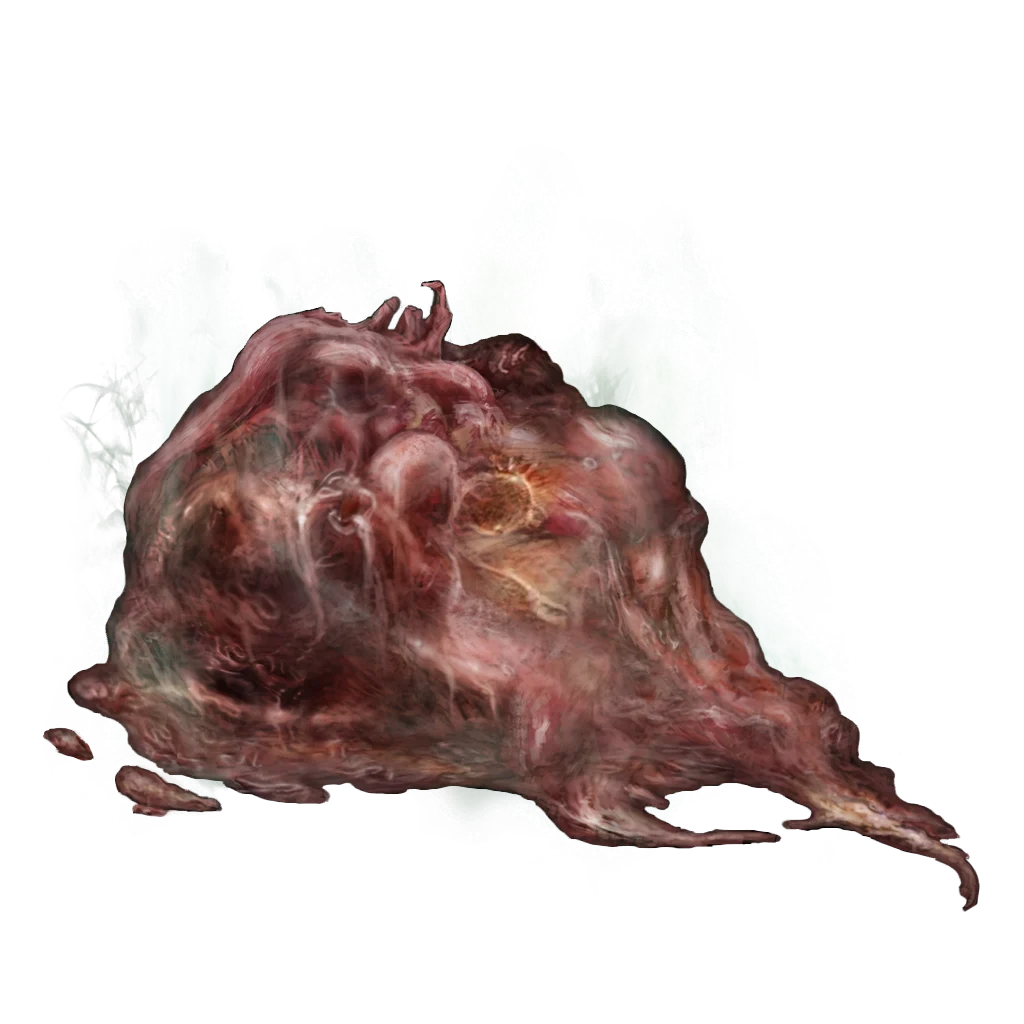 Innard Meat
Scraps of flesh for filling great jars. Rancorous spirits cling to the pinkish-red, twitching meat. Throw at enemies to inflict damage. This is what becomes of the condemned, who get sliced up and stuffed into jars to become saints instead.
◈ LINEAGEThe Ancient Dragon-Men
Pre-Erdtree humanoid dragons of Farum Azula, Placidusax's foot-soldiers in time-locked storm▾
The Ancient Dragon-Men
'Incantation of the capital's ancient dragon cult. Summons a bolt of lightning to strike foes from above. This incantation can be cast repeatedly. Long ago, Godwyn the Golden defeated the ancient dragon Fortissax, and befriended his fallen foe—an event that gave rise to the ancient dragon cult in the capital.' The Ancient Dragon-Men are humanoid dragons of pre-Erdtree origin who walk Farum Azula's parapets in armour of ribboned bone. Their faith is the older one, predating the Capital's later dragon cult that Godwyn helped found, and their lord is Placidusax, the Dragonlord whose seat lies at the heart of the storm beyond time. They are the storm beyond time's living staff, dressed in cloth and bone, swinging crescent blades.
'Incantation that channels the power of the ancient dragon Fortissax, now corrupted by Death. Strikes surroundings with a storm of Death lightning. Inflicts Death blight upon foes. Charging extends duration of the storm. It said that this golden lightning was wielded by Godwyn, who befriended Fortissax.' Their lightning takes distinct forms: red lightning is the dragons' weapon; the gold variant is what Godwyn the Golden could call after his ancient-dragon friendship; the Death-corrupted variant is what the Lichdragon Fortissax casts after his corruption. The Ancient Dragon-Men cast the original red. They are the canon's last witnesses to a regime in which dragons ruled and the Erdtree did not exist, and they patrol Farum Azula's halls for as long as the Dragonlord's dethronement can be postponed.
Honed BoltOne of the incantations of the capital's ancient dragon cult. Summons a bolt of lightning to strike foes from above. This incantation can be cast repeatedly. Long ago, Godwyn the Golden defeated the ancient dragon Fortissax, and befriended his fallen foe—an event that gave rise to the ancient dragon cult in the capital.
Death LightningIncantation that channels the power of the ancient dragon Fortissax, now corrupted by Death. Strikes surroundings with a storm of Death lightning. Inflicts Death blight upon foes. Charging extends duration of the storm. It said that this golden lightning was wielded by Godwyn, who befriended Fortissax.
◈ ORDERThe Haima Conspectus
Adjudicator of Raya Lucaria, who quells conflict with cannon fire and the gavel▾
The Haima Conspectus
'One of the glintstone sorceries of the Academy of Raya Lucaria. Drawn from the scholarly conspectus of Haima, the adjudicator of the academy, this sorcery employs might as a means to quell conflict.' The Haima Conspectus is the academy's juridical wing, the lineage of scholars who, when conflict arose, did not retreat behind sealed gates the way the rest of the academy did but went out armed and ended the dispute by force. Their canonical sorcery is the Gavel of Haima: a glintstone hammer-spell that descends on the disputed matter to settle it. Their argument is that an academy that recuses itself from violence is just escape.
'One of the glintstone sorceries of the Academy of Raya Lucaria. Lobs an explosive magic projectile that flies in an arc. Charging enhances potency. Drawn from the conspectus of Haima, the adjudicator of the academy, this sorcery employs might as a means to quell conflict.' The Cannon of Haima is the conspectus's broader instrument. Its scholars carry it onto fields whose belligerents they will mediate by reducing the fight to one side, the wrong one, in the conspectus's judgment. Battlemage Hugues was a graduate of this lineage who, after years of mediating fire, began to crave it; the irony is that Haima's discipline of conflict-quelling could breed a scholar who came to crave war itself. The conspectus's seclusion-as-escape critique applied, in retrospect, to itself.
One of the glintstone sorceries of the Academy of Raya Lucaria. Drawn from the scholarly conspectus of Haima, the adjudicator of the academy, this sorcery employs might as a means to quell conflict.
One of the glintstone sorceries of the Academy of Raya Lucaria. Lobs an explosive magic projectile that flies in an arc. Charging enhances potency. Drawn from the conspectus of Haima, the adjudicator of the academy, this sorcery employs might as a means to quell conflict.
◈ ORDERThe Karolos Conspectus
Oldest scholarly lineage at Raya Lucaria, founded by Azur, comet-chasers▾
The Karolos Conspectus
'One of the glintstone crowns bestowed upon Raya Lucaria scholars whose pursuits were deemed worthy. Increases intelligence to the detriment of stamina. The Karolos Conspectus is the oldest of the academy's lineages of study, begat by the sorcerer Azur. Scholars who follow in his footsteps pursue the mysteries of comets.' Karolos is the academy's oldest lineage, the one Azur founded before he ascended to grand master and began the long deterioration that ended in his glintstone-crowned silence at Mt. Gelmir. The conspectus's discipline is comets: the great stellar visitors whose passage lights the night and from whose substance, by tradition, glintstone descended.
'One of the glintstone sorceries of the Academy of Raya Lucaria. Fires a great magical comet. This sorcery can be cast repeatedly and while in motion. Charging enhances potency. The greatest of the Karolos Conspectus's sorceries, that only a very few sorcerers have ever mastered.' Comet, the sorcery, not the celestial body, is the lineage's pinnacle. The flavour text is precise: only a very few sorcerers have ever mastered it. The Tarnished may learn it from Sellen, the academy's most banished daughter, who pursued the forbidden primeval current and crossed the same line that broke Azur. Glintstone Cometshard and Shard Spiral are the lineage's lesser, more reliable sorceries, comets the conspectus could repeat while waiting for the rare scholar capable of casting Comet itself.
One of the glintstone crowns bestowed upon Raya Lucaria scholars whose pursuits were deemed worthy. Increases intelligence to the detriment of stamina. The Karolos Conspectus is the oldest of the academy's lineages of study, begat by the sorcerer Azur. Scholars who follow in his footsteps pursue the mysteries of comets.
One of the glintstone sorceries of the Academy of Raya Lucaria. Fires a great magical comet. This sorcery can be cast repeatedly and while in motion. Charging enhances potency. The greatest of the Karolos Conspectus's sorceries, that only a very few sorcerers have ever mastered.
◈ ORDERThe Death-Rite Priests
Old guardians of the Deathbirds, sworn to their distant resurrection▾
The Death-Rite Priests
'Ritual spear used by priests of old who were permitted to come among the Deathbirds. The priests became guardians of the birds through the rite of Death, which also serves as an oath sworn to their distant resurrection.' The Death-Rite Priests are an order whose entire profession was the protection of an order older than themselves. The Deathbirds, flame-borne avian giants whose roost predates the Erdtree, required priests who could approach them without being incinerated, and the Death-Rite was the canonical solution: a ritual that consecrated the priest as a guardian by binding their own death to a future resurrection. The priests entered Death the way a sworn vassal enters service.
'A talisman adorned with blue feathers, once used in ancient death rituals. Raises defense when HP is low. The heart sings when one draws close to death, and thus does one cling so tenaciously to life—to render up a death worth offering.' The blue and red feathered branchswords are the Death-Rite's most preserved relics, small talismans the Tarnished may carry in low health: the blue-feathered raises defence as HP drops, while its red twin raises attack power. The flavour text contains the rite's whole theology: the heart sings when one draws close to death, and thus does one cling so tenaciously to life, to render up a death worth offering. The Deathbirds the priests once tended now wander the Mountaintops alone, having outlived their entire priesthood by an age, awaiting the resurrection that no one is left to officiate.
Ritual spear used by priests of old who were permitted to come among the Deathbirds. The priests became guardians of the birds through the rite of Death, which also serves as an oath sworn to their distant resurrection.
A talisman adorned with blue feathers, once used in ancient death rituals. Raises defense when HP is low. The heart sings when one draws close to death, and thus does one cling so tenaciously to life—to render up a death worth offering.
A talisman adorned with red feathers, once used in ancient death rituals. Raises attack power when HP is low. The heart sings when one draws close to death, and a glorious end awaits those who cling so tenaciously to life.
 ◈ ORDER
The Vulgar Militia
Lean, mean, filthy watchkeepers of forbidden lands history wants to forget▾
The Vulgar Militia
'Armor worn by lean, mean, and filthy militiamen. Freshly-singed battlegrounds effusing with the stench of the dead. Forbidden lands that will be excised from the memory of history. This is where the vulgar militia serve, as untiring, unsung watchkeepers.' The Vulgar Militia are the canon's institutional shame. They are the small, ill-favoured warriors the Lands Between scorned during the era of demigod war; they organised themselves into a militia for survival rather than oath, and the Order assigned them to watch the battlefields the Order itself wished to forget. Mt. Gelmir's lava-blasted southern slopes and the Forbidden Lands of the Mountaintops, all are theirs by default of nobody else accepting the post.
'A weapon comprised of a saw blade attached to a long grip. Brandished by the vulgar militia, its serrated edge is very effective at inflicting blood loss. The saw is said to also be used to cut up bodies to feed the militia, but there are no firsthand witnesses to confirm the dire rumor.' The canonical detail is the saw. Their weapon is a long-hafted serrated blade designed for industrial harvesting of corpses; the rumour, never confirmed, is that they eat what they harvest. The Order's silence about the rumour is its own kind of confirmation. The militia's ghost-form, the Vulgar Militia Spirit Ash, fights the Tarnished's battles the same way they fought the Order's: in lines of three, brutal, blood-loss-inflicting, asking nothing about who they are killing because no one ever told them.
Armor worn by lean, mean, and filthy militiamen. Freshly-singed battlegrounds effusing with the stench of the dead. Forbidden lands that will be excised from the memory of history. This is where the vulgar militia serve, as untiring, unsung watchkeepers.
A weapon comprised of a saw blade attached to a long grip. Brandished by the vulgar militia, its serrated edge is very effective at inflicting blood loss. The saw is said to also be used to cut up bodies to feed the militia, but there are no firsthand witnesses to confirm the dire rumor.
 ◈ ORDER
The Soldiers of Godrick
What remains of the army that fled the royal capital of the Erdtree, now loyal to Godrick, Lord of Stormveil▾
The Soldiers of Godrick
'Armor worn by soldiers loyal to Godrick the Grafted. The surcoat depicts the distant Erdtree and the beast regent, an emblem of the golden lineage. Both are symbols of glory now past.' The Soldiers of Godrick are, in the game's own words, a remnant: their Spirit Ash calls them 'what remains of the army that fled the royal capital of the Erdtree', and that description does not say what road they took, nor when. They serve a lord the game's dialogue names 'Godrick the Grafted, Lord of Stormveil', whose 'castle lies upon the cliff to Limgrave's northwest', and whose divine blood dialogue elsewhere calls 'sorely diluted' : 'but a distant relation... The runt of the litter.' The tree on their surcoat is the one the armor itself calls distant; the beast beside it is named elsewhere as Serosh, 'aged counselor who guides the golden lineage', of whom the Godfrey Icon says 'he took the Beast Regent Serosh upon on his back to suppress the ceaseless lust for battle that raged within'. Both, the armor says, are symbols of glory now past.
'Ashen remains in which spirits yet dwell. Use to summon the spirits of two of Godrick's soldiers. A duo of spirits, consisting of a wielder of devastating charged hammer attacks in the vanguard and a crossbowman bringing up the rear. The soldiers who serve Godrick the Grafted are what remains of the army that fled the royal capital of the Erdtree.' The description records what they became, not where they fell. Set beside it, the Leyndell Soldier Ashes describe spirits 'each equipped with a spear and greatshield' who 'fight their battles defensively', and who, 'During the Shattering, they were the ramparts that fortified the royal capital.' whose own map still reports 'the inner wall remains unbreached to this day'. Read together, the two entries speak of one capital and two fates. The pair raised from Godrick's ashes puts a charged hammer in the vanguard and a crossbow at the rear; the gear that goes with them is 'rust-worn and stained through unending conflict', and the shields the game gives Stormveil's soldiers are, 'much like the castle', 'marred by mottling and thorns', an affliction 'some say' comes from 'the curse of grafting'. Summoned by the Tarnished, they fight under the tree and the beast still stitched on their coats.
Armor worn by soldiers loyal to Godrick the Grafted. The surcoat depicts the distant Erdtree and the beast regent, an emblem of the golden lineage. Both are symbols of glory now past.
Ashen remains in which spirits yet dwell. Use to summon the spirits of two of Godrick's soldiers. A duo of spirits, consisting of a wielder of devastating charged hammer attacks in the vanguard and a crossbowman bringing up the rear. The soldiers who serve Godrick the Grafted are what remains of the army that fled the royal capital of the Erdtree.
◈ ORDERThe Abductor Virgins
Ghiza's flesh-flaying torture-engines, mobile gaols disguised as kindly nuns▾
The Abductor Virgins
'Great iron wheel lined with flesh-flaying blades. Device of torture used by Inquisitor Ghiza. As the wheel spins it causes severe pain and blood loss. The design was adopted for use as the iconic weapon wielded by Iron Virgins.' The Abductor Virgins are mobile gaol-engines built around a single great iron wheel lined with flesh-flaying blades. The wheel was Inquisitor Ghiza's torture-engine, the canonical design copied wholesale into the maiden-construct's torso. Each maiden is the size of a building. Each contains, inside her hollow body, a cell that snaps shut around any traveller her grasping arms catch.
'Hood made by sewing together patches of smooth skin. Subcutaneous fat makes it plump and soft. Worn by Godskin Nobles. Nobles are the most ancient apostles who are said to have assimilated inhuman physiology. Not unlike the crucible, the Erdtree in its primordial form.' The maidens were built to capture and transport prisoners, snatched at the academy and in the volcanic reaches of Mt. Gelmir, down to the gaols of Volcano Manor, the stronghold of the Recusants who set themselves against the Golden Order. Their masks are nun-blank, their long arms gentle in posture and lethal in motion. The first one the Tarnished encounters, in the Raya Lucaria academy, ambushes from a corner of an otherwise quiet study. The canon's quietest critique of inquisitorial method is the engineering choice: the device of mercy and the device of torture, in this construct, are the same machine.
Great iron wheel lined with flesh-flaying blades. Device of torture used by Inquisitor Ghiza. As the wheel spins it causes severe pain and blood loss. The design was adopted for use as the iconic weapon wielded by Iron Virgins.
Godskin Noble HoodHood made by sewing together patches of smooth skin. Subcutaneous fat makes it plump and soft. Worn by Godskin Nobles. Nobles are the most ancient apostles who are said to have assimilated inhuman physiology. Not unlike the crucible, the Erdtree in its primordial form.
◈ ORDERThe Crystal Cadre
Raya Lucaria sorcerers who pursue the wisdom-of-stone locked in Crystalian cogitation▾
The Crystal Cadre
'One of the glintstone sorceries of the Academy of Raya Lucaria. Fires a volley of glintstone crystal shards. Charging increases potency. A sorcery of the Crystal Cadre, a group of sorcerers who pursue the wisdom of stone—the secrets locked in the faint cogitation of the Crystalians.' The Crystal Cadre is the academy's quietest research wing. Where Karolos chases comets, Olivinus meteors, Lazuli moons, and Haima cannons-and-gavels, the Cadre studies the stones the academy is built on. The Crystalians, the silent cogitating crystal-bodies that wander the deep caves, are the lineage's research subject. The Cadre's premise is that consciousness can take a mineral form, and the slow thinking of the Crystalians is the canonical evidence.
'Spear fashioned from pure crystal; a deed impossible for a human. Enwreathed with powerful magic, its attack scales with intelligence. The inscrutable Crystalians have but one clear purpose; to safeguard their crystals unto the end. One theory posits that they yearn for the return of their creator who will carve for them new brethren.' The Cadre's sorceries, Crystal Barrage, Crystal Burst, are direct transcriptions of what the academy's scholars witnessed Crystalians doing in their natural state. The canonical reservation is the line about the Crystalian's purpose: their cogitation is faint, their loyalty is absolute, and their longing is for a creator who has not returned in living memory. The Cadre studies them as theological evidence that consciousness need not be biological. The conclusion of that study, by the canon's silence on the Cadre's progress, is yet to come.
One of the glintstone sorceries of the Academy of Raya Lucaria. Fires a volley of glintstone crystal shards. Charging increases potency. A sorcery of the Crystal Cadre, a group of sorcerers who pursue the wisdom of stone—the secrets locked in the faint cogitation of the Crystalians.
Spear fashioned from pure crystal; a deed impossible for a human. Enwreathed with powerful magic, its attack scales with intelligence. The inscrutable Crystalians have but one clear purpose; to safeguard their crystals unto the end. One theory posits that they yearn for the return of their creator who will carve for them new brethren.
 ◈ ORDER
The Capital's Ancient Dragon Cult
Knights' faith born when Godwyn befriended Fortissax, separate from the older Communion▾
The Capital's Ancient Dragon Cult
'Prayerbook of the capital's ancient dragon cult. A text of the knights' faith that arose after the War of the Ancient Dragons. Can be given to a learned cleric to gain access to the following incantations: - Lightning Spear - Honed Bolt - Electrify Armament.' The Capital's Ancient Dragon Cult is a younger, knight-side faith that the canon distinguishes carefully from the Dragonbarrow's older Dragon Communion. The Communion is the heart-eating heresy of acolytes who consume dragon flesh to inherit dragon breath. The Cult is the ceremonial dragon-cult of Leyndell knights who, after Godwyn defeated and befriended Fortissax during the War of the Ancient Dragons, adopted lightning-incantations as a sworn discipline.
'One of the incantations of the capital's ancient dragon cult. Summons a bolt of lightning to strike foes from above. This incantation can be cast repeatedly. Long ago, Godwyn the Golden defeated the ancient dragon Fortissax, and befriended his fallen foe—an event that gave rise to the ancient dragon cult in the capital.' The cult's three foundational incantations, Lightning Spear, Honed Bolt, Electrify Armament, encode the friendship into prayer. Each is the lightning of a real ancient dragon, copied by faith into the human body of a Capital knight. Ancient Dragon Knight Kristoff is the cult's most decorated example: a Leyndell knight who earned Erdtree Burial for the capture of Godefroy the Grafted, and whose spirit ash strikes foes with the dragons' weapon of choice. Godwyn, before his soul-death, was the first of the demigods to die: after he became the Prince of Death, the ancient dragon Fortissax fought long and hard against the Death within its companion, and never won.
Dragon Cult PrayerbookPrayerbook of the capital's ancient dragon cult. A text of the knights' faith that arose after the War of the Ancient Dragons. Can be given to a learned cleric to gain access to the following incantations: - Lightning Spear - Honed Bolt - Electrify Armament
Honed BoltOne of the incantations of the capital's ancient dragon cult. Summons a bolt of lightning to strike foes from above. This incantation can be cast repeatedly. Long ago, Godwyn the Golden defeated the ancient dragon Fortissax, and befriended his fallen foe—an event that gave rise to the ancient dragon cult in the capital.
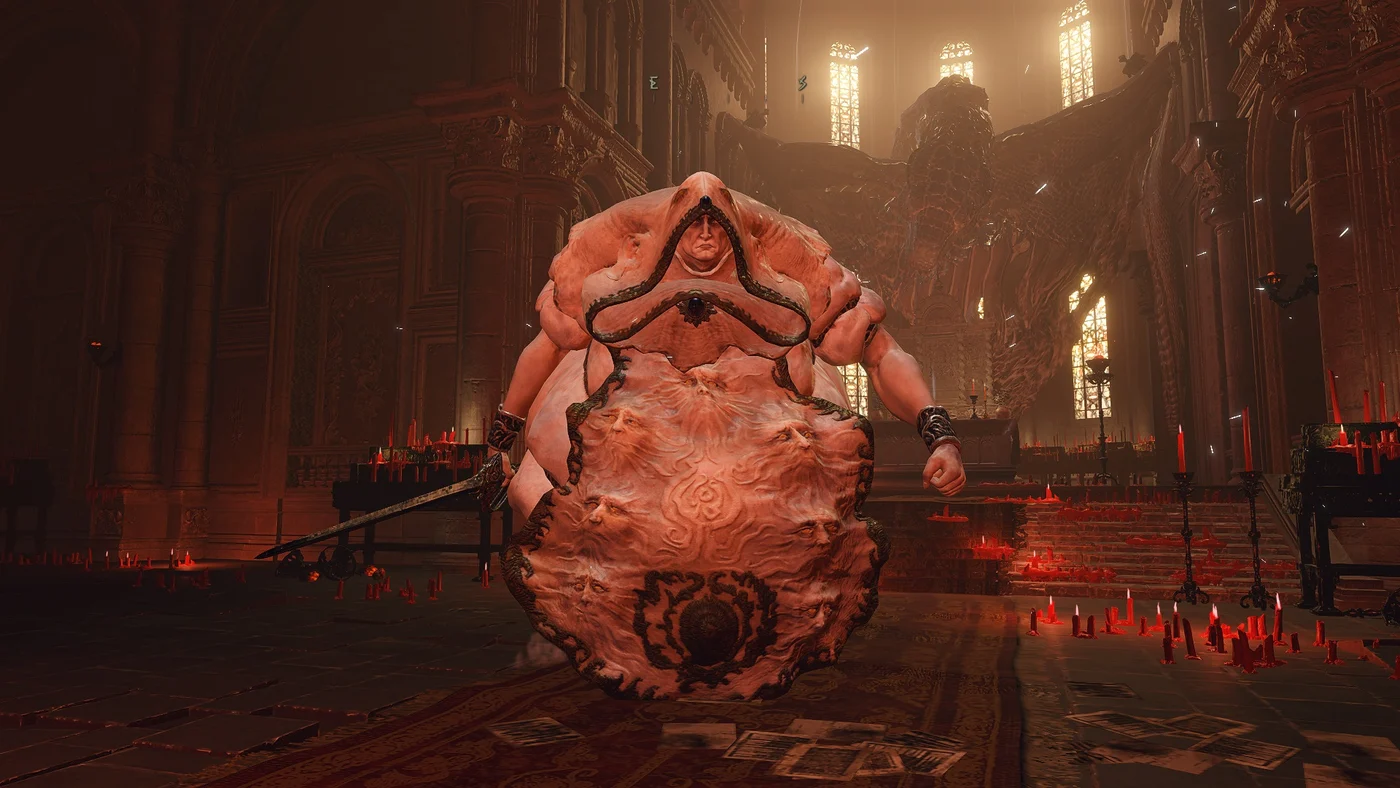 ◈ ORDER
The Godskin Nobles
Most ancient Apostles who assimilated inhuman physiology, embraced by the Gloam-Eyed Queen▾
The Godskin Nobles
'Robe made by sewing together patches of smooth skin. Subcutaneous fat makes it plump and soft. Worn by Godskin Nobles, known for their seven-face aprons. Strengthens the Noble Presence incantation. Nobles are the most ancient apostles who are said to have assimilated inhuman physiology. Not unlike the crucible, the Erdtree in its primordial form.' The Godskin Nobles are the elder branch of the Apostle order, the apostles old enough to have crossed the line from human into something else. The canon's quietest comparison is to the Crucible itself: the Nobles' inhuman physiology, the seven-face aprons, the layered fat that swells their bodies, are described as not unlike the primordial Erdtree-state in which all life was indistinguishable.
'A black flame incantation of the Godskin Apostles. Summons black fire within, increasing physical damage negation. However, sacred flasks and other such forms of HP restoration are impaired. The Apostles were all embraced by the Gloam-Eyed Queen, and the black flame was their armor within.' The Godskin order's whole flame-magic, the god-slaying black flame, was given to them by the Gloam-Eyed Queen, an Empyrean chosen by the Fingers, whose entire faction was subsequently sealed away by Maliketh. The Nobles are the survivors of that sealing: ancient enough to have personally received the Queen's embrace, slow-bodied enough to have lasted the centuries since, still smiling under their seven-face aprons in the dungeons where the canon stores its unsuccessful theologies. Their black flame, after the Sealing, is what they have left of their goddess.
Godskin Noble RobeRobe made by sewing together patches of smooth skin. Subcutaneous fat makes it plump and soft. Worn by Godskin Nobles, known for their seven-face aprons. Strengthens the Noble Presence incantation. Nobles are the most ancient apostles who are said to have assimilated inhuman physiology. Not unlike the crucible, the Erdtree in its primordial form.
Black Flame's ProtectionA black flame incantation of the Godskin Apostles. Summons black fire within, increasing physical damage negation. However, sacred flasks and other such forms of HP restoration are impaired. The Apostles were all embraced by the Gloam-Eyed Queen, and the black flame was their armor within.
 ◈ ORDER
The Blackflame Monks
Guardians of the flame of ruin turned traitor, enthralled by the god-slaying black flame▾
The Blackflame Monks
'Black iron armor adorned with ashen cloth. Attire of the Blackflame Monks. The Blackflame Monks, enthralled by the god-slaying black flame, became traitors, abandoning their posts as guardians. The seduction of a taboo is never easily spurned.' The Blackflame Monks are the canon's clearest study of guardians seduced from their post. They were Fire Monks, keepers of the flame of ruin: the Giants' Flame, forbidden by the Erdtree, kept high in the Mountaintops of the Giants where its ruinous blaze had been sealed after the War against the Giants. Their vow was to watch over that flame. What broke them was a different fire, the god-slaying black flame. Enthralled by it, they became traitors and abandoned their posts.
'Mail hood of iron links covering a headband engraved with flames. Attire of the Blackflame Monks. The Blackflame Monks, enthralled by the god-slaying black flame, became traitors, abandoning their posts as guardians. The seduction of a taboo is never easily spurned.' The canonical sentence is the whole of the tragedy: the seduction of a taboo is never easily spurned. In the game's own words, fire beguiles those who gaze into it, and so the guardians of the flame are also its worshippers; after many years of solemn duty at the edge of a forbidden blaze, their watchfulness curdled into obsession, and the black flame found monks already prepared to fall. The Monks' apostasy is the Order's quietest argument that some fires cannot be policed by anyone made to stand guard over them.
Black iron armor adorned with ashen cloth. Attire of the Blackflame Monks. The Blackflame Monks, enthralled by the god-slaying black flame, became traitors, abandoning their posts as guardians. The seduction of a taboo is never easily spurned.
Mail hood of iron links covering a headband engraved with flames. Attire of the Blackflame Monks. The Blackflame Monks, enthralled by the god-slaying black flame, became traitors, abandoning their posts as guardians. The seduction of a taboo is never easily spurned.
◈ LINEAGEThe Alabaster Lords
Stone-skinned ancients risen from a meteor strike, who taught Radahn his gravity▾
The Alabaster Lords
'Greatsword forged from a blue-white meteoric ore. The blade conceals gravity-manipulating magic. A weapon unique to the Alabaster Lords, a race of ancients with skin of stone who were said to have risen to life when a meteor struck long ago.' The Alabaster Lords are the canon's most unusual race. They are not biological in any normal sense, they were said to have risen to life when a meteor struck long ago. Their gravity-manipulating sorceries derive directly from the same meteoric event: the Lord's Sword conceals gravity-magic, and their unique skill, Alabaster Lord's Pull, opens a gravity well in the ground that draws enemies inward.
'Skill originating from the Alabaster Lords, who had skin of stone. Thrust the armament into the ground to create a gravity well. In addition to dealing damage, this attack pulls enemies in.' Their lineage's most famous student is General Radahn. He studied gravitational technique in Sellia in his younger days, where the Alabaster Lords' last living members still reside, the same gravitational technique he later used to keep the stars themselves from falling. Commander Gaius, his rival and contemporary, learned the technique alongside him. The two demigod-adjacent gravity-pupils both studied at the foot of stone-skinned ancients who came alive from a meteor's impact and whose pedagogy persists, in their own slow voices, in a small Caelid tunnel few visit.
Greatsword forged from a blue-white meteoric ore. The blade conceals gravity-manipulating magic. A weapon unique to the Alabaster Lords, a race of ancients with skin of stone who were said to have risen to life when a meteor struck long ago.
This Ash of War grants an armament the Magic affinity and the following skill: "Gravitas: Skill originating from the Alabaster Lords, who had skin of stone. Thrust the armament into the ground to create a gravity well. In addition to dealing damage, this attack pulls enemies in." Usable on melee armaments (small armaments and whips excepted).
◈ LINEAGEThe Onyx Lords
Dark-stoned twin to the Alabaster, gravity-pushers rather than pullers▾
The Onyx Lords
'Unique Skill: Onyx Lord's Repulsion Thrust the armament into the ground to create a gravity well. In addition to dealing damage, this attack sends enemies flying away.' The Onyx Lords are the Alabasters' dark-stone counterparts, same meteor-born stone-skinned race, opposite gravitational polarity. Where the Alabaster Lord's signature skill is a pull-spell that draws enemies inward, the Onyx Lord's Repulsion is a push-spell that hurls them outward. Both are thrust-into-the-ground gestures that open a gravity well; the polarity is what each lineage chose to emphasise.
'Unique Skill: Alabaster Lord's Pull Thrust the armament into the ground to create a gravity well. In addition to dealing damage, this attack pulls enemies in. Has a greater area of effect than Gravitas.' The pair's binary reads as a rare canon-level metaphor for the universal force itself. The Alabaster–Onyx Lords read as a doctrinal split: as if two twin lineages of stone-skinned ancients, born of the same meteor, had each pushed one side of the same force to its extreme. Radahn studied under one of them in his youth. The gravitational powers the Red Lion General wielded were, the Remembrance of the Starscourge tells us, learned in Sellia during his younger days, his master an Alabaster Lord with skin of stone.
Unique Skill: Onyx Lord's Repulsion Thrust the armament into the ground to create a gravity well. In addition to dealing damage, this attack sends enemies flying away.
Unique Skill: Alabaster Lord's Pull Thrust the armament into the ground to create a gravity well. In addition to dealing damage, this attack pulls enemies in. Has a greater area of effect than Gravitas.
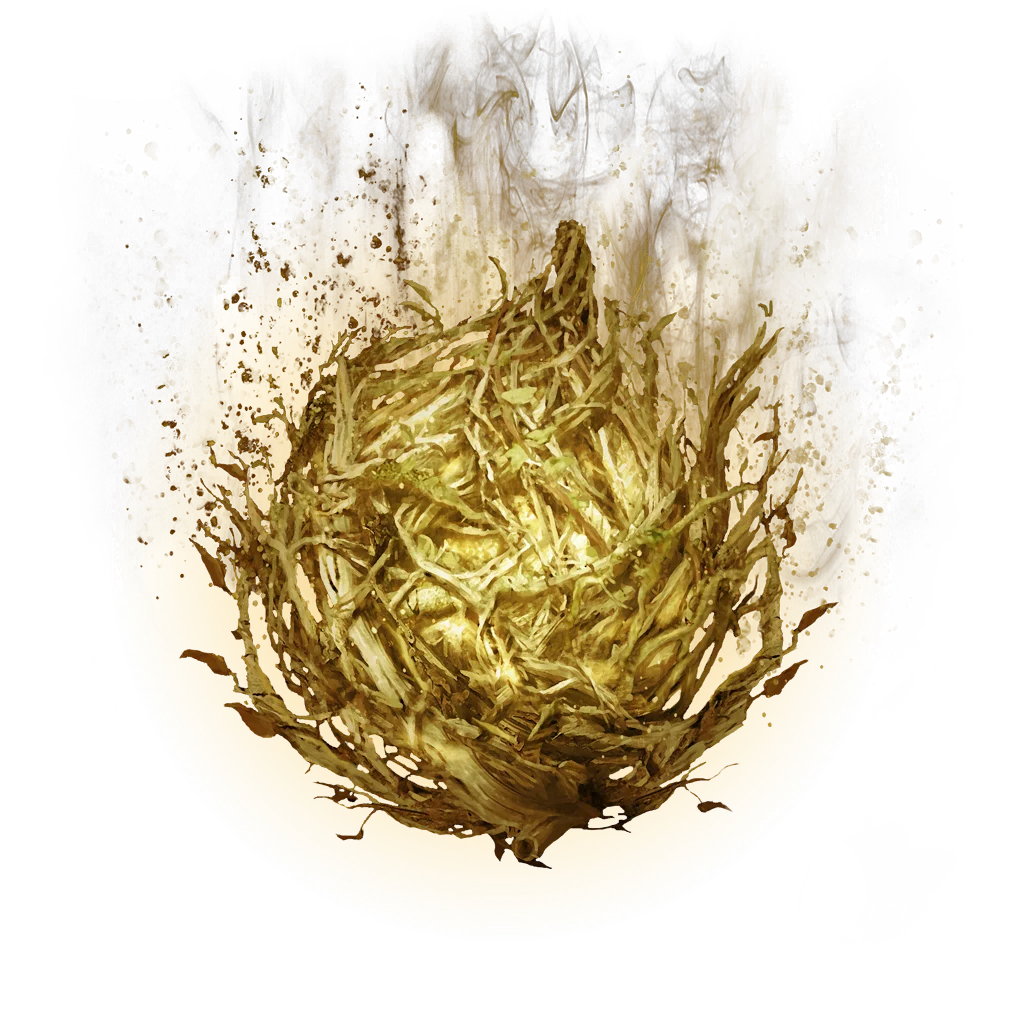 ▣ ARTIFACT
The Golden Seeds
Erdtree's last bequest to the dying realm, scattered as the Ring shattered▾
The Golden Seeds
'A golden seed, found at the base of an illusory tree. Increases a Sacred Flask's number of uses. (Can be used after resting at a site of grace.) When the Elden Ring was shattered, these seeds flew from the Erdtree, scattering across the various lands, as if life itself knew that its end had come.' The Golden Seeds are the Erdtree's last canonical act of mercy. At the moment of the Shattering, when Marika brought down her hammer on the Elden Ring and the realm's ordering fragmented across the demigods, the Erdtree itself shed its golden seeds across the Lands Between in a single involuntary distribution. The flavour text describes the act with the Order's customary euphemism: as if life itself knew that its end had come.
'A relic of the physick chemists, priests of the Erdtree. Harnesses the powers of crystal tears, which only form after the passage of many moons. Various special effects are bestowed upon the drinker, dependent on the specific mixture of crystal tears. Rest at a site of grace to replenish. Basins are placed at the feet of Minor Erdtrees throughout the Lands Between in order to collect their crystallized tears.' The seeds and the Crystal Tears are two separate gifts: the tears form only after the passage of many moons, gathered in basins placed at the feet of the Minor Erdtrees throughout the Lands Between. The Tarnished collects the seeds to upgrade the Sacred Flask, and the tears to mix the Wondrous Physick. The whole infrastructure of healing in the Tarnished's pilgrimage is a system the dying Erdtree planned in its last moment, scattered in advance, addressed to no one in particular except whoever might one day return.
A golden seed, found at the base of an illusory tree. Increases a Sacred Flask's number of uses. (Can be used after resting at a site of grace.) When the Elden Ring was shattered, these seeds flew from the Erdtree, scattering across the various lands, as if life itself knew that its end had come.
A relic of the physick chemists, priests of the Erdtree. Harnesses the powers of crystal tears, which only form after the passage of many moons. Various special effects are bestowed upon the drinker, dependent on the specific mixture of crystal tears. Rest at a site of grace to replenish. Basins are placed at the feet of Minor Erdtrees throughout the Lands Between in order to collect their crystallized tears.
✦️ EVENTThe Long March of the Tarnished
Godfrey's exile-and-conquest, the Tarnished's foundational journey before they were Tarnished▾
The Long March of the Tarnished
'Weapon of Godfrey, Elden Lord. It was broken in a battle fought as leader of the Tarnished during the Long March. This weapon is symbolic of Godfrey's vow to conduct himself as a lord, later becoming an emblem of the golden lineage. In the days of the past, a crown was warranted with strength.' The Long March is the canon's foundational journey. After Godfrey lost his grace and was stripped of his Elden-Lord title, Marika ordained that he and his kinfolk should leave the Lands Between and 'wage war in a land afar.' That campaign, through nameless peaks and shores beyond the Sea of Fog, is what the canon calls the Long March. Godfrey was its leader. His axe was broken in the canonical battle that ended the journey, after which he divested himself of kingship and became Hoarah Loux, a simple warrior, again.
'Battlewear fashioned from leather armor adorned with a large sheet of cloth. Garb worn by warriors of the frigid uplands. The red cloth signifies participation in the Long March long, long ago and this ceremonial garb beseeches the favor of the Warrior King who led them.' The Brave's Battlewear is the March's surviving uniform. The red cloth, draped over leather, is the canonical badge of every warrior who marched with Godfrey and survived to return to the Lands Between when the Two Fingers' grace called the Tarnished home. The warriors of the frigid uplands wear it still in his memory. The Long March produced both the Tarnished as a class and the Hoarah Loux name as the canon's quietest revision: the Lord who returned was not the Lord who left.
Axe of GodfreyWeapon of Godfrey, Elden Lord. It was broken in a battle fought as leader of the Tarnished during the Long March. This weapon is symbolic of Godfrey's vow to conduct himself as a lord, later becoming an emblem of the golden lineage. In the days of the past, a crown was warranted with strength.
Battlewear fashioned from leather armor adorned with a large sheet of cloth. Garb worn by warriors of the frigid uplands. The red cloth signifies participation in the Long March long, long ago and this ceremonial garb beseeches the favor of the Warrior King who led them.
 ◈ ORDER
The Soldjars of Fortune
Reckless little living-jars who self-detonate to defend their summoner▾
The Soldjars of Fortune
'A fragment of a living jar, hardened after its death. Material used for crafting items. Such fragments command a high price due to the magical power locked within. This leaves the living jars unfortunate targets for poachers.' The Soldjars of Fortune are the canon's smallest, fiercest jar-warriors, children, in pottery terms, of the Jarburg lineage that produced Iron Fist Alexander and Jar Bairn. They are little, reckless, fearless, and they explode on contact with fire. Their hardened-after-death shards trade for high prices because the magical residue is genuine and the supply is limited by the rate at which the small jars allow themselves to be slain.
'Ashen remains in which spirits yet dwell. Use to summon the spirits of three little living jars. Summoning consumes HP rather than FP. These reckless spirits sacrifice themselves to vanquish their summoner's foes, and explode upon death. Though their bravery is admirable, their explosions can harm friend as well as foe, and they will also immediately explode on contact with fire. "Tell the others—tell them how brightly a fire jar burns."' Their canonical farewell-line is the order's whole ethos in a single line: tell the others, tell them how brightly a fire jar burns. The Tarnished may summon them as a Spirit Ash, paying the cost in HP rather than FP. Three of them appear at once. They explode at the first opportunity. The exchange, three jar-children's lives for one boss-fight's worth of damage, is the canon's quietest meditation on what a small life trades for a useful death.
A fragment of a living jar, hardened after its death. Material used for crafting items. Such fragments command a high price due to the magical power locked within. This leaves the living jars unfortunate targets for poachers.
Ashen remains in which spirits yet dwell. Use to summon the spirits of three little living jars. Summoning consumes HP rather than FP. These reckless spirits sacrifice themselves to vanquish their summoner's foes, and explode upon death. Though their bravery is admirable, their explosions can harm friend as well as foe, and they will also immediately explode on contact with fire. "Tell the others—tell them how brightly a fire jar burns."
 ❋ DLC ORDER
The Demi-Human Swordsmen
Star-Lined Sword bearers, sworn to find the truth at the end of the procession of stars▾
The Demi-Human Swordsmen
'Sword encrusted with a line of stars fashioned from small pieces of crude glintstone. Weapon of the demi-human swordsmen. When bestowed with this weapon by their queen, the swordsmen swear to find the truth that lies at the end of the procession of stars.' The Demi-Human Swordsmen are the Realm of Shadow's surprising astronomers. The Demi-Human queens, sneered at by Raya Lucaria for their low intelligence and crude scepters, secretly raised a knightly order whose oath was unaccountably grand: to follow the stars to the end of their procession and find the truth there. The Star-Lined Sword is the queen's bestowal, a long blade encrusted with crude glintstone in a line that mimics constellations.
'Ashen remains in which spirits yet dwell. Use to summon the spirit of Yosh, the demi-human swordsman. Onze, a master swordsman who devoted himself to the Star-Lined Sword, realized that only ruin awaited at the end of the procession of stars, and imprisoned himself in order to forestall it. However, Yosh, an apprentice who absorbed his technique, stubbornly refused to heed his master's words, and spent entire his life at his side, in defiance of his self-imposed seclusion.' The order's tragedy is precise. Onze, the master, followed the stars to their conclusion and saw ruin there; he imprisoned himself rather than let the procession finish. Yosh, his apprentice, refused to leave his master's side and lived his entire life beside the imprisoned man, defying the seclusion. The Tarnished may summon Yosh's ghost, the apprentice's last record of a master who saw what the academies missed and chose, alone, to be the one whose vision did not become history.
Star-Lined SwordSword encrusted with a line of stars fashioned from small pieces of crude glintstone. Weapon of the demi-human swordsmen. When bestowed with this weapon by their queen, the swordsmen swear to find the truth that lies at the end of the procession of stars.
Ashen remains in which spirits yet dwell. Use to summon the spirit of Yosh, the demi-human swordsman. Onze, a master swordsman who devoted himself to the Star-Lined Sword, realized that only ruin awaited at the end of the procession of stars, and imprisoned himself in order to forestall it. However, Yosh, an apprentice who absorbed his technique, stubbornly refused to heed his master's words, and spent entire his life at his side, in defiance of his self-imposed seclusion.
Glintstone staff styled as a scepter. A gift once given to the demi-humans to foster peace, it can be wielded even by those of low intelligence. Sneered at by fools in the academy.
▣ SYSTEMThe Bell Bearings
The merchant economy of the dead, deposited at the Roundtable for the Twin Maidens to dispense▾
The Bell Bearings
'Battered iron armor from a foreign land. Worn by Elemer of the Briar. The winding, rusted iron briars are a mark of the guilty, and typically indicate a sentence of death. Elemer murdered numerous instructors and merchants, and was known as the Bell Bearing Hunter.' The Bell-Bearing economy is the canon's quietest banking system. Every merchant in the Lands Between, Kalé at the Church of Elleh, the bone-peddler in Limgrave, the meat-peddler at the Caelid border, every nomadic merchant whose caravan once survived, can die over the course of the campaign, and the bell-bearing they leave behind is the proof of their inventory. The Tarnished delivers it to the Twin Maiden Husks at the Roundtable Hold, who from then on offer the dead merchant's stock at the same prices the merchant did.
'Bell bearing of an unfortunate bone peddler who was slain by the Bell Bearing Hunter. Offer to the Twin Maiden Husks at the Roundtable Hold to gain access to the following items: - Thin Animal Bones - Hefty Beast Bone.' The Bell Bearing Hunter is the canonical antagonist of this system: a foreign-armoured executioner named Elemer of the Briar who specialises in murdering merchants and instructors. Each Hunter the Tarnished slays in his three Sites-of-Grace appearances yields the murdered peddler's bell bearing in return. The merchants Elemer killed are the merchants whose stock the Twin Maidens can finally restock once Elemer himself is dead. The bell-bearing economy thereby self-completes: its mass-murderer becomes its last supplier, posthumously and unwillingly.
Battered iron armor from a foreign land. Worn by Elemer of the Briar. The winding, rusted iron briars are a mark of the guilty, and typically indicate a sentence of death. Elemer murdered numerous instructors and merchants, and was known as the Bell Bearing Hunter.
Bell bearing of an unfortunate bone peddler who was slain by the Bell Bearing Hunter. Offer to the Twin Maiden Husks at the Roundtable Hold to gain access to the following items: - Thin Animal Bones - Hefty Beast Bone
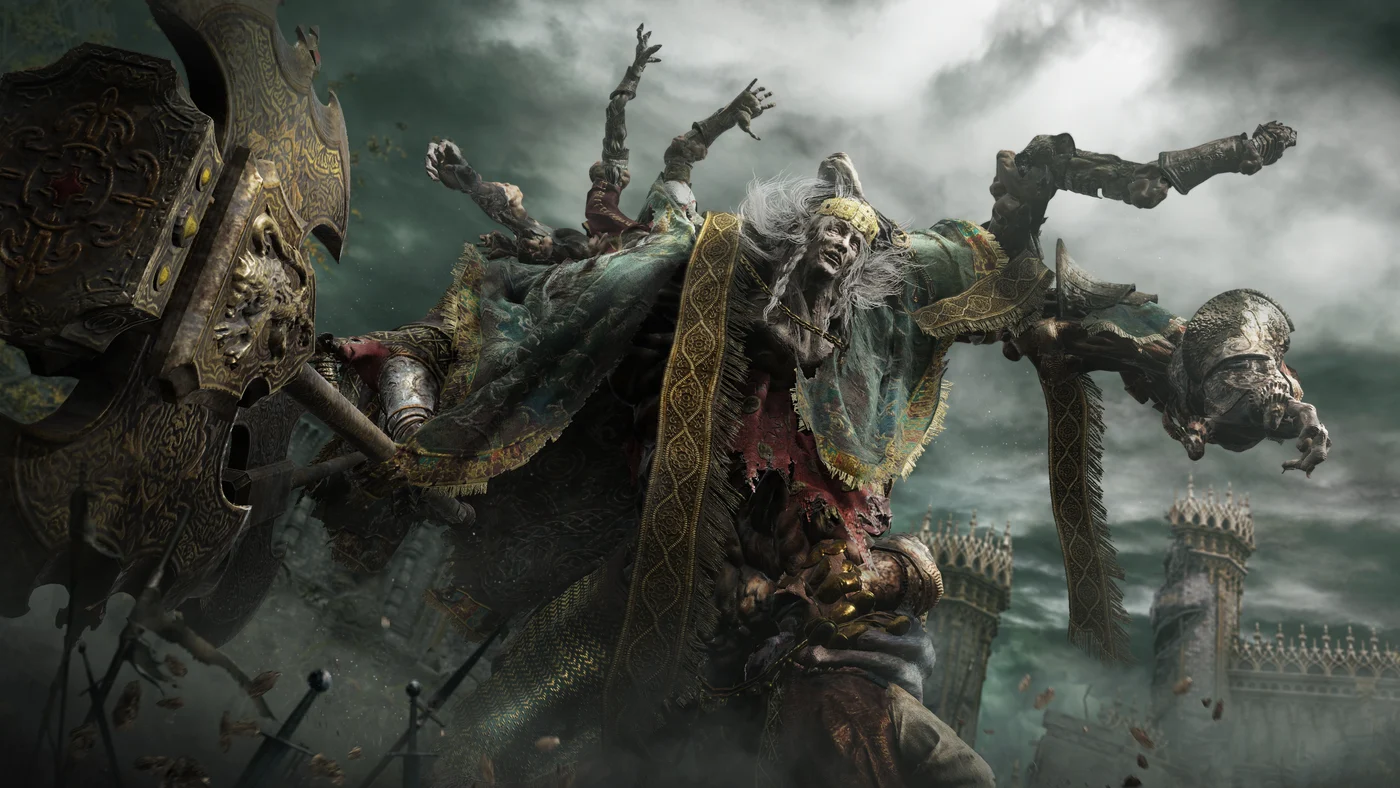 ◈ LINEAGE
The Golden Lineage
Godfrey and his offspring, the first demigods, anchor of the Elden Ring▾
The Golden Lineage
'A Great Rune of the shardbearer Godrick. Its blessing raises all attributes. This Great Rune is known as the anchor ring, found in the center of the Elden Ring. The first demigods were The Elden Lord Godfrey and his offspring, the golden lineage.' The Golden Lineage is the canonical first family of demigods. Godfrey is its patriarch, the first Elden Lord, married to Marika before Radagon, father of the golden lineage, and of the twin Omens Morgott and Mohg. Their Great Runes are described as anchor rings, the rune-fragments at the centre of the Elden Ring's broken constellation.
'A Great Rune of the shardbearer Morgott. Its blessing greatly raises maximum HP. This Great Rune is the anchor ring that houses the base, and proves two things: That the Omen King was born of the golden lineage, and that he was indeed the Lord of Leyndell.' Morgott's Great Rune carries a small bureaucratic miracle in its flavour text: it is described as the anchor ring that houses the base, and the card reads it as evidence of two things. First, that the Omen King, born horned, exiled to the sewers, was nonetheless of the golden lineage. Second, that he was the rightful Lord of Leyndell. What the game says of royal Omen is narrower and colder: they 'do not have their horns excised, but instead are kept underground, unbeknownst to anyone, imprisoned for eternity.'
Godrick's Great RuneA Great Rune of the shardbearer Godrick. Its blessing raises all attributes. This Great Rune is known as the anchor ring, found in the center of the Elden Ring. The first demigods were The Elden Lord Godfrey and his offspring, the golden lineage.
Morgott's Great RuneA Great Rune of the shardbearer Morgott. Its blessing greatly raises maximum HP. This Great Rune is the anchor ring that houses the base, and proves two things: That the Omen King was born of the golden lineage, and that he was indeed the Lord of Leyndell.
 ▣ ARTIFACT
The Sacred Flasks
Crimson and Cerulean, the chalices that drink from the Erdtree's last tears▾
The Sacred Flasks
'A sacred flask modelled after a golden holy chalice that was once graced by a tear of life. Filled with crimson tears, this flask restores HP with use. Though currently empty, simply rest at a site of grace to replenish. It is said that a Finger Maiden will bestow two such chalices upon the chosen Tarnished when they meet.' The Sacred Flasks are the Tarnished's primary instrument of healing. The two flasks are gold chalices, each said to have been graced by a single tear of life that left a residual sanctity behind. Crimson restores HP, Cerulean restores FP. Both are bestowed by a Finger Maiden when she pacts with a chosen Tarnished, a rite the player's Tarnished, mocked as maidenless, never received in the ordinary way.
'A sacred flask modelled after a golden holy chalice that was once graced by a tear of blessing. Filled with crimson tears, this flask restores HP with use. Though currently empty, simply rest at a site of grace to replenish. The one washed up on the gravesite was sure to die, until this flask offered its gift of rejuvenation. To seek the Elden Ring.' The flask's second flavour-variant records the Tarnished's awakening more directly. The one washed up on the gravesite was sure to die, that is, the Tarnished, until this flask offered its gift of rejuvenation. The Sacred Flask is the artifact that converts the Tarnished from a corpse on a beach into a candidate Lord. The Flask of Wondrous Physick, a third chalice the Tarnished may collect, is more refined: a relic of the physick chemists, priests of the Erdtree, that mixes Crystal Tears collected from the foot of every Minor Erdtree.
A sacred flask modelled after a golden holy chalice that was once graced by a tear of life. Filled with crimson tears, this flask restores HP with use. Though currently empty, simply rest at a site of grace to replenish. It is said that a Finger Maiden will bestow two such chalices upon the chosen Tarnished when they meet.
A sacred flask modelled after a golden holy chalice that was once graced by a tear of blessing. Filled with crimson tears, this flask restores HP with use. Though currently empty, simply rest at a site of grace to replenish. The one washed up on the gravesite was sure to die, until this flask offered its gift of rejuvenation. To seek the Elden Ring.
 ▣ ARTIFACT
The Recusant Finger
Snake-scaled invasion-finger of Volcano Manor, heirloom of the lord, bequeathed to family▾
The Recusant Finger
'Item for online play. (Can also be used from the Multiplayer menu.) Attempts an invasion of another player's world. If successful, you will arrive as an invader (Recusant) with the objective of defeating the Host of Fingers of that world. This furled finger is covered in snake scales. An heirloom of the lord of the Volcano Manor, bequeathed to Tarnished who have become family.' The Recusant Finger is the canon's most ritually loaded multiplayer object. The Tarnished does not pick it up, they receive it from Tanith, lady of the Volcano Manor, after Rya's invitation has been honoured and the Tarnished has formally entered the Manor's hunt-confraternity. The finger is snake-scaled, the canonical mark of the lord of the Manor, who is Praetor Rykard, the demigod-serpent. To carry the finger is to be Rykard's family.
'A written request from Volcano Manor disclosing the name of a Tarnished to be hunted. As the final request, the letter is vivid red. "Juno Hoslow, Knight of Blood" He can be found in the Mountaintops of the Giants. Find the red mark on your map for the exact location.' The finger's purpose is the Manor's hunt economy. The Tarnished receives Red Letters naming specific quarry, Old Knight Istvan, Juno Hoslow, Rileigh the Idle, and uses the Recusant Finger to invade those Tarnished's worlds. Each invasion is canonically a serpent-marked summons of family vengeance. The Manor's whole social architecture, letters, fingers, hunts, is the canon's most thoroughly routinised murder-club.
Item for online play. (Can also be used from the Multiplayer menu.) Attempts an invasion of another player's world. If successful, you will arrive as an invader (Recusant) with the objective of defeating the Host of Fingers of that world. This furled finger is covered in snake scales. An heirloom of the lord of the Volcano Manor, bequeathed to Tarnished who have become family.
A written request from Volcano Manor disclosing the name of a Tarnished to be hunted. As the final request, the letter is vivid red. "Juno Hoslow, Knight of Blood" He can be found in the Mountaintops of the Giants. Find the red mark on your map for the exact location.
▣ ARTIFACTThe Smithing Stones
The mineral economy of strengthening, from common shards to time-twisting Ancient Dragon scales▾
The Smithing Stones
'Stone used to smith a variety of armaments. A shard found in plenty. Strengthens armaments up to +3. Smithing stone is found throughout the Lands Between, and mining galleries built to excavate it can be found everywhere.' The Smithing Stones are the canon's tiered upgrade economy, and from [1] to [8] the ceilings climb by threes: up to +3 and +6 for shards found in plenty, +9 and +12 for particularly hard specimens, +15 and +18 for rare specimens tinged with gold, +21 and +24 for semi-vitrified stones found in a polar region. The gold-tinged [5] and [6] are mined near the foot of the Erdtree, and are said to have been used to bolster the strength of the Royal forces. The polar [7] and [8] are thought to have been used to hone the weapons of the champions of the War against the Giants, at the birth of the Erdtree. Both of those histories arrive hedged in the text itself: 'said to have been used', 'Thought to have been used'.
'Smithing stone made by polishing a golden Gravel Stone. A scale of the Ancient Dragonlord, and hidden treasure of Farum Azula. Strengthens armaments to +25. The Ancient Dragonlord's seat is said to lie beyond time. This stone lightly twists time, allowing the creation of a weapon capable of slaying a god.' The Ancient Dragon Smithing Stone carries armaments to +25, a step past the +24 of [8], and its matter is not a shard: it is a scale of the Ancient Dragonlord, polished from a golden Gravel Stone, and a hidden treasure of Farum Azula. The Gravel Stone entry keeps the same reserve about that origin, calling such compound stones, found in lands once beset by ancient dragons, stones 'said to be the scales of those very beasts'. The stated effect crosses from metallurgy into metaphysics: the stone lightly twists time, and the description ties that twisting to the creation of a weapon capable of slaying a god. The Somber Ancient Dragon Smithing Stone is the same scale drained of color, carrying special armaments to +10 and repeating those lines word for word. As for where its owner sits, the description hedges once more: the Ancient Dragonlord's seat 'is said to lie beyond time'.
Stone used to smith a variety of armaments. A shard found in plenty. Strengthens armaments up to +3. Smithing stone is found throughout the Lands Between, and mining galleries built to excavate it can be found everywhere.
Ancient Dragon Smithing StoneSmithing stone made by polishing a golden Gravel Stone. A scale of the Ancient Dragonlord, and hidden treasure of Farum Azula. Strengthens armaments to +25. The Ancient Dragonlord's seat is said to lie beyond time. This stone lightly twists time, allowing the creation of a weapon capable of slaying a god.
 ▣ SYSTEM
The Furled Finger
Tarnished's golden summon-mark, the canon's coded multiplayer artifact▾
The Furled Finger
'With a Tarnished's Furled Finger, you can leave a gold summon sign. This sign will appear in other players' worlds and allow them to summon you as a Furled Finger for cooperative multiplayer.' The Furled Finger is the canon's diegetic coding of cooperative multiplayer. A Tarnished who carries the Finger leaves a golden summon-sign on the ground, often at the entrance to a boss arena; another Tarnished, in another world, may read the sign and summon the original as a co-op ally. The Tarnished arrives in the host's world as a Furled Finger, the canonical title of the role, and fights beside the host until the boss is defeated.
'A small, clouded mirror that reflects an image of a golden figure. Makes the bearer take on the appearance of a Host of Fingers. One of the ritual implements created by the Tarnished to deceive invaders.' The Furled Finger's adversary is the Recusant Finger: the snake-scaled invasion-finger of Volcano Manor that brings a hostile Tarnished into the host's world. The Trick-Mirror, a clouded glass that disguises the bearer as a Host, is the canon's most economically described counter-measure: a ritual implement made by Tarnished to deceive invaders. The whole multiplayer system, Furled Finger summons, Recusant Finger invasions, Trick-Mirror disguises, is the canon's nested theology of co-presence: a Tarnished is, at any moment, also another Tarnished's ally and another Tarnished's enemy.
With a Tarnished's Furled Finger, you can leave a gold summon sign. This sign will appear in other players' worlds and allow them to summon you as a Furled Finger for cooperative multiplayer.
A small, clouded mirror that reflects an image of a golden figure. Makes the bearer take on the appearance of a Host of Fingers. One of the ritual implements created by the Tarnished to deceive invaders.
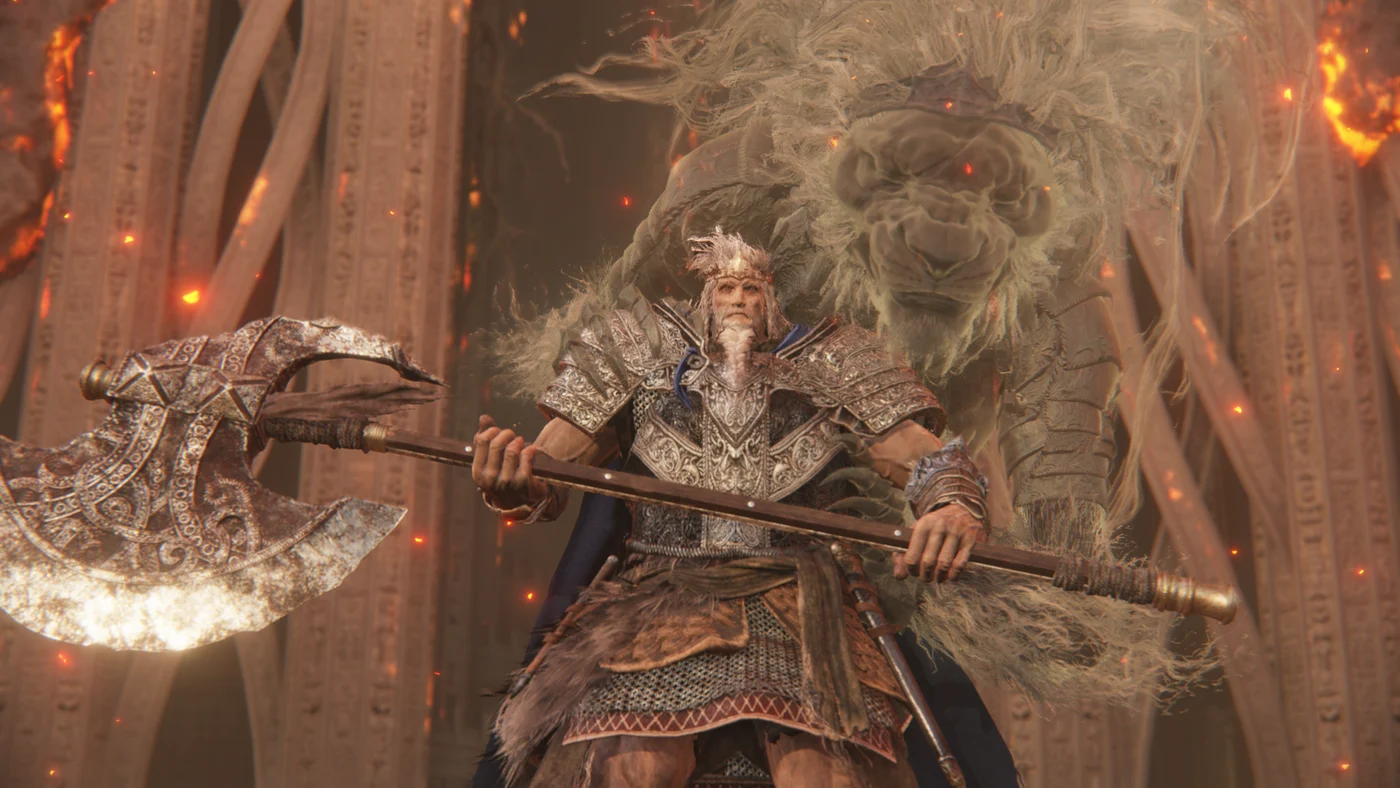 ▣ MONUMENT
The Historical Monuments
Stone-cut record of every great pre-game battle, scattered across the Lands Between▾
The Historical Monuments
'Lord Godfrey, at last at the end of his campaign His golden armies unvanquished and unbowed Yet finds grace lost, tattered and faded.' The Historical Monuments are stone slabs erected at the sites of the canon's pre-game battles. Each is etched with a brief stanza describing what happened there. The Tarnished discovers them passively, by walking the field where the engagement occurred. Together they form the realm's open-air history book, a record of the realm's wars, kept in stone across the Lands Between.
'The Battle of Aeonia Radahn and Malenia locked in stalemate Then, the scarlet rot blooms.' The monuments cover every major prior conflict the canon recognises. The Battle of Aeonia inscribes Malenia's release of the Scarlet Rot against Radahn; the First Defense of Leyndell speaks of a sovereign alliance rotting from within, and the traces of a bloody conspiracy; the Routing of the Ancient Dragons inscribes Godwyn and Fortissax's friendship. The monuments are unsigned; their author is never named. The Tarnished who visits each monument reads, in three lines, a piece of the war whose ending they have come to write.
Lord Godfrey, at last at the end of his campaign His golden armies unvanquished and unbowed Yet finds grace lost, tattered and faded
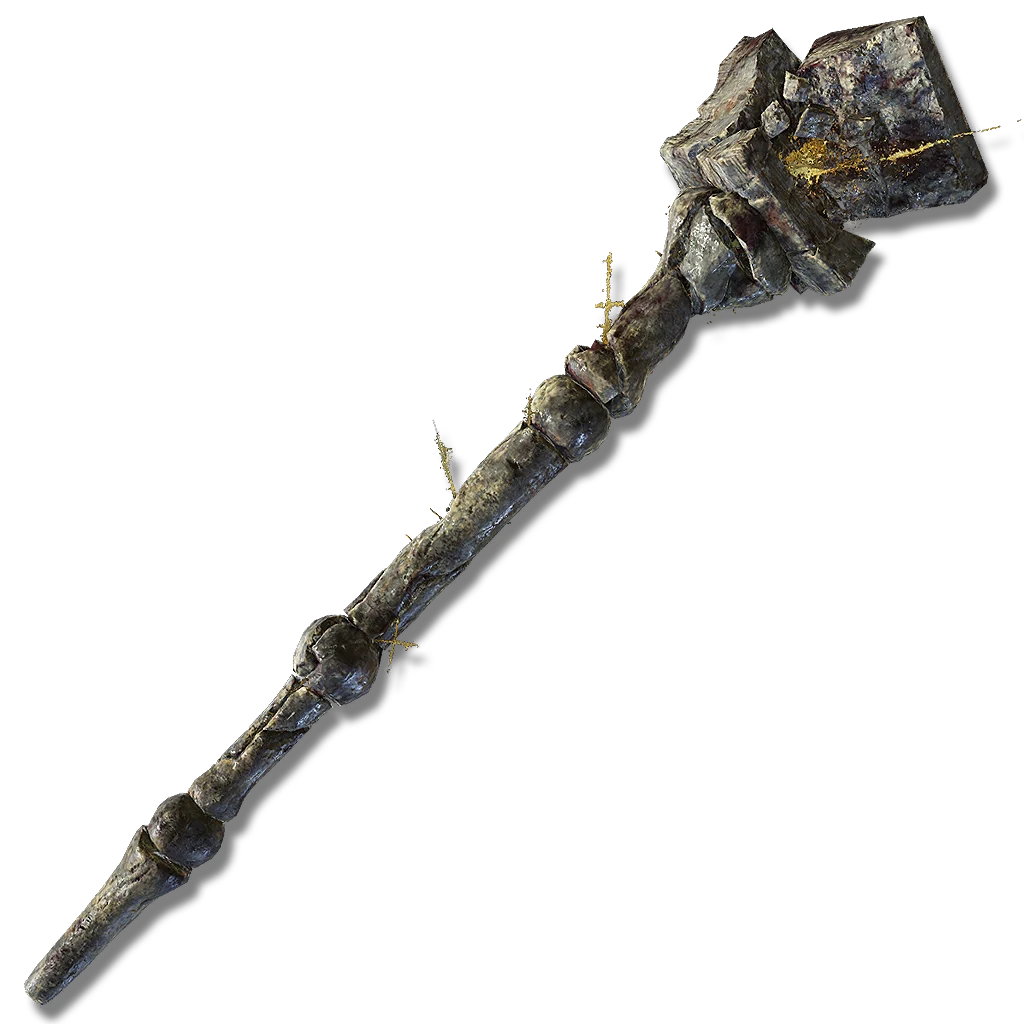 ▣ ARTIFACT
Marika's Hammer
Numen-forged stone tool with which Marika shattered the Elden Ring, and Radagon tried to repair it▾
Marika's Hammer
'Stone hammer made in the lands of the Numen, outside the Lands Between. The tool with which Queen Marika shattered the Elden Ring and Radagon attempted to repair it. The hammer partially broke upon shattering the Ring, becoming splintered with rune fragments.' Marika's Hammer is the canon's most consequential single object. It is a stone hammer, not a divine implement, made in the lands of the Numen, Marika's people, the ancient lineage that includes Tiche and Alecto and the Black Knife conspiracy. She presumably carried it from her homeland to the godhood the Greater Will offered, the hammer's text says only where it was made. She used it, in her last act before being sealed inside the tree, to smash the Elden Ring.
'Warhammer wielded by Radagon. Forged in the age of gods, it harbors colossal magic power.' The hammer's second life is the canon's quietest paradox. After Marika's hammer-strike shattered the Ring, the same hammer was taken up by Radagon, Marika's other half, secretly her opposite-gendered self, to attempt the Ring's repair. The Tarnished encounters this hammer in the final battle, in Radagon's hands, swinging at them as the closing fight before the Elden Beast. The tool that broke the Order is the same tool that tries to mend it; the wielder, in both cases, is the same person. The fight ends with the Tarnished slaying Radagon, taking up the hammer (in some sense). The Tarnished is the third hand to grip Marika's stone.
Stone hammer made in the lands of the Numen, outside the Lands Between. The tool with which Queen Marika shattered the Elden Ring and Radagon attempted to repair it. The hammer partially broke upon shattering the Ring, becoming splintered with rune fragments.
Warhammer wielded by Radagon. Forged in the age of gods, it harbors colossal magic power.
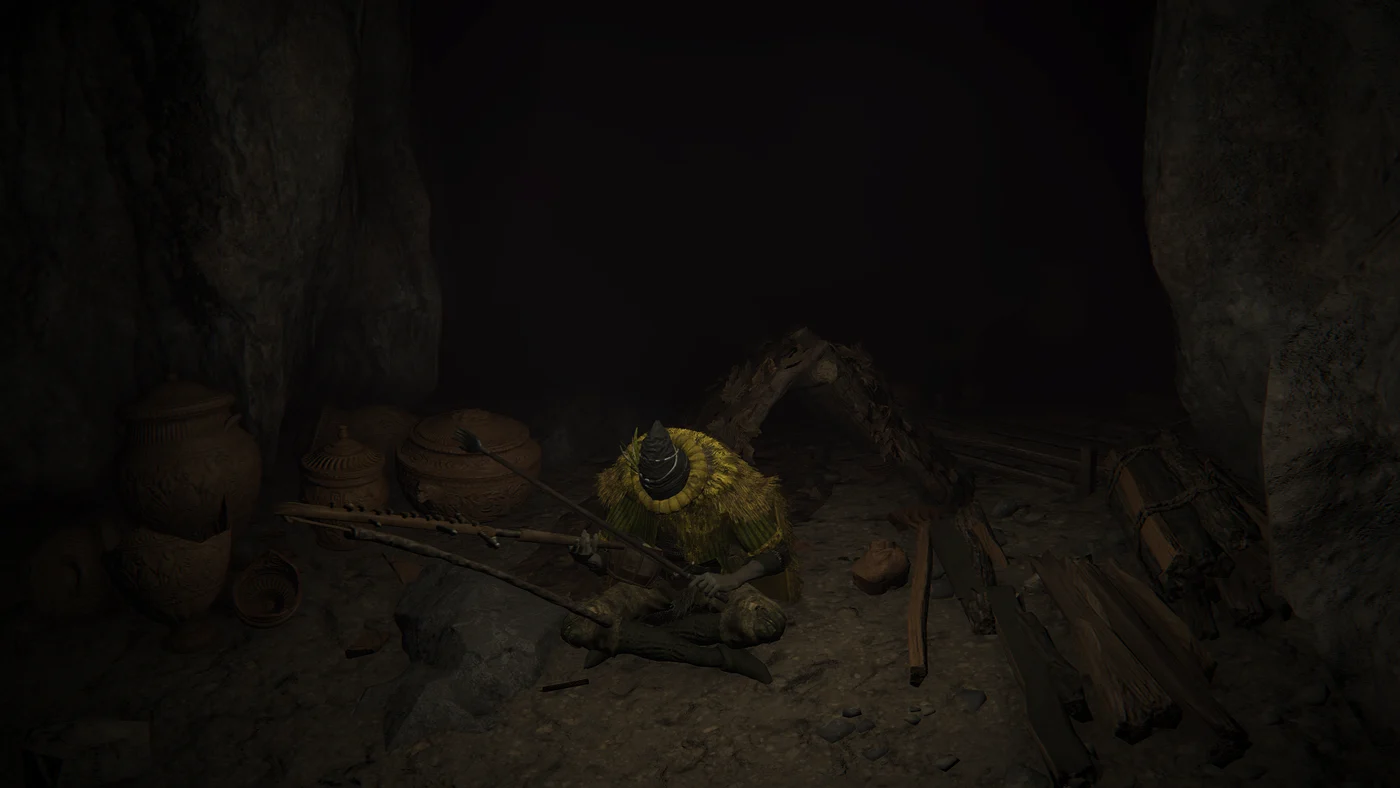 ◈ NPC
◈ NPCThe Imprisoned Merchant
The living trader in Mohgwyn's depths, and the shop at the end of the earth▾
The Imprisoned Merchant
'An imprisoned merchant's bell bearing, found upon his perished flesh.' In the depths of Mohgwyn Palace, where, per the region's map, 'in the lightless depths lies the grave of an ancient civilization', a trader keeps a working shop. He is alive, and he sells: the Tarnished can trade with him as with any wanderer on the roads above. His bell bearing reaches the Twin Maiden Husks only if the Tarnished cuts him down, and 'found upon his perished flesh' is the formula stamped on every merchant's bell bearing, Kalé's included; it names a possible fate, not the state in which he is met. What the canon states outright is brief: a merchant; 'imprisoned', by his very name; keeping shop far beneath the earth. Everything else is a question: who holds a trader in the deepest grave in the Lands Between, and why?
The game's own text makes the shop stranger. A complete shopkeeper's script exists for the Imprisoned Merchant, greeting, sale, thanks, farewell, written in a voice broken by long disuse: 'Mm? Ohh... A...custom...er?' ; 'Hello...again... G-good...customer...' ; 'Till nex...t-time...' And, in a steadier register: 'Well… It's been an age since I've seen a customer. How can I help, here at the end of the earth?', 'Divorce from one's trade does not come easily.' The lines are not cut content; they play for any customer who finds him and trades. A merchant's whole working life carries on at the bottom of the world, addressed to whoever descends far enough to hear it.
When the script turns hostile, the prisoner names his people. 'Stay away, Us wanderers have had enough. How dare you trample us.', 'You've never heard? Of the swiftness of a wanderer's fury.' He speaks as one of the nomadic merchants, the bell-ringing wanderers whose clan 'once thrived as the Great Caravan, but after being accused of heretical beliefs' was 'rounded up and buried alive far underground.' Set against that history, his imprisonment reads less like an anomaly than like the same persecution carried on one body at a time: a wanderer taken from the roads and sealed under the earth, exactly as his clan was.
Where the cell sits invites a second, darker reading. Mohgwyn Palace is the domain of Mohg, Mohg, the Omen, once confined beneath Leyndell in the Subterranean Shunning-Grounds, and the Omen are this world's other buried people. The Regal Omen Bairn describes their fate in words that could caption the merchant's confinement: Omen babies born of royalty are not culled of their horns but 'kept underground, unbeknownst to anyone, imprisoned for eternity.' Those who have examined the merchant's figure in the game's files, an observation drawn from the model, not from the text, describe a massive, malformed body like an Omen's. From this grew the famous theory, and it must be flagged as such: that the Imprisoned Merchant is an Omen, twice damned, persecuted as a wanderer, locked away for his horns.
Even his scripted death is gentle before it is terrible. Struck, he does not curse his killer at first: 'But, why...? Kind...sir... Madame... You've always... been...too kind...' Pressed further, the courtesy collapses into a formula his clan would recognise: 'Melt away with the rest of it...' Melting away is precisely the vocabulary of the frenzied flame, the prayer spoken at the Three Fingers' door begs for 'a frenzied flame to melt away the curses, suffering, and despair. And the Order, entire.' That a buried wanderer dies reaching for the frenzy's exact phrasing is either a coincidence of writing, or the Great Caravan's curse of despair still alive in one last throat. His quietest line may be the truest thing in the cell: 'All that I wanted was solitude…'
An imprisoned merchant's bell bearing, found upon his perished flesh. Offer to the Twin Maiden Husks at the Roundtable Hold to gain access to new items.
Mm? Ohh... A...custom...er? Hello...again... G-good...customer... Till nex...t-time... Well… It's been an age since I've seen a customer. How can I help, here at the end of the earth? Divorce from one's trade does not come easily. Stay away, Us wanderers have had enough. How dare you trample us. You've never heard? Of the swiftness of a wanderer's fury. But, why...? Kind...sir... Madame... You've always... been...too kind... Melt away with the rest of it... All that I wanted was solitude…
Finery of the nomadic merchants. Decorated with tiny gems in a wide spectrum of colors. These merchants once thrived as the Great Caravan, but after being accused of heretical beliefs, their entire clan was rounded up and buried alive far underground. Then, they chanted a curse of despair, and summoned the flame of frenzy.
Doll of a curseborn bairn from the Erdtree's royal line. Uses FP to unleash many wraiths that chase down foes. Omen babies born of royalty do not have their horns excised, but instead are kept underground, unbeknownst to anyone, imprisoned for eternity. These memorial fetishes are fashioned in secret.
Map of Mohgwyn Palace and environs. In the lightless depths lies the grave of an ancient civilization. It is here Mohg, the Lord of Blood, is building his palace, to be the seat of his coming dynasty named Mohgwyn. And whatever nightmares that may bring.
O Three Fingers, throw wide the door. Please, bestow unto me the yellow flame of chaos. A frenzied flame to melt away the curses, suffering, and despair. And the Order, entire. May chaos take the world.
▣ ARTIFACTThe Entwining Umbilical Cord
A cut talisman of birth, two sentences long, filed beside the relics of frenzy▾
The Entwining Umbilical Cord
'Mysterious circular object that's oddly warped. Changes the demeanour of the wearer's actions.' That is the complete canon of the Entwining Umbilical Cord, two sentences preserved at entry 6100 of the talisman tables, between the Host's Trick-Mirror at 6090 and the Ancestral Spirit's Horn at 6110, for an item the shipped game never places in the world. A name, that caption, and a one-line summary saying the same thing again, 'Changes demeanour of wearer's actions' : that is all that survives in the files. And the caption is stranger than its brevity. Among every object in the game's English text, the word 'demeanour' appears nowhere else. Whatever this cord once did, it was not written to make its wearer stronger. It was written to change how the wearer behaves.
The cord does not rest among strangers. Its immediate neighbour, the Ancestral Spirit's Horn, teaches that 'Thus does new life grow from death, and from death, one obtains power.' A few rows above sits Shabriri's Woe, the 'disturbing likeness of a man whose eyes have been gouged out', the man in whose empty sockets, with time, 'the blight of the flame of frenzy came to dwell.' And the Godskin Swaddling Cloth records the canon's other great birth-relic: 'The Gloam-Eyed Queen cradles newborn apostles swaddled in this cloth.' The shipped talisman table already trades in umbilical matters: swaddled newborns, new growths that 'bud from the antler-like horns of the fallen king', the man with whom the sickness of the frenzied flame began. An umbilical cord twisted into a warped circle belongs to exactly this register: the leavings of birth, kept as power.
What gives the name its weight is that in this canon, birth is precisely what the Three Fingers have sworn to abolish. Hyetta, the lightseeker the files later rename Finger Maiden, divines their words for the would-be Lord of Chaos: 'All that there is came from the One Great. Then came fractures, and births, and souls. But the Greater Will made a mistake... … Melt it all away, with the yellow chaos flame. Until all is One again.' Her final instruction closes the circle: 'No more fractures. No more birth...' A nomadic merchant's note fixes where that creed is kept: 'Beneath Leyndell, at the very bottom lies our lord, lord of the frenzied. The Three Fingers who holds us in thrall.' The sickness itself, the game says, began with Shabriri; and the merchants who pass that note along once thrived as the Great Caravan, before the whole clan was 'rounded up and buried alive far underground.'
And one voice in the shipped game wonders aloud what it means to be born of a mother, the voice that stands between the Tarnished and the flame. Of the weeping seamster Boc, Melina says 'I think he misses his mother', then asks: 'Does being born of a mother... Mean one behaves in such a manner?' She asks it as one who was born: 'I was born at the foot of the Erdtree. Where mother gave me my purpose', though what she must now ascertain for herself is 'the reason for which I live, burned and bodiless.' She is also the canon's warmest defence of birth against the Three Fingers, whose flame 'is chaos, devouring life and thought unending' : 'Life endures. Births continue. There is beauty in that, is there not?', and, pressed once more, 'deny not the lives, the new births of this world.' Should the Tarnished claim the flame regardless, the Lord of Frenzied Flame ending closes on a vow spoken to that lord: 'I will seek you, as far as you may travel... To deliver you what is yours. Destined Death.'
What the cord was for, the files decline to say, and so must we. But the surviving texts allow a narrow theory, offered as one. The caption and Melina's question circle the same idea from opposite ends: the cord 'changes the demeanour of the wearer's actions', and Melina asks whether being born of a mother 'Mean one behaves in such a manner'. In both texts, birth is what shapes conduct. An umbilical relic warped into a circle, filed beside Shabriri's frenzy-mask, in a game whose darkest ending is the abolition of birth itself: if the Entwining Umbilical Cord was written for any arc, the register of its two sentences points toward the frenzied flame, the story of the lord of whom Melina says 'when the land they preside over is lifeless.' That is the theory. The certainty is smaller and stranger: somewhere in the making of this world, someone wrote a talisman of being born of a mother, and the world shipped without it.
Mysterious circular object that's oddly warped. Changes the demeanour of the wearer's actions.
Item cut from the horns of the Regal Ancestor Spirit. Restore FP upon defeating enemies. A number of new growths bud from the antler-like horns of the fallen king, each glowing with light. Thus does new life grow from death, and from death, one obtains power.
Disturbing likeness of a man whose eyes have been gouged out. The corners of his mouth are upturned in an almost flirtatious manner. Constantly attracts enemies' aggression. It is said that the man, named Shabriri, had his eyes gouged out as punishment for the crime of slander, and, with time, the blight of the flame of frenzy came to dwell in the empty sockets.
Sacred cloth of the Godskin Apostles, made from supple skin sewn together. Successive attacks restore HP. The Gloam-Eyed Queen cradles newborn apostles swaddled in this cloth. Soon they will grow to become the death of the gods.
Does being born of a mother... Mean one behaves in such a manner? [...] If you intend to claim the frenzied flame, I ask that you cease. It is chaos, devouring life and thought unending. However ruined this world has become, however mired in torment and despair... Life endures. Births continue. There is beauty in that, is there not?
All that there is came from the One Great. Then came fractures, and births, and souls. But the Greater Will made a mistake. [...] Melt it all away, with the yellow chaos flame. Until all is One again. [...] No more fractures. No more birth...
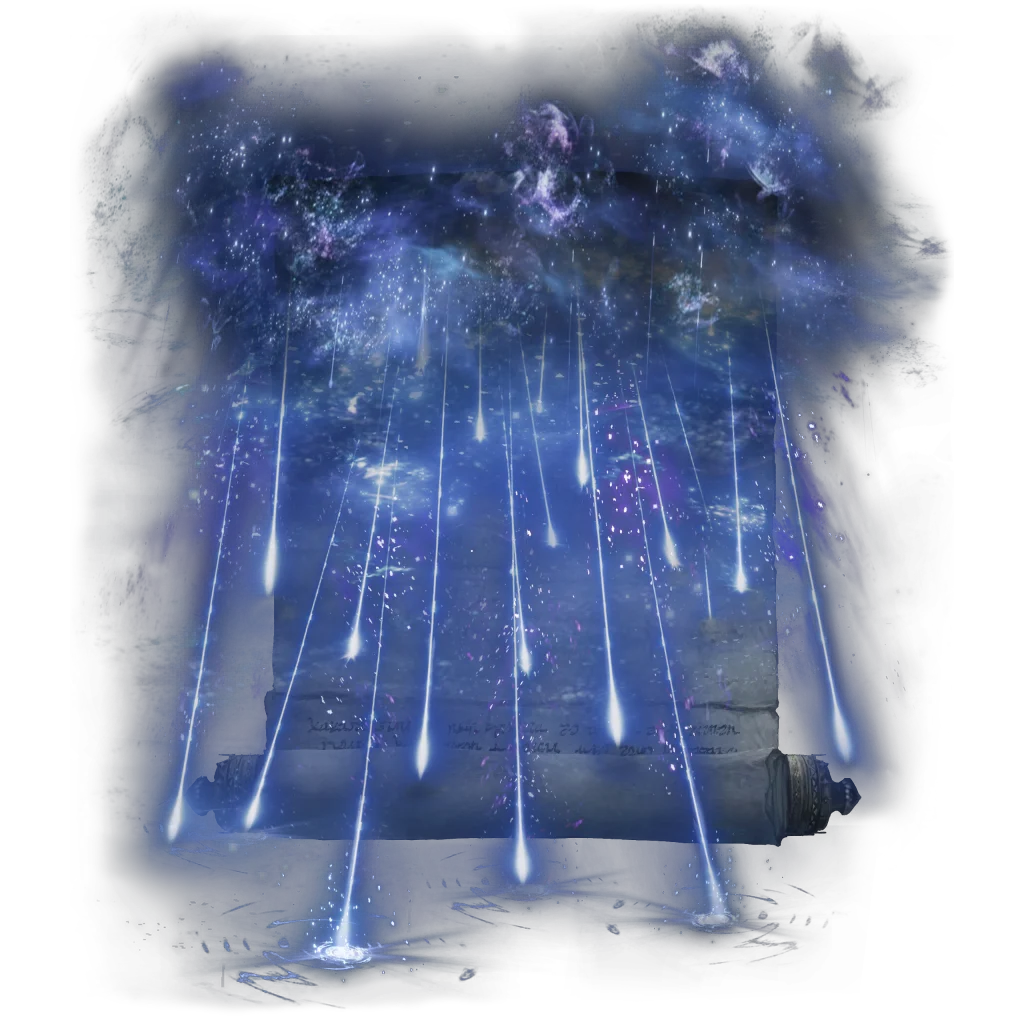 ▣ LEGENDARY SORCERY
Founding Rain of Stars
The eldest primeval sorcery, an astrologer's vision made weather▾
Founding Rain of Stars
'The eldest primeval sorcery, said to have been discovered by an ancient astrologer. A sorcery of legendary status.' Every school of magic in the Lands Between claims a deep past; only one spell claims the beginning itself. The Founding Rain of Stars is 'thought to be the founding glintstone sorcery', the first drop of the river every academy sorcerer still drinks from. Its text records the moment of discovery like scripture: 'The glimpse of the primeval current that the astrologer saw became real, and the stars' amber rained down on this land.' No name is given, no school, no crown. Just an ancient stargazer, a vision, and a sky that answered, 'a dark cloud of stars overhead' releasing 'a violent deluge of star rain.' The oldest sorcery on record is not an invention. It is a sighting.
What the astrologer glimpsed has a name: the primeval current. Comet Azur fires its torrent 'akin to the distant starry expanse, the place said to be the origin of glintstone', and names the price: 'When Azur glimpsed into the primeval current, he saw darkness. He was left both bewitched and fearful of the abyss.' Azur and Lusat, the two primeval sorcerers, went back to the headwater the founding astrologer drank from, and neither truly returned. And by the present age, the wellspring of the entire art has become contraband: 'The primeval current is a forbidden tradition of glintstone sorcery,' states the Graven-Mass Talisman, and Sellen names it as the very reason for her exile, 'It was for attempting to restore the primeval current of glintstone sorcery.' The stream that founded the academy is, to the academy, heresy.
The lineage, however, is not disputed, it is uniform doctrine, stitched into court dress. 'Glintstone sorcerers are the descendants of astrologers, a fact that the Carians remain aware of. Even if their fate has been long severed from the stars.' The Preceptor's Big Hat, worn by the magic tutors of the Carian royals, hides 'the movements of the stars drawn on the inside of the brim', the old sky folded into the working uniform of modern sorcery. Even the humble Astrologer's Staff, 'staff of the astrologers' with a glintstone embedded at its tip, still opens the whole art to any wanderer. Astrologers first, sorcerers after; the rain of stars first, the academy after.
One astrologer's story is told almost in full. 'The young astrologer gazed at the night sky as she walked. She had always chased the stars every step of her journey. Then she met the full moon, and, in time, the astrologer became a queen.' The queen of the Stargazer Heirloom is Rennala, Queen of the Full Moon, who 'encountered this enchanting moon when she was young' and whose lunar magic would later 'bewitch the academy' she came to master. The founding gesture repeats, generations on: an astrologer looks up, something in the sky looks back, and a power is born. Her daughter Ranni inherits the gesture in a colder key, 'Ranni's sigil is a full moon, cold and leaden', steering House Caria's star-lineage toward the dark of night.
The sky has rained on this land more than once. Once as amber, the founding deluge the astrologer called down. And once as ill omen: Astel, 'a malformed star born in the lightless void far away,' which 'destroyed an Eternal City and took away their sky', a 'falling star of ill omen.' Its power still manifests as 'a hail of meteorites,' and Meteorite of Astel is counted among the glintstone sorceries, the same family the founding rain began. No text ties Astel to the ancient astrologer, this is a reading, not a record, yet the symmetry is written into the wording: both are rains of stars, and both fell upon people who watched the sky. The gift and the catastrophe wear the same shape. Perhaps that is why those who stare longest into the primeval current, like Azur, report seeing only darkness.
The eldest primeval sorcery, said to have been discovered by an ancient astrologer. A sorcery of legendary status. Summons a dark cloud of stars overhead. Shortly after, the cloud will release a violent deluge of star rain. Thought to be the founding glintstone sorcery. The glimpse of the primeval current that the astrologer saw became real, and the stars' amber rained down on this land.
A talisman engraved with the legend of a queen. Raises intelligence. The young astrologer gazed at the night sky as she walked. She had always chased the stars every step of her journey. Then she met the full moon—and, in time, the astrologer became a queen.
Large hat with the movements of the stars drawn on the inside of the brim. Worn by the magic preceptors who served the Carian royals. Glintstone sorcerers are the descendants of astrologers, a fact that the Carians remain aware of. Even if their fate has been long severed from the stars.
Meteorite of AstelOne of the glintstone sorceries that manipulates gravitational forces. Summons a void that emits a hail of meteorites. A manifestation of the power with which Astel leveled the Eternal City.
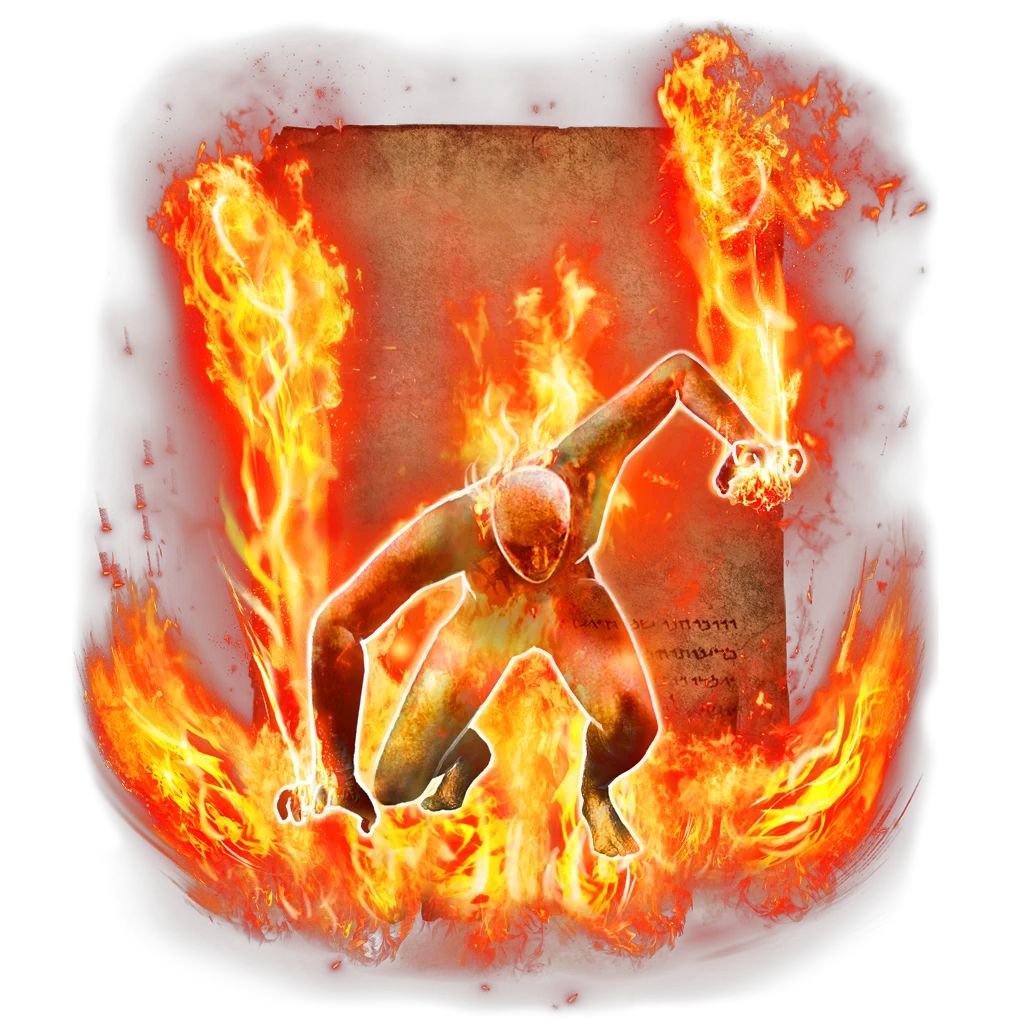 ▣ INCANTATION
Fire's Deadly Sin
Prophecy of the burning Erdtree: the first cardinal sin, no domain of mere men▾
Fire's Deadly Sin
Fire's Deadly Sin is an incantation 'originating from a deeply ominous prophecy', and its description preserves that prophecy word for word. Cast, it 'sets both the caster and the surrounding area ablaze with raging flames', and the caster's own body 'will remain engulfed in flame for a while, burning them and any who draw near'. A prophet 'despaired, looking up at the Erdtree, for soon the kindling would burst into flame, bringing ruin', and the words of that despair are quoted directly: 'The burning of the Erdtree is the first cardinal sin. That is not the domain of mere men.'
This cursed fire must be distinguished from the black flame of the Godskin Apostles, which has its own history and its own mistress. The Gloam-Eyed Queen, 'an Empyrean chosen by the Fingers', led the apostles; the black flame they wield 'could once slay gods', channeled from her Godslayer's Greatsword, and the apostles were 'once said to serve Destined Death', until the Queen was defeated by Maliketh the Black Blade, 'Queen Marika's loyal half-brother', whose blade was imbued with Destined Death. 'When Maliketh sealed Destined Death, the true power of the black flame was lost.' The black flame is a weapon, a god-killing instrument whose chain of custody the texts spell out. Fire's Deadly Sin is placed differently by its own wording: it comes out of a prophecy, as do Catch Flame and Flame Sling, incantations 'originating from a sinister prophecy' whose description names what such a vision costs the one who has it. 'The flame of ruin is anathema to the Erdtree. But prophets sometimes glimpse it within the faith all the same. Sadly when this occurs their sole reward is banishment.'
The prophecy is fulfilled by the Tarnished's own hand. The terms are set out by Gideon: 'You must find kindling. Only the smoldering flame in the Great Forge of the Giants, on the highest peak in the Lands Between, can burn the Erdtree. But special kindling is required to reignite the flame. For the flame to burn the Erdtree, a sacrifice is needed. Of one who envisions the flame.' Melina lifts that half of the task off the Tarnished: 'Think not, of the kindling. I shall see to that. All I ask of you is to make the journey.' At the burning itself, her words are addressed to the tree: 'O Erdtree, you shall burn. Burn, for the sake of the new Lord.' When Maliketh is slain and the Rune of Death unbound, the death-rune's text is exact: 'Black flames have devoured the Erdtree, and the Lands Between are shrouded by Death's dark fate. But the flames will also burn the impenetrable thorns.' Reading those black flames as the apostles' own is an inference laid over that sentence rather than a line of it: what the sentence ties the burning to is the unbound Rune of Death, and Maliketh's own call, 'O, Death. O Destined Death... Become my blade, once more.'
A reading, widely held but nowhere confirmed, binds these threads to Melina herself. The clues are textual. Her farewell as the Erdtree burns, 'The one who walks alongside flame, Shall one day meet the road of Destined Death', is the same couplet carried by the Blade of Calling, 'Dagger given to one who set out on a journey to fulfill her duty long ago', whose former owner that description calls 'the kindling maiden'. The Lord of Frenzied Flame ending closes on a vow to hand over Destined Death itself, the very Death the apostles were 'once said to serve' : 'I will seek you, as far as you may travel... To deliver you what is yours. Destined Death.' The Godskin Swaddling Cloth, meanwhile, speaks of the Queen in the present tense: she 'cradles newborn apostles swaddled in this cloth'. None of the lines quoted here joins the two names; they only refuse to close the distance between them.
'That is not the domain of mere men.' The prophecy's warning is borne out on the roads where the Tree burns. On the road of gold, the sacrifice Gideon names is a person, one 'who envisions the flame', and Melina answers for it herself: 'I shall see to that.' On the road of frenzy, the same price falls on the seeker's own body, and it is Shabriri, 'the man who calls himself Shabriri', who states it: 'Spare the poor girl, and singe your own flesh in her stead', then 'If you inherit the flame of frenzy, your flesh will serve as kindling, and the girl can be spared.' On both these roads the fire is paid for in flesh. Fire's Deadly Sin puts that rule into the caster's hands: it 'sets both the caster and the surrounding area ablaze with raging flames', and the body that called it keeps burning, 'burning them and any who draw near'.
Incantation originating from a deeply ominous prophecy. Sets both the caster and the surrounding area ablaze with raging flames. The caster's body will remain engulfed in flame for a while, burning them and any who draw near. The prophet despaired, looking up at the Erdtree, for soon the kindling would burst into flame, bringing ruin. "The burning of the Erdtree is the first cardinal sin. That is not the domain of mere men."
Superior black flame incantation of the Godskin Apostles. The Gloam-Eyed Queen led the apostles. It is said that she was an Empyrean chosen by the Fingers.
A black flame incantation of the Godskin Apostles. The black flame could once slay gods. But when Maliketh sealed Destined Death, the true power of the black flame was lost.
Godslayer's GreatswordSacred sword of the Dusk-Eyed Queen who controlled the Godskin Apostles before her defeat at the hands of Maliketh. The black flames wielded by the apostles are channeled from this sword.
Maliketh's ArmorBeast's armor made of black iron and decorated with gold. Worn by Maliketh the Black Blade. Maliketh, Queen Marika's loyal half-brother, bore a blade imbued with Destined Death, and there was not one demigod who did not fear him.
Godskin Apostle BraceletsBlack bracelets of the Godskin Apostles. The apostles, once said to serve Destined Death, are wielders of the god-slaying black flame.
Sacred cloth of the Godskin Apostles, made from supple skin sewn together. The Gloam-Eyed Queen cradles newborn apostles swaddled in this cloth. Soon they will grow to become the death of the gods.
Blade of CallingDagger given to one who set out on a journey to fulfill her duty long ago. The power of its former owner, the kindling maiden, is still apparent. The one who walks alongside flame, Shall one day meet the road of Destined Death.
The Rune of Death is unbound. Black flames have devoured the Erdtree, and the Lands Between are shrouded by Death's dark fate. But the flames will also burn the impenetrable thorns.
Lord of Frenzied Flame... I will seek you, as far as you may travel... To deliver you what is yours. Destined Death.
 ✦️ PROLOGUE
The Opening Prophecy
One fall of a world, told five times before the first step▾
The Opening Prophecy
Elden Ring begins with a voice. Before the Tarnished takes a single step, a narrator recites the history of the world, and the game's text preserves not one prologue but several: the opening cinematic, an early cut with different names, a version that names five demigods, another told as a survivor's memory, and one spoken as a promise before the disaster itself. All of them address the same figure: 'Tarnished warrior, spurned by the grace of gold. Seek that which hath been lost to thee. Across the Sea of Fog, to the Lands Between.' Read side by side, these narrations form a table of contents for everything that follows, every proper noun the voice utters opens a chapter of this codex.
The opening cinematic begins as a chronicle compressed into eight sentences. 'The great Elden Ring was shattered', the wound at the center of the world. 'Queen Marika the Eternal is nowhere to be found', the god has vanished. 'In the Night of the Black Knives, Godwyn the Golden was first to perish', a murder, the first death of a demigod, committed before the story begins. Then the succession: Marika's offspring, 'demigods all', claimed the shards of the broken Ring, and 'the mad taint of their newfound strength triggered the Shattering', a war 'from which no lord arose', ending in 'abandonment by the Greater Will'. In under a minute the player has been told of an assassination, a civil war, an absent queen and a heaven that no longer answers. The game spends the next hundred hours letting the Tarnished discover what each of those sentences was hiding.
A second narration preserved in the same files names the heirs. 'Godrick, the feeble. Malenia, decayed from birth. General Radahn, slayer of giants. Rykard, the tyrannical serpent. And Morgott, Prince of the Omen.' The demigods are introduced not by their titles of glory but by their flaws, feebleness, decay, tyranny, the Omen curse, as if the narrator were already writing their epitaphs; each names a boss the Tarnished must eventually face. Twice, the voice admits what it does not know: 'Shattered, by someone, or something. Fractured, by someone, or something.' The intro plants the game's central mystery and refuses to solve it, the answer waits, many hours away, in Ranni's own confession about the Night of the Black Knives. And it is the Two Fingers, this version states, who 'call upon ye, the Tarnished'.
Then the prophecy turns to a roll-call. 'Arise now, ye Tarnished. Ye dead, who yet live. The call of long-lost grace speaks to us all.' Five champions are summoned by name, Hoarah Loux, chieftain of the badlands; the ever-brilliant Goldmask; Fia, the Deathbed Companion; the loathsome Dung Eater; and Sir Gideon Ofnir, the All-knowing, every one a rival the player will meet at the Roundtable Hold, on the road, or at the very foot of the throne. And then the coda: 'And one other. Whom grace would again bless. A Tarnished of no renown.' The player is written into the prophecy as its final, anonymous clause, the only champion the narration cannot describe, because the game has not yet been played.
The variants betray the text's own drafting. An early cut of the opening spells the champions differently, 'Hoarah Roux, the Gold Mask', 'Lady Yuliya, the Deathbed Companion', 'Sir Gideon Orphnier', ghost names that the official French subtitles quietly normalize into Hoarah Loux, Dame Fia and Gideon Ofnir; and where the final version commands the Tarnished to seek the Ring, this one ends on ownership: 'Face the Elden Ring. And reclaim what was thine.' Another telling reframes the whole prologue as a survivor's memory, 'It happened an age ago. But when I recall, I see it true', states outright what the cinematic withholds ('The Rune of Death was stolen'), names 'the conqueror of the stars, General Radahn' and 'Malenia the Severed' as the mightiest to remain, and closes by handing the crown to the listener: 'Awaiting the arrival of the Elden Lord. Unless of course, thou shouldst take the crown?'
One narration stands apart, because it is spoken before the disaster. 'Brave Tarnished. Mighty warriors, who fought at my side. Await the summons. It will call to thee one day. Heed the fading grace. Listen to the Fingers... … Be ready, once it is shattered.' Whoever speaks these lines addresses the exiled Tarnished as former comrades-in-arms, and already knows the Elden Ring will break, in this telling the Shattering is not an accident but an appointment. The speaker is never named; 'fought at my side' fits Godfrey, the first Elden Lord, stripped of grace and exiled with his warriors, a reading, not a certainty, resting on that single possessive. If it holds, the entire game is the keeping of that old promise: 'Become Lord. Enact thy will!'
Elden Ring, O, Elden Ring. Shaper of life, arbiter of fate. Lord of the very stars above. Tarnished warrior, spurned by the grace of gold. Seek that which hath been lost to thee. Across the Sea of Fog, to the Lands Between. Seek the Elden Ring!
The fallen leaves tell a story. The great Elden Ring was shattered. In our home, across the fog, the Lands Between. Now, Queen Marika the Eternal is nowhere to be found, and in the Night of the Black Knives, Godwyn the Golden was first to perish. Soon, Marika's offspring, demigods all, claimed the shards of the Elden Ring. The mad taint of their newfound strength triggered the Shattering. A war from which no lord arose. A war leading to abandonment by the Greater Will.
Elden Ring, O Elden Ring. Its gold commanded the very stars, giving life its fullest brilliance. Shattered, by someone, or something. Fractured, by someone, or something. Godrick, the feeble. Malenia, decayed from birth. General Radahn, slayer of giants. Rykard, the tyrannical serpent. And Morgott, Prince of the Omen. Each, inheriting their own shard, played a part in the Shattering, ║ a war with no end, and no victor. And so the Two Fingers call upon ye, the Tarnished. To cross the Sea of Fog, to the Lands Between. To seek the Elden Ring. Seek the Elden Ring.
Arise now, ye Tarnished. Ye dead, who yet live. The call of long-lost grace speaks to us all. Hoarah Loux, chieftain of the badlands. The ever-brilliant Goldmask. Fia, the Deathbed Companion. The loathsome Dung Eater. And Sir Gideon Ofnir, the All-knowing. ║ And one other. Whom grace would again bless. A Tarnished of no renown. Cross the fog, to the Lands Between. to stand before the Elden Ring. And become the Elden Lord.
Long ago, ye Tarnished lost something most dear. The Elden Ring. O Elden Ring. Its gold commanded the very stars, giving life its fullest brilliance. Though shattered, it yet guides thy kin. Though fractured, it yet guides thy kin. Across the Sea of Fog, to the Lands Between. Hoarah Roux, the Gold Mask. Lady Yuliya, the Deathbed Companion. The hideous Dung Eater. And Sir Gideon Orphnier, the All-knowing. ║ Each coveteth the Elden Ring. But their ambitions are yet unmet. Surely thou hast thine own design? Then implore the Two Fingers, for guidance. Across the Sea of Fog, to the Lands Between. To face the Elden Ring. To stand before the Elden Ring. Face the Elden Ring. And reclaim what was thine.
It happened an age ago. But when I recall, I see it true. On a night of wint'ry fog. The Rune of Death was stolen, And the demigods began to fall, starting with Godwyn the Golden. Queen Marika was driven to the brink. The Elden Ring was broken, triggering the Shattering, an internecine war between demigods. The conqueror of the stars, General Radahn. And the Blade of Miquella, Malenia the Severed. ║ These two were the mightiest to remain, and locked horns in combat. But there would be no victor. And so, we inhabit a fractured world. Awaiting the arrival of the Elden Lord. Unless of course, thou shouldst take the crown?
Brave Tarnished. Mighty warriors, who fought at my side. Await the summons. It will call to thee one day. Heed the fading grace. Listen to the Fingers. Gold commandeth the very stars, giving life its fullest brilliance. Elden Ring, O, Elden Ring. Be ready, once it is shattered. Seek the Elden Ring, O Tarnished. Across the Sea of Fog, to the Lands Between. Become Lord. Enact thy will! ║ Seek the Elden Ring!